💥UPSC 2026, 2027, 2028 UAP Mentorship (March Batch) + Access XFactor Notes & Microthemes PDF

Archives: News

  • Issues related to Economic growth

    [op-ed snap] Fashioning the framework of a New India

    Context

    As the Indian economy is going through a severe crisis, a major solution to the present economic crisis is to go in for inclusive growth; it also means shared prosperity.

    Where India stands on poverty and how the slowdown is impacting the poor.

    • Bottom 30-40% adversely impacted: The slowing economy has had an adverse impact on the bottom 30%-40% of the population.
      • Absolute poverty on the rise: The incidence of absolute poverty, which has been falling since 1972-73, has increased to 30% (4% jump).
    • 44% population below the multi-dimensional Poverty line: The Human Development Report (2019) has shown, more than 44% of the Indian population is under the multi-dimensional poverty line.
    • Rising inequality: The poorest 50% population at present owns only 4.1% of the national wealth.
      • While the richest 10% of people own 73% of the total wealth in India (Suisse Credit 2019).
    • Rampant malnourishment: India has 15.2% population malnourished (women 15%) as against 9.3% in China.
      • And 50% of the malnourished children in the world are in India.
    • At 112th position on global hunger: India’s global hunger rank has gone up to 112 while Brazil is 18, China is 25 and South Africa, 59.
    • Dismal performance on education: In the field of education as per a UN report (2015), overall literacy in India is 74.04% (more than the 25% are totally illiterate) against 94.3% in South Africa, 96.6% in China and 92.6% in Brazil.
      • Almost 40-45% population is either illiterate or has studied up to standard 4.
    • Poor quality of education: Given the quality of education in India, the overall population is very poorly educated, with the share of ‘educated unemployment’ rising by leaps and bounds.

    What needs to be realised?

    • Focus on domestic demand: It needs to be realised that when exports are declining, the economy will have to depend on domestic demand for growth.
      • It is no more feasible for the top 20-25% population to continue growing without depending on the demand from the bottom 40-45% population.
    • Demand by the bottom 40% a must: There is thus a strong reason now for the economy to increase effective demand of this bottom 40-45% population at least to continue growing-to reach a $5-trillion economy by 2024.

    What is wrong with the growth process?

    • Bottom 40% not getting the fair share of growth: A major reason for the crisis is that the growth process has marginalised the bottom 40-plus% of the population.
      • It is in the sense that they do not get a fair share of the economic growth, and are more or less deprived of productive employment with a decent income.
      • They have not been used as active participants in the growth process. Their potential has not been promoted.
    • Less spending for the poor and its consequences: Though the bottom population depends on the government for basic health and elementary education (and also for access to higher educational opportunities)-
      • The government spends just 4% of GDP on health (against the norm of 4-6% of GDP) and 3% of GDP on education (against the norm of 6-8% of GDP).
      • How this dismal spending affects the poor: As a result of this below norm spending, these people are left hardly literate and sick, with poor nutrition and high morbidity.
      • They are incapable of acquiring any meaningful skills or participating actively when new technology is spreading in the rest of the economy.
    • The sub-optimal use of labour force: This sub-optimal use of the labour force in the economy is not likely to enable India to achieve optimal growth with proper use of the national resources -the labour force.

    Inclusive growth- a solution to the present economic crisis

    • Inclusive growth also includes shared prosperity: Here, inclusive growth does not mean only including all sections of the population in the growth process as producers and beneficiaries; it also means “shared prosperity”.
      • Since India has already committed to sustainable and inclusive growth at the UN General Assembly, India is definitely obliged to implement inclusive growth.
      • This should be our “New India”.
    • What “New India” would involve?
      • Improve the capability and opportunities: To start with, to improve the capabilities of the masses as well as their well-being by expanding productive employment opportunities for them.
      • What expanding productive employment mean? The main steps to expand productive employment for all in the economy should be made up of-
      • A process of inclusion.
      • Expanding the quality of basic health for all.
      • And ensuring quality education to all.
    • How will “New India” help?
      • Which will by itself generate large-scale employment in the government.
      • Having a well-educated and healthy labour force will ensure high employability.
      • Such people will be able to participate actively in the development process.
      • The cycle of more productive employment: Having a well-educated labour force will help start-ups and MSMEs, in turn triggering a cycle of more productive employment in the economy.
      • Global competitiveness increase: This will also improve the global competitiveness of our production units.
      • Labour absorption potential of MGNREGA: Employment guarantee schemes such as the Mahatma Gandhi National Rural Employment Guarantee Act (MGNREGA) will also increase employment.
        • Assets generated under MGNREGA will expand capital formation in the economy, thereby raising the labour-absorbing capacity of the mainstream economy.
      • Why this strategy is advantageous?
        • Such a strategy has multiple advantages:
        • First– it will raise incomes and the well-being of those who need it most urgently.
        • Second– it will raise effective demand rapidly, which is so badly needed in the economy today to raise economic growth.
        • Third– growth will be equitable and sustainable.

    Way forward

    • Finally, how does one raise resources to increase new public investments in the selected sectors?
    • Raise direct taxes: One major strategy is to raise direct taxes, both capital tax and wealth tax.
      • Past growth has failed to reach the poor: Growth led by providing tax cut and extra incentives, but this growth does not much percolate to the poor.
      • Consequently, taxing the rich has to be a major strategy to raise government revenue.
    • Treat public expenditure as an investment: The public expenditure on raising capabilities should be treated as social investment rather than social welfare, policymakers will be willing to spend on this capital formation.
    • Let the fiscal deficit slip: Finally, there was no sound economic reason to control fiscal deficit ratio. Sound macroeconomics never supports this.



  • Defence Sector – DPP, Missions, Schemes, Security Forces, etc.

    Defence Bill in Budget


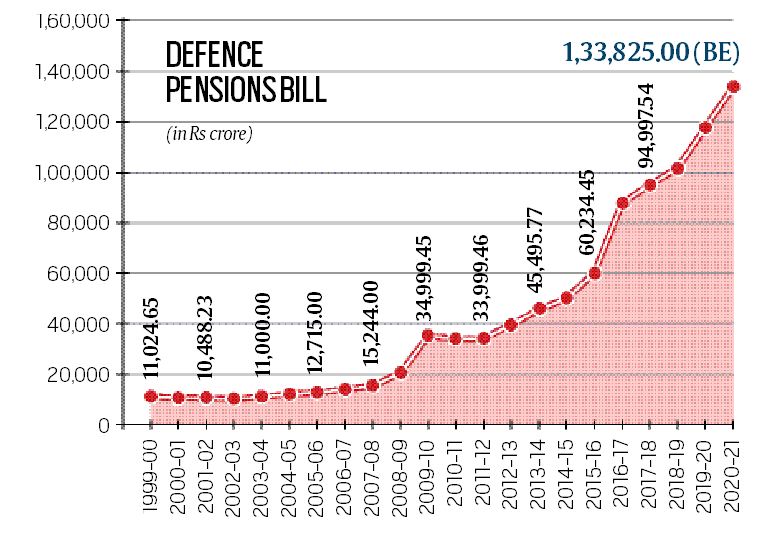
    The Union Budget for 2020-21 has allocated Rs 1,33,825 crore to defence pensions. This is up by 10½ times in a decade and a half, from Rs 12,715 crore in 2005-06.

    The ‘hype’ of defence pension

    • The allocation of Rs 1,33, 826 crore is 4.4% of the total expenditure of the central government or 0.6% of GDP.
    • And of the overall allocation made to the Defence Ministry, 28.4% goes towards pensions.
    • So sharply has the bill for defence pensions gone up that it is now Rs 15,291 crore more than the Defence Ministry’s total capital expenditure, a bulk of which goes towards modernization of the armed forces.
    • It now nearly equals the salaries bill for Defence Ministry. The more the government spends on salaries and pensions, the less it can spend on modernizing the armed forces.
    • To put it in perspective, the government’s spending on education is Rs 99,300 crore and on health is Rs 69,000 crore.
    • To compare it with other sectors, the government’s rural employment scheme MGNREGA has an allocation of only Rs 61,500 crore — 46% of the bill for defence pensions.

    Why the bill is high?

    • As per the Defence Ministry, there are about 26 lakh armed forces pensioners and family pensioners and approximately 55,000 pensioners are added every year.
    • In 2015, the government announced the OROP (One Rank, One Pension) scheme which cost it Rs 8,600 crore.
    • The implementation of the Seventh Pay Commission recommendations in 2017 again increased the defence pensions bill.

    What makes defense pensions distinct?

    • Defence pensions are unique in many ways. Defence personnel retire at a young age and thus continue to get pensions for a longer period of time than their civilian counterparts.
    • The current ratio of military pensioners to serving military personnel is 1.7 to 1, while the ratio of civil pensioners to civil working personnel is 0.56 to 1.
    • This ratio in defence is projected to further change as life expectancy in India goes up and retired personnel live far longer than earlier.
    • All civilian employees in the government who joined service on or after 1 January 2004 do not get an assured pension but come under the ambit of the contributory National Pension Scheme (NPS).
    • That is meant to reduce the pensions bill of the government on the civilian side, but military personnel have been excluded from the ambit of the NPS because of their short service span.

    Where this can lead to

    • With economic growth stalling and competing requirement from development and infrastructure sectors, the government is being hard-pressed for the last rupee in its kitty.
    • The defence services themselves need more funds to modernize themselves but are struggling with budgetary allocations.
    • In such a scenario, attention is likely to come to the fast-rising defence pensions bill.

    Feasible solutions

    • The short-term answer to keep the bill frozen at the same level is to increase the retirement age of serving military personnel and stop the rise in number of pensioners.
    • But at a time when the country is facing unemployment at an all-time high, stopping recruitment for a few years will worsen the situation.
    • The other solution is to send the retired military personnel to paramilitary forces but those forces, too, need to stay young and have not accepted the proposal.
    • That would also pose the problem of recruitment in a time of high unemployment, as in the case of increase in retirement age of military personnel.

    Conclusion

    • The sharply rising defence pensions bill, however, has become a challenge that cannot be ignored any longer.
    • Unless India’s economy grows at a double-digit rate, it will not be possible to furnish this bill and still modernize the armed forces.
    • There are no easy answers to the challenge, and the answer will have to come from the top political leadership.
  • Intellectual Property Rights in India

    Global Intellectual Property Index 2020

    India has been ranked 40th out of 53 countries on a global intellectual property index, even as the country has shown improvement in terms of scores when it comes to the protection of IP and copyright issues.

    GIP Index

    • The Global IP Index was released by Global Innovation Policy Center or GIPC of the US Chambers of Commerce.
    • The GIPC Index consists of five key sets of indicators to map the national intellectual property environment for the surveyed countries.
    • The major indicator categories are:
    1. patents, related rights, and limitations;
    2. copyrights, related rights, and limitations;
    3. trademarks, related rights, and limitations;
    4. enforcement;
    5. membership and ratification of international treaties.

    India’s performance

    • India was placed at 36th position among 50 countries in 2019.
    • India’s score, however, increased from 36.04 per cent (16.22 out of 45) in 2019 to 38.46 per cent (19.23 out of 50) in 2020, a 2.42 per cent jump in absolute score.
    • However, India’s relative score increased by 6.71 per cent.
    • India also continues to score well in the Systemic Efficiency indicator, scoring ahead of 28 other economies in these indicators.

    Challenges for India

    • GIPC has identified several challenges for India. Prominent among them are:

    Patentability requirements, patent enforcement, compulsory licensing, patent opposition, regulatory data protection, transparency in reporting seizures by customs, and Singapore Treaty of Law of TMs and Patent Law Treaty

    Measures to protect IPs in India

    • Since the release of the 2016 National IPR Policy, the government of India has made a focused effort to support investments in innovation and creativity through increasingly robust IP protection and enforcement.
    • Since 2016, India has improved the speed of processing for patent and trademark applications, increased awareness of IP rights among Indian innovators and creators, and facilitated the registration and enforcement of those rights.
    • To continue this upward trajectory, much work remains to be done to introduce transformative changes to India’s overall IP framework and take serious steps to consistently implement strong IP standards.
  • Police Reforms – SC directives, NPC, other committees reports

    Supreme Court panel recommends several prison reforms

    The Supreme Court has taken up a report on Prison Reforms for hearing on before a Bench led by CJI Sharad A. Bobde.

    About the Committee

    • The court had in September 2018 appointed the Justice Roy Committee to examine the various problems plaguing prisons, from overcrowding to lack of legal advice to convicts to issues of remission and parole.
    • Besides Justice Roy, a former Supreme Court judge, the members included an IG, Bureau of Police Research and Development, and the DG (Prisons), Tihar Jail.

    Various recommendations

    • Every new prisoner should be allowed a free phone call a day to his family members to see him through his first week in jail.
    • This is among the several recommendations — besides modern cooking facilities, canteens to buy essential items and trial through video-conferencing.
    • The report described the preparation of food in kitchens as “primitive and arduous”.
    • The kitchens are congested and unhygienic and the diet has remained unchanged for years now.

    Staffing the prisons

    • The court said overcrowding is a common bane in the under-staffed prisons. The Prison Department has a perennial average of 30%-40% vacancies.
    • Both the prisoner and his guard equally suffer human rights violation.

    Speedy trial

    • The undertrial prisoner, who is yet to get his day in court, suffers the most, languishing behind bars for years without a hearing.
    • Speedy trial remains one of the best ways to remedy the unwarranted phenomenon of over-crowding.
    • The report concluded that most prisons are “teeming with undertrial prisoners”, whose numbers are highly disproportionate to those of convicts.
    • It said there should be at least one lawyer for every 30 prisoners.
  • Modern Indian History-Events and Personalities

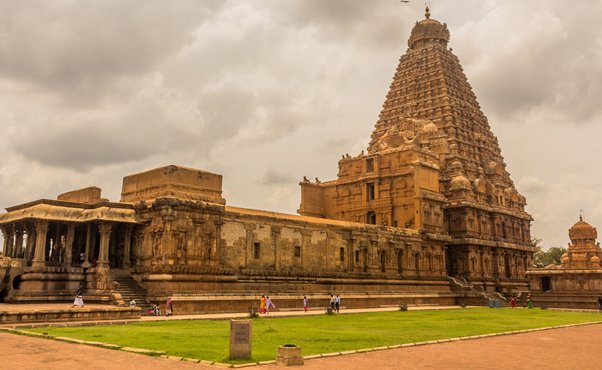
    Kumbhabishegam at Brahadeeswarar Temple, Thanjavur


    • Tens of thousands of pilgrims thronged Thanjavur in Tamil Nadu’s Cauvery delta to witness the Kumbhabishegam (consecration) ceremony at the Sri Brahadeeswarar Temple.
    • This enormously significant event was held after 23 years — and after the Madras High Court had settled an old argument over the ritual purification process only five days previously.
    • The judgment delivered by the Madurai Bench of the court addressed the struggle for supremacy between the Sanskrit and Tamil traditions.

    Sri Brahadeeswarar Temple and Kumbhabishegam ceremony

    • The Sri Brahadeeswarar Temple (also spelt Brihadisvara, and called Peruvudaiyar Koyil, which translates simply to ‘Big Temple’) is the most famous of the many temples in Thanjavur.
    • The temple, one of the world’s largest and grandest, was built between 1003 AD and 1010 AD by the great Chola emperor Raja Raja I (c. 985-1014 AD).

    Before the High Court

    • The court, in a dispute over which language should be used in the slokas at the kumbhabishegam, agreed with the state government’s affidavit that the ceremony should be in both Sanskrit and Tamil.
    • The Temple committee had demanded that the Kumbhabishegam should be held only in Tamil.
    • The court ruled the choice to be vested with the devotees to seek for their archanas to be performed at their wishes by chanting the manthras either in Tamil or in Sanskrit.
  • Water Management – Institutional Reforms, Conservation Efforts, etc.

    Energy stored in wastewater

    The world generates about 380 trillion litres (tl) wastewater every year. These stores vast amounts of energy, nutrients for fertilizers besides, of course, water, according to recent study by the UN Institute for Water Environment and Health (UNU-INWEH).

    Energy in wastewater

    • In principle, nutrients such as nitrogen, phosphorous and potassium recovered from wastewater produced annually can offset 13.4 per cent of global demand to produce fertilizers.
    • Assuming full-energy recovery, the study estimated, current wastewater volume could provide enough methane fuel to power 196 million households by 2030 and 239 million households by 2050.
    • Usable water reclaimed from wastewater can irrigate up to 31 million hectares (mha) of land, the study claimed.
    • The volume of wastewater being generated is projected to rise roughly 24 per cent by 2030 to 470 tl and 51 per cent by 2050 to 574 tl.
    • Treating wastewater efficiently can go a long way in achieving the UN-mandated sustainable development goals (SDG).

    About UNU-INWEH

    • UNU-INWEH acts as the “UN Think Tank on Water” and contributes to the resolution of the global water challenge through a unique programme of applied research and education.
    • It conceives, develops, and manages water initiatives that help developing countries build their capacity for lasting improvements in human and ecosystem health, and overall reduction in poverty.
    • The  University is not a traditional university in the sense of having a faculty, campus, or students.
    • They respond directly to the regional and global water crisis and facilitate efforts to meet UN Development goals by providing a scientific evidence base.
    • UNU-INWEH carries out its work in cooperation with other research institutions, international organizations, individual scholars, and scientists throughout the world.
  • Foreign Policy Watch: India-France

    [op-ed of the day] In defence of a shared vision

    Context

    Defence cooperation has been one of the fundamentals of the bilateral relationship between India and France, which developed a close and ambitious strategic partnership for over 20 years.

    Defence cooperation between France and India

    • A long history of cooperation: The defence cooperation between our two countries can be traced back to the first few years following India’s Independence.
      • As early as 1953, the Indian Air Force was equipped with a hundred Toofani fighter jets from Dassault, then the Mystère IV, which defended India in tough times.
    • This marked the first page in the history of cooperation in military aviation, which also recorded the supply of 60 Mirage 2000s in the 1980s.
    • Rafale deal: The ongoing delivery of 36 Rafales is being done as per the schedule.
      • The first batch of aircraft, currently being used to train Indian pilots, will land at Air Force Station Ambala within a few months.
    • Partnership in maritime domain: Today, the partnership has been deployed in the maritime domain, in support of our joint strategic vision for the maintenance of stability and security in the Indo-Pacific.
      • As far as naval equipment is concerned, the Indian Navy has already commissioned two of the six submarines built in Mumbai as part of an industrial partnership between Mazagon Dock Shipbuilders Limited (MDL) and Naval Group.

    Industrial cooperation between the two countries

    • Support to indigenous production: As for industrial cooperation, the French approach has always been, whenever possible, to offer partial indigenous production in India.
      • France was largely a precursor with regard to Make in India, with HAL manufacturing the light helicopters Cheetah and Chetak, and BDL’s Milan anti-tank missile in India in the 1960s.
      • It continues this policy today. The plant built under the Dassault Aviation and Reliance joint venture will enable, for example, the complete production of the Falcon 2000 business jet here in India by 2022.
    • Transfer of technology: After the delivery of the first two Scorpene submarines, transfers of technology provided by the Naval Group enabled MDL to be solely in charge of building the next four submarines.
      • The design of these submarines has thus become largely Indian knowhow.
      • Safran will soon inaugurate an aircraft wiring systems factory in Hyderabad and also build another major facility to manufacture LEAP turbofan engine components.
      • Thales is investing massively in engineering works in Bengaluru, MBDA is building a plant in Coimbatore and French aeronautical equipment manufacturer Latécoère recently inaugurated a factory in Belgaum.

    Opportunities for further cooperation

    • Developing the supply chain at all the levels: The French aerospace industries association, GIFAS, and GICAN, the French Marine Industry Group, are organising a seminar focused on this subject during DefExpo.
      • Along with the Society of Indian Defence Manufacturers (SIDM), they are exploring opportunities for developing Indo-French industrial partnerships at all stages of the production chain.
      • Promoting Make in India: India can count on France being by its side for its Make in India enterprise.

    Conclusion

    India and France both share the same vision for a new balanced multipolar world, which must be based on the rule of law. They also share the same vision on the main challenges of the times, be they security developments in Asia and the Indo-Pacific, or combating international terrorism. But it is by possessing the capability of ensuring national security and making strategic choices that most efficiently defend their shared principles and visions.


  • Indian Ocean Power Competition

    [op-ed snap] Navy to the rescue

    Context

    Earlier this week, India sent an amphibious warship, INS Airavat, to Madagascar in the Indian Ocean Region (IOR) to help in rescue efforts after the island nation was hit by a cyclone.

    Humanitarian operations- Key component of peacetime strategy

    • A key component in IOR: In recent years, humanitarian operations have emerged as a key component of the Indian Navy’s peacetime strategy in the IOR.
      • In March 2019, the Navy deployed four warships for relief operations when Mozambique was hit by Cyclone Idai.
      • Indian naval teams played a stellar role in search and rescue operations and even set up medical camps.
      • A few months later, the Navy sent two warships to Japan to assist in rescue efforts following Typhoon Hagibis.
      • A year earlier, Indian vessels had delivered urgent medical assistance to Sulawesi, Indonesia, after it was struck by a high-intensity earthquake.
      • Operation Samudra Maitri was launched after a telephonic conversation between Prime Minister Narendra Modi and Indonesian President Joko Widodo, with naval planners mobilising assets and relief material in quick time.
    • India’s vision for IOR: The Navy’s new humanitarian approach, many says, is a maritime manifestation of India’s vision for the IOR, christened SAGAR (Security And Growth for All in the Region).
      • Lesson’s from tsunami: The Navy’s turn towards human-centred maritime security isn’t recent. It was in the aftermath of the 2004 tsunami that naval commanders first recognised the importance of large-scale relief and rescue missions in the IOR.
      • For over a decade, considerable resource and energy have been spent developing specialist capability and skills for naval humanitarian operations.

    India- A regional security provider

    • What is changing in India’s stance: What’s new today is New Delhi’s resolve to burnish its ‘regional security provider’ credentials.
      • The Navy has reached out to countries across the Indo-Pacific region, with greater deployment of assets, personnel and specialist equipment, showcasing an ability to undertake complex and diverse missions.
    • The highpoint for India: The highpoint of the Navy’s ‘benign’ efforts was the evacuation of over 1,500 Indian expatriates and 1,300 foreign nationals from Yemen in 2015 amid fighting for control of Aden.
      • Three years later, Indian naval ships were in Yemen again, to evacuate 38 Indians stranded in the cyclone-hit Socotra Island.

    How the new role could help India?

    • India’s desire to be the linchpin of security: The Navy’s humanitarian impulse stems from a desire to be a linchpin of security in the IOR.
      • The concept of the first responder: At the core of the evolving operations philosophy is the concept of ‘the first responder’, with the capability and willingness to provide assistance.
      • Extension of the sphere of influence: The above approach has the potential to create an extended sphere of Indian influence in the IOR.
      • Projection of soft power: Naval leaders recognise that benign missions help project Indian soft power and extend New Delhi’s influence in the littorals.
      • Creating goodwill: Prompt response during a humanitarian crisis helps generate political goodwill in the neighbourhood.

    Cause for caution with maritime presence

    • The issue with prolonged presence: While low-end naval assets in humanitarian mode create strategic equity for India, the prolonged presence of front-line warships in foreign waters has the potential to make partners anxious.
    • Shaping perception over naval presence: Naval power, experts underline, must be deployed discreetly, shaping perceptions in subtle ways.
      • Need to hide the underlying intent: The key is to not let the underlying intent of a mission appear geopolitical.
      • To ensure that motives aren’t misunderstood, and the assistance provided is efficient and cost-effective, it is best to use dedicated disaster-relief platforms.
    • India lacking inventory hospital ship: However, unlike the U.S. and China that have in their inventory hospital ships fully equipped for medical assistance, India deploys regular warships and survey ships converted for medical aid.
      • India’s improvised platforms do not match the U.S. Navy’s medical ship USNS Mercy or the People’s Liberation Army Navy’s Peace Ark.

    Need for greater coordination

    • The Navy’s expanding array of humanitarian missions reveals a need for greater coordination with the Indo-Pacific navies
      • In particular the U.S. Navy, the Royal Australian Navy and the Japanese Self-Defense Forces- which possess significant experience and assets to mitigate humanitarian threats.

    Conclusion

    As natural disasters in the IOR become more frequent and intense, India’s regional security role is likely to grow exponentially. At the forefront of disaster scenarios, the Indian Navy and Coast Guard would find themselves undertaking demanding missions. Humanitarian operations could serve as a springboard for a larger cooperative endeavour in the maritime commons.

  • Indian Ocean Power Competition

    [op-ed snap] A case of a maritime presence adrift

    Context

    The International Maritime Organization (IMO), had mandated that merchant ships should not burn fuel with sulphur content greater than 0.5% beginning January 1.

    Why the new sulphur content limit matters?

    • The previous limit of 3.5 %: Before the ban, fuel had a comfortable sulphur content limit of 3.5%, which was applicable to most parts of the world.
    • Problem with low content fuel: Many industry professionals feared that the new very-low-sulphur fuel would be incompatible with the engines and other vessel equipment.
    • Problems with past US limits: Past mandates on sulphur limits in American waters had led to many technical problems. There have been instances of ships having been stranded after fine particles separated out from the fuel, damaging equipment and clogging up devices.

    How such regulations matter for India?

    • Sulphur cap one of the many problems: The global sulphur cap is only one of the many environment-related regulations that have been shaking up the shipping industry.
      • The industry is generally risk-averse and slow to accept changes.
      • For instance, efforts are ongoing to reduce nitrogen oxides (NOx) and ozone-depleting gases.
    • IMO project to decarbonise shipping: Further, the IMO has announced an ambitious project to decarbonise shipping in order to reduce carbon emissions.
    • How it matters for India? These regulations are triggering massive technological, operational and structural changes.
      • They come at a price which will have to be borne to a large extent by developing countries such as India.
      • India among 10 countries: The IMO currently lists India as among the 10 states with the “largest interest in international seaborne trade”.
      • Inadequate participation of India: But India’s participation in the IMO to advance its national interests has been desultory and woefully inadequate.
    • How it could matters: The sulphur cap, for instance-
      • Will reduce emissions.
      • Reduce the health impact on coastal populations but-
      • Ship operational costs are going up since the new fuel product is more expensive.
    • Refineries struggling to meet demand: As refineries including those in India struggle to meet the demand, freight costs have started moving up, with a cascading effect on retail prices.

    Significance of shipping and the role of IMO

    • Significance of shipping: Shipping, which accounts for over 90% by volume and about 80% by value of global trade.
      • Role of IMO: It is a highly regulated industry with a range of legislation promulgated by the IMO.
      • The IMO currently has 174 member states and three associate members; there are also scores of non-governmental and inter-governmental organisations.
      • The IMO’s policies or conventions have a serious impact on every aspect of shipping including the cost of maritime trade.
    • How IMO functions
      • The IMO, like any other UN agency, is primarily a secretariat, which facilitates decision-making processes on all maritime matters through meetings of member states.
      • How treaties are made? The binding instruments are brought in through the conventions -to which member states sign on to for compliance -as well as amendments to the same and related codes.
      • Structure of IMO: Structurally, maritime matters are dealt with by the committees of the IMO –
      • The Maritime Safety Committee (MSC).
      • Marine Environment Protection Committee (MEPC).
      • Technical Cooperation Committee.
      • Legal Committee and the Facilitation Committee.
      • Each committee is designated a separate aspect of shipping and supported by sub-committees. Working groups and correspondence groups support the subcommittees.
    • Role of subcommittees of IMO: The subcommittees are the main working organs, where the proposals from a member state are parsed before they are forwarded to one of the main committees.
      • The main committees, thereafter, with the nod of the Assembly, put the approved proposal for enactment through the Convention, amendments, and codes or circulars.

    India’s inadequate efforts at protecting the interest

    • How other countries deal with the issues: To ensure that their maritime interests are protected, the European countries move their proposals in unison and voting or support are given en bloc.
      • Permanent representative: China, Japan, Singapore, Korea and a few others represent their interests through their permanent representative as well as ensuring that a large delegation takes part and intervenes in the meetings.
    • How India is falling short? While these countries have fiercely protected their interests, India has not.
      • No permanent representative: For example, its permanent representative post at London has remained vacant for the last 25 years.
      • Representation at meetings is often through a skeletal delegation
      • India’s presentation inadequate: A review of IMO documents shows that the number of submissions made by India in the recent past has been measly and not in proportion to India’s stakes in global shipping.
    • “High-Risk Area” demarcation issue: The promulgation of “High-Risk Areas” when piracy was at its peak and dominated media headlines.
      • What happened in the issue? The IMO’s demarcation resulted in half the Arabian Sea and virtually the entire south-west coast of India being seen as piracy-infested, despite the presence of the Indian Navy and Coast Guard.
      • The “Enrica Lexie” shooting incident of 2012, off the coast of Kerala, was a direct fallout of the demarcation.
    • What were the consequences of the demarcation issue?
      • Increase in insurance costs: The “High-Risk Area” formulation led to a ballooning of insurance costs; it affected goods coming into or out of India.
      • It took great efforts to revoke the promulgation and negate the financial burden.
      • The episode highlighted India’s apathy and inadequate representation at the IMO.
      • NavIC introduction difficulty: There was also great difficulty in introducing the indigenously designed NavIC (NAVigation with Indian Constellation) in the worldwide maritime navigation system.
    • What could be the consequences in future?
      • EU’s documented procedure: In contrast, the European Union has a documented procedure on how to influence the IMO.
      • Agenda driven by developed countries: New legislative mandates, fitment of new equipment and changes to ship structural designs being brought on have been driven by developed countries.
      • Consequences for India: All the issues pushed by developed countries are not entirely pragmatic from the point of view of India’s interests.
      • Further, it will not be mere speculation to see them as efforts to push products and companies based in the West.

    Conclusion

    So far, India’s presence and participation in the IMO has been at the individual level. India should now make its presence felt so that its national interests are served. It is time India regained its status as a major maritime power.


  • Forest Fires

    Forest Fire: Its Prevention and Management

    The Minister for Environment, Forests and Climate Change (MoEFCC) has informed that area covering 93,273 hectares was affected by forest fires in 2019. Most of the fires have been “ground fires” burning ground vegetation.

    Measures to curb Forest fires:

    1) National Action Plan on Forest Fires

    • The MoEFCC has prepared a National Action Plan on Forest Fires in 2018 after several rounds of consultation with all states and UTs.
    • The objective of this plan is to minimize forest fires by informing, enabling and empowering forest fringe communities and incentivizing them to work in tandem with the State Forest Departments.
    • The plan also intends to substantially reduce the vulnerability of forests across diverse forest ecosystems in the country against fire hazards, enhance capabilities of forest personnel and institutions in fighting fires and swift recovery subsequent to fire incidents.

    2) Forest Fire Prevention and Management scheme

    • The MoEFCC provides forest fire prevention and management measures under the Centrally Sponsored Forest Fire Prevention and Management (FPM) scheme.
    • The FPM is the only centrally funded program specifically dedicated to assist the states in dealing with forest fires.
    • The FPM replaced the Intensification of Forest Management Scheme (IFMS) in 2017. By revamping the IFMS, the FPM has increased the amount dedicated for forest fire work.
    • Funds allocated under the FPM are according to the 90:10 ratio of central to state funding in the Northeast and Western Himalayan regions and 60:40 ratio for all other states.
    • Nodal officers for forest fire prevention and control have been appointed in each state.

Join the Community

Join us across Social Media platforms.