💥UPSC 2027,2028 Mentorship (April Batch) + Access XFactor Notes & Microthemes PDF

Archives: News

  • Modern Indian History-Events and Personalities

    Liberation of Auschwitz


    • Yesterday on January 27th survivors of the Holocaust and international heads of state marked the 75th anniversary of the liberation of Auschwitz.
    • During the Second World War, the government of Nazi Germany killed approximately 17 million people across Europe in half a dozen camps specifically designated for killings.
    • Of these seven killing centers, the camp at Auschwitz, perhaps the most well known, was the largest in size.

    Why is January 27 an important date in Holocaust history?

    • During the final stages of the Second World War, months before the fall of Nazi Germany, Nazi officials began forcibly moving prisoners between the camps spread across Europe.
    • Called ‘Death Marches’, this forcible displacement on foot over long distances in the bitter cold, with little to no food resulted in many deaths.
    • Some researchers believe that prisoners were moved from camps to prevent the liberation of prisoners held inside these camps and to also remove evidence of crimes against humanity perpetrated by Nazi officials.
    • Prisoners who were very ill and disabled were left to die in the abandoned camps.

    Rescue of Auschwitz

    • Allied forces advanced from the West while soldiers belonging to the Red Army of the Soviet Union began entering concentration camps and killing centers across Europe, liberating survivors.
    • The first camp that the Red Army soldiers liberated was the Majdanek camp in Poland in July 1944.
    • The Army entered Auschwitz on January 27, 1945, finding hundreds of sick, starving and exhausted prisoners, who had somehow survived.
    • In 2005, the UN-designated January 27 as the International Holocaust Remembrance Day.

    What occurred during the liberation of Auschwitz?

    • Along with surviving prisoners, the Red Army also found hordes of items belonging to the prisoners that had been stripped from them by Nazi officials when they first arrived at Auschwitz.
    • The prisoners were so weak after having been starved for prolonged periods of time, that despite medical intervention, many died days after their rescue.
    • Several soldiers in the Red Army and in the Allied troops later gave testimonies concerning the sights that awaited them when they first entered the camps in Auschwitz and elsewhere.
    • Although Nazi officials had destroyed many warehouses and crematoria where property looted from prisoners had been stored and where bodies had been disposed, liberating troops still found evidence of the crimes and brutality perpetrated against the prisoners.

    What made Auschwitz unique?

    • Historical records show that despite attempts by Nazi officials to obliterate prisoners, particularly those at Auschwitz, there were survivors who lived to provide testimony against Nazi officials.
    • Several factors set Auschwitz apart from other camps across Europe.
    • The camp at Auschwitz had originally been built to hold Polish political prisoners but by March 1942, it became one of the main centres for the Nazi’s Final Solution to the Jewish Question.

    Aftermath of the Holocaust

    • Trials were held against Nazi officers and people who worked inside the camps in various capacities and perpetrated crimes against humanity in the camps of Auschwitz and elsewhere in Europe.
    • These individuals included both men and women, many who escaped accountability for their crimes after the fall of Nazi Germany.
    • To evade justice, many SS officers changed their identities and escaped to other parts of Europe, the US and to other parts of the world.
    • The camps at Auschwitz have become an important reminder of the horrors of the Holocaust and in 1947 the government of Poland made the site a state memorial.
    • In 1979, UNESCO added the Auschwitz memorial to its list of UNESCO World Heritage Sites.

  • Industrial Sector Updates – Industrial Policy, Ease of Doing Business, etc.

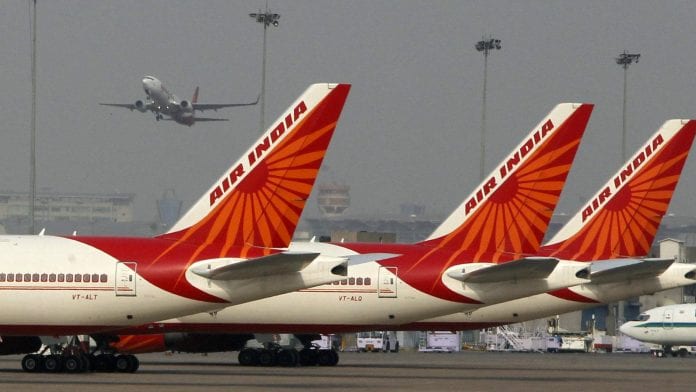
    Air India Disinvestment

    The government has kicked off the complete disinvestment process of Air India for the second time after it failed to receive a single bid in the first attempt back in 2018.

    100% stake sale

    • Most significantly, the government will offload 100% of its stake in Air India, compared with 76% put on the block last time.
    • The government holding even a minor stake in the airline post disinvestment was seen as a huge negative for any potential buyers.
    • The buyer will have to take on Rs 23,286 crore of debt out of a total Rs 60,074 crore.
    • Compared with this, in the last attempt, a potential buyer would have to take on Rs 33,392 crore of debt and current liabilities.
    • The amount of debt being bundled with the airline in this attempt is towards the aircraft that are being sold off along with the carrier as part of the transaction.
    • The working capital and other non-aircraft debt will be retained by the government.

    Air India’s assets

    • The new owner will be taking on a fleet of 121 aircraft in Air India’s fleet and 25 planes in Air India Express’ fleet.
    • These exclude the four Boeing 747-400 jumbojet aircraft that the airline plans to transfer to its subsidiary Alliance Air, which is not a part of the current transaction.
    • However, like the last attempt, the properties currently in use by Air India, including the Nariman Point building and the company’s headquarters near Connaught Place in New Delhi will be retained by the government.

    Will the new terms attract investors?

    • Air India has a 50.64% market share in international traffic among Indian carriers.
    • The government is hopeful of attracting investors with the new sale criteria, coupled with the main benefits of the airline, which are prime slots in capacity-constrained airports across the world.
    • However, any potential investor is also expected to look at the size of the airline’s operations with reference to what those operations generate.
    • For example, both Air India and Singapore Airlines operate with a fleet of 121 aircraft, but in 2018-19 Air India posted a net loss of Rs 8,556 crore, whereas Singapore Airlines reported a net profit of Singapore $ 779.1 million (approx Rs 4,100 crore).

    What will the new investor get?

    • The most attractive proposition in acquiring Air India is the slots and landing rights that it holds at airports such at Delhi, Mumbai, London, New York, Chicago, Paris, etc.
    • These could be helpful both to airlines looking to expand into long-haul international operations, and to entities looking to set up global operations from scratch.
    • Air India currently operates to 56 Indian cities and 42 international destinations.
    • The new investor also gets hold of the ground-handling firm AI-SATS, which offers end-to-end ground handling services such as passenger and baggage handling, ramp handling, aircraft interior cleaning etc. at Bengaluru, Delhi, Hyderabad, Mangaluru and Thiruvananthapuram airports.
    • This would provide the investor with an ancillary services firm with captive use.

    Loss makers in AI

    • Several of Air India’s international and domestic routes are profit-generating, while a number of them are loss-making or witness low load factors.
    • This is a legacy problem that the airline comes with for the new promoter.
    • Additionally, while the airline comes with 121 aircraft primed as domestic and international workhorses, 18 of them are grounded for lack of funds to make them airworthy.

    How will consumers and employees be impacted?

    Consumers

    • If and when Air India is taken over by a private entity or consortium, experts believe the first move could be pruning of operations to ensure the airline inches closer to profitability.
    • This could cause Air India to cease operations on certain loss-making domestic and international routes — leading to a rise in fares.
    • It is believed that Air India’s continuous loss-making operations have skewed the market, wherein private companies have to play ball even when fares are artificially low.
    • Cutting certain routes could also impact consumers in terms of the unique offerings by Air India, such as higher baggage allowance, etc.

    Employees of AI

    • Air India’s bloated staff strength was flagged by potential investors in the last disinvestment attempt.
    • The airline has 17,984 employees, of which 9,617 are permanent staff.
    • Whether the employees will be retained by the new investor is unclear.
    • The government is expected to provide more clarity on conditions for retaining staff in the request-for-proposal stage, which will come after expressions of interest are received.
  • Zoonotic Diseases: Medical Sciences Involved & Preventive Measures

    Why China has emerged as the epicentre of global outbreaks of disease?

    Several deadly new viruses in recent years have emerged in China — Severe Acute Respiratory Syndrome (SARS), bird flu, and now the novel Coronavirus (nCOV).

    Zoonotic infections

    • Closely packed stalls in busy marketplaces, the Chinese taste for exotic meats, and the high population density of cities create the conditions for the spread of zoonotic infections.
    • The reason could lie in the busy food markets dotting cities across the country — where fruits, vegetables, hairy crabs and butchered meat are often sold next to bamboo rats, snakes, turtles, and palm civets.
    • The relationship between zoonotic pathogens and global pandemics are not new.
    • The WHO estimates that globally, about a billion cases of illness and millions of deaths occur every year from zoonoses, i.e, diseases and infections naturally transmitted between people and vertebrate animals.
    • Some 60% of emerging infectious diseases globally are zoonoses. Of the over 30 new human pathogens detected over the last three decades, 75% originated in animals.

    Major cause: Animal markets

    • In animal markets, there are greater chances of transmission of a virus from animals to humans, and its mutation to adapt to the human body.
    • It has happened wherever in the world there is unregulated mixing of humans and animals, either wild or domesticated.
    • The official referred to the Ebola outbreak in Africa there it was wild chimpanzees who had the disease. It came into humans after these were killed and consumed.
  • Waste Management – SWM Rules, EWM Rules, etc

    Polycrack Technology


    Indian Railways has put in place the country’s first Waste to Energy plant in Mancheswar Carriage Repair Workshop which falls under East Coast Railway. It uses a patented technology called POLYCRACK, is first-of-its-kind in Indian Railways and fourth in India.

    Polycrack Technology

    • It is world’s first patented heterogeneous catalytic process which converts multiple feed stocks into hydrocarbon liquid fuels, gas, carbon and water.
    • The process is a closed-loop system and does not emit any hazardous pollutants into the atmosphere.

    Feeders

    • Polycrack Plant can be fed with all types of plastic, petroleum sludge, un-segregated MSW (Municipal Solid Waste) with moisture up to 50%, e–waste, automobile fluff, organic waste including bamboo, garden waste etc., and Jatropha fruit and palm bunch.

    How it works?

    • The process is a closed-loop system and does not emit any hazardous pollutants into the atmosphere.
    • The combustible, non-condensed gases are re-used for providing energy to the entire system and thus, the only emission comes from the combustion of gaseous fuels.
    • The emissions from the combustion are found to be much less than prescribed environmental norms.
    • This process will produce energy in the form of Light Diesel Oil which is used to light furnaces.

    Advantages of Polycrack

    Polycrack has the following advantages over the conventional approach of treating solid waste:

    • Pre-segregation of waste is not required to reform the waste. Waste as collected can be directly fed into Polycrack.
    • It has high tolerance to moisture hence drying of waste is not required.
    • Waste is processed and reformed within 24 hours.
    • It is an enclosed unit hence the working environment is dust free.
    • Excellent air quality surrounding the plant.
    • Biological decomposition is not allowed as the Waste is treated as it is received.
    • The foot print of the plant is small hence the area required for installing the plant is less when compared with conventional method of processing.
    • All constituents are converted into valuable energy thereby making it Zero Discharge Process.
    • Gas generated in the process is re-used to provide energy to the system thereby making it self-reliant and also bring down the operating cost.
    • There is no atmospheric emission during the process unlike other conventional methods except for combustion gases which have pollutants less than the prescribed norms the world over.
    • Operates around 450 degrees, making it a low temperature process when compared with other options.
    • Safe and efficient system with built-in safety features enables even an unskilled user to operate the machine with ease.
    • Low capital cost and low operating cost.
    • Fully automated system requires minimum man power.
  • Issues related to Economic growth

     [op-ed of the day] The convergence of rich nations with the rest has gone off track

    Context

    Sound policies are needed to put emerging economies back on a higher growth path and ameliorate regional inequalities.

    The theory of convergence

    • The theory of convergence is one of the most powerful and noblest ideas in economics.
      • What is it? It is the concept that other things being equal, poorer economies should catch up with richer ones so that inequality between the rich and the poor attenuates, and conceivably even disappears over time.
    • Capital is more productive in poor economies: The premise driving convergence is that capital (whether physical or human) is more productive in poor economies than rich ones due to what economists call “diminishing marginal productivity”.
      • In layman’s terms, a small amount of investment yields a greater increase in output where there is less capital than where there is more.
      • Lesser the development more the development: Even more simply, the rate of return on investment is inversely related to the level of economic development.
    • Experience of Japan and Germany after WW 2: The experience of advanced economies gave economists reason to be optimistic that convergence occurs according to the script.
      • Thus, the devastated economies of Europe, along with Japan, quickly caught up with the advanced economies that had not been ravaged by World War II, most notably, the US.
      • Germany and Japan closing the gap: At the end of the war, with their capital stocks destroyed, Germany and Japan were much poorer than the US; by the 1960s, they had closed the gap.

    Globalisation and the unfulfilled hopes of convergence

    • Replication of the rise of Japan and Germany? At one time, it appeared that the same play was at work between emerging economies and advanced economies.
      • Rise of India and China: Economies such as China and India, as well as others, were far outstripping the growth rates of the US and other rich economies,
      • Hope of closing gap: India and China gave hope that at least the more rapidly growing of the emerging economies would close the gap with the rich world within decades rather than centuries.
    • Adoption of technology at low cost: There was presumed to be an additional powerful force working toward convergence.
      • Poorer economies are, almost by definition, far away from the technological frontier at which the richest economies operate.
      • There is thus ample room to absorb newer technologies at relatively low cost and in a relatively short span of time, without encountering slowing growth like the rich economies,
      • In simpler terms, it is difficult and costly to innovate the latest Apple iPhone, but relatively easy to reverse engineers at least some of Apple’s technology.

    Reality: Convergence is faltering

    • Recent evidence suggests that convergence is faltering.
    • World Bank report of retarding convergence: A recent World Bank report documents a worrying slowdown in productivity growth in emerging economies, significantly retarding convergence.
      • Lower productivity: The report’s calculations suggest that emerging economies have 14% lower productivity than they would have had if previous trends of high productivity growth were maintained.
      • Lower commodity exports: For commodity exporters, this is a whopping 19%.
    • The silver lining for faltering economies: According to the World Bank, the main driver of falling productivity are-
      • Insufficient investment in physical and human capital.
      • Insufficient mobility of machines and workers from less productive to more productive sectors of the economy.
    • India’s case: The Indian case clearly bears this out, with languishing investment and unfinished productivity-enhancing reforms, especially in the country’s labour market, being the key culprits behind the sharp slowdown in growth.

    Way forward

    • Repair financial systems: Governments, including India’s, need to do the heavy lifting of repairing damaged financial systems overladen with bad debt.
    • Restore fiscal rectitude.
    • Inflation focused monetary policy: Ensure that monetary policy remains focused on stable inflation rather than being excessively loose as a risky substitute for structural reforms.
    • Reforms: Press ahead with unfinished reforms to capital, land and labour markets.
    • Address the regional disparities: There is a further critical dimension in the case of large multi-region economies such as India.
      • Not only has convergence been faltering between nations, but it has also been faltering between the richer and poorer regions of large nations such as India.

    Conclusion

    The data does not present an epistle of despair, but of hope. The pursuit of sensible and conventional sound economic policies ought to put emerging economies as a group back on a higher growth trajectory. Convergence may yet end up being a parable of promise rather than a fable of folly.


  • Innovations in Sciences, IT, Computers, Robotics and Nanotechnology

    [op-ed snap] The hype over hypersonics

    Context

    Russia announced that its new hypersonic glide vehicle (HGV), Avangard, had been made operational.

    What HGV is and where the US and China stand

    • What is HGV and what is it capable of?
      • Speed over 5 Mach: A hypersonic delivery system is essentially a ballistic or cruise missile that can fly for long distances and at speeds higher than 5 Mach at lower altitudes.
      • Invulnerable to interception: This allows it to evade interception from current Ballistic Missile Defence (BMD).
      • High manoeuvrability: It can also execute a high degree of manoeuvres.
      • Avangard-Developed by Russia: Russia claims that this HGV can fly at over 20 times the speed of sound.
      • Invulnerable to interception: and is capable of such manoeuvring as to be invulnerable to interception by any existing and prospective missile defence means of the potential adversary.
    • China and the U.S. are also close on the heels: The U.S. has moved from the research to the development stage.
      • Where China stands: China demonstrated the DF-17, a medium-range missile with the HGV, at the military parade in October 2019.
    • What were the reasons for the development: The U.S. walked out of anti-ballistic missile treaty in 2002, prompted by the U.S. exit from the treaty and fear of the U.S. anti-ballistic missile defence system.

    How would hypersonics complicate the security concerns?

    • First complication-Increase in the possibility of miscalculation: These missiles are being added to the military capabilities of countries that possess nuclear weapons.
      • For these nations, the concern is always an attack on nuclear assets to degrade retaliation
      • Destination ambiguities: Another layer of complication is added by the fact that these missiles bring in warhead and destination ambiguities.
      • Increasing tendency to assume worst: In both cases, when an adversary’s early warning detects such missiles headed in its direction, but cannot be sure whether they are conventional or nuclear-armed, nor ascertain the target they are headed towards, the tendency would be to assume the worst.
      • For an adversary that faces a country with a BMD but itself has a small nuclear arsenal, it would fear that even conventionally armed hypersonic missiles could destroy a portion of its nuclear assets.
      • The tendency to shift to trigger-ready postures: The tendency could then be to shift to more trigger-ready postures such as launch on warning or launch under attack to ostensibly enhance deterrence.
      • Risk of miscalculation: But such shifts would also bring risks of misperception and miscalculation in moments of crisis.
    • Second complication-Offence defence spiral: According to reports, the U.S. has begun finding ways of either strengthening its BMD or looking for countermeasures to defeat hypersonics, besides having an arsenal of its own of the same kind.
      • Possibility of arms race: The stage appears set for an arms race instability given that the three major players in this game have the financial wherewithal and technological capability to play along.
      • This looks particularly imminent in the absence of any strategic dialogue or arms control.
    • Third complication-Possibility of the arms race into outer space: A third implication would be to take offence-defence developments into outer space.
      • Sensors are already placed into space: Counter-measures to hypersonics have been envisaged through the placement of sensors and interceptors in outer space.
      • While none of this is going to be weaponisation of outer space would, nevertheless, be a distinct possibility once hypersonic inductions become the norm.

    Conclusion

    The induction of this technology would likely prove to be a transitory advantage eventually leading nations into a strategic trap. India needs to make a cool-headed assessment of its own deterrence requirements and choose its pathways wisely.

  • [op-ed of snap] The four phases of constitutional interpretation

    Context

    The ways in which the Constitution of India is interpreted has undergone changes through four phases.

    Constitution-An Ambitious political experiment

    • Indian Constitution was an ambitious political experiment for the following reasons-
      • Universal Adult Franchise: India began its journey with the universal adult franchise.
      • Federalism: Federalism in a region consisting of over 550 princely States.
      • The promise of Equality: The Constitution was a sort of social revolution in a deeply unequal society with the promise of equality.
      • Unique constitutional design: it was equally a unique achievement in terms of constitutional design.

    The first phase of interpretation-Focus on text

    • A textualist approach-focusing on the plain meaning of the words: In its early years, the Supreme Court adopted a textualist approach, focusing on the plain meaning of the words used in the Constitution.
      • K. Gopalan v. State of Madras (1950) was one of the early decisions in which the Court was called upon to interpret the fundamental rights under Part III.
      • The leader of the Communist Party of India claimed that preventive detention legislation under which he was detained was inconsistent with Articles 19 (the right to freedom), 21 (the right to life) and 22 (the protection against arbitrary arrest and detention).
      • Fundamental rights separate from each other: The Supreme Court decided in A. K. Gopalan case that each of those articles covered entirely different subject matter, and were to be read as separate codes rather than being read together.
    • Unlimited Amendment Power: In its early years, the Court read the Constitution literally, concluding that there were no limitations on the Parliament’s power to amend the Constitution.

    The second phase of interpretation-Focus on ‘basic structure’

    • Appeals to the structure and coherence: Appeals to the text of the Constitution were gradually overtaken by appeals to the Constitution’s overall structure and coherence.
      • Limited Amendment Power-Kesavananda Bharati case: In the leading case of Kesavananda Bharati v. State of Kerala(1973), the Court concluded that Parliament’s power to amend the Constitution did not extend to altering its “basic structure”.
      • What is the “Basic Structure”: The basic structure is an open-ended list of features that lie within the exclusive control of the Court.
      • When Parliament attempted to overturn this decision by amending the Constitution yet again, the Court, relying on structuralist justifications, decisively rejected that attempt.
    • Key takeaways from Kesavananda Bharati case
      • Limited Amendment Power: In this case, the Court pronounced that Parliament’s power to amend the Constitution is not unlimited.
      • Fundamental rights as a cohesive bill of rights: In this phase, the Court also categorically rejected the Gopalan approach in favour of a structuralist one.
      • Maneka Gandhi v. Union of India (1978):  Through decision, in this case, the Court conceived of the fundamental rights as a cohesive bill of rights rather than a miscellaneous grouping of constitutional guarantees.
      • Incremental interpretation of Right to Life: The right to life was incrementally interpreted to include a wide range of rights such as clean air, speedy trial, and free legal aid.
      • Courts playing role in governance: The incremental interpretation of Article 21 paved the way for the Supreme Court to play an unprecedented role in the governance of the nation.
    • What was common in the first two phases?
      • Interpretation done by Constitutional Benches: That significant decisions involving the interpretation of the Constitution were entrusted to Constitution Benches (comprising five or more judges of court) and were carefully (even if incorrectly) reasoned.
      • Little scope for precedential confusion: There was limited scope for precedential confusion, since matters which had been decided by Constitution Benches and which demanded reconsideration were referred to larger Constitution Benches.

    Third Phase of interpretation-Eclecticism

    • Different opinions on the same issues: In the third phase the Supreme Court started to give different opinions on the same issues-i.e. it engaged in eclecticism.
      • Lesser reasoning: The Court often surrendered its responsibility of engaging in a thorough rights reasoning of the issues before it.
      • Two factors underpinned this institutional failure.
    • First-Change in the structure of the SC: The changing structure of the Court, which at its inception began with eight judges, grew to a sanctioned strength of 31; it is currently 34.
    • It began to sit in panels of two or three judges, effectively transforming it into a “polyvocal” group of about a dozen sub-Supreme Courts.
    • Second-expansion of own role by the SC-The Court began deciding cases based on a certain conception of its own role -whether as a sentinel of democracy or protector of the market economy.
    • The focus of the judgement on the result rather than reason: This unique decision-making process sidelined reason-giving in preference to arriving at outcomes that match the Court’s perception.
    • Consequences of the eclecticism
      • Rise of doctrinal incoherence and inconsistency: The failure to give reasons contributed not only to methodological incoherence but also to serious doctrinal incoherence and inconsistency across the law.
      • Conflicting decisions and interpretations: This approach can be best described as panchayati eclecticism, with different Benches adopting inconsistent interpretive approaches based on their conception of the Court’s role, and arriving at conclusions that were often in tension with one another.
      • Decision detached from precedents and established methods: The imagery that panchayati eclecticism is meant to invoke is that of a group of wise men and women (applying the analogy, sub-Supreme Courts), taking decisions based on notions of fairness that are detached from precedent, doctrine and established interpretive methods.

    Fourth phase- based on the purpose

    • Purpose of enactment of the Constitution as critical: In the fourth phase, the Court has acknowledged as critical to its interpretive exercise the purpose for which the Constitution has been enacted.
    • The realisation of revolutionary and transformative potential: The Court is now beginning to interpret the Constitution in accordance with its revolutionary and transformative potential.
      • Renaissance in decisions: With about a dozen significant Constitution Bench decisions from the Supreme Court since September 2018, there has been a renaissance in decision-making by Constitution Benches.
      • The most important decisions of this period include-
      • Court’s decisions striking down Section 377 and the criminal offence of adultery.
      • And including the office of the Chief Justice of India within the scope of the Right to Information Act.

    Conclusion

    With the interpretation process entering in the fourth phase-realising the purpose of enactment of the Constitution- Indian judiciary is on the right track, however, facets of phase 3 continue to linger on it. The Supreme Court must avoid getting in phase three mode to in order to realise the purpose it was entrusted with.


  • Women empowerment issues – Jobs,Reservation and education

    Explained: Why are there more men than women in the field of STEM?

    Across the world, there are more men who are active in science, technology, engineering and medicine (STEM) than women. Of the 866 Nobel winners so far, only 53 have gone to women.

    Sociology behind the gender-divide

    • Research shows that when men and women apply for jobs — be in the labour market, or in places where high level qualifications are demanded, men candidates engage in self-promotion, and are boastful while equally qualified women are more ‘modest’ and ‘undersell’ themselves.
    • Even in groups and situations where men and women are present as colleagues, the views of women are either ignored or listened to less seriously than those of men.
    • As a result, women tend to underestimate their ability relative to men, especially in public settings, and negotiate less successfully.

    Why this imbalance?

    The authors suggest three socio-psychological reasons, namely:

    1. masculine culture
    2. lack of sufficient early exposure to computers, physics and related areas compared to boys in early childhood and
    3. gender gap in self-efficacy

    Stereotypes and role models

    I] Masculine culture

    • The masculine culture is due to stereotyping that men are fitter for certain jobs and skills than women, and that women are more ‘delicate’, ‘tender’ and thus unfit for ‘hard’ jobs.
    • In addition, there are not enough female role models whom women may admire and follow.

    II] Lack of exposure

    • The lack of exposure in early childhood to certain fields and the supposed stereotyping of computer field practitioners as ‘nerds’ with social awkwardness would seem to have played a role from women shying away into other fields.

    III] Gender gap in self-efficacy

    • The ‘gender gap in self-efficacy’ appears to have arisen as a result of the above two, and leads to a worry in girls’ and women’s minds as to ‘whether I am really only fit for certain ‘soft’ fields and jobs or a feeling of diffidence.
    • This is clearly a reflection and product of masculine culture.
    • But then, even when we turn to life sciences, where both men and women compete for positions and career advancements in universities and research labs, this gender disparity is glaring.

    India is no better

    • The men rule roosts here too in India. India has been a patrilineal society with the notion that women need not take on jobs, and that this notion has only recently been revised.
    • Women form only 10-15% of STEM researchers and faculty members in the IITs, CSIR, AIIMS and PGIs.
    • In private R & D labs, there are very few women scientists.
  • Climate Change Impact on India and World – International Reports, Key Observations, etc.

    Biorock technique for Coral Restoration

    The Zoological Survey of India (ZSI), with help from Gujarat’s forest department, is attempting for the first time a process to restore coral reefs using biorock or mineral accretion technology.

    What is Biorock Technique?

    • Biorock is the name given to the substance formed by electro accumulation of minerals dissolved in seawater on steel structures that are lowered onto the sea bed and are connected to a power source, in this case solar panels that float on the surface.
    • The technology works by passing a small amount of electrical current through electrodes in the water.
    • When a positively charged anode and negatively charged cathode are placed on the sea floor, with an electric current flowing between them, calcium ions combine with carbonate ions and adhere to the structure (cathode).
    • This results in calcium carbonate formation. Coral larvae adhere to the CaCO3 and grow quickly.
    • Fragments of broken corals are also tied to the biorock structure, where they are able to grow at least four to six times faster than their actual growth as they need not spend their energy in building their own calcium carbonate skeletons.

    Significance of the move

    • The technology helps corals, including the highly sensitive branching corals, to counter the threats posed by global warming.
    • In 2015, the same group of ZSI scientists had successfully restored branching coral species (staghorn corals) belonging to the family Acroporidae (Acropora formosa, Acropora humilis, Montipora digitata) that had gone extinct about 10,000 years ago to the Gulf of Kachchh.

    Back2Basics

    Coral Bleaching

    • The stunning colours in corals come from a marine algae called zooxanthellae, which live inside their tissues.
    • This algae provides the corals with an easy food supply thanks to photosynthesis, which gives the corals energy, allowing them to grow and reproduce.
    • When corals get stressed, from things such as heat or pollution, they react by expelling this algae, leaving a ghostly, transparent skeleton behind.
    • This is known as ‘coral bleaching’. Some corals can feed themselves, but without the zooxanthellae most corals starve.
  • Higher Education – RUSA, NIRF, HEFA, etc.

    Global Talent Competitiveness Index (GTCI) 2020

    What is the news: The Global Talent Competitiveness Index (GTCI) was recently published.

    Performance Analysis

    • India has climbed eight places to 72nd rank in the GTCI which was topped by Switzerland, the US and Singapore.
    • Sweden (4th), Denmark (5th), the Netherlands (6th), Finland (7th), Luxembourg (8th), Norway (9th) and Australia (10th) complete the top 10 league table.
    • In the BRICS grouping, China was ranked 42nd, Russia (48th), South Africa (70th) and Brazil at 80th position.
    • This year’s GTCI report explores how the development of AI is not only changing the nature of work but also forcing a re-evaluation of workplace practices, corporate structures and innovation ecosystems.

    About the GTCI report

    • It was started in 2013 and is an annual benchmarking report that measures the ability of countries to compete for talent, their ability to grow, attract and retain talent.
    • Theme for 2020 was ‘Global Talent in the Age of Artificial Intelligence’. It explores how the development of artificial intelligence (AI) is not only changing the nature of work but also forcing a re-evaluation of workplace practices, corporate structures and innovation ecosystems.
    • Inequality: The report noted that the gap between high income, talent-rich nations and the rest of the world is widening. More than half of the population in the developing world lack basic digital skills.
    • About GTCI Report: It is launched by INSEAD, a partner and sponsor of the United Nation’s Sustainable Development Goals (SDGs) Davos, Switzerland recently.
    • INSEAD is one of the world’s leading and largest graduate business schools with locations all over the world and alliances with top institutions.
    • The report, which measures countries based on six pillars:
    1. enable
    2. attract
    3. grow
    4. retain talent
    5. vocation and technical skills
    6. global knowledge skills

Join the Community

Join us across Social Media platforms.