💥UPSC 2027,2028 Mentorship (April Batch) + Access XFactor Notes & Microthemes PDF

Archives: News

  • Bharat Emission Standards

    BS-VII Emission Norms

    Why in the News?

    To align India’s automobile sector with global standards, the government is planning to introduce BS VII emission norms by 2026-27.

    About BS7 Norms:

    • Overview: India’s equivalent of Euro 7 emission standards, aimed at reducing vehicular pollution and aligning with global benchmarks.
    • Coverage: Applies uniformly to cars, vans, buses, trucks, petrol, diesel, hybrid, and electric vehicles.
    • On-Board Monitoring (OBM): New system to monitor tailpipe emissions in real time, covering NOx, ammonia, PM, engine gases.
    • Non-Exhaust Regulation: First-time regulation of brake dust (PM) and tyre microplastics.
    • EV Standards: Introduces battery safety, durability, and longevity index to lower raw material use and build consumer confidence.
    • Digital Safeguards: Ensures vehicles are not tampered with and remain within emission limits.
    • Testing Scope: Expands checks to real driving conditions beyond lab-based cycles.

    Key Differences: BS6 vs BS7

    • OBD vs OBM: BS6 used On-Board Diagnostics (OBD); BS7 brings OBM for direct emission monitoring.
    • NOx Standards: BS6 allowed 60 mg/km petrol, 80 mg/km diesel; BS7 sets uniform 60 mg/km.
    • Coverage: BS6 regulated exhaust only; BS7 adds non-exhaust (brakes, tyres).
    • EV Inclusion: BS6 ignored EVs; BS7 regulates battery life, safety, and replacement cycles.
    • Testing: BS6 relied on defined test cycles; BS7 uses broader real-world conditions.
    • Technology Push: BS7 compels automakers towards advanced emission-control systems and turbo, direct-injection engines.
    • Cost Factor: BS7 compliance raises vehicle costs; some older models may be discontinued.

    History of Emission Norms in India:

    Year / Period Key Development
    1991 Mass emission norms introduced for petrol vehicles.
    1992 Mass emission norms introduced for diesel vehicles.
    April 1995 Mandatory catalytic converters in new petrol cars in Delhi, Mumbai, Kolkata, Chennai; unleaded petrol (ULP) introduced.
    2000 Introduction of Euro I equivalent “India 2000” norms for passenger and commercial vehicles; stricter norms for two-wheelers.
    2001 Euro II equivalent Bharat Stage II (BS II) norms introduced in Delhi, Mumbai, Chennai, Kolkata.
    August 2002 First Auto Fuel Policy announced, outlining emission and fuel roadmap up to 2010.
    April 2005 Bharat Stage III (BS III) norms implemented in 13 metro cities; rest of India continued with BS II.
    April 2010 Bharat Stage IV (BS IV) implemented in 13 metro cities; rest of India adopted BS III.
    October 2014 BS IV extended to 20 more cities.
    2013 Auto Fuel Policy 2025 submitted to MoPNG (Ministry of Petroleum & Natural Gas), outlining roadmap up to 2025.
    April 2017 Nationwide implementation of BS IV.
    April 2020 Direct leap to BS VI (skipping BS V) due to severe pollution in Delhi NCR.
    Upcoming (BS VII) To be aligned with Euro 7 standards: stricter norms, On-Board Monitoring (OBM), coverage of brake & tyre emissions, and EV battery standards.


    [UPSC 2004] Consider the following statements:

    1. The Oil Pool Account of Government of India was dismantled with effect from 1-4-2002.

    2. Subsidies on PDS kerosene and domestic LPG are borne by Consolidated Fund of India.

    3. An expert committee headed by Dr. R.A. Mashelkar to formulate a national auto fuel policy recommended that Bharat Stage-II Emission Norms should be applied throughout the country by 1 April, 2004.

    Which of these statements given above are correct?

    Options: (a) 1 and 2 (b) 2 and 3 (c) 1 and 3 (d) 1, 2 and 3*


  • Innovations in Biotechnology and Medical Sciences

    Researchers develop Red Ivy Plant-Based Wound-Healing Pad

    Why in the News?

    Researchers at JNTBGRI has developed a multifunctional wound-healing pad using nanomaterials, inspired by the red ivy plant (Strobilanthes alternata), traditionally used in folk medicine.

    About the Red Ivy Plant:

    • Overview: Strobilanthes alternata, locally called murikooti pacha, belonging to the Acanthaceae family.
    • Habitat: Found abundantly in tropical regions, including India.
    • Traditional Use: Used in folk medicine for treating cuts and wounds.
    • Scientific Discovery: JNTBGRI, Palode isolated acteoside, a natural bioactive compound, for the first time in this plant.
    • Therapeutic Use: Acteoside, known elsewhere for medicinal activity, showed high wound-healing efficacy at 0.2% concentration in red ivy.

    Features of the Wound-Healing Pad:

    • Design: India’s first multifunctional herbal wound dressing pad, combining traditional knowledge with nanotechnology.
    • Components: Electro-spun nanofiber layer (biodegradable, porous, antimicrobial barrier); Acteoside + neomycin sulfate blend (healing and infection control); Sodium alginate sponge (absorbs exudates); Activated carbon layer (controls odour).
    • Significance: Affordable, scalable, and a model of herbal medicine integrated with modern nanotech innovation.
    [UPSC 2021] Which one of the following is used in preparing a natural mosquito repellent?

    Options:

    (a) Congress grass (b) Elephant grass (c) Lemongrass* (d) Nut grass


  • Indian Navy Updates

    Expedition ‘Samudra Pradakshina’

    Why in the News?

    Defence Minister flagged off Samudra Pradakshina, the world’s first tri-service all-women circumnavigation sailing mission, from the Gateway of India, Mumbai.

    About Expedition ‘Samudra Pradakshina’:

    • Overview: First-ever all-women tri-service circumnavigation sailing expedition in the world.
    • Crew: Ten women officers from the Army, Navy, and Air Force, led by Lt. Col. Anuja Varudkar.
    • Vessel: IASV Triveni, a 50-foot yacht built indigenously in Puducherry.
    • Duration & Route: Nine months, covering 26,000 nautical miles, crossing the Equator twice, and rounding Capes Leeuwin, Horn, and Good Hope.
    • Port Calls: Fremantle (Australia), Lyttelton (New Zealand), Buenos Aires (Argentina), Cape Town (South Africa).
    • Mission Objectives: Showcase Nari Shakti, promote joint military cooperation, advance Atmanirbhar Bharat, strengthen maritime diplomacy, and conduct ocean research with the National Institute of Oceanography.

    Historic Precursors:

    • Sir Robin Knox-Johnston (UK):  First solo non-stop circumnavigation (1969).
    • Captain Dilip Donde (2009–10): First Indian solo circumnavigation. Commander Abhilash Tomy (2012–13) — first Indian solo non-stop circumnavigation.
    • Women-led Expeditions: Navika Sagar Parikrama (2017–18)– first all-women Indian Navy circumnavigation on INSV Tarini. Navika Sagar Parikrama-II (2024–25) – second successful all-women naval circumnavigation on INSV Tarini.
    [UPSC 2025] Operations undertaken by the Army towards upliftment of the local population in remote areas to include addressing of their basic needs is called:

    Options:

    (a) Operation Sankalp (b) Operation Maitri (c) Operation Sadbhavana* (d) Operation Madad


  • Wildlife Conservation Efforts

    Vultures and Pandemic Prevention

    Why in the News?

    Vultures, vital for carcass disposal and disease control, are key to pandemic preparedness.

    About Vulture Species in India:

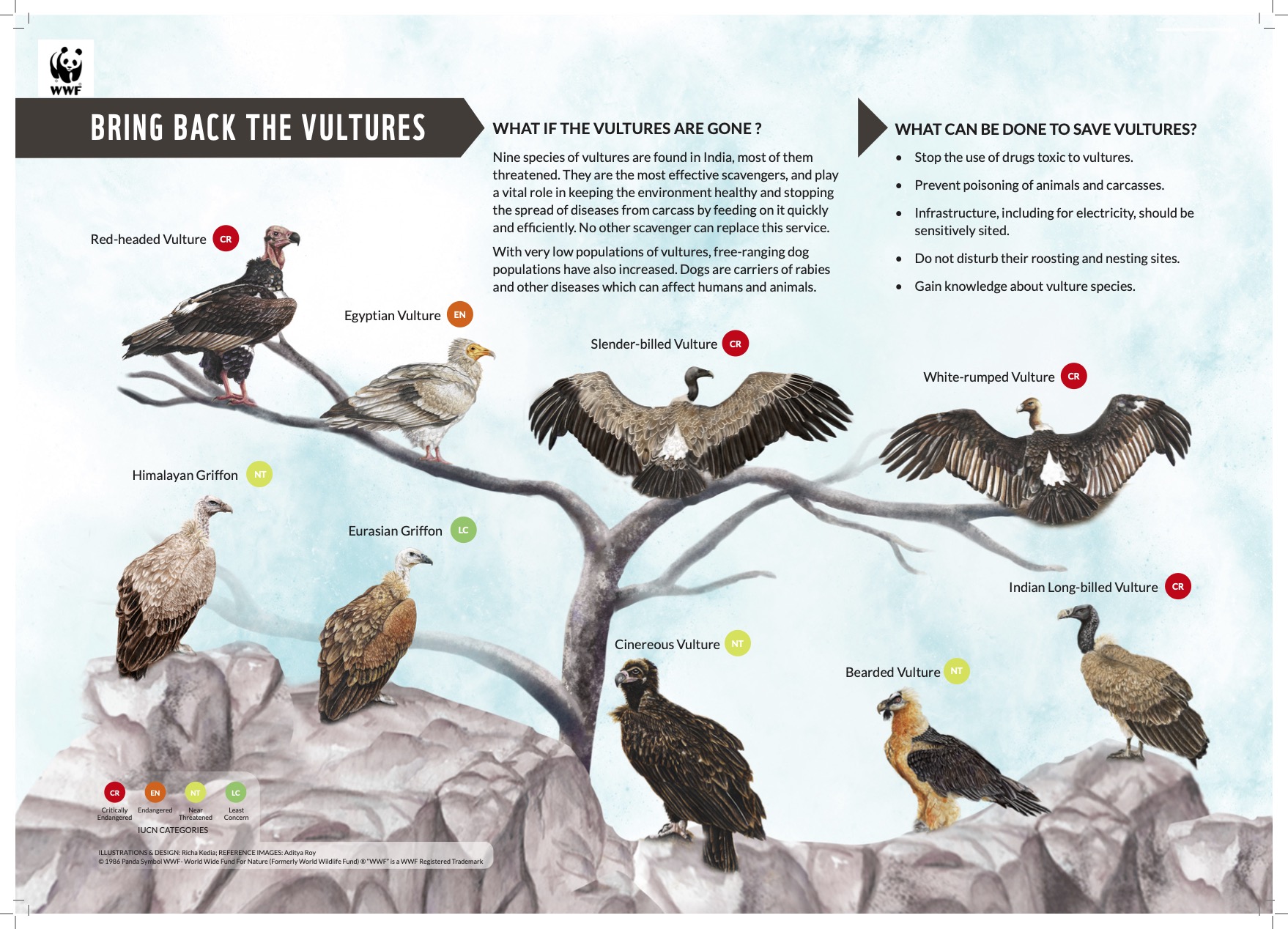
    • Overview: Vultures are among 22 global species of large scavenger birds, found mostly in tropics and subtropics.
    • Ecological Role: Serve as nature’s garbage collectors, preventing disease spread and maintaining balance in ecosystems.
    • Indian Diversity: India hosts 9 species — Oriental white-backed, Long-billed, Slender-billed, Himalayan, Red-headed, Egyptian, Bearded, Cinereous, and Eurasian Griffon.

    Vultures and Pandemic Prevention

    Distribution and Population Trends:

    • Historic Abundance: In the 1980s, India had over 40 million vultures, often in large groups near carcass dumps.
    • Population Crash: Since the 1990s, numbers have declined by over 95%, mainly due to diclofenac poisoning from veterinary use.
    • Flyway Connection: Vultures are part of the Central Asian Flyway (CAF), linking breeding sites in Central Asia with South Asia’s wintering zones.
    • Global Relevance: The CAF spans 30+ countries, making vulture conservation a regional and international public health concern.

    Vultures and Pandemic Preparedness:

    • Carcass Disposal: By consuming dead animals, vultures stop spread of pathogens such as anthrax, Clostridium botulinum, rabies.
    • Bio-Monitor Role: As first responders at carcasses, they act as natural surveillance systems, reducing risks of zoonotic spillover.
    • Conservation Gap: Protection of vultures is rarely included in One Health strategies, despite being low-cost compared to pandemic response.
    • Community Involvement: Local communities coexisting with vultures can aid in awareness, conservation, and disease monitoring, but remain underutilised.
    [UPSC 2012] Vultures which used to be very common in Indian countryside some years ago are rarely seen nowadays. This is attributed to:

    (a) the destruction of their nesting sites by new invasive species disease among them

    (b) a drug used by cattle owners for treating their diseased cattle persistent and fatal*

    (c) scarcity of food available to them

    (d) a widespread, persistent and fatal disease among them


  • Climate Change Impact on India and World – International Reports, Key Observations, etc.

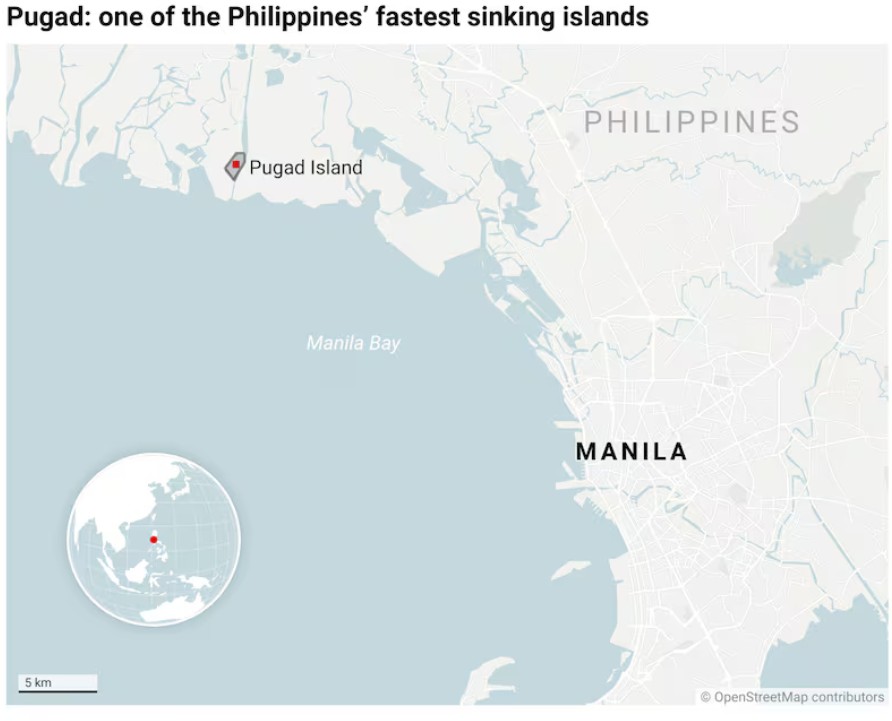
    In news: Pugad Island

    Why in the News?

    The Philippine island of Pugad in Manila Bay is facing an existential threat as rising sea levels and rapid land subsidence combine to submerge homes and livelihoods.

    About Pugad Island:

    • Overview: Small 7-hectare island in Manila Bay, situated at the mouth of the Angat–Pampanga River Delta, under Hagonoy municipality, Bulacan province, Philippines.
    • Population: Home to about 1,636–2,056 residents, living in a single clustered village of roughly 384 houses.
    • Livelihoods: Community depends on fishing and aquaculture, with families cultivating clams, mussels, and whiting fish in converted fishponds.
    • Living Conditions: Houses built mainly from bamboo and old metal sheets, with poor sanitation, minimal healthcare facilities, and only elementary-level schooling.
    • Flooding Challenge: Regularly hit by high-tide and monsoon floods, made worse by land subsidence (11 cm/year) and sea-level rise (three times global average).
    • Environmental Hazards: Loss of mangroves, urban encroachment, and exposure to typhoons increase risks of disaster and displacement.
    [UPSC 2018] Which of the following has/have shrunk immensely/dried up in the recent past due to human activities?

    1.Aral Sea 2.Black Sea 3.Lake Baikal

    Select the correct answer using the code given below:

    (a) 1 only (b) 2 and 3 only (c) 2 only (d) 1 and 3*


  • Festivals, Dances, Theatre, Literature, Art in News

    Swami Vivekananda and Vedanta Philosophy

    Why in the News?

    On the 132nd anniversary of his 1893 Chicago address, Swami Vivekananda was remembered for introducing Indian spirituality and Vedanta to the world with a message of tolerance and unity.

    About Swami Vivekananda:

    • Early life: Born Narendranath Datta in 1863, Kolkata; Chief disciple of Sri Ramakrishna.
    • Role: Monk, reformer, and founder of the Ramakrishna Mission (1897).
    • Chicago Speech: Rose to global fame with his 1893 Parliament of Religions address in Chicago, calling for religious tolerance and universal brotherhood.
    • Teachings: Advocated social service, education, and spiritual sovereignty as means of national regeneration.
    • Legacy: Inspired the rise of Vedanta Societies worldwide, spread yoga and meditation in the West, and became a key figure in the Indian renaissance and freedom movement.

    What is Vedanta Philosophy?

    • Roots: Derived from the Upanishads, especially Advaita Vedanta (non-dualism).
    • Oneness of Existence: The universe is one absolute Brahman; all souls are divine.
    • Religious Pluralism: All religions are valid paths to the same truth; promotes harmony, not division.
    • Self-Realization: The aim of life is to realize and manifest one’s innate divinity.
    • Karma Yoga: Selfless service is a spiritual practice — “Jiva is Shiva” (service to man is service to God).
    • Practical Vedanta: Application of spiritual wisdom to daily life and social reform, bridging tradition and modernity.

    Back2Basics: Indian Classical Philosophy

    There are 6 classical schools of Indian philosophy in the orthodox (Astika) tradition, which accept the authority of the Vedas:

    1. Nyaya: School of logic and reasoning
    2. Vaisesika:  Atomism and categories of reality
    3. Sankhya: Dualism of consciousness (purusha) and matter (prakriti)
    4. Yoga: Practical discipline based on Patanjali’s Yoga Sutras
    5. Mimamsa (Purva Mimamsa): Ritual action and dharma
    6. Vedanta (Uttara Mimamsa): Philosophy of the Upanishads

    Apart from these, there are also heterodox (Nastika) schools, which do not accept Vedic authority, such as Buddhism, Jainism, and Charvaka (materialism).


  • Foreign Policy Watch: India-Sri Lanka

    [11th September 2025] The Hindu Op-ed: The Way Forward on Katchatheevu, Palk Strait disputes

    PYQ Relevance

    [UPSC 2013] In respect of India — Sri Lanka relations, discuss how domestic factors influence foreign policy.

    Linkage: The Katchatheevu and Palk Strait disputes show how domestic pressures from Tamil Nadu, fishing community demands, political rhetoric, and cultural ties with Sri Lankan Tamils, directly shape India’s diplomatic posture with Colombo. Balancing these domestic concerns with treaty obligations and ecological imperatives defines the contours of India’s foreign policy. This reflects how internal politics often intersect with external relations in South Asia.

    Mentor’s Comment

    The Katchatheevu and Palk Straits disputes highlight the fine balance India must strike between diplomacy, livelihood, and ecological sustainability. While political rhetoric often overshadows the nuanced reality, the recent revival of dialogue between India and Sri Lanka offers an opportunity to convert conflict into cooperation. This article unpacks the legal, ecological, and humanitarian dimensions of the issue and offers insights useful for UPSC Mains aspirants.

    Introduction

    India’s neighbourhood diplomacy has been historically guided by Panchsheel, the Non-Aligned Movement, SAARC, and now the Neighbourhood First Policy. Yet, challenges with Sri Lanka, notably the fisheries dispute in the Palk Straits and the sovereignty of Katchatheevu island, continue to test this vision. Prime Minister Modi’s April 2025 visit to Colombo revived discussions on these long-standing issues, calling for a “humane approach” that reconciles livelihoods and ecological imperatives. The stakes are high: peace in the Palk Straits is not just about maritime boundaries but about human security, sustainability, and regional goodwill.

    The Katchatheevu and Palk Strait Issue

    Katchatheevu Island Dispute

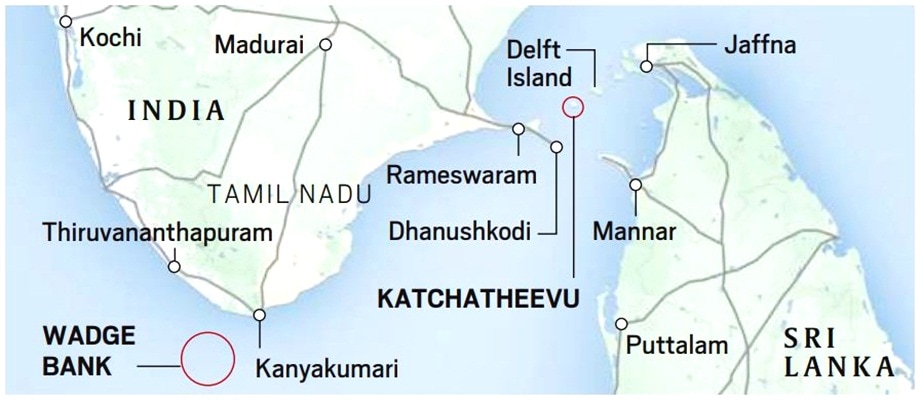
    • Katchatheevu island: A tiny, uninhabited islet (under 0.5 sq. miles) situated in the Palk Strait, legally ceded to Sri Lanka under the 1974 India-Sri Lanka Maritime Boundary Treaty.
      • Fishing rights vs sovereignty: While sovereignty is settled in Sri Lanka’s favour, Indian fishers, especially from Tamil Nadu, continue to demand access, leading to periodic clashes.
    • Palk Strait: A narrow stretch of sea separating Tamil Nadu from Sri Lanka’s Northern Province, rich in marine resources but ecologically fragile.
      • Conflict drivers: Indian bottom trawlers crossing the maritime boundary deplete fish stocks, harming both Indian artisanal fishers and Sri Lankan Tamil fishers.
      • Core issue: More than territory, it is a livelihood and ecological crisis, complicated by political rhetoric around Katchatheevu’s status.

    Livelihood and conservation at odds

    1. Shared history: Fishing communities of Tamil Nadu and Northern Sri Lanka have relied on the Palk Straits for centuries.
    2. Destructive practices: Indian mechanised bottom trawlers enter Sri Lankan waters, violating conservation norms.
    3. Legal framework: UNCLOS and FAO’s 1995 Code of Conduct prohibit destructive fishing; Sri Lanka banned bottom trawling in 2017.
    4. Ecological damage: Coral beds and shrimp habitats are destroyed; fish stocks are depleted.
    5. Internal conflict: Traditional Tamil Nadu artisanal fishers also lose out, creating intra-community livelihood clashes.

    Clearing the misconceptions around Katchatheevu

    1. Tiny territory: Katchatheevu is less than half a square mile, barren except for St. Anthony’s church.
    2. Treaty status: The 1974 India-Sri Lanka Maritime Boundary Treaty gave it to Sri Lanka; under international law, such treaties are binding.
    3. Legal precedents: Minquiers and Ecrehos (UK vs France, 1953) and Rann of Kutch (India-Pakistan, 1968) show administrative control outweighs historical claims.
    4. Clarification: Myths such as “Indira Gandhi gifting the island” are misleading; historical records supported Sri Lanka’s claim.
    5. Key point: Fishing rights are separate from sovereignty, and Katchatheevu is not the root of the dispute.

    Towards cooperative fisheries management

    1. Historic waters: Indian and Sri Lankan law recognise the Palk Straits as historic waters, giving stronger sovereign rights.
    2. UNCLOS Article 123: Mandates cooperation in semi-enclosed seas.
    3. Models for India-Sri Lanka:
      1. Baltic Sea Fisheries Convention (quota-sharing).
      2. Possible steps: Joint research station on Katchatheevu, regulated quotas, seasonal access, promotion of deep-sea fishing in India’s EEZ.

    Building empathy and fraternity

    1. Shared suffering: Sri Lankan Tamil fishers lost decades of livelihood during the civil war due to military restrictions.
    2. Goodwill memory: Tamil refugees were welcomed in Tamil Nadu during the conflict.
    3. Role of Tamil leaders: MPs and media in Sri Lanka can sensitise Tamil Nadu fishers to hardships across the strait.
    4. Narrative shift: Sri Lankan Tamils are not aggressors but fellow victims of history.

    India’s neighbourhood policy in action

    1. Diplomatic tradition: Panchsheel, NAM, SAARC, Neighbourhood First Policy.
    2. Way forward: Prioritise livelihood security, ecological sustainability, and treaty respect over populism.
    3. Multi-level engagement: Government-to-government, State/Provincial dialogue, community interaction.
    4. Larger vision: Transform Palk Straits from a zone of conflict to a symbol of cooperation.

    Conclusion

    The Katchatheevu issue is legally settled and should not distract from the real crisis, sustainable fisheries management in the Palk Straits. Balancing artisanal livelihoods, ecological imperatives, and regional goodwill requires cooperative frameworks and empathy. If pursued with prudence, India and Sri Lanka can convert disputes into opportunities, strengthening the Neighbourhood First Policy and ensuring that smaller conflicts do not overshadow South Asia’s collective future of peace and prosperity.

  • Internal Security Architecture Shortcomings – Key Forces, NIA, IB, CCTNS, etc.

    To build Roads is to build peace: Developmet in tribal hinterlands affected by Maoist Insurgency

    Introduction

    Roads in India’s Maoist-affected areas are more than physical infrastructure; they are symbols of the state itself. For communities long governed by neglect or non-state actors, the arrival of a road often marks the first visible sign of governance. Research and field evidence indicate that road development improves access to electricity, healthcare, education, and security while simultaneously displacing the influence of insurgents. Yet, roads alone cannot resolve conflict—they must be embedded in an ecosystem of justice, dignity, and inclusion.

    Why is this in the news?

    In regions affected by Maoist insurgency, particularly in Chhattisgarh, Jharkhand, and Odisha, roads have emerged as a strategic instrument of peacebuilding. Recent studies (Jain & Biswas, 2023) show a correlation between road connectivity and reduced crime, while international evidence (Prieto-Curiel & Menezes, 2020) highlights how poor connectivity perpetuates violence globally. This marks a shift in governance strategy, from viewing infrastructure as purely developmental to recognizing it as a political and stabilising force.

    How do roads reclaim governance from insurgents?

    1. Governance presence: Roads bring schools, clinics, and police stations, representing visible and accountable state authority.
    2. Displacement of parallel systems: Maoists often establish informal courts, taxation systems, and welfare activities in remote areas. Roads weaken these structures by enabling the state to reclaim legitimacy.
    3. Diego Gambetta’s insight: Like the Sicilian Mafia, insurgents thrive where the state withdraws. Infrastructure fills the governance vacuum.

    What role do insurgent groups play in governance gaps?

    1. Informal welfare: Research by Alpa Shah (2018) and Human Rights Watch (2009) shows Maoists provide rudimentary health and welfare services in villages.
    2. Strategic legitimacy: As Zachariah Mampilly (2011) argues, such services are not altruistic but intended to gain legitimacy.
    3. Coercion with care: Maoist medical aid or welfare is tied to fear and control, not democratic accountability.

    Why are extralegal institutions problematic?

    1. Absence of safeguards: Maoist-run “jan adalats” often issue punishments, even executions, without due process.
    2. Opaque justice: Decisions reflect entrenched hierarchies, patriarchy, and mob reprisals rather than rule of law.
    3. Comparison with khap panchayats: Like insurgent institutions, caste councils also deliver swift but exclusionary justice outside constitutional norms.

    How do roads act as political infrastructure?

    1. Symbolic presence: Each road signals that “the state is here to stay,” as seen in Chhattisgarh under B.V.R. Subrahmanyam’s governance strategy.
    2. Crime reduction: Jain and Biswas (2023) show connectivity lowers rural crime rates.
    3. Global parallels: Prieto-Curiel & Menezes (2020) demonstrate that poor connectivity correlates with higher violence across contexts.

    What safeguards are essential for success?

    1. Justice mechanisms: Roads must be accompanied by functioning courts and legal institutions to prevent arbitrary authority.
    2. Healthcare and welfare: Clinics, schools, and social infrastructure ensure that development is inclusive.
    3. Community participation: Roads must be built with the village, not just through the village, to ensure legitimacy and trust.

    Conclusion

    Roads in conflict-prone tribal regions represent more than mobility, they embody the arrival of governance and the possibility of peace. Yet, infrastructure without justice risks becoming a symbol of control rather than inclusion. For lasting impact, roads must be accompanied by democratic institutions, safeguards, and rights-based governance. To build roads, then, is indeed to build peace.

    Value Addition

    Naxalism: Definition & Origins

    • Definition: Left-Wing Extremism (LWE); armed, rural-based movement rooted in land alienation, poverty, displacement, forest rights, and state neglect.
    • Origins: Began with the 1967 Naxalbari peasant uprising in West Bengal; later consolidated under CPI (Maoist) formations.
    • Areas Most Affected — Historical Peak (late 2000s)
      • Spread: Nearly 180 districts across multiple states — the so-called Red Corridor.
      • Core states: Chhattisgarh, Jharkhand, Odisha, Bihar, Andhra Pradesh/Telangana, parts of Maharashtra & Madhya Pradesh.
    • Areas Most Affected — Recent (2024–25)
      • Reduced footprint: Down to ~38 districts (2024); further shrinking per 2025 statements.
      • Residual hotspots: Bastar (Chhattisgarh), Gadchiroli (Maharashtra), parts of Jharkhand & Odisha, and Chhattisgarh–Telangana border.
    • Why This Shift Matters 
      • Then: Widespread insurgency → blanket rural development response.
      • Now: Concentrated in forested pockets → targeted counter-insurgency + development (roads, police camps, rehabilitation).

    What is Operation Black Forest?

    • What / where / when: Operation Black Forest (also reported as Operation Kagar in some outlets) was a focused anti-Maoist offensive launched along the Chhattisgarh–Telangana border in April–May 2025 targeting PLGA (People’s Liberation Guerrilla Army) units in hilly forest belts such as the Kareguttalu/Karegutta hills. 
    • Claimed outcomes (official account): The government/security forces announced significant results — arrests, large recoveries of IEDs, explosives and weapons and the neutralisation (killed/captured) of several Maoists; the Home Minister hailed the operation as a major success and linked it to the government’s goal of a “Naxal-free India.’’

    India’s Current Strategy Against Naxalism

    • Security operations & coordination – Intensified offensives (e.g., Operation Black Forest), joint CRPF/state police actions, inter-state Unified Commands.
    • Connectivity first – Roads → schools → clinics → police camps; infrastructure as the entry point of governance.
    • Surrender & rehabilitation – Incentives for cadres to lay down arms, with livelihood and legal reintegration support.
    • Technology & intelligence – Use of UAVs, better signal interception, geolocation, and joint intel sharing.
    • Development & governance – Focus on PESA, land and forest rights, MGNREGA, social welfare schemes to address grievances.
    • Exam angle: India uses a mix of “hard” (security, tech) and “soft” (development, rights, rehab) measures — success lies in balancing both.

    Way Forward (Practical + Scholarly Insights)

    • Consolidate gains, avoid militarised development – Pair operations with public-goods delivery to build trust.
    • Rights-based development – Implement PESA/FRA in spirit; ensure Gram Sabha consent and agency.
    • Build accountable institutions – Mobile courts, health camps, schools, and police with transparency; replace jan adalats with constitutional justice.
    • Credible rehabilitation – Beyond cash payouts, provide skills, jobs, and long-term livelihood security.
    • Address political economy – Regulate mining/plantation projects; enforce benefit-sharing and consent to prevent discontent.
    • Theoretical insightsGambetta: extralegal actors thrive in governance vacuums → fill with state services. Mampilly: insurgent welfare is strategic → counter with accountable service delivery.
    • Human rights monitoring – Independent oversight of security and development efforts to ensure legitimacy.
    • One-liner synthesis for mains: Operational successes show improved reach, but a true “Naxal-free” India requires roads + rights + jobs anchored in constitutional justice and inclusive governance.

    PYQ Relevance

    [UPSC 2022] Naxalism is a social, economic and development issues manifesting as a violent internal security threat. In this context, discuss the emerging issues and suggest a multilayered strategy to tackle the menace of Naxalism.

    Linkage: The article shows how roads act as instruments of governance, reducing isolation and weakening insurgent legitimacy, thereby addressing the socio-economic roots of Naxalism. Yet, it cautions that infrastructure alone cannot resolve conflict unless coupled with justice, healthcare, education, and community participation. This aligns with the PYQ’s call for a multi-layered strategy—combining development, security, and rights-based governance.

  • Foreign Policy Watch: India-SCO

    A joint and new journey along the SCO pathway

    Introduction

    The Shanghai Cooperation Organisation (SCO), now the largest regional grouping after 24 years of evolution, witnessed its biggest summit in Tianjin with 23 countries and 10 international organisations participating. The presence of Indian Prime Minister Narendra Modi and Chinese President Xi Jinping signalled a possible recalibration of bilateral ties amid a tense global order. This summit was not only about regional security but also about shaping global governance, fostering sustainable development, and exploring new pathways of cooperation.

    Why in the News

    The Tianjin SCO Summit is in the news because it marked the largest gathering in SCO’s history and produced high-yielding outcomes, such as the creation of security centres, a development bank, and long-term strategies in energy, green industry, and digital economy. Importantly, India and China engaged in dialogue during the diamond jubilee year of China-India diplomatic ties, projecting partnership rather than rivalry. This reflects a striking shift from the border tensions that have dominated headlines in recent years, positioning the summit as a turning point in regional cooperation and global governance.

    High-Yield Outcomes of the Tianjin Summit

    1. Tianjin Declaration: Announced creation of four security centres, including an Anti-drug Center and a Universal Countering Security Challenges Center.
    2. SCO Development Bank: Decision to set up a regional bank to finance cooperative projects.
    3. Fair Stance on Trade: SCO states collectively defended multilateral trading systems and WWII legacy.
    4. 10-Year Strategy: Leaders adopted a development strategy for the next decade.
    5. China’s Initiatives: Xi announced three platforms for energy, green industry, and digital economy; and three centres for innovation, higher education, and vocational training.

    How the Summit Shaped Global Governance

    1. Global Governance Initiative: Xi proposed principles such as sovereign equality, international rule of law, and multilateralism.
    2. People-Centered Approach: Emphasis on real actions for peace and justice.
    3. Leadership Platform: SCO positioned as a space to counter the “governance deficit” in world politics.

    India’s Role in the SCO

    1. Active Member since 2017: India has advanced SCO’s development agenda.
    2. Support for Presidency: India extended full support to China’s SCO presidency.
    3. Areas of Cooperation: Security, energy, green industry, and digital economy identified as convergence points.

    75 Years of India-China Ties

    1. Anniversary Diplomacy: Modi and Xi stressed partnership over rivalry.
    2. Dragon and Elephant Metaphor: Xi urged for “dragon and elephant to dance together.”
    3. Consensus vs Disagreement: Leaders agreed that consensus outweighs differences.

    Road Ahead for Bilateral Cooperation

    1. Strategic Mutual Trust: Resume dialogue mechanisms, embrace peaceful coexistence, and mutual respect.
    2. Expanding Exchanges: Focus on trade, investment, technology, culture, and people-to-people bonds.
    3. Good-Neighbourliness: Reinforce Panchsheel principles, keep border differences from overshadowing wider relations.
    4. Global South Leadership: India and China to lead BRICS presidencies, resist hegemony, and promote fairness in world order.

    Conclusion

    The Tianjin Summit reflects a recalibration of SCO’s role as a platform for regional stability and global governance. For India, it marks a moment of balancing rivalry with cooperation in ties with China. If trust and exchanges are consolidated, India-China relations can shape the future of Asia and the Global South. The challenge lies in ensuring border disputes do not overshadow wider opportunities.

    Value Addition

    Shanghai Cooperation Organisation (SCO) 

    • Establishment: Permanent intergovernmental organisation founded on 15 June 2001 in Shanghai by China, Russia, Kazakhstan, Kyrgyzstan, Tajikistan, Uzbekistan. Predecessor: Shanghai Five (1996).
    • Charter: Adopted in 2002 (St. Petersburg), in force since 2003, laying down goals, principles, and structure.
    • Goals:
      • Strengthen trust, friendship, good-neighbourliness.
      • Promote cooperation in politics, economy, science, culture, education, energy, environment, etc.
      • Maintain peace, security, stability in the region.
      • Promote a fair, democratic international order.
    • Principles (Shanghai Spirit): Mutual trust, benefit, equality, consultation, respect for civilizational diversity, common development; externally—non-alignment, openness, non-targeting others.
    • Structure:
      • Council of Heads of State (CHS) – supreme body (annual).
      • Council of Heads of Government (CHG) – economic strategy, budget (annual).
      • Numerous sectoral mechanisms.
    • Permanent Bodies: Secretariat (Beijing) & Regional Anti-Terrorist Structure (RATS, Tashkent).
    • Membership:
      • 10 Members – India, China, Russia, Pakistan, Iran, Belarus, Kazakhstan, Kyrgyzstan, Tajikistan, Uzbekistan.
      • 2 Observers – Afghanistan, Mongolia.
      • 14 Dialogue Partners – incl. Nepal, Sri Lanka, Turkey, Saudi Arabia, UAE, Egypt, Qatar, Maldives, etc.

    Key Takeaways from SCO Summit 2025

    • 24 Documents Approved – including Tianjin Declaration and SCO Development Strategy till 2035.
    • Security Cooperation – agreement on SCO Anti-Drug Center and Universal Center for Countering Challenges & Threats.
    • Counter-Terrorism – joint declaration condemned Pahalgam (India), Jaffer Express & Khuzdar (Pakistan) terrorist attacks – significant as Pahalgam was earlier omitted.
    • Membership Expansion – Lao PDR granted Dialogue Partner status; CIS given Observer status.
    • Cultural Capital – Cholpon-Ata (Kyrgyzstan) designated SCO Tourist & Cultural Capital (2025–26).
    • Civilisation Dialogue Forum – proposed by PM Modi to strengthen people-to-people ties & civilizational exchange.
    • Global Governance Initiative – proposed by Xi Jinping for multilateralism, just & equitable order, Global South leadership.
    • SCO Chairmanship – passed to Kyrgyz Republic (2025–26) with theme: “25 years of SCO: together for a stable world, development, prosperity.”

    What SCO Means for India’s Global and Regional Interests

    1. Strategic Pillars – PM Modi outlined India’s SCO vision as S–Security, C–Connectivity, O–Opportunity.
    2. Central Asia Engagement – SCO provides a rare forum to deepen ties with resource-rich Central Asia and expand India’s role as a pan-Asian player beyond the South Asian paradigm.
    3. Counter-Terrorism – Access to the Regional Anti-Terrorist Structure (RATS) helps India with intelligence-sharing against the “three evils” (terrorism, separatism, extremism), beyond Pakistan-centric frameworks.
    4. India–Russia Cooperation – SCO strengthens Delhi’s strategic proximity with Moscow, which backed India’s full membership in 2016.
    5. Balancing China – India’s presence acts as a countervailing force to Chinese dominance in Eurasia, supported by Russia.
    6. BRI Opposition – India continues to reject the Belt and Road Initiative (BRI) as it passes through Pakistan-occupied territory, asserting sovereignty concerns.
    7. Diplomatic Battlefield – While enabling multilateral engagement, SCO also reflects great-power rivalries, making it both an opportunity and a challenge for India.

    PYQ Relevance

    [UPSC 2023] ‘Virus of Conflict is affecting the functioning of the SCO.’ In the light of the above statement, point out the role of India in mitigating the problems.

    Linkage: The SCO faces internal strains due to rivalries among major members, including China-Pakistan ties and regional security tensions. India has sought to mitigate these by emphasizing its three-pillared approach of Security, Connectivity, and Opportunity, pushing for counter-terrorism cooperation through RATS, and resisting divisive projects like BRI while promoting dialogue, civilizational exchange, and balanced economic engagement. Thus, India positions itself as a stabilizing force to preserve SCO’s collective agenda despite conflicts.

  • Festivals, Dances, Theatre, Literature, Art in News

    [pib] Gyan Bharatam Mission

    Why in the News?

    The Ministry of Culture has launched the ‘Gyan Bharatam’, a landmark national initiative dedicated to preserving, digitising, and disseminating India’s manuscript heritage.

    About Gyan Bharatam Mission:

    • Launch: A national initiative by the Ministry of Culture to preserve, digitise, and disseminate India’s manuscript heritage.
    • Scheme Type: Approved as a Central Sector Scheme (2024–31) with an outlay of ₹482.85 crore.
    • Background: Builds on the National Mission for Manuscripts (2003), which documented 44.07 lakh manuscripts in the Kriti Sampada repository.
    • Vision: Integrates tradition with modern technology (AI, cloud systems, digital archives) to safeguard manuscripts as living knowledge resources.
    • Philosophy: Linked to PM’s Viksit Bharat @2047 vision, positioning India as Vishwa Guru by combining heritage with innovation.

    Key Features:

    • Identification & Documentation: Establishment of Manuscript Resource Centres (MRCs) for systematic registration across India.
    • Conservation & Restoration: Strengthening Manuscript Conservation Centres (MCCs) for preventive and curative preservation using scientific techniques.
    • Digitisation & Repository: Large-scale digitisation with AI-based Handwritten Text Recognition (HTR), microfilming, and creation of a National Digital Repository accessible worldwide.
    • Youth & Public Engagement: Programs like Gyan-Setu AI Innovation Challenge to involve youth, start-ups, and researchers in heritage innovation.
    [UPSC 2008] Recently, the manuscripts of which one of the following have been included in UNESCO’s Memory of the World Register?

    Options: (a) Abhidhamma Pitaka (b) Mahabharata (c) Ramayana (d) Rig Veda*


Join the Community

Join us across Social Media platforms.