💥UPSC 2026, 2027, 2028 UAP Mentorship (March Batch) + Access XFactor Notes & Microthemes PDF

Archives: News

  • Disasters and Disaster Management – Sendai Framework, Floods, Cyclones, etc.

    India, Russia sign working plan to handle emergencies

    Why in the News?

    India and Russia signed the working plan of the Joint Russian-Indian Commission on Cooperation in the Field of Emergency Management for 2025-2026.

    Background of the Cooperation:

    • The meeting held in Moscow aimed to strategize the execution of previous agreements between India and Russia, including:
      • The Inter-Governmental Agreement (IGA) for cooperation in the field of Emergency Management was signed in December 2010.
      • The regulation was established in 2013 to create the Indo-Russian Joint Commission for Cooperation in the prevention and elimination of emergency situations.
    • The first meeting of this commission was held in New Delhi in 2016.

    About the Joint Commission on the Cooperation in the Field of Emergency Management for 2025-2026

    • It is an initiative aimed at enhancing collaboration between India and Russia in the area of disaster management and emergency response.
    • The plan covers a two-year period from 2025 to 2026 and focuses on several key areas:
      • Use of Space Monitoring Technologies: To improve risk forecasting and emergency response capabilities.
      • Exchange of Experiences: On responding to large-scale disasters to enhance preparedness and response strategies.
      • Training of Specialists: In fire and rescue operations to build a robust capacity for emergency management.
    • The next meeting is scheduled to be held in India in 2026 to facilitate cooperation and strategic planning in emergency management.

    About the Indo-Russian Joint Commission for Cooperation 

    • Established in 2013, it seeks to formalize and enhance cooperation between India and Russia in the prevention and elimination of emergency situations.
    • It was formed under the framework of the Inter-Governmental Agreement (IGA) for Cooperation in the Field of Emergency Management, signed in December 2010.
    • The commission serves as a platform for India and Russia to collaborate on various aspects of disaster management, including:
      • Prevention and Preparedness: Developing strategies and sharing expertise to prevent and prepare for potential disasters.
      • Response and Recovery: Coordinating efforts to respond to emergencies and support recovery efforts following disasters.
      • Capacity Building: Enhancing the skills and knowledge of personnel involved in emergency management through joint training programs and knowledge exchange.
    • It facilitates a structured approach to managing disasters by leveraging the strengths and resources of both countries.

  • Agricultural Sector and Marketing Reforms – eNAM, Model APMC Act, Eco Survey Reco, etc.

    Expansion of Agricultural Infrastructure Fund (AIF) Scheme

    Why in the News?

    • The Union Cabinet has approved the expansion of the Agricultural Infrastructure Fund (AIF) scheme.
      • It will now include financial support for Farmers’ Producers Organizations (FPOs) to enhance their financial security and creditworthiness.

    About Agriculture Infrastructure Fund (AIF) Scheme:

    Details
    Launch  July 2020, Central Sector Scheme
    Nodal Ministry Ministry of Agriculture and Farmers Welfare, Government of India
    Fund Allocation Rs. 1 lakh crore, with disbursements planned until 2025-26; interest subvention and credit guarantee assistance extended till 2032-33.
    Aim To mobilize medium to long-term debt financing for investment in viable projects relating to post-harvest management infrastructure and community farming assets, to enhance agricultural infrastructure in India.
    Key Features Interest Subvention: 3% on loans up to Rs. 2 crore, with additional rate reductions for NABARD loans for PACS.
    Credit Guarantees: Under the CGTMSE scheme for loans up to Rs. 2 crore.
    Fund Usage: Supports up to 25 projects per beneficiary across different locations.
    Target Beneficiaries Farmers, Farmer Producer Organizations (FPOs), Primary Agricultural Credit Societies (PACS), entrepreneurs, startups, Self Help Groups, Agricultural Produce Market Committees, and federations.
    Management Managed through an online MIS platform with national, state, and district level monitoring committees for real-time monitoring and feedback.
    Lending Institutions Includes 24 commercial banks, 40 cooperative banks, and NABARD among others.
    Hassle-Free Process Supported by a user-friendly online portal to facilitate speedy loan sanctions.


    Key changes introduced: 

    Description
    Support for FPOs Includes financial support for Farmers’ Producers Organizations (FPOs) to improve financial security and creditworthiness.
    Broader Eligible Projects Expand the scope to cover more types of agricultural infrastructure projects.
    Community Farming Assets Allows the creation of community farming assets to enhance productivity and sustainability.
    Integrated Processing Projects Adds integrated primary and secondary processing projects as eligible activities; standalone secondary projects remain under MoFPI schemes.
    Alignment with PM-KUSUM Converges AIF with PM-KUSUM Component-A for joint development of agricultural infrastructure and clean energy solutions.
    Extended Credit Guarantee Extends credit guarantee coverage to FPOs through NABSanrakshan, in addition to CGTMSE, to boost investment confidence.


    PYQ:

    [2015] With reference to ‘National Investment and Infrastructure Fund’, which of the following statements is/are correct?

    1. It is an organ of NITI Aayog.

    2. It has a corpus of 4,00,000 crore at present.

    Select the correct answer using the codes given below:

    (a) 1 only

    (b) 2 only

    (c) Both 1 and 2

    (d) Neither 1 nor 2

  • Economic Indicators and Various Reports On It- GDP, FD, EODB, WIR etc

     An either-or approach won’t help quell food inflation 

    Why in the News?

    The recently released Consumer Price Index-Combined (CPI-C) data reveals that food inflation, particularly from pulses, vegetables, and cereals, is rising faster than the overall CPI inflation.

    • The Consumer Price Index-Combined (CPI-C) is the index used to calculate headline inflation in India. It is calculated and published monthly by the Bureau of Labor Statistics.

    Key Highlights of the CPI-C Data:

    • On Current Inflation Rates: The general CPI inflation stands at 3.54%, while food inflation is notably higher at 5.06%, driven by increases in prices of pulses, vegetables, and cereals.
    • On Inflation Dynamics in the Past: Over the past decade, food inflation has contributed to the overall volatility of prices. In 52 of the 124 months analyzed, food inflation exceeded the general CPI rate, indicating a significant and fluctuating impact on overall inflation.
    • Expectations by the report: The RBI has highlighted that food inflation significantly influences inflationary expectations, which remain unanchored, often exceeding actual inflation rates.

    (*Note: These data don’t include income taxes or investment items like stocks, bonds, and life insurance.)

    Recently impact of good Monsoon on Food Production and Inflation: 

    • Increased Sowing Due to Robust Monsoon: India has reported a significant increase in the sowing of paddy and pulses, with paddy sowing up by 16% to 39 million hectares and pulses by 7% to 12 million hectares as of August 23, 2024, driven by a strong monsoon.
    • Potential Impact on Food Inflation: Despite concerns over rising food inflation, the expanded cultivation area for staple crops like rice and pulses could positively impact the agriculture sector and support government efforts to enhance farm productivity.

    Present Situation of Inflation in the Agri-Food Sector

    • Volatility in Food Prices: Food inflation has been volatile, with instances of both high and low inflation. For example, food inflation was above 6% in 52 out of 124 months, while it was below 2% in 20 months, including periods of negative inflation.
    • Supply-Side Factors: The disparities between food and retail inflation can be attributed to supply-side issues such as monsoon variability, crop failures, and government policies like minimum support prices (MSPs). Excess demand for specific food categories, such as oils and fats, has also contributed to higher inflation.
    • Regional Disparities: Rural CPI inflation is higher (5.43%) compared to urban CPI (4.11%), reflecting the impact of agricultural conditions and market dynamics on rural households.

    How Can the Gap Between Farmer and Consumer Be Reduced?

    • Market-Driven Pricing: The government should reconsider its intervention in agricultural markets through MSPs, allowing market forces to determine food prices. This could help reduce production distortions and improve price signals for farmers.
    • Enhancing Agricultural Productivity: Government expenditure should focus on increasing agricultural productivity through better technology and irrigation practices, which can lead to more stable food supplies and prices.
    • Reducing Middlemen: Implementing measures to eliminate middlemen in the supply chain can help narrow the gap between what farmers receive and what consumers pay.
    • Infrastructure Development: Improving infrastructure for storage and transportation can help reduce food wastage and ensure that food products reach consumers efficiently, further stabilizing prices.

    Conclusion: Need to encourage the adoption of advanced agricultural technologies and sustainable farming practices to boost productivity and reduce the impact of supply-side disruptions, ensuring more consistent food supplies and stable prices.

    Mains PYQ:

    Q Do you agree with the view that steady GDP growth and low inflation have left the Indian economy in good shape? Give reasons in support of your arguments.  (UPSC IAS/2017)

  • Zoonotic Diseases: Medical Sciences Involved & Preventive Measures

     Advancing equity, from COVID-19 to Mpox  

    Why in the News?

    The recent declaration of Mpox (formerly monkeypox) as a Public Health Emergency of International Concern (PHEIC) by the WHO highlights several critical lessons learned from the COVID-19 pandemic.

    Major Learnings from the COVID-19 Pandemic

    • Vaccine Manufacturing Capabilities: The COVID-19 pandemic exposed significant gaps in vaccine manufacturing capabilities, particularly in the Global South. This inadequacy was exacerbated by limited technology transfers and a lack of know-how to produce vaccines developed in high-income countries.
      • The current response to the Mpox outbreak reflects similar challenges, emphasizing the need for robust local manufacturing capabilities to ensure equitable access to vaccines.
    • Global Cooperation: The pandemic underscored the necessity of international collaboration in health emergencies. The WHO’s declaration of Mpox as a PHEIC aims to foster this cooperation, encouraging countries and organizations to share information and resources to combat the outbreak.
    • Equity in Health Responses: The recent amendments to the International Health Regulations (IHR) include equity as a core principle, which is crucial for ensuring that all countries, particularly those in lower-middle-income regions, have access to essential medical products during emergencies.

    Recent Initiatives by India’s Drug Regulatory Agency:

    • On August 7, 2024, India’s Central Drugs Standard Control Organization (CDSCO) decided that drugs already approved in developed countries like the U.S. and those in the EU can be used during pandemics in India without needing to go through clinical trials here.
    • This regulatory change is expected to expedite the availability of critical vaccines like MVA-BN (Jynneos) in India, facilitating faster access to vaccines necessary to combat the Mpox outbreak.

    What could be the more improved solution for it?

    • Scaling Up Production: The demand for pox vaccines is anticipated to surge, with estimates by AfricaCDC, suggesting that 10 million doses are needed to control the outbreak. However, only 0.21 million doses are currently available.
      • Indian manufacturers, such as the Serum Institute of India and Bharat Biotech, have the potential to rapidly scale up production of the MVA-BN vaccine using established processes and supply chains.
    • Comprehensive Technology Transfer: Effective technology transfer involves sharing not only the vaccine but also the necessary biological resources, manufacturing know-how, and patents. This is essential to enable lower-middle-income countries to produce vaccines independently, reducing reliance on high-income countries.
    • Collaborative Negotiations: The Indian government, in collaboration with international organizations like WHO and Gavi, should negotiate with Bavarian Nordic for technology transfer to technology transfer for developing the vaccine.

    Way forward: 

    • Strengthen Local Manufacturing: Encourage Indian manufacturers like the Serum Institute of India and Bharat Biotech to rapidly scale up production of the MVA-BN vaccine, ensuring timely and sufficient supply to meet both domestic and global demand during the mpox outbreak.
    • Facilitate Technology Transfer: The Indian government should lead collaborative efforts with international organizations to secure comprehensive technology transfers, enabling domestic production of vaccines and reducing dependency on high-income countries.

    Mains PYQ:

    Q COVID-19 pandemic has caused unprecedented devastation worldwide. However, technological advancements are being availed readily to win over the crisis. Give an account of how technology was sought to aid the management of the pandemic.  (UPSC IAS/2016)

  • Global Geological And Climatic Events

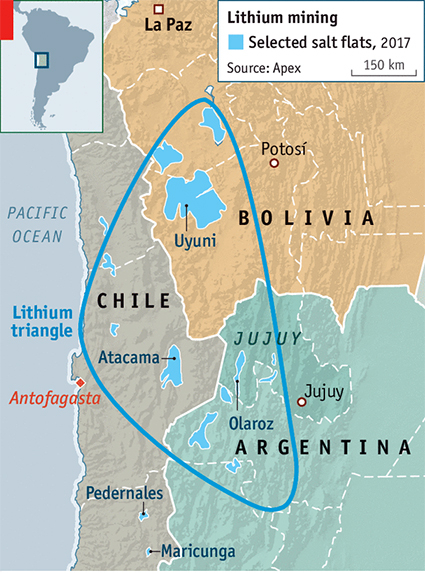
    Chile’s Atacama Salt Flat sinking due to Lithium Mining

    Why in the News?

    • A recent study published in journal IEEE Transactions on Geoscience and Remote Sensing has found that Chile’s Atacama salt flat (Salar de Atacama) is sinking at a rate of 1 to 2 centimetres per year due to lithium brine extraction.
      • Lithium brine extraction involves pumping salt-rich water to the surface and letting it evaporate in ponds to collect lithium.

    About Salar de Atacama  

    • The Salar de Atacama in Chile boasts the highest lithium concentration (0.15% by weight) among all brine sources worldwide.
    • Argentina boasts more than half of the world’s total lithium resources.
    • It holds the distinction of having the 2nd-largest lithium resources, the 3rd-largest lithium reserves, and the 4th-largest lithium production in the world.
    • It is a part of the Lithium Triangle comprising of Uyuni (Bolivia) and Hombre Muerto (Argentina).

    Key Findings of the Study:

    • Researchers analyzed satellite data from 2020 to 2023 to observe deformations in the Earth’s crust in the salt flat.
    • The area experiencing subsidence measures approximately 8 km north to south and 5 km east to west.
    • The study indicates that subsidence occurs because the rate of lithium brine pumping is faster than the recharge rate of aquifers, leading to the ground sinking.

    What is Lithium?

    • Lithium is an alkali metal, often referred to as ‘white gold’ due to its value and color.
    • It is a soft, silvery-white metal, and notably, it is the lightest metal on the periodic table.
    • It is typically found in various minerals like spodumene, petalite, and lepidolite, from which it is extracted and refined.
    • The leading producers of lithium are Australia, Chile, China, and Argentina.

    Effects of Lithium Mining on Environment:

    • Water Use: Lithium mining, especially from salt flats and brine pools, requires substantial water usage, which can deplete local water resources in arid areas.
    • Ecological Disruption: The extraction process can alter the chemical balance of the natural environment, affecting local flora and fauna.
    • Pollution: Mining and processing lithium can release harmful chemicals into the environment, impacting air and water quality.

    PYQ:

    [2008] Which one of the following pairs of metals constitutes the lightest metal and the heaviest metal, respectively?

    (a) Lithium and mercury

    (b) Lithium and osmium

    (c) Aluminium and osmium

    (d) Aluminium and mercury

  • Civil Services Reforms

    [pib] ANUBHAV AWARDS, 2024

    Why in the News?

    The Minister of State for Personnel, Public Grievances, and Pensions has conferred the Anubhav Awards 2024.

    ANUBHAV Awards

    Details
    Purpose To recognize the contributions of retired officials to nation-building and document the administrative history of India through their written narratives.
    Portal Launch Launched in March 2015.
    Organizing Body Ministry of Personnel, Public Grievances & Pensions, Department of Pension & Pensioners’ Welfare.
    Objectives – Create a database of significant suggestions and work experiences.
    – Utilize the experience of retiring employees for nation-building.
    – Enable Ministries/Departments to consider useful and replicable suggestions.
    Criteria Retiring Central Government employees and pensioners, who can submit their Anubhav write-ups 8 months prior to retirement and up to 1 year post-retirement.
    Award Process Write-ups are assessed by the concerned Ministries/Departments, published, and then shortlisted for the Anubhav Awards and Jury Certificates.
    Awards and Recognition ANUBHAV Awardees: Receive a medal, certificate, and a prize of ₹10,000.
    Jury Certificate Winners: Receive a medal and a certificate.


    PYQ:

    [2021] Consider the following statements in respect of Bharat Ratna and Padma Awards :​

    1. Bharat Ratna and Padma Awards are titles under the Article 18(1) of the Constitution of India.​

    2. Padma Awards, which were instituted in the year 1954, were suspended only once.​

    3. The number of Bharat Ratna Awards is restricted to a maximum of five in a particular year.​

    Which of the above statements are not correct?​

    (a) 1 and 2 only ​

    (b) 2 and 3 only​

    (c) 1 and 3 only ​

    (d) 1, 2 and 3​

  • Financial Inclusion in India and Its Challenges

    [pib] 10 Years of Jan Dhan Scheme

    Why in the News?

    PM Modi launched the Pradhan Mantri Jan Dhan Yojana (PMJDY) on 28th August 2014.  It has now completed a decade of successful implementation.

    About PMJDY

    Details
    Objective Banking the Unbanked: Open basic savings bank deposit (BSBD) accounts with minimal paperwork, relaxed KYC, e-KYC, account opening in camp mode, zero balance & zero charges.
    Securing the Unsecured: Issue Indigenous Debit cards with free accident insurance coverage of ₹2 lakh.
    Funding the Unfunded: Provide micro-insurance, overdraft, micro-pension, and micro-credit facilities.
    Initial Features Universal Access to Banking Services: Access through branches and BCs.
    Basic Savings Bank Accounts: With an overdraft facility of up to ₹10,000 for every eligible adult.
    Financial Literacy Program: Promote savings and credit usage.
    Insurance: Accident cover up to ₹1 lakh and life cover of ₹30,000 for accounts opened between Aug 2014 to Jan 2015.
    Pension Scheme: For the unorganized sector.
    Creation of Credit Guarantee Fund.
    Key Provisions Inter-operability: Through RuPay debit card or Aadhaar-enabled Payment System (AePS).
    • Fixed-point Business Correspondents.
    • Simplified KYC / e-KYC.
    Extension and New Features (Post-2018) Focus Shift: From ‘Every Household’ to ‘Every Unbanked Adult’.
    RuPay Card Insurance: Increased accidental insurance cover to ₹2 lakh for new accounts.
    Overdraft Facilities Enhanced: Limit doubled from ₹5,000 to ₹10,000; up to ₹2,000 without conditions.
    Increase in upper age limit for OD: From 60 to 65 years.
    Eligibility for Other Programs  PMJDY accounts are eligible for Direct Benefit Transfer (DBT), Pradhan Mantri Jeevan Jyoti Bima Yojana (PMJJBY), Pradhan Mantri Suraksha Bima Yojana (PMSBY), and Atal Pension Yojana (APY).

    Successes of PMJDY

    • Financial Inclusion: PMJDY is recognized as the largest financial inclusion initiative globally, with over 53 crore bank accounts opened as of August 2024. 
      • It has facilitated access to credit for individuals without a formal financial history, as evidenced by the rise in Mudra loan sanctions at a compounded annual rate of 9.8% from FY 2019 to FY 2024.
    • Social Empowerment: 55.6% of Jan Dhan account holders are women, and 66.6% of accounts are in rural and semi-urban areas, demonstrating the program’s reach among marginalized communities.
    • Deposit Growth: The total deposits in PMJDY accounts have reached Rs. 2.31 lakh crore, showing a 15-fold increase since August 2015.
    • Digital Transaction Growth: Digital transactions under PMJDY have surged, with UPI financial transactions growing from 535 crore in FY 2018-19 to 13,113 crore in FY 2023-24.
    • Effective DBT Mechanism: The Jan-Dhan Aadhaar Mobile (JAM) trinity has enabled a diversion-proof subsidy delivery mechanism, with subsidies and social benefits directly transferred into the bank accounts of the underprivileged.
    • Savings and Financial Discipline: The average deposit in the PMJDY account has increased 4 times since August 2015, indicating improved saving habits among account holders.

    PYQ:

    [2015] ‘Pradhan Mantri Jan-Dhan Yojana’ has been launched for

    (a) Providing housing loan to poor people at cheaper interest rates.

    (b) Promoting women’s Self-Help Groups in backward areas.

    (c) Promoting financial inclusion in the country.

    (d) Providing financial help to the marginalized communities.

    [2016] Pradhan Mantri Jan Dhan Yojana (PMJDY) is necessary for bringing unbanked to the institutional finance fold. Do you agree with this for financial inclusion of the poorer section of the Indian society? Give arguments to justify your opinion.

  • Judicial Pendency

    Report reveals minimal use of Plea Bargaining in Courts

    Why in the News?

    According to a report by the Ministry of Law and Justice, only 0.11% of cases were settled through “plea bargaining” in 2022.

    Key Findings of the Report:

    • In 2022, only 19,135 out of 1,70,52,367 cases (about 0.11%) in Indian courts were disposed of through plea bargaining, indicating its minimal use.
    • Despite legal restrictions, 119 cases of crimes against women and only 4 cases under the Protection of Children from Sexual Offences Act (POCSO) were resolved through plea bargaining in 2022, showing a deviation from the intended exclusions.

    What is Plea Bargaining?

    Details
    Definition
    • Plea bargaining allows an accused person to negotiate with the prosecution for a lesser punishment by pleading guilty to a less serious offence. 
    • This involves pre-trial negotiations on the charge or the sentence.
    Provision in India Introduced in 2006 as part of the Criminal Law (Amendment) Act, 2005 under Chapter XXI-A (Sections 265A to 265L).
    • Limited to offences that do not attract the death sentence, life sentence, or a term above seven years.• Not applicable to offences affecting socio-economic conditions or committed against women or children under 14. (applies only to offences punishable by up to seven years of imprisonment)
    Procedure in India Only the accused can initiate plea bargaining.
    • The accused must apply to the court to start the process. If permitted, a meeting involving the prosecutor, investigating officer, and victim (if any) is held for a satisfactory case disposition.
    • Includes possible reduced sentences and compensation payments to the victim by the accused.
    Benefits Offered • Speeds up trials, reduces litigation costs and ends uncertainty over case outcomes.
    • Helps reduce prison overcrowding and the number of prolonged imprisonments of undertrials.
    • Offers a chance for offenders to make a fresh start.
    • Could improve conviction rates, as seen in the USA.
    • Recommended by the Malimath Committee (2000) for its potential to dramatically impact conviction rates and ensure a speedy trial.


    PYQ:

    [2021] With reference to India, consider the following statements:​

    1. Judicial custody means an accused is in the custody of the concerned magistrate and such accused is locked up in police station, not in jail.​

    2. During judicial custody, the police officer in charge of the case is not allowed to interrogate the suspect without the approval of the court.​

    Which of the statements given above is/are correct?​

    (a) 1 only ​

    (b) 2 only​

    (c) Both 1 and 2 ​

    (d) Neither 1 nor 2​

  • Foreign Policy Watch: India-Pakistan

    On the unrest in the Balochistan region

    Why in the News?

    The recent protests are a significant part of Balochistan’s long history of political struggles. They highlight the difficulties Pakistan faces in creating a country based solely on religion.

    Causes and Reasons for the Recent Protests in Balochistan:

    Balochistan has a long history of resistance against central authority, dating back to the forced accession of the region to Pakistan in 1948.

    • Political Discontentment: The continued centralization of power, lack of genuine federalism, and repeated dismissals of provincial governments have fueled discontent.
    • Economic Neglect: Despite being rich in resources like copper, gold, coal, and natural gas, Balochistan remains one of the poorest regions in Pakistan. The benefits of resource exploitation have not trickled down to the local population, exacerbating feelings of economic injustice.
    • Cultural and Ethnic Identity: Balochistan has a distinct cultural and historical identity, which has often clashed with the central government due to assimilation policies.
    • Human Rights Violations: The region has seen widespread reports of enforced disappearances, custodial killings, and fake encounters as part of Pakistan’s counter-insurgency strategy.

    China’s Role in the Region:

    • Gwadar Port and Militarization Concerns: The Gwadar port, leased to a Chinese firm for 40 years, has raised fears of potential militarization, which could disrupt local livelihoods, especially those of the fishing communities.
      • The presence of Chinese trawlers has also sparked protests due to concerns about illegal fishing.
    • CPEC influence: The influx of non-locals into Balochistan for CPEC-related projects has led to fears of demographic changes, further alienating the local population.

    Indian perspective: 

    • Strategic Implications: India’s interest in Balochistan primarily stems from the region’s strategic importance, given its location and the Gwadar port’s proximity to the Strait of Hormuz.
    • Diplomatic Stance: India has occasionally highlighted human rights issues in Balochistan, especially in international forums, as a counter-narrative to Pakistan’s stance on Kashmir. However, India’s involvement remains cautious to avoid escalating tensions with Pakistan.
    • Impact on Regional Stability: The unrest in Balochistan, coupled with Chinese involvement, complicates the security situation in South Asia.
      • India’s approach will likely focus on balancing its strategic interests while advocating for the rights of the Baloch people within international norms.

    Way forward: (What should India do?)

    • Diplomatic Advocacy: India should continue to highlight human rights issues in Balochistan at international forums, positioning itself as a defender of human rights while maintaining a balanced approach to avoid escalating tensions with Pakistan.
    • Strategic Monitoring: India should closely monitor developments in Balochistan, particularly regarding Chinese activities in the Gwadar port, to safeguard its strategic interests and regional stability.

    Mains PYQ: 

    Q The China-Pakistan Economic Corridor (CPEC) is viewed as a cardinal subset of China’s larger ‘One Belt One Road’ initiative. Give a brief description of CPEC and enumerate the reasons why India has distanced itself from the same. (150 Words, 10 Marks)  (UPSC IAS/2018)

    Q ‘China is using its economic relations and positive trade surplus as tools to develop potential military power status in Asia’, In the light of this statement, discuss its impact on India as her neighbor. (UPSC CSE 2017)

    Q China and Pakistan have entered into an agreement for development of an economic corridor. What threat does this pose for India’s security? Critically examine (UPSC CSE 2014)

  • Health Sector – UHC, National Health Policy, Family Planning, Health Insurance, etc.

    Crime, health-worker safety, and a self-examination 

    Why in the News?

    • The recent brutal rape and murder case in Kolkata has sparked widespread calls for the death penalty for the accused.
      • The Justice J.S. Verma Committee, formed in response to the 2012 Delhi gang rape, recommended against the death penalty for rape, even in the rarest of rare cases, arguing that it would be a regressive step.

    Deeper problem in the Health Care Sector: 

    • Healthcare Violence: The protests by resident doctors stem from a series of violent attacks against medical personnel. This violence often arises from disgruntled patients and their families who perceive poor healthcare services.
    • Corruption in Healthcare: The World Health Organization estimates that corruption claims nearly $455 billion annually, which could otherwise extend universal health coverage globally.
      • In India, this corruption manifests in various forms, including bribery and sextortion, further undermining the healthcare system’s integrity.
    • Ineffective Responses: Traditional responses to healthcare violence, such as enhancing security and legal measures, have proven inadequate. These knee-jerk reactions fail to address the root causes of the violence.

    What does the Justice K. Hema Committee report say on the Culture of Assault?

    • On Sexual Assault and Consent: Instances of sexual assault are not isolated events but are rooted in societal practices that undermine women’s autonomy and consent.
      • The National Crime Records Bureau reported 31,516 cases of rape in India in 2022, indicating a significant prevalence of sexual violence against women.
      • The Justice Hema Committee report emphasizes that rape is a manifestation of a culture that views women as objects rather than individuals with rights.
    • On Workplace Harassment: The Vishaka guidelines established in 1997 aimed to protect women from workplace harassment, leading to the Sexual Harassment of Women at Workplace Act, 2013, which mandates the formation of Internal Complaints Committees (ICC).
      • The report argues that ICCs are inadequate for the film industry due to potential biases and influence from abusers, advocating for an independent government forum to address these issues.

    Need to Rethink Violence in Healthcare:  

    • Understanding the Multi-faceted Nature of Violence: Violence in healthcare settings is not limited to patient assaults on healthcare workers, it also includes institutional and managerial violence. This encompasses horizontal violence among healthcare providers and the systemic issues that create a hostile work environment.
    • Implementing Comprehensive Safety Measures: While immediate responses such as improving security and legal protections are necessary, they must be part of a broader strategy that includes training healthcare workers on conflict resolution, mental health support, and creating a culture of safety within healthcare institutions.

    About Justice J.S. Verma Committee Recommendations

    Recommendations on

    Explanation

    Rape • It recognized rape as a Crime of Power, not just passion.
    • Expand definition to include all forms of non-consensual penetration.
    Remove marital rape exception; marriage should not imply automatic consent. (European Commission of Human Rights in C.R. vs U.K)
    Sexual Assault • Broaden definition to include all non-consensual, non-penetrative sexual acts.
    Penalty: Up to 5 years of imprisonment or fines.
    Verbal Sexual Assault • Criminalize unwelcome sexual threats.
    Punishable by up to 1 year in prison or fines.
    Sexual Harassment at Workplace Include domestic workers under protections.
    Replace internal complaint committees with Employment Tribunals.
    Employers to compensate victims of sexual harassment.
    Acid Attacks Propose a 10-year minimum punishment, separate from grievous hurt.
    Establish a compensation fund for victims.
    Women in Conflict Areas • Review AFSPA; exclude government sanction for prosecuting sexual offenses by armed forces.
    • Appoint special commissioners to monitor offenses.
    Trafficking • Comprehensive anti-trafficking laws beyond prostitution.
    • Protective homes for women and juveniles overseen by High Courts.
    Child Sexual Abuse • Define ‘harm’ and ‘health’ in the Juvenile Justice Act to include both physical and mental aspects.
    Death Penalty Opposed chemical castration and death penalty for rape.
    • Recommend life imprisonment.
    Medical Examination of Rape Victims Ban the two-finger test; victim’s past sexual history should not influence the case.
    Reforms in Case Management • Set up Rape Crisis Cells, increase police accountability, allow online FIR filing.
    Encourage community policing and increase police personnel.

    Need for a Comprehensive Approach:

    • National Task Force: Improving hospital security and infrastructure alone may not be sufficient to address the problem. The national task force constituted by the Supreme Court should devise a comprehensive road map to prevent and arrest medical corruption, particularly in the public sector.
    • Need Expertise: The task force should include experts from public health, medico-legal, and other allied fields, along with the participation of the larger governing and administrative community.

    Note: Recently some states have taken steps to empower women. For example, the Himachal Pradesh Assembly passed a Bill on Tuesday to increase the minimum marriage age for women from 18 to 21 years.

    Mains PYQ: 

    Q Appropriate local community level healthcare intervention is a prerequisite to achieve ‘Health for All’ in India. Explain. (UPSC CSE 2018)

    Q We are witnessing increasing instances of sexual violence against women in the country. Despite existing legal provisions against it, the number of such incidences is on the rise. Suggest some innovative measures to tackle this menace. (UPSC CSE 2014)

Join the Community

Join us across Social Media platforms.