💥UPSC 2026, 2027, 2028 UAP Mentorship (March Batch) + Access XFactor Notes & Microthemes PDF

Archives: News

  • Indian Navy Updates

    [pib] INS SHALKI  

    Why in the News?

    • Indian Navy’s submarine INS Shalki, recently docked at Colombo Port on its two day visit to Sri Lanka.
      • This visit comes against the backdrop of China’s persistent attempts to enhance its strategic and military influence over the island nation.

    About INS SHALKI  

    • INS Shalki is a Shishumar class diesel-electric submarine, commissioned into the Indian Navy on 07 Feb 1992.
      • Shishumar class submarines are an Indian variant of the Type 209 submarines developed by the German yard Howaldtswerke-Deutsche Werft under the internal designation “Type 1500”.
    • This is the first ever submarine to be built in India.
    • It was constructed under licence by the Mazgaon Dock Limited, Mumbai.

    Significance of Sri Lanka Visit

    • India sends submarines to a handful of countries with whom it has close defence and strategic ties.
    • This is the third submarine to visit Sri Lanka after the visit of INS Vagir and INS Karanj in June 2023 and February 2024, respectively.
    • India has been expanding its defence and strategic ties with Sri Lanka amid concerns over China’s attempts to increase its military presence in the Indian Ocean.
    • Countering Chinese presence:
      • The docking of the Chinese missile and satellite tracking ship ‘Yuan Wang’ at Hambantota port in August 2022 had triggered a diplomatic row between India and Sri Lanka.
      • Another Chinese warship docked at the Colombo port in August last year.

    PYQ:

    [2017] Consider the following in respect of Indian Ocean Naval Symposium (IONS):

    1. Inaugural IONS was held in India in 2015 under the chairmanship of the Indian Navy.

    2. IONS is a voluntary initiative that seeks to increase maritime co-operation among navies of the littoral states of the Indian Ocean Region.

    Which of the statements given above is/are correct?

    (a) 1 only

    (b) 2 only

    (c) Both 1 and 2

    (d) Neither 1 nor 2

  • Innovations in Sciences, IT, Computers, Robotics and Nanotechnology

    What is ‘PrecivityAD2’ the new Alzheimer’s Blood Test?

    Why in the News?

    Researchers in Sweden have developed a new blood test, PrecivityAD2, which is about 90% accurate in identifying Alzheimer’s Disease (AD) in people experiencing cognitive symptoms.

    What is Alzheimer’s Disease (AD)?

    • Alzheimer’s disease is the most common type of dementia (loss of memory and cognitive abilities).
    • It is a progressive disease beginning with mild memory loss and possibly leading to loss of the ability to carry on a conversation and respond to the environment.
    • Alzheimer’s disease involves parts of the brain that control thought, memory, and language.
    • Brain cell connections and the cells themselves degenerate and die, eventually destroying memory and other important mental functions.
    • Memory loss and confusion are the main symptoms.
    • No cure exists, but medication and management strategies may temporarily improve symptoms.

    How PrecivityAD2 Test works?

    • The test measures a combination of two ratios within a blood sample:
    1. Plasma Phosphorylated-tau217 (p-tau217) to Not-Phosphorylated-tau21: The test measures the ratio of p-tau217 to non-phosphorylated tau21. Tau proteins are associated with the formation of neurofibrillary tangles in the brain, a hallmark of AD.
    2. Amyloid-beta (AB42 and AB40): The test also measures the ratio of two types of amyloid-beta proteins, AB42 and AB40. Amyloid plaques are another key pathological feature of AD.
    • Both tau and amyloid-beta proteins are considered pathological hallmarks of AD.

    Benefits of PrecivityAD2

    • Early Detection: PrecivityAD2 can diagnose AD at the early stage of mild cognitive impairment, enabling timely intervention and management.
    • Accurate Identification: With an accuracy rate of around 90%, the test provides reliable results, reducing the chances of misdiagnosis.
    • Non-Invasive: Unlike current diagnostic methods that involve complex PET scans or lumbar punctures, PrecivityAD2 requires only a simple blood draw.
    • Cost-Effective: The test is expected to be more affordable compared to expensive PET scans and cerebrospinal fluid analysis, making AD diagnosis more accessible.
    • Ease of Use: The blood test simplifies the diagnostic process, making it easier for primary care physicians to screen for AD.
    • Wider Reach: By reducing the complexity and cost of diagnosis, more patients can be tested, particularly in resource-limited settings.

    Significance of the Test

    • Standard of Care: PrecivityAD2 has the potential to become the standard first-line test for AD diagnosis, replacing more invasive and costly methods.
    • Support for Early Intervention: Early and accurate diagnosis allows for timely intervention, which is crucial for managing AD and improving patient outcomes.
    • Reduction in Misdiagnosis: The test’s high accuracy rate can help reduce the rates of misdiagnosis, particularly in primary care settings.

    Prevalence of Alzheimer’s Disease in India:

    • Alzheimer’s disease and dementia are significant public health concerns in India with a rapidly increasing prevalence rate.
    • According to CSIR-NIScPR, in 2019, there were 37 lakh active cases of Alzheimer’s disease and other dementias.
    • By 2050, dementia cases in India could exceed 11 crore as per projections from the Global Burden of Disease Study (GBDS).
    • The burden of non-communicable neurological disorders, including Alzheimer’s, more than doubled between 1990 and 2019.

    Feasibility for India:

    • In India, the current diagnostic tools for Alzheimer’s disease primarily include MRI and regular PET scans.
    • Advanced diagnostic tools like amyloid or Tau PET scans are not yet commercially available.
    • The introduction of PrecivityAD2 in India will require approval from the Drug Controller General of India (DCGI) and other relevant regulatory bodies.
  • Corporate Social Responsibility: Issues & Development

    [pib] CIL ASHIS Scheme

    Why in the News?

    Coal India Limited (CIL) has launched a CSR initiative named CIL ASHIS to provide scholarships to children who lost their parents to COVID-19 and were unable to continue their studies.

    What is CIL ASHIS Scheme?

    • The CIL ASHIS Scheme, launched by Coal India Limited (CIL), stands for Ayushman Shiksha Sahayata.
    • The scheme aims to provide financial support for the education of children who lost their parents to COVID-19, ensuring they can continue their studies and achieve their dreams.

    Features of the CIL ASHIS Scheme

    • Each eligible child receives a scholarship worth ₹45,000 per year.
    • The scholarship is provided for a period of 4 years.
    • The scheme targets 1,645 children who have been identified as needing assistance.
    • Compassionate Appointment for:
      • Dependents of CIL employees who lost their lives while in service.
      • Beneficiaries need to apply for compassionate appointments through CIL’s established procedures.

    PYQ:

    [2024] With reference to Corporate Social Responsibility (CSR) rules in India, consider the following statements:

    1. CSR rules specify that expenditures that benefit the company directly or its employees will not be considered as CSR activities.
    2. CSR rules do not specify minimum spending on CSR activities.

    Which of the statements given above is/are correct?

    (a) 1 only

    (b) 2 only

    (c) Both 1 and 2

    (d) Neither 1 nor 2

  • Economic Indicators and Various Reports On It- GDP, FD, EODB, WIR etc

    An unstated shift in Modi’s economic direction             

    Why in the news?

    The introduction of the new ELI scheme for corporates by the Narendra Modi government acknowledges the disconnect between GDP growth and job creation.

    About Employment Linked Incentives (ELI)

    • The ELI scheme aims to encourage companies to hire more employees by providing financial incentives for each new hire.
    • Target Sectors: The scheme is expected to focus on labour-intensive sectors such as toys, textiles, apparel, furniture, tourism, and logistics, which have significant potential for job creation.
    • Incentives Offered: Financial incentives may include tax relief and wage subsidies for new jobs created, along with non-financial incentives like reduced regulatory burdens and support for skill development programs.

    Government’s Failure of Initiatives

    • Previous Economic Strategies: Over the past decade, the Indian government relied on traditional economic models, such as the trickle-down approach and production-linked incentives (PLI), which did not yield the expected job growth.
      • Initiatives like “Make in India” and corporate tax cuts aimed to stimulate investment but failed to translate into significant employment opportunities.
    • Jobless Growth: Despite policies designed to boost production, employment growth has been stagnant, with a study indicating a negligible employment growth rate of just 0.01%.

    Issue of Job and Ideas Deficit

    • Jobs Deficit: The lack of job creation has prompted proposals like reserving jobs for locals, reflecting political pressures in a democracy where job scarcity is prevalent.
    • Ideas Deficit: Economists often suggest reforms in labour, education, and business practices as solutions to job creation, but these are complex and difficult to implement.
    • Unemployment Trends: The unemployment rate has shown fluctuations, with a reported decline from 6.0% in 2017-18 to 3.2% in 2022-23. 

    What can be done?

    • Policy Shift: The ELI scheme represents a significant policy shift towards prioritizing job creation over mere economic output. By encouraging firms to hire rather than invest solely in automation, it aims to address the capital-labour imbalance in the economy.
    • Support for MSMEs: Special focus on micro, small, and medium enterprises (MSMEs) is crucial, as they employ a substantial portion of the workforce.
    • Alignment of Goals: Need to Collaborate among various ministries, particularly finance, skill development, and labour, is essential to ensure that skill development aligns with industry needs, enhancing employability and job creation
  • Disasters and Disaster Management – Sendai Framework, Floods, Cyclones, etc.

     Why the Odisha government will plant palm trees to combat lightning strikes          

    Why in the news?

    In July, the Odisha government approved a proposal to plant 1.9 million palm trees to mitigate deaths caused by lightning strikes, which were declared a state-specific disaster in 2015.

    How many people have lost their lives to lightning in Odisha?   

    • Over the last 11 years, a total of 3,790 people have lost their lives due to lightning strikes in Odisha.
    • In the previous three fiscal years, 791 fatalities were reported, indicating an increasing frequency of lightning strikes.
    • On September 2, 2023, Odisha recorded 61,000 lightning strikes in a two-hour period, resulting in the deaths of at least 12 people.

    Why are Lightning strikes of particular concern in Odisha?

    • Odisha is located in a tropical zone and experiences a hot, dry climate that creates ideal conditions for lightning strikes.
    • The state has the highest number of cloud-to-ground lightning strikes in eastern and central India. The Annual Lightning Report 2023-2024 indicates a significant concentration of lightning activity in this region.
    • Research indicates that climate change exacerbates lightning activity, with a 10% increase in lightning occurrences for every degree Celsius of warming. This is particularly relevant in Odisha, where climatic factors contribute to frequent lightning events.
    • With 96% of lightning strikes occurring in rural areas, the most affected populations include farmers and daily wage earners who work outdoors, making them particularly vulnerable during peak agricultural seasons.

    How can Odisha defend Itself against lightning strikes?

    • Planting Palm Trees: The Odisha government has approved a proposal to plant 19 lakh palm trees as a natural defense against lightning strikes. Palm trees are considered effective conductors of lightning due to their height and moisture content, which can absorb lightning and mitigate its impact on the ground.
    • Financial Commitment: The state has allocated Rs 7 crore for the palm tree plantation initiative and has banned the felling of existing palm trees to enhance this strategy.
    • Public Awareness and Early Warning Systems: While the state has implemented early warning systems to forecast lightning strikes, experts emphasize the need for widespread public education on safety measures during lightning events.
    • Concerns: Experts have raised concerns about the effectiveness of palm trees as a long-term solution, noting that it takes 15 to 20 years for them to reach a height where they can effectively mitigate lightning strikes.

    NDMA Guidelines for Lightning

    • Preparation and Awareness: The Local government should educate the communities about lightning safety and the risks associated with thunderstorms.
    • Seek Shelter: During a thunderstorm, individuals should seek shelter in a fully enclosed building or a hard-topped metal vehicle. Open vehicles and structures such as metal sheds or under-construction buildings are unsafe.
    • Avoid Trees: Taking shelter under trees is discouraged, as they can attract lightning. If in a wooded area, find the shortest trees for shelter.
    • Crouching Position: If no shelter is available, crouch down with heels touching and head between the knees to minimize height and reduce risk.
    • 30-30 Rule: After seeing lightning, start counting to 30. If you hear thunder before reaching 30, go indoors. This rule helps assess the distance of the storm.

    Way forward: 

    • Installation of Lightning Rods and Conductors: The government should invest in the widespread installation of lightning rods and conductors in rural and vulnerable areas. These devices can provide immediate protection to critical infrastructure, homes, and open fields where farmers and workers are most at risk.
    • Advanced Early Warning Systems: Need to enhance the existing early warning systems with more accurate, real-time data and ensure these warnings are disseminated quickly through multiple channels, including mobile alerts, community announcements, and local radio.

    Main PYQ: 

    Q Explain the mechanism and occurrence of cloudburst in the context of the Indian subcontinent. Discuss two recent examples. (2022)

  • Civil Services Reforms

    Elephant in Civil Servant’s room           

    Why in the news?

    The government’s recent decision to lift the ban on government employees participating in RSS activities threatens to undermine the remnants of a free and fair bureaucracy.

    Whether or not civil servants are banned from joining RSS 

    • Lifting the Ban: The Central government has lifted a 58-year ban on government servants joining the Rashtriya Swayamsevak Sangh (RSS). This ban was originally imposed in 1966 due to concerns about the organization’s political activities.
    • Government Justification: The government stated that the activities of the RSS are no longer deemed incompatible with civil service conduct rules, suggesting that the organization has been wrongly categorized as a banned entity.
    • Judicial Commentary: The Madhya Pradesh High Court remarked that it took nearly five decades for the government to recognize its mistake in banning civil servants from joining the RSS, indicating a shift in perception regarding the organization.
    • Political Reactions: The decision has sparked controversy, with opposition parties criticizing it as a threat to India’s secular fabric and accusing the government of politicizing the civil service. Critics argue that the RSS’s ideology conflicts with the principles of a secular state.
    • Support from RSS: The RSS welcomed the decision, asserting that it strengthens India’s democratic system and has historically contributed to national unity and social service.

    The idea of Constitutional Democracy

    • Constitutional democracy is a system of government that combines the principles of democracy with a constitution that limits the powers of the state and protects the rights of citizens.
    • The people are the ultimate source of power, and the government derives its authority from their consent. The constitution places restrictions on the government’s actions and establishes the structure of the government.
    • There is a separation of powers between the legislature, executive, and judiciary, with each acting as a check on the others. The rule of law applies equally to all citizens and the government itself.
    • Minority rights are protected, and the will of the majority is balanced against the rights of individuals and minority groups. Constitutional democracy guarantees some rights to everyone, irrespective of their status as a minority or majority.
    • The origins of constitutional democracy can be traced back to Enlightenment ideas of natural rights, social contract theory, and the separation of powers. The United States Constitution, adopted in 1787, was a pioneering example of a written constitution establishing a federal system of government with a separation of powers

    RSS Ideology vs Constitutional Democracy

    • Conflict of Ideologies: The lifting of the ban raises questions about the relationship between the RSS’s ideology and the constitutional framework of India. The RSS promotes a vision of a Hindu nation, which may conflict with the secular and pluralistic ideals enshrined in the Constitution.
    • Constitutional Morality: The Constitution aims to create a society that respects diverse religions and cultures, contrasting with the RSS’s focus on a singular religious identity. This juxtaposition presents challenges to the commitment of civil servants to uphold constitutional values.
    • Historical background of the Constitution: The Constitution was designed to restructure Indian society post-independence, ensuring inclusivity and rejecting the idea of a state aligned with a single religious community. The RSS’s ideology, which criticizes the post-1947 restructuring, poses a fundamental challenge to this vision.
    • Democratic Challenges: The existence of non-democratic and exclusionary ideas within a democratic framework complicates governance. The rise of Hindutva politics, which emphasizes majoritarianism and exclusion, threatens the principles of constitutional democracy.
    • Need for Reinforcement: To counter the influence of ideologies that contradict constitutional morality, there is a pressing need to reinvigorate the commitment to constitutional democracy among civil servants and the broader public.

    Conclusion: To uphold constitutional democracy, it is crucial to reinforce the commitment to secularism, inclusivity, and the rule of law among civil servants and the broader public amidst ideological challenges.

    Mains PYQ: 

    Q To enhance the quality of democracy in India the Election Commission of India has proposed electoral reforms in 2016. What are the suggested reforms and how far are they significant to make democracy successful? (2017)

  • Forest Conservation Efforts – NFP, Western Ghats, etc.

    Centre reissues draft notification on ecosensitive areas in Western Ghats          

    Why in the news?

    On Friday, the Central government released the sixth draft notification, designating 56,825.7 square kilometre of the Western Ghats as an ecologically sensitive area (ESA) across the states of Gujarat, Maharashtra, Goa, Karnataka, Kerala, and Tamil Nadu.

    Recommendations of the Gadgil and Kasturirangan Committees

    • Gadgil Committee: Recommended that 75% of the Western Ghats (129,037 sq km) be designated as ecologically sensitive areas (ESAs) with restrictions on development activities.
    • Kasturirangan Committee: Notified only 37% of the Western Ghats as ESAs, reducing the extent compared to the Gadgil report. It split the region into cultural (human settlements) and natural (non-human settlements) zones.

    Ecologically Sensitive Areas (ESAs)

    • ESAs are regions recognized for their environmental significance, where human activities are regulated to protect biodiversity, ecosystems, and natural habitats. These areas are often home to endemic species of plants and animals and are crucial for maintaining ecological balance.
    • The Environment (Protection) Act of 1986 allows the Central Government to restrict industrial activities in these sensitive areas to safeguard their ecological integrity. Although the term “Eco-Sensitive Zones” is not explicitly mentioned in the Act, provisions exist to prohibit or regulate activities based on biodiversity and environmental considerations.

    The reason behind it:

    • Biodiversity Hotspot: The Western Ghats is recognized as one of the world’s eight “hottest hotspots” of biological diversity and a UNESCO World Heritage Site. It is home to numerous endemic species and globally threatened flora and fauna, making its protection crucial for conserving biodiversity.
    • Recent Natural Disasters: The draft notification follows severe landslides in Wayanad, Kerala, which resulted in significant loss of life and property. These events underscored the vulnerability of the region to ecological disasters, highlighting the need for protective measures to prevent further environmental degradation

    Opposition from States

    • State governments, including Kerala, have opposed the proposals in the draft notifications for declaring ESAs along the Western Ghats.
    • The Kerala government want to reduce the ESA to 9,993.7 sq km from the Kasturirangan committee’s recommendation of 13,108 sq km.
    • The then Kerala government led by Oommen Chandy opposed the Gadgil report and appointed another panel to come up with an independent report.

    New Panel Formed by the Government

    • In April 2022, the Centre formed another panel to “re-examine suggestions by these six state governments while keeping in view the conservation aspects of the disaster-prone pristine ecosystem, as well as rights, privileges, needs and developmental aspirations of the region”.
    • The Centre and expert panel held 10 meetings with states having Western Ghats to discuss the fifth draft notification at various forums.
    • The sixth draft notification, issued on Friday, declared 56,825.7 sq km of the Western Ghats as ESAs in the states of Gujarat, Maharashtra, Goa, Karnataka, Kerala and Tamil Nadu

    Way forward: 

    • Integrated Management Plans: The Government should develop and implement integrated management plans that balance ecological conservation with the developmental needs of the region.
    • Enhanced Monitoring and Enforcement: There is a need to strengthen the regulatory framework by enhancing monitoring mechanisms and enforcing existing environmental laws more stringently.

    Mains PYQ: 

    Q Differentiate the causes of landslides in the Himalayan region and Western Ghats. (2021)

  • Mother and Child Health – Immunization Program, BPBB, PMJSY, PMMSY, etc.

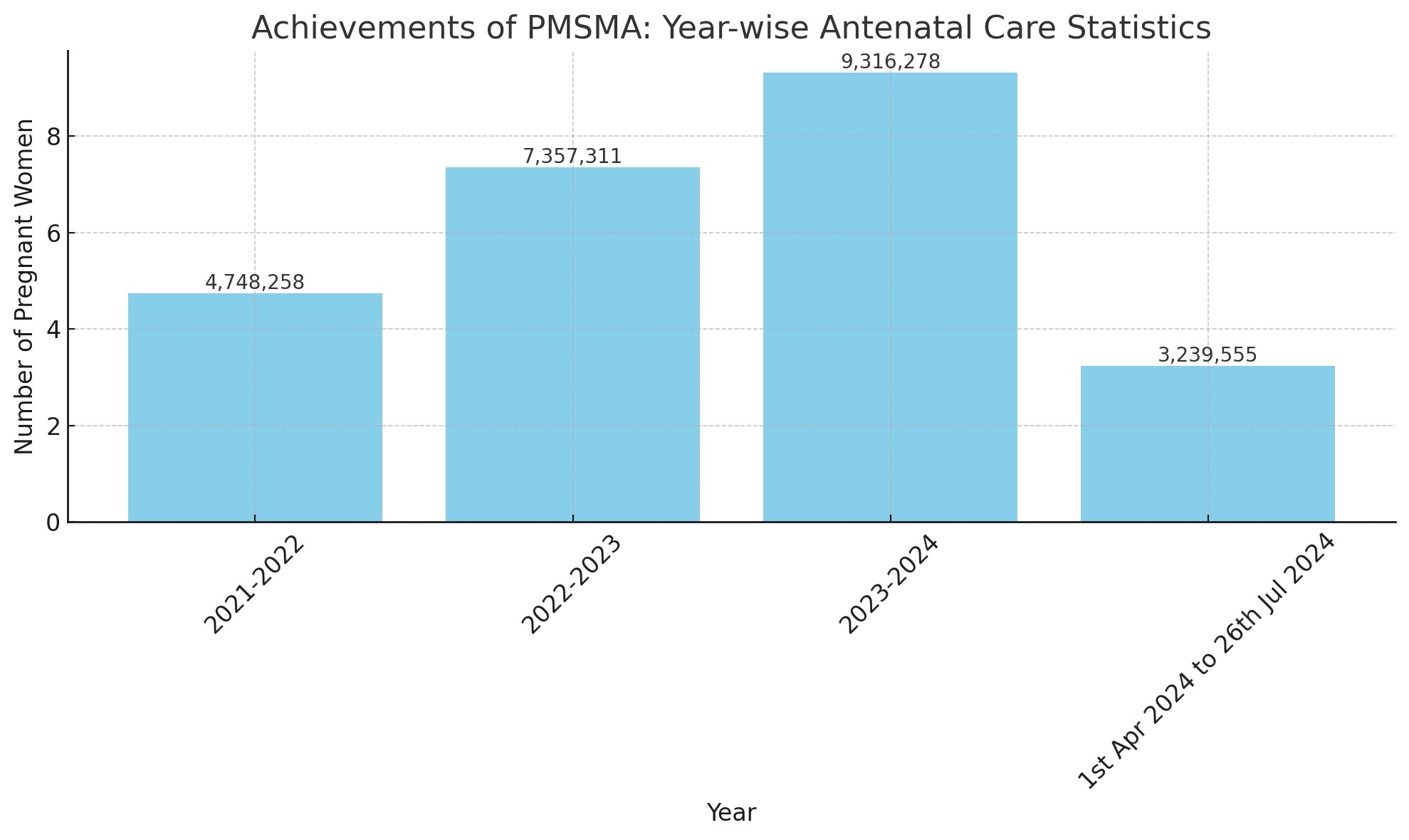
    [pib] Update on Pradhan Mantri Surakshit Matritva Abhiyan (PMSMA)

    Why in the News?

    • An Extended Pradhan Mantri Surakshit Matritva Abhiyan (E-PMSMA) strategy was launched to ensure quality Antenatal Care (ANC) for pregnant women.
      • The strategy focuses on individual tracking of high-risk pregnancies (HRP) and provision of additional PMSMA sessions beyond the 9th of every month.

    About High-Risk Pregnancy: 

    • A high-risk pregnancy involves greater risk of health complications for the mother, the foetus, or both, due to pre-existing medical conditions, conditions that develop during pregnancy, or foetal issues.
    • Common Factors:
      • Maternal Health Conditions: Pre-existing diabetes, hypertension, HIV, kidney disease, or conditions arising during pregnancy like gestational diabetes and preeclampsia.
      • Obstetric Factors: Previous caesarean section, history of preterm labor, multiple pregnancies, and congenital malformations.

    About Pradhan Mantri Surakshit Matritva Abhiyan (PMSMA)

    Details
    About An initiative to provide quality antenatal care (ANC) to all pregnant women.
    Launch  October 2016
    Target Group All pregnant women, especially those in their second and third trimesters.
    Frequency Services provided on the 9th of every month at government health facilities.
    Objective Ensure safe motherhood by providing comprehensive and quality antenatal care universally.
    Key Functions
    • General Check-Up: Physical and clinical examinations by medical professionals.
    • Laboratory Investigations: Routine blood tests, urine tests, and other necessary laboratory investigations.
    • Ultrasound: Ultrasound examination to monitor foetal growth and development.
    • Counseling: Nutritional and lifestyle counseling to ensure a healthy pregnancy.
    • High-Risk Identification: Screening and identification of high-risk pregnancies and appropriate referrals for specialized care.
    Key Features
    • Free of Cost: All services under PMSMA are provided free of cost.
    • Fixed Day ANC Services: Antenatal care services are provided on a fixed day every month.
    • Lab Investigations: Basic investigations like Hb, urine albumin, RBS, malaria test, VDRL test, blood grouping, CBC, ESR, and USG.
    • Public-Private Partnership: Encourages participation of private sector healthcare providers in providing ANC services.
    • Incentives: Incentives for healthcare providers who participate in the program.
    Categorization of Pregnant Women 
    • Green Sticker – for women with no risk factor detected
    • Red Sticker – for women with high risk pregnancy
    • Blue Sticker – for women with Pregnancy Induced Hypertension
    • Yellow Sticker – pregnancy with co-morbid conditions such as diabetes, hypothyroidism, STIs
    Benefits
    • Improved Maternal Health: Regular and comprehensive ANC helps in early detection and management of complications, improving maternal health outcomes.
    • Reduced Mortality Rates: Timely and quality care reduces maternal and infant mortality rates.
    • Health Education: Provides health education and counseling to pregnant women, promoting better health practices.
    • High-Risk Management: Identifies and manages high-risk pregnancies effectively, ensuring specialized care for those who need it.

    PYQ:

    [2024]  With reference to the ‘Pradhan Mantri Surakshit Matritva Abhiyan’, consider the following statements:

    1. This scheme guarantees a minimum package of antenatal care services to women in their second and third trimesters of pregnancy and six months post-delivery health care service in any government health facility.

    2. Under this scheme, private sector health care providers of certain specialities can volunteer to provide services at nearby government health facilities.

    Which of the statements given above is/are correct?

    (a) 1 only

    (b) 2 only

    (c) Both 1 and 2

    (d) Neither 1 nor 2

  • Mother and Child Health – Immunization Program, BPBB, PMJSY, PMMSY, etc.

    [pib] Schemes implemented by the WCD Ministry clubbed into 3 Verticals

    Why in the News?

    • For better implementation and efficient monitoring, all schemes implemented by the Ministry for the betterment of children have been consolidated into 3 verticals:
    1. Saksham Anganwadi & Poshan 2.0,
    2. Mission Shakti, and
    3. Mission Vatsalya.
    • These verticals aim to improve nutrition and health indicators, ensure safety and empowerment of women, and provide protection and welfare for children in difficult circumstances.

    Scheme Details:

    [1] Saksham Anganwadi & Poshan 2.0 (Mission Poshan 2.0)

    • The Anganwadi Services Scheme, POSHAN Abhiyaan, and Scheme for Adolescent Girls have been reorganized into three primary sub-verticals:
      1. Nutrition Support: For POSHAN and Adolescent Girls.
      2. Early Childhood Care and Education: Targeting children aged 3-6 years.
      3. Anganwadi Infrastructure: Upgrading and modernizing Saksham Anganwadis.
    • Key Features:
    • Fortified rice supplied to Anganwadi Centres to meet micronutrient requirements and control anemia among children.
    • Emphasis on the use of millets for Hot Cooked Meals at least once a week and Take Home Ration (THR) at Anganwadi centers.

    [2] Mission Shakti

    • Sambal: Focuses on the safety and security of women.
      • Includes schemes like One Stop Centres (OSC), Women Helpline (181-WHL), and Beti Bachao Beti Padhao (BBBP).
    • Samarthya: Aims at the empowerment of women.
      • Encompasses schemes like Pradhan Mantri Matru Vandana Yojana (PMMVY), Ujjwala, Swadhar Greh (renamed as Shakti Sadan), Working Women Hostel (renamed as Sakhi Niwas), National Hub for Empowerment of Women (NHEW), and National Creche Scheme (renamed as Palna).

    [3] Mission Vatsalya

    • Objective: To provide better outreach and protection for children in need of care in a mission mode.
    • Goals:
      1. Support and sustain children in difficult circumstances.
      2. Develop context-based solutions for the holistic development of children from varied backgrounds.
      3. Encourage innovative solutions through green field projects.
      4. Facilitate convergent action by gap funding if required.

    PYQ:

    [2016] Which of the following are the objectives of ‘National Nutrition Mission’?

    1. To create awareness relating to malnutrition among pregnant women and lactating mothers.

    2. To reduce the incidence of anaemia among young children, adolescent girls and women.

    3. To promote the consumption of millets, coarse cereals and unpolished rice.

    4. To promote the consumption of poultry eggs.

    Select the correct answer using the code given below:

    (a) 1 and 2 only

    (b) 1, 2 and 3 only

    (c) 1, 2 and 4 only

    (d) 3 and 4 only

  • Port Infrastructure and Shipping Industry – Sagarmala Project, SDC, CEZ, etc.

    [pib] Approval of Major Port at Vadhavan, Maharashtra

    Why in the News?

    The Ministry of Ports, Shipping and Waterways has approved the project proposal for setting up a Major Port at Vadhavan, Palghar District of Maharashtra.

    About Vadhavan Port Project 

    • The project involves the development of core infrastructure, terminals, and other commercial infrastructure through a public-private partnership (PPP) mode.
    • The shareholding for the project is divided between the Jawaharlal Nehru Port Authority (74%) and the Maharashtra Maritime Board (26%).
      • The project aims to create a total capacity of 298 million metric tonnes per annum (MMTPA).
    • Trade routes facilitated:

    Existing Major Ports in India

    • India has 12 Major Ports: Chennai, Cochin, Deendayal (Kandla), Jawaharlal Nehru (Nhava Sheva), Kolkata, Mormugao, Mumbai, New Mangalore, Paradip, V.O. Chidambaranar (Tuticorin), Visakhapatnam, and Kamarajar Port Limited.
    • Private Sector participation is allowed in Major Ports for specific projects/berths/terminals through concession agreements for a specific period via open competitive bidding on revenue share/royalty between the Concessionaire and the Major Port Authority.
    • After the expiry of the concession period, the asset is handed over to the Port Authority.

    Significance of Major Ports

    • Major ports play a critical role in facilitating international trade and commerce.
    • They serve as gateways for the import and export of goods, significantly contributing to the country’s economy.
    • Ports generate substantial revenue for the government through customs duties, port fees, and other related charges.
    • Ports facilitate international collaboration and partnerships, enhancing diplomatic and trade relations with other countries.

    PYQ:

    [2016] Recently, which of the following States has explored the possibility of constructing an artificial inland port to be connected to sea by a long navigational channel?

    (a) Andhra Pradesh

    (b) Chhattisgarh

    (c) Karnataka

    (d) Rajasthan

Join the Community

Join us across Social Media platforms.