💥UPSC 2026, 2027, 2028 UAP Mentorship (March Batch) + Access XFactor Notes & Microthemes PDF

Archives: News

  • The story of the American Declaration of Independence   

    Why in the news? 

    July 4 commemorates the 248th Independence Day of the United States, celebrating the signing of the Declaration of Independence, the foundational document that established the US as a union of states freed from British rule.

    Why did the colonists want Independence from Britain?

    • Lack of Representation: Colonists were discontented with British policies that imposed taxes and laws without colonial representation in the British Parliament, which they viewed as unjust and oppressive.
    • Policy Shifts: After the French and Indian War, Britain ended its policy of salutary neglect and imposed stricter controls on the colonies, including prohibitions on westward expansion and new taxes through acts like the Stamp Act and Tea Act.
    • Ideas of Freedom: Influenced by Enlightenment ideals of liberty and equality, colonists began to articulate grievances against monarchical rule and asserted their natural rights to self-governance.
    • Resistance Movements: Events like the Boston Tea Party symbolized widespread resistance to British taxation and policies, galvanizing colonial unity and determination for independence.
    • Armed Conflict: The escalation from protests and boycotts to armed conflict (beginning in 1775) underscored the colonies’ resolve to break away from British control and establish their own governance.

    What happened in the lead up to American independence?

    • Formation of Continental Congress: Colonists formed the Continental Congress to coordinate resistance efforts and explore avenues for negotiation with Britain, which ultimately failed due to British refusal to grant representation.
    • Boycotts and Protests: Colonists attempted economic boycotts of British goods and engaged in protests against oppressive British policies, marking a period of growing dissent and opposition.
    • Outbreak of War: By 1775, clashes between colonial militias and British troops erupted into open warfare, solidifying the shift from grievances to armed struggle for independence.
    • Declaration of Independence: The Continental Congress formally declared the colonies’ independence on July 2, 1776, followed by the adoption and signing of the Declaration of Independence on July 4, 1776.
    • Continental Army and Allies: The colonies secured military support and alliances, crucially from France, which helped sustain their war effort against British forces.

    How was the Declaration of Independence formulated?

    • Committee of Five: A committee including Thomas Jefferson, John Adams, Benjamin Franklin, Roger Sherman, and Robert R. Livingston was appointed to draft the Declaration of Independence.
    • Thomas Jefferson’s Role: Jefferson, primarily responsible for drafting, drew on Enlightenment philosophy and his earlier writings to articulate the principles of natural rights and grievances against British tyranny.
    • Drafting Process: The committee reviewed Jefferson’s draft, incorporating edits and revisions suggested by Adams, Franklin, and others before presenting the final version to the Continental Congress.
    • Adoption and Signing: On July 4, 1776, the Continental Congress formally adopted the Declaration of Independence, which was signed by 56 delegates representing the thirteen colonies, solidifying their break from British rule.
    • Legacy of equality and rights as a foundation: The Declaration’s proclamation of equality and rights laid the foundation for American ideals of democracy and independence, shaping the course of American history and inspiring similar movements worldwide.

    Conclusion: The Declaration of Independence, adopted on July 4, 1776, marked a pivotal moment as the American colonies asserted their sovereignty, based on Enlightenment ideals, igniting a global pursuit of liberty and democratic principles.

    Mains PYQ:

    Q American Revolution was an economic revolt against mercantilism. Substantiate. (UPSC IAS/2013)

  • Capital Markets: Challenges and Developments

    Indian Government Bonds in JP Morgan index: how much funds could flow into India?   

    Why in the news?

    JP Morgan is including Indian Government Bonds in its emerging markets bond indices starting June 28. This move is expected to attract significant foreign investment, boosting India’s bond market and economic stability.

    What would be India’s weight in the index?

    • India is poised to achieve a maximum weighting of 10% in the GBI-EM Global Diversified Index. This increased allocation is anticipated to attract greater investment from global investors into Indian debt, with analysts projecting monthly inflows of $2-3 billion.

    Benefits of Higher Inflows from the Inclusion of Indian Government Bonds in JP Morgan’s Emerging Markets Bond Indices

    • Increase in Foreign Exchange Reserves: The inflows from foreign investments will directly boost India’s foreign exchange reserves, providing a stronger buffer against external economic shocks.
    • Strengthening the Rupee: The surge in foreign investment will enhance demand for the rupee, leading to its appreciation and contributing to a more stable and robust currency.
    • Enhanced External Financial Management: With increased foreign exchange reserves, India will have greater flexibility and resilience in managing its external financial obligations and mitigating balance of payment issues.
    • Reduction in Borrowing Costs: Higher reserves and a stronger rupee can lead to improved credit ratings and reduced risk premiums, lowering borrowing costs for the government and corporates.
    • Promotion of Economic Confidence: The inflows signify international investor confidence in India’s economic prospects, boosting overall economic sentiment and encouraging further investments.

    What about the impact on inflation as RBI mops up the dollars and releases an equivalent amount in rupees?

    • Liquidity Injection: When the RBI mops up dollars from the market, it releases an equivalent amount of rupees into the financial system. This injection of liquidity can potentially increase the supply of money circulating in the economy.
    • Demand-Pull Inflation: Increased liquidity can stimulate demand for goods and services, potentially leading to demand-pull inflation if the production capacity of the economy does not keep pace with the increased demand.
    • Asset Price Inflation: The influx of liquidity can also inflate asset prices such as real estate and stocks, impacting affordability and potentially creating asset price inflation.
    • Exchange Rate Stability: On the flip side, mopping up dollars can help stabilize the exchange rate by reducing downward pressure on the rupee due to excessive inflows.
    • RBI’s Policy Response: The RBI has various monetary policy tools, such as open market operations, repo rates, and reserve requirements, to manage liquidity and inflationary pressures arising from such inflows. It may use these tools to absorb excess liquidity and stabilize inflation.

    Way forward: 

    • Prudent Monetary Policy Management: The RBI should continue to employ effective monetary policy measures, such as open market operations and repo rate adjustments, to carefully manage liquidity and inflationary pressures stemming from increased foreign inflows.
    • Enhanced Economic Diversification: India should use the influx of foreign investment to diversify its economy further, focusing on infrastructure development, technological advancements, and sustainable growth initiatives to bolster long-term economic resilience and stability.
  • Poverty Eradication – Definition, Debates, etc.

    Education ‘remains the most effective contraceptive

    Why in the news? 

    India’s current population of 1.4 billion is projected to peak at 1.7 billion by 2064, then stabilize at 1.53 billion by 2100, as fertility rates decline below replacement level.

    What does the United Nations speak on Indian demographics?

    • India overtook China as the world’s most populous country. UN estimates project India’s population to peak at 1.7 billion around 2064, then settle at 1.53 billion by 2100.
    • Population growth is slowing, with the total fertility rate dipping below the replacement level of 2.1.

    What do the National Family Health Surveys (NFHS) observed recently?

    • Association with Education: There is a significant correlation between levels of education and unmet needs for family planning among married women in India, highlighting the importance of education in addressing reproductive health issues.
    • High Demand for Family Planning: There remains a notable demand for family planning services, particularly among young women aged 15-24, indicating ongoing challenges in meeting reproductive health needs effectively across different age groups.

    Challenges faced by a deprived section of society                           

    • Limited Access to Family Planning Services: Women from disadvantaged backgrounds often face barriers in accessing contraceptives and family planning services due to social norms, lack of education, and cultural taboos surrounding contraception.
    • Teenage Pregnancies and Early Marriages: High rates of teenage pregnancies and early marriages contribute to health risks for young women, exacerbated by limited awareness about sexual and reproductive health rights and options.
    • Social Stigma and Cultural Norms: Deep-rooted societal attitudes and stigmas surrounding sexual activity, contraception, and abortion hinder open discussions and access to comprehensive sexual education and healthcare services, particularly for unmarried individuals.

    What can India do to improve social conditions?

    • Enhancing Education and Awareness: Increase access to comprehensive sex education in schools and communities to empower young people with knowledge about contraception, family planning, and reproductive health rights.
    • Addressing Cultural Norms and Stigma: Challenge societal taboos and misconceptions surrounding contraception and sexual activity through culturally sensitive communication and advocacy efforts.
    • Expanding Healthcare Access: Ensure equitable access to affordable and quality healthcare services, including reproductive health services, particularly in rural and underserved areas.
    • Reforming Legal Frameworks: Reform laws and policies related to reproductive rights and access to safe abortion services to ensure women have autonomy over their reproductive decisions and can access safe and legal abortion services without unnecessary restrictions.

    Steps taken by the government related to health: 

    • Ayushman Bharat Pradhan Mantri Jan Arogya Yojana (AB PM-JAY): This scheme aims to provide health coverage to over 500 million people, offering a cover of Rs. 5 lakh per family per year for secondary and tertiary care hospitalization. Over 4.68 crore cards have been issued under the scheme.
    • Comprehensive Primary Health Care (CPHC) through Ayushman Bharat-Health and Wellness Centres (HWCs): Launched in February 2018, this initiative aims to provide an expanded range of services closer to the community, including care for non-communicable diseases, palliative and rehabilitative care, oral, eye and ENT care, and mental health services.
    • Pradhan Mantri Swasthya Suraksha Yojana (PMSSY): This scheme, launched in 2003, aims to correct regional imbalances in the availability of affordable/reliable tertiary healthcare services and also to augment facilities for quality medical education in the country. Under this, new AIIMS are being set up and existing medical colleges are being upgraded

    Way forward: 

    • Integrated Approach to Education and Healthcare: Implement integrated programs that combine comprehensive sex education in schools with improved access to healthcare services, ensuring young people are empowered with knowledge and resources for reproductive health.
    • Community Engagement and Advocacy: Foster community dialogues and advocacy campaigns to challenge cultural norms and stigma around reproductive health, promoting open discussions and awareness-building initiatives across all demographics.

    Mains PYQ:

    Q Demographic Dividend in India will remain only theoretical unless our manpower becomes more educated, aware, skilled and creative.” What measures have been taken by the government to enhance the capacity of our population to be more productive and employable? (UPSC IAS/2016)

  • Climate Change Impact on India and World – International Reports, Key Observations, etc.

    The shape of a five-year climate agenda for India

    Why in the news? 

    The new government’s climate actions will impact all sectors, shaping India’s sustainable economic path, global leadership, and fight for climate finance and justice.

    Initiatives Taken by the Indian Government in the Last Decade and Their Significant Results

    • International Solar Alliance (ISA): Promotes the widespread adoption of solar energy, enhancing global cooperation in renewable energy.
    • Coalition for Disaster Resilient Infrastructure (CDRI): Focuses on building resilient infrastructure to withstand climate-induced disasters.
    •  Net-Zero by 2070: India’s commitment to achieve net-zero emissions by 2070 marks a significant shift towards absolute emission reductions.
    • Enhanced Nationally Determined Contributions (NDCs): Setting ambitious targets for reducing emissions intensity and increasing renewable energy capacity.
    • Indian Emissions Carbon Trading Scheme: Establishing a carbon trading system to incentivize emission reductions and support sustainable economic growth.
    • Significant Growth in Renewable Energy Capacity: Rapid expansion in solar and wind energy installations, contributing to India’s international non-fossil fuel energy targets.
    • Green Development Pact under G-20 Presidency: Integrating green development principles into global economic practices, showcasing India’s leadership in sustainable development.

    How India can enhance it’s Global negotiations wrt Climate change? 

    • Hosting International Climate Summits: India should aim to host a major international climate summit like the United Nations Conference of Parties (COP) in 2028. This would provide a platform to showcase its climate leadership and set ambitious global climate agendas. Successful hosting, akin to its G-20 Presidency, would strengthen India’s influence in global climate policy.
    • Advocacy and Consensus Building: India should start early to build consensus on critical climate issues, such as ending new investments in oil and gas post-2030 and securing significant commitments for adaptation finance. Proactively engaging in dialogues, forming alliances, and addressing concerns of other nations will help India lead negotiations and drive meaningful outcomes.
    • Promoting Equity and Climate Finance: India should continue to emphasize equity in climate action and finance in international forums. Advocating for fair treatment of developing countries and pushing for enhanced climate finance mechanisms will strengthen India’s position as a leader of the Global South.

    Role of Federal Entities in Enhancing Climate Action

    • Collaboration on Long-Term Climate Strategies: Federal entities can work with state governments to develop and implement long-term climate and energy models. Examples include supporting states like Tamil Nadu and Bihar in crafting their net-zero plans.
    • Enhanced Coordination and Policy Alignment: Forming a Centre-State coordination group can ensure better synchronization of climate actions across states. This group can facilitate regular communication and policy alignment while respecting the autonomy of each state.
    • Financial Incentives through the Sixteenth Finance Commission: Federal entities can use financial mechanisms like the Finance Commission to incentivize states for their climate initiatives. This can include grants or additional funding for states that demonstrate significant progress in climate action.
    • Integration of Scientific Capabilities in Policymaking: Encouraging states to incorporate scientific modelling and data analysis into their climate policies. Federal support can enhance the technical capabilities of states, ensuring data-driven and effective climate strategies.
    • Consistent and Accurate Climate Data Management: Developing a unified MRV architecture at the state level to standardize data collection and reporting. This system can help track progress, ensure accountability, and facilitate better policy adjustments based on reliable data.

    The Indian government has taken several initiatives to address climate change, but their effectiveness is still being evaluated:

    • National Action Plan on Climate Change (NAPCC): Launched in 2008, the NAPCC identified eight national missions to promote understanding of climate change, adaptation and mitigation, energy efficiency, and natural resource conservation. While these missions have led to some progress, such as the ambitious targets set under the National Solar Mission, their overall impact is still being assessed.
    • State Action Plans on Climate Change (SAPCCs): Under the NAPCC, states are required to develop their own action plans. As of 2022, 33 states and union territories have prepared their SAPCCs. However, the implementation and monitoring of these plans remain a challenge.
    • Climate change research and knowledge networks: The government has supported various research initiatives and knowledge networks to enhance understanding of climate change impacts and responses. These include the National Network Programmes on Climate Change Modelling, Aerosols, and Coastal Vulnerability. While these networks have generated valuable knowledge, their ability to inform policy and action is still being evaluated

    Conclusion: India should expand its climate targets beyond the power sector to include other key areas such as transportation, industry, and agriculture. Clear and ambitious targets for zero-carbon two- and four-wheelers, as well as other sectors, will drive comprehensive decarbonization efforts.


    Mains PYQ: 

    Q Explain the purpose of the Green Grid Initiative launched at World Leaders Summit of the COP26 UN Climate Change Conference in Glasgow in November 2021. When was this idea first floated in the International Solar Alliance (ISA)? (UPSC IAS/2021)

  • Wildlife Conservation Efforts

    Reviving Gharials in Kaziranga

    Why in the News?

    In Kaziranga National Park and Tiger Reserve, a lone female gharial has emerged as a significant presence, marking a potential revival for the species in the Brahmaputra River.

    About Kaziranga National Park and Tiger Reserve:

    • Located in the state of Assam, Kaziranga is renowned for its biodiversity and conservation efforts.
    • Established in 1905 as a reserve forest and declared a national park in 1974.
    • Designated as a UNESCO World Heritage Site in 1985 for its unique natural environment and successful conservation of the Great One-Horned Rhinoceros.
    • Kaziranga is home to the highest density of tigers among protected areas in the world.
    • It hosts two-thirds of the world’s Great One-Horned Rhinoceros population, a significant conservation success story.
    • The park spans approximately 430 square kilometers (166 square miles) of grasslands, wetlands, and forests.

    One-Horned Rhinoceros:

    • OneHorned Rhinos: IUCN Red List Status: Vulnerable; CITES: Appendix I ; WPA, 1972: Schedule I.
    • Mainly found in Assam, West Bengal.
    • Assam hosts about 2,640 rhinos across Pobitora WLS, Rajiv Gandhi Orang NP, Kaziranga NP, and Manas NP.

    About Gharial

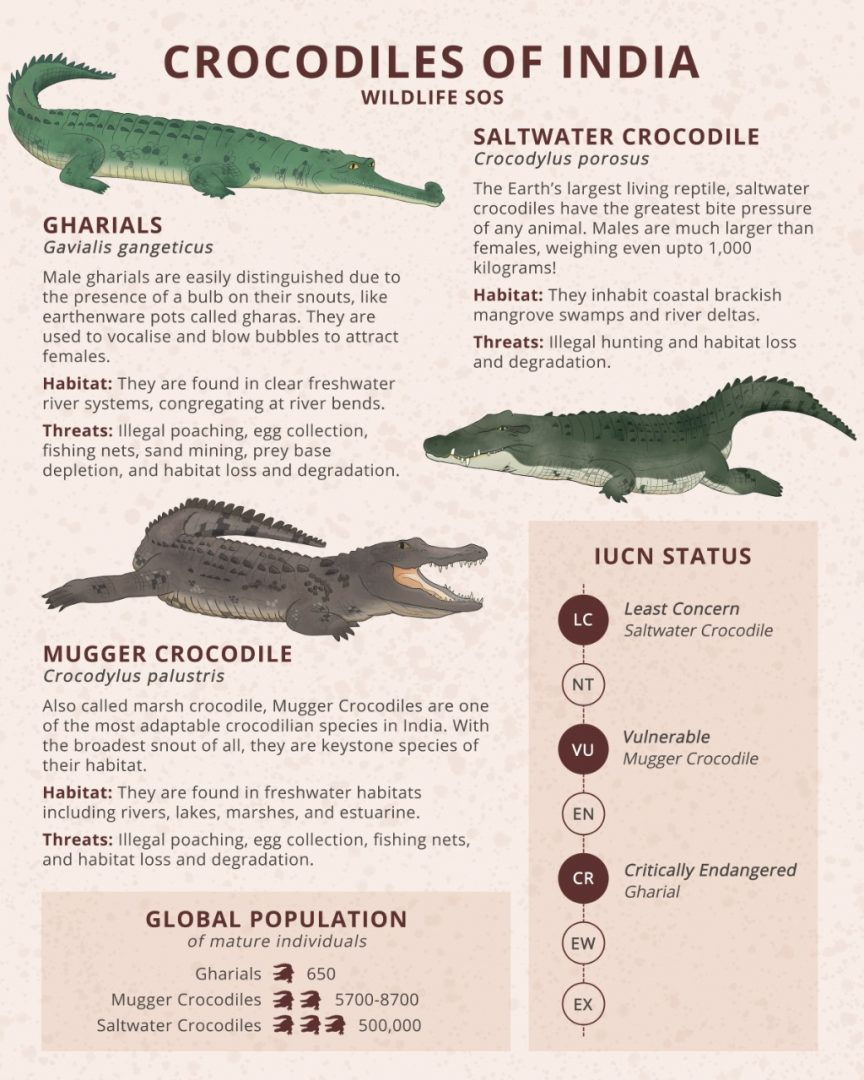
    • The Gharial is a fish-eating crocodile native to the Indian subcontinent.
    • They are a crucial indicator of clean river water.
    • It is also found in the rainforest biome of Mahanadi in Satkosia Gorge Sanctuary, Odisha.
    • Gharials are ‘Critically Endangered’ in the IUCN Red List of Species.
    • The species is also listed under Schedule I of the Wild Life (Protection) Act, 1972.
    • National Chambal Sanctuary along the river Chambal in Madhya Pradesh is the biggest protected area of the species.

    Recent findings of Gharial in Kaziranga

    • Gharials, distinguished by their long, narrow snouts, were believed to have disappeared from the Brahmaputra by the 1950s.
    • The female gharial, initially spotted in 2021, has grown to nearly adult size, providing hope for their reintroduction into the ecosystem.

    PYQ:

    [2013] Consider the following fauna of India :

    1. Gharial

    2. Leatherback turtle

    3. Swamp deer

    Which of the above is/are endangered?

    (a) 1 and 2 only

    (b) 3 only

    (c) 1, 2 and 3

    (d) None

  • Water Management – Institutional Reforms, Conservation Efforts, etc.

    Niranjan Panel set up to study Pollution Level in Cauvery

    Why in the News?

    The Karnataka government has formed an expert committee, headed by Niranjan, Chief Environment Officer of Karnataka State Pollution Control Board, to study the pollution level in the Cauvery.

    About Niranjan Panel

    • The panel will review and submit a report within 10 days to ascertain whether the Cauvery River water is polluted due to the inflow of sewage water, solid waste, industrial waste, and other types of pollutants.
    • The Cauvery water has lost its natural quality due to the pollutants and the health of citizens and aquatic animals are being adversely affected.

    About Cauvery River

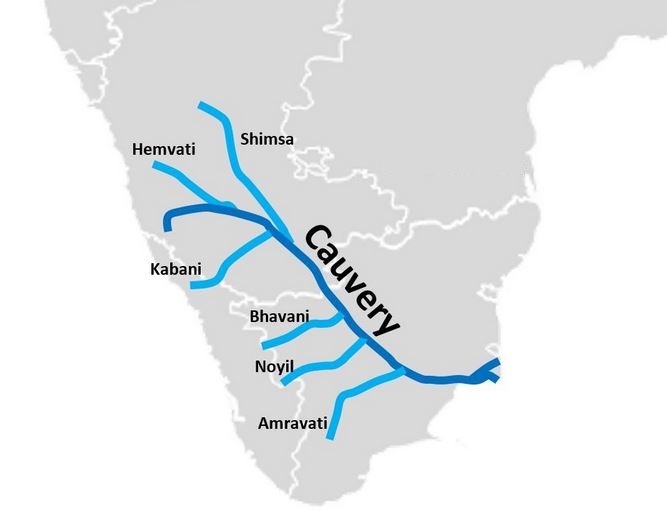
    • The Cauvery River, also spelled as ‘Kaveri’ and known as ‘Ponni’ in Tamil, originates from Talakaveri in the Brahmagiri range located in Karnataka’s Kodagu district.
    • It spans approximately 800 km, traversing through the states of Karnataka and Tamil Nadu, until it eventually reaches the Bay of Bengal.
    • The river’s catchment area covers regions in Tamil Nadu, Kerala, Karnataka, and the Union Territory of Pondicherry.
    • Key tributaries that join the Cauvery include Harangi, Hemavati, Kabini, Suvarnavathi, and Bhavani.
    • It remains perennial due to its dual reliance on both advancing and retreating monsoons for rainfall.
    • Protected areas in its basin: Cauvery WLS,  Biligirirangan Hills WLS,  Pushpagiri WLS,  Muthathi WLS,  Ranganathittu Bird Sanctuary,  Bhimeshwari WLS, Nagarhole NP; Bandipur NP.

    Challenges associated with the Cauvery River:

    • Direct discharge of untreated sewage and domestic waste from towns and cities along the Cauvery contaminates the water, leading to high bacterial loads and nutrient pollution.
    • Industries along the Cauvery, including textiles, dyeing, pharmaceuticals, and others, discharge effluents directly into the river.
    • Pesticides, herbicides, and fertilizers used in agricultural fields adjacent to the river are washed into the Cauvery during rain and irrigation.
    • Unregulated sand mining and dredging activities disrupt riverbeds and banks, altering natural flow patterns and habitat structures.
    • Introduction of non-native species like tilapia and African catfish, initially for aquaculture, has led to their proliferation in the Cauvery.

    Cauvery Water Dispute:

    • Since 1892, tensions existed between British-ruled Madras and Mysore
    • 1924 Agreement aimed to resolve but set the stage for future conflicts. Post-Independence, dam constructions sparked TN appeal
    • Cauvery Water Disputes Tribunal (CWDT) was established
    • Interim orders by the Cauvery River Authority (CRA) in 1998
    • CWDT’s 2013 award allocated water quantities among states
    • Monthly and annual water shares by Karnataka to Tamil Nadu
    • Normal Year, Karnataka must give 177.25 TMC to Tamil Nadu
    • Challenges arise during monsoons due to varying rainfall
    • Article 262 empowers Parliament for inter-state river disputes. The Seventh Schedule defines legislative authority over water resources
    • 2018: Cauvery was termed a “national asset” by SC with river water equality upheld
    • The Cauvery Management Board (CMB) was established by the Court for implementation
    • CWMA and CWRC were established for water regulation and data collection.


    PYQ:

    [2020] Which of the following Protected Areas are located in the Cauvery basin?

    1. Nagarhole National Park
    2. Papikonda National Park
    3. Sathyamangalam Tiger Reserve
    4. Wayanad Wildlife Sanctuary

    Select the correct answer using the code given below:

    (a) 1 and 2 only

    (b) 3 and 4 only

    (c) 1, 3 and 4 only

    (d) 1, 2, 3 and 4

  • Foreign Policy Watch: India-SCO

    EAM Jaishankar attends SCO Summit

    Why in the News?

    External Affairs Minister S Jaishankar addressed the Shanghai Cooperation Organisation (SCO) summit in Kazakhstan’s capital Astana on behalf of Prime Minister Modi.

    About Shanghai Cooperation Organisation (SCO)

    Details
    Introduction
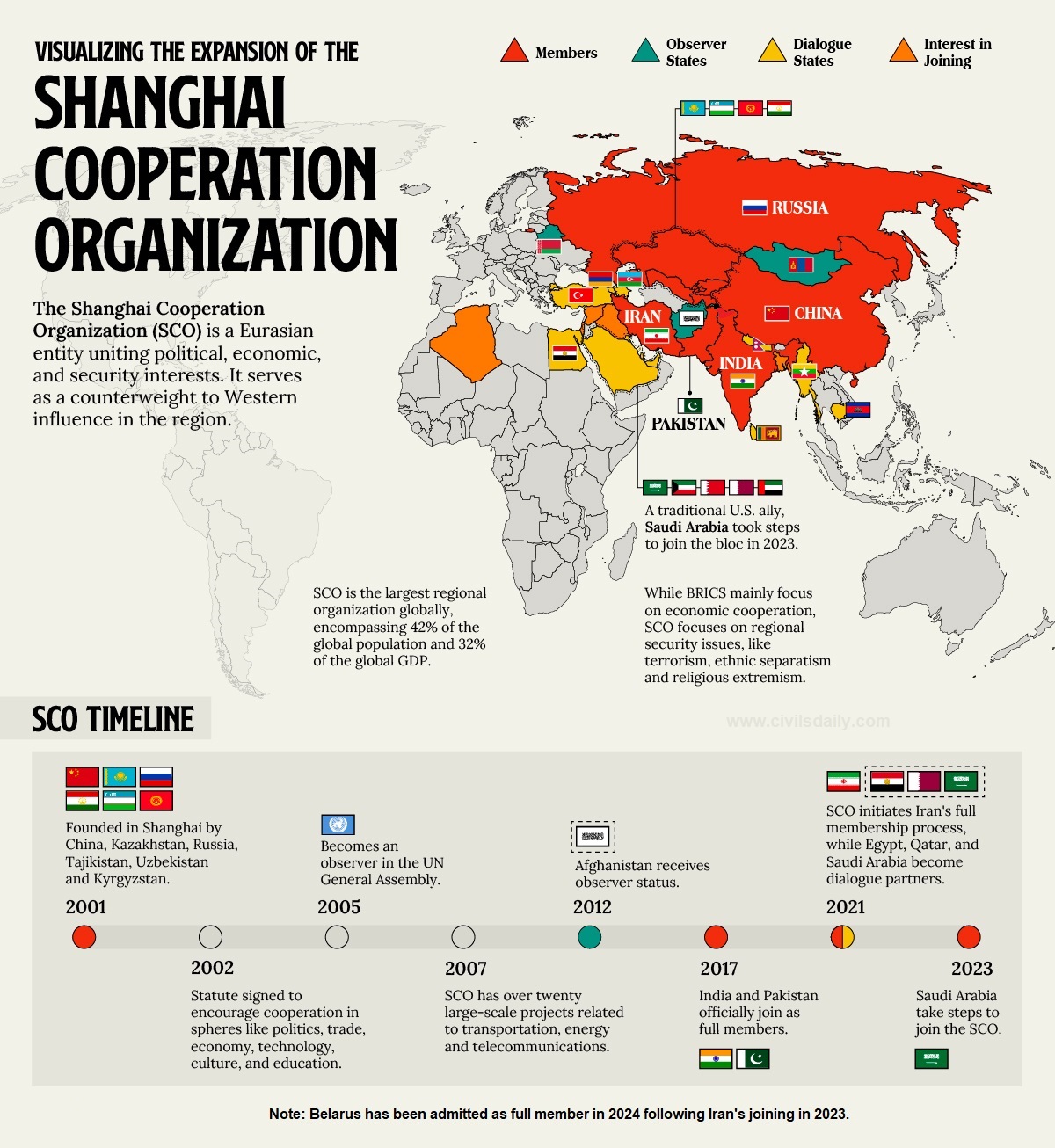
    • Established in 2001 by China and Russia, the SCO is a Eurasian political, economic, and security organization.
    • It spans about 80% of Eurasia and encompasses 40% of the world’s population, with a GDP of around 20% of global GDP as of 2021.
    Origins
    • Successor to the Shanghai Five, formed in 1996 by China, Kazakhstan, Kyrgyzstan, Russia, and Tajikistan.
    • It evolved into the SCO in 2001 with the inclusion of Uzbekistan.
    Expansion
    • India and Pakistan joined in June 2017, followed by Iran in July 2023, and Belarus in July 2024.
    • Several other countries participate as observers and dialogue partners.
    Governance
    • Governed by the Heads of State Council (HSC), the supreme decision-making body that meets annually.
    • Includes the Regional Anti-Terrorist Structure (RATS) as a key component for security coordination.
    Key Structures
    • Heads of State Council: Supreme decision-making body.
    • Heads of Government Council: Discusses multilateral cooperation and approves budgets.
    • Council of Foreign Ministers: Regular meetings on international affairs.
    • Council of National Coordinators: Coordinates multilateral efforts.
    Secretariat
    • Headquartered in Beijing, China, the Secretariat executes organizational decisions, drafts documents, and promotes SCO activities.
    • Secretary-General serves a 3-year term.
    RATS Executive Committee
    • Based in Tashkent, Uzbekistan, RATS fosters cooperation against terrorism, separatism, and extremism.
    • The director serves a three-year term overseeing these efforts.
    Official Languages Chinese and Russian are the SCO’s official languages.
    Key Agreements
    • Treaty on Deepening Military Trust in Border Regions (1996)
    • Treaty on Reduction of Military Forces in Border Regions (1997)
    • Declaration on a “multipolar world” (1997)
    Major Activities
    • Annual summits and meetings across member states;
    • Initiatives in transportation, energy, and telecommunications;
    • Regular gatherings of security, defence, economic, and cultural officials.
    International Relations Established partnerships with various global bodies including the UN, ASEAN, CIS, CSTO, ECO, and CICA, reflecting its broad engagement in regional and international affairs.

    Strategic Significance of SCO for India

    • Open-door for bilateral: Membership facilitates India’s engagement with Central Asian nations and major regional powers like China and Russia on shared security challenges.
    • China-Russia Dynamics: SCO serves as a platform for China and Russia to assert influence and counter Western dominance in international forums.
    • Belt and Road Initiative (BRI) Dispute: India’s stance against endorsing BRI projects through SCO reflects its concerns over sovereignty, particularly regarding CPEC passing through Pakistan-occupied Kashmir.

    About Kazakhstan

    • Kazakhstan is the world’s largest landlocked country and the ninth-largest country by land area, spanning an area of 2.7 million square kilometres.
    • It borders Russia to the north and west, China to the east, Kyrgyzstan, Uzbekistan and Turkmenistan to the south, and the Caspian Sea to the southwest


    PYQ:

    [2022] Consider the following:

    1. Asian Infrastructure Investment Bank
    2. Missile Technology Control Regime
    3. Shanghai Cooperation Organisation

    India is a member of which of the above?

    (a) 1 and 2 only
    (b) 3 only
    (c) 2 and 3 only
    (d) 1, 2 and 3

    [2021] Critically examine the aims and objectives of SCO. What importance does it hold for India?

  • Forest Conservation Efforts – NFP, Western Ghats, etc.

    Afforestation in Delhi Ridge

    Why in the News?

    The Delhi High Court is set to physically inspect the Central and Southern parts of Delhi Ridge to assess the extent of afforestation and cutting of trees in the area.

    Deforestation in Delhi Ridge:

    Over 308 hectares of the ecologically sensitive Delhi Ridge area has been encroached and another 183 hectares “diverted” for “non-forestry purposes”. ( Data by Central Empowered Committee (CEC) report to the Supreme Court, 2023.)

    About Delhi Ridge

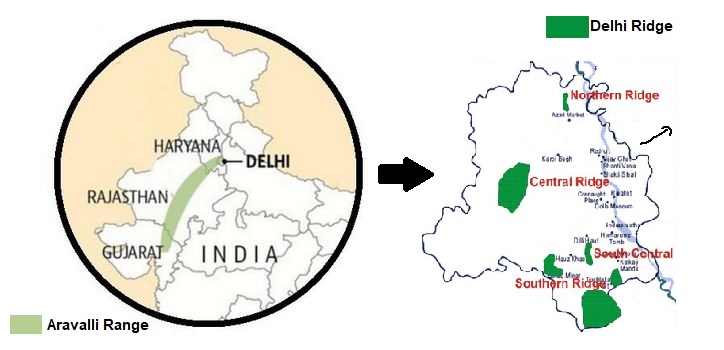
    • Delhi Ridge is located in the National Capital Territory of Delhi, extending as a northern extension of the ancient Aravalli Range.
      • Composed primarily of quartzite rocks, it spans approximately 35 kilometres from Tughlaqabad in the southeast to Wazirabad in the north along the Yamuna River.
    • Ecological Significance:
      • It acts as the “green lungs” of Delhi, providing crucial ecological services such as carbon sequestration and habitat for wildlife.
      • It protects Delhi from the hot desert winds originating from Rajasthan to the west.
      • It supports diverse flora and fauna, making Delhi one of the world’s most bird-rich capital cities.
      • Efforts are ongoing to maintain biodiversity through biodiversity parks and wildlife sanctuaries like the Northern Ridge Biodiversity Park and Asola Bhatti Wildlife Sanctuary.

    Geographical Features

    • The ridge is believed to be over 1.5 billion years old, making it an ancient geological formation compared to the Himalayas (50 million years old).
    • It functions as a watershed, dividing the Indus Plain to the west from the Gangetic Plain to the east within the Indo-Gangetic Plain.

    Administrative Divisions:

    • Divided into four main zones: Northern, Central, South-Central, and Southern Ridge.
    • Each zone has distinct characteristics and faces varying degrees of urban encroachment and conservation efforts.
  • Health Sector – UHC, National Health Policy, Family Planning, Health Insurance, etc.

    Issues with ‘mandir’ tag for Ayushman Health and Wellness Centres

    Why in the News?

    Following Mizoram and Nagaland, Meghalaya has also refused to rename its health and wellness centres as Ayushman Arogya Mandirs as per the Centre’s directive.

    Context: Demographic composition of NE and its implications on policy decisions 

    • Christian Majority: About 75% of Meghalaya’s population practices Christianity, similar to the demographics of Mizoram (90%) and Nagaland (90%).
    • State Asserts Autonomy: Meghalaya’s Health Minister emphasized that health being a State subject grants them the right to decide independently of the Centre’s advisory.

    About Ayushman Bharat Health and Wellness Centres (AB-HWCs)

    • AB-HWCs were launched to move away from selective health care to a more comprehensive range of services spanning preventive, promotive, curative, rehabilitative and palliative care for all ages.
    • There are 1.6 lakh such centres across India under this initiative.
    • The National Health Policy of 2017 envisioned these centres as the foundation of India’s health system.
    • The Union Health Ministry renamed AB-HWCs as Ayushman Arogya Mandirs (AAM) with the tagline ‘Arogyam Parmam Dhanam’.
    • States and Union Territories were urged to complete the rebranding by the end of 2023.

    Back2Basics: Ayushman Bharat – Pradhan Mantri Jan Arogya Yojana (PM-JAY)

    Details
    Details
    • World’s largest fully government-funded health insurance scheme.
    • Launched in 2018.
    • Provides Rs 5 lakh per family for secondary and tertiary care.
    Health Benefit Package
    • Covers the cost of surgery, medical and daycare treatments, medications, and diagnostics.
    • 3 days of pre-hospitalisation and 15 days of post-hospitalisation, including diagnostic care and expenses on medicines.
    • No restriction on family size, age or gender.
    • All pre-existing conditions are covered from day one.
    Beneficiaries
    • An entitlement-based scheme targeting beneficiaries identified by the latest Socio-Economic Caste Census (SECC) data.
    • Flexibility for States/UTs to use non-SECC data with a similar socio-economic profile to identify remaining SECC families.
    Financing
    • Jointly funded scheme: 60:40 between Centre and legislature for all States and UTs.
    • 90:10 for North-Eastern States, J&K, Himachal Pradesh, and Uttarakhand.
    • 100% central funding for Union Territories without legislature.
    Nucleus Agency
    • The National Health Authority (NHA) is an autonomous body under the Societies Registration Act, 1860, responsible for the effective implementation of PM-JAY.
    • State Health Agency (SHA) is the apex body of the State Government responsible for implementing AB-PMJAY in the State.


    PYQ:

    [2022] With reference to Ayushman Bharat Digital Mission, consider the following statements:

    1. Private and public hospitals must adopt it.
    2. As it aims to achieve universal health coverage, every citizen of India should be part of it ultimately.
    3. It has seamless portability across the country.

    Which of the statements given above is/are correct?

    (a) 1 and 2 only

    (b) 3 only

    (c) 1 and 3 only

    (d) 1, 2 and 3

  • Disasters and Disaster Management – Sendai Framework, Floods, Cyclones, etc.

    Why stampedes take place?   

    Why in the news?

    On Tuesday, July 2, a stampede during a religious gathering in Uttar Pradesh’s Hathras district resulted in the tragic deaths of at least 121 individuals, predominantly women.

    What is a Stampede?

    A stampede is an impulsive mass movement of a crowd that often results in injuries and deaths.It disrupts the orderly movement of crowds, leading to injuries and fatalities, often triggered by panic, perceived danger, or the pursuit of something gratifying.

    Why do Stampedes Kill?

    • Primary Cause: Most stampede casualties result from traumatic asphyxia, where external compression of the chest or abdomen restricts breathing.
    • Other Causes: Include myocardial infarction (heart attacks), direct crushing injuries, head injuries, and neck compression.

    How Does Human Psychology Lead to Stampedes?

    • Panic and lacking in Cooperation: In panic-inducing situations, cooperative behavior is initially beneficial, but if disrupted, can lead to chaotic actions like pushing and shoving.
    • Positive Wish-Fulfillment Beliefs: A collective belief, rational or irrational, can mobilize large groups into actions that may compromise individual safety.

    How Does the Physical Organization of Spaces Contribute to Stampedes?

    • Factors Contributing to Stampede Risks: Lack of light, poor crowd flow management, structural collapses, blocked exits, and inadequate design of hardware (like doors and barriers) increase stampede risks.
    • Crowd Density: High density can lead to prolonged evacuation times and increased panic.

    How to Better Prevent or Mitigate Stampedes?

    • Planning and Design: Ensure adequate exit points relative to crowd size, improve crowd flow management, and use technologies for real-time crowd monitoring.
    • Communication and Coordination: Effective communication between organizers and attendees is crucial for issuing warnings and managing crowd movements.

    Notable Deadly Stampedes and Their Causes:

    • Moscow, Russia (1896): Rumors of souvenir shortages led to a deadly surge.
    • Allahabad, India (1954): Lack of crowd control and barriers led to a surge at the Kumbh Mela.
    • Lima, Peru (1963): Tear gas used during a football match triggered panic in enclosed spaces.
    • Wai, India (2005): Slippery steps during a pilgrimage resulted in a tragic stampede.

    Way forward: 

    • Crowd Monitoring Systems: Implement technologies such as CCTV cameras, crowd density sensors, and real-time monitoring software to detect and respond to overcrowding or sudden surges in crowd movement.
    • Communication Systems: Establish robust communication networks between event organizers, security personnel, and attendees. Use public address systems and mobile alerts to convey emergency instructions and warnings promptly.
    • Emergency Response Plans: Develop and rehearse comprehensive emergency response plans that include rapid evacuation procedures, medical assistance points, and coordination with local emergency services.

Join the Community

Join us across Social Media platforms.