💥UPSC 2026, 2027, 2028 UAP Mentorship (March Batch) + Access XFactor Notes & Microthemes PDF

Archives: News

  • Foreign Policy Watch: India-France

    France: India’s steady partner in green growth

    Why in the news?

    On July 14, 2023, in Paris, President Emmanuel Macron and Prime Minister Narendra Modi elevated the ‘Partnership for the Planet’ to one of the three central pillars of the Indo-French Horizon 2047 Roadmap.

    Indo-French Horizon 2047 Roadmap are:

    • Strategic Partnership: Enhancing defense, security, and geopolitical ties.
    • Economic Partnership: Promoting trade, investments, and sustainable development.
    • Partnership for the Planet: Focusing on environmental sustainability and green technologies.

    India- France Bilateral Ties   

    • Strategic Partnership: India and France established a strategic partnership in 1998, which covers cooperation in defense, civil nuclear energy, space, and security. This partnership is considered a cornerstone of their bilateral ties.
    • High-Level Exchanges: There have been frequent high-level exchanges between the leaders of both countries, including state visits and participation in each other’s national events like the Republic Day parade. This demonstrates the close political ties.
    • Defense Cooperation: Defense is a major pillar of the India-France partnership. The two countries conduct joint military exercises, collaborate on defense equipment manufacturing, and have an “intelligence and information exchange” mechanism.
    • Space Cooperation: India and France have robust space cooperation, including co-development and launch of satellites, research on new launch technologies, and connecting startups. They recently launched a Strategic Space Dialogue to guide their space partnership.
    • Convergence on Indo-Pacific: Both countries share concerns over China’s assertiveness in the Indo-Pacific region. They have agreed to intensify cooperation in the strategically important Southwest Indian Ocean and work with other like-minded countries to address regional security challenges.

    How France is India’s steadfast partner to achieve its sustainability goals?

    • Financial Support: France, through the French Development Agency (AFD) and Proparco, has committed substantial financial resources to India. This includes over €4 billion since 2008 for nearly 100 projects, with a significant focus on climate change mitigation and adaptation.
    • Strategic Focus Areas: Cooperation spans key sectors like energy transition, sustainable urban development, biodiversity conservation, resilience of territories, and reduction of inequalities. These efforts contribute directly to India’s sustainable development agenda.
    • Project Implementation: AFD’s involvement in projects such as metro systems in Pune and Nagpur, forest conservation in Rajasthan, and urban water management across 20 cities demonstrates tangible contributions to India’s environmental and social sustainability.
    • Partnership in Innovation: Collaborative initiatives underpinning innovation, including the Indo-French Year of Innovation in 2026, aimed at fostering solutions that integrate social inclusion with environmental sustainability.
    • Indo-Pacific Engagement: Strengthening bilateral ties with an Indo-Pacific dimension, focusing on initiatives like the Indo-Pacific Parks Partnership and joint funds for scaling up green technologies, showcasing France’s commitment to regional sustainability efforts.

    Private sector-led projects

    • Investment in Agriculture: Proparco’s €11.2 million investment in Sahyadri, supports farmer-led initiatives to reduce farm losses, pesticide and fertilizer use, and enhance yields and produce quality.
    • Healthcare Investments: Proparco’s €33 million equity investment in Quadria, aimed at improving access to affordable quality healthcare in underserved regions of India and Southeast Asia.
    • Innovation and Sustainability: Emphasis on innovative solutions blending social inclusion with sustainability, such as through the Indo-French Year of Innovation in 2026 and joint efforts to scale up green technologies in the Indo-Pacific region.

    Way forward: 

    • Strengthen bilateral agreements to facilitate smoother cooperation and ensure compliance with international sustainability standards.
    • Foster deeper public-private partnerships to leverage expertise, funding, and innovation for sustainable development projects.
    • Promote continuous high-level dialogues and joint initiatives to address global challenges, enhance regional security, and drive economic growth and environmental sustainability.

    Mains PYQ:

    Q What were the events that led to the Suez Crisis in 1956? How did it deal a final blow to Britain’s self-image as a world power? (UPSC IAS/2014)

  • Innovations in Sciences, IT, Computers, Robotics and Nanotechnology

    Digital jurisprudence in India, in an AI era  

    Why in the news?

    Generative AI’s transformative potential challenges existing legal frameworks and judicial precedents, which are inadequate for effectively governing this rapidly-evolving technology designed for a pre-AI world.

    What is Generative AI?

    • Generative AI refers to artificial intelligence models that can generate original content like text, images, videos, and audio in response to prompts or requests.
    • These models learn patterns from large datasets and use that knowledge to create new content that resembles the training data.

    Persistent and Contentious Issues in Internet Governance

    Safe Harbour and Liability Fixation:

    • The Shreya Singhal judgment upholds Section 79 of the IT Act, granting intermediaries ‘safe harbour’ protection against liability for hosted content, contingent upon meeting due diligence requirements.
    • Challenges arise in applying these provisions to GAI tools, with debates on whether they should be classified as intermediaries, conduits, or active creators.
    • The Delhi High Court’s ruling in the Christian Louboutin Sas vs Nakul Bajaj and Ors (2018) case limited safe harbour protection to “passive” intermediaries.
    • The classification of GAI tools complicates the assignment of liability, especially in cases of user reposts.

    Generative AI and Legal Conflicts:

    • GAI outputs have led to legal conflicts, such as a lawsuit in the U.S. against OpenAI for defamation by ChatGPT.
    • Ambiguities in classifying GAI tools complicate legal decisions regarding liability.

    What Does the Indian Copyright Act 1957 Say?

    • Section 16 specifies that copyright protection is granted only under the provisions of the Act, with reluctance globally to extend protection to AI-generated works.
    • Critical questions include whether existing copyright laws should be revised for AI, the need for co-authorship with humans, and the responsibility for copyright infringement by AI tools.
    • The 161st Parliamentary Standing Committee Report highlights the inadequacy of the Copyright Act to facilitate AI authorship and ownership.
    • Current Indian law allows copyright owners to take legal action against infringement, but liability for AI-generated content remains unclear.

    Steps to Pursue (Way forward)

    • Learning by Doing: Implement a sandbox approach, granting temporary immunity from liability to GAI platforms for responsible development and data gathering to inform future regulations.
    • Data Rights and Responsibilities: Overhaul the data acquisition process for GAI training, ensuring legal compliance, proper licensing, and compensation for intellectual property used in training models. Potential solutions include revenue-sharing or licensing agreements with data owners.
    • Simplify the Licensing: Licensing data for GAI is complex due to the lack of a centralized licensing body for web data. The creation of centralized platforms, similar to stock photo websites, can simplify licensing, streamline access to data, and ensure data integrity against bias and discrimination.
    • Government and Judicial Approach to maximize the benefits of GAI: A comprehensive re-evaluation of existing digital jurisprudence is needed, requiring a holistic, government-wide approach and judicious interpretations by constitutional courts. The aim is to maximize the benefits of GAI while safeguarding individual rights and protecting against unwelcome harm.

    Mains PYQ:

    Q The emergence of the Fourth Industrial Revolution (Digital Revolution) hasinitiated e-Governance as an integral part of government”. Discuss. (UPSC IAS/2020)

  • Telecom and Postal Sector – Spectrum Allocation, Call Drops, Predatory Pricing, etc

    On Improving Rural Mobile Connectivity 

    Why in the news? 

    On June 6, IEEE endorsed a wireless network structure aimed at providing economical broadband access in rural areas, formulated at IIT Bombay.

    About the latest Telecom Subscription Data        

    • Urban Tele-density: Urban tele-density in India is 127%, indicating that on average, each urban user has more than one mobile connection.
    • Rural Tele-density: Rural tele-density is significantly lower at 58%, meaning only about one in two rural residents has a mobile connection.
    • Urban-Rural Digital Divide: The data highlights a stark contrast between urban and rural areas, with urban areas having much higher mobile connectivity compared to rural regions, reflecting a significant digital divide.

    What are access and core networks?

    • Access Network (AN): The AN consists of base stations that provide wireless connectivity to mobile devices within a limited geographical area. It interfaces directly with mobile devices, facilitating communication and data transfer between devices and the wider network.
    • Core Network (CN): The CN comprises centralized network equipment that manages and directs data traffic between the access network, other networks (like the Internet), and service providers. It handles tasks such as routing, switching, and managing connectivity across the broader network infrastructure.

    What impedes rural connectivity?

    • Affordability: Lower income levels in rural areas make mobile services relatively expensive, limiting access for many rural residents.
    • Cost of Infrastructure: Installing and maintaining network infrastructure like fibre optics in remote rural areas is costly and may not be economically viable for service providers.
    • Low Population Density: Rural areas often have sparse populations spread over large geographic areas, making it less profitable for network operators to invest in infrastructure deployment.
    • Geographical Barriers: Difficult terrains and remote locations further complicate the installation of base stations and backhaul infrastructure necessary for robust network coverage.
    • Urban Bias in Technology: Most advancements in cellular networks, such as 5G, prioritize high data rates and low latency suitable for urban environments, neglecting the unique challenges of rural areas.
    • Limited Research: There has been insufficient research focused on developing cost-effective solutions that can efficiently cover large rural areas with adequate connectivity.

    What is the IEEE 2061-2024 standard? (Its working and architecture)   

    • IEEE 2061-2024 aims to establish a standardized wireless network architecture for affordable broadband access in rural areas.
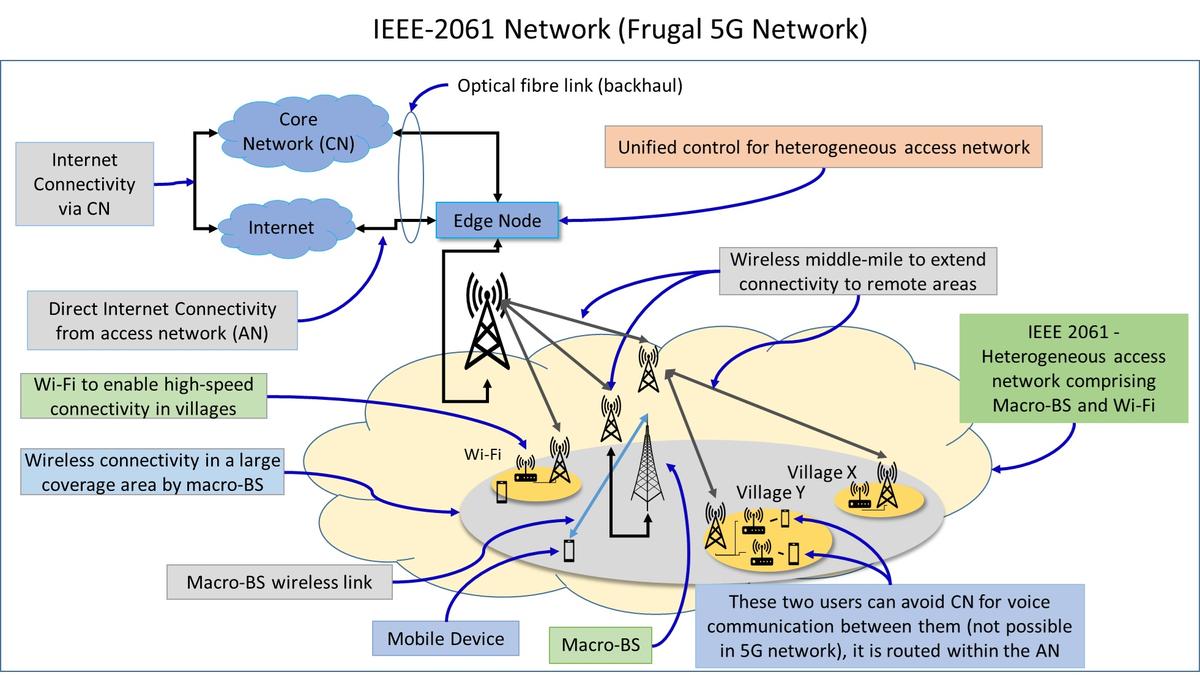
    • It defines a heterogeneous Access Network (AN) comprising macro base stations (Macro-BS) and Wi-Fi base stations, integrated with a flexible Core Network (CN) bypass capability.

    Architecture:

    • Heterogeneous AN: Includes Macro-BS covering large areas with potentially lower data rates, complemented by Wi-Fi base stations deployed within villages for high-speed connectivity.
    • CN Bypass: Allows direct Internet access from the AN, bypassing the centralized Core Network for certain communications. This enhances efficiency and reduces latency, catering to stationary users common in rural settings.
    • Middle-Mile Connectivity: Utilizes multi-hop wireless networks (e.g., satellites, long-range Wi-Fi) to extend connectivity over long distances where optical fibre deployment is impractical or costly.

    What is a middle-mile network?

    • A middle-mile network refers to the infrastructure that connects core network hubs to local access points, spanning intermediate distances. It uses technologies like fibre optics, microwave links, or satellites to transport data between central and regional locations, facilitating efficient connectivity over longer distances without the need for direct local access networks.

    Conclude: To bridge the urban-rural digital divide in telecom, measures should focus on affordability through subsidized services, incentivizing infrastructure investment in rural areas, promoting research on rural-specific technologies, and ensuring equitable access to advanced wireless standards like IEEE 2061-2024.

    Mains PYQ: 

    Q Has digital illiteracy, particularly in rural areas, coupled with a lack of Information and Communication Technology (ICT) accessibility hindered socio-economic development? Examine with justification. (UPSC IAS/2021)

  • Telecom and Postal Sector – Spectrum Allocation, Call Drops, Predatory Pricing, etc

    ICEA calls for reduction in Import Duties to Boost Mobile Phone Sector

    Why in the News?

    • The Indian Cellular & Electronics Association (ICEA), representing domestic electronics manufacturers, called for a reduction of import duties in the upcoming Union budget.
      • ICEA highlighted that the growth of the mobile phone sector now depends on demand in the global market rather than domestic demand, facilitated by supportive policies like the Production Linked Incentive (PLI) scheme.

    About India Cellular and Electronics Association (ICEA) 

    • The ICEA is the apex industry body representing the interests of the mobile and electronics sector in India.
    • It was established in 2017.
    • It plays a crucial role in shaping policies and promoting the growth of the industry through advocacy, policy formulation, and strategic initiatives.
    • Membership:
      • ICEA comprises leading mobile handset manufacturers, electronics companies, and industry stakeholders.
      • This includes both Indian and global companies operating in the electronics sector.
    • Collaborations:
      • ICEA works closely with government bodies, regulatory authorities, and other industry associations to align its initiatives with national economic goals.

    ICEA’s Key Demands

    • Reduction of Import Duties: ICEA is calling for a reduction in import duties on manufacturing inputs for electronics, particularly in the mobile phone sector.
      • Current high tariffs are increasing manufacturing costs in India by 7-7.5% on the bill of materials.
    • Alignment with Global Standards: The demand includes aligning tariffs with those of countries like China and Vietnam, which have lower tariffs on fewer components.
    • Improvement of Customs Procedures: ICEA is urging for streamlined customs procedures to prevent delays in the shipment of key components.

    Significance of ICEA’s Demands

    • Reducing import duties enhances competitiveness, boosts exports, stimulates investment and job creation, reduces trade deficit, and fosters long-term growth in India’s electronics and mobile phone manufacturing sectors.

    Key Initiatives and Programs by ICEA

    • Electronics Manufacturing Clusters: ICEA promotes the development of electronics manufacturing clusters to create a robust supply chain and manufacturing base in India.
    • Skill Development: The association emphasizes the need for skill development in the electronics sector to ensure a skilled workforce capable of supporting industry growth.
    • R&D and Innovation: ICEA encourages research and development (R&D) and innovation within the sector to maintain competitiveness and technological advancement.

    Boost in Mobile Phone Exports from India

    • ICEA Report: According to ICEA, mobile phone exports from India have doubled to surpass Rs 90,000 crore (about USD 11.12 billion) in FY 2022-23 from Rs 45,000 crore in FY22.
    • Government Targets: The government has set a target of USD 10 billion worth of mobile phone exports, with an ambitious goal of achieving USD 300 billion worth of electronics manufacturing by 2025-26, of which USD 120 billion is expected from exports.

    Major Contributors to Export Growth:

    • Apple’s Contribution: Apple is estimated to have a 50% share of mobile phone exports from India, contributing USD 5.5 billion (about Rs 45,000 crore).
    • Samsung’s Contribution: Samsung accounts for approximately 40% of exports, worth Rs 36,000 crore.
    • Third-Party Exports: Third-party exports contributed around USD 1.1 billion to the total export, comprising phones of various brands made in India.

    Future Projections:

    • Export Contribution: Mobile phones are anticipated to contribute more than USD 50 billion worth of exports by 2025-26.
    • Overall Contribution: Mobile phone exports now account for 46% of the overall electronic goods exports, according to ICEA.


    PYQ:

    [2016] Recently, India’s first ‘National Investment and Manufacturing Zone’ was proposed to be set up in:

    (a) Andhra Pradesh

    (b) Gujarat

    (c) Maharashtra

    (d) Uttar Pradesh

  • Trade Sector Updates – Falling Exports, TIES, MEIS, Foreign Trade Policy, etc.

    RBI proposes rationalising regulations on Export-Import Transactions

    Why in the News?

    Reserve Bank of India (RBI) has proposed to rationalise regulations governing export and import transactions. The aim is to promote ease of doing business and empower banks to provide more efficient service to their foreign exchange customers.

    RBI Proposal and Directions

    • The RBI issued ‘Regulation of Foreign Trade under Foreign Exchange Management Act (FEMA), 1999 – Draft Regulations and Directions.’
    • Key propositions include:
      • Repatriation Timeline: The full export value of goods and services must be realised and repatriated to India within 9 months from the date of shipment for goods and the date of invoice for services.
      • Caution Listing: Exporters who fail to realise the full value within the specified time may be caution-listed by the authorised dealer.
      • Caution-Listed Exporters: Caution-listed exporters can undertake exports only against receipt of advance payment in full or an irrecoverable letter of credit, to the satisfaction of the authorised dealer.
      • Advance Remittance Restrictions: No advance remittance for the import of gold and silver is permitted unless specifically approved by the RBI.

    Expected Benefits 

    • Ease of Doing Business: The proposed regulations are intended to promote ease of doing business, especially for small exporters and importers.
    • Empowerment of Banks: The regulations aim to empower authorised dealer banks to provide quicker and more efficient service to their foreign exchange customers.

    About Foreign Exchange Management Act (FEMA), 1999

    • The FEMA, 1999, regulates foreign exchange and trade in India.
    • FEMA replaced the older Foreign Exchange Regulation Act (FERA), 1973.

    How does FEMA regulate EXIM Transaction?

    Regulation under FEMA
    Resident Indian Criteria Defined in Section 2(v) of FEMA;

    A person residing in India for more than 182 days during the course of the preceding financial year.

    Current Account Transactions Permitted freely for EXIM activities, including trade payments and remittances.
    Capital Account Transactions Regulated by RBI, includes FDI in export-oriented units and overseas investments by Indian entities.
    Documentation and Declarations Exporters and importers must furnish declarations to RBI to ensure compliance and monitor foreign exchange.
    Export Declarations Declare the value of goods/services exported, expected earnings, and timeframe for realization.
    Import Declarations Provide details of goods/services imported, and foreign exchange spent, and ensure payments through authorized channels.
    Authorized Dealers Only RBI-approved dealers (banks/financial institutions) can handle foreign exchange transactions for EXIM.
    Import Payment Regulations Payments must be made through authorized channels within prescribed time limits, complying with DGFT terms.
    Foreign Currency Accounts Entities can maintain foreign currency accounts for efficient handling of foreign exchange for EXIM activities.

    Significance of FEMA in Regulating EXIM Transactions

    • Facilitates Trade: By providing a clear regulatory framework, FEMA facilitates smoother and more efficient EXIM transactions, contributing to the growth of international trade.
    • Economic Stability: Ensures that foreign exchange earnings and expenditures are monitored and regulated, maintaining economic stability and preventing illegal outflows.
    • Investor Confidence: A transparent and regulated foreign exchange environment boosts investor confidence, attracting more foreign investment.
    • Liberalization: Replaces the stringent controls of FERA with a more liberal approach, encouraging businesses to engage in global trade.

    PYQ:

    [2013] Which of the following constitutes Capital Account?

    1. Foreign Loans

    2. Foreign Direct Investment

    3. Private Remittances

    4. Portfolio Investment

    Select the correct answer using the codes given below.

    (a) 1, 2 and 3

    (b) 1, 2 and 4

    (c) 2, 3 and 4

    (d) 1, 3 and 4

  • Innovations in Biotechnology and Medical Sciences

    [pib] Metal Oxide Nano-composite developed for Environmental Clean-up

    Why in the News?

     A new metal oxide nanocomposite has been developed by The Institute of Advanced Study in Science and Technology (IASST)  that can help photocatalytic degradation of organic pollutants like dyes and pharmaceuticals and hence can be used as sustainable technologies for cleaning up the environment.

    Understanding Photocatalysis and Metal Oxides

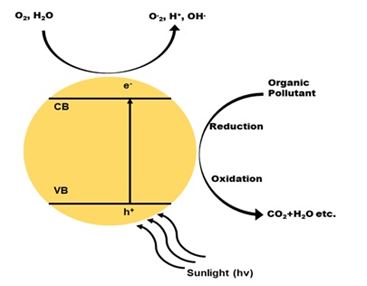
    • Photocatalysis is a process that uses light to accelerate chemical reactions, particularly useful for degrading harmful substances in water and air.
    • They facilitate this reaction without being consumed.
    • Examples: Titanium Dioxide (TiO2), Zinc Oxide (ZnO)  and Tungsten Trioxide (WO3)

    How do they work?

    • When exposed to light, these metal oxides generate electron-hole pairs.
    • These pairs are highly reactive and can break down pollutants into harmless by-products.
      • Work Efficiency: The overall efficiency of this process depends on several factors, including the choice of metal oxide, its crystal structure, light intensity, pollutant concentration, pH level, and the amount of catalyst used.
      • Optimisation: Optimizing these factors is crucial for maximising the degradation rates of pollutants. Adjustments in the type of metal oxide, light parameters, and other conditions can significantly enhance the photocatalytic efficiency.

    Breakthrough by IASST: NiTF Composite

    • The team developed a nanocomposite called NiTF, which stands for Nickel-doped Titanium Dioxide on Fuller’s Earth. 
    • This innovative material combines the photocatalytic properties of titanium dioxide with the adsorption capabilities of Fuller’s earth, a type of natural clay.

    What is Fuller Earth?

    • Fuller’s earth is a term for various clays used as an absorbent, filter, or bleaching agent.
    • Products labeled fuller’s earth typically consist of palygorskite or bentonite.
    • Primary modern uses include as absorbents for oil, grease, and animal waste, and as a carrier for pesticides and fertilizers

    Testing and Results

    • The NiTF nanocomposite was tested for its ability to decolorize methylene blue, a common dye.
      • Methylene blue is a persistent pollutant toxic to aquatic life, harmful to human health, and causes colour pollution in water bodies.
    • The results were impressive, with the composite achieving a 96.15% decolorization of the dye solution at a pH of 9.0 under visible light within 90 minutes.
    • Fuller’s earth enhanced the TiO2’s ability to adsorb pollutants, even in the absence of light.
    • This suggests that the NiTF nanocomposite could be a cost-effective solution for environmental photocatalysis, providing benefits even in low-light conditions.

    Potential Applications

    • Catalysis: The nanocomposite can enhance the efficiency of various chemical reactions.
    • Energy Storage: It has the potential to improve systems for storing energy.
    • Sensors: The material can be used to develop highly sensitive detection devices.
    • Optoelectronics: The nanocomposite can advance technologies that use light for electronic devices.
    • Biomedical Fields: It can be applied in medical treatments and diagnostics.
    • Coatings: The material can be used to create protective and functional surfaces.
    • Renewable Energy: It can facilitate water splitting to produce renewable energy.


    PYQ:

    [2015] With reference to the use of nanotechnology in the health sector, which of the following statements is/are correct?

    1. Targeted drug delivery is made possible by nanotechnology.
    2. Nanotechnology can largely contribute to gene therapy.

    Select the correct answer using the code given below:

    (a) 1 only
    (b) 2 only
    (c) Both 1 and 2
    (d) Neither 1 nor 2

  • Indian Army Updates

    [pib] 13th Edition of Exercise MAITREE in Thailand

    Why in the News?

    The Indian Army contingent departed for the 13th edition of the India-Thailand joint military Exercise MAITREE.

    About Exercise Maitree 

    • Maitree is an annual bilateral military exercise between the Indian Army and the Royal Thai Army that has been conducted since 2006.
    • It is conducted alternatively in India and Thailand each year
    • The latest edition in 2019 took place in Umroi, Meghalaya
    • The exercise involves company-level joint training in jungle and urban scenarios
      • Objective: Enhancing combined capabilities in executing joint counter-insurgency and terrorist operations in jungle and urban environments under Chapter VII of the United Nations Charter.

    Training Focus:

    • It focuses on joint planning, tactical drills, physical fitness exercises, and sharing best practices.
    • Key activities include setting up joint operation centres, intelligence gathering, using drones, securing landing zones, and conducting special heliborne operations.

    Significance:

    • Exercise Maitree is significant as both India and Thailand face security challenges from terrorism, especially in southern Thailand which is prone to attacks.
    • It is part of the growing defense cooperation between India and Thailand, which signed an MoU on defense cooperation in 2012.

    India’s Defence Exercises with SE Asian Neighbours:

    India has conducted several joint military exercises with its Southeast Asian neighbors in recent years to strengthen defense cooperation and interoperability:

    • Exercise Garuda Shakti: This is a bilateral exercise between the Indian and Indonesian Special Forces. The latest iteration was held in November 2022 at the Sangga Buana Training Area in Indonesia.
    • Exercise Mitra Shakti: This is a joint exercise between the Indian and Sri Lankan armies. The latest edition was conducted in 2022.
    • Exercise VINBAX: This is a joint military exercise between India and Vietnam. The 2022 edition was the 3rd iteration of this exercise.
    • IMBEX: This is a joint military exercise between India and Myanmar. The latest edition was held in 2017-18.
    • EKUVERIN: This is a joint military exercise between the Indian and Maldivian forces. The 11th edition was conducted in 2022.
    • CORPAT: India conducts Coordinated Patrol (CORPAT) exercises with maritime neighbors like Indonesia, Thailand, and Malaysia to enhance maritime cooperation and security in the region.
    • AIME 2023: This was the first ASEAN-India Maritime Exercise, held in May 2023 with the participation of navies from India, Brunei, Indonesia, Malaysia, the Philippines, Singapore, Thailand, and Vietnam.


    PYQ:

    [2024] Which of the following statements about ‘Exercise Mitra Shakti-2023’ are correct?

    1. This was a joint military exercise between India and Bangladesh.
    2. It commenced in Aundh (Pune).
    3. Joint response during counter-terrorism operation was a goal of this operation.
    4. Indian Air Force was a part of this exercise.

    Select the answer using the code given below :

    (a) 1, 2 and 3

    (b) 1, 2 and 4

    (c) 1, 3 and 4

    (d) 2, 3 and 4

  • Global Geological And Climatic Events

    What are hurricanes, their types?    

    Why in the news?

    Due to Hurricane Beryl sweeping through the Windward Islands, the Indian Men’s cricket team, victorious in the T20 World Cup, finds itself stranded in Barbados.

    What do we know about Hurricane Beryl?

    • Early Category 4 Storm: Hurricane Beryl is the earliest category 4 storm of the Atlantic hurricane season, sustaining winds of at least 130 miles per hour (209 kilometres per hour).
    • Location and Impact: It is currently affecting the Windward Islands in the southern part of the Lesser Antilles, including Barbados, Grenada, and Trinidad and Tobago.
    • Forecast: The National Hurricane Centre has issued warnings for life-threatening winds and storm surges in the affected islands, with the potential for violent winds and flash flooding.
    • Preparations: Local authorities in Barbados have suspended school classes and taken other precautions, such as shutting down the water supply, in anticipation of the hurricane’s impact.
    • Historical Context: Hurricane Beryl is noted as the strongest storm to impact the Windward Islands since Hurricane Ivan in September 2004.

    What are hurricanes and how do they form?

    • Formation: Hurricanes form over warm ocean waters near the equator where warm, moist air rises from the ocean’s surface, creating low air pressure.
    • Fuel: They are fueled by the heat and moisture evaporating from the ocean, forming clouds and spinning due to the Earth’s rotation.
    • Eye Formation: As the storm system intensifies, an eye forms at its centre, with storms rotating counterclockwise north of the equator and clockwise south of it.
    • Impact of Warming World: Warmer sea surface temperatures due to climate change may lead to slower decay of hurricanes upon landfall, potentially increasing their severity.

    Are hurricanes becoming more severe now?

    • Research Findings: Studies suggest that warmer sea surface temperatures contribute to the slower decay of hurricanes, potentially prolonging their destructive impacts inland.
    • Record-Breaking Seasons: The 2020 Atlantic Hurricane season has seen a record number of named storms, indicating a trend towards more frequent and intense hurricane activity.

    What is the difference between a hurricane and a tropical storm?

    • No Fundamental Difference: Hurricanes, typhoons, and cyclones are all types of tropical cyclones, named differently based on their location:
    • Hurricanes: Form over the Atlantic Ocean and the eastern Pacific Ocean.
    • Typhoons: Form in the Northwest Pacific Ocean.
    • Cyclones: Form in the Bay of Bengal and the Arabian Sea.
    • Naming Conventions: The different names signify regional differences but refer to the same meteorological phenomenon of tropical cyclones.

    Way forward: 

    • Implementation of Advanced Forecasting Technologies: Invest in state-of-the-art meteorological tools and satellite technology to enhance the accuracy and lead time of hurricane forecasts.
    • Community Preparedness Programs: Establish comprehensive community outreach programs to educate residents about hurricane risks, evacuation procedures, and emergency shelter locations.

    Mains PYQ:

    Q Discuss the meaning of colour-coded weather warnings for cyclone prone areas given by India Meteorological Department. (UPSC IAS/2014)

  • Finance Commission – Issues related to devolution of resources

    What is on the agenda for the 16th Finance Commission?  

    Why in the news? 

    The 16th Finance Commission, under Article 280, focuses on devolving funds. Amendments like 73rd and 74th mandate it to bolster state funds for panchayats and municipalities.

    About 16th Finance Commission

    • The 16th Finance Commission of India was constituted on December 31, 2023, with Dr. Arvind Panagariya as its Chairman.
    • The President of India appointed the Commission in pursuance of Article 280(1) of the Constitution

    How do other countries devolve funds to their local governments?

    • International Comparison: Countries like South Africa, Mexico, the Philippines, and Brazil allocate significantly higher percentages of their GDP (1.6% to 5.1%) to urban local bodies compared to India’s 0.5%.
    • Importance of Intergovernmental Transfers (IGTs): IGTs make up about 40% of Urban Local Bodies (ULBs) revenue in India but suffer from unpredictability, lack of earmarking for vulnerable groups, and horizontal equity.
    • Financial Health of ULBs: Despite efforts by multiple Finance Commissions, financial devolution to cities in India remains inadequate, affecting city productivity and quality of life.

    Why is the Census significant?

    • Data Dependence: The absence of the 2021 Census data makes it challenging to accurately assess urban growth and demographic changes crucial for evidence-based fiscal devolution.
    • Urban Dynamics: India has approximately 4,000 statutory towns, an equal number of Census towns, and a large number of effectively urban villages, which need accurate enumeration for effective planning and resource allocation.
    • Migration Impact: The Census data is essential to capture the significant migration to Tier-2 and Tier-3 cities, impacting their infrastructure and service needs.

    What about cities and the Taxation system?

    • Impact of GST: The introduction of GST has reduced ULBs’ tax revenue (excluding property tax) significantly, impacting their financial autonomy.
    • Low IGTs: Intergovernmental transfers from States to ULBs in India are minimal (around 0.5% of GDP), much lower than other developing nations, exacerbating fiscal challenges.
    • Constitutional Provisions: Despite the 74th constitutional amendment aimed at empowering ULBs, progress has been limited over three decades, hampering urban development.
    • Parallel Agencies: The growth of parallel agencies and schemes like MP/MLA Local Area Development Schemes distort the federal structure and weaken ULBs’ financial and operational autonomy.

    Way forward: 

    • Enhanced Intergovernmental Transfers (IGTs): Increase IGTs from States to Urban Local Bodies (ULBs) to at least 2% of GDP, ensuring predictability and earmarking for vulnerable groups.
    • Reform in Urban Governance and Fiscal Autonomy: Strengthen constitutional provisions to empower ULBs further, reducing dependence on parallel agencies like MP/MLA Local Area Development Schemes.

    Mains PYQ: 

    Q How is the Finance Commission of India constituted? What do you know about the terms of reference of the recently constituted Finance Commission? Discuss. (UPSC IAS/2018)

  • LGBT Rights – Transgender Bill, Sec. 377, etc.

    At the end of Pride Month, assessing the LGBTQIA+ communities’ rights   

    Why in the news? 

    Every June, Pride Month is celebrated globally to honour the contributions of LGBTQIA+ community members and to promote love, diversity, and acceptance.

    Varying rights and status of LGBTQIA+ communities across the world:

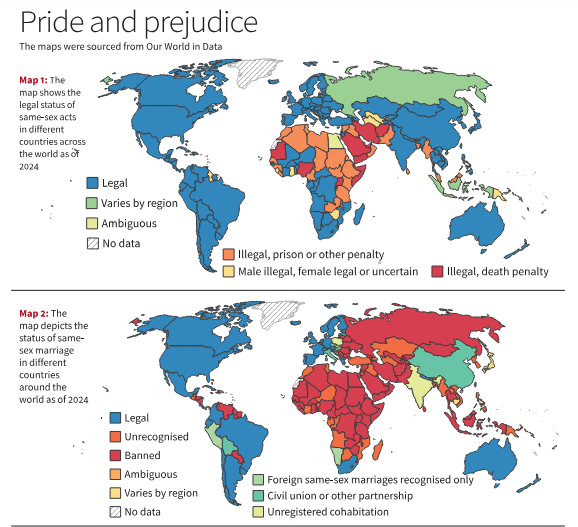
    • Legalization and Criminalization of Same-Sex Acts: The legal status of same-sex acts varies significantly while 37 countries have fully legalized same-sex marriage, 59 countries still penalize any expression of queerness, with severe punishments in some regions.
    • Marriage Rights: Same-sex marriage is legal in 37 countries, banned in 79 countries, and in some places, same-sex couples can only opt for civil unions, leaving their status partially recognized.
    • Employee Protections: Legal protections for queer employees are inconsistent. While 27 countries offer legal aid based on sexual orientation, 90 countries lack any legal protections for queer employees. India and three other countries provide legal aid based on gender identity, including transgender persons.
    • Adoption Rights: Adoption rights for same-sex couples also vary. In 39 countries, same-sex parents can adopt children, while 45 countries ban this practice. In 100 countries, single parents can adopt under certain conditions, similar to India’s laws.
    • Social and Legal Challenges: Despite legal advancements in some areas, LGBTQIA+ individuals globally continue to face significant social and legal challenges, including discrimination, harassment, and exclusion, with varying levels of legal aid and recognition depending on the country.

    Indian Scenario

    • Decriminalization of Homosexuality: In 2018, the Supreme Court of India partially struck down Section 377 of the Indian Penal Code, decriminalizing homosexuality. Same-sex couples have the right to cohabitation but not to legal marriage or unions.
    • Discrimination and Harassment: Queer individuals in India still face significant discrimination, harassment, and exclusion.
    • Legal Protections for Transgender and Intersex Individuals: The Transgender Persons (Protection of Rights) Act, 2019, prohibits unfair treatment in employment, education, healthcare, public facilities, and residence. Legal recourse is available for discrimination based on gender identity but not sexual orientation.
    • Adoption Rights: Same-sex couples cannot be recognized as co-parents to an adopted child. Single prospective adoptive parents, regardless of marital status, are allowed to adopt under the Juvenile Justice (Care and Protection of Children) Act, 2015.

    Way forward: 

    • Expand Legal Recognition: Countries should work towards fully recognizing same-sex marriages and providing comprehensive legal protections against discrimination based on sexual orientation and gender identity.
    • Education and Awareness: Implement nationwide educational programs to raise awareness about LGBTQIA+ issues, combat stereotypes, and promote understanding and acceptance. This can involve incorporating LGBTQIA+ history and rights into school curriculums and conducting public awareness campaigns.
    • Economic Opportunities: Ensure equal opportunities in the workplace by promoting diversity and inclusion policies, providing sensitivity training for employers, and supporting LGBTQIA+ entrepreneurs. Governments and organizations can offer grants, mentorship programs, and other resources to empower LGBTQIA+ individuals economically.

    Mains PYQ: 

    Q ‘Women’s movement in India has not addressed the issues of women of lower social strata.’ Substantiate your view. (UPSC 2018)

Join the Community

Join us across Social Media platforms.