💥UPSC 2027,2028 Mentorship (April Batch) + Access XFactor Notes & Microthemes PDF

Archives: News

  • Historical and Archaeological Findings in News

    Unsolved issue of the Buddha Relics from Bavikonda

    Why in the News?

    • Ten years after the division of Telangana from united Andhra Pradesh, the distribution of antiquities, manuscripts, and cultural objects remains contentious.
      • The custody of objects like Buddha Relics from Bavikonda are part of this dispute.

    About Bavikonda Buddhist Complex

    • Bavikonda, a significant ancient Buddhist site dating from the 3rd century BC to the 3rd century AD, is located along the Eastern Coastline of Andhra Pradesh near Visakhapatnam on the way to Bheemunipatnam.
    • It is located an ancient trade route linking Andhradesa with North India via Kalinga, along with its proximity to ancient ports.
    • The discovery of Roman silver coins further supports this historical context.
    • The site also features Buddhapada slabs intricately carved with Ashtamangala symbols, found on the platforms surrounding the Mahachaitya.

    About Buddha Relics from Bavikonda

    • The relics were discovered in 1993 during archaeological excavations conducted by the Andhra Pradesh Department of Archaeology and Museums (DAM).
    • These discoveries have significantly contributed to our understanding of the spread of Buddhism in the region during the post-Ashoka period along the Krishna River basin.
    • Nature of Relics:
    • The site at Bavikonda yielded several earthen vessels containing gold objects and precious beads.
    • These relics are believed to include corporeal remains (related to skull) of the Buddha, along with silver and gold caskets.
    • These were found alongside an earthen urn or receptacle (Samudgaka) containing ashy deposits and burnt charcoal.
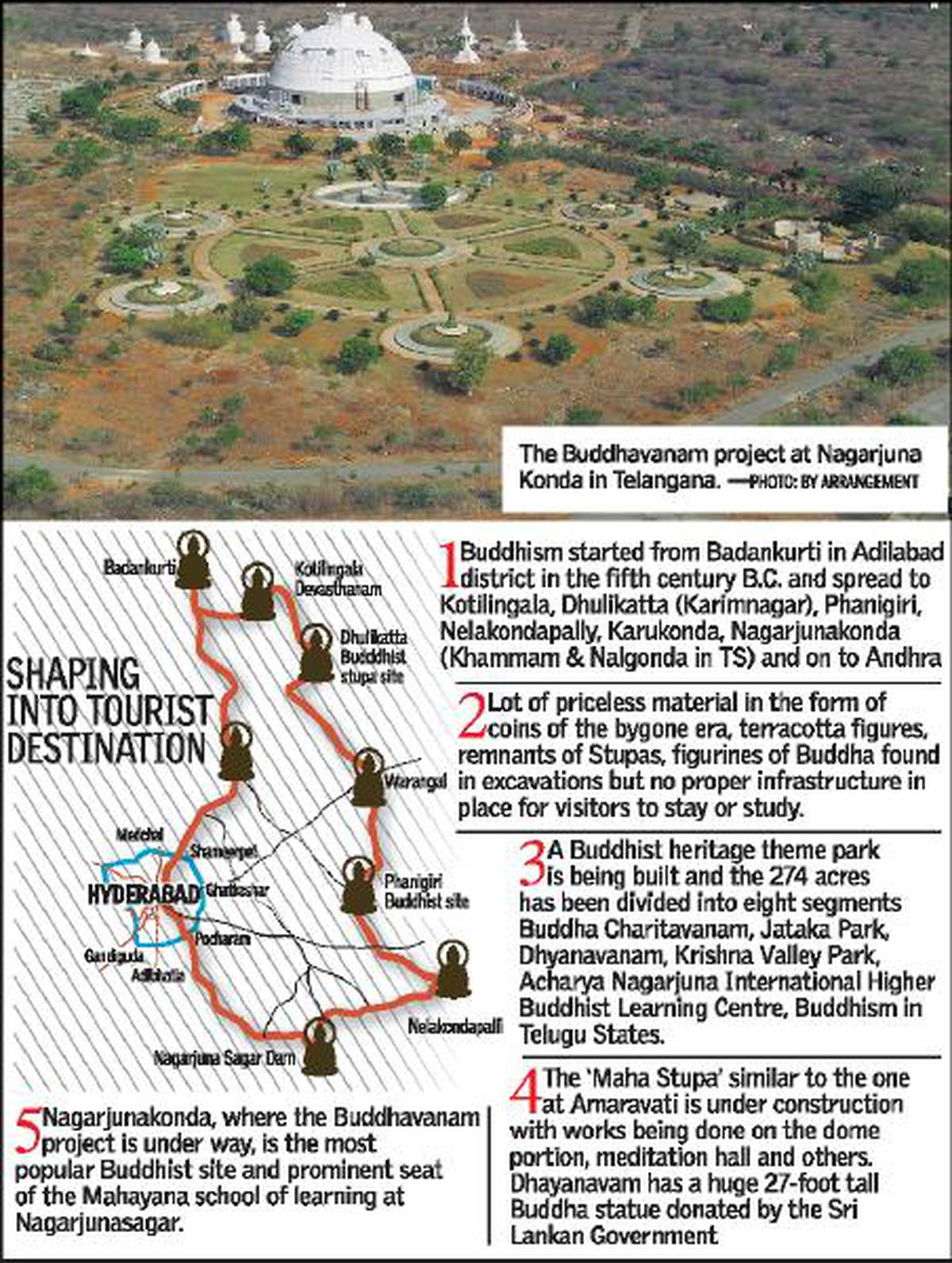
    Noted Buddhavanam Sites in Andhra Region

    • Thotlakonda: Located near Visakhapatnam, Thotlakonda is another prominent Buddhist site dating back to the 3rd century BC to the 3rd century AD. It consists of monastic complexes, stupas, chaityas, viharas, and a university. Excavations have revealed relics and artifacts indicating it was a major center for Buddhist learning and trade.
    • Salihundam: Situated near Srikakulam, Salihundam dates from the 2nd century BC to the 12th century AD. It features remnants of stupas, votive stupas, monastic complexes, and sculptures. The site is noted for its architectural and sculptural heritage, reflecting a blend of Buddhist and Hindu influences over centuries.
    • Pavurallakonda: Close to Bheemunipatnam, Pavurallakonda is a Buddhist hilltop monastery dating back to the 3rd century BC to the 2nd century AD. It includes viharas, chaityas, and relic caskets. The site offers panoramic views of the coastline, adding to its spiritual ambiance.
    • Ghantasala: Located near Krishna district, Ghantasala served as an ancient Buddhist site from the 2nd century BC to the 2nd century AD. It contains stupas, viharas, and relics that indicate its significance as a trading hub and center for Buddhist teachings.
    • Nagarjunakonda: Situated in the Guntur district, Nagarjunakonda is an island on the Krishna River that flourished from the 3rd century BC to the 3rd century AD. It boasts numerous Buddhist monasteries, stupas, chaityas, and sculptures. The site is renowned for its architectural grandeur and extensive archaeological findings.


    PYQ:

    [2015] Which of the following kingdoms were associated with the life of Buddha?

    1. Avanti
    2. Gandhara
    3. Kosala
    4. Magadha

    Select the correct answer using the codes given below:

    (a) 1, 2 and 3

    (b) 2 and 3 only

    (c) 1, 3 and 4

    (d) 3 and 4 only

  • RTI – CIC, RTI Backlog, etc.

    CIC upholds decision of Rashtrapati Bhavan on RTI query

    Why in the News? 

    • The Central Information Commission (CIC) upheld Rashtrapati Bhavan’s response to an RTI query regarding the number of times former President Kovind returned decisions by the Prime Minister/Union Council of Ministers for reconsideration.
      • The President’s Secretariat stated that no information was available on record regarding such returns.

    Back2Basics: Right to Information (RTI)

    • The RTI Act of 2005 grants Indian citizens the right to access government-held information, with exceptions.
    • Its goal is to enhance transparency and accountability in public authorities.
    • This Act replaced the earlier Freedom of Information Act of 2002.
    • RTI aligns with Freedom of Speech and Expression (Article 19) in India’s Constitution.

    About Central Information Commission (CIC)

    Details
    Establishment Set up under the Section 12 of the Right to Information Act, 2005.
    Function
    • Oversees implementation of RTI Act in Central Government and Union Territories.
    • Resolves complaints and decides appeals related to the Act.
    Headquarters New Delhi
    Composition
    • Chief Information Commissioner (CIC)
    • Up to 10 Information Commissioners (IC), (appointed by President on recommendation of PM-led Committee consisting Leader of Opposition and Cabinet Ministers.)
    Qualifications CIC and IC must be persons of eminence in public life with wide knowledge and experience in: Law, Science and Technology, Social Service, Management, Journalism, Mass Media, Administration, and Governance.

    NON-ELIGIBLITY: Members of Parliament or Legislature of any State or Union Territory, hold any office of profit, be connected with any political party, or carry on any business or profession.

    Tenure
    • CIC and IC hold office for such term as prescribed by Central Government or until they attain age of 65 years, whichever is earlier.
    • NO Reappointment.
    • IC can be appointed as Chief Information Commissioner, but total tenure including term as IC should not exceed 5 years.
    Removal
    • President can remove CIC or IC on grounds like insolvency, conviction for moral turpitude, engaging in another office of profit, etc.
    • Removal for misbehaviour requires Supreme Court enquiry and recommendation.
    Salary & Conditions Salary, allowances, and service conditions determined by Central Government, cannot be varied to their disadvantage during service (After RTI Amendment Act,2019)
    How RTI amendment, 2019 has changed CIC?
    • Before the 2019 amendment to the RTI Act, ICs at the CIC held a 5-year fixed term and were considered equal in status to the Chief Election Commissioner and Supreme Court judges.
    • The 2019 amendments granted the Centre the power to alter these terms at its discretion.
    Functions
    • Receives and inquires into complaints related to RTI Act violations, including non-appointment of Public Information Officer, refusal or delay in information, unreasonable fees, incomplete or false information.
    • Submits annual report on Act’s implementation to Central Government, presented to Parliament.
    Powers
    • Can suo-moto order inquiries, summon persons, enforce oaths, access and inspect documents, receive evidence on affidavit, requisition public records, summon witnesses, and enforce compliance of decisions.
    • Can direct public authorities on information access, officer appointments, record management, training, and impose penalties or compensation for non-compliance.


    PYQ:

    [2018] The Right to Information Act is not all about citizens’ empowerment alone, it essentially redefines the concept of accountability. Discuss. (150 words)

    [2019] There is a view that the Officials Secrets Act is an obstacle to the implementation of RTI Act. Do you agree with the view? Discuss.

    [2020] “Recent amendments to the Right to Information Act will have a profound impact on the autonomy and independence of the Information Commission”. Discuss.

  • Death Penalty Abolition Debate

    What are the standards for awarding death sentence, the President’s ‘Mercy’ power?

    Why in the News?

    • The President of India has rejected a Mercy Petition to pardon a Pakistani terrorist.
      • The accused was one among the Lashkar-e-Tayyeba terrorists who attacked the Red Fort in 2000, killing two soldiers and a civilian guard.

    What is the process of Mercy Petition?

    • Step 1: The convict facing a death sentence can file a mercy petition within 7 days of the Supreme Court dismissing their appeal.
    • Step 2: The convict or their relative submits a written petition to the President or governor, citing grounds such as sole breadwinner, physical/mental health, perceived harshness of the law, or judicial errors.
    • Step 3: The petition is forwarded to the Ministry of Home Affairs for assessment and recommendations, including consultation with the relevant State government.
    • Step 4: Based on Home Ministry recommendations and the Council of Ministers’ advice, the President can accept or reject the mercy plea without a specified time limit.
    • Step 5: While governors cannot pardon death sentences, they can commute, remit, or reprieve sentences under their state’s executive powers for offences against state laws.

    Judiciary on Mercy Petitions:

      • Bachan Singh v. State of Punjab (1980): The Supreme Court, upheld the death penalty but set the stringent criteria. It emphasized that the death penalty should be awarded only in the “rarest of rare” cases when all mitigating circumstances are considered.
      • In Maru Ram v. Union of India (1981), the Supreme Court ruled that the power to grant pardons under Article 72 of the Constitution must be exercised based on the advice of the Council of Ministers.
      • In Kehar Singh vs Union of India (1989) case, the court asserted that presidential pardon is an act of grace, not a right that can be claimed. The exercise of this power is purely administrative and not subject to judicial review.
      • In the Dhananjoy Chatterjee vs State of West Bengal (1994) case, the Supreme Court clarified that the pardoning powers under Articles 72 and 161 of the Constitution can only be exercised by the Central and State Governments, respectively, and not autonomously by the President or Governor.
      • In Epuru Sudhakar & Anr. v. Government of Andhra Pradesh (2006), the Supreme Court ruled that the clemency powers of the President and Governor under Article 72 and Article 161 are subject to judicial review.
      • In Shatrugan Chauhan v. State of U.P. (2014), the appex court has also commuted the death sentence in cases of inordinate delay in deciding mercy petitions. The court commuted the sentence of one Gurmeet Singh after he spent 27 years in custody (and 21 years on death row). 
      • In Mohd. Afzal Guru vs State of Delhi (2014) case, the court-mandated a minimum 14-day gap between the rejection of a mercy petition and the execution of a death penalty, ensuring adequate time for legal recourse.
      • Report of the 262nd Law Commission (2015): Recommended abolishing the death penalty for all crimes except terrorism-related offenses and waging war.
      • In April 2023, the Supreme Court upheld the Mumbai High Court’s decision to commute the death sentence of a woman and her sister due to significant delays in deciding their mercy petitions.

    About Presidents’ Pardoning Powers under Article 72

    • According to Article 72, the President of India has the power to grant pardons, reprieves, respites, or remissions of punishment or to suspend, remit, or commute the sentence of any person convicted of any offense: In cases where the punishment or sentence is by a Court Martial;
      • According to Article 161, the Governor of a State has the power to grant pardons, reprieves, respites, or remissions of punishment or to suspend, remit, or commute the sentence of any person convicted of any offence against any law relating to matters under the executive power of the State.
    • In the recent Supreme Court Ruling of 2021, the apex court held that the Governor of a state can pardon prisoners, including those on death row, even before they have served a minimum of 14 years of their prison sentence.

    Did you know?

    1. Pardon means completely absolving the person of the crime and letting him go free. The pardoned criminal will be like a normal citizen.
    2. Commutation means changing the type of punishment given to the guilty into a less harsh one, for example, a death penalty commuted to a life sentence.
    3. Reprieve means a delay allowed in the execution of a sentence, usually a death sentence, for a guilty person to allow him some time to apply for a Presidential Pardon or some other legal remedy to prove his innocence or successful rehabilitation.
    4. Respite means reducing the quantum or degree of the punishment to a criminal in view of some special circumstances, like pregnancy, mental condition etc.
    5. Remission means changing the time period of the punishment without changing its nature, for example reducing twenty years of rigorous imprisonment to ten years.

    Cases as specified by Art. 72

    In all cases where the punishment or sentence:

    1. is by a court-martial.
    2. is for an offence against any law relating to a matter to which the executive power of the Union extends.
    3. is a sentence of death.

    Nature of the Pardoning Power

    • The pardoning power of the president is not absolute.
    • At a procedural level, the apex court in Epuru Sudhakar & Anr. v. Government of Andhra Pradesh (2006) has held that the President’s power must be exercised based on the aid and advice of the Council of Ministers and can be challenged on multiple grounds including that relevant material was not considered, the power was exercised based on political considerations, or there was no application of mind.
    • This has not been discussed by the Constitution but is the practical truth. Further, the constitution does not provide for any mechanism to question the legality of decisions of presidents or governors exercising mercy jurisdiction.


    PYQ:

    [2014] Instances of President’s delay in commuting death sentences have come under public debate as denial of justice. Should there be a time specified for the President to accept/reject such petitions? Analyse.

  • Wildlife Conservation Efforts

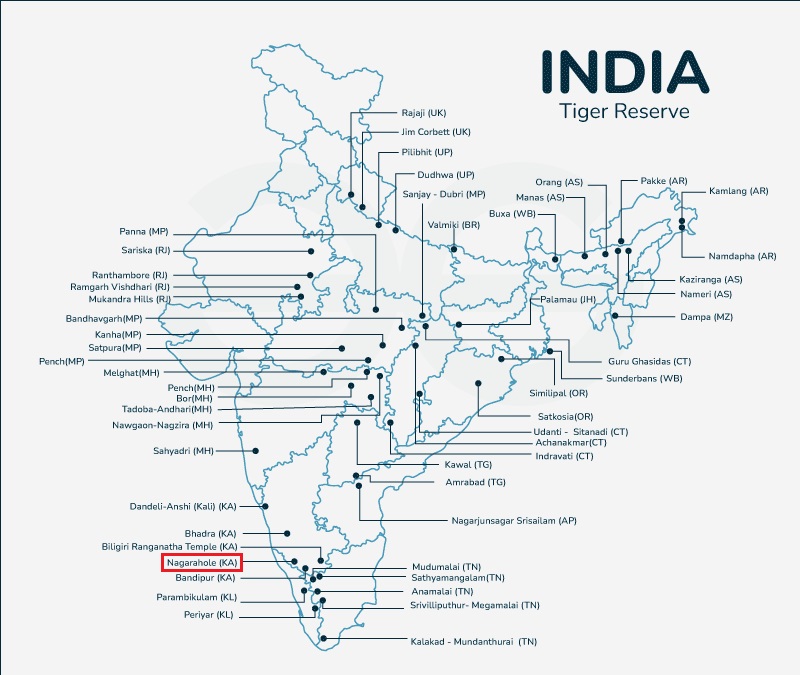
    In news: Nagarhole Tiger Reserve

    Why in the News?

    • Ashwatthama, a 38-year-old elephant, died of electrocution near Karnataka’s Nagarahole Tiger Reserve.
      • The High Court of Karnataka suo motu initiated a PIL petition to inquire about this incident attributed to a lack of care and diligence by concerned authorities.

    Nagarahole Tiger Reserve

    • Located in the Western Ghats in Karnataka; Spans over 643 square kilometers.
    • Declared a wildlife sanctuary in 1955 and a tiger reserve in 1999.
    • Part of the Nilgiri Biosphere Reserve is recognised as an Important Bird Area (IBA) and a Project Tiger, Project Elephant reserve.
    • Managed by the Karnataka Forest Department with efforts focused on conservation, ecotourism, and community engagement.
    • The reserve is crisscrossed by several rivers such as the Kabini River, Lakshmana Tirtha River, and Moyar River.
      • Flora and Fauna: Known for its diverse ecosystem, including tropical and moist deciduous forests, home to a variety of wildlife such as tigers, leopards, elephants, gaur, and several species of deer and birds.

    Protective Measures: Project Elephant

    • It was launched in the year 1992 as a Centrally Sponsored Scheme with the following objectives:
      • To protect elephants, their habitat & corridors
      • To address issues of man-animal conflict
      • The welfare of captive elephants
    • It covers 23 states across India.
    • The Ministry of Environment, Forest and Climate Change provides financial and technical support to major elephant range states in the country through the project.
    • It contributed to the increase in the wild elephant population from around 25,000 in 1992 to about 30,000 in 2021.

    Status of Elephant Conservation in India

    Details
    Population Estimate
    • India hosts the largest population of wild Asian Elephants (Elephas maximus), with around 29,964 individuals,
    • Approximately 60% of the global population (2017 census).
    Leading States Karnataka holds the highest number of elephants, followed by Assam and Kerala.
    Conservation Status
    • IUCN Red List:  Endangered.
    • CMS: Appendix I.
    • Wildlife (Protection) Act, 1972: Listed under Schedule I,
    • CITES: Appendix I.


    PYQ:

    [2020] With reference to Indian elephants, consider the following statements:

    1. The leader of an elephant group is a female.
    2. The maximum gestation period can be 22 months.
    3. An elephant can normally go on calving till the age of 40 years only.
    4. Among the States in India, the highest elephant population is in Kerala.

    Which of the statements given above is/are correct?

    (a) 1 and 2 only

    (b) 2 and 4 only

    (c) 3 only

    (d) 1, 3 and 4 only

  • Trade Sector Updates – Falling Exports, TIES, MEIS, Foreign Trade Policy, etc.

    India’s growth story has a ‘beneficial ownership’ hurdle

    Why in the News?

    To achieve a $5 trillion economy by 2025-26, India must eliminate obstacles hindering Foreign Investments and facilitate smoother processes for companies and investors.

    About the Indian Foreign Exchange Management (Non-debt Instruments) Rules

    • FEMA outlines the formalities and procedures for the dealings of all foreign exchange transactions in India. These foreign exchange transactions have been classified into two categories — Capital Account Transactions and Current Account Transactions.
    • The Indian Foreign Exchange Management (Non-debt Instruments) Rules, 2019, commonly referred to as FEMA NDI, regulates foreign investments in Indian companies. These rules are critical for overseeing the flow of foreign capital into the country, ensuring that investments align with national interests and do not pose security risks.
    • The amendment to the Indian Foreign Exchange Management (Non-debt Instruments) Rules, 2019 (“FEMA NDI”) was again made through press note number 3 in the year 2020.
    • In exercise of the powers conferred by section 47 of the Foreign Exchange Management Act, 1999 (42 of 1999) and consequent to the Foreign Exchange Management (Non-Debt Instrument) Rules, 2019, the Reserve Bank of India makes the following regulations relating to mode of payment and reporting requirements for investment in India by a person resident outside India.
      • ‘Act’ means the Foreign Exchange Management Act, 1999 (42 of 1999);
      • ‘Rules’ means Foreign Exchange Management (Non-Debt Instrument) Rules, 2019;
    • On April 16, 2024, the Ministry of Finance, through the Department of Economic Affairs, notified the Foreign Exchange Management (Non-debt Instruments) (Third Amendment) Rules, 2024 (the “Amendment“), prescribing new entry routes for foreign investment in activities under the space sector.

    Introduction of Press Note 3 (PN3) Requirement:

    • What does it mean?: This amendment requires prior government approval for any investments from entities or individuals in countries that share a land border with India. This rule applies if the investment comes directly from these countries or if the beneficial owner (the real person who ultimately owns or controls the investment) is a citizen or resident of these countries.
    • The purpose: Implemented during the COVID-19 pandemic, the rule aims to prevent opportunistic takeovers of struggling Indian companies by neighboring countries

    Challenges with the Recent Amendment

    • Undefined ‘Beneficial Owner’: The term ‘beneficial owner’ isn’t clearly defined in the PN3 Requirement, leading to confusion. Different laws define the term differently, making it hard for companies to know which standards to follow.
    • Regulatory Uncertainty: Since the latter half of 2023, the Reserve Bank of India (RBI) has adopted a stricter interpretation of these rules. This shift has caused anxiety among investors and companies, as practices previously deemed acceptable are now being scrutinized.
    • Regulatory Burden: Companies now face significant delays and a high rate of rejection when seeking approval for investments. According to some officials, proposals worth ₹50,000 crore have been stalled or rejected in the past three years, with 201 applications being turned down.
    • Severe Fines: Non-compliance with the PN3 Requirement can result in fines up to three times the amount of the investment. For many startups, this could mean financial ruin, as the fines could exceed their revenue or assets.
    • Legal Battles: Violations could lead to lengthy and costly legal disputes, further burdening the already slow judicial system in India.

    What can be the better solution? (Way forward) 

    • Ownership Thresholds: Define beneficial ownership with clear thresholds, such as 10% to 25% ownership stakes. This would help companies understand whether they need to seek approval.
    • Control-Conferring Rights: Specify which rights indicate control, such as the ability to influence board decisions or veto significant operational changes. Exclude rights that merely protect investor interests, such as veto powers over mergers.
    • Investor Representations: Allow Indian companies to require foreign investors to provide assurances about their compliance with the PN3 Requirement, backed by indemnities.It would provide a safety net for Indian companies.
    • Time-Bound Reviews: Introduce a system where companies can seek timely advice from regulatory authorities on whether specific clauses in their investment agreements confer control. This would be similar to mechanisms in competition law, offering clarity and reducing the risk of penalties for inadvertent non-compliance.

    Mains PYQ:

    Q Foreign Direct Investment (FDI) in the defence sector is now set to be liberalized: What influence this is expected to have on Indian defence and economy in the short and long run? (UPSC IAS/2014)

  • Climate Change Impact on India and World – International Reports, Key Observations, etc.

    No outcome in Bonn: why money is key to climate action

    Why in the news?

    The Bonn climate meeting failed to define a new climate finance goal, crucial for finalizing a sum exceeding $100 billion annually by the end of 2024.

    Key Highlights of the Climate Meeting in Bonn, Germany

    • Failure to Define New Climate Finance Goal: The recent climate meeting in Bonn did not make significant progress in setting a new climate finance goal. This new goal is supposed to replace the existing $100 billion per year target, which needs to be finalized by the end of 2024.
    • Outcome: The meeting only produced a lengthy 35-page “input paper” summarizing various countries’ demands and concerns, without providing any concrete numbers or agreements. This paper is expected to be developed into a formal negotiating draft for COP29 in Baku, Azerbaijan.

    Search for a New NCQG (New Collective Quantified Goal)

    • Importance of Climate Finance: Money is essential for climate action, including mitigation, adaptation, and other tasks like collecting and reporting climate data, which require substantial funds, especially in developing countries.
    • Existing Commitment: Developed countries had promised to mobilize $100 billion annually from 2020 to help developing countries fight climate change. This target is now being re-evaluated to increase the amount post-2025.

    Previous Assessment

    • Current Needs: It is widely recognized that developing countries now require trillions of dollars annually. A UNFCCC assessment indicated that these countries need about $6 trillion by 2030 for climate actions, with adaptation needs alone requiring $215 billion to $387 billion annually.
    • Energy Transition: The global shift to clean energy requires investments of about $4.3 trillion per year until 2030 and around $5 trillion annually thereafter until 2050 to achieve global net-zero emissions.
    • Developing Countries’ Demands: India has proposed that developed countries should provide at least $1 trillion annually after 2025, while Arab and African countries have suggested figures of $1.1 trillion and $1.3 trillion, respectively.

    Debate Over Contribution

    • Original Responsibility: According to the UNFCCC and Paris Agreement, only the 25 countries listed in Annexure 2, along with the European Economic Community, are responsible for providing climate finance to developing countries.
    • Shifting Responsibility: These countries argue that other nations, such as China, Gulf countries, and South Korea, are now economically capable and should also contribute. However, countries like China have stated they do not intend to take on additional responsibilities beyond their current efforts.
    • Developed Countries’ Stance: While acknowledging that the new target must be higher than the existing $100 billion per year, developed countries have not made any specific offers publicly.

    Way forward:

    • Clear Definition of Climate Finance: Establish a universally accepted definition of climate finance to prevent discrepancies in reporting and ensure transparency.
    • Precise Targets and Timelines: Set clear, incremental targets leading up to the final goal, with defined timelines for achieving these targets. This will provide a roadmap for both developed and developing countries.

    Mains PYQ:

    Q Describe the major outcomes of the 26th session of the Conference of the Parties (COP) to the United Nations Framework Convention on Climate Change (UNFCCC). What are the commitments made by India in this conference?  (UPSC IAS/2021)

  • Health Sector – UHC, National Health Policy, Family Planning, Health Insurance, etc.

    Why the Centre has extended the Digital Health Incentive Scheme?

    Why in the News?

    The central government has granted a one-year extension to the Digital Health Incentive Scheme (DHIS), aimed at digitizing patients’ health records and integrating them with the Ayushman Bharat Digital Health Account (ABHA ID).

    About the Digital Health Incentive Scheme:   

    • The National Health Authority (NHA) launched the Digital Health Incentive Scheme on January 1, 2023, to implement the Ayushman Bharat Digital Mission (ABDM) to create a digital health ecosystem in the country.
      • ABDM intends to support different healthcare facilities like clinics, diagnostic centers, hospitals, laboratories and pharmacies in adopting the ABDM ecosystem to make available the benefits of digital health for all the citizens of India.
    • It encourages the adoption of digital health solutions like Health Management Information Systems (HMIS) and Laboratory Management Information Systems (LMIS) by offering financial incentives for each additional record digitized beyond a specified threshold.
    • Benefits of the Digital Health Incentive Scheme:
      • Earn incentives for Digitization: Reimburse the expenses incurred for digitization to all the participating healthcare facilities and digital Solution Companies.
      • Efficiency in Healthcare Delivery: Seamless access to patient’s longitudinal health records; Removes hassles in the healthcare process (registration, appointment, consultation, IPD admission, discharge, etc).
      • Building a Robust Digital Health Ecosystem: Building a robust digital health ecosystem across different levels of healthcare facilities.
      • Improved Quality of Care: Evidence-based, accessible, and good quality care. Patient’s ease of access to digitized health records and improved healthcare delivery.

    Why has the scheme been extended? 

    • The extension aims to sustain momentum in the adoption of digital health technologies. By providing additional time, the scheme supports more healthcare providers, both public and private, in overcoming financial barriers associated with digitization and promoting a digital-first approach to healthcare delivery.
    •  Extending the scheme allows for incorporating feedback from stakeholders and refining its implementation based on operational insights. This iterative process ensures that the scheme remains effective in enhancing healthcare efficiency, patient care, and accessibility to medical records across the country.

    How many Hospitals and Digital Health Companies have availed of the incentive? 

    • Registered Facilities: A total of 4,005 healthcare facilities have registered for the Digital Health Incentive Scheme (DHIS). This includes 1,085 private healthcare facilities.
    • Digital Solution Companies (DSCs): There are 41 digital solution companies (DSCs) registered under the scheme, out of which 36 are private companies.
    • Availed the Scheme: Among the registered facilities and companies, 584 healthcare facilities have availed the scheme so far. This includes 83 private healthcare facilities. Additionally, 12 DSCs, including 10 private companies, have also availed the incentive.

    How can it be beneficial for the patients?                                     

    • Quick Registration: Patients can benefit from quicker OPD registrations through digital systems, reducing waiting times at hospitals and clinics.
    • Digital Transactions: Digital health records enable easier access to medical history and facilitate seamless sharing of information between healthcare providers, ensuring continuity of care.
    • Reduced Redundancy: Digital records help in avoiding duplicate tests and procedures due to lost or misplaced paper records, which is particularly beneficial for patients who move between healthcare facilities or states.
    • Better Coordination: Healthcare providers can access comprehensive patient records quickly, leading to more coordinated and effective treatment plans.
    • Prevention of Additional Costs: By reducing the need for repeat tests and administrative overheads associated with paper-based records, patients are less likely to incur unnecessary expenses.
    • Clear Communication: Patients can securely view, access, and share their health records with healthcare providers, promoting transparency and informed decision-making about their care.
    • Secure Storage: Digital health records stored under the Ayushman Bharat Digital Health Account (ABHA ID) ensure data security and privacy, adhering to regulatory standards.

    Do you know what is ‘ABHA ID’? 

    • ABHA ID, or Ayushman Bharat Digital Health Account ID, is a unique digital identifier issued to individuals in India.
    • It serves as a centralized platform for individuals to store and manage their medical records digitally, including doctor consultations, prescriptions, and diagnostic test results.
    • ABHA ID facilitates easy access to health information across different healthcare providers, promotes continuity of care, and supports informed decision-making during medical treatments.

    Conclusion: The extension of the Digital Health Incentive Scheme aims to boost adoption of digital health solutions, benefiting patients with improved access and care coordination. Challenges include ensuring equitable access and addressing digital literacy barriers.


    Mains PYQ:

    Q Appropriate local community level healthcare intervention is a prerequisite to achieve ‘Health for All’ in India. Explain. (UPSC IAS/2018)


  • Foreign Policy Watch: India-China

    China’s ‘grey-zone’ warfare tactics against Taiwan | Explained

    Why in the news?

    Since President Lai Ching-te took office in Taiwan, China has reacted strongly to his pro-independence remarks by using sophisticated tactics against his Democratic Progressive Party.

    Background of the China-Taiwan issue

    • The conflict has its roots in the Chinese Civil War (1927-1950) between the Nationalist Party (Kuomintang) and the Communist Party of China. After the Communist victory in 1949, the Nationalist government retreated to Taiwan, establishing the Republic of China (ROC) there, while the Communist Party proclaimed the People’s Republic of China (PRC) on the mainland.
    • China claims Taiwan as a breakaway province that must eventually be reunified with the mainland, while Taiwan sees itself as a distinct, democratic entity. This dispute over Taiwan’s political status is at the heart of the ongoing tensions between China and Taiwan.
    • The strategic importance of Taiwan lies in its location in the “first island chain” in the western Pacific, as well as its dominance in the global semiconductor industry. Control over Taiwan would enhance China’s ability to project power in the region and potentially threaten US interests, while Taiwan’s independence is seen as crucial by the US and its allies

    What Are the Coercive Measures China Has Imposed on Taiwan?

    • Military Pressure: China’s People’s Liberation Army Eastern Theater Command (PLA ETC) conducts regular training drills and simulated invasion scenarios to demonstrate its military capability. These include 3D animation videos depicting missile attacks on Taiwan, aiming to intimidate and exert psychological pressure.
    • Grey-Zone Warfare: Continuous sorties by PLA fighter jets, UAVs, and strategic fighters over and around Taiwan. These operations are designed to wear down Taiwan’s defence forces through sustained pressure and intelligence gathering.
    • Economic Coercion: China suspended preferential tax rates for 134 chemical imports from Taiwan, which were previously granted under the Economic Cooperation Framework Agreement (ECFA). This move was a retaliation against pro-independence statements by Taiwan’s new president, Lai Ching-te, and Taipei’s restrictions on over 2,000 Chinese imports.

    China’s Ideology and Political Tactics

    • Cognitive Warfare: Deployment of ideological narratives within Taiwan to influence public opinion. For instance, Chinese citizens dropped fliers via drones on Kinmen Island, promoting messages against Taiwan’s independence and framing it as a dead end.
    • Propaganda: These cognitive warfare tactics aim to initiate public discussions and garner attention for the Chinese cause, leveraging social media to propagate Beijing’s ideological stance.

    Carrots and Sticks Approach(Political Tactics)

    • Carrots: Favorable treatment towards Taiwan’s opposition party, the Kuomintang (KMT), which holds relatively pro-mainland views. The KMT engages with Communist Party of China (CPC) officials, maintaining communication and collaboration that the DPP lacks. The KMT’s interactions with CPC officials have sometimes led to investigations under Taiwan’s ‘anti-infiltration law’.
    • Sticks: Coercive economic measures targeting Taiwan’s Democratic Progressive Party (DPP) to seek political concessions. The suspension of preferential tax rates for Taiwanese chemical imports is one such tactic.

    Conclusion: Taiwan must navigate China’s multifaceted ‘grey-zone’ tactics through resilience in defense, strategic alliances, and international advocacy to safeguard its sovereignty and democratic identity amid escalating pressures.

    Mains PYQ:

    Q South China Sea has assumed great geopolitical significance in the present context. Comment. (UPSC IAS/2016)

  • Foreign Policy Watch: India-ASEAN

    How will the EU elections impact Southeast Asia?

    Why in the news?

    A weak performance by green and left-wing parties, coupled with gains by the far-right, could lead the EU to adopt a more protectionist stance and a less environmentally focused foreign policy.

    What happens in the EU parliament?   

    • Legislative Role and Trade Agreements: The European Parliament must approve all EU free trade agreements. For instance, it is currently involved in negotiations with Southeast Asian countries such as Indonesia, Thailand, and the Philippines. This approval process ensures that any trade agreement aligns with EU standards and regulations.
    • Policy Shifts Due to Election Results: The recent gains by far-right factions in the European Parliament could shift legislative priorities. For example, a more nationalist Parliament may prioritize protectionist policies over liberal trade agreements, potentially imposing tariffs or restrictions on imports from Southeast Asia, as seen with past tariffs on Cambodian and Myanmar rice.
    • Influence on Environmental and Human Rights Policies: With the Greens and Liberals losing seats, the European Parliament may place less emphasis on environmental sustainability and human rights. This shift could affect initiatives like the Just Energy Transition schemes with countries like Vietnam and Indonesia, which rely on EU support for their green agendas. Reduced focus on these areas could hinder such cooperative efforts.

    Changes in the Commission

    • Commission Presidency and Coalition Dynamics: Ursula von der Leyen, the incumbent European Commission President from the centre-right European People’s Party (EPP), faces a challenging re-election. She needs to secure 361 votes from Members of the European Parliament (MEPs).
    • Shift in Policy Focus: The composition of the new Commission will significantly influence EU policy directions. If von der Leyen allies with the Greens, there could be an intensification of green policies and environmental initiatives, such as the European Green Deal.
    • Leadership and Foreign Policy Changes: The departure of EU foreign policy chief Josep Borrell opens the field for new candidates vying to lead the European External Action Service (EEAS). The new leadership could reshape the EU’s foreign policy approach, with potential changes in emphasis on development cooperation and international relations, including those with Southeast Asia. This could affect ongoing initiatives like the Just Energy Transition partnerships with countries like Vietnam and Indonesia.

    Pivot to South Asia

    • Strategic Partnership and Economic Interests: Southeast Asia is an increasingly important economic partner for the EU. The region’s growing markets and economic dynamism offer significant trade opportunities. For instance, the EU is negotiating free trade agreements with countries like Indonesia, Thailand, and the Philippines, which could enhance trade flows and economic cooperation. Strengthening ties with Southeast Asia helps the EU diversify its trade partners and reduce reliance on traditional markets.
    • Environmental and Green Transition Initiatives: Southeast Asia is a crucial region for the EU’s global environmental goals. The EU has invested in green transition initiatives, such as the Just Energy Transition schemes in Vietnam and Indonesia, providing over €20 billion in concessional loans and investments. These initiatives support Southeast Asian countries in adopting sustainable energy practices and combating climate change.
    • Geopolitical and Security Considerations: Southeast Asia’s strategic location and geopolitical significance make it a vital region for the EU’s foreign policy. By engaging more deeply with Southeast Asia, the EU can strengthen its influence in a region where other major powers, such as China and the United States, are also vying for influence.

    Conclusion: The EU’s evolving policies and leadership will shape its economic, environmental, and geopolitical engagement with Southeast Asia, highlighting the region’s strategic importance and potential for cooperation.


    Mains PYQ:

    Q Africa was chopped into states artificially created by the accident of European competition. Analyse. (UPSC IAS/2013)

  • Women empowerment issues – Jobs,Reservation and education

    A comprehensive immunisation schedule for women is ready

    Why in the news?

    FOGSI launched a detailed immunization plan for women in Mumbai, featuring essential vaccines and recommended dosages, presented by women’s health advocate Kajal Aggarwal.

    About the Federation of Obstetric and Gynaecological Societies of India (FOGSI)

    • The Federation of Obstetric and Gynaecological Societies of India (FOGSI) is a prominent professional organization dedicated to advancing the field of obstetrics and gynaecology in India.  
    • Foundation and Scope: FOGSI was established in 1950 and currently represents over 34,000 obstetricians and gynaecologists across India. It serves as a unified platform for healthcare professionals specializing in women’s health.
    • Objectives: The primary objective of FOGSI is to promote the study and practice of obstetrics and gynaecology through education, research, and advocacy. It aims to improve the standards of healthcare delivery for women in India.

    Significance of Preventive Health Care    

    • Early Detection and Intervention: Preventive healthcare emphasizes regular screenings, vaccinations, and health checks to detect potential health issues early. This proactive approach allows healthcare providers to intervene early, often before symptoms appear, which can lead to better treatment outcomes and lower healthcare costs.
    • Promotion of Health and Well-being: By focusing on preventive measures such as healthy lifestyle choices, vaccination against preventable diseases, and routine health screenings, individuals can maintain optimal health and well-being. Preventive healthcare encourages behaviours that reduce the risk of chronic illnesses and promote longevity.
    • Reduction of Healthcare Burden: Investing in preventive healthcare can alleviate the burden on healthcare systems by reducing the prevalence and severity of diseases. By preventing illnesses before they occur or progress, fewer resources are needed for acute care, hospitalizations, and long-term management of chronic conditions.

    Accessing ‘Vulnerable Period’

    • Postpartum Period: The postpartum period, typically defined as the first six weeks after childbirth, is a critical vulnerable period for women. During this time, the body undergoes significant physiological changes, including hormonal fluctuations and potential immune system alterations. These changes can increase susceptibility to infections and other health complications, necessitating close monitoring and appropriate medical interventions.
    • Menopausal Transition: Menopause marks a significant transition in a woman’s life when reproductive hormone levels decline, leading to various physical and psychological changes. This period can be accompanied by symptoms such as hot flashes, mood swings, and changes in bone density. Due to these changes, women may be more vulnerable to conditions like osteoporosis and cardiovascular disease.
    • Chronic Illness Management: Women with chronic conditions such as diabetes, hypertension, or autoimmune disorders may experience periods of vulnerability related to their specific health challenges. Fluctuations in hormone levels, stress, and lifestyle factors can exacerbate these conditions or increase the risk of complications. Healthcare strategies during these vulnerable periods often include personalized treatment plans, regular monitoring, and patient education to optimize disease management and promote overall well-being.

    Conclusion: FOGSI’s launch of a women’s immunization schedule underscores their commitment to advancing women’s health through proactive care, addressing vulnerable periods like postpartum and menopause, and promoting disease prevention and management strategies.


    Mains PYQ:

    Q  In order to enhance the prospects of social development, sound and adequate health care policies are needed particularly in the fields of geriatric and maternal health care. Discuss. (UPSC IAS/2020).

Join the Community

Join us across Social Media platforms.