💥UPSC 2026, 2027, 2028 UAP Mentorship (March Batch) + Access XFactor Notes & Microthemes PDF

Archives: News

  • Foreign Policy Watch: India – EU

    India–EU Cooperation on Peaceful Uses of Nuclear Energy

    Why in the News?

    European Union and India committed to collaboration on peaceful uses of nuclear energy at the 16th India–EU Summit held on January 27, 2026 in New Delhi

    Nuclear Cooperation Framework

    • Cooperation to be undertaken under the Euratom agreement
    • India and the EU signed the India–Euratom Agreement in July 2020
    • Focus on research and development in nuclear science and technology

    Key Areas of Nuclear Cooperation

    • Advanced materials for nuclear detectors
    • Radiation safety and nuclear security
    • Non power applications of atomic energy
    • Cooperation on radio pharmaceuticals
    • Strengthening collaboration in ITER
    • ITER is the International Thermonuclear Experimental Reactor

    Research and Innovation Cooperation

    • Deepening collaboration under Horizon Europe
    • Horizon Europe is the EU’s main funding programme for research and innovation

    Priority sectors

    • Energy, Water, Agri food, Health, Semiconductors, Biotechnology and Advanced materials

    Prelims Pointers

    • Euratom deals with civil nuclear research, not nuclear weapons
    • ITER focuses on nuclear fusion, not fission
    • Horizon Europe is a research funding programme, not a trade agreement
    • CBAM is a climate linked trade measure, not a free trade tool
    [2018] In the Indian context, what is the implication of ratifying the ‘Additional Protocol’ with the ‘International Atomic Energy Agency (IAEA)’? 

    (a) The civilian nuclear reactors come under IAEA safeguards

    (b) The military nuclear installations come under the inspection of IAEA 

    (c) The country will have the privilege to buy uranium from the Nuclear Suppliers Group (NSG)

    (d) The country automatically becomes a member of the NSG

  • Historical and Archaeological Findings in News

    3 Buddhist sites in UNESCO tentative list

    Why in the News?

    UNESCO has included the ‘Diamond Triangle’ Buddhist sites of Odisha in India’s Tentative List for future consideration as a World Heritage Site.The sites are located in Jajpur and Cuttack districts of Odisha

    What is the ‘Diamond Triangle’?

    • A cluster of three ancient Buddhist sites 
      • Ratnagiri
      • Udayagiri
      • Lalitgiri Known as the epicentre of Buddhism in eastern India

    Historical and Religious Significance

    • The sites witnessed the propagation of all three schools of Buddhism
      Hinayana
      Mahayana
      Vajrayana
      • Rich remains of Stupas, Monasteries, Relics, Sculptures of Lord Buddha and Buddhist deities

    What is a Tentative List?

    • Mandatory prerequisite for nomination to the World Heritage List
    • Identifies sites of Outstanding Universal Value
    • Can be cultural, natural or mixed
    • Only sites on the tentative list can be considered for final inscription

    India and the Tentative List

    • India currently has 70 sites on the tentative list
    • Categories include cultural, natural and mixed
    • Odisha sites already on the tentative list include
      • Ekamra Kshetra, Bhubaneswar
      • Chilika Lake
      • Chausathi Yogini temples group was added last year
      • Two located in Odisha at Bhubaneswar outskirts and Balangir

    Prelims Pointers

    • Tentative list inclusion does not guarantee World Heritage status
    • Diamond Triangle reflects pan Buddhist evolution in India
    • ASI is the official nodal agency for UNESCO nominations
    • Odisha is emerging as a major Buddhist heritage corridor
    [2024] Consider the following properties included in the World Heritage List released by UNESCO: 

    1. Shantiniketan 

    2. Rani-ki-Vav 

    3. Sacred Ensembles of the Hoysalas 

    4. Mahabodhi Temple Complex at Bodhgaya 

    How many of the above properties were included in 2023? 

    (a) Only one (b) Only two (c) Only three (d) All four

  • Foreign Policy Watch: India-SCO

    First SCO Council of National Coordinators Meeting 2026

    Why in the News?

    The first meeting of the Council of National Coordinators (CNC) for 2026 of the Shanghai Cooperation Organization opened in Beijing, under the chairmanship of the Kyrgyz Republic, to finalise the agenda for upcoming high level SCO summits.

    Council of National Coordinators (CNC)

    • The primary coordination and management mechanism of the SCO
    • Acts as the link between member states and SCO standing bodies
    • Coordination: Synchronises multilateral cooperation in line with the SCO Charter
    • Preparation: Conducts groundwork for meetings of
      • Council of Heads of State
      • Council of Heads of Government
    • Implementation: Oversees execution of decisions taken at previous SCO summits

    Participants

    • Representatives of all 10 SCO member states
    • SCO Secretariat
    • Executive Committee of the Regional Anti-Terrorist Structure (RATS)
    • SCO Secretary General Nurlan Yermekbayev delivered the opening address

    Shanghai Cooperation Organization (SCO)

    • A permanent intergovernmental international organization
    • The world’s largest regional body by geographic scope and population
    • Represents about 42 percent of global population and over 23 percent of global nominal GDP
    • Established: June 15, 2001
    • Predecessor: Shanghai Five (1996)
    • Headquarters: Beijing
    • Official languages: Russian and Chinese

    Member States of SCO

    • China, India, Russia, Kazakhstan, Kyrgyz Republic, Tajikistan, Uzbekistan, Pakistan, Iran, and Belarus
    [2022] Consider the following: 

    1. Asian Infrastructure Investment Bank 

    2. Missile Technology Control Regime 

    3. Shanghai Cooperation Organisation India is a member of 

    which of the above? 

    (a) 1 and 2 only (b) 3 only (c) 2 and 3 only (d) 1, 2 and 3

  • Foreign Policy Watch: India-Middle East

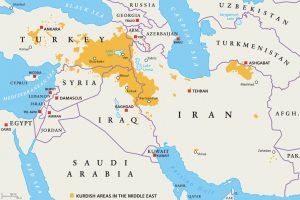
    Renewed Conflict Between Syrian Government and Kurds

    Why in the News?

    Renewed fighting has erupted in Syria between government forces led by interim leader Ahmed al-Sharaa and the Kurdish-led Syrian Democratic Forces (SDF), threatening to roll back Kurdish autonomy that has existed since the 2011 civil war.

    Background Context

    • The regime of Bashar al-Assad collapsed in December 2024
    • Ahmed al-Sharaa promised an inclusive administration but pushed for a centralised Syrian state
    • Ethnic and religious minorities, including Kurds, resisted centralisation
    • Sectarian violence resurfaced against Alawites and Druze, followed by clashes with Kurds

    Who Are the Syrian Kurds?

    • Kurds form about 10 percent of Syria’s population
    • Concentrated in north and northeast Syria
    • Long standing demand for autonomy, not secession
    • In 2012, Assad withdrew troops from the northeast
    • Kurds filled the vacuum and declared autonomous regions called cantons
    • These areas together formed the Democratic Autonomous Administration of North and East Syria (DAANES), also called Rojava
    [2016] Consider the following pairs: Community sometimes mentioned in the news : In the affairs of 

    1. Kurd : Bangladesh 

    2. Madhesi : Nepal 

    3. Rohingya : Myanmar 

    Which of the pairs given above is/are correctly matched? 

    (a) 1 and 2 (b) 2 only (c) 2 and 3 (d) 3 only

  • New Species of Plants and Animals Discovered

    New Plant Species Discovered in Nagaland: Hoya nagaensis

    Why in the News?

    Researchers from Nagaland University have discovered a new plant species, Hoya nagaensis, in the high-altitude forests of Nagaland, highlighting the biodiversity richness of Northeast India and the conservation value of community-managed forests.

    About Hoya nagaensis

    • Newly identified plant species belonging to the Hoya genus
    • Genus Hoya is known for ornamental plants with distinctive flowers
    • Characterised by
      • Unique leaf shapes
      • Distinct floral features, clearly differentiating it from known species

    Location of Discovery

    • Found in Kavünhou Community Reserved Forest
    • District: Phek, Nagaland
    • Habitat: High-altitude temperate forests of the Eastern Himalaya
    • Recorded so far from only one location

    Conservation Status

    • Provisionally classified as Critically Endangered
    • Reasons
      • Extremely limited geographical range
      • Threats from shifting cultivation
      • Forest disturbance
    [2023] Consider the following statements: Once the Central Government notifies an area as a ‘Community Reserve’ 

    1. The Chief Wildlife Warden of the State becomes the governing authority of such forest

    2. Hunting is not allowed in such area

    3. People of such area are allowed to collect non-timber forest produce

    4. People of such area are allowed traditional agricultural practices

    How many of the above statements are correct? 

    (a) Only one (b) Only two (c) Only three (d) All four

    Hoya nagaensis was specifically discovered in the Kavünhou Community Reserved Forest. This PYQ tests the administrative and legal rules governing such protected areas, which are vital for the conservation of rare species in the Northeast.

  • Foreign Policy Watch: India – EU

    India-EU Free Trade Agreement (FTA)

    Why in the news?

    Recently, the India-European Union Free Trade Agreement (India-EU FTA) was concluded at the 16th India-EU Summit. The conclusion of this FTA positions India and the European Union as trusted partners committed to open markets, predictability, and inclusive growth.

    Key Statistics 

    1. The European Union is India’s one of the largest trading partners. In 2024-25, India’s bilateral trade in goods with the EU stood at INR 11.5 Lakh Crore (USD 136.54 billion) with exports worth INR 6.4 Lakh Crore (USD 75.85 billion) and imports amounting to INR 5.1 Lakh Crore (USD 60.68 billion)
    2. India-EU trade in services reached INR 7.2 Lakh Crore (USD 83.10 billion) in 2024.
    3. India and EU are 4th and 2nd largest economies, comprising 25% of Global GDP and account for one third of global trade. 

    What is the India-EU FTA?

    1. The India-EU FTA is a comprehensive trade and investment pact designed to liberalize trade in goods and services, enhance market access, streamline customs, and deepen economic cooperation between India and the EU’s 27 member states. 
    2. It is often described as the “mother of all deals” in recent Indian trade diplomacy due to its scale and ambition.

    Why is this FTA historic?

    1. Two-decade effort completed: Talks originally began in 2007, stalled in 2013, and were revived in 2022 before concluding in January 2026.
    2. Massive economic coverage: Encompasses goods, services, investment, customs, rules of origin, digital trade, and SMEs.
    3. Covers about a quarter of global GDP and opens trade between two large markets representing ~2 billion people.

    Key provisions & benefits

      1. India Secures Strategic Access to European Markets: India has gained preferential access to the European markets across 97% of tariff lines, covering 99.5% of trade value
        1. EU gains: Up to €4 billion per year in tariff savings on EU exports like machinery, optical, medical equipment.
        2. India gains: Preferential access for labour-intensive sectors such as textiles, leather, marine products, gems & jewellery, making ~99% of Indian exports duty-free.
      2. India’s offer to the European Union: Overall, India is offering 92.1% of its tariff lines which covers 97.5% of the EU exports, in particular:  
        1. 49.6% of tariff lines will have immediate duty elimination
        2. 39.5% of tariffs lines are subject to phased elimination over 5, 7, and 10 years
        3. 3% of products are under phased tariff reductions and few products are subject to TRQs for Apples, Pears, Peaches, Kiwi Fruit.
      3. Services-the key growth driver of trade in future: Under the FTA, broader and deeper commitments have been secured from the EU across 144 services subsectors, including IT/ITeS, professional services, education, and other business services.
    • Product Specific Rules aligned with existing Supply Chains: Balance origin compliance with global input flexibility, enable self-certification, lower export compliance costs, support MSMEs through quotas, and incentivise Make in India via phased sectoral transitions.
    • Driving Agricultural Growth and Farmer Livelihoods, with adequate Safeguards: Preferential Market Access for agricultural products like tea, coffee, spices, grapes, gherkins and cucumbers, dried onion, fresh vegetables and fruits as well as for processed food products will make them more competitive in the EU.

    Why is the EU’s regulatory regime India’s biggest challenge?

    1. Expanding standards: EU sustainability, labour, environmental and due-diligence rules, including EUDR and corporate sustainability norms, significantly increase compliance costs for Indian exporters.
    2. Non-tariff barriers: Regulations now operate as market-access barriers through traceability and disclosure requirements rather than product safety alone.
    3. MSME stress: Smaller exporters face higher relative costs in documentation, certification and traceability, limiting gains from tariff liberalisation.

    How does CBAM shape the India-EU trade equation?

    1. Carbon cost exposure: CBAM imposes a carbon price on imports of steel, aluminium, cement, fertilisers, and electricity.
    2. Competitiveness risk: Indian producers face higher compliance costs due to coal-based energy.
    3. FTA as a buffer: The agreement offers India leverage to negotiate flexibility, transition timelines, and mutual recognition mechanisms.

    What is the Most-Favoured-Nation (MFN)-Forward Clause on Climate-Linked Trade Measures?

    MFN-forward clause: Under this any future relaxations, exemptions, transition periods, or flexibilities that the EU may grant to other trading partners on climate-linked trade measures, including instruments like CBAM, would automatically extend to India.

    Why this matters

    1. No immediate CBAM relief: The clause does not dilute or suspend CBAM for India.
    2. Future-proofing mechanism: Ensures India is not placed at a relative disadvantage if the EU later moderates CBAM implementation for others.
    3. Indirect safeguard: Functions as the only CBAM-related protection within the FTA by preserving competitive parity, not preferential treatment.
    4. Strategic value: Provides negotiating leverage as EU climate policies evolve under global pressure and WTO scrutiny.
    5. Conditional, not guaranteed: The clause activates only if the EU offers concessions to another partner; it does not create an independent exemption for India.

    Why did India-EU negotiations gain urgency now?

    1. US tariff uncertainty: Accelerating US tariff threats created trade diversion risks for both India and the EU, prompting faster convergence.
    2. Geo-economic shifts: Fragmentation of global value chains after the Ukraine war forced the EU to diversify partners.
    3. Regulatory overreach concerns: Expanding EU regulations raised fears of market exclusion for Indian exporters.

    What makes the EU a critical trade partner for India?

    1. Trade volume dominance: The EU accounts for India’s largest share of goods trade among partners.
    2. Sectoral depth: Strong Indian exports in engineering goods, chemicals, pharmaceuticals, textiles, and refined petroleum.
    3. Services linkage: High potential in IT, professional services, and skilled mobility, though sensitive in negotiations.

    Risks and Limitations of the India-EU FTA

    1. Regulatory asymmetry: EU retains greater rule-setting power in sustainability, labour, and climate standards.
    2. CBAM cost shock: Carbon-linked charges can offset tariff gains for steel, aluminium, cement, and fertilisers.
    3. MSME exclusion risk: Compliance-heavy norms may restrict smaller exporters’ effective market access.
    4. Limited mobility gains: Skilled movement and mutual recognition remain politically sensitive and constrained.
    5. Implementation lag: Phased tariff reductions delay short-term export gains for some sectors.
    6. Compliance substitution: Shift from tariff barriers to regulatory barriers reduces predictability of trade benefits.

    Conclusion

    The India-EU FTA marks a significant expansion of market access and services engagement, but its economic outcomes will be shaped as much by regulatory and climate-linked constraints as by tariff liberalisation. The agreement underscores a structural shift in global trade from tariffs to standards, requiring India to complement external trade gains with domestic regulatory preparedness and export competitiveness.

    PYQ Relevance

    [UPSC 2024] Critically analyse India’s evolving diplomatic, economic and strategic relations with the Central Asian Republics (CARs) highlighting their increasing significance in regional and global geopolitics.

    Linkage: This theme falls under GS Paper II (International Relations), covering India’s bilateral relations and regional groupings affecting its strategic and economic interests. Similar to India-EU engagement, India’s outreach to the Central Asian Republics reflects the use of economic connectivity, trade partnerships, and strategic cooperation to navigate shifting global geopolitics and reduce overdependence on any single power.

  • Industrial Sector Updates – Industrial Policy, Ease of Doing Business, etc.

    [28th January 2026] The Hindu OpED: Manufacturing woes: Capital support alone will not add to battery cell manufacturing capacity

    PYQ Relevance

    [UPSC 2017] Account for the failure of the manufacturing sector in achieving the goal of labor-intensive exports. Suggest measures for more labor-intensive rather than capital-intensive exports. 

    Linkage: This PYQ directly aligns with GS III (Industrial Policy, Manufacturing, Employment) by examining why India’s manufacturing remains capital-intensive despite policy support like PLI. 

    Mentor’s Comment

    This article is critical for GS Paper III (Energy, Infrastructure, Industrial Policy). It highlights structural limits of India’s PLI-driven manufacturing strategy, especially for technology-intensive green sectors, and questions the assumption that fiscal incentives alone can deliver strategic self-reliance.

    What Is the Strategic Objective Behind Non-Fossil PLI Schemes?

    1. Energy Transition Target: Supports installation of 500 GW non-fossil capacity by 2030.
    2. Industrial Deepening: Enables domestic manufacturing of solar and battery components.
    3. Import Substitution: Reduces reliance on imported green technologies.
    4. Global Integration: Positions India as a supplier in global clean-energy value chains.

    How Have PLI Schemes Performed Across the Value Chain?

    1. Downstream Assembly: Achieved 56% of target in solar module assembly by mid-2025.
    2. Upstream Manufacturing: Remains a bottleneck in both solar and batteries.
    3. Value Chain Imbalance: Assembly expanded faster than material and component production.

    Why Are Upstream Solar Manufacturing Segments Lagging?

    1. Polysilicon Manufacturing: Achieved only 14% of the target capacity.
    2. Wafer Manufacturing: Reached merely 10% of the planned capacity.
    3. Capital Intensity: Requires high upfront investment with long gestation.
    4. Technology Dependence: Relies on specialised global expertise and equipment.

    What Explains the Failure in Battery Cell Manufacturing?

    1. Target Capacity: 50 GWh of domestic battery cell production.
    2. Fiscal Outlay: ₹18,000 crore under PLI.
    3. Actual Commissioning: Only 1.4 GWh (2.8%) by late 2025.
    4. Domestic Value Addition Rules: Mandate 25% within two years and 60% within five years.
    5. Gigafactory Complexity: Requires advanced infrastructure and long-term R&D ecosystems.

    How Do Policy Design Constraints Affect Outcomes?

    1. Capital-Only Incentives: Assume finance can substitute for expertise.
    2. Skill Deficits: Ignore the need for decades of workforce training.
    3. Technology Transfer Limits: International transfers are capital-intensive and slow.
    4. Penalty Structure: Firms face steep fines for missing deadlines despite structural hurdles.

    What Role Do External Dependencies Play?

    1. Imported Raw Materials: Persistent reliance on foreign inputs.
    2. Specialised Expertise: Dependence on foreign technical experts.
    3. Visa Restrictions: Non-issuance of visas to Chinese technicians delayed factory setup.
    4. Supply Chain Risk: Increases vulnerability in strategic energy sectors.

    Why Has the Telecom PLI Succeeded While Green PLIs Struggle?

    1. Lower Technology Entry Barriers: Telecom manufacturing required fewer foundational innovations.
    2. Established Ecosystems: Global supply chains were already mature.
    3. Faster Market Realisation: Sales-linked incentives translated quickly into output.
    4. Green Tech Contrast: Solar and batteries require upstream industrial ecosystems, not just assembly.

    What Rethinking Does the Article Suggest for PLI Design?

    1. Expertise-Based Selection: Prioritises technical capability over net worth.
    2. Capital Risk-Sharing: Considers additional capital subsidies for upstream segments.
    3. Longer Timelines: Aligns targets with technology development cycles.
    4. Ecosystem Approach: Integrates R&D, skills, and industrial infrastructure.

    Conclusion

    Capital support alone cannot manufacture technological capability. India’s clean-energy ambitions require patient industrial policy, focused on skills, research, and ecosystem creation. Without recalibrating PLI design to reflect the realities of high-technology manufacturing, the gap between targets and outcomes is likely to persist.

  • Higher Education – RUSA, NIRF, HEFA, etc.

    New UGC regulations sharpen provisions against caste bias

    Why in the News

    The University Grants Commission has notified the UGC (Promotion of Equity in Higher Education Institutions) Regulations, 2026, introducing enforceable mechanisms to address caste-based discrimination in universities. This marks the first time “equity regulations” have been formally issued under UGC’s regulatory powers, rather than as advisory guidelines. The move follows a series of student suicides, including Rohith Vemula (2016) and Payal Tadvi (2019), which exposed systemic failures in grievance redressal. The regulations represent a clear departure from earlier, weakly enforced guidelines by mandating institutional structures, timelines, and penalties.

    What Are the New UGC Equity Regulations?

    1. Legal Framework: Issued under UGC Act powers, replacing advisory norms.
    2. Coverage: Applies to all higher education institutions without exception.
    3. Protected Grounds: Caste, birth, disability, religion, language, gender, and region.
    4. Target Groups: Scheduled Castes, Scheduled Tribes, OBCs, minorities, women, persons with disabilities, and economically weaker sections.

    How Do the Regulations Define Discrimination?

    1. Conceptual Clarity: Defines discrimination as exclusion, restriction, or differential treatment.
    2. Scope Expansion: Covers social, academic, and institutional spaces.
    3. Operational Reach: Includes both direct actions and systemic practices.
    4. Institutional Accountability: Fixes responsibility on authorities, not just individuals.

    What Institutional Mechanisms Are Mandated?

    Equity Officer (EO)

    1. Appointment: Mandatory in every institution.
    2. Role: Coordinates equity policies and grievance handling.
    3. Support: Liaison with administration, police, and district authorities.
    4. Faculty Involvement: Faculty members serve as institutional representatives.

    Equal Opportunity Centre (EOC)

    1. Structure: Statutory body within each institution.
    2. Functions: Receives complaints, monitors discrimination, provides legal aid.
    3. Continuity: Reinforces EOCs mandated since 2012 with enforcement powers.
    4. Compliance: Failure attracts regulatory consequences.

    Equity Committee

    1. Leadership: Headed by the institutional head.
    2. Composition: Reserved category members mandatory.
    3. Jurisdiction: Reviews complaints, directs corrective action.
    4. Timeline: Complaint reports submitted within 15 days.

    How Is Grievance Redressal Strengthened?

    1. Time-Bound Action: Institutional head must act within seven days.
    2. Escalation Mechanism: Non-compliance escalated to UGC.
    3. Monitoring: National-level oversight committee introduced.
    4. Sanctions: Non-compliant institutions barred from UGC schemes and funding.

    How Are These Regulations Different from 2012 Guidelines?

    1. From Advisory to Mandatory: Converts soft guidelines into enforceable rules.
    2. Punitive Powers: Introduces institutional penalties.
    3. Monitoring Framework: Adds national-level compliance review.
    4. Operational Precision: Specifies timelines, responsibilities, and reporting formats.

    What Provisions Address Campus Culture and Reporting?

    1. Equity Helpline: 24×7 helpline for discrimination complaints.
    2. Equity Ambassadors: Student and faculty representatives.
    3. Role Definition: Act as “torchbearers of equity”.
    4. Preventive Approach: Focus on awareness, not only punishment.

    What Are the Draft and Final Regulation Changes?

    1. Removed Provision: Penalty for “false complaints” dropped.
    2. Rationale: Avoids chilling effect on marginalised complainants.
    3. Institutional Penalties: Retained against institutions, not individuals.
    4. Clarity Added: Detailed complaint disposal procedures introduced.

    What Is the Controversy Over the Regulations?

    1. Student Opposition: Concerns raised by OBC and student groups.
    2. Core Demand: Inclusion of OBCs explicitly in Scheduled Caste/Tribe protections.
    3. Fear of Misuse: Allegations of incentivising false complaints.
    4. Political Dimension: Hashtags and protests indicate social mobilisation.

    Conclusion

    The UGC (Promotion of Equity in Higher Education Institutions) Regulations, 2026 institutionalise social justice within university governance by converting constitutional principles of equality and non-discrimination into enforceable administrative duties. By mandating equity officers, statutory committees, time-bound grievance redressal, and regulatory sanctions, the framework addresses long-standing gaps between policy intent and campus reality. The regulations signal a shift from symbolic inclusion to rule-based accountability, while their effectiveness will ultimately depend on consistent enforcement, institutional capacity, and sustained oversight by the UGC.

    PYQ Relevance

    [UPSC 2022] “The Rights of Persons with Disabilities Act, 2016 remains only a legal document without intense sensitisation of government functionaries and citizens.” Comment.

    Linkage: Highlights the recurring UPSC theme of law, implementation gap, similar to how earlier UGC guidelines failed due to lack of enforcement, now addressed through binding equity regulations.

  • Civil Aviation Sector – CA Policy 2016, UDAN, Open Skies, etc.

    Wings India 2026: Asia’s Largest Civil Aviation Event

    Why in the News?

    India’s rapidly expanding civil aviation sector will be showcased at Wings India 2026, Asia’s largest civil aviation event, scheduled from 28 to 31 January 2026 at Begumpet Airport, Hyderabad.

    About Wings India 2026

    • Asia’s largest civil aviation event
    • Organised as a global platform for Connectivity, Manufacturing, Services, Innovation and Sustainability
    • Inaugurated by Rammohan Naidu Kinjarapu, Union Minister of Civil Aviation

    Theme
    “Indian Aviation: Paving the Future from Design to Deployment, Manufacturing to Maintenance, Inclusivity to Innovation and Safety to Sustainability”

    India’s Aviation Growth Story

    • India among the fastest growing aviation markets globally
    • Passenger traffic has grown multi fold in the last decade
    • Record aircraft orders place India among the largest future aircraft markets
    • Rapid expansion of airport infrastructure Greenfield airports, Modernised terminals and Regional connectivity under UDAN

    Prelims Pointers

    • Wings India is a civil aviation industry event, not a treaty or summit
    • Held at Begumpet Airport, Hyderabad
    • Focus areas include MRO, SAF, drones and advanced air mobility
    • Reflects India’s transition from aviation growth to aviation leadership
    [2024] Consider the following airports: 

    1. Donyi Polo Airport 

    2. Kushinagar International Airport 

    3. Vijayawada International Airport 

    In the recent past, which of the above have been constructed as Greenfield projects? 

    (a) 1 and 2 only (b) 2 and 3 only (c) 1 and 3 only (d) 1, 2 and 3

  • Oil and Gas Sector – HELP, Open Acreage Policy, etc.

    Prime Minister at India Energy Week 2026

    Why in the News?

    Prime Minister Narendra Modi addressed the inauguration of India Energy Week 2026 via video conferencing, highlighting India’s growing role in the global energy sector, major investment opportunities.

    India Energy Week 2026

    • Representatives from nearly 125 countries participated
    • Emerged as a global platform for energy dialogue and action
    • Focus on energy security, sustainability, and global partnerships
    • Venue: Goa

    Key Highlights from the Prime Minister’s Address

    India’s Energy Potential

    • India is the world’s fastest growing major economy
    • Rising domestic energy demand and strong export capacity
    • Among the top five exporters of petroleum products, supplying over 150 countries
    • Large opportunities across the entire energy value chain

    Oil and Gas Exploration Sector

    • India has opened up its exploration sector significantly
    • Linked to Samudra Manthan Mission for deep sea exploration
    • Targets by end of decade
      • 100 billion dollars investment in oil and gas
      • Exploration area expanded to 1 million sq km
    • Over 170 blocks already awarded
    • Andaman and Nicobar Basin emerging as a new hydrocarbon zone
    • Reduction of No Go areas and regulatory reforms undertaken

    Refining and Petrochemicals

    • India ranks second globally in refining capacity
    • Current capacity: around 260 MMT per annum
    • Target: exceed 300 MMT per annum and become number one globally
    • Rising demand for petrochemical products due to population and economic growth

    Liquefied Natural Gas (LNG) Focus

    • Target to meet 15 percent of total energy demand through LNG
    • Investment opportunities across LNG transportation, LNG terminals and Regasification infrastructure
    • Domestic shipbuilding supported by ₹70,000 crore shipbuilding programme
    • Expansion of National gas pipeline network and City gas distribution systems

    Energy Reforms and Vision

    • India moving from energy security to energy independence
    • Focus on Transparent, Investor friendly and Reform driven ecosystem
    • Estimated 500 billion dollars investment opportunity in India’s energy sector
    [2019] Consider the following statements: 

    1. Petroleum and Natural Gas Regulatory Board (PNGRB) is the first regulatory body set up by the Government of India

    2. One of the tasks of PNGRB is to ensure competitive markets for gas

    3. Appeals against the decisions of PNGRB go before the Appellate Tribunals for Electricity. Which of the statements given above are correct? 

    (a) 1 and 2 only (b) 2 and 3 only (c) 1 and 3 only (d) Neither 1 nor 2

Join the Community

Join us across Social Media platforms.
