💥UPSC 2026, 2027, 2028 UAP Mentorship (March Batch) + Access XFactor Notes & Microthemes PDF

Archives: News

  • Waste Management – SWM Rules, EWM Rules, etc

    Solid Waste Management Rules, 2026  

    Why in the News?

    The Union Ministry of Environment, Forest and Climate Change notified the Solid Waste Management Rules, 2026 under the Environment Protection Act, 1986, replacing the SWM Rules, 2016. The rules will come into force from April 1, 2026.

    About Solid Waste Management Rules, 2026

    • Focus on Circular Economy, Extended Producer Responsibility, and scientific waste management
    • Strengthen compliance through the Polluter Pays Principle
    • Emphasis on source segregation, decentralised processing, and digital monitoring

    Key Provisions

    • Four stream segregation at source
      • Mandatory segregation into Wet Waste, Dry Waste, Sanitary Waste, and Special Care Waste
      • Wet Waste to be processed through composting or bio methanation
      • Dry Waste to be sent to Material Recovery Facilities (MRFs) for recycling
      • Sanitary and Special Care Waste to be collected by authorised agencies
    • Environmental compensation
      • Imposed for non compliance, false reporting, forged documents, or operating without registration
      • Guidelines issued by Central Pollution Control Board
      • Compensation levied by State Pollution Control Boards or Pollution Control Committees
    • Bulk Waste Generators and EBWGR
      • Bulk Waste Generators defined as entities generating 100 kg waste per day, or area above 20,000 sq m, or water use above 40,000 litres per day
      • Includes government offices, PSUs, institutions, commercial establishments, and housing societies
      • Introduction of Extended Bulk Waste Generator Responsibility (EBWGR)
      • Mandatory on site wet waste processing where feasible
      • Bulk generators account for nearly 30 percent of total solid waste
    • Online monitoring and land allocation
      • Creation of a Centralised Online Portal for tracking waste generation, collection, transport, processing, disposal, and legacy waste remediation
      • Online registration, authorisation, and reporting made mandatory
      • Graded buffer zone norms for waste processing facilities above 5 tonnes per day
    • Material Recovery Facilities and local bodies
      • Formal recognition of MRFs for sorting of solid waste
      • Local bodies responsible for collection, segregation, and transportation
      • MRFs may act as collection points for e waste, sanitary waste, and special care waste
      • Local bodies encouraged to generate Carbon Credits
    • Refuse Derived Fuel usage
      • Refuse Derived Fuel (RDF) defined as fuel from high calorific non recyclable waste
      • Cement plants and waste to energy plants mandated to use RDF
      • Fuel substitution target raised from 5 percent to 15 percent over six years
    • Landfills and legacy waste
      • Landfilling restricted to inert and non recoverable waste only
      • Higher landfill fees for unsegregated waste
      • Mandatory mapping, biomining, and bioremediation of legacy dumpsites
      • Annual landfill audits by SPCBs with District Collector oversight
    • Hilly areas and islands
      • Levy of User Fees on tourists
      • Regulation of tourist inflow based on waste handling capacity
      • Decentralised wet waste processing by hotels and restaurants
      • Designated collection points for non biodegradable waste
    [2019] As per the Solid Waste Management Rules, 2016 in India, which one of the following statements is correct? 

    (a) Waste generator has to segregate waste into five categories

    (b) The Rules are applicable to notified urban local bodies, notified towns and all industrial townships only

    (c) The Rules provide for exact and elaborate criteria for the identification of sites for landfills and waste processing facilities

    (d) It is mandatory on the part of waste generator that the waste generated in one district cannot be moved to another district.

  • Foreign Policy Watch: India-China

    [29th January 2025] The Hindu OpED: The new logic of Chinese economy

    PYQ Relevance

    [UPSC 2017] Account for the failure of the manufacturing sector in achieving the goal of labour-intensive exports rather than capital-intensive exports. Suggest measures for more labour-intensive rather than capital-intensive exports.

    Linkage: The PYQ remains relevant as India continues to struggle with jobless growth and weak performance in labour-intensive manufacturing exports. The article contrasts this with China’s success based on industrial scale, integrated supply chains, and demand-driven manufacturing, highlighting structural gaps in India’s manufacturing sector.

    Mentor’s Comment

    This article is important because it clearly explains China’s shift from an export- and investment-driven economy to one led by domestic consumption, innovation, and high-end manufacturing. At a time when China is often accused of “overcapacity” and “dumping,” the article presents a data-based counter-view, with clear implications for India-China trade, global manufacturing patterns, and the changing world economic order.

    Why in the News

    China’s economy crossed ¥140 trillion (~$20 trillion) GDP in 2025, registering 5% annual growth despite a weak global trade environment. Its contribution to global economic growth is projected at ~30%, underscoring systemic relevance. The article is notable because it rejects the Western “overcapacity” thesis, highlights domestic consumption as the primary growth engine (52%), and presents China-India trade touching a historic $155.6 billion. This marks a shift from earlier export-heavy narratives to a consumption-innovation-led framework, with explicit outreach to India for economic cooperation.

    What Is Driving China’s Economic Growth Today?

    1. Domestic Consumption: Contributed 52% of GDP growth in 2025, establishing consumption as the primary growth driver.
    2. Price Competitiveness: Lower prices of goods and services reflect efficiency, not suppressed consumption.
    3. Physical Consumption Indicators:
      1. Mobile phones: 1.28 per person, among the highest globally.
      2. Protein intake: 124.6 grams per day, higher than the US and Japan.
      3. Vegetable consumption: 109.8 kg annually, highest globally.

    How Have Exports Sustained Growth Amid Global Uncertainty?

    1. Export Contribution: Accounted for 32.7% of economic growth in 2025.
    2. High-tech Manufacturing: Growth driven by servers, industrial robots, and advanced equipment.
    3. Market Diversification: Stable export growth to ASEAN and the EU, offsetting volatility elsewhere.
    4. Industrial Chain Depth: Ensures resilience despite an unfavourable global trade environment.

    Why Is China Shifting Its Growth Model?

    1. Capital Formation Slowdown: Contributed 15.3% to growth, signalling limits of investment-led expansion.
    2. Growth Engine Transition: Shift towards domestic demand-led growth, with exports and innovation as supplementary drivers.
    3. Technological Breakthroughs: Advances in AI, quantum technology, and brain-computer interfaces indicate qualitative upgrading.
    4. Green Industries: Rapid growth in renewable electricity and clean energy manufacturing.

    Is China Facing an Export ‘Overcapacity’ Problem?

    1. Capacity Utilisation: Industrial utilisation at 74.4%, comparable to the US and EU.
    2. Supply-Side Logic: Production capacity responds to global demand, not artificial surplus creation.
    3. Competitiveness Factors:
      1. High R&D intensity
      2. Robust domestic competition
      3. Comprehensive industrial ecosystem
    4. Rejection of Dumping Narrative: Competitiveness stems from productivity, not subsidies.

    How Does China View Global Industrialisation and Demand?

    1. Developing Country Demand: Infrastructure expansion and energy transition have increased demand for high-quality Chinese equipment.
    2. Technology Transfer Role: Facilitates industrial upgrading in partner countries.
    3. Global Manufacturing Integration: Positions China as both producer and technology supplier.

    How Are India-China Trade Relations Evolving?

    1. Trade Volume: India-China trade reached $155.6 billion in 2025, a historic high.
    2. Import Composition: Indian imports largely consist of raw materials and components, supporting domestic production.
    3. Export Growth: Indian exports to China reached $19.7 billion, growing 9.7% year-on-year.
    4. Late-2025 Momentum: Monthly export growth reached 90% and 67% in the last two months of 2025.
    5. Trade Intent: China denies pursuing deliberate trade surpluses and supports balanced trade.

    What Policy Signals Does China Send to Global and Indian Businesses?

    1. Tariff Regime: Maintains 7.3% average tariff, aligned with international standards.
    2. Market Access: Negative list for foreign investment continues to shorten.
    3. Visa Policy: Expanded visa-free access to encourage business mobility.
    4. Domestic Demand Priority: Central Economic Work Conference identifies expanding domestic demand as top 2026 priority.
    5. Market Scale: Population over 1.4 billion, including 400+ million middle-income consumers.

    Conclusion

    The article presents China’s economy as transitioning toward a consumption-driven, innovation-intensive, and green-oriented model, rejecting the overcapacity narrative. It highlights China’s centrality to global growth, sustained manufacturing competitiveness, and a pragmatic approach to India-China economic cooperation. The underlying logic is not export domination but systemic industrial strength and demand-led expansion.

  • Economic Indicators and Various Reports On It- GDP, FD, EODB, WIR etc

    India’s consumption story and the underlying wage growth problem

    Why in the News? 

    India’s economic strategy for 2025-26 focuses on increasing household spending through tax cuts, GST relief, and easier credit. However, the article points out a key problem: consumption is rising without strong wage growth. Nominal wages have improved only occasionally, while real wages remain weak and uneven between rural and urban areas, largely supported by low inflation rather than higher incomes. At the same time, household debt is rising, consumer confidence is stagnating, and private investment is slowing, raising doubts about how long this demand-led growth can last.

    Is India’s consumption recovery income-led or policy-supported?

    1. Tax rationalisation: Lower income tax rates under the new regime increased disposable income without raising real wages.
    2. GST rate cuts: Rationalisation reduced prices of select goods, stimulating demand for consumer durables.
    3. Durable goods demand: Vehicle sales and consumer durable loans rose sharply post-GST cuts.
    4. Credit-led spending: Consumer durable loans increased by ~1.5 times during the Dussehra-Diwali window, indicating borrowing-driven consumption.

    What do consumption confidence indicators reveal?

    1. Consumer Confidence Survey: RBI survey showed improved headline confidence in November compared to September.
    2. Rural divergence: Rural households reported deterioration in income and spending perceptions despite headline improvement.
    3. Urban marginal improvement: Urban households reported slight improvement in current income but worsening future spending outlook.
    4. Hidden stress: Decline in rural consumption confidence persisted for the fourth consecutive period.

    Has wage growth kept pace with inflation?

    1. Nominal rural wage growth: Rose to 6.5% in Q1 2025-26, highest since mid-2023.
    2. Real rural wage growth: Increased to 4.1% after adjusting for rural CPI, reversing a three-year average stagnation.
    3. Inflation-driven effect: Real wage recovery primarily resulted from rural CPI inflation falling to 2.4% (April-June 2025), down from 5.5% a year earlier.
    4. Sustainability concern: Real wage gains remain vulnerable to any inflation rebound.

    Why is urban wage growth structurally weaker?

    1. Proxy measurement: Urban wage growth inferred from listed company staff cost growth.
    2. Real urban wage growth: Adjusted for urban CPI, real wage growth stood at 5.7% in July-September 2025, highest in two years.
    3. Nominal stagnation: Nominal urban wage growth remained stuck near 7.8% since mid-2023.
    4. Inflation dependence: Improvement driven primarily by low inflation (2.1%) rather than productivity-linked wage increases.

    How does household borrowing distort the consumption picture?

    1. Personal loan surge: Retail lending expanded rapidly until RBI intervention in November 2023.
    2. Household liabilities: Rose from 3.9% of GDP (2019-20) to 6.2% (2023-24).
    3. Net financial assets: Declined to 4.9% of GDP in 2022-23 before marginal recovery to 6% in 2024-25.
    4. Debt stress: Real household debt burden rose sharply relative to income, indicating balance sheet strain.

    Why is private investment failing to respond?

    1. Demand uncertainty: Weak income-led consumption undermines long-term demand visibility.
    2. Capacity hesitation: Firms delay capital expansion when consumption is credit-driven rather than income-backed.
    3. Structural signal: Consumption without wage growth weakens investment multiplier effects.

    Conclusion

    India’s consumption recovery remains fragile and uneven, driven more by tax reliefs, low inflation, and credit expansion than by durable wage growth. Rural real wages have improved largely due to inflation compression, while urban wages show nominal stagnation. Rising household indebtedness and weakening consumption confidence signal structural stress. Without sustained real wage growth aligned with productivity, consumption-led growth risks becoming transient and investment-inhibiting.

    PYQ Relevance

    [UPSC 2022] “Economic growth in the recent past has been led by increase in labour productivity.” Explain this statement. Suggest the growth pattern that will lead to creation of more jobs without compromising labour productivity.

    Linkage: Recent economic growth reflects higher output from existing workers due to technology and efficiency gains, not proportional expansion in employment or wages. This links to current concerns where productivity rises but wage growth and job creation remain weak, making growth less inclusive and consumption fragile.

  • Foreign Policy Watch: India – EU

    Carbon Border Adjustment Mechanism (CBAM)

    Why in the news?

    The European Union’s (EU) Carbon Border Adjustment Mechanism (CBAM) (CBAM) is a, as of January 1, 2026, fully implemented policy designed to levy a tax on carbon-intensive imports, such as steel, cement, aluminum, fertilizers, electricity, and hydrogen. This is applied to prevent “carbon leakage”. It ensures foreign producers pay a similar carbon price to EU firms, aiming to encourage global. It is in the news as it enters its decisive phase ahead of 2026, raising concerns for India’s carbon-intensive exports to the EU. Its relevance has increased after the conclusion of the India-EU Free Trade Agreement, which includes a non-discrimination (forward-MFN) clause on CBAM but does not remove the regulation itself.

    What is the Carbon Border Adjustment Mechanism (CBAM)?

    1. Carbon Pricing Instrument: Applies a carbon price on imports equivalent to the EU carbon price under the ETS.
    2. Leakage Prevention Tool: Prevents relocation of carbon-intensive production to jurisdictions with weaker climate policies.
    3. Climate-Trade Linkage: Integrates climate objectives directly into customs and trade regulation.
    4. WTO Compatibility Claim: Structured to mirror domestic carbon pricing to avoid discrimination.

    How Does CBAM Function in Practice?

    1. CBAM Certificates: Requires EU importers to purchase certificates reflecting embedded emissions.
    2. Price Benchmarking: Certificate prices linked to EU ETS allowance auction prices.
    3. Annual Compliance: Importers must declare embedded emissions and surrender certificates annually.
    4. Carbon Cost Deduction: Allows deduction if an equivalent carbon price is already paid in the exporting country.
    5. Equivalence Provision: Exempts exporters from jurisdictions with comparable carbon pricing regimes.

    What is the Implementation Timeline of CBAM?

    1. Transitional Phase (2023-2025):
      1. Reporting-only regime with quarterly disclosure of embedded emissions.
      2. No financial liabilities imposed.
    2. Definitive Regime (from 2026):
      1. Mandatory purchase and surrender of CBAM certificates.
      2. Threshold-based authorisation requirement for EU importers (above 50 tonnes).

    Which Sectors and Products are Covered?

    1. Iron and Steel: Includes selected downstream products such as nuts and bolts.
    2. Cement: High process emissions sector.
    3. Aluminium: Energy-intensive production profile.
    4. Fertilisers: Emissions from chemical processing.
    5. Electricity: Cross-border power imports.
    6. Hydrogen: Emerging but carbon-sensitive input.

    Together, these sectors account for over 50% of emissions in EU ETS-covered industries when fully phased in.

    Why Did the EU Introduce CBAM?

    1. Carbon Leakage Risk: Prevents displacement of emissions rather than their reduction.
    2. ETS Integrity: Supports tightening of the EU ETS by phasing out free allowances.
    3. Climate Ambition: Reinforces the EU’s 55% emissions reduction target by 2030.
    4. Trade Neutrality: Aligns treatment of domestic and imported goods.

    What are the Global and Economic Implications?

    • Emission Outcomes: OECD simulations indicate global emissions fall by 0.54% with CBAM, compared to 0.39% without it.
    • Trade Reorientation: EU importers shift sourcing towards cleaner producers.
    • Sectoral Spillovers:
      1. Covered EU industries regain domestic competitiveness but face export disadvantages.
      2. Downstream sectors face higher input costs without border protection.
    1. Country-Level Effects:
      1. Cleaner exporters (Chile, Mexico, Türkiye) gain marginally.
      2. Carbon-intensive exporters (India, South Africa) face modest export contraction (~0.2%).

    Why Does CBAM Matter for India?

    1. Export Exposure: India is a major exporter of iron, steel, aluminium, and fertilisers to the EU.
    2. Carbon Intensity Gap: Higher emissions intensity increases CBAM liability.
    3. Policy Equity Concerns: Raises questions of common but differentiated responsibilities.
    4. Administrative Burden: Requires robust emissions accounting and verification infrastructure.
    5. Diplomatic Engagement: EU’s acknowledgment of India’s concerns reflects negotiation space.

    Are there any regulatory concessions given to India on the CBAM regime after the India-EU FTA?  

    1. India secured a “forward-Most Favoured Nation (forward-MFN) clause on CBAM”, i.e., any future CBAM relaxations, flexibilities or concessions that the EU grants to other partners will automatically apply to India.
    2. Technical dialogue & cooperation: A structured technical dialogue to ease market access under CBAM and help exporters comply.
    3. Financial support pledge: The EU committed financing assistance (reported figure: ~€500 million over two years) to support India’s emissions reduction efforts.
    4. Rapid-response / rebalancing mechanism: Treaty language to rebalance rights if EU regulatory measures impair FTA benefits to Indian firms (safeguard-like clause).
    5. CBAM was not removed: The FTA does not repeal or exempt India from CBAM. The EU confirmed CBAM remains in place; the deal only ensures parity if the EU later gives concessions to others. CBAM remains operational.
    6. Plain effect of the forward-MFN clause: India will get the same future relaxations the EU grants other partners but CBAM still applies until and unless the EU changes its rules for everyone.

    Likely sectoral impact on India (concise, with editorial/analysis references)

    1. Steel (highest exposure): Continued cost pressure for flat-rolled and high-carbon products; EU remains a major buyer (e.g., ~44% of India’s steel exports to EU in some analyses), so impact on volumes and margins persists unless India decarbonises faster. .
    2. Aluminium: Risk of lower exports for high-emission aluminium; parity helps if EU later gives credits or recognition to cleaner producers, but immediate certificate costs remain.
    3. Cement & fertilisers: High process emissions mean persistent CBAM liability; cost pass-through to EU buyers limited, exporters will bear squeeze. 
    4. Downstream industries (autos, machinery): Indirect effect via higher input costs if upstream suppliers face CBAM costs; competitiveness may be affected for export-oriented value chains. 
    5. MSMEs: Disproportionate burden from verification and reporting costs, parity clause doesn’t reduce compliance complexity. Editorials warn of non-tariff barrier effects. .

    Conclusion

    The Carbon Border Adjustment Mechanism marks a structural shift in global trade, where climate regulation increasingly conditions market access. For India, CBAM poses real competitiveness and compliance challenges for carbon-intensive sectors, even as it aligns with the EU’s climate ambitions. The conclusion of the India–EU Free Trade Agreement provides limited but meaningful relief by securing a forward-Most Favoured Nation–type non-discrimination clause on CBAM, ensuring parity with any future concessions extended to other partners. However, the agreement does not dilute or suspend CBAM obligations, and carbon costs will continue to apply from 2026. Ultimately, the FTA mitigates relative disadvantage but does not eliminate structural pressures. India’s long-term response must therefore combine trade diplomacy with accelerated domestic decarbonisation, robust emissions accounting, and targeted support for vulnerable sectors to remain competitive in an increasingly climate-regulated global economy.

    PYQ Relevance

    [UPSC 2022] Discuss global warming and mention its effects on the global climate. Explain the control measures to bring down the level of greenhouse gases which cause global warming, in the light of the Kyoto Protocol, 1997.

    Linkage: CBAM connects climate mitigation with trade by pricing carbon in imports, making environmental regulation a market-access condition. It fits GS-III Environment as an example of climate policy shaping global trade and industry.

  • Foreign Policy Watch: India – EU

    India–EU Cooperation on Peaceful Uses of Nuclear Energy

    Why in the News?

    European Union and India committed to collaboration on peaceful uses of nuclear energy at the 16th India–EU Summit held on January 27, 2026 in New Delhi

    Nuclear Cooperation Framework

    • Cooperation to be undertaken under the Euratom agreement
    • India and the EU signed the India–Euratom Agreement in July 2020
    • Focus on research and development in nuclear science and technology

    Key Areas of Nuclear Cooperation

    • Advanced materials for nuclear detectors
    • Radiation safety and nuclear security
    • Non power applications of atomic energy
    • Cooperation on radio pharmaceuticals
    • Strengthening collaboration in ITER
    • ITER is the International Thermonuclear Experimental Reactor

    Research and Innovation Cooperation

    • Deepening collaboration under Horizon Europe
    • Horizon Europe is the EU’s main funding programme for research and innovation

    Priority sectors

    • Energy, Water, Agri food, Health, Semiconductors, Biotechnology and Advanced materials

    Prelims Pointers

    • Euratom deals with civil nuclear research, not nuclear weapons
    • ITER focuses on nuclear fusion, not fission
    • Horizon Europe is a research funding programme, not a trade agreement
    • CBAM is a climate linked trade measure, not a free trade tool
    [2018] In the Indian context, what is the implication of ratifying the ‘Additional Protocol’ with the ‘International Atomic Energy Agency (IAEA)’? 

    (a) The civilian nuclear reactors come under IAEA safeguards

    (b) The military nuclear installations come under the inspection of IAEA 

    (c) The country will have the privilege to buy uranium from the Nuclear Suppliers Group (NSG)

    (d) The country automatically becomes a member of the NSG

  • Historical and Archaeological Findings in News

    3 Buddhist sites in UNESCO tentative list

    Why in the News?

    UNESCO has included the ‘Diamond Triangle’ Buddhist sites of Odisha in India’s Tentative List for future consideration as a World Heritage Site.The sites are located in Jajpur and Cuttack districts of Odisha

    What is the ‘Diamond Triangle’?

    • A cluster of three ancient Buddhist sites 
      • Ratnagiri
      • Udayagiri
      • Lalitgiri Known as the epicentre of Buddhism in eastern India

    Historical and Religious Significance

    • The sites witnessed the propagation of all three schools of Buddhism
      Hinayana
      Mahayana
      Vajrayana
      • Rich remains of Stupas, Monasteries, Relics, Sculptures of Lord Buddha and Buddhist deities

    What is a Tentative List?

    • Mandatory prerequisite for nomination to the World Heritage List
    • Identifies sites of Outstanding Universal Value
    • Can be cultural, natural or mixed
    • Only sites on the tentative list can be considered for final inscription

    India and the Tentative List

    • India currently has 70 sites on the tentative list
    • Categories include cultural, natural and mixed
    • Odisha sites already on the tentative list include
      • Ekamra Kshetra, Bhubaneswar
      • Chilika Lake
      • Chausathi Yogini temples group was added last year
      • Two located in Odisha at Bhubaneswar outskirts and Balangir

    Prelims Pointers

    • Tentative list inclusion does not guarantee World Heritage status
    • Diamond Triangle reflects pan Buddhist evolution in India
    • ASI is the official nodal agency for UNESCO nominations
    • Odisha is emerging as a major Buddhist heritage corridor
    [2024] Consider the following properties included in the World Heritage List released by UNESCO: 

    1. Shantiniketan 

    2. Rani-ki-Vav 

    3. Sacred Ensembles of the Hoysalas 

    4. Mahabodhi Temple Complex at Bodhgaya 

    How many of the above properties were included in 2023? 

    (a) Only one (b) Only two (c) Only three (d) All four

  • Foreign Policy Watch: India-SCO

    First SCO Council of National Coordinators Meeting 2026

    Why in the News?

    The first meeting of the Council of National Coordinators (CNC) for 2026 of the Shanghai Cooperation Organization opened in Beijing, under the chairmanship of the Kyrgyz Republic, to finalise the agenda for upcoming high level SCO summits.

    Council of National Coordinators (CNC)

    • The primary coordination and management mechanism of the SCO
    • Acts as the link between member states and SCO standing bodies
    • Coordination: Synchronises multilateral cooperation in line with the SCO Charter
    • Preparation: Conducts groundwork for meetings of
      • Council of Heads of State
      • Council of Heads of Government
    • Implementation: Oversees execution of decisions taken at previous SCO summits

    Participants

    • Representatives of all 10 SCO member states
    • SCO Secretariat
    • Executive Committee of the Regional Anti-Terrorist Structure (RATS)
    • SCO Secretary General Nurlan Yermekbayev delivered the opening address

    Shanghai Cooperation Organization (SCO)

    • A permanent intergovernmental international organization
    • The world’s largest regional body by geographic scope and population
    • Represents about 42 percent of global population and over 23 percent of global nominal GDP
    • Established: June 15, 2001
    • Predecessor: Shanghai Five (1996)
    • Headquarters: Beijing
    • Official languages: Russian and Chinese

    Member States of SCO

    • China, India, Russia, Kazakhstan, Kyrgyz Republic, Tajikistan, Uzbekistan, Pakistan, Iran, and Belarus
    [2022] Consider the following: 

    1. Asian Infrastructure Investment Bank 

    2. Missile Technology Control Regime 

    3. Shanghai Cooperation Organisation India is a member of 

    which of the above? 

    (a) 1 and 2 only (b) 3 only (c) 2 and 3 only (d) 1, 2 and 3

  • Foreign Policy Watch: India-Middle East

    Renewed Conflict Between Syrian Government and Kurds

    Why in the News?

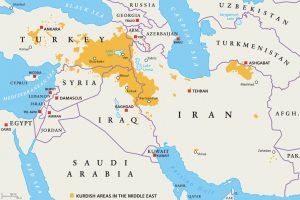
    Renewed fighting has erupted in Syria between government forces led by interim leader Ahmed al-Sharaa and the Kurdish-led Syrian Democratic Forces (SDF), threatening to roll back Kurdish autonomy that has existed since the 2011 civil war.

    Background Context

    • The regime of Bashar al-Assad collapsed in December 2024
    • Ahmed al-Sharaa promised an inclusive administration but pushed for a centralised Syrian state
    • Ethnic and religious minorities, including Kurds, resisted centralisation
    • Sectarian violence resurfaced against Alawites and Druze, followed by clashes with Kurds

    Who Are the Syrian Kurds?

    • Kurds form about 10 percent of Syria’s population
    • Concentrated in north and northeast Syria
    • Long standing demand for autonomy, not secession
    • In 2012, Assad withdrew troops from the northeast
    • Kurds filled the vacuum and declared autonomous regions called cantons
    • These areas together formed the Democratic Autonomous Administration of North and East Syria (DAANES), also called Rojava
    [2016] Consider the following pairs: Community sometimes mentioned in the news : In the affairs of 

    1. Kurd : Bangladesh 

    2. Madhesi : Nepal 

    3. Rohingya : Myanmar 

    Which of the pairs given above is/are correctly matched? 

    (a) 1 and 2 (b) 2 only (c) 2 and 3 (d) 3 only

  • New Species of Plants and Animals Discovered

    New Plant Species Discovered in Nagaland: Hoya nagaensis

    Why in the News?

    Researchers from Nagaland University have discovered a new plant species, Hoya nagaensis, in the high-altitude forests of Nagaland, highlighting the biodiversity richness of Northeast India and the conservation value of community-managed forests.

    About Hoya nagaensis

    • Newly identified plant species belonging to the Hoya genus
    • Genus Hoya is known for ornamental plants with distinctive flowers
    • Characterised by
      • Unique leaf shapes
      • Distinct floral features, clearly differentiating it from known species

    Location of Discovery

    • Found in Kavünhou Community Reserved Forest
    • District: Phek, Nagaland
    • Habitat: High-altitude temperate forests of the Eastern Himalaya
    • Recorded so far from only one location

    Conservation Status

    • Provisionally classified as Critically Endangered
    • Reasons
      • Extremely limited geographical range
      • Threats from shifting cultivation
      • Forest disturbance
    [2023] Consider the following statements: Once the Central Government notifies an area as a ‘Community Reserve’ 

    1. The Chief Wildlife Warden of the State becomes the governing authority of such forest

    2. Hunting is not allowed in such area

    3. People of such area are allowed to collect non-timber forest produce

    4. People of such area are allowed traditional agricultural practices

    How many of the above statements are correct? 

    (a) Only one (b) Only two (c) Only three (d) All four

    Hoya nagaensis was specifically discovered in the Kavünhou Community Reserved Forest. This PYQ tests the administrative and legal rules governing such protected areas, which are vital for the conservation of rare species in the Northeast.

  • Foreign Policy Watch: India – EU

    India-EU Free Trade Agreement (FTA)

    Why in the news?

    Recently, the India-European Union Free Trade Agreement (India-EU FTA) was concluded at the 16th India-EU Summit. The conclusion of this FTA positions India and the European Union as trusted partners committed to open markets, predictability, and inclusive growth.

    Key Statistics 

    1. The European Union is India’s one of the largest trading partners. In 2024-25, India’s bilateral trade in goods with the EU stood at INR 11.5 Lakh Crore (USD 136.54 billion) with exports worth INR 6.4 Lakh Crore (USD 75.85 billion) and imports amounting to INR 5.1 Lakh Crore (USD 60.68 billion)
    2. India-EU trade in services reached INR 7.2 Lakh Crore (USD 83.10 billion) in 2024.
    3. India and EU are 4th and 2nd largest economies, comprising 25% of Global GDP and account for one third of global trade. 

    What is the India-EU FTA?

    1. The India-EU FTA is a comprehensive trade and investment pact designed to liberalize trade in goods and services, enhance market access, streamline customs, and deepen economic cooperation between India and the EU’s 27 member states. 
    2. It is often described as the “mother of all deals” in recent Indian trade diplomacy due to its scale and ambition.

    Why is this FTA historic?

    1. Two-decade effort completed: Talks originally began in 2007, stalled in 2013, and were revived in 2022 before concluding in January 2026.
    2. Massive economic coverage: Encompasses goods, services, investment, customs, rules of origin, digital trade, and SMEs.
    3. Covers about a quarter of global GDP and opens trade between two large markets representing ~2 billion people.

    Key provisions & benefits

      1. India Secures Strategic Access to European Markets: India has gained preferential access to the European markets across 97% of tariff lines, covering 99.5% of trade value
        1. EU gains: Up to €4 billion per year in tariff savings on EU exports like machinery, optical, medical equipment.
        2. India gains: Preferential access for labour-intensive sectors such as textiles, leather, marine products, gems & jewellery, making ~99% of Indian exports duty-free.
      2. India’s offer to the European Union: Overall, India is offering 92.1% of its tariff lines which covers 97.5% of the EU exports, in particular:  
        1. 49.6% of tariff lines will have immediate duty elimination
        2. 39.5% of tariffs lines are subject to phased elimination over 5, 7, and 10 years
        3. 3% of products are under phased tariff reductions and few products are subject to TRQs for Apples, Pears, Peaches, Kiwi Fruit.
      3. Services-the key growth driver of trade in future: Under the FTA, broader and deeper commitments have been secured from the EU across 144 services subsectors, including IT/ITeS, professional services, education, and other business services.
    • Product Specific Rules aligned with existing Supply Chains: Balance origin compliance with global input flexibility, enable self-certification, lower export compliance costs, support MSMEs through quotas, and incentivise Make in India via phased sectoral transitions.
    • Driving Agricultural Growth and Farmer Livelihoods, with adequate Safeguards: Preferential Market Access for agricultural products like tea, coffee, spices, grapes, gherkins and cucumbers, dried onion, fresh vegetables and fruits as well as for processed food products will make them more competitive in the EU.

    Why is the EU’s regulatory regime India’s biggest challenge?

    1. Expanding standards: EU sustainability, labour, environmental and due-diligence rules, including EUDR and corporate sustainability norms, significantly increase compliance costs for Indian exporters.
    2. Non-tariff barriers: Regulations now operate as market-access barriers through traceability and disclosure requirements rather than product safety alone.
    3. MSME stress: Smaller exporters face higher relative costs in documentation, certification and traceability, limiting gains from tariff liberalisation.

    How does CBAM shape the India-EU trade equation?

    1. Carbon cost exposure: CBAM imposes a carbon price on imports of steel, aluminium, cement, fertilisers, and electricity.
    2. Competitiveness risk: Indian producers face higher compliance costs due to coal-based energy.
    3. FTA as a buffer: The agreement offers India leverage to negotiate flexibility, transition timelines, and mutual recognition mechanisms.

    What is the Most-Favoured-Nation (MFN)-Forward Clause on Climate-Linked Trade Measures?

    MFN-forward clause: Under this any future relaxations, exemptions, transition periods, or flexibilities that the EU may grant to other trading partners on climate-linked trade measures, including instruments like CBAM, would automatically extend to India.

    Why this matters

    1. No immediate CBAM relief: The clause does not dilute or suspend CBAM for India.
    2. Future-proofing mechanism: Ensures India is not placed at a relative disadvantage if the EU later moderates CBAM implementation for others.
    3. Indirect safeguard: Functions as the only CBAM-related protection within the FTA by preserving competitive parity, not preferential treatment.
    4. Strategic value: Provides negotiating leverage as EU climate policies evolve under global pressure and WTO scrutiny.
    5. Conditional, not guaranteed: The clause activates only if the EU offers concessions to another partner; it does not create an independent exemption for India.

    Why did India-EU negotiations gain urgency now?

    1. US tariff uncertainty: Accelerating US tariff threats created trade diversion risks for both India and the EU, prompting faster convergence.
    2. Geo-economic shifts: Fragmentation of global value chains after the Ukraine war forced the EU to diversify partners.
    3. Regulatory overreach concerns: Expanding EU regulations raised fears of market exclusion for Indian exporters.

    What makes the EU a critical trade partner for India?

    1. Trade volume dominance: The EU accounts for India’s largest share of goods trade among partners.
    2. Sectoral depth: Strong Indian exports in engineering goods, chemicals, pharmaceuticals, textiles, and refined petroleum.
    3. Services linkage: High potential in IT, professional services, and skilled mobility, though sensitive in negotiations.

    Risks and Limitations of the India-EU FTA

    1. Regulatory asymmetry: EU retains greater rule-setting power in sustainability, labour, and climate standards.
    2. CBAM cost shock: Carbon-linked charges can offset tariff gains for steel, aluminium, cement, and fertilisers.
    3. MSME exclusion risk: Compliance-heavy norms may restrict smaller exporters’ effective market access.
    4. Limited mobility gains: Skilled movement and mutual recognition remain politically sensitive and constrained.
    5. Implementation lag: Phased tariff reductions delay short-term export gains for some sectors.
    6. Compliance substitution: Shift from tariff barriers to regulatory barriers reduces predictability of trade benefits.

    Conclusion

    The India-EU FTA marks a significant expansion of market access and services engagement, but its economic outcomes will be shaped as much by regulatory and climate-linked constraints as by tariff liberalisation. The agreement underscores a structural shift in global trade from tariffs to standards, requiring India to complement external trade gains with domestic regulatory preparedness and export competitiveness.

    PYQ Relevance

    [UPSC 2024] Critically analyse India’s evolving diplomatic, economic and strategic relations with the Central Asian Republics (CARs) highlighting their increasing significance in regional and global geopolitics.

    Linkage: This theme falls under GS Paper II (International Relations), covering India’s bilateral relations and regional groupings affecting its strategic and economic interests. Similar to India-EU engagement, India’s outreach to the Central Asian Republics reflects the use of economic connectivity, trade partnerships, and strategic cooperation to navigate shifting global geopolitics and reduce overdependence on any single power.

Join the Community

Join us across Social Media platforms.