💥UPSC 2027,2028 Mentorship (April Batch) + Access XFactor Notes & Microthemes PDF

Archives: News

  • Insolvency and Bankruptcy Code

    In international law, government cannot override Parliament

    Central idea 

    Tax treaties or protocols signed by the executive to alter or vary the provisions of the IT Act must withstand the rigours of the constitutional and statutory requirements

    Key Highlights:

    • Landmark Decision: The Supreme Court’s decision in Assessing Officer (International Tax) vs Nestle SA is a landmark ruling reaffirming the constitutional principle that international obligations assumed by the executive require specific legislative conditions for legal effect.
    • Constitutional Framework: The judgment delves into the interplay between domestic law and international law within India’s constitutional framework, emphasizing the need for parliamentary approval when international obligations conflict with domestically enacted laws.
    • Article 73 and Article 253: The powers of the Union executive, as per Article 73, are co-terminus with those of Parliament, allowing the executive to assume international obligations without legislation. However, Article 253 emphasizes the dualism between international law and municipal law, requiring a domestic legislative process for conflicting obligations.
    • Delegated Powers: Parliament can delegate treaty-making powers to the executive, exemplified by tax treaties under section 90 of the Income Tax (IT) Act. The court clarifies that assuming international obligations and enforcing them domestically are distinct processes.
    • Section 90 of IT Act: The judgment interprets section 90, titled “Agreement with foreign countries or specified territories,” emphasizing the necessity of a notification for the implementation of agreements related to the avoidance of double taxation.
    • MFN Clauses: Most-Favoured-Nation (MFN) clauses, aimed at altering taxation provisions, must be notified for incorporation into domestic tax law. Failure to do so would create uncertainty in the tax system, with no constitutional or statutory backing for unnotified application.
    • Chaos and Uncertainty: Unnotified application of MFN clauses could lead to chaos and uncertainty, with taxpayers and assessing officers interpreting and applying the clauses based on individual understanding, lacking legal foundation.
    • Scope of Judgment: The judgment’s scope is limited to the need for a notification for the implementation of MFN clauses, and questions related to diplomatic accountability or the executive’s capacity to prolong the performance of international obligations were not addressed.
    • Importance of Constitutional Principles: The Supreme Court’s decision is applauded for upholding democratic principles, ensuring that international obligations assumed by the executive align with constitutional and statutory requirements.

    Challenges:

    • Future Events Contingency: The activation of MFN clauses contingent upon future events poses challenges in their timely application and raises questions about the executive’s diplomatic accountability.

    Key Phrases:

    • Dualism of Legal Systems: The constitutional framework recognizes international law and municipal law as separate and distinct legal systems.
    • Domestic Legislative Processes: International obligations conflicting with domestic laws must undergo legislative processes for enforceability in courts.
    • Separation of Powers: The judgment underscores the importance of the doctrine of separation of powers in judicially incorporating international obligations into domestic law.

    Critical Analysis:

    The court’s decision provides a robust interpretation of constitutional principles, ensuring that assumed international obligations align with domestic legal processes. The focus on the necessity of notifications for the implementation of MFN clauses reflects the court’s commitment to maintaining clarity and avoiding chaos in the tax system.

    Key Examples and References:

    • Article 73 and 253 of the Constitution: The judgment extensively refers to constitutional provisions such as Article 73 and Article 253 to establish the legal framework.

    Way Forward:

    • Legislative Precision: Policymakers should ensure precision in legislative processes, especially concerning the implementation of international obligations, to avoid legal ambiguities.
    • Clarity in Notification: The executive should prioritize clarity in notifications, particularly when activating clauses contingent upon future events, to prevent interpretational challenges.
    • Review of Existing Treaties: Periodic reviews of existing tax treaties to ensure they align with constitutional and statutory requirements and to address any potential issues related to conflicting obligations.
    • Enhanced Diplomatic Engagement: Diplomatic efforts should focus on ensuring that assumed international obligations are seamlessly integrated into domestic legal frameworks to uphold constitutional principles.

    The Supreme Court’s judgment serves as a guide for maintaining the sanctity of constitutional principles in the execution of international obligations, particularly in the context of tax treaties.

  • Direct Benefits Transfers

    For government schemes, a path to dignity for the poor

    BrightCareerMaker

    Key Highlights:

    • India’s Direct Benefit Transfer (DBT) system lauded globally as a “logistical marvel.”
    • DBT utilizes digital infrastructure to directly transfer government scheme benefits, covering 310 schemes across 53 ministries.
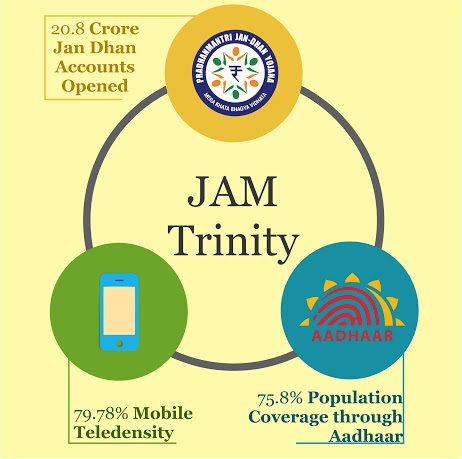
    • The JAM Trinity (Jan Dhan, Aadhaar, and Mobile) post-2017-18 maximized DBT’s impact.

    Dignity of the Poor:

    • DBT’s overlooked benefit is its preservation of the dignity of the poor.
    • Without corruption or leakages, DBT eliminates the need for the poor to parade for government benefits.
    • Shift in approach—government benefits reaching the poor directly without intermediaries.

    Poverty Perspectives and Historical Context:

    • Discussion on poverty perspectives, referencing Michael Young’s “The Rise of The Meritocracy.”
    • Challenge to the prevailing view that poverty is an individual’s fault, offering an alternative, rights-based approach.
    • Advocacy for understanding poverty from an individual rights perspective and addressing historical contexts.

    Rights-Based Approach to Poverty:

    • Recognition of basic security rights for citizens regarding food, shelter, and health.
    • Emphasis on shared societal responsibility for poverty, especially by the rich and elite.
    • Contrast with technical solutions, highlighting the need to work with the poor.

    Preserving Dignity in Design:

    • Importance of not just providing benefits but also considering how they are delivered.
    • DBT as a mechanism that ensures rightful benefits reach the poor while preserving their dignity.
    • Elimination of the poverty parade with the government reaching the poor.

    Replicating DBT Success:

    • Suggestion to replicate the DBT design in other areas, with a focus on the judiciary.
    • Reference to the judiciary’s challenges and an appeal to ensure justice reaches the poor efficiently.
    • Call for collective efforts to address complex problems.

    Challenges:

    • Unquantifiable nature of preserving dignity makes it challenging to measure its impact.
    • The need for broader societal shifts in perspectives on poverty and shared responsibilities.

    Key Phrases:

    • JAM Trinity (Jan Dhan, Aadhaar, and Mobile)
    • Poverty parade
    • Rights-based approach
    • Shared societal responsibility
    • Technical solutions vs. working with the poor
    • Veil of ignorance (Rawlsian perspective)
    • Dignity preservation in program design

    Critical Analysis:

    • Emphasis on the overlooked aspect of preserving dignity brings a unique perspective.
    • The article challenges prevailing views on poverty, advocating for a rights-based approach.
    • DBT is presented as a successful model, but challenges of replicating its success are acknowledged.
    • The article connects poverty perspectives with societal responsibilities and justice delivery.

    Key Examples and References for quality enrichment of mains answers: 

    • Michael Young’s “The Rise of The Meritocracy”
    • The Tyranny of Experts by William Easterly
    • Reference to the judiciary’s challenges and the appeal of the first woman tribal President.

    Key Data and Facts:

    • 310 government schemes across 53 ministries utilize DBT.
    • Estimated savings of 1.14% of GDP attributed to DBT.
    • 79,813 cases pending before 34 judges in the judiciary.

    Key Terms:

    • Direct Benefit Transfer (DBT)
    • JAM Trinity
    • Rights-based approach
    • Poverty parade
    • Veil of ignorance
    • Shared societal responsibility

    Way Forward:

    • Advocacy for applying DBT’s success in other sectors, particularly the judiciary.
    • Acknowledgment of complexity but a call for collective efforts to address challenges.
  • Judicial Appointments Conundrum Post-NJAC Verdict

    It’s time to revamp the structure of the Supreme Court

    Constitution Bench of Supreme Court

    Central idea

    The article discusses the challenges faced by the Supreme Court of India, the historical proposals for structural changes, and the recent proposal to create Constitution Benches as a permanent feature. It explores the need for regional benches to alleviate the overwhelming caseload and enhance the court’s efficiency, considering historical recommendations and current demands for reform.

    Jurisdictions of the Supreme Court:

    • Original, appellate, and advisory jurisdictions under the Constitution.
    • Functions as a Constitutional Court and Court of Appeal.

    Composition of Constitution Benches:

    • Typically comprise five, seven, or nine judges.
    • Deliberate on issues related to constitutional law.
    • Article 145(3) mandates a minimum of five judges for substantial constitutional questions.

    Broad Jurisdiction of the Supreme Court:

    • Hears cases in Division Benches (two judges) or full Benches (three judges).
    • Addresses diverse topics, from film prohibitions to allegations against public officials.
    • Notable instances of entertaining frivolous public interest litigations.

    Current Caseload and Need for Structural Change:

    • 79,813 pending cases before 34 judges, prompting calls for structural reforms.
    • CJI D.Y. Chandrachud’s recent announcement on establishing varied-strength Constitution Benches permanently.

    Historical Proposals for Structural Change:

    • Tenth Law Commission (1984) proposed splitting the Supreme Court into Constitutional and Legal Divisions.
    • Eleventh Law Commission (1988) reiterated the need for division, aiming at wider justice availability.
    • Bihar Legal Support Society v. Chief Justice of India (1986) expressed the “desirability” of a National Court of Appeal.
    • 229th Law Commission Report (2009) recommended regional benches for non-constitutional issues.

    Colonial Legacy and Evolution of the Supreme Court:

    • Three Supreme Courts during colonial times (Bombay, Calcutta, Madras).
    • Indian High Courts Act of 1861 replaced Supreme Courts with High Courts.
    • Government of India Act, 1935, created the Federal Court of India.
    • The Supreme Court, established on January 28, 1950, under Article 124 of the Constitution.

    Increasing Judges and Overburdened Court:

    • Evolution of the Supreme Court from eight judges in 1950 to 34 in 2019.
    • Overburdened court issuing around 8-10 decisions yearly through Constitution Benches.
    • Only four out of 1,263 decisions in 2022 from Constitution Benches.

    Critical Analysis:

    • Overburdened Judiciary: High number of pending cases (79,813) indicates the burden on the Supreme Court. The overwhelming workload affects the efficiency of the court in delivering timely justice.
    • Historical Proposals: Historical proposals, like the Tenth Law Commission’s suggestion in 1984, proposed splitting the Supreme Court into Constitutional and Legal Divisions.The aim was to make justice more accessible and reduce litigants’ fees.
    • Regional Benches Proposal: The 229th Law Commission Report (2009) recommended establishing regional benches to hear non-constitutional issues. The proposal aimed to decentralize workload and allow the Supreme Court to focus on constitutional matters.
    • Historical Background: Evolution of the Supreme Court from colonial times with the creation of regional Supreme Courts. Transformation from three Supreme Courts (Bombay, Calcutta, Madras) to the current centralized structure.

    Key Examples and References:

    • Bihar Legal Support Society v. Chief Justice of India (1986) suggested establishing a National Court of Appeal.
    • The 229th Law Commission Report (2009) recommended regional benches.

    Key Facts:

    • The Court sits in benches of varying sizes, as determined by the Registry on the directions of the Chief Justice of India (CJI), who is the Master of the Roster
    • The Supreme Court was founded on January 28, 1950, under Article 124 of the Constitution.
    • Workforce increased from 8 judges in 1950 to 34 judges in 2019 due to rising caseload.

    Way Forward:

    • Suggestion to split the Supreme Court into a Final Court of Appeal and a permanent Constitution Bench.
    • A Constitution Bench (V. Vasanthkumar v. H.C. Bhatia) analyzing and proposing measures to protect citizens’ access to the Supreme Court.
    • Opportunity to address structural gaps by designating appeal benches as regional benches under CJI’s guidance.
  • Urban Transformation – Smart Cities, AMRUT, etc.

    [pib] AAINA Dashboard for Cities

    Central Idea

    • The Ministry of Housing and Urban Affairs (MoHUA) has introduced the ‘AAINA Dashboard for Cities’ portal (aaina.gov.in).

    About AAINA Dashboard

    • The AAINA Dashboard is envisioned as a permanent platform for ULB-related data, with regular updates.
    • It invites Urban Local Bodies (ULBs) across India to voluntarily share their key data regularly through a user-friendly data entry form on the portal.
    • The primary objectives of the AAINA Dashboard are:
    1. City Benchmarking: Enable cities to assess their performance relative to other cities.
    2. Inspiration: Inspire cities by identifying areas for improvement and showcasing possibilities.
    3. Peer Learning: Promote peer learning and engagement among cities.

    Dashboard Structure

    The AAINA Dashboard will categorize data submitted by ULBs into five key pillars:

    1. Political & Administrative Structure
    2. Finance
    3. Planning
    4. Citizen-Centric Governance
    5. Delivery of Basic Services

    Data Submission Process

    • ULBs will contribute their data, including audited accounts and self-reported performance metrics, by logging into the dashboard’s portal.
    • ULBs will have the flexibility to update their information as needed, ensuring that the dashboard remains a dynamic and up-to-date resource.https://pib.gov.in/PressReleaseIframePage.aspx?PRID=1976720
  • Innovations in Biotechnology and Medical Sciences

    Plant Eavesdropping: Role of Green Leaf Volatiles (GLVs)

    Plant Eavesdropping

    Central Idea

    • The scent of freshly cut grass, more than just a pleasant aroma, is a part of a complex plant communication system involving Green Leaf Volatiles (GLVs).
    • For plants, these GLVs are not just fragrances but crucial signals that alert them to imminent threats, such as herbivore attacks.

    Concept of Plant Eavesdropping

    • Inter-Plant Communication: Plants have the remarkable ability to ‘eavesdrop’ on the distress signals of their neighbors, preparing themselves for similar threats.
    • Agricultural Implications: Understanding this natural warning system could revolutionize pest control in agriculture, potentially reducing the need for harmful pesticides.

    Understanding Plant Defense Mechanisms

    • Research involving mustard plants (Arabidopsis thaliana) has shown that calcium plays a crucial role in plant defense, with calcium levels spiking in response to damage.
    • Using genetically modified plants that fluoresce in response to calcium surges, researchers have been able to visually track plant reactions to physical damage and GLV exposure.
    • Experiments have demonstrated that plants can detect and respond to GLVs emitted by neighboring plants, as evidenced by fluorescence in modified mustard plants.
    • Among the GLVs, specific compounds like E-2-HAL and Z-3-HAL were found to trigger significant responses in plants.

    Gene-Level Defense Response

    • Activation of Defense Genes: Exposure to GLVs leads to the activation of certain defence-related genes in plants, suggesting that they perceive these volatiles as danger signals.
    • Implications for Plant Protection: This gene activation could be a crucial step in natural plant defense mechanisms against herbivores.

    Implications and Future Directions

    • Natural Pest Control: The study opens up possibilities for using GLVs in agricultural pest control, potentially reducing reliance on chemical pesticides.
    • Alternative Strategies: While promising, researchers also consider other substances like jasmonic acid, balancing pest control with the plant’s growth and fruit production.
    • Expanding Plant Sensory Research: The findings encourage further exploration into plant perception and response to external stimuli, particularly in natural environments where signaling dynamics are more complex.
    • Challenges in Field Studies: One of the main challenges in studying plant volatile signaling in natural settings is the dilution of these compounds in the open air.
  • Urban Transformation – Smart Cities, AMRUT, etc.

    Amplifi 2.0 Portal for Data-Driven Urban Policymaking  

    Central Idea

    • The Union Ministry of Housing and Urban Affairs in India has taken a significant step towards fostering data-driven policymaking by launching the Amplifi 2.0 portal.

    Amplifi 2.0 Portal

    • Amplifi 2.0 stands for Assessment and Monitoring Platform for Liveable, Inclusive, and Future-Ready Urban India portal.
    • It was introduced by the Ministry of Housing and Urban Affairs.
    • This platform aims to provide easy access to raw data from Indian cities, facilitating researchers, academics, and stakeholders in their efforts to formulate informed urban policies.
    • Currently, 258 urban local bodies have been onboarded, and data for 150 cities is accessible on the platform.
    • Objectives:
    1. To make data from all 3,739 municipal corporations accessible through the portal.
    2. Offer a wide range of data, including total consumption, water quality testing, healthcare expenditure, slum population statistics, and road accident fatalities.

    Significance

    • Previously, the Ministry used data provided by civic bodies to rank cities based on four indices.
    • These indices encompassed ease-of-living, municipal performance, climate smart cities assessment, and data maturity assessment.
    • The government plans to release various reports based on subsets of these four indices, shifting towards a more data-centric approach.
  • Modern Indian History-Events and Personalities

    In news: All Indian Forward Bloc (AIFB)

    Forward Bloc

    Central Idea

    • A veteran leader’s centenary who was associated with Netaji Bose’s All Indian Forward Bloc (AIFB), was celebrated.

    All Indian Forward Bloc (AIFB)

    Details
    Foundation May 3, 1939 by Netaji Subhas Chandra Bose at Makur near Unnao (Uttar Pradesh)
    Original Purpose To consolidate left-wing elements within the Indian National Congress and develop an alternative leadership
    Key Early Members S.S. Kavishar (Vice-President), Lal Shankarlal (General Secretary), Vishwambhar Dayalu Tripathi, Khurshed Nariman, Annapurniah, Senapati Bapat, Hari Vishnu Kamath, Pasumpon U. Muthuramalingam Thevar, Sheel Bhadra Yagee, Satya Ranjan Bakshi
    First All India Conference June 20-22, 1940, in Nagpur; declared as a socialist political party
    Publication “Forward Bloc” newspaper started by Netaji in August 1939
    Bose’s Arrest and Exile Arrested in July 1940, escaped in January 1941, sought support in the Soviet Union and Germany
    World War II Activities Continued anti-British activities in India, notably in Bihar, without direct coordination with Bose or INA
    Post-War Reorganization Reorganized in February 1946 in Jabalpur, Madhya Pradesh; declared as a socialist party
    1946 Elections Contested elections to the Constituent Assembly and provincial legislatures; won several seats
    Arrah Conference 2nd All India Conference in January 1947 in Arrah, Bihar
    Post-Independence Status Re-established as an independent political party after India’s independence


    Try this PYQ:

    Who among the following were the founders of the “Hind Mazdoor Sabha” established in 1948?

    (a) B. Krishna Pillai, E.M.S. Namboodiripad and K.C. George

    (b) Jayaprakash Narayan, Deen Dayal Upadhyay and M.N. Roy

    (c) C.P. Ramaswamy Iyer, K. Kamaraj and Veeresalingam Pantulu

    (d) Ashok Mehata, T.S. Ramanujan and G.G. Mehata


    Post your answers here.
  • Oil and Gas Sector – HELP, Open Acreage Policy, etc.

    Centre announces phased introduction of Biogas Blending for domestic use

    Central Idea

    • The Centre plans to enhance its domestic energy sustainability by introducing mandatory blending of compressed biogas (CBG) with Natural Gas.

    Mandatory Biogas Blending

    This initiative aims to reduce the country’s reliance on natural gas imports and lower emissions.

    1. Initial Phase (April 2025): The mandatory blending of CBG with natural gas will begin at 1%. This blend will be suitable for use in automobiles and households.
    2. Progressive Increase (By 2028): The government plans to gradually increase the mandatory blending percentage to around 5% by 2028. This step will further reduce the dependence on pure natural gas.

    Why such move?

    • India is among the world’s largest importers of oil and gas, with nearly half of its gas consumption relying on imports.
    • The blending initiative is designed to curb import costs and enhance energy security.
    • These measures align with India’s broader objective of achieving net-zero emissions by 2070.

    Comparative Analysis of Biogas, Natural Gas, and LPG

    Biogas Natural Gas LPG (Liquefied Petroleum Gas)
    Composition Organic matter decomposition (mainly methane and CO2). Fossil fuel (primarily methane). Byproduct of natural gas processing (propane, butane).
    Production Anaerobic digestion of organic waste. Extracted from underground, requires refining. Obtained during natural gas processing and refining.
    Energy Content Lower due to high CO2 content. High, efficient for heating and power. High per volume, efficient in liquefied state.
    Environmental Impact Renewable, carbon-neutral. Cleaner than coal/oil, but emits greenhouse gases. Fewer pollutants than gasoline/diesel, emits greenhouse gases.
    Uses Heating, electricity, vehicle fuel, cooking in rural areas. Heating, electricity, industrial processes, vehicle fuel. Heating, cooking, vehicles, industrial applications.
    Storage/Transport Stored as gas or liquid; requires tanks. Pipelines for gas; LNG for long-distance. Pressurized tanks as liquid.
  • Finance Commission – Issues related to devolution of resources

    Why is Bihar demanding the Special Category Status?

    Special Category Status

    Central Idea

    • Recently, Bihar govt passed a resolution seeking Special Category Status (SCS) for the state.
    • This demand comes in light of the revelations from the “Bihar Caste-based Survey, 2022,” which unveiled that nearly one-third of Bihar’s population continues to grapple with poverty.

    Special Category Status (SCS): An Overview

    • Definition: SCS is a classification conferred by the Central government to support the development of states facing geographical or socio-economic disadvantages.
    • Origins: SCS was instituted in 1969, based on the recommendations of the 5th Finance Commission (FC).
    • Criteria: Five criteria are assessed before granting SCS, including factors like hilly terrain, low population density, and economic backwardness.
    • Historical Allocation: Initially, three states—Jammu & Kashmir, Assam, and Nagaland—were granted SCS. Subsequently, eight more states, including Himachal Pradesh and Uttarakhand, received this status.

    Benefits of having SCS

    • Financial Assistance: SCS states used to receive grants based on the Gadgil-Mukherjee formula, accounting for approximately 30% of total central assistance.
    • Devolution of Funds: Post the abolition of the Planning Commission and the recommendations of the 14th and 15th FCs, SCS assistance has been subsumed into increased devolution of funds for all states (now 41% in the 15th FC).
    • Funding Ratio: SCS states enjoy a favourable 90:10 Centre-State funding split for centrally sponsored schemes, compared to 60:40 or 80:20 for general category states.
    • Additional Incentives: SCS states receive concessions in customs and excise duties, income tax rates, and corporate tax rates to attract investments.

    Why Bihar’s Demand for SCS?

    • Resource Challenges: Bihar attributes its poverty and underdevelopment to limited natural resources, irregular water supply for irrigation, recurring floods in the north, and severe droughts in the south.
    • Industrial Shift: The state’s bifurcation led to the relocation of industries to Jharkhand, creating unemployment and investment voids.
    • Per-Capita GDP: Bihar’s per-capita GDP, at around ₹54,000, consistently ranks among the lowest in India.
    • Welfare Funding: Chief Minister Nitish Kumar asserts that Bihar houses approximately 94 lakh poor families and that SCS recognition would generate about ₹2.5 lakh crore, crucial for funding welfare initiatives over the next five years.

    SCS Demands from Other States

    • Andhra Pradesh: Since its bifurcation in 2014, Andhra Pradesh has sought SCS due to revenue loss post-Hyderabad’s transfer to Telangana.
    • Odisha: Odisha’s appeal for SCS underscores its vulnerability to natural disasters, such as cyclones, and a significant tribal population (around 22%).
    • Central Government’s Response: Despite these demands, the Central government, citing the 14th Finance Commission’s report, which recommended against granting SCS to any state, has consistently rejected them.

    Is Bihar’s Demand Justified?

    • Criteria Fulfillment: Bihar meets most SCS criteria but lacks hilly terrain and geographically difficult areas, crucial for infrastructural development.
    • Alternative Solutions: In 2013, the Raghuram Rajan Committee proposed a ‘multi-dimensional index’ methodology instead of SCS, which could be revisited to address Bihar’s socio-economic challenges effectively.
  • Jallikattu Debate

    Bengaluru hosts Kambala Races

    Kambala

    Central Idea

    • Kambala races were held on this weekend in Bengaluru and many parts of Karnataka.
    • This event has faced legal scrutiny in the past, with the Supreme Court temporarily outlawing Kambala, along with Jallikattu and bullock-cart racing, in 2014.

    What is Kambala?

    • Kambala is a folk sport predominantly practised in the coastal districts of Karnataka, especially where Tulu-speaking communities are prevalent.
    • Traditionally, races were organized in slushy paddy fields post-harvest.
    • The Kambala Samithi now hosts weekly events from late November to mid-April at various venues across Dakshina Kannada and Udupi districts.
    • For many, especially the Bunt community, Kambala is a prestigious event.
    • Buffalo pairs are meticulously groomed throughout the year in the hopes of winning major races.

    Different Kambala Categories

    1. Negilu (Plough): Entry-level buffalo pairs participate in their first Kambala race using lighter ploughs.
    2. Hagga (Rope): Jockeys race buffaloes with just a rope tied to both.
    3. Adda Halage: Participants stand on a horizontal plank dragged by buffaloes, unlike Hagga and Negilu where jockeys run behind.
    4. Kane Halage: A wooden plank tied to buffaloes, with water gushing out through holes as it’s dragged. The height of splashing water determines the winner.

    Kambala’s Popularity across Karnataka

    • While Kambala’s popularity is concentrated in coastal Karnataka, movies like ‘Kantara’ in 2022 have widened its appeal across the state.
    • The film’s success is credited with generating interest in the sport, making it more popular even beyond its traditional strongholds.
    • Historically, the Koraga community faced discrimination during Kambala events. They were considered “untouchable” and ill-treated.
    • Critics argue that the sport is still dominated by higher caste groups, while lower caste individuals often perform menial tasks during the event.

    Why was Kambala banned by the Supreme Court?

    • Several organizations, including People for the Ethical Treatment of Animals (PETA), alleged animal abuse during traditional sporting events.
    • Concerns included the tying of buffalo noses with ropes and continuous whipping during races, seen as cruelty.
    • The Supreme Court, hearing these petitions, banned Kambala, Jallikattu, and bullock-cart racing in 2014.

    How was the ban lifted?

    • In January 2016, the Environment Ministry issued a notification allowing the continuation of bull training for such traditional events, recognizing their cultural significance.
    • Specific conditions were set to minimize bull suffering.
    • State governments also amended the Prevention of Cruelty to Animals Act, providing exemptions for these events.
    • A five-judge constitutional bench upheld these amendments made by Karnataka, Tamil Nadu, and Maharashtra governments in May.

Join the Community

Join us across Social Media platforms.