💥UPSC 2026, 2027, 2028 UAP Mentorship (March Batch) + Access XFactor Notes & Microthemes PDF

Archives: News

  • G20 : Economic Cooperation ahead

    Without great powers on board, G20 is a drift

    Introduction

    The G20 emerged from the ashes of the 2008 crisis as the principal platform steering global financial stability, representing both advanced and rising powers. Over time, however, geopolitical rifts, protectionist shifts, and weakened multilateralism have steadily eroded its efficacy. The absence of great powers, divergent national priorities, and competing minilaterals now raise questions about the G20’s ability to act as an anchor for global economic coordination.

    Why in the News

    The G20 has entered a phase of visible fragmentation as major powers like the US, China, and Russia increasingly skip or downgrade their participation, marking a sharp contrast to its central role during the 2008 global financial crisis. Trump chose to boycott the 2025 G20 summit, which was hosted by South Africa in Johannesburg. The earlier summits, including Bali 2022 and New Delhi 2023, were marked by absence of key leaders such as Putin and Xi, signalling an unprecedented weakening of multilateral cooperation. The article highlights how the G20, once elevated to the “premier forum for international economic cooperation,” is now reduced to a middle-power platform with diminishing relevance. This drift, caused by unilateralism, great-power tensions, and rival blocs, is a major setback for global governance.

    How Did the G20 Rise From Crisis to Centrality?

    1. Global Financial Crisis (2008): Elevated from a finance ministers’ forum to a leaders’ summit after the Lehman collapse, recognising the need for collective economic stabilisation.
    2. US-EU Leadership: President Bush convened the first summit; European leaders pushed to formalise it as the central platform for crisis response.
    3. Inclusive Membership: Plural representation of middle powers, India, China, Brazil, Indonesia, gave the G20 legitimacy beyond the G7.

    Why Is the G20 Losing Relevance Today?

    1. Great-Power Withdrawal: Absence of Xi and Putin (2023) indicates declining commitment by major actors.
    2. Shift to Bilateralism: 2022 Bali summit dominated by US-China bilateral diplomacy, overshadowing collective agenda.
    3. Competing Priorities: US focus on securitising trade; China’s rivalry; Russia’s Ukraine conflict, reducing appetite for multilateral compromise.
    4. Fragmentation: Emergence of parallel groups like G2 ideas, Quad, IPEF, diluting G20 centrality.

    What Role Did Unilateralism Play in Weakening the G20?

    1. America First (Trump Era):
      1. Protectionist shift and retreat from multilateral commitments.
      2. Trade war with China and sanctions redirected US focus to bilateral power play.
      3. Undermined collective financial architecture, making G20 coordination difficult.
    2. Return of Great-Power Rivalry:
      1. US-China confrontation replaced cooperative economic agenda.
      2. Russia’s isolation post-Ukraine war created a split within member states.

    How Did the Absence of the Big Three Impact Multilateral Decision-Making?

    1. Reduced Negotiating Power: Without the US, China, and Russia at full participation, G20 communiqués lost substance.
    2. Lowered Stakes: Middle powers alone cannot push structural financial reforms.
    3. Decline in Issue Ambition: Meetings shifted from global macroeconomic governance to modest incremental outcomes.
    4. Loss of Crisis-Time Authority: Unlike 2008-09 summits which produced coordinated fiscal and financial action, recent meetings lacked decisive outcomes.

    What Does the G20 Drift Mean for India?

    1. Opportunity Shrinks: India’s earlier success, G20 admitting AU under its presidency, may not translate into sustained influence without great-power participation.
    2. Rise of Minilaterals: Quad, I2U2, IPEF may overshadow the G20’s relevance for India’s long-term strategic and economic diplomacy.
    3. Squeezed between Powers: India must balance ties with the US, China, and Russia while leading middle-power groupings.
    4. Reduced Global Economic Voice: Weak G20 undermines India’s push for reforms in global financial architecture and voice of Global South.

    Conclusion

    The G20’s drift reflects the broader fragmentation of global governance, marked by strategic rivalry, unilateral policies, and weakened collective will. Without full engagement of great powers, the forum risks becoming symbolic rather than substantive. For India, the challenge is balancing leadership of the Global South with managing rival great-power agendas in an increasingly divided world.

    PYQ Relevance

    [UPSC 2023] ‘Virus of Conflict is affecting the functioning of the SCO’. In the light of the above statement point out the role of India in mitigating problems.

    Linkage: Great-power rivalry within SCO mirrors the G20’s paralysis, where conflicting interests of major powers weaken collective decision-making. India’s balancing role in SCO highlights how middle powers attempt to preserve multilateral relevance amid widening geopolitical fractures.

  • Historical and Archaeological Findings in News

    Is Macaulay to blame for the colonial mindset or is he a convenient in politics?

    INTRODUCTION

    The original article presents two contrasting viewpoints on the legacy of Thomas Babington Macaulay and the larger question of whether India still carries a “colonial mindset.” One side argues that India must overcome colonial-era mental frameworks in governance and education, while the other contends that modern education, introduced during Macaulay’s era, opened unprecedented avenues for mobility, equality, and intellectual emancipation. The debate extends far beyond Macaulay himself, touching upon structural, cultural, and linguistic dimensions of Indian society.

    WHY IN THE NEWS

    Recent political speeches invoking the need to shed the “colonial mindset” have revived discussions originally linked to Macaulay’s educational policies. This has become a major talking point because India is undergoing curricular reforms, language policy changes, and institutional restructuring aimed at “decolonising” governance. The article’s sharply divergent interpretations of Macaulay’s role illustrate how deeply contested India’s intellectual foundations remain, signalling a transition moment in national identity formation.

    Colonial Mindset and Institutional Continuity

    1. Bureaucratic culture: India’s administrative behaviour still follows colonial-era norms which are hierarchical functioning, rigid procedure, and deference to authority.
    2. Governance style: Parliamentary debate formats, legal drafting, and official communication structures reflect patterns institutionalised in the 19th century.
    3. State-society distance: Colonial governance cultivated separation between rulers and the public; remnants of this continue to shape administrative attitudes today.

    Language Politics and the Question of English

    1. Symbolic centrality: English remains associated with power, aspiration, and official legitimacy, a legacy reinforced since Macaulay’s time.
    2. Cultural alienation: Critics argue that English-medium dominance creates distance from Indian culture and languages.
    3. Functional utility: Supporters highlight that English acts as a bridge across states, classes, and caste barriers, enabling mobility in education and employment.

    Access to Knowledge: Who Controlled Learning?

    1. Caste-linked exclusion: Traditional Sanskritic education was historically limited to higher castes, restricting intellectual opportunities for marginalised groups.
    2. Modern education’s rupture: English-medium education introduced during and after Macaulay’s reforms allowed many excluded communities, especially lower castes, to enter learning spaces earlier denied to them.
    3. Emergence of new elites: Modern schooling produced a new professional class that reshaped politics, administration, and social reform movements.

    Cultural Legitimacy and Competing Knowledge Traditions

    1. Hierarchy of knowledge: Colonial frameworks often positioned Western science and literature as superior, affecting how India valued its own traditions.
    2. Reclaiming indigenous systems: The current push for “decolonising education” attempts to restore space for Indian languages, philosophies, and scientific knowledge.
    3. Plural intellectual heritage: The article stresses that Indian modernity today requires balancing global knowledge with regional identities, rather than choosing one over the other.

    Political Use of Historical Figures: The Macaulay Symbol

    1. Simplification of history: Macaulay is used as a political metaphor, either as a symbol of cultural loss or as an emblem of liberation through modernity.
    2. Narrative battles: Both sides selectively highlight aspects of his legacy to advance contrasting visions of nationalism and development.
    3. Identity construction: The debate signifies broader attempts to define what should constitute “Indian” knowledge and national pride.

    CONCLUSION

    The debate around Macaulay is not merely about a historical figure but about India’s contemporary struggle between decolonisation, modernity, and social justice. The article shows that India’s identity debates hinge on deeper questions: who gets access to knowledge, which languages define opportunity, how institutions remember their past, and what kind of society India aspires to build. A nuanced understanding requires moving beyond binaries, embracing global knowledge while valuing indigenous intellectual traditions.

    Value Addition

    Thomas Babington Macaulay (1800-1859)

    • A British historian, politician, and member of the Governor-General’s Council in India (1834-1838).
    • Key architect of British cultural, educational, and legal policy during early colonial rule.

    Major Contributions / Reforms

    Macaulay’s Minute on Education (1835)

    1. Pushed for English-medium education replacing Persian & Sanskrit as official languages of instruction.
    2. Advocated creating a class of “persons Indian in blood and colour but English in taste, morals and intellect.”
    3. Led to Anglicist victory over Orientalists.
    4. Directly shaped India’s modern schooling structure.

    Introduction of English Education

    1. Helped expand Western science, literature, and rational thought in India.
    2. Facilitated spread of modern professions, law, medicine, engineering, administration.
    3. Enabled mobility for communities excluded from traditional Sanskritic learning.

    Indian Penal Code (IPC)

    1. Macaulay chaired the First Law Commission (1834).
    2. Drafted the IPC (completed 1837, enacted 1860), foundation of India’s criminal law for 163 years.
    3. Promoted uniform, codified, written law replacing diverse customary systems.

    Civil Services Ethos

    1. Strengthened the model of a centralised, rule-bound bureaucracy.
    2. Contributed to long-term continuity of British administrative culture in independent India.

    Cultural-Epistemic Impact

    1. Elevated Western knowledge as superior to traditional Indian systems.
    2. Influenced linguistic hierarchies, English became linked to power, prestige, and opportunity.
    3. Triggered long-term debates on colonial mindset, cultural legitimacy, and identity.

    Criticisms (For Balance in Mains Answers)

    1. Dismissed Indian literature as inferior (“A single shelf of a good European library is worth the whole native literature of India and Arabia.”).
    2. Accused of fostering elitism and alienation through English dominance.
    3. Reinforced cultural and epistemic hierarchies privileging the West.

    Positive Interpretations 

    1. English education enabled lower castes to bypass restricted Sanskritic order.
    2. Opened pathways to modernity, science, constitutionalism and global mobility.
    3. Created early Indian public sphere, newspapers, debates, modern nationalism.

    Conclusion for Mains

    Macaulay’s legacy is complex, he entrenched a colonial mindset but also enabled modern intellectual and social transformation. His ideas continue to influence India’s education, law and cultural debates even today.

    PYQ Relevance

    [UPSC 2014] Examine critically the various facets of economic policies of the British in India from mid-eighteenth century till independence. 

    Linkage: The question aligns with the article’s themes of colonial economic restructuring, knowledge hierarchies, and institutional continuity introduced under British rule. It is relevant because British economic policies shaped the social, cultural and educational divides that the article highlights through the Macaulay debate.

  • Solar Energy – JNNSM, Solar Cities, Solar Pumps, etc.

    International Astronomical Union (IAU) 

    Why in the news?

    • A 3.5-billion-year-old Martian crater has been named after Indian geologist M.S. Krishnan. The naming was approved by the International Astronomical Union (IAU).
    • Several other names proposed by Kerala scientists for Martian landforms were also approved.

    About the Martian Crater

    • Estimated to be 3.5 billion years old, dating back to Mars’ early geological history.
    • Located in a region studied for traces of ancient water and habitability.

    Who Was M.S. Krishnan?

    • Full name: Maharajapuram Seetharaman Krishnan
    • One of India’s most influential geologists, known as a foundational figure in modern Indian geological studies.
    • Served as Director, Geological Survey of India (GSI) (1950–1956).

    Major Contributions

    • Mapped India’s geological structures, including:
      • Indian stratigraphy
      • Peninsular shield
      • Himalayan formations
    • Played a leading role in mineral exploration and petroleum geology in India.
    • Contributed to studies on:
      • Gondwana formations
      • Economic geology
      • Earth resources of India

    Famous Work

    • Author of the landmark textbook “Geology of India and Burma”, a globally referenced work in earth sciences.

    About the International Astronomical Union (IAU)

    • Founded: 1919
    • A senior international body that governs professional astronomical activities worldwide.
    • Mission: Promote and safeguard astronomy through research, communication, education, development, and international cooperation.
    • Headquarters: Paris, France
    • India is a member of it 
    What is the purpose of ‘evolved Laser Interferometer Space Antenna (ELISA)’ project? (2017)

    (a) To detect neutrinos 

    (b) To detect gravitational waves 

    (c) To detect the effectiveness of missile defence system 

    (d) To study the effect of solar flares on our communication systems

    This PYQ is selected because it directly tests knowledge of a major international scientific venture in the field of astronomy/cosmology, which is conceptually linked to the mandate of the IAU

  • Skilling India – Skill India Mission,PMKVY, NSDC, etc.

    Entrepreneur-in-Residence (EIR) Programme & BRIC  

    Why in the news? 

    At the 3rd Annual General Meeting of the Biotechnology Research and Innovation Council (BRIC), Union Minister Dr. Jitendra Singh highlighted the growing importance of the Entrepreneur-in-Residence (EIR) Programme and India’s rising biotech innovation ecosystem.

    Entrepreneur-in-Residence (EIR) Programme

    • It is one of the programmes launched under the National Initiative for Developing and Harnessing Innovations (NIDHI).
    • A Government of India initiative to bridge the gap between research and enterprise.
    • Encourages young scientists, innovators, and researchers to become scientist-entrepreneurs.
    • Helps convert lab research → market-ready innovations.

    About BRIC

    • Established: 2023
    • Type: Pan-India umbrella network of biotechnology research institutions.
    • First major experiment in merging multiple institutes under one collaborative body.
    • Ranked as India’s top organization in biological sciences research (Nature Index India 2025).
    Which of the following statements is/are correct regarding National Innovation Foundation India (NIF)? (2015)

    (1) NIF is an autonomous body of the Department of Science and Technology under the Central Government. 

    (2) NIF is an initiative to strengthen the highly advanced scientific research in India’s premier scientific institution in collaboration with highly advanced foreign scientific institution. 

    Select the correct answer using the code given below. 

    (a) 1 only (b) 2 only (c) Both 1 and 2 (d) Neither 1 nor 2

  • Tribes in News

    Israel to Bring Remaining 5,800 Bnei Menashe Jews From Northeast India

    Why in the news?

    • On 23 November 2025, Israel approved a major plan to bring all remaining 5,800 members of the Bnei Menashe Jewish community from Northeast India by 2030.
    • This marks a significant step in the decades-long Aliyah (immigration to Israel) process.

    Who are the Bnei Menashe?

    • Indigenous community from Manipur and Mizoram.
    • Claim descent from Menashe (Manasseh), one of the Ten Lost Tribes of Israel exiled by the Assyrian Empire ~2,700 years ago.
    • Faced historical disputes over their Jewish identity.
    • In 2005, Rabbi Shlomo Amar, the then Sephardi Chief Rabbi of Israel, formally recognised them as “descendants of Israel”, enabling immigration.
    In India, if a religious sect/community is given “the status of a national minority, what special advantages is it entitled to? (2011)

    1. It can establish and administer exclusive educational institutions. 

    2. The President of India automatically nominates a representative of the community to Lok Sabha. 

    3. It can derive benefits from the Prime Minister’s 15-Point Programme. 

    Which of the statements given above is/are correct? 

    (a) 1 only (b) 2 and 3 only (c) 1 and 3 only (d) 1, 2 and 3

  • New Species of Plants and Animals Discovered

    Hawfinch Sighting in Jim Corbett National Park  

    Why in the news?

    • A Hawfinch (Coccothraustes coccothraustes), a bird species native to Europe, North Africa, and temperate Asia, was recorded on 23 November in the Dhela zone of Jim Corbett National Park, Uttarakhand. This is considered a vagrant bird sighting.

    About Hawfinch (Coccothraustes coccothraustes)

    • Family: Fringillidae (Finches)
    • Size: ~18 cm
    • Wingspan: 29–33 cm
    • Distinctive Feature: Very powerful, heavy bill capable of cracking extremely hard seeds/nuts.
    • Plumage: Males and females similar; males slightly darker.

    Native Range

    • Europe and North Africa
    • Temperate Asia, including:
      • Mongolia and Kazakhstan
    • Not native to India.

    Status in India

    • Sighting classified as a vagrant record—bird appears outside its usual distribution range.
    • Only two previous records in the Indian subcontinent:
      • Muzaffarabad (1908) – PoK
      • Aliabad (2017) – PoK
    • This is one of the very few confirmed sightings.
    Why is a plant called Prosopis juliflora often mentioned in the news? (2018) 

    (a) Its extract is widely used in cosmetics. 

    (b) It tends to reduce the biodiversity in the area in which it grows

    (c) Its extract is used in the synthesis of pesticides

    (d) None of the above

    This question tests the critical concept of non-native or exotic species impacting biodiversity, which is the implicit environmental concern raised by the Hawfinch sighting.

  • Water Management – Institutional Reforms, Conservation Efforts, etc.

    Mekedatu Balancing Reservoir Project

    Why in the news?

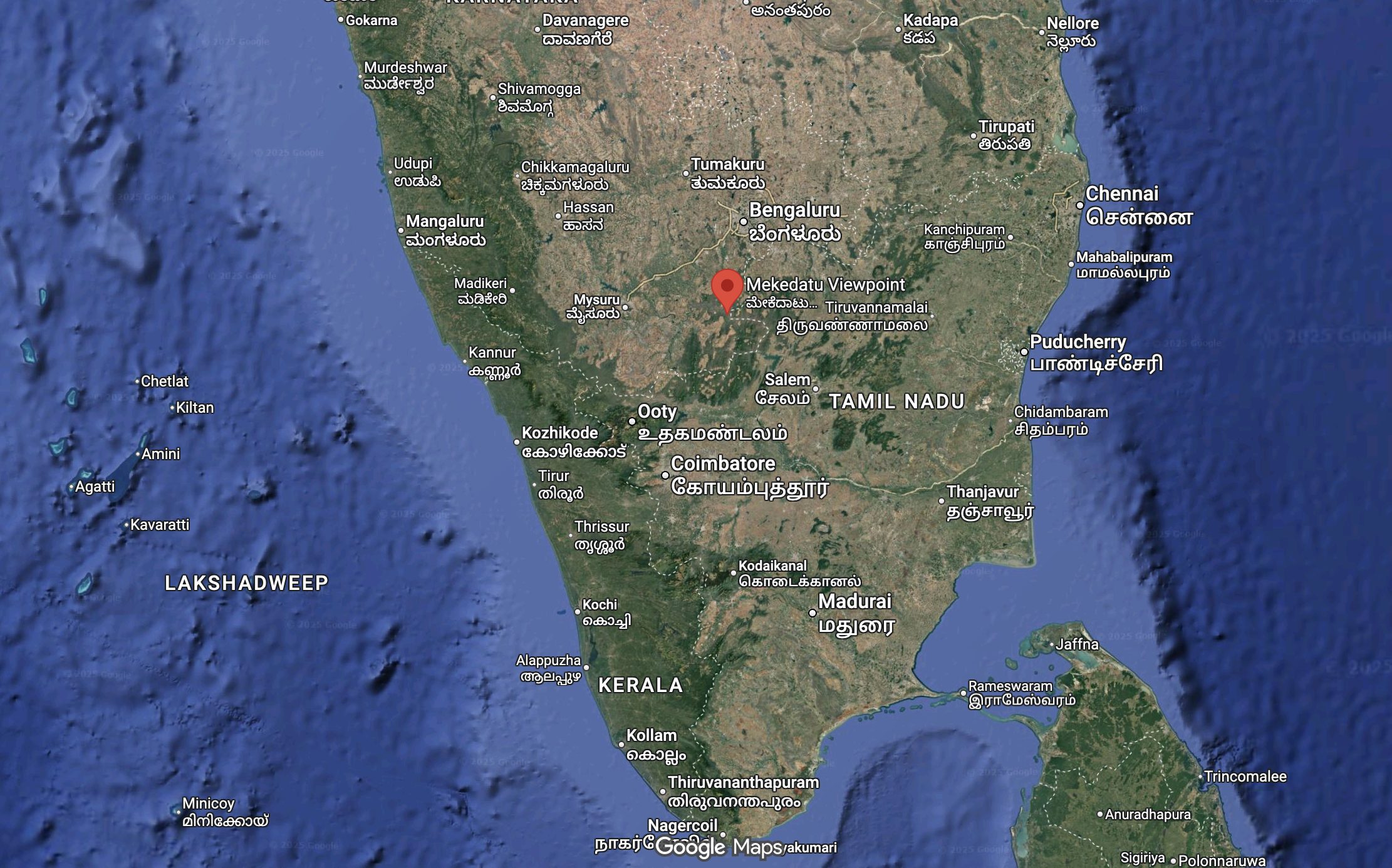
    • Karnataka has decided to submit a revised Detailed Project Report (DPR) for the Mekedatu balancing reservoir across the Cauvery River.
    • The Supreme Court termed Tamil Nadu’s challenge as “premature”, enabling the CWMA and CWC to examine the project.

    Location & River

    • Mekedatu is located in Ramanagara district, ~100 km from Bengaluru.
    • The project is proposed on the inter-State Cauvery river.
    • Karnataka = upper riparian; Tamil Nadu = lower riparian.

    Why Does Karnataka Want It?

    • Bengaluru water demand:
      • Present: 2,600 MLD
      • Supply: 2,100 MLD → shortage of 500 MLD
    • Population to reach 20 million in 6 years → demand may rise to 4,000 MLD.
    • Shivakumar argues Mekedatu will ensure regulated release to Tamil Nadu, even in poor rainfall years.

    Why Is Tamil Nadu Opposed?

    • Trust deficit due to the history of Cauvery disputes.
    • Concern: Karnataka may store more water and release it selectively.
    • TN argues the project violates the 2018 SC judgment and Cauvery Tribunal’s final award.

    Centre’s Position

    • 2019: Karnataka submitted DPR → CWC → CWMA.
    • MoEFCC (2019): Sought an “amicable solution” due to inter-State dispute.
    • 2024 (Feb): CWMA referred DPR back to CWC after deliberations.
    • Now: DPR to be examined afresh; CWMA/CWC can facilitate dialogue.

    Constitutional & Legal Angle

    • Inter-State Rivers: Union List Entry 56 – regulation and development of inter-State rivers.
    • River Boards Act, 1956 (not effectively implemented).
    • Cauvery Water Disputes Tribunal (CWDT): Award notified in February 2013.
    • Supreme Court Judgment (2018):
      • Reallocated shares;
      • Gave 4.75 TMC drinking water allocation to Bengaluru.


    Recently, linking of which of the following rivers was undertaken? (2016)

    (a) Cauvery and Tungabhadra 

    (b) Godavari and Krishna 

    (c) Mahanadi and Son 

    (d) Narmada and Tapti

  • RBI Notifications

    [27th November 2025] Hindu OpED Limited room: On the Indian rupee

    PYQ Relevance

    [UPSC 2018] How would the recent phenomena of protectionism and currency manipulations in world trade affect macroeconomic stability of India?

    Linkage: Protectionism and currency pressures weaken the rupee, widen the CAD, and raise imported inflation. This directly affects India’s macroeconomic stability, as seen in the article’s emphasis on dollar strength and RBI’s limited room.

    Mentor’s Comment

    India’s recent 7% rupee depreciation has revived an uncomfortable truth, monetary tools alone cannot stabilise the currency when structural vulnerabilities remain unaddressed. The article examined today highlights India’s long-standing dependence on oil imports, the RBI’s limited manoeuvring room, and why external pressures have outweighed domestic macro stability. For UPSC aspirants, this topic offers rich intersections across macroeconomics, external sector management, energy security, inflation dynamics, trade policy, and structural reforms.

    Introduction

    India’s rupee has depreciated about 7% between late November 2024 and now, sliding from ₹83.4/$ to nearly ₹89.2/$. Despite large-scale RBI intervention, including selling nearly $50 billion in forex, the currency continues to weaken amid external pressures. The episode mirrors the 2018 phase of global dollar strength and U.S. interest rate hikes, exposing India’s long-standing vulnerability: heavy dependence on expensive crude oil imports. With crude forming more than one-fifth of total imports, and India transitioning away from Russian supplies, monetary stabilisation alone is insufficient.

    Why in the News 

    The rupee has dropped nearly 7% to ₹89.2 per dollar, even after the RBI sold $50 billion to stabilise it. This mirrors the 2018 downturn when global dollar strength and U.S. rate hikes triggered similar pressure. What makes this episode striking is the contradiction: inflation is low (0.25% in Oct 2025), forex reserves remain comfortable at $693 billion, yet the rupee continues to slide. The rapid fall highlights India’s structural weakness, oil import dependence, which raises the current-account deficit and inflation risks despite favourable domestic conditions.

    What Explains the Recent Rupee Depreciation?

    1. Global Dollar Strength: Mirrors 2018 trends where strong U.S. interest rates and trade tensions pressured emerging market currencies.
    2. Widening Current Account Deficit: Rising bullion imports as a hedge in uncertain times widened the CAD.
    3. Exporter Competitiveness Issues: Exporters struggled to maintain margins due to high U.S. tariffs, increasing pressure on the INR.

    Why Are RBI Tools Proving Insufficient?

    1. Floating-but-Managed Regime: RBI can only “smoothen volatility”, not fix the rate.
    2. Forex Market Intervention: RBI sold nearly $50 billion, yet depreciation continued, signalling strong external headwinds.
    3. Liquidity Supports via Swaps:
      1. 2018: First longer-term currency swap as a systemic liquidity check.
      2. 2019: Completed a $5 billion three-year swap.
      3. Feb 2025: Conducted a $10 billion buy-sell auction to infuse long-term rupee liquidity.

    Why Is This Rupee Slide Concerning Despite Low Inflation?

    1. Exceptionally Low CPI Inflation: Headline CPI at 0.25% (Oct 2025), well below RBI’s 2-6% band, should normally support the rupee.
    2. Transition-Induced Cost Pressures: Shift from cheaper Russian crude toward costlier U.S. imports exerts upward pressure.
    3. Risk of Imported Inflation: Higher oil prices raise logistics, manufacturing, and CPI components.

    Why Must India Reduce Dependence on Oil Imports?

    1. Over One-Fifth of FY25 Imports Are Crude: A single commodity dominates the import basket, creating vulnerability.
    2. Rupee-Oil Linkage: Any crude price rise automatically weakens the rupee by widening CAD.
    3. Limited Monetary Space: Rupee stabilisation cannot rely solely on forex intervention or interest rate changes.

    What Structural Reforms Are Needed?

    1. Faster Transport Electrification: Must be treated as a strategic imperative, not a long-term aspiration.
    2. Holistic Trade Policy: India’s bilateral deals (Japan, UAE, ASEAN) have tilted the trade balance against it, offering limited diversification of energy trade routes.
    3. Reduced Oil Intensity in GDP: Accelerating renewable capacity, green hydrogen, and domestic energy alternatives.

    Conclusion

    The current rupee slide highlights a deeper structural flaw: India’s dependence on oil imports exposes it to global price volatility and external shocks. With RBI intervention offering only temporary relief, sustainable currency stability requires reducing crude dependence, reforming trade strategy, and accelerating energy transition. Unless structural measures address the root vulnerability, India cannot insulate the rupee from future external pressures.

  • G20 : Economic Cooperation ahead

    Return of the G2: Trump, China and the mirage of a bipolar world

    INTRODUCTION

    The reference to a “G2” resurfaced when US President Trump publicly announced that “The G2 will be convening shortly,” signalling a possible US-China duopoly in global decision-making. The Trump-Xi Busan meeting revived an older idea first articulated by economist C. Fred Bergsten in 2005. However, despite dramatic optics, the summit lacked institutional depth and showcased a transactional, spectacle-driven diplomatic approach. The renewed G2 talk generated global unease, especially among allies and emerging economies, given the risks of marginalisation and disruption of regional balances in the Indo-Pacific.

    WHY IN THE NEWS 

    Trump’s declaration that the US and China would meet as a “G2” revived the idea of a US-China duopoly at a moment of systemic geopolitical flux. The Busan meeting created significant global debate because, despite high-profile optics and selective trade concessions (soybean purchases, tariff relief, fentanyl cooperation), there were no structural commitments or conflict-management mechanisms. The sudden bypassing of broader multilateral processes unsettled allies and intensified concerns of shrinking strategic space for countries like India, especially amid shifting economic projections that show a long-term move toward a tripolar world rather than a bipolar G2.

    G2 Revival: What Does the Busan Moment Signify?

    1. Performative Diplomacy: Trump framed the meeting as a G2 encounter, signalling a claim to architect a new global order driven by bilateral spectacle rather than institutional negotiations.
    2. Transactional Bargains: China resumed US soybean imports; the US eased select tariffs and technology restrictions; cooperation was pledged on fentanyl precursors and rare-earth supply chains.
    3. Absence of Structure: No new institutions, principles, or crisis-management mechanisms were created, making the meeting high on optics but low on structural impact.

    China’s Strategic Calculus Behind the G2 Optics

    1. Symbolic Parity: Great-power parity aligns with China’s long-term ambition for equal status with the US, enhancing its global narrative.
    2. Economic Off-ramp: Tariff relief and tech flexibility help stabilise China’s domestic economy amid headwinds such as overcapacity and slowing productivity.
    3. Controlled Ambiguity: China avoided endorsing a formal duopoly, using strategic ambiguity to retain flexibility while cultivating Global South networks.

    Structural Fragility of a US-China Duopoly

    1. Deep Bilateral Contradictions: Taiwan, technology dependence, and military rivalry create structural barriers to stable cooperation.
    2. Lack of Institutional Grounding: No formal mechanisms exist to manage disputes or align long-term strategic objectives.
    3. Risk to Alliances: The G2 idea signals that alliances are expendable, undermining confidence among US partners in Asia and Europe.

    Global Implications of the G2 Notion

    1. Destabilising for Allies: Japan, South Korea, Australia fear erosion of regional balance if the US deprioritises alliances.
    2. Institutional Marginalisation: G2 bypasses multilateral institutions, weakening global governance frameworks.
    3. Supply-Chain Reconfiguration: A US-China bilateral alignment could redirect global supply chains, adversely affecting Indo-Pacific economies.

    Why the G2 Idea Alarms India

    1. Risk of Strategic Sidelining: A bilateral shortcut between the US and China may marginalise India despite its rising economic weight.
    2. Supply Chain Dependence: India’s dependence on Chinese imports (electronics, APIs, critical minerals) becomes more vulnerable.
    3. Quad Uncertainty: A possible thaw between the US and China creates ambiguity around the Indo-Pacific strategy and Quad commitments.
    4. Manufacturing Disadvantage: Reduced US pressure on China undercuts India’s ambition to position itself as a credible alternative manufacturing hub.

    Long-term Trend: A Tripolar, Not Bipolar, World

    1. Economic Projections: PwC and Goldman Sachs project by 2050 a tripolar structure: China (1st), India (2nd), US (3rd) in PPP terms.
    2. Limits on China’s Rise: Demographic contraction and industrial overcapacity constrain China’s long-term dominance.
    3. India’s Structural Advantages: Young workforce, expanding market, tech ambitions support India’s rise as a major economic pole.
    4. US Position: Innovation strength persists, but political polarisation and ageing demographics slow future growth.

    CONCLUSION

    Trump’s revival of the G2 is more spectacle than substance, reflecting a transitional phase rather than a durable geopolitical redesign. Structural contradictions, alliance concerns, and global economic shifts limit the feasibility of a US-China duopoly. The long-term trajectory points to broader multipolarity, with India emerging as a critical pole in global politics. The Busan moment thus underscores the instability of great-power bargains that bypass wider global participation and institutional frameworks.

    PYQ Relevance

    [UPSC 2021] “The USA is facing an existential threat in the form of China, that is much more challenging than the erstwhile Soviet Union.” Explain.

    Linkage: The PYQ statement directly connects to intensifying US-China strategic rivalry, which shapes the global balance of power, technology races, and Indo-Pacific security dynamics. It is highly relevant for GS-II (IR) as it influences India’s strategic space, Quad calculus, supply-chain realignments, and the emerging multipolar world order.

  • Climate Change Impact on India and World – International Reports, Key Observations, etc.

    How Delhi’s air quality monitors work and why their readings can falter

    INTRODUCTION

    Delhi operates a dense network of 40 Continuous Ambient Air Quality Monitoring Stations (CAAQMS) that serve as automated laboratories tracking eight key pollutants. These stations guide the daily AQI, enable pollution-control measures and emergency responses, and form the backbone of environmental governance. However, recent judicial scrutiny and scientific studies highlight significant gaps in equipment suitability, calibration, meteorological sensitivity, and data reliability, creating a critical governance challenge.

    WHY IN THE NEWS 

    The Supreme Court recently demanded clarity on whether Delhi’s air-quality monitoring equipment is suited to city-specific pollution and meteorological conditions. This scrutiny is significant because Delhi heavily depends on AQI data for health advisories and regulatory actions, yet multiple stations fail to generate adequate, validated data on many days. A CAG report and recent scientific studies show systematic errors, including 30-40% overestimation of PM2.5 under high humidity, raising concerns about the credibility of pollution data itself.

    How Delhi’s Air Quality Monitoring System Functions

    1. CAAQMS Network: Operates 40 automated, temperature-controlled stations functioning as compact laboratories across different city zones.
    2. Regulatory Basis: Functions under CPCB’s 2012 guidelines, which define calibration steps, quality-control procedures, and uniform monitoring standards.
    3. Pollutant Coverage: Tracks eight pollutants, PM2.5, PM10, NO₂, SO₂, CO, O₃, NH₃, Pb, ensuring representative citywide measurement.
    4. Instrumentation Setup: Stations contain racks of analysers, pumps, and data loggers, with sampling inlets mounted on masts above the roof to capture ambient air.

    How Pollutants Are Measured Inside the Stations

    1. Beta Attenuation Monitors (BAM): Use beta ray attenuation to measure particulate concentration by assessing signal weakening through collected particulate mass.
    2. Gaseous Pollutant Monitors: Use optical and chemiluminescent methods, depending on pollutant type, to detect gas behaviour under specific wavelengths.
    3. National Standards: Measurements follow NAAQS procedures, including “gravimetric, wet-chemical and automatic instrument-based techniques” ensuring comparable data across India.

    Factors That Distort or Corrupt Monitoring Readings

    1. Equipment Performance: AQI depends on validated data; CPCB requires 16 hours of reliable data per day for at least three pollutants, including PM2.5 or PM10.
    2. System Failures: Calibration lapses, power outages, and extreme weather cause routine station downtime.
    3. CAG Findings: A report tabled in Parliament revealed several stations failed to generate adequate, valid, real-time data, especially for pollutants like lead, Ammonia, etc.
    4. Location-Based Distortions: Stations placed near buildings, trees, or exhaust vents risk skewed results due to poor dispersion.
    5. Meteorological Disruptions: Severe weather disrupts data transmission, reducing continuity in real-time updates.

    What Scientific Studies Reveal About Measurement Accuracy

    1. Variability with Humidity: CSIR–NPL’s 2021 analysis showed PM2.5 measurements vary with RH, particle mass loading, boundary layer height, and ventilation effects.
    2. Overestimation Threshold: When RH > 60%, BAM monitors exhibited 30-40% overestimation of PM2.5 because water absorption artificially increases mass signal attenuation.
    3. High-Pollution Episodes: Dust-heavy conditions can cause a factor up to 5 underestimation, as heavy loading disturbs air beam pathways.
    4. USEPA Insights: Notes that “high filter loading can lead to flow perturbations,” and “excessive particulate accumulation” disrupts instrument stability.
    5. Recommended Corrections: Scientists recommend site-specific correction factors, which were shown to reduce overestimation errors from 46% to under 2%.

    Why This Issue Matters for Governance and Public Health

    1. Policy Dependence on Data: Emergency actions (GRAP stages, school closures, construction bans) rely on AQI accuracy.
    2. Public Health Impact: Misreporting distorts exposure assessments, health risk communication, and hospital preparedness.
    3. Environmental Justice: Vulnerable groups (elderly, children, labourers) depend on reliable alerts for safe mobility.
    4. Accountability: Data reliability determines CPCB, DPCC and state-level regulatory performance.

    CONCLUSION

    Delhi’s air pollution management depends critically on trustworthy, scientifically robust, and well-maintained monitoring infrastructure. While the city has one of India’s largest automatic monitoring networks, recent judicial scrutiny and scientific findings reveal persistent calibration errors, equipment inconsistencies, and meteorological vulnerabilities. Ensuring accuracy requires standardised maintenance, site-specific correction factors, stronger institutional oversight, and resilient instrumentation capable of performing reliably under Delhi’s complex pollution environment.

    PYQ Relevance

    [UPSC 2021] Describe the key points of the revised Global Air Quality Guidelines (AQGs) released by WHO (2021). How are these different from the 2005 update? What changes in India’s National Clean Air Programme are required to achieve these standards?

    Linkage: The question links directly to GS-III themes of environmental pollution, health-based standards, and regulatory capacity. It is highly relevant as India’s NCAP, NAAQS and AQI-based governance must realign with WHO’s stricter 2021 guidelines to ensure credible monitoring, policy effectiveness, and public health protection.

Join the Community

Join us across Social Media platforms.