💥UPSC 2026, 2027, 2028 UAP Mentorship (March Batch) + Access XFactor Notes & Microthemes PDF

Archives: News

  • Mother and Child Health – Immunization Program, BPBB, PMJSY, PMMSY, etc.

    Is India really ahead of the West in terms of reproductive rights?

    Context

    Contrary to the grandstanding since the overturning of the landmark Roe V. Wade judgment, the truth is that India is not ahead of the West in terms of reproductive rights.

    Medical Termination of Pregnancy (MTP) Act

    • Abortion in India has been a legal right under various circumstances for the last 50 years with the introduction of Medical Termination of Pregnancy (MTP) Act in 1971.
    • The Act was amended in 2003 to enable women’s accessibility to safe and legal abortion services.
    • Abortion is covered 100% by the government’s public national health insurance funds, Ayushman Bharat and Employees’ State Insurance with the package rate for surgical abortion.

    The idea of terminating your pregnancy cannot originate by choice and is purely circumstantial. There are four situations under which a legal abortion is performed:

    1. If continuation of the pregnancy poses any risks to the life of the mother or mental health
    2. If the foetus has any severe abnormalities
    3. If pregnancy occurred as a result of failure of contraception (but this is only applicable to married women)
    4. If pregnancy is a result of sexual assault or rape

    These are the key changes that the Medical Termination of Pregnancy (Amendment) Act, 2021, has brought in:

    • The gestation limit for abortions has been raised from the earlier ceiling of 20 weeks to 24 weeks, but only for special categories of pregnant women such as rape or incest survivors. But this termination would need the approval of two registered doctors.
    • All pregnancies up to 20 weeks require one doctor’s approval. The earlier law, the MTP Act 1971, required one doctor’s approval for pregnancies upto 12 weeks and two doctors’ for pregnancies between 12 and 20 weeks.
    • Women can now terminate unwanted pregnancies caused by contraceptive failure, regardless of their marital status. Earlier the law specified that only a “married woman and her husband” could do this.
    • There is also no upper gestation limit for abortion in case of foetal disability if so decided by a medical board of specialist doctors, which state governments and union territories’ administrations would set up.

    Issues with legal provisions related to reproductive rights in India

    • Lack of rights based approach: The Medical Termination of Pregnancy (Amendment) Act 2021 is far from ideal and has been criticised for not taking a rights-based approach.
    • According to the Act, a pregnancy can be terminated on the following conditions: Grave danger to the physical/mental health of the pregnant woman; foetal abnormalities; rape/coercion; and contraceptive failure.
    • A woman’s right to choose to end the pregnancy even in the first few weeks is still not recognised in India.
    • Systemic barriers: It doesn’t give the pregnant person complete autonomy in ending the pregnancy, instead making them go through various systemic barriers.
    • The final decision falls not on the pregnant person, but on registered medical practitioners (RMP).
    • The constitution of a medical board, a requirement by the Act, is considered a barrier by the World Health Organisation.
    • Excludes transgenders and non-binary persons: Additionally, it uses the word “woman”, thereby leaving out pregnant transgender and non-binary persons who are biologically capable of bearing children.
    • It forces them to identify themselves in the gender-binary ignoring their gender identity.

    Social factors and lack of medical facilities

    • It is important to look through an intersectional lens, and factor in class and caste privilege.
    • Abortion facilities in private medical centres are expensive, available only for those who have the resources.
    • Lack of access: Not all public health centres, especially in rural India, provide abortion facilities.
    • Most unmarried women end up resorting to unsafe abortions in illegal clinics or at home.
    • According to the latest National Family Health Survey 2019-2021, 27 percent of the abortions were carried out by the woman herself at home.
    • According to United Nations’ Population Fund’s (UNFPA) State of the World Population Report 2022, around 8 women die each day in India due to unsafe abortions.
    • It also found that between 2007-2011, 67 percent of the abortions were classified as unsafe.
    • Unsafe abortion was one of the top three causes of maternal deaths.

    Discussion on reproductive rights in India are incomplete without mentioning surrogacy.

    Issues in the Surrogacy (Regulation) Act 2021

    • While well-intentioned, leaves much to be desired.
    • The plethora of regulations one must undergo is antithetical to a dignified standard of living.
    • Exclusionary in nature: Experts have pointed out that the Act is exclusionary in nature, disregards privacy, and also exploits women’s reproductive labour.
    • Only a heterosexual married couple (with certain preconditions) can be the intending parents.
    • It strips the reproductive autonomy of LGBTQ+ persons and single, divorced, and widowed intending parents. It can be seen as a violation to the fundamental right to equality.
    • Experts also believe that regulations, rather than a complete ban on commercial surrogacy, should have been the way forward.
    • Violates right to privacy: The Act requires the intending couple to declare their infertility and reveals the identity of the surrogate, both of which violate the right to privacy.
    • The landmark Puttaswamy judgment discusses bodily privacy – the right over one’s body and “the freedom of being able to prevent others from violating one’s body.”
    • The current reproductive rights regulatory framework falls short in guaranteeing bodily privacy.

    Conclusion

    The situation in India is far from perfect and we should take this moment to reflect and learn from progressive practices around the world. We should strive for inclusivity, complete bodily autonomy, and reproductive equity.

    UPSC 2023 countdown has begun! Get your personal guidance plan now! (Click here)

  • Road and Highway Safety – National Road Safety Policy, Good Samaritans, etc.

    Bharat New Car Assessment Programme (BNCAP)

    The government is planning a new car assessment programme (NCAP) in India, to be called the Bharat NCAP or BNCAP.

    What is Bharat NCAP?

    • Bharat NCAP is a new car safety assessment programme which proposes a mechanism of awarding ‘Star Ratings’ to automobiles based upon their performance in crash tests.
    • BNCAP standard is aligned with global benchmarks and it is beyond minimum regulatory requirements.
    • The proposed Bharat NCAP assessment will allocate Star Ratings from 1 to 5 stars.
    • The testing of vehicles for this programme will be carried out at testing agencies, with the necessary infrastructure.

    Its implementation

    • BNCAP will be rolled out from April 1, 2023.
    • It will be applicable on type-approved motor vehicles of category M1 with gross vehicle weight less than 3.5 tonnes, manufactured or imported in the country.
    • M1 category motor vehicles are used for the carriage of passengers, comprising eight seats, in addition to driver’s seat.

    Significance of Bharat NCAP

    • BNCAP rating will provide consumers an indication of the level of protection offered to occupants by evaluating the vehicle in the areas of:
    1. Adult occupant protection
    2. Child occupant protection
    3. Safety assist technologies
    • It will serve as a consumer-centric platform, allowing customers to opt for safer cars based upon their Star-Ratings.
    • It will also promote a healthy competition among original equipment manufacturers (OEMs) in India to manufacture safer vehicles.
    • It will ensure structural and passenger safety in cars, along with increasing the export-worthiness of Indian automobiles.
    • It will prove to be a critical instrument in making our automobile industry Aatmanirbhar.

    Why does India need to crash-test vehicles?

    • Indian vehicles have historically not been crash-tested in the country.
    • Despite being home to only 1% of the world’s vehicles, India shoulders 11% of the global road crash fatality burden.

    What about existing testing standards?

    • India’s Central Motor Vehicle Rules (CMVR) mandate a safety and performance assessment, including a basic conformity crash test by agencies like the ARAI and ICAT when vehicles go in for type approvals.
    • However, this does not involve a crash test rating.
    • Many international automakers have been found to sell products in India which score much lower on safety and structural performance parameters.
    • This is done to reduce costs in the price-sensitive Indian market.
    • However, safety is moving up nowadays the list of key purchase criteria in India as well.

    How will a homegrown NCAP help?

    • Global NCAP (GNCAP) crash tests for many best-selling Indian vehicles have dismal ratings, many of them rated zero in a bias.
    • The government hopes that by facilitating these tests by in-house agencies, more automakers will voluntarily undergo safety assessments and build vehicles that hold up to global standards.

    How will it compare with GNCAP?

    • The government wants the two tests to be in congruence with each other.
    • It intends to design the BNCAP to resemble the GNCAP, the global gold standard, as closely as possible, including the speed for crash testing at 64kmph.
    • Central Motor Vehicle rules encompass standards with respect to pedestrian protection and seat belt reminders among others and will be retained in the testing under the BNCAP.
    • The government hopes the move will increase the export-worthiness of Indian automobiles.


    UPSC 2023 countdown has begun! Get your personal guidance plan now! (Click here)

  • Road and Highway Safety – National Road Safety Policy, Good Samaritans, etc.

    Road Safety in India

    The United Nations is holding a high-level meeting on Global Road Safety on June 30 and July 1, 2022 to review the progress and challenges.

    Road Accidents in India: A lookover

    • In spite of several years of policymaking to improve road safety, India remains among the worst-performing countries in this area.
    • Total 1,47,913 lives lost to road traffic accidents in 2017 as per Ministry of Road Transport and Highways statistics.
    • The National Crime Records Bureau (NCRB) figure for the same year is 1,50,093 road accident deaths.

    Why in news?

    • The persistently high annual death toll brings into question the country’s ability to meet Sustainable Development Goal (SDG) 3.6.
    • This aims to halve the fatalities and injuries from road traffic accidents by 2030.

    Lancet’s findings on road safety

    • A new analytical series on road safety worldwide, published by The Lancet, proposes that India and other countries could cut accident-related deaths by 25 to 40%.
    • This is based on evidence that preventive interventions produce good outcomes when applied to four well-known risk factors:
    1. High speed
    2. Driving under the influence of alcohol
    3. Not using proper helmets
    4. Not wearing seat-belts and not using child restraints

    Issues highlighted in developing countries

    • The structural problems linked to unplanned motorisation and urbanisation remain.
    • In India, speedy highway construction takes place without reconciling fast and slow-moving traffic.
    • There is a rampant presence of ramshackle vehicles, wrong-side driving, absence of adequate traffic police forces etc.

    Why are there so many road fatalities in India alone?

    • Weak enforcement of traffic laws: People hardly oblige to traffic rules and find easier to bribe policemen rather than paying hefty challans.
    • Speeding issue: More accidents on the highways have been attributed to higher vehicle speeds and higher volume of traffic on these roads.
    • Engineering bottlenecks: Issues such as gaps in the median on the national highways, untreated intersections, and missing crash barriers are some of the biggest engineering issues.
    • Behavioural issue: Driver violations such as wrong-side driving, wrong lane usage by heavy vehicles, and mass violation of traffic lights, intoxication are the biggest behavioural issues.
    • Lack of Golden hour treatment: Lack of rapid trauma care on highways leads to such high fatalities.

    Various steps taken by India

    • India amended Motor Vehicles Act in 2019, but its implementation by State governments is not uniform or complete.
    • A National Road Safety Board was constituted under the Act, with advisory powers to reform safety.
    • The World Bank has approved a $250 million loan to support for India State Support Programme for Road Safety.

    Issues with implementation

    • The focus of State governments, however, remains conventional, with an emphasis on user behaviour (drivers and other road users), education and uneven enforcement.
    • Low emphasis is placed on structural change such as raising engineering standards for roads, signages, signals, training for scientific accident investigation, raising policing skills and fixing responsibility on government departments for design, creation and maintenance of road infrastructure.

    What can be done to cut death and injury rates?

    • The ambitious amendments to the Motor Vehicles Act in 2019 (MV Act) have not yielded significant results.
    • Major interventions in India, first suggested by the Sundar Committee (2007) and ordered by the Supreme Court in Rajasekaran vs Union of India have not made a dent in the problem.

    Key findings of Sundar Committee

    • The Sundar Committee pointed out that India lacked a technically competent investigation arm that could determine the cause of accidents.
    • There is little clarity on whether the States have formed such units to aid traffic investigation, or whether the insurance industry has pressed for these to accurately determine fault.
    • In the absence of scientific investigation, perceptions usually guide the fixing of liability.

    Solutions provided by the Lancet

    • The Lancet calculated that 17% of road traffic injury-related deaths could be avoided if trauma care facilities improved.
    • This is significant as several accidents take place in rural areas on highways, and victims are taken to poorly-equipped district hospitals or medical college hospitals.
    • While positive user behaviour — slower travel, wearing of helmets, seat belts and so on — could save thousands of lives.
    • In the short term, slowing down traffic, particularly near habitations, segregating slower vehicles, enforcing seat belt and helmet use and cracking down on drunken drivers could produce measurable gains.

    Imbibing road safety: Way forward

    • Road safety education
    • Better road design, maintenance and warning signage
    • Crackdown on driving under influence of alcohol and drugs
    • Strict enforcement of traffic rules
    • Encouraging better road behaviour
    • Ensuring road worthiness of a vehicle
    • Better first aid and paramedic care

    Do you know?

    The ‘golden hour’ has been defined as ‘the time period lasting one hour following a traumatic injury during which there is the highest likelihood of preventing death by providing prompt medical care.


    UPSC 2023 countdown has begun! Get your personal guidance plan now! (Click here)
  • Terrorism and Challenges Related To It

    UAPA necessary to act against terrorists: Minister

    A Union Minister has said it was necessary to have certain laws like the Unlawful Activities Prevention Act (UAPA) so that action could be taken against terrorists and those who “behead other people”.

    Unlawful (Activities) Prevention Act (UAPA)

    • The UAPA is aimed at effective prevention of unlawful activities associations in India.
    • Its main objective was to make powers available for dealing with activities directed against the integrity and sovereignty of India
    • It is an upgrade on the Terrorist and Disruptive Activities (Prevention) Act TADA, which was allowed to lapse in 1995 and the Prevention of Terrorism Act (POTA) was repealed in 2004.
    • It was originally passed in 1967 under the then Congress government led by former Prime Minister Indira Gandhi.
    • Till 2004, “unlawful” activities referred to actions related to secession and cession of territory. Following the 2004 amendment, “terrorist act” was added to the list of offences.

    Major feature: Designation of Terrorists

    • The Centre had amended UAPA, 1967, in August 2019 to include the provision of designating an individual as a terrorist.
    • Before this amendment, only organisations could be designated as terrorist outfits.
    • Section 15 of the UAPA defines a “terrorist act” as any act committed with intent to threaten or likely to threaten the unity, integrity, security, economic security, or sovereignty of India or with intent to strike terror or likely to strike terror in the people or any section of the people in India or in any foreign country.
    • The original Act dealt with “unlawful” acts related to secession; anti-terror provisions were introduced in 2004.

    Who makes such designation?

    • The UAPA (after 2019 amendment)seeks to empower the central government to designate an individual a “terrorist” if they are found committing, preparing for, promoting, or involved in an act of terror.
    • A similar provision already exists in Part 4 and 6 of the legislation for organizations that can be designated as a “terrorist organisations”.

    How individuals are declared terrorists?

    • The central government may designate an individual as a terrorist through a notification in the official gazette, and add his name to the schedule supplemented to the UAPA Bill.
    • The government is not required to give an individual an opportunity to be heard before such a designation.
    • At present, in line with the legal presumption of an individual being innocent until proven guilty, an individual who is convicted in a terror case is legally referred to as a terrorist.
    • While those suspected of being involved in terrorist activities are referred to as terror accused.

    What happens when an individual is declared a terrorist?

    • The designation of an individual as a global terrorist by the United Nations is associated with sanctions including travel bans, freezing of assets and an embargo against procuring arms.
    • The UAPA, however, does not provide any such detail.
    • It also does not require the filing of cases or arresting individuals while designating them as terrorists.

    Removing the terrorist tag

    • The UAPA gives the central government the power to remove a name from the schedule when an individual makes an application.
    • The procedure for such an application and the process of decision-making will is decided by the central government.
    • If an application filed by an individual declared a terrorist is rejected by the government, the UAPA gives him the right to seek a review within one month after the application is rejected.
    • The central government will set up the review committee consisting of a chairperson (a retired or sitting judge of a High Court) and three other members.
    • The review committee is empowered to order the government to delete the name of the individual from the schedule that lists “terrorists” if it considers the order to be flawed.
    • Apart from these two avenues, the individual can also move the courts to challenge the government’s order.


    UPSC 2023 countdown has begun! Get your personal guidance plan now! (Click here)

  • ISRO Missions and Discoveries

    What is PSLV Orbital Experimental Module (POEM)?

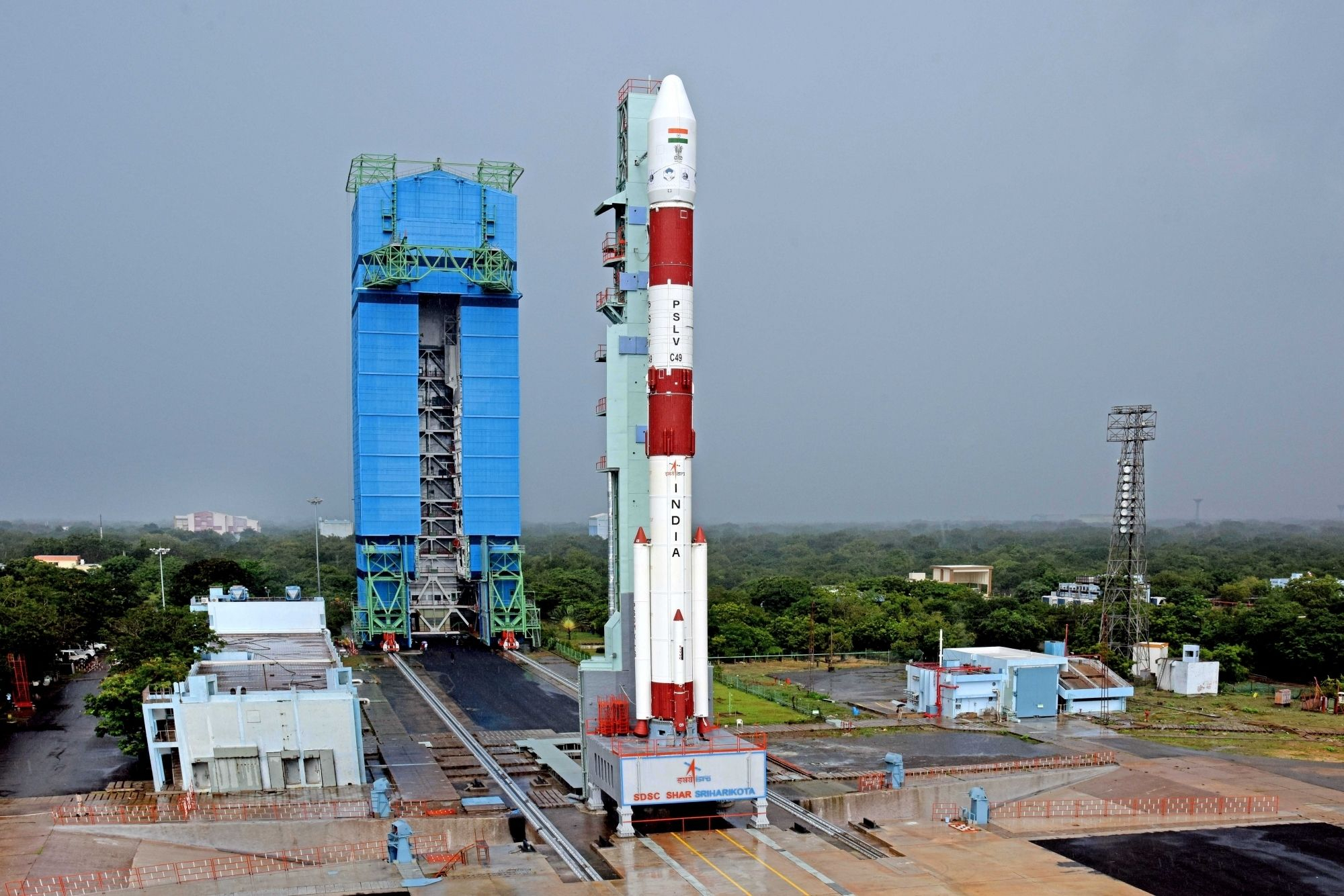
    The ISRO has launched three Singaporean satellites in precise orbit through the PSLV Orbital Experimental Module or ‘POEM’.

    What is POEM?

    • The POEM is a platform that will help perform in-orbit experiments using the final, and otherwise discarded, stage of ISRO’s workhorse rocket, the Polar Satellite Launch Vehicle (PSLV).
    • The PSLV is a four-stage rocket where the first three spent stages fall back into the ocean, and the final stage (PS4) — after launching the satellite into orbit — ends up as space junk.
    • However, in PSLV-C53 mission, the spent final stage will be utilised as a “stabilised platform” to perform experiments.
    • POEM is carrying six payloads, including two from Indian space start-ups Digantara and Dhruva Space.

    Features of POEM

    • POEM has a dedicated Navigation Guidance and Control (NGC) system for attitude stabilisation, which stands for controlling the orientation of any aerospace vehicle within permitted limits.
    • The NGC will act as the platform’s brain to stabilize it with specified accuracy.
    • POEM will derive its power from solar panels mounted around the PS4 tank, and a Li-Ion battery.
    • It will navigate using four sun sensors, a magnetometer, gyros & NavIC.
    • It carries dedicated control thrusters using Helium gas storage. It is enabled with a telecomm and feature.

    Has ISRO repurposed and used PS4 rocket junk earlier?

    • The Indian space agency first demonstrated the capability of using PSLV-C44 as an orbital platform in 2019.
    • It injected Microsat-R and Kalamsat-V2 satellites into their designated orbits.
    • The fourth stage in that mission was kept alive as an orbital platform for space-based experiments.
    • While in that mission, the fourth stage had Li-Ion batteries, solar panels are an addition this time.
    • The latest repurposing and upgrade of the fourth stage of the PSLV rocket involves the stabilization of the orbital platform.


    UPSC 2023 countdown has begun! Get your personal guidance plan now! (Click here)
  • Russian Invasion of Ukraine: Global Implications

    Russia withdraws from Snake Island

    Russian forces abandoned the strategic Black Sea outpost of Snake Island, in a major victory for Ukraine that could loosen the grip of Russia’s blockade on Ukrainian ports.

    I will give you a trick to remember countries bordering Black Sea. It is ‘GURRBUT’.

    Now please take effort to write those names of countries here.

    Snake Island

    • Zmiinyi Island, also known as Snake or Serpent Island, is a small piece of rock less than 700 metres from end to end, that has been described as being “X-shaped”.
    • It is located 35 km from the coast in the Black Sea, to the east of the mouth of the Danube and roughly southwest of the port city of Odessa.
    • The island, which has been known since ancient times and is marked on the map by the tiny village of Bile that is located on it, belongs to Ukraine.

    Why does Russia seek to control the Black Sea?

    • Domination of the Black Sea region is a geostrategic imperative for Moscow.
    • The famed water body is bound by Ukraine to the north and northwest, Russia and Georgia to the east, Turkey to the south, and Bulgaria and Romania to the west.
    • It links to the Sea of Marmara through the Bosporus and then to the Aegean through the Dardanelles.
    • It has traditionally been Russia’s warm water gateway to Europe.
    • For Russia, the Black Sea is both a stepping stone to the Mediterranean as well as a strategic buffer between NATO and itself.
    • Cutting Ukrainian access to the Black Sea will reduce it to a landlocked country and deal a crippling blow to its trade logistics.


    UPSC 2023 countdown has begun! Get your personal guidance plan now! (Click here)
  • Anti Defection Law

    The anti-defection law — political facts, legal fiction

    Context

    The ongoing political crisis in Maharashtra, and many others before it, are grim reminders of what the Tenth Schedule can and cannot do.

    About 10th Schedule

    • In 1985 the Tenth Schedule, popularly known as the anti-defection law, was added to the Constitution.
    • But its enactment was catalyzed by the political instability after the general elections of 1967.
    • This was the time when multiple state governments were toppled after MLAs changed their political loyalties.
    • The purpose of the 1985 Constitution Amendment was to bring stability to governments by deterring MPs and MLAs from changing their political parties on whose ticket they were elected.
    • The penalty for shifting political loyalties is the loss of parliamentary membership and a bar on becoming a minister.

    Provisions of the 10th Schedule

    • Instances of floor crossing have long gone unchecked and unpunished.
    • In part, this can be attributed to the exemption given to mergers between political parties which facilitate bulk defections.
    • Disqualification provision: The second paragraph of the Tenth Schedule allows for disqualification of an elected member of a House if such member belonging to any political party has voluntarily given up membership of their party, or if they vote in the House against such party’s whip.
    • Exceptions: Paragraph 4 creates an exception for mergers between political parties by introducing three crucial concepts — that of the “original political party”, the “legislature party”, and “deemed merger”.
    • What is the legislature party?  It means the group consisting of all elected members of a House for the time being belonging to one political party.
    • Original political party: An “original political party” means the political party to which a member belongs (this can refer to the party generally, outside of the House).
    • Paragraph 4 does not clarify whether the original political party refers to the party at the national level or the regional level.

    How Paragraph 4 of the 10th Schedule deals with mergers?

    • Paragraph 4 is spread across two sub-paragraphs, a conjoint reading of which suggests that a merger can take place only when an original party merges with another political party, and at least two-thirds of the members of the legislature party have agreed to this merger.
    • It is only when these two conditions are satisfied that a group of elected members can claim exemption from disqualification on grounds of merger.
    • The second sub-paragraph (of Paragraph 4) says that a party shall be “deemed” to have merged with another party if, and only if, not less than two-thirds of the members of the legislature party concerned have agreed to such merger.
    • However, in most cases there is no factual merger of original political parties at the national (or even regional) level.
    • Creation of legal fiction: Paragraph 4 seems to be creating a “legal fiction” so as to indicate that a merger of two-third members of a legislature party can be deemed to be a merger of political parties, even if there is no actual merger of the original political party with another party.
    • In statutory interpretation, “deemed” has an established understanding.
    • The word “deemed” may be used in a law to create a legal fiction, and give an artificial construction to a word or a phrase used in a statute.
    • In other cases, it may be used to include what is obvious or what is uncertain.
    • In either of these cases, the intention of the legislature in creating a deeming provision is paramount.

    Merger exception and issues with it

    • The merger exception was created to save instances of the principled coming together of political groups from disqualification under the anti-defection law, and to strike a compromise between the right of dissent and party discipline. 
    • In the absence of mergers of original political parties, the deeming fiction could, presumably, be used as a means to allow mergers of legislature parties.
    • Encouraging defection: Reading Paragraph 4 in this manner would empower legislature parties to solely merge with another party, and thus, practically ease defection.

    What if sub-paragraphs are read conjunctively?

    • For a valid merger then, an original political party has to first merge with another political party, and then two-thirds of the legislature party must support that merger.
    • Given the politics of current times, stark differences in parties’ respective ideologies, and deep-seated historical rivalries, it is unimaginable how a merger between major national or regional parties would materialise.

    Way forward

    • Remove Paragraph 4: In a situation where either reading of Paragraph 4 in its current form yields undesirable results, its deletion from the Tenth Schedule is a possible way forward.
    • The Law Commission in 1999 and the National Commission to Review the Working of the Constitution (NCRWC) in 2002 made similar recommendations.
    • Revisiting by Supreme Court: Till that happens, an academic revisiting of the Tenth Schedule by the Supreme Court, so as to guide future use of the anti-defection law, is timely and should happen soon.

    Conclusion

    Neither of these two interpretations of Paragraph 4complements the ‘mischief’ that the Tenth Schedule was expected to remedy — that of curbing unprincipled defections. Amending it is the need of the hour.

    UPSC 2023 countdown has begun! Get your personal guidance plan now! (Click here)

  • Foreign Policy Watch: India-Middle East

    The significance of PM’s visit to the UAE

    Context

    Prime Minister Narendra Modi’s visit to the UAE on June 28 was his fourth, having visited the country earlier in August 2015, in February 2018 and again in August 2019.

    Why do the Gulf and UAE matters to India?

    • The UAE has given crucial support to India in the Islamic world, first by inviting our late External Affairs Minister Sushma Swaraj as a guest of honour at an OIC foreign ministers meeting in Abu Dhabi.
    • The UAE stood with us on Jammu and Kashmir following the abrogation of Article 370.
    • The Gulf is our third-largest trading partner.
    • The Gulf region is our principal source of hydrocarbons.
    • It is also a major source of foreign investment.
    • The region is home to some 8 million Indians who send in over $50 billion annually in remittances.

    Deepening bilateral ties

    • CEPA: In a virtual summit with Sheikh Mohamed in February 2022, both sides signed a Comprehensive Economic Partnership Agreement (CEPA).
    • CEPA is a significant milestone that was negotiated and finalised in just 88 days and promises to increase bilateral trade from $60 billion to $ 100 billion in five years.
    •  It is expected to help Indian exports in areas ranging from gems and jewellery and textiles to footwear and pharmaceuticals, apart from enhanced access for Indian service providers to 11 specific sectors.
    • Vision statement: An ambitious, forward-looking Joint Vision Statement titled, “Advancing the India and UAE Comprehensive Strategic Partnership: New Frontiers, New Milestones” was also issued.
    • The Dubai-based DP World and India’s National Skills Development Council signed an agreement to set up a Skill India Centre in Varanasi to train local youth in logistics, port operations and allied areas so that they can pursue overseas employment.

    New avenues for multilateral cooperation

    • The rapid normalisation of ties between the UAE and Israel following the Abraham Accords of August 2020 has also opened new avenues of trilateral and multilateral cooperation.
    • Technology, capital and scale: Some Israeli tech companies are already establishing a base in Dubai and seeking to marry niche technologies with Emirati capital and Indian scale. 
    • 2I2U: The US has announced that President Joe Biden’s forthcoming visit to West Asia will see a virtual summit of what it calls the 2I2U, a new grouping that brings together India, Israel, the US and UAE.

    Conclusion

    The UAE today is India’s closest partner in the Arab world. Both countries need to expand the areas of cooperation and deepen their engagement.

    UPSC 2023 countdown has begun! Get your personal guidance plan now! (Click here)


    Back2Basics: Abraham Accords

    • The Israel–UAE normalization agreement is officially called the Abraham Accords Peace Agreement.
    • It was initially agreed to in a joint statement by the United States, Israel and the United Arab Emirates (UAE) on August 13, 2020.
    • The UAE thus became the third Arab country, after Egypt in 1979 and Jordan in 1994, to agree to formally normalize its relationship with Israel as well as the first Persian Gulf country to do so.
    • Concurrently, Israel agreed to suspend plans for annexing parts of the West Bank.
    • The agreement normalized what had long been informal but robust foreign relations between the two countries.
  • Parliament – Sessions, Procedures, Motions, Committees etc

    How is Vice-President of India elected?

    The Election Commission has announced that the election to the post of the Vice-President (VP) will be held on August 6, as M. Venkaiah Naidu’s term was coming to an end on August 10.

    About Vice President of India

    • The VP is the deputy to the head of state of the Republic of India, the President of India.
    • His/her office is the second-highest constitutional office after the president and ranks second in the order of precedence and first in the line of succession to the presidency.
    • The vice president is also a member of the Parliament as the ex officio Chairman of the Rajya Sabha.

    Qualifications

    • As in the case of the president, to be qualified to be elected as vice president, a person must:
    1. Be a citizen of India
    2. Be at least 35 years of age
    3. Not hold any office of profit
    • Unlike in the case of the president, where a person must be qualified for election as a member of the Lok Sabha, the vice president must be qualified for election as a member of the Rajya Sabha.
    • This difference is because the vice president is to act as the ex officio Chairman of the Rajya Sabha.

    Roles and responsibilities

    • When a bill is introduced in the Rajya Sabha, the vice president decides whether it is a money bill or not.
    • If he is of the opinion that a bill introduced in the Rajya Sabha is a money bill, he shall refer it to the Speaker of the Lok Sabha.
    • The vice president also acts as the chancellor of the central universities of India.

    Election procedure

    • Article 66 of the Constitution of India states the manner of election of the vice president.
    • The vice president is elected indirectly by members of an electoral college consisting of the members of both Houses of Parliament and NOT the members of state legislative assembly.
    • The election is held as per the system of proportional representation using single transferable votes.
    • The voting is conducted by Election Commission of India via secret ballot.
    • The Electoral College for the poll will comprise 233 Rajya Sabha members, 12 nominated Rajya Sabha members and 543 Lok Sabha members.
    • The Lok Sabha Secretary-General would be appointed the Returning Officer.
    • Political parties CANNOT issue any whip to their MPs in the matter of voting in the Vice-Presidential election.

    Removal

    • The Constitution states that the vice president can be removed by a resolution of the Rajya Sabha passed by an Effective majority (majority of all the then members) and agreed by the Lok Sabha with a simple majority( Article 67(b)).
    • But no such resolution may be moved unless at least 14 days’ notice in advance has been given.
    • Notably, the Constitution does not list grounds for removal.
    • No Vice President has ever faced removal or the deputy chairman in the Rajya Sabha cannot be challenged in any court of law per Article 122.


    UPSC 2023 countdown has begun! Get your personal guidance plan now! (Click here)

  • Banking Sector Reforms

    What are Primary Agricultural Credit Society (PACS)?

    The Cabinet Committee on Economic Affairs (CCEA) has approved a proposal to digitise around 63,000 primary agricultural credit societies (PACS).

    What are the Primary Agricultural Credit Societies (PACS)?

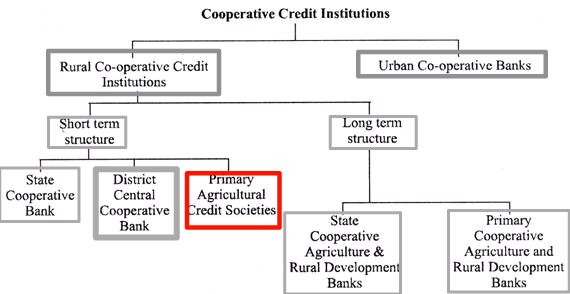
    • PACS is a basic unit and smallest co-operative credit institutions in India.
    • In 1904 the first Primary Agricultural Credit Society (PACS) was established.
    • It works on the grassroots level (gram panchayat and village level).
    • PACS is the final link between the ultimate borrowers, i.e., rural people, on the one hand, and the higher agencies, i.e., Central cooperative bank, state cooperative bank, and Reserve Bank of India, on the other.

    Who regulates PACS?

    • PACS are registered under the Co-operative Societies Act and also regulated by the RBI.
    • They are governed by the “Banking regulation Act-1949” and Banking Laws (Co-operative societies) Act 1965.

    Various objectives of PACS

    1. To raise capital for the purpose of making loans and supporting members’ essential activities.
    2. To collect deposits from members with the goal of improving their savings habit.
    3. To supply agricultural inputs and services to members at reasonable prices,
    4. To arrange for the supply and development of improved breeds of livestock for members.
    5. To make all necessary arrangements for improving irrigation on land owned by members.
    6. To encourage various income-generating activities through supply of necessary inputs and services.

    Functions of PACS

    • As registered cooperative societies, PACS have been providing credit and other services to their members.
    • PACS typically offer the following services to their members:
    1. Input facilities in the form of a monetary or in-kind component
    2. Agriculture implements for hire
    3. Storage space

    Who can form PACS?

    • A primary agricultural credit society can be formed by a group of ten or more people from a village. The society’s management is overseen by an elected body.
    • The membership fee is low enough that even the poorest agriculturist can join.
    • Members of the society have unlimited liability, which means that each member assumes full responsibility for the society’s entire loss in the event of its failure.

    What capitalizes PACS?

    • The primary credit societies’ working capital is derived from their own funds, deposits, borrowings, and other sources.
    • Share capital, membership fees, and reserve funds are all part of the company’s own funds.
    • Deposits are made by both members and non-members.
    • Borrowings are primarily made from central cooperative banks.

    Why need digitization?

    • PACS account for 41 % (3.01 Cr. farmers) of the KCC loans given by all entities in the country and 95 % of these KCC loans (2.95 Cr. farmers) through PACS are to the small and marginal farmers.
    • The other two tiers viz. State Cooperative Banks (StCBs) and District Central Cooperative Banks (DCCBs) have already been automated by the NABARD and brought on Common Banking Software (CBS).
    • Majority of PACS have so far been not computerized and still functioning manually resulting in inefficiency and trust deficit.

    Significance of digitization

    • Computerization of PACS will increase their transparency, reliability and efficiency, and will also facilitate the accounting of multipurpose PACS.
    • Along with this, it will also help PACS to become a nodal centre for providing services such as direct benefit transfer (DBT), Interest subvention scheme (ISS), crop insurance scheme (PMFBY), and inputs like fertilizers and seeds.

    Try this PYQ from CSP 1999:

    Q.The farmers are provided credit from a number of sources for their short and long term needs. The main sources of credit to the farmers include-

    (a) the Primary Agricultural Cooperative Societies, commercial banks, RRBs and private money lenders

    (b) the NABARD, RBI, commercial banks and private money lenders

    (c) the District Central Cooperative Banks (DCCB), the lead banks, IRDP and JRY

    (d) the Large Scale Multi-purpose Adivasis Programme, DCCB, IFFCO and commercial banks


    Post your answers here.


    UPSC 2023 countdown has begun! Get your personal guidance plan now! (Click here)

Join the Community

Join us across Social Media platforms.