💥UPSC 2026, 2027, 2028 UAP Mentorship (March Batch) + Access XFactor Notes & Microthemes PDF

Archives: News

  • Indian Army Updates

    Plans underway on Creation of Integrated Battle Groups

    The Indian Army is in advanced stages of putting together Integrated Battle Groups (IBGs) by reconfiguring its combat formations.

    What are IBGs?

    • IBGs are brigade-sized, agile, self-sufficient combat formations, which can swiftly launch strikes against an adversary in case of hostilities.
    • Each IBG would be tailor-made based on Threat, Terrain and Task and resources will be allotted based on the three Ts.
    • They need to be light so they will be low on logistics and they will be able to mobilise within 12-48 hrs based on the location.
    • An IBG operating in a desert needs to be constituted differently from an IBG operating in the mountains.
    • The key corps of the Army is likely to be reorganized into 1-3 IBGs.

    Objective of IBG

    • Holistic integration to enhance the operational and functional efficiency, optimize budget expenditure, facilitate force modernization and address aspirations

    Structure of the IBG

    • While a command is the largest static formation of the Army spread across defined geography, a corps is the largest mobile formation.
    • Typically each corps has about three brigades.
    • The idea is to reorganise them into IBGs which are brigade-sized units but have all the essential elements like infantry, armoured, artillery and air defence embedded together based on the three Ts.
    • The IBGs will also be defensive and offensive. While the offensive IBGs would quickly mobilise and make a thrust into enemy territory for strikes, defensive IBGs would hold ground at vulnerable points or where enemy action is expected.

    Why need IBGs?

    • After the terrorist attack on the Parliament, the Indian military undertook massive mobilization but the Army’s formations which deep inside took weeks to mobilise losing the element of surprise.
    • Following this, the Army formulated a proactive doctrine known as ‘Cold Start’ to launch swift offensive but its existence was consistently denied in the past.
    • Its existence was acknowledged for the first time by (Late) Gen Rawat in January 2017.


    UPSC 2023 countdown has begun! Get your personal guidance plan now! (Click here)

  • Wildlife Conservation Efforts

    Highlights of State of the World’s Birds Report

    The State of the World’s Birds, an annual review of environmental resources has revealed that the population of 48% of the 10,994 surviving species of birds is declining.

    State of the World’s Birds

    • The report is published by the Manchester Metropolitan University.
    • It gives an overview of the changes in the knowledge of avian biodiversity and the extent to which it is imperilled.
    • The study draws from BirdLife International’s latest assessment of all birds for the International Union for Conservation of Nature’s Red List.

    What are the key findings of the study?

    • The study found that 5,245 or about 48% of the existing bird species worldwide are known or suspected to be undergoing population declines.
    • While 4,295 or 39% of the species have stable trends, about 7% or 778 species have increasing population trends.
    • It shows 1,481 or 13.5% species are currently threatened with global extinction.

    Where the birds are threatened the most?

    • The more threatened bird species (86.4%) are found in tropical than in temperate latitudes (31.7%).
    • Such hotspots are concentrated in the tropical Andes, southeast Brazil, eastern Himalayas, eastern Madagascar, and Southeast Asian islands.

    What is the importance of birds to ecosystems and culture?

    • Birds contribute toward many ecosystem services that either directly or indirectly benefit humanity.
    • These include provisioning, regulating, cultural, and supporting services.
    • The functional role of birds within ecosystems as pollinators, seed-dispersers, ecosystem engineers, scavengers and predators.
    • They not only facilitate accrual and maintenance of biodiversity but also support human endeavours such as sustainable agriculture via pest control besides aiding other animals to multiply.
    • For instance, coral reef fish productivity has been shown to increase as seabird colonies recovered following rat eradication in the Chagos archipelago.
    • Wild birds and products derived from them are also economically important as food (meat, eggs).

    What are the threats contributing to avian biodiversity loss?

    • The study lists eight factors, topped by land cover and land-use change.
    • The continued growth of human populations and of per capita rates of consumption lead directly to conversion and degradation of primary natural habitats.
    • Deforestation has been driven by afforestation with plantations (often of non-native species) plus land abandonment in parts of the global North, with net loss in the tropics.
    • The other factors are habitat fragmentation, degradation, hunting and trapping.

    Try this PYQ from CSP 2020:

    Q.With reference to India’s Biodiversity, Ceylon frogmouth, Coppersmith barbet, Gray-chinned minivet and White-throated redstart are

    (a) Birds

    (b) Primates

    (c) Reptiles

    (d) Amphibians


    Post your answers here.


    UPSC 2023 countdown has begun! Get your personal guidance plan now! (Click here)

  • Modern Indian History-Events and Personalities

    Places in news: Martand Sun Temple

    After Prayers held at the ruins of the eighth-century Martand Sun Temple in Jammu and Kashmir’s Anantnag is deemed to be a violation of the Archaeological Survey of India (ASI) rules.

    About Martand Sun Temple

    • The Martand Sun Temple is a Hindu temple located near the city of Anantnag in the Kashmir Valley.
    • It dates back to the eighth century AD and was dedicated to Surya, the chief solar deity.
    • The temple was destroyed by Sikandar Shah Miri in a bid to undertake mass conversion and execution of Hindus in the valley.
    • According to Kalhana, the Temple was commissioned by Lalitaditya Muktapida in the eighth century AD.
    • The temple is built on top of a plateau from where one can view whole of the Kashmir Valley.
    • From the ruins the visible architecture seems to be blended with the Gandharan, Gupta and Chinese forms of architecture.

    Why in news now?

    • According to ASI, prayers are allowed at its protected sites only if they were “functioning places of worship” at the time it took charge of them.
    • No religious rituals can be conducted at non-living monuments where there has been no continuity of worship when it became an ASI-protected site.

    What are the living/non-living monument?

    • If some activity, like any kind of worship, has been going on for years in the structure, then it is taken over as a living monument.
    • But where no activity has taken place, say an abandoned building, then it is declared a dead monument.
    • The latter is difficult to restore because it is generally covered by a lot of overgrowths.
    • The best-known example of a living ASI monument is the Taj Mahal in Agra, where namaz is held every Friday.


    UPSC 2023 countdown has begun! Get your personal guidance plan now! (Click here)

  • Nobel and other Prizes

    Pulitzer Prize and the Indians who have won it

    A team of four Indian photographers have won the 2022 Pulitzer Prize for feature photography for their coverage of the Covid-19 crisis in India.

    About Pulitzer Prize

    • The Pulitzer is the most coveted award for journalists from across the world.
    • It is announced by America’s Columbia University and bestowed on the recommendation of the Pulitzer Prize Board.

    Who was Joseph Pulitzer, after whom the awards are named?

    • Born to a wealthy family of Magyar-Jewish origin in Mako, Hungary, in 1847, Joseph Pulitzer had a stint in the military before he built a reputation of being a “tireless journalist”.
    • In the late 1860s he joined the German-language daily newspaper Westliche Post, and by 25 he had become a publisher.
    • In 1884, he was elected to the US House of Representatives from New York’s ninth district as a Democrat.

    When were the Pulitzer awards instituted?

    • The awards were instituted according to Pulitzer’s will, framed in 1904, where he made a provision for the establishment of the Pulitzer Prizes as an incentive to excellence.
    • Pulitzer specified solely four awards in journalism, four in letters and drama, one for education, and five travelling scholarships.
    • After his death in 1911, the first Pulitzer Prizes were awarded in June, 1917.

    Indians who have won the Pulitzer

    • A member of the Ghadar Party in America, journalist Gobind Behari Lal, was the first from India to win the Prize in 1937.
    • In 2000, London-born Indian-American writer Jhumpa Lahiri won the Pulitzer Prize in Fiction for her debut short story collection Interpreter of Maladies.
    • In 2003, Mumbai-born Geeta Anand was part of the team at Wall Street Journal that won a Pulitzer Prize for reporting on corporate corruption.
    • In 2016, Indian-American Sanghamitra Kalita, then managing editor of Los Angeles Times, won the Pulitzer.

    The list goes on to date ….


    UPSC 2023 countdown has begun! Get your personal guidance plan now! (Click here)

  • Literacy and delivery of services, not religion, influences fertility

    Context

    The National Family Health Survey (NFHS) 5 report that was awaited for nearly six months is finally out. And it provides a heartening outlook.

    About NHFS

    • Started in 1992-93, it has culminated in the fifth round 2019-21.
    • The NFHS is a large, multi-round survey that, inter alia, provides information on fertility, infant and child mortality, the practice of family planning, reproductive health, nutrition, anaemia, quality and utilisation of health and family planning services.
    • The surveys provide essential data needed by the Ministry of Health and Family Welfare and other agencies for policy and programme purposes.
    • The Ministry assigned the nodal responsibility for the task to the International Institute for Population Sciences(IIPS), Mumbai.
    • Several international agencies are involved in providing technical and financial assistance, mainly USAID, DFID, UNICEF, and UNFPA.

    Replacement rate achieved

    • Replacement rate achieved: The report shows that India has finally achieved the replacement rate of 2.1TFR (Total Fertility Rate is the total number of children a woman will bear in her lifetime).
    • In fact, it has gone below the mark to 2.0.
    • There are, of course, large interstate variations.
    • The lagging states are UP, Bihar, Jharkhand, Manipur and Meghalaya.
    • Significantly, there were four states which were keeping the figures poor, namely, Bihar, Madhya Pradesh, Rajasthan and Uttar Pradesh.
    • Two states, Rajasthan and MP, have struggled to get out of this group, while Jharkhand and the two northeastern states have replaced them.
    • UP and Bihar because of their sheer size are pulling down the national average.
    • Rajasthan and MP have reached the TFR of 2, which shows the success of their efforts.

    Influencing factors

    • It is not religion as commonly propounded but literacy, especially of girls, income and delivery of family planning, and health services.
    • 1] Delivery of services: The figures would have been even better if all those who have been made aware of the benefits of family planning had received the services they desire.
    • Making people informed of the need and methods of family planning and motivating them to adopt family planning is difficult enough.
    •  Having achieved the difficult task, we are not able to provide the services communities need — the “unmet need” — which is still very high at 9.4 per cent.
    • If we focus on this issue in a mission mode, the family planning performance will dramatically improve.
    • 2] Male attitude towards family planning: They tend to put the onus for birth control on women.
    • As many as 35 per cent men believe that using contraceptives is a woman’s responsibility. They ignore the fact that male vasectomy is a much simpler procedure than female tubectomy.
    • 3] Acceptance of family planning:  Muslim acceptance of family planning has continued through the five surveys spread over three decades at a rate faster than all other communities.
    • Though birth control practice among Muslims is still the least – 47.4 per cent (up from 45 per cent in NFHS-4).
    • Other communities — for example, Hindus — are not far behind with 58 per cent (up from 56 per cent).
    • This means that 42 per cent of the 80 per cent of the population are not practising family planning.
    • Education:  Women who have not attended school have 2.8 TFR as against 1.8 for those who have completed class XII.
    • Poverty: Similar gap of figure one is visible in the context of poverty with the poorest segment having higher TFR than the richest.

    Conclusion

    The time has come to leave politics behind and work together for achieving the goals set by National Population Policy 2000. Instead of misleading narratives, we need to address the real determinants of fertility behaviour – literacy, income generation and improvement of health and family planning services.

    UPSC 2023 countdown has begun! Get your personal guidance plan now! (Click here)
  • Foreign Policy Watch: India-United States

    Ukraine conflict won’t make the US abandon Indo-Pacific strategy

    Context

    When Russian President Vladimir Putin invaded Ukraine at the end of February, it was widely asked in Delhi if the new challenges of European security would result in a dilution of the US’s strategic commitment to the Indo-Pacific.

    The Challenge of balancing China and Russia

    • There are two parts of Biden’s answer to the Europe-Asia or Russia-China question.
    • 1] Engagement with allies: When Russian President Vladimir Putin invaded Ukraine at the end of February, it was widely asked in Delhi if the new challenges of European security would result in a dilution of the US’s strategic commitment to the Indo-Pacific.
    • Biden came to power with a determination to make the Indo-Pacific the highest priority of his foreign policy.
    • He is not going to abandon that objective in dealing with the unexpected crisis in Europe.
    • The assumption that China was the principal challenge and Russia was less of a threat led Biden to meet Putin in June 2021 to offer prospects for a reasonable relationship with Russia in order to devote US energies to the China question.
    • But Putin’s calculations led him towards a deeper strategic partnership with China
    • But America’s assessment of the Russian and Chinese threats has not changed since the war began in Ukraine.
    • The idea that China will gain from the Russian war in Ukraine has also proven to be false.
    • Expectations that Russia’s triumph in Ukraine will be followed by a successful Chinese invasion of Taiwan have begun to dissipate.
    • Meanwhile, China is reeling under self-inflicted problems, most notably Xi Jinping’s zero Covid strategy and his crackdown on the large internet companies.
    • The costly foreign policy of China: Beijing’s prospects look a lot less rosy than before as the Chinese economy slows down and XI’s foreign policy turns out to be quite costly for China.
    • The muscular approach of China: In Asia, China’s muscular approach to disputes with its neighbours has helped strengthen the US alliances, create new forums like the AUKUS, elevate old ones like the Quad to a higher level, and consolidate the strategic conception of the Indo-Pacific.
    • 2] Coordination with allies and partners: Biden’s lemma to the theorem on a two-front strategy is a simple one — that Washington will address the simultaneous challenge in Europe and Asia not by acting alone but in coordination with allies and partners. 
    • The idea was rooted in the recognition that alliances and partnerships are America’s greatest strength and most important advantage over Russia and China.

    Engagement with Asia

    • ASEAN: This week’s summit level engagement with the ASEAN comes after sustained high-level US outreach to the region since the Biden Administration took charge.
    • In northeast Asia, the election of Yoon Suk-yeol as the president of South Korea has tilted the scales slightly towards the US in the continuing battle for influence between Beijing and Washington.
    • The US is also actively trying to reduce the differences between its two treaty allies in the region — South Korea and Japan.
    • Asia’s new coalitions are a response to Xi Jinping’s unilateralism and his quest for regional hegemony.
    • India’s enthusiasm for the Quad can be directly correlated to Xi’s military coercion on the disputed frontiers with India.

    Implications for India

    • The two parts of Biden’s answer to the Europe-Asia or Russia-China question have worked well for India.
    • Tolerance toward India-Russia engagement: For one, the US’s emphasis on the long-term challenge from China has meant that Washington is willing to tolerate India’s engagement with Russia.
    • Time for the diversification of defence ties: This gives India time to diversify its defence ties that have been heavily dependent on Russia.
    • The US emphasis on partnerships rather than unilateralism in dealing with the China challenge means India’s agency in the region can only grow.
    • The Quad allows Delhi to carve out a larger role for itself in Asia and the Indo-Pacific in collaboration with the US and its allies.

    Conclusion

    Contrary to the initial assumptions that America is on the retreat and the West is in disarray, it is Moscow and Beijing that are on the defensive as the war in Ukraine completes three months.

    UPSC 2023 countdown has begun! Get your personal guidance plan now! (Click here)

  • The importance of emigrants

    Context

    Though the phenomenon of Indian-origin executives becoming CEOs of top U.S. companies highlights the contribution of Indian talent to the U.S. economy, the role played by Indian semi-skilled migrant labour in the global economy is no less illustrious.

    Destinations of Indian migrants

    • Every year, about 2.5 million workers from India move to different parts of the world on employment visas
    • According to the Ministry of External Affairs, there are over 13.4 million Non-Resident Indians worldwide.
    • Significance of GCC: Of them, 64% live in the Gulf Cooperation Council (GCC) countries, the highest being in the United Arab Emirates, followed by Saudi Arabia and Kuwait.
    • Low and semi-skilled: Almost 90% of the Indian migrants who live in GCC countries are low- and semi-skilled workers, as per International Labour Organization estimates.
    • Other significant countries of destination for overseas Indians are the U.S., the U.K., Australia, and Canada.

    Contribution of Indian migrant workers

    • Besides being involved in nation-building of their destination countries, Indian migrant workers also contribute to the homeland’s socioeconomic development, through remittances.
    • Highest remittances: As per a World Bank Group report (2021), annual remittances transferred to India are estimated to be $87 billion, which is the highest in the world, followed by China ($53 billion), Mexico ($53 billion), the Philippines ($36 billion) and Egypt ($33 billion).
    •  Remittances in India have been substantially higher than even Foreign Direct Investment (FDI) and the flow of remittances is much less fluctuating than that of FDI.
    • Still, remittances’ contribution of 3% in GDP is lower than that of countries such as Nepal (24.8%), Pakistan (12.6%), Sri Lanka (8.3%) and Bangladesh (6.5%), as per a World Bank report.
    • Hedging strategy against risk: Besides being a win-win situation for both the destination and source country, labour migration is good hedging strategy against unsystematic risks for any economy.

    Way forward

    • Human capital should also be invested in a diversified portfolio akin to financial capital.
    • Promoting labour mobility: For many countries, remittances have been of vital support to the domestic economy after a shock.
    • India should aim to increase remittances to say 10% of GDP.
    • The Philippines’ model of promoting labour mobility be replicated in India.
    • Reducing the costs involved: Both the cost of recruitment of such workers and the cost of sending remittances back to India should come down.
    • Skilling: The number of migrant workers need not go up for remittances to increase if the skill sets of workers are improved.
    • Regulation of recruitment agencies: Recruitment agencies should also be regulated by leveraging information technology for ensuring protection of migrant workers leaving India.
    • An integrated grievance redressal portal, ‘Madad’, was launched by the government in 2015.
    • Proposed Emigration Bill 2021: The Indian government proposed a new Emigration Bill in 2021 which aims to integrate emigration management and streamline the welfare of emigrant workers.
    • It proposes to modify the system of Emigration Check Required (ECR) category of workers applying for migration to 18 notified countries.
    • The Bill makes it mandatory for all categories of workers to register before departure to any country in the world to ensure better protection for them, support and safeguard in case of vulnerabilities.
    • The proposed Emigration Management Authority will be the overarching authority to provide policy guidance.
    • Besides workers, as about 0.5 million students also migrate for education from India every year, the Bill also covers such students.

    Conclusion

    For India to increase remittances’ contribution to GDP, it doesn’t need more workers but skilling and better management.

    UPSC 2023 countdown has begun! Get your personal guidance plan now! (Click here)

  • Innovations in Sciences, IT, Computers, Robotics and Nanotechnology

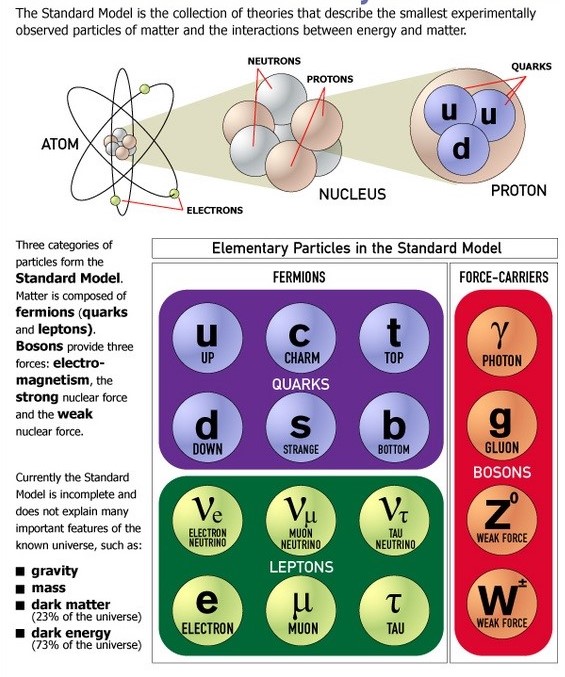
    What are W Bosons?

    Researchers from Collider Detector at Fermilab (CDF) Collaboration, in the US, announced that they have made a precise measurement of the mass of the so-called W boson.

    Do you know?

    There are four fundamental forces at work in the universe: the strong force, the weak force, the electromagnetic force, and the gravitational force. They work over different ranges and have different strengths. Gravity is the weakest but it has an infinite range.

    What is W Boson?

    • Discovered in 1983, the W boson is a fundamental particle.
    • Together with the Z boson, it is responsible for the weak force, one of four fundamental forces that govern the behaviour of matter in our universe.
    • Particles of matter interact by exchanging these bosons, but only over short distances.
    • The W boson, which is electrically charged, changes the very make up of particles.
    • It switches protons into neutrons, and vice versa, through the weak force, triggering nuclear fusion and letting stars burn.
    • This burning also creates heavier elements and, when a star dies, those elements are tossed into space as the building blocks for planets and even people.

    Debate over W Boson’s mass

    • The weak force was combined with the electromagnetic force in theories of a unified electroweak force in the 1960s, in an effort to make the basic physics mathematically consistent.
    • But the theory called for the force-carrying particles to be massless, even though scientists knew the theoretical W boson had to be heavy to account for its short range.
    • Theorists accounted for the mass of the W by introducing another unseen mechanism. This became known as the Higgs mechanism, which calls for the existence of a Higgs boson.

    What is the news?

    • CDF researchers stated that this precisely determined value did not match with what was expected from estimates using the standard model of particle physics.
    • This result is highly significant because this implies the incompleteness of the standard model description.
    • This is a major claim, since the standard model has been extraordinarily successful in the past decades.
    • Hence, physicists are looking for corroboration from other, independent, future experiments.

    What is the standard model of elementary particle physics?

    • The Standard Model of particle physics is the theory describing three of the four known fundamental forces (the electromagnetic, weak, and strong interactions while omitting gravity) in the universe and classifying all known elementary particles.
    • It is a theoretical construct in physics that describes particles of matter and their interaction. Ex. Proton, Neutron, Electron etc.
    • It is a description that views the elementary particles of the world as being connected by mathematical symmetries, just as an object and its mirror image are connected by a bilateral (left–right) symmetry.
    • These are mathematical groups generated by continuous transformations from, say, one particle to another.
    • According to this model there are a finite number of fundamental particles which are represented by the characteristic “eigen” states of these groups.
    • The particles predicted by the model, such as the Z boson, have been seen in experiments and the last to be discovered, in 2012, was the Higgs boson which gives mass to the heavy particles.

    Why is the standard model believed to be incomplete?

    • The standard model is thought to be incomplete because it gives a unified picture of only three of the four fundamental forces of nature and it totally omits gravity.
    • So, in the grand plan of unifying all forces so that a single equation would describe all the interactions of matter, the standard model was found to be lacking.
    • The other gap in the standard model is that it does not include a description of dark matter particles.

    How are the symmetries related to particles?

    • The symmetries of the standard model are known as gauge symmetries, as they are generated by “gauge transformations” which are a set of continuous transformations (like rotation is a continuous transformation).
    • Each symmetry is associated with a gauge boson.
    • For example, the gauge boson associated with electromagnetic interactions is the photon.
    • The gauge bosons associated with weak interactions are the W and Z bosons. There are two W bosons — W+ and W-.

    What is the main result of the recent experiment?

    • The recent experiment at CDF, which measured the mass of the W boson as 80,433.5 +/- 9.4 Mev/c2, which is approximately 80 times the mass of a hydrogen nucleus.
    • This came out to be more than what is expected from the standard model.
    • The expected value using the standard model is 80,357 +/- 8 MeV/c2 .
    • Thus, the W boson mass itself is a prediction of the standard model.
    • Therefore, any discrepancy in its mass means a lack of self-consistency in the standard model.

    What is the discrepancy they obtained?

    • The mass discrepancy of the W boson needs to be checked and confirmed to the same accuracy by other facilities, for example, the Large Hadron Collider (LHC).

    Where do we stand now in terms of new physics?

    • New physics is in the air, and experiments have been gearing up for some years now to detect new particles.
    • With its high-precision determination of the W boson mass, the CDF has struck at the heart of the standard model.
    • So it is a significant finding and if this is confirmed by the LHC and other experiments, it will throw open the field for ideas and experiment.


    UPSC 2023 countdown has begun! Get your personal guidance plan now! (Click here)

  • Parliament – Sessions, Procedures, Motions, Committees etc

    Union Finance Ministry revises MPLADS Rules

    At a time when MPs have been asking for an increase in the MP Local Area Development Scheme (MPLADS) fund, the Union Finance Ministry has ordered revised rules, under which the interest that the fund accrues will be deposited in the Consolidated Fund of India.

    What is the MPLAD scheme?

    • The Members of Parliament Local Area Development Scheme (MPLADS) is a program first launched during the Narasimha Rao Government in 1993.
    • It was aimed towards providing funds for developmental works recommended by individual MPs.

    Funds available

    • The MPs then were entitled to recommend works to the tune of Rs 1 crore annually between 1994-95 and 1997-98, after which the annual entitlement was enhanced to Rs 2 crore.
    • The UPA government in 2011-12 raised the annual entitlement to Rs 5 crore per MP.

    Implementation

    • To implement their plans in an area, MPs have to recommend them to the District Authority of the respective Nodal District.
    • The District Authorities then identify Implementing Agencies that execute the projects.
    • The respective District Authority is supposed to oversee the implementation and has to submit monthly reports, audit reports, and work completion reports to the Nodal District Authority.
    • The MPLADS funds can be merged with other schemes such as MGNREGA and Khelo India.

    Guidelines for MPLADS implementation

    • The document ‘Guidelines on MPLADS’ was published by the Ministry of Statistics and Programme Implementation in June 2016 in this regard.
    • It stated the objective of the scheme to enable MPs to recommend works of developmental nature with emphasis on the creation of durable community assets based on the locally felt needs in their Constituencies.
    • Right from the inception of the Scheme, durable assets of national priorities viz. drinking water, primary education, public health, sanitation, and roads, etc. should be created.
    • It recommended MPs to works costing at least 15 percent of their entitlement for the year for areas inhabited by Scheduled Caste population and 7.5 percent for areas inhabited by ST population.
    • It lays down a number of development works including construction of railway halt stations, providing financial assistance to recognized bodies, cooperative societies, installing CCTV cameras etc.

    Answer this PYQ in the comment box:

    With reference to the funds under the Members of Parliament Local Area Development Scheme (MPLADS), which of the following statements are correct? (CSP 2020)

    1. MPLADS funds must be used to create durable assets like physical infrastructure for health, education, etc.
    2. A specified portion of each MP’s fund must benefit SC/ST populations.
    3. MPLADS funds are sanctioned on a yearly basis and the unused funds cannot be carried forward to the next year.
    4. The district authority must inspect at least 10% of all works under implementation every year.

    Select the correct answer using the code given below:

    (a) 1 and 2 only

    (b) 3 and 4 only

    (c) 1, 2 and 3 only

    (d) 1, 2 and 4 only


    Post your answers here.


    UPSC 2023 countdown has begun! Get your personal guidance plan now! (Click here)

  • Corruption Challenges – Lokpal, POCA, etc

    What is the Xiaomi Scam?

    Last week, the Enforcement Directorate had seized Rs 5551.27 crore ($725 million) from the local bank accounts of the Chinese smartphones company, Xiaomi.

    Unfolding the Xiaomi Scam

    • Xiaomi faces charges of having made illegal remittances to foreign entities by passing them off as royalty payments.
    • It is a charge that Xiaomi has been continuously facing in India.
    • The ‘royalty and licence fee’ paid by Xiaomi India were not being added to the transaction value of the goods imported by the company and its contract manufacturers.
    • By not adding “royalty and licence fee” into the transaction value, Xiaomi was evading Customs duty.

    What is the recent probe?

    • The Enforcement Directorate has seized the bank account assets from Xiaomi Technology India, under the provisions of Foreign Exchange Management Act (FEMA.
    • The company had remitted over Rs 5500 crore to foreign-based entities, including one Xiaomi group entity, in the guise of royalty payments.
    • Such huge amounts in the name of royalties were remitted on the instructions of their Chinese parent group entities.

    Xiaomi’s response

    • Xiaomi, for its part, said that it is committed to working closely with government authorities to clarify any misunderstandings.
    • It argued that the royalty payments and statements to the bank are all legit and truthful and were made for the in-licensed technologies and IPs used in our Indian version products.
    • It is a legitimate commercial arrangement for Xiaomi India to make such royalty payments.
    • But it is a typical corporate response, something on the lines that Xiaomi did on the previous occasion too.

    How has China responded?

    • China firmly support its companies in protecting their lawful rights and interests.
    • It urged India to provide a fair, just and non-discriminatory business environment for Chinese companies making investment and operating in the country.
    • It is visible that China has made a dovish statement as they usually do.
    • Xiaomi now has alleged its top executives faced threats of “physical violence” and coercion during questioning by ED.

    Indian govt on strong wicket

    • Indian governmental authorities have made it clear that the Chinese companies were not being targeted.
    • And financial misdemeanours had indeed been committed by these companies.
    • The government has also explained the various cases in details and what it has seized so far.
    • But the Chinese companies seem to be playing the victim card.

    Back2Basics: Directorate of Enforcement (ED)

    • ED is a law enforcement agency and economic intelligence agency responsible for enforcing economic laws and fighting economic crime (esp Money Laundering) in India.
    • It is part of the Department of Revenue of the Ministry of Finance.
    • It is composed of officers from the Indian Revenue Service, Indian Police Service and the Indian Administrative Service as well as promoted officers from its own cadre.
    • The total strength of the department is less than 2000 officers out of which around 70% of officials came from deputation from other organizations while ED has its own cadre, too.
    • The prime objective of the Enforcement Directorate is the enforcement of two key Acts namely:
    1. Foreign Exchange Management Act 1999 (FEMA) and
    2. Prevention of Money Laundering Act 2002 (PMLA)


    UPSC 2023 countdown has begun! Get your personal guidance plan now! (Click here)

Join the Community

Join us across Social Media platforms.