💥UPSC 2027,2028 Mentorship (May Batch) + Access XFactor Notes & Microthemes PDF

Archives: News

  • Monetary Policy Committee Notifications

    Communication gap between the MPC and RBI

    Context

    Communication is a critical element of monetary policy. Yet there seems to be a gap between what the MPC says and what the RBI does.

    About MPC

    • The Reserve Bank of India Act, 1934 (RBI Act) has been amended by the Finance Act, 2016,  to provide for a statutory and institutionalised framework for a Monetary Policy Committee, for maintaining price stability, while keeping in mind the objective of growth.
    • Highest monetary policy-making body: By law, the Monetary Policy Committee is the highest monetary policy-making body in the land, tasked with deciding monetary policy changes at regular intervals.
    • Composition: The MPC will have six members – the RBI Governor (Chairperson), the RBI Deputy Governor in charge of monetary policy, one official nominated by the RBI Board and the remaining three members would represent the Government of India.
    • The MPC will be chaired by the Governor.
    • Under the inflation targeting regime, the most important role in communication belongs to the MPC.

    Communication with public

    • Monetary policy changes are communicated through formal statements, with the discussions underlying these decisions also being published, so that the public can understand why the MPC decided the way that they did.
    • Communication gap: Over the past few years, a communication gap seems to have opened up between what the MPC has been saying and what the RBI has been doing, thereby potentially eroding the credibility of the IT framework.
    • Influencing inflation expectations: Communication is an important part of the ability of the central bank to influence inflation expectations. 

    Following are the ways which indicate the communication gap between the RBI and the MPC, with several implications for the credibility of the MPC.

    1] Separate statements

    • During the first few years of the inflation-targeting regime from 2016 to 2018, the process of communication worked quite well.
    • On the days of policy announcements, the governor and his deputies would participate in a press conference.
    • From 2019 onwards, however, things began to change.
    • Governor’s separate statement: The RBI began to release a separate governor’s statement on the day of the monetary policy meeting, presenting an inflation outlook and even explaining the decision taken by the MPC.
    • MPC statement: It has overlapped with the MPC statement; at times, it has seemed somewhat different.
    • For example, following the June 8 Monetary Policy Review the MPC highlighted inflation concerns, and voted in favour of raising the policy repo rate.
    • On the same day, a governor’s statement mentioned that the central bank will also remain focussed on the orderly completion of the government’s borrowing programme.
    • Confusion: The issuance of two such different statements can lead to confusion, especially as lowering inflation and lowering government bond yields are contradictory policy objectives.

    Why is communication so crucial? To influence inflation expectations!

    • If the public believes the central bank is committed to keeping inflation under control, then it will act accordingly.
    • Firms will moderate their price increases, fearing that large price rises will make them uncompetitive.
    • Meanwhile, workers will accept moderate wage increases, while investors will accept low interest rates on their bond purchases.
    • With everyone acting in this way, it will be easier for the central bank to ensure that inflation indeed remains low.
    • Anchored inflation expectations: If inflation expectations are well anchored, then it becomes relatively easy for the central bank to ensure that inflation returns to the target level before too long.

    2] Change in the Monetary Policy Corridor width during pandemic

    • Deciding the repo rate: The most important task of the MPC, enshrined in the RBI Act (Amended), 2016 that introduced IT, is to decide the repo rate, since this has long been the lynchpin of India’s monetary policy framework.
    •  Ever since the early 2000s, policy had aimed to keep overnight money market rates in a corridor, with the lower bound established by the reverse repo rate and the upper bound by the repo rate.
    • Since the width of this corridor was fixed, once the repo rate was decided, the reverse repo rate was automatically determined, and market overnight rates adjusted accordingly.
    • During the Covid-19 pandemic, the RBI constantly adjusted the reverse repo rate even as the MPC kept the repo rate unchanged.
    • As a result, the fixed width of the corridor was lost, and the MPC lost any role in determining interest rates.

    3] Introduction of policy instruments outside the remit of MPC

    • During pandemic, the RBI introduced a number of new policy instruments, again outside the remit of the MPC.
    • GSAP: It brought in the GSAP programme through which it pre-commited to buying a certain amount of dated government bonds in order to control their yields.
    • Variable reverse repo auctions: It then introduced variable reverse repo auctions, and more recently, replaced the reverse repo rate with the long-dormant standing deposit facility rate.
    • The rationale for this was not explained in the MPC statement.
    • All unconventional monetary policy announcements were kept outside the MPC statement.
    • This raised the questions about the role of the committee in deciding monetary policy actions at a crucial time like the pandemic.

    4] Intervention in the foreign exchange market

    • The RBI has been intervening in the foreign exchange market to manage the rupee.
    • Forex interventions by definition influence the domestic monetary base and inflation.
    • Yet the MPC in its monetary policy statements does not discuss either the exchange rate dynamics or the forex interventions.
    • Just as it does not discuss the RBI’s interventions in the bond market to lower the yields.

    Way forward

    • In its latest two statements, the MPC indicated that policy would now be focusing on bringing India’s inflation rate under control.
    • Clear policy framework: If the RBI is going to be successful in this endeavour, the first step must be to close the communication gap, by reintroducing a simple and clear policy framework and restoring the central role of the MPC.

    Conclusion

    The net result of all these actions is a potential loss of both clarity and credibility. The communication gap will need to be closed in order for the RBI to become successful in bringing inflation back to its 4 per cent target level.

    UPSC 2023 countdown has begun! Get your personal guidance plan now! (Click here)


    Back2Basics: Monetary Policy Corridor

    • The Corridor in the monetary policy of the RBI refers to the area between the reverse repo rate and the MSF rate.
    • Reverse repo rate will be the lowest of the policy rates whereas Marginal Standing Facility is something like an upper ceiling with a higher rate than the repo rate.
    • The MSF rate and reverse repo rate determine the corridor for the daily movement in the weighted average call money rate.
    • As per the monetary policy of the RBI, ideally, the call rate should travel within the corridor showing a comfortable liquidity situation in the financial system and economy.

    What is GSAP?

    • The G-Sec Acquisition Programme (G-SAP) is basically an unconditional and a structured Open Market Operation (OMO), of a much larger scale and size.
    • G-SAP is an OMO with a ‘distinct character’.
    • The word ‘unconditional’ here connotes that RBI has committed upfront that it will buy G-Secs irrespective of the market sentiment.

  • Foreign Policy Watch: India-Sri Lanka

    In Sri Lankan crisis, a window of economic opportunity

    Context

    The commonality between Sri Lanka and the southern parts of India remains a less-emphasised yet significant aspect of India-Sri Lanka relations.

    Crisis in Sri Lanka and relief provided by India

    • The present economic crisis in Sri Lanka has pushed it closer to India for immediate relief.
    • India, as part of its ‘Neighbourhood First’ policy, has extended support to the people of Sri Lanka in the form of aid (close to $3.5 billion) to help secure Sri Lanka’s food, health and energy security by supplying it essential items such as food, medicines, fuel and kerosene.
    • The latest in the series was the signing of an agreement on June 10 between the Government of Sri Lanka and the Export-Import Bank of India for a $55-million short term Line of Credit to facilitate the procurement of urea for paddy crop in the ongoing ‘Yala’ season.
    • On its part, Tamil Nadu decided to provide aid of ₹123 crore, comprising 40,000 tonnes of rice, 137 types of life-saving drugs and 500 tonnes of milk powder.

    Sri Lanka-India sub-regional context

    • During his second term as Prime Minister, Mr. Wickremesinghe while delivering a lecture in Chennai, in August 2003, called for the development of the south India-Sri Lanka sub-region as a single market.
    • Such a market would provide more opportunities for the economic growth of both countries.
    • In 2016 he highlighted the fact that the five Indian southern States, with a total population of 250 million, had a combined gross state domestic product of nearly $450 billion; with the addition of Sri Lanka’s $80 billion GDP, the sub-region would have a $500 billion economy, having an aggregate population of around 270 million.

    Challenges

    • Possibility of greater economic collaboration: Whether this bonhomie can lead to greater economic collaboration between Sri Lanka and south India, not necessarily Tamil Nadu alone, given the historical baggage, is anybody’s guess.
    • Baggage of history: Some sections of the Sinhalese still hold the view that India had been a threat to Sri Lanka and it can still be a threat to them.
    • The manner in which the Rajapaksa regime unilaterally scrapped in February 2021 a tripartite agreement signed in 2019 with India and Japan for the development of Colombo’s East Container Terminal was a reflection of the historical baggage.
    • This perception can be traced to history when Sri Lanka was invaded by rulers of south India who humbled the Sinhala kings.
    • In the aftermath of the 1983 anti-Tamil pogrom, the support provided by the Indian government to Tamil rebels only strengthened this perception.
    • Modest investment in Sri Lanka’s development: Despite India’s open willingness to take part in the development of Sri Lanka after the civil war, the scale of its involvement has been modest.
    • Incomplete projects due to lack of political will: After the cancellation of the tripartite agreement, India was later provided with projects such as the West Container Terminal, the Trincomalee oil tank farm and a couple of renewable projects, there were several proposals that envisaged India’s participation but did not see the light of day.
    • Another project, a collaboration between NTPC Limited and the Ceylon Electricity Board, was cancelled.
    • Other projects too such as the development of the Kankesanthurai harbour and the expansion of the Palaly airport in Jaffna, both envisaging Indian participation, would have become a reality had there been show of political will from the other side.
    • The project of building a sea bridge and tunnel, connecting Rameshwaram to Talaimannar, remains on paper.

    Way forward

    • Infrastructure development: Even now, there is enormous scope for collaboration between the two countries in the area of infrastructure development.
    • Cross-border energy trade: The economic crisis has revived talk of linking Sri Lanka’s electricity grid with that of India.
    • If this project takes off, the first point of interconnectivity on the Indian side will most likely be in Tamil Nadu.
    • India has cross-border energy trade with Bangladesh, Nepal, Bhutan and Myanmar.
    • Facilitating people-to-people interaction: The apprehension in the minds of sections of the Sinhalese majority about India being a threat can be dispelled only by facilitating greater people-to-people interaction, including pilgrimages by monks and other sections of Sri Lankan society to places of Buddhist importance not only in north India but also in the south (Andhra Pradesh).

    Conclusion

    Much more will have to be done but the opportunity created by the current circumstances should be utilised to bring Indian and Sri Lankan societies closer — a prerequisite to achieving an economic union between Sri Lanka and the southern States of India.

    UPSC 2023 countdown has begun! Get your personal guidance plan now! (Click here)

  • BRICS Summits

    China to host BRICS Virtual Summit

    Chinese President Xi Jinping will host a virtual summit of the leaders of the BRICS countries. PM Modi is expected to join.

    Why in news?

    • China is keen for the grouping to explore expansion and include new developing country members.
    • Under the “BRICS Plus” format, the forthcoming summit is also expected to be attended by leaders of invited emerging countries.

    What is BRICS?

    • BRICS is an acronym for the grouping of the world’s leading emerging economies, namely Brazil, Russia, India, China and South Africa.
    • The BRICS Leaders’ Summit has convened annually. It does not exist in form of an organization, but it is an annual summit between the supreme leaders of five nations.

    Its inception

    • On November 30, 2001, Jim O’Neill, a British economist who was then chairman of Goldman Sachs Asset Management, coined the term ‘BRIC’ to describe the four emerging economies of Brazil, Russia, India, and China.
    • He made a case for BRIC on the basis of econometric analyses projecting that the four economies would individually and collectively occupy far greater economic space and become among the world’s largest economies in the next 50 years or so.

    How it has formed?

    • The grouping was formalized during the first meeting of BRIC Foreign Ministers on the margins of the UNGA in New York in September 2006.
    • The first BRIC Summit took place in 2009 in the Russian Federation and focused on issues such as reform of the global financial architecture.

    Who are the members?

    • South Africa was invited to join BRIC in December 2010, after which the group adopted the acronym BRICS. South Africa subsequently attended the Third BRICS Summit in Sanya, China, in March 2011.
    • The Chairmanship of the forum is rotated annually among the members, in accordance with the acronym B-R-I-C-S.
    • The importance of BRICS is self-evident: It represents 42% of the world’s population, 30% of the land area, 24% of global GDP and 16% of international trade.
    • The five BRICS countries are also members of G-20.

    Also read

    [Burning Issue] BRICS and its relevance in today’s world


    Back2Basics: BRICS Plus

    • The BRICS outreach to Africa began at the last summit hosted by South Africa, in 2013. It has picked up momentum now but African leaders want more.
    • They need big loans from the New Development Bank (NDB) for their infrastructure projects.
    • China introduced the “BRICS Plus” format at the Xiamen summit last year by inviting a few countries from different regions.
    • South Africa emulated it, arranging the attendance of top-level representation of five nations of its choice: Argentina, Jamaica, Turkey, Indonesia and Egypt.
    • The precise role of “BRICS Plus” countries will take time to evolve but an immediate benefit is the immense opportunities it provides for networking among leaders.


    UPSC 2023 countdown has begun! Get your personal guidance plan now! (Click here)

  • Labour, Jobs and Employment – Harmonization of labour laws, gender gap, unemployment, etc.

    The job puzzle

    Context

    The government has assured the creation of one million jobs over the next one-and-a-half years. This may be optimistic, but if it does materialise, the employment landscape will change dramatically.

    Background

    • What is the unemployment rate? Expressed in percentage, the unemployment rate is defined as the share of people who are without any job.
    • Joblessness in the country essentially relates to educated young adults seeking jobs in the formal economy.
    • The government recently announced it would recruit 10 lakh people in “mission mode” over the next one-and-a-half years.
    • The announcement came at a time when the unemployment rate for youth (aged 15-29 years) in urban areas has been hovering at over 20 per cent for the last several quarters.

    What is the employment situation in India today?

    • If jobs are being created on a progressive basis, there will be an increase in income generation, which in turn, should spur consumption.
    • Therefore, if consumption picks up – this can be indicated by the growth in the consumer goods segments — then one can be confident of jobs being created.
    • What is the situation in India? Consumer durable goods have been registering negative or slightly positive growth for the last five years or so — this is a reflection of the purchasing power of the people that ultimately can be linked to job creation.
    • There have been talks of start-up economy in the country and their achievements.
    • Interestingly, it is a well-known fact that, globally, 80-85 per cent of start-ups fold up in the first couple of years mainly due to non-viable models that fail the scaling-up challenge.
    • Therefore, while start-ups sound exciting, job creation at scale cannot be part of these experiments, unless there is an assured flow of funds.

    Challenge in recruiting 10 lakh people

    • It will be a really big task given that presently the central government offices house around 3.45 million personnel as per the budget for 2022-23.
    • Short time frame: The first challenge is in recruiting such a large number in this short period of time considering that there are fairly lengthy processes involved in hiring people to government departments.
    • Finding meaningful role: Hiring such a number is good for the country, but finding meaningful roles for them in various departments needs to be seriously examined.
    • Quite clearly, plans need to be in place to provide work to this set of new employees.
    • Increase in cost for the government: The third issue that would have to be kept in mind is the increase in cost for the government.
    • As per the budget for 2022-23, the average outgo per employee was around Rs 12.20 lakh.
    • Assuming the new set earns half of the existing average, the additional cost would be at least Rs 60,000 crore.
    • The salary outlay for the year was Rs 4.22 lakh crore.
    • These provisions would have to be made in subsequent budgets.

    Conclusion

    The overall unemployment picture looks complex today. While the government’s intent to add over a million jobs in the next 18 months is laudable, the task is audacious and challenging from both an administrative and financial point of view.

    UPSC 2023 countdown has begun! Get your personal guidance plan now! (Click here)

  • Labour, Jobs and Employment – Harmonization of labour laws, gender gap, unemployment, etc.

    Recruitment of 10 lakh people in “mission mode

    Context

    The government recently announced that 10 lakh government jobs will be provided over the next 18 months on a “mission mode”.

    Background

    • The government recently announced it would recruit 10 lakh people in “mission mode” over the next one-and-a-half years.
    • The announcement came at a time when the unemployment rate for youth (aged 15-29 years) in urban areas has been hovering at over 20 per cent for the last several quarters.
    • According to the Quarterly Bulletin of Periodic Labour Force Survey (PLFS), the youth unemployment rate, according to current weekly status, stood at 20.8 per cent in urban areas during October-December 2021.
    • The annual PLFS report too shows that the overall youth unemployment rate, according to usual status (ps+ss), was at 12.9 per cent — 18.5 per cent in urban areas and 10.7 per cent in rural areas — during July-June 2020-21.

    Three takeaways from the announcement

    • One, the creation of employment is indeed a problem and can no longer be hidden from the public discourse.
    • Two, the private sector, especially modern sectors such as the service and manufacturing sectors, which are dominated by multinational companies, have not created many jobs.
    • Even if the Information Technology sector or the modern gig economy have created jobs, these are either very high-skilled jobs or low-skilled ones.
    • Three, the government in the Nehruvian scheme of development occupied an important place in the labour market.
    • The government is now forced to step in as persistently rising inflation, unemployment and underemployment threaten to politically affect it.

    Employment data and issues with it

    • Government is at present relying on the Employees’ Provident Fund Organisation/National Pension System/Employees’ State Insurance Scheme registrations and exits as indicators of the formal labour market.
    • This could be misleading as companies may be increasing registrations to cross the threshold to become eligible to fall under any of these.
    • Formalisation: Hence, this might be more a case of formalisation rather than employment generation.
    • Second, media reports show that more than 85% of those aspiring for those 10 lakh jobs could be consumed by existing vacancies in Central government departments (8,72,243).
    • The decline in PSU jobs: Third, 241 central public sector enterprises (CPSEs) have been shedding jobs in recent years.
    • The decline in quality of jobs: Even though the labour force and workforce participation rates have increased marginally, there is a decline in the quality of jobs, viz. there is a rise in the unpaid segment of the self-employed and a rise in the share of the agricultural sector in total employment over the last three Periodic Labour Force Surveys (43% to 47%).

    Role of the private sector

    • The private sector creates jobs in response to market forces and while taking into consideration radically altering technological developments.
    • We cannot avoid placing the government at the centre of employment creation beyond a certain point.
    • Projects in the modern private sector consume a lot of capital to generate very few jobs.
    • For instance, recently, there was a report that the Adani Group has invested ₹70,000 crore (or ₹700 million) in Uttar Pradesh to create merely 30,000 jobs.
    • Foreign Direct Investment, which at any rate is highly capital-intensive, goes mostly into the non-manufacturing sectors.

    Way forward

    • The government’s role in employment generation has entered into popular discourse and discussions on policy formation.
    • The government should play a significant role soon.
    • Government as principal employment generator: The government should re-establish its role as the principal employment generator through jobs in its ministries and CPSEs and through assured employment generation programmes like MGNREGA.

    Conclusion

    Employment is not merely about numbers and growth figures.  We need to concentrate on enabling the creation of decent work and a sustainable labour market to which India is committed as a member of the United Nations and the International Labour Organization.

    UPSC 2023 countdown has begun! Get your personal guidance plan now! (Click here)

  • Electoral Reforms In India

    EC deletes 111 ‘Non-existent’ Parties from List

    The Election Commission has ordered the deletion of 111 registered unrecognized political parties that it found to be “non-existent” and referred three of the parties to the Department of Revenue for legal action for “serious financial impropriety”.

    What is the news?

    • The Representation of the People Act, 1951 provides ECI to register and de-register the political parties.
    • This was the second such action in the recent past against registered parties that have been found violating the RP Act, 1951.

    Registering a Political Party

    • The registration of all political parties is governed by the provisions of the Representation of the People Act, 1951.
    • According to the Election Commission (EC), any party seeking registration has to submit an application to the Commission within a period of 30 days.
    • This is done as per guidelines prescribed by the EC in exercise of the powers conferred by Article 324 of the Constitution and Section 29A of the RP Act, 1951.

    Note: There is no procedure available for de-registration of dormant political parties.

    Process of registration

    • The applicant is asked to publish a proposed party name in two national daily newspapers and two local daily newspapers, and provide two days for submitting objections, if any.
    • The notice for publication is also displayed on the website of the Election Commission.

    Why registering with the EC is important?

    • It is not mandatory to register with the Election Commission.
    • However, registering as a political party with the EC has its advantage in terms of intending to avail itself of the provisions of the RP Act, 1951.
    • The candidates set up by a political party registered with the EC will get preference in the matter of allotment of free symbols vis-à-vis purely independent candidates.
    • More importantly, these registered political parties, over course of time, can get recognition as a ‘state party’ or a ‘national party’.

    How EC recognizes a political party as a state or national party?

    For recognition as a NATIONAL PARTY, the conditions specified are:

    1. a 6% vote share in the last Assembly polls in each of any four states, as well as four seats in the last Lok Sabha polls; or
    2. 2% of all Lok Sabha seats in the last such election, with MPs elected from at least three states; or
    3. recognition as a state party in at least four states.

    For recognition as a STATE PARTY, any one of five conditions needs to be satisfied:

    1. two seats plus a 6% vote share in the last Assembly election in that state; or
    2. one seat plus a 6% vote share in the last Lok Sabha election from that state; or
    3. 3% of the total Assembly seats or 3 seats, whichever is more; or
    4. one of every 25 Lok Sabha seats (or an equivalent fraction) from a state; or
    5. an 8% state-wide vote share in either the last Lok Sabha or the last Assembly polls.

    Benefits for recognized parties

    • This is subject to the fulfilment of the conditions prescribed by the Commission in the Election Symbols (Reservation and Allotment) Order, 1968.

    (a) Reserved Symbol

    • If a party is recognised as a ‘state party’, it is entitled for exclusive allotment of its reserved symbol to the candidates set up by it in the state in which it is so recognised. If a party is recognised as a ‘national party’ it is entitled for exclusive allotment of its reserved symbol to the candidates set up by it throughout India.

    (b) Proposer for nomination

    • Recognised ‘state’ and ‘national’ parties need only one proposer for filing the nomination.

    (c) Campaigning benefits

    • They are also entitled for two sets of electoral rolls free of cost and broadcast/telecast facilities over state-owned Akashvani/Doordarshan during the general elections.


    UPSC 2023 countdown has begun! Get your personal guidance plan now! (Click here)

  • Coronavirus – Economic Issues

    What is a ‘Black Swan’ Event?

    A study by the Reserve Bank of India (RBI) has spoken about the possibility of capital outflows to the tune of $100 billion (around Rs 7,80,000 crore) from India in case of a major global risk scenario or a “black swan” event.

    What is a ‘black swan’ event?

    • A black swan is a rare, unpredictable event that comes as a surprise and has a significant impact on society or the world.
    • These events are said to have three distinguishing characteristics –
    1. they are extremely rare and outside the realm of regular expectations
    2. they have a severe impact after they hit and
    3. they seem probable in hindsight when plausible explanations appear

    When did the term originate?

    • The black swan theory was put forward by author and investor Nassim Nicholas Taleb in 2001, and later popularised in his 2007 book – The Black Swan: The Impact of the Highly Improbable.
    • It is described as one of the 12 most influential books since World War II.
    • In his book, Taleb does not try to lay out a method to predict such events, but instead stresses on building “robustness” in systems and strategies to deal with black swan occurrences and withstand their impact.

    Behind the metaphorical name

    • The term itself is linked to the discovery of black swans.
    • Europeans believed all swans to be white until 1697, when a Dutch explorer spotted the first black swan in Australia.
    • The metaphor ‘black swan event’ is derived from this unprecedented spotting from the 17th century, and how it upended the West’s understanding of swans.

    When have such events occurred in the past?

    • Interestingly, Taleb’s book predated the 2008 global financial crisis – a black swan event triggered by a sudden crash in the booming housing market in the US.
    • The fall of the Soviet Union, the terrorist attack in the US on September 11, 2001, also fall in the same category.

    Is the Covid-19 pandemic a black swan event?

    • Taleb does not agree with those who believe it to be one.
    • Rather, he called it a “white swan”, arguing that it was predictable, and there was no excuse for companies and governments not to be prepared for something like this.
    • While the outbreak of any pandemic is difficult to individually predict, the possibility of one occurring and having a major impact on systems around the world was known and documented.


    UPSC 2023 countdown has begun! Get your personal guidance plan now! (Click here)

  • Waste Management – SWM Rules, EWM Rules, etc

    single-use plastic

    The Centre has banned the use of ‘single-use plastic’ from July 1.

    What is the news?

    • The Ministry for Environment, Forest and Climate Change had issued a gazette notification last year announcing the ban, and has now defined a list of items that will be banned from next month.
    • The manufacture, import, stocking, distribution, sale and use of suc plastic, including polystyrene and expanded polystyrene, commodities shall be prohibited with effect from the 1st July, 2022.

    What is Single-Use Plastic?

    • As the name suggests, it refers to plastic items that are used once and discarded.
    • Single-use plastic (SUP) has among the highest shares of plastic manufactured and used — from packaging of items, to bottles (shampoo, detergents, cosmetics), polythene bags, face masks, coffee cups, cling film, trash bags, food packaging etc.
    • It accounts for a third of all plastic produced globally, with 98% manufactured from fossil fuels.
    • SUP also accounts for the majority of plastic discarded – 130 million metric tonnes globally in 2019 all of which is burned, buried in landfills or discarded directly into the environment.
    • On the current trajectory of production, it has been projected that single-use plastic could account for 5-10% of greenhouse gas emissions by 2050.

    SUPs in India

    • India features in the top 100 countries of single-use plastic waste generation – at rank 94 (the top three being Singapore, Australia and Oman).
    • With domestic production of 11.8 million metric tonnes annually, and import of 2.9 MMT, India’s net generation of single-use plastic waste is 5.6 MMT, and per capita generation is 4 kg.

    What are the items being banned?

    • According to the Plastic Waste Management Rules, 2016, there is also a complete ban on sachets using plastic material for storing, packing or selling gutkha, tobacco and pan masala.
    • The items on which the Central Pollution Control Board (CPCB) have announced a ban are earbuds; balloon sticks; candy and ice-cream sticks; cutlery items including plates, cups, glasses, forks, spoons, knives, PVC banners measuring under 100 microns among others.
    • The Ministry had already banned polythene bags under 75 microns in September 2021, expanding the limit from the earlier 50 microns.
    • From December, the ban will be extended to polythene bags under 120 microns.
    • The ban is being introduced in phases to give manufacturers time to shift to thicker polythene bags that are easier to recycle.
    • While manufacturers can use the same machine for 50- and 75-micron bags, the machinery will need to be upgraded for 120 microns.

    Why these items?

    • The choice for the first set of SUPs items for the ban was based on difficulty of collection, and therefore recycling.
    • The enemy is not that plastic exists per se, but that plastic exists forever in the environment.
    • When plastic remains in the environment for long periods of time and does not decay, it turns into microplastics – first entering our food sources and then the human body, and this is extremely harmful.
    • These items are difficult to collect, especially since most are either small, or discarded directly into the environment – like ice-cream sticks.
    • It then becomes difficult to collect for recycling, unlike the much larger items.
    • The largest share of SUP is that of packaging – with as much as 95% of single use belong to this category – from toothpaste to shaving cream to frozen foods.
    • The items chosen are of low value and of low turnover and are unlikely to have a big economic impact, which could be a contributing reason.

    How will the ban be enforced?

    • The ban will be monitored by the CPCB from the Centre, and by the State Pollution Control Boards (SPCBs) that will report to the Centre regularly.
    • Directions have been issued at national, state and local levels — for example, to all petrochemical industries — to not supply raw materials to industries engaged in the banned items.
    • Directions have also been issued to SPCBs and Pollution Control Committees to modify or revoke consent to operate issued under the Air/Water Act to industries engaged in SUP items.
    • Last week, the CPCB issued one-time certificates to 200 manufacturers of compostable plastic and the BIS passed standards for biodegradable plastic.

    What if violation occurs?

    • Those found violating the ban can be penalised under the Environment Protection Act 1986 – which allows for imprisonment up to 5 years, or a penalty up to Rs 1 lakh, or both.
    • Violators can also be asked to pay Environmental Damage Compensation by the SPCB.
    • In addition, there are municipal laws on plastic waste, with their own penal codes.

    How are other countries dealing with single-use plastic?

    • Bangladesh became the first country to ban thin plastic bags in 2002.
    • New Zealand became the latest country to ban plastic bags in July 2019.
    • China issued a ban on plastic bags in 2020 with phased implementation.
    • As of July 2019, 68 countries have plastic bag bans with varying degrees of enforcement.
    • Vanuatu and Seychelles have banned plastic straws outright.


    UPSC 2023 countdown has begun! Get your personal guidance plan now! (Click here)

  • Banking Sector Reforms

    Major reforms in Banks Board Bureau (BBB)

    The Union Finance Ministry is working to expand and relaunch the Banks Board Bureau (BBB) by bringing in more representatives from the insurance sector.

    What is Banks Board Bureau (BBB)?

    • Banks Board Bureau (BBB) is an autonomous body to Promote excellence in Corporate Governance in Public Sector Financial Institutions.
    • The BBB works as step towards governance reforms in Public Sector Banks (PSBs) as recommended by J. Nayak Committee.
    • It was formed in 2016 to select executive directors, and managing directors and chief executives of state-run banks.
    • It is tasked to search and select personages for Board of Public Sector Banks, Public Sector Financial Institutions and Public Sector Insurance Companies and recommend measures to improve Corporate Governance in these Institutions.
    • It has been selecting directors and chairmen and managing directors of PSU general insurance companies since 2018.

    Its establishment

    • The Central Government notified the amendment to the Nationalised Banks (Management and Miscellaneous Provisions) Scheme, 1980.
    • It provided the legal framework for composition and functions of the Banks Board Bureau on March 23, 2016.
    • The Bureau accordingly started functioning from April 01, 2016 as an autonomous recommendatory body.

    Functions of BBB

    The mandate of the Bureau is to advise the Central Government on –

    • Selection and appointment of Board of Directors in Nationalised Banks, Financial Institutions and Public Sector Insurance Companies (Whole Time Directors and Chairman)
    • Matters relating to appointments, confirmation or extension of tenure and termination of services of the Directors of mandated institutions
    • Desired management structure of mandated institutions, at the level of Board of Directors and senior management
    • Suitable performance appraisal system for mandated institutions
    • Formulation and enforcement of a code of conduct and ethics for managerial personnel in mandated institutions
    • To build a data bank containing data relating to the performance of mandated institutions and its officers
    • Evolving suitable training and development programs for managerial personnel in mandated institutions
    • To help the banks in terms of developing business strategies and capital raising plan and the like;
    • Any other work assigned by the Government in consultation with RBI

    Why such move?

    • The revamp is, in part, pushed by a Delhi High Court order last year.
    • It observed that the bureau was not a competent body to recommend appointments at PSU general insurers.
    • It held that circulars enabling BBB to select general managers and directors of PSU insurers were not legally valid.

    Reasons behind the revamp

    • FM aims to legally empower the body to recommend candidates for public sector insurers, and accelerate top-level hiring at all state-run financial institutions.
    • The ministry plans to identify new members, restructure the bureau, and refer the new names to the appointments committee of the cabinet (ACC) in a couple of months.
    • The revamped BBB may also get a new name to indicate its remit over a wider set of financial institutions.

    Significance

    • A revamp of the BBB will enable it to recommend full-time appointments at financial institutions where the current executives are given additional charge through interim arrangements.


    UPSC 2023 countdown has begun! Get your personal guidance plan now! (Click here)

  • Climate Change Impact on India and World – International Reports, Key Observations, etc.

    Explained: Occurrence of Lightning

    At least 70 people died in lightning strikes across Uttar Pradesh, Madhya Pradesh and Rajasthan.

    What is lightning?

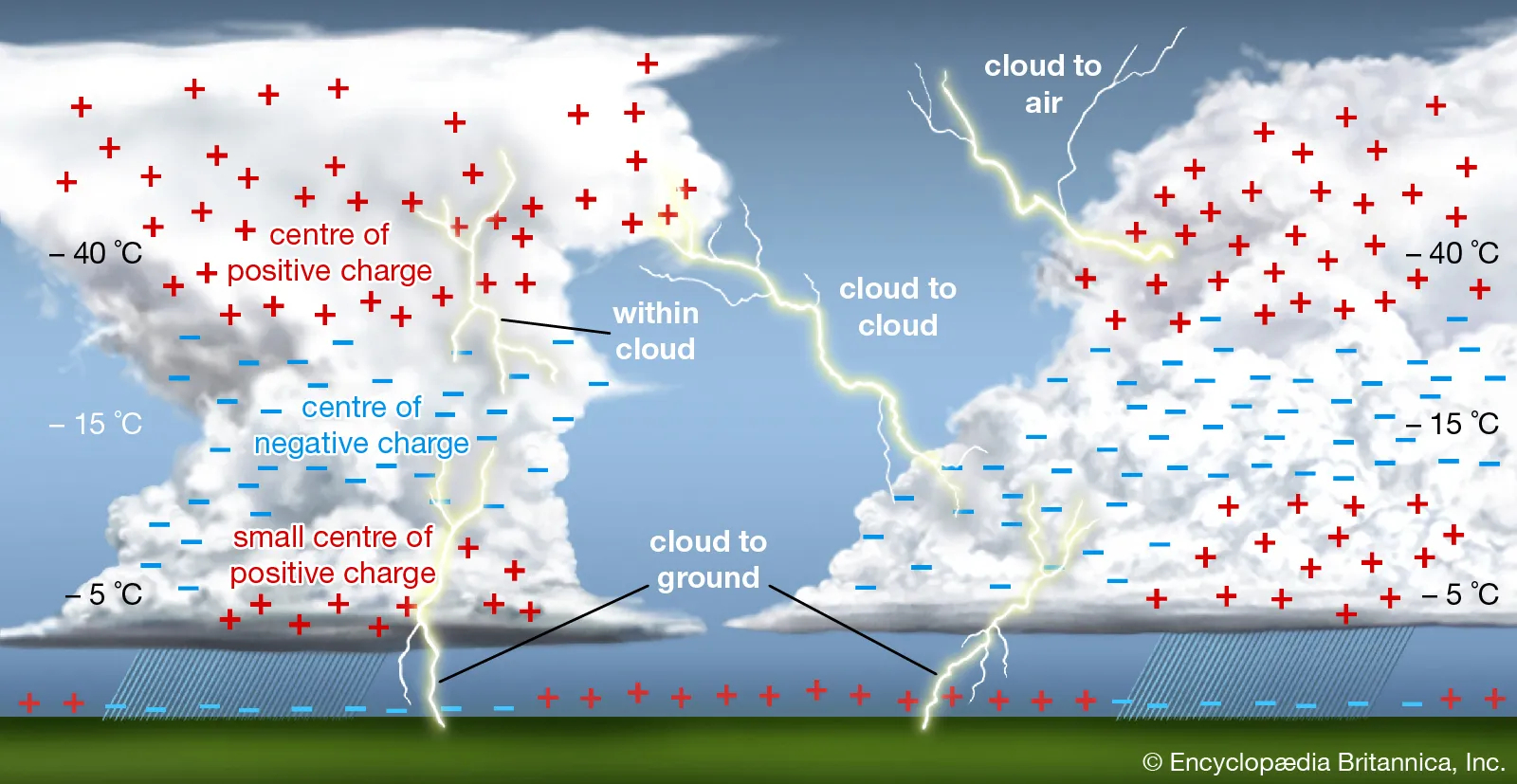
    • Scientifically, lightning is a rapid and massive discharge of electricity in the atmosphere some of which is directed towards earth.
    • The discharges are generated in giant moisture-bearing clouds that are 10-12 km tall.
    • The base of these clouds typically lie within 1-2 km of the Earth’s surface, while the top is 12-13 km away.
    • Temperatures in the top of these clouds are in the range of –35° to –45°C.

    Its formation

    • As water vapour moves upward in the cloud, the falling temperature causes it to condense.
    • As they move to temperatures below 0°C, the water droplets change into small ice crystals.
    • They continue to move up, gathering mass until they are so heavy that they start to fall to Earth.
    • This leads to a system in which, simultaneously, smaller ice crystals are moving up and bigger crystals are coming down.
    • Collisions follow and trigger the release of electrons, a process that is very similar to the generation of sparks of electricity.
    • As the moving free electrons cause more collisions and more electrons, a chain reaction ensues.
    • This process results in a situation in which the top layer of the cloud gets positively charged, while the middle layer is negatively charged.
    • The electrical potential difference between the two layers is huge, of the order of a billion to 10 billion volts.
    • In very little time, a massive current, of the order of 100,000 to a million amperes, starts to flow between the layers.

    Types of lightning

    • Broadly, there are three forms of lightning:
    1. Inter-cloud
    2. Intra-cloud
    3. Cloud-to-ground
    • It is the cloud-to-ground form of lightning that kills humans, as well as animals and livestock, and can substantially damage property.
    • While the Earth is a good conductor of electricity, it is electrically neutral.
    • However, in comparison to the middle layer of the cloud, it becomes positively charged.
    • As a result, about 15%-20% of the current gets directed towards the Earth as well.
    • It is this flow of current that results in damage to life and property on Earth.

    How intensely does it strike?

    • A typical lightning flash is about 300 million volts and 30,000 amps.
    • To put it in perspective, household current is 120 volts and 15 amps.
    • A flash of lightning is enough to light a 100-watt incandescent bulb for about three months.

    Why does lightning kill so many people in India?

    • The reason for the high number of deaths is due to people being caught unawares and more than 70% of fatalities happened due to people standing under isolated tall trees.
    • About 25 per cent of the people were struck in the open.
    • Also, lightning is the direct promulgation of climate change extremities.

    Mitigating lightning incidents

    • Lightning is not classified as a natural disaster in India.
    • But recent efforts have resulted in the setting up of an early warning system that is already saving many lives.
    • More than 96% of lightning deaths happen in rural areas.
    • As such, most of the mitigation and public awareness programmes need to focus on these communities.
    • Lightning protection devices are fairly unsophisticated and low-cost. Yet, their deployment in the rural areas, as of now, is extremely low.
    • States are being encouraged to prepare and implement lightning action plans, on the lines of heat action plans.
    • An international centre for excellence on lightning research to boost detection and early warning systems is also in the process of being set up.


    UPSC 2023 countdown has begun! Get your personal guidance plan now! (Click here)

Join the Community

Join us across Social Media platforms.