💥UPSC 2026, 2027, 2028 UAP Mentorship (March Batch) + Access XFactor Notes & Microthemes PDF

Type: Explained

  • Climate Change Impact on India and World – International Reports, Key Observations, etc.

    Climate change forces Panama islanders to relocate

    Note4Students

    From UPSC perspective, the following things are important:

    Prelims level: Location of Gardi Sugdub

    Mains level: How fast is the global sea level rising?

    Why in the news? 

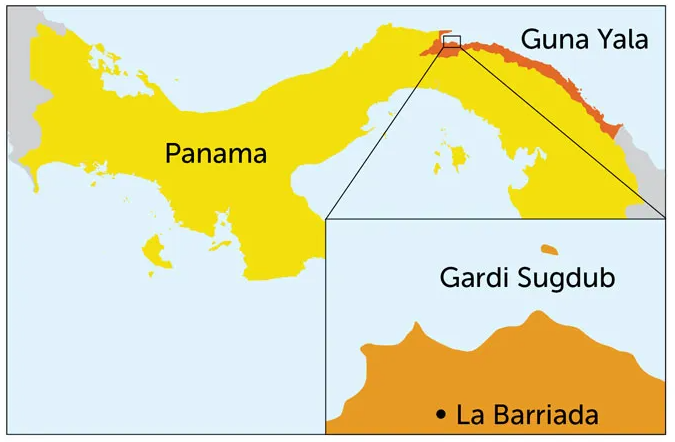
    In early June, approximately 300 families were relocated from the island of Gardi Sugdub in Panama’s Guna Yala province due to concerns about rising sea levels.

    What is happening in Gardi Sugdub?

    • Location and Community: Gardi Sugdub, home to about 1,300 members of the Guna community, is an island in Panama’s Guna Yala province.
    • Sea Level Rise: The Caribbean region, where Panama is situated, is experiencing sea level rise at an average rate of 3 to 4 millimetres per year. This rate is expected to accelerate to 1 centimetre per year or more by 2100.
    • Flooding: Annually, particularly in November and December, seawater floods houses and streets on Gardi Sugdub, despite efforts to fortify the island.
    • Relocation: The Panamanian government constructed 300 new houses on the mainland in a development called Nuevo Cartí to relocate affected families.

    How are other island nations affected by sea level rise?

    • Small island developing states (SIDS) are particularly vulnerable due to their low elevation and reliance on marine resources. SIDS in the Caribbean, Pacific, Atlantic, Indian Ocean, and South China Sea face existential threats from rising sea levels.
    • Examples of Impact: Islands such as Tuvalu, the Marshall Islands, and Kiribati are experiencing significant land loss and threats to their culture and economies.
    • Consequences: Coastal erosion, salinization of freshwater resources, and increased vulnerability to extreme weather events due to rising sea levels, storm surges, and ‘king tides.’

    How fast is the global sea level rising?

    • Since 1880, global sea levels have risen by approximately 21–24 centimeters. The rate of increase has accelerated in recent decades.
    • Causes: The primary drivers are global warming, thermal expansion of seawater, and the melting of land-based ice such as glaciers and ice sheets.
    • Due to the Global Temperature Increase: The global average temperature has increased by at least 1.1 degrees Celsius since 1880, contributing to rising sea levels.

    Way forward: 

    • Strengthen Coastal and Environmental Defenses: Construct seawalls, breakwaters, and other barriers to protect against storm surges and coastal erosion. Restore and preserve natural coastal barriers such as mangroves, coral reefs, and wetlands to enhance natural protection.
    • Develop and Implement Climate Adaptation Strategies: Create comprehensive climate adaptation plans that include relocation strategies for vulnerable communities.

    Mains PYQ: 

    Q Explain the causes and effects of coastal erosion in India. What are the available coastal management techniques for combating the hazard? (UPSC IAS/2022)

  • Air Pollution

    Why Denmark has taxed cattle burps and farts?    

    Note4Students

    From UPSC perspective, the following things are important:

    Prelims level: Why Are Methane Emissions a Problem?

    Mains level: Significance of tax

    Why in the news?

    Denmark will impose a tax on its livestock farmers for the greenhouse gases (GHGs) emitted by their cows, sheep, and pigs from 2030.

    What is it?

    Denmark plans to impose a tax on livestock farmers for greenhouse gases (GHGs) emitted by their cows, sheep, and pigs starting in 2030.

    • Tax Rates: Farmers would initially pay about $43 per metric ton of carbon dioxide equivalent produced by their livestock, increasing to around $108 by 2035.
    • Actual Cost: Due to a 60% income tax deduction, the actual cost per ton will start at 120 kroner ($17.3) and rise to 300 kroner ($43) by 2035.
    • Use of Tax Collection: The funds collected from the tax between 2030 and 2031 will be returned to the industry to support its green transition. The handling of proceeds will be revisited in 2032. The proposal includes the development of over 600,000 acres of new forest areas.

    How Do Cows and Sheep Produce Methane?

    • Ruminants like cows, sheep, goats, and buffaloes have a specialized digestive system with four stomach compartments, including the rumen. In the rumen, partially digested food ferments, producing methane.
    • Methane is released primarily through burping and farting as the animals regurgitate and chew cud to complete the digestive process. Ruminant digestive systems are responsible for 27% of all methane emissions from human activity.

    Why Are Methane Emissions a Problem?

    • Climate Impact: Methane is a potent greenhouse gas, responsible for 30% of warming since preindustrial times, second only to carbon dioxide. Over a 20-year period, methane is 80 times more potent at warming than carbon dioxide.
    • Ground-Level Ozone: Methane is the primary contributor to ground-level ozone formation, a highly irritating gas just above the Earth’s surface, contributing to 1 million premature deaths annually.
    • Rising Levels: Atmospheric methane levels have dramatically increased in recent years, with the NOAA reporting a record 17 parts per billion increase in 2021, surpassing the previous record set in 2020.

    Way forward: 

    • Dietary Adjustments: Introduce feed additives, such as seaweed or other natural supplements, that can reduce methane emissions during digestion in ruminants. This approach can significantly lower methane production without negatively impacting livestock health or productivity.
    • Improved Manure Management: Utilize advanced manure management practices, such as anaerobic digestion, to capture and convert methane emissions from decomposing animal waste into biogas. This not only reduces methane emissions but also provides a renewable energy source.

    Mains PYQ: 

    Q Describe the major outcomes of the 26th session of the Conference of the Parties (COP) to the United Nations Framework Convention on Climate Change (UNFCCC). What are the commitments made by India in this conference? (UPSC IAS/2021)

  • Foreign Policy Watch: India-China

    China’s ‘Five Principles’ of Foreign Policy

    Note4Students

    From UPSC perspective, the following things are important:

    Prelims level: Panchsheel policy

    Why in the News? 

    China is set to commemorate the 70th anniversary of the Five Principles of Peaceful Coexistence, a foreign policy concept initially outlined in a 1954 agreement with India, with special events scheduled for Friday, June 28th.

    How it started?

    • Historical Context: India attained independence from British rule in 1947, and the People’s Republic of China was established in 1949 after a civil war victory by the Chinese communists. Nehru aimed to establish good relations with China based on trust and mutual respect, a sentiment reciprocated by China initially.
    • Origins and Proposal: The Five Principles of Peaceful Coexistence, known as Panchsheel in India, were proposed by Chinese Premier Zhou Enlai during bilateral talks with India over Tibet in 1954. This initiative was favored by Indian Prime Minister Jawaharlal Nehru.
    • Panchsheel Agreement: The agreement, formally titled “The Agreement on Trade and Intercourse with Tibet Region,” was signed on April 29, 1954. It was intended to enhance trade and cooperation, establishing trade centers and pilgrimage routes while recognizing Tibet as part of China.
    • Principles: The five guiding principles laid out in the agreement were mutual respect for territorial integrity and sovereignty, mutual non-aggression, mutual non-interference, equality and mutual benefit, and peaceful coexistence.
    • Bandung Conference: The Five Principles featured prominently in the 1955 Bandung Conference in Indonesia, which included 29 Asian and African countries. The principles were co-opted into a 10-point declaration and later became central to the Non-Aligned Movement (NAM).

    Present Scenario:

    • After the India-China War of 1962: The principles of Panchsheel were severely undermined by the Sino-Indian War in 1962, leading to criticism of Nehru for misjudging Chinese intentions.
    • China’s Foreign Policy Shift: Over the past three decades, especially under President Xi Jinping, China has adopted a more aggressive foreign policy. This includes territorial claims in the South China Sea and hostile situations with neighbouring countries.
    • China’s Relations with the U.S: China’s relationship with the United States has been marked by hostility, characterized by trade and diplomatic challenges to American dominance globally.
    • India-China Relations Today: Since 2020, Indian and Chinese forces have been in a standoff along the Line of Actual Control (LAC) in Ladakh, with repeated but unsuccessful attempts to resolve the conflict.
    • Commemoration of 5 Principles by China: Despite the current strained relations, China commemorates the 70th anniversary of the Five Principles with a forward-looking theme, emphasizing building a community with a shared future for mankind.

    Way forward: (What can India do?)

    • Engage in Diplomatic Dialogue: Despite historical tensions, maintaining open lines of diplomatic communication with China is crucial. India can continue efforts to engage in dialogue at multiple levels to manage and resolve bilateral disputes, including the ongoing situation along the Line of Actual Control (LAC) in Ladakh.
    • Strengthen Regional Alliances: Enhancing partnerships with other countries in the region and beyond can provide India with strategic leverage. Strengthening alliances through economic cooperation, military partnerships, and cultural exchanges can help counterbalance China’s influence and foster stability in the region.
    • Focus on Economic and Technological Development: Investing in economic growth and technological advancement can bolster India’s position on the global stage. Developing robust infrastructure, promoting innovation and entrepreneurship, and advancing sustainable development goals can strengthen India’s resilience and competitiveness in the face of geopolitical challenges.

    Mains PYQ: 

    Q China is using its economic relations and positive trade surplus as tools to develop potential military power status in Asia’, In the light of this statement, discuss its impact on India as her neighbor. (UPSC IAS/2017)

  • International Space Agencies – Missions and Discoveries

    Why Indian-origin astronaut Sunita Williams is stuck in space?  

    Note4Students

    From UPSC perspective, the following things are important:

    Prelims level: Starliner mission

    Mains level: Cause of delay of Starliner Crew Flight Test mission

    Why in the News?

    The scheduled return of the Starliner spacecraft, which transported NASA astronauts Sunita Williams and Butch Wilmore to the International Space Station (ISS) earlier this month, has been delayed.

    What is the Starliner mission?

    • Objective: The Starliner Crew Flight Test mission aimed to transport NASA astronauts Sunita Williams and Butch Wilmore to the International Space Station (ISS) and demonstrate the spacecraft’s capability to safely ferry crew to and from low-Earth orbit (LEO).
    • Craft Description: CST-100 Starliner, developed by Boeing in collaboration with NASA’s Commercial Crew Program, is designed to accommodate up to seven passengers or a mix of crew and cargo for LEO missions. It is reusable up to 10 times with a turnaround time of six months.
    • Significance: Marks Boeing’s contribution to NASA’s efforts since the retirement of the Space Shuttle Program in 2011, alongside SpaceX’s Dragon spacecraft, which first delivered cargo in 2012 and transported astronauts in 2020.

    What has caused the delay?

    • Technical Issues: Multiple setbacks delayed the mission, including a faulty pressure valve on the Atlas V upper stage, engineering problems with other mechanisms, and issues with a spacecraft valve regulating oxidisers.
    • Specific Challenges: Post-launch, Starliner encountered five helium leaks, malfunctioning maneuvering thrusters, and a propellant valve failure, necessitating mid-mission fixes and assessments.

    What would happen to the astronauts?

    • Current Status: Sunita Williams and Butch Wilmore remain aboard the ISS, where they are conducting research and experiments. The spacecraft can stay docked for up to 45 days, and the ISS has sufficient supplies for extended periods.
    • Contingency Plan: If safety concerns persist or the Starliner issues cannot be resolved in time, the astronauts may return to Earth aboard SpaceX’s Dragon spacecraft, currently also docked at the ISS.

    Way forward ( what can NASA do?) 

    • Thorough Technical Review: NASA should conduct a comprehensive technical review of the Starliner spacecraft’s systems and components to identify the root causes of the multiple issues encountered during the mission.
    • Enhanced Mission Preparedness: NASA should prioritise enhancing mission preparedness protocols for commercial crew missions, including stricter pre-launch checks, contingency planning for mid-mission anomalies, and robust communication and coordination between mission control and astronauts aboard the ISS. This proactive approach can mitigate risks and ensure smoother operations in future missions.

    Mains PYQ: 

    Q What is India’s plan to have its own space station and how will it benefit our space programme? (UPSC IAS/2019)

  • What is the Justice Reddy Commission, against which KCR has moved Telangana High Court?

    Note4Students

    From UPSC perspective, the following things are important:

    Mains level: What has the Commission done on the PPAs so far?

    Why in the news? 

    On June 27, the Telangana High Court postponed the hearing on a petition filed by Bharat Rashtra Samiti (BRS) president and former Telangana Chief Minister K Chandrashekar Rao. The petition sought to halt all future proceedings of the Justice (retired) L Narasimha Reddy Commission until Friday.

    What is the Narasimha Reddy Commission?

    • Formation: Appointed by the Congress government of Chief Minister A Revanth Reddy in March 2024.
    • Purpose: To investigate Power Purchase Agreements (PPAs) made with Chhattisgarh in 2014-15 and construction of power projects at Yadadri and Bhadradri. Allegations of irregularities in the Kaleshwaram irrigation project.

    What is Power Purchase Agreements (PPAs)? 

    • Power Purchase Agreements (PPAs) are long-term contracts between electricity producers (such as power plants) and purchasers (such as utilities, governments, or large industrial consumers).
    • These agreements stipulate the terms under which electricity is to be generated, delivered, and sold over a specified period.

    What has the Commission done on the PPAs so far?

    • Notice Issued: On June 11, the Commission issued a notice to K Chandrashekar Rao (KCR) requesting a response by June 15 regarding the PPAs made during his tenure (2014-2023).
    • KCR’s Response: KCR accused the Commission of bias and political motivation, requesting Justice Reddy to recuse himself.
    • Legal Action: Anticipating a personal summons, KCR filed a petition in the Telangana High Court seeking a stay on all proceedings of the Commission.
    • Energy Minister Notice: G Jagdish Reddy, Energy Minister in KCR’s Cabinet, was also issued a notice to appear before the Commission to provide a statement regarding the PPAs.

    Allegations Regarding the Power Plants

    • Irregularities in Construction: The Narasimha Reddy Commission is investigating allegations of irregularities in the construction of the Bhadradri Thermal Power Plant at Manuguru and the Yadadri Thermal Power Plant at Damaracherla.Both projects were executed by the Telangana State Power Generation Corporation (TG GENCO).
    • Specific Concerns: The focus is on potential discrepancies and irregularities during the construction process, which may involve issues related to project execution, costs, and adherence to regulatory norms.

    Way forward: 

    • Fair and Transparent Investigation: The Narasimha Reddy Commission should ensure a fair and transparent investigation into the allegations concerning Power Purchase Agreements (PPAs) and the construction of power projects.
    • Collaboration and Accountability: Stakeholders, including former government officials and current authorities involved in the projects under scrutiny, should cooperate fully with the Commission.
  • Parliament – Sessions, Procedures, Motions, Committees etc

    What is the role of the Lok Sabha Leader of Opposition?

    Note4Students

    From UPSC perspective, the following things are important:

    Prelims level: Leader of Opposition in Lok Sabha and Rajya Sabha

    Mains level: Significance of the Leader of Opposition

    Why in the news? 

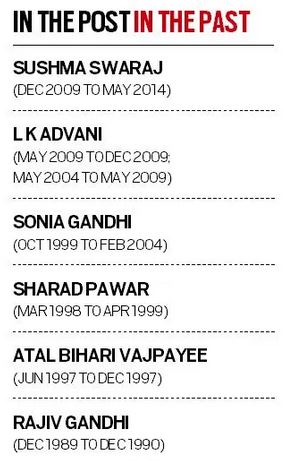
    For a decade, the Leader of Opposition in Lok Sabha remained vacant due to the absence of any party meeting the customary threshold of one-tenth of the House’s strength, now filled by Rae Bareli MP Rahul Gandhi.

    Leader of Opposition in the past:


    Who can serve as Leader of Opposition in Lok Sabha and Rajya Sabha?

    • Legal Definition: According to The Salary and Allowances of Leaders of Opposition in Parliament Act, 1977, the Leader of the Opposition is a member of the Lok Sabha or Rajya Sabha who leads the largest party in opposition to the government, recognised by the Speaker (Lok Sabha) or Chairman (Rajya Sabha).
    • Needed Strength: The leader must lead the party with the greatest numerical strength among the opposition parties in the respective House.
    • Recognition: The Speaker (Lok Sabha) or Chairman (Rajya Sabha) is mandated to recognize the leader of the largest opposition party as the Leader of the Opposition, irrespective of the party having a minimum threshold of 10% seats in the House.

    Significance of the positions and its significant role in Indian Political Democracy

    • Voice of the Opposition: The Leader of the Opposition serves as the primary spokesperson for the opposition in the House, articulating their views, criticisms, and alternative policies to those of the government.
    • Role in Committees: The Leader of Opposition plays a crucial role in high-powered committees responsible for appointments to key posts like the Director of CBI, Central Vigilance Commissioner, and others. This ensures a bipartisan approach in crucial appointments.
    • Ceremonial Role: The Leader of Opposition enjoys ceremonial privileges such as sitting in the front row during important occasions like the President’s Address to Parliament, symbolizing their role as a significant political figure.
    • Constitutional Checks and Balances: By providing an institutionalized position for the opposition, the Leader of Opposition ensures checks and balances on the ruling party’s power, fostering democratic accountability and oversight.
    • Precedence and Protocol: In the order of precedence, the Leader of Opposition ranks alongside Union Cabinet Ministers and other senior officials, reflecting their role in the functioning of the parliamentary democracy.

    Conclusion: The Leader of Opposition in Lok Sabha and Rajya Sabha, recognized per the 1977 Act, leads the largest opposition party, ensuring a vital role in governance oversight, committee appointments, and parliamentary protocol, crucial for democratic checks and balances.

    Mains PYQ: 

    Q The Indian Constitution has provisions for holding joint sessions of the two houses of the Parliament. Enumerate the occasions when this would normally happen and also the occasions when it cannot, with reasons thereof. (UPSC IAS/2017)

  • Food Procurement and Distribution – PDS & NFSA, Shanta Kumar Committee, FCI restructuring, Buffer stock, etc.

    Why govt must create a buffer stock of all main food items? 

    Note4Students

    From UPSC perspective, the following things are important:

    Prelims level: NAFED, Open Market

    Mains level: How Buffer in Chana Helped

    Why in the news? 

    Sales of wheat and chana in the open market have effectively curbed soaring inflation in cereals and pulses.

    What is an Open Market?

    • An open market is an economic system with little to no barriers to free-market activity. An open market is characterized by the absence of tariffs, taxes, licensing requirements, subsidies, unionization, and any other regulations or practices that interfere with free-market activity. Open markets may have competitive barriers to entry, but never any regulatory barriers to entry.

    Present State of Inflation:

    • Overall CPI Inflation: Stood at 4.75% year-on-year in May, the lowest in 12 months, but food inflation remained elevated at 8.69%.
    • Cereals and Pulses: Inflation rates were 8.69% for cereals and 17.14% for pulses in May 2024.
    • Impact of Buffer Stocks: Buffer stocks of wheat and chana moderated inflation by ensuring sufficient supply during periods of price volatility.

    How Buffer in Gram(Chana) Helped:

    • NAFED Procurements: Procured large quantities of chana during surplus years at MSP, preventing prices from soaring during crop failures.
    • Distribution: Sold chana through various channels including open market e-auctions and ‘Bharat Dal’ at subsidized rates, stabilizing prices for consumers.
    • Current Stock Levels: Despite recent sales, NAFED still maintains a buffer stock of 4.01 lakh tonnes of chana as of now.

    Significant Role Played by FCI:

    • Wheat Offloading: FCI offloaded a record 100.88 lakh tonnes of wheat in fiscal 2023-24 through open market sales, stabilizing prices and reducing inflation.
    • Retail Price Management: Sales under schemes like ‘Bharat Atta’ ensured wheat and cereal inflation was reduced from peak levels earlier in 2023.
    • Buffer Management: Despite reduced stocks from previous years, FCI’s interventions have been crucial in managing price volatility in essential commodities.

    Need to Adopt Buffer Policy and Better Procurement:

    • Buffer Stock Strategy: Proposal to expand buffer stocks beyond rice, wheat, and select pulses to include oilseeds, vegetables, and even milk powder to mitigate price spikes.
    • Enhanced Procurement: Advocates for increased procurement during surplus years to build adequate buffer stocks for future market stabilization.
    • Policy Impact: Buffer stocking can moderate price volatility influenced by climate change-induced agricultural uncertainties, benefiting both consumers and producers.

    Way forward: 

    • Enhanced Diversification of Buffer Stocks: There is a need to diversify buffer stocks beyond traditional items like rice and wheat to include a broader range of essential commodities such as oilseeds, vegetables, and milk powder. This expansion would help in better managing price spikes and supply shocks across various sectors.
    • Strengthened Procurement Mechanisms: Improving procurement strategies during surplus production years is crucial. This involves proactive measures to purchase larger quantities of commodities at minimum support prices (MSPs), ensuring adequate buffer stocks for future market stabilization and price moderation during scarcity periods.

    Mains PYQ: 

    Q Food Security Bill is expected to eliminate hunger and malnutrition in India. Critically discuss various apprehensions in its effective implementation along with the concerns it has generated in WTO. (UPSC IAS/2013)

  • Financial Inclusion in India and Its Challenges

    Interest rates on small savings schemes like PPF, SCSS, and NSC are under review by Modi 3.0 government 

    Note4Students

    From UPSC perspective, the following things are important:

    Prelims level: Small Savings Schemes

    Mains level: Impact of Stable Interest Rates on Small Savings Schemes

    Why in the news? 

    The central government of India is set to announce the interest rates for various small savings schemes, including the Public Provident Fund (PPF), Senior Citizen Savings Scheme (SCSS), National Savings Certificate (NSC), Sukanya Samriddhi Yojana (SSY), and Post Office Monthly Income Scheme (POMIS), for the July-September 2024 quarter by June 30, 2024.

    Current Interest Rates and Expected Changes

    1. Public Provident Fund (PPF)
    • Current Rate: 7.1%
    • Expected Rate: Despite the benchmark 10-year bond yield averaging 7.02% from March to May 2024, which would suggest a rate of 7.27% according to the formula, experts believe the government will likely maintain the status quo.
    • Reason: Factors such as controlled inflation, stable 10-year G-Sec yields, and historical precedence of the government not strictly following the recommended formula indicate a low probability of rate hikes.

    2. Senior Citizen Savings Scheme (SCSS)

    • Current Rate: 8.2%
    • Expected Rate: Unlikely to see significant changes.
    • Reason: With a spread of 100 basis points, the SCSS offers a substantial return, and experts predict the government will maintain existing rates to manage fiscal policies effectively.

    3. Sukanya Samriddhi Yojana (SSY)

    • Current Rate: 8.0%
    • Expected Rate: Expected to remain stable.
    • Reason: The SSY enjoys a spread of 75 basis points. Given the controlled inflation and fiscal policies, a rate hike is not anticipated.

    Factors Influencing Interest Rates

    • Benchmark Yields: The interest rates for small savings schemes are linked to the yields of 10-year government securities.
    • Market Conditions: Prevailing market yields and inflation rates play a crucial role in determining these rates.
    • Government Policy: The central government’s fiscal strategy and policies, such as those outlined in the Union Budget, impact decisions on interest rates.

    Impact of Stable Interest Rates on Small Savings Schemes

    • Investor Sentiment and Returns
      • PPF: Investors in PPF may feel disappointed due to the stagnation in interest rates despite a slight uptick in benchmark yields. However, PPF still offers tax-free returns under the Exempt-Exempt-Exempt (EEE) status, making it an attractive long-term investment.
      • SCSS and SSY: Stability in interest rates ensures a predictable income stream for senior citizens and parents of girl children, maintaining their trust in these schemes.
    • Government Fiscal Management: Maintaining the current interest rates helps the government manage its fiscal deficit more effectively. Higher rates would increase the interest burden on the government, especially for widely subscribed schemes like PPF.
    • Inflation Control: Stable interest rates reflect the government’s confidence in managing inflation. By not increasing rates, the government signals that it sees inflation as under control, thus aiming to keep borrowing costs stable for both the government and the public.
    • Market Stability: Consistent interest rates contribute to market stability. Predictable returns on small savings schemes help in the planning of household finances, ensuring steady savings and investments. This stability can also foster overall economic stability by maintaining consumer confidence.

    Conclusion: Investors in PPF, SCSS, and SSY should prepare for the possibility that interest rates will remain unchanged for the July-September 2024 quarter. While the formula indicates room for an increase in PPF rates, historical trends and expert opinions suggest that the government may maintain the current rates to balance fiscal control and market stability.

    Mains PYQ:

    Q Pradhan Mantri Jan-Dhan Yojana (PMJDY) is necessary for bringing the unbanked to the institutional fiancé fold. Do you agree with this for the financial inclusion of the poorer section of the Indian society? Give arguments to justify your opinion. (UPSC IAS/2016)

  • Foreign Policy Watch: India – EU

    In great power rivalry across Eurasia, an opening for India 

    Note4Students

    From UPSC perspective, the following things are important:

    Prelims level: Eurasia; Government Initiatives;

    Mains level: Strategic dependence on Eurasian countries;

    Why in the News?

    The significant upheaval caused by the increasing interdependence of European and Asian theatres is accompanied by the rise of influential middle powers. India can seize this opportunity to enhance its national power.

    Complex and Deepening Interconnections between European and Asian Security:

    • Asia’s Active Role in European Geopolitics: Unlike the colonial era, Asian states now actively influence the balance of power in Europe. Both Russia and Western Europe are engaging Asia to shape the narrative on the Ukraine war.
    • Asian Arms Supply to Europe: Asia has emerged as a major supplier of arms in European conflicts, with North Korea supplying ammunition to Russia and South Korean arms flowing to Ukraine.
    • Asian Agency in Great Power Dynamics: Putin’s visit to North Korea and Vietnam highlights the increased agency of Asian states in leveraging great power rivalries for their own strategic benefits.
    • Impact on Western Alliances: The increasing agency of Asian countries like North Korea and South Korea affects the dynamics of Western alliances, with the US seeking stronger ties with South Korea and Japan in response to Russia’s actions.

    Scope for a Strategic Window:

    • Increased Asian Maneuverability: Countries like Vietnam are skillfully balancing their relationships with China, the US, and Russia, enhancing their strategic autonomy and influence in the region.
    • Western Dilemmas: The US is facing challenges in balancing its strategic focus between Europe and Asia, with debates on whether to prioritize the Ukraine conflict or the challenge posed by China.
    • Europe’s Defence Responsibilities: Both Biden and Trump agree on the need for Europe to take greater responsibility for its own defense, urging Eurasian nations to balance Russia and China.
    • Opportunities for Middle Powers: Middle powers like India have a unique opportunity to enhance their national power and military capabilities through strategic partnerships with the US and its allies. This includes modernizing India’s defense industrial base and expanding arms production, crucial for achieving strategic autonomy.

    Way forward: 

    • Engage with Key Allies: India should Deepen strategic partnerships with the US, Japan, Australia, and South Korea to enhance security cooperation and joint defense initiatives. 
      • These partnerships can provide India with access to advanced military technology and training, as well as opportunities for joint exercises and intelligence sharing.
    • Leverage International Platforms: India must actively participate in international platforms like the Quad and the Coalition for Disaster Resilient Infrastructure (CDRI) to strengthen India’s role in regional security and disaster resilience efforts.

    Mains question for practice: 

    Q Discuss the complex and deepening interconnections between European and Asian security in the current geopolitical landscape. How can India leverage these dynamics to enhance its national power?  15M 

  • Foreign Policy Watch: India-China

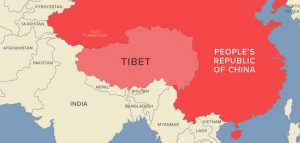
    It’s time for India to reclaim its voice on Tibet

    Note4Students

    From UPSC perspective, the following things are important:

    Prelims level: India-Tibet Relations; Neighbourhood first policy;

    Mains level: Challenges related to the Promotion of Resolution to the Tibet-China Dispute Act;

    Why in the News? 

    A U.S. lawmaker delegation’s visit to Dharamshala closely followed the passage of the ‘Promoting a Resolution to the Tibet-China Dispute Act’ in Congress, awaiting Biden’s approval.

    About the delegation on ‘Promoting a Resolution to the Tibet-China Dispute Act’ 

    • Legislative Background: The U.S. Congress passed the ‘Promoting a Resolution to the Tibet-China Dispute Act,’ emphasizing support for Tibetan autonomy and human rights. 
      • The delegation’s visit to Dharamshala, India, followed this legislative action to underscore U.S. commitment to Tibetan freedom.
    • Delegation Composition and Purpose: The delegation included bipartisan U.S. lawmakers who were co-authors of the Act, invited by the Central Tibetan Administration.
      • Their visit aimed to advocate for restarting dialogue between the Dalai Lama’s representatives and Beijing, stalled since 2010.
    • India’s Diplomatic Calculus: Hosting the U.S. delegation amidst ongoing tensions with China signals India’s nuanced diplomacy in managing its relations with both nations. 
      • It reflects India’s stance on Tibet as sensitive, balancing its traditional policy of non-interference with growing international scrutiny.
    • Geopolitical Implications: The delegation’s visit raises geopolitical questions about India’s sovereignty and diplomatic independence in the face of U.S.-China strategic competition.
      • It underscores India’s role in regional stability and global human rights discourse, impacting its strategic partnerships and international standing.

    Challenges and weaknesses involved        

    • Diplomatic Sensitivities: India faces challenges in balancing its historical support for Tibetan refugees with its current diplomatic relations with China, a crucial economic and strategic partner. 
      • Hosting U.S. lawmakers advocating for Tibetan autonomy could strain India-China relations, given Beijing’s sensitivity to international interference on Tibet-related issues.
    • Domestic Perception and Political Messaging: Allowing U.S. lawmakers to publicly advocate for Tibetan independence in India could be perceived domestically as compromising India’s stance on sovereignty and non-interference in internal matters. 
      • There is a risk of domestic backlash or political opposition questioning the government’s handling of sensitive foreign policy issues, particularly regarding Tibet and China.
    • Impact on Bilateral Relations: The visit and the Act may lead to diplomatic friction between India and China, potentially affecting bilateral cooperation in various domains, including trade, defense, and regional stability. 
      • China’s response to perceived foreign interference on Tibet could escalate tensions, impacting broader regional dynamics and India’s strategic autonomy.

    Future Scope (Way forward):

    • International Advocacy and Diplomatic Engagement: The U.S. delegation’s visit and advocacy for the Tibet-China Dispute Act highlight ongoing international interest and support for Tibetan autonomy. 
      • The future scope involves continued diplomatic engagement by global stakeholders to advocate for human rights and autonomy for Tibetans, potentially influencing China’s policies.
    • India’s Strategic Positioning: India may explore a nuanced approach to balance its historical support for Tibetan refugees with its current diplomatic relations with China. 
      • Future scope includes India asserting its stance on Tibet in international forums while managing bilateral relations with China to avoid escalation and maintain regional stability.

    Mains question for practice: 

    Q The recent visit of a delegation of U.S. lawmakers to Dharamshala, closely following the passage of the ‘Promoting a Resolution to the Tibet-China Dispute Act’ in the U.S. Congress, has brought forth significant diplomatic challenges and implications for India.15M

    Mains PYQ: 

    Q “The USA is facing an existential threat in the form of China, that is much more challenging than the erstwhile Soviet Union.” Explain. (UPSC IAS/2021)