💥UPSC 2026, 2027, 2028 UAP Mentorship (March Batch) + Access XFactor Notes & Microthemes PDF

Type: Explained

  • Global Geological And Climatic Events

    Sleeping disasters: Cloudbursts

    Cloud Burst:

    A cloudburst is an extremely intense, localized shower, defined by the India Meteorological Department (IMD) as at least 100 mm of rain within one hour over 10 sq km. These events occur due to deep, rapid atmospheric uplift over steep terrain, typical of high-altitude Himalayan regions. They can trigger sudden flash floods and landslides, devastating communities in mountainous regions. The term does not refer to a literal bursting cloud but to rapid precipitation from cumulonimbus clouds, sometimes accompanied by thunder or hail.

    Why was the recent Uttarkashi Disaster not a Cloudburst?

    1. Despite initial reports, Uttarkashi district did not record any cloudburst-level rainfall. Actual rainfall was only light to moderate, ranging from 8 mm to 43 mm on Aug 5, far below the 100 mm/hour threshold
    2. The region lacked weather radar coverage at that altitude, so precise measurements were unavailable and the “cloudburst” classification was premature.
    3. Uttarkashi’s steep, rugged topography, with narrow valleys and loose debris, turned the soil into unstable slopes.
    4. A debris-laden flood, possibly triggered by a glacial lake burst, glacier collapse, or landslide, raced downstream as mud and silt-laden water to hit Dharali village violently.
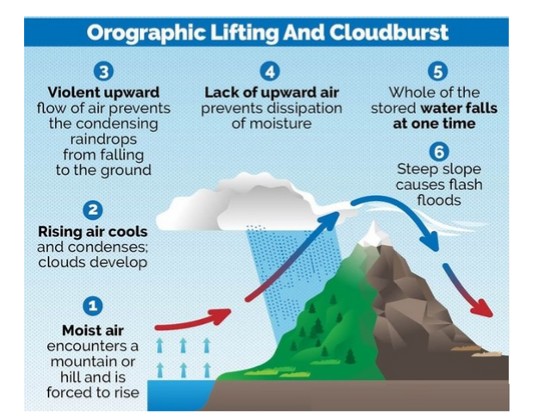
    Reasons for occurrence of cloudbursts:

    1. Cloudbursts happen when warm, moist air quickly rises over mountains, cools down, and turns into heavy rain. This process, called orographic lift, causes the air to release a large amount of rain in a short time.
    2. Sudden mixing of warm and cold air
    3. Strong upward air movement (convection) and high moisture in the air at high altitudes

    Why Do Cloudbursts Happen In The Hills?

    1. Topography: Mountains force moist air to rise rapidly, causing sudden cooling and condensation.
    2. Weather Conditions: Warm air with high moisture content meets cooler air at high altitudes. This results in intense convection and localised torrential rain.

    Can cloudbursts be forecast?

    1. The India Meteorological Department (IMD) forecasts rainfall events well in advance, but it does not predict the quantum of rainfall,  in fact, no meteorological agency does.
    2. IMD gives general rainfall forecasts (light, heavy, very heavy), but not exact amounts.
    3. These forecasts are for large areas like districts or states, not specific locations.
    4. Cloudbursts can’t be predicted exactly due to tech limitations and lack of dense instruments.
    5. However, warnings for very heavy rain (which may lead to cloudburst-like events) are given 6–12 hours in advance.

    Impacts of cloud burst:

    1. Flash Floods: The most immediate and destructive impact is the rapid overflowing of rivers and streams, leading to widespread flooding of low-lying areas.
    2. Landslides and Mudslides: The excessive water saturates the soil on slopes, leading to the rapid downward movement of earth, rocks, and debris, causing significant destruction and posing a threat to human lives and infrastructure.
    3. Soil Erosion: The intense rainfall can wash away topsoil, degrading the land and negatively affecting agriculture.
    4. Land Subsidence: The weakening of the ground due to excessive water absorption can cause the sudden sinking or settling of the Earth’s surface
    5. Loss of Life: The suddenness and intensity of cloudbursts often leave little time for evacuation.
    6. Damage to Infrastructure: Roads, bridges, homes, and public utilities can be severely damaged or completely destroyed.

    While the term “cloudburst” often evokes images of catastrophic floods and landslides, it’s crucial to adopt a nuanced approach, avoiding knee-jerk reactions and recognizing that not all instances of heavy rainfall are cloudbursts. While the unpredictable ferocity of cloudbursts remains a formidable challenge, a proactive blend of scientific innovation, infrastructure resilience, and community-centric preparedness offers the compass to navigate their escalating threat, particularly in fragile ecosystems like the Himalayas.

  • Waste Management – SWM Rules, EWM Rules, etc

    Microplastic and marine debris levels

    Microplastic Pollution:

    Microplastics are now a serious environmental and health threat. A recent (Ministry of Earth Sciences) MoES–NCCR survey found alarming levels along India’s east and west coasts, highlighting the urgent need to embed microplastic control within India’s environmental governance framework.

    Key Findings from NCCR Survey (2022–2025):

    1. Major microplastic sources identified:
      1. Riverine inputs (plastic waste transported by rivers)
      2. Abandoned, Lost, and Discarded Fishing Gear (ALDFG), a persistent marine debris source globally
    2. The presence of primary (e.g., microbeads in cosmetics) and secondary microplastics (from the breakdown of plastic waste) was confirmed.

    Microplastics: Nature

    • Definition: Plastic particles ranging between 1 micrometre (µm) and 5 millimetres (mm).
    • Types:
      • Primary Microplastics: Manufactured in small sizes (e.g., microbeads in personal care products).
      • Secondary Microplastics: Result from degradation of larger plastic items due to sunlight, wave action and other environmental factors.

    Environmental Impact of Microplastics:

    Impact on Marine Environments:

    1. Ingestion by Marine Life: Marine organisms, including fish, seabirds, ingest microplastics and can cause physical harm including gut blockages and tissue damage.
    2. Bioaccumulation in Marine Food Webs: Bioaccumulation can lead to higher concentrations of toxins such as Polychlorinated Biphenyls (PCBs) and Polycyclic Aromatic Hydrocarbons (PAHs) in top predators, potentially impacting their health and reproductive success.
    3. Habitat Disruption: Microplastics can accumulate in marine sediments and affect the structure and function of marine ecosystems.
    4. Chemical Leaching: Microplastics can leach harmful chemicals into the surrounding seawater. These chemicals include Bisphenol A (BPA), which is known to cause reproductive defects in some fish species, along with phthalates and brominated flame retardants, all of which can interfere with the endocrine system.

    Impact on Ecological Systems:

    1. Soil Contamination: Microplastics can negatively impact soil structure, microbial activity, and nutrient cycling, affecting plant growth and overall ecosystem health. They can act as carriers for toxins like heavy metals (e.g., Lead (Pb) and Cadmium (Cd)).
    2. Disruption of Food Webs: Microplastics can accumulate in the bodies of various organisms, potentially disrupting food chains and affecting higher trophic levels.
    3. Impact on Soil Biota: Exposure to microplastics can negatively impact soil-dwelling organisms like earthworms and microorganisms, affecting their growth and reproduction. Leaching of plastic additives such as phthalates can disrupt cell membrane function in microbes.
    4. Plant Toxicity: Microplastics can be absorbed by plants, potentially affecting their growth and development, and introducing toxins into the food chain.

    India’s Initiatives on Microplastic Management

    1. Plastic Waste Management Rules, 2016 (Amended 2021–22): Ban on single-use plastics and Emphasis on Extended Producer Responsibility (EPR) for collection and recycling.
    2. Swachh Bharat Mission 2.0: Includes solid waste segregation, treatment, and scientific disposal.
    3. Ecosensitive Coastal Zone Regulation (CRZ): CRZ rules govern development along coastlines and indirectly reduce marine plastic input.
    4. FSSAI Project: Ongoing study to develop standard detection protocols for microplastics in food products.

    International Conventions and Agreements

    • MARPOL (International Convention for the Prevention of Pollution from Ships) Annex V prohibits the discharge of plastics and synthetic fishing gear into the sea.
    • Basel Convention (1989, amended in 2019) regulates transboundary movement of plastic waste. India ratified the amendments concerning plastic waste in 2020.
    • The United Nations Environment Assembly (UNEA) adopted a historic resolution to negotiate a legally binding global treaty on plastic pollution by 2024 (still ongoing).
    • Sustainable Development Goal 14 talks about Preventing and significantly reducing marine pollution of all kinds, particularly from land-based activities.
    • Global Partnership on Marine Litter (GPML): A UN Environment initiative, India is a participating country.

    Way Forward

    1. National Microplastic Monitoring Programme: Expand surveys to include rivers, lakes, groundwater, and terrestrial ecosystems.
    2. Ban on Microbeads: A clear legislative ban on the use of microbeads in personal care products (done in countries like the UK and USA).
    3. Fishing Gear Recovery Programmes: Introduce buy-back schemes or incentives for collection of damaged fishing gear.
    4. Invest in R&D: Support startups and research institutes working on biodegradable alternatives and plastic detection methods.
    5. Public Awareness and Behavioural Change: Use platforms like Eco Clubs, MyGov, Swachh Bharat campaigns for mass education.

    The presence of microplastics disrupts ecosystems by affecting organisms’ behavior and physiology, impacting soil fertility, and altering aquatic food webs. Addressing microplastic pollution requires a multi-faceted approach, including reducing plastic consumption, improving waste management, and developing innovative solutions like biodegradable alternatives and advanced filtration systems.

    Practice UPSC Mains Questions:

    1. What are microplastics and how do they impact human health and the environment? Evaluate India’s current policy response to the problem and suggest a comprehensive mitigation strategy.
    2. Critically discuss the effectiveness of current national and global efforts to combat microplastic pollution, including initiatives like the Single-Use Plastic ban and the ongoing discussions around a legally binding international plastics treaty.
  • J&K – The issues around the state

    What will it take to restore J&K’s statehood? 

    The J&K Reorganisation Act was passed in Parliament on August 6, 2019. It gave the Centre, through the Lieutenant Governor, a heightened legislative role in J&K, and put the bureaucratic apparatus in the UT under the Union Home Minister.

    Importance of the topic:

    The demand for restoring J&K’s statehood is central to ongoing political discourse, federalism, and Centre–State relations. It involves constitutional questions about autonomy, democratic representation, and legislative authority. Understanding this issue is essential for both Indian Polity and Governance sections of GS Paper II and current affairs-based Mains questions. Six years after the abrogation of Article 370 and the passage of the Jammu and Kashmir Reorganisation Act, 2019, the question of restoring full statehood to J&K is back in political and judicial discourse. While the Supreme Court upheld the abrogation in December 2023, it also urged the Union Government to restore statehood at the earliest, ideally before the next Assembly elections.


    Understanding the Jammu & Kashmir Reorganisation Act, 2019

    The J&K Reorganisation Act, passed in August 2019, radically altered the political geography of India by:

    1. Bifurcating the former state into two Union Territories (UTs): Jammu & Kashmir (with a legislative assembly) and Ladakh (without a legislative assembly)
    2. Repealing Article 370, which had conferred special status to J&K.
    3. Ending the state’s Constitution, flag, and autonomy in various matters.

    How Was the Act Passed?

    It was passed under Article 3 of the Constitution, which empowers Parliament to change the boundaries or status of any state. The Constitution (Application to J&K) Order, 2019 extended all provisions of the Indian Constitution to J&K. A Presidential Order, followed by resolutions in Parliament, enabled the effective nullification of Article 370.

    This method has been legally contentious, with debates about: Whether Article 370 could be abrogated without the consent of the erstwhile State Assembly and Whether a UT can be created out of a full-fledged state without a constitutional amendment.

    Why Restoration of Statehood is Important:

    1. Democratic Legitimacy: A Union Territory is governed by the Centre, with limited powers to the local legislature (like Delhi). Statehood would return full legislative powers and autonomy to the elected J&K government.
    2. Political Participation and Stability: Full statehood may encourage wider participation in elections and a return to mainstream politics in the Valley.
    3. Judicial Recommendation: The Supreme Court (2023) noted that UT status must be temporary and urged a time-bound plan for restoration.
    4. Rebuilding Trust: Statehood is seen as a step to win back the confidence of the local population, especially after internet shutdowns, detentions, and security clampdowns.

    Challenges in Restoring Statehood

    1. Security Concerns: Terror threats and infiltration risks persist. The government may delay full devolution until there is a more stable security environment.
    2. Geopolitical Tensions: China and Pakistan continue to contest India’s sovereignty over J&K and Ladakh. Strategic concerns may shape decisions.
    3. Administrative Realignment: The reorganisation involved restructuring administrative units, services, and legal frameworks. Reversing some of those may create bureaucratic hurdles.
    4. Political Control by the Centre: The current arrangement allows the Centre direct control. Restoring statehood might reduce this control, especially if opposition parties dominate the future assembly.
    5. Need for Election Readiness


    Value Addition:

    Article 3 of the Constitution of India:

    • Article 3 of the Indian Constitution grants the Parliament significant powers related to the internal reorganization of the states and union territories within the Union of India.
    • Under Article 3, Parliament can:
      • Form new states by combining or separating territory from existing states or union territories.
      • Increase or decrease the area of any state.
      • Alter the boundaries or change the name of any state
    • For Parliament to exercise these powers, a Bill must be introduced with the President’s prior recommendation. If the Bill impacts a state’s area, boundaries, or name, the President must seek the state legislature’s views within a specified timeframe. However, these views are not binding on Parliament. Bills under Article 3 are passed by a simple majority and are not considered constitutional amendments under Article 368.


  • Defence Sector – DPP, Missions, Schemes, Security Forces, etc.

    India needs a ‘defence cess’ to fund military modernisation

    With such a levy on high-end goods, spending on luxury will become a visible public act of support for the armed forces. In an era of evolving warfare, from stealth jets to AI-driven drones, India’s defence preparedness is no longer optional, it is existential. This article proposes a ‘Defence Cess’ on luxury goods and services, offering a creative, emotionally resonant, and fiscally sustainable mechanism to ring-fence funds for military modernisation. This issue links directly to GS Paper II (Governance), GS Paper III (Security and Economy), and GS IV (Ethics, especially public accountability and duty).

    The Strategic Urgency: Why Modernisation Can’t Wait

    India is increasingly surrounded by hostile neighbours with fast-upgrading military capacities:

    1. Pakistan may soon induct stealth fighters like J-20 or J-35 from China.
    2. China is testing sixth-generation aircraft and has strong cyber and drone warfare capabilities.
    3. The Indian Air Force (IAF), by contrast, operates only 32 squadrons vs the sanctioned strength of 42 — leaving India strategically exposed in contested airspace.

    Key Quote: “Capability alone is not enough. The country cannot afford to be vulnerable.”

    Modernisation is Existential, Not Aspirational

    India’s military modernisation roadmap is ambitious but underfunded. It includes:

    1. Fifth-generation fighter aircraft development (AMCA)
    2. Indigenous jet engine programmes
    3. Strategic unmanned aerial vehicles (UAVs)
    4. Electronic warfare (EW) and cyber-capacity enhancement

    But while intent exists, execution suffers from fragmented schemes, budgetary limitations, and lack of dedicated long-term funding.

    The Defence Cess Proposal: Key Features

    1. A 5–10% surcharge on ultra-luxury goods and services like High-end cars, Private jets, Imported luxury watches, Premium liquor, etc.
    2. Clearly itemised on invoices as “Raksha Cess”
    3. Funds are non-lapsable, targeted, and traceable
    4. Exclusively for capital expenditure in Procurement, R&D, Infrastructure for defence

    Global Parallels and Precedents

    Defence/Strategic Taxation Model
    Italy Luxury tax on yachts and helicopters during Eurozone crisis
    Sweden Long-standing luxury taxation for social balance
    China Anti-extravagance drive redirected elite consumption toward strategic sectors

    These countries have used fiscal mechanisms not just to fund strategy but to shape public narratives, blending consumption with national responsibility.

    Why a Defence Cess Works for India

    1. Psychological and Symbolic Impact: The idea of contributing directly to the betterment of Indian defence through luxury spending has strong emotional appeal. It creates a moral linkage between indulgence and national duty converting private consumption into public solidarity. Naming it “Raksha Cess” makes it resonate with patriotism and responsibility.
    2. Fiscal Innovation Without Burdening the Masses: India’s direct tax base is relatively narrow, and increasing defence funding through general taxation could hurt the middle class or poor. This cess targets only high-end consumers, ensuring that additional fiscal pressure is placed on those most capable of bearing it. Luxury spending has grown significantly with India’s rising affluent class, this captures a booming sector for national good.
    3. Transparency and Traceability: Since the cess is itemised separately on invoices, it allows greater transparency. It increases trust in government utilisation and may lead to greater tax compliance if people know exactly where their money goes. With digitised billing and GST-era infrastructure, monitoring and reporting mechanisms already exist to track such surcharges.
    4. Dedicated, Ring-Fenced Defence Fund: Current defence allocations are diluted across revenue expenses and pensions. It helps bypass routine bureaucratic delays and ensures directed capital spending. A defence cess would be non-lapsable and strictly for capital expenditure — such as: Acquiring new aircraft, R&D in defence tech and Indigenous manufacturing. This enables long-term strategic planning free from annual budget cycles.
    5. Aligns India With Global Practices: Many countries (Italy, Sweden, China) have used luxury taxation or targeted levies to support strategic sectors or correct fiscal imbalances. India can draw from these models to introduce a fiscally sound and globally validated mechanism.
    6. Boosts the Narrative of Nation-Building: In an era where narratives matter, this proposal encourages voluntary nation-building and elite participation in national security. It sends a message that “those who benefit most from India’s rise should contribute most to its protection.”

    Challenges in Implementing a Defence Cess:

    1. Legal and Fiscal Complexity: Introducing a cess outside the GST framework may face legal and administrative hurdles, requiring amendments or coordination with the GST Council. There may be opposition from States citing federal fiscal concerns
    2. Risk of Misuse or Leakage: Any fund not managed with full transparency and oversight can fall prey to inefficiency or corruption. Strong audit systems and public reporting mechanisms must be built into the cess architecture from the outset.
    3. Need for a Clear Governance Structure: A dedicated body or fund management unit should be created under the Ministry of Defence or PMO, preferably with civil society representation for accountability. Without such a structure, funds may be diverted or underutilised.
    4. Revenue Predictability and Scale: Luxury consumption is inelastic but cyclical, it may dip during economic downturns. The fund should not be over-relied upon for core defence needs; rather, it must act as a complementary booster.
    5. Perception Management and Political Pushback: Some may view this as a populist or performative move, or even as a “sin tax on success”. There must be consistent and transparent communication that this is about contribution, not punishment.
    6. Moral Optics and Class Tensions: Care must be taken to avoid triggering class resentment or elite backlash, especially if the tax seems punitive. Framing it as “a privilege with purpose” is crucial — the messaging has to be inclusive, not divisive.

    Conclusion: From Passive Consumers to Active Nation-Builders

    India’s national security demands not just better weapons, but a sustainable model of public contribution and political imagination. A well-designed defence cess could convert elite indulgence into national insurance, creating a visible alignment between privilege and responsibility.

    Value Addition

    India’s Defence Modernisation: 

    What Has Been Done: What is being planned
    • Tejas Mk-1A production initiated (HAL)
    • Strategic partnerships under DPP-2020 for indigenous manufacturing
    • Agni Prime, INS Vikrant, and SAM systems development
    • Defence exports crossed ₹21,000 crore in 2023-24
    • Emergency procurement powers given to armed forces post-Galwan
    • AMCA (Advanced Medium Combat Aircraft) — 5th Gen fighter
    • Twin-engine deck-based fighter (TEDBF) for Navy
    • India-US Jet Engine Deal (GE-HAL) under iCET
    • India-France agreement for submarine co-development
    • Cyber and AI warfare units under Theatre Command model

    Important Agreements and Collaborations:

    Country Collaboration
    USA iCET, Jet Engine tech transfer (GE -F414)
    France Rafale aircraft, scorpene submarine
    Israel Missile defence (Barak-8)
    Russia S-400 Missile systems, AK-203 Rifles

    Important Defence Policies:

    1. Defence Acquisition Procedure (DAP) 2020: Goal: To streamline the procurement process for the Indian Armed Forces, promoting indigenization and efficiency. Prioritizes “Buy Indian” categories, Enhanced Indigenous Content (IC), Simplification of Trial and Testing Procedures and has Emphasis on Make and Innovation.
    2. Innovations for Defence Excellence (iDEX): Goal: To foster an ecosystem for innovation and technology development in the defence and aerospace sectors, leveraging the potential of startups, MSMEs, academia, and individual innovators. It is managed by Defence Innovation Organization (DIO), a not-for-profit company founded by Hindustan Aeronautics Limited (HAL) & Bharat Electronics Limited (BEL).
    3. DRDO’s 5-Year Roadmap (Vision 2025): Goal: To lead India towards self-reliance in defence technologies and become a global leader in defence research and development.


  • Agricultural Sector and Marketing Reforms – eNAM, Model APMC Act, Eco Survey Reco, etc.

    How India’s Pesticide Market is Changing

    The Growth is Now Coming Not from Insecticides or Fungicides, but Herbicides.

    Understanding the Three Major Types of Pesticides:

    Pesticides are chemical or biological substances used to protect crops by eliminating or controlling pests, diseases, or weeds. India’s pesticide market primarily consists of:

    • Insecticides: These control insects that damage crops by feeding on them or transmitting diseases.
    • Fungicides: These are used to prevent or eliminate fungal infections like mildew, blight, or rust that affect crop yield and quality.
    • Herbicides: These destroy or inhibit the growth of weeds that compete with crops for nutrients, water, and sunlight.

    Herbicides – The New Growth Driver of India’s Pesticide Market:

    India’s organised crop protection market is valued at approximately ₹24,500 crore. While insecticides (₹10,700 crore) remain the largest segment, herbicides (₹8,200 crore) have emerged as the fastest-growing category, with an annual growth rate exceeding 10%. This shift reflects a deeper transformation in India’s rural economy—one driven by labour scarcity, rising wage rates, and the need for mechanisation and efficiency in farm operations.

    Why Herbicides Are Gaining Ground:

    1. Labour Shortages in Agriculture: Manual weeding is time-consuming and labour-intensive. A labourer takes 8–10 hours to weed one acre, and the average daily wage has increased from ₹326 in 2019 to over ₹447 in 2024. Moreover, rural youth are increasingly moving away from agricultural work. This has led to a surge in herbicide use as a labour-saving input, similar to how tractors reduced the need for manual ploughing.
    2. Time-Saving and Cost-Effective: Power weeders are limited in closely spaced or deep-rooted crops. Herbicides, on the other hand, can be sprayed easily and reduce both labour dependence and turnaround time between cropping cycles.
    3. Strategic Use Patterns Emerging: Earlier, herbicides were used only after weed emergence (“post-emergent”). Now, farmers increasingly apply “pre-emergent” herbicides at or just after sowing to prevent weed growth from the beginning—reflecting a shift from reactive to preventive agriculture.

    Role of Indian Companies Amidst MNC Dominance:

    India’s crop protection sector remains largely dominated by multinationals like Bayer (Germany), Syngenta (Switzerland), Corteva (USA), and Sumitomo (Japan). However, Indian companies like Crystal Crop Protection Ltd (CCPL) and Dhanuka Agritech are rising players:

    1. CCPL acquired rights for key herbicides like Ethoxysulfuron and Gramoxone from global majors.
    2. It has also developed new products like ‘Sikosa’ in partnership with Battelle (USA) and Mitsui (Japan), showing how Indian firms are strategically expanding through innovation and collaboration.

    Why This Matters for India’s Agricultural Future

    1. Productivity Gains: Weeds reduce crop yield by competing for water and nutrients. Herbicides help ensure better resource absorption by crops.
    2. Supports Mechanisation: Like other farm machinery, herbicides reduce dependence on human labour and enable faster, scalable farming.
    3. Aligns with Climate-Resilient Agriculture: Timely and smart weed control reduces input waste and improves crop resilience.

    Key Concerns

    1. Ecological Impact: Excessive herbicide use can lead to soil degradation, water contamination, and loss of biodiversity.
    2. Labour Displacement: As weeding becomes chemical-driven, demand for rural manual labour might further decline.
    3. MNC Monopoly: Unlike seeds and fertilisers, pesticides remain MNC-dominated, raising questions on strategic autonomy in agri-inputs.

    Conclusion:

    The rise of herbicides in India’s pesticide market marks a significant transformation in agricultural input use. While they offer a timely solution to labour shortages and boost farm efficiency, a cautious, balanced, and indigenously empowered approach is necessary.

  • Foreign Policy Watch: India-United States

    India– U.S. Trade Friction Escalates Amid Russian Oil Dealings

    President Trump announces steep tariff hikes on Indian imports over continued Russian oil purchases; India calls it “unjustified and unreasonable”.

    Context and Relevance (GS2 – International Relations, GS3 – Economy, Trade Policy):

    In a move that has strained India–U.S. economic ties, U.S. President Donald Trump has announced plans to “substantially” increase tariffs on Indian goods. This decision comes days after a 25% tariff plus penalty was imposed, with Trump citing India’s oil imports from Russia as the trigger. India has hit back, defending its energy security needs and calling out the West’s own trade with Russia.

    This development adds to the geopolitical-economic complexity facing India’s foreign policy and trade decisions in the wake of the Russia–Ukraine conflict.

    What are Tariffs?

    1. A tariff is a tax imposed by a government on imported goods.
    2. Tariffs make foreign goods costlier, potentially protecting domestic industries but also risking retaliation and higher consumer prices.

    Sectors Likely to Be Affected

    1. Pharmaceuticals – India is a major exporter of generic drugs to the U.S.; tariffs could increase prices and affect competitiveness.
    2. Metals and Engineering Goods – Steel, aluminum, and other value-added metals are vulnerable.
    3. Textiles and Apparel – A major Indian export to the U.S. which operates on thin margins.
    4. IT Services (Indirect Impact) – Not under direct tariff but can be impacted by broader deterioration in trade ties.
    5. Petrochemicals and Refined Products – As India refines and re-exports Russian crude, this area could come under scrutiny.
    6. Defence Procurement and Technology Sharing – Strategic relations could take a hit, affecting high-tech transfers.
    7. Startups and Digital Trade – New tech collaborations may slow if the overall atmosphere deteriorates.

    Why is the U.S. Taking This Step:

    President Trump’s reasoning includes:

    1. India allegedly buying “massive amounts of Russian oil” and re-exporting it for profits.
    2. High Indian tariffs and non-tariff barriers that restrict U.S. goods.
    3. India’s continued energy and defence cooperation with Russia.
    4. Trump’s argument taps into U.S. domestic concerns around trade imbalances and perceived strategic neutrality by India on the Russia–Ukraine issue.

    India’s Stand: Energy Security First:

    India’s Ministry of External Affairs (MEA) issued a strong rebuttal:

    1. India started buying from Russia when traditional suppliers diverted oil to Europe.
    2. The U.S. itself had encouraged these imports to stabilise global markets.
    3. Western nations continue trading with Russia in: LNG, uranium, palladium, fertilisers, and chemicals.
    4. EU–Russia bilateral trade in 2024 exceeded €84.7 billion (goods + services).

    India argued that its trade was a “vital compulsion”, unlike the West’s “strategic choice”.


    Economic and Strategic Implications for India:

    Core Economic Concepts at Play

    1. Trade Diversion & Substitution: U.S. importers may turn to other countries, diverting trade away from India.
    2. Protectionism vs Globalisation: Rising protectionism threatens the rules-based global trade order.
    3. Non-Tariff Barriers Debate: Focus returns to India’s complex regulatory environment that discourages FDI and foreign trade.
    4. Elasticity of Demand for Indian Exports: Tariff hikes could reveal price sensitivity in sectors like pharma and textiles.

    Foreign Policy and Strategic Autonomy

    1. India’s multi-alignment strategy is being tested.
    2. Strategic autonomy in energy choices now faces economic costs.

    Impact on India’s Export Competitiveness

    • With countries like Vietnam, Mexico, and Indonesia unaffected by such tariffs, India faces a competitive disadvantage.

    Investor Confidence

    • Heightened U.S.–India tensions could create policy uncertainty for foreign investors.

    Way Forward for India:

    1. Bilateral Negotiations: Urgent dialogue needed through trade channels to de-escalate.
    2. Diversification: India must strengthen ties with other large markets (e.g., EU, ASEAN, Africa).
    3. Strengthen Domestic Industry: Boost manufacturing competitiveness through PLI schemes, FTAs, and ease of doing business.
    4. Energy Diplomacy: Deepen engagement with Gulf countries and renewables to reduce over-dependence on Russia.

    Conclusion:

    This episode is a litmus test for India’s balancing act between strategic autonomy and economic pragmatism. It also reflects the larger trend of global economic nationalism overshadowing multilateral cooperation. India will need to walk a tightrope between asserting its sovereign right to energy security and preserving its vital trade relationships.


    Sample UPSC Mains Question (GS2/GS3 – 15 Marks)

    In the wake of rising global protectionism and India’s continued energy trade with Russia, critically examine the impact of unilateral tariff impositions by developed nations on India’s strategic autonomy and export competitiveness. Suggest a multi-pronged approach to mitigate such risks.


  • International Monetary Fund,World Bank,AIIB, ADB and India

    How does the World Bank classify countries by income?

    Why in the News?

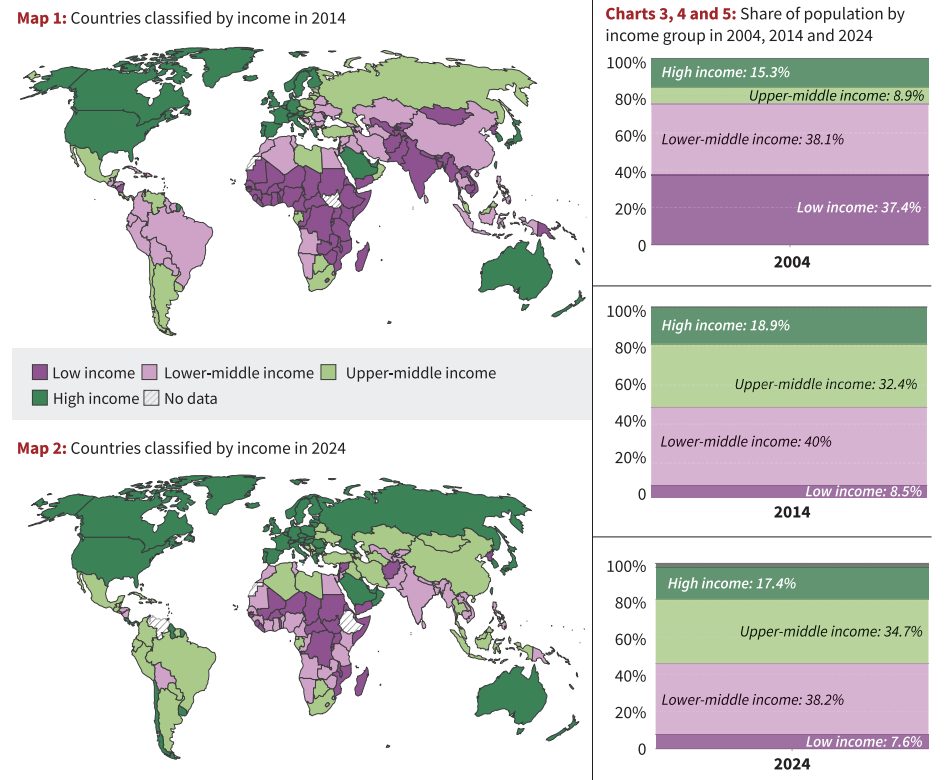
    Recently, the World Bank’s 2024 update to its income classification system revealed major shifts, with a sharp decline in low-income populations and a rise in upper-middle-income countries.

    Global Income Classification Trends (2004–2024): Key Shifts in Population Distribution: 

    • Global Shift Upwards: The share of the world population in low-income countries dropped from 37.4% in 2004 to 7.6% in 2024, showing significant poverty reduction.
    • Rise of Upper-Middle Group: The population in upper-middle-income countries rose from 8.9% in 2004 to 34.7% in 2024, indicating broad economic progress in many developing nations.
    • Lower-Middle Income Stability: The lower-middle-income group has remained relatively stable, around 38–40% of global population from 2004 to 2024.
    • High-Income Countries’ Share Fluctuated: The global population in high-income nations peaked at 18.9% in 2014, then slightly declined to 17.4% in 2024.
    • Country Reclassifications: Countries like India and Indonesia moved to higher income groups, while some African countries remained or slipped into low-income status.

    What is the World Bank’s income classification?

    • Four Income Groups: Countries are classified into low, lower-middle, upper-middle, and high-income based on their Gross National Income (GNI) per capita.
    • Annual Update: Classifications are updated yearly, adjusting for global inflation and changes in income.
    • Absolute Thresholds: Groupings are based on fixed income thresholds, not relative comparisons with other countries.
      • Low income: GNI per capita ≤ $1,135
      • Lower-middle income: $1,136 – $4,465
      • Upper-middle income: $4,466 – $13,845
      • High income: ≥ $13,846

    How is GNI per capita used in this system?

    • It measures the average income per person, including income from abroad.
    • GNI figures (reported in local currency) are converted to USD using exchange rates.
    • Countries are placed into groups using predetermined income thresholds.

    Why do countries shift between income groups?

    • Economic Growth or Decline: Strong GDP growth raises GNI per capita, moving countries to higher groups. Eg: India’s GNI per capita rose from $2,250 (2022) to $2,610 (2023), nearing upper-middle-income status.
    • Currency Exchange Fluctuations: A weaker local currency reduces GNI in USD terms. Eg: Egypt’s currency depreciation led its GNI per capita to fall from $3,890 (2022) to $3,240 (2023), reclassifying it from upper-middle to lower-middle-income.
    • Population Growth Rates: Fast population growth reduces GNI per capita even if total income rises. Eg: Nigeria’s large population growth kept its GNI per capita at $2,110 (2023), maintaining its lower-middle-income status.

    What are the challenges for India as a Lower-Middle-Income Country?

    • Limited Fiscal Space: India struggles to allocate sufficient funds for healthcare, education, and infrastructure. Eg: Public health spending remains around 2% of GDP, below the global average of 5–6%.
    • High Income Inequality: Rapid growth hasn’t translated into equitable wealth distribution. Eg: The top 10% in India hold nearly 77% of total national wealth (Oxfam, 2023).
    • Jobless Growth: Economic expansion hasn’t created enough formal sector jobs. Eg: Despite over 6% GDP growth, unemployment among youth remains high at around 45% (CMIE, 2023).

    What are the steps taken by the Indian government?

    • PM Gati Shakti Mission: Enhances infrastructure development for seamless connectivity and job creation.
    • National Education Policy (NEP) 2020: Aims to improve access, equity, and quality in education, especially in rural areas.
    • Ayushman Bharat Scheme: Provides free healthcare to over 50 crore people, addressing public health gaps.
    • Make in India & PLI Schemes: Promote domestic manufacturing and boost employment across key sectors.
    • Digital India & Skill India: Focuses on digital inclusion and vocational training to equip youth with employable skills.

    Way forward: 

    • Accelerate Inclusive Economic Growth: Focus on MSMEs, rural entrepreneurship, and labour-intensive sectors to boost incomes and job creation.
    • Invest in Human Capital: Enhance education quality, healthcare access, and nutritional outcomes, especially for the poor.
    • Strengthen Social Safety Nets: Expand direct benefit transfers (DBTs) and targeted subsidies to reduce vulnerability and inequality.
    • Promote Technological Innovation: Support startups, R&D, and digital infrastructure to drive productivity and global competitiveness.

    Mains PYQ:

    [UPSC 2013] The World Bank and the IMF, collectively known as the Bretton Woods Institutions, are the two inter-governmental pillars supporting the structure of the world’s economic and financial order. Superficially, the World Bank and the IMF exhibit many common characteristics, yet their role, functions and mandate are distinctly different. Elucidate.

    Linkage: This question directly asks about the World Bank’s role, functions, and mandate. A fundamental aspect of the World Bank’s function is its income classification system, which was initially designed to determine eligibility for loans, particularly concessional ones, based on a country’s average income.

  • Trade Sector Updates – Falling Exports, TIES, MEIS, Foreign Trade Policy, etc.

    Another slip up by India in the trade pact with the U.K.

    Why in the News?

    Concerns have emerged over India’s commitments in the India-UK Comprehensive Economic and Trade Agreement (CETA), particularly Article 13.6 on intellectual property. Critics argue it weakens India’s long-standing stance on compulsory licensing, favouring voluntary mechanisms instead.

    How does Article 13.6 affect medicine access in India?

    • Dilution of Compulsory Licensing Rights: The Article 13.6 of CETA favours voluntary licensing over compulsory licensing, reducing India’s legal room to ensure affordable drug access, especially during public health emergencies.
    • Reduced Policy Space in Patent Law: Provisions like weakening the “working requirement” restrict India’s ability to revoke non-working foreign patents, hampering local production of essential medicines.
    • Dependence on Foreign Patent Holders: Voluntary licensing shifts control to multinational corporations, allowing them to set restrictive terms, often limiting distribution, pricing, and manufacturing flexibility for Indian firms.
    • Loss of Global TRIPS Advocacy Role
      India’s past leadership in pushing for TRIPS flexibilities (Doha Declaration) is undermined, affecting its credibility in representing developing countries’ interests in global forums.
    • Risk to Access and Affordability of Medicines: The FTA could hinder production of low-cost generics, making life-saving drugs less accessible to Indian citizens and low-income countries relying on Indian pharma exports.

    What is Voluntary Licensing?

    Voluntary licensing is when the patent holder (usually a pharmaceutical company) gives permission to another company (often in another country) to produce and sell its patented product, usually generic versions under agreed terms and conditions.

    What is Compulsory Licensing?

    Compulsory licensing is when a government allows someone else to produce a patented product or process without the consent of the patent holder, usually under specific public interest grounds such as health emergencies.

    Which global rules backed India’s earlier patent stand?

    • TRIPS Agreement (WTO):  Allowed for compulsory licensing under public health grounds, helping India prioritize affordable access over strict patent monopolies.
    • Doha Declaration on TRIPS and Public Health (2001): Reaffirmed countries’ right to protect public health and promote access to medicines, supporting India’s flexible patent stance.
    • Paragraph 6 System (WTO, 2003): Enabled countries like India to export generic medicines to nations lacking manufacturing capacity, aligning with its role as the “pharmacy of the world.”
    • Indian Patent Act, 1970 (amended in 2005): Incorporated TRIPS flexibilities such as compulsory licensing and strict patentability criteria (e.g. Section 3(d)) to prevent evergreening.
    • UN High-Level Panel on Access to Medicines (2016): Emphasized that IP rights should not override public health, validating India’s position on balancing innovation and accessibility.

    What should be done? 

    • Reaffirm TRIPS Flexibilities in Trade Negotiations: India must ensure that all future FTAs explicitly protect its right to use compulsory licensing and patent law flexibilitiesunder the TRIPS Agreement.
    • Strengthen Domestic Patent Law: Amend and reinforce provisions like the “working requirement” to protect public health and allow challenges to non-working or unaffordable patents.
    • Enhance Public Health Safeguards in FTAs: Negotiate clear exceptions for essential medicines and green technology, ensuring that IP provisions do not override public interest obligations.
    • Build Strategic Alliances with Global South: Collaborate with developing countries to collectively oppose IP-heavy provisions in trade deals and promote affordable access to medicines globally.
    • Promote Indigenous Innovation and R&D: Invest in public sector research and incentivize Indian pharma and green tech innovation to reduce dependency on foreign patents and strengthen self-reliance.

    Mains PYQ:

    [UPSC 2024] Discuss the implications of Intellectual Property rights with respect to life materials? Although, India is second in the world to file patents, still only a few have been commercialized. Explain the reasons behind this less commercialization.

    Linkage: This question directly asks about “Intellectual Property rights with respect to life materials” and patents. The article talks about the implications of India’s CETA commitments on its patent regime concerning “patented medicines” and the “patent system”. The “slip up” in the trade pact is precisely about India compromising its traditional stance on IPR, particularly regarding access to medicines, which is a direct implication of intellectual property rights on life materials.

  • Foreign Policy Watch: India-United States

    How much India should trade with Russia must not be guided by Western diktat

    Why in the News?

    Recently, US President Donald Trump has threatened additional penalties on Indian imports, specifically targeting India’s purchase of discounted Russian oil.

    Why is India buying more oil from Russia?

    • Steep Price Discounts: Russian crude is sold at prices significantly below global benchmarks. In FY 2024-25, India imported $56.9 billion worth of mineral fuels from Russia, up from $2.1 billion in 2020-21.
    • Energy Security Priority: Ensuring affordable and reliable energy is vital for India’s economic stability and consumer welfare.
    • No UN Sanctions: India legally continues trade since Russian oil is not under United Nations sanctions, unlike US/EU bans. India cites international legality and moral justification for its purchases.
    • Strategic Pragmatism: India follows a non-aligned, interest-driven foreign policy, prioritizing national needs over bloc politics.

    What are the impacts of the US and NATO warnings on India?

    • Trade Penalty Threats: The US has imposed a 25% tariff on Indian goods and hinted at an additional penalty linked to India’s energy trade with Russia.
    • Secondary Sanctions Warning: NATO has warned that countries continuing business with Russia may face secondary sanctions. NATO Secretary General Mark Rutte issued a caution to India, China, and Brazil for sustaining Russia’s wartime economy.
    • Legislative Pressure in the US: A proposed US Congressional bill seeks a 500% duty on imports from nations trading in Russian-origin petroleum and uranium. If passed, this could impact Indian exports to the US due to its engagement in discounted Russian oil.
    • Strained Strategic Ties: Continued trade with Russia risks diplomatic friction with key Western allies, affecting defence cooperation and technology sharing. India’s balancing strategy between Russia and the West becomes harder as the Western bloc consolidates against Moscow.
    • Push for Energy Diversification: Western pressure is pushing India to rethink its energy security strategy and reduce dependence on Russian crude.

    How can India change its strategy to buy oil from other countries?

    • Diversify Import Sources: India can increase crude purchases from Gulf countries, the US, Latin America, and Africa to reduce dependence on Russia. Eg: India has ramped up imports from Iraq and Saudi Arabia, traditionally among its top suppliers.
    • Sign Long-term Contracts: Establish long-term supply agreements with stable oil-exporting nations to ensure steady and secure inflow. Eg: India signed a long-term deal with Abu Dhabi National Oil Company (ADNOC) for crude supply and storage.
    • Invest in Strategic Partnerships: Strengthen ties through energy diplomacy and joint ventures in oil exploration and production abroad. Eg: Indian PSUs like ONGC Videsh have stakes in oil fields in Vietnam, Venezuela, and Russia.
    • Leverage Spot Market and Strategic Reserves: Use the global spot market for short-term deals and enhance strategic petroleum reserves (SPRs). Eg: India has bought crude from the US and Nigeria on the spot market during price dips.
    • Boost Domestic Refining Flexibility: Upgrade refineries to process diverse crude grades, enabling imports from a wider range of countries. Eg: Reliance and Indian Oil refineries are capable of handling crude from the US, Middle East, and West Africa.

    How can India protect its interests and handle pressure? (Way forward)

    • Prioritize Strategic Autonomy: India should maintain an independent foreign policy, making decisions based on national interest rather than aligning with any geopolitical bloc.
    • Engage in Diplomatic Dialogue: Proactively communicate with Western partners to explain its energy needs and seek carve-outs or exemptions from potential sanctions.
    • Strengthen Domestic Resilience: Increase investments in renewable energy, expand strategic oil reserves, and boost refining capacity to reduce vulnerability to external shocks.
    • Balance Competing Relationships: Carefully navigate ties with both Russia and the West, ensuring that economic cooperation does not compromise strategic partnerships elsewhere.

    Mains PYQ:

    [UPSC 2019] What introduces friction into the ties between India and the United States is that Washington is still unable to find for India a position in its global strategy, which would satisfy India’s National self-esteem and ambitions” Explain with suitable examples.

    Linkage: This question highlights the tension arising when India seeks to act according to its “National self-esteem and ambitions” rather than conforming to a global strategy dictated by another power (the US). This strongly aligns with the idea of India making independent decisions guided by its own interests.

  • Climate Change Impact on India and World – International Reports, Key Observations, etc.

    Why the ICJ’s advisory opinion on climate change opens the window for a new, restorative vision of environmental law in India

    Why in the News?

    Recently, the International Court of Justice (ICJ) delivered a landmark advisory opinion on July 23, 2025, clarifying the legal obligations of states regarding climate change.

    Note: The International Court of Justice (ICJ) is the principal judicial organ of the United Nations. While advisory opinions are not formally binding, they hold persuasive (Convince other) legal weight and reflect the Court’s authoritative interpretation of international law.

    What does the ICJ say about saving nature and the climate?

    • Nature is a climate actor, not just a victim: ICJ recognizes ecosystems like forests, oceans, and coral reefs as active parts of the climate system. Eg: Forests absorb CO₂ and regulate rainfall.
    • Protecting nature is a legal climate duty: Countries have a responsibility to safeguard nature as part of their climate obligations. Eg: Wetlands must be preserved to manage floods and store carbon.
    • Ecological literacy is essential: Decision-makers must understand ecosystem roles in climate regulation. Eg: Mangrove destruction worsens storm impact and carbon release.
    • Biodiversity and climate are equal: Climate action must not come at the cost of biodiversity. Eg: Solar parks should not destroy grasslands or wildlife zones.
    • Global justice includes nature’s rights: The ICJ promotes a shift from human-centred to eco-centred justice. Eg: Legal personhood to rivers (like Ganga) aligns with this approach.

    How can India align the ICJ view with Articles 21 and 48A of the Constitution?

    • Recognize environmental rights as part of Right to Life (Article 21): Link clean air, water, and a healthy ecosystem to the fundamental right to life. Eg: Supreme Court’s recognition of the right to a healthy environment in the Subhash Kumar case.
    • Implement Directive Principle on environment (Article 48A): Strengthen policies to protect and improve forests, rivers, and biodiversity. Eg: Initiatives like Namami Gange align with this duty.

    What are the roles of Tribals in India’s climate plans?

    The roles of tribals in India’s climate plans are crucial because they are deeply connected with nature and are key to conservation and climate resilience.

    • Traditional Ecological Knowledge: Tribals have deep understanding of local ecosystems, useful for conservation and climate adaptation. Eg: Bhil tribes, Madhya Pradesh – traditional water harvesting for drought resilience.
    • Forest and Biodiversity Guardianship: Indigenous communities act as forest protectors and biodiversity custodians, aiding carbon sequestration. Eg: Dongria Kondh, Odisha – protect Niyamgiri Hills’ biodiversity.
    • Sustainable Livelihood Practices: Tribes follow low-carbon, eco-friendly practices, supporting climate goals. Eg: Apatani tribe, Arunachal Pradesh – eco-friendly wet rice farming (growing rice in flooded fields).
    • Community-Based Climate Adaptation: Local innovation enables faster climate resilience and resource management. Eg: Women in Kutch, Gujarat – build check dams for water security.
    • Effective Implementation of Climate Schemes: Grassroots involvement improves policy success, ensures inclusive development. Eg: Van Dhan Yojana – empowers tribal collectives for sustainable forest use.

    Which laws should India improve to better protect nature and fight climate change?

    • Strengthen Environmental Impact Assessment (EIA): Make public consultations more transparent and science-based. Eg: Dilution in EIA 2020 draft faced criticism for reducing oversight on polluting projects.
    • Amend Forest Conservation Act (FCA): Ensure tribal rights and ecological value are protected during land diversion. Eg: FCA 2023 allowed exemptions for some forest lands, risking biodiversity loss.
    • Update Air (Prevention and Control of Pollution) Act, 1981: Include stricter penalties and real-time monitoring for industrial emissions. Eg: Delhi’s recurring smog highlights the law’s limited deterrence.

    Way forward:

    • Empower Local Communities: Recognize and support tribal and grassroots climate efforts through legal rights, funding, and capacity building.
    • Mainstream Climate in Policy Planning: Integrate climate adaptation and mitigation into urban planning, agriculture, and infrastructure development.
    • Promote Green Finance and Innovation: Incentivize clean technologies, nature-based solutions, and public-private partnerships for sustainable development.

    Mains PYQ:

    [UPSC 2023] The most significant achievement of modern law in India in the constitutionalization of environmental problems by the Supreme Court. Discuss this statement with the help of relevant case laws.

    Linkage: The article highlights that India’s Supreme Court has interpreted Article 21 (right to life) to include the right to a healthy environment, and the ICJ’s opinion internationalizes this idea, providing a strong basis for India’s legal framework to embrace a restorative vision.