💥UPSC 2026, 2027, 2028 UAP Mentorship (March Batch) + Access XFactor Notes & Microthemes PDF

Type: Prelims Only

  • Artificial Intelligence (AI) Breakthrough

    What is OpenAI’s secret Project ‘Strawberry’?

    Note4Students

    From UPSC perspective, the following things are important:

    Prelims level: Project ‘Strawberry’; LLMs.

    Why in the News?

    • US-based OpenAI emerged as a major player with its AI chatbot ChatGPT, capable of answering questions and processing images.
      • OpenAI is now reportedly developing a new AI model with improved reasoning capabilities, potentially changing the AI landscape.

    What is Project Strawberry?

    • Nearly six months ago, OpenAI’s secretive Project Q* (Q-Star) gained attention for its innovative approach to AI training.
    • OpenAI is now working on a new reasoning technology under the code name “Strawberry” believed to be the new name for Project Q*.
    • Strawberry aims to enable AI models to plan ahead, autonomously search the internet, and conduct deep research.

    What are Large Language Models (LLMs)?

    • LLMs are advanced artificial intelligence (AI) systems designed to understand, generate, and process human language.
    • They are built using deep learning techniques, particularly neural networks, and are trained on vast amounts of text data.

    Difference from Existing AI Models

    • Existing Large Language Models (LLMs) can summarize texts and compose prose but struggle with common sense problems and multi-step logic tasks.
    • Current LLMs cannot plan ahead effectively without external frameworks.
    • Strawberry models are expected to enhance AI reasoning, allowing for planning and complex problem-solving.
    • These models could enable AI to perform tasks that require a series of actions over an extended time, potentially revolutionizing AI’s capabilities.

    Potential Applications of Strawberry Models

    • Advanced AI models could conduct experiments, analyze data, and suggest new hypotheses, leading to breakthroughs in sciences.
    • In medical research, AI could assist in drug discovery, genetics research, and personalized medicine analysis.
    • AI could solve complex mathematical problems, assist in engineering calculations, and participate in theoretical research.
    • AI could contribute to writing, creating art and music, generating videos, and designing video games.

    Ethical Considerations  

    • Impact on Jobs: Improved AI capabilities may intensify concerns about job displacement and the ethical implications of AI reproducing human work.
    • Power Consumption and Ethics: The vast amounts of power required to run advanced AI models raise environmental and ethical questions.

    PYQ:

    [2020] With the present state of development, Artificial Intelligence can effectively do which of the following?

    1. Bring down electricity consumption in industrial units.
    2. Create meaningful short stories and songs.
    3. Disease diagnosis.
    4. Text-to-Speech Conversion.
    5. Wireless transmission of electrical energy.

    Select the correct answer using the code given below:

    (a) 1, 2, 3 and 5 only
    (b) 1, 3 and 4 only
    (c) 2, 4 and 5 only
    (d) 1, 2, 3, 4 and 5

  • Wildlife Conservation Efforts

    845 Elephant Deaths recorded in Kerala in eight years

    Note4Students

    From UPSC perspective, the following things are important:

    Prelims level: Elephant conservation in India

    Why in the News?

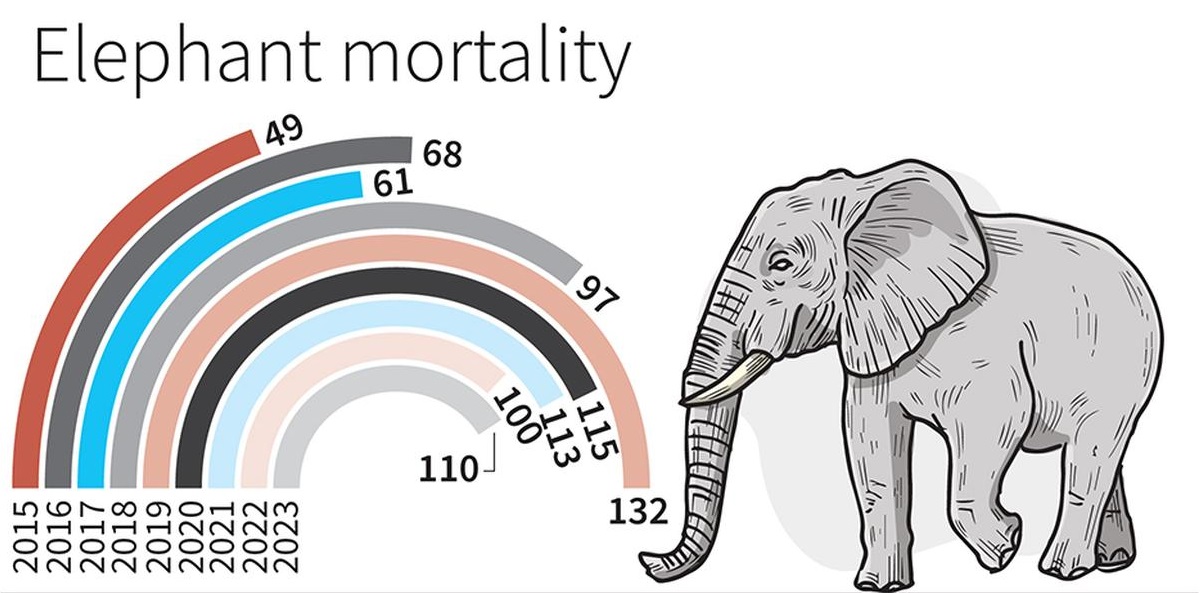
    • Kerala’s forests have recorded 845 elephant deaths between 2015 and 2023.
      • Studies indicate an increasing trend in the death rate over time.

    Habitat and Population Challenges

    • Elephants face increasing vulnerability due to shrinking habitats and rising fragmentation exacerbated by climate change.
    • Factors contributing to their susceptibility include:
    1. Declining population sizes
    2. Sensitivity to high temperatures
    3. Competition from invasive plant species disrupting food sources
    4. Heightened susceptibility to diseases

    Elephant Mortality: Key Trends

    • Younger elephants, particularly those under 10 years of age, face the highest risk of mortality.
    • The mortality rate for calves is approximately 40%.
    • The increase in deaths among calves is primarily due to Elephant Endotheliotropic Herpesviruses – Haemorrhagic Disease (EEHV-HD).

    Influence of Herd Size on Survival:

    • A recent study in Sri Lanka highlights potential mitigating factors against the herpesvirus.
    • Calves in larger herds exhibit better survival rates due to shared immunity.
    • Exposure to various virus strains within larger herds helps calves develop antibodies, improving their chances of survival.

    About Elephants in India

    Details
    Population Estimate
    • India hosts the largest population of wild Asian Elephants (Elephas maximus), with around 29,964 individuals,
    • Approximately 60% of the global population (2017 census).
    Leading States Karnataka holds the highest number of elephants, followed by Assam and Kerala.
    Conservation Status
    • IUCN Red List:  Endangered.
    • CMS: Appendix I.
    • Wildlife (Protection) Act, 1972: Listed under Schedule I,
    • CITES: Appendix I.
    Conservation Initiatives
    • Project Elephant launched in 1992, covering 23 states across India.
    • India is home to more than 60% of all wild Asian elephants.
    • Contributed to the increase in wild elephant population from around 25,000 in 1992 to about 30,000 in 2021.
    • Establishment of Elephant Reserves. Total 33 in numbers covering approximately 80,777 Sq.km.


    PYQ:

    [2020] With reference to Indian elephants, consider the following statements:

    1. The leader of an elephant group is a female.
    2. The maximum gestation period can be 22 months.
    3. An elephant can normally go on calving till the age of 40 years only.
    4. Among the States in India, the highest elephant population is in Kerala.

    Which of the statements given above is/are correct?

    (a) 1 and 2 only

    (b) 2 and 4 only

    (c) 3 only

    (d) 1, 3 and 4 only

  • International Space Agencies – Missions and Discoveries

    Cave on the Moon: What this discovery means for space exploration?

    Note4Students

    From UPSC perspective, the following things are important:

    Prelims level: Lunar Caves; Mare Tranquillitatis, LRO.

    Why in the News?

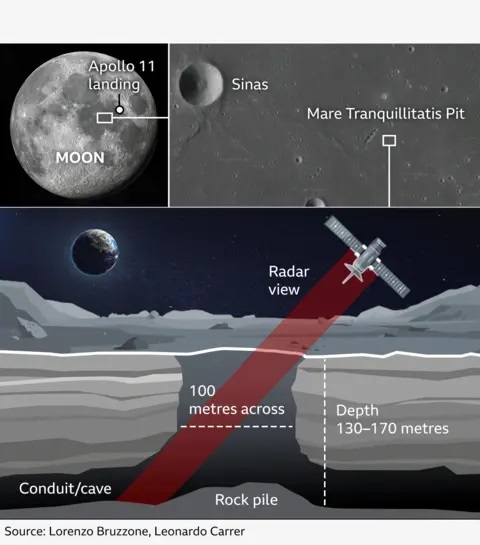
    • Scientists have confirmed the presence of a cave on the Moon, near the site of the first lunar landing 55 years ago.
    • This discovery could provide astronauts with a potential habitat on the Moon in the future.

    About the Cave on Mare Tranquillitatis

    • A study titled “Radar evidence of an accessible cave conduit on the Moon below the Mare Tranquillitatis pit” was published in the journal Nature Astronomy.
    • The study established the presence of a moon cave at the Sea of Tranquillity, a large, dark, basaltic plain on the Moon’s surface.
    • The cave is located 400 kilometers from where astronauts Neil Armstrong and Buzz Aldrin landed in 1969.
    • It is roughly 45 meters wide and up to 80 meters long, with an area equivalent to 14 tennis courts.

    Research Method

    • Researchers analyzed photos taken in 2010 by NASA’s Lunar Reconnaissance Orbiter (LRO) spacecraft.
    • They concluded that the pit was the entry point to a cave created by the collapse of a lava tube, a tunnel formed when molten lava flows beneath a field of cooled lava.

    Back2Basics: Lunar Reconnaissance Orbiter (LRO) 

    • NASA launched the LRO on June 18, 2009.
    • LRO’s primary mission is to map the Moon’s surface in high detail to identify safe landing sites and locate potential resources.
    • It is equipped with seven scientific instruments, including a camera, a laser altimeter, and a radiation detector.
    • LRO has provided critical data on lunar topography, temperature, and radiation levels, significantly enhancing our understanding of the Moon.

    Characteristics of Lunar Caves

    • Craters are bowl-shaped and result from asteroid or comet strikes.
    • Pits, in contrast, appear as massive steep-walled depressions.
    • At least 200 such pits have been discovered, with 16 believed to have formed from collapsed lava tubes due to volcanic activity over a billion years ago.

    Benefits for Human Exploration

    • The Moon is exposed to solar radiation 150 times stronger than Earth.
    • The lunar surface heats to about 127 degrees Celsius during the day and cools to around -173 degrees Celsius at night.
    • Caves, however, maintain stable average temperatures of around 17 degrees Celsius.
    • They could shield human explorers from radiation and micrometeorites, making them viable for future lunar bases or emergency shelters.

    Challenges and Further Research

    • The depth of such caves could present challenges for accessibility.
    • There are risks of potential avalanches and cave-ins.

    Need for Further Research

    • Further research is needed to understand and map the structural stability of the caves.
    • This could be done using ground-penetrating radar, robots, or cameras.
    • To become viable habitats, caves would need systems to monitor movement or seismic activity and safety zones for astronauts in case of a cave collapse.

    PYQ:

    [2008] Selene-1, the lunar orbiter mission belongs to which one of the following?

    (a) China

    (b) European Union

    (c) Japan

    (d) USA

  • Innovations in Biotechnology and Medical Sciences

    Could Pythons be a Protein alternative?

    Note4Students

    From UPSC perspective, the following things are important:

    Prelims level: Python Farming

    Why in the News?

    • In the farmlands of central Thailand, thousands of pythons are raised in a warehouse for their diamond-patterned skins, which are sold to high-end European fashion houses.
      • Some scientists and industry insiders believe the true value of these snakes lies in their meat.

    Python Farming in Asia

    • Researchers estimate that China and Vietnam alone have at least 4,000 python farms, producing several million snakes primarily for the fashion industry.
    • A study published in Nature highlighted python farming as a flexible and efficient response to global food insecurity.

    Benefits of Python Farming

    • Pythons can survive for months without food or water and maintain their condition.
    • They were fed waste chicken and wild-caught rodents, offering a more efficient feed-to-meat ratio than poultry, beef, and even crickets.
    • Female pythons can lay between 50 and 100 eggs annually, leading to rapid reproduction.

    Advantages of Python Meat

    • Pythons offer a more efficient feed-to-meat ratio than poultry, beef, and even crickets.
    • They can survive without food and water for months without losing condition.
    • Python meat has a chicken-like texture and is low in saturated fats.
    • It could provide a sustainable protein source with a lower environmental impact compared to traditional meat.

    Challenges and Market Acceptance

    • Despite the advantages, the market is limited for python meat.
    • Python farmers struggle to convince people to consume snake meat, resulting in most of it being discarded or sold to fish farms.

    Environmental Impact of Traditional Meat

    • The UN’s IPCC notes that meat from grazing animals has the greatest environmental impact.
    • The climate impact of traditional meat is significant, with beef identified as having the greatest environmental impact.
    • The UN and climate activists advocate for a more plant-based diet, but the demand for meat is expected to increase by 14% by 2032.
    • Drought and extreme weather are making traditional farming difficult in many parts of the world, increasing the need for alternative protein sources.
    • The paradox of rising meat demand and environmental concerns has spurred interest in alternatives like edible insects and lab-grown meats.

    Python Meat as an Alternative

    • Protein-energy malnutrition caused nearly 190,000 deaths globally in 2021, emphasizing the urgent need for protein sources in many parts of the world.
    • Python meat could help address this issue, offering a sustainable and efficient alternative.


    PYQ:

    [2018] How far do you agree with the view that the focus on lack of availability of food as the main cause of hunger takes the attention away from ineffective human development policies in India?

  • How the Peace Deal in Colombia has affected its Cocaine Industry?

    Note4Students

    From UPSC perspective, the following things are important:

    Prelims level: FARC Peace Deal

    Why in the News?

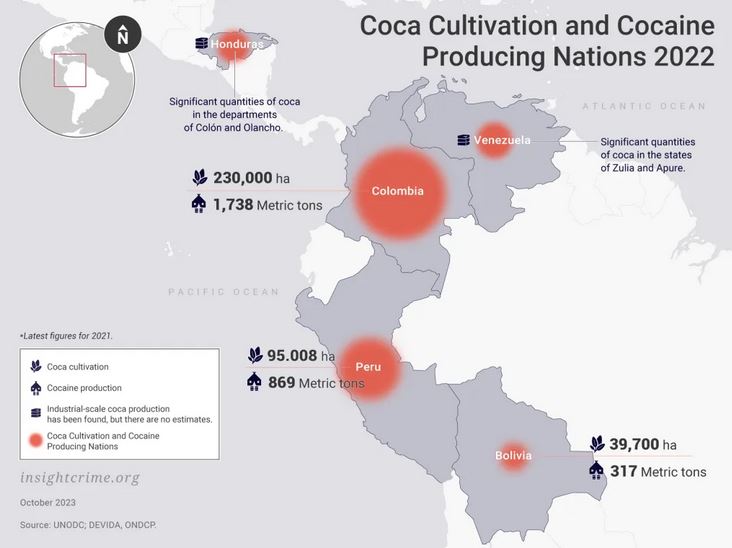
    Colombia, the global center of the cocaine industry, is undergoing significant changes due to domestic and global forces.

    Recent Changes: Disruption in Cocaine Trade

    • Colombia, the global center of the cocaine industry, is undergoing significant changes due to domestic and global forces.
    • Two years ago, drug traffickers who buy coca paste stopped showing up.
    • This sudden halt left the villagers without income, leading to food shortages and exodus in search of jobs.
    • The population of Cano Cabra shrunk from 200 to 40 people.
    • This pattern has repeated in communities across Colombia where coca is the only source of income.

    About the FARC Peace Deal

    • It refers to the agreement reached between the Colombian government and the Revolutionary Armed Forces of Colombia (FARC) to end decades of conflict. It is a significant milestone in Colombia’s efforts to achieve lasting peace and stability.
    • FARC is a Marxist-Leninist guerrilla group founded in 1964 that waged an armed struggle against the Colombian government for over five decades.
    • The conflict resulted in over 220,000 deaths and the displacement of millions of people, making it one of the longest-running conflicts in Latin America.
    • A peace deal was signed on November 24, 2016, and subsequently ratified by the Colombian Congress.

    How does the peace deal impact Columbia?

    • The FARC financed its war through cocaine, relying on farmers to provide coca leaves.
    • After the FARC left the cocaine industry, smaller criminal groups took over, adopting a new economic model.
    • These groups buy large quantities of coca from fewer farmers and limit operations to border regions for easier drug transport.
    • The shift in the drug trade has left the communities economically devastated.

    Cocaine Production in Latin America:

    • Pablo Escobar the famous drug lord and the leader of the Medellín Cartel was a Colombian.
    • Ecuador has become a top cocaine exporter, and coca cultivation has increased in Peru and Central America.
    • These changes have pushed global cocaine production to record highs.
    • While cocaine consumption has reduced in the United States, it is growing in Europe and Latin America and emerging in Asia.

    Implications on India:

    • Changes in the Colombian cocaine industry may alter global drug trafficking routes.
    • India, as part of the global drug trade network, could see changes in the routes used to smuggle cocaine into the country.
    • Increased cocaine production globally could lead to a higher availability of the drug in India.
    • This could result in an increase in drug trafficking activities within the country visible in increased seizures in major cities like Pune.
    • Higher availability of cocaine could lead to an increase in drug abuse cases in India.

    PYQ:

    [2018] India’s proximity to the two of the world’s biggest illicit opium-growing states has enhanced her internal security concerns. Explain the linkages between drug trafficking and other illicit activities such as gunrunning, money laundering and human trafficking. What counter-measures should be taken to prevent the same?

  • Government Budgets

    Union Govt. eases Procurement Rules for Scientific Research Goods

    Note4Students

    From UPSC perspective, the following things are important:

    Prelims level: General Finance Rules (GFR)

    Why in the News?

    • The Finance Ministry has announced new rules under the General Finance Rules (GFR) to give scientific Ministries more flexibility in importing and buying research equipment.
      • These changes address scientists’ concerns about strict rules have slowed down research.

    Changes introduced in GFR

    • The limit for buying goods without needing a tender has been raised from ₹25,000 to ₹1,00,000.
    • For goods priced between ₹25,000 and ₹250,000, a committee of three members must check the market for the best value and quality.
    • This limit has been raised from ₹1,00,000 to ₹10,00,000.

    Note: These changes only apply if the goods are NOT available on the Government e-Marketplace (GeM).

    What are General Finance Rules (GFR)?

    • The General Finance Rules (GFR) are a set of rules issued by the Government of India to regulate financial matters in public administration.
    • They provide a framework for financial management, ensuring accountability, transparency, and efficiency in the use of public funds.
    • The GFR were first issued in 1947, post-independence.
    • The rules have been revised multiple times, with significant updates in 1963, 2005, and the latest in 2017.
    • The GFR applies to all central government departments, ministries, and organizations funded by the government.

    Key Provisions:

    • General System of Financial Management: Guidelines on budgeting, accounting, and auditing.
    • Procurement of Goods and Services: Rules for procurement, emphasizing transparency and competition.
    • Contract Management: Procedures for awarding, managing, and terminating contracts.
    • Inventory Management: Guidelines for managing government inventories and assets.
    • Grants-in-Aid: Procedures for providing grants to institutions and individuals.

    Major Highlights:

    • Emphasis on e-procurement to enhance transparency and efficiency.
    • Use of the Government e-Marketplace (GeM) for procurement of common use goods and services.
    • Requirement for performance security in government contracts to ensure compliance and reduce risk.
    • Strengthening of internal controls and audit mechanisms to ensure compliance with rules and regulations.

    Back2Basics: Government e-Marketplace (GeM)  

    • The GeM is a one-stop National Public Procurement Portal to facilitate online procurement of common use Goods & Services required by various Government Departments / Organizations / PSUs.
    • It was launched in 2016 by the Ministry of Commerce and Industry.
    • It was developed by the Directorate General of Supplies and Disposals (under MCI) with technical support from the National E-Governance Division (MEITy).
  • Global Geological And Climatic Events

    Last Universal Common Ancestor (LUCA)

    Note4Students

    From UPSC perspective, the following things are important:

    Prelims level: Last Universal Common Ancestor (LUCA); Molecular Clock Theory; Oparin-Haldane Hypothesis; Miller-Urey Experiment.

    Why in the News?

    • The origin of life on Earth remains one of the world’s most enduring mysteries.
      • Numerous competing theories exist, but none have conclusive proof.
      • A significant concept in understanding the origin of life is the Last Universal Common Ancestor (LUCA).

    What is the Last Universal Common Ancestor (LUCA)?

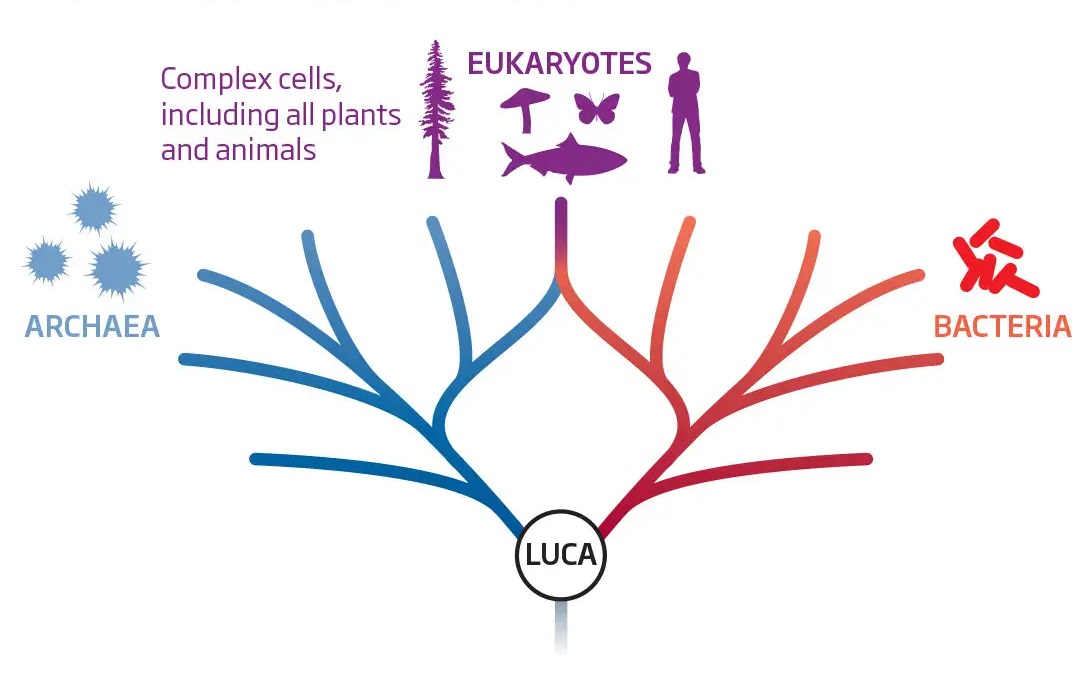
    • Researchers believe that all life forms— the Bacteria, the Archaea, and the Eukarya —originated from a single cell known as the last universal common ancestor (LUCA).
    • It is suggested to have been a “cellular organism that had a lipid bilayer and used DNA, RNA, and protein“.
    • There is a lack of clarity about direct fossil evidence of LUCA.
    • However, the shared features of modern genomes provide significant insights into this ancient ancestor.

    LUCA and the Molecular Clock:  

    • The molecular clock theory was proposed by molecular biologist Emile Zuckerkandl and biochemist Linus Pauling in the 1960s and later refined by biologist Motoo Kimura.
    • The theory allows scientists to reconstruct the evolutionary timeline.
    • According to the theory, the rate at which mutations are added or removed from a population’s genome is proportional to the rate of acquiring new mutations, which is constant.
    • By calibrating the molecular clock with known events, such as the emergence of the first mammals or the age of certain fossils, researchers can estimate the time between evolutionary events.

    Recent Research Findings on LUCA’s Age and Genome

    • Researchers at the University of Bristol and Exeter estimate that LUCA originated around 4.2 billion years ago, nearly 1 billion years earlier than previously thought. 
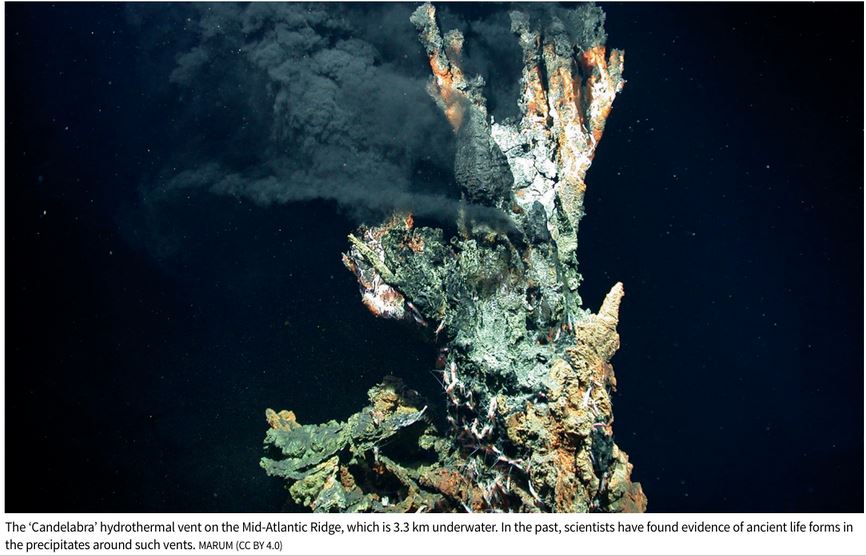
      • They obtained evidence from the 3.3 km deep Candelabra’ hydrothermal vent on the Mid-Atlantic Ridge.
    • LUCA had a small genome of about 2.5 million bases encoding 2,600 proteins, sufficient for survival in a unique niche.
    • Its metabolites may have created a secondary ecosystem for other microbes.
    • The presence of immunity genes in LUCA suggests it had to defend against viruses.

    Evidence Verification using Miller-Urey Experiment

    • In 1952, Stanley Miller and Harold Urey conducted an experiment at the University of Chicago, simulating lightning strikes on a mixture of methane, ammonia, and water, which resulted in the formation of amino acids.
    • This demonstrated that complex organic compounds could arise from inorganic compounds under the right conditions.

    Which is older: LUCA or fossils?

    • LUCA’s estimated origin at 4.2 billion years predates the earliest fossil records by almost 1 billion years.
    • Fossil records from the Pilbara Craton in Australia suggest life emerged around 3.4 billion years ago, but the study pushes this date back.

    Alternative Theories: 

    (1) Extraterrestrial Origin

    • Another prominent theory suggests that meteorites from space could have brought the building blocks of life to Earth.
    • This theory is supported by various discoveries.
    • In August 2019, French and Italian scientists reported finding 3.3 billion-year-old extraterrestrial organic material.
    • Japan’s Hayabusa 2 mission to the asteroid Ryugu detected more than 20 amino acids, further supporting the possibility of an extraterrestrial origin for the building blocks of life.

    (2) Oparin-Haldane Hypothesis

    • In the 1920s, Alexander Oparin and J.B.S. Haldane independently proposed theories regarding the origin of life.
    • They suggested that life originated from a “primordial soup” in a prebiotic environment on the young Earth.
    • This concept is now known as the Oparin-Haldane hypothesis.


    PYQ:

    [2012] Which one of the following sets of elements was primarily responsible for the origin of life on the Earth?

    (a) Hydrogen, Oxygen, Sodium

    (b) Carbon, Hydrogen, Nitrogen

    (c) Oxygen, Calcium, Phosphorus

    (d) Carbon, Hydrogen, Potassium

  • Festivals, Dances, Theatre, Literature, Art in News

    [pib] World Heritage Young Professionals Forum, 2024

    Note4Students

    From UPSC perspective, the following things are important:

    Prelims level: World Heritage Young Professionals Forum

    Why in the News?

    • India is hosting the UNESCO’s World Heritage Committee meeting for the first time in New Delhi.
      • Theme: “World Heritage in the 21st Century: Building Capacities and Exploring Opportunities for Youth.”

    About the World Heritage Young Professional Forum

    • The World Heritage Young Professionals Forum is an initiative by UNESCO to engage young professionals in the field of heritage conservation.
    • The first World Heritage Young Professionals Forum was organized in 1995.
    • The primary aim is to engage young professionals in heritage conservation and management through capacity building, networking, and awareness-raising.

    Back2Basics: UNESCO World Heritage Sites

    Description
    UNESCO World Heritage Sites Landmarks or areas selected by UNESCO for their cultural, historical, scientific, or other significant value, legally protected by international treaties.
    Importance World Heritage Sites represent collective and preservative interests of humanity, signifying remarkable accomplishments and intellectual history.
    Selection Criteria Sites must be already-classified landmarks, unique and significant culturally or physically, such as ancient ruins, historical structures, cities, monuments, etc.
    Conservation World Heritage Sites require practical conservation to protect them from risks like trespassing, uncontrolled access, or administrative negligence.
    World Heritage Committee Selects and monitors World Heritage Sites, manages the World Heritage Fund, and provides financial assistance. Composed of 21 states parties elected for a four-year term.
    Membership India is not a member of the World Heritage Committee.


    PYQ:

    [2014] Consider the following international agreements:

    1. The International Treaty on Plant Genetic Resources for Food and Agriculture
    2. The United Nations Convention to Combat Desertification
    3. The World Heritage Convention

    Which of the above has / have a bearing on the biodiversity?

    (a) 1 and 2 only

    (b) 3 only

    (c) 1 and 3 only

    (d) 1, 2 and 3

  • Minority Issues – SC, ST, Dalits, OBC, Reservations, etc.

    Karnataka State Employment of Local Candidates in the Industries, Factories and Other Establishments Bill, 2024

    Note4Students

    From UPSC perspective, the following things are important:

    Prelims level: Quota for Locals; Constitutional provisions invoked.

    Why in the News?

    The Karnataka Cabinet has approved a bill mandating that industries, factories, and other establishments appoint local candidates in 50% of management positions and 75% in non-management positions.

    • The bill was cleared in a Cabinet meeting chaired by the Chief Minister.

    Key features of the Bill:

    • Definition of a Local Candidate:
      • Born in Karnataka
      • Domiciled in Karnataka for 15 years
      • Proficient in speaking, reading, and writing Kannada
      • Passed a required test by the nodal agency
    • Educational Requirements:
      • Must have a secondary school certificate with Kannada as a language, or
      • Pass a Kannada proficiency test specified by the nodal agency
    • Training and Relaxation Provisions:
      • Industries and establishments must train local candidates within three years if qualified locals are unavailable
      • Establishments can apply for relaxation if local candidates are insufficient
      • The government’s decision on relaxation applications is final
      • Local candidates must constitute at least 25% in management and 50% in non-management positions
      • Non-compliance penalties range from ₹10,000 to ₹25,000

    Do you know?

    • The Punjab and Haryana High Court earlier quashed the Haryana State Employment of Local Candidates Act, 2020, which mandated 75% reservation for state domiciles in the private sector jobs.
    • This decision was made because the State had overstepped its legislative authority and imposed undue restrictions on private employers.

    Background and Rationale:

    • Long-pending Demand:
      • The bill has been passed in response to longstanding demands for 100% job reservation for Kannadigas.
      • Earlier in July, Kannada organizations organized rallies in parts of the State, demanding immediate implementation of the Sarojini Mahishi Report.
    • Sarojini Mahishi Report:
      • The Sarojini Mahishi report, submitted in 1984 by Mahishi, former Union Minister and the first woman MP from Karnataka, included 58 recommendations.
      • The report recommended 100% reservation for locals in group C and D jobs in Central government departments and public sector undertakings (PSUs) in Karnataka.

    Reservation for Locals in Jobs: Constitutionality Check 

    Provision Potential Violation
    Article 14 Guarantees equality before the law and equal protection of the laws. Reservation for locals could create unequal opportunities for non-locals, violating the principle of equality.
    Article 15 Prohibits discrimination on grounds of religion, race, caste, sex, or place of birth. Reserving jobs for locals based on place of birth or domicile status may constitute discrimination against non-locals.
    Article 16 Ensures equality of opportunity for all citizens in matters relating to employment or appointment to any office under the State. Though it allows reservation for backward classes, it does not explicitly extend this provision to private employment, making mandatory quotas for locals potentially unconstitutional.
    Article 19 Guarantees the freedom to move freely throughout the territory of India. Imposing local reservations could restrict the free movement of people seeking employment opportunities across states, infringing upon their freedom of movement and residence.


    PYQ:

    [2017] One of the implications of equality in society is the absence of:

    (a) Privileges

    (b) Restraints

    (c) Competition

    (d) Ideology

  • Civil Aviation Sector – CA Policy 2016, UDAN, Open Skies, etc.

    India to host 2nd Asia Pacific Ministerial Conference on Civil Aviation

    Note4Students

    From UPSC perspective, the following things are important:

    Prelims level: ICAO APAC

    Why in the News?

    • India will host the second Asia Pacific Ministerial Conference on Civil Aviation on September 11 and 12.
      • The conference will be jointly organised by the Indian government and the International Civil Aviation Organization (ICAO) APAC.

    About the International Civil Aviation Organization (ICAO)

    Details
    Establishment and Background
    • Founded on December 7, 1944, by the Chicago Convention on International Civil Aviation
    • Became a specialized agency of the United Nations in 1947
    • HQ: Montreal, Canada
    Objectives and Mission
    • Develop international standards and regulations for aviation safety, security, efficiency, and environmental protection
    • Promote safe and orderly growth of international air transport
    Structure and Governance
    • Assembly: Meets every three years, includes all member states
    • Council: Governing body with 36 elected member states
    • Secretariat: Led by the Secretary General, manages daily operations
    Membership
    • 193 member states as of 2024
    • Open to all states subscribing to Chicago Convention principles
    • India: Founding member, joined in 1944
    Functions and Responsibilities
    • Establish international standards and recommended practices (SARPs)
    • Conduct audits and monitor SARPs compliance
    • Provide technical assistance and capacity-building
    • Facilitate aviation data and statistics collection
    Key Areas of Focus
    • Safety: Enhance global aviation safety
    • Security: Strengthen aviation security measures
    • Efficiency: Promote efficient air navigation services
    • Environmental Protection: Address aviation’s environmental impact
    Significant Programs and Initiatives
    • Universal Safety Oversight Audit Programme (USOAP): Monitors safety oversight capabilities
    • Universal Security Audit Programme (USAP): Evaluates aviation security measures
    • Next Generation Aviation Professionals (NGAP): Addresses anticipated aviation professionals shortage
    • No Country Left Behind (NCLB): Assists states in implementing ICAO standards and policies
    Publications and Resources
    • Annexes to the Chicago Convention: SARPs across civil aviation domains
    • ICAO Journal: Quarterly publication
    • Global Aviation Safety Plan (GASP) and  Global Air Navigation Plan (GANP): Strategic documents for aviation safety and navigation improvements.
    Regional Offices Seven offices in Bangkok, Cairo, Dakar, Lima, Mexico City, Nairobi, and Paris
    Standards
    • Annex 1: Personnel Licensing
    • Annex 6: Operation of Aircraft
    • Annex 8: Airworthiness of Aircraft
    • Annex 17: Security
    • Annex 19: Safety Management
    Global Impact
    • Harmonizes international aviation policies and procedures
    • Contributes to safe, secure, and sustainable growth of global air transport

    About Asia Pacific Ministerial Conference on Civil Aviation

    • The conference aims to strengthen regional collaboration and develop a future-focused vision for the region, emphasizing innovation and safety.
    • The inaugural conference took place in February 2018 in Beijing.
    • 39 member states of the UN aviation safety body, the International Civil Aviation Organisation (ICAO), from the Asia Pacific region are expected to attend.
    • The conference focuses on making aviation travel sustainable, resilient, and adaptive to the changing needs of a globally interconnected community.
      • This region accounts for 33.41% of global flight departures, the highest of any region worldwide.
      • Passenger numbers are expected to increase from 4.5 billion this year to 11.5 billion by 2050.

    PYQ:

    [2014] International civil aviation laws provide all countries with complete and exclusive sovereignty over the airspace above their territory. What do you understand by ‘airspace’ What are the implications of these laws on the space above this airspace? Discuss the challenges which this poses and suggest ways to contain the threat.