💥UPSC 2026, 2027, 2028 UAP Mentorship (March Batch) + Access XFactor Notes & Microthemes PDF

Type: Prelims Only

  • Wildlife Conservation Efforts

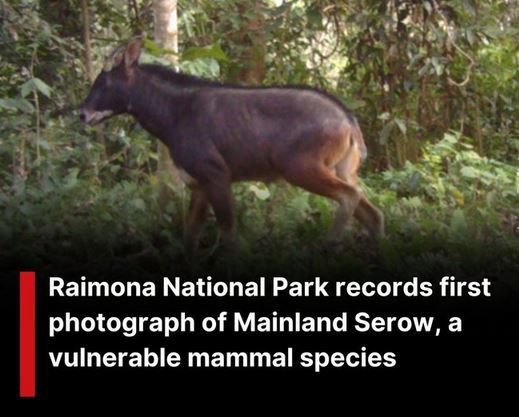
    Himalayan Serow recorded at Assam’s Raimona National Park

    Note4Students

    From UPSC perspective, the following things are important:

    Prelims level: Himalayan Serow; Raimona National Park.

    Why in the News?

    • A mainland serow aka. Himalayan Serow (Capricornis sumatraensis thar) was recorded at 96 metres above mean sea level in Raimona National Park, Assam.
      • This is the lowest elevation recorded for the species beyond Bhutan, its natural habitat.

    About Himalayan Serow

    Details
    About Herbivore species.

    Also known as Thar.

    Resembles a cross between a goat, a donkey, a cow, and a pig.

    Recognition Official state animal of Mizoram.
    Distribution
    • Found at altitudes between 2,000 metres and 4,000 metres (6,500 to 13,000 feet).
    • Found across the India-Bhutan border in Phibsoo Wildlife Sanctuary and Royal Manas National Park.
    • Present in eastern, central, and western Himalayas, but not in the Trans Himalayan region.
    Conservation Status
    • IUCN Red List: Vulnerable
    • CITES: Appendix I
    • The Wildlife Protection Act, 1972: Schedule I


    Back2Basics:  Raimona National Park 

    • Raimona National Park is a newly established protected area located in the Bodoland Territorial Region (BTR) of Assam.
    • It was officially declared a national park in June 2021, becoming the sixth national park in the state of Assam.
    • It shares its northern boundary with Bhutan, forming part of the transboundary conservation landscape.
    • It is characterised by dense forests, rivers, and grasslands. The park is part of the greater Manas Biosphere Reserve and serves as an extension of the Manas National Park.
    • The area is interspersed by the Sankosh River which flows through the park.

    Flora and Fauna:

    • Flora: The park boasts a rich biodiversity with various types of vegetation, including semi-evergreen forests, mixed deciduous forests, and patches of grassland.
    • Fauna: Hosts a variety of wildlife, including:
      • Mammals: Asian elephants, tigers, clouded leopards, golden langurs, Indian gaur, and several species of deer.
      • Birds: Home to numerous bird species, including hornbills, great pied hornbills, and various migratory birds.
      • Reptiles and Amphibians: The park also supports a diverse range of reptiles and amphibians, adding to its ecological richness.


    PYQ:

    [2011] The Himalayan Range is very rich in species diversity. Which one among the following is the most appropriate reason for this Phenomenon?

    (a) It has a high rainfall that supports luxuriant vegetative growth

    (b) It is a confluence of different bio-geographical zones.

    (c) Exotic and invasive species have not been introduced in this region.

    (d) It has less human interference.

  • Defence Sector – DPP, Missions, Schemes, Security Forces, etc.

    [pib] Launching of LSAM 20 (Yard 130)  

    Note4Students

    From UPSC perspective, the following things are important:

    Prelims level: Security; LSAM 20;

    Why in the News?

    The Indian Navy has inducted the ‘Ammunition Cum Torpedo Cum Missile Barge, LSAM 20 (Yard 130) into its fleet.

    What is LSAM 20?

    • LSAM 20 (Yard 130) is the Ammunition Cum Torpedo Cum Missile Barge (Storage) inducted by the Indian Navy.  (built by MSME Shipyard, M/s Suryadipta Projects Pvt Ltd, Thane).
    • LSAM 20 facilitates transportation, embarkation, and disembarkation of articles/ammunition to IN Ships.
    • These Barges are indigenously designed and built under relevant Naval Rules and Regulations of the Indian Register of Shipping.

    Objective 

    • A Torpedo Cum Missile Barge is a specialized vessel used by the Indian Navy to transport various types of ammunition, torpedoes, and missiles to operational areas. 
    • These barges play a crucial role in providing logistical support to naval vessels by ensuring the uninterrupted transportation of essential military supplies. 

    PYQ:

    [2016] Which one of the following is the best description of ‘INS Astradharini’, that was in the news recently?

    (a) Amphibious warfare ship

    (b) Nuclear-powered submarine

    (c) Torpedo launch and recovery vessel

    (d) Nuclear-powered aircraft carrier

    Practice MCQ:

    What is the primary function of LSAM 20 (Yard 130) recently inducted by the Indian Navy?

    a) Transportation of personnel

    b) Transporting ammunition, torpedoes, and missiles

    c) Search and rescue operations

    d) Underwater surveillance


  • NPA Crisis

    RBI’s New Guidelines for Asset Reconstruction Companies (ARCs)

    Note4Students

    From UPSC perspective, the following things are important:

    Prelims level: Asset Reconstruction Companies, SARFAESI Act, 2002;

    Mains level: NA

    Why in the news?

    The RBI has introduced updated guidelines for Asset Reconstruction Companies (ARCs) through a master direction, effective from April 24, 2024.

    What is an Asset Reconstruction Company (ARC)?

    Description
    About ARC is a special financial institution that acquires debtors from banks at a mutually agreed value and attempts to recover the debts or associated securities.
    Regulation ARCs are registered under the RBI.

    Regulated under the SARFAESI Act, 2002 (Securitisation and Reconstruction of Financial Assets and Enforcement of Securities Interest Act).

    Objective ARCs take over a portion of the bank’s non-performing assets (NPAs) and engage in asset reconstruction or securitization, aiming to recover the debts.
    Functions Asset Reconstruction: Acquisition of bank loans or other credit facilities for realization. 

    Securitization: Acquisition of financial assets by issuing security receipts.

    Foreign Investment 100% FDI allowed in ARCs under the automatic route.
    Limitiations ARCs are prohibited from undertaking lending activities. 

    They can only engage in securitization and reconstruction activities.

    Working Bank with NPA agrees to sell it to ARC at a mutually agreed value. 

    ARC transfers assets to trusts under SARFAESI Act. 

    Upfront payment made to bank, rest through Security Receipts. 

    Recovery proceeds shared between ARC and bank.

    Security Receipts Issued to Qualified Institutional Buyers (QIBs) for raising funds to acquire financial assets.
    Significance Banks can clean up their balance sheets and focus on core banking activities. 

    Provides a mechanism for resolution of NPAs and debt recovery.


    What are the new guidelines laid out by the RBI?

    • Enhanced Capital Requirements:
        • Minimum Capital Requirement Increase: ARCs are now mandated to maintain a minimum capital requirement of Rs 300 crore, a significant increase from the previous Rs 100 crore stipulation established on October 11, 2022.
        • Transition Period for Compliance: Existing ARCs are granted a transition period to reach the revised Net Owned Fund (NOF) threshold of Rs 300 crore by March 31, 2026.
        • Interim Requirement: However, by March 31, 2024, ARCs must possess a minimum capital of Rs 200 crore to comply with the new directives.
    • Supervisory Actions for Non-Compliance:
        • ARCs failing to meet the prescribed capital thresholds will face supervisory action, potentially including restrictions on undertaking additional business until compliance is achieved.
    • Expanded Role for Well-Capitalized ARCs:
      • Empowerment of Well-Capitalized ARCs: ARCs with a minimum NOF of Rs 1000 crore are empowered to act as resolution applicants in distressed asset scenarios.
      • Investment Opportunities: These ARCs are permitted to deploy funds in government securities, scheduled commercial bank deposits, and institutions like SIDBI and NABARD, subject to RBI specifications. Additionally, they can invest in short-term instruments such as money market mutual funds, certificates of deposit, and corporate bonds commercial papers.
      • Investment Cap: Investments in short-term instruments are capped at 10% of the NOF to mitigate risk exposure.

    PYQ:

    [2018] With reference to the governance of public sector banking in India, consider the following statements:

    1. Capital infusion into public sector banks by the Government of India has steadily increased in the last decade.
    2. To put the public sector banks in order, the merger of associate banks with the parent State Bank of India has been affected.

    Which of the statements given above is/are correct?

    (a) 1 only 

    (b) 2 only 

    (c) Both 1 and 2 

    (d) Neither 1 nor 2


  • Climate Change Impact on India and World – International Reports, Key Observations, etc.

    Why the Thar Desert on the borders of India and Pakistan is getting greener?

    Note4Students

    From UPSC perspective, the following things are important:

    Prelims level: Thar Desert, Desert National Park;

    Mains level: NA

    Why in the news?

    Rajasthan’s barren Thar Desert may turn green, says a recent study in the journal Earth’s Future.  

    About Thar Desert

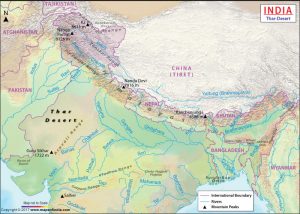
    • The Thar Desert is the 18th largest subtropical desert globally and is one of the most densely populated deserts.
    • Approximately 40% of the human population in Rajasthan resides in the Thar Desert.
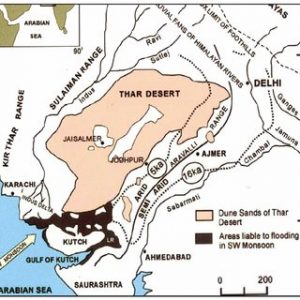
    • It extends from the Sutlej River and is bounded by the Rann of Kutch, the Aravalli Mountains, and the Indus River.
    • About 85% of the Thar Desert is located in India, with the remainder in Pakistan. 
    • In India, it spans across Rajasthan, Gujarat, Haryana, and Punjab as well.
    • Civilizations are believed to have thrived in the Thar region around 50,000 years ago across the extinct Saraswati River.
    • The Desert National Park (home to the endangered Great Indian Bustard, desert fox, desert cat, blackbuck, and Indian gazelle) is situated in the Thar Desert in the northwest Indian state of Rajasthan.

    Why the thar desert getting greener?

    • Climate Change Effects:
        • Alteration of Weather Patterns: Climate change is causing shifts in rainfall distribution in the thar desert area.
        • Potential for Vegetation Growth: The increased precipitation could provide favorable conditions for vegetation growth, contributing to the greening of the desert.
    • Indian Monsoon Dynamics:
        • Westward Extension of Indian Monsoon: The Indian monsoon, known for bringing heavy rainfall to eastern India, is now extending further westward into regions like the Thar Desert.
        • Impact on Moisture and Rainfall: This change in monsoon dynamics could lead to increased moisture and rainfall in the desert region, facilitating the growth of vegetation.
    • Expansion of Indian Ocean Warm Pool (IOWP):
        • Influence on Monsoon Patterns: The Indian Ocean Warm Pool (IOWP) influences monsoon patterns and rainfall distribution over the Indian subcontinent.
        • Westward Expansion due to Climate Change: Climate change is causing the IOWP to expand westward, potentially resulting in increased rainfall over semi-arid regions like the Thar Desert and promoting greening.
    • Water Management Practices:
        • Contribution to Greening: Effective water management practices, such as rainwater harvesting and irrigation techniques like johad, kuis, and kunds, may be playing a role in the greening of the Thar Desert.
        • Utilization of Water Resources: By harnessing and efficiently utilizing available water resources, local communities and authorities can support vegetation growth and ecosystem restoration efforts in the desert.
    • Introduction of Irrigation  
      • Commercial Cropping: Irrigation was introduced during British colonial rule in the 19th and 20th centuries to convert arid and semi-arid ecosystems into cropland.
      • Restrictions on Grazing: The right to graze animals was restricted to landowners who cultivated crops, leading to the transformation of nomadic pastoralists into sedentary agropastoralists.
    Sustainability of this transformation

    • Recent greening activities, largely on arid scrub savannahs, have threatened species adapted to such climates and have been linked to locust outbreaks.
    • The Indira Gandhi Canal project in the 1980s led to extensive crop cover in the Thar Desert, resulting in areas becoming infertile due to waterlogging and salinity.
    • Planting invasive species, such as prosopis juliflora and acacia tortilis, has led to habitat degradation and biodiversity loss.


    PYQ:

    [2018] Which of the following leaf modifications occur(s) in the desert areas to inhibit water loss?

    1. Hard and waxy leaves
    2. Tiny leaves
    3. Thorns instead of leaves

    Select the correct answer using the code given below:

    (a) 2 and 3 only

    (b) 2 only

    (c) 3 only

    (d) 1, 2 and 3

    [2020] The process of desertification does not have climate boundaries. Justify with examples.

    [2013] Major hot deserts in northern hemisphere are located between 20-30 degree north and on the western side of the continents. Why?  


  • Wildlife Conservation Efforts

    South India’s First and Largest Leopard Safari at Bannerghatta Biological Park

    Note4Students

    From UPSC perspective, the following things are important:

    Prelims level: Leopard Safari at Bannerghatta Biological Park

    Why in the News?

    South India’s first and the country’s largest leopard safari was inaugurated at the Bannerghatta Biological Park (BBP).

    About Bannerghatta Biological Park 

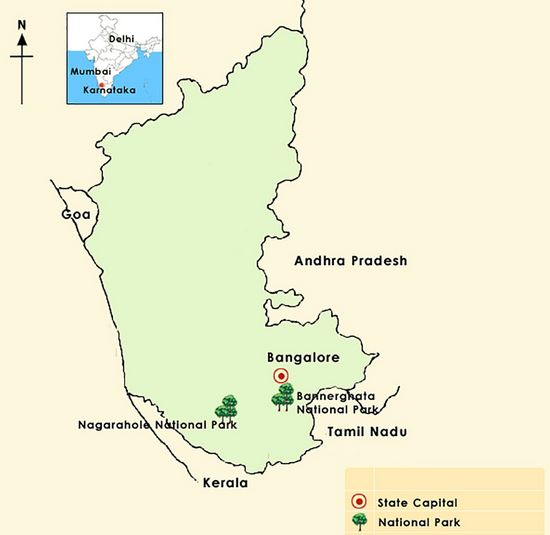
    • BBP is located near Bangalore and was established in 2002.
    • It spans an area of approximately 731.88 hectares, situated within the larger Bannerghatta National Park, which covers around 25,000 acres.
    • The park was created to facilitate the conservation of wildlife, promote tourism, and educate the public about wildlife and conservation efforts.
    • River Suvarnamukhi stream, the main source of water for the animals of the park, runs through the centre of the park.

    Leopards in India

    • The Indian Leopard (Panthera pardus fusca) is a leopard subspecies widely distributed on the Indian subcontinent.
    • These are the smallest of the big cats.
    • They are known for their ability to adapt to a variety of habitats.
    • They are strong and agile predators that can climb trees and drag their prey up for safety.
    • Conservation Status:
    1. IUCN Red List: Vulnerable
    2. CITES: Appendix I
    3. Wildlife (Protection) Act, 1972: Schedule I

    Do you know?

    As per, Status of Leopards in India Report, 2022:

    • India’s leopard population is estimated at 13,874 individuals.
    • Madhya Pradesh houses the largest population of leopards in the country – 3907 (2018: 3421), followed by Maharashtra (2022: 1985; 2018: 1,690), Karnataka (2022: 1,879 ; 2018: 1,783) and Tamil Nadu (2022: 1,070; 2018: 868).


    PYQ:

    [2012] Consider the following:

    1. Black-necked crane
    2. Cheetah
    3. Flying squirrel
    4. Snow leopard

    Which of the above are naturally found in India?

    (a) 1, 2 and 3 only
    (b) 1, 3 and 4 only
    (c) 2 and 4 only
    (d) 1, 2, 3 and 4

  • Foreign Policy Watch: India-United States

    US Seeks Accountability and Institutional Reforms from India Amid Pannun Issue

    Note4Students

    From UPSC perspective, the following things are important:

    Prelims level: Op Blue Star, Golden Temple, Khalistani Movement

    Why in the News?

    India is considering potential institutional reforms in light of the Pannun issue and alleged assassination attempts.

    • The US Deputy Secretary emphasized the US seeks accountability from the Indian government and consistently requests updates on the investigation.

    What is the Pannun Case?

    The Pannun case involves an alleged foiled plot to assassinate Khalistani separatist Gurpatwant Singh Pannun on American soil. Here are the key points:

    Background:

    • Gurpatwant Singh Pannun, who holds dual citizenship of the US and Canada, is wanted in India on terror charges.
    • In November last year, US federal prosecutors charged Indian national Nikhil Gupta with working alongside an Indian government employee in the plot to kill Pannun in New York.
    • Following these allegations, India appointed a high-level inquiry committee to investigate the inputs provided by the US regarding the plot.

    US Position:

    • The US has consistently pressed India for updates on the investigation.
    • US Deputy Secretary of State emphasized seeking accountability from the Indian government and raised the issue directly at senior levels during discussions with Indian counterparts.
    • The US seeks transparency and accountability in the case.


    What is the Khalistan Conspiracy?

    • The Khalistan movement is a separatist movement aiming to establish a sovereign state called Khalistan (Land of the Khalsa) in the Punjab region of India and Pakistan.

    During the Khalistan movement, several significant events shaped its trajectory:

    1. Operation Blue Star (1984): The Indian government launched a military operation to flush out Sikh militants who had taken refuge in the Golden Temple complex in Amritsar. The operation resulted in heavy casualties and damage to the temple, leading to widespread anger among Sikhs.
    2. Assassination of Prime Minister Indira Gandhi (1984): In retaliation for Operation Blue Star, two Sikh bodyguards assassinated Prime Minister Indira Gandhi. This event triggered anti-Sikh riots across India, resulting in the deaths of thousands of Sikhs.
    3. 1985 Punjab Accord: The Indian government and moderate Sikh leaders reached an agreement known as the Punjab Accord. It aimed to address Sikh grievances by granting greater autonomy to Punjab and recognizing the Sikh identity. However, hardline separatists rejected this accord.
    4. Continued Violence (1980s): The 1980s witnessed violent clashes between Sikh militants and security forces. Bombings, assassinations, and attacks on civilians became common. The insurgency intensified, leading to a cycle of violence.
    5. Air India Flight 182 Bombing (1985): A bomb planted by Khalistani militants exploded on Air India Flight 182, killing all 329 passengers and crew. This remains one of the deadliest aviation-related terrorist acts in history.
    6. Decline and Suppression (1990s): By the early 1990s, the Khalistan movement lost momentum due to crackdowns by security forces, factionalism, and disillusionment among Sikhs. Many militants surrendered or were killed.


    Recent rise of events

    • Diaspora Influence: The Sikh diaspora, particularly in countries like the United States, Canada, and the United Kingdom, plays a significant role. These communities maintain strong ties to Punjab and actively advocate for Khalistan, using social media platforms to amplify their message.
    • Social Media: The widespread use of social media allows pro-Khalistan activists to connect, organize, and spread their ideology globally. Online platforms provide a powerful tool for mobilization and recruitment.
    • Leadership: Figures like Amritpal Singh have emerged as charismatic leaders, galvanizing support among disaffected Sikhs. Their influence extends beyond geographical boundaries, inspiring followers both in India and abroad.

    PYQ:

    [2016] Has the formation of linguistic states strengthened the cause of Indian unity?

  • Foreign Policy Watch: India-Africa

    India-Kenya Partnership to Boost Africa’s Space Capabilities

    Note4Students

    From UPSC perspective, the following things are important:

    Prelims level: Key highlights of the conference

    Mains level: India-Kenya Relations

    Why in the News?

    • India has shown interest in partnering with Kenya to develop and expand Africa’s space capabilities for predicting and monitoring extreme weather events.
      • Kenya aims to be an active player in the global space economy, projected to grow significantly by 2035.

    Conference Highlights and Recommendations

    • Conference Conclusion: Calls for more resources for sustainable space activities, including accurate weather and climate event monitoring.
    • Awareness and Innovations: The expo, themed ‘Space technology for societal benefits,’ aimed to raise awareness about space opportunities for societal benefits like climate change mitigation and socio-economic development.
    • Support for Private Sector: Experts recommended that African governments support private sector innovations for data commercialization and explore funding models to de-risk the space sector.
    • STEM Education: Emphasis on boosting national capabilities in space science, breaking entry barriers for women, and promoting STEM education.

    India-Kenya Space Collaboration

    The India-Kenya Space Collaboration particularly aims for:

    • Addressing Food Security: Space technology will be crucial for food security, providing accurate early warning systems for farmers and real-time monitoring for climate change mitigation.
    • Sustainable Development: Space technology integration offers enhanced data for informed decision-making, essential for Kenya’s sustainable development.
    • Regional Collaboration: Kenya is pursuing collaboration on peaceful uses of outer space with African countries such as South Africa, Angola, Rwanda, Uganda, Ethiopia, Sudan, Egypt, Algeria, Nigeria, and Ghana.
    • Capacity Development: Focus on developing indigenous capacity in space systems engineering and utilising space services for socio-economic development through joint projects.

    Kenyan endeavours so far  

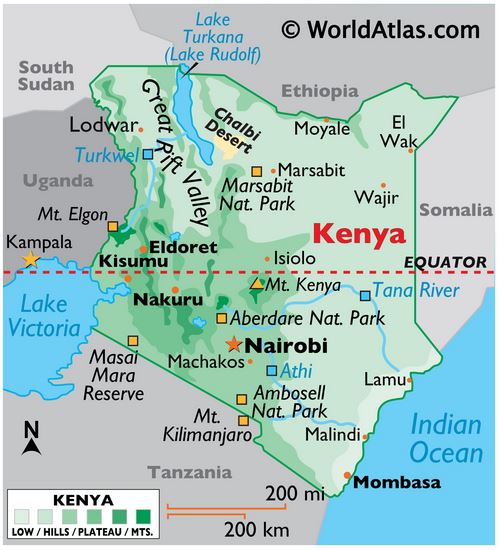
    • Earth Observation Centre: Plans to establish a Centre for Earth Observation at the Luigi Broglio Malindi Space Centre.
    • International Training Centre: Partnership with the Italian Space Agency to establish a Training Centre for Space Education, enhancing national and regional capabilities.

    Back2Basics: India-Kenya Relations

    Historical Ties:

    • Early Connections: Trade between India and the Swahili Coast dates back to ancient times, as documented in the ‘Periplus of the Erythraean Sea’ (60 CE).
    • Colonial Era: Both nations share a legacy of struggle against colonialism, with Indian communities actively supporting Kenya’s freedom struggle.

    Diplomatic Relations:

    • Establishment of Diplomatic Presence: India set up the office of Commissioner for British East Africa residents in Nairobi in 1948, and a High Commission was established following Kenya’s independence in 1963. An Assistant High Commission is also located in Mombasa.
    • High-Level Visits: Numerous high-level visits by Indian leaders, including Presidents and Prime Ministers, have strengthened bilateral ties.

    Bilateral Trade:

    • Trade Agreement: The India-Kenya Trade Agreement signed in 1981 granted both nations Most Favoured Nation status.
    • Indian Exports to Kenya: Petroleum products, pharmaceuticals, steel products, machinery, yarn, vehicles, and power transmission equipment.
    • Kenyan Exports to India: Soda ash, vegetables, tea, leather, and metal scrap.
    • Investment: India is the second-largest investor in Kenya, with over 60 major Indian companies operating in sectors like manufacturing, real estate, pharmaceuticals, telecom, IT & ITES, banking, and agro-based industries.

    Development Cooperation:

    • Development Assistance: India provides loans, credit, and developmental support to Kenya, including capacity-building initiatives such as scholarships for Kenyan students.
    • Agricultural Support: India aids in agrarian development by supplying machinery and facilitating technology transfer.
    • Healthcare Contributions: India is a key supplier of pharmaceuticals to Kenya and has supported healthcare initiatives, including donating 1.12 million doses of the Covishield vaccine in 2021.
    • Environmental Conservation: Cheetahs under the reintroduction project are also being brought from Kenya.

    Cultural and Diaspora Links:

    • Indian Community: Indians have a long-standing presence in Kenya, contributing significantly to its society and economy.
    • Official recognition: In 2017, the Kenyan government recognized the Indian descent as the 44th tribe of the country.

    International Cooperation:

    • Common Interests: Both nations share interests in various international forums, including the Commonwealth, Non-Aligned Movement, and Indian Ocean Rim Association (IORA).
    • Regional Engagement: Kenya is an active member of the African Union, with which India has long-standing connections.


    PYQ:

    [2015] Increasing interest of India in Africa has its pro and cons. Critically Examine.

  • Wildlife Conservation Efforts

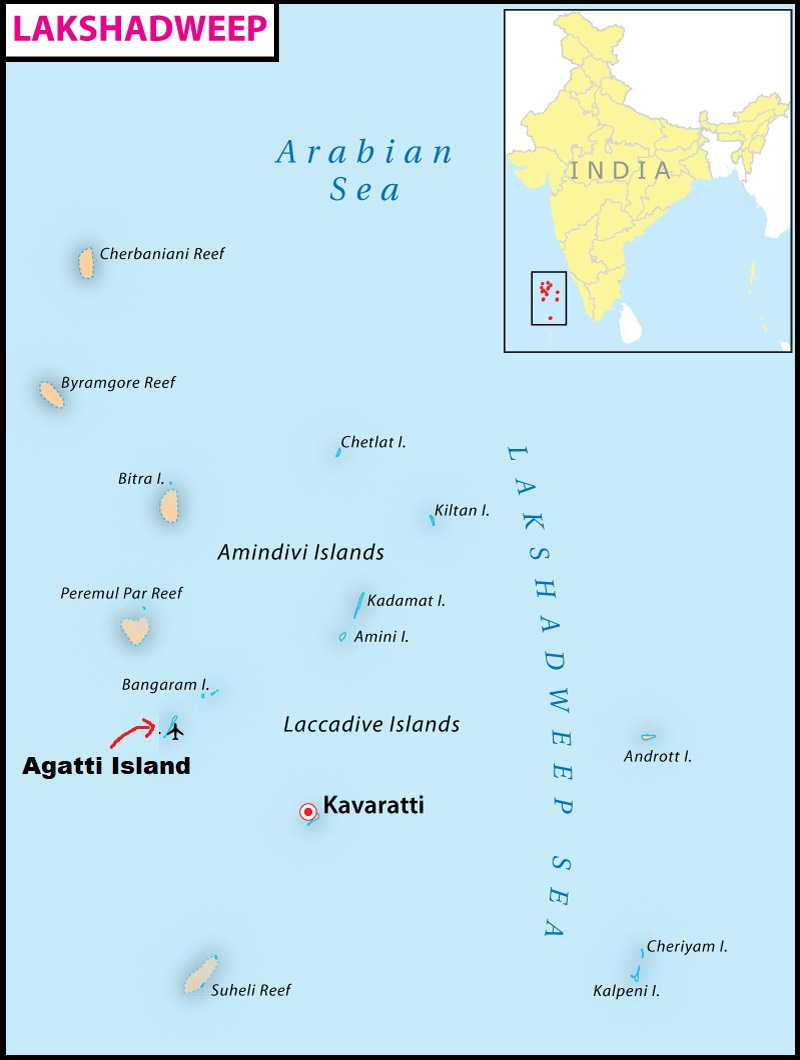
    Mass Coral Bleaching in Lakshadweep: An Overview

    Note4Students

    From UPSC perspective, the following things are important:

    Prelims level: Global Coral Bleaching Events (GCBE), Lakshadweep, Corals

    Why in the News?

    Lakshadweep has been severely affected by the fourth global coral bleaching event (GCBE4), the most severe on record according to the National Oceanic and Atmospheric Administration (NOAA).

    Global Coral Bleaching Events (GCBE)

    A GCBE means significant coral bleaching has been confirmed in all the ocean regions where warm-water corals live: the Pacific, Atlantic, and Indian Oceans in both the Northern and Southern Hemispheres.

    • Previous Events: Mass coral bleaching recorded in 1998, 2010, and 2014-2017.
    • Current Event (GCBE4): Began early 2023, with over 70.7% of the world’s coral reefs impacted by bleaching-level heat stress as of May 23, 2024.

    Lakshadweep Specifics

    • Kavaratti atoll survey indicated an 84.6% bleaching extent, with mass bleaching observed. Previous bleaching events in Lakshadweep were 81% (1998), 65% (2010), and 41.9% (2020).
    • Species Impacted:
      • Most impacted: Porites cylindrical, Porites lobata, Porites lutea, Acropora muricata, Montipora foliosa.
      • Resilient species also showing signs: Acropora digitifera, Pocillopora grandis, Isopora palifera, Pavona venosa, Hydnophora microconos.
    • Contributing Factors: Increased temperatures attributed to global warming; from April 1 to May 2, 2024, temperatures ranged between 29.6°C to 32.8°C.

    Importance of Coral Reefs

    • Marine Biodiversity: Support diverse marine life including fish, invertebrates, and algae.
    • Coastal Protection: Act as natural barriers against erosion and storm surges.
    • Local Economy: Provide sustenance and livelihood for local communities and attract tourists.

    GCBE-4 and Indian Context

    • Gujarat Coast: Monitoring coral bleaching mid-summer, with 30-40% bleaching observed annually; most corals recover.
    • Tamil Nadu: Lesser impact in the Gulf of Mannar due to late bleaching onset and early monsoon reducing seawater temperatures.
    • Temperature Reduction: The onset of monsoon has slightly reduced water temperatures in Lakshadweep.
    • Recovery Uncertain: The long-term health of corals depends on sustained cooler conditions and the absence of further stressors.

    Back2Basics: Corals

    • Corals are made up of genetically identical organisms called polyps.
    • These polyps have microscopic algae called zooxanthellae living within their tissues in a mutualistic relationship.
    • The coral provides the zooxanthellae with the compounds necessary for photosynthesis.
    • In return, the zooxanthellae supply the coral with organic products of photosynthesis, like carbohydrates, which are utilized by the coral polyps for the synthesis of their calcium carbonate skeletons.
    • Corals are marine invertebrates or animals which do not possess a spine.
    • They are the largest living structures on the planet.
    • Each coral is called a polyp and thousands of such polyps live together to form a colony, which grows when polyps multiply to make copies of themselves.
    • Coral reefs are also called the “rainforests of the seas”.

    Types of Coral

    Corals are of two types — hard corals and soft corals:

    1. Hard corals extract calcium carbonate from seawater to build hard, white coral exoskeletons. Hard corals are in a way the engineers of reef ecosystems and measuring the extent of hard coral is a widely-accepted metric for measuring the condition of coral reefs.
    2. Soft corals attach themselves to such skeletons and older skeletons built by their ancestors. Soft corals also add their own skeletons to the hard structure over the years. These growing multiplying structures gradually form coral reefs.

    Conditions Needed for Corals to Flourish

    • Extensive submarine platforms for the formation of colonies by the coral polyps (not more than 90m below sea level).
    • High mean annual temperature ranging 20-21 degrees Celsius.
    • Clean sediment-free water because muddy water or turbid water clogs the mouths of coral polyps resulting into their death.
    • Oceanic salinity ranging between 27-30 ppt.
    • Ocean currents and waves, as they bring food supply for the polyps.


    PYQ:

    2014: Which of the following have coral reefs?

    1. Andaman and Nicobar Islands
    2. Gulf of Kachchh
    3. Gulf of Mannar
    4. Sunderbans

    Select the correct answer using the code given below:

    (a) 1, 2 and 3 only

    (b) 2 and 4 only

    (c) 1 and 3 only

    (d) 1, 2, 3 and 4

  • International Space Agencies – Missions and Discoveries

    Chang’e 6 Lunar Probe

    Note4Students

    From UPSC perspective, the following things are important:

    Prelims level: China’s Lunar Exploration Program, Chandrayaan 4

    Why in the News?

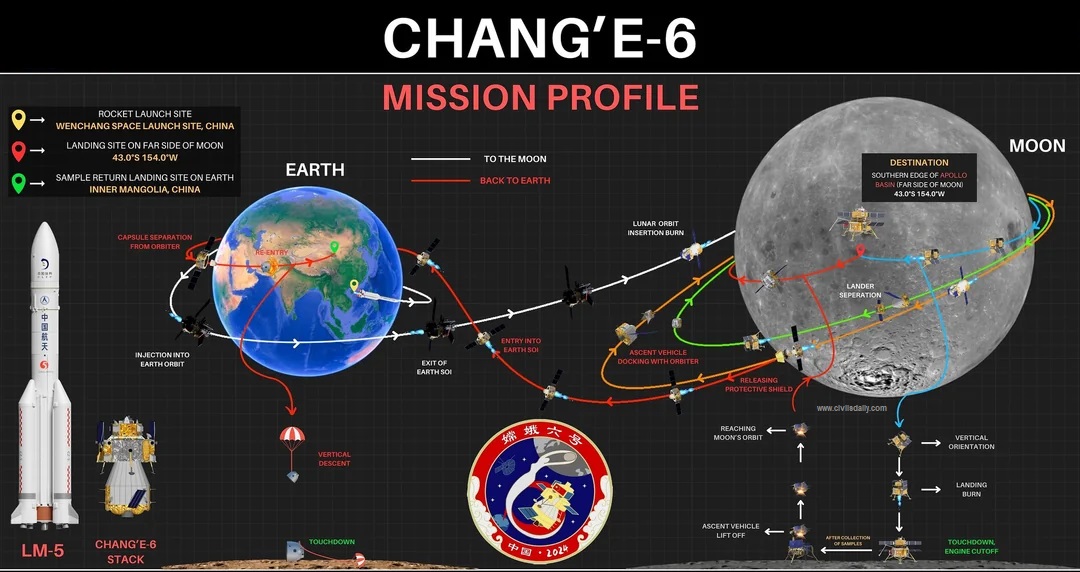
    • On June 25, Chang’e-6 became the world’s first spacecraft to bring back samples from the far side of the Moon.
      • Chang’e-6 successfully returned with samples from the lunar far side, making China the first country to achieve this feat.

    About Chang’e-6 Mission 

    • The mission lasted 53 days, starting with a launch on May 3, 2024, and ending with the return capsule landing on June 25, 2024.
    • The lander descended into the South Pole-Aitken basin, one of the largest impact basins in the solar system, believed to contain material from the lunar mantle.
    • The lander used robotic scoops and drills to collect about 2 kilograms of lunar material, including both surface soil and subsurface samples.

    Components of Chang’e-6 

    1. Lander: Equipped with drills and scoops for sample collection.
    2. Ascender: Transported samples from the lunar surface to lunar orbit.
    3. Orbiter: Carried the samples from lunar orbit back to Earth.
    4. Returner: Brought the samples safely back to Earth.

    Collaboration and Payloads

    The mission carried instruments from international partners, including:

    • French DORN: Studied lunar dust and volatiles.
    • Italian INRRI: Measured distances using a retroreflector.
    • Swedish NILS: Detected negative ions on the lunar surface.
    • Pakistani ICUBE-Q CubeSat: Imaged the lunar surface and obtained magnetic field data.

    Scientific Goals  

    • Sample Analysis: Scientists aim to learn more about the Moon’s internal structure and the differences between its near and far sides.

    China’s Lunar Exploration Program

    • Chang’e-6 follows previous missions under China’s Lunar Exploration Program, marking the next step in incremental technological advancements.
    • Phases of Exploration: The program has four phases:
    1. First Phase: Reaching lunar orbit, completed by Chang’e 1 (2007) and Chang’e 2 (2010).
    2. Second Phase: Landing and roving, achieved by Chang’e 3 (2013) and Chang’e 4 (2019).
    3. Third Phase: Sample collection and return, accomplished by Chang’e 5 (2020) and Chang’e 6 (2024).
    4. Fourth Phase: Developing a robotic research station near the Moon’s South Pole, aiming for crewed lunar landings in the 2030s.

    Previous Lunar Sample Missions

    • Apollo 11 Mission (1969): The US mission brought 22 kg of lunar material, including 50 rocks.
    • Luna 16 Mission (1970): Soviet robotic mission brought lunar samples to Earth.
    • Chang’e-5 Mission (2020): Predecessor to Chang’e-6, returned 2 kg of lunar soil from the near side.

    Significance of Sample Return Missions

    • Laboratory Analysis: Allows the use of sophisticated instruments to study the chemical, isotopic, mineralogical, structural, and physical properties of samples.
    • Long-term Preservation: Samples can be preserved and re-examined by future generations with advanced technology.
    • Technological Feat: Recovering samples from the far side is a significant technological achievement.
    • Step Towards Human Exploration: Success of Chang’e-6 is seen as a step towards China’s goal of landing astronauts on the Moon by 2030.
    • Launch Pad for Deep Space: The Moon could serve as a base for future deep space missions and extraterrestrial exploration.

    Outcome: New Lunar Race

    • Global Participation: India, China, Japan, the US, and Russia launched lunar missions in 2023.
    • Future Missions: Over 100 Moon missions by governments and private companies are expected by 2030.
    • Long-term Goals: Unlike the 20th-century space race, today’s missions aim to establish a long-term presence and use lunar resources.

    India’s Chandrayaan-4 Mission

    • Chandrayaan-4, under development by ISRO, will also be a sample return mission to be launched tentatively by 2028.
    • Chandrayaan-3 landed near the Moon’s South Pole last year, about 600 km from the target area for Chandrayaan-4.


    PYQ:

    [2016] Discuss India’s achievements in the field of Space Science and Technology. How the application of this technology helped India in its socio-economic development?

  • Coronavirus – Economic Issues

    K-Shaped Economic Recovery fuels diverse Inflation Dynamics in India

    Note4Students

    From UPSC perspective, the following things are important:

    Prelims level: K-Shape Recovery and its Features.

    Why in the News?

    India is experiencing a K-shaped recovery, with uneven growth patterns. This recovery is causing divergent inflation trends, with food and rural prices rising faster than other goods and services, and urban inflation.

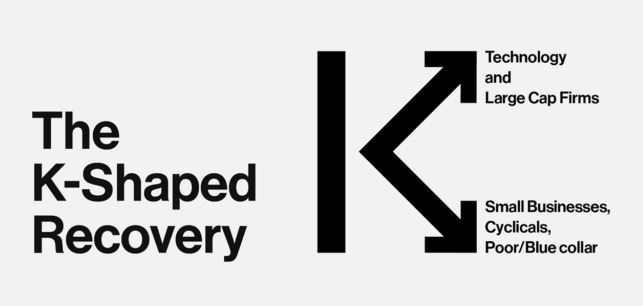
    What is K-Shaped Recovery?

    •  A K-shaped recovery is an economic scenario in which different sectors, industries, or groups within an economy recover from a recession at markedly different rates.
    • This results in a divergent economic recovery pattern, with some parts of the economy experiencing robust growth and others continuing to struggle or even decline.

    Features of K-Shaped Recovery

    • Divergent Recovery Rates: Certain sectors, such as technology and finance, may recover quickly and strongly. Other sectors, like hospitality and retail, may continue to struggle or recover much more slowly.
    • Income Inequality: High-income individuals and businesses may see significant improvements in their financial situations. Low-income individuals and small businesses may face prolonged financial hardships.
    • Sectoral Disparities: Industries that can adapt to remote work or have online business models (e.g., tech, e-commerce) thrive.

    Indian Context: Consumption Patterns Post-Pandemic

    • High-End Goods Demand: Post-pandemic recovery is driven by increased demand for higher-end goods and services.
    • Mass Consumption Items: Lower-income households’ consumption of mass-market items remains relatively subdued.

     Contrast Inflation Rate:

    • Rural vs. Urban Inflation: Rural inflation is outpacing urban inflation.
    • Food Prices vs. Other Goods: Food price inflation is higher compared to inflation in other goods and services.
    • Goods vs. Services Inflation: Goods inflation is higher than services inflation.
    • Input vs. Output Prices: Input prices are rising faster than output prices.

    Policy Implications

    • Sensitive Policymaking: Government policies need to be sensitive to the impact on different groups affected by supply-side shocks.
    • Careful Planning: Reforms should be carefully explained and planned to mitigate adverse impacts.

    PYQ:

    [2021] Do you agree that the Indian economy has recently experienced V-shaped recovery? Give reasons in support of your answer.