💥UPSC 2026, 2027, 2028 UAP Mentorship (March Batch) + Access XFactor Notes & Microthemes PDF

Type: Prelims Only

  • Global Geological And Climatic Events

    What is Bomb Cyclone?

    Note4Students

    From UPSC perspective, the following things are important:

    Prelims level: Bomb Cyclone, Bombogenesis

    Mains level: Not Much

    Major cities such as New York and Boston in US are witnessing a “Bomb Cyclone” characterized by the explosive power of rapid drops in atmospheric pressure.

    What is Bomb Cyclone?

    • A bomb cyclone is a large, intense mid-latitude storm that has low pressure at its center, weather fronts and an array of associated weather, from blizzards to severe thunderstorms to heavy precipitation.
    • It becomes a bomb when its central pressure decreases very quickly—by at least 24 millibars in 24 hours.
    • When a cyclone “bombs,” or undergoes bombogenesis, this tells us that it has access to the optimal ingredients for strengthening, such as high amounts of heat, moisture and rising air.

    Why is it called a bomb?

    • Most cyclones don’t intensify rapidly in this way.
    • Bomb cyclones put forecasters on high alert, because they can produce significant harmful impacts.

    Its etymology

    • The word “bombogenesis” is a combination of cyclogenesis, which describes the formation of a cyclone or storm, and bomb, which is, well, pretty self-explanatory.
    • This can happen when a cold air mass collides with a warm air mass, such as air over warm ocean waters.
    • The formation of this rapidly strengthening weather system is a process called bombogenesis, which creates what is known as a bomb cyclone.

    How does it occur?

    • Over the warmer ocean, heat and moisture are abundant.
    • But as cool continental air moves overhead and creates a large difference in temperature, the lower atmosphere becomes unstable and buoyant.
    • Air rises, cools and condenses, forming clouds and precipitation.

    Where does it occur the most?

    • The US coast is one of the regions where bombogenesis is most common.
    • That’s because storms in the mid-latitudes – a temperate zone north of the tropics that includes the entire continental US – draw their energy from large temperature contrasts.
    • Along the US East Coast during winter, there’s a naturally potent thermal contrast between the cool land and the warm Gulf Stream current.


    UPSC 2022 countdown has begun! Get your personal guidance plan now! (Click here)

  • Modern Indian History-Events and Personalities

    President quotes Thirukkural while addressing Parliament

    Note4Students

    From UPSC perspective, the following things are important:

    Prelims level: Thirukkural

    Mains level: Ancient sangam literature

    President Ram Nath Kovind quoted a couplet from Thirukkural while addressing the joint Houses of Parliament for Budget Session.

    What did the President quote?

    • ‘Karka Kasadara Karpavai Kattrapin Nirka Atharku Thaka’ was the couplet chosen by him to reiterate the importance of the New Education Policy.
    • The couplet insists on thorough and flawless learning and adhering to what one has learnt.

    What is Thirukkural?

    • The Tirukkuṟaḷ (meaning ‘sacred verses’), or shortly the Kural, is a classic Tamil language text consisting of 1,330 short couplets, or kurals, of seven words each.
    • The text is divided into three books with aphoristic teachings on virtue (aram), wealth (porul) and love (inbam), respectively.
    • Considered one of the greatest works ever written on ethics and morality, it is known for its universality and secular nature.

    Three major parts of the book

    1. Aram : Book of Virtue (Dharma), dealing with moral values of an individual and essentials of yoga philosophy
    2. Porul : Book of Polity (Artha), dealing with socio-economic values, polity, society and administration
    3. Inbam: Book of Love (Kama), dealing with psychological values and love

    Who authored it and when?

    • Its authorship is traditionally attributed to Valluvar, also known in full as Thiruvalluvar.
    • The text has been dated variously from 300 BCE to 5th century CE.
    • The traditional accounts describe it as the last work of the third Sangam, but linguistic analysis suggests a later date of 450 to 500 CE and that it was composed after the Sangam period.

    Cultural significance of Thirukkural

    • The Kural is traditionally praised with epithets and alternative titles, including “the Tamil Veda” and “the Divine Book.”
    • Written on the foundations of ahimsa, it emphasizes non-violence and moral vegetarianism as virtues for an individual.
    • In addition, it highlights truthfulness, self-restraint, gratitude, hospitality, kindness, goodness, duty, giving, and so forth.
    • It covers a wide range of social and political topics such as king, ministers, taxes, justice, forts, war, greatness of army and soldier’s honor.
    • It emphasizes death sentence for the wicked, agriculture, education, abstinence from alcohol and intoxicants.
    • It also includes chapters on friendship, love, sexual unions, and domestic life.

    Read these quotes and bookmark them. They can be used in essays:

    1. Nothing is impossible for those who act after wise counsel and careful thought.
    2. Real kindness seeks no return.
    3. The only gift is giving to the poor; All else is exchange.
    4. Friendship with the wise gets better with time, as a good book gets better with age.
    5. Worthless are those who injure others vengefully, while those who stoically endure are like stored gold.
    6. Among a man’s many good possessions, A good command of speech has no equal. Prosperity and ruin issue from the power of the tongue. Therefore, guard yourself against thoughtless speech.
    7. A fortress is of no use to cowards.
    8. Even the ignorant may appear very worthy, If they keep silent before the learned.


    UPSC 2022 countdown has begun! Get your personal guidance plan now! (Click here)

  • Modern Indian History-Events and Personalities

    [pib] Sacred Ensembles of the Hoysalas

    Note4Students

    From UPSC perspective, the following things are important:

    Prelims level: Sacred Ensembles of the Hoysalas

    Mains level: Temple architecture of India

    The Hoysala Temples of Belur, Halebid and Somnathapura in Karnataka have been finalized as India’s nomination for consideration as World Heritage for the year 2022-2023.

    Sacred Ensembles of the Hoysalas

    • The sacred ensembles of the Hoysalas are extraordinary expressions of spiritual purpose and vehicles of spiritual practice and attainment.
    • The sacred ensembles of the Hoysalas at Belur and Halebid are the finest, most exquisite, and most representative examples of the artistic genius and cultural accomplishments of the Hoysalas remaining today.

     [I] Belur: Chennakeshava Temple Complex

    • The Chennakeshava temple complex was at the center of the old walled town located on the banks of the Yagachi River.
    • The complex itself was walled in a rectangular campus with four rectilinear streets around it for ritual circumambulation of the deity.
    • Construction of the temple commenced in 1117 AD and took a 103 years to complete.
    • The temple was devoted to Vishnu.
    • The richly sculptured exterior of the temple narrate scenes from the life of Vishnu and his reincarnations and the epics, Ramayana, and Mahabharata.
    • However, some of the representations of Shiva are also included.
    • Consecrated on a sacred site, the temple has remained continuously worshipped since its establishment and remains until today as a site of pilgrimage for Vaishnavites.

    [II] Halebid: Hoysaleshwara Temple

    • At the zenith of the Hoysala empire, the capital was shifted from Belur to Halebid that was then known as Dorasamudhra.
    • The Hoysaleshwara temple at Halebidu is the most exemplary architectural ensemble of the Hoysalas extant today.
    • Built in 1121CE during the reign of the Hoysala King, Vishnuvardhana Hoysaleshwara.
    • The temple, dedicated to Shiva, was sponsored and built by wealthy citizens and merchants of Dorasamudra.
    • The temple is most well-known for the more than 240 wall sculptures that run all along the outer wall.
    • Halebid has a walled complex containing of three Jaina basadi (temples) of the Hoysala period as well as a stepped well.

    [III] Somnathpur: Kesava Temple

    • The Keshava temple at Somanathapura is another magnificent Hoysala monument, perhaps the last.
    • This is a breathtakingly beautiful Trikuta Temple dedicated to Lord Krishna in three forms – Janardhana, Keshava and Venugopala.
    • Unfortunately, the main Keshava idol is missing, and the Janardhana and Venugopala idols are damaged.
    • Still this temple is worth a visit just to soak in the artistry and sheer talent of the sculptors who created this magnificent monument to the Divine.


    UPSC 2022 countdown has begun! Get your personal guidance plan now! (Click here)
  • Air Pollution

    What is Pollution-Under-Control (PUC) Certificate?

    Note4Students

    From UPSC perspective, the following things are important:

    Prelims level: PUC Certificate

    Mains level: Not Much

    Delhi govt will soon make PUC certificate mandatory for fuel at filling stations.

    What is PUC Certificate?

    • The PUC certificate is a document that any person driving a motor vehicle can be asked to produce by a police officer in uniform authorized by the state government.
    • These issue certificates if a vehicle is found complying with the prescribed emission norms.
    • Since the Motor Vehicles (Amendment) Act, 2019 came into force, PUC certificate has been made mandatory.
    • A PUC certificate contains information such as the vehicle’s license plate number, PUC test reading, date on which the PUC test was conducted and the expiry date.

    How is a pollution control check carried out?

    • The computerized model for pollution check was developed by the Society of Indian Automobile manufacturers.
    • A gas analyzer is connected to a computer, to which a camera and a printer are attached.
    • The gas analyzer records the emission value and sends it to the computer directly, while the camera captures the license plate of the vehicle.
    • Subsequently, a certificate may be issued if the emission values are within the limits.

    Fines for non-compliance

    • The test costs between Rs 60 and Rs 100.
    • The validity of the test is one year for BS IV vehicles and three months for others.
    • The fine for PUC violations has now gone up to Rs 10,000; it used to be Rs 1,000 for the first offence and Rs 2,000 for subsequent violations before the amendments came into force.


    UPSC 2022 countdown has begun! Get your personal guidance plan now! (Click here)
  • Zoonotic Diseases: Medical Sciences Involved & Preventive Measures

    NeoCov Coronavirus found in Bats

    Note4Students

    From UPSC perspective, the following things are important:

    Prelims level: NeoCoV

    Mains level: Not Much

    NeoCov coronavirus found in bats may pose threat to humans in the future, scientists caution.

    Coronavirus: A quick backgrounder

    • Coronaviruses are a large family of viruses that are known to infect animals and humans.
    • They are largely categorized into four genera — alpha, beta, gamma, and delta.
    • Broadly speaking, alpha and beta coronaviruses commonly infect mammals such as bats and humans, while Gamma and Delta mainly infect birds.

    Infecting humans: Through ‘Zoonotic Spillover’

    • While animals, including bats, are generally considered as the reservoirs of coronaviruses, rarely spillover events could occur.
    • It is possible for viruses that infect animals to jump to humans, a process which is known as zoonotic spillover.
    • Many major infectious diseases, including COVID-19, is widely thought to be a result of spillover.

    COVID-19 Pandemic

    • SARS-CoV-2, the coronavirus responsible for the COVID-19 pandemic, belongs to the genus of beta coronavirus.
    • It is in fact the 7th type of coronavirus known to infect and cause severe disease in humans.

    How does it affect humans?

    • How a coronavirus latches onto special receptors on host cells depends on a key part of the virus known as its receptor-binding domain.
    • The differences in the receptor-binding domain of coronaviruses are therefore what determine the type of host receptor the virus will use and thus the host that it will be able to infect.
    • There are currently 4 well-characterized receptors for coronaviruses, including ACE2, which is used by SARS-CoV and SARS-CoV-2, and DPP4 used by MERS-CoV.

    What is NeoCoV?

    • NeoCoV is a bat coronavirus that was first identified in 2011.
    • It was identified in a species of bats known as Neoromicia, which is where the name NeoCoV was derived from.
    • Commonly known as aloe bats, this species is distributed in the Afro-Malagasy region.
    • NeoCoV shares an 85% similarity to MERS-CoV in the genome sequence, making it the closest known relative of MERS-CoV.

    Does NeoCoV infect humans and cause high mortality?

    • It is important to note that inherently, NeoCoV cannot interact with human receptors, implying that in its current form the virus cannot infect humans.
    • NeoCoV does not infect humans yet and has thus not caused any deaths.

    What does the preprint say and why is it important?

    • The study reports that despite their similarity, MERS-CoV and NeoCoV use different receptors to infect cells.
    • The bat coronavirus NeoCoV was found to use bat ACE2 receptors for efficiently entering cells.
    • The interaction between NeoCoV and bat ACE2 receptors is different from what is seen in other coronaviruses that utilize ACE2.
    • However, specific mutations artificially created in the receptor-binding domain of NeoCoV can enhance its efficiency to interact with human ACE2 receptors.
    • These mutations have not yet been seen in NeoCov isolates from natural settings.

    Conclusion

    • SARS-CoV-2 is not the first coronavirus to infect humans and cause large disease outbreaks, nor is it likely to be the last.
    • The study highlights that through further adaptation, coronaviruses like NeoCoV or other related viruses could potentially gain the ability to infect humans.

    Way forward

    • To prevent future outbreaks, it will thus be important to monitor this family of viruses for potential zoonosis while continuing research efforts on understanding the complex receptor usage of different coronaviruses.
    • Genomic surveillance of human and animal viruses is, therefore, the key to understanding the spectrum of viruses, and possibly provides early warning to potential spillover events.


    Try this question from CSP 2021:

    Q. The term ACE2′ is talked about in the context of:

    (a) genes introduced in the genetically modified plants

    (b) development of India’s own satellite navigation system

    (c) radio collars for wildlife tracking

    (d) spread of viral diseases


    Post your answers here.


    UPSC 2022 countdown has begun! Get your personal guidance plan now! (Click here)

  • ISRO Missions and Discoveries

    Small Satellite Launch Vehicle (SSLV)

    Note4Students

    From UPSC perspective, the following things are important:

    Prelims level: SSLV, PSLV, GSLV

    Mains level: Commercial space activities in India

    The new chairman of the ISRO Dr S Somanath has indicated inauguration of indigenous new launch rockets, called the Small Satellite Launch Vehicle (SSLV).

    What is SSLV?

    • The SSLV is a small-lift launch vehicle being developed by the ISRO with payload capacity to deliver:
    1. 600 kg to Low Earth Orbit (500 km) or
    2. 300 kg to Sun-synchronous Orbit (500 km)
    • It would help launching small satellites, with the capability to support multiple orbital drop-offs.
    • In future a dedicated launch pad in Sriharikota called Small Satellite Launch Complex (SSLC) will be set up.
    • A new spaceport, under development, near Kulasekharapatnam in Tamil Nadu will handle SSLV launches when complete.
    • After entering the operational phase, the vehicle’s production and launch operations will be done by a consortium of Indian firms along with NewSpace India Limited (NSIL).

    Vehicle details

    (A) Dimensions

    • Height: 34 meters
    • Diameter: 2 meters
    • Mass: 120 tonnes

    (B) Propulsion

    • It will be a four stage launching vehicle.
    • The first three stages will use Hydroxyl-terminated polybutadiene (HTPB) based solid propellant, with a fourth terminal stage being a Velocity-Trimming Module (VTM).

    SSLV vs. PSLV: A comparison

    • The SSLV was developed with the aim of launching small satellites commercially at drastically reduced price and higher launch rate as compared to Polar SLV (PSLV).
    • The projected high launch rate relies on largely autonomous launch operation and on overall simple logistics.
    • To compare, a PSLV launch involves 600 officials while SSLV launch operations would be managed by a small team of about six people.
    • The launch readiness period of the SSLV is expected to be less than a week instead of months.
    • The SSLV can carry satellites weighing up to 500 kg to a low earth orbit while the tried and tested PSLV can launch satellites weighing in the range of 1000 kg.
    • The entire job will be done in a very short time and the cost will be only around Rs 30 crore for SSLV.

    Significance of SSLV

    • SSLV is perfectly suited for launching multiple microsatellites at a time and supports multiple orbital drop-offs.
    • The development and manufacture of the SSLV are expected to create greater synergy between the space sector and private Indian industries – a key aim of the space ministry.

    Back2Basics:

  • Tribes in News

    Who are the Chakmas and Hajongs?

    Note4Students

    From UPSC perspective, the following things are important:

    Prelims level: Chakmas and Hajongs

    Mains level: Not Much

    In Arunachal Pradesh, the Chakma and Hajong people are feeling heat since the State government decided to conduct a special census in December 2021.

    What is the news?

    • The North-Eastern States have had a history of being paranoid about outsiders outnumbering the indigenous communities and taking their land, resources and jobs.
    • The threat from “non-locals” in a specific area has also been perceived to be from communities indigenous elsewhere in the region.
    • This has often led to conflicts such as the recent attacks on non-tribal people in Meghalaya’s capital Shillong or an Assam-based group’s warning to a fuel station owner in Guwahati against employing Bihari workers.

    Who are the Chakmas and Hajongs?

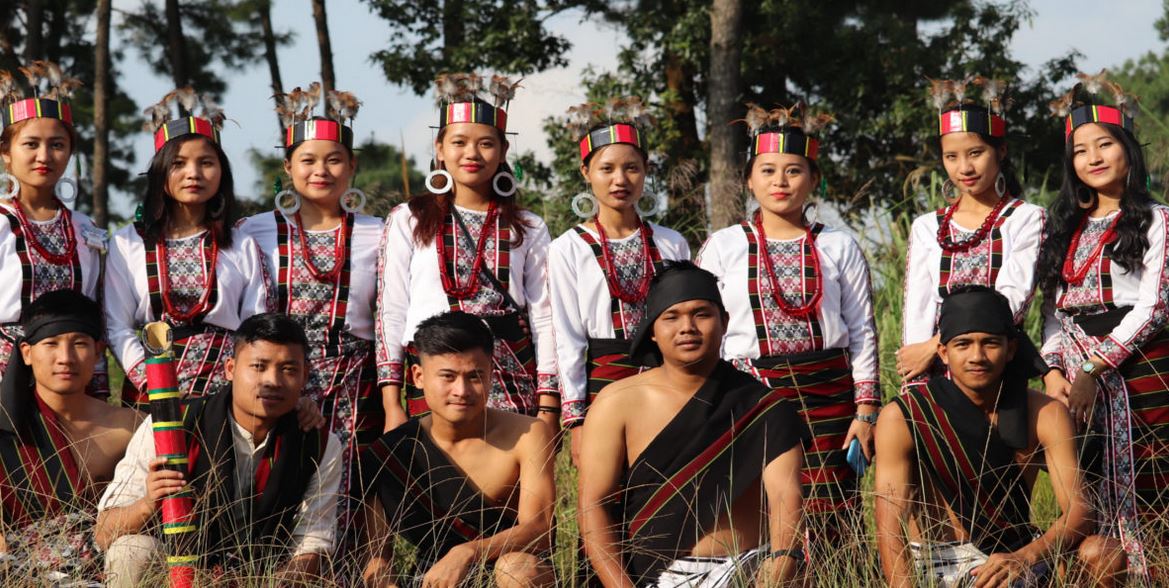
    • The Chakmas and Hajongs of Arunachal Pradesh are migrants from the Chittagong Hill Tracts of erstwhile East Pakistan, now Bangladesh.
    • Displaced by the Kaptai dam on the Karnaphuli River in the 1960s, they sought asylum in India.
    • They settled in relief camps in the southern and south-eastern parts of Arunachal Pradesh from 1964 to 1969.
    • A majority of them live in the Changlang district of the State today.
    • Mizoram and Tripura have a sizeable population of the Buddhist Chakmas while the Hindu Hajongs mostly inhabit the Garo Hills of Meghalaya and adjoining areas of Assam.

    Why was a special census of the two communities planned?

    • The Arunachal Government has cited to resolve the protracted issue of racial antagonism.
    • It seeks to rehabilitate the Chakma-Hajongs in other States.
    • The census plan was however dropped after the Chakma Development Foundation of India petitioned the PMO.

    Issues with the census

    • Chakma organizations said the census was nothing but racial profiling of the two communities because of their ethnic origin and violated Article 14 of the Indian Constitution.
    • It is against Article 1 of the International Convention on the Elimination of All Forms of Racial Discrimination, ratified by India.

    What is their citizenship status?

    • Members of the two communities had been settled in Arunachal Pradesh six decades ago with a rehabilitation plan, allotted land and provided with financial aid depending on the size of their families.
    • Although local tribes claim the population of the migrants has increased alarmingly, the 2011 census says there are 47,471 Chakmas and Hajongs in the State.
    • They are granted citizenship by birth under Section 3 of the Citizenship Act, 1955, after having been born before July 1, 1987, or as descendants of those who were born before this date.


    UPSC 2022 countdown has begun! Get your personal guidance plan now! (Click here)
  • Festivals, Dances, Theatre, Literature, Art in News

    What is Beating Retreat Ceremony?

    Note4Students

    From UPSC perspective, the following things are important:

    Prelims level: Beating Retreat Ceremony

    Mains level: Important national festivals and their significance

    There are 26 tunes that will be played at Beating Retreat this year on January 29 skipping the “Abide with Me” tune.

    What is the Beating Retreat function?

    • ‘Beating Retreat’ marks a centuries old military tradition, when the troops ceased fighting, sheathed their arms and withdrew from the battlefield and returned to the camps at sunset at the sounding of the Retreat.
    • The military tradition began in 17th century England, when King James II ordered his troops to beat drums, lower flags and organise a parade to announce the end of a day of combat.
    • The ceremony was then called ‘watch setting’ and took place at sunset after firing a single round from the evening gun.
    • The ceremony is currently held by Armed Forces in the UK, US, Canada, New Zealand, Australia, and India, among others.

    How did it begin in India?

    • Beating the Retreat’ has emerged as an event of national pride when the Colours and Standards are paraded.
    • The ceremony traces its origins to the early 1950s when Major Roberts of the Indian Army indigenously developed the unique ceremony of display by the massed bands.
    • Section D (Ceremonials) at the Ministry of Defence conducts the event.
    • The ceremony consists of musical performances by the bands, who each year play Indian and western tunes.


    UPSC 2022 countdown has begun! Get your personal guidance plan now! (Click here)

  • Blockchain Technology: Prospects and Challenges

    What are Non-Fungible Tokens (NFTs)?

    Note4Students

    From UPSC perspective, the following things are important:

    Prelims level: Non-Fungible Tokens

    Mains level: Challenges associated to Cryptocurrency

    A French luxury fashion brand is suing American digital artist who created a series of NFTs (Non-Fungible Tokens), a rapidly growing part of the cryptoworld.

    Non-Fungible Tokens

    • An NFT is a unique, irreplaceable token that can be used to prove ownership of digital assets such as music, artwork, even tweets and memes.
    • The term ‘non-fungible’ simply means that each token is different as opposed to a fungible currency such as money (a ten-rupee note can be exchanged for another and so on).
    • Cryptocurrencies such as Bitcoin and Ethereum are also fungible, which means that one Bitcoin can be exchanged for another.
    • But an NFT cannot be exchanged for another NFT because the two are different and therefore unique.
    • Each token has a different value, depending on which asset it represents.

    How does NFT transaction take place?

    • NFT transactions are recorded on blockchains, which is a digital public ledger, with most NFTs being a part of the Ethereum blockchain.
    • NFTs became popular in 2021, when they were beginning to be seen by artists as a convenient way to monetize their work.

    Why are they in high demand?

    • One of the other attractions is that NFTs are a part of a new kind of financial system called decentralized finance (DeFi), which does away with the involvement of institutions such as banks.
    • For this reason, decentralized finance is seen as a more democratic financial system because it makes access to capital easier for lay people by essentially eliminating the role of banks and other associated institutions.
    • Even so, because NFTs operate in a decentralized system, any person can sell a digital asset as one.
    • This can sometimes create problems. For instance, if you were to sell someone else’s artwork as an NFT, you could essentially be infringing on a copyright.


    UPSC 2022 countdown has begun! Get your personal guidance plan now! (Click here)

  • Wildlife Conservation Efforts

    Kerala gets its first-ever Scientific Bird Atlas

    Note4Students

    From UPSC perspective, the following things are important:

    Prelims level: Kerala Bird Atlas (KBA)

    Mains level: Not Much

    The Kerala Bird Atlas (KBA), the first-of-its-kind State-level bird atlas in India, has created solid baseline data about the distribution and abundance of bird species across all major habitats, giving an impetus to futuristic studies.

    Kerala Bird Atlas (KBA)

    • The KBA has been prepared based on systematic surveys held twice over 60 days a year during the wet (July to September) and dry (January to March) seasons between 2015 and 2020.
    • It was conducted as a citizen science-driven exercise with the participation of over 1,000 volunteers of the birdwatching community.
    • The KBA accounts for nearly three lakh records of 361 species, including 94 very rare species, 103 rare species, 110 common species, 44 very common species, and 10 most abundant species.
    • It was found that the species count was higher during the dry season than in the wet season while species richness and evenness were higher in the northern and central districts than in the southern districts.

    Significance of KBA

    • The KBA offers authentic, consistent and comparable data through random sampling from the geographical terrain split.
    • It is arguably Asia’s largest bird atlas in terms of geographical extent, sampling effort and species coverage derived from the aggregation of 25,000 checklists.
    • The KBA is considered to be a valuable resource for testing various ecological hypotheses and suggesting science-backed conservation measures.


    UPSC 2022 countdown has begun! Get your personal guidance plan now! (Click here)
