💥UPSC 2026, 2027, 2028 UAP Mentorship (March Batch) + Access XFactor Notes & Microthemes PDF

Archives: News

  • Health Sector – UHC, National Health Policy, Family Planning, Health Insurance, etc.

    How lack of public data on pandemic could harm us

    Context

    Questions are being asked about India’s preparedness as the cases with the Omicron variant of the Coronavirus has been on the rise in the country.

    Where does India stand?

    [1] The Positives

    • Addressing oxygen shortage: The extreme shortages of oxygen that we saw barely six months ago will hopefully not be a feature of a third wave.
    • Vaccinated population: We have now vaccinated more than 50% of the adult population with both doses of vaccine, and approximately 85% have received one or two doses.
    • Ramping up testing to deal with a spike should not require an increase in capacity.
    • More vaccine doses: We have more vaccine doses than in May 2021 and the potential for oral antiviral therapy in the near future.

    [2] The negatives

    • Lack of data: An urgent and important one is the lack of publicly available data on the pandemic from Government sources, particularly in regard to testing, but also in terms of being able to correlate disease severity with age, prior medical conditions, locations and other variables.
    • Data from the Indian Council of Medical Research (ICMR), India’s premier medical research agency, remains inaccessible.
    • The National Centre for Disease Control (NCDC) has not responded.
    • The CoWIN data contains valuable information but it is of little value for future planning and prediction unless it can be tied to testing data and clinical information at the level of individuals.
    • ICMR data not correlated to CoWIN platform data: The Indian Council of Medical Research holds data on every COVID-19 test conducted in India.
    • However, these data are not correlated to the vaccine data in the CoWIN platform.
    • Data with States is inaccessible: Data on hospitalisations, etc. are apparently available at the State level, but seem inaccessible.

    What we can know from the data about pandemic

    • Infer the probability of reinfection: If we knew that a person had tested positive on successive tests separated by, say four months or more, with a negative test in-between, that would suggest a reinfection.
    • We could then infer the probability of such a reinfection.
    • Probability of vaccine breakthrough infection: With information about testing and vaccination status, we could compute the probability of a vaccine breakthrough event.
    • To know the efficacy of single vaccine dose: By checking to see whether the positive test happened after the first but before the second dose of vaccine, or after the second dose, the relative efficacy of such single vaccine doses at preventing disease could be derived.
    • Effect of the vaccine on disease severity: By examining symptoms reported after a vaccine breakthrough event, we could understand the extent to which vaccines reduce disease severity.
    • Impact of new variant: Add to this a layer of sequence information, and we could study the impact of new variants.

    Role of the volunteer organisation

    • The most trustworthy and granular data on cases in India have resulted from the remarkable and public-spirited work of a volunteer organisation, Covid19India.org.
    • Their work has now been taken over by several other voluntary groups, all operating on the same broad principles of data accessibility: covid19bharat.org, incovid19.org and covid19tracker.in.

    Way forward

    • Commitment towards data accessibility: We need to stress on data availability because this is the one area where a swift realignment is possible.
    • The more widely data are shared, the greater the likelihood of integration of the rapidly shifting scientific frontier with clinical practice.
    • Learning from the experience of South Africa: With the advantages of a relatively high-quality surveillance system among low- and middle-income countries (LMIC) countries, bolstered by a commitment towards transparency and data accessibility, South Africa’s rapid sharing allowed the world to prepare swiftly for the appearance of the highly mutated Omicron variant.
    • It is clear that pre-emptive decisions on vaccination and other measures could be made faster and better if more integrated data were available.

    Consider the question “Why availability and accessibility of data is important in dealing with the Covid-19 pandemic? What are the challenges facing health data accessibility in India?”

    Conclusion

    Now, more than ever before is the time for us to urgently reassess our attitude towards data for public health purposes and the role of national health agencies in sharing data, generated with public funds, with scientists in India and across the world.

    UPSC 2022 countdown has begun! Get your personal guidance plan now! (Click here)



  • Defence Sector – DPP, Missions, Schemes, Security Forces, etc.

    Growth of India’s Defence Exports

    India’s defense exports have increased manifold from ₹1,521 crore in 2016-17 to ₹8,434.84 crore in 2020-21.

    Note: This newscard provides substantial data about India’s defense exports and imports, which is highly relevant for mains and interview. Kindly bookmark this article.

    India’s defense exports

    • India has the strength of low-cost, high-quality production.
    • The Government has set an ambitious target to achieve exports of about ₹35,000 crore ($5 billion) in aerospace and defense goods and services by 2025.
    • The Defense Ministry has clarified that the names of the major defense items exported cannot be disclosed due to strategic reasons.
    • To boost indigenous manufacturing, the govt had issued two “positive indigenization lists” consisting of 209 items that cannot be imported and can only be procured from domestic industry.

    A significant achievement

    • According to the latest report of the Swedish think tank Stockholm International Peace Research Institute (SIPRI), three Indian companies figure among the top 100 defence companies in the 2020 rankings.
    • These include Hindustan Aeronautics Limited (HAL), Ordnance Factory Board and Bharat Electronics Ltd (BEL).

    Yet India is a top importer

    • While India remained among the top importers, it was also included in the Top 25 defence exporters.
    • There was an overall drop in India’s arms imports between 2011-15 and 2016-20, according to another SIPRI report of 2020.

    Items that India export

    • India has supplied different types of missile systems, LCA/helicopters, multi-purpose light transport aircraft, warships and patrol vessels etc.
    • It is also willing to export artillery gun systems, tanks, radars, military vehicles, electronic warfare systems and other weapons systems to IOR nations.

    Major partners: South Asian Countries

    • Vietnam is procuring 12 Fast Attack Craft under a $100 million credit line announced by India.
    • It is also interested in Advanced Light Helicopters and Akash surface-to-air missiles.
    • HAL has pitched its helicopters and the Tejas LCA to several Southeast Asian and West Asian nations and is in the race to supply the LCA to Malaysia.
    • Discussions on the sale of BrahMos supersonic cruise missiles, jointly developed by India and Russia, are at an advanced stage with some Southeast Asian nations.

    Steps taken by the Centre to boost defence production

    • Licensing relaxation: Measures announced to boost exports since 2014 include simplified defence industrial licensing, relaxation of export controls and grant of no-objection certificates.
    • Lines of Credit: Specific incentives were introduced under the foreign trade policy and the Ministry of External Affairs has facilitated Lines of Credit for countries to import defence product.
    • Policy boost: The Defence Ministry has also issued a draft Defence Production & Export Promotion Policy 2020.
    • Indigenization lists: On the domestic front, to boost indigenous manufacturing, the Government had issued two “positive indigenization lists” consisting of 209 items that cannot be imported.
    • Budgetary allocation: In addition, a percentage of the capital outlay of the defence budget has been reserved for procurement from domestic industry.

    Issues retarding defence exports

    • Excess reliance on Public Sector: India has four companies (Indian ordnance factories, Hindustan Aeronautics Limited (HAL), Bharat Electronics Limited (BEL) and Bharat Dynamics Limited (BDL)) among the top 100 biggest arms producers of the world.
    • Policy delays: In the past few years, the government has approved over 200 defence acquisition worth Rs 4 trillion, but most are still in relatively early stages of processing.
    • Lack of Critical Technologies: Poor design capability in critical technologies, inadequate investment in R&D and the inability to manufacture major subsystems and components hamper the indigenous manufacturing.
    • Long gestation: The creation of a manufacturing base is capital and technology-intensive and has a long gestation period. By that time newer technologies make products outdated.
    • ‘Unease’ in doing business: An issue related to stringent labour laws, compliance burden and lack of skills, affects the development of indigenous manufacturing in defence.
    • Multiple jurisdictions: Overlapping jurisdiction of the Ministry of Defence and Ministry of Industrial Promotion impair India’s capability of defence manufacturing.
    • Lack of quality: The higher indigenization in few cases is largely attributed to the low-end technology.
    • FDI Policy: The earlier FDI limit of 49% was not enough to enthuse global manufacturing houses to set up bases in India.
    • R&D Lacunae: A lip service to technology funding by making token allocations is an adequate commentary on our lack of seriousness in the area of Research and Development.
    • Lack of skills: There is a lack of engineering and research capability in our institutions. It again leads us back to the need for a stronger industry-academia interface.

    Way forward

    • Reducing import dependence: India was the world’s second-largest arms importer from 2014-18, ceding the long-held tag as the largest importer to Saudi Arabia, says 2019 SIPRI report.
    • Security Imperative: Indigenization in defence is critical to national security also. It keeps intact the technological expertise and encourages spin-off technologies and innovation that often stem from it.
    • Economic boost: Indigenization in defence can help create a large industry which also includes small manufacturers.
    • Employment generation: Defence manufacturing will lead to the generation of satellites industries that in turn will pave the way for a generation of employment opportunities.


    UPSC 2022 countdown has begun! Get your personal guidance plan now! (Click here)

  • Right To Privacy

    Back in news: Right to be Forgotten

    The Centre has informed the Delhi High Court that the Personal Data Protection Bill 2019 contains provisions related to the ‘right to be forgotten’.

    Right to be Forgotten

    • ‘Right to be forgotten’ is a fairly new concept in India where an individual could seek to remove or delete online posts which may contain an embarrassing picture, video or news articles mentioning them.
    • It comes under the right to privacy which has been held to be a fundamental right by the Supreme Court under Article 21.
    • In 2017, the Right to Privacy was declared a fundamental right by the Supreme Court in its landmark verdict.

    Why in news?

    • The Personal Data Protection Bill 2019 contains provisions related to the doctrine of ‘right to be forgotten’.
    • It highlighted two judgments passed by the Orissa High Court and the Karnataka High Court where they have accepted the doctrine of the ‘right to be forgotten’ as an essential part of the ‘right to privacy’.

    Mention in PDP Bill

    • The PDP bill aims to set out provisions meant for the protection of the personal data of individuals.
    • Clause 20 under Chapter V of this bill titled “Rights of Data Principal” mentions the “Right to be Forgotten.”
    • It states that the “data principal (the person to whom the data is related) shall have the right to restrict or prevent the continuing disclosure of his personal data by a data fiduciary”.
    • A data fiduciary means any person, including the State, a company, any juristic entity, or any individual who alone or in conjunction with others determines the purpose and means of the processing of personal data.

    Implications

    • Under the Right to be forgotten, users can de-link, limit, delete or correct the disclosure of their personal information held by data fiduciaries.

    Other similar provisions

    • Section 69A of the IT Act does provide for removal of “certain unlawful information” from an intermediary platform.
    • It primarily applies to ‘national security and public order related issues’ only.

    Also read:

    Draft Personal Data Protection Bill, 2021


    UPSC 2022 countdown has begun! Get your personal guidance plan now! (Click here)


  • Irrigation In India – PMKSY, AIBP, Watershed Management, Neeranchan, etc.

    Extension for PM Krishi Sinchai Yojana

    The Cabinet has given its approval to extend its umbrella scheme Pradhan Mantri Krishi Sinchayee Yojana for irrigation, water supply, groundwater and watershed development projects for another five years till 2026.

    PM Krishi Sinchai Yojana

    • The PMKSY was launched on 1st July, 2015 with the motto of “Har Khet Ko Paani”.
    • It is being implemented to expand cultivated area with assured irrigation, reduce wastage of water and improve water use efficiency.

    The scheme has basically combined three active projects under various ministries which is as follows:

    1. Accelerated Irrigation Benefit Program (Ministry of Water Resources)
    2. Integrated Watershed Management Program (Ministry of Rural Development)
    3. Farm Water Management Project of the National Mission on Sustainable Agriculture

    Components of PMKSY

    PMKSY seeks to provide a complete solution to farm level irrigation and assured irrigation for every farm

    • It aims to integrate irrigation with the latest technological practices and cover more cultivable areas under assured irrigation
    • Increase the implementation of water-saving technologies and precision irrigation which in other words can be said as More Crop Per Drop.
    • PMKSY also targets the promotion of micro-irrigation in the form of sprinklers, rain-guns, drips, etc.

    Advantages of Micro Irrigation

    • Higher Profits
    • Water Saving & Water Use Efficiency (WUE)
    • Less Energy Costs
    • Higher fertilizer-use efficiency (FUE)
    • Reduced Labour Costs
    • Reduce Soli Loss
    • Marginal Solis & Water
    • Efficient & Flexible
    • Improved Crop Quality
    • Higher Yields

    Implementation of PMKSY

    • Everything from planning and execution of plans is regionalized in PMKSY.
    • District Irrigation Plans (DIPs) will identify the areas that require improved facilities in irrigation at block levels and district levels.
    • State Irrigation Plan consolidates all the DIPs and it oversees the agricultural plans developed under the Rashtriya Krishi Vikas Yojana.

    Funding pattern

    • Funds will be allocated by the centre only if the state has prepared the district irrigation plans and the state irrigation plans.
    • The state government’s share under PMKSY is 25% and rest is borne by the centre, with an exception for north-eastern states where contribution by the state government is 10%.


    UPSC 2022 countdown has begun! Get your personal guidance plan now! (Click here)

  • WTO and India

    WTO rules against India’s Sugar Subsidies

    A World Trade Organization panel ruled that India violated international trade rules when it offered excessive subsidies for the production and export of sugar and sugarcane.

    What did WTO say?

    • Under WTO rules, India’s sugar subsidies are capped at a de minimis limit of 10% of the value of production.
    • India’s policies were inconsistent with WTO rules that govern the levels at which nations can subsidize domestic agricultural production.
    • WTO has asked it to withdraw its prohibited subsidies under the Production Assistance, the Buffer Stock, and the Marketing and Transportation Schemes within 120 days.

    What was the complaint against India?

    Australia, Brazil, and Guatemala said India’s domestic support and export subsidy measures appeared to be inconsistent with various articles against WTO’s:

    1. Agreement on Agriculture
    2. Agreement on Subsidies and Countervailing Measures (SCM)
    3. Article XVI (which concerns subsidies) of the General Agreement on Trade and Tariffs (GATT)
    • Domestic Support: All three countries complained that India provides domestic support to sugarcane producers that exceed the de minimis level of 10% of the total value of sugarcane production.
    • Various subsidies: They also raised the issue of India’s alleged export subsidies, subsidies under the production assistance and buffer stock schemes, and the marketing and transportation scheme.
    • Notifying support: Australia accused India of “failing” to notify its annual domestic support for sugarcane and sugar subsequent to 1995-96, and its export subsidies since 2009-10.

    India’s reply to WTO panel

    • India rejected the panel’s findings as “erroneous”, “unreasoned”, and “not supported by the WTO rules”.
    • It argued that the requirements of Article 3 of the SCM Agreement are not yet applicable to India.
    • It has a phase-out period of 8 years to eliminate export subsidies under the agreement.
    • India also argued that its mandatory minimum prices are not paid by the governments but by sugar mills, and hence do not constitute market price support.

    Must read:

    Sugarcane Pricing in India


    UPSC 2022 countdown has begun! Get your personal guidance plan now! (Click here)

  • Historical and Archaeological Findings in News

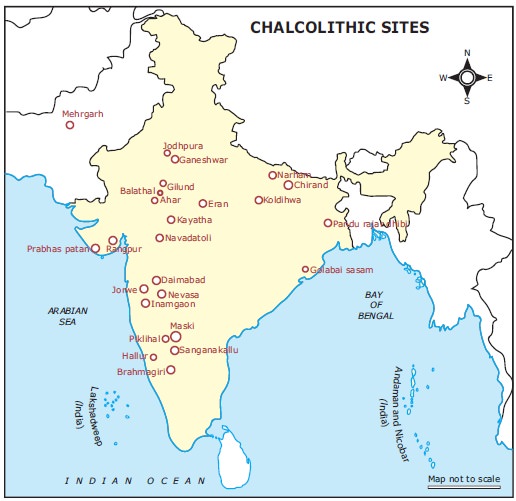
    [pib] Chalcolithic sites in news: Eran and Tewar

    The Chalcolithic cultures of Central India are adequately investigated and studied informed the Ministry of Culture in particular reference to the sites of Eran and Tewar.

    Major sites in Central India

    [1] Eran (Dist. Sagar, MP )

    • Eran (ancient Airikina) is situated on the left bank of the Bina (ancient Venva) river and surrounded by it on three sides.
    • The recent excavation has unearthed a variety of antiquities including a copper coin, an iron arrowhead, terracotta bead, stone beads along with copper coins, stone celt, beads of steatite and jasper, etc.
    • The occurrence of few specimens of plain, thin grey ware is noteworthy.
    • The use of iron was evidenced by few metallic objects at the site.

    [2] Tewar (Dist. Jabalpur, MP)

    • Tewar (Tripuri) village is located 12 km west of Jabalpur district on Jabalpur – Bhopal highway.
    • This excavation did not reach the natural soil and revealed four folds of cultural sequences i.e. Kushana, Shunga, Satvahana, and Kalachuri.
    • Antiquarian remains in this excavation include viz remains of sculptures, hopscotch, terracotta balls, Iron nails, copper coins, terracotta beads, implements of Iron and terracotta figurine, ceramics red ware etc.
    • It also revealed structural remains consist of brick wall and structure of sandstone columns.

    Back2Basics: Chalcolithic Culture in India

    • A completely different kind of culture known as Chalcolithic Culture was developed in central India and Deccan region by the end of the Neolithic period.
    • It is characterized by the use of both stone and bronze implements.

    Major Chalcolithic complexes in India

    1. Ahar culture c. 2,800-1,500 B.C.
    2. Kayatha culture c. 2,450-700 B.C.
    3. Malwa culture c. 1,900-1,400 B.C.
    4. Savalda culture c. 2,300-2,000 B.C.
    5. Jorwe culture c. 1,500 -900 B.C.
    6. Prabhas culture c. 2,000-1,400 B.C.
    7. Rangpur culture c. 1,700-1,400 B.C.

    Important features

    • The people of Chalcolithic culture had used unique painted earthenware usually black-on-red.
    • The use of copper and bronze tools also evidenced on a limited scale.
    • The economy was largely based on subsistence agriculture, stock-raising, hunting, and fishing.
    • They, however, never reached the level of urbanization in spite they were using metal.
    • They were contemporary of the Harappan culture, but some other were of later Harappan age.

    Their locations

    • The centers of Chalcolithic cultures flourished in semi-arid regions of Rajasthan, Madhya Pradesh, Gujarat, and Maharashtra.
    • The settlements of Kayatha culture were mostly located on the Chambal River and its tributaries.
    • The settlements of Malwa culture are mostly located on the Narmada and its tributaries.
    • The three best known settlements of Malwa culture are at Navdatoli, Eran, and Nagada.
    • Navdatoli was one of the largest Chalcolithic settlements in the country spread in almost 10 hectares.
    • The settlements of Rangpur culture are located mostly on Ghelo and Kalubhar rivers in Gujarat.
    • More than 200 settlements of Jorwe culture are known. Greater numbers of these settlements are found in Maharashtra.
    • The best known settlements of Jorwe culture are Prakash, Daimabad, and Inamgaon. Daimabad was the largest one that measured almost 20 hectares.

    Development of Agriculture

    • They cultivated both Kharif and Rabi crops in rotation and also raised cattle with it.
    • They cultivated wheat and barley in Malwa region. Rice was cultivated in Inamgaon and Ahar.
    • They also cultivated jowar, bajra, kulth, ragi, green peas, lentil, and green and black grams.
    • Largely, the Chalcolithic cultures flourished in the black cotton soil zone.

    Trade and Commerce

    • The Chalcolithic communities traded and exchanged materials with other contemporary communities.
    • A large settlement serves as the major centers of trade and exchange.
    • Some of them were Ahar, Gilund, Nagada, Navdatoli, Eran, Prabhas, Rangpur, Prakash, Daimabad, and Inamgaon.
    • The Ahar people settled close to the copper source and were used to supply copper tools and objects to other contemporary communities in Malwa and Gujarat.
    • Identical marks embedded on most of the copper axes found in Malwa, Jorwe, and Prabhas cultures that might indicate that it may be the trademarks of the smiths who made them.
    • It is found that Conch shell for bangles was traded from the Saurashtra coast to various other parts of the Chalcolithic regions.
    • Gold and ivory come to Jorwe people from Tekkalkotta in Karnataka and semiprecious stones may have been traded to various parts from Rajpipla in Gujarat.
    • Wheeled bullock carts were used for long distance trade, besides the river transport. The drawings of wheeled bullock carts have been found on pots.

    Try this PYQ from CSP 2019. It is dicey, but you cannot escape such questions.

    Q. Which one of the following is not a Harappan site?

    (a) Chanhudaro

    (b) Kot Diji

    (c) Sohgaura

    (d) Desalpur


    Post your answers here.


    UPSC 2022 countdown has begun! Get your personal guidance plan now! (Click here)

  • Agricultural Sector and Marketing Reforms – eNAM, Model APMC Act, Eco Survey Reco, etc.

    The price of food must figure in the policy

    Context

    The essential challenge of public policy for agriculture- the high price of food remains unsolved.

    Implications of high food prices

    • Increases poverty: A higher price of food increases poverty, especially as the rice and wheat supplied through the PDS constitute only a part of the total expenditure on food of the average Indian household.
    • Reduces the expenditure on other item: For the household, a high price of food crowds out expenditure on other items ranging from health and education to non-agricultural goods.
    • This prevents the market for non-agricultural goods from expanding.
    • This was one of the first discoveries in economics, made by the English economist David Ricardo about two centuries ago.

    Rising food prices in India

    • An indication of the elevation of the price of food in an economy is the share of food in a household’s budget.
    • In a global comparison we would find that this share is very large for India.
    • Data from the U.S. Department of Agriculture (2016) show that this share ranges from over 30% for India to less than 10% for the U.S. and the U.K.
    • This is in line with Ricardo’s understanding of how economies progress i.e., as food gets cheaper, growth in the non-agricultural economy is stimulated.
    • Agricultural policy in India has remained quite unaccountable in the face of a rising relative price of food.
    • Impact on manufacturing sector: Arguably, the high price of food has been a factor in the disappointing lack of expansion of the manufacturing sector in India despite repeated efforts to bring it about.

    Changes needed in agricultural policy

    • Both from the point of view of food security for low-income households and the dynamism of the non-agricultural sector, agricultural policy cannot ignore the price at which food is produced.
    • Focus on improving the yield: The fact of low agricultural yield in India by comparison with the rest of the world has been known for long, and little is done about it.
    • Management of soil nutrients and moisture: A superior management of soil nutrients and moisture, assured water supply and knowledge inputs made available via an extension service would be crucial.
    • Raising yields will ensure profitability without raising producer prices, which will inflate the food subsidy bill.

    How government intervention created problems

    • Given the importance of food for our survival, this justifies public intervention in agriculture.
    • The issue is the design and scale of this intervention.
    • In the mid-sixties, when India was facing food shortage that could not be solved through trade, a concerted effort was made to raise domestic agricultural production.
    • Profitability through MSP: It introduced the strategy of ensuring farm profitability though favourable prices assured by the state.
    • Further, it entrenched the belief that it is the farmer’s right to have the state purchase as much grain as the farmer wishes to sell to the state agency.
    • Created grain stockpile: This has resulted in grain stockpiles far greater than the officially announced buffer-stocking norm.
    • These stocks have often rotted, resulting in deadweight loss, paid for by the public though taxes or public borrowing.
    • Supply more than demand: Finally, with all costs of production reimbursable and all of output finding an assured outlet, supply has outstripped demand. 
    • Damage to natural environment: This has led to unimaginable pressure on the natural environment, especially water supply.

    Consider the question “India faces the challenge of high food prices. Examine the ways in which high food prices affects the overall economy. How far is the India’s agriculture policy responsible for the problem?”

    Conclusion

    India needs an agricultural policy that ensures that farming is profitable but this cannot be at the cost of a high price of food. The ‘food problem’ should no longer be seen only in terms of the availability of food from domestic sources.

    UPSC 2022 countdown has begun! Get your personal guidance plan now! (Click here)

  • Conflation between duties and rights

    Context

    There has been growing advocacy for the integration of duty with rights. On Constitution Day last month, many Union Ministers used the occasion to underline this proposal.

    What do rights come with duty mean?

    • It is a basic proposition that all rights come with duties.
    • But those duties are quite distinct from the meaning ascribed to them in the popular discourse.
    • When a person holds a right, she is owed an obligation by a duty-bearer.
    • For example, when citizens are promised a right against discrimination, the government is obliged to ensure that it treats everybody with equal care and concern.
    • Similarly, the guarantee of a right to freedom of speech enjoins the state to refrain from interfering with that liberty.

    Integrating rights with duties

    • Proponents of integration of duty with rights aim to treat otherwise non-binding obligations — the “fundamental duties” as Article 51A describes them on a par with, if not superior to, the various fundamental rights that the Constitution guarantees.
    • In an inversion of the well-known dictum, they see duties, and not rights, as trumps.
    • On Constitution Day last month, many Union Ministers used the occasion to underline this proposal.
    • The government puts forward an idea that our rights ought to be made conditional on the performance of a set of extraneous obligations.

    Issues with the proposal

    • This suggestion is plainly in the teeth of the Constitution’s text, language, and history.
    • To the framers of the Constitution, the very idea of deliberating over whether these rights ought to be provisional, and on whether these rights ought to be made subject to the performance of some alien duty, was against the republic’s vision.
    • Imposing duties a legislative prerogative: The Constitution’s framers saw the placing of mandates on individual responsibilities as nothing more than a legislative prerogative.
    • For example, the legislature could impose a duty on individuals to pay a tax on their income, and this duty could be enforced in a variety of ways.
    • If the tax imposed and the sanctions prescribed were reasonable, the obligations placed on the citizen will be constitutionally valid.
    • In this manner, Parliament and the State legislatures have imposed a plethora of duties — duties to care for the elderly and for children; duties to pay tolls and levies; duties against causing harm to others; duties to treat the environment with care, the list is endless.
    • Against Constitution: What is critical, though, is that these laws cannot make a person’s fundamental right contingent on the performance of a duty that they impose.
    • A legislation that does so will violate the Constitution.

    Background

    • The fundamental duties that are now contained in Article 51A were introduced through the 42nd constitutional amendment.
    • The Swaran Singh Committee, which was set up during the Emergency, and which recommended the insertion of the clause, also suggested that a failure to comply with a duty ought to result in punishment.
    • Ultimately, the amendment was introduced after the binding nature of the clause was removed.
    • In its finally adopted form, Article 51A encouraged citizens to perform several duties.

    Way forward

    • Know the precise nature of duties the rights create: The philosopher Onora O’Neill has argued with some force that we would do well to discuss the precise nature of duties that rights create.
    • Unless we do so, our charters of human rights may not by themselves be enough.
    • For example, we may want to ask ourselves if the promise of a right to free expression imposes on the state something more than a duty to forebear from making an unwarranted restriction on that liberty.
    •  Does it require the state to also work towards creating an equal society where each person finds herself in a position to express herself freely?

    Consider the question “How fundamental duties are related to the fundamental rights in the context of the Indian Constitution? What are the issues with making the enforcement of rights contingent on adhering to the duties?”

    Conclusion

    When we speak about the importance of obligations, it is these questions that must animate our discussions. Should we instead allow the language of fundamental duties to subsume our political debates, we would only be placing in jeopardy the moral principles at the heart of India’s republic.

    UPSC 2022 countdown has begun! Get your personal guidance plan now! (Click here)

  • J&K – The issues around the state

    A case for in inclusion of Ladakh under Sixth Schedule

    A ruling party MP from Ladakh has demanded that the region be included in the Sixth Schedule of the Constitution to safeguard land, employment, and cultural identity of the local population.

    What is the Sixth Schedule?

    • The Sixth Schedule under Article 244 provides for the formation of autonomous administrative divisions — Autonomous District Councils (ADCs).
    • ADCs have some legislative, judicial, and administrative autonomy within a state.
    • The Sixth Schedule applies to the NE states of Assam, Meghalaya, Mizoram (three Councils each), and Tripura (one Council).

    Composition of ADCs

    • ADCs have up to 30 members with a term of five years.
    • It can make laws, rules and regulations with regard to land, forest, water, agriculture, village councils, health, sanitation, village- and town-level policing, inheritance, marriage and divorce, social customs and mining, etc.
    • The Bodoland Territorial Council in Assam is an exception with more than 40 members and the right to make laws on 39 issues.

    Why does Ladakh want to be part of the Sixth Schedule?

    • Local aspirations: There was much enthusiasm initially, mostly in Leh, after the repeal of Art. 370 which created two new UTs.
    • Negligence in erstwhile J&K state: Buddhist-dominated Leh district had long demanded UT status because it felt neglected by the erstwhile state government.
    • Denial of Legislature: The enthusiasm waned as it was understood that while the UT of J&K would have a legislature, the UT of Ladakh would not.
    • Inadequate representation: The administration of the region is now completely in the hands of bureaucrats with only 1 MP.
    • New domicile criteria: The changed domicile policy in Jammu and Kashmir has raised fears in the region about its own land, employment, demography, and cultural identity.
    • Statehood demands: A coalition of social, religious, and political representatives in Leh and Kargil has demanded full statehood for Ladakh.

    Cultural significance of Ladakh

    • Ladakh is historically perceived as a cosmopolitan region with centuries of multiple cultural settings.
    • It was an Asian pivot – the people here traversed diverse cultural boundaries and engaged with ideas.

    Can Ladakh be included in Sixth Schedule?

    • NCST Recommends: In September 2019, the National Commission for Scheduled Tribes recommended the inclusion of Ladakh under the Sixth Schedule.
    • Distinct culture: It was predominantly tribal (more than 97%), people from other parts of the country had been restricted from purchasing or acquiring land there, and its distinct cultural heritage needed preservation.

    Legal hurdles

    • Fifth schedule as an alternative: The Constitution is very clear, Sixth Schedule is for the Northeast. For tribal areas in the rest of the country, there is the Fifth Schedule.
    • Exclusive provision for NE: Notably, no region outside the Northeast has been included in the Sixth Schedule.
    • Requires Constitutional Amendment: It remains the prerogative of the government. For this, a constitutional amendment is required.

    Government’s response in this regard

    • The Centre woke up to the anxieties of the region when, a year after the abrogation of Article 370, when all political parties announced a boycott of the LAHDC-Leh elections.
    • The political factions in Ladakh were promised “Sixth Schedule-like” protections by the Home Minister.
    • The MHA has in Jan announced that a committee under then MoS Home G Kishan Reddy would be formed to address the issues related to language of Ladakh, culture of Ladakh and conservation of land in Ladakh.
    • It had assured representatives of Kargil and Leh that the government was committed to look into their concerns.

    Try this question from CSP 2015:

    Q.The provisions in Fifth Schedule and Sixth Schedule in the Constitution of India are made in order to-

    (a) protect the interests of Scheduled Tribes

    (b) determine the boundaries between States

    (c) determine the powers, authority and responsibilities of Panchayats

    (d) protect the interests of all the border States


    Post your answers here.


    UPSC 2022 countdown has begun! Get your personal guidance plan now! (Click here)

  • Women empowerment issues – Jobs,Reservation and education

    Cabinet clears push to raise marriage age of women from 18 to 21

    The proposal to raise the minimum age of marriage for women from 18 to 21 was cleared by the Union Cabinet based on the recommendations of a task force headed by Jaya Jaitley.

    Minimum Age for Marriage in India

    • Personal laws of various religions that deal with marriage have their own standards, often reflecting custom.
    • For Hindus, The Hindu Marriage Act, 1955 sets 18 years as the minimum age for the bride and 21 years as the minimum age for the groom.
    • In Islam, the marriage of a minor who has attained puberty is considered valid.
    • Now, the govt will have to amend the Prohibition of Child Marriage Act, 2006, the Special Marriage Act and personal laws such as the Hindu Marriage Act, 1955.

    Reasons behind the decision

    • Gender-neutrality: With this decision, the government will be bringing the age of marriage for both men and women at par.
    • Motherhood complexities: An early age of marriage, and consequent early pregnancies, also have impacts on nutritional levels of mothers and their children, and their overall health and mental wellbeing.
    • Mother and Child Mortality: It also has an impact on Infant Mortality Rate and Maternal Mortality Rate.
    • Women empowerment: The decision would empower women who are cut off from access to education and livelihood due to an early marriage.
    • Protection from abuse: This will essentially outlaw premature girls marriages and prevent the abuse of minors.

    What is the Jaya Jaitly Committee?

    • In June 2020, the Ministry of WCD set up a task force to look into the correlation between the age of marriage with issues of women’s nutrition, prevalence of anemia, IMR, MMR and other social indices.
    • The committee was to look at the feasibility of increasing the age of marriage and its implication on women and child health, as well as how to increase access to education for women.

    Key recommendations

    • The committee has recommended the age of marriage be increased to 21 years, on the basis of feedback they received from young adults from 16 universities across the country.
    • The committee also asked the government to look into increasing access to schools and colleges for girls, including their transportation to these institutes from far-flung areas.
    • Skill and business training has also been recommended, as has sex education in schools.
    • The committee said these deliveries must come first, as, unless they are implemented and women are empowered, the law will not be as effective.

    Criticism of the move

    • Illegal marriages: Such legislation would push a large portion of the population into illegal marriages leading to non-institutional births.
    • Ineffectiveness of existing laws: Decrease in child marriages has not been because of the existing law but because of an increase in girls’ education and employment opportunities.
    • Unnecessary coercion: The law would end up being coercive, and in particular negatively impact marginalized communities, such as the Scheduled Caste and Scheduled Tribes, making them law-breakers.


    UPSC 2022 countdown has begun! Get your personal guidance plan now! (Click here)

Join the Community

Join us across Social Media platforms.