💥UPSC 2026, 2027, 2028 UAP Mentorship (March Batch) + Access XFactor Notes & Microthemes PDF

Archives: News

  • Parliament – Sessions, Procedures, Motions, Committees etc

    How MPs’ Questions are allowed, disallowed

    Over the last few sessions of Parliament, MPs mainly from the Opposition have often alleged that their questions have been intentionally disallowed.

    What are the categories of Questions?

    (1) Starred Question

    • The member desires an oral answer from the minister.
    • Such a question is distinguished by the MP with an asterisk.
    • The answer can also be followed by supplementary questions from members.

    (2) Unstarred Question

    • The MP seeks a written answer, which is deemed to be laid on the table of the House by the concerned minister.

    (3) Short Notice Question

    • These are on an urgent matter of public importance, and an oral answer is sought.
    • A notice of less than 10 days is prescribed as the minimum period for asking such a question.

    (4) Question to a Private Member

    • A question can be addressed to a private member under Rule 40 of Lok Sabha’s Rules of Procedure, or under Rule 48 of Rajya Sabha’s Rules.
    • Such question deals with a subject relating to some Bill, resolution or other matter for which that member is responsible.

    When are the questions asked?

    Ans. Question Hour

    • In both Houses, the first hour of every sitting is usually devoted to asking and answering of questions, and this is referred to as the ‘Question Hour’.
    • The total number of questions for any day is limited to 175.
    • These includes 15 questions for oral answers, questions postponed from one list to another for written answers, and 15 questions pertaining to states under President’s Rule.

    How are questions admitted?

    • In both Houses, elected members enjoy the right to seek information from various ministries and departments in the form of questions.
    • The Rajya Sabha Chairman or the Lok Sabha Speaker has the authority to decide whether a question or a part is or is not admissible under the norms of the House, and disallow any question or a part.
    • Usually, MPs’ questions form a long list, which then go through a rigorous process of clearance.
    • Once a question that fulfils the conditions of admissibility is received, the Secretariat sends it to the ministry concerned.
    • Once the facts are received from the ministry, the question is further examined for admissibility.
    • A final list of questions is circulated to ministers, on the basis of which they frame their answers.

    Answering the Questions

    • For answering the questions, ministries and departments have been divided into five groups (I to V) that have been allotted Mondays, Tuesdays, Wednesdays, Thursdays and Fridays respectively.
    • The grouping has been done in such a way that each minister has one fixed day in the week for answering questions in Rajya Sabha and another fixed day for answering questions in Lok Sabha.

    What kind of questions can be asked?

    (A) Rajya Sabha

    • The question shall be pointed, specific and confined to one issue only
    • It shall not bring in any name or statement not strictly necessary to make the question intelligible
    • If it contains a statement the member shall make himself responsible for the accuracy of the statement
    • It shall not contain arguments, inferences, ironical expressions, imputations, epithets or defamatory statements

    (B) Lok Sabha

    Questions that are not admitted include:

    • Those that are repetitive or have been answered previously and
    • Matters that are pending for judgment before any court of law or under consideration before a Parliamentary Committee


    UPSC 2022 countdown has begun! Get your personal guidance plan now! (Click here)

  • North-East India – Security and Developmental Issues

    Demand for Greater Tipraland in Tripura

    Several tribal outfits in Tripura have joined hands to push their demand for a separate state called Greater Tipraland for indigenous communities in the region.

    Demand for Greater Tipraland

    • The Protestants are demanding a separate state of ‘Greater Tipraland’ for the indigenous communities of the north-eastern state.
    • They want the Centre to carve out a separate state under Articles 2 and 3 of the Constitution.
    • Greater Tipraland envisages a situation in which the entire Tripura Tribal Areas Autonomous District Council (TTADC) area will be a separate state.
    • It also proposes dedicated bodies to secure the rights of the Tripuris and other aboriginal communities living outside Tripura.

    What does the Constitution say?

    • Article 2 of the Indian Constitution deals with the admission or establishment of new states.
    • Parliament may by law admit into the Union, or establish, new States on such terms and conditions, as it thinks fit,” it states.
    • Article 3 comes into play in the case of “formation of new States and alteration of areas, boundaries or names of existing States” by the Parliament.

    How did the demand originate?

    • Accessed state: Tripura was a kingdom ruled by the Manikya dynasty from the late 13th century until the signing of the Instrument of Accession with the Indian government on October 15, 1949.
    • Demographic changes: There is an anxiety among the indigenous communities in connection with the change in the demographics of the state due to the displacements from the erstwhile East Pakistan.
    • Existential threats: From 63.77 per cent in 1881, the population of the tribals in Tripura was down to 31.80 per cent by 2011.
    • Ethnic conflicts: In the intervening decades, ethnic conflict and insurgency gripped the state, which shares a nearly 860-km long boundary with Bangladesh.

    What has been done to address the grievances of indigenous communities?

    • The TTADC was formed under the sixth schedule to ensure development and secure the rights and cultural heritage of the tribal communities.
    • The TTADC, which has legislative and executive powers, covers nearly two-third of the state’s geographical area.

    Back2Basics: Autonomous District Council

    • The Sixth Schedule of the Constitution of India allows for the formation of autonomous administrative divisions which have been given autonomy within their respective states.
    • Most of these autonomous district councils are located in North East India but two are in Ladakh, a region administered by India as a union territory.
    • Presently, 10 Autonomous Councils in Assam, Meghalaya, Mizoram and Tripura are formed by virtue of the Sixth Schedule with the rest being formed as a result of other legislation.

    Powers and competencies

    Under the provisions of the Sixth Schedule, autonomous district councils can make laws, rules and regulations in the following areas:

    • Land management
    • Forest management
    • Water resources
    • Agriculture and cultivation
    • Formation of village councils
    • Public health
    • Sanitation
    • Village and town level policing
    • Appointment of traditional chiefs and headmen
    • Inheritance of property
    • Marriage and divorce
    • Social customs
    • Money lending and trading
    • Mining and minerals

    Judicial powers

    • Autonomous district councils have powers to form courts to hear cases where both parties are members of Scheduled Tribes and the maximum sentence is less than 5 years in prison.

    Taxation and revenue

    • Autonomous district councils have powers to levy taxes, fees and tolls on; building and land, animals, vehicles, boats, entry of goods into the area, roads, ferries, bridges, employment and income and general taxes for the maintenance of schools and roads.


    UPSC 2022 countdown has begun! Get your personal guidance plan now! (Click here)

  • Modern Indian History-Events and Personalities

    Who was St. Francis Xavier?

    The Prime Minister has greeted the people of Goa on the day of the Feast of St. Francis Xavier.

    St. Francis Xavier (1506-1552)

    • Francis Xavier venerated as Saint Francis Xavier, was a Catholic missionary and saint who was a co-founder of the Society of Jesus.
    • He was born in Javier, Kingdom of Navarre (in present-day Spain), he was a companion of Ignatius of Loyola and one of the first seven Jesuits.
    • He led an extensive mission into Asia, mainly in the Portuguese Empire of the time and was influential in evangelization work, most notably in India.

    His works

    • He has asked for a special minister to the king of Portugal whose sole office would be to further Christianity in Goa.
    • He also was the first Christian missionary to venture into Japan, Borneo, the Maluku Islands, and other areas.
    • In those areas, struggling to learn the local languages and in the face of opposition, he had less success than he had enjoyed in India.
    • Xavier was about to extend his missionary preaching to China when he died on Shangchuan Island.
    • Known as the “Apostle of the Indies” and “Apostle of Japan”, he is considered to be one of the greatest missionaries since Paul the Apostle.

    Try this question from CSP 2021

    Q. Consider the following statements:

    1. Francis Xavier was one of the founding members of the Jesuit Order.
    2. Francis Xavier died in Goa and a church is dedicated to him there.
    3. The Feast of St. Francis Xavier is celebrated in Goa each year.

    Which of the statements given above are correct?

    (a) 1 and 2 only

    (b) 2 and 3 only

    (c) 1 and 3 only

    (d) 1, 2 and 3


    Post your answers here.


    UPSC 2022 countdown has begun! Get your personal guidance plan now! (Click here)

  • Wildlife Conservation Efforts

    Species in news: Lesser Florican

    In a major discovery, the longest in-country migration route of lesser floricans, the endangered birds of the bustard group, has been tracked for the first time from Rajasthan to Maharashtra’s Ahmednagar district.

    Lesser Florican

    • The lesser florican (Sypheotides indicus), also known as the likh or kharmore, is the smallest in the bustard family.
    • It is endemic to the Indian Subcontinent where it is found in tall grasslands and is best known for the leaping breeding displays made by the males during the monsoon season.
    • The male has a contrasting black and white breeding plumage and distinctive elongated head feathers that extend behind the neck.
    • These bustards are found mainly in northwestern and central India during the summer but are found more widely distributed across India in winter.
    • The only similar species is the Bengal florican (Houbarobsis bengalensis) which is larger and lacks the white throat, collar and elongated plumes.

    Conservation status

    • The Lesser Florican is protected under Schedule 1 of the Wildlife (Protection) Act, 1972, Lesser Florican
    • The bird is listed as “Critically Endangered” on the International Union for Conservation of Nature’s Red List of Threatened Species.

    Threats

    • It is threatened both by hunting and habitat degradation.
    • The species is highly endangered and has been officially hunted to extinction in some parts of its range such as Pakistan.

    Try this PYQ:

    Which one of the following groups of animals belongs to the category of endangered species?

    (a) Great Indian Bustard, Musk Deer, Red Panda, Asiatic Wild Ass

    (b) Kashmir Stag, Cheetah, Blue Bull, Great Indian Bustard

    (c) Snow Leopard, Swamp Deer, Rhesus Monkey, Saras (Crane)

    (d) Lion Tailed Macaque, Blue Bull, Hanuman Langur, Cheetah


    Post your answers here.


    UPSC 2022 countdown has begun! Get your personal guidance plan now! (Click here)

  • Health Sector – UHC, National Health Policy, Family Planning, Health Insurance, etc.

    What the latest NFHS data says about the New Welfarism

    Context

    The second and final phase of NFHS-5 was released which covered 11 states (including Uttar Pradesh (UP), Tamil Nadu, Punjab, Rajasthan, Madhya Pradesh (MP), Jharkhand, Haryana, and Chhattisgarh) and about 49 per cent of the population.

    Major findings

    [1] Success of New Welfarism

    • Figure one plots household access to improved sanitation, cooking gas and bank accounts used by women.
    • The improvements are as striking as they were based on the performance of the phase 1 states.
    • In all cases, access has increased significantly, although claims of India being 100 per cent open defecation-free still remain excessive.

    [2] Child-related outcomes

    • India-wide, stunting has declined although the pace of improvement has slowed down post-2015 compared with the previous decade.
    • For example, stunting improved by 0.7 percentage points per year between 2005 and 2015 compared to 0.3 percentage points between 2015 and 2021.
    • On diarrhoea too, adding the new data reverses the earlier finding.
    • However, on anaemia and acute respiratory illness, there seems to have been deterioration.
    • The new child stunting results are significant but also surprising because of the sharply divergent outcomes between the phase 1 and phase 2 states.
    •  The interesting pattern is that nearly all the phase 2 states show large improvements, whereas most of the phase 1 states exhibited a deterioration in performance.

    [3] Catch up by the laggard states

    • If the new child stunting numbers are right, a different picture of India emerges.
    • Apparently, Madhya Pradesh now has fewer stunted children than Gujarat; Uttar Pradesh and Jharkhand are almost at par with Gujarat; Chhattisgarh fares better than Gujarat, Karnataka, and Maharashtra; and Rajasthan and Odisha fare better than Gujarat, Karnataka, Maharashtra, West Bengal, Telangana and Himachal Pradesh!
    • On child stunting, the old BIMARU states (excepting Bihar) are no longer the laggards; the laggards are Gujarat, Maharashtra, and Karnataka, and to a lesser extent, West Bengal, Andhra Pradesh and Telangana.
    • Indeed, the decline in stunting achieved by the poorer states such as UP, MP, Chhattisgarh and Rajasthan would be all the more remarkable given the overall weakness in the economy between 2015 and 2021.

    Conclusion

    When commentators speak of two Indias, it is now important to ask: Which ones and on what metrics.

    UPSC 2022 countdown has begun! Get your personal guidance plan now! (Click here)
  • The politics-policy disconnect in India

    Context

    Decision-making on virtually all governance issues is disconnected from politics and the mobilisation of public opinion.

    Disconnect between politics and policy

    • The repeal of the farm laws is thus a notable instance of politics and policy coming together, although in conflict.
    • The Opposition speaking in one voice in the Parliament helped, but the heavy lifting of organising in the villages and sustaining the protests was done by the farmers’ groups.
    • This disconnect between politics and policy is not a recent development, though it manifests differently across political divides.
    • Policy-first lens and its implications: The liberal side has a policy-first lens but is unable to articulate its ideas in a manner which makes for good politics, repeatedly couching its ideas in a bureaucratic framework disconnected from political organisation.
    • Bureaucracy is downstream from politics and this approach rather than curbing the state may have instead contributed to undermining the democratic process of political accountability since the political class is, by design, not central to the policy in the first place.
    • A politics-first approach: The right, on its side, has a politics-first lens but it derives its politics largely from its social agenda instead of issues of governance.
    • The policy imperatives, if any, are ad hoc and appear to be driven by the demands of running the political apparatus instead of a clear governance agenda.
    • Despite these differences, what is common across parties is the apolitical harnessing of the state as a disburser of different kinds of economic largesse, especially just before elections, as political parties cast about for simple ideas for easy mass communication.

    Reasons for the breakdown of the process

    • Weakly institutionalised nature of state and politics: Indian politics and the state are weakly institutionalised to begin with, which leads to an all-around fuzziness in the relationship between politics and policy.
    • However, this is as much an effect as it is cause, with the direction of change towards greater deinstitutionalisation instead of the opposite.
    • Lack of consensus-building: Another contributing factor is that traditional sites of consensus-building such as media, civil society, and political parties have developed pathologies which have rendered sustained consensus-building almost impossible. 
    • Centralisation of power: The excessive centralisation of power in party platforms and the head of the government (state and national).
    • This renders the individual elected representative extraneous to governance even in their own constituency, where their function is to provide representation and oversight.

    Way forward

    • There’s too much at stake to allow such a state of affairs to continue.
    •  It is important to rescue public interest from partisanship and cut through at least some of the bad-faith crosstalk across partisan divides.
    • Cross-cutting collaboration: There are many issues which lend themselves to cross-cutting collaboration outside of ideological affiliations.
    • Need for reforms: Institutional reforms are required to create such a space but public-spirited individuals across political divides can lay the foundation for such collaboration through issue-based discipline, moderation and intellectual independence.

    Consider the question “There has been a growing disconnect in India between policy and politics. Examine the factors responsible for this. Suggest the way forward.”

    Conclusion

    We need to address the disconnect between policy and politics to make the functioning of democracy more meaningful for us.

    UPSC 2022 countdown has begun! Get your personal guidance plan now! (Click here)

  • Modern Indian History-Events and Personalities

    Paika Rebellion to be included as ‘case study’ in history textbook

    The 1817 Paika Rebellion of Odisha would be included as a case study in the Class 8 NCERT history textbook, informed the Union Culture Minister.

    Who were the Paiks?

    • The Paiks of Odisha were the traditional landed militia and enjoyed rent free land tenures for their military service and policing functions on a hereditary basis.

    Paika Rebellion

    • When the British started tinkering with the revenue system in 1803, the farming community of Odisha rose in rebellion.
    • At that critical juncture, Bakshi Jagabandhu Bidyadhar — the military chief of the King of Khurda — led his army of Paikas forcing the British East India Company forces to retreat.
    • The rebellion came to be known as Paika Bidroh (Paika rebellion).

    When did it take place?

    • The rebellion, by the landed militia of Khurda called Paiks, predates the first war of independence in 1857 but did not get similar recognition.
    • It took place when the British East India Company wrested the rent-free land that had been given to the Paiks for their military service to the Kingdom of Khurda.

    Try this PYQ from CSP 2020:

    Q. With reference to the history of India, ‘ulgulan’ or the great tumult is the description of the which of the following?

    (a) The revolt of 1857

    (b) The Mappila rebellion of 1921

    (c) The Indigo revolt of 1859-1860

    (d) Birsa Munda’s revolt of 1899-1900


    Post your answers here.


    UPSC 2022 countdown has begun! Get your personal guidance plan now! (Click here)

  • International Space Agencies – Missions and Discoveries

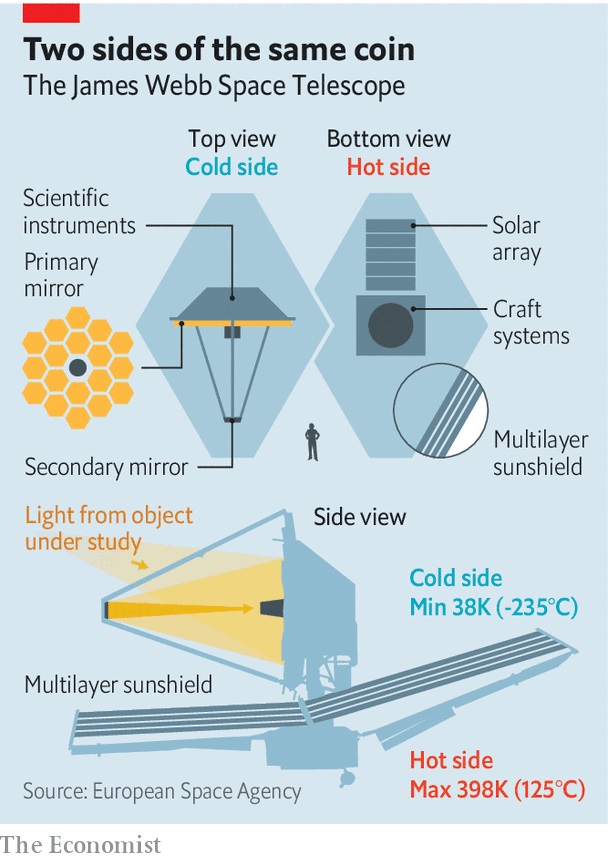
    James Webb Space Telescope

    The James Webb Space Telescope, NASA’s largest space science telescope ever constructed, is scheduled to be sent into orbit in December.

    James Webb Space Telescope (JWST)

    • It is a space telescope being jointly developed by NASA, the European Space Agency (ESA), and the Canadian Space Agency (CSA).
    • It has taken 30 years and $10bn to develop, and is being described as one of the grand scientific endeavors of the 21st Century.

    What is the goal of this telescope?

    • The telescope will be able to see just about anything in the sky.
    • However, it has one overriding objective – to see the light coming from the very first stars to shine in the Universe.
    • These pioneer stars are thought to have switched on about 100-200 million years after the Big Bang, or a little over 13.5 billion years ago.
    • Webb will be picking out groupings of these stars.
    • They are so far away their light – even though it moves at 300,000km per second – will have taken billions of years to travel the cosmos.

    JWST mirror

    • One of the most important objects it will carry is a large mirror which will help collect light from the objects being observed.
    • The primary mirror is made of 18 hexagonal-shaped mirror segments — each 1.32 metre in diameter — stitched together in a honeycomb pattern.
    • The primary mirror is a technological marvel.
    • The lightweight mirrors, coatings, actuators and mechanisms, electronics, and thermal blankets when fully deployed form a single precise mirror that is truly remarkable.
    • Each mirror segment weighs approximately 20 kilograms and is made from beryllium.

    Why beryllium?

    • NASA explains that beryllium was used as it is both strong and light.
    • Beryllium is very strong for its weight and is good at holding its shape across a range of temperatures. Beryllium is a good conductor of electricity and heat and is not magnetic.
    • Because it is light and strong, beryllium is often used to build parts for supersonic airplanes and the Space Shuttle.
    • It added that special care was taken when working with beryllium because it is unhealthy to breathe in or swallow beryllium dust.

    So, it does not have gold?

    • After the beryllium mirror segments were polished a thin coating of gold was applied to it. Gold helps improve the mirror’s reflection of infrared light.
    • The gold was coated using a technique called vacuum vapour deposition.
    • The mirrors are kept inside a vacuum chamber and a small quantity of gold is vapourised and deposited on the mirror.
    • The thickness of the gold is just 100 nanometers. So less than 50 grams of gold was used for the entire mirror.
    • A thin layer of glass was also deposited on top of the gold layer to protect it from scratches.


    UPSC 2022 countdown has begun! Get your personal guidance plan now! (Click here)

  • Air Pollution

    Perform, Achieve and Trade (PAT) Scheme

    A recent report by the Centre for Science and Environment (CSE) has attributed the inefficiency of the PAT scheme to non-transparency, loose targets and overlooked deadlines.

    PAT Scheme

    • Perform Achieve and Trade (PAT) scheme is a flagship program of Bureau of Energy Efficiency under the National Mission for Enhanced Energy Efficiency (NMEEE).
    • NMEEE is one of the eight national missions under the National Action Plan on Climate Change (NAPCC) launched by the Government of India in the year 2008

    Working of the scheme

    • PAT is a market-based compliance mechanism to accelerate improvements in energy efficiency in energy-intensive industries.
    • The energy savings achieved by notified industries is converted into tradable instruments called Energy Saving Certificates (ESCerts).
    • The ESCerts after issuance by the Bureau of Energy Efficiency are traded at Power Exchanges.

    What is PAT cycle?

    • The government shortlists industries and restricts the amount of energy they can consume and defines a time limit of three years by when this restriction should be met as part of PAT.
    • These three years of time are called one PAT cycle.
    • The industries are chosen after in-depth, sector-wise analysis by the government.
    • Industries that participate in this scheme are called designated consumers (DC).
    • Those that overachieve their targets are issued energy savings certificates (ESCerts) that can be traded with industries that have not achieved their targets.
    • Non-achievers have to buy the ESCerts after the three years for compliance.

    Various PAT cycles

    • PAT covered about 13 energy-intensive sectors
    • Sectors included are thermal power plants (TPP), cement, aluminium, iron and steel, pulp and paper, fertilizer, chlor-alkali, petroleum refineries, petrochemicals, distribution companies, railways, textile and commercial buildings (hotels and airports)
    • Announcements for six cycles since 2012 have been made so far


    UPSC 2022 countdown has begun! Get your personal guidance plan now! (Click here)

  • Higher Education – RUSA, NIRF, HEFA, etc.

    [pib] Scheme for Protection and Preservation of Endangered Languages of India (SPPEL)

    The Government of India has initiated a Scheme known as “Scheme for Protection and Preservation of Endangered Languages of India” (SPPEL) informed the Minister of Culture and Tourism.

    About SPPEL

    • The Scheme was instituted by Ministry of Human Resource Development in 2013.
    • The sole objective of the Scheme is to document and archive the country’s languages that have become endangered or likely to be endangered in the near future.
    • The scheme is monitored by the Central Institute of Indian Languages (CIIL) located in Mysuru, Karnataka.
    • The CIIL has collaborated with various universities and institutes across India for this mission.
    • University Grants Commission (UGC) is also providing financial assistance for the creation of centres for endangered languages at Central and State Universities.

    What are Endangered Languages?

    • At the moment, the languages which are spoken by less than 10,000 speakers or languages that are not been linguistically studied earlier are considered endangered language.

    Present status of the scheme

    • Presently, 117 languages have been listed for the documentation.
    • Documentation in the form of grammar, dictionary and ethno-linguistic profiles of about 500 lesser known languages are estimated to be accomplished in the coming years.


    UPSC 2022 countdown has begun! Get your personal guidance plan now! (Click here)

Join the Community

Join us across Social Media platforms.