💥UPSC 2026, 2027, 2028 UAP Mentorship (March Batch) + Access XFactor Notes & Microthemes PDF

Archives: News

  • Governance reforms in central universities

    Central Universities need reforms in their Governing Councils to make them realise their potential.

    Central Universities in the need of reforms

    • There are 55 central universities.
    • These are endowed with prime land, extensive funding from the central government and there is a long line of students waiting to get in.
    • However, they are in turmoil. In recent years, six vice-chancellors (VCs) of central universities have been sacked.
    • Some of these institutions have seen their glory days, yet increasingly, the energy is going out of the system.
    • However, not a single new private university has so far been able to create a true broad-based Vishwa Vidyalaya with the full range of humanities, social and natural sciences, and professional disciplines.
    • Therefore, to save academia in India, central universities must be saved.

    Organizational structure

    • Each of the 55 central universities is governed by a separate Act. but the broad structure is as follows.
    • The Visitor of the university is the President of India.
    • On his behalf, the Ministry of Education recommends an eminent citizen as the chancellor, whose role is mostly ceremonial.
    • The Ministry also constitutes a search committee for the post of VC, which comes up with a list of 3 candidates.
    • From this list, the government picks a VC.
    • Separately, and through a different process, the governing council (GC) is chosen.
    • The governing council (GC) of the university usually have nominees from various stakeholders, including the government, faculty, students, and citizens.
    • The university’s work is carried out by the executive council chaired by the VC, who also appoints the registrar.
    • A separate finance committee is constituted, headed by a chief finance officer, who is often a civil servant on secondment to the university.
    • This arrangement is designed to maintain financial checks and balances.

    Issues with the governance

    • The GC has no say in the selection of the VC.
    • The GC typically meets only once a year and its size is usually very large.[Delhi University has 475 members]
    • In theory, the VC presents and gets approval for the annual plan of the university from the GC.
    • In practice, after much grandstanding on both sides, the plan is rubberstamped.
    • After that, throughout the year, there is the minimal direction or monitoring from the GC, which may or may not meet again.
    • There are typically no quarterly updates, and there is little oversight.
    • Under the circumstances, the high number of failures should not come as a surprise, since effectively, there is minimal governance.

    Comparing with provisions in IIM Bill

    • The new IIM Bill very sensibly limits the GC to at most 19 members.
    • They are expected to be eminent citizens, with broad social representation and an emphasis on alumni.
    • This GC chooses the director, provides overall strategic direction, raises resources, and continuously monitors his or her performance.
    • Within the guidelines provided by the GC, the director has full autonomy but also full accountability.

    Way forward

    • The governing councils of all central universities, IITs, and all other central institutions, need to be restructured by an Act of Parliament.
    • The most eminent alumni of these institutions must be brought on their boards.
    • The dynamism and exposure that these alumni bring to the table will promptly lead to world-class innovations.

    Conclusion

    To allow central universities, the IITs and other public institutions to truly blossom, we need to reform their Governance. There is no time to waste.

  • Parliament – Sessions, Procedures, Motions, Committees etc

    Declining seating of the state legislature and issues with it.

    Recently, Governor turned down the recommendation of the Kerala government to convene the session of the state legislature. It also points to the trend of declining seating of the state legislature and issues with it.

    Governor-Government conflict

    • The Kerala government made a recommendation to the governor for summoning the state’s legislature for a one-day session.
    • The government wanted to discuss the situation arising out of the farmers’ protest in the legislative assembly.
    • Media reports suggest that the governor turned down the government on the grounds that there is no emergent situation for which the state assembly should be called to meet at short notice.
    • Earlier this year, the Rajasthan governor had rejected the recommendation of the government to call a session.
    • The chief minister wanted a session of the legislature called so that he could prove his majority on the floor of the house.

    Constitutional provisions

    • The Constitution is clear: The government has the power to convene a session of the legislature.
    • The council of ministers decides the dates and the duration of the session.
    • Their decision is communicated to the governor, who is constitutionally bound to act on most matters on the aid and advice of the government.
    • The governor then summons the state legislature to meet for a session.
    • The refusal of a governor to do so is a matter of concern.

    Declining sittings of the state legislature

    • In the last 20 years, state assemblies across the country, on average, met for less than 30 days in a year.
    • But states like Kerala, Odisha, Karnataka are an exception.
    • The Kerala Vidhan Sabha, for example, has on average met for 50 days every year for the last 10 years.
    • The trend across the country is that legislatures meet for longer budget sessions at the beginning of the year.
    • Then for the rest of the year, they meet to fulfill the constitutional requirement that there should not be a gap of six months between two sessions.

    Why is it a matter of concern

    • Close scrutiny: Continuous and close scrutiny by legislatures is central to improving governance in the country.
    • Voice to public opinion: Legislatures are arenas for debate and giving voice to public opinion.
    • Accountability institutions: As accountability institutions, they are responsible for asking tough questions of the government and highlighting uncomfortable truths. So, it is in the interest of a state government to convene lesser sittings of the legislature and bypass their scrutiny.
    • Prevent ordinance: Lesser number of sitting days also means that state governments are free to make laws through ordinances. And when they convene legislatures, there is little time for MLAs to scrutinize laws brought before them.

    Way forward

    • Convening legislatures to meet all around the year.
    • In many mature democracies, a fixed calendar of sittings of legislatures, with breaks in between, is announced at the beginning of the year.
    • It allows the government to plan its calendar for bringing in new laws.
    • It also has the advantage of increasing the time for debate and discussion in the legislative assembly.
    • And with the legislature sitting throughout the year, it gets rid of the politics surrounding the convening of sessions of a legislature.

    Conclusion

    Continuous and close scrutiny by legislatures is central to improving governance in the country. Increasing the number of working days for state legislatures is a first step in increasing their effectiveness.

  • Banking Sector Reforms

    What is Positive Pay System?

    With the New Year, a new concept of Positive Pay System for Cheque Truncation System (CTS) will be introduced by the Banking regulator Reserve Bank of India (RBI) seeking to further augment customer safety in cheque payments.

    Try this PYQ:

    Q.Which of the following is the most likely consequence of implementing the ‘Unified Payments Interface (UPI)’?

    (a) Mobile wallets will not be necessary for online payments.

    (b) Digital currency will totally replace the physical currency in about two decades.

    (c) FDI inflows will drastically increase.

    (d) Direct transfer of subsidies to poor people will become very effective.

    Positive Pay System

    • The concept of Positive Pay involves a process of reconfirming key details of large-value cheques.
    • Put simply, cheques will be processed for payment by the drawee bank based on information passed on by its customer at the time of issuance of the cheque.
    • When the beneficiary submits the cheque for encashment, the cheque details are compared with the details provided to the drawee bank through Positive Pay.
    • If the details match, the cheque is honoured. In case of mismatch in cheque details, the discrepancy is flagged by CTS to the drawee bank and the presenting bank, which would take redress measures.

    For cheques above 50k

    • The banks are advised to enable it for all account-holders issuing cheques for amounts of ₹50,000 and above.
    • While availing of this facility is at the discretion of the account-holder, banks may consider making it mandatory in case of cheques for amounts of ₹5 lakh and above, the RBI had said.

    Benefits of the system

    • Under the Positive Pay system, the drawee bank is already aware of the issuer the details of the high-value cheque (above ₹50,000) he has issued.
    • Without this intimation, if a cheque gets presented, then the drawee bank can reject payment and examine the case. Positive Pay is going to benefit both the issuer and the beneficiary.
    • For the issuer, the benefit from this concept is that there cannot be fraudulent cheques encashed out of issuer’s account.
    • For the beneficiary, the benefit is that the cheques handed out to him will mostly get honoured.

    Is Positive Pay the same as ‘certified cheque’?

    • The concept of ‘certified cheque’ was there long back — about 30 years back, long before technology swept across the Indian banking landscape.
    • Whenever anybody issued a cheque, banks used to certify that money is there in their customer’s bank account and, therefore, the cheque will get honoured.
    • This provided comfort to a beneficiary that cheque payment will get honoured and therefore did not insist on a pay order or demand draft.
    • Drawee banks used to earmark the amount in the account of the issuer and then certify the cheque.
    • This was adopted in an era when the cheque instrument used to travel physically for clearing.

    Why need such a system?

    • The RBI says the Positive Pay system is to augment customer safety in cheque payments and reduce instances of fraud occurring on account of tampering of cheque leaves.
    • Banks had recently witnessed a rise in frauds involving high-value cheques.
  • Modern Indian History-Events and Personalities

    History: Visva-Bharati University

    The Visva-Bharati University established by Gurudev Rabindranath Tagore has completed its centenary.

    Do you remember the scheme of education by Gandhi Ji, called Nai Talim?

    Visva-Bharati University

    • The university was set up by Nobel laureate Rabindranath Tagore in 1921 at Santiniketan, Bolpur in West Bengal’s Birbhum district.
    • It was founded by Rabindranath Tagore who called it Visva-Bharati, which means the communion of the world with India.
    • Until independence, it was a college. Soon after independence, the institution was given the status of a central university in 1951 by an act of the Parliament.

    Its establishment

    • The origins of the institution date back to 1863 when Debendranath Tagore was given a tract of land by the zamindar of Raipur, the zamindar of Kirnahar.
    • He set up an ashram at the spot that has now come to be called chatim tala at the heart of the town.
    • The ashram was initially called Brahmacharya Ashram, which was later renamed Brahmacharya Vidyalaya.
    • It was established with a view to encouraging people from all walks of life to come to the spot and meditate.
    • In 1901 his youngest son Rabindranath Tagore established a co-educational school inside the premises of the ashram.

    What makes it special?

    • Rabindranath Tagore believed in open-air education and had reservations about any teaching done within four walls.
    • This was due to his belief that walls represent the conditioning of the mind.
    • Tagore did not have a good opinion about the Western method of education introduced by the British in India; on this subject, Tagore and Gandhiji’s opinion matched.
    • So he devised a new system of learning in Visva-Bharati. He allowed students to continue their course till the student and his teacher both are satisfied.
    • At Visva-Bharati, if a course demanded by a student is not available, then the university will design a course and bring teachers for that course.
    • The university would not be bothered by the consideration of whether there is a demand for the course.
  • Roads, Highways, Cargo, Air-Cargo and Logistics infrastructure – Bharatmala, LEEP, SetuBharatam, etc.

    What are Fastags?

    From January 1, all lanes of National Highways will accept only electronic payments through FASTag.

    Fastags work on a unique technology called RFID (Radio Frequency Identification). This has gone unnoticed in several competitive exams. Hence it is still relevant for the aspirants.

    Also read

    Fastags

    • As per Central Motor Vehicles Rules, 1989, since 1st December 2017, the FASTag had been made mandatory for all registered new four-wheelers and is being supplied by the Vehicle Manufacturer or their dealers.
    • It has been mandated that the renewal of fitness certificate will be done only after the fitment of FASTag.
    • For National Permit Vehicles, the fitment of FASTag was mandated since 1st October 2019.

    What is ‘FASTag’?

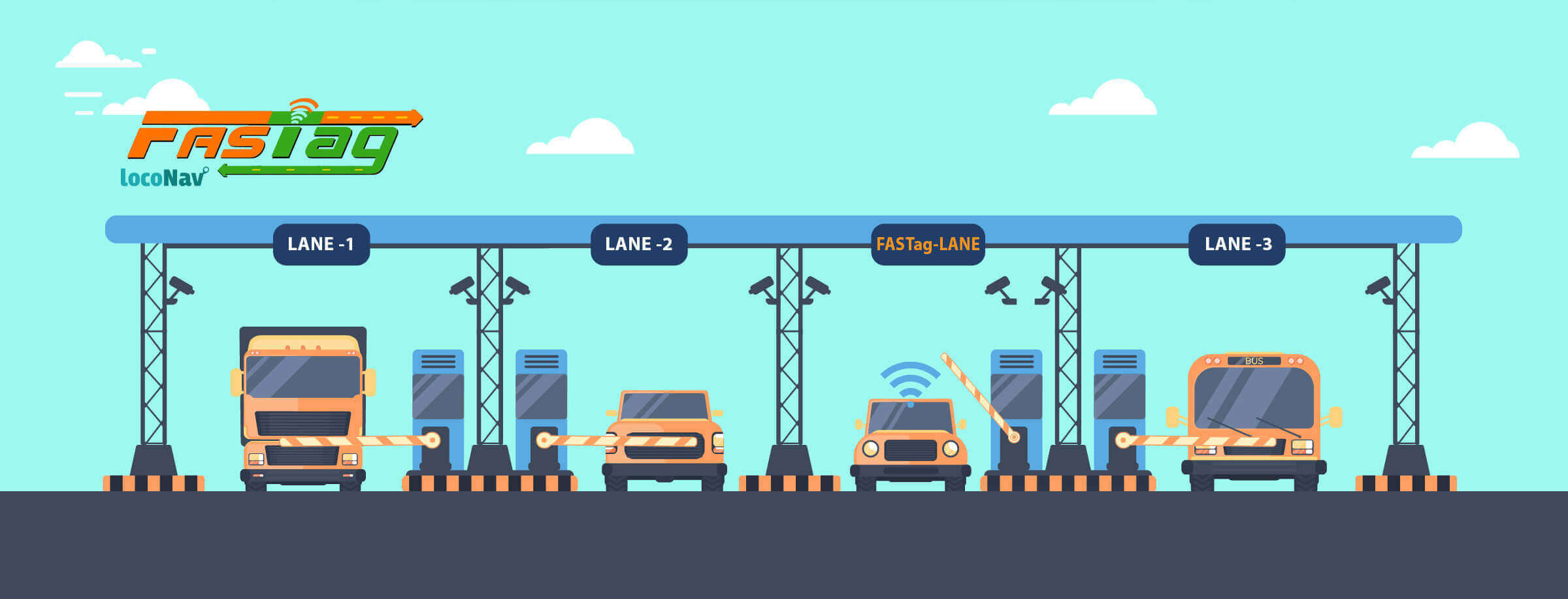
    • FASTags are stickers that are affixed to the windscreen of vehicles and use Radio Frequency Identification (RFID) technology to enable digital, contactless payment of tolls without having to stop at toll gates.
    • The tags are linked to bank accounts and other payment methods.
    • As a car crosses a toll plaza, the amount is automatically deducted, and a notification is sent to the registered mobile phone number.

    How does it work?

    • The device employs Radio Frequency Identification (RFID) technology for payments directly from the prepaid or savings account linked to it.
    • It is affixed on the windscreen, so the vehicle can drive through plazas without stopping.
    • RFID technology is similar to that used in transport access-control systems, like Metro smart card.
    • If the tag is linked to a prepaid account like a wallet or a debit/credit card, then owners need to recharge/top up the tag.
    • If it is linked to a savings account, then money will get deducted automatically after the balance goes below a pre-defined threshold.
    • Once a vehicle crosses the toll, the owner will get an SMS alert on the deduction. In that, it is like a prepaid e-wallet.
  • Wetland Conservation

    [pib] Tso Kar Wetland Complex

    India has added Tso Kar Wetland Complex in Ladakh as its 42nd Ramsar site, which is a second one in the Union Territory (UT) of Ladakh. With this, India now has forty-two Ramsar sites.

    Try this PYQ:

    In which one among the following categories of protected areas in India are local people not allowed to collect and use the biomass?

    (a) Biosphere reserves

    (b) National parks

    (c) Wetlands declared under Ramsar convention

    (d) Wildlife sanctuaries

    Tso Kar Wetland Complex

    • It is a high-altitude wetland complex, consisting of two principal waterbodies, Startsapuk Tso, a freshwater lake of about 438 hectares to the south, and Tso Kar itself, a hypersaline lake of 1800 hectares to the north.
    • It is situated in the Changthang region of Ladakh.
    • It is called Tso Kar, meaning white lake, because of the white salt efflorescence found on the margins due to the evaporation of highly saline water.

    Ecological significance

    • Wetlands provide a wide range of important resources and ecosystem services such as food, water, fibre, groundwater recharge, water purification, flood moderation, erosion control and climate regulation.
    • They are, in fact, a major source of water and our main supply of freshwater comes from an array of wetlands which help soak rainfall and recharge groundwater.
    • The Tso Kar Basin is an A1 Category Important Bird Area (IBA) as per BirdLife International and a key staging site in the Central Asian Flyway.
    • The site is also one of the most important breeding areas of the Black-necked Crane (Grus nigricollis) in India.

    Back2Basics: Wetlands

    • A wetland is a distinct ecosystem that is flooded by water, either permanently or seasonally, where oxygen-free processes prevail.
    • The primary factor that distinguishes wetlands from other landforms or water bodies is the characteristic vegetation of aquatic plants, adapted to the unique hydric soil.
    • Wetlands provide a wide range of important resources and ecosystem services such as food, water, fibre, groundwater recharge, water purification, flood moderation, erosion control and climate regulation.

    What is the Ramsar Convention?

    • The Ramsar Convention on Wetlands of International Importance Especially as Waterfowl Habitat is a treaty for the conservation and sustainable use of such sites.
    • The convention, signed in 1971 in the Iranian city of Ramsar, is one of the oldest inter-governmental accords for preserving the ecological character of wetlands.
    • Also known as the Convention on Wetlands, it aims to develop a global network of wetlands for the conservation of biological diversity and for sustaining human life.
    • Over 170 countries are party to the Ramsar Convention and over 2,000 designated sites covering over 20 crore hectares have been recognised under it.
  • Wetland Conservation

    Mapping: Caspian Sea

    The Caspian is actually a lake, the largest in the world and it is experiencing a devastating decline in its water level that is about to accelerate.

    Note the countries bordering the Caspian Sea: Kazakhstan, Russia, Azerbaijan, Iran and Turkmenistan. Or else remember the acronym ‘TARIK(h)’ (Hindi word for date).

    You can frame a mnemonic statement of your choice. Do similarly for major lakes and inland seas. But dont let it move over TARIK pe TARIK!

    Caspian Sea

    • The Caspian Sea is the world’s largest inland body of water, variously classed as the world’s largest lake or a full-fledged sea.
    • As an endorheic basin, it lies between Europe and Asia.
    • An endorheic basin is a drainage basin that normally retains water and allows no outflow to other external bodies of water, such as rivers or oceans, but converges instead into lakes or swamps, permanent or seasonal that equilibrates through evaporation
    • Its level is the product of how much water is flowing in from rivers, mostly the mighty Volga to the north, how much it rains and how much evaporates away.
    • At the end of the century, the Volga and other northern rivers will still be there.
    • However, a projected temperature rise of about 3℃ to 4℃ in the region will drive evaporation through the roof.

    Now try this PYQ:

    Q.Which of the following has/have shrunk immensely/ dried up in the recent past due to human activities?

    1. Aral Sea
    2. Black Sea
    3. Lake Baikal

    Select the correct option using the code given below:

    (a) 1 only

    (b) 2 and 3 only

    (c) 2 only

    (d) 1 and 3 only

    Why in news?

    • By the end of the century, the Caspian Sea will be nine metres to 18 metres lower. That’s a depth considerably taller than most houses.
    • The Caspian’s surface is already dropping by 7 cm every year, a trend likely to increase.
    • It means the lake will lose at least 25 per cent of its former size, uncovering 93,000 sq km of dry land.
    • If that new land were a country, it would be the size of Portugal.

    Past strides in its level

    • The Caspian Sea has a history of violent rises and falls.
    • In Derbent, on the Caucasus coast of Russia, submerged ancient city walls testify to how low the sea was in medieval times.
    • Around 10,000 years ago, the Caspian was about 100 metres lower.
    • A few thousand years before that it was about 50 metres higher than today and even over spilt into the Black Sea.
  • Parliament – Sessions, Procedures, Motions, Committees etc

    Key lesson from farmers’ protest

    A key lesson from the farmers’ opposition to the farm laws is that following the parliamentary procedure in the passage of legislation always pays dividend more so if the changes introduced by the legislation bring substantial changes. 

    Vested interests resulting in opposition to legislation

    • There are strong indications that the new legislation is desirable and will bring in much-needed market reforms in the overregulated farm sector.
    • There is no contrary evidence that the new proposals will adversely affect farmers in the long run.
    • There is no justification for a minimum support price regardless of demand and supply.
    • Legislation that benefits the nation but hurts vested interests will always meet with vehement opposition.

    How liberalisation helps: Lessons from non-agricultural sector

    • The benefits of liberalising the non-agricultural sector of the economy in 1991 established that market forces cannot be ignored.
    • For the first 30 years, under the Essential Commodities Act, 1955, several control orders were passed.
    • Orders under ECA were passed on products such as cement and steel, and these were intended to ensure their availability at fair prices.
    • The result was just the opposite: Severe shortages, a huge black market and massive corruption.
    • Equally disastrous were laws relating to monopolies and industrial development.

    Importance of parliamentary procedures

    • At the heart of a constitutional democracy based on the Westminster model is the importance of Parliament, which is the fountainhead of all laws.
    • But, Parliament includes the Opposition as well and even though a bill may be certain to become the law, it is necessary that the established procedure is followed.
    • In the face of opposition to the farm laws, it is necessary that the benefits of a new law are demonstrated through debate and discussion.
    • There must be empirical or other evidence that shows the deleterious economic consequences of continuing with the status quo.
    • As the farm bills marked a radical departure from the existing system of selling agricultural produce, the least that could have been done was to refer them to a Select Committee.
    • It is a matter of concern that fewer and fewer bills are being referred to Select Committees or even deliberated upon.
    • While 71 per cent of the bills were referred to a Select Committee in the 15th Lok Sabha (2009-14), only 25 per cent were so referred in the 16th Lok Sabha (2014-19).

    Way forward

    • A new law can always come into force at a later date and can even be made applicable piecemeal.
    • It is also possible to notify it to apply to select states or districts.
    • If laws are likely to meet with opposition by vested interests, the best way to demonstrate their beneficial effects is to implement the laws in select states or districts for a year. 
    • It is worthwhile considering the implementation of a controversial law on a trial basis.

    Consider the question “Describe the important role played by the Select Committee in the passage of the bill. Why the decline in the number of bills referred to the Select Committees is the matter of concern?” 

    Conclusion

    The biggest lesson for the goverment is that following constitutional conventions always pays dividends — it benefits the nation and preserves the dignity of Parliament.

  • Labour, Jobs and Employment – Harmonization of labour laws, gender gap, unemployment, etc.

    Fixed-term employees

    The recent incident of violence at the iPhone manufacturing factory brought into focus the issue of contract labour. The article explains the reasons for its persistence despite the provision of fixed-term employment.

    Difference between a contract worker and fixed-term worker

    • Contract workers, who are hired via an intermediary (contractor) and are not on the payrolls of the company on whose shop floors they work.
    • Fixed-term employees can be directly hired by employers without mediation by a middleman.
    • They are ensured of the same work hours, wages, allowances, and statutory benefits that permanent workers in the establishment are entitled to.
    • Employers are not required to provide retrenchment benefits to fixed-term employees.
    • With an aim to discourage the use of contract workers the government introduced the option of fixed-term employment in the Code on Industrial Relations (2020).

    Issues with the provision of fixed-term employment

    • Fixed-term employment in India is indeed quite open-ended.
    • The Code does not specify a minimum or maximum tenure for hiring fixed-term employees.
    • Nor does it specify the number of times the contract can be renewed.
    • The absence of such safeguards can lead to an erosion of permanent jobs.
    • Workers may find themselves moving from one fixed-term contract to another, without any assurance of being absorbed as permanent workers by their employer.

    So, why firms still hire contract workers?

    • The cost of hiring contract workers continues to remain lower than the cost of hiring fixed-term employees. who are required to be paid pro-rata wages and social security including gratuity.
    • In addition, the monitoring, legal compliance, and litigation costs are shifted onto the contractor in case of contract workers, thereby reducing the transaction costs of recruitment to firms.
    • To encourage a shift away from contract workers to fixed-term employees, the government should have completely prohibited the use of contract labor in core activities
    • Instead of completely prohibiting contract workers in core activities the Labour Code on Occupational Safety and Health has allowed it under certain conditions.
    • Such a provision encourages the use of contract workers, undermining the initiative of introducing fixed-term employment.

    Using PLI and Atmanirbhar Bharat to boost formal job creation

    • The production linked incentive scheme (PLI) offers government subsidies for a limited period which is five years for mobile handsets.
    • The objective of the PLI scheme is to create “good jobs”.
    • It may have been more useful to link these incentives for which a financial outlay of Rs 1.45 lakh crore has been approved over five years for 10 sectors explicitly to job creation.
    • Significantly, under the Atmanirbhar Bharat Rozgar Yojana, the government is offering provident fund subsidies to employers for hiring new formal workers.
    • Both these programs could jointly be leveraged to give a big boost to formal job creation in the manufacturing sector.

    Consider the question “Examine the reasons for the persistence of contractual labour despite the option of fixed-term employment. Also suggest the ways to increase the employment opportunities that are secure.” 

    Conclusion

    The government should focus on the creation of employment opportunities that are secure through policies and laws.

  • Jallikattu Debate

    TN govt gives nod for Jallikattu

    The Tamil Nadu government has permitted Jallikattu to be held across the state during the upcoming Pongal season.

    51A (g) of the Constitution of India mandates every citizen to protect forests, lakes, rivers, wild animals etc. Apart from that, the Constitution also reminds us to show compassion towards birds and animals.

    What is Jallikattu?

    • It is a bull-taming sport and a disputed traditional event in which a bull such is released into a crowd of people.
    • Multiple human participants attempt to grab the large hump on the bull’s back with both arms and hang on to it while the bull attempts to escape.
    • Participants hold the hump for as long as possible, attempting to bring the bull to a stop. In some cases, participants must ride long enough to remove flags on the bull’s horns.
    • It is typically practised in the state of Tamil Nadu as a part of Pongal (harvest) celebrations in January.

    A historic sport

    • Jallikattu has been known to be practised during the Tamil classical period (400-100 BCE).
    • It was common among the Ayar people who lived in the ‘Mullai (pastoral)’ division of the ancient Tamil country.
    • Later, it became a platform for the display of bravery, and prize money was introduced for participation encouragement.
    • A seal from the Indus Valley Civilization depicting the practise is preserved in the National Museum, New Delhi.

    Why it is disputed?

    • As there were incidents of injury and death associated with the sport, both to the participants and to the animals forced into it, animal rights organizations have called for a ban to the sport.
    • This has resulted in the court banning it several times over the past years.
    • However, with protest from the people against the ban, a new ordinance was made in 2017 to continue the sport.

    Various concerns

    • The event has caused several human deaths and injuries and there are several instances of fatalities to the bulls.
    • Animal welfare concerns are related to the handling of the bulls before they are released and also during the competitor’s attempts to subdue the bull.
    • Practices, before the bull is released, include prodding the bull with sharp sticks or scythes, extreme bending of the tail which can fracture the vertebrae, and biting of the bull’s tail.
    • There are also reports of the bulls being forced to drink alcohol to disorient them, or chilli peppers being rubbed in their eyes to aggravate the bull.
    • During attempts to subdue the bull, they are stabbed by various implements such as knives or sticks, punched, jumped on and dragged to the ground.

    Why activists seek a ban over it?

    • Animal rights activists argue that Jallikattu exploits the bull’s natural nervousness as prey animals by deliberately placing them in a terrifying situation.
    • They are forced to run away from the competitors whom they perceive as predators and the practice effectively involves catching a terrified animal.
    • Along with human injuries and fatalities, bulls themselves sometimes sustain injuries or die, which people may interpret as a bad omen for the village.
    • An investigation by the Animal Welfare Board of India concluded that “Jallikattu is inherently cruel to animals”.

    Arguments in favour of the sport

    • According to its protagonists, it is not a leisure sport available but a way to promote and preserve the native livestock.
    • Some believe that the sport also symbolizes a cordial man-animal relationship.

Join the Community

Join us across Social Media platforms.