💥UPSC 2027,2028 Mentorship (April Batch) + Access XFactor Notes & Microthemes PDF

Archives: News

  • Modern Indian History-Events and Personalities

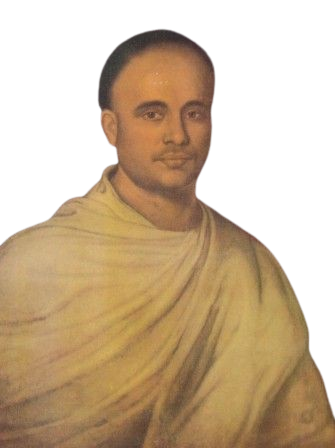
    Who was Ishwar Chandra Vidyasagar (1820–1891)?

    Why in the News?

    On his birth anniversary (26 September), the Union Home Minister paid tribute to the Bengali social reformer, Ishwar Chandra Vidyasagar.

    Ishwar Chandra Vidyasagar

    About Ishwar Chandra Vidyasagar:

    • Birth & Death: Born on 26 September 1820 in Birsingha, Paschim Medinipur, West Bengal; died on 29 July 1891 in Kolkata.
    • Early Life: Born into a poor priest family to Thakurdas Bandyopadhyay and Bhagavati Devi.
    • Title “Vidyasagar”: Meaning “Ocean of Knowledge,” conferred by Sanskrit College for his mastery of Sanskrit and philosophy.
    • Education: Excelled in Sanskrit grammar, Vedanta, literature, astronomy, logic; graduated with honours in 1841 from Sanskrit College, Calcutta.
    • Career: Served as Head Pandit at Fort William College, later Principal of Sanskrit College, Kolkata, and also Inspector of Schools.

    His Contributions:

    • Educational Reforms:

      • Simplified and modernised the Bengali alphabet and prose.
      • Authored “Borno Porichoy”, a primer still used to teach Bengali script.
      • Opened teacher training institutions and promoted non-Brahmin access to Sanskrit College.
      • Advocated blending traditional Indian learning with Western education.
    • Women’s Rights and Social Reform:

      • Leading advocate of Hindu widow remarriage; efforts led to the Hindu Widows’ Remarriage Act, 1856.
      • Strongly opposed child marriage and polygamy.
      • Championed raising the age of consent, influencing the Age of Consent Act, 1891.
      • Promoted women’s education, serving as secretary of the Hindu Female School (later Bethune School).
    • Philanthropy and Grassroots Work:

      • Founded schools for girls and adults in Santhal Parganas (Jharkhand).
      • Set up a free homeopathy clinic for tribals and the poor.
    • Language and Literature:

      • Regarded as the Father of Modern Bengali Prose.
      • Made Bengali prose clear, concise, and accessible to common people.
    [UPSC 2021] Who among the following was associated as Secretary with Hindu Female School which later came to be known as Bethune Female School?

    Options: (a) Annie Besant (b) Debendranath Tagore  (c) Ishwar Chandra Vidyasagar* (d) Sarojini Naidu


  • Climate Change Impact on India and World – International Reports, Key Observations, etc.

    What are ‘Planetary Boundaries’?

    Why in the News?

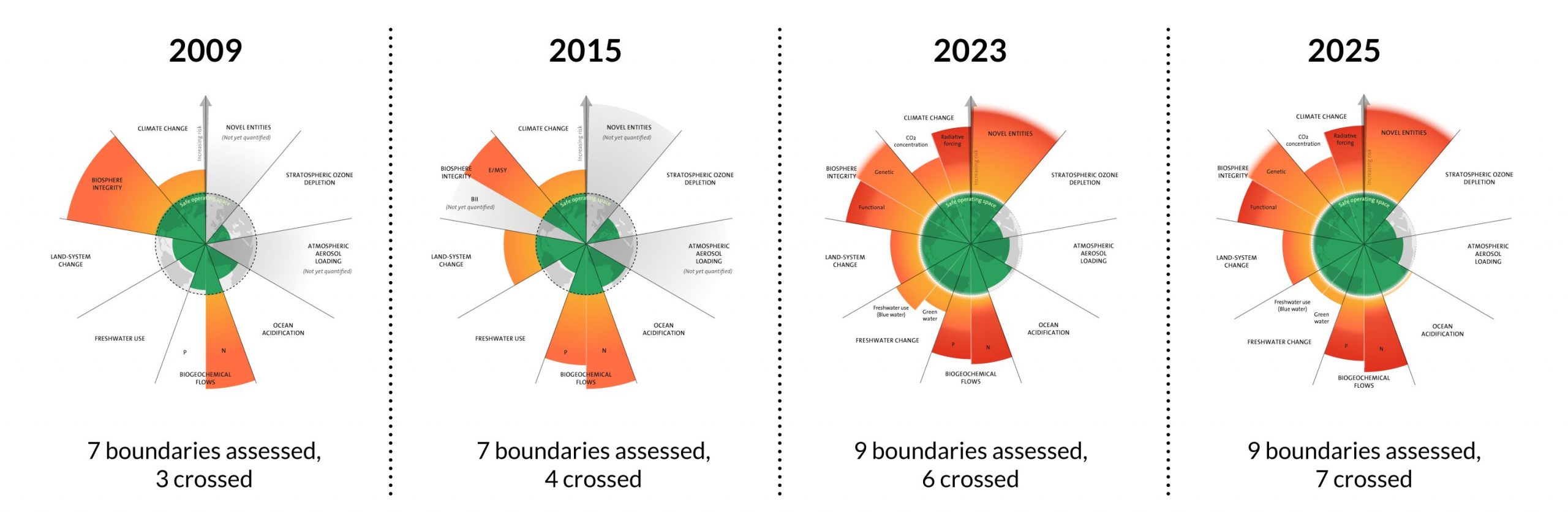
    The Planetary Health Check (PHC) 2025 has warned that 7 of 9 planetary boundaries have now been breached.

    About Planetary Health Check (PHC):

    • The PHC is a global scientific assessment of Earth system health, tracking ecological thresholds that keep the planet habitable.
    • The 2025 report warns that 7 of 9 planetary boundaries have now been breached, with ocean acidification crossing the safe zone for the first time.
    • It highlights how human activities — fossil fuel combustion, deforestation, unsustainable agriculture, and industrial waste — are driving Earth beyond its safe operating space for the first time in 11,000 years.

    What are ‘Planetary Boundaries’?

    What are Planetary Boundaries?

    • Proposition: Coined in 2009 by scientists led by Johan Rockstrom.
    • What are they: Defines safe operating space for humanity by setting ecological thresholds that regulate Earth system stability and resilience.
    • Basis: Based on Holocene conditions (last ~11,000 years) that enabled human civilisation to thrive.
    • Significance: Crossing boundaries risks irreversible environmental collapse.
    • Nine Planetary Boundaries (PBs):

      1. Climate Change (CO Concentration & Radiative Forcing): Safe atmospheric Carbon Dioxide (CO) level: 350 parts per million (ppm). Current: 423 ppm (2025); radiative forcing at +2.97 Watts per square meter (W/m²) (safe: +1.5 W/m²).
      2. Biosphere Integrity (Biodiversity Loss / Extinction Rate): Extinction rate at 100 extinctions per million species years (E/MSY) vs safe 10 E/MSY; severe biodiversity decline continues.
      3. Land System Change (Deforestation / Ecosystem Conversion): Global forest cover reduced to 59% (safe: 75%). All major terrestrial biomes breached.
      4. Freshwater Change (Streamflow & Soil Moisture Deviations): Over 20% of global land shows significant streamflow (22.6%) and soil moisture (22%) deviations beyond thresholds. Indo-Gangetic Plain & North China basins most at risk.
      5. Biogeochemical Flows (Nitrogen & Phosphorus Cycles): Excessive use of Nitrogen (N) and Phosphorus (P) in agriculture, worsening dead zones and eutrophication in water bodies.
      6. Novel Entities (Synthetic Pollutants & Plastics): Release of plastics, synthetic chemicals, and untested compounds exceeds the safe zero-threshold for environmental introduction.
      7. Ocean Acidification (Aragonite Saturation State): Surface ocean acidity has increased by 30–40% since the industrial era. Aragonite saturation state (Aragonite) at 2.84 (safe: 2.86). Threatens corals, molluscs, and plankton.
      8. Atmospheric Aerosol Loading (Aerosol Optical Depth – AOD) [Currently Safe]: Interhemispheric Aerosol Optical Depth (AOD) difference: 0.063, below safe threshold 0.10. Still harmful for health despite planetary stability.
      9. Stratospheric Ozone Depletion (Ozone Concentration in Dobson Units – DU) [Currently Safe]: Global ozone concentration stable at 285–286 Dobson Units (DU) (safe: 277 DU). Ozone hole recovery continues, though new threats flagged from rocket launches and satellite debris.
    [UPSC 2018] The term “sixth mass extinction/sixth extinction” is often mentioned in the news in the context of the discussion of:

    (a) Widespread monoculture practices in agriculture and large-scale commercial farming with indiscriminate use of chemicals.

    (b) Fears of a possible collision of a meteorite with the Earth.

    (c) Large scale cultivation of genetically modified crops.

    (d) Mankind’s over-exploitation/misuse of natural resources, fragmentation/loss of natural habitats, destruction of ecosystems, pollution and global climate change.


  • Soil Health Management – NMSA, Soil Health Card, etc.

    Desert Soilification Technology

    Why in the News?

    For the first time, researchers at the Central University of Rajasthan (CUoR) have successfully grown wheat in arid land of western Rajasthan using desert soilification technology.

    What is Desert Soilification Technology?

    • Overview: It is an innovative biotechnological method that transforms barren desert sand into soil-like material capable of supporting agriculture.
    • Technology: It uses bioformulations and polymers to bind loose sand particles, improve soil texture, and enable water retention.
    • Utility: It is designed to combat desertification, enhance agricultural productivity in arid zones, and ensure sustainable land use.
    • How does it work?
      • Polymer-based Bioformulation: Natural polymers and microbial formulations are applied to desert sand.
      • Cross-Linking of Sand Particles: Bio-polymers create a structural network, binding sand grains together into a soil-like matrix.
      • Water Retention: The cross-linked structure traps water, drastically reducing irrigation needs and preventing rapid percolation of water through sandy soil.
      • Microbial Boost: Introduced beneficial microbes stimulate plant growth, improve soil fertility, and enhance stress resistance of crops.
      • Soil-like Properties: The modified sand mimics fertile soil — enabling nutrient retention, microbial colonization, and sustainable cropping.

    Key Features:

    • Sand-to-Soil Conversion: Cross-links sand particles into a soil-like structure, creating porosity and root-holding capacity.
    • Water Retention Efficiency: Increases moisture-holding ability of sand, thereby reducing irrigation requirements by 30–40%.
    • Microbial Boost: Bioformulation stimulates beneficial soil microbes, enhancing nutrient cycling and crop stress resistance.
    • Crop Versatility: Tested successfully with wheat, bajra, guar gum, chickpea, and is now being expanded to millets and green gram.
    • Low Input Agriculture: Reduces number of irrigation cycles (3–4 vs 5–6 in normal wheat farming).
    • Climate Resilience: Provides a sustainable model for food production in water-stressed and desertified regions.
    • Scalability: Can be replicated in other arid ecosystems beyond Rajasthan (potential use in Middle East, Africa).
    [UPSC 2023] Which one of the following best describes the concept of ‘Small Farmer Large Field’?

    (a) Resettling war-displaced people on shared cultivable land

    (b) Marginal farmers group to coordinate farm operations *

    (c) Marginal farmers lease land collectively to a corporate

    (d) A company funds and guides farmers to grow required crops


  • Bharat Emission Standards

    Corporate Average Fuel Efficiency (CAFE) Norms

    Why in the News?

    The Bureau of Energy Efficiency (BEE) under the Ministry of Power has issued draft CAFE-3 and CAFE-4 norms, applicable from April 2027 to March 2037.

    About Corporate Average Fuel Efficiency (CAFE) Norms:

    • What is it: Standards that mandate automakers to maintain a sales-weighted fleet average of fuel efficiency and CO emissions across all passenger vehicles.
    • Origin:
      • First introduced in the United States in 1975 after the Arab Oil Embargo, aimed at lowering oil dependency.
      • In India, first notified in 2017 under the Energy Conservation Act, 2001, framed by the Bureau of Energy Efficiency (BEE), Ministry of Power.
    • Objective:
      • Reduce CO emissions and oil imports, improve energy security.
      • Push adoption of EVs, hybrids, flex-fuels, and fuel-efficient technologies.
    • Applicability: Passenger vehicles (< 3,500 kg gross vehicle weight) across petrol, diesel, LPG, CNG, hybrid, and electric categories.
    • Phased Implementation in India:
      • CAFE I (2017–2022) → CO₂ emission limit of 130 g/km.
      • CAFE II (2022–2027) → stricter limit of 113 g/km.
      • CAFE III (Draft, 2027–2032)91.7 g/km CO₂ limit, aligned with WLTP (World Harmonised Light Vehicle Test Procedure).
      • CAFE IV (Draft, 2032–2037)70 g/km CO₂ limit (most stringent stage yet).
    • Recent Updates (Draft CAFE-3 & CAFE-4, Sept 2025):
      • Automakers allowed to form pools of up to 3 manufacturers.
      • Pooling treated as one fleet for compliance; pool manager bears penalty if limits breached.
      • A manufacturer can join only one pool per year but can switch in later years.
      • Special relief for small cars (under 4m, <909 kg, <1200 cc): eligible for up to 9 g/km CO relief.
      • Incentives for flex-fuel vehicles (ethanol-petrol blends) and strong hybrids alongside EVs.
      • Aim: Balance decarbonisation with consumer affordability and revive the small car segment (which saw 71% sales decline in 6 years).
    • Compliance & Penalties:
      • Exceeding CO₂ limits: Regulatory fines under the Energy Conservation Act, 2001.
      • CAFE credits may be earned, traded, or carried forward to offset temporary lapses.
    • Green Impact:
      • Complements India’s Net Zero 2070 goals.
      • Encourages fuel-efficient models, biofuels, and EV adoption.

    How are CAFE Norms different from Bharat Stage (BS) Norms?

    CAFE Norms Bharat Stage (BS) Norms
    Full Form Corporate Average Fuel Efficiency Bharat Stage Emission Standards
    Primary Focus Fleet-wide fuel efficiency & CO emissions Individual vehicle toxic exhaust pollutants (NOx, PM, CO, HC, SOx)
    Objective Reduce oil imports, improve energy efficiency, cut CO Reduce air pollution & public health risks
    Regulating Authority BEE, Ministry of Power (Energy Conservation Act, 2001) MoEFCC & CPCB
    Scope Passenger vehicles (<3,500 kg GVW; petrol, diesel, LPG, CNG, hybrids, EVs) Mainly ICE vehicles; tailpipe pollutants from petrol & diesel
    Parameters Measured Fleet average CO₂ (g/km) Pollutants: NOx, CO, PM, HC, SOx
    Basis of Measurement Sales-weighted fleet average across all models Individual vehicle emissions tested
    Phases in India CAFE I (2017–22: 130 g/km) → CAFE II (2022–27: 113 g/km) → Draft CAFE III (2027–32: 91.7 g/km) → Draft CAFE IV (2032–37: 70 g/km) BS-I (2000) → BS-II (2005) → BS-III (2010) → BS-IV (2017) → BS-VI (2020; leapfrogged BS-V)
    Testing Standard Fuel efficiency & CO₂ per km (lab-tested, WLTP cycle for future) Pollutant emissions measured under regulated driving cycles
    Impact on Industry Forces OEMs to balance fleet mix (e.g., SUVs offset by EVs/hybrids) Forces OEMs to adopt clean fuel & emission-control tech (e.g., DPF, SCR)
    Penalties Heavy fines for fleet CO₂ non-compliance; penalties apply to pool manager in pooled fleets Non-compliant vehicles cannot be sold; penalties & recalls
    Global Parallel U.S. CAFE norms (1975) Euro emission standards


    [UPSC 2020] Which of the following are the reasons/factors for exposure to benzene pollution?

    1. Automobile exhaust 2. Tobacco smoke 3. Wood burning 4. Using varnished wooden furniture 5. Using products made of polyurethane

    Select the correct answer using the code given below:

    Options: (a) 1, 2 and 3 only * (b) 2 and 4 only (c) 1, 3 and 4 only (d) 1, 2, 3, 4 and 5


  • Foreign Policy Watch: India-Pacific Island Nations

    [pib] Forum for India-Pacific Islands Cooperation (FIPIC)-III Summit

    Why in the News?

    India recently hosted a meeting of foreign ministers of Forum for India-Pacific Islands Cooperation (FIPIC) in New York.

    About Forum for India–Pacific Islands Cooperation (FIPIC):

    • Launch: Established in 2014 during PM Narendra Modi’s visit to Fiji under the Act East Policy.
    • Members: Comprises 14 Pacific Island Countries (PICs) i.e Cook Islands, Fiji, Kiribati, Marshall Islands, Micronesia, Nauru, Niue, Palau, Papua New Guinea, Samoa, Solomon Islands, Tonga, Tuvalu, and Vanuatu.
    • Objectives: Strengthen cooperation in trade, investment, health, agriculture, renewable energy, disaster management, digital connectivity, and climate change adaptation.
    • Summits Held:

      • Suva (2014)
      • Jaipur (2015)
      • Port Moresby (2023)
    • Key Initiatives: $1 million climate fund, Pan-Pacific Islands e-network, visa on arrival, cooperation in space technology, and training of diplomats.
    • Trade: Current bilateral trade is about $300 million annually (exports $200 million, imports $100 million).

    Strategic Importance of FIPIC:

    • Indo-Pacific Outreach: Expands India’s role in maritime governance and regional security.
    • Countering China: Acts as a soft-power tool to balance China’s influence in the Pacific.
    • Maritime Leverage: PICs control vast Exclusive Economic Zones (EEZs) crucial for shipping lanes, fisheries, and seabed resources.
    • Climate Diplomacy: Strengthens India’s leadership with climate-vulnerable PICs under South-South cooperation.
    • Global Forums: PICs often vote as a bloc in UN, WTO, and other multilateral institutions, enhancing India’s diplomatic weight.
  • [pib] Central Consumer Protection Authority (CCPA)

    Why in the News?

    The Central Consumer Protection Authority (CCPA) has imposed a penalty of ₹2,00,000 FirstCry for false and misleading price representations on its e-commerce platform.

    Background of the Case: You Must Know

    • Complaint: Products were displayed with the claim “MRP inclusive of all taxes,” but additional GST was levied at checkout.
    • Effect: Misled consumers by showing higher discounts than actually offered.
    • Findings:
      • A product advertised at 27% discount was effectively sold at 18.2% discount after GST.
      • Such pricing amounted to misleading advertisements (Section 2(28)) and unfair trade practices (Section 2(47)).
    • Dark Pattern: The practice qualified as “drip pricing”, a dark pattern under the Guidelines for Prevention and Regulation of Dark Patterns, 2023.
    • Violation of E-Commerce Rules: Contravened Rule 7(1)(e) of Consumer Protection (E-Commerce) Rules, 2020, which mandates displaying the total price inclusive of all charges and taxes upfront.

    About Central Consumer Protection Authority (CCPA):

    • Established: Under Section 10 of Consumer Protection Act, 2019 (effective July 20, 2020).
    • Nodal Ministry: Ministry of Consumer Affairs, Food & Public Distribution.
    • Functions & Powers:
      • Protects and enforces consumer rights as a class.
      • Prevents unfair trade practices and misleading advertisements.
      • Can initiate class-action suits (recalls, refunds, license cancellation).
      • Investigates through Investigation Wing headed by a Director-General.
      • Can order discontinuation of unfair practices and impose penalties.
    • Composition of CCPA: Chief Commissioner (Head); 2 Commissioners-
      • One for goods-related issues.
      • One for services-related complaints.
    [UPSC 2023] Consider the following organizations/bodies in India:

    1. The National Commission for Backward Classes

    2. The National Human Rights Commission

    3. The National Law Commission

    4. The National Consumer Disputes Redressal Commission

    How many of the above are constitutional bodies?

    (a) Only one * (b) Only two (c) Only three (d) All four


  • North-East India – Security and Developmental Issues

    [26th September 2025] The Hindu Op-ed: Eight North-Eastern states with International borders, 0.13% of exports

    PYQ Relevance

    [UPSC 2024] India has a long and troubled border with China and Pakistan, fraught with contentious issues. Examine the conflicting issues and security challenges along the border. Also give out the development being undertaken in these areas under the Border Area Development Programme (BADP) and Border Infrastructure and Management (BIM) Scheme.

    Linkage: This PYQ on BADP/BIM links with the article’s focus on the Northeast, where 5,400 km of borders yield only 0.13% exports. Both stress that borders must be treated as developmental, not just security, frontiers — a recurring UPSC theme.

    Mentor’s Comment

    India’s trade story is dominated by coastal powerhouses, while the Northeast, despite its 5,400 km of international borders and strategic location, contributes a meagre 0.13% of exports. The recent 25% U.S. tariff on Indian goods has exposed not just external vulnerabilities but also deep structural and spatial imbalances in India’s trade economy. This article dissects the marginalisation of the Northeast in India’s export architecture, the missed opportunities in border trade, and the urgent need to diversify resilience across regions.

    Introduction

    When the United States imposed an additional 25% tariff on imports from India in August 2025, New Delhi responded with restraint, continuing its familiar strategy of quiet diplomacy. But beneath this diplomatic choreography lies a deeper crisis: India’s export economy is dangerously centralised. While four States, Gujarat, Maharashtra, Tamil Nadu, and Karnataka, account for more than 70% of exports, the entire Northeast contributes only 0.13%, despite sharing long borders with multiple countries and lying at the crossroads of South and Southeast Asia. This exclusion is not incidental but structural, reflecting decades of neglect in infrastructure, policy, and representation.

    Why is this in the news?

    The U.S. tariff hike of 25% against India is significant not just for its external trade implications but for the internal fault lines it exposes. For the first time, the spotlight has shifted from India-U.S. friction to India’s own spatial imbalance in trade. Striking numbers illustrate the scale of the problem: Gujarat alone contributes 33% of exports, while eight northeastern States together contribute only 0.13%. This stark contrast shows that India negotiates global trade deals while leaving its eastern frontier out of the economic map. It highlights a major failure in policy design, where infrastructure and incentives remain clustered in a few industrial enclaves, leaving large swathes of the country economically orphaned.

    Why is India’s export economy so centralised?

    1. Export concentration: Gujarat, Maharashtra, Tamil Nadu, and Karnataka together account for over 70% of exports, with Gujarat alone contributing 33%.
    2. Policy alignment: Infrastructure, political continuity, and incentives have been systematically channelled to these States.
    3. Peripheral neglect: Uttar Pradesh, Bihar, and Madhya Pradesh together contribute barely 5%, showing how populous regions remain trade lightweights.

    Why does the Northeast remain marginalised in trade?

    1. Minuscule share: Eight northeastern States, despite 5,400 km of international borders, contribute only 0.13% of exports.
    2. Security apparatus over trade: Borders are securitised for counterinsurgency, not for commerce. Goods do not move, but surveillance forces do.
    3. Policy exclusion: No representation from the Northeast in the PM’s Economic Advisory Council or the Board of Trade.
    4. Ignored in planning: The DGFT’s 2024 export strategy ran into 87 pages without a single mention of Northeast corridors.

    What are the ground-level impacts of neglect?

    1. Tea economy in crisis: Assam produces over half of India’s tea output, but branding and packaging are almost absent. A 25% tariff hike threatens viability, with planters in Dibrugarh warning of job losses.
    2. Oil vulnerability: Numaligarh Refinery’s expansion requires imports, increasingly relying on discounted Russian crude. U.S. sanctions risk choking supplies, with Golaghat bearing the brunt, not Mumbai.

    How has border trade with Myanmar collapsed?

    1. Vanishing corridors: Zokhawthar (Mizoram) and Moreh (Manipur) have withered into skeletal outposts.
    2. Free Movement Regime scrapped (2024): Severed kinship ties, daily trade, and hill economies.
    3. Performative infrastructure: Roads and customs offices exist on paper, cold-chain facilities are missing.
    4. Security logic over market demand: Borders function more as containment grids than trade hubs.

    How does global context deepen India’s challenge?

    1. China’s influence: Consolidating control in northern Myanmar through infrastructure investments and militia alliances.
    2. India’s inertia: The India-Myanmar-Thailand Highway remains unfinished, symbolic of missed opportunities.
    3. Global supply chains shifting: Southeast Asia builds new corridors, but India clings to colonial-era coastal routes.

    What does this reveal about India’s trade resilience?

    1. Dependence on few corridors: A flood in Gujarat or strike in Tamil Nadu can paralyse exports.
    2. Northeast excluded by design: Not just oversight, but structural neglect in infrastructure, logistics, and institutions.
    3. Strategic hollowness: India claims Indo-Pacific leadership but leaves its eastern flank brittle and disconnected.

    Conclusion

    India cannot aspire to regional leadership while its Northeast remains economically orphaned. The 25% U.S. tariffs are not just a foreign policy irritant but a reminder that trade resilience must mean dispersion, not dependence. The Northeast needs roads, warehouses, and representation, not rhetoric. Integrating this frontier into the export map is essential for both economic equity and strategic credibility. Without it, India risks negotiating global trade while ignoring the geographies that could anchor its cohesion.

  • J&K – The issues around the state

    Listen to Ladakh

    Introduction

    Ladakh has historically been a symbol of loyalty, sacrifice, and national integration. From its soldiers’ valour in wars to its monasteries embodying peace, it has stood by India unfailingly. However, the grant of Union Territory status in 2019 has created unexpected discontent, with Ladakhis now demanding constitutional safeguards, ecological balance, and meaningful empowerment. Delhi’s response to Ladakh is not just a matter of regional governance but also of strategic national importance.

    Why in News (Timeline of Demands)

    1. August 2019: Ladakh granted Union Territory (UT) status after abrogation of Article 370. Initially welcomed in Leh but caused discontent in Kargil.
    2. 2020–21: Fears of demographic change, land alienation, and ecological damage surface; demand for inclusion in the Sixth Schedule grows.
    3. 2021: Formation of Leh Apex Body (Buddhist leaders) and Kargil Democratic Alliance (Muslim leaders). Despite historic rivalry, both groups unite demanding constitutional safeguards.
    4. 2022–23: Protests intensify for empowerment of Hill Councils, job reservation, and land protection.
    5. 2024–25: Discontent spills into the streets; Ladakh witnesses unprecedented Buddhist–Muslim solidarity. Calls grow louder for legislative assembly or statehood, beyond Sixth Schedule status.

    Ladakh’s legacy of loyalty and sacrifice

    1. Military contributions: From 1947 raids to the 1999 Kargil War, Ladakhis have consistently defended India’s frontiers. Heroes like Colonel Chewang Rinchen and Sonam Wangchuk embody this spirit.
    2. Cultural resilience: Monasteries, mosques, and local traditions reflect Ladakh’s unique identity and trust in India’s unity.

    Why discontent has emerged after 2019

    1. Union Territory status: While celebrated initially, it stripped Ladakh of legislative empowerment, leaving governance centralised.
    2. Fear of marginalisation: Locals worry about land, jobs, and ecology in the absence of Sixth Schedule protections.
    3. Geostrategic location: Proximity to Chinese and Pakistani borders heightens the stakes of dissatisfaction.

    Community unity and mobilization

    1. Leh Apex Body and Kargil Democratic Alliance: For the first time, Buddhists and Muslims have forged a common platform.
    2. Shared agenda: Demands include strengthened Hill Councils, greater representation, and protection of Ladakh’s unique ecological and cultural heritage.
    3. Grassroots mobilization: Local movements are engaging with Delhi directly, seeking dialogue and recognition.

    Delhi’s challenge and way forward

    1. Triangular balance: Policies must reconcile development, ecology, and empowerment.
    2. Prudent engagement: The Centre must avoid delay, ensure quiet consultations, and expand local representation.
    3. Strategic necessity: Addressing Ladakh’s demands is vital to prevent alienation in a sensitive frontier region.

    National and strategic significance

    1. Security implications: Every decision has ripple effects across the Line of Actual Control and Pakistan frontiers.
    2. Democratic ethos: Empowering Ladakh demonstrates India’s ability to blend federalism with strategic caution.
    3. Symbolic importance: How Delhi treats Ladakh will echo in other sensitive regions seeking greater autonomy.

    Conclusion

    Ladakh’s loyalty to India has been unquestionable. Yet its current grievances demand sensitive handling. By combining development with ecological protection and democratic empowerment, Delhi can reaffirm Ladakh’s trust and secure this frontier for future generations. This is a test of India’s governance maturity and strategic foresight.

    PYQ Relevance

    [UPSC 2022] While the national political parties in India favour centralisation, the regional parties are in favour of State autonomy. Comment

    Linkage: Ladakh after its 2019 Union Territory status is a live case of the centralisation vs. autonomy debate. The Centre justified direct control citing security and integration, reflecting the national parties’ bias for centralisation. Yet, Ladakh’s Buddhist and Muslim groups now demand Sixth Schedule safeguards and stronger Hill Councils, echoing the regional push for autonomy to protect land, ecology, and culture. This tension captures the essence of the PYQ — the challenge of balancing national integration with regional aspirations in India’s federal system.

  • Citizenship and Related Issues

    Citizens, domicile, migrants: Why should we worry about Provincial Citizenship?

    Introduction

    Indian citizenship was envisioned as singular and uniform, rising above provincial or ethnic divides. Yet, as Ranjan’s recent research (2025) and Sarkar’s reflections suggest, the rise of provincial citizenship has complicated this narrative. Rooted in nativist politics and tied to emotional belonging to one’s State, this phenomenon is altering the politics of domicile, migration, and rights. While the COVID-19 migrant crisis exposed vulnerabilities of inter-state labour, subsequent domicile policies and debates around NRC, SIR, and regional protectionism have re-opened constitutional fault lines. The issue compels us to revisit constitutional provisions, historical warnings, and contemporary challenges to Indian federalism.

    Why in the News

    The discussion on provincial citizenship has gained traction because it reflects a sharp break from the constitutional promise of uniform Indian citizenship. Jharkhand’s domicile politics, post-2000, demonstrates how regional grievances can weaponize ‘sons of the soil’ sentiment. J&K’s domicile rules post-2019 abrogation illustrate how domicile is used as a tool of inclusion and protection. Assam’s migration-linked exclusions add another layer of contestation. For the first time, an “unofficial citizenship” has become powerful enough to rival the official national framework, forcing judicial interventions and challenging the foundational principle of equality under Article 16(2). This is no longer a marginal issue but a structural problem, shaping electoral politics and democratic legitimacy.

    What is meant by Provincial Citizenship?

    1. Concept: Rooted in nativist politics, it emphasizes belonging to a State rather than to India as a whole.
    2. Political use: Gains leverage in regional elections by mobilising ‘locals’ against ‘outsiders’.
    3. Entanglement: Blurs lines between spatial identity, freedom of movement, and constitutional citizenship.

    Issues with Provincial Citizenship

    1. Exclusion & Discrimination: Creates second-class citizens among internal migrants, violating the spirit of Articles 15, 16(2), 19.
    2. Fragmentation of National Unity: Undermines the principle of one nation, one citizenship, fostering parochialism and regionalism.
    3. Economic Inefficiency: Restricts labour mobility, hurting industries and services in cities dependent on migrant workers.
    4. Judicial Burden: Conflicts between migrants’ rights and domicile rules often end up in Supreme Court adjudication, showing gaps in political resolution.

    Benefits of Provincial Citizenship

    1. Local Identity & Belonging: Strengthens emotional connection of “sons of the soil” to their State.
    2. Protection of Vulnerable Groups: In J&K, domicile rules safeguarded historically excluded groups like Valmikis, Gorkhas, and West Pakistan refugees.
    3. Equitable Resource Allocation: Ensures locals are not overshadowed by migrants in jobs, education, and land rights.
    4. Democratic Mobilisation: Acts as a rallying point in regional politics, giving voice to sub-national concerns.

    How has Jharkhand become a case study?

    1. Statehood in 2000: Did not end sub-nationalist demands but transformed them into domicile-based politics.
    2. Domicile politics: Used to articulate majoritarian grievances against minority elites.
    3. Departure: Unlike Sixth Schedule areas, it encompassed the entire State, challenging federal norms and Article 16(2).

    What role does Jammu & Kashmir and Assam play?

    1. J&K (Post-2019): Domicile introduced to safeguard minorities like Valmikis, Gorkhas, West Pakistan refugees after abrogation of Article 370.
    2. Assam: NRC and SIR processes highlight anxieties around migration and exclusion.

    How does this challenge the idea of One Citizenship?

    1. Undermines Article 15, 16, 19: Domicile restrictions contradict equality and mobility rights.
    2. Supreme Court interventions: Conflicts between migrants and provincial citizenship often need judicial resolution.
    3. Multiple vocabularies: Terms like citizen-outsiders (Roy), differentiated citizenship (Jayal), paused citizens (Sharma), hyphenated nationality (Sarkar) capture fragmented realities.

    Is this a new phenomenon or an old concern?

    1. Historical context: Myron Weiner’s Sons of the Soil (1978) already flagged migration-linked conflicts.
    2. SRC Report 1955: Explicitly warned that domicile rules undermine the concept of common Indian citizenship.
    3. Newness: The idea has now moved from reports and theory to an active political reality.

    Way Forward

    1. Constitutional Balance: Uphold national citizenship guarantees while allowing limited affirmative safeguards for locals.
    2. Labour Protections: Create a national migrant workers framework to ensure portability of rights and benefits.
    3. Dialogue & Federal Coordination: Encourage Centre–State mechanisms to harmonise domicile policies with constitutional provisions.
    4. Judicial & Policy Oversight: Courts to curb excesses, and Parliament may revisit domicile laws as warned by the States Reorganisation Commission (1955).
    5. Promote Inclusion: Foster constitutional morality and fraternity so regional protections don’t become exclusionary.

    Conclusion

    The rise of provincial citizenship shows that the unity of Indian citizenship is being tested not by foreign threats but by internal contestations of belonging. Jharkhand’s domicile struggles, Assam’s NRC anxieties, and J&K’s experiments demonstrate that citizenship is increasingly layered, contested, and politicised. Unless reconciled, such provincial claims may fracture the inclusive national vision of Akhanda Bharat and weaken democratic federalism.

    PYQ Relevance

    [UPSC 2024] Why do large cities tend to attract more migrants than smaller towns? Discuss in the light of conditions in developing countries.

    Linkage: This article is best linked with the GS1 PYQ “Why do large cities tend to attract more migrants than smaller towns?” as it directly discusses internal migration, mobility vs sedentarism, and the allure of metropolises for rural workers despite precarity, highlighted starkly during COVID-19. It also adds depth by showing how migrants face exclusion through provincial citizenship and domicile politics, raising constitutional questions under Articles 15, 16(2), and 19 and reflecting federal tensions. For UPSC, it is relevant across GS1 (urbanisation, migration, regionalism), GS2 (citizenship, federalism, rights), GS3 (labour and economic vulnerabilities), and GS4 (constitutional morality vs exclusion), making it a rich theme that connects social realities with polity and governance debates.

  • Indian Missile Program Updates

    Intermediate Range Agni-Prime Missile

    Why in the News?

    The Defence Research and Development Organisation (DRDO) and the Strategic Forces Command (SFC) successfully test-fired the Agni-Prime missile from a rail-based mobile launcher, marking India’s first such operational test.

    About Agni-Prime Missile:

    • About: 6th missile in the Agni family, developed under the Integrated Guided Missile Development Programme (IGMDP).
    • Design: Two-stage, solid-propellant, canisterised surface-to-surface ballistic missile.
    • Range and Payload: 1,000–2,000 km; covering both China and Pakistan; Payload: Up to 1.5 tonnes (1,500–3,000 kg).
    • Navigation: Dual redundant guidance system; Maneuverable Re-entry Vehicle (MaRV) with delta fins to evade missile defence systems.
    • Deployment: Already inducted in road-mobile canisterised version; now tested with rail-based mobile launcher.

    Global Context: Rail-Based Missile Technology:

    With Agni-P rail launch, joins this select strategic group.

    • Soviet Union: Operated RT-23 Molodets Intercontinental Ballistic Missile (ICBM) on rail; dismantled after START Treaty.
    • Russia: Planned Barguzin rail-mobile ICBM system, shelved to focus on hypersonics.
    • United States: Explored rail-mobile Minuteman and Peacekeeper ICBMs, cancelled post-Cold War.
    • China: Tested rail-mobile DF-41 ICBM in 2016.
    • North Korea: Tested rail-based Short-Range Ballistic Missile system in 2021.

    Significance of Rail-Based Launch:

    • Mobility & Concealment: Railcars move across the network, hide in tunnels, evade satellite detection.
    • Survivability: Unlike silos, less vulnerable to pre-emptive strikes.
    • Rapid Response: Enables quick deployment and shorter reaction time.
    • Strategic Deterrence: Boosts credible second-strike nuclear capability.
    • Technological Showcase: Demonstrates India’s maturity in missile systems.

    Back2Basics: Integrated Guided Missile Development Programme (IGMDP)

    • Launch: Conceived in 1983 by Dr. A.P.J. Abdul Kalam to achieve self-reliance in missile technology.
    • Completion: 2012.
    • Missile Family (P-A-T-N-A):
      • Prithvi – Short-range ballistic missile.
      • Agni – Ballistic missiles of multiple ranges (Agni I–V, Agni-P).
      • Trishul – Short-range surface-to-air missile.
      • Nag – 3rd generation anti-tank guided missile.
      • Akash – Medium-range surface-to-air missile.

    Agni Series and its Development:

    • Origins: Began in 1983 under the IGMDP led by Dr. Kalam.
    • Evolution: Started as technology demonstrators for re-entry vehicles; later developed into full-fledged strategic missiles.
    • Variants:
      • Agni-I: 700–1,200 km range, inducted 2007.
      • Agni-II: 2,000–3,000 km range, inducted 2010.
      • Agni-III: 3,500 km range, highly accurate, tested 2007.
      • Agni-IV: 4,000 km range, advanced avionics, tested 2011.
      • Agni-V: 5,000+ km range, ICBM, MIRV capable.
      • Agni Prime (Agni-P): 1,000–2,000 km, lighter, tested 2021.
      • Agni-VI: Under development, 6,000–10,000 km, MIRV + submarine launch capable.
    • Significance: Backbone of India’s nuclear triad, enhancing deterrence against regional and global adversaries.


    [UPSC 2023] Consider the following statements:

    1. Ballistic missiles are jet-propelled at subsonic speeds throughout their fights, while cruise missiles are rocket-powered only in the initial phase of flight.

    2. Agni-V is a medium-range supersonic cruise missile, while BrahMos is a solid-fuelled intercontinental ballistic missile.

    Which of the statements given above is/are correct?

    (a) 1 only (b) 2 only (c) Both 1 and 2 (d) Neither 1 nor 2*


Join the Community

Join us across Social Media platforms.