💥UPSC 2027,2028 Mentorship (April Batch) + Access XFactor Notes & Microthemes PDF

Archives: News

  • Terrorism and Challenges Related To It

    An anti-terror role that defies logic

    Introduction

    The global fight against terrorism is rooted in credibility, trust, and collective responsibility. Yet, the United Nations’ recent decision to entrust Pakistan with leadership positions in the Taliban Sanctions Committee and as Vice-Chair of the UNSC Counter-Terrorism Committee has sparked disbelief. For a country long accused of sheltering terrorists, from Osama bin Laden to Lashkar-e-Taiba and Jaish-e-Mohammad, this appointment is not just ironic but deeply unsettling. Coupled with financial support such as the IMF’s billion-dollar loan to Pakistan despite concerns of terror financing, these developments expose critical vulnerabilities in the UN system. For India, which continues to suffer from cross-border terrorism, this represents a significant diplomatic and security challenge.

    Why is this in the news?

    Pakistan, accused for decades of harbouring terrorists and backing attacks on Indian soil, has been elevated to leadership in global counter-terrorism mechanisms. The timing is striking: the move came just weeks after the April 2025 Pahalgam attack where terrorists killed Indian tourists, followed by India’s Operation Sindoor against terror launchpads. To add to the irony, Pakistan also assumed the UNSC Presidency in July 2025. This is not the first time the UN has made such questionable appointments (Libya on Human Rights, Saudi Arabia on Women’s Rights), but Pakistan’s case is especially alarming given its record of state-sponsored terror. The decision casts doubt on the UN’s integrity, raises questions about its vetting process, and undermines India’s global campaign to expose Pakistan as a terror sponsor.

    How has Pakistan’s role in terrorism been established?

    1. Osama bin Laden Shelter: Found in Abbottabad, near Pakistan’s military academy.
    2. Cross-border attacks: From the 2008 Mumbai attacks to the 2019 Pulwama bombing and the 2025 Pahalgam attack, evidence points to Pakistan-backed groups.
    3. Terror groups supported: Lashkar-e-Taiba (LeT), Jaish-e-Mohammad (JeM), and networks across Afghanistan and Balochistan.
    4. Public protection of terrorists: Hafiz Saeed, despite being a UN-designated terrorist, continues to appear at PoK launchpads and public events under the watch of Pakistan’s security forces.

    Why is Pakistan’s UN role a paradox?

    1. Contradiction with objectives: Pakistan’s terror links directly undermine the goals of the Counter-Terrorism Committee.
    2. FATF leniency: Removal from the FATF grey list in 2022 despite unresolved financing concerns highlights weak vetting.
    3. Geopolitical trade-offs: Powerful nations enable Pakistan’s elevation to secure their own strategic and economic interests.
    4. Dangerous precedent: It signals that state-sponsored terror can be diplomatically whitewashed.

    What loopholes in the UN system does this expose?

    1. Selection flaws: No stringent vetting for compliance with counter-terrorism standards.
    2. Inconsistent moral compass: Earlier cases include Libya chairing the UNHRC and Saudi Arabia heading UN Women’s Rights Commission.
    3. Financial contradictions: IMF’s $1 billion loan in May 2025, just after the Pahalgam attack, raises ethical red flags.
    4. Rewarding duplicity: Pakistan even announced ₹14 crore compensation to families of terrorists, including kin of JeM chief Masood Azhar.

    How does this affect India’s security and diplomacy?

    1. Narrative war: Pakistan may use its position to shift blame for regional instability onto India.
    2. UNSC power play: As vice-chair, Pakistan can obstruct India’s efforts to sanction Pakistan-based terrorists.
    3. Taliban equation: Pakistan could derail India’s outreach to the Taliban regime.
    4. Increased threats: Likely escalation of infiltration, asymmetric warfare, and cyber-attacks on India.

    What counter-measures can India adopt?

    1. Diplomatic alliances: Leverage partnerships with UNSC members to balance Pakistan’s influence.
    2. Narrative building: Intensify global campaigns via media, academia, and diaspora to expose Pakistan’s duplicity.
    3. Engage Taliban directly: Humanitarian missions in Kabul to weaken Pakistan’s monopoly.
    4. Security strengthening: Bolster intelligence and counter-infiltration mechanisms.
    5. Push for accountability: Advocate for periodic reviews and performance audits of UN counter-terrorism bodies.

    Conclusion

    The UN’s decision to entrust Pakistan with counter-terrorism roles is more than a diplomatic anomaly, it is a strategic failure with global repercussions. For India, it signifies a heightened threat environment, a greater diplomatic challenge, and a call for proactive global engagement. What begins as “a seat at the table” could soon translate into control over the agenda. The real danger is not Pakistan’s presence in UN committees but the global community pretending it does not matter.

    UPSC Relevance

    [UPSC 2015] Terrorist activities and mutual distrust have clouded India-Pakistan relations. To what extent the use of soft power like sports and cultural exchanges could help generate goodwill between the two countries? Discuss with suitable examples.

    Linkage: Pakistan’s elevation to UN counter-terrorism roles despite its proven terror links deepens mutual distrust with India, underscoring why soft power avenues like sports and cultural exchanges remain fragile yet essential tools to rebuild limited goodwill.

  • Agricultural Sector and Marketing Reforms – eNAM, Model APMC Act, Eco Survey Reco, etc.

    More Women employed in agriculture, but half of them are unpaid

    Introduction

    Women-led development is increasingly recognised as a structural game-changer for India’s economic ambitions. Nowhere is this more urgent than in agriculture, which not only sustains livelihoods but also employs the largest share of India’s female workforce. However, while women’s participation in farming has risen sharply due to men shifting to non-farm jobs, their contributions remain largely invisible, unpaid, and undervalued. This contradiction calls for a deeper exploration of systemic inequities and emerging opportunities to turn agriculture into a vehicle for women’s empowerment and national growth.

    The Feminisation of Agriculture: Numbers Behind the Shift

    1. Surge in women workers: Women’s employment in agriculture rose by 135% in a decade, now accounting for 42% of the agricultural workforce.
    2. Unpaid work: The number of women as unpaid family workers increased 2.5 times, from 23.6 million in 2017–18 to 59.1 million in 2023–24 (PLFS).
    3. Regional inequities: In States like Bihar and Uttar Pradesh, over 80% of women workers are in agriculture, and more than half receive no wages.
    4. National picture: Today, one in three working women in India is unpaid.

    Why Women’s Work in Agriculture Remains Invisible

    1. Lack of recognition: Women are not officially recognised as farmers despite constituting a large share of labour.
    2. Skewed land ownership: Only 13–14% of land holdings are in women’s names, limiting access to credit, insurance, and government support.
    3. Wage gap: Women earn 20–30% less than men for equivalent agricultural tasks.
    4. Concentration in low-value work: Women are locked into subsistence farming and low-margin tasks without decision-making power.
    5. Macro impact: Despite higher participation, agriculture’s share in GVA fell from 15.3% (2017–18) to 14.4% (2024–25), reinforcing inequities instead of enabling empowerment.

    Global Trade Trends as an Opportunity

    1. India–U.K. FTA: Expected to boost agricultural exports by 20% within three years, covering 95% of agricultural and processed food products duty-free.
    2. Export-oriented crops: Women already have strong representation in spices, tea, millets, rice, dairy- sectors poised for expansion.
    3. From labourers to entrepreneurs: With training, credit access, and market linkages, women could transition to income-generating entrepreneurs in value-added exports.

    Technology as a Game-Changer

    1. Digital agriculture: Platforms like e-NAM, mobile advisory services, precision tools connect women to markets and pricing systems.
    2. Language and literacy gap: Women face low digital literacy, language barriers, and lack of devices, restricting adoption.
    3. Promising models:
      1. BHASHINI platform and Microsoft–AI4Bharat’s Jugalbandi provide multilingual, voice-first government access.
      2. L&T Finance’s Digital Sakhi programme has built digital and financial literacy among rural women in seven States.
      3. Odisha’s Swayam Sampurna FPOs and Jhalawari Mahila Kisan Producer Company (Rajasthan) leverage digital tools for branding and exports.

    Structural Reforms Needed

    1. Land reforms: Promote joint or individual land ownership to strengthen women’s eligibility for formal support.
    2. Labour reforms: Recognise women as independent farmers to ensure fair wages, rights, and credit.
    3. Value chain inclusion: Shift women into higher-margin activities like processing, branding, packaging, and exporting.
    4. Institutional support: Scale multi-stakeholder programs (government, NGOs, FPOs) to dismantle structural inequities.

    Conclusion

    The feminisation of agriculture in India highlights a double-edged reality: while women have become indispensable to the sector, their economic contributions remain unrecognised and unpaid. With global trade shifts, digital innovations, and land-labour reforms, India now stands at a crossroads. Whether women remain invisible labourers or emerge as empowered entrepreneurs will depend on how decisively policymakers, private actors, and civil society act to bridge systemic inequities. Women’s empowerment in agriculture is not just a gender issue, it is central to India’s economic transformation.

    PYQ Relevance

    [UPSC 2024] Distinguish between gender equality, gender equity and women’s empowerment. Why is it important to take gender concerns into account in programme design and implementation?

    Linkage: The question probes the conceptual clarity between equality, equity, and empowerment while testing their application in real policy frameworks. It aligns with the article as the feminisation of agriculture highlights how ignoring gender concerns in land, labour, and trade programmes perpetuates invisibility of women’s work, whereas equity-driven reforms can transform participation into genuine empowerment.

  • Gravitational Wave Observations

    Laser Interferometer Lunar Antenna (LILA) Project

    Why in the News?

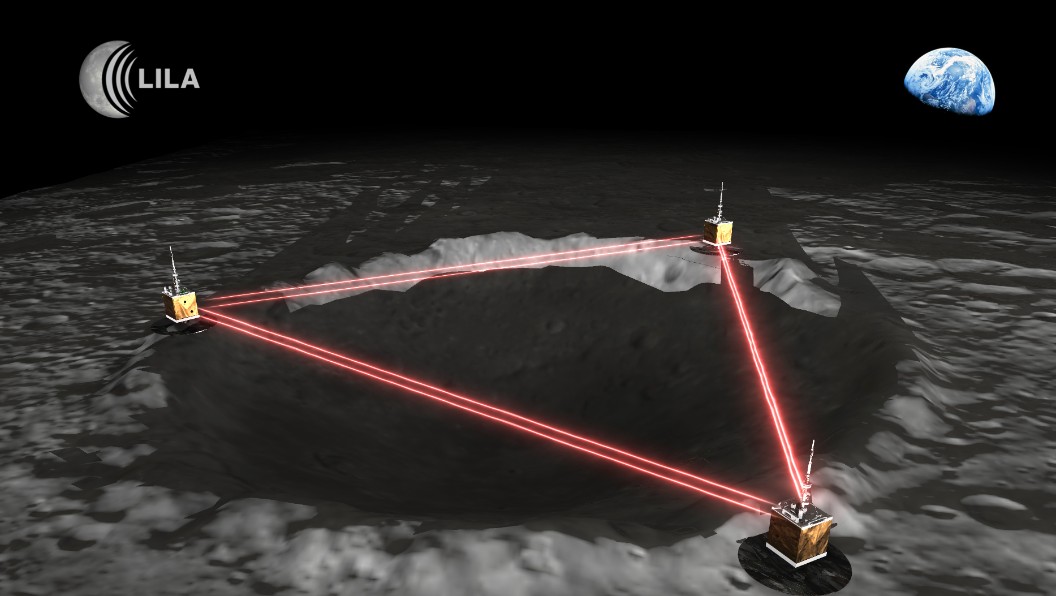
    Scientists are planning the Laser Interferometer Lunar Antenna (LILA) Project on the Moon to bypass seismic noise, atmosphere, and frequency limits faced by Earth-based detectors like Laser Interferometer Gravitational-wave Observatory (LIGO).

    What are Gravitational Waves?

    • Overview: Gravitational waves are ripples in the spacetime continuum created when massive objects such as black holes or neutron stars collide.
    • Speed & Effect: They travel at the speed of light, subtly stretching and compressing spacetime. On small scales, effects are extremely weak (e.g., Earth–Moon distance altered by less than an atom’s diameter).
    • Prediction: Proposed by Albert Einstein (1916) in his General Theory of Relativity.
    • First Detection: In 2015, LIGO recorded the first gravitational waves from two colliding black holes 1.3 billion light-years away, confirming their existence.

    Detection on Earth and Challenges:

    • Ground Observatories: LIGO (USA), Virgo (Italy), KAGRA (Japan), GEO600 (Germany) use laser interferometers to detect minuscule delays in light caused by waves.
    • Working of LIGO: Two L-shaped detectors (Louisiana, Washington), each with 4 km arms; differences in reflections signal gravitational waves.
    • Detection Range: Sensitive to events up to 7 billion light years away; frequency range ~100–1,000 Hz.
    • Challenges: Seismic noise, atmosphere, and human activity mask weaker signals.
    • Future Space Missions:
      • LISA (Laser Interferometer Space Antenna, 2030s): Three satellites in triangular formation, sensitive to 0.1 millihertz–0.1 hertz.
      • SKA (Square Kilometre Array, Australia & South Africa): Monitors pulsars for nanohertz waves.
      • Decihertz Gap: Frequencies 0.1–10 Hz remain unexplored, which LILA aims to study.

    About Laser Interferometer Lunar Antenna (LILA) Project

    • Overview: Proposed by Vanderbilt Lunar Labs, USA, to build a gravitational-wave detector on the Moon.
    • Ideal Conditions: The Moon’s polar shadow zones provide ultra-low seismic activity, natural vacuum, and no atmospheric or radio interference.
    • Focus: Sub-hertz gravitational waves, vital for studying intermediate-mass black holes and the early universe.
    • Phases:
      • LILA Pioneer: Can be deployed within this decade using American lunar landers (Blue Origin, Intuitive Machines) and possibly India’s Chandrayaan programme.
      • LILA Horizon: Advanced phase requiring astronauts for setup.
    • Cosmic Symphony Analogy:
      • SKA: Captures low-frequency “bass notes.”
      • LIGO (and future LIGO-India): Detects high-pitched bursts from stellar collisions.
      • LILA: Covers missing middle frequencies, completing the “cosmic raag.”
    • Historical Note: Since Apollo, retro-reflectors on the Moon track Earth–Moon distance. Some scientists suggest the Earth–Moon system itself acts as a natural detector.

    Significance:

    • Scientific Advancement: Opens the decihertz frontier, inaccessible so far.
    • Global Collaboration: Complements LIGO-India (IndIGO project), operational by 2030.
    • Research Potential: Helps study intermediate-mass black holes, cosmic mergers, and universe origins.
    • Lunar Astronomy: Marks the start of using the Moon as a laboratory for space science.
    • Holistic Coverage: With LISA, SKA, and Earth detectors, LILA would map the entire gravitational-wave spectrum, giving a complete picture of the universe.
    [UPSC 2020] The experiment will employ a trio of spacecraft flying in formation in the shape of an equilateral triangle that has sides one million kilometres long, with lasers shining between the craft.”  The experiment in question refers to

    Options: (a) Voyager-2 (b) New Horizons (c) LISA Pathfinder (d) Evolved LISA*


  • Water Management – Institutional Reforms, Conservation Efforts, etc.

    [pib] Siphon-Based Thermal Desalination System

    Why in the News?

    Researchers at the Indian Institute of Science (IISc) have developed a siphon-based thermal desalination system that overcomes siltation issues, offering a low-cost and scalable solution.

    About Siphon-Based Thermal Desalination System:

    • Overview: Developed by Indian Institute of Science (IISc) researchers to overcome the inefficiencies of conventional solar stills.
    • Purpose: Designed as a low-cost, scalable, and sustainable freshwater solution for off-grid and water-stressed regions.
    • Working: 

      • Principle: Works on siphonage, where a fabric wick draws salty water and gravity maintains continuous flow.
      • Innovation: A grooved metallic surface flushes away salt deposits before crystallization, preventing clogging.
      • Process: Salty water evaporates as a thin film on a heated surface and condenses just 2 mm away on a cooler surface, ensuring high efficiency.

    Key Features:

    • High Efficiency: Generates >6 liters of freshwater per sq. m per hour under sunlight — several times more than conventional solar stills.
    • Multistage Design: Uses stacked evaporator–condenser pairs to recycle heat and boost output.
    • Salt Resistance: Handles up to 20% salinity without clogging, making it effective even for brine treatment.
    • Affordable Materials: Built from aluminum and fabric, keeping costs low.
    • Energy Flexibility: Operates on solar power or waste heat, adaptable to different settings.
    • Scalable Applications: Useful for villages, disaster zones, and island communities.
    • Sustainability: Offers a clean, low-maintenance desalination method without reliance on complex machinery.
    [UPSC 2008] Where was the first desalination plant in India to produce one lakh liters of freshwater per day based on low-temperature thermal desalination principle commissioned?

    Options: (a) Kavaratti * (b) Port Blair (c) Mangalore (d) Valsad


  • Foreign Policy Watch: India-SAARC Nations

    Kokrajhar-Gelephu and Banarhat-Samtse Railway Lines to Bhutan

    Why in the News?

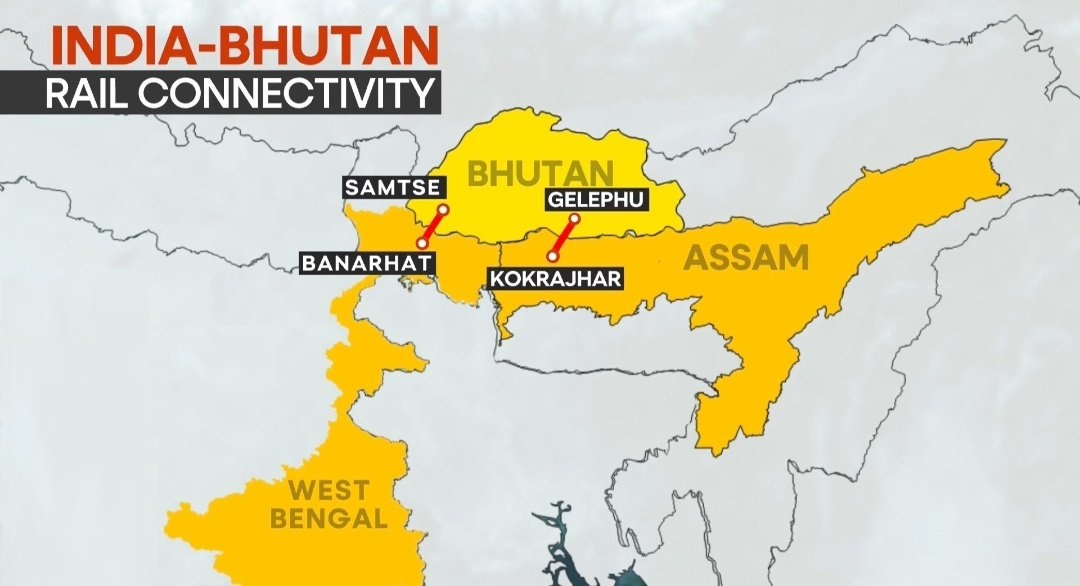
    India and Bhutan have launched their first-ever rail links, connecting Kokrajhar–Gelephu (69 km, Assam–Bhutan) and Banarhat–Samtse (20 km, West Bengal–Bhutan).

    Kokrajhar-Gelephu and Banarhat-Samtse Railway Lines to Bhutan

    About India–Bhutan Railway Connectivity:

    • Overview: Agreements were signed during PM Modi’s visit to Bhutan (March 2024) and formalised in 2025.
    • Projects:
      1. Kokrajhar–Gelephu line: 6 stations, multiple bridges, viaducts, designed for Vande Bharat trains; expected completion in 4 years.
      2. Banarhat–Samtse line: 2 stations, major & minor bridges, flyovers, underpasses; expected completion in 3 years.
    • Both lines will be fully electrified, giving Bhutan direct access to India’s 1,50,000 km railway network, boosting passenger and goods transport.

    Significance of the Project for India:

    • Bilateral Relations: Strengthens ties with Bhutan, India’s closest neighbour and largest recipient of Indian development assistance.
    • Strategic Security: Enhances regional security and serves as a counterbalance to China’s influence in South Asia.
    • Economic Integration: Supports Bhutan’s trade (80% with India), boosts hydropower exports, and aids industrial development.
    • Tourism & Culture: Improves people-to-people exchanges, especially linking Gelephu’s Mindfulness City and Samtse’s industrial hub.
    • Act East Policy: Advances India’s policy through cross-border infrastructure in the eastern and northeastern region.
    • Rail Diplomacy: Positions Indian Railways as a strategic enabler of diplomacy and connectivity in the neighbourhood.
    [UPSC 2023] With reference to India’s projects on connectivity, consider the following statements:

    1. East-West Corridor under Golden Quadrilateral Project connects Dibrugarh and Surat.

    2. Trilateral Highway connects Moreh in Manipur and Chiang Mai in Thailand via Myanmar.

    3. Bangladesh-China-India-Myanmar Economic Corridor connects Varanasi in Uttar Pradesh with Kunming in China.

    How many of the above statements are correct?

    Options: (a) Only one (b) Only two (c) All three (d) None*


  • Wetland Conservation

    Bihar adds 2 more Wetlands to Ramsar List

    Why in the News?

    India has added two new wetlands in Bihar, Gokul Jalashay (Buxar district) and Udaipur Jheel (West Champaran district), to the global Ramsar list of Wetlands of International Importance.

    Important Facts:

    • With this, India’s Ramsar sites rise to 93, consolidating its top rank in Asia and third in the world, after the UK (176) and Mexico (144).
      • Bolivia has the largest Ramsar wetland area (Llanos de Moxos wetlands – 6.9 million ha).
    • India’s Ramsar sites have expanded from 26 in 2012 to 93 in 2025, covering 13.6 lakh hectares, with 51 sites added since 2020.
    • Globally, there are 2,544 Ramsar sites.

    Facts about the two Wetlands:

    1. Gokul Jalashay (Buxar District):

      • Oxbow lake spread over 448 hectares on the southern edge of the Ganga River.
      • Acts as a flood buffer during high water events.
      • Supports 50+ bird species and provides livelihoods through fishing, farming, and irrigation.
    2. Udaipur Jheel (West Champaran District):

      • Oxbow lake covering 319 hectares, part of the Udaipur Wildlife Sanctuary ecosystem, formed by the Gandaki River.
      • Enhances ecological connectivity and supports the Central Asian Flyway for migratory birds.

    About the Ramsar Convention:

    • Establishment: Signed on 2 February 1971 in Ramsar, Iran.
    • Objective: Provide a framework for conservation and wise use of wetlands and their resources.
    • Functions:
      • Identify and designate wetlands of international importance.
      • Promote effective management of wetlands.
      • Foster international cooperation for conservation.
    • Members: 173 countries (as of 2025).
    • India and Ramsar:
      • India joined in 1982.
      • First Ramsar site: Chilika Lake, Odisha (1981).
      • Current total: 93 sites (Sept 2025), covering 13,60,718 hectares.
      • Growth: From 26 sites in 2012 to 93 in 2025 (51 added since 2020).
      • State-wise: Tamil Nadu has the highest (20), followed by Uttar Pradesh (10).
      • About 10% of India’s total wetland area is under Ramsar listing.
    • Montreux Record: List of Ramsar sites under threat of ecological change.
      • 48 sites globally (2025).
      • 2 Indian sites included: Keoladeo National Park (Rajasthan) and Loktak Lake (Manipur).
    • World Wetlands Day: Celebrated on February 2nd every year.
      • 2025 Theme: “Protecting Wetlands for Our Common Future”.

    Criteria for Declaration (9 Criteria):

    A wetland can be declared a Ramsar site if it meets at least one of these:

    1. Has unique, rare, or representative wetland types.
    2. Supports vulnerable, endangered, or endemic species.
    3. Provides critical habitat for waterfowl, especially during migration.
    4. Contains significant ecological, botanical, zoological, limnological, or hydrological features.
    5. Supports biodiversity conservation and scientific research.
    6. Provides ecosystem services like flood control, groundwater recharge, and water purification.
    7. Has cultural, spiritual, or recreational importance.
    8. Ensures sustainable livelihoods for local communities.
    9. Faces threats requiring international cooperation for conservation.
    [UPSC 2022] Consider the following pairs:

    Wetland/Lake Location

    1. Hokera Wetland — Punjab 2. Renuka Wetland — Himachal Pradesh

    3. Rudrasagar Lake — Tripura 4. Sasthamkotta Lake — Tamil Nadu

    How many pairs given above are correctly matched?

    Options: (a) Only one pair (b) Only two pairs* (c) Only three pairs (d) All four pairs


  • The Crisis In The Middle East

    What is Wassenaar Arrangement?

    Why in the News?

    Protests erupted over Microsoft after allegations that its cloud services (Azure) are aiding Israeli military operations, harming Palestinian civilians, raising concerns under the Wassenaar Arrangement.

    What is Wassenaar Arrangement?

    • Establishment: Created in 1996 as a successor to the Cold War-era COCOM (Coordinating Committee for Multilateral Export Controls).
    • Name Origin: Named after Wassenaar, a suburb of The Hague, where the agreement was reached in 1995.
    • Headquarters: Vienna, Austria.
    • Membership: 42 countries; India joined in 2017. Includes most NATO/EU states and all UNSC P5 except China.
    • Objective: Promote transparency, responsibility, and control in transfers of conventional arms and dual-use technologies.
    • Mechanism: Works through voluntary information-sharing, export license denials, and notifications on controlled transfers.
    • Control Lists:
      • Munitions List: Covers conventional arms including tanks, combat aircraft, UAVs, helicopters, missiles, small arms.
      • Dual-Use List: Covers sensitive technologies and equipment with both civilian and military applications.

    Wassenaar Arrangement and Software:

    • Initial Scope: Designed for hardware exports (equipment, chips, devices).
    • 2013 Expansion: Included “intrusion software” that can bypass or defeat cyber protections.
    • Challenges:
      • Cloud/SaaS blurs what counts as an “export.”
      • Inconsistent interpretations among members for software transfer and access.
      • Grey areas: defensive research exemptions, cross-border data flows, and digital surveillance.
    • Gap: Rapid rise of AI, cloud computing, and biometrics has outpaced WA’s traditional framework.
    • Reform Needs:

      • Broaden lists to explicitly cover cloud, AI, surveillance, and biometric systems.
      • Recognize remote access as exports.
      • Establish technical committees for frequent updates and agile controls.

    Wassenaar Arrangement and India:

    • Membership (2017): Enhanced India’s profile in non-proliferation and arms control, bolstering its case for entry into the Nuclear Suppliers Group (NSG).
    • Export Controls: Aligns India’s SCOMET list (Special Chemicals, Organisms, Materials, Equipment, and Technologies) with global norms.
    • Technology Access: Opens pathways to sensitive dual-use technologies vital for space, defence, and digital industries.
    • Diplomacy: Supports India’s counter-terrorism efforts, including the No Money for Terrorism (NMFT) initiative.
    [UPSC 2011] Recently, the USA decided to support India’s membership in multilateral export control regimes called the “Australia Group” and the “Wassenaar Arrangement”. What is the difference between them?

    1. The Australia Group is an informal arrangement which aims to allow exporting countries to minimize the risk of assisting chemical and biological weapons proliferation, whereas the Wassenaar- Arrangement is a formal group under the OECD holding identical objectives.

    2. The Australia Group comprises predominantly of Asian, African, and North American countries, whereas the member countries of Wassenaar Arrangement are predominantly from the European Union and American continents.

    Which of the statements given above is/are correct?

    Options: (a) 1 only (b) 2 only (c) Both 1 and 2 (d) Neither 1 nor 2 *


  • World’s highest bridge opens to traffic in China 

    Why in the News?

    The Huajiang Grand Canyon Bridge in Guizhou province, China, is now the world’s tallest bridge, standing 625 m above the Beipan River.

    World's highest bridge opens to traffic in China 

    About Huajiang Grand Canyon Bridge:

    • Height: Rises 625 m above the Beipan River, surpassing the previous record-holder, the Beipanjiang Bridge (565 m).
    • Connectivity: Links the Liuzhi Special District and Anlong Special District, reducing travel time from 2 hours to just 2 minutes.
    • Transport Network: Part of the Guizhou S57 Expressway and the 190 km Shantian–Puxi Expressway, boosting transport, economy, and tourism.
    • Engineering Hub: Guizhou, called the “bridge museum of the world”, now has nearly half of the world’s 100 tallest bridges, showcasing China’s leadership in high-altitude civil engineering.

    Key Features of the Bridge:

    • Height Record: Deck-to-water clearance of 625 m, taller than most skyscrapers.
    • Span & Length: Total length 2,890 m, with a 1,420 m suspension span, the longest in any mountainous region globally.
    • Construction: Began January 2022, completed in just over three years; final truss installed January 2025; load-tested with 96 trucks.
  • Artificial Intelligence (AI) Breakthrough

    [29th September 2025] The Hindu Op-ed: An Engel’s pause in an AI-shaped world

    PYQ Relevance

    [UPSC 2023] Introduce the concept of Artificial Intelligence (AI). How does AI help clinical diagnosis? Do you perceive any threat to privacy of the individual in the use of AI in the healthcare?

    Linkage: This question reflects the exact dilemma discussed in the Engels’ pause analogy—AI promises higher productivity (e.g., clinical diagnosis, efficiency) but without governance, the welfare gains (privacy, equitable access, trust) may lag, creating social costs.

    Mentor’s Comment

    The rise of Artificial Intelligence (AI) is hailed as the new Industrial Revolution, but as Geoffrey Hinton warns, it could also deepen inequality by making a few rich while leaving the majority poorer. This paradox, reminiscent of Friedrich Engels’ 19th-century observation, raises a pressing question for policymakers: Are we entering a modern “Engels’ pause” where productivity soars but living standards stagnate? For UPSC aspirants, this debate is central to GS 1 (industrial revolution parallels), GS 2 (governance), GS 3 (technology, economy), and GS 4 (ethics of equity in innovation).

    Introduction

    The concept of an Engels’ pause, coined by economist Robert Allen, describes a historical paradox in 19th-century Britain: industrial output grew rapidly, yet wages stagnated, food prices soared, and inequality widened. The benefits of industrialization reached the majority only after decades, with reforms and institutional adjustments.

    Today, AI as a general-purpose technology (GPT)—akin to steam power, electricity, or the internet—brings unprecedented productivity potential but also risks replicating this paradox. With Nobel Laureate Geoffrey Hinton warning of AI enriching a few at the expense of many, and evidence of uneven benefits emerging globally, the Engels’ pause metaphor becomes a crucial analytical lens.

    Why in the News?

    Artificial Intelligence is reshaping global economies, but early signs suggest a disconnect between productivity gains and broad-based prosperity. A recent Stanford study showed younger workers are more vulnerable to AI displacement, while an Indian IT giant laid off 12,000 employees in its AI pivot. Meanwhile, a MIT study revealed that 95% of AI pilots are failing to deliver visible gains due to weak complementary capabilities. In the Philippines, call centres recorded 30–50% productivity jumps with AI copilots, yet wages stagnated and workloads intensified. PwC forecasts AI could add $15.7 trillion to global GDP by 2030, but gains are concentrated in a few countries and firms. These developments highlight the possibility of an AI-induced Engels’ pause, making it a critical debate for global governance.

    Are We Facing a Modern Engels’ Pause?

    1. Historical Parallels: Like 19th-century Britain, current AI-driven growth risks benefiting capital over labour, delaying welfare gains for the majority.
    2. Vulnerable Workers: Stanford research shows younger workers are most exposed to AI disruptions.
    3. Sectoral Displacement: IT, healthcare, education, and even government (e.g., Albania’s AI Minister) are witnessing job/task reconfigurations.

    What Are the Markers of an AI Engels’ Pause?

    1. Stagnant Wages despite Productivity Gains: Philippines call centres show higher efficiency but little improvement in wages.
    2. Rising Costs of Complements: Cloud computing, retraining, coding bootcamps, and cybersecurity raise the “price of staying relevant”.
    3. Unequal Distribution of Gains: PwC’s $15.7 trillion AI GDP addition is concentrated in the U.S., China, and a few tech firms. IMF (2024) warns 40% of global jobs are AI-exposed, with advanced economies at greater risk of skilled substitution.
    4. Intensified Inequality: Research on India shows stronger IPR regimes widened wage inequality during tech races.

    How Can Governance Break the Pause?

    1. Skilling and Transition Models: Singapore’s SkillsFuture programme and MBZUAI (world’s first AI university) highlight proactive reskilling.
    2. Redistribution Tools: Robot taxes and Universal Basic Income (UBI) pilots in the UK and EU aim to channel AI rents toward social welfare.
    3. AI Infrastructure as Public Good: Compute and data should be democratized; initiatives like K2Think.ai (UAE) and Apertus (Switzerland) are steps in building open, public AI models.

    Why This Time Might Be Different

    1. Stronger Welfare Systems: Unlike 19th-century Britain, today’s democracies have safety nets and global institutions.
    2. Rapid Diffusion of Technology: Smartphones reached billions within a decade; AI could follow a similar trajectory.
    3. Potential Social Benefits: AI could lower costs in healthcare, education, and energy if deployed equitably.

    Conclusion

    The Engels’ pause analogy underscores a profound warning: productivity gains do not automatically translate into welfare improvements. AI governance, skilling programmes, redistribution mechanisms, and public-good infrastructure will determine whether AI becomes a human welfare revolution rather than just a productivity revolution. Political will, not just technological breakthroughs, will decide if this pause is short-lived or prolonged.

    Value Addition

    Scholarly References and Thinkers

    1. Robert C. Allen (2009): Coined Engels’ Pause in economic history; wages stagnated despite industrial productivity growth in 19th-century Britain.
    2. Nicholas Crafts (2021): Noted that GPTs like AI need institutional reforms and complementary innovations before welfare spreads.
    3. Bojan Jovanovic & Rousseau (2005): Documented “technology shocks” in U.S. economy → initial dislocation before long-term growth.
    4. Geoffrey Hinton (2024, FT Interview): Warned AI may “make a few rich and the rest poorer.”
    5. Agrawal, Gans & Goldfarb (2018): Defined AI as lowering the cost of prediction.

    Key Reports and Data Points

    1. PwC Report (2018): AI could add $15.7 trillion to global GDP by 2030; 70% of gains concentrated in U.S. and China.
    2. IMF Report (2024): 40% of global jobs are AI-exposed; higher risk of high-skilled substitution in advanced economies.
    3. MIT Study (2023): Found that 95% of AI pilot projects failed to show visible gains due to lack of complementary capabilities.
    4. Stanford Study (2023): “Canaries in the Coal Mine” → younger workers are most vulnerable to AI disruption.
    5. OECD AI Principles (2019): Global governance framework emphasising fairness, transparency, accountability.

    International Best Practices / Programs

    1. Singapore – SkillsFuture (2015): Provides continuous education credits for workers to reskill; considered a global model.
    2. UAE – Mohamed bin Zayed University of AI (MBZUAI, 2019): World’s first dedicated AI university.
    3. European Union – AI Act (2021 Draft): Risk-based framework regulating AI applications.
    4. United Kingdom – UBI Experiments: Pilots to test redistribution of tech-driven wealth.
    5. Albania – First AI Minister (2024): Institutional adoption of AI governance in public administration.

    Indian Context and Initiatives

    1. NITI Aayog’s National Strategy on AI (2018): “AI for All” approach—priority areas: healthcare, education, agriculture, mobility.
    2. Digital India Programme: Expanding digital infrastructure to enable AI adoption.
    3. National Programme on AI (2019): Envisioned as a Center of Excellence ecosystem for skilling, research, and governance.
    4. NASSCOM FutureSkills Prime: Public–private initiative to reskill 2 million professionals in emerging tech, including AI.
    5. IndiaAI Portal (2023): Central knowledge hub for AI use cases and policy discussions.

    Key Concepts for Thematic Depth

    1. General-Purpose Technology (GPT): Technologies with cross-sectoral transformative impact (steam, electricity, internet, AI).
    2. Complementary Innovations: Need for institutional reforms, new tasks, and human capital for GPT diffusion.
    3. Job Polarisation: Middle-skill jobs displaced → low-skill and high-skill jobs expand; seen in OECD labour markets.
    4. Robot Tax (Bill Gates’ Proposal): Idea of taxing automation to fund welfare.
    5. Universal Basic Income (UBI): Redistribution mechanism to tackle inequality in tech-driven economies.

    Comparative Historical Perspective

    1. Industrial Revolution (19th c. Britain): Productivity rose but welfare stagnated → Engels’ Pause.
    2. Gilded Age (U.S.): Huge inequality, labour unrest; later corrected via welfare state reforms.
    3. Digital Revolution (1990s): Internet adoption uneven; productivity surge lagged behind wages initially.

    Ethical and Governance Dimensions

    1. Equity and Justice (GS4): AI could worsen inequality unless governed inclusively.
    2. Privacy: Particularly sensitive in healthcare (HIPAA in U.S.; India’s Digital Personal Data Protection Act, 2023).
    3. Transparency: AI “black box” models challenge accountability.
    4. Democratic Deficit: AI development is corporate-heavy; needs citizen-centric governance.
  • Food Processing Industry: Issues and Developments

    What an empty plate of food should symbolise

    Introduction

    Globally, nearly one-third of all food produced is lost or wasted, undermining both food security and climate action. For India, the cost of post-harvest losses is about ₹1.5 trillion every year, almost 3.7% of its agricultural GDP. Beyond economics, this wastage squanders nutrition, water, energy, and labour, aggravating the climate crisis. The problem is not consumer-driven, as in developed nations, but arises early in the value chain, in handling, processing, and distribution. International Day of Awareness of Food Loss and Waste (IDAFLW) highlights this as both a challenge and an opportunity: to build resilient, efficient, and climate-smart food systems.

    Why is Food Loss in the News?

    The recent FAO–NIFTEM–GCF study has provided the first sector-, state– and operation-wise estimates of greenhouse gas emissions from post-harvest losses and retail waste in India, covering 30 crops and livestock products. The findings are striking: even modest losses in cereals like paddy account for over 10 million tonnes of CO₂-equivalent emissions annually due to rice’s methane intensity. Overall, food loss generates more than 33 million tonnes of emissions every year. For a country aiming to balance food security with climate commitments, this is both alarming and unprecedented in scale.

    The Economic Burden of Food Loss

    1. ₹1.5 trillion annual cost: Post-harvest losses in India amount to nearly 3.7% of agricultural GDP.
    2. Sectoral vulnerability: Fruits and vegetables suffer 10–15% losses; even staples such as paddy (4.8%) and wheat (4.2%) are significantly affected.
    3. Farmer incomes at risk: Such losses reduce food availability and directly affect the livelihood security of millions of farmers.

    The Climate Connection

    1. Greenhouse gas emissions: Food loss from 30 key commodities produces 33 million tonnes of CO₂-equivalent emissions annually.
    2. Cereal losses critical: Paddy alone contributes over 10 million tonnes of emissions due to methane intensity.
    3. Livestock products’ footprint: Wastage in dairy and meat is equally damaging, given their heavy resource requirements.
    4. Link with SDGs: India has integrated SDG 12.3.1 (Global Food Loss and Waste) into its National Indicator Framework for systematic monitoring.

    Where Do the Losses Occur?

    1. Early supply chain stages: Losses in India occur during handling, processing, and distribution, unlike high-income countries where waste is consumer-driven.
    2. Infrastructure gaps: Lack of modern cold chains, refrigerated transport, and efficient storage are major bottlenecks.
    3. Fragmented supply chains: Weak value-chain integration adds to inefficiency and wastage.

    Practical Solutions in Sight

    1. Cold chain modernisation: Programmes like PM Kisan SAMPADA Yojana (PMKSY) focus on modernising storage, processing, and logistics.
    2. Affordable technologies: Solar cold storage, low-cost cooling chambers, and moisture-proof silos can reduce spoilage for smallholders.
    3. Digital interventions: IoT sensors, AI-driven forecasting, and tracking tools like the FAO Food Loss App (FLAPP) (launched in 2023, used in 30+ countries) improve efficiency.
    4. Circular economy practices: Redirecting surplus to food banks/community kitchens and converting unavoidable waste into compost, feed, or bioenergy.
    5. Policy support: Subsidies, credit guarantees, and low-interest loans are needed to scale up solutions.

    Shared Responsibility Across Stakeholders

    1. Government: Integrate food loss reduction in climate strategies and invest in infrastructure.
    2. Private sector: Adopt circular business models and scalable innovations.
    3. Civil society & academia: Drive awareness and research.
    4. Consumers: Practice mindful consumption and support redistribution mechanisms.

    Conclusion

    An empty plate should symbolise nourishment received, not the silent wastage of resources and opportunities. Reducing food loss in India is not just about saving food — it is about strengthening farmer incomes, ensuring food security, cutting emissions, and meeting global sustainability goals.

    PYQ Relevance

    [UPSC 2019] Examine the scope of the food processing industries in India. Elaborate the measures taken by the government in the food processing industries for generating employment opportunities.

    Linkage: Food loss and waste directly highlight the gaps in India’s food processing sector, where inadequate cold chains, fragmented supply chains, and weak storage infrastructure undermine both farmer incomes and climate goals, making this question highly relevant.

    Value Addition

    International Day of Awareness of Food Loss and Waste (IDAFLW): Observed on September 29; raises global attention to the issue of food loss and waste undermining food and climate security.

    Value Chain and Food Processing Sector in India

    Economic Significance

    1. Contribution to GDP : Food processing sector contributes about 10% of manufacturing GDP and nearly 13% of India’s exports.
    2. Employment Potential : Provides large-scale rural and semi-urban employment, with strong potential for women and smallholder farmers.

    Infrastructure and Policy Interventions

    1. Pradhan Mantri Kisan SAMPADA Yojana (PMKSY) : Umbrella scheme for cold chains, mega food parks, and agro-processing clusters.
    2. Mega Food Parks : Around 42 Mega Food Parks sanctioned across the country to integrate farm-to-market supply chains.
    3. Operation Greens (TOP to TOTAL) : Price stabilisation and value chain strengthening for perishable crops like tomato, onion, potato.
    4. PLI Scheme for Food Processing (2021) : ₹10,900 crore outlay to boost exports, ready-to-eat, organic, and marine food products.

    Post-Harvest Losses and Value Chain Gaps

    1. High Economic Losses : NABCONS (2022) estimated ₹1.5 trillion annual post-harvest losses, equivalent to 3.7% of agricultural GDP.
    2. Crop-wise Losses : Fruits and vegetables face 10–15% losses; paddy 4.8%; wheat 4.2%.
    3. Comparative Gap : Only 10% of India’s produce is processed, compared to 65–70% in developed nations.

    Technology and Innovation in Value Chains

    1. IoT and AI : Used for forecasting, tracking, and real-time storage monitoring.
    2. Affordable Storage Solutions : Solar cold storage, low-cost cooling chambers, and moisture-proof silos reduce wastage.
    3. Digital Platforms : FAO’s Food Loss App (FLAPP) (2023) monitors value-chain losses; adopted in 30+ countries.

    Sustainability and Circular Economy

    1. Resource Efficiency : Cutting losses conserves embedded water, energy, and labour.
    2. Surplus Redistribution : Food banks and community kitchens absorb edible surplus.
    3. Waste Conversion : Composting, animal feed, and bioenergy generation from unavoidable waste.
    4. Global Commitments : Strengthens India’s alignment with SDG 2 (Zero Hunger), SDG 12 (Responsible Consumption and Production), and SDG 13 (Climate Action).

    Case Study Box: Food Processing and Value Chain in India

    Case Study 1: Tumkur Mega Food Park, Karnataka

    • Launched : Under PMKSY.
    • Facilities : Cold storage, warehousing, quality control labs, logistics hubs
    • Impact :
      • Reduced post-harvest losses of perishable crops.
      • Generated ~5,000 direct and indirect jobs.
      • Enhanced farmer linkages with retail chains and exporters.

    Case Study 2: Operation Greens – Onion Price Stabilisation (Maharashtra, 2018–19)

    • Problem : Frequent onion price crashes and volatility in Maharashtra.
    • Intervention : Subsidised transport and storage under Operation Greens (TOP to TOTAL).
    • Impact :
      • Prevented distress sales by farmers.
      • Stabilised retail onion prices for consumers.
      • Demonstrated the role of value chain management in food security.

    Case Study 3: Amul Dairy Cooperative (Gujarat)

    • Model : Farmer-owned cooperative integrating production, processing, and distribution.
    • Impact :
      • Dairy farmers receive better price realisation.
      • Efficient cold chain logistics reduce milk spoilage.
      • Became a global model of agri-value chain success.

Join the Community

Join us across Social Media platforms.