💥UPSC 2027,2028 Mentorship (April Batch) + Access XFactor Notes & Microthemes PDF

Archives: News

  • Disasters and Disaster Management – Sendai Framework, Floods, Cyclones, etc.

    Risk of Early Locusts Attacks: A new concern

    Locusts normally arrive during July-October but have already been spotted in Rajasthan. At a time India is battling COVID, they present a new worry with their potential for exponential growth and crop destruction.

    Along with being a disaster issue, Locust attack is also a challenge for India’s food security. Discuss what socio – economic and technological ways can be adopted to tackle this menance.

    What exactly are Locusts?

    • The desert locust (Schistocerca gregaria) is a short-horned grasshopper that is innocuous while it is in a “solitary phase” and moving about independently.
    • These winged insects differ from normal hoppers and become dangerous only when their populations build up rapidly and the close physical contact in crowded conditions triggers behavioural changes.
    • They, then, enter the “gregarious phase”, by grouping into bands and forming swarms that can travel great distances (up to 150 km daily), while eating up every bit of vegetation on the way.
    • If not controlled at the right time, these insect swarms can threaten the food security of countries.

    How seriously should the first sightings be viewed?

    • The damage potential of locusts has been limited in India only because of the country hosting a single breeding season — unlike Pakistan, Iran and East Africa, where they also multiply during January-June.
    • There’s nothing much to worry right now, as the rabi crop has already been harvested and farmers are yet to commence plantings for the new Kharif season.
    • The locusts’ bands so observed are less populated. But their timing, though, is cause for concern.
    • The normal breeding season for locusts in India is July-October. But this time, they have been sighted by mid-April.
    • Last year, too, they were seen towards end-May as isolated grasshoppers.
    • The longer time to breed is more conducive for a build-up of gregarious insect swarms, as opposed to solitary, innocuous hoppers.

    Control measures in India

    • India has a Locust Control and Research scheme that is being implemented through the Locust Warning Organisation (LWO), established in 1939.
    • It was amalgamated in 1946 with the Directorate of Plant Protection Quarantine and Storage (PPQS) of the Ministry of Agriculture.
    • The LWO’s responsibility is monitoring and control of the locust situation in Scheduled Desert Areas mainly in Rajasthan and Gujarat, and partly in Punjab and Haryana.
    • The LWO publishes a fortnightly bulletin on the locust situation.

    What kind of damage can they cause?

    • Locusts are polyphagous, i.e. they can feed on a wide variety of crops.
    • Secondly, they have the ability to multiply rapidly. A single female desert locust lays 60-80 eggs thrice during its roughly 90-day life cycle.
    • It is estimated that a 1-square-km area can accommodate 40-80 million of these insects, making the growth of their swarms exponential quite like the Covid-19 virus.

    What is the genesis of the present locust upsurge, particularly in East Africa?

    • It lies in the Mekunu and Luban cyclonic storms of May and October 2018 that struck Oman and Yemen, respectively.
    • These turned large desert areas in remote parts of the southern Arabian Peninsula into lakes, which allowed the insects to breed undetected across multiple generations.
    • The swarms attacking crops in East Africa reached peak populations from November onwards while building up since the start of this year in southern Iran and Pakistan.
    • Widespread rains in East Africa in late March and April have enabled further breeding.
    • Prior to that, the locusts from spring breeding areas of southwest Pakistan and southern Iran would arrive in Rajasthan and Gujarat during May-June.
    • They would, then, breed with the onset of the southwest monsoon rains and continue doing so through the Kharif cropping season.

    What can and should be done?

    • If the monsoon is good, and in the absence of control operations, the magnitude of attack could be worse than in the 2019-20 rabi season.
    • The last year’s locust incursions were the first and most significant since 1993.
    • Local authorities in Rajasthan and Gujarat had to treat over 4.30 lakh hectares of infested areas with sprayers mounted on tractors and other vehicles.

    Pesticides give better control

    • The old generation organophosphate insecticides such as Malathion (96% ultra-low volume aerial application) are effective against locusts.
    • About one litre of the chemical is necessary to treat a hectare of their breeding areas, including trees where they halt for the night.
    • There is ample stock of pesticides to control any swarms in India.

    Click here to read about the complete genesis of Locusts and their origin:

    Locust Invasions and its mitigation

  • Air Pollution

    What is Urban Ozone?

    A Manchester (UK) based research has found that the nationwide lockdown may be leading to the generation of a dangerous pollutant, urban ozone.

    The Ozone is formed due to different factors in the Troposphere and the Stratosphere (where the ozone acts as a protective layer). Note these differences from prelims perspective.

    Urban Ozone

    • The photochemical production of ozone may become more important in urban areas during summertime in these low conditions of oxides of nitrogen.
    • As nitrogen oxides reduce, photochemical production may become more efficient and can lead to higher ozone concentrations in the summertime.
    • The higher summer temperatures increase emissions of biogenic hydrocarbon from natural sources such as trees. These biogenic hydrocarbons significantly affect urban ozone levels.
    • While ozone is important for screening harmful solar UV radiation when present higher up in the atmosphere, it can be a danger at the Earth’s surface and can react to destroy or alter many biological molecules.

    Back2Basics: Ozone Gas

    • It is a gas that occurs both in the Earth’s upper atmosphere and at ground level.
    • Ozone occurs in two layers of the atmosphere. The layer closest to the Earth’s surface is the troposphere.
    • Here, ground-level or “bad” ozone is an air pollutant that is harmful to breathe and it damages crops, trees and other vegetation. It is the main ingredient of urban smog.
    • The stratospheric or “good” ozone protects life on Earth from the sun’s harmful ultraviolet (UV) rays.

    Formation of Ozone

    • Ozone is produced naturally in the stratosphere when highly energetic solar radiation strikes molecules of oxygen, and cause the two oxygen atoms to split apart in a process called photolysis. If a freed atom collides with another O2, it joins up, forming ozone.
    • The majority of tropospheric ozone formation occurs when nitrogen oxides (NOx), carbon monoxide (CO) and volatile organic compounds (VOCs), react in the atmosphere in the presence of sunlight, specifically the UV spectrum.
  • Wildlife Conservation Efforts

    Mass Hatching of Olive Ridley Turtles begins

    Mass hatching of Olive Ridley turtles began at Odisha’s Rushikulya rookery, a major nesting site of these marine turtles.

    Mass hatching of Olive Ridley turtles is a very celebrated news every year. Also make sure to look at the Rivers system in the region from the map above.

    Olive Ridley Turtles

    • The Olive Ridley Sea Turtle (Lepidochelys olivacea), also known as the Pacific ridley sea turtle, is a medium-sized species of sea turtle found in warm and tropical waters, primarily in the Pacific and Indian Oceans.
    • In the Indian Ocean, the majority of olive ridleys nest in two or three large groups at Rushikulya rookery near Gahirmatha in Odisha.
    • The coast of Odisha in India is the largest mass nesting site for the olive ridley, followed by the coasts of Mexico and Costa Rica.
    • The species is listed as Vulnerable in the IUCN Red List, Appendix 1 in CITES, and Schedule 1 in Wildlife Protection Act, 1972.

    Special feature: Mass nesting

    • They are best known for their behaviour of synchronized nesting in mass numbers, termed Arribadas.
    • Interestingly, females return to the very same beach from where they first hatched, to lay their eggs.
    • They lay their eggs in conical nests about one and a half feet deep which they laboriously dig with their hind flippers.
    • They hatch in 45 to 60 days, depending on the temperature of the sand and atmosphere during the incubation period.
  • Wildlife Conservation Efforts

    Rare Black Panther spotted in Netravali Wildlife Sanctuary

    A rare Black Panther was spotted in the Netravali WLS in South Goa.

    There are many WLS and National Park in the tiny state of Goa. Unlike others, they rarely find any mention in news. Here a quick revision for you.

    Make sure to locate them on map.

    • Bhagwan Mahavir Wildlife Sanctuary,

    • Bondla Wildlife Sanctuary,

    • Netravali Wildlife Sanctuary,

    • Cotigao Wildlife Sanctuary,

    • Mhadei Wildlife Sanctuary,

    • Salim Ali Bird Sanctuary,

    • Anshi National Park.

    Black Panther

    • Black Panther or Black Leopard is a color variant of spotted Indian leopards, reported from densely forested areas of south India, mostly from the state of Karnataka.
    • A black panther is the melanistic colour variant of any Panthera, particularly of the leopard (P. pardus) in Asia and Africa, and the jaguar (P. onca) in the Americas.
    • They are also known as the ghost of the forest.

    About Netravali Wildlife Sanctuary

    • Netravali Wildlife Sanctuary is located in South-Eastern Goa, India.
    • It constitutes one of the vital corridors of the Western Ghats and covers an area of about 211 sq.km.
    • Netravali or Neturli is an important tributary of River Zuari, which originates in the sanctuary.
    • Forests mostly consist of moist deciduous vegetation interspersed with evergreen and semi-evergreen habitat; there are also two all-season waterfalls in the sanctuary.
    • The Gaur or Indian Bison, Malabar giant squirrel, four-horned antelope or chousingha, leopard, black sloth bear along with a host of other predators and herbivores find home in the sanctuary.
  • Roads, Highways, Cargo, Air-Cargo and Logistics infrastructure – Bharatmala, LEEP, SetuBharatam, etc.

    [pib] Kailash – Mansarovar Yatra Route from Dharchula to Lipulekh

    The Border Roads Organisation (BRO) has completed the construction of road from Dharchula to Lipulekh along the China Border, famously known as Kailash-Mansarovar Yatra Route.

    We can expect a prelims question asking to arrange few passes from West to East or vice versa. Click here to get through all such Himalayan Passes.

    Darchula – Lipulekh road

    • The road is an extension of Pithoragarh-Tawaghat-Ghatiabagarh road. In this 80 Km road, the altitude rises from 6000 feet to 17,060 feet.
    • It originates from Ghatiabagarh in Uttarakhand and terminates at Lipulekh Pass, the gateway to Kailash Mansarovar.
    • With the completion of this project, the arduous trek through treacherous high-altitude terrain can now be avoided by the Pilgrims of Kailash Mansarovar Yatra and the period of journey will be reduced by many days.

    (Note: The Lipulekh Pass links Uttarakhand with China’s Tibetan Autonomous Region.)

    Significance

    • At present, the travel to Kailash Mansarovar takes around two to three weeks through Sikkim or Nepal routes.
    • Lipulekh route had a trek of 90 Km through high altitude terrain and the elderly yartris faced lot of difficulties.
    • Now, this yatra will get completed by vehicles.

    Also read:

    The Northern and Northeastern Mountains | Part 2


    Back2Basics: Border Roads Organisation (BRO)

    • The BRO develops and maintains road networks in India’s border areas and friendly neighboring countries and functions under the Ministry of Defence.
    • It is entrusted for construction of Roads, Bridges, Tunnels, Causeways, Helipads and Airfields along the borders.
    • Officers from the Border Roads Engineering Service (BRES) and personnel from the General Reserve Engineer Force (GREF) form the parent cadre of the Border Roads Organisation.
    • It is also staffed by officers and troops drawn from the Indian Army’s Corps of Engineers on extra regimental employment.
    • The BRO operates and maintains over 32,885 kilometers of roads and about 12,200 meters of permanent bridges in the country.
  • Coronavirus – Health and Governance Issues

    Law to deal with pandemics

    India lacks specific legislation to deal with pandemics like COVID. While NDMA 2005 and Epidemic Diseases Act 1897 has been invoked to deal with the present situation, both acts lack specific provision in dealing with the pandemics. Here we can take lessons from UK’s Coronavirus Act and Singapore’s regulations to create a well-drafted Indian COVID 19 law.

    Which acts were used for enforcing lockdown?

    • The home ministry issued directions to State governments and district authorities under the Disaster Management Act of 2005.
    • Under the Act, the National Disaster Management Authority (NDMA) was set up under the Prime Minister, and the National Executive Committee (NEC) was chaired by the Home Secretary.
    • The State governments and authorities exercised powers under the Epidemic Diseases Act of 1897 to issue further directions.
    • District authorities such as the Commissioner of Police have consequently issued orders to impose Section 144 of the Criminal Procedure Code in public places.

    Issues with the laws used for lockdown

    • The invoking of the Disaster Management Act has allowed the Union government to communicate seamlessly with the States.
    • But serious questions remain whether the Act was originally intended to or is sufficiently capable of addressing the threat of a pandemic.
    • The use of the archaic Epidemic Diseases Act reveals the lack of requisite diligence and responsiveness of government authorities in providing novel and innovative policy solutions to address a 21st-century problem.
    • Another serious problem is that any violation of the orders passed would be prosecutable under Section 188 of the Indian Penal Code.
    • But section 188 of IPC is a very ineffective and broad provision dealing with disobedience of an order issued by a public servant.

    The UK and Singapore’s laws to deal with the pandemic

    • U.K’s Coronavirus Act, 2020: It deals with issues including emergency registration of healthcare professionals, temporary closure of educational institutions, audio-visual facilities for criminal proceedings, powers to restrict gatherings, and financial assistance to industry.
    • Singapore’s Infectious Diseases Regulations, 2020: These regulations provides for the issuance of stay orders which can send ‘at-risk individuals’ to a government-specified accommodation facility.
    • Both U.K.’s and Singapore’s laws set out unambiguous conditions and legally binding obligations.
    • As such, under Singaporean law, the violators may be penalised up to $10,000 or face six months imprisonment or both.
    • In contrast, Section 188 of the Indian Penal Code has a fine amount of ₹200 to ₹1,000 or imprisonment of one to six months.
    • Even then, proceedings under Section 188 can only be initiated by private complaint and not through a First Information Report.
    • As such, offences arising out of these guidelines and orders have a weak basis in terms of criminal jurisdiction thereby weakening the objectives of the lockdown.

    Problems in the government’s approach

    • The Union government showed no inclination towards drafting or enacting COVID-19-specific legislation that could address all the issues pre-emptively.
    • There has been little clarity on a road map to economic recovery.
    • A consolidated, pro-active policy approach is absent.
    • In fact, there has been ad hoc and reactive rule-making, as seen in the way migrant workers have been treated.
    • This has also exposed the lack of coordination between the Union and State governments.

    Consider the question, “Unlike many countries which legislated specific acts to deal with Covid-19 pandemic, India was already equipped with acts which enabled it to deal with the pandemic. Describe the acts and their provisions used to deal with the pandemic. What were the issues  with these provisions?”

    Conclusion

    In past instances, the Union government has not shied away from promulgating ordinances. These circumstances call out for legislative leadership, to assist and empower States to overcome COVID-19 and to revive their economic, education and public health sectors.


    Back2Basics: National Disaster Management Act 2005

    • On 23 December 2005, the Government of India enacted the Disaster Management Act.
    • The act envisaged the creation of the National Disaster Management Authority (NDMA), headed by the Prime Minister.
    • The act also provides for State Disaster Management Authorities (SDMAs) headed by respective Chief Ministers.
    • NDMA and SDMAs spearhead and implement a holistic and integrated approach to Disaster Management in India.
    • The NDMA was formally constituted on 27thSeptember 2006, in accordance with the Disaster Management Act, 2005 with Prime Minister as its Chairperson and nine other members, and one such member to be designated as Vice-Chairperson.
    • According to the Disaster Management Act, 2005 a disaster is defined as-
    • A catastrophe, mishap, calamity or grave occurrence in any area, arising from natural or manmade causes, or by accident or negligence which results in substantial loss of life or human suffering or damage to, and destruction of, property, or damage to, or degradation of, environment, and is of such a nature or magnitude as to be beyond the coping capacity of the community of the affected area.
    • The MHA has defined a disaster as an “extreme disruption of the functioning of a society that causes widespread human, material, or environmental losses that exceed the ability of the affected society to cope with its own resources.

    Epidemic Diseases Act  1897

    • The Epidemic Diseases Act is routinely enforced across the country for dealing with outbreaks of diseases such as swine flu, dengue, and cholera.
    • The colonial government introduced the Act to tackle the epidemic of bubonic plague that had spread in the erstwhile Bombay Presidency in the 1890s.
    • Using powers conferred by the Act, colonies authorities would search suspected plague cases in homes and among passengers, with forcible segregations, evacuations, and demolitions of infected places.
    • Historians have criticised the Act for its potential for abuse.
    • In 1897, the year the law was enforced, Lokmanya Tilak was punished with 18 months’ rigorous imprisonment after his newspapers Kesari and Mahratta admonished imperial authorities for their handling of the plague epidemic.

    Provisions of the 1897 Epidemic Diseases Act

    • The Act is one of the shortest Acts in India, comprising just four sections. It aims to provide for the better prevention of the spread of Dangerous Epidemic Diseases.
    • The then Governor-General of colonial India had conferred special powers upon the local authorities to implement the measures necessary for the control of epidemics.
    • Although, the act does define or give a description of a “dangerous epidemic disease”.

    Its various sections can be summarized as under

    • The first section describes all the title and extent, the second part explains all the special powers given to the state government and centre to take special measures and regulations to contain the spread of disease.
    • The second section has a special subsection 2A empowers the central government to take steps to prevent the spread of an epidemic, especially allowing the government to inspect any ship arriving or leaving any post and the power to detain any person intending to sail or arriving in the country.
    • The third section describes the penalties for violating the regulations in accordance with Section 188 of the IPC. Section 3 states, “Six months’ imprisonment or 1,000 rupees fine or both could be charged out to the person who disobeys this Act.”
    • The fourth and the last section deals with legal protection to implementing officers acting under the Act.
  • Judicial Reforms

    Judiciary’s tryst with technology

    COVID pandemic has been changing many aspects of our life and forcing us to innovate or embrace the novel changes. The judiciary is not immune to this change. This article advocates for the adoption and popularization of online court. But there were several attempts at the adoption of technology in the working of courts even before the pandemic. Time has now come to its adoption on a wider scale.

    Three types of courts in our justice delivery system

    • First, conventional courts located in court complexes where judges, lawyers and litigants are physically present.
    • Second, online courts where the judge is physically present in the courtroom but the lawyer or litigant is not.
    • This is the present arrangement, except that now the courtroom is the residential office of the judge, due to the lockdown.
    • Third, virtual courts where there is no judge, lawyer or litigant and a computer takes a decision based on the inputs of the litigant.

    Pilot project with Tihar Jail

    • The pilot was for dealing with routine remand cases of prisoners.
    • The procedure postulated prisoners being produced in court, not physically but through video conferencing (VC), hence an online court.
    • The pilot project started tentatively with some hiccups but proved to be a success.
    • Now several courts have adopted the online process with varying degrees of commitment.

    District courts and High Courts’ adoption of online route

    • A few district judges have taken a step forward and recorded the statement of parties in cases of divorce by mutual consent.
    • As of now, several such cases, including those involving NRIs, are dealt with through VC in online courts.
    • Punjab and Haryana judges have gone even further ahead. The online courts record the expert evidence of doctors from PGIMER through VC.
    • This has freed the doctors from time-consuming trips to the courts and has resulted in savings of several crores for the exchequer.
    • A determined and concerted effort is necessary to popularise online courts at the district level.
    • Some high court judges in Delhi and Punjab and Haryana have completely dispensed with paper.
    • In these high courts, everything is on a soft copy, through e-Filing and scanned documents.
    • Lawyers and judges have made necessary adjustments to the new regime and the cases are conveniently heard and decided in “paperless courts”.
    • A few other high courts initiated similar steps, but have yet to institutionalise “paperless courts”.

    What are the problems?

    • Unfamiliarity with the medium of communication is the major issue. Judges are simply not used to consciously facing a camera generally and in particular while hearing a case.
    • Similarly, lawyers find it difficult to comfortably argue while seated.
    • Body language, facial expressions, the tone and tenor, both of the judge and the lawyer, make for important signals and clues which cannot be captured in VC.
    • Some technical problems in conducting online hearings have also surfaced. The bandwidth is not adequate or stable enough.
    • The picture sometimes breaks or gets frozen and the voice often cracks.
    • Consultations are also a problem. Lawyers occasionally need to consult their client or the instructing advocate; judges also need to consult each other during a hearing.
    • Attention needs to be paid to these real-time issues otherwise lawyers will harbour misgivings about a fair hearing.
    • The chairman of the Bar Council of India has voiced a concern that 90 per cent of the lawyers are not computer literate or tech-savvy.

    eCourts Project: A virtual court

    • A virtual court is a unique contribution of the eCourts Project.
    • A pilot virtual court was launched in August 2018 in Delhi for traffic offences and it has been a great success.
    • Virtual courts have been successfully tried out in Delhi, Haryana, Maharashtra and Tamil Nadu.
    • A virtual court is a simple programme through which a person can find out if a challan has been issued to him or her through a search facility.
    • If a challan has been issued, the details are available online and the person may plead guilty or not guilty.
    • On a guilty plea, the minimum fine is imposed and on a not-guilty plea, the case is electronically transferred to the traffic court for trial.
    • At the end of the day, a judge reviews the cases and disposes of them electronically depending on the option exercised.
    • One judge is all it takes to manage the virtual court for Delhi or an entire state.
    • With the launch of virtual courts, the daily footfalls to the courts have drastically reduced and thousands have pleaded guilty and paid the fine electronically.

    Potential of the virtual courts

    • The virtual court system has the potential of being upscaled and other petty offences attracting a fine such as delayed payments of local taxes or compoundable offences can also be dealt with by virtual courts.
    • This will ease the burden on conventional courts and therefore must be strongly encouraged.

    Consider the question- “Covid-19 pandemic has been forcing judiciary for faster adoption of technology. Discuss the issues and advantages of the adoption of technology such as video conferencing by the judiciary”

    Conclusion

    Post lockdown, justice delivery will certainly undergo a transformation. And judges, lawyers and litigants will need to adapt to the new normal. Several countries and courts have made adjustments not only for the period of the pandemic or lockdown but also for the future. We should certainly not be left behind but must also make a roadmap to meet the challenge.

  • Defence Sector – DPP, Missions, Schemes, Security Forces, etc.

    Transforming the Military

    The COVID blaze caused economic disruption and now even the military is feeling the heat. The military is grappling with multiple issues like freezing of fresh capital acquisition and delay in procurement. But this could also be considered as an opportunity to transform the Indian military. 4 areas where this transformation could start are discussed in this article. Read to know more.

    The difference in approaches to security

    • Pakistan’s approach: Pakistan stagnates in an existential-threat-based and India-centric approach to national security.
    • What is China’s approach? China’s expansive global strategy and unbridled capability-based development surge have overcome the dangers of direct competition with the US.
    • It has closed the gap through an “indirect approach to international security”.
    • This indirect approach looks at building on strengths in areas such as cyberspace, non-contact warfare, economic and diplomatic coercion.

    So, what should be India’s approach to security?

    • Strategic guidelines for India’s must shift from a threat-based methodology to a multi-disciplinary capability.
    • An outcome-based orientation to fit with the nation’s power aspirations.

    4 most critical means to kick-start the transformation:

    1. Creation of indigenous defence capability

    • Doing this without brushing away the short and medium-term requirement of selective imports will be the key to a calibrated march to self-sufficiency.

    2. Leadership

    • India’s military leadership is very hierarchical and sequential in its approach.
    • However, this same leadership has superb operational skills and possesses a quick understanding of technology, tactics, techniques and procedures.
    • Consequently, strategic leaders need to be identified and their transition towards becoming more than mere executors of operational plans and campaigns needs to be enabled.
    • Multi-disciplinary thinking, lateral assimilation and a world-view are among the specific skill-sets that need to be nurtured.

    3. Training and Education

    • Training and education form the next two silos in the process of transformation.
    • The US example: Several military officers at the colonel level — fresh out of war colleges and the university environment where they spend a year of education (not training) — are posted at the Pentagon and NATO HQ.
    • Here, they work alongside civilians, politicians, lawmakers, not forgetting their own joint leadership.
    • In such an environment, it is not difficult to mark, train and recognise talent in ways that go beyond the mere rank structure.
    • It is high time India goes down that road because even though economic globalisation may be on hold for a while post-COVID-19, there is going to be a flattening of the world from a security perspective.
    • There will be common threats that would need to be fought jointly by nations.
    • The three pre-requisites in these silos will be an amalgam of 1)service-centric and joint operations expertise, 2) operational acumen in a global environment, and 3) broad-based education that develops intellectual capital.
    • Training in the Indian military is top-notch and needs a little tweaking to help officers and men understand the rules of engagement in a Volatile, Uncertain, Complex and Ambiguous (VUCA) world.
    • It is diversified education at all levels of leadership that is a weak area.

    4. Jointness and integration

    • Finally, the silo of jointness and integration without losing identities and compromising competencies is an outcome that needs to be chased down with focus and determination.

    Consider the question based on the issues discussed in the article “Strategic guidelines for India’s security managers must shift from a threat-based methodology to a multi-disciplinary capability and outcome-based orientation to fit with the nation’s power aspirations. Based on some expert committee reports, discuss the ways which the Indian military follow to achieve the transformation to satisfy the nation’s power aspirations.”

    Conclusion

    Some difficulties caused to the military due to COVID pandemic should be considered as an opportunity. It should be an opportunity to evolve a transformational culture in the Indian military. This should be based on clear political guidelines driven by existing and futuristic capabilities, expected strategic outcomes and anticipated strategic challenges.


  • Modern Indian History-Events and Personalities

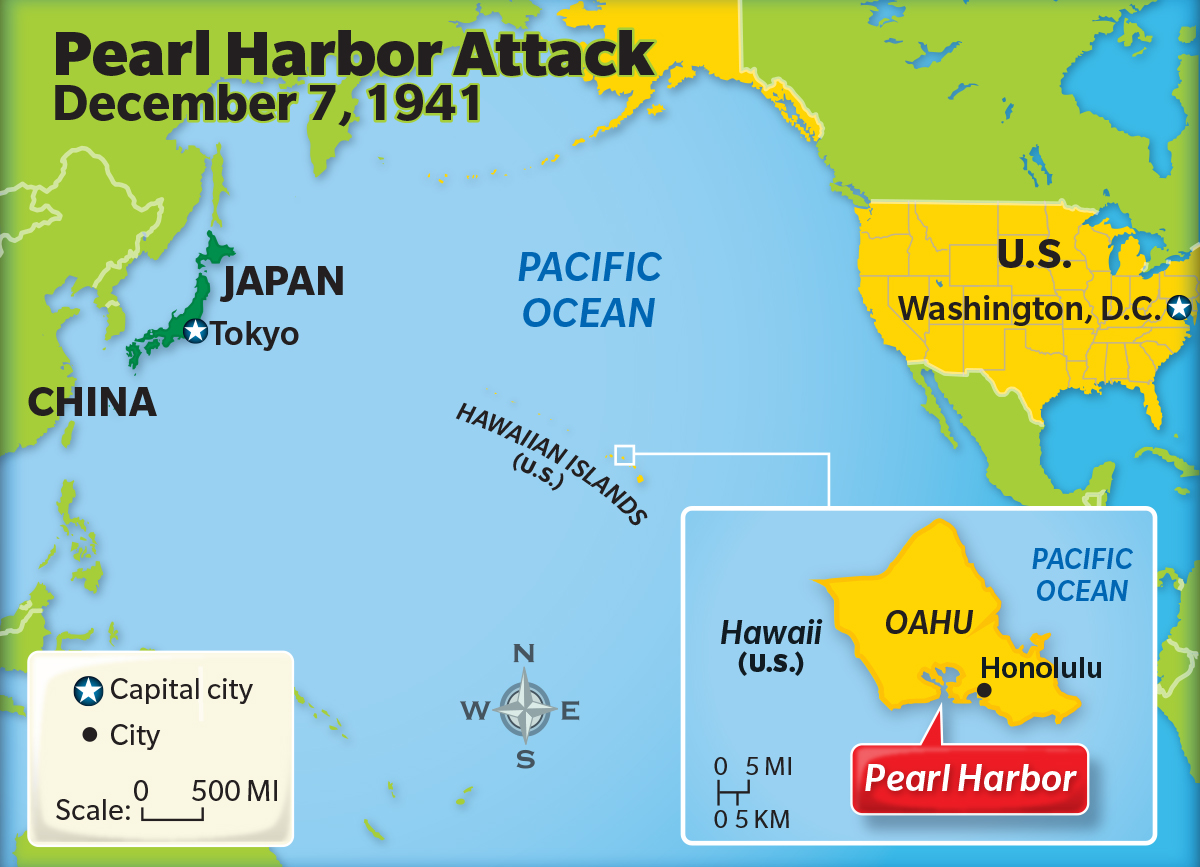
    Attack on Pearl Harbor (1941)

    US President Mr Trump has said the COVID-19 pandemic is a worse “attack” on the U.S. than either Pearl Harbor or 9/11.

    Practice Question :

    Discuss how the world order changed post Pearl Harbour attack with context to the US hegemony in Asia-Pacific.

    Attack on Pearl Harbor

    • The December 7, 1941 attack on Pearl Harbour was among the most significant moments of the World War II.
    • It signalled the official entry of the US into the hostilities, which eventually led to the dropping of nuclear bombs on the Japanese cities of Hiroshima and Nagasaki in 1945.
    • Significantly, in December 2016, Shinzo Abe became the first sitting Japanese Prime Minister to visit Pearl Harbour.

    What led up to the attack on Pearl Harbour?

    • Before Japan attacked Pearl Harbour in 1941, relations between the US and Japan were already worsening.
    • In 1910, Japan annexed Korea and, in 1937, it invaded China, sending alarm bells ringing in the US and other Western powers about Japan’s manifest expansionist agenda.
    • Between December 1937 and January 1938, an episode which is referred to as the “Nanking Massacre” or the “Rape of Nanking”, occurred — Japanese soldiers killed and raped Chinese civilians and combatants.
    • Japanese historians estimate that anywhere between tens of thousands and 200,000 Chinese were killed.
    • The US was against Japan’s aggression in China, and imposed economic sanctions and trade embargoes after its invasion.

    Immediate causes

    • Japan was reliant on imports for oil and other natural resources — this was one of the reasons why it invaded China and later French Indo-China (present-day Vietnam, Laos and Cambodia).
    • The intention was to take control of the major Chinese ports to have access to resources such as iron, rubber, tin, and most importantly, oil.
    • In July 1941, the US ceased exporting oil to Japan.
    • Negotiations between the two countries ended with the “Hull Note”, the final proposal delivered to Japan by the US. Essentially, the US wanted Japan to withdraw from China without any conditions.
    • Ultimately, the negotiations did not lead to any concrete results, following which Japan set its task for Pearl Harbour in the last week of November 1941.
    • Japan considered the attack to be a preventive measure against the US interfering with Japan’s plans to carry out military operations in some parts of Southeast Asia.

    What happened at Pearl Harbour?

    • About 7.55 am on December 7, 1941, about 180 aircraft of the Imperial Japanese Navy attacked the US Naval base at Pearl Harbour on the island of Oahu in Hawaii.
    • The bombing killed over 2,300 Americans and destroyed the battleships USS Arizona and USS Oklahoma.
    • Roughly 160 aircraft were destroyed, and 150 were damaged.

    Impact on the US

    • In the short term, the American naval presence in the Pacific was severely weakened.
    • However, the Japanese had largely ignored the harbour’s infrastructure, and many of the damaged ships were repaired on-site and returned to duty.
    • American opinion immediately shifted to favouring war with Japan, a course that would conclude with Japan’s unconditional surrender less than four years later.
  • Disasters and Disaster Management – Sendai Framework, Floods, Cyclones, etc.

    Vizag Gas Leak: What is Styrene Gas?

    A gas leak has claimed at least 11 lives and affected thousands of residents in five villages in Visakhapatnam in Andhra Pradesh.  The source of the leak was a styrene plant owned by South Korean electronics giant LG.

    Practice question:

    Despite a robust policy framework governing the hazardous chemicals in India, the recent gas leakage incident in Vizag highlights India’s unaddressed vulnerability to chemical disasters. Criticallly comment.

    Vizag gas lead: What is styrene?

    • It is a flammable liquid that is used in the manufacturing of polystyrene plastics, fibreglass, rubber, and latex.
    • Styrene is also found in vehicle exhaust, cigarette smoke, and in natural foods like fruits and vegetables.
    • According to The Manufacture, Storage and Import of Hazardous Chemicals Rules, 1989, styrene is classified as a toxic and hazardous chemical.

    What happens when exposed to styrene?

    • A short-term exposure to the substance can result in respiratory problems, irritation in the eyes, irritation in the mucous membrane, and gastrointestinal issues.
    • And long-term exposure could drastically affect the central nervous system and lead to other related problems like peripheral neuropathy.
    • It is, likely, a carcinogenic substance that can react with oxygen in the air to mutate into styrene dioxide, a substance that is more lethal.
    • However, there is no sufficient evidence despite several epidemiology studies indicating there may be an association between styrene exposure and an increased risk of leukaemia and lymphoma.

    What are the symptoms?

    • Symptoms include headache, hearing loss, fatigue, weakness, difficulty in concentrating etc.
    • Animal studies have reported effects on the nervous system, liver, kidney, and eye and nasal irritation from inhalation exposure to styrene.

    How bad is the situation in Visakhapatnam?

    • It is yet unclear whether the deaths are due to direct exposure to styrene gas or one of its byproducts.
    • However, hundreds of people including many children were admitted to hospitals.
    • The cases are high as the gas leak was only detected at 3 am in the morning, meaning several crucial hours have been lost till safety precautions were taken.
    • More fatally, the gas was leaked while people were fast asleep.

    What caused the leak?

    • Styrene monomer was used at the manufacturing plant to produce expandable plastics.
    • The storage requirement of styrene monomer strictly mentions that it has to be below 17 degrees Celsius.
    • There was a temporary and partial shutdown of the plant because of the nationwide lockdown.
    • The leak occurred as a result of styrene gas not being kept at the appropriate temperature.
    • This caused a pressure build-up in the storage chamber that contained styrene and caused the valve to break, resulting in the gas leakage.

    Is it under control?

    • The leak has been plugged and NDRF teams moved into the five affected villages and have started opening the houses to find out if anyone was stranded inside.
    • The Covid-19 preparedness helped a lot as dozens of ambulances with oxygen cylinders and ventilators were readily available.
    • The spread of the gas depends on wind speeds. So far it is estimated that areas within a five-kilometre radius have been affected.

    What are the guidelines on the storage of hazardous chemicals in plants?

    After the Bhopal disaster, much legislation was enacted starting from the Environment (Protection) Act, 1986 to the Public Liability Insurance Act, 1991. They are-

    Environment (Protection) Act, 1986 Omnibus act, which gives sweeping powers to Central government to take all measures to protect the environment
    Environment (Protection) Rules, 1986 Set discharge and product standards – source standards for restricting pollution; product standards for manufactured goods and ambient air and water standards – for regulating quality of life and environmental protection
    Hazardous Waste (Management Handling and Transboundary Movement) Rules, 1989 Industry required to identify major accident hazards, take preventive measures and submit a report to the designated authorities
    Manufacture, Storage And Import Of Hazardous Chemicals Rules, 1989 Importer must furnish complete product safety information to the competent authority and must transport imported chemicals in accordance with the amended rules.
    Chemical Accidents (Emergency, Planning, Preparedness and Response) Rules, 1996 Centre is required to constitute a central crisis group for management of chemical accidents; set up quick response mechanism termed as the crisis alert system. Each state is required to set up a crisis group and report on its work.
    Factories Amendment Act, 1987 Provision to regulate siting of hazardous units; safety of workers and nearby residents and mandates for on-site emergency plans and disaster control measures
    Public Liability Insurance Act, 1991 Imposes a no-fault liability on the owner of hazardous substance and requires the owner to compensate victims of accident irrespective of any neglect or default. For this, the owner is required to take out an insurance policy covering potential liability from any accident.


Join the Community

Join us across Social Media platforms.