💥UPSC 2027,2028 Mentorship (April Batch) + Access XFactor Notes & Microthemes PDF

Archives: News

  • Innovations in Biotechnology and Medical Sciences

    Neurogenesis in the Human Brain

    Why in the News?

    A recent study (2025, Science) found young neurons in the adult brain, challenging the old belief that Neurogenesis (neurons formation) occur only in childhood.

    What is Neurogenesis?

    • Overview: Formation of new neurons from stem or progenitor cells.
    • Established in Animals: Well-known in mice, rats, and monkeys; also active during human childhood development.
    • Debate in Humans: Longstanding question if it continues in adulthood, especially in the hippocampus (brain’s memory and learning hub).
    • Hippocampal Role: The dentate gyrus is believed to sustain lifelong neurogenesis, helping in memory formation, flexibility, and stress control.

    Key findings of the Study:

    • Conducted by: Karolinska Institutet, Stockholm, published in Science (2025).
    • Study: Analysed 400,000 neurons from post-mortem hippocampus samples of people aged from infants (<1 year) to 78 years.
    • Methodology: Used single nuclei RNA sequencing with machine learning to detect signs of new cells.
    • Outcome: Validated with RNAscope and Xenium imaging, which confirmed the presence of neural stem cells, progenitors, and young neurons (neuroblasts) even in adolescent and adult brains.

    Why are the findings important?

    • Evidence in Adults: Strong proof that new neurons form in adult brains, not just in early years.
    • Evolutionary Insight: Suggests neurogenesis is a conserved feature across mammals, not unique to certain species.
    • Brain Functions: Explains memory flexibility, ability to overwrite memories, and resilience to stress.
    • Therapeutic Potential: Opens up scope for regenerative treatments in brain disorders like Alzheimer’s, Parkinson’s, and dementia by stimulating local progenitor cells.
    • Lifestyle Link: Implies that exercise, social connections, and stress levels could influence how much neurogenesis happens in individuals.
    [UPSC 2024] Which one of the following is synthesised in human body that dilates blood vessels and increases blood flow?

    Options: (a) Nitric oxide* (b) Nitrous oxide (c) Nitrogen dioxide (d) Nitrogen pentoxide


  • WHO’s Model List of Essential Medicines (EML)

    Why in the News?

    Semaglutide, a drug originally developed for type 2 diabetes but also highly effective for weight reduction has been added to the WHO’s Model List of Essential Medicines (EML).

    What is Semaglutide?

    • Overview: A GLP-1 receptor agonist drug developed for Type 2 Diabetes, also effective in weight reduction.
    • Mode of Action: Stimulates insulin secretion, lowers blood glucose, slows gastric emptying, and suppresses appetite.
    • Brand Names: Ozempic (diabetes), Wegovy (obesity/weight loss).
    • WHO Recognition (2025): Added to the 24th EML, highlighting its dual role in diabetes and obesity management.
    • Significance: Its inclusion pressures health systems to expand access and make it more affordable worldwide.
    • Relevance for India: With 100+ million diabetics (2nd highest globally) and a rising obesity burden, Semaglutide could be a public health game-changer if affordability improves.

    About WHO’s Model List of Essential Medicines (EML):

    • What is it: A global reference by WHO listing the most effective, safe, and essential medicines for priority healthcare needs.
    • History: First introduced in 1977 to improve access in developing countries; updated every 2 years by a WHO Expert Committee.
    • Structure:
      • Core list: Basic medicines usable with limited infrastructure.
      • Complementary list:  Need specialised training, facilities, or are costlier.
    • Global Impact: Over 150 countries use EML to build national lists for procurement, reimbursement, and universal health coverage (UHC).
    • Selection Criteria:
      • Public health relevance.
      • Proven efficacy and safety.
      • Cost-effectiveness compared to alternatives.
      • Quality, stability, and reliable formulations.
      • Preference for single-compound formulations unless combinations are better.
    [UPSC 2024] In which of the following are hydrogels used?

    1. Controlled drug delivery in patients 2. Mobile air-conditioning systems 3. Preparation of industrial lubricants

    Select the correct answer using the code given below:

    Options: (a) 1 only (b) 1 and 2 only (c) 2 and 3 only (d) 1, 2 and 3*


  • Foreign Policy Watch: India-United States

    US to update MTCR export control policies 

    Why in the News?

    The United States is preparing to reinterpret the 1987 Missile Technology Control Regime (MTCR) to expand exports of heavy attack drones, like the MQ-9 Reaper, to partner countries.

    About Missile Technology Control Regime (MTCR):

    • Formation: Established in 1987 by the G-7 countries (Canada, France, Germany, Italy, Japan, UK, USA) to prevent the spread of missiles and UAVs capable of delivering nuclear, chemical, or biological weapons.
    • Membership: Today, 35 countries are members; India joined in 2016.
    • Nature: Not a treaty but a voluntary political understanding where members implement export control guidelines.
    • Coverage:

      • Category I items: Complete missile/UAV systems with ≥500 kg payload and ≥300 km range, major subsystems, and production facilities (exports presumed denied).
      • Category II items: Less sensitive or dual-use components/technologies; exports subject to national discretion under strict licensing.
    • Purpose: To limit missile proliferation while allowing peaceful space and aviation cooperation.

    About the Recent Policy Change on MTCR:

    • US Reinterpretation (2025):

      • Large unmanned aerial vehicles (UAVs) like the MQ-9 Reaper will be treated as “aircraft” instead of missile systems.
      • This removes the “strong presumption of denial” that earlier restricted their export under MTCR.
    • Objective: To make the US the leading drone supplier, countering competition from China, Israel, and Turkiye.
    • Implications:

      • Opens the door for Foreign Military Sales (FMS) of heavy attack drones to partners like Saudi Arabia, India, and Indo-Pacific allies.
      • Still subject to US reviews for regional stability, end-use monitoring, tech security, and human rights compliance.
      • Facilitates India–US space and defence cooperation, lowering barriers for joint ventures and technology partnerships.
    [UPSC 2022] Consider the following:

    1. Asian Infrastructure Investment Bank 2. Missile Technology Control Regime 3. Shanghai Cooperation Organisation

    India is a member of which of the above?

    Options: (a) 1 and 2 only (b) 3 only (c) 2 and 3 only (d) 1, 2 and 3


  • Freshwater Aquifers found beneath the Atlantic Ocean

    Why in the News?

    The recent discovery of a massive freshwater aquifer beneath the Atlantic shelf opens new possibilities for addressing future global water shortages.

    About the Aquifer:

    • Location: Offshore northeastern U.S., stretching possibly from New Jersey to Maine.
    • Expedition 501: Drilled up to 400 m beneath the seabed, retrieving nearly 50,000 liters of water and thousands of sediment cores.
    • Findings: Fresh and nearly fresh water discovered at both shallower and deeper depths than expected, confirming a vast, pressurized aquifer.
    • Global Context: Similar offshore aquifers are suspected or identified near South Africa, Hawai‘i, Jakarta, and Canada’s Prince Edward Island.

    Possible Origins of the Freshwater:

    • Glacial Meltwater Hypothesis: Ancient ice sheets during lower sea levels allowed meltwater to seep into porous sediments.
    • Connected Aquifer Hypothesis: Modern terrestrial groundwater may still slowly flow offshore through geologic formations.
    • Significance: Determining whether the aquifer is finite fossil water or a renewable source is critical for deciding its usability.

    Significance of the Discovery:

    • Water Security: Could supply a metropolis the size of New York City for centuries, if managed sustainably.
    • Climate Change Resilience: Offers backup options as coastal aquifers face saltwater intrusion and urban demand rises (e.g., Cape Town’s “Day Zero” crisis in 2018).
    • Scientific Impact: First direct, systematic drilling of offshore freshwater for mapping and salinity profiling.
    [UPSC 2021] With reference to the water on the planet Earth, consider the following statements:

    1.The amount of water in the rivers and lakes is more than the amount of groundwater.

    2.The amount of water in polar ice caps and glaciers is more than the amount of groundwater.

    Which of the statements given above is/are correct?

    Options: (a) 1 only (b) 2 only* (c) Both 1 and 2 (d) Neither 1 nor 2


  • FDI in Indian economy

    [8th September 2025] The Hindu Op-ed: A complex turn in India’s FDI story

    PYQ Relevance

    [UPSC 2016] Justify the need for FDI for the development of the Indian economy. Why there is gap between MOUs signed and actual FDIS? Suggest remedial steps to be taken for increasing actual FDIs in India.

    Linkage: The article highlights that although India records high gross inflows ($81 bn in FY 2024–25), massive repatriations and outward FDI reduce net retained capital, weakening industrial growth, directly reflecting the gap between headline FDI figures and actual developmental impact, just like the MOU–FDI gap in the question. Structural barriers such as regulatory opacity, policy unpredictability, and weak infrastructure explain why capital commitments don’t translate into long-term projects. The remedial steps suggested, simplified regulations, policy consistency, and infrastructure upgrades, align with the measures demanded in the UPSC 2016 question.

    Mentor’s Comment

    Foreign Direct Investment (FDI) has long been celebrated as one of the most powerful engines of India’s growth since the reforms of 1991. It brought in capital, technology, and global linkages. Yet, beneath the shining surface of record inflows lies a disquieting reality, unprecedented outflows, disinvestments, and a shift away from long-term industrial commitments. This article explores the nuanced challenges in India’s FDI ecosystem, the divergence between inflows and outflows, and the urgent need for reforms.

    Introduction

    FDI has been central to India’s growth story, particularly after liberalisation in 1991, modernising industries and integrating India into global markets. While e-commerce and IT saw transformative capital inflows, recent years mark a complex shift. Despite India recording $81 billion in gross FDI inflows in FY 2024–25, net retained capital fell drastically due to massive repatriations and rising outward investments by Indian firms. This has profound implications for industrial growth, job creation, and long-term economic resilience.

    Divergence Between Inflows and Outflows

    1. Gross inflows: $81 billion in FY 2024–25, up 13.7% from last year.
    2. Sharp withdrawals: Disinvestments surged by 51% in FY 2023–24 to $44.4 billion and further to $51.4 billion in FY 2024–25.
    3. Net retained capital: Fell to just $0.4 billion after accounting for outflows, a stark erosion of confidence.
    4. Investor behaviour shift: From long-term commitments to short-term tax arbitrage and profit-seeking.

    The Decline of Manufacturing in FDI Trends

    1. Declining share: Manufacturing’s share in FDI dropped to a mere 12% of total inflows.
    2. Short-term focus: Preference for rent-seeking sectors such as financial services, hospitality, and energy distribution.
    3. Weak multiplier effects: Unlike manufacturing or infrastructure, these sectors do not create broad-based industrial or technological growth.

    The Surge of Indian Capital Abroad

    1. Outward FDI: Rose from $13 billion in FY 2011–12 to $29.2 billion in FY 2024–25.
    2. Reasons cited: Regulatory inefficiencies, infrastructure gaps, and unpredictable policies.
    3. Destinations: Nearly half of outflows directed toward developed economies with stable tax regimes and strategic resources.

    Structural Barriers in India’s Investment Climate

    1. Regulatory opacity: Complex compliance requirements discourage investors.
    2. Legal unpredictability: Frequent policy shifts undermine confidence.
    3. Governance inconsistencies: Contrast between reforms on paper and actual execution.
    4. Dominance of tax havens: Mauritius and Singapore continue to account for bulk inflows, driven by treaty-based tax strategies.

    Why the Long Term Matters

    1. FDI as stability cushion: Supports balance of payments, currency stability, and external accounts.
    2. Declining net inflows: Curtails India’s monetary policy flexibility.
    3. RBI’s concern: Outflows align with global emerging market trends but pose systemic risks if unchecked.
    4. Need for committed capital: Advanced manufacturing, clean energy, and technology sectors require sustained inflows.

    What Needs to Be Done

    1. Simplify regulations: Reduce compliance burden and procedural delays.
    2. Ensure policy consistency: Long-term clarity to build investor trust.
    3. Upgrade infrastructure: Logistics, energy, and digital backbones to attract manufacturing FDI.
    4. Strengthen institutions: Predictable legal frameworks and efficient governance.
    5. Invest in human capital: Education and skilling to meet industry demands.

    Conclusion

    India’s FDI story is at a crossroads. Gross inflows remain high, but capital is no longer staying long enough to catalyse industrial growth. The rising tide of disinvestment by foreign firms and outward FDI by Indian companies reflects systemic inefficiencies, weak confidence, and policy unpredictability. If India aspires to be a global investment hub, reforms must focus on quality, durability, and alignment of capital with national developmental goals.

    Value Addition

    Official Definition of FDI

    • IMF/UNCTAD definition: A cross-border investment where a resident entity in one economy obtains a lasting interest and a significant degree of influence in the management of an enterprise in another economy.
    • India (RBI): “Investment by a person resident outside India in the capital of an Indian company under Schedule 1 of FEMA Regulations, 2000.”

    Foreign Direct Investment (FDI) Routes in India

    • Automatic Route: No prior approval required; investor only informs RBI after investment.
      • Examples: 100% FDI in e-commerce marketplace model, renewable energy, and computer software.
    • Government Route: Prior approval of the Government of India required.
      • Examples: FDI in multi-brand retail, defence beyond 74%, and print media.

    Regulation of FDI in India

    • Ministry of Commerce and Industry: Frames FDI policy, announced via Consolidated FDI Policy Circular.
    • Department for Promotion of Industry and Internal Trade (DPIIT): Nodal body for policy formulation and coordination.
    • RBI: Governs reporting, inflows, and compliance under FEMA, 1999.
    • Sectoral Regulators: Defence, Insurance, Banking, Telecom, etc. may impose additional conditions.

    Barriers to FDI in India

    • Regulatory opacity: Complex rules and compliance increase transaction costs.
    • Policy unpredictability: Frequent changes in taxation (e.g., retrospective tax) weaken investor trust.
    • Infrastructure gaps: Logistics bottlenecks, power shortages, and urban congestion raise costs.
    • Legal uncertainties: Contract enforcement and dispute resolution remain weak.
    • Governance challenges: Land acquisition, bureaucratic delays, and inconsistent state-level policies.

    Global Comparative Analysis

    • China: Strong manufacturing-centric FDI policies, large SEZs, predictable incentives, and world-class infrastructure helped it emerge as the world’s largest FDI recipient.
    • Vietnam: Stable policy frameworks, competitive labour costs, and integration into global supply chains (electronics, textiles) made it a hub for relocated investments.
    • Singapore & Mauritius: Dominant sources of FDI into India, largely due to tax treaty advantages rather than productive investment.
    • India: Despite being among the top FDI destinations (UNCTAD report), outflows and repatriations remain high, reflecting weak long-term retention.
  • Wildlife Conservation Efforts

    The making of an ecological disaster in the Nicobar

    Introduction

    The Great Nicobar Island Project, with an estimated expenditure of ₹72,000 crore, has sparked unprecedented controversy. Instead of strengthening India’s ecological security and inclusive growth, the project threatens to uproot indigenous communities such as the Nicobarese and the Shompen, destroy one of the world’s richest biodiversity hotspots, and expose the island to severe natural disaster risks. By bypassing constitutional bodies, statutory protections, and scientific warnings, the project raises fundamental questions about governance, justice, and sustainability in India’s developmental trajectory.

    Uprooting Tribal Communities

    1. Nicobarese displacement: The project site overlaps with ancestral villages of the Nicobarese, already displaced once by the 2004 tsunami. Their hope of return will now be permanently extinguished.
    2. Shompen threat: The Shompen, classified as a Particularly Vulnerable Tribal Group (PVTG), face cultural and ecological extinction as their reserve land is denotified and forests destroyed.
    3. Violation of tribal safeguards: Article 338A mandates consultation with the National Commission for Scheduled Tribes, which was bypassed. The Tribal Council’s objections were ignored after being “rushed” into signing a no-objection letter, later revoked.

    Mockery of Legal and Regulatory Safeguards

    1. Social Impact Assessment failure: The 2013 Act on Land Acquisition and Rehabilitation excluded Nicobarese and Shompen from consideration, denying them stakeholder status.
    2. Forest Rights Act ignored: The Shompen’s authority to regulate and protect forests was bypassed.
    3. Constitutional neglect: Bodies like NCST and local tribal councils were side-lined, undermining democratic accountability.

    The Farce of Compensatory Afforestation

    1. Massive tree felling: The Ministry projects 8.5 lakh trees may be cut, but independent estimates put the figure between 32–58 lakh.
    2. Afforestation mismatch: Compensatory afforestation is planned in Haryana, thousands of kilometres away, with a completely different ecology.
    3. Mining contradiction: A quarter of this afforestation land has been auctioned for mining, nullifying the mitigation strategy.
    4. CRZ violation: Port site falls under CRZ 1A, which prohibits construction due to turtle nesting sites and coral reefs.

    Ecological and Wildlife Concerns

    1. Nicobar long-tailed macaque: Primatologists’ warnings on its survival risks were ignored.
    2. Sea turtle nesting mis-assessed: Surveys were conducted off-season, compromising accuracy.
    3. Dugong impact underestimated: Drone-based surveys only covered shallow waters.
    4. Biased assessments: Reports were allegedly conducted under duress, undermining credibility.

    A Disaster-Prone Location

    1. Tsunami precedent: In 2004, the island subsided by 15 feet.
    2. Seismic zone risk: A 6.2 magnitude earthquake in July 2025 reinforced its vulnerability.
    3. Jeopardising investment: Infrastructure and lives face catastrophic risk from earthquakes and tsunamis.

    Conclusion

    The Great Nicobar Project symbolizes an ecological and humanitarian misadventure where short-term ambitions eclipse constitutional morality, environmental prudence, and tribal justice. The survival of the Nicobarese and Shompen, along with an irreplaceable ecosystem, hangs in the balance. True development must integrate ecological sustainability and social justice rather than sacrifice them at the altar of misplaced mega-infrastructure.

    Value Addition

    Way Forward

    • Inclusive Development with Tribal Consent
      • Ensure free, prior, and informed consent of Nicobarese and Shompen communities in line with the Niyamgiri judgment (2013).
      • Empower tribal councils in decision-making as mandated by the Forest Rights Act (2006).
    • Strengthening Legal and Institutional Safeguards
      • Consult the National Commission for Scheduled Tribes (NCST) and respect constitutional provisions under Article 338A.
      • Strengthen Social Impact Assessments with participation of affected communities.
    • Rethinking Compensatory Afforestation
      • Undertake afforestation within island ecosystems, not in distant states like Haryana.
      • Promote ecosystem restoration rather than mere plantation drives.
    • Ecologically Sensitive Area Protection
      • Enforce CRZ 1A norms protecting turtle nesting sites, coral reefs, and coastal biodiversity.
      • Recognise Great Nicobar as an Ecologically Sensitive Zone (ESZ) under Environment Protection Act.
    • Disaster-Resilient Planning
      • Recognise that Great Nicobar lies in Seismic Zone V and redesign infrastructure accordingly.
      • Adopt a low-impact development model suited for fragile ecosystems (eco-tourism, research hubs, small-scale renewable energy).
    • Alternative Growth Models
      • Focus on sustainable livelihoods for locals (fisheries, forest produce, heritage tourism).
      • Leverage the island’s location for strategic security through minimal-impact naval installations, avoiding large-scale civilian displacement.

    PYQ Relevance

    [UPSC 2017] ‘Climate Change’ is a global problem. How India will be affected by climate change? How Himalayan and coastal states of India will be affected by climate change?

    Linkage: The Great Nicobar Project directly links to this PYQ as it illustrates how climate change impacts combine with ill-planned development to heighten risks. Rising sea levels and intensifying cyclones threaten India’s coastal states, while Great Nicobar, lying in a seismically active and tsunami-prone zone, showcases the compounded vulnerability of fragile ecosystems and communities. Thus, it exemplifies how coastal regions face existential risks when climate change interacts with unsustainable projects.

  • Primary and Secondary Education – RTE, Education Policy, SEQI, RMSA, Committee Reports, etc.

    How much is spent on children’s education in India

    Introduction

    India has long struggled with gender inequities in education. Despite government efforts like Beti Bachao, Beti Padhao and steady progress in enrolment, where girls now form 48% of the school population and even surpass men in gross enrolment ratios in higher education, financial investment by families continues to tilt in favor of boys. The 80th round of the National Sample Survey (Comprehensive Modular Survey on Education) reveals that boys consistently receive higher expenditure allocations across school stages and states, highlighting deep-rooted social biases in household decision-making.

    Significance of the recent NSS report

    1. New evidence: The 2024 survey covered 52,085 households and data for 57,742 students, making it one of the most comprehensive datasets on education expenditure.
    2. Contradiction with enrolment success: Despite progress in closing gender enrolment gaps, the spending patterns show that financial priorities still favor boys.
    3. Striking gap: In urban India, families spend ₹2,791 less per girl compared to boys, while in rural India, boys get 18% more spent on them.
    4. Long-term concern: Such expenditure biases translate into inequities in learning outcomes, employability, and overall empowerment.

    Gender patterns in household spending on education

    1. All stages of schooling: Per-student expenditure on girls is consistently lower than boys from pre-primary to higher secondary.
    2. Rural-urban divide: Rural families spend ₹1,373 more on boys; urban families spend 30% more on boys by higher secondary level.
    3. Course fees: Families pay on average 21.5% more in fees for boys.

    Private vs government schooling:

    1. 58.4% of girls are in government schools.
    2. 34% of boys access private unaided schools compared to 29.5% of girls.
    3. Tuition classes: While enrollment in coaching is similar (26% girls vs 27.8% boys), expenditure differs, by higher secondary, families spend 22% more on tuition for boys.

    State-level variations in educational expenditure

    1. Delhi, MP, Rajasthan, Punjab: More than 10 percentage points gender gap in private school enrolment.
    2. Tamil Nadu and Kerala: Gender parity—boys and girls access government and private schools almost equally.
    3. Northeast States: Reverse trend—more girls enrolled in private schools.
    4. Telangana, Tamil Nadu, West Bengal: Families spend vastly more on boys at higher secondary level.
      • Example: In Tamil Nadu, families spend ₹35,973 on boys vs ₹19,412 on girls.
    5. Kerala, Himachal Pradesh, Andhra Pradesh: More spending on girls at higher secondary, partly due to safety-related transport costs.

    Gender gap in private coaching expenditure

    1. Himachal Pradesh: Families spend ₹9,813 per boy vs ₹1,550 per girl on higher secondary tuition.
    2. Bihar, Jharkhand, Rajasthan, Tamil Nadu: Also show significant tuition expenditure gaps.
    3. Implication: Coaching is seen as a gateway to competitive exams and better career prospects—girls being left out deepens structural disadvantages.

    Broader implications for gender equality

    1. Hidden inequality: Enrolment parity does not mean equity in quality or investment.
    2. Future workforce impact: Lower spending on girls limits their human capital development and perpetuates the gender pay gap.
    3. Policy blind spots: Subsidies and scholarships exist, but social norms continue to undervalue daughters’ education.

    Way Forward

    Bridging the gender gap in educational expenditure requires a multi-pronged approach that addresses not just affordability but also deep-rooted social norms.

    1. Strengthening targeted subsidies: Expansion of schemes like Beti Bachao, Beti Padhao, free bicycles for girls, and conditional cash transfers for secondary and higher education can encourage families to invest equally in daughters.
    2. Equalising access to quality education: Improving the quality of government schools and providing digital learning resources will reduce the need for costly private schooling and tuitions, thereby narrowing gendered disparities.
    3. Awareness and behavioural change: Community-level campaigns must challenge patriarchal mindsets that undervalue girls’ education. Civil society and self-help groups can be leveraged to reshape family-level decision-making.
    4. Transport and safety interventions: Ensuring safe and affordable transport for girls, particularly in higher secondary education, will address a key cost component that discourages investment.
    5. Monitoring and accountability: Data from National Sample Survey and Unified District Information System for Education (UDISE+) should be used to regularly monitor gendered expenditure gaps and inform evidence-based policies.
    6. Integrating ethics and social responsibility: Education policies must go hand in hand with fostering a sense of justice, fairness, and equal opportunity, so that families see daughters as equal bearers of human capital.

    Conclusion

    The NSS findings show that while India has moved forward in closing the gender gap in enrolment, it still struggles with a silent financial discrimination in household educational spending. Unless families start valuing daughters’ education equally, not just in words but also in investment, true gender equality in education will remain elusive. Corrective measures through policy nudges, financial incentives, and awareness campaigns are essential to bridge this invisible divide.

    Value Addition

    Key Concepts

    1. Gender Parity Index (GPI): Ratio of female-to-male values in education indicators; India has achieved near-parity in enrolment but lags in investment equity.
    2. Human Capital Theory: Education as an investment leading to productivity and growth; unequal spending weakens women’s contribution to the economy.
    3. Intersectionality: Gender bias in expenditure intersects with class, caste, and rural-urban divides, amplifying inequalities.

    Data and Reports

    1. National Sample Survey (2024): Reveals consistent gaps in household expenditure on girls’ education across stages and regions.
    2. World Economic Forum Gender Gap Report (2024): India slipped in rankings, with education a major drag despite enrolment progress.
    3. ASER Report (Annual Status of Education Report): Points to quality issues in rural schools, often affecting girls disproportionately.
    4. UNESCO (Global Education Monitoring Report, 2023): Highlights that globally, girls are more likely to be excluded from secondary and higher education due to cost factors.

    Government Policies and Schemes

    1. National Education Policy (NEP) 2020: Emphasises inclusive, equitable education and gender-sensitive curricula.
    2. Beti Bachao, Beti Padhao (2015): Social mobilisation for improving girls’ survival, protection, and education.
    3. National Scheme of Incentives to Girls for Secondary Education (NSIGSE): Financial support to reduce dropouts.
    4. Kasturba Gandhi Balika Vidyalaya (KGBV): Residential schooling for disadvantaged girls in Classes 6–12.

    Comparative International Experience

    1. Bangladesh: Successful in reducing gender disparity through stipend schemes for girls, free textbooks, and subsidies—leading to higher female enrolment in secondary education.
    2. Nordic Countries (Sweden, Norway, Finland): Achieved near-complete gender equity in education by ensuring free schooling, universal childcare, and strong social security systems that reduce household bias.
    3. Rwanda: Introduced Gender-Responsive Budgeting—allocating funds specifically to address gender gaps in education, which India can emulate.

    Quotes (Useful for Essay/Ethics/GS answers)

    1. “If you educate a man you educate an individual, but if you educate a woman you educate a family.” — Charles M. Cooper
    2. “Investment in girls’ education is not charity, it is the smartest investment a country can make.” — UN Secretary-General António Guterres

    PYQ Relevance

    [UPSC 2022] The Right of Children to Free and Compulsory Education Act, 2009 remains inadequate in promoting incentive-based system for children’s education without generating awareness about the importance of schooling. Analyse.

    Linkage: The NSS 80th round shows families spend 18–30% more on boys than girls, privileging them in private schools and coaching despite RTE’s universal access. This proves that incentive-based provisions under the RTE Act remain inadequate without tackling deep-rooted gender norms. Hence, awareness generation, gender-responsive budgeting, and social mobilisation are essential complements to legal entitlements.

  • Foreign Policy Watch: India-Sri Lanka

    Katchatheevu Island Dispute

    Why in the News?

    Sri Lankan President Dissanayake’s visit to Katchatheevu Island, the first ever visit by a head of state, revived debates on the island’s history and ownership.

    Katchatheevu Island Dispute

    About Katchatheevu Island:

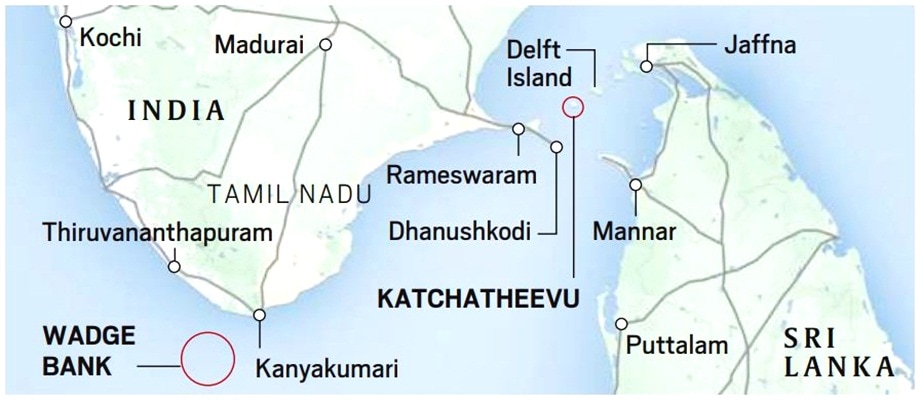
    • Overview: Small uninhabited island of about 285 acres in the Palk Strait, ~33 nautical miles from Jaffna (Sri Lanka) and close to Ramanathapuram (Tamil Nadu).
    • History: Once under the Raja of Ramnad (TN), later became disputed during British rule.
    • Agreements: Under 1974 and 1976 pacts, India (under Indira Gandhi govt.) recognised Sri Lanka’s sovereignty and gave up traditional fishing rights.
    • Religious Site: Home to St. Anthony’s Catholic Shrine, visited annually by Indian and Sri Lankan fishermen during a joint festival with visa waiver.
    • Ecology: Though barren and unsettled, serves as a resting point for fishermen and supports marine biodiversity.

    Disputes around Katchatheevu:

    • Fishing Conflicts: Tamil Nadu fishermen often cross into Sri Lankan waters due to declining catch in Indian waters, leading to frequent arrests by the Sri Lankan Navy.
    • Bottom-Trawling Issue: Indian trawlers use bottom-trawling, banned in Sri Lanka, which damages marine ecosystems and escalates tensions.
    • Political Demands: All TN political parties have demanded retrieval of the island.
    • National Politics: Issue often resurfaces during elections, with claims that earlier governments “easily gave away” Katchatheevu.
    • Official Position: India clarified in 2013–14 that no sovereign territory was ceded since the island was disputed, not fully under India’s control.
    • Core Problem: Lies not in sovereignty but in unsustainable bottom-trawling practices and the livelihood crisis faced by Tamil Nadu fishermen.
    [UPSC 2020] Consider the following statements:

    1. The value of Indo-Sri Lanka trade has consistently increased in the last decade.

    2. “Textile and textile articles” constitute an important item of trade between India and Bangladesh.

    3. In the last five years, Nepal has been the largest trading partner of India in South Asia.

    Which of the statements given above is/are correct? (2020)

    Options: (a) 1 and 2 only (b) 2 only* (c) 2 only (d) 3 only


  • Universe, Solar System Discoveries

    ‘Blood Moon’ and Lunar Eclipse

    Why in the News?

    Viewers across Asia, Australia, and parts of Africa witnessed a Blood Moon on 8th September, a spectacular form of total lunar eclipse visible.

    About Lunar Eclipse:

    • Overview: Happens when Earth comes between Sun and Moon, blocking sunlight from reaching the Moon.
    • Earth’s Shadow:
      • Umbra: Dark central shadow, causes total or partial eclipses.
      • Penumbra: Outer shadow, causes faint dimming.
    • Types:
      1. Total Eclipse: Moon passes fully through umbra.
      2. Partial Eclipse: Only part of Moon enters umbra.
      3. Penumbral Eclipse: Moon passes through penumbra with subtle darkening.
    • Frequency: Occurs 2–4 times per year, visible from different regions.

    Why lunar eclipse don’t occur every month?

    : Lunar eclipses don’t happen every month because the Moon’s orbit around the Earth is tilted by about 5 degrees relative to the Earth’s orbit around the Sun. This tilt, known as orbital inclination, means that during a full Moon, the Moon often passes above or below Earth’s shadow, preventing a perfect alignment required for an eclipse. Eclipses only occur when the alignment is precise, allowing the Sun, Earth, and Moon to line up in a straight line.

    What is Blood Moon?

    • Meaning: Refers to the reddish glow of the Moon during a total lunar eclipse.
    • Cause: Rayleigh scattering in Earth’s atmosphere.
      • Short wavelengths (blue, violet) scatter away.
      • Longer wavelengths (red, orange) bend around Earth and light the Moon.
    • Colour Intensity:
      • Presence of dust, aerosols, volcanic ash deepens the red shade.
      • Cleaner atmosphere produces a lighter red or orange.
    • Historical Insight: Medieval records of Blood Moons helped identify volcanic eruptions between 1100–1300 CE, confirmed by a 2023 University of Geneva study.

    Significance:

    • Scientific: Acts as a natural indicator of atmospheric composition, dust, and pollution; helps model planetary atmospheres.
    • Historical/Environmental: Provides evidence of past volcanic events and climate conditions.
    • Cultural: Linked to myths and superstitions, though harmless scientifically.
    • Public Engagement: Widely followed celestial event that aids astronomy outreach and awareness.
    [UPSC 2019] On 21st June, the Sun

    Options: (a) does not set below the horizon at the Arctic Circle*

    (b) does not set below the horizon at Antarctic Circle

    (c) shines vertically overhead at noon on the Equator

    (d) shines vertically overhead at the Tropic of Capricorn


  • Modern Indian History-Events and Personalities

    100 years of the Self-Respect Movement in Tamil Nadu

    Why in the News?

    This year marks the centenary of the Self-Respect Movement in Tamil Nadu, a transformative socio-political reform movement.

    About Self-Respect Movement:

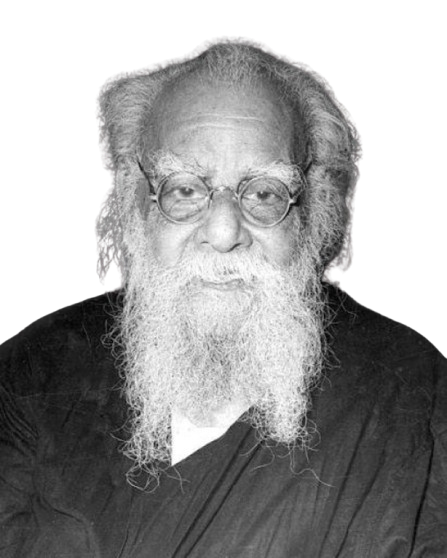
    • Overview: Started in 1925 by E.V. Ramasamy Periyar in Tamil Nadu after his exit from the Indian National Congress.
    • Aim: To challenge Brahminical dominance, caste hierarchy, patriarchy, and blind religious practices; to create a rational, egalitarian society.
    • Methods:
      • Promotion of Self-Respect Marriages (without priests or caste rituals).
      • Advocacy of women’s rights – widow remarriage, divorce, property rights, inter-caste marriage.
      • Use of Kudi Arasu journal for spreading radical ideas and reform propaganda.
    • Significance:
      • Laid the foundation of the Dravidian movement in Tamil Nadu.
      • Prioritized social reform over political independence.
      • Gave marginalized communities and women a platform for dignity and equality.

    100 years of the Self-Respect Movement in Tamil Nadu

    Who was E.V. Ramasamy Periyar?

    • Overview: Erode Venkatappa Ramasamy (1879–1973), popularly known as Periyar or Thanthai Periyar (“Father Periyar”).
    • Identity: Social reformer, rationalist, and political thinker; called the “Father of the Dravidian Movement.”
    • Key Roles:
      • Led the Vaikom Satyagraha (1924-25) in Kerala against caste restrictions in temples, earning the title “Vaikom Hero.”
      • Founded the Self-Respect Movement (1925) and later Dravidar Kazhagam.
    • Ideology:
      • Advocated rationalism, atheism, equality, and eradication of caste.
      • Strongly opposed gender inequality and social exploitation.
    • Legacy: Inspired later Dravidian parties (DMK, AIADMK) and influenced Tamil Nadu’s policies on social justice, women’s rights, and education.
    [UPSC 2025] Who among the following was the founder of the ‘Self-Respect Movement’?

    Options:

    (a) ‘Periyar’ E. V. Ramaswamy Naicker* (b) Dr. B. R. Ambedkar (c) Bhaskarrao Jadhav (d) Dinkarrao Javalkar


Join the Community

Join us across Social Media platforms.