💥UPSC 2027,2028 Mentorship (April Batch) + Access XFactor Notes & Microthemes PDF

Archives: News

  • Foreign Policy Watch: India-Sri Lanka

    Katchatheevu Island Dispute

    Why in the News?

    Sri Lankan President Dissanayake’s visit to Katchatheevu Island, the first ever visit by a head of state, revived debates on the island’s history and ownership.

    Katchatheevu Island Dispute

    About Katchatheevu Island:

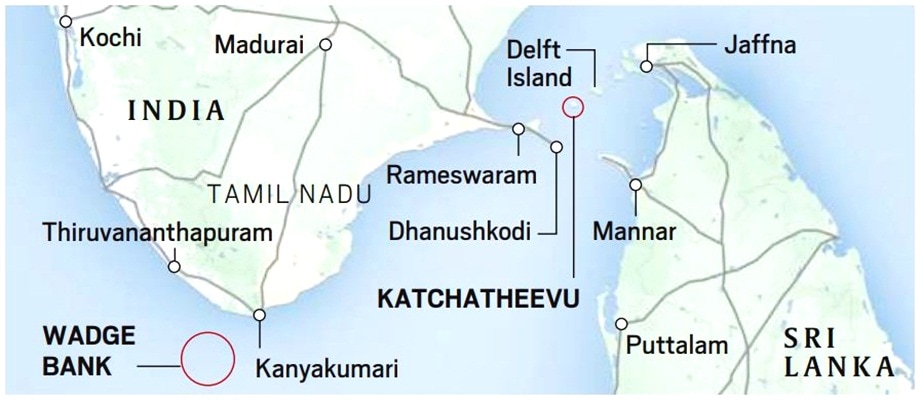
    • Overview: Small uninhabited island of about 285 acres in the Palk Strait, ~33 nautical miles from Jaffna (Sri Lanka) and close to Ramanathapuram (Tamil Nadu).
    • History: Once under the Raja of Ramnad (TN), later became disputed during British rule.
    • Agreements: Under 1974 and 1976 pacts, India (under Indira Gandhi govt.) recognised Sri Lanka’s sovereignty and gave up traditional fishing rights.
    • Religious Site: Home to St. Anthony’s Catholic Shrine, visited annually by Indian and Sri Lankan fishermen during a joint festival with visa waiver.
    • Ecology: Though barren and unsettled, serves as a resting point for fishermen and supports marine biodiversity.

    Disputes around Katchatheevu:

    • Fishing Conflicts: Tamil Nadu fishermen often cross into Sri Lankan waters due to declining catch in Indian waters, leading to frequent arrests by the Sri Lankan Navy.
    • Bottom-Trawling Issue: Indian trawlers use bottom-trawling, banned in Sri Lanka, which damages marine ecosystems and escalates tensions.
    • Political Demands: All TN political parties have demanded retrieval of the island.
    • National Politics: Issue often resurfaces during elections, with claims that earlier governments “easily gave away” Katchatheevu.
    • Official Position: India clarified in 2013–14 that no sovereign territory was ceded since the island was disputed, not fully under India’s control.
    • Core Problem: Lies not in sovereignty but in unsustainable bottom-trawling practices and the livelihood crisis faced by Tamil Nadu fishermen.
    [UPSC 2020] Consider the following statements:

    1. The value of Indo-Sri Lanka trade has consistently increased in the last decade.

    2. “Textile and textile articles” constitute an important item of trade between India and Bangladesh.

    3. In the last five years, Nepal has been the largest trading partner of India in South Asia.

    Which of the statements given above is/are correct? (2020)

    Options: (a) 1 and 2 only (b) 2 only* (c) 2 only (d) 3 only


  • Universe, Solar System Discoveries

    ‘Blood Moon’ and Lunar Eclipse

    Why in the News?

    Viewers across Asia, Australia, and parts of Africa witnessed a Blood Moon on 8th September, a spectacular form of total lunar eclipse visible.

    About Lunar Eclipse:

    • Overview: Happens when Earth comes between Sun and Moon, blocking sunlight from reaching the Moon.
    • Earth’s Shadow:
      • Umbra: Dark central shadow, causes total or partial eclipses.
      • Penumbra: Outer shadow, causes faint dimming.
    • Types:
      1. Total Eclipse: Moon passes fully through umbra.
      2. Partial Eclipse: Only part of Moon enters umbra.
      3. Penumbral Eclipse: Moon passes through penumbra with subtle darkening.
    • Frequency: Occurs 2–4 times per year, visible from different regions.

    Why lunar eclipse don’t occur every month?

    : Lunar eclipses don’t happen every month because the Moon’s orbit around the Earth is tilted by about 5 degrees relative to the Earth’s orbit around the Sun. This tilt, known as orbital inclination, means that during a full Moon, the Moon often passes above or below Earth’s shadow, preventing a perfect alignment required for an eclipse. Eclipses only occur when the alignment is precise, allowing the Sun, Earth, and Moon to line up in a straight line.

    What is Blood Moon?

    • Meaning: Refers to the reddish glow of the Moon during a total lunar eclipse.
    • Cause: Rayleigh scattering in Earth’s atmosphere.
      • Short wavelengths (blue, violet) scatter away.
      • Longer wavelengths (red, orange) bend around Earth and light the Moon.
    • Colour Intensity:
      • Presence of dust, aerosols, volcanic ash deepens the red shade.
      • Cleaner atmosphere produces a lighter red or orange.
    • Historical Insight: Medieval records of Blood Moons helped identify volcanic eruptions between 1100–1300 CE, confirmed by a 2023 University of Geneva study.

    Significance:

    • Scientific: Acts as a natural indicator of atmospheric composition, dust, and pollution; helps model planetary atmospheres.
    • Historical/Environmental: Provides evidence of past volcanic events and climate conditions.
    • Cultural: Linked to myths and superstitions, though harmless scientifically.
    • Public Engagement: Widely followed celestial event that aids astronomy outreach and awareness.
    [UPSC 2019] On 21st June, the Sun

    Options: (a) does not set below the horizon at the Arctic Circle*

    (b) does not set below the horizon at Antarctic Circle

    (c) shines vertically overhead at noon on the Equator

    (d) shines vertically overhead at the Tropic of Capricorn


  • Modern Indian History-Events and Personalities

    100 years of the Self-Respect Movement in Tamil Nadu

    Why in the News?

    This year marks the centenary of the Self-Respect Movement in Tamil Nadu, a transformative socio-political reform movement.

    About Self-Respect Movement:

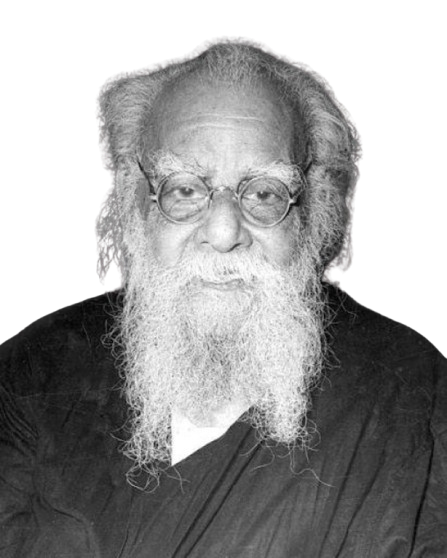
    • Overview: Started in 1925 by E.V. Ramasamy Periyar in Tamil Nadu after his exit from the Indian National Congress.
    • Aim: To challenge Brahminical dominance, caste hierarchy, patriarchy, and blind religious practices; to create a rational, egalitarian society.
    • Methods:
      • Promotion of Self-Respect Marriages (without priests or caste rituals).
      • Advocacy of women’s rights – widow remarriage, divorce, property rights, inter-caste marriage.
      • Use of Kudi Arasu journal for spreading radical ideas and reform propaganda.
    • Significance:
      • Laid the foundation of the Dravidian movement in Tamil Nadu.
      • Prioritized social reform over political independence.
      • Gave marginalized communities and women a platform for dignity and equality.

    100 years of the Self-Respect Movement in Tamil Nadu

    Who was E.V. Ramasamy Periyar?

    • Overview: Erode Venkatappa Ramasamy (1879–1973), popularly known as Periyar or Thanthai Periyar (“Father Periyar”).
    • Identity: Social reformer, rationalist, and political thinker; called the “Father of the Dravidian Movement.”
    • Key Roles:
      • Led the Vaikom Satyagraha (1924-25) in Kerala against caste restrictions in temples, earning the title “Vaikom Hero.”
      • Founded the Self-Respect Movement (1925) and later Dravidar Kazhagam.
    • Ideology:
      • Advocated rationalism, atheism, equality, and eradication of caste.
      • Strongly opposed gender inequality and social exploitation.
    • Legacy: Inspired later Dravidian parties (DMK, AIADMK) and influenced Tamil Nadu’s policies on social justice, women’s rights, and education.
    [UPSC 2025] Who among the following was the founder of the ‘Self-Respect Movement’?

    Options:

    (a) ‘Periyar’ E. V. Ramaswamy Naicker* (b) Dr. B. R. Ambedkar (c) Bhaskarrao Jadhav (d) Dinkarrao Javalkar


  • International Space Agencies – Missions and Discoveries

    New Horizons and Stellar Parallax Navigation

    Why in the News?

    A recent study has showcased that spacecrafts can locate themselves using a simple stellar parallax method with just two nearby stars, without relying on Earth.

    New Horizons and Stellar Parallax Navigation

    What is Stellar Parallax?

    • Overview: Stellar parallax is the apparent shift in a star’s position against background stars when observed from two different vantage points.
    • Example: On Earth, this is measured every 6 months as the planet moves to opposite sides of its orbit.
    • Parallax Angle: The degree of this shift gives the star’s distance. Larger parallax means the star is closer.
    • Application in Space: By observing stars from both Earth and a spacecraft (billions of km apart), the relative positions can be compared to calculate the spacecraft’s distance.

    About the New Horizons Demonstration:

    • Spacecraft: Launched in 2006, New Horizons explored Pluto (2015) and is now beyond 60 AU (astronomical units).
    • Observation: On April 23, 2020, astronomers measured parallaxes of Proxima Centauri (4.2 light years) and Wolf 359 (7.9 light years) using Earth-based telescopes and New Horizons’ onboard instruments.
    • Results:
      • Proxima’s parallax: 32.4 arcseconds
      • Wolf 359’s parallax: 15.7 arcseconds
      • Derived spacecraft position: 46.89 AU, matching DSN’s 47.11 AU reading.
    • Requirements: Only a camera, onboard computer, and stellar catalogue — no special equipment needed.

    Significance:

    • Self-sufficient Navigation: Enables spacecraft to calculate their position without depending solely on Earth-based radio signals.
    • For Future Missions: Particularly useful for interstellar missions, where Earth’s beacons won’t be practical.
    • Simplicity: Unlike more complex astrometric navigation or pulsar navigation, this method is accessible with minimal hardware.
    • Educational Value: Though not precise enough yet for real-time navigation, it is a proof of concept for deep-space autonomy.
    [UPSC 2012] A person stood alone in a desert on a dark night and wanted to reach his village which was situated 5 km east of the point where he was standing. He had no instruments to find the direction, but he located the polestar. The most convenient way now to reach his village is to walk in the:

    Options: (a) direction facing the polestar

    (b) direction opposite to the polestar

    (c) direction keeping the polestar to his left *

    (d) direction keeping the polestar to his right


  • Tribes in News

    In news: Apatani Tribe

    Why in the News?

    The facial tattoos and wooden nose plugs of Apatani women in Arunachal Pradesh, banned in the 1970s, now survive only among older generations, giving them anthropological importance.

    About Apatani Tribe:

    • Overview: A Scheduled Tribe (ST) concentrated in Ziro Valley, Lower Subansiri district, Arunachal Pradesh.
    • Language: Part of the Tani linguistic group, speaking a dialect of the Tibeto-Burman family.
    • Belief System: Paganistic faith worshipping the Sun (Ayo Danyii) and Moon (Atoh Piilo).
    • Festivals: Dree (prayers for harvest and prosperity), Myoko (friendship bonds), along with Yapung and Murung.
    • Global Recognition: Ziro Valley noted for traditional ecological knowledge, proposed as a UNESCO World Heritage Site.

    Unique Features:

    • Distinct Identity: Women traditionally had facial tattoos and wooden nose plugs; banned since the 1970s, seen only among older women today.
    • Sustainable Farming: Practise integrated rice-fish farming on terraced fields, growing rice varieties like Mipya, Emoh, Emeo along with fish (Ngihi).
    • Weaving Tradition: Women weave on a loin loom (Chichin), producing fabrics with geometric and zig-zag designs, dyed with natural extracts.
    • Bamboo Culture: Bamboo central to daily life, crafts, and rituals, symbolising ecological harmony.
    • Community Systems: Maintain sustainable social forestry and village institutions for conservation and cultural continuity.
    [UPSC 2014] Consider the following pairs:

    Tribe : State

    1. Limboo (Limbu) : Sikkim

    2. Karbi : Himachal Pradesh

    3. Dongaria Kondh : Odisha

    4. Bonda : Tamil Nadu

    Which of the above pairs are correctly matched?

    Options: (a) 1 and 3 only* (b) 2 and 4 only (c) 1, 3 and 4 only (d) 1, 2, 3 and 4


  • Innovations in Biotechnology and Medical Sciences

    RNA–Amino Acid Link clues to Origin of Life

    Why in the News?

    A recent study published in the Nature suggests that simple molecules called aminoacyl-thiols may have helped amino acids stick to RNA (ribonucleic acid) without enzymes, giving clues to how protein-making began on early Earth.

    About the RNA–Amino Acid Link:

    • Discovery: Study showed that aminoacyl-thiols (simple prebiotic molecules) can attach amino acids to RNA directly (aminoacylation) without enzymes.
    • Modern Parallel: In cells today, this is done by aminoacyl-tRNA synthetases before ribosomes build proteins. This created the “chicken-and-egg problem”: proteins are needed to make proteins.
    • Chemical Mechanism:
      • Thioesters: Enable amino acids to attach to RNA (“charging RNA”).
      • Thioacids: Enable amino acids to link into peptides.
    • Robustness: Works at neutral pH, across many amino acids, with unexpected selectivity for RNA despite other molecules being more reactive.

    Significance for Origin of Life:

    • RNA World Hypothesis: Supports the idea that RNA and amino acids interacted directly before enzymes evolved.
    • Chemical Advantage: Shows RNA had a natural edge in early Earth conditions, explaining its central role in life’s origin.
    • Prebiotic Plausibility: Aminoacyl-thiols could form from simple nitriles and thiols, and reactions occurred even in cold/frozen pools resembling early Earth.
    • Evolutionary Pathway: Suggests life began with short peptides, with RNA later evolving control, leading to coded protein synthesis and ribosomes.
    [UPSC 2022] Consider the following statements : DNA Barcoding can be a tool to:

    1. assess the age of a plant or animal.

    2. distinguish among species that look alike.

    3. identify undesirable animal or plant materials in processed foods.

    Which of the statements given above is/are correct ?

    Options: (a) 1 only (b) 3 only (c) 1 and 2 (d) 2 and 3*


  • Foreign Policy Watch: India-United States

    [6th Spetember 2025] The Hindu Op-ed: India’s Strategic autonomy in a multipolar world

    PYQ Relevance

    [UPSC 2014] With respect to the South China Sea, maritime territorial disputes and rising tension affairs the need for safeguarding maritime security to ensure freedom of navigation and even flight throughout the region. In this context, discuss the bilateral issues between India and China.

    Linkage: India’s stance on the South China Sea highlights strategic autonomy — upholding freedom of navigation under UNCLOS while resisting China’s expansive claims. Bilateral tensions persist, from border clashes (2020) to disputes over India’s oil exploration with Vietnam in contested waters. Yet, India balances deterrence through the Quad and cooperation via BRICS/SCO, reflecting a cautious but autonomous approach.

    Mentor’s comment

    Strategic autonomy is more than just a diplomatic catchphrase for India, it is the lifeline of its foreign policy in an era of multipolar flux. As India seeks to balance ties with the United States, China, and Russia, while also positioning itself as the voice of the Global South, the concept is no longer theoretical but a daily practice. For UPSC aspirants, understanding this evolving doctrine is essential to connect historical continuities with present-day challenges of geopolitics, economy, and technology.

    Introduction

    Strategic autonomy, once confined to the academic realm of international relations, has become a core principle of India’s foreign policy. Rooted in India’s colonial history and first institutionalized through Nehru’s Non-Alignment Movement, it has today evolved into a doctrine of multi-alignment, pragmatism, and resilience. In a world where U.S. unipolarity is waning, China is rising, and Russia is recalibrating its global role, India faces both opportunities and constraints. The essence of strategic autonomy lies in navigating this turbulent multipolarity while safeguarding sovereignty, growth, and global aspirations.

    The Evolution and Relevance of Strategic Autonomy

    1. Historical roots: Emerged from India’s colonial subjugation and Nehru’s vision of non-alignment.
    2. Cold War practice: Balanced ties with both blocs while retaining independence.
    3. Contemporary shift: Modi-era “multi-alignment” emphasizes flexibility with powers like the U.S., Russia, and China.
    4. Core principle: Not isolationism but adaptability in safeguarding national interests.

    How the Global Order Shapes India’s Autonomy

    1. Fragmented multipolarity: Decline of U.S. dominance, rise of China, Russia’s revisionism, and West’s internal divisions.
    2. Volatility in partnerships: U.S. unpredictability under Trump strained trade ties and increased pressure on India over Russia.
    3. Fluid environment: India must recalibrate ties to secure territorial integrity, economic growth, and regional stability.

    India’s Engagement with the United States

    1. Deepened partnership: Defence cooperation, intelligence sharing, joint exercises, and technology transfers.
    2. New initiatives: Quad, Indo-Pacific dialogues, I2U2, and IMEC reflecting shared concerns about China.
    3. Friction points: Trade tariffs, sanctions, and pressure to reduce Russia ties.
    4. India’s stance: Balanced engagement, cooperative yet assertively independent.

    India’s Balancing Act with China

    1. Security challenge: Border clashes of 2020 ended the façade of benign coexistence.
    2. Dual reality: China remains India’s major trading partner despite tensions.
    3. Strategic response: Strengthened border infrastructure, deepened Indo-Pacific ties, and indigenous defence push.
    4. Diplomatic engagement: Continued participation in BRICS, SCO to balance rivalry with dialogue.

    India’s Enduring Partnership with Russia

    1. Historical solidarity: Long-standing defence cooperation rooted in Cold War ties.
    2. Ukraine conflict test: Continued oil imports and weapons purchases despite Western criticism.
    3. Autonomous approach: Diversification of defence imports without abandoning Russia.
    4. Core principle: Refusal to choose sides in binary contests.

    Strategic Autonomy in the Global South Context

    1. Voice of the Global South: Asserted during India’s G20 presidency in 2023.
    2. India’s stance: “Non-West” but not “anti-West”, balancing pragmatism with plural democracy.
    3. Resonance abroad: Other rising powers too seek agency, not vassalage, in global politics.

    Domestic and Technological Dimensions of Autonomy

    1. Internal constraints: Political polarisation, economic vulnerabilities, institutional weaknesses.
    2. Modern domains: Cyber threats, AI warfare, space competition, data sovereignty.
    3. Recent steps: Indigenous platforms, critical minerals security, global tech governance participation.

    Conclusion

    Strategic autonomy is not about standing alone, but about standing tall. It requires balancing ties with major powers, investing in national capacity, and adapting to new-age domains of competition. India’s rise as a sovereign pole in the multipolar order rests on maintaining autonomy without succumbing to bloc politics. The essence is not isolation, but resilience, the art of walking the tightrope with clarity, confidence, and conviction.

    Value Addition

    Definition of Strategic Autonomy

    General Definition:

    • Strategic autonomy is a nation’s ability to pursue independent foreign and security policies, making sovereign decisions without being bound by external pressures, alliances, or blocs.
    • MEA perspective: It is about “maximizing national interest through diversified engagements” — not neutrality, not isolation, but flexibility and resilience.

    Evolution of Strategic Autonomy in India

    • Colonial Context: India’s colonial past created a deep-rooted desire to preserve independence in foreign policy.
    • Nehruvian Non-Alignment (1950s–1970s)
      • Core principle: India would not align with any Cold War bloc.
      • 1955 Bandung Conference and NAM (1961 Belgrade) institutionalized this vision.
      • Quote (Nehru, 1946): “We propose, so far as we can, to keep away from the power politics of groups, aligned against one another.”
    • Indira Gandhi Era (1970s–1980s)
      • Tilt towards USSR (1971 Indo-Soviet Treaty of Peace, Friendship and Cooperation).
      • Still claimed non-alignment, but practice became more pragmatic.
    • Post-Cold War Recalibration (1990s–2000s)
      • Unipolar U.S.-dominated world; India liberalised economy and sought closer U.S. ties while keeping Russia engaged.
      • “Strategic autonomy” re-emerged as India avoided being a U.S. ally despite growing partnership.
    • 21st Century: Multi-Alignment
      • India now engages multiple powers simultaneously: U.S. (Quad, I2U2, IMEC), Russia (defence, energy), China (BRICS, SCO), EU (trade), Global South (voice in G20).
      • Current doctrine: “Autonomy through diversification”, maintaining flexibility across issues.

    Multi-Alignment in India’s Foreign Policy

    • Overview: Instead of non-alignment (staying out of blocs), India today practices multi-alignment — engaging with all major powers, often simultaneously, without exclusive commitment.
    • Examples:
      • Quad (U.S., Japan, Australia, India) → Indo-Pacific security.
      • BRICS (Brazil, Russia, India, China, South Africa) → financial/strategic cooperation.
      • SCO (Russia, China, Central Asia) → security & regional stability.
      • I2U2 (India, Israel, UAE, U.S.) → technology, infrastructure, food security.
      • IMEC → new economic corridor connecting India–Middle East–Europe.

    Key Quotes for Value Addition

    • Jawaharlal Nehru (1946): “We propose, so far as we can, to keep away from the power politics of groups, aligned against one another.” (Origin of non-alignment).
    • Atal Bihari Vajpayee (2003, as PM): “India and the United States may disagree on some issues, but as sovereign countries, we have the right to pursue our national interests.” (Strategic autonomy in U.S. ties).
    • Dr. Manmohan Singh (2005, PM): “Our strategic autonomy does not mean isolation. It means engaging all major powers on equal terms.”
    • S. Jaishankar (External Affairs Minister):
      • “Multi-alignment is the call of the day. Strategic autonomy in today’s multipolar world means engaging America, Russia, China, Europe, and others — each on its own merit.”
      • “Partnerships must be based on interests, not sentiment, not inherited obligations.”
      • “We are non-West, but not anti-West.” (G20 context, 2023).
    • Shivshankar Menon (Former NSA & diplomat):
      • “Strategic autonomy is not a slogan. It is the art of being flexible in a world where alliances are rigid, and sovereignty is contested.”
      • “For India, autonomy lies in not choosing sides but choosing our interests.”
  • Disasters and Disaster Management – Sendai Framework, Floods, Cyclones, etc.

    Why Punjab keeps flooding

    Introduction

    Punjab, often called the “food bowl of India,” is paradoxically one of the most flood-prone states in the country. Drained by three perennial rivers, the Ravi, Beas, and Sutlej, along with seasonal tributaries and hill streams, Punjab has historically thrived on its fertile floodplains. Yet, the very rivers that make its land abundant also bring recurring devastation. The 2025 floods, among the worst in recent memory, have once again underlined the dual challenge of geography and governance. With 3.8 lakh people affected, 11.7 lakh hectares of farmland destroyed, and 43 lives lost, the floods highlight not just natural vulnerability but also systemic mismanagement.

    Why Punjab’s Floods Are Back in the Spotlight

    Punjab is currently experiencing one of the most destructive floods in decades, with unprecedented rainfall in Himachal Pradesh, J&K, and Punjab itself swelling rivers beyond capacity. What makes this year’s floods significant is the scale: all 23 districts have been declared flood-hit, and the breach of Madhopur barrage gates has worsened devastation. While heavy rains are not new, institutional failures, especially in dam management by the Bhakra Beas Management Board (BBMB), and delayed warnings have amplified the crisis, making the situation worse than previous floods of 1955, 1988, 1993, 2019, and 2023.

    Rivers as Both Boon and Bane

    1. Three perennial rivers – Ravi, Beas, and Sutlej traverse Punjab, carrying immense alluvium and making the state highly fertile.
    2. Seasonal rivers and choes – Rivers like Ghaggar and hill streams add to Punjab’s complex hydrology.
    3. Agricultural abundance – Punjab produces nearly 20% of India’s wheat and 12% of its rice, despite occupying only 1.5% of landmass.
    4. Recurring floods – Heavy monsoons, particularly in upstream catchments (Himachal and J&K), frequently overwhelm dhussi bundhs (earthen embankments), as seen in 1955, 1988, 1993, 2019, 2023, and now 2025.

    Why Do Dams Intensify Flooding

    1. Upstream dams – Bhakra (Sutlej), Pong (Beas), and Thein/Ranjit Sagar (Ravi) play a central role in regulating river flow.
    2. Rule curve dilemma – The BBMB maintains high reservoir levels in July–August for irrigation and power, leaving little cushion for sudden heavy inflows.
    3. Sudden releases – Emergency releases during extreme rainfall cause flash floods downstream, as seen with Pong dam’s unprecedented 20% higher inflows than 2023.
    4. Governance issue – Punjab feels marginalized in BBMB decisions, especially after 2022 rule changes allowing all-India officers to head the Board.

    Human Factors Worsening the Crisis

    1. Barrage failures – On August 26, two gates of the Madhopur barrage collapsed after Thein dam releases, flooding Pathankot, Gurdaspur, and Amritsar.
    2. Weak embankments – Illegal mining has eroded dhussi bundhs, reducing their ability to withstand pressure.
    3. Poor coordination – Lack of communication between upstream and downstream departments delayed gate operations.
    4. Neglected desilting – Experts estimate that ₹4,000–5,000 crore investment in desilting and embankment strengthening could prevent far greater losses.

    Larger Governance Failures

    1. BBMB’s narrow mandate – Prioritizes irrigation and power, neglecting flood management.
    2. Delayed warnings – Punjab officials allege sudden releases with little time for evacuation.
    3. Political tensions – Punjab’s Water Resources Minister accused the Centre of ignoring Punjab’s plight.
    4. Environmentalists’ view – Experts stress that flood cushions, transparent decision-making, and scientific dam operations are essential to prevent repeated tragedies.

    Conclusion

    Punjab’s floods are not just a story of heavy rain but of fragile governance structures. Nature may trigger floods, but poor dam management, illegal mining, weak embankments, and lack of timely communication convert them into disasters. Strengthening embankments, enforcing transparent dam operations, and giving Punjab a greater role in BBMB are urgent needs. Unless governance catches up with geography, Punjab will continue to oscillate between abundance and devastation.

    UPSC Relevance

    [UPSC 2024] Flooding in urban areas is an emerging climate-induced disaster. Discuss the causes of this disaster. Mention the features of two such major floods in the last two decades in India. Describe the policies and frameworks in India that aim at tackling such floods.

    Linkage: The Punjab floods of 2025 mirror the challenges of urban floods like Mumbai (2005) and Chennai (2015), where extreme rainfall combined with poor drainage, unplanned construction, and dam mismanagement turned heavy rain into catastrophe. Frameworks like the Disaster Management Act, 2005, the Sendai Framework (2015–30), and National Disaster Management Plan (2019) provide guiding structures, yet governance lapses and weak local preparedness continue to make both rural and urban areas equally vulnerable to flooding.

  • A new leaf- environmental compliance needs to be monitored at all levels

    Introduction

    India’s environmental regulation has long suffered from weak enforcement due to manpower and capacity deficits. The Environment Audit Rules, 2025 seek to fix this by authorising private accredited auditors to monitor compliance, ensuring industries and companies adhere to environmental norms and emerging frameworks like carbon accounting and green credits.

    Why in the News

    The rules are significant because, for the first time, private agencies have been formally allowed to audit environmental compliance, a task previously limited to statutory boards. This shift addresses the chronic resource crunch in pollution control authorities and ties compliance to future-ready mechanisms such as the Green Credit Rules.

    The Expanding Framework of Environmental Monitoring

    1. Current institutional structure: Supported by the Central Pollution Control Board (CPCB), the Regional Offices of the Ministry of Environment, Forest and Climate Change (MoEFCC), and the State Pollution Control Boards (SPCBs)/Pollution Control Committees (PCCs).
    2. Persistent limitations: Severe shortage of manpower, resources, capacity, and infrastructure has hampered effective monitoring.
    3. Press statement: The Ministry itself acknowledged that these deficits weaken enforcement across “the vast number of projects and industries operating nationwide.”

    The Role of Private Environmental Auditors

    1. Accreditation system: Private agencies can now get licensed as environmental auditors.
    2. Comparable to Chartered Accountants: Much like financial auditors, they will assess compliance with environmental laws and best practices in pollution abatement.
    3. Wider application: Their audits will also be relevant for emerging frameworks such as the Green Credit Rules.

    Integrating Green Credit and Carbon Accounting

    1. Green Credit Rules: Individuals and organisations can earn tradeable credits for activities such as afforestation, water conservation, and waste management.
    2. Corporate responsibility: Companies must now account for direct and indirect carbon emissions, requiring sophisticated auditing frameworks.
    3. Gap in state capacity: SPCBs are not equipped to handle complex emission accounting, hence the shift towards specialised auditors.

    Risks of Diluting Core Responsibilities

    1. Neglect at the grassroots: Environmental violations are often most blatant at district, block, and panchayat levels.
    2. Lack of trained staff: Local monitoring agencies remain understaffed and undertrained, allowing many violations to go unchecked.
    3. Need for empowerment: Any new regime must strengthen, not sideline, grassroots institutions.

    Future of Environmental Regulation in India

    1. Beyond policing: Environmental regulation is no longer about enforcement alone but about aligning with global climate goals.
    2. Preparing for the future: Systems must adapt to integrate climate accounting, sustainability audits, and market-based mechanisms like credits.
    3. Balancing act: New reforms must bridge manpower deficits without undermining accountability.

    Conclusion

    The Environment Audit Rules, 2025 represent a decisive shift in India’s environmental governance by institutionalising private auditing in compliance monitoring. While this can bridge long-standing deficits in manpower and expertise, the real test lies in ensuring grassroots empowerment and preventing dilution of State responsibility. Environmental protection cannot be outsourced entirely; instead, it must evolve into a multi-stakeholder responsibility that balances accountability, innovation, and inclusivity.

    PYQ Relevance

    [UPSC 2013]: Enumerate the National Water Policy of India. Taking river Ganges as an example, discuss the strategies which may be adopted for river water pollution control and management. What are the legal provisions for management and handling of hazardous wastes in India?

    Linkage: The UPSC 2013 question on National Water Policy, Ganga pollution control, and hazardous waste laws links well with the Environment Audit Rules, 2025, as both highlight the gap between legal provisions and effective enforcement. The new rules strengthen monitoring by accrediting private auditors, addressing the chronic manpower deficits that plagued river pollution and waste management efforts. They represent an evolution from mere policy frameworks to robust compliance mechanisms.

  • Internal Security Architecture Shortcomings – Key Forces, NIA, IB, CCTNS, etc.

    Technology Perspective and Capability Roadmap (TPCR-2025)

    Why in the News?

    The Ministry of Defence has released the Technology Perspective and Capability Roadmap 2025 (TPCR-2025), a 15-year blueprint for military preparedness and modernization.

    About Technology Perspective and Capability Roadmap (TPCR-2025):

    • Overview: A strategic modernization blueprint released by the Ministry of Defence to guide India’s Armed Forces for the next 10–15 years.
    • Scope: Covers tri-services for multi-domain operations across land, sea, air, cyber, and space.
    • Industry Role: Provides clear requirements to defence industry, MSMEs, and start-ups to focus R&D, manufacturing, and innovation.
    • Policy Alignment: Linked to Atmanirbhar Bharat, reducing import dependence and strengthening indigenous production.
    • Objective: Ensure forces remain technologically competitive, prepared for emerging threats, and resilient in a dynamic security environment.

    Key Features of TPCR-2025:

    • Nuclear & CBRN Preparedness: Strengthening nuclear command systems, survivability infrastructure, radiation detection, decontamination units, unmanned CBRN (Chemical, Biological, Radiological, and Nuclear) vehicles.
    • Drones & Unmanned Systems: Development of stealth drones (range 1,500 km, altitude 60,000 ft), AI-enabled loitering munitions, anti-drone EW bubbles.
    • Electronic & Cyber Warfare: Deployment of advanced jammers, EW payloads, info-dominance systems, and readiness for cyber and space warfare.
    • Service Modernization:
      • Army: New tanks, light tanks, UAV-launched PGMs, electromagnetic weapons.
      • Navy: New destroyers, corvettes, mine vessels, nuclear-powered warships, third aircraft carrier.
      • Air Force: Stratospheric airships, long-range cruise missiles, hardened PGMs.
    • Implementation: Regular industry–services consultations, engagement with MSMEs and start-ups, periodic updates.

    Significance:

    • Serves as a capability roadmap for long-term defence planning.
    • Strengthens domestic defence ecosystem.
    • Ensures future combat readiness in multi-domain operations.
    [UPSC 2020] In India, why are some nuclear reactors kept under “IAEA safeguards” while others are not?

    Options: (a) Some use uranium and others use thorium

    (b) Some use imported uranium and others use domestic supplies

    (c) Some are operated by foreign enterprises and others are operated by domestic enterprises

    (d) Some are State-owned and others are privately owned *


Join the Community

Join us across Social Media platforms.