💥UPSC 2027,2028 Mentorship (April Batch) + Access XFactor Notes & Microthemes PDF

Archives: News

  • Fertilizer Sector reforms – NBS, bio-fertilizers, Neem coating, etc.

    [pib] Regulation of Biostimulants in India

    Why in the News?

    India now has a comprehensive regulatory framework for biostimulants, placing it among the few countries with such dedicated oversight.

    What are Biostimulants?

    • Definition: Under Fertilizer Control Order (FCO), 1985, Clause 20C, biostimulants are substances or micro-organisms that stimulate plant processes to improve nutrient uptake, growth, yield, crop quality, efficiency, and stress tolerance.
    • Exclusion: They are not pesticides or plant growth regulators, which fall under the Insecticides Act, 1968.
    • Categories (Schedule VI, FCO): Botanical extracts (including seaweed), protein hydrolysates and amino acids, vitamins, biochemicals, antioxidants, anti-transpirants, humic and fulvic acids, cell-free microbial products, and live micro-organisms (excluding biofertilizers/biopesticides).

    Regulation Timeline:

    • Before 2021: Nearly 30,000 unregulated products in Indian markets.
    • Feb 2021: Included under FCO; provisional registration system (G3 certificates) introduced; about 8,000 products approved temporarily.
    • Current Status: Only 146 products formally notified in Schedule VI.

    Key Amendments (2021–2025):

    • 2021: Biostimulants legally recognised under FCO.
    • 2023–24: Provisional validity extended to avoid disruption.
    • 2025:
      • Live micro-organisms (excluding biofertilizers/biopesticides) added as a category.
      • Pesticide residue limit raised from 0.01 ppm to 1 ppm.
      • Stricter quality testing, labelling, and safety standards enforced.
      • Provisional system discontinued.

    Significance:

    • Protects farmers from spurious/unproven products.
    • Encourages validated indigenous products under Atmanirbhar Bharat.
    • Establishes quality, safety, and labelling standards through Gazette notifications.
    • Makes India one of the few countries with a dedicated Biostimulant law, balancing farmer welfare, environmental safety, innovation, and regulation.
    [UPSC 2013] Consider the following organisms:

    1.Agaricus 2.Nostoc 3.Spirogyra

    Which of the above is/are used as biofertilizer/biofertilizers?

    Options: (a) 1 and 2 (b) 2 only* (c) 2 and 3 (d) 3 only


  • Foreign Policy Watch: United Nations

    [pib] Universal Postal Union (UPU)

    Why in the News?

    At the 28th Universal Postal Congress in Dubai (2025), the Union Minister for Communications has unveiled the Unified Payments Interface (UPI)- UPU Integration Project.

    About Universal Postal Union (UPU):

    • Overview: A UN specialized agency and the primary forum for international postal cooperation.
    • Establishment: Created by the Treaty of Bern (1874). It is the second oldest international organization (after CCNR, 1815).
    • Headquarters: Bern, Switzerland.
    • Membership:

      • 192 member countries (as of 2025).
      • Any UN member state can join automatically.
      • Non-UN states may join with two-thirds approval from members.
      • India is a member since 1876.
    • Structure:

      • Congress: Supreme authority meets every 4 years.
      • Council of Administration (CA): Supervises activities between Congress sessions; studies regulatory and administrative issues.
      • Postal Operations Council (POC): Technical/operational body of 48 elected members.
      • International Bureau: Secretariat providing logistical and technical support.
    • Functions:

      • Coordinates postal policies across nations.
      • Sets rules for international mail exchanges.
      • Makes recommendations to boost global mail, parcel, and financial services.
      • Acts as advisory, mediator, and technical support agency for postal systems.

    Significance of the UPI–UPU Integration:

    • For India:

      • Strengthens India’s global leadership in digital payments innovation.
      • Positions India as a hub for low-cost remittance solutions.
    • For Global Postal System:

      • Adds digital financial services to the traditional postal network, enhancing its relevance in the digital era.
      • Strengthens India–UPU cooperation and demonstrates India’s ability to combine fintech innovation with global multilateral platforms.
    • For Migrants:

      • Enables fast, affordable, and secure cross-border remittances through post offices.
      • Reduces dependence on high-cost traditional remittance channels.
    [UPSC 2004] Match List I with List II and select the correct answer using the codes given below.

    List I (Agency)

    (A) United Nations Development Programme (UNDP) (B) United Nations Environment Programme (UNEP) (C) United Nations Industrial Development Organization (UNIDO) (D) Universal Postal Union (DPU)

    List II (Headquarters) 1. Nairobi 2. Vienna 3. Berne 4. New York

    Options: (a) 2 3 4 1 (b) 4 1 2 3 (c) 2 1 4 3 (d) 4 3 2 1*


  • Indian Army Updates

    [pib] Exercise ZAPAD 2025

    Why in the News?

    An Indian Armed Forces contingent has departed for Mulino Training Ground, Nizhniy, Russia, to participate in Exercise ZAPAD 2025.

    About Exercise ZAPAD:

    • Meaning: “ZAPAD” means West in Russian; a series of large-scale joint strategic military drills led by Russia and Belarus.
    • Origins: Started during the Soviet era with Zapad-77, Zapad-81, Zapad-84, reflecting Cold War dynamics.
    • Post-Soviet Revival: Resumed with Zapad-99 (1999), partly as a response to NATO’s Yugoslavia operations.
    • Frequency: Held about once every 4 years, with major editions in 2009, 2013, 2017, 2021, and 2025.
    • Series Context: Forms part of Russia’s rotating operational drills along with Vostok (East), Tsentr (Central), and Kavkaz (Caucasus).
    • Scale: Zapad-2021 involved ~200,000 personnel from 17 countries, one of the largest recent drills.

    Geopolitical Significance:

    • Deterrence: Sends a strategic message to NATO about Russian readiness.
    • Allied Assurance: Reassures Russia’s partners and allies of its military strength.
    [UPSC 2024] Which of the following statements about ‘Exercise Mitra Shakti-2023’ are correct?

    1. This was a joint military exercise between India and Bangladesh.

    2. It commenced in Aundh (Pune).

    3. Joint response during counter-terrorism operations was a goal of this operation.

    4. Indian Air Force was a part of this exercise.

    Select the answer using the code given below:


    Options: (a) 1, 2 and 3 (b) 1 and 4 (c) 1 and 4 (d) 2, 3 and 4*


  • Historical and Archaeological Findings in News

    What was the Harappan Language?

    Why in the News?

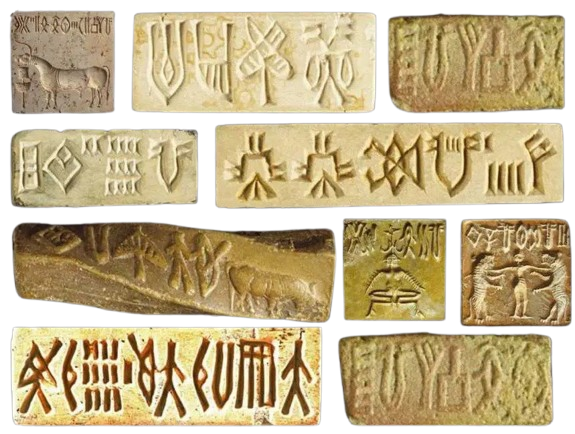
    The Union Culture Ministry has invited experts to present their research on deciphering the Indus Valley script, also known as the Harappan script.

    What was the Harappan Language?

    Recent Efforts and Theories on the Harappan Script:

    • Taxation & Commerce Theory: Bahata Ansumali Mukhopadhyay argues the script encodes rules of trade and taxation, not phonetic spellings.
    • Religious Hypothesis: Karuna Shankar Shukla claims Indus seals carried Rig Vedic mantras and Puranic references, used mainly for rituals.
    • Proto-Dravidian Claims:
      • Prakash N. Salame (Nagpur engineer) says 90% of symbols represent Proto-Dravidian Gondi, building on Dr. M. C. Kangali.
      • Asko Parpola (Finnish Indologist) supports the Dravidian hypothesis, suggesting a logo-syllabic system of pictograms and rebuses.
      • Bryan K. Wells also backs Proto-Dravidian links.
    • Santali Link: Prabhunath Hembrom connects the script to the Santali language, citing parallels with Parpola’s work.
    • Scholarly Caveats: H. P. Ray stresses need for bilingual objects, contextual clarity, and warns against assuming a single language for the entire civilization.

    Back2Basics: Indus Valley Civilization (IVC)

    • Timeline: Flourished 2600–1900 BCE, with roots back to Mehrgarh (7000 BCE).
    • Extent: Covered 1.5 million sq. km across modern India, Pakistan, Afghanistan.
    • Discovery: Excavations at Harappa (1921–22, Daya Ram Sahni) and Mohenjo-daro (1922, R. D. Banerji) confirmed as one civilization by John Marshall.
    • Urban Features: Grid-planned cities, fortified towns, granaries, warehouses, dockyards, drainage systems, advanced water management (wells, reservoirs, Great Bath).
    • Seals & Script: Steatite seals with animal motifs and undeciphered script point to complex administration.
    • Crafts & Finds: Pottery, bead-making, weaving, metallurgy, toys, ornaments, figurines; iconic Dancing Girl, Priest-King, Mother Goddess statues.


    [UPSC 2001] Which one of the following animals was NOT represented on the seals and terracotta art of the Harappan culture?

    Options: (a) Cow* (b) Elephant (c) Rhinoceros (d) Tiger


  • Festivals, Dances, Theatre, Literature, Art in News

    Langkhon Festival of Assam

    Why in the News?

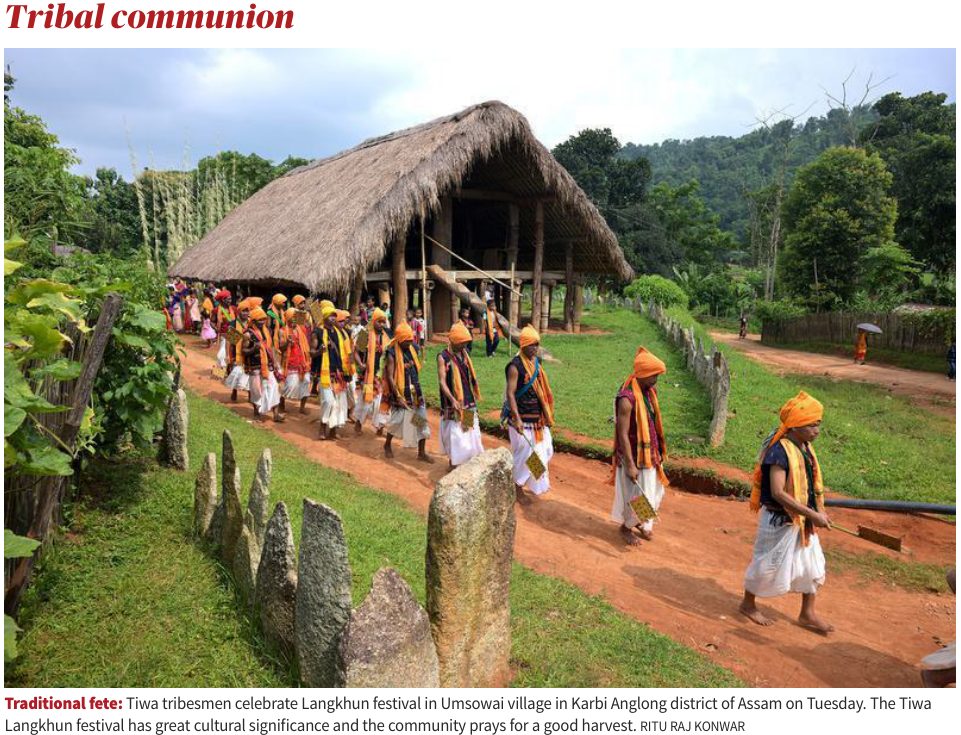
    Tiwa tribesmen recently celebrated Langkhun festival in Umsowai village in Karbi Anglong district of Assam.

    Langkhon Festival of Assam

    About Langkhon Festival:

    • Overview: A pre-harvest thanks-giving festival of the Tiwa tribe of Assam.
    • Timing: Celebrated in October–November, just before the Rabi crop season.
    • Core Belief: Involves worship of bamboo, seen as a symbol of prosperity and sustenance in Tiwa culture.
    • Deities: Special prayers to Ramsa Devota and other local gods for crop protection, family welfare, and village prosperity.
    • Ritual Practices: Include offerings, sacrifices, and prayers to drive away pestilence and evil forces and ensure a good paddy harvest.
    • Duration: Celebrated for 2–4 days with active community participation.
    • Traditional Dances: Langkhon dance, Moinari Khanthi, and Yangli form the cultural highlights.
    • Folk Songs: Songs such as Lo Ho La Hai (naming, weddings, harvests) and Lali Hilali Lai (weddings) are integral to the festival.
    • Games & Sports: Local games like Plasele and Sam Kava are organised, strengthening community bonds.
    [UPSC 2018] Consider the following pairs: Tradition | State

    1. Chapchar Kut festival — Mizoram

    2. Khongjom Parba ballad — Manipur

    3. Thong-To dance — Sikkim

    Which of the pairs given above is/are correct?

    Options: (a) 1 only (b) 1 and 2* (c) 3 only (d) 2 and 3


  • Foreign Policy Watch: India-Iran

    [9th September 2025] The Hindu Op-ed: Iran and India, ancient civilizations and new horizons

    PYQ Relevance

    [UPSC 2018] In what ways would the ongoing US-Iran Nuclear Pact controversy affect the national interest of India? How should India respond to this situation?

    Linkage: The article’s emphasis on Iran’s resilience against Western domination, its right to peaceful nuclear energy, and India–Iran civilisational partnership directly connects to the US–Iran Nuclear Pact controversy. Sanctions and U.S. pressure affect India’s energy security, INSTC access, and strategic autonomy. Thus, India’s calibrated diplomacy in balancing ties with both Iran and the West becomes central to safeguarding its national interest.

    Mentor’s Comment

    In the midst of global flux, Ambassador Iraj Elahi’s reflections on Iran–India relations remind us that ancient civilisations have the potential to shape modern geopolitics in profound ways. This piece dissects his arguments, from the erosion of Western dominance to the rise of South-South cooperation, and places them in the larger canvas of India’s foreign policy and civilisational outreach. For UPSC aspirants, it offers deep insights into international relations, civilisation studies, and contemporary global order debates.

    Introduction

    The global order is in transition. Once dominated by Western powers, especially the United States, the world now witnesses a shift toward multipolarity. The unchecked use of force, sanctions, and manipulation of global institutions by the West has weakened its legitimacy. In this changing landscape, ancient civilisations such as India and Iran are being called upon to offer not only an alternative but a humane, participatory and just global order. Their shared values of spirituality, peace, and cultural resilience form the foundation of this partnership.

    The Crisis of the Western-led Order

    1. Declining dominance: The West, especially the U.S., is losing control over its classic instruments, global finance, technological monopoly, human rights discourse, and global media.
    2. Crisis indicators: Blatant violations of international law, unchecked use of force, trade wars, and environmental destruction signal deep systemic decay.

    Why the Global South is Rising

    1. Civilisational awakening: Countries are resisting domination and discrimination by relying on local models and indigenous technology.
    2. Strategic autonomy: Defence and security strengthening in Global South nations marks a push against dependence on external powers.
    3. India and Iran as torchbearers: Both ancient civilisations embody resilience — from India’s Non-Aligned Movement to Iran’s Islamic Revolution.

    Civilisational Wisdom and Shared Values

    1. Cultural resilience: Despite military defeats, both India and Iran influenced their conquerors with governance, literature, and art.
    2. Shared ethos: Belief in the triumph of good over evil, respect for diversity, spiritual growth, and commitment to peace.
    3. Historical struggles: India’s anti-colonial resistance and Iran’s oil nationalisation highlight their fight against domination.

    Palestine and the Question of Justice

    1. Central issue: The Palestinian struggle is projected as the frontline battle of the Global South against Western hypocrisy.
    2. Iran’s stance: Defence of Palestine and its right to nuclear energy are framed as defences of sovereignty and law.
    3. Global South solidarity: Palestine becomes a metaphor for resistance against occupation and expansionism.

    India–Iran in Multilateral and Regional Frameworks

    1. BRICS potential: Seen as a counterweight to Western economic dominance, sanctions, and dollar hegemony.
    2. INSTC: More than a trade corridor; envisioned as a civilisational bridge linking Eurasia, Africa, and South Asia, with stabilising effects on West Asia.
    3. Opposition to U.S. role: Iran critiques American interventions in West Asia and South Asia for fuelling instability and terrorism.

    Conclusion

    As the world transitions into multipolarity, the call for civilisational powers such as India and Iran to lead is both symbolic and strategic. Their partnership, rooted in resilience, peace, and spiritual values, has the potential to redefine the Global South’s trajectory. By working through BRICS, INSTC, and other platforms, they can craft a participatory global order, one that replaces domination with dignity, and hierarchy with equality.

    Value Addition

    India-Iran Relations

    Historical & Civilisational Links

    1. Ancient ties: Both are among the world’s oldest civilisations, with exchanges in philosophy, art, architecture, and literature.
    2. Cultural influence: Persian language, miniature painting, Sufi traditions, and Mughal architecture in India reflect deep Iranian impact.
    3. Shared values: Spirituality, diversity, peace, and civilisational resilience.

    Strategic & Economic Cooperation

    1. Energy security:
      • Iran was once India’s second-largest crude oil supplier.
      • Post-U.S. sanctions, imports dropped, but Iran remains vital for India’s energy diversification.
    2. Chabahar Port:
      1. India’s first overseas port project.
      2. Provides access to Afghanistan and Central Asia, bypassing Pakistan.
      3. Part of the larger International North-South Transport Corridor (INSTC).
    3. INSTC:
      1. Connects India to Russia and Europe via Iran.
      2. Cuts transport cost by ~30% and time by ~40%.

    Geopolitical & Regional Significance

    1. Balancing act: India walks a fine line between the U.S.–Iran rivalry and its ties with Israel and the Gulf States.
    2. Afghanistan: India and Iran cooperated closely for stability, particularly post-U.S. withdrawal.
    3. West Asia: Iran acts as a counterbalance to Sunni-dominated Gulf powers; India’s diaspora and trade interests lie across the region.

    Multilateral Engagement

    1. BRICS: Iran is a member of BRICS and became a full member along with other countries starting January 1, 2024, following an expansion agreement at the 2023 Johannesburg Summit.
    2. SCO membership: Both nations share platforms for regional security and connectivity.
    3. NAM legacy: Shared anti-colonial and non-aligned credentials.

    Challenges in the Relationship

    1. U.S. sanctions: Reduced oil imports, halted investments in Chabahar and other projects.
    2. Strategic competition: Iran–China 25-year pact and deepening Tehran–Beijing ties raise concerns for India.
    3. Regional volatility: Palestine, Syria, Yemen conflicts complicate India’s balancing approach.

    Ethical & Civilisational Diplomacy Dimension

    1. Civilisational diplomacy: Both countries advocate a just, humane, participatory order in contrast to Western domination.
    2. Palestine issue: Shared concern in Global South solidarity, though India has nuanced its position due to ties with Israel.
    3. Spiritual diplomacy: Shared heritage in Sufi and mystical traditions strengthens people-to-people bonds.
  • Women empowerment issues – Jobs,Reservation and education

    The ‘domestic sphere’ in a new India

    Introduction

    Women in India continue to bear a disproportionate burden within the “domestic sphere,” both through unpaid household labour and through systemic silence around violence inside the home. Even as the government projects slogans like “nari shakti” and “women-led development,” the stark realities of dowry deaths, marital rape, unequal division of work, and undervaluation of women’s unpaid labour reveal deep contradictions. The recent Time Use Survey (TUS) 2024 and other official data bring to light these inequities, while political narratives attempt to glorify them as cultural strengths.

    Why in the News?

    The debate on the “domestic sphere” resurfaced after a controversial statement in August 2025 by RSS chief, who urged families to have at least three children for the “survival of civilisation.” This comment, reducing women to reproduction machines, stands in sharp contrast to the silence of ruling elites on domestic violence, dowry deaths (7,000 annually between 2017–2022), and marital rape. Simultaneously, the TUS 2024 exposed glaring gender disparities in unpaid work: women spend 7 hours daily in domestic services versus men’s 26 minutes. Despite this, the government’s framing celebrated men’s 15 minutes of caregiving as proof of “Indian family values.” This dissonance makes the issue urgent and deeply political.

    Women and Violence Within Homes

    1. Dowry deaths: An average of 7,000 women annually (2017–2022) have died in dowry-related violence, totalling 35,000 lives lost.
    2. Domestic violence: NFHS-5 revealed 30% women reported intimate partner violence, but only 14% lodged police complaints.
    3. Silence of leadership: While majoritarian rhetoric aggressively targets “love jihad,” it remains mute on intra-community domestic crimes, revealing selective morality.

    Historical and Contemporary Debates on Marriage and Gender Rights

    1. Ambedkar vs. orthodoxy: Ambedkar’s Hindu Code Bills sought divorce rights and caste-free marriages; opposed fiercely by conservative forces.
    2. Institution of marriage: Current opposition to criminalising marital rape reflects a continuity of Manusmriti-inspired ideals of sacramental marriage.
    3. Honour crimes: Cultural pressures still compel women to “adjust” in violent marriages, sustaining patriarchal structures.

    Time Use Survey 2024 – Striking Findings

    1. Employment gap: Only 25% of women (15–59 yrs) in employment-related work, compared to 75% men, with women working fewer hours.
    2. Unpaid domestic work: 93% of women spend 7 hours daily; 70% of men do none.
    3. Care work: 41% of women vs. 21% of men engage in unpaid caregiving; men average barely 16 minutes daily.
    4. Total working hours: Women overall work longer hours than men but get less leisure, sleep, and nutrition time.

    Government Narrative vs. Reality

    1. Official glorification: PIB (Feb 25, 2025) framed caregiving as reflecting the “Indian social fabric,” overlooking systemic gender exploitation.
    2. Policy translation: Anganwadi, mid-day meal, and ASHA workers, essentially extending domestic roles into the public sphere, are classified as “volunteers” with honorariums, not wages.
    3. Undervaluation: SBI 2023 study estimated ₹22.5 lakh crore annually (7% of GDP) as the value of women’s unpaid work, which subsidises male wages by reducing subsistence costs.

    Towards an Alternative Approach

    1. Violence-free homes: Stronger social and legal frameworks against domestic violence and marital rape.
    2. Equal right to work: Recognition of men and women as equal primary workers with equal wages.
    3. Public provisioning: State-backed universal childcare, elderly care, quality health and education.
    4. Cultural reform: Move from “adjustment” to shared responsibility in domestic work.
    5. Recognition for scheme workers: Anganwadi, ASHA, mid-day meal staff to receive minimum wages and benefits as government employees.

    Conclusion

    The “domestic sphere” is not a private matter but a deeply political one, shaping both India’s democracy and economy. Unless women’s unpaid work, safety within homes, and dignity are recognised, slogans of empowerment will remain hollow. True nari shakti lies not in numerical glorification of caregiving, but in building a society where women’s labour, both paid and unpaid, receives justice.

    PYQ Relevance

    [UPSC 2019] “Empowering women is the key to control population growth”. Discuss.

    Linkage: Empowerment of women through education, health access, and economic participation is directly correlated with declining fertility rates, as seen in states like Kerala and Tamil Nadu.

    When women exercise agency over reproductive choices, population growth transitions from being a demographic challenge to a managed outcome.

    Thus, population stabilisation in India is less about coercive policies and more about gender justice and empowerment-driven development.

  • Higher Education – RUSA, NIRF, HEFA, etc.

    Ranking Pitfalls: India Rankings (2025) based on NIRF

    Introduction

    India’s higher education system is one of the largest in the world, and since 2016, the National Institutional Ranking Framework (NIRF) has aimed to provide a structured evaluation of institutions. With participation expanding from 3,565 institutions in its inception year to 14,163 in 2025, and categories rising from four to seventeen, the NIRF has created a sense of competition and accountability. However, critical flaws remain: skewed weightage for subjective parameters, inadequate measurement of inclusivity, and overemphasis on reputational factors. These shortcomings risk reducing the exercise into a branding tool rather than a driver of equity and quality in higher education.

    Why is NIRF in the News?

    India Rankings 2025 has once again been dominated by legacy public institutions, underscoring persistent inequalities in India’s higher education landscape. Despite its expanded coverage, the framework continues to rely on flawed methodologies, including subjective peer perception and incomplete outreach and inclusivity parameters. Of particular concern is the neglect of socio-economically disadvantaged groups and students with disabilities in the inclusivity metric. The stakes are high: without reform, NIRF risks entrenching elitism and doing little to democratise access to quality education.

    Is NIRF making higher education more equitable?

    1. Outreach and Inclusivity (OI): Currently limited to regional and gender diversity while omitting socio-economic disadvantage and disability.
    2. Troubling trends: Only JNU and AIIMS, Delhi scored above 70 in OI among the top 10, exposing the marginalisation of weaker sections.
    3. Reservation policies: Central institutions still fail to adequately fill OBC, SC, and ST vacancies, undermining affirmative action.

    Are the ranking parameters robust and fair?

    1. Five key parameters: Teaching & resources (30%), research (30%), graduation outcomes (20%), outreach & inclusivity (10%), peer perception (10%).
    2. Peer perception flaw: Criticised by Education Minister; reputation-based, subjective, and often biased against state-run or suburban institutions.
    3. Self-declared data: Heavy reliance risks manipulation; false submissions remain unpunished.
    4. Bibliometric dependence: While verifiable, this excludes non-English and socially relevant research output.

    What challenges persist in India’s higher education system?

    1. Regional imbalance: Few top-quality institutions outside metropolitan hubs.
    2. Faculty shortage: Outside the top 100 institutions, a dearth of PhD-qualified teachers continues.
    3. Weak research culture: 58% of management institutions reported zero research publications.
    4. Mentorship gap: Legacy institutions rarely mentor emerging universities.

    How can NIRF evolve beyond rankings?

    1. Policy tool, not ritual: Insights must inform reforms instead of being an annual exercise.
    2. Stronger inclusivity metrics: Incorporating socio-economic and disability parameters alongside gender and region.
    3. Accountability: Penalising institutions submitting false data.
    4. Capacity building: Encouraging collaboration between established and upcoming institutions.
    5. Affirmative action: Monitoring recruitment policies and enforcing reservations in faculty hiring.

    Conclusion

    The NIRF has created awareness about institutional performance and expanded its scope significantly. Yet, unless it addresses fundamental flaws, especially inclusivity, fairness in assessment, and accountability, it risks becoming a branding exercise. For India’s higher education system to truly progress, rankings must serve as instruments of reform, driving equity, excellence, and social justice.

    PYQ Relevance

    [UPSC 2015] The quality of higher education in India requires major improvement to make it internationally competitive. Do you think that the entry of foreign educational institutions would help improve the quality of technical and higher education in the country? Discuss.

    Linkage: The NIRF 2025 rankings expose gaps in research output, inclusivity, and global competitiveness of Indian institutions. While reforms in ranking parameters can drive internal improvements, the entry of foreign universities may create healthy competition and raise benchmarks. Thus, the PYQ directly connects with debates on how India can achieve globally competitive higher education through both domestic reforms and external participation.

  • Parliament – Sessions, Procedures, Motions, Committees etc

    Election of the Vice-President

    Why in the News?

    Thiru CP Radhakrishnan has been elected as Vice President of India.

    About Vice-President (VP) of India:

    • Position: Second-highest constitutional post; deputy to the President.
    • Parliamentary Role: Serves as ex-officio Chairman of the Rajya Sabha.
    • Succession: Ranks second in order of precedence and first in line to become President.
    • Membership: Is a member of Parliament, not directly elected by the people.

    Qualifications:

    • Citizenship: Must be a citizen of India.
    • Age: Minimum 35 years.
    • Office of Profit: Should not hold any.
    • Parliamentary Eligibility: Must qualify for election to Rajya Sabha (unlike President, who must qualify for Lok Sabha) due to the VP’s role in the Upper House.

    Roles and Responsibilities:

    • Rajya Sabha Chairmanship: Presides over sessions and ensures order.
    • Bill Classification: Refers money bills to the Lok Sabha Speaker.
    • No Independent Powers: Has no executive or legislative powers unless acting as President.

    Election Procedure:

    • Constitutional Basis: Governed by Article 66.
    • Electoral College: Comprises 543 Lok Sabha MPs, 233 elected Rajya Sabha MPs, and 12 nominated Rajya Sabha members.
    • Voting Method: Proportional representation by single transferable vote and secret ballot.
    • No Whip Allowed: Parties cannot issue voting whips.
    • Conduct: Managed by the Election Commission; Returning Officer is the Secretary-General of either House (on rotation).
    • Winning Quota: Requires 50% of valid votes + 1; votes are transferred in rounds if no candidate secures majority in the first round.

    Resignation and Removal:

    Resignation

    • Article 67(a): VP submits his/her resignation to the President. Parliamentary approval is NOT needed, and the resignation takes effect immediately upon receipt.
    • No Acting VP: Constitution doesn’t provide for an acting Vice-President.
    • Presiding in Absence: Deputy Chairman of Rajya Sabha presides in VP’s absence (currently Harivansh Narayan Singh).
    • Example: Dhankhar, who took office in 2022, is only the third VP in Indian history to resign before completing his term, after V.V. Giri and R. Venkataraman.

    Removal

    • Article 67(b): Removal process begins in Rajya Sabha with 14 days’ notice.
    • Voting Requirement: Needs effective majority in Rajya Sabha and simple majority in Lok Sabha.
    • No Grounds Specified: Constitution doesn’t list specific removal grounds.
    • Judicial Immunity: Article 122 bars courts from questioning parliamentary proceedings related to removal.
    • No Precedent: No VP has been removed so far.
    [UPSC 2013] With reference to Parliament, consider the following statements:

    1.The Chairman and the Deputy Chairman of the Rajya Sabha are not the members of that House.

    2.While the nominated members of the two Houses of the Parliament have no voting right in the presidential election, they have the right to vote in the election of the Vice President.

    Which of the statements given above is/are correct?

    Options: (a) 1 only (b) 2 only (c) Both 1 and 2* (d) Neither 1 nor 2


  • Innovations in Biotechnology and Medical Sciences

    Neurogenesis in the Human Brain

    Why in the News?

    A recent study (2025, Science) found young neurons in the adult brain, challenging the old belief that Neurogenesis (neurons formation) occur only in childhood.

    What is Neurogenesis?

    • Overview: Formation of new neurons from stem or progenitor cells.
    • Established in Animals: Well-known in mice, rats, and monkeys; also active during human childhood development.
    • Debate in Humans: Longstanding question if it continues in adulthood, especially in the hippocampus (brain’s memory and learning hub).
    • Hippocampal Role: The dentate gyrus is believed to sustain lifelong neurogenesis, helping in memory formation, flexibility, and stress control.

    Key findings of the Study:

    • Conducted by: Karolinska Institutet, Stockholm, published in Science (2025).
    • Study: Analysed 400,000 neurons from post-mortem hippocampus samples of people aged from infants (<1 year) to 78 years.
    • Methodology: Used single nuclei RNA sequencing with machine learning to detect signs of new cells.
    • Outcome: Validated with RNAscope and Xenium imaging, which confirmed the presence of neural stem cells, progenitors, and young neurons (neuroblasts) even in adolescent and adult brains.

    Why are the findings important?

    • Evidence in Adults: Strong proof that new neurons form in adult brains, not just in early years.
    • Evolutionary Insight: Suggests neurogenesis is a conserved feature across mammals, not unique to certain species.
    • Brain Functions: Explains memory flexibility, ability to overwrite memories, and resilience to stress.
    • Therapeutic Potential: Opens up scope for regenerative treatments in brain disorders like Alzheimer’s, Parkinson’s, and dementia by stimulating local progenitor cells.
    • Lifestyle Link: Implies that exercise, social connections, and stress levels could influence how much neurogenesis happens in individuals.
    [UPSC 2024] Which one of the following is synthesised in human body that dilates blood vessels and increases blood flow?

    Options: (a) Nitric oxide* (b) Nitrous oxide (c) Nitrogen dioxide (d) Nitrogen pentoxide


Join the Community

Join us across Social Media platforms.