💥UPSC 2026, 2027, 2028 UAP Mentorship (March Batch) + Access XFactor Notes & Microthemes PDF

Archives: News

  • Right To Privacy

    System Risk Indicator (SyRI)

    • In a first anywhere in the world, a court in the Netherlands recently stopped a digital identification scheme for reasons of exclusion.
    • This has a context for similar artificial intelligence (AI) systems worldwide, especially at a time when identity, citizenship and privacy are pertinent questions in India.

    SyRI

    • Last week, a Dutch district court ruled against an identification mechanism called SyRI (System Risk Indicator), because of data privacy and human rights concerns.
    • It held SyRI was too invasive and violative of the privacy guarantees given by European Human Rights Law as well as the EU’s General Data Protection Regulation.
    • The Dutch Ministry of Social Affairs developed SyRI in 2014 to weed out those who are most likely to commit fraud and receive government benefits.
    • Legislation passed by Dutch Parliament allowed government agencies to share 17 categories of data about welfare recipients such as taxes, land registries, employment records, and vehicle registrations with a private company.
    • The company used an algorithm to analyse data for four cities and calculate risk scores.

    What were the arguments in court?

    • After taking into account community concerns, civil society groups and NGOs launched a legal attack on this case of algorithmic governance.
    • Legal criticism mounted, alleging that the algorithm would begin associating poverty and immigrant statuses with fraud risk.
    • The Dutch government defended the programme in court, saying it prevented abuse and acted as only a starting point for further investigation instead of a final determination.
    • The government also refused to disclose all information about how the system makes its decisions, stating that it would allow gaming of the system.
    • The court found that opaque algorithmic decision-making puts citizens at a disadvantage to challenge the resulting risk scores.
    • The Netherlands continuously ranks high on democracy indices.

    How relevant is this for India?

    • Similar to the Supreme Court’s Aadhaar judgment setting limits on the ID’s usage, the Hague Court attempted to balance social interest with personal privacy.
    • However, the Aadhaar judgment was not regarding algorithmic decision-making; it was about data collection.
    • The ruling is also an example of how a data protection regulation can be used against government surveillance.
    • India’s pending data protection regulation, being analysed by a Joint Select Committee in Parliament, would give broad exemptions to government data processing in its current form.
    • India’s proposed regulation is similar to the US in the loopholes that could be potentially exploited.
  • Climate Change Impact on India and World – International Reports, Key Observations, etc.

    India’s Scientific Expedition to the Southern Ocean


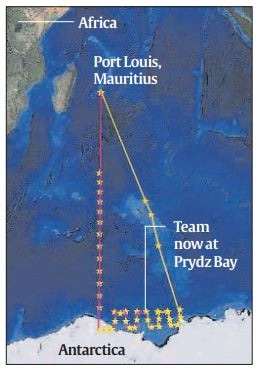
    A South African oceanographic research vessel SA Agulhas set off from Port Louise in Mauritius, on a two-month Indian Scientific Expedition to the Southern Ocean 2020. Recently the vessel was at Prydz Bay, in the coastal waters of “Bharati”, India’s third station in Antarctica.

    India’s polar mission

    • This is the 11th expedition of an Indian mission to the Southern Ocean, or Antarctic Ocean.
    • The first mission took place between January and March 2004.

    About the Southern Ocean expedition

    • The researchers from IITM Pune are collecting air and water samples from around 60 stations along the cruise track.
    • These will give valuable information on the state of the ocean and atmosphere in this remote environment and will help to understand its impacts on the climate.
    • A key objective of the mission is to quantify changes that are occurring and the impact of these changes on large-scale weather phenomenon, like the Indian monsoon, through tele-connection.

    Why study Southern Ocean?

    • We know that carbon dioxide is getting emitted into the atmosphere, and through atmospheric circulation goes to the Antarctic and Polar Regions.
    • Since the temperature is very low there, these gases are getting absorbed and converted into dissolved inorganic carbon or organic carbon, and through water masses and circulation it is coming back to tropical regions.
    • All oceans around the world are connected through the Southern Ocean, which acts as a transport agent for things like heat across all these oceans.
    • The conveyor belt that circulates heat around the world is connected through the Southern Ocean and can have a large impact on how climate is going to change due to anthropogenic forces.

    Core projects of the expedition

    • Study hydrodynamics and biogeochemistry of the Indian Ocean sector of the Southern Ocean; involves sampling seawater at different depths. This will help understand the formation of Antarctic bottom water.
    • Observations of trace gases in the atmosphere, such as halogens and dimethyl sulphur from the ocean to the atmosphere. This will help improve parameterizations that are used in global models.
    • Study of organisms called coccolithophores that have existed in the oceans for several million years; their concentrations in sediments will create a picture of past climate
    • Investigate atmospheric aerosols and their optical and radiative properties. Continuous measurements will quantify the impact on Earth’s climate.
    • Study the Southern Ocean’s impact on Indian monsoons. Look for signs in a sediment core taken from the bottom of the ocean
    • Dynamics of the food web in the Southern Ocean; important for safeguarding catch and planning sustainable fishing
  • International Space Agencies – Missions and Discoveries

    Discovery Program investigations by NASA

    NASA announced it has selected four Discovery Program investigations to develop concept studies for possible new missions.

    What are the new missions?

    • Two proposals are for trips to Venus, and one each is for Jupiter’s moon Io and Neptune’s moon Triton.
    • After the concept studies are completed in nine months, some missions ultimately may not be chosen to move forward.

    DAVINCI+

    • DAVINCI+ stands for Deep Atmosphere Venus Investigation of Noble gases, Chemistry, and Imaging Plus.
    • This will analyse Venus’s atmosphere to understand how it was formed and evolved, and if it ever had an ocean.
    • This will advance understanding of the formation of terrestrial planets.

    IVO

    • Io Volcano Observer is a proposal to explore Jupiter’s moon Io, which is extremely volcanically active.
    • This will try to find out how tidal forces shape planetary bodies.
    • The findings could further knowledge about the formation and evolution of rocky, terrestrial bodies and icy ocean worlds in the Solar System.

    TRIDENT

    This aims to explore Neptune’s icy moon, Triton, so that scientists can understand the development of habitable worlds in the Solar System.

    VERITAS

    Venus Emissivity, Radio Science, InSAR, Topography, and Spectroscopy will aim to map Venus’s surface to find out why Venus developed so differently from Earth.

  • Wildlife Conservation Efforts

    Species in news: Indian Pangolin


    The Madhya Pradesh forest department has radio-tagged an Indian Pangolin (Manis crassicaudata) for the first time.

    Pangolins

    IUCN status: Endangered

    • India is home to two species of pangolin.
    • While the Chinese Pangolin (Manis pentadactyla) is found in northeastern India, the Indian Pangolin is distributed in other parts of the country as well as Sri Lanka, Bangladesh and Pakistan.
    • Both these species are protected and are listed under the Schedule I Part I of the Wild Life (Protection) Act, 1972 and under Appendix I of the Convention on International Trade in Endangered Species (CITES).
    • Commonly known as ‘scaly anteaters’, the toothless animals are unique, a result of millions of years of evolution.
    • Pangolins evolved scales as a means of protection. When threatened by big carnivores like lions or tigers they usually curl into a ball.
    • The scales defend them against dental attacks from the predators.

    Why this radio-tagging?

    • The radio-tagging aims to know its ecology and develop an effective conservation plan for it.
    • The radio-tagging is part of a joint project by the department and non-profit, the Wildlife Conservation Trust (WCT) that also involves the species’ monitoring apart from other activities.

    Why protect Pangolins?

    • Pangolins are currently the most trafficked wildlife species in the world.
    • These Scales has now become the main cause of the pangolin’s disappearance.
    • The scales are in high demand in China, where they are used in traditional Chinese medicine.
    • Pangolin meat is also in high demand in China and Southeast Asia.
    • Consequently, pangolins have seen a rapid reduction in population globally. The projected population declines range from 50 per cent to 80 per cent across the genus.
  • International Space Agencies – Missions and Discoveries

    The ‘Pale Blue Dot’


    The Jet Propulsion Laboratory of the NASA published a new version of the image of Pale Blue Dot.

    Pale Blue Dot

    • The ‘Pale Blue Dot’ is one of the most iconic images in the history of astronomy.
    • It shows Earth as a single bright blue pixel in empty space within a strand of sun rays, some of which are scattering from and enlightening the planet.
    • The original image was taken by the Voyager 1 mission spacecraft on February 14, 1990 when it was just beyond Saturn.
    • At the behest of astronomer Carl Sagan, the cameras were turned towards Earth one final time to capture the image.
    • After this, the cameras and other instruments on the craft were turned off to ensure its longevity.

    About Voyager 1

    • Voyager 1 is a space probe launched by NASA on September 5, 1977.
    • Having operated for more than 42 years, the spacecraft still communicates with the Deep Space Network to receive routine commands and to transmit data to Earth.
    • At a distance of 148.67 AU (22.2 billion km) from Earth as of January 19, 2020 it is the most distant man-made object from Earth.
    • The probe’s objectives included flybys of Jupiter, Saturn, and Saturn’s largest moon, Titan.

    The Family Portrait of the Solar System

    • The Pale blue dot image was a part of series of 60 images designed to produce what the mission called the ‘Family Portrait of the Solar System’.
    • This sequence of camera-pointing commands returned images of six of the solar system’s planets, as well as the Sun.
  • Horticulture, Floriculture, Commercial crops, Bamboo Production – MIDH, NFSM-CC, etc.

    [pib] Nagpur Orange


    The first consignment of Nagpur oranges was flagged off to Dubai from Vashi, Navi Mumbai.

    Nagpur Orange

    • Nagpur orange is rustic and pockmarked exterior which is sweet and has juicy pulp.
    • It gives the city of Nagpur its pseudonym Orange City.
    • It oranges blossom during the Monsoon season and are ready to be harvested from the month of December.
    • The Geographical Indication was accorded to the Nagpur Orange by the registrar of GIs in India and is effective as of April 2014.

    The best breed

    • Nagpur mandarin in one of the best mandarins in the world. Production of this fruit crop in the central and western part of India is increasing every year.
    • Mrig crop (monsoon blossom), which matures in February – March, has great potential for export since arrivals of mandarin fruit in international market are less during this period.
    • In the whole region only one variety of Nagpur Mandarin is grown.
  • Foreign Policy Watch: India-Bangladesh

    Bangladesh fares better

    Content

    In the last decade, on a range of social development indicators, Bangladesh has fared better than India. So it is highly unlikely that Bangladeshis would want to leave their cherished homeland for India.

    Comparison with Bangladesh on the development indicators

    • Growth rate: This year Bangladesh’s economic growth rate has surpassed India.
    • Social development indicators: In the last decade, on a range of social development indicators, from infant mortality to immunisation, Bangladesh has fared better.
    • India lagging behind the neighbours in quality of life: Undoubtedly, since economic liberalisation, Indians have grown much richer than Bangladeshis, but in terms of quality of life our neighbour largely outshines us.
      • India trails across several (not all) composite indices from the latest Global Hunger Index to the Gender Development Index.
      • Even on the 2019 World Happiness Index, Bangladeshis score better.
      • While, technically, on the Human Development Index, Bangladesh scores marginally less, this is largely because the index merges income and non-income parameters.

    How India’s neighbour forged ahead in social development?

    • Dissolving the inequality and bridging the social and gender distances: In the case of Bangladesh, the most prominent factor has been-
      • Removing inequality: The country’s ability to dissolve inequalities through sustained investment in public services and-
      • Bridging the social distance: The bridging of social and gender distances.
    • Development in Healthcare: Till the Eighties, Indians lived longer than most South Asians.
      • But now, despite being poorer, an average Bangladeshi female child at birth can expect to live for four years more.
      • Fewer Bangladeshi children also die before their fifth birthday.
      • Community clinics: The formula for this success has been relatively simple. Since 2009, the government has constructed well-stocked “community clinics” in every third village.
      • Home delivery of medicines: For four decades, committed cadres of government health workers have delivered medicines and family planning to women in the comfort of their homes.
    • Achievement in Education: On the education front, even though India has a demographic dividend, Bangladesh has achieved a marginal advantage in youth literacy.
      • Further, across income quintiles, Bangladeshi girls have higher educational attainments than boys.
      • Free textbooks: The government provides free textbooks in the government, non-government (NGO) and madrassa-run schools promptly at the start of the academic year, without the chronic delays which plague India.
      • The greater proportion of expenditure on educations: Economist Jean Drèze has aptly described India as amongst the world champions in social underspending. In contrast, Bangladesh despite being a poorer neighbour since the Nineties has spent a greater proportion of government expenditure on education and healthcare.
      • The fruits of these sustained investments have reaped rich dividends.
    • Nutrition: On the nutrition front too, Bangladesh fares better.
      • Thirty-three per cent of Bangladeshi children are underweight compared to India’s 36 per cent as per the demographic health surveys.
      • Similarly, a greater proportion of Indian children are also stunted.
      • Further, the inequality between wealth quintiles is starker in India.
      • A few years ago, the Bangladeshi government, with the help of NGOs, hired a unique cadre of “Pushti Apas” (nutrition sisters) who went door-to-door in their social endeavours.
      • Unlike the Indian Poshan Abhiyan’s focus on vegetarian foods, they did not shy away from teaching mothers to feed growing infants a balanced diet with mashed fish, meat and eggs.
    • Sanitation: Even at the turn of the millennium, at least 80 per cent of Bangladeshi homes had toilets, even if rudimentary.
      • By 2016, 96 per cent of households and 80 per cent of schools in had proper sanitation.
      • Apart from the typical Islamic emphasis on hygiene, local governments not only provide cement rings for free to poor families but they also regularly spread messages through community group discussions, mosques, mass media and schools.
      • Local entrepreneurs have also ensured that with the innovation of plastic pans, the cheapest toilets cost less than Chinese mobile phones.
    • Women empowerment: Bangladeshi women are also increasingly assertive.
      • The 2006 World Bank Survey on Gender Norms found a growing trend of “educational hypogamy”.
      • In sharp contrast to India’s decline, Bangladeshi women also have higher labour force participation.

    Contrast

    • In comparison, India is grappling with the worst unemployment levels in 45 years and sinking economic growth rates. Government ministers should pull up their own socks, instead. Berating our neighbours with the false bogey of illegal immigrants, in light of the Citizenship Amendment Act, is nothing but an unjustifiable distraction. Instead, it would be far wiser for the Indian government to humbly learn the recipe of South Asian success to improve the lives of citizens from the impressive “Shonar Bangla”.
  • Issues related to Economic growth

    Towards a new world order

    Context

    Social inequalities and the grim problems of stark and continuing poverty are at the epicentre of the new world.

    The ugly face of capitalism and growing inequalities

    • The concentration of the health: The latest Oxfam Report presented at Davos points out that 2,153 billionaires have more wealth than 4.6 billion people.
    • Rising poverty: The emergence of billionaires and oligarchs in different parts of the world coincides with increased poverty among the already poor people, especially children.
    • Concept of stakeholder’s capitalism: These realities make observers question the tenability of stakeholder capitalism as a concept.
    • Faults in the capitalism on display in 2008: The ugliest face of this capitalism was visible during the 2007-2008 economic crisis, first in the U.S. and thereafter across the European Union.
      • At that time, it appeared as if the global economy was on the verge of collapse.

    Intensification of energy use and sustainability

    • The relation between growth and energy: One of the chief characteristics of economic development is the intensification of energy use.
      • There is an unprecedented concentration of high energy density in all economic development strategies.
    • Use of non-renewable sources: The bulk of the energy continues to be generated from non-renewable sources.
    • Developing world capturing energy-generating sources: The developed world’s, and China’s, central objective is to capture energy-generating resources from across continents and put them to use to push GDP growth to greater heights.
      • In the process, sustainability is becoming a casualty.
    • Higher waste generation: The higher the use of energy, the larger the amount of waste generated. Entropy, like time, is always unidirectional, it only goes forward.

    Disposal of e-waste

    • High energy consumption and disposal of waste: Egregious consumption of energy by the developed world has been accompanied by the disposal of residual products (‘e-waste’) on the shores of many African and Asian countries.
    • Impact on the developing world: As a result of the disposal, the poor in the developing world are, unwittingly, drawn and exposed to toxic, hazardous materials like lead, cadmium and arsenic.
      • Hence, the ‘globalisation’ phenomenon has turned out to be nothing other than the exploitation of the developing world, with most countries being treated as a source of cheap labour and critical raw material.

    Unfairness involved in the Globalisation

    • Increasing consumption in the developing world: Countries in the developed world, and China, are ferociously using up finite raw materials without care or concern for the welfare of present and future generations.
    • Bright and the dark side of the development: Certainly, there has been significant technological progress which has brought about a revolution in the fields of healthcare and communications, but there is also a dark side to this.
    • System loaded in the favour of the rich: High expenses and Intellectual Property Rights load the system further in favour of the rich.
      • Pernicious system of carbon credit: To demonstrate how unfair the system is, one can look at the pernicious plan to set up a carbon credit system.
      • Under this, countries with high energy consumption trends can simply offset their consumption patterns by purchasing carbon credits, the unutilised carbon footprint, from poor developing countries.

    Understanding the Nordic Economic Model

    • Nordic Economic Model’: It pertains to the remarkable achievements of the Scandinavian countries comprising Denmark, Finland, Iceland, Sweden, Norway, and allied territories. They also have-
      • Large public sector enterprises.
      • Extensive and generous universal welfare systems.
      • High levels of taxation.
      • And considerable state involvement in promoting and upholding welfare states.
      • Among the happiest countries: UN reports also indicate that the Nordic countries are the happiest countries in the world. The U.S., in contrast, is in 19th place.
      • The total population of the Nordic countries is estimated at almost 27 million people.
      • Among the richest countries: These nations are among the richest in the world when measured in terms of GDP per capita.

    Enlightened Global Order

    • Taking the Nordic model as a template, there are some ingredients that could be part of a new ‘enlightened global order’.
    • What does the Global Order include? These should include-
      • Effective welfare safety nets for all.
      • Corruption-free governance.
      • A fundamental right to tuition-free education including higher education.
      • And a fundamental right to good medical care.
      • Shutting of tax havens.
      • Tax structure: In Nordic countries, personal and corporate income tax rates are very high, especially on the very rich. If a just, new world order is to arise, taxes everywhere should go up.
    • Holding companies responsible: When it comes to the corporate sector, there are some new perspectives.
      • Changing the parameters of profit: In traditional business accounting, ‘bottom line’ refers to the financial year’s profit or loss earned or incurred by the company on pure financial parameters.
      • The four ‘Ps’: Following vigorous debates, a new format has emerged under which a company’s performance is measured through four ‘Ps’.
      • The first is ‘P’ for ‘profit’.
      • The second ‘P’ is for people — how the company’s actions impact not only employees but society as a whole.
      • The third ‘P’ is for the planet — are the company’s actions and plans sensitive to the environment?
      • The fourth ‘P’ is for purpose, which means the companies and individuals must develop a larger purpose than ‘business as usual’. They must ask: what is the larger purpose of the company, apart from generating profits?
      • Using performance in terms of four ‘P’s: Using big data and text analytics, a company’s performance can be measured in terms of all the four ‘P’s and a corporate entity can be thus held accountable. Market capitalisation need not be the only way to measure the value of a company.

    Conclusion

    Much work is yet to be done to uplift the global economic order, but the important point is that new tools are now emerging. What is required is a global consensus and the will to make the planet more sustainable, so that all individuals can live with justice and equality, ensuring that not a single child is hungry or seriously unwell because of poverty or lack of affordable medical help.



  • Women empowerment issues – Jobs,Reservation and education

    To help her work

    Context

    When it came to allocating funds, the budget relegates women’s economic participation to secondary importance.

    The current status of women in India

    • Lack of Equality: India continues to struggle to provide its women with equal opportunity.
    • A low score on international measures: On international measures of gender equality.
      • India scores low on women’s overall health and survival and ability to access economic opportunities.
    • Why it matters? Since the woman’s economic engagement is related to her own and her family’s well-being, the continuing decline in rural women’s labour force participation is a cause for concern, and both affects and reflects these worrying gender gaps.

    Why female labour force participation matters beyond social cause?

    • Source of economic growth: Ignoring India’s declining female labour force participation at a time of economic distress is a mistake.
      • Not just a social cause: Involving women in the economy is not a social cause — it is a source of efficiency gains and economic growth.
    • Missing out on many things: In a country where young women’s education is now at par with men’s, ignoring that half of the population isn’t participating equally in the economy means we are missing out on many things, like-
      • Innovation.
      • Entrepreneurship.
      • And productivity gains.
    • Large potential to increase in GDP: The large potential increases in GDP that could accrue to India and countries around the world, if they could only close their labour force gender gaps, are often cited.
      • 60% increase in GDP: A report by McKinsey Global Institute suggests that if women participated in the Indian economy at the level men do, annual GDP could be increased by 60 per cent above its projected GDP by 2025.
      • Underlying conclusion: The underlying conclusion is that women’s potential to contribute to GDP is huge.
      • Gain larger than any other region: The same analysis also suggested that India’s potential GDP gains through achieving economic gender parity were larger than gains in any of the other regions they studied.

    How can the state be responsive to women? 

    It can be ensured in the following two ways-

    • 1.MGNREGA-Important focus: An important focus could be a smarter policy and gender-intentional implementation.
      • A key example comes from MGNREGA, a programme whose official policy has long been to pay individual workers in their own bank accounts.
      • It is observed that this policy was typically not implemented and that women’s wages were usually being paid into the bank account of the woman’s husband.
    • Why paying wages in women’s account matters?
      • Giving women digital control of her wage:
      • This seemingly small change — giving a woman digital control of her wages — had a big impact.
      • Working women more outside their home: Women who received digital accounts plus training worked more outside their homes, not only for MGNREGA but also in private employment.
    • Higher economic engagement and lessening patriarchy
      • Importantly, women from especially conservative households reported higher economic engagement and an improved ability to move about their communities unaccompanied.
      • Lessening of patriarchal norms: Surveys conducted showed that the payment in account also began to influence restrictive patriarchal norms.
    • 2.Need to move beyond MGNREGA
      • Ease of doing business and reform in labour market reforms: Continuing to improve ease of doing business and addressing rigid labour market regulations can also draw more women into high-potential sectors.
      • Such as those supported under Assemble in India.
      • Potential in manufacturing: Rural women’s relative participation in manufacturing has grown compared to men’s, and manufacturing stands out as a promising means to pull young women, in particular, into the economy.
      • Potential in SMEs: Ensuring better support to small and medium-sized enterprises can help new businesses.

    Conclusion

    • Attune schemes to the aspiration of women: Ensuring that these programmes are attuned to the needs and aspirations of women is not expensive. But it makes a much difference.
      • Review of policy and programme: It requires a review of individual policies and programme implementation.
    • Increase the funding: The government needs to increase funding to programmes targeting women. Until then, the policy can build on the fact that pulling women into the economy isn’t just a function of budget allocations or social sector programmes. It’s also a matter of thoughtful policy design and political will.


  • Electoral Reforms In India

    Political parties to publish the entire criminal history of their candidates


    • The Supreme Court has strictly ordered political parties to publish the entire criminal history of their candidates for Assembly and Lok Sabha elections along with the reasons that goaded them to field suspected criminals over decent people.

    SC’s deadline

    • It ordered political parties to submit compliance reports with the Election Commission of India within 72 hours or risk contempt of court action.
    • The information should be published in a local as well as a national newspaper as well as the parties’ social media handles.
    • It should mandatorily be published either within 48 hours of the selection of candidates or less than two weeks before the first date for filing of nominations, whichever is earlier.
    • The judgment is applicable to parties both at Central and State levels.

    Information should be detailed

    • The published information on the criminal antecedents of a candidate should be detailed and include the nature of their offences, charges framed against him, the court concerned, case number, etc.
    • A political party should explain to the public through their published material how the “qualifications or achievements or merit” of a candidate, charged with a crime, impressed it enough to cast aside the smear of his criminal background.
    • A party would have to give reasons to the voter that it was not the candidate’s “mere winnability at the polls” which guided its decision to give him a ticket to contest elections.

    Why such a move?

    • It appeared from the last four general elections that there has been an alarming increase in the incidence of criminals in politics.
    • In 2004, 24% of the MPs had criminal cases pending against them; in 2009, that went up to 30%; in 2014 to 34%; and in 2019 as many as 43% of MPs had criminal cases pending against them, SC observed.
    • The judgment was based on a contempt petition about the general disregard shown by political parties to a 2018 Constitution Bench judgment (Public Interest Foundation v. Union of India).
    • In this judgment (2018), this court was cognizant of the increasing criminalisation of politics in India and the lack of information about such criminalisation among the citizenry”, SC observed.

    Immediate Reason

    • The immediate provocation is the finding that 46% of MPs have criminal records.
    • The number might be inflated as many politicians tend to be charged with relatively minor offences —“unlawful assembly” and “defamation”.
    • The real worry is that the current cohort of Lok Sabha MPs has the highest (29%) proportion of those with serious declared criminal cases compared to its recent predecessors.

    Why are such tainted candidates inducted by political parties?

    • Such candidates with serious records seem to do well despite their public image, largely due to their ability to finance their own elections and bring substantive resources to their respective parties.
    • Some voters tend to view such candidates through a narrow prism: of being able to represent their interests by hook or by crook.
    • Others do not seek to punish these candidates in instances where they are in contest with other candidates with similar records.

    Significance of the move

    • Either way, these unhealthy tendencies in the democratic system reflect a poor image of the nature of India’s state institutions and the quality of its elected representatives.
    • The move signified the court’s alarm at the unimpeded rise of criminals, often facing heinous charges like rape and murder, encroaching into the country’s political and electoral scenes.

    Way Forward

    • While formally, the institutions of the state are present and subject to the electoral will of the people, substantively, they are still relatively weak and lackadaisical in governance and delivery of public goods.
    • This has allowed cynical voters to elect candidates despite their dubious credentials and for their ability to work on a patronage system.
    • While judicial pronouncements on making it difficult for criminal candidates to contest are necessary, only enhanced awareness and increased democratic participation could create the right conditions for the decriminalization of politics.

Join the Community

Join us across Social Media platforms.