💥UPSC 2027,2028 Mentorship (April Batch) + Access XFactor Notes & Microthemes PDF

Archives: News

  • Indian Army Updates

    Exercise Yudh Abhyas, 2024

    Why in the News?

    • The 2024 edition of the India-U.S. Army bilateral exercise Yudh Abhyas has begun at the Mahajan field firing ranges in Rajasthan.
      • Concurrently, Phase-II of the Indian Air Force’s (IAF) largest multilateral exercise, Tarang Shakti, is underway in Jodhpur, with eight countries participating, including India.

    About Exercise Yudh Abhyas

    Details
    Type  Bilateral joint military exercise between India and the United States
    Inception Year 2004
    Frequency Annual
    Primary Objective Enhance military cooperation and joint operational capabilities, particularly focusing on counter-terrorism and counter-insurgency operations.
    Location Held alternately in India and the USA
    Earlier Edition (2023) Held at Fort Wainwright, Alaska, focusing on cold-weather operations and high-altitude warfare
    Focus
    • Counter-terrorism operations in semi-desert and desert terrains
    • Urban warfare (FIBUA – Fighting in Built-Up Areas)
    Participating Forces in 2024
    • Indian Army: 600 troops from the RAJPUT Regiment
    • US Army: 1-24 Battalion of the 11th Airborne Division, Alaska
    Tactical Drills in 2024
    • Joint planning sessions
    • Joint responses to terrorist actions
    • Combined field training exercises
    Significance 
    • Reflects the growing military partnership between India and the US
    • Enhances interoperability and strengthens strategic defence ties


    PYQ:

    [2024] Which of the following statements about the Exercise Mitra Shakti-2023 is/ are correct?

    1. This was a joint military exercise between India and Bangladesh.
    2. It commenced in Aundh (Pune).
    3. Joint response during counter-terrorism operations was a goal of this operation.
    4. Indian Air Force was a part of this exercise.

    Select the answer using the code given below:

    (a) 1, 2 and 3

    (b) 1 and 4

    (c) 1 and 4

    (d) 2, 3 and 4

  • Air Pollution

    India’s first ‘Teal Carbon’ study

    Why in the News?

    India’s first study on teal carbon was conducted at Keoladeo National Park (KNP) in Rajasthan’s Bharatpur district.

    Highlights of the Study

    • The study at KNP aimed to develop holistic solutions for climate change by understanding the potential of teal carbon in mitigating its effects.
    • It highlighted that degraded wetlands could release harmful methane and carbon dioxide into the atmosphere, further exacerbating climate challenges.
    • It suggested the use of biochar, a lightweight black residue comprising carbon and ashes.
      • This biochar can help reduce methane discharges and improve wetland conservation.
    • Specialized instruments like the LI-COR device would be required for real-time measurements of greenhouse gases to further the research.

    What is Teal Carbon?

    Details
    Definition Carbon stored in non-tidal freshwater wetlands, including in vegetation, microbial biomass, and organic matter.
    Key Sources Peatlands, freshwater swamps, natural freshwater marshes.
    Global Storage  Approximately 500.21 petagrams of carbon (PgC).
    Threats Pollution, land-use changes, water extraction, and degradation of wetlands.
    Comparison Distinct from black and brown carbon, which are produced by incomplete combustion of organic matter.
    Benefits of Teal Carbon Ecosystems
    • Greenhouse gas reduction
    • Increase in groundwater levels
    • Flood mitigation
    • Heat island reduction
    • Urban adaptation
    Conservation Importance Effective conservation of wetlands can enhance teal carbon pools, contributing to climate regulation and environmental sustainability.


    PYQ:

    [2021] What is blue carbon?​

    (a) Carbon captured by oceans and coastal ecosystems.​

    (b) Carbon sequestered in forest biomass and agricultural soils.​

    (c) Carbon contained in petroleum and natural gas.​

    (d) Carbon present in atmosphere.​

  • Innovations in Biotechnology and Medical Sciences

    PresVu: India’s First Eye Drop for Presbyopia

    Why in the News?

    Mumbai-based Entod Pharmaceuticals has announced that the Drug Controller General of India (DCGI) has approved its new eye drop, PresVu, aimed at reducing the dependency on reading glasses for individuals with presbyopia.

    What is Presbyopia?

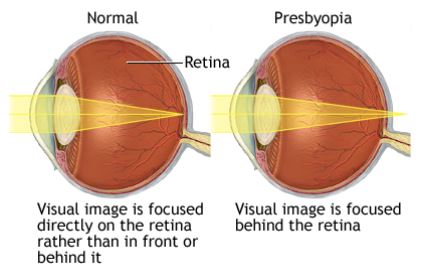
    • Presbyopia is an age-related condition where the eyes gradually lose the ability to focus on nearby objects, typically developing after the age of 40.
    • Spectacles are one of the most commonly recommended solutions for managing presbyopia.

    How does PresVu work? 

    • The active ingredient in PresVu is pilocarpine, a compound that contracts the iris muscles, controlling the size of the pupil and helping individuals focus better on nearby objects.
    • PresVu also uses an advanced dynamic buffer technology to adapt to the pH levels of tears, ensuring consistent efficacy and safety for extended use over the years.
    • However, PresVu’s effects are temporary, typically lasting between four to six hours, and it is prescription-only.
    • PresVu should not be used by individuals with iris inflammation.
    • Regular use may lead to side effects such as:
      • Itching and redness
      • Eyebrow pain
      • Muscle spasms in the eyes

    Is this a Novel Therapy?

    • Although Entod claims PresVu is novel, the main compound, pilocarpine, has been available in India for decades and is commonly used as a first-line therapy for cataracts.
    • Pilocarpine’s ability to temporarily improve the depth of focus has been explored in other countries, including the United States, where the FDA approved a pilocarpine eye drop for presbyopia in 2021.
    • In India, the government regulates the ceiling price of pilocarpine in 4% and 2% concentrations, whereas PresVu contains 1.25%.

    PYQ:

    [2018] Appropriate local community-level healthcare intervention is a prerequisite to achieve ‘Health for All’ in India. Explain.

  • Goods and Services Tax (GST)

    [pib] Recommendations during 54th meeting of GST Council

    Why in the News?

    The 54th GST Council meeting, chaired by Union Finance Minister was held recently.

    Recommendations from the 54th GST Council Meeting:

    GST Rate Changes for Goods

    Namkeens and Savory Products GST on extruded/expanded savoury products reduced from 18% to 12%; 5% GST on un-fried or uncooked snack pellets continues.
    Cancer Drugs GST on cancer drugs like Trastuzumab Deruxtecan, Osimertinib, and Durvalumab reduced from 12% to 5%.
    Metal Scrap Reverse Charge Mechanism (RCM) introduced for metal scrap supplies by unregistered persons; 2% TDS applied on B2B metal scrap supplies by registered persons.
    RMPU Air Conditioning Machines RMPU air conditioning machines for railways classified under HSN 8415, attracting a 28% GST rate.
    Car and Motorcycle Seats GST on car seats (HSN 9401) increased from 18% to 28%, aligning with the rate for motorcycle seats.

    GST Rate Changes for Services

    Life and Health Insurance Group of Ministers (GoM) to be constituted to study GST issues related to life and health insurance. Report expected by October 2024.
    Transport by Helicopters GST on passenger transport by helicopters (seat share basis) set at 5%; 18% GST continues for charter helicopter services.
    Flying Training Courses DGCA-approved flying training courses conducted by Flying Training Organizations (FTOs) will be exempt from GST.
    Preferential Location Charges Preferential Location Charges (PLC) in construction services to be taxed as composite supply.
    Affiliation Services Affiliation services provided by boards like CBSE taxable; services provided to government schools by state/central boards will be exempt.
    Import of Services by Branches Import of services by foreign airlines’ branch offices from related persons will be exempt from GST if made without consideration.

    Compliance Measures

    B2C E-invoicing Pilot project for B2C e-invoicing introduced to improve business efficiency and environmental sustainability.
    Invoice Management System (IMS) Invoice Management System to allow taxpayers to accept, reject, or keep invoices pending for claiming Input Tax Credit (ITC).
    Waiver of Interest/Penalty Special procedure to waive interest/penalty for tax demands from FY 2017-18, 2018-19, and 2019-20 under section 73 of CGST Act.
    Clarifications via Circulars Clarifications on place of supply for advertising services, ITC on demo vehicles, and place of supply for data hosting services to be issued.


    PYQ:

    [2018] Consider the following items:

    1. Cereal grains hulled

    2. Chicken eggs cooked

    3. Fish processed and canned

    4. Newspapers containing advertising material

    Which of the above items is/are exempted under GST (Goods and Services Tax)?

    (a) 1 only

    (b) 2 and 3 only

    (c) 1, 2 and 4 only

    (d) 1, 2, 3 and 4

  • Health Sector – UHC, National Health Policy, Family Planning, Health Insurance, etc.

    Policy paralysis, a weakened public health sector

    Why in the News?

    Primary care remains underdeveloped, while the private sector has seen significant growth in secondary and tertiary care.

    What are the major necessities in Public Health? 

    • Diseases of Poverty: This includes health issues predominantly affecting the poor and vulnerable populations, such as tuberculosis, malaria, undernutrition, maternal mortality, and illnesses caused by food and water-borne infections like typhoid and diarrheal diseases
      • Addressing these needs is critical not only from a health perspective but also as a matter of human rights.
    • Middle-Class Health Concerns: The second category focuses on health issues related to environmental pollution, including air and water quality, waste management, and food safety. 
      • These issues are often exacerbated by inadequate infrastructure and poor market regulations, leading to chronic illnesses and road traffic accidents.
    • Curative Care Needs: The most visible public health needs are those related to curative care, which is divided into three levels: primary, secondary, and tertiary care
      • The poor often rely on public primary health care for affordable services, while secondary care remains historically neglected. 
      • Tertiary care is primarily addressed through government schemes like the Pradhan Mantri Jan Arogya Yojana (PMJAY) under Ayushman Bharat, aimed at providing coverage for serious health issues.

    How do the private hospitals become a real beneficiary in present times? 

    • Limited Coverage: India’s health insurance primarily covers only hospitalisation expenses, leaving out outpatient and primary care services. This benefits private hospitals as they can monopolise high-cost medical treatments, while the larger uninsured population faces commercialised care at market rates.
    • Weakening of Public Health Sector: The government’s shift in focus from strengthening public sector health care to outsourcing via insurance schemes like PMJAY indicates a failure to build adequate secondary and tertiary public health services.  

    Threats to Public Healthcare:

    • Neglect of Secondary and Tertiary Care: The inadequate investment in strengthening secondary- and tertiary-level health care in the public sector, leads to a reliance on private hospitals.
    • Transformation of Primary Health Centres (PHCs) and Sub-centres: The conversion of sub-centres and PHCs into Health and Wellness Centres (HWCs) has undermined their original role in preventive and promotive health care.  
    • Loss of Trust in Public Healthcare: Due to overcrowding, poor infrastructure, and inadequate funding, public health institutions are losing credibility. Coupled with the commercial interests of private providers, this creates a dual crisis of access and quality in the healthcare system.
    • Rebranding of Health Centres: The recent renaming of HWCs as “Ayushman Arogya Mandirs” raises concerns about cultural relevance and secularism in public health institutions, especially for non-Hindi-speaking populations, further undermining trust in the system.

    Way forward: 

    • Strengthen Public Healthcare Infrastructure: Invest in enhancing secondary and tertiary care facilities in the public sector to reduce dependence on private hospitals.  
    • Integrate Health Insurance and Primary Care: Expand health insurance coverage to include outpatient and primary care services, and ensure that public health centers retain their focus on preventive and promotive care.  

    Mains PYQ:

    Q Public health system has limitation in providing universal health coverage. Do you think that private sector can help in bridging the gap? What other viable alternatives do you suggest? (UPSC IAS/2015)

  • Cyclones

    On uncommon cyclones in the Arabian Sea

    Why in the News?

    A rare August cyclone, named ‘Asna’, currently positioned off the Kutch coast is even more remarkable for having originated over land.

    Why was there a lot of excitement over Asna?

    • “Asna” is notable because it’s the first cyclone in August in the North Indian Ocean since 1981. August is typically not part of the cyclone season in this region.
    • The cyclone began as a land-born depression that intensified as it moved over the warm waters of the Arabian Sea. It formed from a rare strong low-pressure system that grew unusually powerful over land.
    • Asna’s formation is linked to the broader context of rapid warming over the Arabian Sea, influenced by climate change. The northward shift of the low-level jet stream due to warming over West Asia contributed to its development.

    Why does the North Indian Ocean have two cyclone seasons?

    The North Indian Ocean has two distinct cyclone seasons due to the unique monsoonal circulation patterns in the region:

    • Pre-monsoon season (March-May): The Arabian Sea warms rapidly during this time as the sun crosses over to the Northern Hemisphere. The Bay of Bengal is relatively warmer and begins producing atmospheric convection and rainfall. This leads to cyclogenesis in both the Arabian Sea and the Bay of Bengal.
    • Post-monsoon season (October-December): This is the northeast monsoon season for India. The Arabian Sea cools due to the strong southwesterly winds and mixing of cold subsurface waters. However, the Bay of Bengal remains favourable for cyclogenesis. The post-monsoon season is the major cyclone season in the North Indian Ocean

    How is climate change affecting the region?

    • Warming of the Indian Ocean: Climate change is amplifying the warming of the Indian Ocean, with more heat being transferred from the Pacific Ocean and Southern Ocean. This increases the overall sea surface temperature (SST), crucial for cyclone formation.
    • Monsoon and cyclones: The warming affects the monsoon patterns and has the potential to change cyclone intensity. More heat and moisture from the warming seas lead to more energy available for cyclones.
    • Impact on global ocean circulation: The warming of the Indian Ocean is also affecting global ocean currents, impacting heat uptake by the Pacific Ocean and water sinking in the North Atlantic. The Indian Ocean is playing a central role in global climate change processes.

    Way forward: 

    • Strengthening Early Warning Systems: Enhance real-time monitoring and forecasting of cyclones, particularly in the pre- and post-monsoon seasons, using satellite data and advanced models.
    • Building Climate Resilience: Implement climate adaptation strategies, especially for coastal communities, by improving infrastructure and disaster preparedness to cope with increasing cyclone intensity due to climate change.

    Mains PYQ:

    Q Discuss the meaning of colour-coded weather warnings for cyclone prone areas given by India Meteorological Department. (UPSC IAS/2022)

     

  • International Space Agencies – Missions and Discoveries

    BepiColombo Mission

    BepiColombo

    Why in the News?

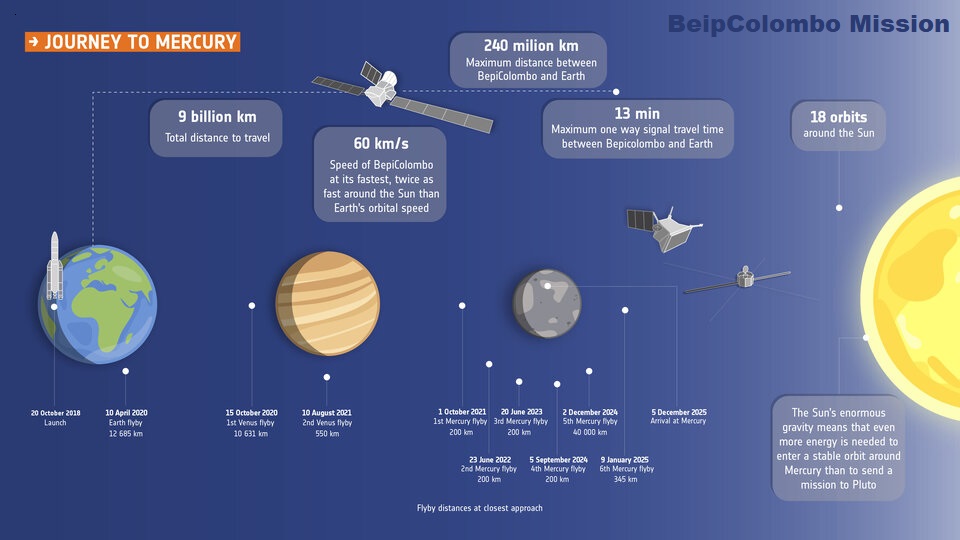
    • On Thursday, the ESA-Japan spacecraft “BepiColombo” made its closest approach to Mercury, capturing detailed images of its sunrise-lit surface and revealing the planet’s south pole.

    Highlights of the Latest Flyby:

      • BepiColombo uses flybys of Earth, Venus, and Mercury to slow down and enter orbit around Mercury. This approach gives scientists new information about Mercury’s south pole and its unusual peak ring craters, which haven’t been studied much before.

      Note: Flybys are close passes of a spacecraft near a planet or celestial body

    About BepiColombo Mission:

    Details
    Collaboration  European Space Agency (ESA) and Japan Aerospace Exploration Agency (JAXA)
    Launch Date
    • October 20, 2018
    • Expected to enter Mercury’s orbit by late 2026.
    Launch Vehicle Ariane 5 Rocket
    Objectives
    • Study Mercury’s magnetic field
    • Investigate surface composition and geology
    • Analyze Mercury’s interaction with solar wind
    • Study exosphere and geological history
    Spacecraft Components
    • ESA’s Mercury Planetary Orbiter (MPO):  Focus on surface and interior study
    • JAXA’s Mercury Magnetospheric Orbiter (MIO): Focus on magnetic field and surrounding space
    Planned Flybys
    • 6 (Flybys of Earth, Venus, and Mercury)
    • Ongoing, with 4 out of 6 Mercury flybys completed
    Craters Studied Vivaldi Crater, Stoddart Crater
    Significance Second mission ever to orbit Mercury (after NASA’s Messenger, 2004)
    Challenges
    • Mercury’s proximity to the Sun accelerates spacecraft, requiring multiple flybys to slow down
    • Thruster issues causing mission delay


    PYQ:

    [2008] What is the purpose of the US Space Agency’s Themis Mission, which was recently in the news?

    (a) To study the possibility of life on Mars.

    (b) To study the satellites of Saturn.

    (c) To study the colourful display of high latitude skies.

    (d) To build a space laboratory to study the stellar explosions.

  • International Space Agencies – Missions and Discoveries

    What is Helium and why is it used in Rockets?

    Why in the News?

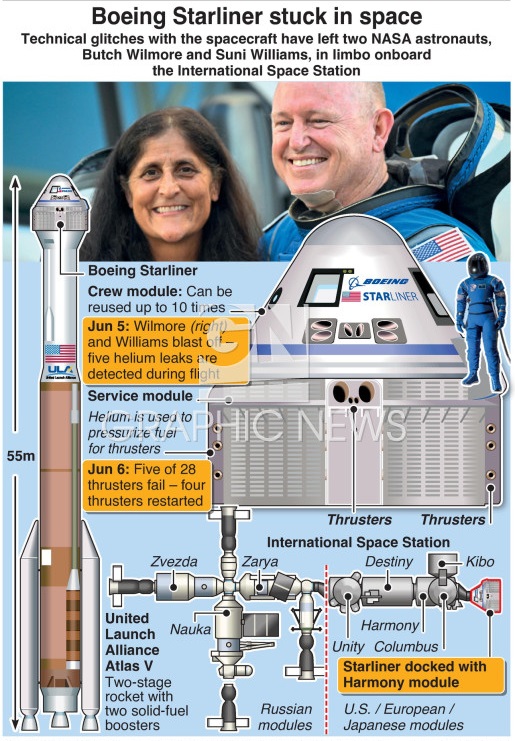
    Two NASA astronauts aboard Boeing’s Starliner will remain on the International Space Station (ISS) for an extended period due to issues with a faulty propulsion system, including helium leaks.

    helium

    About Helium

    • Helium is inert, meaning it does not react or combust when exposed to other substances.
    • This makes it ideal for pressurization and cooling systems in rockets and spacecraft.
    • With an atomic number of 2, Helium is second lightest element after hydrogen, helping to keep the rocket’s weight low, which is crucial for achieving the necessary speeds and altitudes to reach orbit.
    • It has an extremely low boiling point (-268.9°C), allowing it to stay in a gaseous state in super-cold environments, where many rocket fuels are stored.
    • Though non-toxic, helium cannot be inhaled on its own as it displaces oxygen, which is vital for human respiration.

    How is Helium used for space applications?

    • Fuel Tank Pressurization: Helium pressurizes fuel tanks, ensuring a consistent flow of fuel to the rocket’s engines, even as the fuel is burned.
    • Cooling Systems: It also plays a key role in cooling systems, particularly in environments where rocket fuel and oxidizer need to be stored at extremely low temperatures.
    • Maintaining Tank Pressure: As fuel and oxidizer are consumed, helium fills the empty space left behind, ensuring the overall pressure inside the tanks remains stable.

    Is Helium prone to leaks?

    • Helium’s small atomic size and low molecular weight make it prone to leaking through tiny gaps or seals in storage tanks and fuel systems.
    • Since helium is rare in Earth’s atmosphere, even minor leaks are easily detectable, making it a valuable tool for spotting potential faults in spacecraft fuel systems.
    • Examples of Leaks:
      • In May, hours before Boeing’s Starliner spacecraft attempted its first astronaut launch, sensors detected a small helium leak in one of its thrusters.
      • After Starliner launched in June, additional leaks were found in space, prompting NASA to return the spacecraft to Earth without its crew.

    Alternatives to Helium

    • Argon and Nitrogen: Some rocket launches have experimented with other inert gases like argon and nitrogen, which are sometimes cheaper, but helium remains the industry standard.
    • Ariane 6’s Novel System: Europe’s new Ariane 6 rocket abandoned helium in favor of a pressurization system that converts small amounts of its liquid oxygen and hydrogen into gas for pressurizing the fuel.
      • However, during Ariane 6’s debut launch, this system failed in space, adding to the global rocket industry’s pressurization challenges.

    PYQ:

    [2012] A team of scientists at Brookhaven National Laboratory included those from India created the heaviest anti-matter (anti-helium nucleus). What is/are the implication/implications of the creation of anti-matter?

    1. It will make mineral prospecting and oil exploration easier and cheaper.

    2. It will help prove the possibility of the existence of stars and galaxies made of anti-matter.

    3. It will help understand the evolution of the universe.

    Select the correct answer using the codes given below:

    (a) 1 only

    (b) 2 and 3 only

    (c) 3 only

    (d) 1, 2 and 3

  • International Space Agencies – Missions and Discoveries

    What is the Principle of Planetary Protection?

    Why in the News?

    • Planetary protection is a crucial principle in space missions that travel from Earth to other planetary bodies, such as the Moon or Mars.
      • The goal is to preserve both Earth’s biosphere and the planetary body’s environment from contamination by alien microbial life.

    About Planetary Protection:

    Details
    Definition Safeguarding Earth’s biosphere and other planetary bodies from microbial contamination during space missions.
    Objective Prevent contamination of Earth’s environment and other planets by alien microbes or Earth-origin microorganisms.
    Legal Basis Article IX of Outer Space Treaty (1967) mandates avoiding harmful contamination in space exploration.
    Importance
    • Protects integrity of scientific research on other planets.
    • Prevents potential biological threats to Earth.
    Methods of Implementation
    • Spacecraft sterilization (e.g. baking in a dry room at 120°C for 3 days).
    • Planning missions to avoid cross-contamination.
    Key Applications Missions to Mars, Moon, Europa and other celestial bodies where contamination may disrupt research or pose risks.
    Challenges Increased costs and technical demands for maintaining sterile spacecraft and environments.
    Recent Example China’s Tianwen-3 Mars sample-return mission (2028) confirmed adherence to planetary protection principles.
    Global Cooperation International space agencies follow planetary protection guidelines for sustainable and safe space exploration.
  • Land Reforms

    Enemy Properties in India 

    Why in the News?

    The Union Home Affairs Ministry has notified the auction of land in Uttar Pradesh previously owned by the family of former Pakistan President Pervez Musharraf.

    Enemy Properties in India

    Details
    Definition Assets (movable and immovable) and properties of individuals or entities from countries at war with India, vested with CEPI.
    History Concept initiated after India-Pakistan wars (1965 & 1971) and the 1962 Sino-Indian war.
    Legislation Enemy Property Act, 1968; Enemy Property (Amendment and Validation) Act, 2017.
    Custodian Custodian of Enemy Property for India (CEPI), under the Ministry of Home Affairs.
    Total such Properties  12,611 enemy properties; 12,485 from Pakistani nationals, 126 from Chinese citizens.
    States with Highest Properties Uttar Pradesh (6,255), followed by West Bengal, Delhi, Goa, Maharashtra, and Telangana.
    Movable Assets Includes shares, gold, etc. Government has earned over ₹3,400 crore from the disposal of these assets.
    Immovable Properties No immovable enemy property has been sold so far.

    Significant Court Cases

    Raja of Mahmudabad Case (2005) Supreme Court ruled in favor of the son of the Raja, allowing him to claim enemy properties. This led to multiple claims by heirs.
    2010 Ordinance In response to the 2005 judgment, the government issued an ordinance to prevent the transfer of enemy properties to legal heirs.
    2016 Amendment & Ordinance The 2016 Enemy Property (Amendment and Validation) Ordinance nullified previous court orders, ensuring enemy properties remain with the Custodian.


    PYQ:

    [2017] With reference to the ‘Prohibition of Benami Property Transactions Act, 1988 (PBPT Act)’, consider the following statements:

    1. A property transaction is not treated as a benami transaction if the owner of the property is not aware of the transaction.

    2. Properties held benami are liable for confiscation by the Government.

    3. The Act provides for three authorities for investigations but does not provide for any appellate mechanism.

    Which of the statements given above is/are correct?

    (a) 1 only

    (b) 2 only

    (c) 1 and 3 only

    (d) 2 and 3 only

Join the Community

Join us across Social Media platforms.