💥UPSC 2027,2028 Mentorship (April Batch) + Access XFactor Notes & Microthemes PDF

Archives: News

  • Swachh Bharat Mission

    Swachh Bharat Mission averted 70,000 infant deaths a year

    Why in the News?

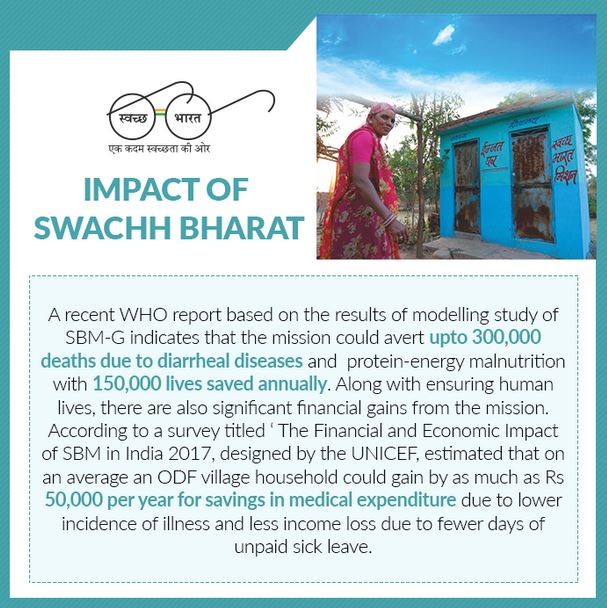
    A new study published in the peer-reviewed “journal Nature” has found that the construction of toilets under the government’s “Swachh Bharat Mission” helped prevent approximately 60,000 to 70,000 infant deaths annually between 2011 and 2020.

    Key Highlights of the Report:

    • Impact of SBM: The study revealed that districts with over 30% toilet coverage under SBM experienced reductions of 5.3 in the Infant Mortality Rate and 6.8 in the Under Five Mortality Rate per thousand live births.
      • Over 9.5 crore toilets being built across the country since 2014;
      • 564,658 villages being declared Open Defecation Free (ODF);
      • 30 States/UT’s being 100% covered with individual household latrines (as of 2019).
    • Unique Approach of SBM: The approach of combining toilet construction with substantial investments in IEC (Information, Education, and Communication) and community engagement represents a marked departure from traditional efforts in India.
    • Novel Evidence of Impact: The study provides novel evidence of reductions in infant and child mortality following SBM’s comprehensive national sanitation program, indicating its transformative role in improving public health outcomes.
    • Asian Enigma: The report touches on the “Asian Enigma,” which highlights persistently high levels of undernutrition and stunting among children despite sufficient food availability, linking it to poor sanitation practices and open defecation.
     

    Successful Journey since Inception (2014-present):

    • Phase I (2014): The SBM 1.0  aimed to make urban centers open-defecation-free and improve sanitation infrastructure, particularly toilets.
        • The mission targeted constructing household, community, and public toilets, converting insanitary latrines, and improving solid-waste management.
    • Phase II (2020): The SBM 2.0 commenced in 2020, and is expected to run till 2025-26. It aims to sustain the achievements of phase I and ensure that treatment of both liquid and solid waste is achieved through the help of technology and private sector engagement.
    • This will focus on making Indian cities garbage-free by improving scientific waste management systems.

    Way forward: 

    • Global Model for Sanitation: India’s national sanitation campaign under SBM could serve as a model for other low- and middle-income countries where sanitation remains a major public health challenge.
    • Focus on Behavioral Change: Alongside infrastructure development, efforts are needed to sustain behavioural changes to eliminate open defecation.
    • Expand Sanitation Infrastructure in Rural Areas: Prioritize extending sanitation coverage and scientific waste management systems to underserved rural regions, building on the success of SBM to reduce mortality further and improve public health.

  • Capital Markets: Challenges and Developments

    House Panel includes SEBI review in agenda, likely to summon Buch 

    Why in the News?

    The Public Accounts Committee (PAC) has included a review of SEBI’s performance, amid political controversy surrounding chairperson Madhabi Puri Buch following Hindenburg Research’s allegations.

    What are the allegations against SEBI?  

    • Conflict of Interest: SEBI chairperson Madhabi Puri Buch faces conflict of interest allegations due to her past ICICI Bank role amid Adani investigations.
    • Toxic Work Environment: Reports have surfaced from approximately 500 SEBI employees claiming that the work culture at the regulatory body is “toxic and fearful.” This has led to demands for an impartial inquiry into the alleged workplace issues and the overall management of SEBI.
    • Response to Allegations: Buch and SEBI have denied wrongdoing, asserting that all necessary disclosures and recusal norms have been followed diligently.

    Significance and Functions of the Public Accounts Committee (PAC)

    The PAC was introduced in 1921 after its first mention in the Government of India Act, 1919 (Montford Reforms).

    • Oversight Role: The PAC serves as a parliamentary watchdog for government spending, ensuring accountability and transparency in the use of public funds. It plays a crucial role in auditing the revenue and expenditure of the government.
    • Review of Regulatory Bodies: The PAC has the authority to review the performance of regulatory bodies established by the Act of Parliament.
    • Suo-motu subjects: The PAC can select subjects for in-depth examination beyond the standard audit reports, allowing it to address pressing issues that may arise in the public interest, such as the allegations against SEBI’s chairperson.
    • Advisory Role: While the PAC can make recommendations based on its findings, it does not have the authority to enforce compliance. Its recommendations are advisory in nature.

    How SEBI can improve its regulation considering recent challenges? (Way forward) 

    • Enhanced Disclosure Regulations: SEBI has already made progress with the SEBI (Listing Obligations and Disclosure Requirements) Regulations, 2023, but further refinement is needed.
      • It should focus on clarifying the scope of disclosures required from companies, particularly regarding financial irregularities and conflicts of interest.
    • Bolstering Whistleblower Protections: SEBI should strengthen its whistleblower protection framework to encourage the reporting of internal issues or malpractices, ensuring accountability and protection for informants.
    • Improving Internal Governance and Work Culture: SEBI can address concerns about a toxic work environment by conducting independent reviews of its internal governance, improving employee welfare, and fostering a transparent, positive work culture.
    • Collaborating with Global Regulatory Bodies: SEBI can work more closely with global financial regulators to align with international best practices and enhance cross-border market oversight, ensuring that India’s markets remain resilient and transparent.
  • Tourism Sector

    A tourism policy ill-suited for Jammu and Kashmir  

    Why in the News?

    Kashmir’s fragile environment faces severe damage from urbanization, commercialization, and climate change, underscoring the urgent need for a resilient and sustainable tourism model.

    Aims and Objectives of J&K Tourism Policy

    • Promoting all forms of Tourism: The policy aims to promote traditional recreational tourism as well as adventure, pilgrimage, spiritual, and health tourism. This diversification can attract a wider range of tourists.
    • Sustainable Practices: The policy emphasizes the need for sustainable tourism practices that minimize environmental degradation, conserve water, and protect biodiversity.
    • Infrastructure Development: It seeks to improve infrastructure, including hotels, roads, and recreational facilities, to accommodate the growing number of tourists.
    • Community Engagement: The policy aims to include local communities in tourism planning and decision-making processes, promoting their involvement in conservation efforts and sustainable practices.
    • Diversification of Tourism: By promoting various forms of tourism, such as eco-tourism, adventure tourism, and cultural tourism, the policy aims to reduce over-reliance on traditional tourist spots and distribute tourist footfall more evenly across the region.

    What are the effects of the new Policy? 

    Positive Impacts  Negative Impacts:
    • Increased Tourist Influx: Since the announcement of the New Tourism policy in 2020, over 40 million tourists have visited Kashmir.
    • Increase in Employment: The policy helps to generate employment of approximately 50,000 people per year, which can significantly boost the local economy.
    • Promotes Culture and Festivals: The policy promotes city-wise events and festivals with a pre-defined calendar to attract tourists.
    • Boosting Exports and Collaborations: The policy helps the handicraft industry, which was earlier limited to select destinations, to directly export and collaborate both nationally and internationally.
    • Environmental Stress: The rapid increase in tourist activities has led to significant ecological disturbances, including deforestation, waste accumulation, and pollution of water bodies.
    • Increase in Infra-strain: It also resulted in encroachment on natural habitats and increased pressure on local resources, such as water and electricity.
    • Climate Change Impact: The region is experiencing accelerated effects of climate change, including glacial depletion and erratic weather patterns, which threaten agricultural sustainability and water availability.

    Major Challenge: Fragility of the Region

    • Natural Disasters: Jammu and Kashmir is prone to natural disasters such as earthquakes, floods, and landslides, which can be exacerbated by unchecked commercialization and environmental degradation.
    • Ecological Sensitivity: The region’s delicate ecosystems are highly vulnerable to the impacts of tourism and urbanization, necessitating careful management to prevent irreversible damage.
    • Resource Depletion: The increased demand for water and energy resources is leading to the depletion of aquifers and heightened reliance on hydroelectric projects, which disrupt local aquatic ecosystems.

    Need for a Resilient Tourism Model (Way Forward)

    • Sustainable Tourism Practices: There is an urgent need to adopt a resilient and sustainable tourism model that prioritizes eco-friendly practices, waste reduction, and conservation of natural resources.
    • Community Involvement: Engaging local communities in tourism planning and decision-making is crucial for fostering sustainable practices and ensuring that the benefits of tourism are shared equitably.
    • Infrastructure Resilience: Developing infrastructure that can withstand extreme weather events and diversifying tourism offerings beyond peak seasons will help mitigate the impacts of climate change.
    • Policy Integration: A cohesive approach that integrates sustainable tourism policies with broader economic and environmental strategies is essential for preserving the region’s natural beauty while supporting local economies.
  • Tiger Conservation Efforts – Project Tiger, etc.

    National Tiger Conservation Authority (NTCA)

    Why in the News?

    The National Tiger Conservation Authority (NTCA), the apex body responsible for tiger conservation, recently issued directives urging 19 States to prioritize the relocation of villagers residing in core tiger zones.

    NTCA’s Directive:

    • According to the NTCA, 591 villages, comprising 64,801 families, reside in the core tiger zone, posing a significant concern for tiger conservation.
    • The core zone refers to the part of a tiger reserve where human activities such as hunting and forest produce collection are PROHIBITED, and tribals CANNOT reside.
      • Outside the core zone is the buffer zone, where certain activities are allowed but regulated.

    About National Tiger Conservation Authority (NTCA):

    Details
    Constitution Statutory body under MoEFCC, constituted under Wildlife (Protection) Act, 1972.
    Chairmanship Chaired by the Minister for Environment and Forests.
    Structure 8 experts in wildlife conservation and tribal welfare.
    3 MPs.
    Inspector General of Forests as ex-officio Member Secretary.
    Objectives • Provide statutory authority to Project Tiger.
    • Enhance Centre-State accountability in managing Tiger Reserves.
    • Provide parliamentary oversight.
    • Address livelihood concerns of local communities.
    Powers and Functions • Approve state-prepared tiger conservation plans.
    • Prevent unsustainable land use in Tiger Reserves.
    • Set standards for tourism and tiger conservation guidelines.
    • Conduct tiger censuses (via M-STrIPES app).
    • Support biodiversity conservation through eco-development and people’s participation.
    Key Initiative Project Tiger, a Centrally Sponsored Scheme for in-situ conservation of tigers, launched on April 1, 1973.


    PYQ:

    [2014] Consider the following statements:

    1. Animal Welfare Board of India is established under the Environment (Protection) Act, 1986.

    2. National Tiger Conservation Authority is a statutory body.

    3. National Ganga River Basin Authority is chaired by the Prime Minister.

    Which of the statements given above is/ are correct?

    (a) 1 only

    (b) 2 and 3 only

    (c) 2 only

    (d)1, 2 and 3

  • Innovations in Biotechnology and Medical Sciences

    Yellow Food Dye can improve Cancer Treatment

    Why in the News?

    Recent research reveals that FD&C Yellow 5, a common food dye, can temporarily make tissue transparent, with potential implications for cancer treatment and medical procedures.

    About Yellow Food Dye 

    • FD&C Yellow 5, also known as Tartrazine, is a widely used synthetic food dye found in various snacks, drinks, and processed foods.
    • Approved by the FDA, it is commonly used to give products a vibrant yellow color.

    How does it work?

    • The dye has the ability to make tissue transparent is based on its interaction with light, specifically through the Kramers-Kronig relations, a principle in physics.
    • It absorbs blue light, leaving only the red-orange spectrum visible.
    • This alters the refractive index of water, causing it to match the refractive index of fats and proteins in tissue.
    • When the refractive indices match, light can pass through tissue with less scattering, creating the appearance of transparency.

    Potential Medical Applications of Yellow Food Dye

    • Cancer Treatment: By making tissues transparent, FD&C Yellow 5 could enhance photodynamic and photothermal therapies, allowing laser light to reach deeper tissues and target cancerous cells more effectively.
    • Vein Visibility: Transparent tissues could help make veins more visible, aiding in procedures like venepuncture for blood draws or injections, particularly in patients with hard-to-see veins.
    • Non-invasive Diagnostics: The dye could allow doctors to visualize internal organs and structures without the need for invasive procedures like biopsies or expensive imaging technologies like CT scans or MRIs.

    PYQ:

    [2018] Consider the following statements:

    1. The Food Safety and Standards Act, 2006 replaced the Prevention of Food Adulteration Act, 1954.

    2. The Food Safety and Standards Authority of India (FSSAI) is under the charge of Director General of Health Services in the Union Ministry of Health and Family Welfare.

    Which of the statements given above is/are correct?

    (a) 1 only

    (b) 2 only

    (c) Both 1 and 2

    (d) Neither 1 nor 2

  • Climate Change Impact on India and World – International Reports, Key Observations, etc.

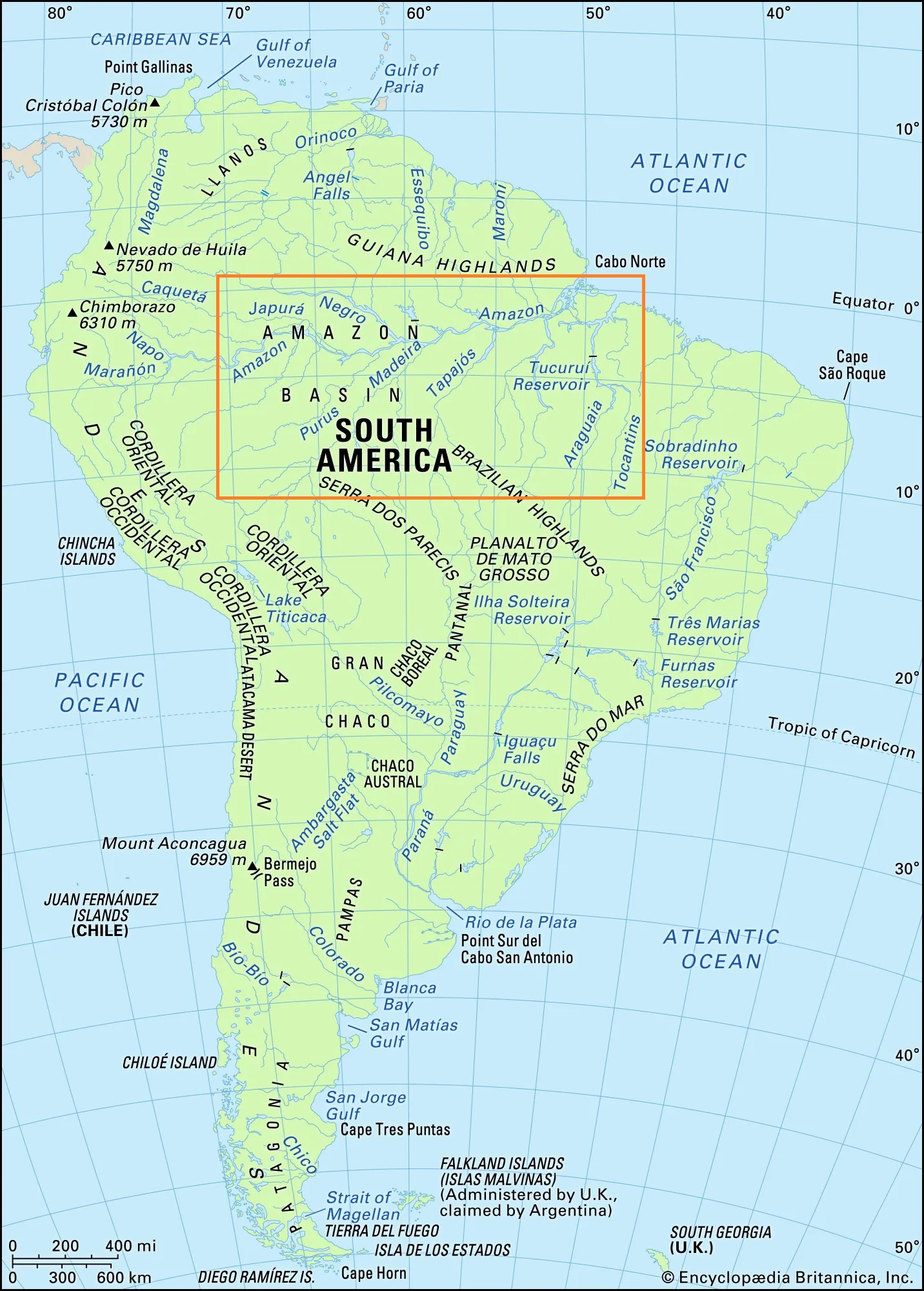
    Madeira River in Amazon’s State of Brazil

    Why in the News?

    Communities near Brazil’s Madeira River in the Amazon rainforest are experiencing record low water levels due to a severe drought.

    About Madeira River

    Details
    Formation Formed by the confluence of the Mamore and Beni rivers at Villa Bella, Bolivia.

    Meets the Amazon River 145 km east of Manaus, Brazil.

    Length 3,352 km from the upper reaches of the Mamore.
    Geographic Path Flows along the Bolivia-Brazil border for 100 km, then through Rondonia and Amazonas states in Brazil.
    Navigability Navigable by seagoing vessels for 1,300 km upstream until Cachoeira de Santo Antonio.
    Climate Varies from arid to humid, with the river overflowing during the rainy season, submerging nearby forests.
    Historical Inhabitants Traditionally inhabited by indigenous communities and mestizos; later joined by farmers and ranchers.
    Name Origin Named “Madeira” (Portuguese forWood River“), previously called the Cuyari River.


    PYQ:

    [2020] Consider the following pairs?

    River: Flows into

    1. Mekong: Andaman sea

    2. Thames: Irish Sea

    3. Volga: Caspian Sea

    4. Zambezi: Indian Ocean

    Which of the pairs above is/are correctly matched?

    (a) 1 and 2 only

    (b) 3 only

    (c) 3 and 4 only

    (d) None of the above/More than one of the above

  • Parliament – Sessions, Procedures, Motions, Committees etc

    Centre notifies the constitution of the 23rd Law Commission

    Why in the News?

    The Union government has notified the constitution of the 23rd Law Commission of India with effect from September 1.

    Terms of Reference of the 23rd Law Commission:

    • The 23rd Law Commission has been tasked with addressing similar objectives as previous Commissions, such as:
      1. Identifying outdated laws that can be repealed.
      2. Creating Standard Operating Procedures (SoP) for the periodic review of laws.
      3. Identifying laws that are not in harmony with economic needs and suggesting amendments.
    • Like its predecessors, it will examine laws in light of the DPSP and suggest improvements or new legislation to fulfill the objectives outlined in the Preamble of the Constitution.
    • PM’s call for a uniform civil code reflects the need to implement, a Directive Principle outlined in the Constitution.

    About the Law Commission of India:

    Details
    Nature Non-statutory body periodically constituted by the Government of India. It is an Executive Body.
    Establishment
    • First Commission during British India: Established in 1834 under the Charter Act of 1833, chaired by Lord Macaulay, Focused on the codification of laws like the Penal Code and Criminal Procedure Code.
    • First Commission in Independent India: Established in 1955, chaired by M. C. Setalvad, then Attorney-General of India.
    Primary Role
    • Advises the Ministry of Law and Justice on legal reform and reviews existing laws to suggest improvements and draft new legislation.
    • Recommendations are advisory and NOT binding on the government.
    Composition
    • Headed by a Chairperson (usually a retired Supreme Court Judge or Chief Justice of a High Court),
    • 4 full-time members (including a Member-Secretary), ex-officio members (Secretaries of the Departments of Legal Affairs and Legislative Department), and
    • Up to 5 part-time members.
    Tenure 3 years, with provisions for reconstitution or extension as required by the government.
    Key Functions • Undertakes legal research.
    • Review existing laws for reforms.
    • Recommends repeal of obsolete laws.
    • Suggest amendments and new legislations.
    • Examines laws that affect the poor and marginalized.
    Notable Recommendations by 22nd law Commission • Uniform Civil Code.
    • Amendments to the sedition law.
    • Repeal of obsolete laws.
    • Gender equality in personal laws.
    • Improvements in judicial administration.
    Reports Submitted Over 277 reports on various legal issues including the implementation of international conventions, compulsory registration of marriages, etc.
    Recent Activity The 22nd Law Commission is focusing on issues like the Uniform Civil Code and amendments to the sedition law (Section 124A), among other legislative reforms.


    PYQ:

    [2014] The power to increase the number of judges in the Supreme Court of India is vested in:

    (a) the President of India

    (b) the Parliament

    (c) the Chief Justice of India

    (d) the Law Commission

  • Judicial Reforms

    New Flag and Insignia of the Supreme Court of India

    Why in the News?

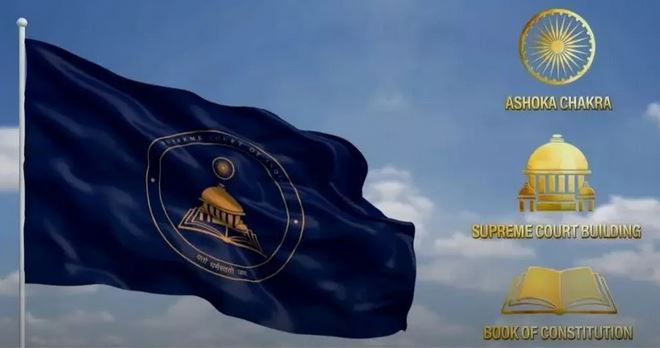
    President Droupadi Murmu unveiled the new flag and insignia of the Supreme Court of India during the National Conference of District Judiciary in New Delhi.

    About New Flag and Insignia of the Supreme Court of India:

    Details
    Designed by National Institute of Fashion Technology (NIFT), Delhi
    Flag Design Blue flag featuring three symbols:

    1. Ashoka Chakra (Symbol of India’s legal and cultural heritage)
    2. Supreme Court Building (Represents the institution of justice in India)
    3. Constitution of India (Highlights the role of the Supreme Court as the guardian of the Constitution)
    Insignia 
    • Includes the Sanskrit phrase Yato Dharmastato Jayah inscribed in Devanagari script.
    • Translates to “Where there is Dharma, there is victory“, symbolizing the Supreme Court’s dedication to justice and righteousness.
    • Occurs 13 times in the epic the Mahabharata.
    Flag Formats Available in cross table flat, single table flag, pole flag, and wooden frame versions


    PYQ:

    [2023] Consider the following statements in respect of the National Flag of India according to the Flag Code of India, 2002:

    Statement-I: One of the standard sizes of the National Flag of India is 600 mm * 400 mm.
    Statement-II: The ratio of the length to the height (width) of the Flag shall be 3:2.
    Which one of the following is correct in respect of the above statements?

    a) Both Statement-I and Statement-II are correct and Statement-II is the correct explanation for Statement-I

    b) Both Statement-I and Statement-II are correct and Statement II is not the correct explanation for Statement-I

    c) Statement-I is correct but Statement-II is incorrect

    d) Statement-I is incorrect but Statement-II is correct

  • Textile Sector – Cotton, Jute, Wool, Silk, Handloom, etc.

    [pib] VisioNxt Fashion Forecasting Initiative

    Why in the News?

    The Union Ministry of Textiles has launched India’s first fashion forecasting initiative ‘VisioNxt’.

    About VisioNxt Initiative

    Details
    Launched By National Institute of Fashion Technology (NIFT) in collaboration with the Ministry of Textiles, Government of India.
    Objective To provide India-specific fashion trend insights and reduce dependence on global forecasting agencies.
    Significance India’s first initiative to integrate Artificial Intelligence (AI) and Emotional Intelligence (EI) to forecast fashion trends.
    Key Features
    • Delivers localized fashion trend insights tailored for Indian designers, manufacturers, and retailers.
    • Provides forecasts reflecting India’s cultural diversity and socio-economic nuances.
    • Designed to support the Indian fashion and retail market with consumer-focused trend data.
    AI Model Used “DeepVision” – AI-based model that decodes Indian fashion patterns, analyzing attributes like style, color, and regional influences.
    Accessibility Bilingual resources (Hindi and English) through a web portal, making the insights accessible to a broader range of stakeholders in the Indian fashion industry.
    Goal To empower Indian fashion professionals with India-specific data, reducing reliance on international forecasting systems.


    PYQ:

    [2019] What makes the Indian society unique in sustaining its culture? Discuss.

  • J&K – The issues around the state

    Article 370, Article 35A, and J&K’s Statehood

    Why in the News?

    Ahead of assembly elections, many political parties are vowing for restoration of Article 370, Article 35A and Statehood in their manifestoes.

    About Articles 370 and 35(A) of the Indian Constitution

    [1] Article 370: 

    Description
    Provision Granted special autonomous status to the state of Jammu and Kashmir.
    Nature Initially intended as a temporary provision, subject to eventual change or abrogation.
    Powers of State Allowed J&K to have its own Constitution and autonomy over internal matters except defense, foreign affairs, finance, and communications.
    Presidential Order President of India could extend or modify the application of Indian laws to J&K with the concurrence of the state government.
    Autonomy Details Provides a degree of autonomy to the state and permits the state to give some special privileges to its “permanent residents”.
    Emergency Provisions Emergency provisions are not applicable to the state on the grounds of “internal disturbance” without the concurrence of the State.
    State Boundaries Name and boundaries of the State cannot be altered without the consent of its legislature.
    Separate Institutions State has its own constitution, a separate flag, and a separate penal code (Ranbir Penal Code).
    Assembly Duration Duration of the state’s Assembly is 6 years, unlike five in the rest of India.
    Parliamentary Jurisdiction
    • Indian Parliament can pass laws regarding J&K in the matters of defense, external affairs, and communication only.
    • Any other law formed by Union will only be applicable in J&K by presidential order if it concurs with the state assembly.
    Abolishment Condition President may, by public notification, declare that this Article shall cease to be operative but only on the recommendation of the Constituent Assembly of the State.
    Abolishment In August 5, 2019, through a Presidential Order and a resolution passed by the Indian Parliament.
    Impact of Abrogation
    • J&K’s special status was revoked.
    • It was reorganized into two Union Territories: Jammu and Kashmir, and Ladakh.


    [2] Article 35A:  

    Description
    Provision Empowers the J&K legislature to define permanent residents of the state and provide them with special rights and privileges.
    Insertion Added to the Constitution through a Presidential Order in 1954.
    Permanent Residents Defined by the state as those who were state subjects on May 14, 1954, or have been residents for 10 years, and lawfully acquired immovable property.
    Special Rights Permanent residents were given exclusive rights to employment under the state government, acquisition of immovable property in the state, and scholarships.
    Constitutionality Debate Debated on the grounds that it was not added via an amendment procedure.
    Criticism Criticized for being discriminatory and creating a sense of separation from the rest of India.
    Revocation Along with Article 370, Article 35A was effectively nullified on August 5, 2019.


    PYQ:

    [2016] To what extent is Article 370 of the Indian Constitution, bearing marginal note “Temporary provision with respect to the State of Jammu and Kashmir”, temporary? Discuss The future prospects of this provision in the context of Indian polity.

Join the Community

Join us across Social Media platforms.