💥UPSC 2027,2028 Mentorship (April Batch) + Access XFactor Notes & Microthemes PDF

Archives: News

  • Modern Indian History-Events and Personalities

    299th Birth Anniversary of Ahilyabai Holkar (1725 –1795)

    Why in the News?

    The 299th birth anniversary of legendary ruler Ahilyabai Holkar was celebrated on 30th May.

    About Ahilyabai Holkar

    Details
    Birth May 31, 1725; Chaundi village, Ahmednagar district, Maharashtra, India
    Family Daughter of Mankoji Shinde, a respected Dhangar family member
    Education Despite societal norms, her father taught her to read and write
    Marriage Married Khande Rao Holkar, son of Malhar Rao Holkar, in 1733
    Rise to Prominence Impressed by her piety and character, Khande Rao married Ahilyabai on the Peshwa’s advice
    Leadership Took control of Malwa after her husband’s death in 1754
    Reign Ruled Malwa from 1767 to 1795
    Capital Maheshwar became the capital of Malwa under her rule
    Administrative Prowess Known for her administrative acumen
    Military Strategies Personally led armies into battle and defended Malwa against intruders
    Cultural Contributions Established Maheshwar as the seat of the Holkar Dynasty
    Temple Restorations Led the reconstruction of Kashi Vishwanath Temple and built Somnath Temple
    Economic Development Promoted the production of Maheshwari Sarees and fostered trade and commerce
    Social Inclusion Advocated for marginalised communities and mainstreamed their inclusion
    Legacy Revered as “The Philosopher Queen” by historians like John Keay


  • RBI Notifications

    Surge in Indian Companies’ External Commercial Borrowings (ECBs)

    Why in the News?

    Indian companies “external commercial borrowings” nearly doubled in FY24, reaching $49.2 billion, according to RBI data.

    Key Statistics:

    • Disbursements: ECB disbursements stood at $38.4 billion in FY24, a significant increase from $23.8 billion in FY23, underscoring the growing reliance on overseas markets for funding.
    • Domestic Pressure: High interest rates in the domestic system have led to increased pressure, prompting companies to explore ECBs as a viable funding alternative.

    External Commercial Borrowing (ECBs) in India:

    Details
    Definition Loans provided by non-resident lenders in foreign currency to Indian borrowers.
    Usage Widely used by Indian corporations and PSUs to access foreign funds.
    Instruments Covered Commercial bank loans, buyers’ credit, suppliers’ credit, securitised instruments (floating rate notes, fixed-rate bonds), credit from official export credit agencies, and commercial borrowings from multilateral financial institutions.
    Regulation Monitored and regulated by the Department of Economic Affairs (DEA) under the Ministry of Finance, Government of India, along with the Reserve Bank of India.
    Contribution Contributed between 20 and 35% of total capital flows into India in 2012.
    Recent Changes RBI raised ECB limit for infrastructure finance companies from 50% to 75% of owned funds.
    Guideline Changes RBI allowed all eligible borrowers to raise ECB up to USD 750 million per financial year under the automatic route (2019).
    Utilisation of Funds 25% of ECB can be used to repay rupee debt; 75% should be allocated for new projects.
    Regulatory Framework Governed by the Foreign Exchange Management Act, 1999.
    Routes for Raising ECBs Automatic Route and Approval Route.

    1. Automatic Route: Cases examined by AD (Authorized Dealer) Category-I Banks.
    2. Approval Route: Borrowers submit requests to RBI through their AD banks for examination.
    Maturity Period ECBs can only be raised for a specific period known as the Minimum Average Maturity Period (MAMP).
    Advantages Offered
    • ECBs offer the opportunity to secure substantial funding.
    • These funds typically come with longer-term repayment options.
    • Interest rates on ECBs are generally lower compared to domestic borrowing rates.
    • ECBs are denominated in foreign currencies, providing corporations with access to foreign currency to fulfil import needs such as machinery procurement.


    PYQ:

    [2019] Consider the following statements :

    1. Most of India’s external debt is owed by governmental entities.
    2. All of India’s external debt is denominated in US dollars.

    Which of the statements given above is/are correct?

    (a) 1 only

    (b) 2 only

    (c) Both 1 and 2

    (d) Neither 1 nor 2

  • Health Sector – UHC, National Health Policy, Family Planning, Health Insurance, etc.

    NIMHANS bags WHO’s Nelson Mandela Award for Health Promotion for 2024

    Why in the News?

    • The National Institute of Mental Health and Neuro Sciences (NIMHANS), Bengaluru, India’s premier mental health institution, has been honoured with the Nelson Mandela Award” for Health Promotion by the World Health Organization (WHO) for 2024.

    About National Institute of Mental Health and Neuro-Sciences (NIMHANS)

    Details
    Location Bangalore, India
    Affiliation Autonomous institute under the Ministry of Health and Family Welfare, Government of India
    Ranking Ranked 4th best medical institute in India by the National Institutional Ranking Framework (NIRF)”
    History
    • Founded in 1847 as the Bangalore Lunatic Asylum.
    • Renamed as the Mental Hospital in 1925.
    • Amalgamated with the All India Institute of Mental Health (AIIMH) in 1974 to form NIMHANS.
    • Conferred with deemed university status by the University Grants Commission in 1994.
    • Declared an Institute of National Importance by an act of parliament in 2012.
    Governance
    • Operates with academic autonomy under the “Societies Registration Act”.
    • Prioritises service, manpower development, and research in mental health and neurosciences.
    • A multidisciplinary integrated approach was adopted for translating research results into practice.
    Funding Receives resources for academic and research activities from national and international funding organisations.
    Outreach
    • Engages in mental health outreach initiatives including critiquing mental health reports and collaborating with government agencies for training and counseling.
    • Known for diagnosing and treating various mental health conditions including depression and neurobiological disorders.


    Back2Basics: Nelson Mandela Award for Health Promotion

    Aspect Details
    Establishment Year 1995
    Presented by World Health Organization (WHO)
    Purpose Recognizing outstanding contributions and achievements in health promotion worldwide
    Namesake Nelson Mandela, former President of South Africa
    Criteria for Recognition
    • Innovative approaches
    • Sustainable Impact
    • Dedication to health equity and social justice
    Recipients Individuals, organisations, institutions, or communities
    Selection Process
    • Based on significant strides in health promotion
    • Consideration of efforts in disease prevention and well-being improvement, especially among disadvantaged populations
    Presentation
    • Occurs during special ceremonies or events
    • Often coincides with key health promotion initiatives or milestones
    Significance
    • Symbolises recognition and encouragement for ongoing efforts in health promotion
    • Highlights the importance of collective action and collaboration in addressing health challenges and achieving public health and sustainable development goals


    PYQ:

    [2021] We can never obtain peace in the outer world until and unless we obtain peace within ourselves.

  • Judicial Pendency

    Blaming court vacation for pendency misses the real problem

    Why in the news?

    A casual remark from a member of the Prime Minister’s Economic Advisory Council has reignited the debate on judges’ working hours and vacations.

    Reports on Case Pendencies:

    According to the “India Justice Report”, as of June 2020, cases remain pending for an average of three years in subordinate courts and five years in high courts, highlighting the extensive backlog.

    Issues of unfilled vacancies and lack of infrastructure/ Present challenges:

    • Overburdened Judiciary: Judges and courts are overburdened with excessive government litigation, new legislation adding to the workload, and the rising tide of litigation across various domains.
    • Infrastructure Deficits: Shortages in courtrooms and support staff, with national averages showing a 26% deficit in support staff. Insufficient infrastructure hampers the smooth processing of cases.
    • Quality Deficits: Uneven proficiency in language and legal knowledge among lawyers and judges contribute to procedural delays and suboptimal outcomes. Lengthy pleadings, paper books, and judgments further exacerbate the problem.
    • Vacancy Crisis: Many courts, including high courts and lower courts, face a significant shortage of judges, with vacancies averaging around 30% in high courts and 22% in subordinate courts. Some states, like Bihar and Meghalaya, have vacancies exceeding 30% for over three years.
      • Lack of administrative support and outdated procedures impede the efficient management of cases and court operations.

    What can be done?

    • Address Vacancies: Expedite the appointment process for vacant judicial positions and strive to achieve full complement in courts to alleviate workload pressures.
      • Set higher standards for judicial appointments and legal practice to ensure competence and proficiency among legal professionals.
      • Establish Permanent Administrative Secretariats (PAS) led by qualified court managers to assist judges in case management and administrative tasks.
    • Invest in Infrastructure: Build more courtrooms, hire additional support staff, and invest in technology to streamline court processes and enhance efficiency.
      • Allocate adequate resources to the judiciary to improve infrastructure, enhance administrative capabilities, and ramp up efficiency in justice delivery.
    • Prioritize Judicial Reform: Undertake comprehensive judicial reforms to address systemic issues, streamline processes, and enhance access to justice for all citizens.
      • Implement specialized courts, pre-trial mediation, and other alternative dispute resolution mechanisms to expedite case resolution and reduce backlog.

    Mains PYQ:

    Q Critically examine the Supreme Court’s judgement on ‘National Judicial Appointments Commission Act, 2014’ with reference to appointment of judges of higher judiciary in India. (UPSC IAS/2017)

  • Wildlife Conservation Efforts

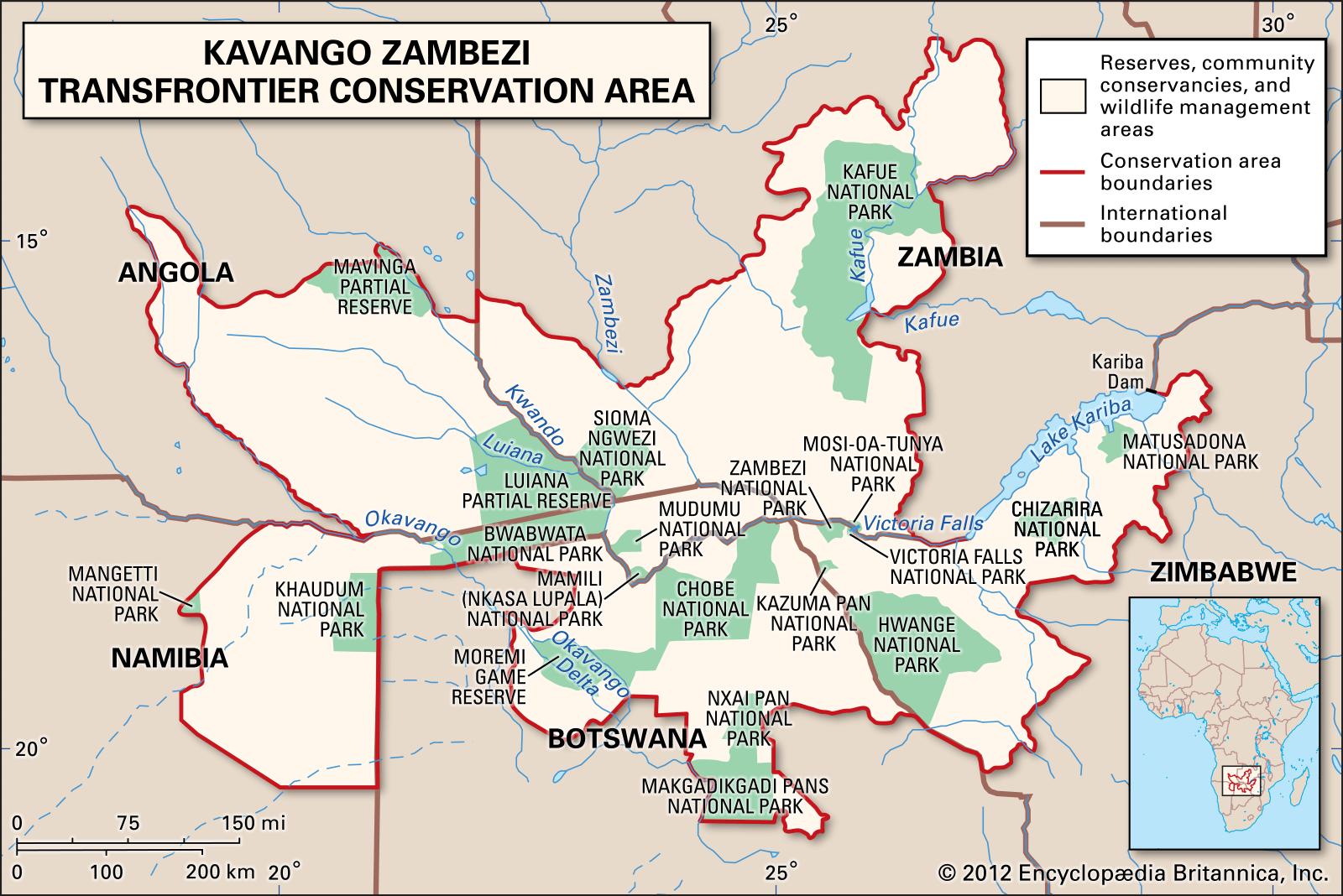
    KAZA Summit 2024: Delegates renew calls to leave CITES

    Why in the news?

    At the KAZA 2024 Summit in Livingstone, Zambia, delegates reiterated the urge for member states to withdraw from CITES because they seek approval to trade their plentiful ivory and wildlife items.

    About the Convention on International Trade in Endangered Species of Wild Fauna and Flora (CITES):

    • It is an international agreement adopted in 1973 (entered into force in 1975) between governments.
    • Aim: To ensure that international trade in wild animals and plants does not threaten their survival.
    • Headquarters: Geneva, Switzerland.
    • Although CITES is legally binding on the Parties – in other words, they have to implement the Convention–it does not take the place of national laws.
    • Representatives of CITES nations meet every two to three years at a Conference of the Parties (COP) to review progress and adjust the lists of protected species, which are grouped into three categories with different levels of protection:
      • Appendix I: Includes the world’s most endangered plants and animals, such as tigers and gorillas. International commercial trade in these species, or even parts of them, is completely banned, except in rare cases such as scientific research.
      • Appendix II: Contains species like corals that are not yet threatened with extinction, but which could become threatened if unlimited trade were allowed. Also included are “look-alike” species that closely resemble those already on the list for conservation reasons. Plants and animals in this category can be traded internationally, but there are strict rules.
      • Appendix III: Species whose trade is only regulated within a specific country can be placed on Appendix III if that country requires cooperation from other nations to help prevent exploitation.

    What is Kavango-Zambezi Trans-Frontier Conservation Area (KAZA-TFCA)?

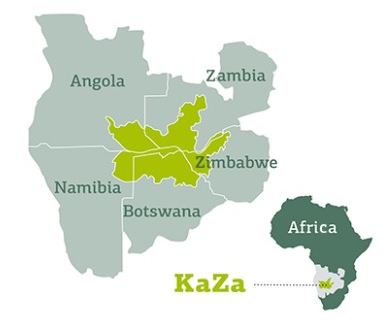
    • The Kavango-Zambezi Trans-Frontier Conservation Area (KAZA-TFCA) spans 520,000 square kilometers. It covers parts of five southern African nations. These nations are Angola, Botswana, Namibia, Zambia, and Zimbabwe.
    • The area is centered around the Okavango and Zambezi river basins. The combined elephant population in these nations represents over two-thirds of Africa’s total, estimated at around 450,000.
    • Botswana has the largest elephant population within the region, with 132,000 elephants. Zimbabwe follows with 100,000 elephants.

    Key Objectives of KAZA 2024 Summit :

    • Conservation: Promote the sustainable management and conservation of wildlife across the five member states: Angola, Botswana, Namibia, Zambia, and Zimbabwe.
    • Economic Benefit: To explore ways to monetize abundant wildlife resources, particularly elephants, to fund conservation efforts and benefit local economies.

    Dominant Issues:

    • At the 19th meeting of the CITES conference in Panama in 2022, KAZA states and five other southern African countries advocated for opening up trade in ivory and elephant products.
    • Southern African countries, including those in the KAZA region, argue that their large elephant populations contribute to habitat loss and human-wildlife conflict.
    • Despite repeated requests, CITES delegates rejected the proposal, leading to frustration among African countries.
    • Ten countries, including KAZA states and others like Eswatini, Lesotho, Mozambique, South Africa, and Tanzania, declared a dispute with CITES. They criticized CITES for straying from its founding principles and adopting ideologies over science-based conservation strategies.

    Way forward:

    • Lobbying for Change: Advocacy for a more equitable and science-based approach to wildlife trade regulations within international frameworks like CITES.
    • Regional Cooperation: Enhance collaboration among member states to develop joint conservation strategies and share best practices for managing human-wildlife conflicts.
    • Diversification of Revenue Streams: Explore alternative sources of funding for conservation efforts, such as ecotourism, carbon credits, and sustainable agriculture.

    Mains PYQ:

    Q How does biodiversity vary in India? How is the Biological Diversity Act, 2002 helpful in the conservation of flora and fauna? (250 Words, 15 Marks) (UPSC IAS/2018)

  • Tobacco: The Silent Killer

    The Tobacco Epidemic in India

    Why in the News?

    Tobacco is a leading preventable cause of disease which affects nearly 26 crore Indians and 60 lakh industry workers, posing significant health risks.

    Reports on Tobacco Consumption in India

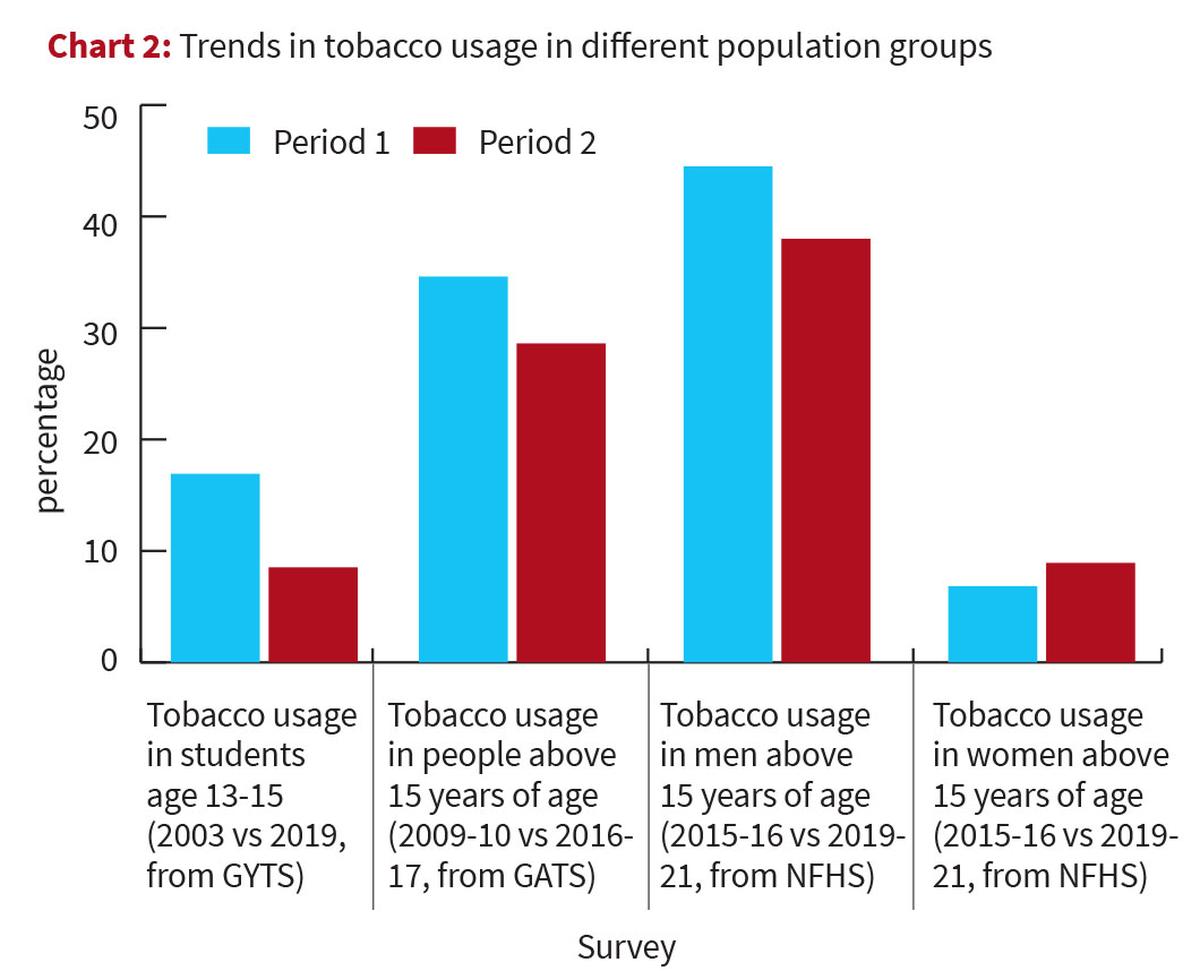
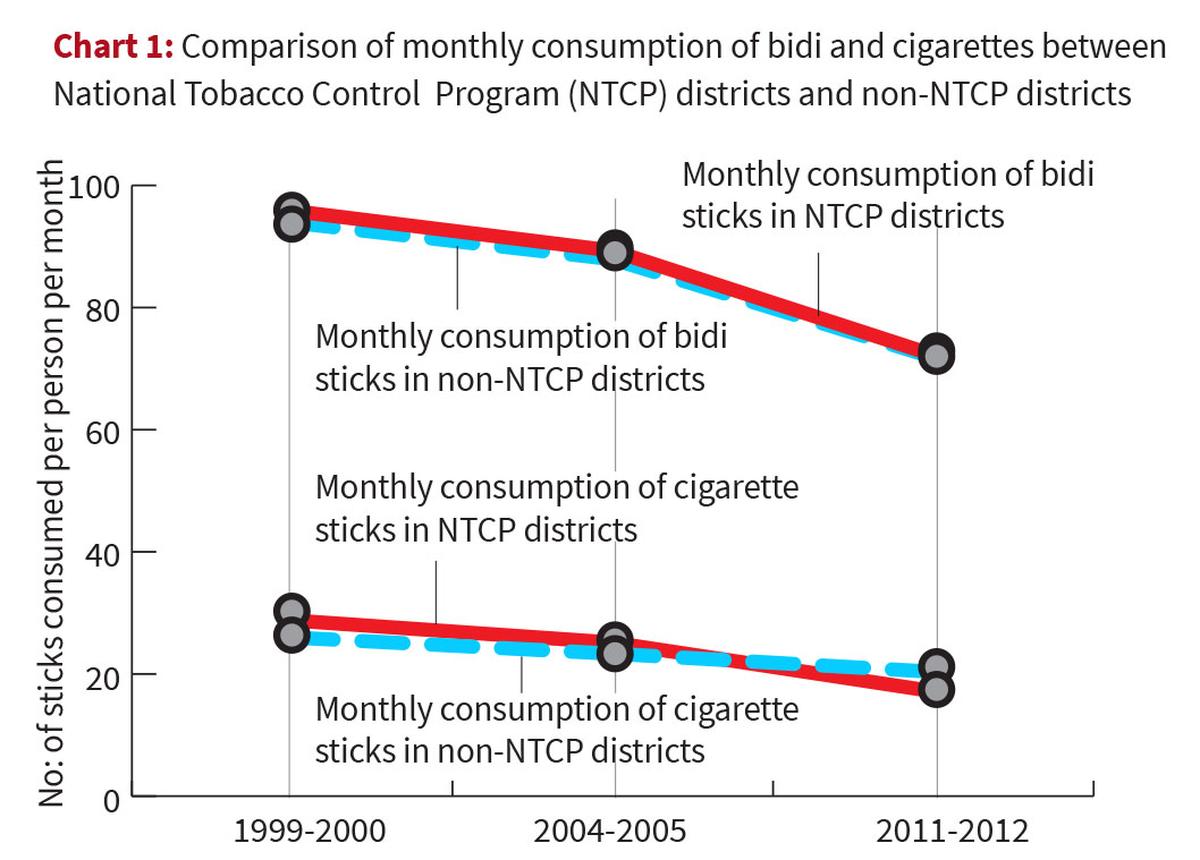
    • According to the Global Adult Tobacco Survey (GATS), there is a general decline in tobacco use, except for an increase in women between 2015-2016 and 2019-2021. (above 15 years)
    • According to the Global Youth Tobacco Survey (GYTS), tobacco use among students aged 13-15 years indicates a reduction in tobacco use in this demographic.
    • The National Family Health Survey (NFHS), which captures data on tobacco use in people above 15 years of age, aligns with the GATS findings, showing a decrease in tobacco use except among women.

    What is the WHO Framework Convention on Tobacco Control (FCTC)?

    • The WHO Framework Convention on Tobacco Control (FCTC) is an international treaty adopted by the World Health Organization (WHO) in 2003. It is a legally binding treaty.
    • It means that countries that have ratified it are obligated to implement the measures outlined in the convention within their national jurisdictions.
    • It addresses the global health risks associated with tobacco use and provides a comprehensive framework for governments and organizations to implement effective tobacco control policies and strategies.

    Challenges in India: Lobbying by the Tobacco Industry

    • The tobacco industry exerts substantial influence on policy-making to maintain low tax rates and evade stricter regulations.
    • Government Engagement: Both in-service and retired government officials often engage with the tobacco industry. Example: A retired Indian Administrative Services officer joined the board of Godfrey Phillips as an independent director.
    • Government Stake: The Central government holds a 7.8% stake in ITC Ltd., India’s largest tobacco company.
    • Tax Exemptions:  Continuous exemptions of cess on bidis and smaller tobacco manufacturers. Persistent extensions of these exemptions despite the harmful effects of tobacco.

    Tax Measures and Lobbying

    • Current Tax Burden:  Cigarettes 51%, Bidis 22%, Smokeless Tobacco Products (SLTs) 64%
    • FCTC Recommendation: At least 75% tax on tobacco products.
    • Challenges at affordability level: Low taxes relative to income growth have kept tobacco products affordable, with cigarettes and SLTs becoming more affordable over the past decade due to the transition to the Goods and Services Tax (GST).
    • Thus, India’s score has worsened since 2021, indicating increased interference by the tobacco industry in governance.

    Initiatives taken by the Government:

    • Cigarette and Other Tobacco Products Act (COTPA) 2003: It regulates the advertisement, promotion, and sponsorship of tobacco products, prohibits smoking in public places, mandates pictorial health warnings on tobacco product packaging, and sets rules for the sale of tobacco products to minors.
    • Awareness on Media: India is the first country in the world to implement the larger steps through implementing warnings on OTT platform content when actors are seen using tobacco products.
    • Awareness of Product: India has implemented prominent and graphic pictorial health warnings on tobacco product packaging.

    Challenges in Implementation

    • Poor Enforcement: Existing measures are not strictly implemented, leading to widespread non-compliance, especially among smokeless tobacco products (SLTs).
    • Indirect Advertisements: Surrogate advertisements (e.g., using elaichi to promote tobacco brands) circumvent direct advertising bans, undermining control efforts.
    • Inadequate Fines: Penalties for violations of COTPA regulations have not been updated since 2003, making them ineffective deterrents.

    Way forward:

    • Update COTPA Fines and Penalties: Revise and significantly increase fines for violations of COTPA regulations to create a stronger deterrent.
    • Strengthen Border and Market Surveillance: Improve customs and market surveillance to combat smuggling and illicit trade of tobacco products.

    Mains question for practice:

    Q Discuss the various measures undertaken by the Indian government to control tobacco consumption. Evaluate the effectiveness of these measures and suggest improvements. 15M


    Tobacco Board of India

      • The Tobacco Board is a statutory body established under the Ministry of Commerce and Industry.
      • Hq: Guntur, Andhra Pradesh.
    • Functions:
      • To regulate the production and curing of Virginia tobacco by improving the yields and quality of tobacco.
      • To facilitate the sale of tobacco through e-auctions, undertaking various grower welfare measures and export promotion of tobacco.
  • Terrorism and Challenges Related To It

    40 Years since Operation Blue Star

    Why in the News?

    June 1, the day Punjab votes in the last phase of the Lok Sabha election, happens to be the anniversary of Operation Blue Star” which has influenced the recent history and politics of the state.

    Operation Blue Star

    • Operation Blue Star was a military operation carried out by the Indian Army in June 1984 to remove  Khalistani group-based militants who were hiding inside the Golden Temple complex in Amritsar, Punjab.
    • The militants, led by Jarnail Singh Bhindranwale, had fortified the temple complex and were advocating for an independent Sikh state called Khalistan.
    • The operation aimed to flush out the militants from the Golden Temple complex and restore law and order in the region.
    • However, it resulted in significant casualties and damage to the sacred shrine.
    • The operation began on June 1, 1984, and lasted for 10 days

    The operation was highly controversial and led to widespread outrage among Sikhs, both in India and abroad. It also had political repercussions, including the assassination of Prime Minister Indira Gandhi by her bodyguards later that year, which sparked anti-Sikh riots across India.

    What is the Khalistan movement?

    • The Khalistan movement is a Sikh separatist movement aiming to establish a sovereign state called Khalistan (Land of the Khalsa) in the Punjab region of India and Pakistan.

    Factors Contributing to Khalistan’s Rise:

    • Partition of India (1947): The division of Punjab and the loss of Sikh holy sites in Pakistan led to a sense of displacement and marginalisation among Sikhs.
    • Linguistic Reorganization of States (1966): The creation of a Sikh-majority Punjab but with reduced territorial size and economic potential further fueled the desire for greater autonomy and cultural rights.
    • Anandpur Sahib Resolution (1973): The demand for greater autonomy and cultural rights for Punjab was seen as a secessionist threat by the central government, leading to increased tensions.
    • External Support: The involvement of external forces, such as Pakistan, which have supported and funded some Khalistani groups for their strategic interests, has also played a significant role in the movement’s persistence.

    PYQ:

    [2016] Has the formation of linguistic states strengthened the cause of Indian unity?

  • Defence Sector – DPP, Missions, Schemes, Security Forces, etc.

    K-9 Vajra Howitzers and Su-30 MKI Fighter Aircraft Engines                                  

    Why in the news?

    Several critical ‘Make in India’ defence projects, including acquisitions of K-9 Vajra self-propelled howitzers and Su-30 MKI fighter aircraft engines, are pending final approval from the Centre post-elections.

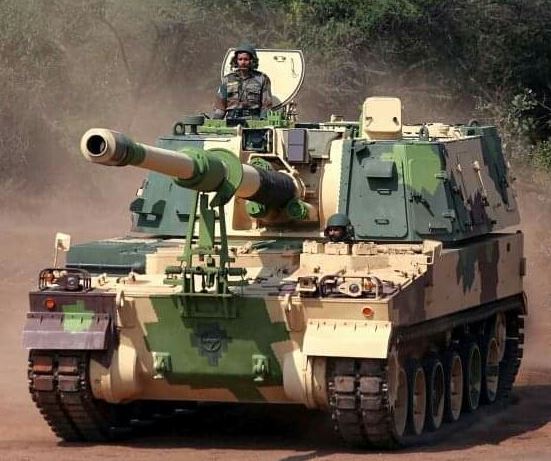
    About K-9 Vajra Self-Propelled Howitzers:

    • It is a self-propelled howitzer.
    • Technology: It incorporates technology transferred from South Korean defence major Hanwha Defense based on its K9 Thunder.
    • Development: The K9 gun has been developed under the ‘Buy Global’ programme of the Defence Procurement Procedure (DPP) where foreign companies are allowed to participate.
    • Features: The platform boasts all-welded steel armour protection. Initially intended for desert use, it has been deployed in mountainous regions due to the India-China standoff.
    • Winterisation: To ensure optimal performance in extreme cold conditions, the Army procured winterisation kits for the regiment deployed in mountainous areas.

    About Su-30MKI:

      • The Sukhoi Su-30MKI is a two-seater, twinjet multirole air superiority fighter. It is built under license by India’s Hindustan Aeronautics Limited (HAL).
    • Design: 
      • It was designed by Russia’s Sukhoi Corporation beginning in 1995 and built under licence by India’s Hindustan Aeronautics Limited (HAL).
      • The first squadron was inducted into the Indian Air Force (IAF) in 2002.
    • Characteristics:
      • It is a heavy, all-weather, long-range fighter with a highly integrated twin-finned airframe.
      • The construction materials include titanium and high-strength Aluminium alloy.

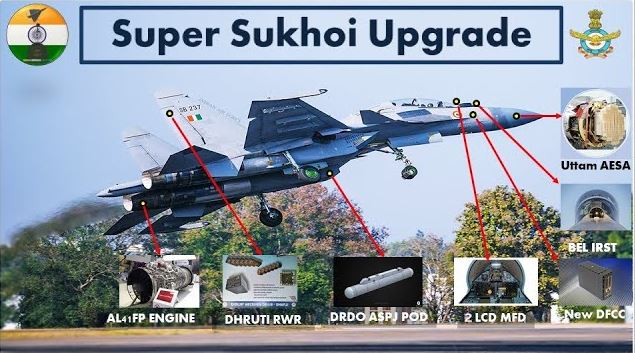
    Engine Upgrade:

    India’s “Super Sukhoi” Program aims to enhance the performance and longevity of AL-31F engines, addressing long-standing engine failure issues and deficiencies.


    PYQ:

    [2016] Which one of the following is the best description of ‘INS Astradharini’, that was in the news recently?

    (a) Amphibious warfare ship
    (b) Nuclear-powered submarine
    (c) Torpedo launch and recovery vessel
    (d) Nuclear-powered aircraft carrier

  • ISRO Missions and Discoveries

    Agnibaan Sub Orbital Technology Demonstrator (SOrTeD)

    Why in the News?

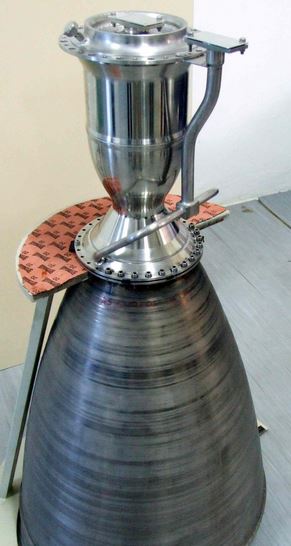
    Agnikul Cosmos Private Limited, a space start-up from Chennai, made history by launching the world’s first rocket with a single-piece 3D-printed engine, named Agnibaan Sub Orbital Technology Demonstrator (SOrTeD), from Sriharikota.

    About 3D Printed PS4 Engine

    • The PS4 engine, which forms the uppermost stage of the Polar Satellite Launch Vehicle (PSLV), comprises two Earth-storable liquid engines.
    • It uses a bipropellant combination of nitrogen tetroxide as the oxidizer and monomethyl hydrazine as the fuel, both developed by ISRO’s Liquid Propulsion Systems Centre.
    • This same engine is employed in the Reaction Control System (RCS) of the first stage (PS1) of PSLV.
    • ISRO redesigned the PS4 engine for production using 3D printing technology.
    • The technology helped ISRO bring down the number of parts in the engine from 14 to a single piece.
    • ISRO was able to eliminate 19 weld joints and saved 97% of raw material.
    • It also reduced the overall production time by 60%.

    What is Agnibaan SOrTeD (Suborbital Tech Demonstrator)?

    • Agnibaan SOrTeD is a single-stage launch vehicle powered by Agnikul’s patented Agnilet semi-cryogenic engine.
    • In contrast to traditional sounding rockets, Agnibaan SOrTeD’s vertical take-off and precise trajectory enable orchestrated manoeuvres during flight.

    PYQ:

    [2018] With reference to India’s satellite launch vehicles, consider the following statements:

    1. PSLVs launch the satellites useful for Earth resources monitoring whereas GSLVs are designed mainly to launch communication satellites.
    2. Satellites launched by PSLV appear to remain permanently fixed in the same position in the sky, as viewed from a particular location on Earth.
    3. GSLV Mk III is a four-staged launch vehicle with the first and third stages using solid rocket motors; and the second and fourth stages using liquid rocket engines.

    Which of the statements given above is/are correct?

    (a) 1 only
    (b) 2 and 3
    (c) 1 and 2
    (d) 3 only

  • Health Sector – UHC, National Health Policy, Family Planning, Health Insurance, etc.

    [pib] India Hosts Digital Health Side Event at World Health Assembly

    Why in the News?

    • India hosted a side event on Digital Health during the 77th World Health Assembly.The event saw participation from Quad countries (Australia, Japan, and the United States of America) and delegates from over 100 countries.

    Key Highlights of the 7th WHA:

    • Transformative Role: India highlighted digital health’s role in ensuring equitable and accessible healthcare services, contributing to Universal Health Coverage and SDG 3.
    • India’s Advancements: WHA noted India’s success in implementing digital public infrastructure at scale, including Aadhaar for digital identities, Unified Payments Interface (UPI) for financial transactions, and Co-WIN for health service delivery during the pandemic.
    • Transition to UWIN: Co-WIN is being transformed into UWIN for the National Immunization Programme, facilitating immunization records for millions of newborns and mothers, as well as Anganwadi and school health records.
    • Ayushman Bharat Digital Mission (ABDM): India highlighted efforts under ABDM to create a robust national digital health ecosystem, with over 618 million Unique Health IDs (ABHA IDs) generated, 268,000 registered health facilities, and 350,000 healthcare professionals enlisted.
    • National Health Claims Exchange (NHCX): GoI is launching NHCX as part of ABDM to transform the insurance payments ecosystem, enabling real-time settlements with auto adjudication of claims through public-private partnerships leveraging digital public infrastructure.

    About World Health Assembly (WHA):

    Details
    Establishment Established in 1948 as the decision-making body of the World Health Organization (WHO)
    Frequency Typically meets annually in Geneva, Switzerland
    Membership Includes all 194 member states of the WHO, as well as certain international organizations as observers
    Role and Functions
    • Setting Health Policies
    • Adoption of Resolutions
    • Reviewing Reports
    • Collaboration and Partnerships
    Decision-Making Process Decisions made by a simple majority vote of member states present and voting
    Themes and Agendas Each session focuses on specific global health priorities, addressing a wide range of health topics
    Notable Achievements Development and adoption of international health instruments and initiatives, including:

    • International Health Regulations (IHR),
    • Framework Convention on Tobacco Control (FCTC),
    • Global Vaccine Action Plan (GVAP), and
    • Global Strategy for Women’s, Children’s, and Adolescents’ Health.
    Challenges Resource constraints, geopolitical tensions, need for greater inclusivity and transparency in decision-making


    PYQ:

    [2016] ‘Doctors Without Borders (Medecins Sans Frontieres)’, often in the news, is

    (a) A division of World Health Organization.

    (b) A non-governmental international organization.

    (c) An inter-governmental agency sponsored by European Union.

    (d) A specialized agency of the United Nations.

Join the Community

Join us across Social Media platforms.