💥UPSC 2026, 2027, 2028 UAP Mentorship (March Batch) + Access XFactor Notes & Microthemes PDF

Archives: News

  • International Space Agencies – Missions and Discoveries

    Interplanetary Dust damage NASA’s Juno Mission  

    Juno

    Introduction

    • Juno, a spacecraft launched by NASA in 2011, embarked on a mission to unravel the secrets of Jupiter and its moons.
    • En route to Jupiter, Juno encountered fast-moving dust particles, resulting in significant damage to its solar panels.

    About NASA’s Juno Mission

    Description
    Launch Year 2011
    Mission Objective Study Jupiter, the largest planet in the solar system, to gain insights into the origin and evolution of Earth.
    Focus Areas
    1. Investigate Jupiter’s atmosphere composition and isotopic ratios.
    2. Study Jupiter’s magnetic field and its interaction with the atmosphere, leading to aurora formation.
    3. Explore Jupiter’s structure, atmosphere, and interior to understand early solar system conditions.
    Earth Insights
    • Juno mission’s advanced instruments include the Microwave Radiometer, which measures atmospheric temperature and water content.
    • By comparing Jupiter’s composition with Earth’s, scientists infer similarities and differences in planetary origins.
    • Understanding the magnetic field and auroras on Jupiter contributes to knowledge about Earth’s own magnetic field and auroras.
    • Studying Jupiter’s structure provides clues about early solar system conditions and Earth’s evolutionary processes.

    Dusts in Interplanetary Space

    • Calculating Dust Flux: Scientists harnessed Juno’s data to estimate the flux of dust particles encountered between 1 and 5 Astronomical Units (AU), shedding light on the density and distribution of interplanetary dust.
    • Exploring Dust Sources: Analysis suggested Mars’s moons, Deimos and Phobos, as potential sources of interplanetary dust, offering tantalizing clues to unraveling the enigmatic origins of these celestial particles.

    How Martian Moons, Deimos and Phobos produce this Dust?

    • Micrometeorite Impacts: Micrometeorites, tiny yet potent dust particles, bombard Mars’s moons, creating ephemeral clouds of dust upon impact due to the absence of atmospheres.
    • Escape into Space: Deimos and Phobos, characterized by low gravity, facilitate the escape of dust particles into space, contributing to the formation of a dusty ring around Mars.

    Insights from Observations

    • Gravitational Dynamics: This models incorporated gravitational effects, lunar shapes, and dust particle velocities, offering a comprehensive understanding of the dust dynamics within the Martian system.
    • Validation through Future Missions: Prospective missions to Deimos and Phobos hold the promise of validating the recent findings, shedding further light on the dusty realms of these enigmatic moons.
  • Water Management – Institutional Reforms, Conservation Efforts, etc.

    Water (Prevention and Control of Pollution) Amendment Bill, 2024

    Introduction

    • The Water (Prevention and Control of Pollution) Amendment Bill, 2024 was tabled in the Rajya Sabha on February 5, 2024, aiming to amend the Water (Prevention and Control of Pollution) Act, 1974.
    • This legislation, instrumental in establishing central and state pollution control boards (CPCB and SPCBs), undergoes significant modifications under the proposed Bill, primarily concerning penalties and regulatory mechanisms.

    About Water (Prevention and Control of Pollution) Act, 1974

    Description
    Objective To prevent and control water pollution and maintain or restore the wholesomeness of water resources
    Applicability Applies to the entire territory of India, including streams, rivers, lakes, inland water bodies, subterranean waters, and territorial waters of the country
    Establishments Establishes Central Pollution Control Board (CPCB) at the central level and State Pollution Control Boards (SPCBs) at the state level
    Standards and Regulations Empowers Pollution Control Boards to prescribe standards for the discharge of pollutants and quality of water for various purposes
    Consent Mechanism Requires industries and establishments to obtain prior consent from Pollution Control Boards before discharging pollutants into water bodies
    Penalties and Enforcement Specifies penalties for contravention, including fines and imprisonment; authorizes officers to inspect premises, take samples, and issue directives for compliance


    Key Amendments Proposed:

    [A] Consent Exemptions for Establishing Industries

    • Prior Consent Requirement: Currently, the Act mandates obtaining consent from SPCBs for setting up industries or treatment plants likely to discharge sewage into water bodies.
    • Bill Provisions: The Bill empowers the central government, in consultation with the CPCB, to exempt certain industrial categories from seeking consent. It also authorizes the central government to issue guidelines for the grant, refusal, or cancellation of such consent.
    • Penalties: Violating the consent requirement or tampering with monitoring devices incurs penalties ranging from Rs 10,000 to Rs 15 lakh.

    [B] Chairman of State Board

    • Nomination Process: While the Act vests state governments with the authority to nominate SPCB chairpersons, the Bill introduces central government-prescribed nomination procedures and terms of service.

    [C] Discharge of Polluting Matter

    • Regulatory Measures: The SPCBs can issue directives to halt activities leading to the discharge of harmful substances into water bodies.
    • Penalties: Contraventions against pollution standards attract penalties ranging from Rs 10,000 to Rs 15 lakh, replacing the previous imprisonment provisions.
    • Amended Provisions: The Bill replaces imprisonment with penalties between Rs 10,000 and Rs 15 lakh for unspecified offences under the Act.

    [D] Adjudication Mechanism

    • Appointment of Officers: It allows the central government to designate adjudication officers, with appeals against their decisions to be lodged before the National Green Tribunal.
    • Penalty Utilization: Fines collected are directed to the Environment Protection Fund established under the Environment (Protection) Act, 1986.

    [E] Cognizance of Offences

    • Expanded Scope: The Bill extends the entities empowered to file complaints to include adjudication officers, alongside CPCB and SPCB.
    • Penalization: Heads of departments are subject to penalties equal to one month’s basic salary if their departments violate the Act, reinforcing accountability within government bodies.

    Challenges with the Bill

    • Lack of Oversight: Granting exemptions for certain industrial categories from seeking consent may lead to increased pollution levels if not properly regulated.
    • Risk of Unchecked Discharge: Lack of oversight could result in unchecked discharge of pollutants into water bodies, compromising water quality and public health.
    • Centralized Nomination Process: Central government-prescribed nomination procedures for the appointment of State Pollution Control Board (SPCB) chairpersons may undermine the autonomy of state governments.
    • Reduced Deterrence: Replacing imprisonment provisions with penalties for contraventions against pollution standards may reduce the deterrence effect.
    • Questionable Adjudication Process: Allowing the central government to designate adjudication officers may raise questions about the impartiality and independence of the adjudication process.
    • Potential Administrative Inefficiencies: Extending the entities empowered to file complaints may lead to overlapping jurisdictions and administrative inefficiencies, resulting in delays and bureaucratic hurdles.

    Way Forward

    • Enhanced Regulation: Implement stringent monitoring and regulatory mechanisms to ensure compliance with pollution standards and prevent unauthorized discharge of pollutants into water bodies.
    • Stakeholder Consultation: Conduct extensive consultations with environmental experts, industry representatives, and civil society organizations to address concerns and refine the proposed amendments.
    • Capacity Building: Provide training and capacity-building programs for Pollution Control Boards to enhance their skills in enforcing environmental regulations effectively.
    • Transparency and Accountability: Ensure transparency in the exemption process and establish accountability mechanisms to uphold the integrity of regulatory decisions.
    • Public Awareness: Conduct public awareness campaigns to educate industries and the general public about the importance of water conservation and pollution prevention measures.
  • Port Infrastructure and Shipping Industry – Sagarmala Project, SDC, CEZ, etc.

    Book Review: How India ignored its Aqua-Geography of Histories

    coast

    Introduction

    • India’s coastal geography, often overshadowed in educational curricula, holds profound historical and cultural significance.
    • While India’s connection with its southern seas is acknowledged, the broader implications of its maritime heritage remain underexplored.

    Irony of India’s Maritime Geography

    • Distance from the Sea: While some might remember that India is bound by sea all along the south, the connections with the sea do not consciously register — for a great many people even today, the sea is a very distant object.
    • Impact of Natural Events: It may perhaps impinge on the consciousness a little more when there are reports of cyclones or storms (or the tsunami that hit some years ago in 2004), but the expanse of the sea, the links with the oceans, and the historical and geographical connections are typically rather hazy.

    Historical Perspectives on Indian Geography

    • School Definition: Moreover, children are mostly taught about only two parts of India — the plains to the north, and the peninsula to the south.
    • Sanskrit Texts: But historically, India was defined slightly differently. In early Indian Sanskrit texts, the subcontinent is seen as divided into five major regions
    1. Madhyadesa (middle country),
    2. Udicya or Uttarapatha (northern India),
    3. Pracya (eastern India),
    4. Dakshinapatha (Deccan) and
    5. Aparanta (western India)
    • Different Interpretations: The term Dakshinapatha came to be used in two ways: the entire peninsula, or more commonly, a more limited area from the Narmada to the Tungabhadra and Krishna rivers. To the south of this lay the Dravidadesa or Tamilakam.
    • Imperial Gazetteer’s Definition: On the other hand, as defined in the Imperial Gazetteer, the ‘Deccan’ has also been understood as referring to the entire landmass south of the Vindhya mountains and the great Gangetic plain, and so it can be taken to mean the entire peninsular region of India.

    Geographical Features of the Indian Subcontinent

    • Demarcated Regions: Within the peninsula itself are five clearly demarcated regions — the Western Ghats skirting the Arabian Sea, the northern Deccan plateau, the eastern plateau, the Eastern Ghats towards the Bay of Bengal and the coastal strip between the ghats on either side and the sea itself.
    • Plateau Considerations: While studies have traditionally tended to focus on only the western part of the plateau as the ‘Deccan’, it is to be remembered that the plateau region covers much of the northern peninsula.
    • Extent of Ghats: Furthermore, the ghats bordering it extend almost down to Kanyakumari. The western coastal strip is generally narrow, being indented and segmented by spurs from the Western Ghats or by small rivers flowing to the sea from the hills.
    • Eastern Ghats Description: The Eastern Ghats are less continuous, with a wider and more fertile coastal strip, containing, as it does, the deltaic plains of the two major river systems of the Deccan plateau, the Krishna and Godavari.

    Coastal Divisions and Sub-regions

    • Distinct Names for Ghats: On both coasts, the ghats are given different names in various regions. So, for example, the Western Ghats up to Karnataka are also often referred to as the Sahyadri ranges.
    • Plateau Description: What is normally understood as the Deccan plateau proper is a broad quadrangle covering most of the present-day Maharashtra state, with a topography typical of plateau land.
    • Transition to Plains: As it begins to give way to the plains in Andhra Pradesh and Karnataka (the south-eastern and southern plateaus), the geography becomes rougher and rockier, and is interspersed with forest land and riverine stretches.
    • Coastal Strip Description: The western coastal strip is a narrow strip of land, very rarely extending more than eighty kilometres inwards from the sea. This strip is particularly narrow from the Tapi river to Goa, after which it widens a little on the Karnataka coast and finally includes all of present-day Kerala, for the ghats here form the demarcation between Kerala and modern Tamil Nadu.

    Coastal Features and Subdivisions

    [A] Western Coast

    • Technical Divisions: This coast is technically divided into three parts, excluding Gujarat. The northernmost section is called the Konkan, which is further subdivided into two segments — the northern one running approximately from the Tapi to Chaul (modern Revdanda) and the southern from Chaul to Goa.
    • Coastal Divisions: South of Goa is the Canara coast, stretching till Mount Eli (Ezhimala) in modern-day Kerala, known to early travellers as Mount Dilli or Dely. The Malabar coast begins here and extends to Kanyakumari, the tip of the peninsula.
    • Maritime Economic Considerations: However, in maritime economic terms, it is rather difficult to limit oneself only to this western stretch of the coastline, for connections extend northwards into the Gujarat coast and eastwards across the ghats into the plateau region.

    [B] Eastern Coast

    • Ease of Access: The Eastern Ghats, as mentioned earlier, are not continuous, which means that access to the interior from the coast (or vice versa) is much easier.
    • Water Bodies: The eastern coastal strip features deltas and various other water bodies, including, in the northernmost part of the region, Chilika Lake in modern-day Odisha; Kolleru Lake between the Krishna and the Godavari deltas, approximately in the centre of the coast; and Pulicat Lake, which lies towards the southern edge of the Deccan region.
    • Historical Significance: All these lakes used to be hubs for trade and fishing, with Pulicat also being the heart of a thriving weaving industry through most of India’s medieval era.

    Port Dynamics

    • Abundance of Ports: Both coasts are, of course, marked by innumerable ports. A brief survey of these ports is enough to indicate the ever-present climatic and natural hazards they faced.
    • Western Coast Considerations: The physical geography of the west coast, given its numerous indentations, offers ample natural shelters all along its length, with the two largest natural harbours being Mumbai (Bombay) and Goa.
    • Importance of Smaller Ports: However, throughout the medieval and early modern period (approximately the eighth to eighteenth century), the harbours of ports like Mangalore, Honawar, Bhatkal or Chaul were no less important in terms of the traffic they handled.

    Challenges and Hazards on the Coasts

    • Monsoon Challenges: Western ports face closures during the southwest monsoon, with shifting sandbanks and shoals posing dangers to ships.
    • Lack of Natural Harbours: The east coast lacks natural harbors, with ports vulnerable to silting near river deltas.
    • Unstable Delta Mouths: Delta mouths are prone to instability, potentially rendering established channels unusable after monsoon cycles.
    • Cyclone Vulnerability: The Bay of Bengal presents cyclone risks due to its enclosed nature, leading to higher possibilities of circular winds compared to the west coast.
    • Open Roads for Ports: East coast ports operate as open roads, requiring ships to navigate high surf, rolling waters, and random winds while loading and unloading goods.

    Trade Routes and Cultural Exchange

    • Port Competitiveness: Ports rely on their immediate interior areas, often shared by multiple ports, for sustenance and trade.
    • Political and Economic Factors: Port prosperity hinges on political stability and economic conditions in their vicinity.
    • Trade Patterns: West coast ports primarily trade with the Arabian Sea littoral, while east coast ports engage in trade across the Bay of Bengal.
    • Cross-Coastal Trading: Merchants from both coasts trade extensively across the Indian Ocean world, transcending geographical boundaries.
    • Established Routes: Trade routes across the Indian Ocean have existed for centuries, with changes in rulership but continuity in trade activities.

    Conclusion

    • The multitude of functional ports, diverse trade patterns, and established trade routes highlight the resilience and adaptability of India’s maritime regions.
    • As India continues to navigate its maritime heritage into the future, understanding and appreciating its maritime geography remain crucial for fostering sustainable development and cultural preservation.
  • Foreign Policy Watch: India-Iran

    Visa-Free Travel to Iran for Indians

    visa

    Introduction

    • The recent announcement of visa-free travel to Iran for Indian passport holders has garnered significant attention, marking a significant milestone in bilateral travel facilitation.

    Iran’s Visa-Free Regime for India

    • Tourism Purposes: Indian citizens holding ordinary passports can avail of the visa-free travel privilege but must intend to visit Iran solely for tourism purposes.
    • Mode of Entry: The relaxation applies exclusively to travelers entering Iran via air routes.
    • Maximum Duration: Travelers under this scheme can stay in Iran for a maximum of 15 days during each visit.
    • Re-entry Provisions: Re-entry into Iran is permissible after a gap of six months from the previous departure.
    • Extended Stay or Multiple Entries: Individuals desiring prolonged stays, frequent visits within six months, or seeking alternative visa categories must obtain requisite visas from the Iranian diplomatic missions in India.

    Visa Trends for Indians beyond Iran

    • Current Visa-Free Countries: 27 countries now offer visa-free entry to Indian citizens, with recent additions including Kenya, Indonesia, Malaysia, Thailand, and Sri Lanka.
    • Global Outreach: Beyond immediate neighbors, countries like Barbados, Bhutan, Maldives, Mauritius, and Nepal offer visa-free entry to Indian citizens, reflecting evolving global travel dynamics.
    • Popular Destinations for Indian Citizens: The top five travel destinations are the UAE, the USA, Saudi Arabia, Singapore, and Thailand, with many visiting as part of the diaspora.
  • Poverty Eradication – Definition, Debates, etc.

    Population growth committee: Move beyond Emergency-era fears


    India's population has overtaken China, but historic problems continue to  plague the nation - BusinessToday - Issue Date: May 28, 2023

    Central Idea:

    The article discusses India’s demographic transformation and the need for proactive policies to address opportunities and challenges arising from changing population dynamics.

    Key Highlights:

    • India’s population growth trends are being studied to align policies with the Viksit Bharat goal by 2047.
    • Fertility rates have decreased, and family planning is becoming more prevalent.
    • The workforce is changing, with an increase in middle-aged workers projected by 2047.
    • Dependency burdens vary between states, requiring tailored policy interventions.
    • There is an opportunity to enhance women’s workforce participation by providing better childcare support.
    • Lessons from China’s one-child policy caution against drastic measures.

    Key Challenges:

    • Varying demographic trends between states pose challenges for policy formulation.
    • Ensuring equitable workforce development and gender-inclusive policies.
    • Addressing the needs of the growing elderly population while maintaining economic sustainability.
    • Avoiding the negative consequences of drastic population control measures.

    Key Terms:

    • Demographic transformation
    • Fertility rates
    • Family planning
    • Workforce dynamics
    • Dependency burdens
    • Women’s workforce participation
    • One-child policy

    Key Phrases:

    • Changing population dynamics
    • Tailored policy interventions
    • Workforce inclusivity
    • Sustainable economic development
    • Lessons learned

    Key Quotes:

    • “Today, we are studying India’s population growth to align policies with the Viksit Bharat goal by 2047.”
    • “There’s an opportunity to enhance women’s workforce participation by providing better childcare support.”
    • “Lessons from China’s one-child policy caution against drastic measures.”

    Anecdotes/Case Studies:

    • The comparison with China’s one-child policy illustrates the importance of cautious policy measures in managing population dynamics.

    Key Statements:

    • “India’s population growth trends are being studied to align policies with the Viksit Bharat goal by 2047.”
    • “There’s an opportunity to enhance women’s workforce participation by providing better childcare support.”

    Key Examples and References:

    • Comparative data on workforce demographics and dependency burdens between states provide concrete examples of demographic variations.
    • The reference to China’s one-child policy serves as a cautionary example.

    Key Facts/Data:

    • India’s fertility rates have decreased significantly in recent years.
    • Dependency burdens vary significantly between states.
    • Women’s workforce participation rates could be improved with better childcare support.

    Critical Analysis:

    The article provides a balanced assessment of India’s demographic challenges and opportunities, cautioning against drastic measures while advocating for proactive policies.

    Way Forward:

    • Tailored policy interventions should address varying demographic trends between states.
    • Gender-inclusive policies and better childcare support can enhance women’s workforce participation.
    • Lessons from global best practices should inform India’s approach to demographic management.
    • Caution should be exercised to avoid the negative consequences of drastic population control measures.
  • Economic Indicators and Various Reports On It- GDP, FD, EODB, WIR etc

    Wages of inequality: The income-growth gap

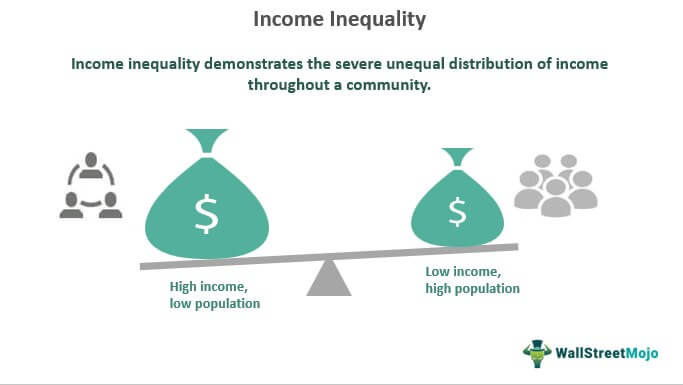
    Income Inequality - Definition, Explained, Causes, Examples

    Central Idea:

    The article analyzes the recent interim Union budget in India, focusing on its macroeconomic policy objectives and the challenges facing the Indian economy. It discusses the government’s efforts to reduce the debt-to-GDP ratio and stimulate GDP growth, particularly by prioritizing capital expenditure over revenue expenditure. However, it questions the effectiveness of these objectives in addressing India’s developmental challenges, especially regarding employment generation and structural transformation.

    Key Highlights:

    • The budget presents a fiscally conservative approach with minimal increases in total expenditure, emphasizing capital expenditure over revenue expenditure.
    • The government aims to reduce the debt-to-GDP ratio, primarily by limiting expenditure growth rates and increasing capital expenditure.
    • The article raises concerns about the adequacy of these objectives in addressing India’s developmental challenges, particularly the need for employment generation and structural transformation.
    • It highlights the stagnation in regular wages and the dominance of self-employment, indicating a worsening income distribution and weak improvements in welfare.

    Key Challenges:

    • Balancing fiscal consolidation with the need for increased government expenditure to address developmental challenges.
    • Promoting structural transformation to shift workers from self-employment to modern sectors.
    • Achieving inclusive growth that benefits all sections of society, especially marginalized groups.
    • Enhancing the effectiveness of government spending to stimulate economic growth and employment generation.

    Key Terms:

    • Debt-to-GDP ratio: The ratio of a country’s total debt to its gross domestic product, indicating its ability to repay debt.
    • Capital expenditure: Spending on acquiring or maintaining physical assets such as infrastructure, machinery, and buildings.
    • Revenue expenditure: Day-to-day spending on government operations and services, including salaries, pensions, and subsidies.
    • Primary deficit: The fiscal deficit excluding interest payments on government debt.
    • Structural transformation: The process of shifting resources, including labor, from traditional sectors like agriculture to modern sectors such as manufacturing and services.

    Key Phrases:

    • Fiscally conservative approach
    • Debt stability
    • Structural change
    • Employment generation
    • Inclusive growth

    Key Quotes:

    • “The budget reflects a fiscally conservative approach with minimal increases in total expenditure.”
    • “The government aims to reduce the debt-to-GDP ratio, primarily by limiting expenditure growth rates and increasing capital expenditure.”
    • “The dominance of self-employment indicates a worsening income distribution and weak improvements in welfare.”

    Key Examples and References:

    • Comparison of expenditure growth rates and GDP growth rates to illustrate the government’s strategy in reducing the debt-to-GDP ratio.
    • Analysis of employment data to highlight the challenges of structural transformation and income distribution.

    Key Facts and Data:

    • Total budgeted expenditure, with minimal increase over the previous year.
    • Debt-to-GDP ratio currently at a certain level, targeted to be reduced to another level.
    • Stagnation in regular wages and dominance of self-employment in the workforce.
    • GDP growth rates and expenditure growth rates used to analyze the effectiveness of fiscal policies.

    Critical Analysis:

    The article provides a critical assessment of the interim Union budget’s macroeconomic policy objectives, highlighting potential shortcomings in addressing India’s developmental challenges. It questions the effectiveness of targeting a specific debt-to-GDP ratio and emphasizes the need for broader strategies to promote inclusive growth and structural transformation.

    Way Forward:

    • Reevaluate fiscal policies to ensure a balance between debt reduction and addressing developmental challenges.
    • Prioritize investments in infrastructure and human capital to stimulate economic growth and employment generation.
    • Implement targeted interventions to support marginalized groups and promote equitable income distribution.
    • Enhance monitoring and evaluation mechanisms to assess the impact of government spending on welfare and economic development.
  • Finance Commission – Issues related to devolution of resources

    The severe erosion of fiscal federalism

    Fiscal federalism in dire straits?

    Central Idea:

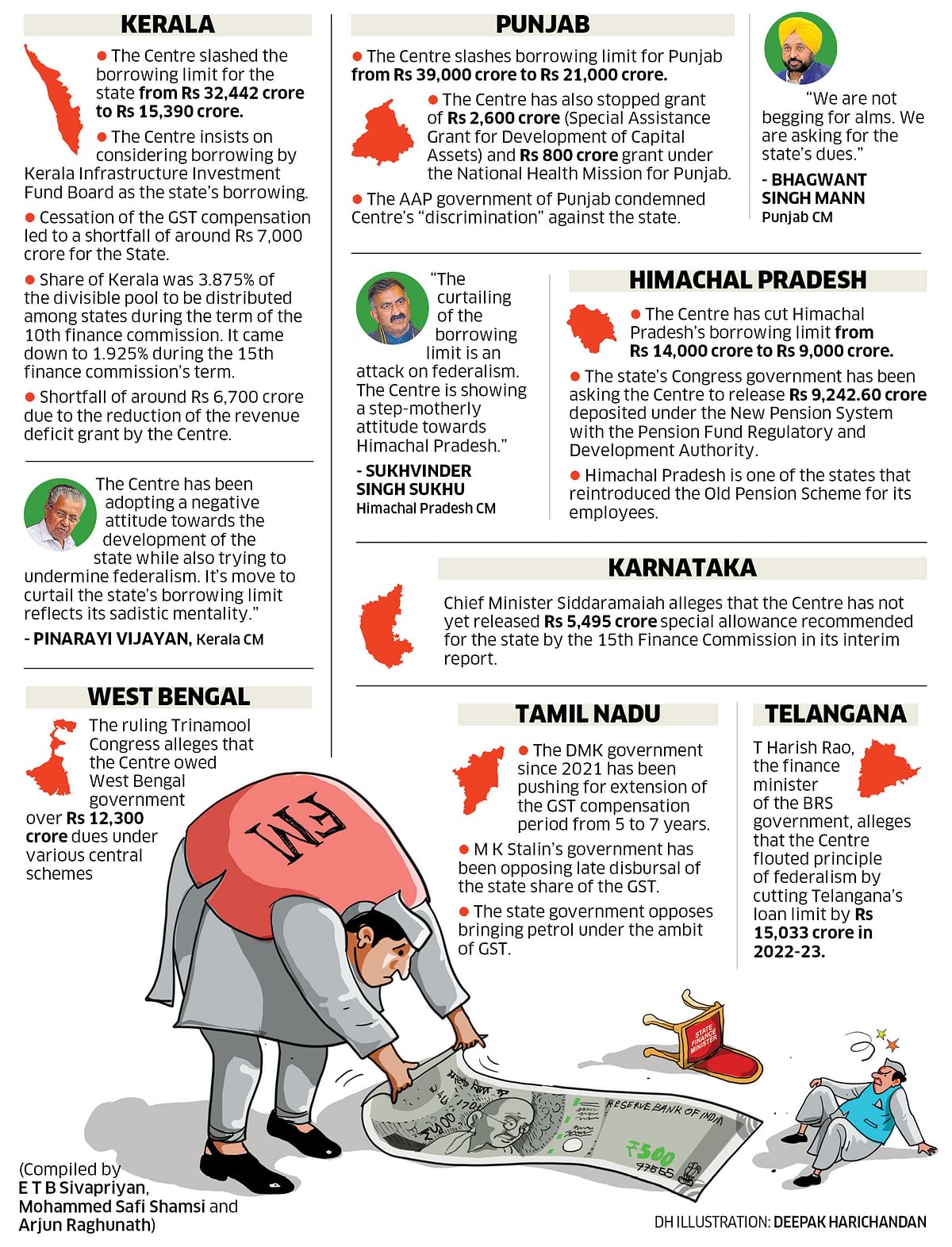
    The article discusses Kerala’s protest against the imposition of a Net Borrowing Ceiling (NBC) by the Central Government, which restricts the state’s ability to borrow funds. It argues that this imposition undermines fiscal federalism and challenges the constitutional authority of the state legislature over financial matters.

    Key Highlights:

    • Kerala Chief Minister Pinarayi Vijayan leads a protest against the Central Government’s imposition of a financial embargo on Kerala.
    • The NBC limits states’ borrowings, including those from state-owned enterprises like the Kerala Infrastructure Investment Fund Board (KIIFB), leading to a severe financial crisis in Kerala.
    • The article questions the constitutionality of including state-owned enterprises’ debt in the state’s total debt, arguing that it encroaches on the state legislature’s authority over financial matters.
    • Kerala’s Fiscal Responsibility Act, 2003, aims to reduce fiscal deficit, demonstrating the state’s commitment to fiscal discipline.
    • The article criticizes the move towards “annihilative federalism,” where the central government’s actions detrimentally affect states’ ability to meet welfare obligations.

    Key Challenges:

    • Balancing fiscal discipline with the need for states to fund development projects and welfare schemes.
    • Addressing the erosion of fiscal federalism and the encroachment of central authority over state finances.
    • Resolving the conflict between the powers of the central government and state legislatures regarding financial matters.
    • Mitigating the impact of borrowing restrictions on states’ ability to fulfill their financial obligations.

    Key Terms:

    • Net Borrowing Ceiling (NBC): Limit imposed on states’ borrowings from all sources.
    • Kerala Infrastructure Investment Fund Board (KIIFB): State-owned body responsible for funding infrastructure projects.
    • Fiscal Responsibility Act: Legislation aimed at reducing fiscal deficit and promoting financial discipline.
    • Fiscal Federalism: Distribution of financial powers and responsibilities between the central government and states.
    • Annihilative Federalism: Central government actions that undermine states’ financial autonomy and welfare obligations.

    Key Quotes:

    • “The wide array of constitutional issues…point at the severe erosion of fiscal federalism in the country.”
    • “The borrowing restrictions are an example of ‘annihilative federalism’ at play.”

    Key Examples and References:

    • Kerala’s protest led by Chief Minister Pinarayi Vijayan against the financial embargo imposed by the Central Government.
    • The inclusion of KIIFB’s debt in Kerala’s total debt, leading to funding constraints for welfare schemes.
    • Comparison of Kerala’s fiscal deficit reduction efforts with the central government’s fiscal deficit estimates.

    Key Facts and Data:

    • Kerala’s fiscal deficit reported to have reduced to 2.44% of the GSDP.
    • Central government’s fiscal deficit estimated to be 5.8% for 2023-2024.

    Critical Analysis:

    The article underscores the tension between central authority and state autonomy in financial matters, highlighting the constitutional ambiguity surrounding the imposition of borrowing restrictions. It argues for a balanced approach that acknowledges states’ fiscal responsibilities while ensuring fiscal discipline.

    Way Forward:

    • Reevaluate the imposition of borrowing restrictions to ensure they do not unduly impede states’ ability to meet financial obligations.
    • Enhance dialogue and cooperation between the central government and states to address fiscal challenges while respecting constitutional principles.
    • Clarify the division of financial powers between the central government and state legislatures to mitigate conflicts and promote fiscal federalism.
  • Foreign Policy Watch: India-Myanmar

    Fate of Indian Projects in Myanmar

    myanmar

    Introduction

    • The Arakan Army captured Paletwa in the Chin State, near Bangladesh and India. This has cast aspersions about the development of key Indian projects in Myanmar.

    Myanmar Coup: A quick recap

    • Myanmar’s military ousted Aung San Suu Kyi’s elected government in February 2021.
    • The military expected resistance to subside quickly. After three years, opposition to the military regime is growing.

    Conflict Dynamics near Indian Borders

    • Complex Dynamics: The capture of Paletwa has triggered a complex dynamic between the Chin and Arakan ethnic groups.
    • Ethnic Majority: Majority of Paletwa’s residents belong to the Chin ethnic community.
    • Historical Claims: Some in the Rakhine State argue that Paletwa historically belonged to the Arakan Hill Tracts during colonial rule.
    • InterEthnic Solidarity: Inter-ethnic solidarity among EAOs is essential for an effective fight against the military.
    • Challenge of Compromise: Finding an inter-ethnic compromise on settlements like Paletwa is challenging due to its strategic location.

    Impact on India’s Kaladan Project:

    • Significance for Kaladan: The developments in Paletwa have implications for India’s Kaladan Multimodal Transit Transport Project (KMTTP) in Myanmar.
    • Addressing Challenges: The Kaladan project aims to address northeast India’s geo-economic and geo-political challenges.
    • Project Delays: Delays in project implementation were caused by rugged terrain, inadequate coordination, political instability, and security challenges.
    • Local Attitudes: Attitudes of local ethnic organizations must be considered for swift Kaladan project execution.
    • Local Interest: People in Mizoram and Chin State are interested in the project’s completion as it boosts economic activity.

    China Factor in the Region

    • Three Brotherhood Alliance: The Arakan Army is part of the Three Brotherhood alliance, believed to have Chinese support. This alliance aims to safeguard Chinese investments in Myanmar.
    • Reports of Chinese Support: Reports suggest that the Arakan Army receives funding and military equipment from China.
    • Concerns for India: Concerns exist in India about Beijing using armed groups to hinder India’s connectivity projects in Myanmar.
    • China’s Economic Presence: China has increased its economic presence along Myanmar’s Bay of Bengal coast.
    • Infrastructure Initiatives: Operationalized pipelines and agreements for a deep-sea port and special economic zone are part of China’s initiatives in Myanmar.

    Conclusion

    • India, as a liberal democracy, faces scrutiny regarding the impact of its external engagement on sectarian/identity-based violence in the neighborhood.
    • Scaling up humanitarian and development assistance while collaborating with ethnic organizations is essential.
  • Climate Change Impact on India and World – International Reports, Key Observations, etc.

    Alarm Bells for Hindu Kush Himalaya (HKH) Region

    Hindu Kush Himalaya

    Introduction

    • The International Centre for Integrated Mountain Development (ICIMOD) called for ‘bold action’ and ‘urgent finance’ to prevent collapse of Hindu Kush Himalaya (HKH).

    About Hindu Kush Himalaya (HKH)

    Description
    Geographic Location South Asia, spanning Afghanistan, Bangladesh, Bhutan, China, India, Myanmar, Nepal, and Pakistan.
    Area Approximately 3,500,000 square kilometers
    “Water Tower of Asia” At least 12 rivers fan out in every direction across the Asian continent from it, including:

    – Syr Darya and Amu Darya towards the now-dead Aral Sea

    – Tarim toward the Taklamakan

    – Indus, Ganga, and Brahmaputra towards the Arabian Sea and Bay of Bengal

    – Yellow river towards the Gulf of Bohai

    – Yangtze towards the East China Sea

    – Mekong towards the South China Sea

    – Chindwin, Salween, and Irrawaddy towards the Andaman Sea

    Glaciers Home to thousands of glaciers, including Mount Everest and K2.

    A Region on the Brink

    • Biodiversity Hotspot: The HKH region, characterized by its remarkable biodiversity, is described as a ‘biosphere on the brink’ by experts.
    • Scope of Crisis: The speed and scale of habitat and nature loss in the HKH region are deemed ‘catastrophic,’ and urgent action is required.

    Alarming Statistics

    • Biodiversity Richness: The HKH region boasts four of the world’s 36 global biodiversity hotspots, 575 Protected Areas, and 335 important bird areas.
    • Biodiversity Loss: Despite conservation efforts, the region has witnessed the loss of 70% of its original biodiversity over the last century.
    • Human Dependence: 85% of mountain communities in the HKH region rely on this biodiversity for food, water, flood control, and cultural identity.
    • Population Pressure: With 241 million people residing in the HKH region, 31% face food insecurity, and half experience various forms of malnutrition.

    Human Impact

    • Threat to Humanity: The declining nature in the HKH region now endangers not only animal and plant life but also human societies.
    • Water Tower of Asia: This region, known as the ‘Water Tower of Asia,’ supplies essential ecosystem services, including clean water for one-third of the global population.
  • Parliament – Sessions, Procedures, Motions, Committees etc

    Floor Test in Jharkhand Assembly

    Introduction

    • The new government has won the trust vote on the floor of the Jharkhand Assembly. A floor test serves as a pivotal check to determine if the executive enjoys the confidence of the legislature.

    What is Floor Test?

    • Definition: A floor test is a constitutional measure employed to ascertain whether the Chief Minister, appointed by the Governor, commands the majority support of the Legislative Assembly.
    • Governor’s Role: The Governor appoints the CM, typically from the party securing the majority of seats in the Assembly.
    • Voting of Confidence: If the majority is challenged or questioned, the Chief Minister must seek a vote of confidence to prove the majority among the members present and voting.
    • Consequences of Failure: Failure to secure the majority in the floor test necessitates the resignation of the Chief Minister.
    • Application: Floor tests are conducted both in the Parliament and state legislative assemblies. They are also utilized in cases of disputes within coalition governments.

    Postponement of Floor Tests

    • Legal Precedent: Recent Supreme Court rulings have clarified that floor tests need not be postponed even if the decision on the disqualification of rebel members is pending.
    • Shivraj Singh Chouhan v/s Speaker Case: The 2020 case involving Shivraj Singh Chouhan established this principle.
    • Discretion in Special Cases: In exceptional situations with no clear majority, the Governor can use discretion to expedite the selection of the Chief Ministerial candidate for a floor test.

    Composite Floor Test

    • Multiple Claimants: When multiple individuals stake a claim to form the government, a Composite Floor Test is conducted.
    • Majority Determination: In cases where the majority is unclear, a special session is convened to ascertain the majority.
    • Counting the Majority: Majority is determined based on those present and voting. Voting can occur through voice votes or division voting, involving electronic gadgets, ballots, or slips.
    • Speaker’s Vote: In case of a tie, the Speaker may cast the deciding vote.

    Challenges with the Floor Test

    • Luring of MLAs: In some instances, ruling party MLAs may be lured with rewards or incentives, undermining the constitutionality and fairness of the floor test.
    • Constitutional and Moral Implications: Such actions are seen as constitutionally immoral and unjust, as they circumvent the Tenth Schedule through engineered defections using the judicial process.

    Back2Basics: No Confidence Motion

    • Rule 198 of Lok Sabha: The process for a No Confidence Motion is explained under this rule in the Lok Sabha.
    • Constitutional provisions: While the Constitution does NOT mention the terms ‘No Confidence Motion’ or ‘floor test,’ Articles 75 and 164 establish the collective responsibility of the executive to their respective legislatures.
    • Procedure: Any Opposition member can move a no-confidence motion, which requires the backing of at least 50 members for acceptance.
    • Discussion Period: The Speaker announces a date for discussion, which must occur within 10 days from the date of acceptance.

Join the Community

Join us across Social Media platforms.