💥UPSC 2027,2028 Mentorship (April Batch) + Access XFactor Notes & Microthemes PDF

Archives: News

  • Oil and Gas Sector – HELP, Open Acreage Policy, etc.

    India to be biggest driver of global oil demand beyond China by 2027: IEA

    Introduction

    • India’s burgeoning economy is poised to become a significant player in global oil demand, with projections indicating that it will outpace China by 2027.
    • The International Energy Agency (IEA) forecasts robust growth in India’s oil demand, driven primarily by industrial expansion and increasing mobility.

    About International Energy Agency (IEA)

    Details
    Nature Autonomous inter-governmental organisation within the OECD framework
    Mission Works with governments and industry to shape a secure and sustainable energy future for all
    Establishment Founded in 1974 to ensure the security of oil supplies
    Origin Created in response to the 1973-1974 oil crisis
    Membership Consists of 31 member countries and eleven association countries
    Criteria for Membership
    • Crude oil and/or product reserves equivalent to 90 days of the previous year’s net imports, accessible by the government
    • Demand restraint programme to reduce national oil consumption
    • Legislation and organisation for Co-ordinated Emergency Response Measures (CERM)
    • Legislation to ensure oil companies report information
    • Capability to contribute to IEA collective action
    India’s Membership Joined as an Associate member in 2017
    Key Reports Published World Energy Outlook,    World Energy Balances,    Energy Technology Perspectives,    World Energy Statistics,    Net Zero by 2050.

    India’s Projected Growth in Oil Demand

    • Dominance in Oil Demand Growth: India is expected to surpass China as the biggest driver of global oil demand growth by 2027, according to the IEA.
    • Magnitude of Increase: The IEA projects an increase of nearly 1.2 million barrels per day (bpd) in India’s oil demand by 2023, contributing to over a third of the global demand growth by the end of the decade.
    • Key Drivers: Diesel consumption emerges as the primary driver of India’s oil demand growth, accounting for nearly half of the nation’s demand rise and a significant portion of global demand growth.
    • Sectoral Analysis: While jet-kerosene demand is expected to grow substantially, petrol demand is projected to increase moderately due to the electrification of India’s vehicle fleet.

    Factors Influencing Demand Growth

    • Impact of EVs and Biofuels: Increased penetration of electric vehicles (EVs), energy efficiency measures, and growth in biofuels consumption are anticipated to mitigate around 500,000 bpd of additional oil demand by 2030.
    • Role of EVs: EV penetration alone is projected to displace 200,000 bpd of oil demand by 2030.

    Why such a forecast for surge?

    • Rising Crude Oil Imports: India’s crude oil imports are expected to surge by over a fourth to 5.8 million bpd by 2030, driven by robust demand growth and declining domestic production.
    • Limited Domestic Production: Despite efforts to attract foreign investment, domestic crude oil production is projected to decline steadily, further increasing import dependence.
    • Strategic Petroleum Reserves (SPRs): India is enhancing its capacity to respond to oil supply disruptions through strategic petroleum reserves.
    • Importance of SPRs: These reserves help mitigate the impact of emergencies on energy supplies and ensure oil resilience in case of market disruptions.

    Major Policy Initiatives for Oil Import Cut

    • Urja Sangam 2015: In March 2015, the PM inaugurated ‘Urja Sangam 2015,’ aiming to boost India’s energy security. Stakeholders were urged to increase domestic oil and gas production to reduce import dependence from 77% to 67% by 2022 and further to 50% by 2030.
    • Production Sharing Contract (PSC) Regime: The government introduced policies like PSC, Discovered Small Field Policy, Hydrocarbon Exploration and Licensing Policy (HELP), and New Exploration Licensing Policy (NELP) to incentivize domestic production.
    • Ethanol Blending Programme (EBP): India promotes the EBP to reduce crude oil imports, cut carbon emissions, and boost farmers’ incomes. The target for 20% ethanol blending in petrol (E20) was advanced to 2025 from 2030, expediting ethanol adoption as an alternative fuel.

    Way Forward

    • Diversification Strategies: India must focus on diversifying its energy mix and promoting alternative fuels to reduce reliance on oil imports.
    • Investment in Renewable Energy: Accelerated investment in renewable energy sources such as solar and wind power can mitigate the growth in oil demand and enhance energy security.
    • Policy Initiatives: Robust policy measures are essential to incentivize energy efficiency, promote electric mobility, and encourage sustainable practices in the transport sector.
  • Uniform Civil Code: Triple Talaq debate, Polygamy issue, etc.

    Uttarakhand UCC dares Right to Form ‘Intimate Associations’

    Introduction

    • The recent enactment of the Uniform Civil Code (UCC) in Uttarakhand, specifically addressing live-in relationships, has sparked debates concerning individual freedom and state intervention.

    What are Intimate Associations?

    • It is an association that promotes a way of life, not causes; a harmony in living, not political faiths; a bilateral loyalty, not commercial or social projects.
    • This includes family relationships and other deep, personal connections that are important to individuals.

    Uttarakhand UCC on Intimate Associations

    • State Oversight: Section 381 of Uttarakhand’s common civil code mandates individuals intending to enter a live-in relationship to submit a “joint statement” before a Registrar, subjecting their intimate associations to state monitoring.
    • Regulatory Measures: The Registrar is empowered to conduct an “enquiry” to determine the legitimacy of the relationship, infringing on the privacy of consenting adults.
    • Registration Requirement: Couples must obtain a “registration certificate” from the State authority, imposing bureaucratic hurdles on the exercise of personal choice.
    • Scope of Freedom: The freedom to choose a partner and enjoy their society is integral to personal autonomy and individual liberty, safeguarded under Article 19(c) of the Constitution.

    Major Judgments upholding Intimate Associations

    Key Takeaway
    Lata Singh vs. State of UP (2006) Directed protection for inter-caste and inter-religious couples from harassment and violence.
    S. Khushboo vs. Kanniammal & Anr. (2010) Declared sexual relations between consenting adults outside marriage as legal and within the right to privacy.
    Naz Foundation vs. Government of NCT of Delhi (2009) Decriminalized consensual homosexual acts between adults, declaring Section 377 of the Indian Penal Code as a violation of rights.
    Joseph Shine vs. Union of India (2018) Decriminalized adultery and declared it a violation of the rights to equality, dignity, privacy, and autonomy.
    Navtej Singh Johar vs. Union of India (2018) Affirmed the rights of LGBTQ+ individuals to express their sexual orientation and identity with dignity.
    Shafin Jahan vs. Asokan K.M. (2018) Upheld the right to marry a person of one’s choice regardless of religion or caste, nullifying the annulment of a Hindu-Muslim marriage.
    Shakti Vahini vs. Union of India (2018) Condemned honour killings and violence against inter-caste and inter-religious couples, issuing guidelines for prevention and protection.
    Supriyo versus Union of India (2023) Refers to how State should not interfere with the freedom of consenting adults to form legitimate “intimate associations”.

    Critique of State Intervention

    • Infringement on Privacy: The UCC’s intrusive provisions undermine the autonomy and privacy of individuals by subjecting their relationships to state scrutiny.
    • Restriction on Freedom: Imposing regulatory requirements on live-in relationships contradicts established principles of personal liberty and restricts the exercise of fundamental rights.
    • Potential Discrimination: State interference in intimate matters risks perpetuating discrimination and infringing on the rights of consenting adults to form relationships of their choice.

    Arguments in Favor of such Associations

    • Fundamental Rights: Denying individuals the right to choose their partners violates fundamental rights and equality.
    • Union Recognition: Diverse couples lack legal recognition and access to marital rights and protections.
    • Promotion of Equality: Legalizing diverse relationships reduces discrimination and fosters inclusivity.
    • Positive Impact: Recognizing diverse unions positively impacts mental health and societal acceptance.
    • Secularism: Recognizing diverse relationships aligns with democratic principles and equality.

    Arguments Against

    • Preservation of Norms: Altering traditional marriage norms challenges societal expectations.
    • Cultural Preservation: Diverse relationships may conflict with cultural or religious beliefs.
    • Social Impact: Concerns exist regarding family structures and societal cohesion.
    • Legal Complexity: Legalizing diverse unions may introduce legal uncertainties and disputes.
    • Social Stigma: Societal stigma and discrimination persist against diverse relationships.

    Way Forward

    • Advocacy: Continued advocacy for rights and societal acceptance of diverse relationships.
    • Policy Reforms: Push for policy reforms to recognize and protect the rights of individuals.
    • Support Services: Offer counseling and support services to address stigma and legal challenges.
    • Community Building: Create safe spaces and support networks for individuals in diverse relationships.

    Conclusion

    • As debates continue, it is essential to strike a balance between regulatory measures and the protection of constitutional freedoms, fostering a society that values diversity and respects individual autonomy.

    Try this PYQ:

    Which Article of the Constitution of India safeguards one’s right to marry the person of one’s choice? (CSP 2019)

    (a) Article 19

    (b) Article 21

    (c) Article 25

    (d) Article 29


    Post your answers here.

  • Climate Change Negotiations – UNFCCC, COP, Other Conventions and Protocols

    Cameroon adopts Nagoya Protocol

    Introduction

    • Cameroon’s recent adoption of the Nagoya Protocol marks a significant step towards harnessing its rich biodiversity for sustainable development.

    Cameroon’s Biodiversity Wealth

    • Biodiversity Hotspot: Cameroon hosts approximately 11,000 species, offering immense genetic resources for research and development.
    • Traditional Knowledge: Indigenous communities possess invaluable traditional knowledge associated with biodiversity, contributing to bioprospecting (search for useful products derived from bioresources including plants, microorganisms, animals, etc.).
    • Bioprospecting Potential: Bioprospecting projects, such as those focusing on species like Irvingia wombulu, present opportunities for sustainable resource utilization.

    About Nagoya Protocol

    Details
    Purpose Implements access and benefit-sharing obligations of the Convention on Biological Diversity (CBD)
    Adoption October 2010
    Entry into Force October 12, 2014
    Legal Status Legally binding global agreement
    Objective Ensures fair and equitable sharing of benefits from the utilization of genetic resources
    Membership India is a member
    Benefits
    • Establishes a framework for accessing genetic resources for research
    • Provides certainty for investment in biodiversity-based research
    • Ensures fair sharing of benefits from resource use
    • Recognizes the value of traditional knowledge associated with genetic resources
    Scope
    • Genetic resources covered by the CBD
    • Benefits arising from their utilization
    • Traditional knowledge (TK) associated with genetic resources covered by the CBD and benefits from their utilization


    Key Facts about Convention on Biological Diversity (CBD):

    Description
    Adoption Date Opened for signing in 1992 at the UN Conference on Environment and Development in Rio de Janeiro
    Objectives Conservation of biological diversity,

    Sustainable use of biological diversity,

    Fair and equitable benefit sharing

    Membership 196 contracting parties
    Scope Covers biodiversity conservation at all levels:

    Ecosystems, Species, and Genetic resources

    Decision-Making Body Conference of the Parties (COP)
    Secretariat Based in Montreal, Canada
    Supporting Agreements
    • Cartagena Protocol (2000) for regulating LMOs movement,
    • Nagoya Protocol (2010) for access and benefit sharing
  • Roads, Highways, Cargo, Air-Cargo and Logistics infrastructure – Bharatmala, LEEP, SetuBharatam, etc.

    Satellite-Based Toll Collection likely before General Elections

    Satellite-Based Toll Collection

    Introduction

    • Satellite-based toll collection is slated for deployment before the onset of the 2024 general election Model Code of Conduct informed Union Transport Minister Nitin Gadkari.
    • This technology will supersede FASTags, offering improved efficiency and convenience for drivers.

    How Satellite -Based Toll Collection Works?

    • GPS-Equipped Vehicles: Every vehicle will require a GPS device for toll collection, enabling real-time tracking of their movements.
    • Micro-controller Integration: The government plans to equip vehicles with micro-controllers featuring third-generation (3G) and GPS connectivity to facilitate data transmission.
    • Continuous Monitoring: By capturing GPS coordinates, authorities can monitor vehicle routes, track toll road usage, and calculate toll taxes based on distance travelled.
    • Toll Gate Configuration: Presently, toll gates are stationed at the end of each road stretch or project. Toll tax is calculated for distances up to 60 km, with rates fixed by the National Highway Authority of India (NHAI).

    Distinction from FASTag Technology

    FASTag GPS-Based Toll Collection
    Technology Utilization Relies on RFID technology for automatic toll deduction. Utilizes GPS system within vehicles for tracking and toll deduction.
    Toll Deduction Process Deduction occurs only at toll booths upon approach. Toll tax is deducted based on continuous GPS tracking throughout the journey.
    Infrastructure Requirements Requires installation of FASTag scanners at toll booths. Eliminates the need for physical toll booths and plazas, relying solely on GPS tracking.
    Implementation Status Mandated since February 2021, offering streamlined toll payment at toll booths. Anticipated implementation around March 2024, promising enhanced efficiency and convenience for travelers.

    Why is a GPS-based system preferred over FASTag?

    • Infrastructure Elimination: GPS-based systems don’t require toll booths, reducing congestion and infrastructure costs.
    • Continuous Tracking: They track vehicles continuously, enabling accurate toll calculations based on actual distance traveled.
    • Flexibility and Scalability: GPS offers wider coverage and scalability, suitable for varied toll rates and distances.
    • Reduced Administration: Automation reduces manual intervention and administrative burden.
    • Enhanced User Experience: Drivers enjoy seamless travel without the need to stop at toll booths.

    Operational Framework

    • Global Navigation Satellite System (GNSS) Integration: Vehicles will require on-board units (OBUs) linked to a satellite constellation (ex. GPS, GLONASS, IRNSS) for toll calculations and transactions.
    • Barrier-Free Movement: OBUs, akin to vehicle tracking devices, will enable distance-based tolling, fostering unhindered highway transit.
    • Regulatory Requirements: Geo-fencing of national highways and legislative amendments to permit distance-based tolling under National Highway Fee Rules and the Motor Vehicles Act, 1988, are necessary for implementation.
  • Poverty Eradication – Definition, Debates, etc.

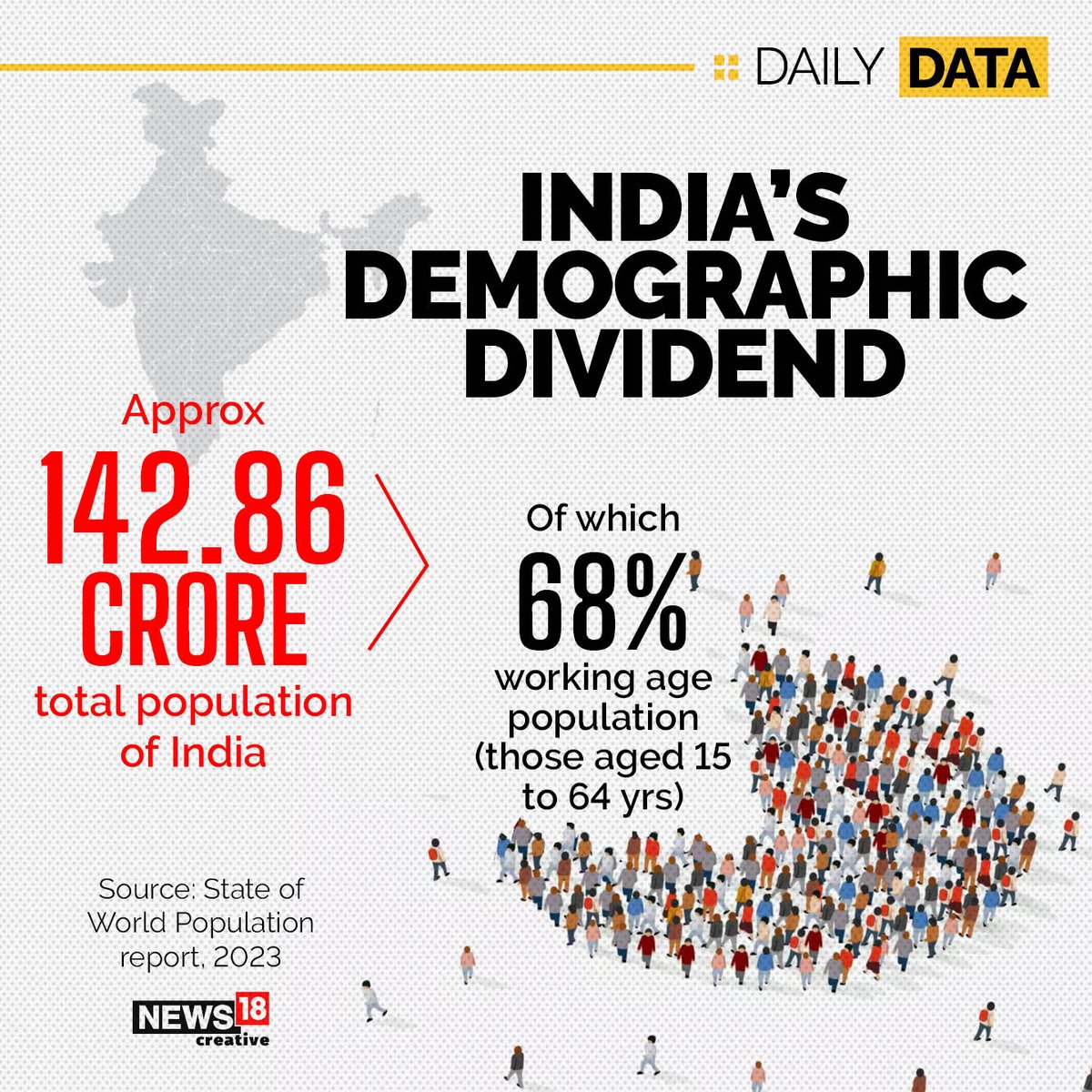
    Charting a path for the population committee

    News18 on X: "Take a look at India's demographic dividend #population #india #worldpopulation https://t.co/h2oZM74V1n" / X

    Central Idea:

    The article emphasizes the importance of addressing the challenges and harnessing the opportunities presented by India’s rapidly changing demographic landscape through strategic policies and investments in health, education, employment, and data infrastructure.

    Key Highlights:

    • Introduction of a high-powered committee to address challenges arising from rapid population growth.
    • Need for interdisciplinary approach involving experts from various fields.
    • Importance of data analysis and monitoring demographic trends.
    • Emphasis on collaboration with stakeholders for effective policy implementation.
    • Highlighting demographic shifts and their implications for economic growth.
    • Focus on maximizing the demographic dividend through investments in human capital.
    • Challenges in healthcare, education, and employment sectors.
    • Importance of evidence-based decision making and data infrastructure.
    • Collaboration with international organizations for best practices and funding opportunities.

    Key Challenges:

    • Limited public spending on healthcare and education.
    • Persistent challenges in nutritional deprivation and access to quality education.
    • Disruptions caused by the COVID-19 pandemic.
    • Lack of accurate and timely demographic data.
    • Need for modernization of data infrastructure and capacity building.
    • Ensuring reliability and accuracy of population data.
    • Bridging the gap between skill development initiatives and industry requirements.

    Key Terms and Phrases:

    • Demographic transition
    • Population committee
    • Interdisciplinary approach
    • Demographic dividend
    • Evidence-based policy
    • Data infrastructure
    • Human capital
    • Skill development
    • Stakeholder collaboration
    • Economic growth

    Case Studies and Best Practices:

    • The successful implementation of the National Rural Health Mission in improving primary healthcare in rural areas.
    • The Mid-Day Meal Scheme ensuring access to nutritious meals for school children, contributing to improved health and educational outcomes.
    • The Aadhaar initiative in India, which has streamlined government services and facilitated targeted interventions in various sectors, including healthcare and education.
    • The Pradhan Mantri Kaushal Vikas Yojana (PMKVY), a skill development initiative aimed at providing industry-relevant training to youth, enhancing their employability.
    • The ASER (Annual Status of Education Report) survey providing valuable insights into the quality of education in rural India and informing policy decisions for improvement.

    Key Quotes and Anecdotes:

    • “India’s demographic landscape presents both opportunities and challenges for the country’s socio-economic development.”
    • “Investments in health, education, and skill development are crucial to realizing India’s demographic dividend.”
    • “Collaboration with international organizations can provide access to global best practices and technical expertise.”

    Key Statements and Examples:

    • India’s population committee aims to formulate policies addressing challenges like family planning and socio-economic development.
    • The demographic dividend offers an opportunity for accelerated economic growth but requires investments in human capital.
    • Limited public spending on healthcare and education underscores the need for policy prioritization in these sectors.

    Key Facts and Data:

    • India’s population is projected to reach 1.46 billion by 2030.
    • Public spending on health has remained around 1% of GDP.
    • Nearly 47% of Indian youth may lack necessary education and skills for employment by 2030.
    • Over 250 million children were forced out of school due to the COVID-19 pandemic.

    Critical Analysis:

    • The article effectively highlights the interconnectedness of demographic factors with economic and social development.
    • It underscores the importance of evidence-based policymaking and the challenges in data availability and reliability.
    • The emphasis on collaboration with stakeholders and international organizations reflects a comprehensive approach to addressing demographic challenges.

    Way Forward:

    • Prioritize investments in health, education, and skill development.
    • Modernize data infrastructure and improve data collection methodologies.
    • Strengthen collaboration with stakeholders and international organizations.
    • Implement policies that promote transparency, accountability, and inclusivity.
    • Focus on bridging the gap between existing initiatives and industry requirements to enhance employment opportunities.
  • Climate Change Impact on India and World – International Reports, Key Observations, etc.

    Equity concerns in banning fossil fuel extraction

    Fossil Fuels are Dead, Long Live Fossil Fuels – Energy Institute Blog

    Central Idea:

    The inadequate response from governments and corporations to address climate change is fueling a rise in climate change litigation and a push for phasing out fossil fuel subsidies and extraction. This momentum is underscored by proposals like a coal elimination treaty by 2030 due to the significant gap between planned fossil fuel production and Paris Agreement goals. However, challenges exist in aligning these proposals with existing climate change principles, particularly regarding equitable transitions for heavily dependent fossil fuel economies like India.

    Key Highlights:

    • Rise in climate change litigation due to insufficient action from governments and corporations.
    • Growing momentum to phase out fossil fuel subsidies and extraction, exemplified by proposals such as a coal elimination treaty by 2030.
    • Challenges in aligning proposals with existing climate change principles like Common but Differentiated Responsibilities.
    • Heavily dependent fossil fuel economies, such as India, face difficulties transitioning due to economic reliance on fossil fuels.

    Key Challenges:

    • Balancing the need for transitioning away from fossil fuels with the economic dependence of certain countries on fossil fuel revenues.
    • Ensuring equitable transitions for heavily dependent fossil fuel economies.
    • Aligning proposals for phasing out fossil fuels with existing climate change principles like Common but Differentiated Responsibilities.
    • Addressing the discrepancy between planned fossil fuel production and Paris Agreement goals.

    Key Terms/Phrases:

    • Climate change litigation
    • Fossil fuel subsidies
    • Coal elimination treaty
    • Production Gap Report
    • Common but Differentiated Responsibilities
    • Nationally Determined Contributions
    • Equitable transitions
    • Heavily dependent fossil fuel economies

    Case Studies/Best Practices:

    • India’s reliance on fossil fuels despite progress in renewable energy.
    • The transition strategy of countries like Canada, the United States, and the United Kingdom with more diversified economies.
    • COP26 and COP28 decisions regarding phasing out coal and transitioning away from fossil fuels.

    Key Quotes/Anecdotes/Statements:

    • “The inadequate response from governments and corporations in dealing with the issue of climate change is leading to… dramatic rise in climate change litigation.”
    • “Those countries that are heavily dependent on revenues and employment in the fossil fuel sector are likely to experience serious difficulties in transitioning away from fossil fuel.”
    • “India’s subsidies on kerosene oil have come under scrutiny in the West as it is found to be inconsistent with Article 2(1)(c) of the Paris Agreement and is also considered as inefficient subsidies.”

    Key Examples/References/Facts/Data:

    • The Production Gap Report indicating a significant gap between planned fossil fuel production and Paris Agreement goals.
    • India’s reliance on fossil fuels dominating its power sector despite progress in renewable energy.
    • COP26 and COP28 decisions regarding phasing out coal and transitioning away from fossil fuels.

    Critical Analysis:

    The article highlights the urgent need for action on climate change and the challenges associated with transitioning away from fossil fuels. It underscores the discrepancy between proposed fossil fuel production and climate goals, as well as the economic dependence of certain countries on fossil fuel revenues. However, it also acknowledges the need for equitable transitions and the complexities of aligning proposals with existing climate change principles.

    Way Forward:

    • Implementing equitable transition strategies for heavily dependent fossil fuel economies.
    • Strengthening international cooperation and commitments to phase out fossil fuel subsidies and extraction.
    • Addressing discrepancies between proposed fossil fuel production and climate goals.
    • Integrating principles of Common but Differentiated Responsibilities into transition strategies.
    • Providing support and creating economic opportunities for those affected by the transition away from fossil fuels.

  • Cyber Security – CERTs, Policy, etc

    Downloading child pornography is an offence

    Voice out for Child Cyber Safety and Against Child Pornography - Prime Infoserv LLP


    Central Idea:

    The article discusses a recent judgment by the Madras High Court quashing judicial proceedings against an individual accused of downloading child pornography. It highlights the court’s interpretation of relevant legal provisions and challenges the court’s decision in light of the existing legal framework.


    Key Highlights:

    • The Madras High Court’s decision in S. Harish vs Inspector of Police quashed proceedings against an accused who downloaded child pornography.
    • The court’s interpretation suggests that merely downloading and watching child pornography in private may not constitute an offense.
    • The article highlights the flaw in citing a precedent case from the Kerala High Court, which dealt with adult pornography, not child pornography.
    • It discusses the necessity of differentiating between adult pornography and child sexual abuse materials (CSAM) in legal terminology.
    • The article emphasizes the need for consistency between the Protection of Children from Sexual Offences (POCSO) Act and the Information Technology (IT) Act.


    Key Challenges:

    • Interpretation of legal provisions regarding the definition and offense of child pornography.
    • Ensuring consistency between different legal frameworks, particularly the POCSO Act and the IT Act.
    • Addressing the complexities of cybercrimes and the exploitation of children online.
    • Balancing the protection of children with individual rights and privacy concerns.
    • Clarifying the scope and application of legal precedents in cases involving child pornography.


    Key Terms and Phrases:

    • Child pornography
    • Information Technology (IT) Act
    • Protection of Children from Sexual Offences (POCSO) Act
    • CyberTipline reports
    • Child Sexual Abuse Materials (CSAM)


    Key Quotes:

    • “The High Court categorically said that watching child pornography per se was not an offence…”
    • “The Madras High Court used its inherent powers under Section 482 of the Criminal Procedure Code (CrPC)…”
    • “The National Crime Records Bureau… regularly gets geo-tagged CyberTipline reports…”
    • “It is important to mention here that Section 67 read with Sections 67A and 67B of the IT Act are a complete code…”


    Key Examples and References:

    • Case of S. Harish vs Inspector of Police in the Madras High Court.
    • Interpretation of legal provisions under Section 67B of the IT Act.
    • Precedent case from the Kerala High Court regarding adult pornography.
    • Use of CSAM terminology in addressing child exploitation online.
    • Guidelines from the Supreme Court in State of Haryana vs Bhajan Lal (1992).


    Key Facts and Data:

    • Section 67B of the IT Act criminalizes various acts related to child pornography.
    • The National Crime Records Bureau collaborates with the American National Center for Missing & Exploited Children.
    • The article suggests an amendment to the POCSO Act to address inconsistencies with the IT Act.
    • The Madras High Court’s decision was based on an interpretation of legal provisions.


    Critical Analysis:

    The article provides a critical analysis of the Madras High Court’s decision regarding child pornography and raises valid concerns about its interpretation of relevant legal provisions. It highlights the need for consistency in legal frameworks and suggests potential amendments to address existing inconsistencies. However, it also acknowledges the complexities of cybercrimes and the challenges in balancing child protection with individual rights.


    Way Forward:

    • Ensure clarity in legal terminology and definitions related to child pornography.
    • Address inconsistencies between different legal frameworks, particularly the POCSO Act and the IT Act.
    • Enhance collaboration between law enforcement agencies and organizations combating online child exploitation.
    • Consider amendments to existing laws to adapt to evolving challenges in cyberspace.
    • Encourage public awareness and education on the prevention of child exploitation online.
  • Festivals, Dances, Theatre, Literature, Art in News

    390 YO Lamp Post in Nalgonda dedicated to Kasi Viswanatha

    Lamp Post

    Introduction

    • The recent discovery of a Deepastambham (lamp post) and other archaeological findings along the River Krishna in Nalgonda district, Telangana, sheds new light on early medieval trade ties in the region.

    Lamp Post and its Structure

    • Unique Findings: Archaeologists unearthed a 20-foot tall lamp post with inscription and a small flat-roofed structure near the Krishna river bank in Telangana.
    • Rare Artefacts: Lamp posts are uncommon in the Deccan region but are prevalent in temple architecture along the west coast, highlighting the uniqueness of this discovery.
    • Historical Context: The lamp post, dated back to June 1635, bears a multilingual inscription in Telugu mixed with Tamil, indicating its dedication to Kasi Viswanatha.
    • Functional Significance: Due to its height, the lamp post likely served as a lighthouse along the riverine trade route, facilitating navigation and trade activities.

    Significance of Inscriptions

    • Historical Documentation: Inscriptions provide valuable insights into the socio-cultural and economic landscape of the region during the early medieval period.
    • Cultural Connections: The presence of inscriptions suggests a connection between the local community and wider trade networks, enriching our understanding of historical trade routes.
    • Hyderabad Connection: The village’s proximity to Hyderabad, ruled by the Qutb Shahi dynasty, suggests its significance in the regional trade network.
    • European Accounts: References by European travellers, such as Jean Baptiste Tavernier, hint at the existence of riverine trade routes alongside land routes during the same period.

    Continuity of Trade Routes

    • Longstanding Trade Connections: The discovery of an eighth-century inscription from the Badami Chalukya era underscores the village’s role as a vital trade hub over millennia.
    • Cultural Exchange: Trade routes facilitated not only economic transactions but also cultural exchanges, shaping the region’s diverse heritage.

    Try this PYQ:

    Which one of the following foreign travellers elaborately discussed about diamonds and diamond mines on India? (CSP 2018)

    (a) Francois Bernier

    (b) Jean Baptiste Tavernier

    (c) Jean de Thevenot

    (d) Abbe Barthelemy Carre


    Post your answers here.
  • Capital Markets: Challenges and Developments

    India to stay alert for ‘Hot Money’ inflows

    Introduction

    • India’s recent inclusion into JPMorgan’s emerging market debt index marks a significant milestone for its financial markets.
    • However, with this inclusion comes the risk of volatile capital flows, particularly ‘hot money,’ which can exert pressure on currency and bond markets.

    What is ‘Hot Money’?

    • Definition: ‘Hot money’ refers to funds controlled by investors seeking short-term returns. It is the flow of funds from one country to another to earn a short-term profit on interest rate differences.
    • Typical Investments: Investors often seek high-interest, short-term opportunities like certificates of deposit (CDs).
    • Foreign portfolio investment (FPI): FPI is often referred to as “hot money” because it tends to flee at the first signs of trouble in an economy.

    Mechanics of ‘Hot Money’

    • Attracting ‘Hot Money’: Banks offer short-term CDs with above-average interest rates to attract ‘hot money.’
    • Rapid Movement: Investors swiftly withdraw funds and transfer them to institutions offering higher rates when interest rates change.
    • Cross-Border Movements: Investors may shift funds between countries to capitalize on favorable interest rates.

    Economic hazards posed by Hot Money

    • Volatility: Hot money causes rapid price swings, risking market stability.
    • Speculative Bubbles: Inflated asset prices lead to market crashes when bubbles burst.
    • Currency Depreciation: Hot money influxes can cause currency value swings, harming exports.
    • Interest Rate Volatility: Central banks may struggle to stabilize rates due to hot money flows.
    • Financial Instability: Herd behavior from hot money can cause market panics.
    • Capital Flight: Short-term hot money exits strain a nation’s financial reserves.
    • Speculative Attacks: Hot money inflows attract attacks from profit-driven investors.
    • Macroeconomic Imbalances: Over-reliance on hot money leads to unsustainable economic patterns.

    RBI’s position

    • Monitoring Foreign Fund Flows: India will closely monitor inflows of foreign funds to prevent excessive ‘hot money’ influx.
    • Regulating Interest Rates: Measures will be taken to manage interest rates to discourage short-term speculative investments.
    • Maintaining Financial Stability: Proactive measures aim to prevent excessive volatility in currency and bond markets.

    Back2Basics: Hot Money vs. Cold Money

    Hot Money Cold Money
    Nature Short-term capital that flows in and out of markets quickly. Long-term investments that remain stable and less volatile.
    Movement Rapid movement, often driven by short-term profit opportunities. Relatively stable movement, focused on long-term returns.
    Risk High risk due to volatility and susceptibility to market changes. Lower risk as it is less influenced by short-term market fluctuations.
    Purpose Often seeks quick returns, capitalizing on market trends and speculation. Invested with long-term objectives, such as retirement planning or wealth preservation.
    Impact on Markets Can create volatility and instability, leading to sudden market fluctuations. Provides stability and liquidity, contributing to long-term economic growth.
    Examples Hedge funds, currency traders, speculative investors. Pension funds, mutual funds, long-term investors.
  • Government Budgets

    Kerala is one of most financially unhealthy States: Centre

    Introduction

    • The ongoing dispute between the Centre and the Kerala government regarding fiscal management has sparked debates on financial health, resource allocation, and federal governance.

    Financial Mismanagement in Kerala

    • Poor Fiscal Health: The Centre contends that Kerala’s fiscal condition is precarious, attributing it to inadequate management of public finances.
    • Financial Assistance: Despite substantial financial support provided by the Centre, including additional funds beyond the recommendations of the 15th Finance Commission, Kerala continues to face financial stress.
    • Mismanagement: Kerala’s alleged reckless borrowing, financing of unproductive expenditure, and poorly targeted subsidies exacerbate its financial woes, impacting both state and national economies.

    What data has to say?

    • Rising Liabilities: Kerala’s outstanding liabilities, as a percentage of its Gross State Domestic Product (GSDP), have consistently increased from 31% in 2018-19 to 39% in 2021-22, exceeding the national average.
    • Implications of High Liability Ratio: The Centre warns that the elevated outstanding liability ratio results in heightened interest payments, exacerbating fiscal deficits and potentially leading to a debt trap.
    • Increased Committed Expenditure: Kerala’s committed expenditure as a percentage of revenue receipts has risen from 74% in 2018-19 to 82.40% in 2021-22, surpassing that of any other state. This trend limits the state’s capacity for productive government spending, negatively impacting long-term growth.

    Kerala’s Defence

    • Federal Structure: Kerala asserts its rights under the federal system to regulate its finances independently, highlighting the Centre’s infringement on its fiscal autonomy.
    • Economic Damage: The state argues that the Centre’s actions, such as imposing arbitrary borrowing ceilings, threaten Kerala’s economic stability, jeopardizing its ability to meet developmental goals.

    Legal Response

    • Court Proceedings: The Attorney General’s submission to the Supreme Court forms part of the legal battle initiated by Kerala against the Centre’s alleged interference in state finances.
    • Protection of Federalism: Kerala seeks judicial intervention to safeguard the federal structure, emphasizing the state’s authority over budgetary management and borrowing decisions.
    • FRBM Rescue: While the FRBM Act of 2023 primarily applies to the central government, some states have enacted their own FRBM legislation to maintain fiscal discipline at the state level. Kerala doesn’t have its own version yet.

    Implications

    • National Ramifications: The outcome of this dispute holds significance beyond Kerala, impacting the broader framework of fiscal federalism and intergovernmental relations.
    • Developmental Concerns: The protracted legal battle could impede Kerala’s developmental agenda and exacerbate financial strains, affecting the welfare of its citizens.

    Conclusion

    • The Centre-State fiscal dispute underscores the complexities inherent in federal governance and fiscal management.
    • As legal proceedings unfold, the resolution of this conflict will shape the contours of intergovernmental relations and define the boundaries of fiscal autonomy within India’s federal structure.

    Back2Basics: Fiscal Reduction and Management Act (FRBM Act), 2003

    Description
    Objectives To ensure fiscal discipline, transparency, and accountability in government spending.
    Fiscal Deficit Targets Mandates the government to reduce its fiscal deficit to a specified target over a period of time.

    Fiscal deficit target aims to be below 4.5 per cent by 2025-26.

    Elimination of Revenue Deficit Requires the government to eliminate its revenue deficit, which is the excess of government’s total expenditure over its total revenue.
    Medium-term Fiscal Strategy Mandates the government to formulate and implement a medium-term fiscal strategy outlining plans for reducing fiscal deficit over three years.
    Annual Fiscal Reports Requires the government to present an annual fiscal responsibility statement to Parliament, detailing progress in achieving fiscal consolidation targets.
    Penalties for Non-compliance Imposes penalties on the government for non-compliance, including fines and disqualification of elected members from holding public office.

Join the Community

Join us across Social Media platforms.