💥UPSC 2026, 2027, 2028 UAP Mentorship (March Batch) + Access XFactor Notes & Microthemes PDF

Archives: News

  • The Crisis In The Middle East

    Operation Ajay to evacuate Indian nationals from Israel

    Central Idea

    • India has initiated Operation Ajay to evacuate its citizens who wish to return from conflict-ridden Israel.
    • External Affairs Minister S. Jaishankar announced this operation, emphasizing the safety and well-being of Indian nationals abroad.

    Operation Ajay

    • Evacuation Plan: Special chartered flights and other arrangements are being organized for the return of Indian citizens from Israel.
    • Second Evacuation: This marks the second evacuation operation this year, following Operation Kaveri, which brought back several thousand Indian citizens from strife-torn Sudan in April-May.

    Significance: Indian Jewish Community

    • The Indian Jewish community, with an ancestry spanning over 2000 years in India, has a unique history.
    • India has been a welcoming home to them, where they thrived without encountering anti-Semitism, making it a distinct place on the global map.
    • However, the landscape changed with the independence of India in 1947 and the establishment of the state of Israel in 1948.
    • This transformation marked the beginning of a new chapter in India-Israel relations, leading to the migration of Indian Jews to their religious homeland.

    Diverse Indian Jewish Groups

    Indian Jews can be categorized into four main sects, each with its own historical origins and cultural traditions:

    1. Cochin Jews: Tracing their arrival to India back to 50 CE, they primarily settled in the southern region.
    2. Bene Israel: The largest group among Indian Jews, they settled in and around Maharashtra and Konkan.
    3. Baghdadi Jews: This group, part of the most recent wave of Jewish migration, established communities in port cities like Calcutta, Bombay, and Rangoon.
    4. Bnei Menashe: Settled in the North East, they are another significant segment of Indian Jews.

    Complex Reception in Israel

    The migration of Indian Jews to Israel was not without challenges. Israeli society struggled to embrace them due to several factors:

    • Internal Divisions: The four Indian Jewish groups had substantial differences and disagreements among themselves. These internal divisions, combined with bias from Jews of European origin, complicated the reception of Indian Jews, especially in the initial years of migration.
    • Discrimination: The Bene Israel, primarily from Maharashtra, faced significant discrimination upon their arrival in Israel. Reports in the 1950s highlighted instances of racism and unequal treatment, including job and housing discrimination.
    • Differing Motivations: Indian Jews’ motivations for migrating varied. While the Cochin Jews were seen as driven by religious reasons, the Bene Israel were often perceived as seeking better economic prospects, leading to different treatment based on perceived motives.
    • Economic Disparities: The economic differences among the four groups fueled animosity. Some attributed the Cochin Jews’ messianic aspirations to poverty, while the Baghdadi Jews considered the Bene Israel as lacking proper religious traditions.

  • Coal and Mining Sector

    New Royalty Rates for Strategic Minerals, Lithium and REEs

    minerals

    Central Idea

    • The Centre has approved royalty rates of 3% each for lithium and niobium and 1% for Rare Earth Elements (REEs).
    • These changes enable competitive royalty rates for these strategically vital minerals (critical minerals) and open the doors to private sector participation through concession auctions.

    What are Critical Minerals?

    • Critical minerals are elements that are crucial to modern-day technologies and are at risk of supply chain disruptions.
    • These minerals are used in making mobile phones, computers, batteries, electric vehicles, and green technologies like solar panels and wind turbines.
    • Minerals such as antimony, cobalt, gallium, graphite, lithium, nickel, niobium, and strontium are among the 22 assessed to be critical for India.
    • Many of these are required to meet the manufacturing needs of green technologies, high-tech equipment, aviation, and national defence.

    Implications of the Amendment

    • Alignment with Global Benchmarks: The amendments, involving specifying new royalty rates, bring India’s royalty rates in line with global standards. This is crucial to attract bidders’ in future mineral auctions.
    • Competitive Royalty Rates: The Second Schedule of the Mines and Minerals (Development and Regulation) Act, 1957, previously set a 12% royalty rate for unspecified minerals, which was significantly higher than international benchmarks. The revised rates are 3% for lithium and niobium, and 1% for REEs, based on price benchmarks, enhancing the attractiveness of mining in India.
    • Domestic Mining Promotion: Lower royalty rates and commercial exploitation opportunities aim to encourage domestic mining, reduce imports, and stimulate related industries like electric vehicles (EVs) and energy storage solutions.
    • Energy Transition Commitment: Access to critical minerals is integral to India’s commitment to energy transition and achieving net-zero emissions by 2070, aligning with global environmental goals.

    Economic significance of the move

    (A) Lithium

    • Import Dependence: India currently imports all its required lithium. The government’s push for lithium mining extends beyond Jammu & Kashmir to explore lithium extraction from Rajasthan and Gujarat’s brine pools, as well as Odisha and Chhattisgarh’s mica belts.
    • Economic Offensive: This initiative is part of India’s economic strategy to reduce dependency on China for lithium-ion energy storage products, given China’s dominant position in the market.
    • EV Growth: With EVs on the cusp of disruption, securing a lithium supply chain is strategically vital. The global lithium battery market has seen significant growth in recent years.

    (B) Rare Earth Elements

    • Global Supply Challenges: Rare earth elements, primarily sourced from or processed in China, pose challenges in the EV supply chain. Securing supplies can be difficult, and China’s dominance has raised concerns.
    • Usage in Motors: Rare earth elements are crucial in EV motors, particularly permanent magnet motors. Elements like neodymium, terbium, and dysprosium are used in magnets for generating a constant motor flux, enhancing motor efficiency.
    • Environmental Concerns: Mining rare earth elements often involves environmentally damaging open-pit operations, raising environmental and ecological concerns.

    (C) Niobium for Industry

    • Corrosion Resistance: Niobium, known for its resistance to corrosion due to a surface oxide layer, is used in various industries. It strengthens alloys, particularly stainless steel, making them ideal for applications in aerospace, construction, and pipelines.
    • Superconducting Properties: Niobium’s superconducting properties find applications in magnets for particle accelerators and MRI scanners.
    • Global Sources: The main source of niobium is the mineral columbite, found in several countries, including Canada, Brazil, Australia, and Nigeria.

    Conclusion

    • India’s decision to amend mining laws for strategic minerals is a significant step toward aligning with global standards, promoting domestic mining, and securing supplies for emerging industries like EVs and energy storage.
    • It underscores India’s commitment to sustainable energy transition and reduced import dependency while addressing environmental concerns in mining rare earth elements.
  • Mother and Child Health – Immunization Program, BPBB, PMJSY, PMMSY, etc.

    Supreme Court’s divided on Abortion: A Complex Legal Dilemma

    Central Idea

    • A Division Bench of two judges of the Supreme Court grappled with divergent views regarding the abortion of a 26-week pregnancy and the government’s stance to protect the “unborn child.”
    • The judges, unable to reach a consensus, opted to refer the case to the CJI to convene a three-judge Bench for further deliberation.

    Woman’s Plight for Abortion

    • A mother of two with her youngest child just a one-year-old infant, she asserted her desire for a medically induced abortion due to her mental health condition and her inability to care for a third child.
    • Her lawyer stressed the court should prioritize the mother’s well-being.
    • He emphasized the threat to her privacy and dignity and her conscious decision to not proceed with the pregnancy.

    Government’s Stance

    • Legal Argument: The Additional Solicitor General contended that the woman did not possess an “absolute right of autonomy” to exercise her reproductive rights in a manner that would compromise the rights of the unborn child.
    • MTP Act of 2021: Reference was made to the Medical Termination of Pregnancy (Amendment) Act of 2021, which extended the abortion deadline to 24 weeks in “exceptional circumstances,” primarily to save the mother’s life or in the case of fatal foetal deformity.

    Legal Debate

    • Bodily Autonomy vs. Foetal Rights: The core of the debate centred on whether, once a viable baby exists, the woman’s right to bodily autonomy or integrity should yield to the Act, curbing her fundamental right to choose.
    • Court’s Earlier Decision: On October 9, the Bench had initially permitted the medical termination in line with the woman’s wishes, following a report from an All India Institute of Medical Sciences (AIIMS) medical board.

    Government’s Reversal

    • Government’s Appeal: Subsequently, the Union government filed an application, citing an expert doctor’s opinion received on October 10, which advocated for giving the child a chance to survive.
    • State’s Responsibility: The argument was that a categorical medical opinion had emerged, offering hope for the child’s survival, and placing a responsibility on the state.

    Judicial Opinions

    • Justice Kohli’s Stance: One judge aligned with the government’s position that the woman should not be allowed to terminate the pregnancy.
    • Justice Nagarathna’s Dissent: In contrast, the other judge dissented, asserting that the woman’s decision should be respected, considering her socio-economic circumstances, mental health, and the young age of her second child.

    Conclusion

    • The Supreme Court’s divided opinion on this intricate abortion case underscores the challenging balance between a woman’s right to make decisions about her body and the state’s interest in protecting the unborn.
    • As the case proceeds to a three-judge Bench, it raises broader questions about the legal and ethical complexities surrounding reproductive rights and foetal interests in India’s legal landscape.
  • Industrial Sector Updates – Industrial Policy, Ease of Doing Business, etc.

    Government must handhold semi-conductor industry

    What’s the news?

    • Moody’s report has brought to light a critical factor that could disrupt India’s semiconductor aspirations: climate change.

    Central idea

    • In December 2021, the Indian government launched the Semicon India Programme, allocating a substantial budget of Rs 76,000 crore for the development of a domestic semiconductor manufacturing ecosystem. While this initiative aimed to position India as a prominent player in the global semiconductor market, it faces multifaceted challenges, as highlighted in a recent report by Moody’s, a global rating firm.

    Challenges highlighted in the Moody’s report

    • Climate Change Risks: The report points out that climate change can lead to damage to manufacturing facilities, disruptions in supply chains, and substantial financial losses in the semiconductor industry, potentially deterring investments.
    • Environmental Footprint: The semiconductor industry’s substantial environmental footprint is a challenge, with chip fabrication plants consuming large amounts of water, generating hazardous waste, and contributing significantly to greenhouse gas emissions.
    • Competitive Landscape: India’s emerging semiconductor sector faces competition from established global players who are already taking steps towards sustainability, making it essential for Indian semiconductor units to adopt sustainable practices to remain competitive.

    The Significance of Semiconductors

    • Technological Advancement: Semiconductors are the bedrock of technological progress, enabling innovations across industries. They underpin the development of advanced electronic devices, leading to continuous improvements in efficiency, performance, and functionality.
    • Information Processing: Semiconductors power the microprocessors and memory chips found in computers, smartphones, and digital gadgets. This processing capacity drives data analysis, artificial intelligence, and complex computations.
    • Consumer Electronics: Nearly all consumer electronic devices, from televisions to household appliances, incorporate semiconductors. These components enhance functionality, making these devices more user-friendly and efficient.
    • Clean Energy: Semiconductors are vital for renewable energy sources. They enable efficient energy conversion and management in solar panels, wind turbines, and energy storage systems, promoting clean and sustainable energy solutions.
    • Healthcare Revolution: In the healthcare sector, semiconductors are crucial for medical imaging, diagnostic equipment, and wearable health monitoring devices. They empower healthcare professionals with accurate data for improved patient care.
    • National Security: Semiconductors are indispensable for defense and security applications, including radar systems, encryption technology, and surveillance equipment. They ensure the reliability and security of vital systems.
    • Space Exploration: Semiconductors are vital for space missions and satellite technology. They enable data collection, communication with Earth, and the operation of instruments, advancing humanity’s understanding of the cosmos.
    • Environmental Monitoring: Semiconductors are used in environmental monitoring systems, aiding efforts to assess and mitigate environmental issues such as air and water quality, climate change, and pollution.

    Industry Initiatives Toward Sustainability

    • Taiwan’s Semiconductor Manufacturing Company (TSMC): TSMC, one of the world’s largest chip manufacturers and a key supplier to tech giants like Apple, has taken a significant step by pledging to achieve net-zero emissions by 2050. This commitment reflects a proactive approach to reducing the environmental impact of semiconductor manufacturing.
    • Samsung and Intel: The article also notes that companies like Samsung and Intel, along with several European semiconductor firms, have reportedly started conducting greenhouse gas (GHG) audits. These audits are essential for understanding and quantifying the industry’s carbon footprint, with the goal of identifying areas for improvement.

    India’s Greenfield Advantage

    • Clean Slate: India’s semiconductor industry has the advantage of starting from a relatively clean slate. Unlike established semiconductor hubs that may have legacy issues, India’s greenfield centers can begin their operations with a fresh perspective and without the burden of historical environmental challenges.
    • Learning Opportunity: These greenfield centers in India can learn from the experiences of semiconductor companies in other parts of the world. They have the opportunity to incorporate global best practices right from the outset, making sustainability and environmental responsibility integral to their operations.
    • Smart City Programme: Many of India’s semiconductor hubs are planned as part of the government’s Smart City Programme. This planning approach involves creating modern, sustainable urban environments. As a result, these townships are more likely to incorporate eco-friendly and climate-resilient infrastructure and drainage systems.
    • Preventing Disruptions: The greenfield centers should prioritize strategies to prevent disruptions during extreme rainfall events. This proactive approach is important, considering the potential impacts of climate change, which can lead to increased rainfall and extreme weather events.

    Way forward

    • Learning from Global Best Practices: By learning from the experiences of established global players and incorporating best practices from the outset, Indian semiconductor units can enhance their sustainability quotient.
    • Regional Considerations: The government’s vision of establishing Dholera in Ahmedabad as a chip-making hub should be attuned to regional climate factors. Climate change is expected to exacerbate heat-related stresses in the region, making it crucial to factor in climate-resilient infrastructure.
    • Government Intervention: In light of Moody’s report, it is evident that the government must play a pivotal role in supporting the semiconductor industry. This includes investment in climate-resilient infrastructure, providing guidance to the industry, and encouraging semiconductor units to adopt sustainable practices.

    Conclusion

    • The Semicon India Programme holds the potential to propel India into the ranks of global semiconductor manufacturing leaders. However, this ambitious endeavor faces significant challenges, with climate change posing a formidable threat to its success. By taking proactive measures, India can navigate the treacherous waters of climate change and move closer to realizing its dream of becoming a chip-manufacturing hub.
  • Health Sector – UHC, National Health Policy, Family Planning, Health Insurance, etc.

    Threat posed by cardiovascular diseases (CVD)

    What’s the news?

    • World Heart Day, observed globally on September 29, serves as a crucial reminder of the escalating threat posed by cardiovascular diseases (CVD) and the need to promote heart-healthy lifestyles.

    Central idea

    • World Heart Day, an annual event, initiated by the World Heart Federation in collaboration with the World Health Organization (WHO) in 2000, seeks to heighten awareness, engage communities, and advocate for universal access to CVD prevention, detection, and treatment. Tackling the silent epidemic of cardiovascular diseases in India demands a multi-pronged approach.

    Public Awareness Efforts on CVD

    • On World Heart Day, several English-language national dailies published full-page advertorials, which are advertisements designed to resemble written articles. These advertorials aimed to raise awareness about cardiovascular diseases (CVD) and promote heart-healthy lifestyles.
    • The content of these advertorials seemed to provide information about CVD rather than directly promoting a product.
    • Notably, there was limited involvement or a meaningful campaign by public health agencies like the Union Ministry of Health in raising awareness about CVD on this occasion.
    • These advertorials were sponsored by the diagnostics, devices, and pharmaceutical industries, indicating a partnership between these industries and media outlets for public awareness efforts.
    • Additionally, clinicians from high-end corporate tertiary care hospitals contributed by providing lifestyle modification advisories as part of the public awareness campaign

    Alarming Data on Hypertension

    • Data from the National Family Health Survey-5 (2019–2021) and the 2017-18 National NCD Monitoring Survey (NNMS) in India reveals concerning statistics about hypertension.
    • The NFHS-5 data shows that 18.3 percent of the country’s population has hypertension, while the NNMS reports a higher rate of 28.5 percent among individuals aged 18-69.
    • These percentages translate to significant numbers, given India’s large population.
    • Both surveys highlight low levels of awareness, treatment, and control of hypertension.

    Treatment Gaps and Disparities

    • The NNMS data indicates that only 28 percent of those with hypertension were aware of it.
    • Among those aware, 52 percent were receiving treatment, and a smaller percentage had their blood pressure under control.
    • Disparities exist based on factors such as education, income, and geographic location, with better access to healthcare services in south India.
    • Vulnerable groups, including males, illiterates, those with lower income, rural residents, smokers, and alcohol users, were less likely to be part of the treatment cascades.

    Efforts in India

    • India launched the National Programme for Prevention and Control of Cancer, Diabetes, Cardiovascular Diseases, and Stroke (NPCDCS) in 2010, expanding its implementation.
    • The program primarily focuses on screening and treatment.
    • India is committed to the principles of primary healthcare and Universal Health Coverage (UHC), as outlined in the 2018 Astana Declaration.

    Challenges

    • Challenges include inadequate awareness, limited healthcare access in various regions, and disparities in healthcare access and outcomes. More resources are needed for primary healthcare.
    • Contemporary approaches to managing CVD heavily emphasize risk factors, particularly lifestyle-related ones like diet, physical activity, smoking, and obesity.
    • Epigenetic modifications may emerge as a consequence of a lifetime of disadvantage, structural inequalities, and discrimination, thereby influencing future generations.
    • There is a challenge in retaining rural health workers.

    The Need for a Holistic Approach

    • Contemporary approaches to managing cardiovascular diseases (CVD) emphasize lifestyle risk factors.
    • The WHO’s Commission on Social Determinants of Health highlights that these risk factors often result from systemic compromises rather than individual choices.
    • The Commission emphasizes addressing socioeconomic factors that affect health across an individual’s lifespan and calls for equity and social justice in healthcare.

    Conclusion

    • As the WHO rightly asserts, Reducing health inequities is… an ethical imperative. Social injustice is killing people on a grand scale. World Heart Day serves as a stark reminder that the battle against CVD must continue with renewed vigor and a holistic perspective.
  • India’s Bid to a Permanent Seat at United Nations

    Debate on UN Security Council reform

    What’s the news?

    • The issue of fundamental reforms at the United Nations (UN) has resurfaced at the ongoing General Assembly session.

    Central idea

    • President Recep Tayyip Erdoğan of Türkiye has declared that the Security Council no longer guarantees world security but serves as a battleground for a select few. UN Secretary-General António Guterres warns that the organization must evolve to reflect the changing world.

    The need for reform within the UN Security Council

    • Outdated Structure: The current composition of the Security Council reflects the geopolitical realities of 1945 and fails to account for the significant changes in the world since then.
    • Inadequate Representation: In 1945, the Council had 11 members out of 51 UN member countries, representing 22% of the states. Today, with 193 member states, the Council consists of only 15 members, less than 8% of the total.
    • Lack of Equitability: The existing composition gives undue weight to the balance of power of 1945. For instance, Europe, with just 5% of the world’s population, controls 33% of the Council’s seats.
    • Historical Inequity: Some countries, like Japan and Germany, which have been major financial contributors to the UN, are still labeled as enemy states in the UN Charter, despite their significant contributions.
    • Failure to Address Current Challenges: The Council’s inability to adapt to the contemporary world hampers its effectiveness in addressing current global issues and crises.
    • Global Dynamics Have Changed: The world has changed significantly since 1945, and the Council needs to evolve to remain relevant and capable of addressing 21st-century challenges.

    Obstacles to Reform

    • High Bar for Charter Amendment: One of the primary obstacles to reforming the UN Security Council is the high bar set for amending the UN Charter. Any amendment requires a two-thirds majority of the overall UN membership, which translates to the support of 129 out of 193 states in the General Assembly. This level of consensus is challenging to achieve.
    • Ratification Hurdles: Beyond the General Assembly’s approval, amendments must also be ratified by two-thirds of the member states. Ratification is typically a parliamentary procedure, making it essential for the proposed reforms to gain widespread support and avoid opposition from any member state.
    • Resistance from Current Permanent Members: Existing permanent members of the Security Council, notably China, may resist reforms that could dilute their status as the only Asian permanent member. This resistance can be a significant roadblock to any reform efforts.
    • African Representation: Africa, with 54 member states, insists on having two permanent seats. However, resolving the rival credentials of nations like Nigeria, South Africa, and Egypt poses a substantial challenge.
    • No Consensus on Semi-Permanent Members Proposal: A proposal to create a second category of semi-permanent members with 10-year electable terms has not found acceptance among the principal aspirants, adding to the complexity of reform discussions.
    • Geopolitical Conflicts: Ongoing geopolitical conflicts, such as the Ukraine crisis, highlight the Security Council’s gridlock in responding effectively to global issues when permanent members exercise their veto powers.

    Stances by Countries

    • Reforming the Security Council faces opposition from both rival countries and those who fear losing their influence.
    • The high bar for amending the UN Charter, requiring a two-thirds majority of member states and ratification by the same, makes change difficult.
    • China resists diluting its status as the sole Asian permanent member, Pakistan opposes India’s inclusion, and Indonesia has reservations.
    • In Latin America, Brazil’s claims clash with those of Argentina and Mexico. Africa, with 54 member states, demands two permanent seats, further complicating the issue.

    The case for India’s inclusion in the UNSC

    • Population Size: India is the world’s second-most populous country, with over 1.3 billion people.
    • Economic Significance: India has emerged as one of the world’s fastest-growing major economies.
    • Peacekeeping Contributions: India has been a consistent and substantial contributor to UN peacekeeping missions.
    • Regional Influence: India’s geographical location places it in a critical region of Asia. Its inclusion in the Security Council would provide a balanced representation of Asian interests and perspectives.
    • Diplomatic Engagement: India has a long history of active engagement in international diplomacy and has played a constructive role in various global forums.
    • Democracy and Pluralism: India is the world’s largest democracy, with a diverse and pluralistic society.
    • Representation of the Global South: India’s presence in the Security Council would provide greater representation to the Global South, addressing concerns of equity and diversity in international decision-making.

    The issue of continuing gridlock

    • Lack of Progress Over Decades: Despite the urgent rhetoric, the UN has missed several milestones for reform, including the 50th, 60th, 70th, and 75th anniversaries of the organization.
    • Obstructionism and Veto Use: The ongoing gridlock in the Security Council is exemplified by instances where permanent members have used their veto powers to block resolutions on critical issues. For example, Russia’s repeated use of the veto has obstructed resolutions related to Ukraine, Mali, Syria, and North Korea.
    • Failure to Respond to Crises: The Security Council’s inability to respond effectively to crises, such as when a permanent member invaded a sovereign UN member state (as seen in the Ukraine conflict), underscores the Council’s limitations in addressing pressing global challenges.
    • Stalemate in Financial Institution Reforms: The gridlock extends to other areas, such as reforms of international financial institutions like the World Bank and the International Monetary Fund.

    Way Forward

    • Acknowledging the UN’s importance: Recognize the vital role that the United Nations (UN) plays as the only global platform that brings all countries together. It serves as a crucial forum for international cooperation, diplomacy, and conflict resolution.
    • Addressing the Challenges: While acknowledging the challenges and obstacles to reform, member states should actively engage in discussions and negotiations to find viable solutions.
    • Building Consensus: Prioritize the process of building consensus among member states on the need for Security Council reform. Diplomatic efforts should focus on finding common ground and shared objectives.
    • Flexible Reform Proposals: Explore flexible reform proposals that can accommodate the diverse interests and aspirations of member states. Proposals should be open to adjustments and compromises to secure broader support.

    Conclusion

    • The ongoing debate on Security Council reform must prioritize maintaining the UN’s relevance in the 21st century by achieving equitable representation through innovative solutions that balance emerging powers’ aspirations with existing permanent members’ concerns, ensuring the UN fulfills its mission as a global platform for peace and progress.

    Also read:

    UNSC: India’s Remarkable Tenure

  • The Crisis In The Middle East

    Gandhi’s Stance on Israel and Palestine: A Closer Look

    gandhi israel

    Central Idea

    • Mahatma Gandhi’s perspective on the Israel-Palestine issue has been a topic of extensive debate over the years.
    • His article, ‘The Jews,’ written in 1938, offers insights into his complex views on the matter.
    • Gandhi’s sentiments regarding the Jewish people, the Holocaust, and the creation of a Zionist state in Palestine are subjects of scrutiny and admiration, shedding light on his unwavering commitment to non-violence.

    Gandhi’s Sympathy for the Jewish People

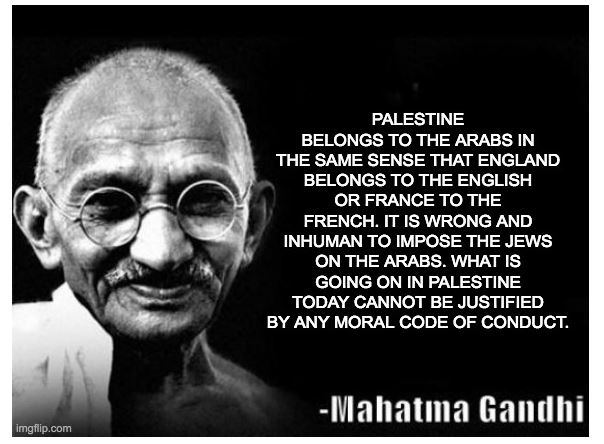
    • Historical Persecution: Gandhi expressed deep sympathy for the Jewish people who had endured historical persecution due to their religion. He likened their mistreatment by Christians to the plight of untouchables in Hinduism.
    • German Persecution: Gandhi went further, describing the German persecution of Jews as unparalleled in history. He voiced concern over Britain’s appeasement policy toward Adolf Hitler and asserted that a war against Germany, if necessary to prevent Jewish persecution, would be justifiable in the name of humanity.

    Opposition to a Zionist State in Palestine

    • Violence and Settlement: Gandhi firmly opposed the imposition of Jews on Arabs in Palestine, condemning it as inhumane. He believed that the settlement of Jews, facilitated by Britain, was inherently violent and could not be achieved through force.
    • Need for Arab Goodwill: Gandhi insisted that Jews could only settle in Palestine with the goodwill of the Arab population, without the assistance of British military force.
    • Antithetical to Jewish Rights: He argued that the idea of a Jewish homeland in Palestine contradicted the Jews’ struggle for rights in other parts of the world. Gandhi questioned whether Jews, who had settled globally, would appreciate being compelled to leave other regions for a singular homeland.

    Influence on India’s Foreign Policy

    • Wider Anti-Imperialist Sentiment: Gandhi’s stance on Palestine resonated with leaders across the Arab world and anti-imperialist movements globally. The Balfour Declaration of 1917, promising Jews a homeland in the British Mandate of Palestine, drew criticism.
    • Impact on Nehru: Jawaharlal Nehru, India’s first Prime Minister, was profoundly influenced by Gandhi’s views. Gandhi’s anti-imperialism and his perspective on the Israel-Palestine issue shaped India’s foreign policy for decades.
    • UN Resolution and Recognition: India voted against UN Resolution 181, which proposed the partition of Palestine between Jews and Arabs. Although India recognized the state of Israel in 1950, it was not until 1992, under Prime Minister P. V. Narasimha Rao, that official diplomatic relations were established.

    Conclusion

    • Mahatma Gandhi’s complex and empathetic stance on the Israel-Palestine issue reflects his unwavering commitment to non-violence and his deep sympathy for the Jewish people.
    • His opinions on the matter, rooted in anti-imperialism and a profound sense of humanity, played a pivotal role in shaping India’s foreign policy and continue to be subjects of historical significance and debate.
  • NPA Crisis

    PCA Framework extended to government NBFCs

    PCA Framework

    Central Idea

    • The RBI has announced the extension of the Prompt Corrective Action (PCA) framework to Government Non-Banking Financial Companies (NBFCs), excluding those in the Base Layer, starting from October 1, 2024.

    PCA Framework Expansion

    • Scope: Government-owned NBFCs, such as PFC, REC, IRFC, and IFCI, will now fall under the PCA framework.
    • Impact: These NBFCs will face restrictions on dividend distribution and profit remittances. Promoters and shareholders will have limitations on equity infusion, and leverage reduction will be required. Issuing guarantees or taking contingent liabilities on behalf of group companies will also be restricted.

    What is Prompt Corrective Action (PCA) Framework?

    • Definition: The PCA Framework is a watchlist of banks identified as financially weak by the central bank.
    • Regulatory Measures: When a bank falls under PCA, the regulator imposes restrictions on its operations, such as curbs on lending activities.
    • Coverage: The PCA Framework applies exclusively to commercial banks and does not extend to cooperative banks or non-banking financial companies (NBFCs).
    • History: The RBI introduced the PCA Framework in December 2002 as an early intervention mechanism, inspired by the US Federal Deposit Insurance Corporation’s PCA framework.
    • Last Update:  The revised PCA framework came into effect on January 1, 2022.
    • Monitoring Areas: The revised framework places a heightened focus on capital adequacy, asset quality, and leverage.
    • Risk Threshold: The RBI has updated the level of capital adequacy ratio shortfall that triggers classification into the “risk threshold three” category.

    Trigger Points for PCA Inclusion

    • Capital-to-Risk Weighted Assets Ratio (CRAR): CRAR measures a bank’s capital in relation to risk-weighted assets. If CRAR falls below 9 percent, the RBI takes action, including the submission of a capital restoration plan, restrictions on business activities, and dividend payments. Additional steps may follow if CRAR is below 6 percent but equal to or above 3 percent.
    • Net Non-Performing Assets (NPA): If net NPAs exceed 10 percent but remain below 15 percent, the RBI initiates measures to reduce bad loans and strengthen credit appraisal skills.
    • Return on Assets (RoA): If RoA drops below 0.25 percent, restrictions are imposed on deposit renewal, access to costly deposits and CDs, and the bank’s entry into new lines of business.

    Rationale for Expansion

    • Growing Significance: NBFCs have witnessed substantial growth and have strong linkages with various financial segments.
    • Supervisory Enhancement: In 2022, the RBI introduced the PCA framework for NBFCs to strengthen supervisory tools. The objective is to facilitate timely supervisory intervention and mandate corrective actions to restore financial health.
    • Market Discipline: The framework serves as a mechanism for effective market discipline, ensuring that NBFCs adhere to financial prudence.
  • Climate Change Impact on India and World – International Reports, Key Observations, etc.

    Climate Change Trends: Trends, Shifts, or Decadal Cycles

    Central Idea

    • Studies have highlighted various climate phenomena in India, including declining monsoon rainfall, intensifying extreme weather events, droughts, heatwaves, and cyclones.
    • However, a critical question that demands attention is whether these changes represent long-term trends, abrupt shifts, or decadal cycles.
    • These distinctions hold significant implications for resource planning and management.

    Understanding Climate Change Terminology

    • Trend: Refers to a continuous, prolonged change in climate variables, such as a steady temperature increase over time. The term “anthropogenic trend” implies changes occurring within human lifetimes.
    • Secular Trend: Indicates a variable’s continuous increase for a specific period within a more extended timeframe, like 30 years within a century.
    • Decadal Variability: Involves oscillations between positive and negative phases over tens of years, potentially resembling a shift.
    • Shift: Represents a rapid transition from one state to another, like a sudden change in rainfall patterns. An example is the shift in seasonal monsoon rainfall from above the long-period average (LPA) to below it.

    Case Study: Cyclones Trend in Arabian Sea

    • A recent study in the journal Climate and Atmospheric Science identified a notable change in cyclone formation potential over the Arabian Sea in the late 1990s.
    • Cyclone-genesis potential depends on factors like sea surface temperature, ocean heat content, wind changes from the surface to upper atmosphere, and wind rotation. These factors have favored increased cyclone formation potential since the 1990s.
    • However, the crucial question is why this rapid increase occurred during this period. The study suggests that it coincided with a shift in the ‘Warm Arctic, Cold Eurasian’ (WACE) pattern rather than being a trend.

    Warm Arctic, Cold Eurasian Pattern

    • The WACE pattern involves warm surface temperatures over the Arctic and cold surface temperatures over Eurasia. It influences upper-level circulation changes that extend into the Indian Ocean sector.
    • Global warming experienced a slowdown during this period, and scientists have proposed the occurrence of a ‘regime shift,’ similar to one observed in the mid-1970s.

    Challenge for India

    • Regardless of whether these climate changes are shifts or decadal cycles, it is essential to understand their potential long-term effects on the monsoon, cyclone frequency, heatwaves, and extreme rainfall.
    • Accurate predictions are vital for planning and allocating resources to adapt to climate risks, such as sea-level rise, heavy rainfall, drought, heatwaves, and cyclones.
    • Climate scientists must focus on understanding natural variability in the local context, especially since this variability is influenced by global warming.
    • For example, the study indicates that the monsoon decadal cycle, previously lasting around 20 years, may now extend further, raising questions about the underlying causes.

    Conclusion

    • Distinguishing between climate trends, shifts, and decadal cycles is essential for India’s adaptation strategies.
    • These distinctions affect how the country prepares for and responds to evolving climate patterns, and climate scientists must strive to unravel the complexities of natural variability to make informed predictions and policy recommendations.
  • Tribes in News

    Baiga Tribal group gets habitat rights in Chhattisgarh

    baiga

    Central Idea

    • The Baiga Particularly Vulnerable Tribal Group (PVTG) recently became the second community in the state to receive habitat rights, following the Kamar PVTG in Chhattisgarh.
    • Habitat rights recognition marks a crucial step towards preserving the culture, livelihoods, and heritage of these indigenous groups.

    Baiga PVTG

    • The Baiga are an ethnic group found in central India primarily in the state of Madhya Pradesh, and in smaller numbers in the surrounding states of Uttar Pradesh, Chhattisgarh and Jharkhand.
    • The largest number of Baiga is found in Baiga-chuk in Mandla district and Balaghat district of Madhya Pradesh.

    Understanding Habitat Rights

    • Significance: Habitat rights recognition bestows upon the concerned community various rights over their customary territory, encompassing habitation, socio-cultural practices, livelihood means, ecological knowledge, and protection of natural and cultural heritage.
    • Empowering Communities: These rights empower PVTG communities by safeguarding their traditional livelihoods and ecological knowledge, thereby promoting their development.
    • Coordination: Habitat rights facilitate the convergence of government schemes and initiatives across departments, fostering the holistic development of PVTG communities.

    Legal Framework

    • Forest Rights Act: Habitat rights for PVTGs are granted under Section 3(1)(e) of The Scheduled Tribes and Other Traditional Forest Dwellers (Recognition of Forest Rights) Act, 2006, commonly known as the Forest Rights Act (FRA).
    • Definition of Habitat: As per Section 2(h) of FRA, habitat encompasses customary habitats and other habitats within reserved forests and protected forests, catering to the needs of primitive tribal groups and pre-agricultural communities.
    • Protection from Developmental Activities: While habitat rights do not convey ownership, they require consent and consultation with the gram sabha (village council) for any developmental activity. These rights also offer legal protection under various laws.

    Habitat Rights as a Protective Measure

    • Legal Safeguards: Habitat rights serve as an additional layer of legal protection against activities that may harm the habitat or livelihood of PVTGs.
    • Administrative Resolution: If developmental activities threaten habitat rights, the tribal community can raise the issue with the administration under the Forest Rights Act, potentially seeking legal recourse.

    Determining Habitats

    • Procedure: Habitat determination is based on comprehensive guidelines issued by the Ministry of Tribal Affairs (MoTA) in 2014. Coordination among four state-level departments—Forest, Revenue, Tribal, and Panchayati Raj—is crucial.
    • Consultation: Traditional tribal leaders are consulted to assess cultural practices, traditions, and livelihoods. The government corroborates this information before officially declaring a habitat.

    Back2Basics: Particularly Vulnerable Tribal Group (PVTG)

    Definition Tribal communities with declining population, low literacy, pre-agricultural tech, and economic backwardness.
    Habitat Inhabit remote areas with poor infrastructure and limited administrative support.
    Vulnerability Highly vulnerable due to small numbers and lack of socio-economic development.
    Number 75 such groups identified and categorized as Particularly Vulnerable Tribal Groups (PVTGs).
    Origin of the Concept
    Dhebar Commission (1960-1961) Identified inequality in development among Scheduled Tribes.
    Fourth Five Year Plan Created a sub-category within Scheduled Tribes to identify lower development groups.
    Sub-Category Name Change Renamed “Primitive tribal group” to “Particularly vulnerable tribal group” in 2006.
    Features of PVTGs
    Characteristics Pre-agricultural lifestyle, hunting and gathering, zero/negative population growth, low literacy.
    Criteria Any one criterion makes a group a PTG, later renamed PVTG by the Indian government.


Join the Community

Join us across Social Media platforms.