💥UPSC 2027,2028 Mentorship (May Batch) + Access XFactor Notes & Microthemes PDF

Archives: News

  • Climate Change Negotiations – UNFCCC, COP, Other Conventions and Protocols

    Backsliding on climate action

    Context

    Europe is staring at a recession and its appetite for climate action is waning.

    Developed countries moving away from commitment

    • Countries in Europe led by Germany, Austria and the Netherlands are cranking up their coal plants again.
    • Fossil fuels are making a comeback and countries are rejecting the European Union (EU)’s plan to reduce natural gas consumption by 15%. Dutch, Polish and other European farmers are protesting against emission cuts from agriculture.
    • In the U.S. too, the Senate and the Supreme Court have struck blows to climate action.
    • And in the U.S. too, prices of fuel started increasing last year, not just this year.
    • Fossil fuels are making a quiet comeback, since the strength of the U.S. is its oil and gas industry.
    • That is why we have just witnessed a ‘re-calibration’ of U.S. policy towards the Gulf.
    • Coal, oil and gas are not going anywhere in the developed world; they are, in fact, making a comeback.
    • The West had rushed to draw down on fossil fuels even before technology for renewables were in place.

    Global peaking issue

    • Article 4 of the Paris Agreement defines ‘Global Peaking’ thus: “In order to achieve the long-term temperature goal set out in Article 2, Parties aim to reach global peaking of greenhouse gas emissions as soon as possible, recognizing that peaking will take longer for developing country Parties.”
    • The developed countries, given their historical emissions, will have to peak first.
    • That’s why the reference is to ‘global peaking’ and not ‘individual peaking’.
    • From this, it logically follows that when developing country parties peak later than developed countries, they will also achieve net zero later than developed countries.
    • Consequently, it is the logical conclusion of the Article 4 of the Paris Agreement that when we consider net zero, we should only consider ‘global net zero’ and not ‘individual net zero’ for 2050.
    • The statement calls on developed countries to do a net negative on mitigation by 2050 rather than just “net zero”, if they are serious about fighting climate change.
    • In effect, the West needs to do a net minus and not just net zero.
    • Thanks to the efforts of India, the phrase used in the 2021 summit-level declarations at both G-20 and Quad is ‘global net zero’. We need to build on this understanding.
    • India stands as beacon of hope in renewables.
    • It is time for all developing countries, especially the small island developing states, to make sure that the developed world doesn’t backslide on its commitments on mitigation yet again.

    Way forward for developing countries

    • With countries of the developed world almost sure to renege on their 2030 Paris Agreement commitments, countries of the developing world must do everything to hold the countries of the developed world to their commitments.
    • The Western nations have already started reinterpreting the Paris Agreement and look to downgrade their commitments.
    • The concept of net zero is being cleverly misinterpreted.
    •  To bring this to the attention of the Global South, India, China and eight other countries from Africa, Asia and Latin America made a cross-regional statement on ‘global net zero’ on June 7 at the UN on World Environment Day.

    Conclusion

    COP 27 in Egypt gives us that opportunity to hold their feet to the fire. It is time for the developed world to make net minus pledges. If we don’t collectively push for it, we will be collectively pushed back.

    UPSC 2022 countdown has begun! Get your personal guidance plan now! (Click here)

  • Sri Lanka’s Constitution – Strides in the Right Direction

    India raises Sri Lankan Tamil issue in UN

    gyanvapi

    India voiced concern over the “lack of measurable progress” in Sri Lanka’s promised political solution to the long-pending Tamil national question.

    Back in news: Tamil Issue

    • India has made an unexpected (for SL) reference to the crisis-hit island nation’s “debt-driven” economy in the context of its current crisis.
    • Indian delegation noted the lack of measurable progress by Government of Sri Lanka on their commitments of a political solution to the ethnic issue.
    • It sought for full implementation of the 13th Amendment of the Constitution, delegation of powers to Provincial Councils and holding of Provincial Council elections at the earliest.

    Has India retreated from supporting Sri Lanka?

    • India’s statement comes ahead of a resolution on Sri Lanka that will likely face a vote at the Council.
    • Since 2009, India has voted thrice in favour of the UN resolution on Sri Lanka — two were critical — and abstained twice, in 2014 and 2021.
    • Irrespective of its vote, India has consistently underscored the need for a political settlement within the framework of a united Sri Lanka, ensuring justice, peace, equality and dignity for the Tamils of Sri Lanka.

    Issues faced by Tamils in Sri Lanka

    • According to Freedom House’s Freedom in the World 2016 report on Sri Lanka, Tamils report systematic discrimination in areas including government employment, university education, and access to justice.
    • A large portion of the Tamil population still remains displaced.

    What is the Tamil issue in Sri Lanka?

    • Violent persecution against the Tamil population erupted in the form of the 1956, 1958, 1977, 1981 and 1983 anti-Tamil pogroms in Sri Lanka.
    • Over 13 years since the end of Sri Lanka’s civil war, in which tens of thousands of civilians were killed and disappeared, survivors continue demanding justice and accountability for war-time crimes.
    • In the post-war years, Sri Lanka’s human rights defenders have frequently flagged concerns over persisting militarisation, especially in the Tamil-majority north and east; repression, and the shrinking space for dissent.

    What is the 13th Amendment?

    • It is an outcome of the Indo-Lanka Accord of July 1987, signed by the then PM Rajiv Gandhi and President J.R. Jayawardene, in an attempt to resolve the ethnic conflict and civil war.
    • The 13th Amendment led to the creation of Provincial Councils and assured a power-sharing arrangement to enable all nine provinces in the country, including Sinhala majority areas, to self-govern.
    • Subjects such as education, health, agriculture, housing, land and police are devolved to the provincial administrations.

    Why is it contentious?

    • The 13th Amendment carries considerable baggage from the country’s civil war years.
    • It was opposed vociferously by both Sinhala nationalist parties and the LTTE.
    • The opposition within Sri Lanka saw the Accord and the consequent legislation as an imprint of Indian intervention.
    • It was widely perceived as an imposition by a neighbour wielding hegemonic influence.
    • The Tamil polity, especially its dominant nationalist strain, does not find the 13th Amendment sufficient in its ambit or substance.
    • However, some find it as an important starting point, something to build upon.

    Why India objects over this?

    • Because of restrictions on financial powers and overriding powers given to the President, the provincial administrations have not made much headway.
    • In particular, the provisions relating to police and land have never been implemented.

    Why is it significant?

    • Till date, the Amendment represents the only constitutional provision on the settlement of the long-pending Tamil question.
    • In addition to assuring a measure of devolution, it is considered part of the few significant gains since the 1980s, in the face of growing Sinhala-Buddhist majoritarianism.


    UPSC 2023 countdown has begun! Get your personal guidance plan now! (Click here)

  • RBI Notifications

    RBI’s attempt to manage currency could prove to be a costly mistake

    currencyContext

    • A currency defence will also impose costs on the economy.

    Why in news?

    • Legally, the Reserve Bank of India is mandated to target an inflation rate. But with the global economic environment taking a turn for the worse, the central bank has also been targeting the exchange rate. This could prove to be a costly mistake.

    What is a simple definition for inflation?

    • Inflation is the rate of increase in prices over a given period of time. Inflation is typically a broad measure, such as the overall increase in prices or the increase in the cost of living in a country.

    What is exchange rate?

    • An exchange rate is a rate at which one currency will be exchanged for another currency. Most exchange rates are defined as floating and will rise or fall based on the supply and demand in the market. Some exchange rates are pegged or fixed to the value of a specific country’s currency.

    What is monetary policy?

    • Monetary policy is the control of the quantity of money available in an economy and the channels by which new money is supplied. Economic statistics such as gross domestic product (GDP), the rate of inflation, and industry and sector-specific growth rates influence monetary policy strategy.

    What is fixed exchange rate in simple words?

    • A fixed exchange rate is a regime applied by a government or central bank that ties the country’s official currency exchange rate to another country’s currency or the price of gold. The purpose of a fixed exchange rate system is to keep a currency’s value within a narrow band.

    currencyWhat is a simple definition of capital?

    • Capital is a broad term that can describe anything that confers value or benefit to its owners, such as a factory and its machinery, intellectual property like patents, or the financial assets of a business or an individual.

    What is meant by the impossible trinity?

    • Many economists think of possible policy responses to capital flows in terms of the so-called “impossible trinity,” or “policy trilemma”, according to which, with an open capital account, a central bank cannot simultaneously exercise monetary control and target the exchange rate.

    A currency defence will impose costs on the economy?

    • Little economic gain: Some may believe that a stronger currency gives the impression of economic stability and generates confidence in the economy. But there is an inherent contradiction between artificially propping up the rupee and the country’s growth prospects. Very little economic gain will accrue from turning the currency’s value into a political issue.
    • Inflation should be tackled through monetary policy: Understandably, a depreciating currency leads to concerns over higher imported inflation. But inflation should be tackled through monetary policy, while exchange rate management should be linked to growth. Not the other way around.

    Significance of currency defence for foreign exchange reserves

    • Decline by 10 per cent: A large part of the current relative strength of the rupee vis-à-vis other currencies is due to the sale of dollars by the RBI  it has lost more than 10 per cent of its foreign reserves in the space of about nine months.
    • Why country needs foreign exchange: A developing economy needs foreign exchange to finance its international transactions for both the current account (goods and services) and capital account (assets) transactions.
    • Cost involved: The benefits of this stock are obvious, but there are also costs associated with the holding of these.


    https://www.civilsdaily.com/burning-issue-global-trade-in-rupees/We should follow Tenfold Path to manage Exchange Rate Volatility rather monetary policy path


    (1) Selling dollars

    • The first course of action has been selling dollars in the spot forex market.
    • This is fairly straightforward, but has limits as all crises are associated with declining reserves.
    • While this money is meant for a rainy day, they may just be less than adequate.
    • The idea of RBI selling dollars works well in the currency market, which is kept guessing how much the central bank is willing to sell at any point of time.

    (2) NRI deposits

    • The second tool used is aimed at garnering non-resident Indian (NRI) deposits.
    • It was done in 1998 and 2000 through Resurgent India bonds and India Millennium Deposits, when banks reached out asking NRIs to put in money with attractive interest rates.
    • The forex risk was borne by Indian banks.
    • This is always a useful way for the country to mobilize a good sum of forex, though the challenge is when the debt has to be redeemed.
    • At the time of deposits, the rates tend to be attractive, but once the crisis ends, the same rate cannot be offered on deposit renewals.
    • Therefore, the idea has limitations.

    (3) Let oil importers buy dollars themselves

    • The third option exercised often involves getting oil importing companies to buy dollars directly through a facility extended by a public sector bank.
    • Its advantage is that these deals are not in the open and so the market does not witness a large demand for dollars on this account.
    • It is more of a sentiment cooling exercise.

    (4) Let exporters trade in dollars

    • Another tool involves a directive issued for all exporters to mandatorily bring in their dollars on receipt that are needed for future imports.
    • This acts against an artificial dollar supply reduction due to exporter hold-backs for profit.

    (5) Liberalized Exchange Rate

    • The other weapon, once used earlier, is to curb the amount of dollars one can take under the Liberalized Exchange Rate Management System.
    • This can be for current account purposes like travel, education, healthcare, etc.
    • The amounts are not large, but it sends out a strong signal.

    (6) Forward-trade marketing

    • Another route used by RBI is to deal in the forward-trade market.
    • Its advantage is that a strong signal is sent while controlling volatility, as RBI conducts transactions where only the net amount gets transacted finally.
    • It has the same power as spot transactions, but without any significant withdrawal of forex from the system.

    (7) Currency swaps

    • The other tool in India’s armoury is the concept of swaps.
    • This became popular post 2013, when banks collected foreign currency non-resident deposits with a simultaneous swap with RBI, which in effect took on the foreign exchange risk.
    • Hence, it was different from earlier bond and deposit schemes.
    • Most preferred options by the RBI
    • Above discussed instruments have been largely direct in nature, with the underlying factors behind demand-supply being managed by the central bank.
    • Of late, RBI has gone in for more policy-oriented approaches and the last three measures announced are in this realm.

    (8) Allowing banks to work in the NDF market

    • First was allowing banks to work in the non-deliverable forwards (NDF) market.
    • This is a largely overseas speculative market that has a high potential to influence domestic sentiment on our currency.
    • Here, forward transactions take place without real inflows or outflows, with only price differences settled in dollars.
    • This was a major pain point in the past, as banks did not have access to this segment.
    • By permitting Indian banks to operate here, the rates in this market and in domestic markets have gotten equalized.

    (9) Capital account for NRI deposits

    • More recently, RBI opened up the capital account on NRI deposits (interest rates than can be offered), external commercial borrowings (amounts that can be raised) and foreign portfolio investments (allowed in lower tenure securities), which has the potential to draw in forex over time.
    • Interest in these expanded contours may be limited, but the idea is compelling.

    (10) Settlement in Rupees

    • RBI’s permission for foreign trade deals to be settled in rupees is quite novel; as India is a net importer, gains can be made if we pay in rupees for imports.
    • The conditions placed on the use of surpluses could be a dampener for potential transactions.
    • But the idea is innovative and could also be a step towards taking the rupee international in such a delicate situation.
    • Clearly, RBI has constantly been exploring ways to address our forex troubles and even newer measures shouldn’t surprise us.

    Way ahead

    • The RBI (which is in charge of monetary policy) should focus on containing inflation, as it is legally mandated to do.
    • The government (which is in charge of the fiscal policy) should contain its borrowings.
    • Higher borrowings (fiscal deficit) by the government eat up domestic savings and force the rest of the economic agents to borrow from abroad.
    • Policymakers (both in the government and the RBI) have to choose what their priority is containing inflation or being hung up on exchange rate and forex levels.
    • If they choose to contain inflation (that is, by raising interest rates) then it will require sacrificing economic growth. So be prepared for that.

    Mains question

    Q.What do you understand by the term impossible trinity? How should RBI respond to manage currency exchange rate? Discuss.

    UPSC 2023 countdown has begun! Get your personal guidance plan now! (Click here)


  • Democracy Report 2022

    democracyContext

    • G7 nations and partner countries including India recently signed “2022 Resilient democracies statement”-We, the Leaders of Germany, Argentina, Canada, France, India, Indonesia, Italy, Japan, Senegal, South Africa, the United Kingdom, the United States of America, and the European Union, affirm our commitment to strengthening the resilience of our democracies and to working towards equitable, inclusive and sustainable solutions to global challenges, including climate change and the COVID-19 pandemic, and reaffirm our commitment to the rules-based international order.

    How we define Democracy?

    • “Government of the people, by the people and for the people” the words used by Abraham Lincoln in the year 1863 while talking about democracy.

    Purpose of democracy

    • Cornerstones of democracy include freedom of assembly, association, property rights, freedom of religion and speech, inclusiveness and equality, citizenship, consent of the governed, voting rights, freedom from unwarranted governmental deprivation of the right to life and liberty, and minority rights.

    Democracy Report 2022

    • The study, titled ‘Democracy Report 2022: Autocratisation Changing Nature?’ states that more than twice as many countries are undergoing Autocratisation as are witnessing democratization.
    • The conceptual scheme takes into account not only the electoral dimension (free and fair elections) but also the liberal principle that democracy must protect “individual and minority rights”
    • The V-Dem report classifies countries into four regime types based on their score in the Liberal Democratic Index (LDI): a)Liberal Democracy b)Electoral Democracy c)Electoral Autocracy and d)Closed Autocracy

    democracyWhere do the Reports and Indices put India?
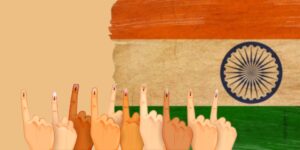
    • Sweden based Sweden-based V-Dem Institute was harsher in its latest report on democracy. It said India had become an “electoral autocracy”
    • US-based non-profit Freedom House downgraded India from a free democracy to a “partially free democracy”.
    • India, described as a “flawed democracy”, slipped two places to 53rd position in the latest Democracy Index published by The Economist Intelligence Unit.

    Status of Supporters of Democracy

    • Decolonised African Countries:
    • The number of African countries that have adopted democratic systems of government has grown since decolonisation, the collapse of communism and the ending of a number of civil wars.
    • Some countries, such as Ghana, are seen as resilient democracies, while for others the democratic transition is more fragile, after months of pro-democracy protests in 2019 in Sudan, a civilian-led transitional government is now paving the way for democracy after decades of military rule.
    • India as example:
    • India is the world’s largest democracy. India is staying as one unit despite having vast no of cultures, languages and religions. This is possible because of the democracy in India.
    • Minorities and disadvantaged sections are represented in parliament which enabled inclusive growth.
    • When India got independence, its economy was in shambles. Extreme poverty, unemployment, food insecurity were the major problems before Indian government. But India’s democratic constitution successfully balanced development and welfare of the country.
    • Now, India is one of the fastest growing economies in the world.

    What critics arguing?

    • Democracy in crisis: Democracy is more in crisis than ever before, with the onset of centralisation of power, with a foreign policy defying public opinion, with the media centralised, and with corporate control of the economy tighter than ever.
    • Increasing polarity: Threatening world order is emerging, which seeks to abrogate all individual rights and divide us along the extremist polarities that we thought had been neutralised.
    • Global Crisis: We move into this new stage of conflict carrying the risk of a nuclear tragedy, further exacerbated by the collective buttressing of a global crisis of the novel coronavirus pandemic, uncontrollable ecological disasters, and food and water deficiency.
    • Populism: Blatant fascist leanings of the so-called “democracies”, and escalating hunger and disease in Africa and other parts of the under-developed world give enough evidence that democracy faces serious issues of populism.
    • Other global problems: Growing economic discrimination, overpopulation and environmental degradation, Misgivings about moral progress, about mutual understanding, exacerbate the dismal situation that faces humanity.

    democracyWhat can be done to strengthen the democracies further?

    • Strengthening public support: To protect freedom domestically and build support for a foreign policy that protects democratic rights and values abroad, it is essential to foster a stronger public understanding of democratic principles, especially among young people. civic education is necessary.
    • Rule of law: In order to maintain trust in public institutions, the principles of legality, legal certainty and prohibition of arbitrariness of the executive powers, judicial independence, impartiality, and equality before the law need to be respected.
    • Individual rights: Democracy entails the right of individuals to participate in and influence the development of society, with free and fair elections at its core. Without an active turnout in elections and proper mechanisms for participation, the essence of democracy can be lost.
    • Free speech: Free speech guard the freedom of expression and opinion, and affirmation of commitment to the very idea of democracy and a move towards opposing oppression and violence

    Conclusion

    • Democracy is always a work in progress. The key ingredients of democracy are effective and accountable institutions, and leadership. Institutions build resilience by embedding norms and standards and bridging periods of weak leadership.

    Mains Question

    Q.Do you think Democracy is the best solution to tackle the growing fault lines between the communities? What makes India as the best example of Democracy to the world? Discuss.

    UPSC 2023 countdown has begun! Get your personal guidance plan now! (Click here) 

  • Parliament – Sessions, Procedures, Motions, Committees etc

    In news: Attorney-General (A-G) of India

    Attorney General of India (AGI)

    • The AGI is the Indian government’s chief legal advisor and is a primary lawyer in the Supreme Court of India.
    • They can be said to be the advocate from the government’s side.
    • They are appointed by the President of India on the advice of Union Cabinet under Article 76(1) of the Constitution and holds office during the pleasure of the President.
    • They must be a person qualified to be appointed as a Judge of the Supreme Court ( i.e. a judge of some high court for five years or an advocate of some high court for ten years or an eminent jurist, in the opinion of the President and must be a citizen of India.).

    Functions and duties

    • The AGI is necessary for advising the Government of India on legal matters referred to them.
    • They also perform other legal duties assigned to them by the President.
    • The AGI has the right of audience in all Courts in India as well as the right to participate in the proceedings of the Parliament, though not to vote.
    • The AGI appears on behalf of the Government of India in all cases (including suits, appeals and other proceedings) in the Supreme Court in which GoI is concerned.
    • They also represent the Government of India in any reference made by the President to the Supreme Court under Article 143 of the Constitution.
    • The AG is assisted by a Solicitor General and four Additional Solicitors General.

    Powers of AG

    • The AG can accept briefs but cannot appear against the Government.
    • They cannot defend an accused in criminal proceedings and accept the directorship of a company without the permission of the Government.
    • The AG is to be consulted only in legal matters of real importance and only after the Ministry of Law has been consulted.
    • All references to the AG are made by the Law Ministry.

    Term of Attorney General’s office

    • There is no fixed term for the Attorney General of India. The Constitution mentions no specified tenure of Attorney General. Similarly, the Constitution also does not mention the procedure and ground of his removal.

    Facts about his office:

    • He can be removed by the President at any time.
    • He can quit by submitting his resignation only to the President.
    • Since he is appointed by the President on the advice of the Council of Ministers, conventionally he is removed when the council is dissolved or replaced.

    Limitations to his powers

    The AG:

    • should not advise or hold a brief against the Government of India
    • should not defend accused persons in criminal cases without the permission of the government of India
    • should not accept appointment as a director in any company without the permission of the government

    Office of AG across the world

    • Unlike the Attorney General of the United States, the AGI does not have any executive authority.
    • Those functions are performed by the Law Minister of India.
    • Also, the AG is not a government servant and is not debarred from private legal practice.


    UPSC 2023 countdown has begun! Get your personal guidance plan now! (Click here)

  • ISRO Missions and Discoveries

    Rohini RH-200: ISRO eyeing 200th successful launch of Rohini RH-200

    rohini

    In a few weeks’ time, the Indian Space Research Organisation (ISRO) hopes to achieve a remarkable feat — the 200th successful launch of the Rohini RH-200 sounding rocket in a row.

    Rohini RH-200

    • RH-200 is a two-stage rocket capable of climbing to a height of 70 km bearing scientific payloads.
    • The first and second stages of RH-200 are powered by solid motors. The ‘200’ in the name denotes the diameter of the rocket in mm.
    • Other operational Rohini variants are RH-300 Mk-II and RH-560 Mk-III.
    • For years, the RH-200 rocket had used a polyvinyl chloride (PVC)-based propellant.
    • The first RH-200 to use a new propellant based on hydroxyl-terminated Polybutadiene (HTPB) was successfully flown from the TERLS in September 2020.
    • The first and second stages of RH200 rocket are powered by solid motors.
    • Since inception of RH200 rocket, both solid stages are processed using polyvinyl chloride (PVC) based propellant.
    • As compared to PVC based propellants, HTPB based propellant is more energetic, higher mechanical & interface properties and has less defects due to lower processing temperature.

    What basically is a Sounding Rocket?

    • A sounding rocket is an instrument-carrying rocket designed to take measurements and perform scientific experiments during its sub-orbital flight.
    • The rockets are used to launch instruments from 48 to 145 km above the surface of the Earth, the altitude generally between weather balloons and satellites.
    • The maximum altitude for balloons is about 40 km and the minimum for satellites is approximately 121 km.

    History of sounding rockets in India

    • Sounding rockets have an important place in the ISRO story.
    • The first sounding rocket to be launched from Thumba was the American Nike-Apache — on November 21, 1963.
    • After that, two-stage rockets imported from Russia (M-100) and France (Centaure) were flown. The ISRO launched its own version — Rohini RH-75 — in 1967.
    • The ISRO has launched more than 1,600 RH-200 rockets so far.
    • Currently, the RH200, RH300 MkII and RH560 Mk-III rockets are operational which were developed during the early phase of our journey in rocketry.


    UPSC 2023 countdown has begun! Get your personal guidance plan now! (Click here)

  • Tribes in News

    Odisha offering cash incentive for PVTGs Marriages

    Keeping the rampant child marriages among the Particularly Vulnerable Tribal Groups (PVTGs) of Odisha in mind, the State government is providing an incentive of ₹20,000 to the couples marrying after the age of 18 years.

    Particularly Vulnerable Tribal Groups (PVTGs)

    • There are certain tribal communities who have declining or stagnant population, low level of literacy, pre-agricultural level of technology and are economically backward.
    • They generally inhabit remote localities having poor infrastructure and administrative support.
    • These groups are among the most vulnerable section of our society as they are few in numbers, have not attained any significant level of social and economic development.
    • 75 such groups have been identified and categorized as Particularly Vulnerable Tribal Groups (PVTGs).

    Origin of the concept

    • The Dhebar Commission (1960-1961) stated that within Scheduled Tribes there existed an inequality in the rate of development.
    • During the fourth Five Year Plan a sub-category was created within Scheduled Tribes to identify groups that considered to be at a lower level of development.
    • This was created based on the Dhebar Commission report and other studies.
    • This sub-category was named “Primitive tribal group”.

    Features of PVTGs

    • The features of such a group include a:
    1. Pre-agricultural system of existence
    2. Practice of hunting and gathering
    3. Zero or negative population growth
    4. Extremely low level of literacy in comparison with other tribal groups
    • Groups that satisfied any one of the criterion were considered as PTG.
    • In 2006 the government of India proposed to rename “Primitive tribal group” as Particularly vulnerable tribal group”.


    Try this PYQ:

    Q.Consider the following statements about Particularly Vulnerable Tribal Groups (PVTGs) in India:

    1. PVTGs reside in 18 States and one Union Territory.
    2. A stagnant or declining population is one of the criteria for determining PVTG status.
    3. There are 95 PVTGs officially notified in the country so far.
    4. Irular and Konda Reddi tribes are included in the list of PVTGs.

    Which of the statements given above are correct? (CSP 2019)

    (a) 1, 2 and 3

    (b) 2, 3 and 4

    (c) 1, 2 and 4

    (d) 1, 3 and 4


    Post your answers here.


    UPSC 2023 countdown has begun! Get your personal guidance plan now! (Click here)

  • Modern Indian History-Events and Personalities

    In news: Sittanavasal Rock Cave Temple

    Sittanavasal

    The Sittanavasal Rock Cave Temple, a major centre of Jain influence for 1,000 years just before the Christian era, is in need of better upkeep.

    Sittanavasal

    • Sittanavasal is a small hamlet in Pudukkottai district of Tamil Nadu, India.
    • It is known for the Sittanavasal Cave, a 2nd-century Jain cave complex. From the 7th to the 9th century A.D., the village flourished as a Jain centre.
    • Sittanavasal is the name used synonymously for the hamlet and the hillock that houses the:
    1. Arivar Kovil (temple of Arihants — Jains who conquered their senses)
    2. Ezhadipattam (a cavern with 17 polished rock beds), megalithic burial sites and the
    3. Navachunai tarn (small mountain lake) with a submerged shrine

    What makes it special?

    • The artwork on the ceiling of the sanctum and the ardha mandapam of Arivar Kovil is an early example of post-Ajanta cave paintings of the fourth to sixth centuries.
    • It was also done using the fresco-secco technique (a process that dispenses with preparation of the wall with wet plaster).

    Features of the cave paintings

    • The ceiling paintings show ‘bhavyas’ (exalted souls who work to achieve moksha or spiritual liberation) enjoying themselves in a pool, full of lotuses; today much of it is obscured by patchy plastering.
    • Faint outlines linger of dancing girls on the ‘ardha mandapam’ pillars.
    • The colours are a mixture of plant dyes and mineral elements such as lime, lamp black, and clay pigments such as ochre for yellow and terre verte for the greyish-green tints.

    Why in news now?

    • Unrestricted public access and general exposure to the elements have led to a gradual fading away of these paintings.
    • At the Ezhadipattam, inscriptions have been vandalised beyond recognition.

    Also try this PYQ:

    Q.There are only two known examples of cave paintings of the Gupta period in ancient India. One of these is paintings of Ajanta caves. Where is the other surviving example of Gupta paintings?

    (a) Bagh caves

    (b) Ellora caves

    (c) Lomas Rishi cave

    (d) Nasik caves


    Post your answers here.


    UPSC 2023 countdown has begun! Get your personal guidance plan now! (Click here)

  • Human Development Report by UNDP

    Here is how HDI has performed in last 3 decades

    HDIContext

    • India, belonging to the medium HDI category, shows dimensional inequalities similar to or slightly below the average figures in the category, except in the case of education where it is high and closer to the low HDI countries. The inequalities in health and education are more than twice that of the very high and high HDI categories.

    Why in news?

    What is the meaning of human development?

    • Human development is defined as the process of enlarging people’s freedoms and opportunities and improving their well-being. Human development is about the real freedom ordinary people have to decide who to be, what to do, and how to live.

    What is meant by Human Development Index?

    • The HDI is a summary measure of human development. The HDI is a summary composite measure of a country’s average achievements in three basic aspects of human development: health, knowledge and standard of living.

    Who publishes HDI?

    • The Human Development Report (HDR) is an annual Human Development Index report published by the Human Development Report Office of the United Nations Development Programme (UNDP).

    HDIDimensions of the Human Development Index

    • Long and healthy life: The long and healthy life dimension is measured by life expectancy at birth. The life expectancy at birth is a statistical measure that an average individual is expected to live based on certain demographic factors such as the year of birth and current age.
    • Education: This is a second dimension in the HDI. The indicators of education are the expected years of schooling and the mean years of schooling. According to the UN, the average maximum years of schooling is 18 years, while the mean maximum years of schooling is 15 years.
    • Standard of living: The standard of living is usually measured by the gross national income (GNI) per capita. The GNI indicates the total domestic and foreign output created by the residents of a certain country.

    What are the 4 indicators of HDI?

    • Mean years of schooling
    • Expected years of schooling
    • Life expectancy at birth
    • Gross national income (GNI) per capita

    Which Countries Have the Highest HDI?

    In the latest HDI ranking, from 2022, Switzerland finished first with an HDI value of 0.962.

    HDI

    Issues in HDI

    (1) An incomplete indicator

    • Human development is incomplete without human freedom and that while the need for qualities judgement is clear; there is no simple quantitative measure available yet to capture the many aspects of human freedom.
    • HDI also does not specifically reflect quality of life factors, such as empowerment movements or overall feelings of security or happiness.

    (2) Limited idea of development

    • The HDI is not reflecting the human development idea accurately.
    • It is an index restricted to the socio-economic sphere of life; the political and civil spheres are in the most part kept separate.
    • Hence there is a sub-estimation of inequality among countries, which means that this dimension is not being taken into consideration appropriately.

    (3) A vague concept

    • Concerning data quality and the exact construction of the index HDI is conceptually weak and empirically unsound.
    • This strong critic comes from the idea that both components of HDI are problematic. The GNP in developing countries suffers from incomplete coverage, measurement errors and biases.
    • The definition and measurement of literacy are different among countries and also, this data has not been available since 1970 in a significant number of countries.

    (4) Data quality issues

    • The HDI, as a combination of only four relatively simple indicators, doesn’t only raise a questions what other indicators should be included, but also how to ensure quality and comparable input data.
    • It is logical that the UNDP try to collect their data from international organizations concentrating in collecting data in specific fields.
    • Quality and trustworthiness of those data is disputable, especially when we get the information from UN non-democratic members, as for example Cuba or China.

    (5) A tool for mere comparison

    • The concept of HDI was set up mainly for relative comparison of countries in one particular time.
    • HDI is much better when distinguishing between countries with low and middle human development, instead of countries at the top of the ranking.
    • Therefore, the original notion was not to set up an absolute ranking, but let’s quite free hands in comparison of the results.

    (6) Development has to be greener

    • The human development approach has not adequately incorporated environmental conditions which may threaten long-term achievements on human development. The most pervasive failure was on environmental sustainability.
    • However, for the first time in 2020, the UNDP introduced a new metric to reflect the impact caused by each country’s per-capita carbon emissions and its material footprint.
    • This is Planetary Pressures-adjusted HDI or PHDI. It measured the amount of fossil fuels, metals and other resources used to make the goods and services it consumes.

    (7) Wealth can never equate welfare

    • Higher national wealth does not indicate welfare. GNI may not necessarily increase economic welfare; it depends on how it is spent.
    • For example, if a country spends more on military spending – this is reflected in higher GNI, but welfare could actually be lower.

    Importance of HDI

    • Multidimensionality: It is one of the few multidimensional indices as it includes indicators such as literacy rate, enrolment ratio, life expectancy rate, infant mortality rate, etc.
    • True yardstick: It acts as a true yardstick to measure development in real sense.
    • Helps in measuring a nation’s well-being: Unlike per capital income, which only indicates that a rise in per capital income implies economic development; HDI considers many other vital social indicators and helps in measuring a nation’s well-being.

    Value addition line

    People are the real wealth of a nation. The basic objective of development should be to create an enabling environment for people to live long, healthy and creative lives. This may appear to be a simple truth.

    Conclusion

    • To sum up, the introduction of the HDI three decades ago was an early attempt to address the shortcomings in conventional measures of wellbeing.
    • The HDI has continued to attract widespread attention and motivates the work of activists, scholars and political leaders around the world.
    • The HDI compels us to ask what matters more, the quantitative expansion of an economy, or the qualitative improvement in the capabilities of society.
    • Indeed the revival of interest in this subject at the highest levels of government is the need of the hour.

    Mains question

    Q. What do you understand by human development? Critically analyse the human development index given by UNDP.


    UPSC 2023 countdown has begun! Get your personal guidance plan now! (Click here)

  • Water Management – Institutional Reforms, Conservation Efforts, etc.

    The great Indian thirst: The story of India’s water stress

    water stressContext

    • United Nations World Water Development Report of 2022 has expressed global concern over the sharp rise in freshwater withdrawal from streams, lakes, aquifers and human made reservoirs, significant water stress and also water scarcity being experienced in different parts of the world.

    Who publishes the UNs world water development report?

    • The United Nations World Water Development Report (WWDR) is published by UNESCO, on behalf of UN-Water and its production is coordinated by the UNESCO World Water Assessment Program (WWAP).

    What is the level of water stress in India?

    • The Global Drought Risk and Water Stress map (2019): It shows that major parts of India, particularly west, central and parts of peninsular India are highly water stressed and experience water scarcity.
    • Composite Water Management Index (2018): Released by Niti Aayog indicates that more than 600 million people are facing acute water stress.
    • India is the world’s largest extractor of groundwater: Accounting for 25 per cent of the total. 70 percent of our water sources are contaminated and our major rivers are dying because of pollution.

    water stressWhy is Rural to Urban transfer of water becoming an issue in India?

    • Rising urban population: According to Census 2011, the urban population in India accounted for 34% of total population. It is estimated that the urban population component in India will cross the 40% mark by 2030 and the 50% mark by 2050 according to World Urbanization Prospects, 2018.
    • Water use in the urban areas: Water use in the urban sector has increased as more and more people shift to urban areas. Per capita use of water in these centers rises, which will continue to grow with improved standards of living.
    • Shifting of water source in Urban areas: As the city grows and water management infrastructures develop, dependence shifts to surface water from groundwater. For example: In Ahmedabad, more than 80% of water supply used to be met from groundwater sources till the mid-1980s. Due to such overexploitation of groundwater the depth to groundwater level reached 67 meters in confined aquifers. The city now depends on the Narmada canal for the bulk of its water supply.
    • Dependence of urban areas on rural areas for water source and rural-urban disputes over water: Cities largely depend on rural areas for raw water supply, which has the potential to ignite the rural-urban dispute. For example: Nagpur and Chennai face the problem of rural-urban water disputes.


    water stressReasons for disputes

    • Diversion of resource: Water is transported to urban areas at the expense of rural areas. Due to the high population in urban areas the water requirement for daily use is very high.
    • High demand of water for industrial purposes: In urban areas the water is heavily used in industries creating water stress.
    • High Agriculture dependence: In the rural areas water is used mainly for irrigation purposes and due to heavy dependence on agriculture the water is very essential in rural areas.
    • Water pollution: In cities, most of this water is in the form of grey water with little recovery or reuse, eventually contributing to water pollution.
    • Bad governance: Politicization of water for vote bank and skewed distribution of water particular regions For example: Andhra and Telangana.

    water stress Climate change exacerbate the rural-urban disputes 

    • Affecting rainfall pattern: Climate change affects the amount of rainfall in the region which is the prime source of both surface water and groundwater.
    • Increase rate of evaporation over surface water: because of high temperature the surface waters of lakes, rivers, canals etc. face high evaporation water loss.
    • Melting of glaciers: glaciers are the sources for perennial rivers of India. Due to global warming, glaciers are melting and hence affecting the perennial nature of rivers.
    • Frequent droughts: It affects the groundwater recharge process and drying of surface waters which creates shortage of water. It exacerbate the rural-urban conflict.

    .


    UPSC 2023 countdown has begun! Get your personal guidance plan now! (Click here)

Join the Community

Join us across Social Media platforms.