💥UPSC 2026, 2027, 2028 UAP Mentorship (March Batch) + Access XFactor Notes & Microthemes PDF

Type: Explained

  • Coal and Mining Sector

    Power markets in India: their working, advantages, and the road ahead

    Note4Students

    From UPSC perspective, the following things are important:

    Mains level: Power markets working and Power exchanges in India

    Why in the news?

    Amid rising summer demand, the government has permitted the trading of excess electricity produced from “linkage coal” within the nation’s power markets.

    What is the Power Market?

    • A power market is a platform where electricity is bought and sold, enabling generators and consumers to trade electricity based on market-driven prices and conditions.

    Types of Markets related to Power exchanges in India include:

    • Spot Markets: These include real-time markets (RTM) and day-ahead markets (DAM). RTM allows for immediate buying and selling of electricity, while DAM involves bidding for electricity to be delivered the next day.
    • Term-Ahead Markets: These markets facilitate trades for longer durations, ranging from hours to several days in advance, providing more certainty and planning for market participants.

    Their working and Power exchanges in India

    • Market Operation: Power exchanges in India operate as platforms where electricity generators (sellers) and consumers (buyers) participate in trading electricity. Generators submit offers indicating the quantity of electricity they can supply at various prices, while buyers submit bids indicating the quantity they wish to purchase at various prices.
    • Renewable Energy Certificates (REC): Power exchanges also manage the trading of Renewable Energy Certificates (RECs). RECs represent the environmental attributes of renewable electricity generated and can be sold to utilities to meet their renewable purchase obligations (RPOs).
    • Regulation: Power exchanges are regulated by the Central Electricity Regulatory Commission (CERC) in India. The regulatory framework ensures fair and transparent trading practices, oversees market operations and sets rules to promote market integrity.
    • Market Dominance: The Indian Energy Exchange (IEX) is the dominant power exchange in India, handling the majority of electricity trading volume. Other exchanges include Power Exchange India Limited (PXIL) and Hindustan Power Exchange Ltd (HPX), though IEX holds more than 90% of the market share.

    Their advantages 

    • Flexibility: Enables generators to respond swiftly to fluctuating electricity demand by selling surplus power at market-driven prices, enhancing grid stability.
    • Efficiency: Optimizes utilization of coal-based power generation assets, minimizing wastage and maximizing revenue through market-based transactions.
    • Transparency: Promotes transparent pricing mechanisms in the electricity sector, fostering competitive market dynamics and benefiting consumers with potentially lower electricity costs.

    The Road Ahead for Power Exchanges:

    • Market Coupling: It matches bids from different power exchanges to discover a uniform market clearing price, promoting efficiency and reducing price disparities across regions.It enhances price discovery, market stability, and regional grid integration by providing a reliable reference price for policymakers.
    • Capacity Markets: It compensates generators for maintaining available capacity, incentivizing investment in reliable generation infrastructure. They ensure long-term grid reliability, especially during peak demand periods, aligning India’s power market with international standards and attracting investment.
    • International Alignment and Competitiveness: India’s adoption of advanced market structures (like market coupling and capacity markets) aims to align with mature international markets.These developments can foster greater competition, attract investment, and enhance overall sector efficiency and reliability.

    Mains PYQ: 

    Q Write a note on India’s green energy corridor to alleviate the problem of conventional energy. (UPSC IAS/2013)

  • Climate Change Impact on India and World – International Reports, Key Observations, etc.

    Create the space for governance with a green heart

    Note4Students

    From UPSC perspective, the following things are important:

    Prelims level: Present Himalayan states

    Mains level: Problems Associated with Lack of Political Will on Environmental Governance

    Why in the news?

    As a new term begins for the government and the Lok Sabha, it must prioritize environmental concerns. No government has ever truly prioritized the environment, and the last one, focused on development, actively harmed it.

    Present Himalayan states

    • The Indian Himalayan Region (IHR) encompasses the portion of the Himalayas located within India, extending across thirteen Indian States and Union Territories, including Ladakh, Jammu and Kashmir, Himachal Pradesh, Uttarakhand, Sikkim, West Bengal, Manipur, Meghalaya, Mizoram, Nagaland, Tripura, Assam, and Arunachal Pradesh.

    Problems Associated with Lack of Political Will on Environmental Governance

    • Neglect of Climate Change Mitigation and Adaptation: Inadequate actions to reduce carbon emissions and build climate resilience.And failure to address the remediation aspects of climate change, such as food security and disaster preparedness.
    • Degradation of Forest Cover: Significant decline in both quantitative and qualitative forest cover.Recent legislation weakening forest protections, leading to further environmental damage.
    • Deteriorating Urban Environments: Severe air pollution and water scarcity in major cities, adversely affect public health.Poor sewage treatment infrastructure, resulting in heavily polluted rivers and water bodies.
    • Environmental Degradation in the Himalayas: Rapid glacial melting and altered weather patterns threatening water and food security. Government inaction on local environmental protests and concerns highlights a disconnect between policy and grassroots needs.
    • Ineffective Environmental Impact Assessments (EIA): EIAs are reduced to mere formalities, failing to prevent environmentally harmful projects.Dilution of EIA regulations and lack of meaningful stakeholder engagement, compromising environmental protection efforts.

    How This Can Be Restored?

    • Enhanced Environmental Impact Assessments (EIA): Strengthen EIA mechanisms, elevate them to statutory status, and ensure they are thorough and transparent to prevent projects from causing environmental harm.
    • Restoration Projects: Initiate large-scale conservation and restoration projects for glaciers, forests, and rivers in the Himalayan region.
    • Community Involvement: Actively involve local communities and stakeholders in decision-making processes to ensure their concerns and knowledge are integrated into policy-making.
    • Strict Enforcement of Environmental Laws: Improve enforcement of existing environmental regulations and increase penalties for violations to deter harmful activities.
    • Sustainable Development Policies: Develop and implement policies that balance development with environmental conservation, ensuring long-term ecological health and resilience.
    • Revised Legislation: Reassess and amend legislation like the Forest (Conservation) Amendment Bill, 2023, to provide stronger protections for natural habitats.
    • Resilience Building: Invest in infrastructure and programs aimed at enhancing resilience against climate change impacts, such as improved water management systems and disaster preparedness plans.

    Government steps taken: 

    • The National Mission for Sustaining the Himalayan Ecosystem (NMSHE) was launched as part of India’s National Action Plan on Climate Change to holistically address the vulnerabilities of the Himalayan ecosystem.
    • Under NMSHE, the government has developed a common framework and methodology for climate vulnerability and risk assessment across 12 Himalayan states.
    • The government has also established the “G.B. Pant Institute of Himalayan Environment & Development” to focus on sustainable development and environmental conservation in the Indian Himalayan Region.

    Conclusion: To achieve Sustainable Development Goal 13 (Climate Action), India must enhance environmental governance, prioritize climate resilience, and enforce robust conservation policies to protect the Indian Himalayan Region and its ecosystems.


    Mains PYQ:

    Q Climate change is a global problem. How India will be affected by climate change? How Himalayan and coastal states of India will be affected by climate change? (15) (UPSC IAS/2017)

  • Railway Reforms

    Indian Railways and safety challenges

    Note4Students

    From UPSC perspective, the following things are important:

    Mains level: The major challenges that Indian Railways face

    Why in the news?

    The turmoil has not subsided since the tragic accident involving the GFCJ container train, which, while travelling at high speed, collided with the 13174 Agartala-Sealdah Kanchanjunga Express, resulting in 11 deaths and approximately 40 injuries.

    Indian Railways: Recent Issues

    • Tragic Accident: The GFCJ container train collided with the 13174 Agartala-Sealdah Kanchanjunga Express, causing 11 deaths and around 40 injuries.
    • Premature Conclusions: The Chairperson of the Railway Board prematurely blamed the container train crew and provided incorrect information about casualties.
    • Slow Rollout of Kavach System: Kavach, an indigenous signalling system to prevent collisions, has been slowly implemented due to limited industrial capacity.
    • Staffing Issues: Indian Railways is overstaffed but has critical vacancies in safety-sensitive positions, leading to stress and overwork for existing staff.
    • Ambiguous Protocols: Ambiguous rules for handling Automatic signal failures create confusion and increase the risk of accidents.

    What are the major challenges that Indian Railways faces?  

    • Safety Concerns: Inadequate measures to prevent collisions and improve overall safety, despite technological advancements.
    • Staffing Shortages: Critical vacancies in essential roles such as loco pilots, train managers, and signal maintainers, lead to overworked staff.
    • Slow Technological Implementation: Delayed implementation of safety technologies like the Kavach system due to limited industrial capacity and lack of focus.
    • Ambiguous Safety Protocols: Poorly drafted rules and unclear protocols for handling signal failures and emergencies.
    • Managerial and Communication Issues: Premature conclusions and miscommunication by top management, undermine trust and effective crisis management.

    What can be the solution?

    • Enhanced Safety Protocols: Strengthen and clarify protocols for Automatic signal failures and other emergency situations.
    • Accelerated Technology Adoption: Fast-track the implementation of safety technologies like the Kavach system, with targets of 4,000 to 5,000 km/year.
    • Increase Recruitment in Critical Areas: Fill vacancies in essential safety roles promptly to reduce stress and workload on existing staff.
    • Encourage Industrial Capacity Building: Support and incentivize allied industries to increase capacity for producing and implementing safety technologies.
    • AI-Enabled Safety Monitoring: Implement AI-enabled applications to analyze digital data from station loggers and train microprocessors for actionable safety insights.
    • Focus on Managerial Accountability: Ensure that managerial issues are thoroughly investigated and addressed to improve overall safety management.

    Steps taken by the government:

    • The government has established the Rashtriya Rail Sanraksha Kosh (RRSK), a dedicated fund with a corpus of Rs. 1 lakh crore over 5 years, to finance critical safety asset replacement, renewal, and upgradation.
    • The government has implemented Electrical/Electronic Interlocking Systems at 6,427 stations as of May 2023, which centrally operate points and signals to eliminate human error-related accidents.

    Conclusion: Strengthen and clarify safety protocols for handling signal failures and emergencies, ensuring clear guidelines and training for staff. Fast-track the implementation of safety technologies like the Kavach system, setting annual targets of 4,000 to 5,000 km to improve overall safety and prevent collisions.

    Mains PYQ:

    Q Why is Public Private Partnership (PPP) required in infrastructural projects? Examine the role of PPP model in the redevelopment of Railway Stations in India. (UPSC IAS/2022)

  • India among a select few countries that have not conducted the Census    

    Why in the news?

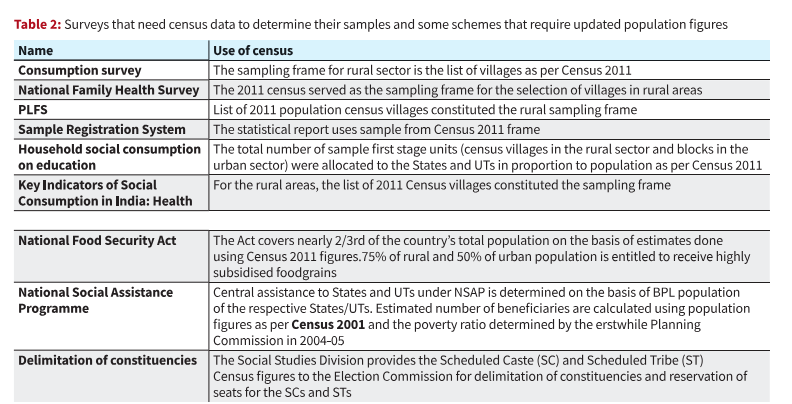
    India’s last census was conducted in 2011, and the scheduled Census 2021 has been indefinitely postponed, citing the COVID-19 pandemic. This delay has significant implications for welfare schemes and policy planning reliant on accurate population data.

    Significance of Census Calculation  

    • Foundation for Policy Planning and Governance: Census data forms the foundational basis for policy planning and governance across various sectors such as education, healthcare, infrastructure development, and social welfare.
    • Allocation of Resources and Welfare Benefits: Census figures are crucial for determining the allocation of resources and distribution of welfare benefits like food subsidies, housing schemes, healthcare facilities, and educational resources.
    • Monitoring Socio-Economic Development: Census data enables monitoring of socio-economic development indicators over time, such as literacy rates, employment patterns, poverty levels, and household incomes.

    Present Observations:

    • Global Comparison: India is among a minority of countries (44 out of 233) that have not conducted the latest census, despite most nations managing to proceed with their census rounds after March 2020, amidst the pandemic. This delay places India alongside conflict-affected countries and those facing economic crises.
    • Regional Context: Among BRICS nations, India is the only country yet to conduct its latest census, contrasting with others such as Brazil, China, South Africa, and Russia, which have completed their census rounds during or after the pandemic.
    • Dependency on Census Data: Census data serves as the primary source for accurate demographic information at grassroots levels, crucial for planning and implementing welfare schemes across various sectors, including education, healthcare, and social security.

    Implications for Society:

    • Welfare Scheme Implementation: The absence of updated census figures hampers the effective implementation of welfare schemes such as the Public Distribution System (PDS), National Family Health Survey, and National Family Security Act. Outdated population data from 2011 leads to inaccuracies in identifying beneficiaries, potentially excluding millions from essential services and entitlements.
    • Education and Social Development: Schemes like the Eklavya Model Residential School (EMRS), aimed at providing quality education to Scheduled Tribe (ST) children, are adversely affected. Allocation decisions based on 2011 census data may not accurately reflect current demographic realities, leading to misplaced resource distribution and missed opportunities for targeted interventions.
    • Economic and Social Planning: Census data plays a pivotal role in economic planning, resource allocation, and policy formulation. Without updated population figures, India faces challenges in devising evidence-based policies that address regional disparities, socio-economic needs, and demographic shifts effectively.

    Conclusion: The indefinite postponement of Census 2021 in India has profound implications for governance, socio-economic planning, and equitable development. Addressing these challenges requires expedited efforts to conduct the census and ensure accurate demographic data to inform inclusive policy frameworks.

    Mains question for practice: 

    Q Discuss the present observations regarding India’s census delay and analyze its implications. 15M

  • Goods and Services Tax (GST)

    What is the GST Council, and what does it do?   

    Note4Students

    From UPSC perspective, the following things are important:

    Prelims level: GST Council

    Mains level: Powers and Functions of GST Council

    Why in the news?

    The 53rd meeting of the Goods and Services Tax (GST) Council convened in Delhi, chaired by Nirmala Sitharaman, Union Minister for Finance and Corporate Affairs, on Saturday, June 22nd.

    What is the GST Council?

    • The GST Council is a constitutional body established under Article 279A of the amended Constitution of India.
    • It is a joint forum consisting of the Union Finance Minister (as Chairperson), the Union Minister of State for Finance, and representatives from each state and Union Territory (UT) with legislatures.
    • The Council is responsible for making recommendations on issues related to GST, including tax rates, exemptions, and model GST laws.

    Powers and Functions of the GST Council

    • Recommendations on GST Issues: The Council advises the Union and State Governments on matters related to the goods and services tax.
    • Tax Rates: It decides on the rates of GST applicable to goods and services, including any modifications or exemptions.
    • Dispute Resolution: It addresses disputes that may arise between the Union and States or among States regarding GST.
    • Administrative Changes: The Council can recommend administrative changes to improve the efficiency of GST implementation.
    • Review and Revision: Periodically review GST rates and provisions to align with economic realities and policy objectives.

    Evolution of the GST Council since its inception:

    • Formation and Initial Years: Established in 2016 after the passage of the 122nd Constitutional Amendment Act. The Council began functioning in 2017 when GST was implemented nationwide.
    • Operational Efficiency: Over the years, the Council has evolved to streamline decision-making processes, including real-time discussions and consensus-building among members.
    • Expansion of Scope: Initially focusing on setting basic tax rates and exemptions, the Council’s scope expanded to include amendments to GST laws and procedural changes.
    • Judicial Scrutiny: In 2022, the Supreme Court clarified that the Council’s recommendations are not binding but reflect collaborative efforts between the Union and States.
    • Adaptation to Challenges: Adapted to economic fluctuations, pandemic challenges (like the postponement of GST filing deadlines during COVID-19), and evolving sectoral needs.
    • Interstate Dynamics: The voting structure of the Council, with states collectively having a two-thirds voting share, underscores its federal and cooperative nature.

    Conclusion: The GST Council, pivotal since 2017, advises on GST matters, sets tax rates, resolves disputes, and evolves with economic shifts. Its federal structure ensures collaborative decision-making for efficient tax administration in India.

    Mains PYQ:

    Q Enumerate the indirect taxes which have been subsumed in the Goods and Services Tax (GST) in India. Also, comment on the revenue implications of the GST introduced in India since July 2017. (UPSC IAS/2019)

  • Foreign Policy Watch: India-Myanmar

    A progressive Indian policy on Myanmar outlined

    Note4Students

    From UPSC perspective, the following things are important:

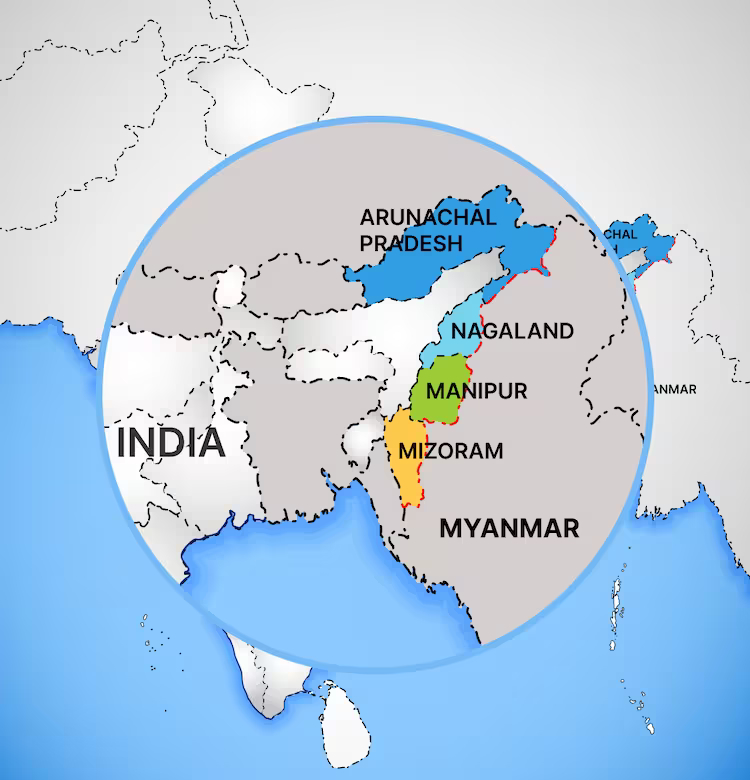
    Prelims level: Which Indian states share a border with Myanmar?

    Mains level: How India Can Step Out of China’s Shadow

    Why in the news?

    Three years after the 2021 coup, Myanmar’s military continues to kill, maim, and displace its people. India maintains formal relations despite the violence.

    India-Myanmar Ties

    • Formal Relations with Junta: Despite the military coup in February 2021, India has maintained formal relations with the Myanmar junta.
    • Justification of Policy: Indian foreign policy scholars argue that engaging with the junta is necessary to protect India’s strategic interests in Myanmar.
    • Lack of Engagement with Pro-Democracy Forces: The Narendra Modi government has not actively engaged with Myanmar’s pro-democracy resistance.

    How India Can Step Out of China’s Shadow

    • Values vs. Interests: India’s Myanmar policy should integrate progressive values with strategic interests, leveraging democratic principles to better align national interests with regional influence because India’s foreign policy for East Asia is based on very narrow strategic interests.
    • Federal Democracy as a Model: India can leverage its credentials as the largest federal democracy to influence Myanmar’s democratic resistance, which aims to replace the military-drafted constitution with a federal one.
    • Capacity-Building and Knowledge Exchange: India can support Myanmar’s pro-democracy forces through programs that promote federal cooperation, distinguishing itself from China.

    Weapons Sales and Humanitarian Outreach

    • Halt Weapon Sales: India should stop selling weapons to the Myanmar military, as these are used against civilians. Reports indicate ongoing sales of military hardware and supplies by Indian state-owned manufacturers to the junta.
    • Humanitarian Corridors: India should open cross-border humanitarian corridors in regions affected by the conflict, such as Sagaing Region, Chin State, and northern Rakhine State.
    • Revoking Border Fencing Plans: The suspension of the Free Movement Regime along the India-Myanmar border should be lifted to facilitate humanitarian aid.
    • Collaboration with Aid Networks: India should work with local and international NGOs to deliver emergency aid, ensuring it is not controlled by the junta.

    Detention of Asylum Seekers

    • Halt Deportations: The Modi government should stop deporting asylum seekers from Myanmar. Over 115 asylum seekers have been deported from Manipur alone.
    • Adherence to International Principles: India should adhere to the principle of non-refoulement, which discourages deporting refugees back to a country where they face persecution or death.
    • Humane Treatment: Asylum seekers should be treated as refugees in need of humanitarian assistance rather than illegal immigrants. The government should release detained Chin refugees in Assam and provide humane shelter.

    Conclusion: India should actively support Myanmar’s pro-democracy forces by leveraging its federal democratic model and providing capacity-building and knowledge exchange programs.

    Mains PYQ:

    Q Cross-border movement of insurgents is only one of the several security challenges facing the policing of the border in North-East India. Examine the various challenges currently emanating across the India-Myanmar border. Also, discuss the steps to counter the challenges. (UPSC IAS/2019) 

  • Higher Education – RUSA, NIRF, HEFA, etc.

    The NEP debate: Why criticism of the policy is premature and off the mark?

    Note4Students

    From UPSC perspective, the following things are important:

    Mains level: Reason behind the criticism of NEP

    Why in the News?

    Opposition mainly comes from traditionalists who dislike markets, industrial experience, and internships. The NEP supports Ambedkar’s vision of education focused on employability for most Indians.

    About the National Education Policy (NEP)

    • The NEP was implemented in 2020, replacing the outdated NEP of 1986 after a delay of 34 years.
    • It aims to address the low employability of graduates by aligning education with the rapidly changing technological and industrial landscape.
    • It emphasizes a well-rounded education that includes in-depth knowledge, soft skills, technical skills, research capabilities, analytical and problem-solving abilities, and critical thinking.
    • The NEP shifts all programs towards outcome-based learning, with specified learning outcomes and corresponding assessments for each course.

    Why Criticism of the Policy is Premature and Off the Mark?

    • Early Stage of Implementation: Critics argue that it dilutes core content and burdens students and educators with bureaucratic requirements, but these criticisms are considered premature.
    • Continuous Task: Overhauling the vast education sector is a continuous task, and many concerns are over-emphasized.
    • University-Specific Issues: Much criticism centers around syllabus design and content, which is a university-specific issue and not a failure of the NEP.

    Provisions under NEP and Government Efforts

    • Credit-Based Courses: The NEP introduces credit-based courses, allowing for a flexible and multidisciplinary academic path.
    • Ability and Skill Enhancement Courses: These courses are designed to equip students with employability or entrepreneurial skills.
    • Recognition of Prior Learning (RPL): Students gaining industrial exposure related to their studies can earn credits through RPL, facilitating lifelong learning.
    • Revamped Curriculum and Syllabi: Emphasis on hands-on learning and continuous assessment through credited tutorials.
    • Internships and Practical Experiences: Integration of internships, apprenticeships, projects, and community outreach within degree programs.
    • Flexible Exit and Re-Entry: The NEP allows students to exit and re-enter programs, accommodating varied backgrounds and circumstances.

    Way Forward

    • Responsive Academia: Academia should be responsive to the requirements of the masses and markets, ensuring education is aligned with employability and industrial needs.
    • Continuous Feedback and Updates: Institutions should continuously update their programs based on feedback from stakeholders, following the example of successful adopters like Delhi University.
    • Long-Term Infrastructure Development: Realizing the full potential of the NEP requires long-term infrastructure development, which should be a sustained effort.

    Mains PYQ: 

    Q National Education Policy 2020 is in conformity with the Sustainable Development Goal-4 (2030). It intends to restructure and reorient the education system in India. Critically examine the statement. (UPSC IAS/2020) 

  • Foreign Policy Watch: India-Bangladesh

    India- Bangladesh Bilateral Relations   

    Note4Students

    From UPSC perspective, the following things are important:

    Prelims level: Bordering Indian states with Bangladesh

    Mains level: India-Bangladesh Relations and the Teesta Water Dispute

    Why in the news? 

    Shortly after Hasina commenced her two-day state visit to India, External Affairs Minister S. Jaishankar convened with her to discuss several bilateral matters.

    Bangladesh’s Prime Minister Sheikh Hasina’s Visit to India

    Purpose of Visit: To boost bilateral ties between India and Bangladesh.

    • Sheikh Hasina will hold talks with Prime Minister Narendra Modi.Meetings with President Droupadi Murmu and Vice President Jagdeep Dhankhar.
    • Bilateral cooperation in security, trade, commerce, energy, connectivity, science and technology, defence, and maritime affairs. Potential agreements in various sectors to enhance cooperation.

    India-Bangladesh Relations and the Teesta Water Dispute

    Bilateral Relations: 

    • Strategic Importance: Bangladesh is a key partner under India’s “Neighbourhood First” policy.
    • Trade: Bangladesh is India’s largest trade partner in South Asia. India is the second biggest trade partner of Bangladesh in Asia.
    • Connectivity: The Maitri Setu bridge over river Feni in Tripura and the Chilahati-Haldibari rail link are notable projects.
    • Development Partnership: Bangladesh is India’s largest development partner with significant commitments under the Line of Credit.
    • Border Cooperation: Active cooperation on police matters, anti-corruption activities, combating illicit drug trafficking, fake currency, and human trafficking.

    Teesta Water Dispute:

    • Controversy: The sharing of Teesta River water has been a contentious issue between India and Bangladesh, affecting bilateral relations.
    • Current Status: Discussions and negotiations are ongoing to reach a mutually acceptable agreement.

    Way Forward

    • Enhanced Bilateral Cooperation: Continue to strengthen ties through regular high-level visits and dialogues.
    • Resolution of Teesta Dispute: Focus on finding a fair and sustainable solution to the Teesta water-sharing issue to improve relations.
    • Economic Integration: Expand trade and investment opportunities to boost economic ties.
    • Infrastructure Development: Further develop connectivity projects to enhance trade and people-to-people exchanges.
    • Security Cooperation: Strengthen cooperation on security issues, including counter-terrorism and border management.
    • Cultural and Educational Exchanges: Promote cultural and educational exchanges to build stronger people-to-people ties.

    Mains PYQ:

    Q Critically examine the compulsions which prompted India to play a decisive role in the emergence of Bangladesh.(UPSC IAS/2013)

  • Liquor Policy of States

    How Dangerous is Methanol Poisoning?      

    Note4Students

    From UPSC perspective, the following things are important:

    Mains level: Preventive measures to avoid consumption of Spurious liquor

    Why in the news?

    At least 38 people have died after consuming spurious liquor in Tamil Nadu’s Kallakurichi district.

    Key Points Related to the Kallakurichi District Incident in Tamil Nadu

    • Incident Overview: As of 9:30 p.m. on June 20, at least 38 people died after consuming spurious liquor in Kallakurichi district and 82 others were receiving treatment in hospitals. The tragedy follows a similar incident a year ago in Chengalpattu and Villupuram districts, which resulted in over 20 deaths.
    • Government Response: Chief Minister M.K. Stalin transferred the Collector and suspended the district superintendent of police. The State deployed 2,000 police personnel around the district. A one-man commission headed by former High Court judge B. Gokuldas was constituted to inquire into the tragedy.

    How is Spurious Liquor Made and Why Does it Have Deadly Effects?

    • Composition: Spurious liquor often contains methanol in addition to ethanol. Methanol is sometimes added to increase the intoxicating effect and/or bulk volume of the homemade liquor.
    • Methanol’s Deadly Effects: Methanol is metabolized in the liver to formaldehyde by alcohol dehydrogenase (ADH) enzymes. Formaldehyde is further metabolized to formic acid by aldehyde dehydrogenase (ALDH) enzymes. The accumulation of formic acid leads to metabolic acidosis and acidaemia, damaging various organs and leading to potential death.

    Why is Methanol added to Liquor and How is it Processed by the Body if Ingested?

    • Reasons for Adding Methanol: To enhance the ‘kick’ or intoxicating effects of the liquor and increase the volume of the liquor cheaply.
    • Processing in the Body: ADH enzymes convert methanol to formaldehyde.ALDH enzymes then convert formaldehyde to formic acid. The build-up of formic acid causes metabolic acidosis, optic neuropathy, cerebral oedema, hemorrhage, and potential death.

    Is Treatment Effective?

    • Timeliness is Crucial: Early intervention is essential for effective treatment of methanol poisoning. Prompt administration of antidotes and supportive therapies significantly improves the chances of recovery and reduces the risk of severe complications such as blindness or death.
    • Available Antidotes: Ethanol and Fomepizole are effective antidotes that inhibit the metabolism of methanol to toxic compounds. Ethanol competes with methanol for ADH enzymes, while fomepizole directly inhibits these enzymes, preventing the formation of harmful formaldehyde and formic acid.
    • Supportive Therapies: Hemodialysis can effectively remove methanol and its toxic metabolites from the bloodstream, while folinic acid helps break down formic acid. These treatments, when combined with antidotes, can mitigate the damage to vital organs and improve patient outcomes.

    Way forward:

    • Strict Regulation and Monitoring: Enhance regulatory oversight of liquor production and distribution to ensure all alcoholic beverages meet safety standards. Regular inspections and stringent enforcement of licensing laws can prevent the production and sale of illicit alcohol.
    • Public Awareness and Education: Conduct widespread public education campaigns to inform the community about the dangers of consuming spurious liquor. Awareness programs can help people recognize the signs of adulterated alcohol and understand the severe health risks associated with its consumption.

    Mains PYQ:

    Q Effectiveness of the government system at various levels and people’s participation in the governance system are interdependent.” Discuss their relationship with each other in the context of India. (UPSC IAS/2016)

  • Russian Invasion of Ukraine: Global Implications

    Why the Russia-North Korea pact is a big deal? 

    Note4Students

    From UPSC perspective, the following things are important:

    Prelims level: Bordering countries and water bodies near North Korea

    Mains level: Strategic Implications of Pact

    Why in the news?

    Russia’s President Vladimir Putin concluded his recent visit to Pyongyang with a significant agreement: both Russia and North Korea pledged to provide swift military aid in the event of armed aggression against either nation.

    Historical Context

    • Post-World War II Context: The Soviet Union aimed to establish a communist regime in Korea.USSR provided Significant military aid provided to North Korea’s founder, Kim Il Sung, during the Korean War. Post-war support from the USSR and China included substantial military and other aid to North Korea.
    • 1961 Russo-North Korea Treaty: The Treaty of Friendship, Cooperation, and Mutual Assistance included a mutual defence agreement.
    • Post-Soviet Union Period: Relations deteriorated after the Soviet Union dissolved in 1991, voiding the treaty.
    • Early 2000s Reconnection: Under Putin, Russia moved closer to North Korea despite not supporting its nuclear ambitions initially. Supported sanctions against North Korea aimed at curbing nuclear capabilities.
    • Post-2022 Dynamics: After Russia’s invasion of Ukraine, Russia faced international isolation. Russia and North Korea solidified their alliance against the Western liberal order.

    What the Pact Says

    • Scope of Cooperation: Cooperation on a wide range of issues, including mutual military support and unspecified technological assistance.
    • Mutual Defense Provision: Under Article 4 of the Pact in case of armed invasion, the other side shall provide military and other assistance without delay, following Article 51 of the UN Charter and respective national laws.
    • Technological Assistance: Crucial for North Korea, which currently has nuclear weapons but lacks advanced missile guidance systems and other technologies for long-range nuclear weapons.

    Strategic Implications 

    • Direct Threat to South Korea and Japan: Both countries perceive the pact as a security threat due to North Korea’s nuclear capabilities and the added Russian security umbrella.
    • Potential Arms Race: Japan is revisiting its pacifist stance and enhancing military capabilities, while South Korea is considering new defence strategies, potentially including arms exports.
    • Strengthening of US Alliances: South Korea and Japan are likely to deepen their alliances with the United States in response to heightened regional security concerns.
    • NATO and Global Security: The pact raises alarms among NATO allies and other global stakeholders, prompting reassessments of security strategies and commitments.
    • Nuclear Proliferation Concerns: Increased collaboration between Russia and North Korea could lead to advancements in North Korea’s nuclear and missile capabilities, impacting global non-proliferation efforts.
    • Global Strategic Repercussions: The pact sets a precedent for authoritarian regimes aligning against Western liberal orders, influencing geopolitical strategies and alliances beyond Asia.

    Way forward: 

    • Enhanced Diplomatic Engagement and Dialogue: Engage in robust diplomatic efforts to mitigate tensions and enhance transparency regarding the intentions behind the Russia-North Korea pact. Encourage multilateral dialogues involving key stakeholders such as the United States, South Korea, Japan, and other concerned parties to foster mutual understanding and reduce the likelihood of miscalculation.
    • Reinforcement of Regional Security Mechanisms: Strengthen existing regional security mechanisms, particularly alliances with the United States underpinned by treaties such as the Mutual Defense Treaty with Japan and the mutual defence commitments with South Korea.

    Mains PYQ:

    Q What is the significance of Indo-US defence deals over Indo-Russian defence deals? Discuss with reference to stability in the Indo-Pacific region. (UPSC IAS/2020)