💥UPSC 2026, 2027, 2028 UAP Mentorship (March Batch) + Access XFactor Notes & Microthemes PDF

Type: Explained

  • Climate Change Negotiations – UNFCCC, COP, Other Conventions and Protocols

    A push for more Climate Action

    Note4Students

    From UPSC perspective, the following things are important:

    Prelims level: International Tribunal for the Law of the Sea (ITLOS)

    Mains level: New Elements in the ITLOS Advisory Opinion on Climate Change

    Why in the news?

    On May 21, 2024, ITLOS issued an advisory opinion for COSIS, clarifying UNCLOS obligations for climate change mitigation and marine pollution control.”

    About International Tribunal for the Law of the Sea (ITLOS)

    • The International Tribunal for the Law of the Sea (ITLOS) is an independent judicial body established by the United Nations Convention on the Law of the Sea (UNCLOS) to adjudicate disputes arising out of the interpretation and application of the Convention. 

    Commission of Small Island States on Climate Change and International Law (COSIS)

    • It was established in 2021. COSIS was formed as an association of small island states, which are particularly vulnerable to the impacts of climate change. COSIS aims to address and mitigate the unique challenges that small island states face due to climate change.
    • It seeks to leverage international law to advocate for stronger climate action and protection measures.

    New Elements in the ITLOS Advisory Opinion on Climate Change

    • Broad Interpretation of Obligations: The ITLOS extended its interpretation of obligations under UNCLOS to include not just parties to the COSIS Agreement but all states, emphasizing that climate change mitigation responsibilities apply universally.
    • Recognition of GHG Emissions as Marine Pollution: The Tribunal explicitly recognized anthropogenic greenhouse gas emissions, especially carbon dioxide, as a form of marine pollution under Article 194(1) of UNCLOS, necessitating measures to prevent, reduce, and control these emissions.
    • Adoption of the 1.5°C Temperature Goal: The Opinion aligned necessary climate actions with the more ambitious 1.5°C global temperature goal, reflecting the latest scientific consensus and international climate commitments, thus raising the standard for state obligations under UNCLOS.

    Legal Significance

    • Principle of Prevention and Collective Interest: The Opinion embraces the principle of prevention, typically applied bilaterally, in a collective context for addressing climate change.
    • Stringent Due Diligence Obligation: The ITLOS describes the obligation to take necessary measures to mitigate climate change as a due diligence obligation. However, the standard of conduct is stringent due to the high risks of serious and irreversible harm to the marine environment from GHG emissions.
    • General Obligation to Mitigate Climate Change: While the Opinion outlines a general obligation under Article 194(1) of the UNCLOS, it is somewhat general in nature, allowing for measures that gradually reduce GHG emissions over time. This underscores that states do not have unrestricted discretion in their climate actions.
    • Equity and State Capabilities: The Opinion incorporates the principle of equity, recognizing that the necessary measures for GHG reduction are subject to states’ means and capabilities. This acknowledges differences in states’ capacities to address climate change and ensures that obligations are realistic and fair.
    • Political Influence Despite Lack of Legal Force: Although the advisory opinion lacks binding legal force, it holds substantial political influence as an authoritative judicial pronouncement. This can guide future legal interpretations and state actions in international climate change law.

    Conclusion: ITLOS plays a critical role in the interpretation and application of the law of the sea, providing a judicial forum for resolving maritime disputes and offering authoritative guidance on emerging global issues like climate change. The recent advisory opinion underscores the Tribunal’s capacity to address complex and pressing environmental challenges, contributing to the evolving landscape of international environmental law.

    Mains PYQ:

    Q Describe the major outcomes of the 26th session of the Conference of the Parties (COP) to the United Nations Framework Convention on Climate Change (UNFCCC). What are the commitments made by India in this conference? (UPSC IAS/2021)

  • Indian Navy Updates

    Why India needs a third aircraft carrier

    Note4Students

    From UPSC perspective, the following things are important:

    Mains level: Future Scope and Concerns associated with Indigenous Aircraft Carrier-2 (IAC-2)

    Why in the news?

    Recent reports from the media suggest that the Indian Navy’s persistent request for a third aircraft carrier is edging closer to reality, as Cochin Shipyard Limited (CSL) prepares to commence construction on an additional Vikrant-class platform weighing approximately 40,000 tonnes.

    About Indigenous Aircraft Carrier-2 (IAC-2)   

    • The Indigenous Aircraft Carrier-2 (IAC-2) is a proposed second Indigenous aircraft carrier for the Indian Navy.
    • It is planned to be similar to the first indigenous aircraft carrier, INS Vikrant, but with some modifications.
    • The IAC-2 is expected to have a displacement of around 45,000 tonnes and will be equipped with STOBAR (short take-off but arrested recovery or short take-off, barrier-arrested recovery) technology.

    Future Scope 

    • Operational Versatility: IAC-2 will enhance the Indian Navy’s operational flexibility, enabling it to conduct a wide range of missions including power projection, maritime security, and humanitarian assistance. The carrier’s advanced capabilities and modern technologies will ensure its effectiveness in addressing evolving maritime challenges.
    • Strategic Deterrence: IAC-2 will serve as a key deterrent against potential adversaries, bolstering India’s maritime deterrence posture and signalling its commitment to safeguarding its maritime interests. Its presence will reinforce India’s position as a major maritime power in the Indo-Pacific region, contributing to regional stability and security.
    • Technological Advancement: The construction and operation of IAC-2 will drive technological innovation and advancement in India’s indigenous defence industry. It will stimulate research and development efforts, fostering self-reliance and technological sovereignty in naval defence capabilities.

    Concerns associated   

    • Budgetary issues: The estimated cost of constructing and operating IAC-2 is high, raising concerns about budgetary constraints and the allocation of resources amidst competing defence priorities.
    • Operational Vulnerabilities: IAC-2 may face challenges from evolving anti-access/area denial (A2/AD) strategies employed by potential adversaries such as China and Pakistan. The carrier’s large size and visibility make it susceptible to modern maritime warfare tactics, including advanced missile systems and submarine threats, potentially compromising its operational effectiveness.
    • Strategic Alignment: Questions may arise about the carrier’s role and relevance in addressing contemporary security threats and whether alternative defence investments would provide better national security and strategic deterrence returns.

    Upgrading Capabilities as a Solution

    • Enhanced Airborne Capabilities: The Indian Air Force (IAF) can project maritime power using aircraft like the SEPECAT Jaguar IM/IS and Sukhoi Su-30MKI fighters, which can carry advanced maritime strike weapons. The Su-30MKI squadron, equipped with BrahMos-A supersonic cruise missiles, enhances maritime strike capabilities.
    • Strengthening Island Defenses: Upgrading the military capabilities of the Andaman and Nicobar archipelago could create an A2/AD maritime ‘exclusive zone’, deterring Chinese naval activities.
    • Balanced Force Development: Diversifying investments to upgrade existing surface combatants, submarines, and air assets can provide a balanced approach to enhancing naval capabilities. Ensuring adequate funding for other critical areas like mine counter-measures, maritime patrol aircraft, and naval utility helicopters is essential for comprehensive maritime security.

    Conclusion: While the IAC-2 represents a significant advancement in India’s naval capabilities, addressing financial constraints, strategic vulnerabilities, and diversifying investments in maritime and airborne assets are crucial for achieving a robust and balanced defence strategy.

    Mains PYQ:

    Q What are the maritime security challenges in India? Discuss the organisational, technical and procedural initiatives taken to improve maritime security. (UPSC IAS/2022)

  • Special Category Status and States

    On Special Category Status for Andhra Pradesh

    Note4Students

    From UPSC perspective, the following things are important:

    Prelims level: Benchmark for the granting of SCS

    Mains level: Why is the demand for special status for Andhra Pradesh back in the political limelight?

    Why in the News?

    With the completion of the 2024 Lok Sabha elections, the demand for Special Category Status to Andhra Pradesh is again gaining attention.

    Why is the demand for special status for Andhra Pradesh back in the political limelight?

    • Unfulfilled Promise: Despite assurances by the previous Prime Minister and BJP leaders, the Special Category Status (SCS) promised to Andhra Pradesh post bifurcation remained unfulfilled.
    • Economic Struggles: Andhra Pradesh faces revenue deficits and escalating debts post-bifurcation, hampering its development projects and infrastructure initiatives.
    • Dependency on Central Aid: With the need for funding for critical projects like Amaravati’s development and ongoing revenue deficits, Andhra Pradesh seeks central assistance for its economic stability and growth.

    Five factors stood as the qualifying benchmark for the granting of SCS

    • States that comprise a majority tribal population, low density of population, hilly States and close to international borders, have socio-economic and industrial backwardness and lack adequate State finances.
    • At present, the States that have the SCS include Arunachal Pradesh, Assam, Himachal Pradesh, Jammu and Kashmir, Manipur, Meghalaya, Mizoram, Nagaland, Sikkim, Tripura, and Uttarakhand.

    Why did Chandrababu Naidu, back in 2018, settle for a special package?

    • Pressure from Opposition: Facing criticism and a strong opposition campaign over the unmet promise of SCS, Naidu, then allied with the NDA, agreed to a Special Package (SP) as an alternative.
    • Naidu’s decision to accept the SP was influenced by political considerations that included maintaining stability within the NDA alliance and counter-opposition attacks.

    Is the State qualified to be granted Special Status?

    • Debatable Qualification: Andhra Pradesh’s eligibility for SCS is contested, with some arguing it doesn’t meet the criteria outlined for special status, including socio-economic and geographical disadvantages.
    • Previous Annulment: The 14th Finance Commission equated SCS with general category status and annulled it for new states, citing increased tax devolution and revenue deficit grants as alternatives.

    What did the 14th Finance Commission state?

    • On Alternative Grants: Instead of SCS, the commission increased tax devolution to states and introduced revenue deficit grants to address fiscal disparities, providing Andhra Pradesh with financial assistance.
    • Scope for Review: While the 14th Finance Commission did not explicitly rule out SCS, it left the decision to the Union Government, suggesting a potential review by subsequent finance commissions and policy bodies.

    Way forward:

    • Comprehensive Economic Reform: Implement structural reforms to boost economic growth, reduce fiscal deficits, and attract investments, ensuring sustainable development beyond dependency on special status or central aid.
    • Targeted Development Projects: Prioritize funding for infrastructure projects based on critical needs and potential economic returns, focusing on sectors like agriculture, manufacturing, and technology to drive growth and employment.

    Mains PYQ:

    Q The political and administrative reorganization of states and territories has been a continuous ongoing process since the mid-nineteenth century. Discuss with examples. (UPSC IAS/2022)

  • Health Sector – UHC, National Health Policy, Family Planning, Health Insurance, etc.

    IRDAI’s new health insurance rules   

    Note4Students

    From UPSC perspective, the following things are important:

    Prelims level: IRDAI and its composition

    Mains level: The recent rules highlighted by IRDAI

    Why in the news?

    Recently, the Insurance Regulatory and Development Authority (IRDAI) introduced a set of reforms in the health insurance sector aimed at significantly enhancing service standards for policyholders.

    The recent rules highlighted by IRDAI (Insurance Regulatory and Development Authority of India) include:

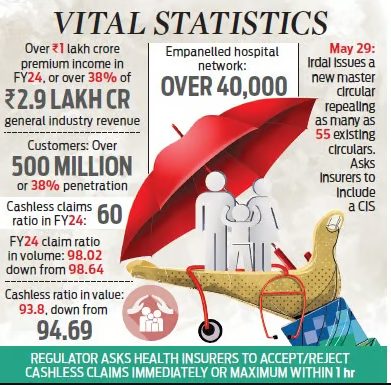
    • Cashless processing: Insurers are mandated to accept or reject cashless claims immediately, within one hour, and settle such claims on discharge within three hours. Any delay beyond this period would result in the insurer bearing the additional costs, if any.
    • Claim settlement: Insurers cannot repudiate a claim without the approval of their claims review panel. Documents for claim settlement must be collected from hospitals or third-party administrators, not from the insured.
    • Policyholders with multiple health policies: They can select the policy under which they want to make a claim, with the primary insurer coordinating the settlement of the balance amount from other insurers.
    • Reward for No claims: Policyholders with no claims during the policy period may receive either an increased sum insured or discounted premium amounts.
    • Renewal policies: All individual health policies are renewable and cannot be denied based on previous claims, except in cases of fraud, non-disclosures, or misrepresentation. No fresh underwriting is required for renewal policies unless there is an increase in the sum insured.
    • Portability requests: Stricter timelines are imposed on portability requests via the Insurance Information Bureau of India portal.
    • Customer information sheet: Insurers are required to include a customer information sheet as part of the policy document, explaining all customer-facing details such as policy type, sum assured, coverage details, exclusions, deductibles, and waiting periods.

    Challenges related to health insurance in India 

    • Opaque Policy Details and Claim Processes: Policyholders often struggle to understand the intricacies of insurance contracts, leading to uncertainty about coverage entitlements and reimbursement procedures.
    • Claim Rejections: Policyholders frequently face claim rejections due to inadequate documentation and ambiguous claims processes.
    • Delays in Claim Settlement: Insurance companies often take a long time to process claims, causing inconvenience and financial stress for policyholders

    IRDAI and its composition:

    • The Insurance Regulatory and Development Authority of India (IRDAI) is the regulatory body overseeing the insurance sector in India. It was constituted under the Insurance Regulatory and Development Authority Act, 1999.
    • The composition of IRDAI typically includes a Chairman and members appointed by the Government of India. The authority regulates various aspects of insurance, including licensing, pricing, and policyholder protection, to ensure the stability and growth of the insurance industry while safeguarding the interests of policyholders.

    Conclusion: IRDAI’s recent health insurance reforms aim to improve service standards by mandating timely cashless claim processing, transparent claim settlement, and policyholder rewards for no claims. These changes address challenges like opaque policies and claim rejections, enhancing customer trust. IRDAI plays a vital role in ensuring a fair and efficient insurance sector.

    Mains PYQ:

    Q Public health system has limitation in providing universal health coverage. Do you think that private sector can help in bridging the gap? What other viable alternatives do you suggest? (UPSC IAS/2015)

  • WTO and India

    Settling trade disputes through ‘litigotiation’ 

    Note4Students

    From UPSC perspective, the following things are important:

    Prelims level: About WTO

    Mains level: Trade disputes; India and USA at the WTO

    Why in the News?

    In March, India and the U.S. settled their last lingering WTO poultry dispute, marking the end of seven trade disputes resolved since Prime Minister Modi’s U.S. visit.

    What is ‘Litigotiation’?

    • ‘Litigotiation’ is a blend of “litigation” and “negotiation,” referring to a strategic process where legal disputes are managed through a combination of courtroom litigation and settlement negotiations.
    • This approach recognizes that most legal disputes do not end with a court verdict but rather with a negotiated settlement reached during the litigation process.

    Trade dispute on poultry products between India and USA at the WTO

    • Indian Scenario: India had prohibited the import of various agricultural products from the US because of concerns related to Avian Influenza.
    • U.S. argued: The U.S. challenged India’s import restrictions on poultry products, which were imposed due to concerns about avian influenza (bird flu) potentially transmitting to humans.
    • It argued that India deviated from internationally recognized standards that were set by the World Organization for Animal Health (formerly OIE) and failed to provide scientific justifications for its measures, violating the WTO’s Sanitary and Phytosanitary (SPS) Agreement.
    • The dispute was initiated by the U.S. in 2012 and remained unresolved for over a decade, making it the oldest of the seven trade disputes between India and the U.S. In 2015, India lost a long-pending dispute over poultry imports from the US at the WTO.
    • The recent settlement allowed India to avoid a yearly $450 million claim.
      • In exchange, India agreed to reduce tariffs on select U.S. products such as cranberries, blueberries, frozen turkey, and premium frozen duck meat, marking a significant diplomatic breakthrough.

    What are the standards set by the World Organization for Animal Health?

    • The Terrestrial Animal Health Code
      • First published in 1968, provides standards for the improvement of terrestrial animal health and welfare and veterinary public health worldwide.
      • These standards should be used by Veterinary Services to set up measures for the early detection, reporting, and control of pathogenic agents, including zoonotic agents, and preventing their spread.
    • The Aquatic Animal Health Code
      • Introduced in 1995, provides standards for the improvement of aquatic animal health and welfare worldwide.
      • These standards should be used by Aquatic Animal Health Services to set up measures for the prevention, early detection, reporting, and control of pathogenic agents in aquatic animals (amphibians, crustaceans, fish, and mollusks).
      • Implementation of the recommendations in the Aquatic Code ensures the safety of international trade in aquatic animals and aquatic animal products.

    About WTO:

    The World Trade Organization (WTO) is an intergovernmental organization that regulates and facilitates international trade among its member nations. It was established in 1995 and has 164 member countries, representing over 98% of global trade and global GDP.


    Conclusion: The India-U.S. settlement underscores the power of diplomatic negotiations in resolving complex trade disputes, fostering stronger bilateral ties, and promoting a more stable and cooperative international trade environment.

    Mains PYQ:

    Q WTO is an important international institution where decisions taken affect countries in a profound manner. What is the mandate of WTO and how binding are their decisions? Critically analyse India’s stand on the latest round of talks on Food security. (UPSC IAS/2014)

  • Climate Change Negotiations – UNFCCC, COP, Other Conventions and Protocols

    Bonn Climate Conference 2024: 3rd Glasgow dialogue flags need for loss & damage cooperation

    Note4Students

    From UPSC perspective, the following things are important:

    Prelims level: Glasgow Dialogue

    Mains level: Key highlights of the Conference

    Why in the News?

    This week, the Third Glasgow Dialogue on Loss and Damage occurred during the 60th Session of the Subsidiary Bodies (SB60) to the United Nations Framework Convention on Climate Change (UNFCCC) in Bonn, Germany.

    Key highlights of the Conference:

    • Dialogue on Loss and Damage (L&D): The conference focused on discussions around the mechanisms under the UNFCCC, including the Santiago Network on Loss and Damage (SNLD), the Warsaw International Mechanism (WIM), and the recently operationalized Loss and Damage Fund (LDF).
    The SNLD was established at COP25 in 2019 to catalyze technical assistance for developing countries in implementing approaches for averting, minimizing, and addressing loss and damage

    The WIM was established at COP19 in 2013 to promote approaches for averting, minimizing, and addressing loss and damage associated with climate change impacts

    The LDF was operationalized at COP27 in 2022 to provide financial support to developing countries for averting, minimizing, and addressing loss and damage

    • Progress in Mechanisms: The co-chairs of each mechanism highlighted the progress made in addressing L&D in the UNFCCC negotiations. This includes positive steps taken in forming the Board of the LDF and formalizing its institutional arrangements and additional rules.
    • Global South Concerns: Countries from the Global South, including the African Group of Negotiators (AGN), the Alliance of Small Island States (AOSIS), and the Arab Group, emphasized the growing cases of L&D in developing nations. There were calls for better cooperation and coordination between countries and mechanisms to address L&D more effectively.
    African Group of Negotiators (AGN): It is a coalition of African countries that work together to coordinate their positions and negotiate on various international issues, such as climate change, sustainable development, and human rights.

    Alliance of Small Island States (AOSIS): It is a coalition of small island developing states that work together to address common challenges and promote their interests in international forums.

    Arab Group: It is a coalition of Arab states that work together to promote their collective interests and coordinate their positions on various international issues.

    • Need for Clarity and Coordination: There were calls for a clear relationship between the SNLD, WIM, and LDF, as they each continue to have separate discussions despite having the same goal of addressing L&D. Coordination between these mechanisms would address gaps and improve resource mobilization for developing nations.

    About Article 6 and its structural mandate:

    • Article 6 of the UNFCCC deals with cooperative approaches for the implementation of climate action. It provides a framework for international cooperation in areas such as emissions trading, sustainable development, and the transfer of mitigation outcomes. 
    • The structural mandate of Article 6 aims to facilitate cooperation between countries to enhance climate action and achieve the goals of the Paris Agreement.
    • Article 6.2: Authorisation is the formal approval process where emission reductions (Internationally Transferred Mitigation Outcomes or ITMOs) are sanctioned by the host country for transfer to another country.
    • Article 6.4 of the Paris Agreement focuses on operationalising market mechanisms for emission reduction units (6.4ERs), addressing issues like authorisation, carbon removal activities, and the role of the supervisory body in developing market procedures.

    Key Goals and Objectives:

    • Raised Ambition: International cooperation under Article 6 aims to raise ambition by enabling countries to achieve more ambitious emission reduction targets.
    • Supporting Sustainable Development: The cooperation mechanisms must support sustainable development, addressing not only climate change but also other sustainability issues.
    • Ensuring Environmental Integrity: The mechanisms must ensure environmental integrity by preventing emission reductions from being counted more than once and ensuring that countries do not circumvent their climate action efforts

    Way Forward:

    • Clarity and Coordination: There is a need for clarity on the framework of L&D as a whole, with a defined relationship between its key mechanisms. This would ensure better coordination and cooperation in addressing L&D effectively.
    • Enhanced Technical Interventions: Countries emphasized the importance of technical interventions such as Early Warning Systems and timely provision of finance to improve responses to L&D. Implementing these interventions could minimize the impacts of extreme weather events and facilitate faster recovery.
    • Tailored Responses: Responses to L&D must be tailored to the unique contexts of each country, with individual vulnerability and needs assessments being a priority. This would ensure that assistance and support are provided where they are most needed.
    • Trigger-based Funding Mechanisms: Suggestions were made for trigger-based funding mechanisms or timeline-based provision of funds for countries facing devastating impacts and remaining most vulnerable. Such mechanisms would ensure timely and adequate support for those in need.

    Mains PYQ:

    Q Explain the purpose of the Green Grid Initiative launched at the World Leaders Summit of the COP26 UN Climate Change Conference in Glasgow in November 2021. When was this idea first floated in the International Solar Alliance (ISA)? (UPSC IAS/2021)

  • Electoral Reforms In India

    Is it time for Proportional Representation?     

    Note4Students

    From UPSC perspective, the following things are important:

    Prelims level: First Past the Post (FPTP) and Proportional Representation (PR) System

    Mains level: Pros and Cons of FPTP and PR System

    Why in the News?

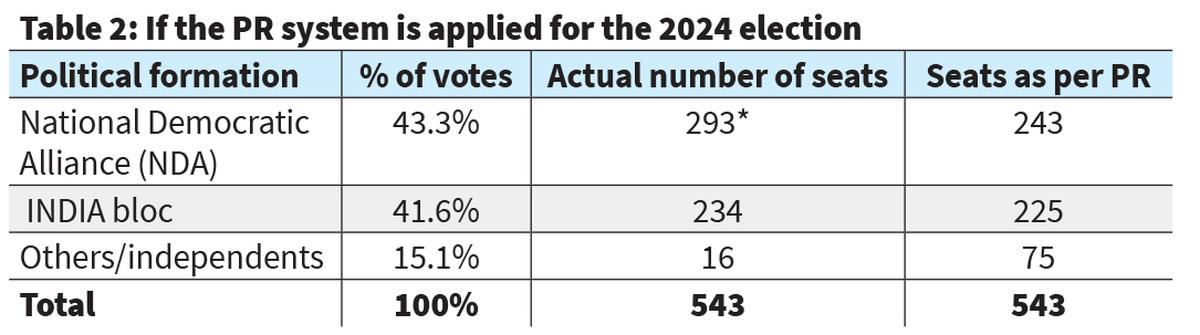
    India should contemplate proportional representation to ensure fairer political outcomes, given NDA’s 293 seats (43.3%) compared to INDIA bloc’s 234 seats (41.6%).

    First Past the Post (FPTP) System

    • First Past the Post (FPTP) is a voting system where the candidate with the most votes in each constituency wins, regardless of whether they achieve an absolute majority.
    • Simple and feasible method used in large democracies like India, the U.S., the U.K., and Canada.
    • Provides stability to the executive as the ruling party/coalition can enjoy a majority in the legislature without obtaining a majority of the votes across constituencies.
    • Criticized for potentially resulting in over or under-representation of political parties compared to their vote share.

    Proportional Representation (PR) System:

    • Ensures representation of all parties based on their vote share. Commonly implemented through party list PR, where voters vote for parties rather than individual candidates. PR system applied at each State/Union Territory (UT) level in federal countries like India.

    Pros and Cons Comparison between FPTP and PR

    First Past the Post (FPTP):

    • Pros: Simple, stable majority governments, clear constituency representation.
    • Cons: Disproportionate representation, underrepresentation of minorities, many wasted votes.

    Proportional Representation (PR):

    • Pros: Fairer representation, inclusivity of smaller parties, fewer wasted votes.
    • Cons: Complex, potential for unstable coalitions, weaker direct constituency representation.

    International Practices:

    • The PR system is used in presidential democracies like Brazil and Argentina, as well as parliamentary democracies like South Africa, the Netherlands, Belgium, and Spain.
    • Mixed Member Proportional Representation (MMPR) system employed in Germany and New Zealand.
    • Germany: Germany uses MMPR for elections to the Bundestag. Half of the seats are filled through FPTP constituencies, and the other half are allocated to ensure proportional representation based on party votes, provided parties receive at least 5% of the vote.
    • New Zealand: New Zealand’s House of Representatives is elected using MMPR, with 60% of seats filled through constituency elections and 40% allocated proportionally based on party votes.
    • The Mixed Member Proportional Representation (MMPR) system is a hybrid electoral system that combines elements of First Past the Post (FPTP) and Proportional Representation (PR) to ensure both local representation and proportionality in election results.

    Way Forward:

    • The Law Commission, in its 170th report titled ‘Reform of the Electoral Laws’ (1999), recommended the experimental introduction of the Mixed Member Proportional Representation (MMPR) system. It suggested that 25% of seats in the Lok Sabha could be filled using a Proportional Representation (PR) system by increasing the total number of seats.
    • Incremental implementation of MMPR system for additional seats during delimitation exercises to address population disparities while ensuring fair representation for all regions.
  • The Crisis In The Middle East

    How the Six-Day War of 1967 transformed the Middle East?

    Note4Students

    From UPSC perspective, the following things are important:

    Prelims level: Bordering countries of Israel

    Mains level: Impacts of the War

    Why in the News?

    Fifty-seven years have elapsed since the Six-Day War ( June 5 to June 10, 1967) fought between Israel and its Arab neighbors.

    Causes of the War

    • Historical Tensions: Rooted in the establishment of Israel in 1948, which resulted in the displacement and death of thousands of Palestinian Arabs, creating a massive refugee crisis.
    • Egypt-Israel Relations: Particularly hostile due to territorial and water disputes, exacerbated by Egyptian President Gamal Abdel Nasser’s aggressive stance against Israel.
    • Cold War Influences: Military build-up in Israel and Arab states along Cold War lines, with Israel supported by the US and Arab states by the Soviet Union.
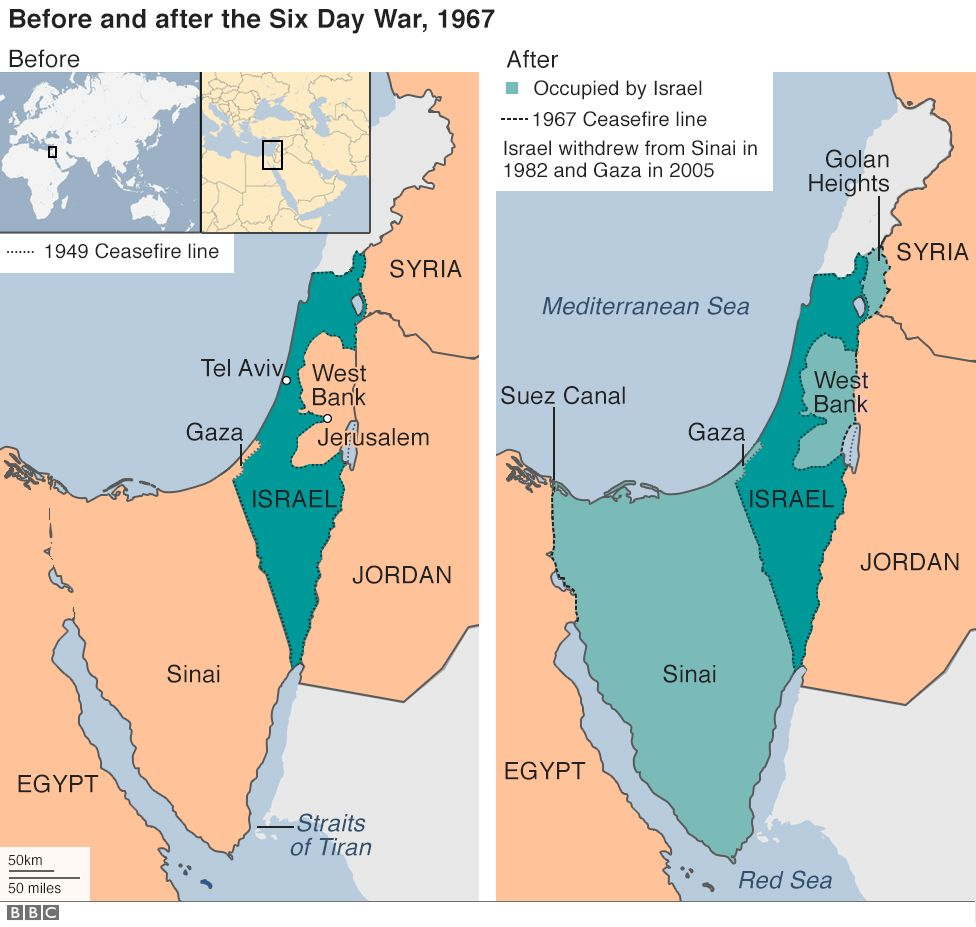
    • Provocations: Egypt’s naval blockade of the Straits of Tiran in May 1967, cutting off Israel’s maritime access to the Red Sea and mobilizing forces in the Sinai Peninsula.

    Outbreak of the War

    • On June 5, 1967, Israel launched a pre-emptive airstrike on Egyptian airfields, swiftly gaining air superiority and neutralising the Egyptian Air Force.
    • Israel’s ground forces advanced into the Sinai Peninsula and Gaza Strip, territories occupied by Egypt.
    • Jordan and Syria entered the war, attacking Israel from the east and north, but were quickly repelled.

    Impacts of the War

    • Territorial Gains for Israel: In less than a week, Israel captured the Sinai Peninsula and Gaza from Egypt, the Golan Heights from Syria, and the West Bank and East Jerusalem from Jordan.
    • Geopolitical Shift: The defeat was a major blow to Arab nations, establishing Israel’s military and geopolitical dominance in the region.
    • Emergence of Palestinian Nationalism: The war spurred the rise of Palestinian nationalism and the Palestine Liberation Organization (PLO) emerged as a significant political entity.
    • Continued Conflict: Ongoing tensions and conflicts in the region, including the 1973 Yom Kippur War, are direct results of the 1967 war and subsequent Israeli occupation of key territories.
    • Unresolved Refugee Crisis: The plight of Palestinian refugees displaced during and after the war remains unresolved, continuing to fuel regional instability.

    Conclusion: The Six-Day War was thus a pivotal event that not only redefined territorial boundaries but also reshaped political dynamics and set the stage for ongoing conflicts in the Middle East.

    Mains PYQ:

    Q “India’s relations with Israel have, of late, acquired a depth and diversity, which cannot be rolled back.” Discuss. (UPSC IAS/2018)

  • Waste Management – SWM Rules, EWM Rules, etc

    Remoulding the Global Plastics Treaty

    Note4Students

    From UPSC perspective, the following things are important:

    Prelims level: OECD Global Plastic Outlook

    Mains level: Global Plastic Treaty Needs Just Transition

    Why in the news?

    As discussions for an international legally binding treaty on plastic pollution continue, it is essential to consider how it can support a fair transition for informal waste collectors and recyclers.

    Observations by the OECD Global Plastic Outlook

    • In 2019, global plastic waste production was 353 million tonnes, more than double the amount in 2000. This number is expected to triple by 2060. Only 9% of plastic waste was recycled in 2019.
    • 50% of plastic waste was sent to landfills, 19% incinerated, and 22% disposed of in uncontrolled sites or dumps.

    Challenges due to Plastic Pollution:

    • Soil Pollution: Plastic waste can contaminate soil, reducing its fertility and affecting plant growth.
    • Marine Pollution: Plastic waste in oceans can harm marine life, alter habitats, and disrupt natural processes, making ecosystems less resilient to climate change.
    • Water Pollution: Plastic waste can contaminate groundwater and waterways, affecting human consumption and aquatic life.
    • Health Risks: 
      • Microplastics: Plastic waste can break down into microplastics, which can be ingested by humans and animals, potentially causing health problems.
      • Toxic Chemicals: Plastic products can leach toxic chemicals, such as phthalates and BPA, into food and water, posing health risks

    Significance of Recognizing the Issue

    • Crucial role of recycling workers: Informal recycling workers recycled 85% of the 9% recycled plastic, playing a crucial role in global waste management.
    • Economic and Environmental Contribution: These workers alleviate municipal budgets, promote circular waste management solutions, and help mitigate greenhouse gas emissions. Their efforts significantly reduce plastic in landfills and prevent plastic leakage into the environment.
      • Despite their contributions, informal recycling workers are often overlooked and remain vulnerable. They face risks such as privatization of waste management, waste-to-energy projects, and exclusion from public policy interventions in plastic waste management.

    Global Plastic Treaty Needs Just Transition

    • Need for Intergovernmental Negotiating Committee (INC): Established in 2021, the INC aims to create a legally binding agreement to reduce plastic pollution. The INC has held several meetings, with the final one scheduled in South Korea.
    • Promoting Informal Workers Participation: The International Alliance of Waste Pickers (IAWP) emphasizes the need to support and integrate informal waste pickers into the treaty discussions. Their historical contributions should be acknowledged, their rights protected, and their perspectives included in policy implementation.
    • Building Clarity: There is no universally agreed-upon terminology for a just transition or a formal definition of the informal waste sector. Clarifying these definitions is essential.

    India’s Voice is Important

    • India promotes repair, reuse, refill, and recycling without eliminating the use of plastics. This approach emphasizes country-specific circumstances and capacities.
    • India’s informal waste pickers are indispensable and remain central to the discussion on plastic waste management.
    • Rethinking EPR norms is crucial to integrating the informal worker cohort into the new legal framework.
    • As a key representative from the Global South, India’s perspectives and approaches are vital in shaping the Global Plastics Treaty.

    Conclusion: By incorporating the perspectives of informal waste workers and ensuring their livelihoods are protected, the Global Plastics Treaty can embody social justice and equity principles, contributing to a sustainable future while leaving no one behind.

    Mains PYQ:

    Q What are the impediments in disposing of the huge quantities of discarded solid wastes which are continuously being generated? How do we remove safely the toxic wastes that have been accumulating in our habitable environment?  (UPSC IAS/2018)

  • RBI Notifications

    Why has RBI policy panel kept repo rate unchanged, hiked GDP growth projection?

    Note4Students

    From UPSC perspective, the following things are important:

    Prelims level: Monetary Policy Committee (MPC)

    Mains level: Why Did the RBI Keep the Rates Unchanged?

    Why in the news?

    The RBI’s Monetary Policy Committee kept the repo rate at 6.5% for the eighth consecutive time, due to persistent high retail inflation from sticky food prices.

    Monetary Policy Committee (MPC) 

    • The Monetary Policy Committee (MPC) of India is responsible for setting the benchmark interest rate in the country.
    • The committee consists of six members: the Governor of the Reserve Bank of India (RBI), the Deputy Governor in charge of monetary policy, an Executive Director of the RBI, and three external members nominated by the government.
    • The MPC meets at least four times a year and publishes its decisions after each meeting. The committee’s primary objective is to maintain price stability while considering the goal of economic growth.

    Why did the RBI keep the Rates Unchanged?

    • Inflation Concerns: The Monetary Policy Committee (MPC) kept the repo rate unchanged at 6.5% due to persistent high inflation, with April 2024 retail inflation at 4.83%.
    • Caution on Food Inflation: The policy stance remains cautious due to the risk of rising food inflation from heatwave conditions, which may impact the final journey of disinflation.
    • Flexible Inflation Targeting: Under the regime, the RBI aims to keep inflation within the 2-6% range and achieve a 4% target on a durable basis.
    • Supply Side Disruptions: Persistent supply shocks in cereals, pulses, spices, and vegetables contributed to elevated food inflation, impacting overall inflation management.

    What happens to Lending Rates if the Repo Rate is left steady?

    Lending Rate:

    The lending rate, also known as the bank rate, is the rate at which commercial banks borrow money from the central bank without securities. It is typically higher than the repo rate and is used for longer-term lending. The lending rate is used to assess the long-term monetary goals of a bank and is often used to manage liquidity in the system

    Repo Rate 

    The repo rate, on the other hand, is the rate at which the central bank lends money to commercial banks against government securities as collateral. It is used for short-term lending and is typically lower than the lending rate

    • Relief for Borrowers: With the repo rate steady at 6.5%, external benchmark lending rates (EBLR) linked to the repo rate will not increase, keeping equated monthly installments (EMIs) on home and personal loans unchanged.
    • Potential MCLR Increase: Lenders might raise interest rates on loans linked to the marginal cost of fund-based lending rate (MCLR), as the full transmission of the 250 basis points hike in the repo rate from May 2022 to February 2023 has not yet occurred.

    Why Has MPC Hiked GDP Growth?

    • Improving Demand: The MPC raised the GDP growth forecast for FY25 to 7.2% from 7% due to strengthening rural and urban demand conditions buoyed by favourable monsoon forecasts.
    • Robust Economic Activity: Indicators such as healthy growth in the eight core industries, strong Purchasing Managers Index (PMI) in manufacturing and services, and overall resilient domestic economic activity support the upgraded growth projection.
    • Sectoral Strength: The manufacturing and services sectors continued to exhibit robust performance, with the PMI for services standing at 60.2 in May 2024, indicating strong expansion.

    Conclusion: The RBI’s cautious approach to keeping rates steady while boosting GDP growth projections aims to balance economic growth and inflation control, with a focus on addressing persistent food inflation.

    Mains PYQ:

    Do you agree with the view that steady GDP growth and low inflation have left the Indian economy in good shape? Give reasons in support of your arguments. (UPSC IAS/2019)