💥UPSC 2026, 2027, 2028 UAP Mentorship (March Batch) + Access XFactor Notes & Microthemes PDF

Type: op-ed snap

  • Economic Indicators and Various Reports On It- GDP, FD, EODB, WIR etc

    Monetary tightening and its impact on growth

    Note4Students

    From UPSC perspective, the following things are important:

    Prelims level: Core inflation

    Mains level: Paper 3- Inflation challenge

    Context

    A rate hike in the monetary policy committee’s June meeting was a foregone conclusion after the spike in inflation and an off-cycle surprise interest rate hike on May 4.

    Reasons fast forwarding of interest rate hike

    • 1] Broad based inflation: A confluence of factors has pushed inflation higher and made it persistent and broad-based. 
    • 2] Policy rates are still negative: Even with this hike, the repo rate, the signalling tool for bank interest rates, is still below pre-pandemic levels.
    • The real policy rate (repo rate less expected inflation) remains negative and has some distance to cover before it reaches positive territory — where the RBI would like to see it.
    • 3] Lag in effect: Monetary policy impacts growth, and thereafter, inflation with a lag.
    • To control inflation, the RBI needed to act faster by front loading rate hikes.
    • 4] Elevated inflation expectations: The risk of inflation expectations getting unmoored had risen.
    • Household and business inflation expectations remain elevated, as indicated by the RBI’s inflation expectations survey of households.
    • 5] Interest rate hike in the US: The aggressive stance of the US Federal Reserve and ensuing tightening financial conditions.
    • India is better placed today than in 2013 to face the Fed’s actions with a stronger forex shield.

    How US Fed’s actions affect India?

    • India is not insulated.
    • Capital outflow: The headwinds now are stronger than in 2013 and we have seen net capital outflows since October 2021.
    • S&P Global expects the US federal funds rate to be hiked to 3-3.25 per cent in 2023, higher than the pre-pandemic level, and highest since early 2008.
    • Despite a strong forex hoard, the RBI has had to deploy monetary policy to mute the impact of the Fed’s actions.

    Inflation and its impact

    • Upward pressure on food inflation: The pressure on food inflation has increased owing to the impact of the freak heatwave on wheat, tomatoes and mangoes, which is driving prices higher.
    • This is on top of rising input costs for agricultural production, the global surge in food prices and the expected sharper than usual rise in minimum support price.
    • Fuel inflation will remain high, duty cuts notwithstanding, as global crude prices remain volatile at elevated levels.
    • Core inflation, the barometer of demand, is a complex story.
    • Goods (despite only partial pass-through of input costs) are witnessing higher inflation than services.
    • That’s because services faced tighter restrictions during the Covid-19 waves, restricting their consumption and the pricing power of providers as well.
    • Service categories that are mostly regulated, such as public transport, railways, water and education, have over 50 per cent weight in core services.
    • However, prices of discretionary services such as airlines, cinema, lodging and other entertainment are rising.
    • Transportation-related services have seen the sharpest rise in the past six months due to fuel price increases.
    • Impact on the poor: For those at the bottom of the pyramid, high inflation hits harder because energy and food are a big chunk of their consumption basket.

    Growth prospects

    • S&P Global has recently cut the growth outlook for major economies for 2022 — that of the US to 2.4 per cent from 3.2 per cent, for Eurozone to 2.7 per cent from 3.3 per cent earlier, and for China to 4.2 per cent from 4.9 per cent.
    • This will hurt exports which are very sensitive to global demand.

    Monetary policy actions

    • Not all aspects of supply-driven inflation can be addressed via monetary policy.
    • So the authorities are complementing monetary policy actions by using the limited fiscal space to cut duties and extend subsidies to the vulnerable.

    Conclusion

    Monetary tightening impacts growth with a lag of at least 3-4 quarters and the fact that real interest rates are negative and borrowing rates still below pre-pandemic levels, implies monetary policy is unlikely to be growth-restrictive for this year.

    UPSC 2023 countdown has begun! Get your personal guidance plan now! (Click here)

  • Health Sector – UHC, National Health Policy, Family Planning, Health Insurance, etc.

    Healthcare in India is ailing. Here is how to fix it

    Note4Students

    From UPSC perspective, the following things are important:

    Prelims level: National Health Mission

    Mains level: Paper 2- Reforms in healthcare

    Context

    The lesson emerging from the pandemic experience is that if India does not want a repeat of the immeasurable suffering and the social and economic loss, we need to make public health a central focus.

    Need for institutional reforms in the health sector

    • The importance of public health has been known for decades with every expert committee underscoring it.
    • Ideas ranged from instituting a central public health management cadre like the IAS to adopting an institutionalised approach to diverse public health concerns — from healthy cities, enforcing road safety to immunising newborns, treating infectious diseases and promoting wellness.
    • Covid has shifted the policy dialogue from health budgets and medical colleges towards much-needed institutional reform.

    About National Health Mission (NHM)

    • The National Health Mission (NHM) seeks to provide universal access to equitable, affordable and quality health care which is accountable, at the same time responsive, to the needs of the people, reduction of child and maternal deaths as well as population stabilization, gender and demographic balance.
    • The Framework for Implementation of NUHM has been approved by the Cabinet on May 1, 2013.
    • NHM encompasses two Sub-Missions, National Rural Health Mission (NRHM) and National Urban Health Mission (NUHM).
    • The National Rural Health Mission (NRHM) was launched in 2005 with a view to bringing about dramatic improvement in the health system and the health status of the people, especially those who live in the rural areas of the country.

    Learning from the failure of National Health Mission (NHM)

    • The National Health Mission (NHM) has been in existence for about 15 years now and the health budget has trebled— though not as a proportion of the GDP.
    • Despite this less than 10 per cent of the health facilities below the district level can attain the grossly minimal Indian public health standards.
    • Clearly, the three-tier model of subcentres with paramedics, primary health centres with MBBS doctors and community health centres (CHC) with four to six specialists has failed.
    • Lack of accountability framework: The model’s weakness is the absence of an accountability framework.
    • The facilities are designed to be passive — treating those seeking care.

    Suggestions

    • 1] FHT: Instead of passive design of NHM, we need Family Health Teams (FHT) like in Brazil, accountable for the health and wellbeing of a dedicated population, say 2,000 families.
    • The FHTs must consist of a doctor with a diploma in family medicine and a dozen trained personnel to reflect the skill base required for the 12 guaranteed services under the Ayushman Bharat scheme.
    • A baseline survey of these families will provide information about those needing attention.
    • Family as a unit: The team ensures a continuum of care by taking the family as a unit and ensuring its well-being over a period.
    •  Nudging these families to adopt lifestyle changes, following up on referrals for medical interventions and post-operative care through home visits for nursing and physiotherapy services would be their mandate.
    • 2] Health cadre: The implication of and central to the success of such a reset lies in creating appropriate cadres.
    • 3] Clarity to nomenclatures: There is also a need to declutter policy dialogue and provide clarity to the nomenclatures.
    • Currently, public health, family medicine and public health management are used interchangeably.
    • While the family doctor cures one who is sick, the public health expert prevents one from falling sick.
    • The public health management specialist holds specialisation in health economics, procurement systems, inventory control, electronic data analysis and monitoring, motivational skills and team-building capabilities, public communication and time management, besides, coordinating with the various stakeholders in the field.
    • 4] Move beyond doctor-led systems: India needs to move beyond the doctor-led system and paramedicalise several functions.
    • Instead of wasting gynaecologists in CHCs midwives (nurses with a BSc degree and two years of training in midwifery) can provide equally good services except surgical, and can be positioned in all CHCs and PHCs.
    • This will help reduce C Sections, maternal and infant mortality and out of pocket expenses.
    • 5] Counsellors and physiotherapists at PHC: Lay counsellors for mental health, physiotherapists and public health nurses are critically required for addressing the multiple needs of primary health care at the family and community levels.
    • 6] Review of existing system: Bringing such a transformative health system will require a comprehensive review of the existing training institutions, standardising curricula and the qualifying criteria.
    • Increase spending on training: Spending on pre-service and in-service training needs to increase from the current level of about 1 per cent.
    • 7] Redefining of functions: A comprehensive redefinition of functions of all personnel is required to weed out redundancies and redeploy the rewired ones.

    Conclusion

    Resetting the system to current day realities requires strong political leadership to go beyond the inertia of the techno-administrative status quoist structures. We can.

    UPSC 2023 countdown has begun! Get your personal guidance plan now! (Click here)

  • Foreign Policy Watch: India-Pakistan

    India needs a forward-looking strategy on Pakistan

    Note4Students

    From UPSC perspective, the following things are important:

    Prelims level: Not much

    Mains level: Paper 2- Forward-looking strategy on Pakistan

    Context

    India’s approach in dealing with Pakistan today is very different from the framework that emerged at the dawn of the 1990s.

    Terms of engagement with Pakistan

    • From the 1990s, for nearly three decades, it was Pakistan that had the political initiative.
    • The turmoil in Kashmir, the international focus on nuclear proliferation, and the relentless external pressure for a sustained dialogue with Pakistan put Delhi in a difficult situation.
    • If Pakistan was on the political offensive, a series of weak coalition governments in Delhi were forced onto the back foot.
    • At the heart of Pakistan’s ambition was to change the status quo in Jammu and Kashmir.
    • Islamabad also played up to the concerns in Western chancelleries that the conflict in Kashmir might escalate to the nuclear level.
    • The new international consensus that Kashmir is the “world’s most dangerous nuclear flashpoint” aligned well with Pakistan’s strategy.
    • Delhi had no option but to respond, but any move to counter Pakistan would make the situation worse.
    • Under Prime Minister Narendra Modi, India has begun to reset the terms of the engagement agenda.
    • Change in regional and international context: Meanwhile, the regional and international context has also altered in many ways since the early 1990s essentially in India’s favour.

    Reset in engagement

    • India’s transformed relations with the US, the resolution of Delhi’s dispute with the global nuclear order, and getting the West to discard its temptation to mediate on Kashmir enormously improved India’s diplomatic position.
    • But the most consequential change has been in the economic domain.
    • The persistent neglect of economic challenges left Pakistan in an increasingly weaker position in relation to India.
    • If India has inched its way into the top six global economies, Pakistan today is broke.
    • Modi had the opportunity to build on these shifting fortunes of Delhi and Islamabad and develop a three-pronged strategy of his own.
    • 1] India bet that the heavens won’t fall if Delhi stops talking to Islamabad or negotiating with Pakistan-backed militant groups in Kashmir.
    • 2] Delhi has been unafraid of staring at nuclear escalation in responding to Pakistan’s cross-border terrorism.
    • 3] By changing the constitutional status of Kashmir in 2019, India has reduced the scope of India’s future negotiations with Pakistan on Kashmir.

    Way forward

    • Pakistan’s hand today is much weaker than in the 1990s and Delhi’s room for manoeuvring has grown, notwithstanding the challenges it confronts on the China border.
    • That opens some room for new Indian initiatives toward Pakistan.
    • Getting Pakistan’s army and its political class to be more practical in engaging India is certainly a tall order; but Delhi can afford to make a move.

    Conclusion

    While there can be much disagreement on Pakistan’s capacity to respond, Delhi’s new initiatives can reinforce the positive evolution of Indian foreign policy, and expand the space for Indian diplomacy in the region and beyond.

    UPSC 2023 countdown has begun! Get your personal guidance plan now! (Click here)
  • Goods and Services Tax (GST)

    Implications of GST Council ruling

    Note4Students

    From UPSC perspective, the following things are important:

    Prelims level: GST council

    Mains level: Paper 2- GST council's role in federal structure of India

    Context

    The Supreme Court of India recently ruled that “The recommendations of the GST Council are not binding on either the Union or the States…”.

    About GST Council

    • The GST Council is a federal body that aims to bring together states and the Centre on a common platform for the nationwide rollout of the indirect tax reform.
    • Article 279 (1) of the amended Indian Constitution states that the GST Council has to be constituted by the President within 60 days of the commencement of the Article 279A.
    • According to the article, the GST Council will be a joint forum for the Centre and the States. It consists of the following members:
    • 1] The Union Finance Minister will be the Chairperson.
    • 2] As a member, the Union Minister of State will be in charge of Revenue of Finance.
    • 3] The Minister in charge of finance or taxation or any other Minister nominated by each State government, as members.
    • The Council has to function as a platform to bring the Union and State governments together.
    • As a mark of cooperative federalism, the Council shall, unanimously or through a majority of 75% of weighted votes, decide on all matters pertaining to GST and recommend such decisions to the Union and State governments.
    • Article 279A (4) specifies that the Council will make recommendations to the Union and the States on the important issues related to GST, such as the goods and services will be subject or exempted from the Goods and Services Tax.
    • Article 246A confers simultaneous or concurrent powers on Parliament and the state legislatures to make laws relating to GST.
    • This article is in sharp contrast to the constitutional scheme that prevailed till 2017.

    Background of the case

    • In Union of India Anr. vs Mohit Minerals Pvt. Ltd., the Supreme Court of India on May 19, 2022 ruled on a petition relating to the levy of Integrated Goods and Services Tax (IGST) on ocean freight paid by the foreign seller to a foreign shipping company.
    • Mohit Minerals had filed a writ petition before the Gujarat High Court challenging notifications levying IGST on the ground that customs duty is levied on the component of ocean freight and the levy of IGST on the freight element in the course of transportation would amount to double taxation.
    • GST is paid by the supplier, but if the shipping line is located in a non-taxable territory, then GST is payable by the importer, the recipient of service.
    • Ocean freight is a method of transport by which goods and cargo is transported by ships through shipping lines.

    Important aspects of the judgement

    • Power to legislate simultaneously: Article 246A gives powers to the Union and State governments simultaneously to legislate on the GST.
    • In other words, the two tiers of the Indian Union can simultaneously legislate on matters of the GST (except the IGST, which is in the legislative domain of the Union government).
    • In this case, the Government of India had argued that “Neither can Article 279A override Article 246A nor can Article 246A be made subject to Article 279A.
    • However, cooperative federalism is to operate through the GST Council to bring in harmony and alignment in matters pertaining to the GST from both governments.
    • Given this background, the Union government had almost delegated the powers to create laws under the GST Act Section 5(1) to the GST Council.
    • Persuasive value only: The Supreme Court of India adjudicated that the GST Council’s recommendations are non-qualified and the simultaneous legislating powers of the Union and State governments give only persuasive value to the Council’s recommendations.
    • The power of the recommendations rests on the practice of cooperative federalism and collaborative decision-making in the Council.

    Issues with voting rights in GST council

    • Inbalance in voting rights: The Union government holds one-third weight for its votes and all States have two-thirds of the weight for their votes.
    • This gives automatic veto power to the Union government because a resolution can be passed with at least three-fourths of the weighted votes.
    • This imbalance in the voting rights between the Union and State governments, makes democratic decision-making difficult.
    • Equal weight to all states creates political problems: Though all the States are not equal in terms of tax capacity, everyone has equal weight for their votes.
    • This creates another political problem as the smaller States with lesser economic stakes can be easily influenced by interest groups.
    • Debate on political lines: The debates in the GST Council will be on political lines rather than on the economics of taxation.
    •  When the States governed by Opposition parties are vocal on counter-points, the States governed by the same party at the Union government are mute spectators.

    Way forward

    • Work in a harmonised manner: The Supreme Court has recorded, “Since the Constitution does not envisage a repugnance provision to resolve inconsistencies between the Central and State laws on GST, the GST Council must ideally function, as provided by Article 279A(6) in a harmonised manner to reach a workable fiscal model through cooperation and collaboration.”
    • Cooperative federalism: The nuanced understanding of cooperative federalism shows that there is no space for one-upmanship in either of the two tiers of the Indian federal government and particularly for the Union government under a quasi-federal Constitution.

    Conclusion

    Given the lopsided power structure favouring the Union government in the GST Council, it is against the spirit of democracy and federalism that the finances of governments can be left to such bodies.

    UPSC 2023 countdown has begun! Get your personal guidance plan now! (Click here)

  • Civil Services Reforms

    The problem with putting the civil services on a pedestal

    Note4Students

    From UPSC perspective, the following things are important:

    Prelims level: Creation of All India Services

    Mains level: Paper 2- Civil Service reforms

    Context

    Recently, two IAS officers were the subject of widespread public derision for misuse of power. A week later, the media and the public feted those who had successfully cracked the UPSC examination in order to become bureaucrats of the future.

    About Indian Administrative Service

    • Civil Services refer to the career civil servants who are the permanent executive branch of the Republic of India.
    • The modern Indian Administrative Service was created under Article 312(2) in part XIV of the Constitution of India, and the All-India Services Act, 1951.
    • It is the backbone of the administrative machinery of the country.
    • As India is a parliamentary democracy, the ultimate responsibility for running the administration rests with the people’s elected representatives.
    • The elected executive decides the policy and it is civil servants, who serve at the pleasure of the President of India, implement it.
    • Article 311 of the Constitution protects Civil Servants from politically motivated vindictive action.

    What makes civil services favourable in India

    • Most countries in the world have a cadre of professional civil servants but nowhere are new entrants to the system of government celebrated like in India.
    • Colonial legacy: The fact is that, 75 years after independence and 30 years after liberalisation, there is still an overhang of the all-powerful, all-pervasive state.
    • There are good reasons for a favourable view of the civil services.
    • Merit based selection: For one, candidates are selected on merit based on an open examination and interview.
    • Job security: Then there is the job security that comes with gaining entry.
    • Unless a civil servant does an extraordinary wrong, she has a job for life, and steady, time-bound promotions which ensure that everyone retires at the top irrespective of performance.

    Issues with public perception

    • However, in the perceived strengths of the civil services lie its weaknesses.
    • Single exam: The single UPSC examination is treated as gospel. 
    • But merit and competence cannot be judged by a single exam.
    • Permanence is a problem: The permanence of the job is a problem too.
    • Punishment for over-reach or misuse of power is a transfer, either from a weightier ministry to a lighter one or from high-profile capitals to geographically remote ones.
    • A system of limited accountability: The result is that all civil servants, never mind their ability or competence, operate in a system of limited accountability with few incentives to perform and plenty of opportunities to use and abuse their powers.

    Way forward

    • Placing civil servant at par with other professions: The civil services system needs to be brought down from its pedestal and placed at par with every other profession like elsewhere in the world.
    • This will not happen via political diktat. It requires the weight of public opinion.
    • Broaden the selection criteria: The system must be manned by capable, competent individuals. This cannot be decided on the basis of one exam.
    • Remove the job permanency: The underperforming officers need to be separated which cannot happen when the job is for life.
    • It may sound radical for India’s civil services but that is the way the rest of India and the world function, including the UK from where we inherited the structure.

    Conclusion

    If we can make these changes in the civil services, India will get the government it needs for the 21st century.

    UPSC 2023 countdown has begun! Get your personal guidance plan now! (Click here)

  • Foreign Policy Watch: India-Pakistan

    India-Pakistan ties and the mirror of 2019

    Note4Students

    From UPSC perspective, the following things are important:

    Prelims level: Not much

    Mains level: Paper- India-Pakistan relation

    Context

    An official delegation from Pakistan was in New Delhi recently to hold talks with its Indian counterparts under the aegis of the Indus Water Treaty.

    Positive developments in the relations

    • Starting from February, India has been sending through Pakistan consignments of wheat, via the World Food Programme, to the Taliban-run Afghanistan.
    • Evidently, channels of communication between the two governments are working and open hostility has subsided, if not vanished completely.
    • China factor: The change has been driven by realist considerations that surfaced during the Ladakh border crisis on the Line of Actual Control with China in the summer of 2020.
    • The recent change of government in Pakistan, including Imran Khan’s removal, is seen as a positive in New Delhi.
    • The official Indian establishment has had close ties with both the Pakistan Muslim League-Nawaz and the Pakistan Peoples Party that are now part of the government.

    Countering the collusive military threat from China and Pakistan

    • The border crisis in Ladakh raised the spectre of a collusive military threat between China and Pakistan.
    • Such a challenge cannot be effectively dealt with by the military alone and would need all the instruments of the state — diplomatic, economic, informational, and military — to act in concert.
    •  To prevent such a situation, India’s National Security Adviser Ajit Doval opened backchannel talks with Pakistan.

    Way ahead

    • There are some low-hanging fruits which can be plucked the moment a political go-ahead is given.
    • These include a deal on the Sir Creek dispute, an agreement for revival of bilateral trade, return of High Commissioners to the missions in Delhi and Islamabad, and build-up of diplomatic missions to their full strength.
    • Demilitarisation of the Siachen glacier is still seen to be off the table as the Indian proposal is believed to be unacceptable to the Pakistan Army.
    • A window of opportunity would possibly open in Pakistan after the next elections, which are scheduled next year but could be held earlier.

    Conclusion

    India must shift course from the belligerence it has displayed and profited from earlier in favour of proper diplomatic and political engagement with Pakistan.

    UPSC 2023 countdown has begun! Get your personal guidance plan now! (Click here)

  • Foreign Policy Watch: India-Afghanistan

    Why India must engage Taliban

    Note4Students

    From UPSC perspective, the following things are important:

    Prelims level: Not much

    Mains level: Paper 2- India's approach in dealing with the Taliban

    Context

    It is good that India has extended humanitarian assistance to Afghanistan at this time through international agencies and not let its unhappiness with the Taliban’s policies come in the way.

    India’s  recent engagement with Afghanistan

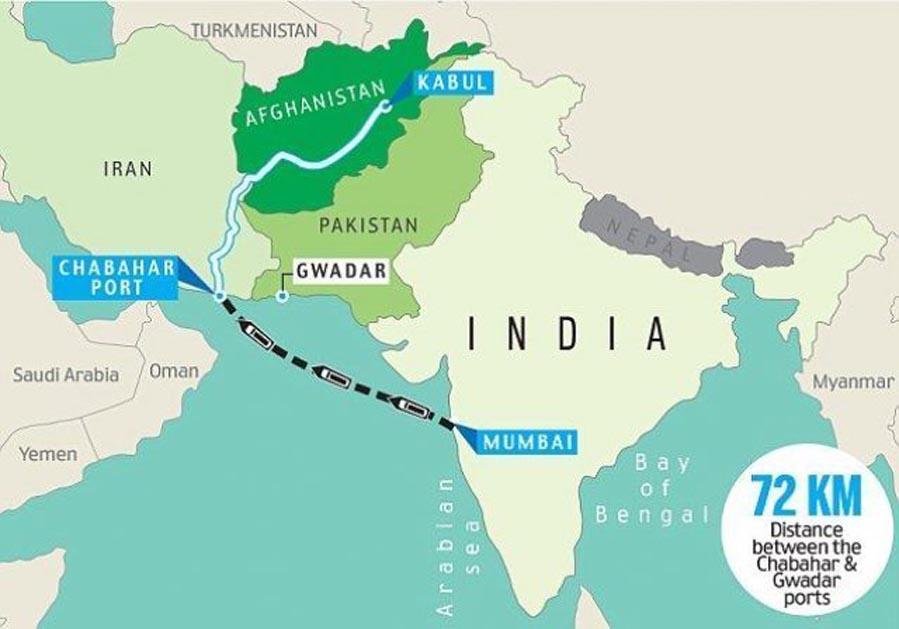
    • Recently, the Ministry of External Affairs announced that a team led by J P Singh, Joint Secretary (PAI) “is currently on a visit to Kabul to oversee the delivery operations of our humanitarian assistance to Afghanistan”.
    • The MEA clearly implied that this engagement should be seen only in the limited context of assistance to the Afghan people
    • The continuance of humanitarian assistance can be only one, though an important, segment of interaction; other aspects, especially security issues and later, connectivity and investments, as Afghanistan stabilises, have to be part of the dialogue with the Taliban.

    Why Afghanistan matters to India’s security

    • Afghanistan impacts India’s security.
    •  It has, in the past, provided space to al Qaeda with which the Taliban had a special relationship.
    • Afghanistan has an ISIS presence too.
    • Of special concern to India are the Taliban’s ties with the Lashkar-e-Taiba and Jaish-e-Mohammed.
    • A recent United Nations report has emphasised that the Taliban’s connections with these groups have not been severed.

    So, what should be India’s approach toward the Taliban?

    • It is argued that both “principle and pragmatism” demand that India should not do business with the Taliban.
    • However, Pakistan has continued to sponsor terror and yet India has continued to engage it and has maintained a diplomatic presence in Islamabad. 
    • India cannot argue that the diplomatic door must be kept open for Pakistan because it’s a neighbour while it can be shut on the Taliban because Afghanistan directly impacts Indian security.
    • Engagement with Taliban: An engagement with the Taliban would at least give an opportunity to convey Indian concerns directly and encourage those elements within the group who wish to open up its diplomatic choices.
    • Exploit contradiction: Far from being a monolith, the Taliban has significant tribal and regional contradictions.
    • Therefore, India should not leave the Afghan arena entirely to Pakistan and China because of the social manifestation of Taliban theology.
    • The Taliban is here to stay and for India, there is no alternative but to deal with it even while repeating, if it wishes, the mantra of inclusive government.
    • India should also maintain contacts with the leaders of the ousted Republic, especially as the Taliban itself wants them to return to the country.

    Conclusion

    All in all, the sooner India establishes a permanent presence in Kabul the better for the pursuit of national interests in the external sphere. This is not an exercise in evangelism but the cold and undeterred pursuit of interests.

    UPSC 2023 countdown has begun! Get your personal guidance plan now! (Click here)

  • Health Sector – UHC, National Health Policy, Family Planning, Health Insurance, etc.

    ASHA Program

    Note4Students

    From UPSC perspective, the following things are important:

    Prelims level: ASHA program

    Mains level: Paper 2- Strengthening ASHA

    Context

    India’s one million Accredited Social Health Activists (ASHA) volunteers have received World Health Organization’s Global Health Leaders Awards 2022.

    Background of the ASHA program

    • In 1975, a WHO monograph titled ‘Health by the people’ and then in 1978, an international conference on primary health care in Alma Ata (in the then USSR and now in Kazakhstan), gave emphasis for countries recruiting community health workers to strengthen primary health-care services that were participatory and people centric.
    • Soon after, many countries launched community health worker programmes under different names.
    • India launched the ASHA programme in 2005-06 as part of the National Rural Health Mission.
    • The biggest inspiration for designing the ASHA programme came from the Mitanin (meaning ‘a female friend’ in Chhattisgarhi) initiative of Chhattisgarh, which had started in May 2002.
    • The core of the ASHA programme has been an intention to build the capacity of community members in taking care of their own health and being partners in health services.
    • Each of these women-only volunteers work with a population of nearly 1,000 people in rural and 2,000 people in urban areas, with flexibility for local adjustments.

    A well thought through and deliberated program

    • The ASHA programme was well thought through and deliberated with public health specialists and community-based organisations from the beginning.
    • 1] Key village stakeholders selected: The ASHA selection involved key village stakeholders to ensure community ownership for the initiatives and forge a partnership.
    • 2] Ensure familiarity: ASHAs coming from the same village where they worked had an aim to ensure familiarity, better community connect and acceptance.
    • 3] Community’s representative: The idea of having activists in their name was to reflect that they were/are the community’s representative in the health system, and not the lowest-rung government functionary in the community.
    • 4] Avoiding the slow process of government recruitment: Calling them volunteers was partly to avoid a painfully slow process for government recruitment and to allow an opportunity to implement performance-based incentives in the hope that this approach would bring about some accountability.

    Contribution of ASHA

    • It is important to note that even before the COVID-19 pandemic, ASHAs have made extraordinary contributions towards enabling increased access to primary health-care services; i.e. maternal and child health including immunisation and treatment for hypertension, diabetes and tuberculosis, etc., for both rural and urban populations, with special focus on difficult-to-reach habitations.
    • Over the years, ASHAs have played an outstanding role in making India polio free, increasing routine immunisation coverage; reducing maternal mortality; improving new-born survival and in greater access to treatment for common illnesses.

    Challenges

    • Linkages with AWW and ANM: When newly-appointed ASHAs struggled to find their way and coordinate things within villages and with the health system, their linkage with two existing health and nutrition system functionariesAnganwadi workers (AWW) and Auxiliary Nurse Midwife (ANM) as well as with panchayat representatives and influential community members at the village level — was facilitated.
    •  This resulted in an all-women partnership, or A-A-A: ASHA, AWW and ANM, of three frontline functionaries at the village level, that worked together to facilitate health and nutrition service delivery to the community.
    • No fixed salary to ASHAs: Among the A-A-A, ASHAs are the only ones who do not have a fixed salary; they do not have opportunity for career progression.
    • These issues have resulted in dissatisfaction, regular agitations and protests by ASHAs in many States of India.

    Way forward

    • The global recognition for ASHAs should be used as an opportunity to review the programme afresh, from a solution perspective.
    • 1] Higher remuneration: Indian States need to develop mechanisms for higher remuneration for ASHAs.
    • 2] Avenues for career progression: It is time that in-built institutional mechanisms are created for capacity-building and avenues for career progression for ASHAs to move to other cadres such as ANM, public health nurse and community health officers are opened.
    • 3] Extend the benefits of social sector services: Extending the benefits of social sector services including health insurance (for ASHAs and their families) should be considered.
    • 4] Independent and external review: While the ASHA programme has benefitted from many internal and regular reviews by the Government, an independent and external review of the programme needs to be given urgent and priority consideration.
    • 5] Regularisation of temporary posts: There are arguments for the regularisation of many temporary posts in the National Health Mission and making ASHAs permanent government employees.

    Conclusion

    The WHO award for ASHA volunteers is a proud moment and also a recognition of every health functionary working for the poor and the underserved in India.  It is a reminder and an opportunity to further strengthen the ASHA programme for a stronger and community-oriented primary health-care system.

    UPSC 2023 countdown has begun! Get your personal guidance plan now! (Click here)

  • Health Sector – UHC, National Health Policy, Family Planning, Health Insurance, etc.

    Malnutrition in India is a worry in a modern scenario

    Note4Students

    From UPSC perspective, the following things are important:

    Prelims level: Not much

    Mains level: Paper 2- Malnutrition challenge

    Context

    The country’s response to its burden of malnutrition and growing anaemia has to be practical and innovative.

    What is malnutrition?

    • Malnutrition refers to deficiencies, excesses or imbalances in a person’s intake of energy and/or nutrients.
    • The term malnutrition covers 2 broad groups of conditions.
    • One is ‘undernutrition’—which includes stunting (low height for age), wasting (low weight for height), underweight (low weight for age) and micronutrient deficiencies or insufficiencies (a lack of important vitamins and minerals).
    • The other is overweight, obesity and diet-related non-communicable diseases (such as heart disease, stroke, diabetes, and cancer).

    What are the root causes of malnutrition in India?

    The following three deficits are the root cause of malnutrition in India.

    1) Dietary deficit

    • There is a large dietary deficit among at least 40 per cent of our population of all age groups, shown in— the National Nutrition Monitoring Bureau’s Third Repeat Survey (2012), NFHS 4, 2015-16, the NNMB Technical Report Number 27, 2017.
    • Our current interventions are not being able to bridge this protein-calorie-micronutrient deficit.
    • The NHHS-4 and NFHS-5 surveys reveal an acute dietary deficit among infants below two years, and considerable stunting and wasting of infants below six months.
    • Unless this maternal/infant dietary deficit is addressed, we will not see rapid improvement in our nutritional indicators.

    2) Information deficit at household level

    • We do not have a national IEC (information, education and communication) programme that reaches targeted households to bring about the required behavioural change regarding some basic but critical facts.
    • For example, IEC tells about the importance of balanced diets in low-income household budgets, proper maternal, child and adolescent nutrition and healthcare.

    3) Inequitable market conditions

    • The largest deficit, which is a major cause of dietary deficiency and India’s chronic malnutrition, pertains to inequitable market conditions.
    • Such market conditions deny affordable and energy-fortified food to children, adolescents and adults in lower-income families.
    • The market has stacks of expensive fortified energy food and beverages for higher income groups, but nothing affordable for low-income groups.

    The vicious cycle of malnutrition

    • Link with mother: A child’s nutritional status is directly linked to their mother.
    • Poor nutrition among pregnant women affects the nutritional status of the child and has a greater chance to affect future generations.
    • Impact on studies: Undernourished children are at risk of under-performing in studies and have limited job prospects.
    • Impact on development of the country: This vicious cycle restrains the development of the country, whose workforce, affected mentally and physically, has reduced work capacity.

    Marginal improvement on Stunting and Wasting

    • The National Family Health Survey (NFHS-5) has shown marginal improvement in different nutrition indicators, indicating that the pace of progress is slow.
    • This is despite declining rates of poverty, increased self-sufficiency in food production, and the implementation of a range of government programmes.
    • Children in several States are more undernourished now than they were five years ago.
    • Increased stunting in some states: Stunting is defined as low height-for-age.
    • While there was some reduction in stunting rates (35.5% from 38.4% in NFHS-4) 13 States or Union Territories have seen an increase in stunted children since NFHS-4.
    • This includes Gujarat, Maharashtra, West Bengal and Kerala.
    • Wasting remains stagnant: Wasting is defined as low weight-for-height.
    • Malnutrition trends across NFHS surveys show that wasting, the most visible and life-threatening form of malnutrition, has either risen or has remained stagnant over the years.

    Prevalence of anaemia in India

    • What is it? Anaemia is defined as the condition in which the number of red blood cells or the haemoglobin concentration within them is lower than normal.
    • Consequences: Anaemia has major consequences in terms of human health and development.
    • It reduces the work capacity of individuals, in turn impacting the economy and overall national growth.
    • Developing countries lose up to 4.05% in GDP per annum due to iron deficiency anaemia; India loses up to 1.18% of GDP annually.
    • The NFHS-5 survey indicates that more than 57% of women (15-49 years) and over 67% children (six-59 months) suffer from anaemia.

    Way forward

    1] Increase investment:

    • There is a greater need now to increase investment in women and children’s health and nutrition to ensure their sustainable development and improved quality of life.
    • Saksham Anganwadi and the Prime Minister’s Overarching Scheme for Holistic Nourishment (POSHAN) 2.0 programme have seen only a marginal increase in budgetary allocation this year (₹20,263 crore from ₹20,105 crore in 2021-22).
    • Additionally, 32% of funds released under POSHAN Abhiyaan to States and Union Territories have not been utilised.

    2] Adopt outcome oriented approach on the nutrition programme

    • India must adopt an outcome-oriented approach on nutrition programmes.
    • It is crucial that parliamentarians begin monitoring needs and interventions in their constituencies and raise awareness on the issues, impact, and solutions to address the challenges at the local level.
    • Direct engagement: There has to be direct engagement with nutritionally vulnerable groups and ensuring last-mile delivery of key nutrition services and interventions.
    • This will ensure greater awareness and proper planning and implementation of programmes.
    • This can then be replicated at the district and national levels.

    3] Increase awareness and mother’s education

    • With basic education and general awareness, every individual is informed, takes initiatives at the personal level and can become an agent of change.
    •  Various studies highlight a strong link between mothers’ education and improved access and compliance with nutrition interventions among children.

    4] Monitoring

    • There should be a process to monitor and evaluate programmes and address systemic and on the ground challenges.
    • A new or existing committee or the relevant standing committees meet and deliberate over effective policy decisions, monitor the implementation of schemes, and review nutritional status across States.

    Conclusion

    We must ensure our young population has a competitive advantage; nutrition and health are foundational to that outcome.

    UPSC 2023 countdown has begun! Get your personal guidance plan now! (Click here)

  • Agricultural Sector and Marketing Reforms – eNAM, Model APMC Act, Eco Survey Reco, etc.

    How to keep inflation under control

    Note4Students

    From UPSC perspective, the following things are important:

    Prelims level: Not much

    Mains level: Paper 3- Tackling inflation

    Context

    The economy now seems to be largely out of the shadow of Covid-19, and only a notch better than in 2019-20. But the big question remains: can India rein in the raging inflation that is at 7.8 per cent (CPI for April 2022), with food CPI at 8.4 percent, and WPI at more than 15 per cent?

    Need for bold steps on three fronts to tackle inflation

    • Unless bold and innovative steps are taken at least on three fronts, GDP growth and inflation both are likely to be in the range of 6.5 to 7.5 per cent in 2022-23.
    • 1] Tightening of loose monetary policy: The Reserve Bank of India (RBI) is mandated to keep inflation at 4 per cent, plus-minus 2 per cent.
    • The RBI has already started the process of tightening monetary policy by raising the repo rate, albeit a bit late.
    • It is expected that by the end of 2022-3, the repo rate will be at least 5.5 per cent, if not more.
    • It will still stay below the likely inflation rate and therefore depositors will still lose the real value of their money in banks with negative real interest rates.
    • That only reflects an inbuilt bias in the system — in favour of entrepreneurs in the name of growth and against depositors, which ultimately results in increasing inequality in the system.
    • 2] Prudent fiscal policy: Fiscal policy has been running loose in the wake of Covid-19 that saw the fiscal deficit of the Union government soar to more than 9 per cent in 2020-21 and 6.7 per cent in 2021-22, but now needs to be tightened.
    • Government needs to reduce its fiscal deficit to less than 5 per cent, never mind the FRMB Act’s advice to bring it to 3 per cent of GDP.
    • However, it is difficult to achieve when enhanced food and fertiliser subsidies, and cuts in duties of petrol and diesel will cost the government at least Rs 3 trillion more than what was provisioned in the budget.
    • 3] Rational trade policy: Export restrictions/bans go beyond agri-commodities, even to iron ore and steel, etc. in the name of taming inflation.
    • But abrupt export bans are poor trade policy and reflect only the panic-stricken face of the government.
    • A more mature approach to filter exports would be through a gradual process of minimum export prices and transparent export duties for short periods of time, rather than abrupt bans, if at all these are desperately needed to favour consumers.
    • Liberal import policy: A prudent solution to moderate inflation at home lies in a liberal import policy, reducing tariffs across board.

    Way forward

    • If India wants to be atmanirbhar (self-reliant) in critical commodities where import dependence is unduly high, it must focus on two oils — crude oil and edible oils.
    • In crude oil, India is almost 80 per cent dependent on imports and in edible oils imports constitute 55 to 60 per cent of our domestic consumption.
    • In both cases, agriculture can help.
    • Ethanol production: Massive production of ethanol from sugarcane and maize, especially in eastern Uttar Pradesh and north Bihar, where water is abundant and the water table is replenished every second year or so through light floods, is the way to reduce import dependence in crude oil.
    • Palm plantation: In the case of edible oils, a large programme of palm plantations in coastal areas and the northeast is the right strategy.

    Conclusion

    We need to invest in raising productivity, making agri-markets work more efficiently.

    UPSC 2023 countdown has begun! Get your personal guidance plan now! (Click here)