💥UPSC 2026, 2027, 2028 UAP Mentorship (March Batch) + Access XFactor Notes & Microthemes PDF

Type: PIB

  • Judicial Reforms

    [pib] 22nd Law Commission of India

    Note4Students

    From UPSC perspective, the following things are important:

    Prelims level: 22nd Law Commission of India

    Mains level: Various functions of the LCI

    The Union Cabinet has approved Twenty-second Law Commission of India for a period of three years from the date of publication of the Order of Constitution in the Official Gazette.

    Law Commission of India

    • It is an executive body established by an order of the Government of India. First law commission of independent India was established post the Independence in 1955
    • Tenure: 3 Years
    • Function: Advisory body to the Ministry of Law and Justice for “Legal Reforms in India”
    • Recommendations: NOT binding
    • First Law Commission was established during the British Raj in 1834 by the Charter Act of 1833
    • Chairman: Macaulay; It recommended for the Codifications of the IPC, CrPC etc.

    Composition

    The 22nd Law Commission will be constituted for a period of three years from the date of publication of its Order in the Official Gazette. It will consist of:

    1. a full-time Chairperson;
    2. four full-time Members (including Member-Secretary)
    3. Secretary, Department of Legal Affairs as ex-officio Member;
    4. Secretary, Legislative Department as ex officio Member; and
    5. not more than five part-time Members.

    Terms of reference

    • The Law Commission shall, on a reference made to it by the Central Government or suo-motu, undertake research in law and review of existing laws in India for making reforms therein and enacting new legislations.
    • It shall also undertake studies and research for bringing reforms in the justice delivery systems for elimination of delay in procedures, speedy disposal of cases, reduction in cost of litigation etc.

    The Law Commission of India shall, inter-alia: –

    • identify laws which are no longer needed or relevant and can be immediately repealed
    • examine the existing laws in the light of DPSP and Preamble
    • consider and convey to the Government its views on any subject relating to law and judicial administration that may be specifically referred to it by the Government through Ministry of Law and Justice (Department of Legal Affairs);
    • Consider the requests for providing research to any foreign countries as may be referred to it by the Government through the Ministry of Law and Justice (Department of Legal Affairs);
    • take all such measures as may be necessary to harness law and the legal process in the service of the poor;
    • revise the Central Acts of general importance so as to simplify them and remove anomalies, ambiguities and inequities;

  • Agricultural Sector and Marketing Reforms – eNAM, Model APMC Act, Eco Survey Reco, etc.

    [pib] Scheme for formation and promotion of Farmer Producer Organizations (FPOs)

    Note4Students

    From UPSC perspective, the following things are important:

    Prelims level: Farmer Producer Organizations (FPOs)

    Mains level: Role of FPOs

    The Cabinet Committee has given its approval for 10,000 FPOs to be formed in five years period from 2019-20 to 2023-24 to ensure economies of scale for farmers.

    What are Farmer Producer Organizations?

    • A Producer Organisation (PO) is a legal entity formed by primary producers, viz. farmers, milk producers, fishermen, weavers, rural artisans, craftsmen.
    • A PO can be a producer company, a cooperative society or any other legal form which provides for sharing of profits/benefits among the members.
    • In some forms like producer companies, institutions of primary producers can also become member of PO.
    • FPO is one type of PO where the members are farmers. Small Farmers’ Agribusiness Consortium (SFAC) is providing support forthe promotion of FPOs.

    About the Scheme

    • It would be a new Central Sector Scheme titled “Formation and Promotion of Farmer Produce Organizations (FPOs)” to form and promote 10,000 new FPOs.
    • Initially there will be three implementing Agencies to form and promote FPOs, namely Small Farmers Agri-business Consortium (SFAC), National Cooperative Development Corporation (NCDC) and National Bank for Agriculture and Rural Development (NABARD).
    • States may also, if so desire, nominate their Implementing Agency in consultation with DAC&FW.
    • DAC&FW will allocate Cluster/States to Implementing Agencies which in turn will form the Cluster-Based Business Organization in the States.

    Modes for promotion

    • FPOs will be promoted under “One District One Product” cluster to promote specialization and better processing, marketing, branding & export by FPOs.
    • There will be a provision of Equity Grant for strengthening equity base of FPOs.
    • There will be a Credit Guarantee Fund of up to Rs. 1,000.00 crore in NABARD.

    Benefits

    • Small and marginal farmers do not have the economic strength to apply production technology, services and marketing including value addition.
    • Through the formation of FPOs, farmers will have better collective strength for better access to quality input, technology, credit and better marketing access through economies of scale for better realization of income.
  • Soil Health Management – NMSA, Soil Health Card, etc.

    [pib] Soil Health Card Scheme

    Note4Students

    From UPSC perspective, the following things are important:

    Prelims level: SHC scheme

    Mains level: Soil health and its significance for farm productivity


    The Soil Health Card Scheme has completed 5 years since its launch.

    Soil Health Card Scheme

    • Soil Health Card (SHC) is a Government of India’s scheme promoted by the Department of Agriculture & Co-operation under the Ministry of Agriculture and Farmers’ Welfare.
    • It is being implemented through the Department of Agriculture of all the State and Union Territory Governments.
    • A SHC is meant to give each farmer soil nutrient status of his/her holding and advice him/her on the dosage of fertilizers and also the needed soil amendments, that s/he should apply to maintain soil health in the long run.
    • The scheme was launched by PM on 19.02.2015 at Suratgarh, Rajasthan.

    Details on the SHC

    • SHC is a printed report that a farmer will be handed over for each of his holdings.
    • It contains the status of his soil with respect to 12 parameters, namely N,P,K (Macro-nutrients) ; S (Secondary- nutrient) ; Zn, Fe, Cu, Mn, Bo (Micro – nutrients) ; and pH, EC, OC (Physical parameters).
    • Based on this, the SHC also indicate fertilizer recommendations and soil amendment required for the farm.
    • It provides two sets of fertilizer recommendations for six crops including recommendations of organic manures. Farmers can also get recommendations for additional crops on demand.

    Other details

    • The State Government will collect samples through the staff of their Department of Agriculture or through the staff of an outsourced agency.
    • The State Government may also involve the students of local Agriculture / Science Colleges.
    • It will be made available once in a cycle of 3 years, which will indicate the status of soil health of a farmer’s holding for that particular period.
    • The SHC given in the next cycle of 3 years will be able to record the changes in the soil health for that subsequent period.
    • Soil samples will be drawn in a grid of 2.5 ha in irrigated area and 10 ha in rain- fed area with the help of GPS tools and revenue maps.

     Why needed such scheme?

    • Soil testing is developed to promote soil test based on nutrient management.
    • Soil testing reduces cultivation cost by application of right quantity of fertilizer.
    • It ensures additional income to farmers by increase in yields and it also promotes sustainable farming.
  • Water Management – Institutional Reforms, Conservation Efforts, etc.

    National Groundwater Management Improvement Programme

    Note4Students

    From UPSC perspective, the following things are important:

    Prelims level: Atal Bhujal Yojana

    Mains level: Groundwater recharge and conservation efforts

    The Government of India and the World Bank have signed a $450 million loan agreement to support the national programme to arrest the country’s depleting groundwater levels and strengthen groundwater institutions.

    About the Programme

    • The World Bank-supported programme will be implemented in the states of Gujarat, Maharashtra, Haryana, Karnataka, Rajasthan, Madhya Pradesh, and Uttar Pradesh and cover 78 districts.
    • These states span both the hard rock aquifers of peninsular India and the alluvial aquifers of the Indo-Gangetic plains.
    • They were selected based on several criteria, including degree of groundwater exploitation and degradation, established legal and regulatory instruments, institutional readiness, and experience in implementing initiatives related to groundwater management.
    • This programme will contribute to rural livelihoods and in the context of climatic shifts, build resilience of the rural economy.

    Objectives

    The programme will, among others, enhance the recharge of aquifers and introduce water conservation practices; promote activities related to water harvesting, water management, and crop alignment; create an institutional structure for sustainable groundwater management; and equip communities and stakeholders to sustainably manage groundwater.

    Particulars of the programme

    • The programme will introduce a bottom-up planning process for community-driven development of water budgets and Water Security Plans (WSPs).
    • Water budgets will assess surface and groundwater conditions (both quantity and quality) and identify current and future needs.
    • The WSP, on the other hand, will focus on improving groundwater quantity and incentivize selected states to implement the actions proposed.
    • Such community-led management measures will make users aware of consumption patterns and pave the way for economic measures that reduce groundwater consumption.
    • Crop management and diversification will be the other focus areas.
  • Horticulture, Floriculture, Commercial crops, Bamboo Production – MIDH, NFSM-CC, etc.

    [pib] Nagpur Orange

    Note4Students

    From UPSC perspective, the following things are important:

    Prelims level: Nagpur Orange

    Mains level: Export promotion of Nagpur Oranges


    The first consignment of Nagpur oranges was flagged off to Dubai from Vashi, Navi Mumbai.

    Nagpur Orange

    • Nagpur orange is rustic and pockmarked exterior which is sweet and has juicy pulp.
    • It gives the city of Nagpur its pseudonym Orange City.
    • It oranges blossom during the Monsoon season and are ready to be harvested from the month of December.
    • The Geographical Indication was accorded to the Nagpur Orange by the registrar of GIs in India and is effective as of April 2014.

    The best breed

    • Nagpur mandarin in one of the best mandarins in the world. Production of this fruit crop in the central and western part of India is increasing every year.
    • Mrig crop (monsoon blossom), which matures in February – March, has great potential for export since arrivals of mandarin fruit in international market are less during this period.
    • In the whole region only one variety of Nagpur Mandarin is grown.
  • Animal Husbandry, Dairy & Fisheries Sector – Pashudhan Sanjivani, E- Pashudhan Haat, etc

    [pib] ‘Apiary on Wheels’ Initiative

    Note4Students

    From UPSC perspective, the following things are important:

    Prelims level: ‘Apiary on Wheels’, Apiculture

    Mains level: Apiculture sector of India


    ‘Apiary on Wheels’ was recently flagged off today by the Union Minister of MSME.

    ‘Apiary on Wheels’

    • It is a unique concept designed by KVIC for the easy upkeep and migration of Bee Boxes having live Bee colonies.
    • It is a platform which can carry 20 Bee Boxes from one place to another without any difficulty.
    • It is like an attachment which can be easily connected with a Tractor or a Trolley and may be pulled to any suitable destination.
    • Specially, in summers, the beekeepers usually adopted crude methods to feed the bees and many bees used to die in the process.
    • This concept of migration, cooling with the help of solar panels and sugar drips with zero risk to the lives of bees, will prevent any damages to the bee boxes or bee colonies and help produce quality honey.

    How it works?

    • Two large wheels on either side of the Apiary and 4 separate compartments with independent doors, having 5 bee boxes each help the platform to remain intact without disturbing the live bee colonies.
    • It is also connected with a solar panel system which automatically triggers a fan inside the compartment as soon as the temperature reaches 35 degree centigrade or above.
  • Wildlife Conservation Efforts

    [pib] 13th COP of the Convention on the Conservation of Migratory Species of Wild Animals (CMS)

    Note4Students

    From UPSC perspective, the following things are important:

    Prelims level: CMS, Central Asian Flyway

    Mains level: Conservation of migratory species


    The 13th Conference of Parties (COP) of the Convention on the Conservation of Migratory Species of Wild Animals (CMS) is going to be hosted by India at Gandhinagar in Gujarat.

    13th COP of CMS

    • The theme of CMS COP13 in India is, “Migratory species connect the planet and we welcome them home.
    • The CMS COP 13 logo is inspired by ‘Kolam’, a traditional artform from southern India.
    • In the logo of CMS COP-13, Kolam art form is used to depict key migratory species in India like Amur falcon, humpback whale and marine turtles.
    • The mascot for CMS COP13, “Gibi – The Great Indian Bustard” is a critically endangered species which has been accorded the highest protection status under the Wildlife Protection Act, 1972.

    About CMS

    • CMS is an international treaty concluded under aegis of UN Environment Programme (UNEP), concerned with conservation of wildlife and habitats on a global scale.
    • It is commonly abbreviated as Convention on Migratory Species (CMS) or the Bonn Convention.
    • It aims to conserve terrestrial, marine and avian migratory species throughout their range.
    • It was signed in 1979 in Bonn (hence the name), Germany and entered into force in 1983.
    • Its headquarters are in Bonn, Germany.
    • CMS is only global and UN-based intergovernmental organization established exclusively for conservation and management of terrestrial, aquatic and avian migratory species throughout their range.

    Prospects for India

    • As the host, India shall be designated the President for the next three years.
    • India is Signatory to the CMS since 1983.
    • India has been taking necessary actions to protect and conserve migratory marine species.
    • Seven species that include Dugong, Whale Shark, Marine Turtle (two species), have been identified for preparation of Conservation and Recovery Action Plan.

    Other facts

    • The Indian sub-continent is also part of the major bird flyway network, i.e, the Central Asian Flyway (CAF) that covers areas between the Arctic and Indian Oceans, and covers at least 279 populations of 182 migratory water bird species, including 29 globally threatened species.
    • India is home to several migratory species of wildlife including snow leopard, Amur falcons, bar headed Geese, black necked cranes, marine turtles, dugongs, humpbacked whales, etc.
    • It has signed non legally binding MOU with CMS on the conservation and management of Siberian Cranes (1998), Marine Turtles (2007), Dugongs (2008) and Raptors (2016).
  • Festivals, Dances, Theatre, Literature, Art in News

    [pib] National List of Intangible Cultural Heritage

    Note4Students

    From UPSC perspective, the following things are important:

    Prelims level: National List of Intangible Cultural Heritage

    Mains level: Cultural heritage of India and its intergration

    Sangeet Natak Akademi (SNA) is preparing the National List of Intangible Cultural Heritage.

    National List of Intangible Cultural Heritage

    • SNA is an autonomous organization under the Ministry of Culture is the nodal agency for the Scheme for ‘Safeguarding the Intangible Cultural Heritage and Diverse Cultural Traditions of India’.
    • As of now, SNA is collaborating with Zonal Cultural Centers of Ministry, collating and preparing a list of ICH elements for National List of Intangible Cultural Heritage.
    • List of ICH elements is being compiled and at least 100 elements will be documented by March, 2020 and the aim is to document at least 20 new elements in ICH list every year.
    • Along with this establishment of an ‘Indian Institute for Culture’ is at conceptual stage and a mission called National Culture Mapping portal is being conceptualized for aggregating art forms and artists. It is in pilot phase.
  • River Interlinking

    [pib] Godavari and Cauvery River Linking Project

    Note4Students

    From UPSC perspective, the following things are important:

    Prelims level: Godavari– Cauvery Link Project

    Mains level: Interlinking of rivers


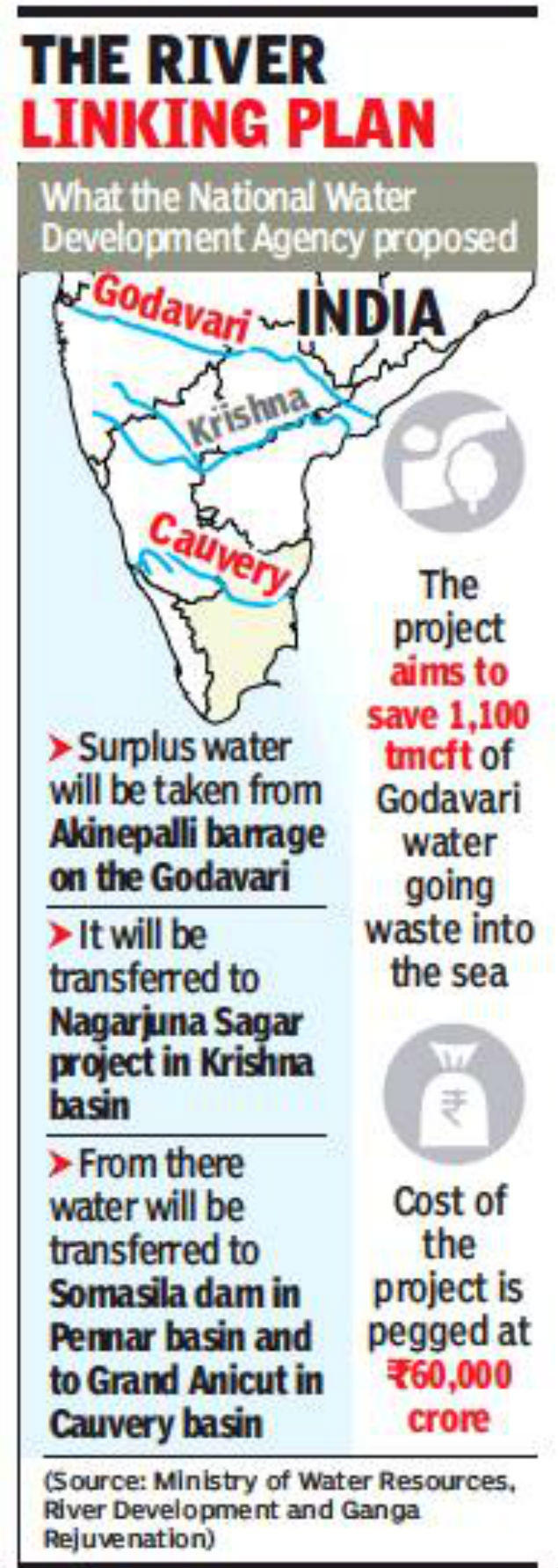
    The draft Detailed Project Report (DPR) of the Godavari and Cauvery River Linking Project has been completed by National Water Development Agency (NWDA).

    Godavari– Cauvery Link Project

    • The project consists of 3 links viz., Godavari (Inchampalli/Janampet) – Krishna (Nagarjunasagar), Krishna (Nagarjunasagar) – Pennar (Somasila) and Pennar (Somasila) – Cauvery (Grand Anicut).
    • This proposal to link Godavari, which is prone to flooding, and Krishna, which doesn’t have enough water, has been around for several decades.
    • While river-interlinking for the purposes of navigation as an idea was mooted by the British in India, in 1972, engineer and Union Minister KL Rao proposed the linking of Godavari and Krishna for irrigation.
    • The decades-old proposal finally took shape in the 2000s, and in 2016, the Andhra government linked the two rivers with the Pattiseema-Polavaram Lift Irrigation project, in Andhra’s West Godavari district.
  • Indian Army Updates

    [pib] Exercise AJEYA WARRIOR-2020

    Note4Students

    From UPSC perspective, the following things are important:

    Prelims level: Ex. AJEYA WARRIOR

    Mains level: Not Much

    Fifth edition of Joint Military Exercise AJEYA WARRIOR-2020 between India and United Kingdom will be conducted at Salisbury Plains, United Kingdom.

    Ex. AJEYA WARRIOR

    • Exercise AJEYA WARRIOR with United Kingdom is an important exercise in terms of the security challenges faced by both the nations in the realm of changing facets of global terrorism.
    • The exercise will comprise of 120 soldiers each from Indian and United Kingdom Army who would be sharing their experiences gained during conduct of various counter insurgency and counter terrorist operations in the past.
    • The aim of this exercise is to conduct company level joint training with emphasis on counter terrorists operation in Urban and Semi Urban areas.
    • The exercise is conducted alternatively in United Kingdom and India.