💥UPSC 2026, 2027, 2028 UAP Mentorship (March Batch) + Access XFactor Notes & Microthemes PDF

Type: Prelims Only

  • Festivals, Dances, Theatre, Literature, Art in News

    Cultural significance of Uttarakhand’s Joshimath and Kosiyakutoli 

    Note4Students

    From UPSC perspective, the following things are important:

    Prelims level: Joshimath, Kosiyakutoli, Adi Shankaracharya

    Why in the News?

    • The Centre approved the Uttarakhand government’s proposal to rename Joshimath tehsil to Jyotirmath and Kosiyakutoli tehsil to Pargana Shri Kainchi Dham.
      • This decision aims to enhance the religious and cultural significance of these areas, boosting their status as major destinations for religious tourism.

    About Jyotirmath 

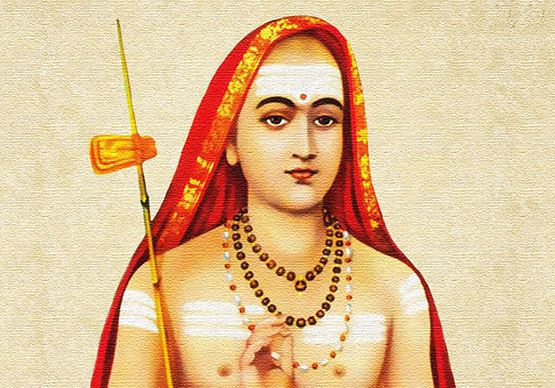
    • Jyotirmath, also known as Jyotir Peeth, is one of the four cardinal mathas established by Adi Shankaracharya in the 8th century to promote Advaita Vedanta philosophy.
    • Adi Shankaracharya performed penance under the Amar Kalpavriksha tree here, symbolising his attainment of divine knowledge (Jyoti).
    • Evolution to Joshimath:
      • Name Transition: Originally known as Jyotirmath, the town gradually adopted the name Joshimath over time, influenced by regional languages and dialects.
      • Cultural Evolution: The shift from Jyotirmath to Joshimath reflects a cultural and linguistic evolution rather than a specific historical event.

    About Adi Shankaracharya (c 788 CE-820 CE)

    Details
    Philosopher and Theologian Prominent advocate of ancient Hinduism, known as Sankara (Jagatguru).
    Birthplace Kaladi in Ernakulam, Kerala, soon to be declared a national monument.
    Guru Govinda Bhagavatpada, from whom he learned extensively.
    Philosophies Advocated Advaita Vedanta and established Dashanami Sampradaya.
    Advaita Vedanta
    • Non-dualistic philosophy asserts the identity of Atman (self) and Brahman (ultimate reality).
    • Maya (creative energy) of Brahman creates the world.
    • Liberation through understanding Brahman and overcoming Avidya (ignorance).
    Key Disciples Padmapada, Totakacharya, Hasta Malaka, and Sureshwara – played crucial roles in spreading his teachings.
    Contributions
    • Introduced the Shanmata system and restored the Dashanami structure.
    • Established four Mathas (monastic institutions) across India.
    • Authored commentaries on major Hindu scriptures and composed hymns.
    Mathas Established Sri Sringeri Sharada Peetam (Karnataka), Jyotir Matha (Uttarakhand),

    Kalika Matha (Gujarat), Govardhana Matha (Odisha).


    About Kosiyakutoli  

    • Kosiyakutoli, now renamed Pargana Shri Kainchi Dham, aligns with the identity of Neem Karoli Baba’s Kainchi Dham Ashram.
    • “Kosi” refers to the river flowing through the Nainital district, which is crucial for the local ecology and economy.
    • Association with Neem Karoli Baba:
      • The ashram, founded in 1962, continues to draw thousands of visitors annually, including prominent figures like Steve Jobs and Ram Dass.
    PYQ:

    [2014] Which one of the following pairs does not form part of the six systems of Indian Philosophy?

    (a) Mimamsa and Vedanta

    (b) Nyaya and Vaisheshika

    (c) Lokayata and Kapalika

    (d) Sankhya and Yoga

  • Nobel and other Prizes

    Kavli Prize, 2024 Announced

    Note4Students

    From UPSC perspective, the following things are important:

    Prelims level: Kavli Prize

    Why in the News? 

    The winners of the 2024 Kavli Prize were announced, recognising achievements in astrophysics, neuroscience, and nanoscience.

    About Kavli Prize

    • The Kavli Prize celebrates outstanding achievements in astrophysics, neuroscience, and nanoscience.
    • It is established in honour of Norwegian-American businessman and philanthropist Fred Kavli (1927-2013).
    • Awarded biennially, the prize recognizes researchers whose work pushes the boundaries of human knowledge and enhances our understanding of the universe, the brain, and nanoscale phenomena.

    About Fred Kavli

    • Fred Kavli, born in Erejsford, Norway, immigrated to California in 1956 and quickly made a mark in the engineering field.
    • His entrepreneurial journey began in 1958 with the founding of Kavlico, a pioneering company known for its precision pressure sensors used across diverse industries, from aviation to consumer electronics.

    The Kavli Foundation:

    • In 2000, after selling Kavlico for $340 million, Fred Kavli established the Kavli Foundation.
    • This philanthropic organisation supports fundamental research aimed at improving global quality of life.
    • The foundation operates 20 institutes worldwide dedicated to astrophysics, neuroscience, nanoscience, and theoretical physics.

    Prize Structure and Prestige:

    1. Comparison with Nobel Prize: The Kavli Prize mirrors the Nobel Prize in its prestige and international recognition but differs by not limiting awards to achievements within the preceding year, allowing broader scope and longevity in selection criteria.
    2. Award Ceremony: Each Kavli Prize includes a $1 million cash award per field, a scroll, and a 7 cm diameter medal. The ceremony, held at the Oslo Concert Hall and attended by global scientific leaders, features a red-carpet event, emphasizing its significance in the scientific community.
    3. Selection Process:
    • Committees: Three international committees nominate and review candidates, providing a unanimous recommendation to the Norwegian Academy of Science and Letters.
    • Nominees: Nominees come from prestigious institutions worldwide, ensuring a diverse and comprehensive evaluation process.

    Winners of the 2024 Kavli Prize:

    Field Winners Contributions
    Astrophysics David Charbonneau (Harvard University), Sara Seager (Massachusetts Institute of Technology) Pioneering methods for detecting atomic species in planetary atmospheres and measuring their thermal infrared emission, are crucial for identifying molecular fingerprints in atmospheres of exoplanets.
    Nanoscience Robert Langer (MIT), Armand Paul Alivisatos (University of Chicago), Chad Mirkin (Northwestern University) Langer: Nano-engineering for controlled drug delivery systems.

    Alivisatos: Development of semiconductor quantum dots for bio-imaging.

    Mirkin: Concept of spherical nucleic acids (SNAs) for applications in gene regulation and immunotherapy.

    Neuroscience Nancy Kanwisher (MIT), Winrich Freiwald (Rockefeller University), Doris Tsao (University of California, Berkeley) Mapping brain functions related to facial recognition using neuroimaging and neuronal recording techniques, identifying brain centers and neural architectures involved in face processing.


    PYQ:

    [2021] The Nobel Prize in Physics of 2014 was jointly awarded to Akasaki, Amano and Nakamura for the invention of Blue LEDs in the 1990s. How has this invention impacted the everyday life of human beings?

    [2018] Discuss the work of ‘Bose-Einstein Statistics’ done by Prof. Satyendra Nath Bose and show how it revolutionized the field of Physics.

    [2008] Nobel Prize-winning scientist James D. Watson is known for his work in which area? (2008)

    (a) Metallurgy

    (b) Meteorology

    (c) Environmental protection

    (d) Genetics

  • Nobel and other Prizes

    Longitude Prize on Antimicrobial Resistance (AMR)

    Note4Students

    From UPSC perspective, the following things are important:

    Prelims level: Longitude Prize, AMR

    Why in the News?

    Sysmex Astrego, a Sweden-based diagnostic company, won the £10 million Longitude Prize for developing a high-tech UTI (Urinary Tract Infection) test called the PA-100 AST System. 

    What is Antimicrobial Resistance?

    • Antimicrobial Resistance (AMR) occurs when bacteria, viruses, fungi, and parasites change so that medicines no longer work against them.
    • This makes infections harder to treat and can lead to more severe illness and even death.
    • AMR can occur naturally through genetic changes or when one type of microorganism picks up resistance from another.
    • It can also occur randomly due to mutations or when resistant genes spread between different organisms.
    • The main reasons for AMR are antibiotics incorrectly or too often, not having access to clean water and good hygiene, not doing enough to prevent infections, and people not knowing how to use antibiotics properly.

    Global Impact of AMR

    • Global Threat: Antibiotic-resistant infections caused nearly 1.3 million deaths in 2019, with projections to exceed cancer-related deaths by 2050.
    • Economic Impact: The global economy faces potential losses of up to 4 trillion by 2030 and 100 trillion by 2050 due to the AMR crisis.

    About the Longitude Prize

    • The Longitude Prize, valued at £8 million (₹85 crore), was recently awarded for its profound implications in combating antimicrobial resistance (AMR).
    • The prize launched in 2014, aims to revolutionize infection management globally.
    • Historical Context:  
      • Origins: Established in 1714 to solve the maritime longitude problem, demonstrating the critical need for accurate navigation.
      • Modern Application: The 21st-century Longitude Prize addresses pressing global challenges like AMR, incentivizing innovative solutions.
    • Goal of the Prize:
      •  Aims to replace current lab-based diagnostic methods with rapid tests that guide targeted antibiotic therapies, combating AMR effectively.

    About PA-100 AST System 

    • Technology Breakthrough: Developed by Sysmex Astrego, this system uses a phenotypic test that identifies UTI bacteria and performs antibiotic susceptibility testing in under 45 minutes.
    • Operation: A single-use cartridge processes less than half a milliliter of urine, using microfluidic traps and phase-contrast imaging in a shoe box-sized reader instrument.
    • Clinical Impact: Provides rapid “sensitive” or “resistant” results for antibiotics, aiding doctors in immediate, accurate treatment decisions at the point of care.

    Current Challenges in UTI Diagnosis

    • Limited Accuracy: Current options include urine dipstick tests for quick results but limited accuracy (50-60%) and lab cultures with 2-3 day turnaround times.
    • Impact on Treatment: Delayed diagnosis often leads to empirical antibiotic use, contributing to antibiotic resistance worldwide.

    Significance for India

    • Healthcare Burden: In India, millions seek treatment for UTIs annually, impacting lives and healthcare systems significantly.
    • Potential: Rapid, accurate point-of-care tests could revolutionize UTI management globally, saving lives and reducing healthcare costs.

    PYQ:

    [2014] Can overuse and free availability of antibiotics without a Doctor’s prescription be contributors to the emergence of drug-resistant diseases in India? What are the available mechanisms for monitoring and control? Critically discuss the various issues involved.

    [2019] Which of the following are the reasons for the occurrence of multi-drug resistance in microbial pathogens in India?

    1. Genetic predisposition of some people
    2. Taking incorrect doses of antibiotics to cure diseases
    3. Using antibiotics in livestock farming
    4. Multiple chronic diseases in some people

    Select the correct answer using the code given below.

    (a) 1 and 2
    (b) 2 and 3 only
    (c) 1, 3 and 4
    (d) 2, 3 and 4

  • ISRO Missions and Discoveries

    Lal Crater on Mars

    Note4Students

    From UPSC perspective, the following things are important:

    Prelims level: Mars Craters, IAU

    Why in the News?

    Back2Basics: International Astronomical Union (IAU)

    • The IAU was founded on July 28, 1919, during the Constitutive Assembly held in Brussels, Belgium.
    • Its creation was prompted by the need for international collaboration in astronomy, especially after the devastation caused by World War I.
    • It aims to promote and safeguard astronomy in all its aspects through international cooperation.
    • IAU is now headquartered in Paris, France.

    Major Activities and Initiatives

    • General Assembly: The IAU holds a general assembly every three years in varying parts of the world at which professional astronomers meet to discuss research, new cooperative ventures, and similar matters of professional interest.
    • Astronomical Nomenclature: IAU standardises the nomenclature of celestial bodies, features, and phenomena. It maintains several working groups dedicated to naming conventions for stars, planets, asteroids, and other objects.
    • Research and Collaboration: It promotes international cooperation in astronomical research and supports initiatives such as observational campaigns, data sharing, and joint projects.
    • Education and Outreach: It is actively involved in promoting astronomy education and public outreach efforts worldwide. It supports educational programs, workshops, and resources for students, teachers, and the general public.

    Membership

    1. IAU membership spans 92 countries. Out of those countries, 85 are National Members.
    2. India is represented by the Astronomical Society of India (ASI).
    3. Its members are professional astronomers from all over the world, at the D. level and beyond, who are active in professional research, education, and outreach in astronomy.

    Crater Names and Significance

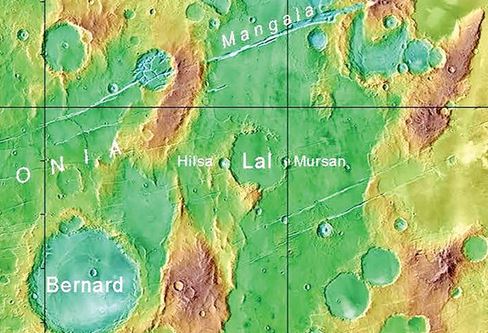
    • Lal Crater: Named after Prof. Devendra Lal, former director of PRL, this 65 km wide crater is positioned at -20.98° and 209.34°.
    • Mursan Crater: Named after a town in Uttar Pradesh, India, this ~10 km wide crater is situated on the eastern side of the Lal crater’s rim.
    • Hilsa Crater: Named after a town in Bihar, India, this ~10 km wide crater is positioned on the western side of the Lal crater’s rim.

    Scientific Importance of Lal Crater

    • Lava Coverage: The entire Lal crater area, located in the Tharsis volcanic region on Mars, is covered with lava.
    • Evidence of Water: Geophysical evidence, including a 45-meter thick sedimentary deposit, suggests the presence of water in the subsurface of the Lal crater. This finding supports the theory that Mars once had water flowing on its surface.
    • Infilling Process: Mursan and Hilsa craters, positioned on either side of the Lal crater, offer insights into the infilling process of the Lal crater. Their presence indicates that infilling occurred episodically over time.

    India’s 2nd Quest for Mars

    • The ISRO is expected to launch Mangalyaan-2, or Mars Orbiter Mission 2 (MOM 2), in 2025.
    • The mission will last one year and is aimed at studying the Red Planet.
    • The successor to Mangalyaan-1, or Mars Orbiter Mission 1 (MOM 1), Mangalyaan-2 will consist of only one orbiter and will be launched atop a GSLV Mark III rocket from Satish Dhawan Space Centre.

    Other missions to Mars

    • ExoMars rover (2022): European Space Agency’s mission to explore Mars.
    • Tianwen-1 (2021): China’s Mars Mission aims to explore and study the Martian surface.
    • UAE’s Hope Mars Mission (2021): UAE’s first interplanetary mission focused on studying the Martian atmosphere.
    • NASA’s Mars Insight (2018): A lander designed to study the interior of Mars.
    • NASA’s Curiosity (2012) and Perseverance (2020): Rovers exploring the Martian surface.
    • NASA’s Mars Reconnaissance Orbiter (2005), Mars Odyssey (2001), and MAVEN (2013): Orbiters studying Mars from space.
    • Mars 2 and Mars 3 (1971): Soviet Union’s missions to Mars, which included orbiter and lander components.


    PYQ:

    [2016] The Mangalyaan launched by ISRO

    1. is also called the Mars Orbiter Mission.
    2. made India the second country to have a spacecraft orbit the Mars after USA
    3. made India the only country to be successful in making its spacecraft orbit Mars in its very first attempt.

    Which of the statements given above is/are correct?

    (a) 1 only
    (b) 2 and 3 only
    (c) 1 and 3 only
    (d) 1, 2 and 3

  • Air Pollution

    India is the World’s Second Largest emitter of Nitrous Oxide

    Note4Students

    From UPSC perspective, the following things are important:

    Prelims level: Nitrous Oxide pollution

    Why in the News?

    • India ranks as the world’s second-largest contributor (after China) to nitrous oxide (N2O), a potent greenhouse gas (GHG), accounting for approximately 11% of global man-made emissions in 2020 as per data published in the journal Earth System Science Data.
      • The top five country emitters by volume of anthropogenic N2O emissions in 2020 were China (16.7%), India (10.9%), the United States (5.7%), Brazil (5.3%), and Russia (4.6%).

    About Nitrous Oxide

    • Nitrous oxide (N2O), a colourless and odourless gas, is a potent greenhouse gas, 300 times more powerful than CO2. Despite its small atmospheric fraction, it ranks third in concentration after CO2 and methane (CH4). It’s a crucial target for environmental research and efforts to mitigate climate change impacts.

    Sources of Emission:

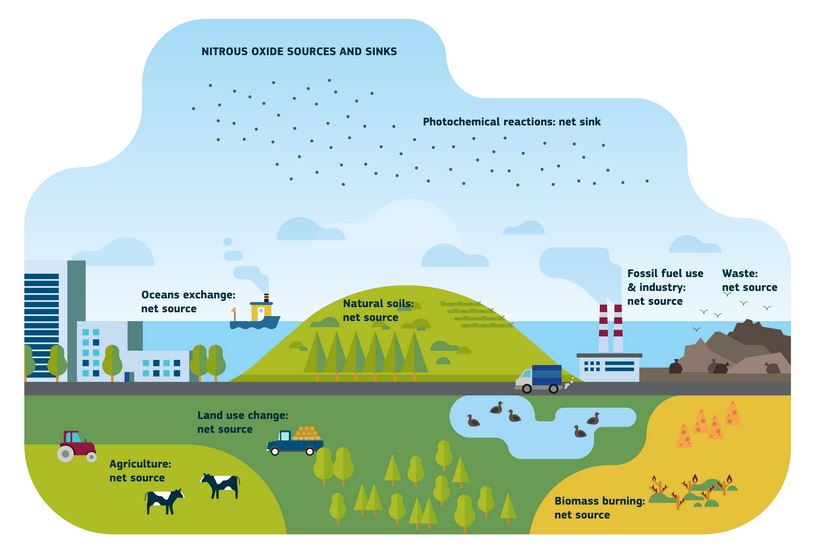
    1. Natural Sources: N2O is naturally produced in processes such as microbial nitrogen cycling in soil and water bodies, volcanic activity, and biomass burning.
    2. Anthropogenic Activities: Human activities significantly contribute to N2O emissions, with the primary sources being:
    • Agricultural practices, including the use of nitrogen-based fertilizers and animal manure.
    • Industrial processes such as combustion of fossil fuels and wastewater treatment.
    • Combustion of biomass and waste.
    • Use of nitrous oxide in medical and dental procedures (as a sedative) and in food packaging.

    Impact on Climate Change:

    • Greenhouse Gas: N2O is a potent greenhouse gas with a global warming potential (GWP) much higher than that of carbon dioxide (CO2).
    • Ozone Depletion: In addition to its role in climate change, N2O also contributes to ozone depletion in the stratosphere, further exacerbating environmental concerns.

    Environmental and Health Effects:

    • Environmental Pollution: N2O emissions can lead to pollution of soil, water bodies, and air, affecting ecosystems and human health.
    • Health Risks: While N2O is relatively non-toxic at ambient levels, prolonged exposure or high concentrations can pose health risks, including respiratory issues and neurological effects.

    Global Nitrous Oxide Emissions

    • Atmospheric Concentration: The concentration of atmospheric N2O reached 336 parts per billion in 2022, about 25% above pre-industrial levels.
    • Next to Carbon Emissions: In comparison, the concentration of carbon dioxide was 417 parts per million in 2022.
    • Persistent Lifespan: Once emitted, N2O stays in the atmosphere for longer than the average human lifespan (117 years), making its climate and ozone impacts long-lived.
    • Contribution to Climate Change: These emissions are responsible for 6.4% of the effective radiative forcing of greenhouse gases and have added about 0.1°C to current global warming.
    • Impact of Nitrogen Fertilizers: N2O emissions from human activities have increased by 40% in the past four decades, with agricultural production using nitrogen fertilizers and animal manure contributing 74% of total anthropogenic N2O emissions in the last decade.

    Call for Action and Future Outlook

    • Scientists warn that anthropogenic N2O emissions must decline by at least 20% relative to 2019 levels by 2050 to align with net-zero emission pathways consistent with the Paris Agreement.
    • Nitrogen fertilizers, which are heavily subsidized in India, contribute significantly to N2O emissions. Urgent reforms are needed to promote alternative production systems and mitigate emissions.

    India’s Policy Initiatives to Curb Nitrogen Pollution

    • Nutrient-Based Subsidy (NBS) (2010): This policy encourages the adoption of controlled-release fertilizers to enhance nutrient management efficiency.
    • Soil Health Cards (2015): Provided to farmers, these cards offer insights into soil nutrient levels and tailored fertilizer recommendations, promoting balanced nutrient application.
    • Bharat Stage (BS VI) Emission Standards (2016): These stringent regulations for vehicles and industries aim to reduce the emission of nitrogen oxides and particulate matter, thereby mitigating air and water pollution.
    • Nano Urea (2021): Marketed by the Indian Farmers Fertiliser Cooperative Limited (IFFCO), Nano Urea is a patented fertilizer approved for commercial use, designed to curb excessive and indiscriminate conventional urea use while boosting crop yields.

    PYQ:

    [2016] Why does the Government of India promote the use of ‘Neem-coated Urea’ in agriculture?

    (a) Release of Neem oil in the soil increases nitrogen fixation by the soil microorganisms

    (b) Neem coating slows down the rate of dissolution of urea in the soil

    (c) Nitrous oxide, which is a greenhouse gas, is not at all released into the atmosphere by crop fields

    (d) It is a combination of a weedicide and a fertilizer for particular crops

  • Innovations in Biotechnology and Medical Sciences

    N332-GT5 and eOD-GT8: Advancements in HIV Vaccine Development

    Note4Students

    From UPSC perspective, the following things are important:

    Prelims level: N332-GT5, eOD-GT8, HIV-AIDS

    Why in the News?

    Researchers at the Duke Human Vaccine Institute have successfully induced broadly neutralising antibodies (bNAbs) against HIV (human immunodeficiency virus) through vaccination for the first time.

    About HIV/AIDS:

    • Emergence: The first cases of AIDS (Acquired Immunodeficiency Syndrome) were reported in the early 1980s, primarily among gay men in the United States.
    • Discovery of HIV: In 1983-1984, scientists identified HIV (Human Immunodeficiency Virus) as the cause of AIDS.
    • Global Spread: HIV/AIDS quickly became a global pandemic, affecting millions of people worldwide.

    Causes:

    • HIV is transmitted through contact with certain body fluids of an infected person, including blood, semen, vaginal fluids, and breast milk.
    • Common modes of HIV transmission include unprotected sexual intercourse, sharing needles or syringes, and from mother to child during pregnancy, childbirth, or breastfeeding.

    Symptoms:

    • Acute HIV Infection: Many people experience flu-like symptoms, such as fever, headache, fatigue, and swollen lymph nodes, within 2-4 weeks after infection.
    • Asymptomatic Stage: After the initial symptoms subside, HIV often enters a latent stage where individuals may not experience any symptoms for years.
    • Progression to AIDS: Without treatment, HIV gradually weakens the immune system, leading to the development of opportunistic infections and cancers. This advanced stage is known as AIDS and is characterized by severe immune deficiency.

    Vaccines Development:

    • Challenges: Developing an HIV vaccine has been challenging due to the virus’s ability to mutate rapidly and evade the immune system.
    • Vaccine Candidates: Numerous vaccine candidates have been tested over the years, but none have yet been successful in providing robust protection against HIV infection.
    • Hope for the Future: Despite setbacks, advances in vaccine development, such as the identification of promising candidates like N332-GT5 and eOD-GT8, offer hope for eventually achieving an effective HIV vaccine.

    How B cells and mRNA play distinct roles in the context of HIV infection?

    1.    B cells (B lymphocytes):

    • B cells are a type of white blood cell crucial for the immune response.
    • In HIV infection, B cells participate in the adaptive immune response by producing antibodies specific to HIV antigens.
    • These antibodies can neutralize HIV particles, tag infected cells for destruction by other immune cells, and contribute to the immune memory against HIV.

    2.    mRNA (messenger RNA):

    • mRNA is a molecule that carries genetic information from DNA to the ribosomes, where proteins are synthesized.
    • In the context of HIV, mRNA is involved in the replication process of the virus.
    • HIV uses its RNA genome to produce viral mRNA, which directs the synthesis of viral proteins necessary for the assembly of new virus particles.
    • Understanding HIV mRNA is crucial for developing antiviral therapies that target viral replication, such as mRNA-based vaccines or mRNA inhibitors.

    N332-GT5 and eOD-GT8: The New Vaccines in Making

    • N332-GT5: This vaccine candidate targets a specific region on the surface of the HIV virus known as the N332 glycan site. By engaging B-cells that have the potential to produce bNAbs against this site, N332-GT5 aims to stimulate the immune system to generate a protective response against a wide range of HIV strains.
    • eOD-GT8: Similarly, eOD-GT8 is designed to target another region on the HIV virus, known as the eOD protein. By leveraging nanoparticles as carriers, eOD-GT8 aims to enhance the immune system’s ability to recognize and neutralize HIV, ultimately leading to the production of bNAbs.

    What are Broadly Neutralizing Antibodies (bNAbs)?

    • In the 1990s, scientists discovered that some HIV-infected individuals produced bNAbs, which neutralize many viral strains.
    • bNAbs target viral protein areas crucial for infectivity, making them less likely to change.
    • Despite their effectiveness, bNAbs take years to develop, by which time HIV has often evolved to escape them.

    Developing bNAb-Based Vaccines

    • The goal is to make the immune system produce bNAbs quickly in response to a vaccine.
    • Germline targeting involves three steps:
      1. Identify and engage B-cells capable of producing bNAbs.
      2. Use a booster to guide these cells to produce stronger bNAbs.
      3. Refine bNAbs to neutralize a wide range of HIV strains.

    PYQ:

    [2013] Which of the following diseases can be transmitted from one person to another through tattooing?

    1. Chikungunya

    2. Hepatitis B

    3. HIV-AIDS

    Select the correct answer using the codes given below.

    (a) 1 only

    (b) 2 and 3 only

    (c) 1 and 3 only

    (d) 1, 2 and 3

  • Special Category Status and States

    Bihar’s call for Special Category Status | Explained

    Note4Students

    From UPSC perspective, the following things are important:

    Prelims level: Specific criteria qualify a State for special category status

    Mains level: Special category status benefits to States like Bihar

    Why in the News?

    Bihar Chief Minister Nitish Kumar has renewed the State’s persistent call for special category status from the Centre, which would boost the State’s share of tax revenues from the Central government.

    How does the ‘Special Category’ Status benefit the states like Bihar?

    • Increased Central Funds: States with special category status receive a higher share of central funds for government schemes, typically 90% from the Centre, compared to 60%-80% for other states.
    • Tax-Related Concessions: These states enjoy various tax concessions that can attract investments and boost economic development.
    • Financial Aid for Development: The additional funds can be used to address developmental gaps, improve infrastructure, and support welfare programs.

    Criteria for Special Category status:

    • Geographic Disadvantages: States with challenging terrains such as hilly or difficult terrain.
    • Low Population Density or High Tribal Population: States with a considerable proportion of tribal population or low population density.
    • Economic and Social Backwardness: States that are economically and socially disadvantaged.
    • Strategic Location: States that share international borders or have strategic significance.

    Why has Bihar’s demand been a long-standing issue?

    • Economic Backwardness: Bihar has one of the lowest per capita incomes in India and lags behind in several human development indicators.
    • Fiscal Challenges: The bifurcation of the state leading to the formation of Jharkhand, frequent natural disasters, and insufficient water resources for irrigation have adversely affected Bihar’s fiscal situation.
    • Political Reiteration: Successive Bihar governments have continuously demanded special status to help the state’s development.

    What are the political implications of granting ‘Special Status’ to Bihar?

    • Increased Bargaining Power: Granting special status could enhance Bihar’s political leverage with the central government, especially in coalition politics.
    • Precedent for Other States: Granting special status to Bihar could lead to similar demands from other states, potentially creating financial burdens for the Centre.
    • Electoral Promises and Alliances: Political parties may use the promise of special status as an electoral tool to gain or maintain power, as seen with the Congress party’s manifesto promise in 2024.
    • Centre-State Relations: The decision could impact the dynamics of center-state financial relations and influence the federal structure of revenue distribution in India.

    Conclusion: The Central government should establish a transparent and well-defined framework for granting special category status, taking into account various economic, geographic, and social parameters. This framework should be periodically reviewed to ensure it remains relevant and fair to all states.

    Mains PYQ: 

    Q To what extent is Article 370 of the Indian Constitution, bearing marginal note “Temporary provision with respect to the State of Jammu and Kashmir”, temporary? Discuss the future prospects of this provision in the context of Indian polity. (UPSC IAS/2016)

  • Parliament – Sessions, Procedures, Motions, Committees etc

    What are the functions of Cabinet Ministers and Ministers of State?

    Note4Students

    From UPSC perspective, the following things are important:

    Prelims level: India’s ministerial portfolio system and its features

    Why in the News?

    • President Droupadi Murmu administered oaths to the Central Council of Ministers (CoM) of the new NDA government, comprising a larger team compared to the previous term.
      • The Council includes 30 cabinet ministers, five Ministers of State (Independent Charge), and 36 Ministers of State, with the Prime Minister leading the team.

    About Central Council of Ministers

    • The Central CoM is a crucial part of India’s governance system.
    • Members: It consists of the Prime Minister (Head), Cabinet Ministers, Ministers of State, and Deputy Ministers.
    • History:
      • Portfolio System: The system of the CoM finds its roots in the Indian Councils Act of 1861, introduced by Lord Canning going parallel with the British Parliamentary System.

    Constitutional Provisions

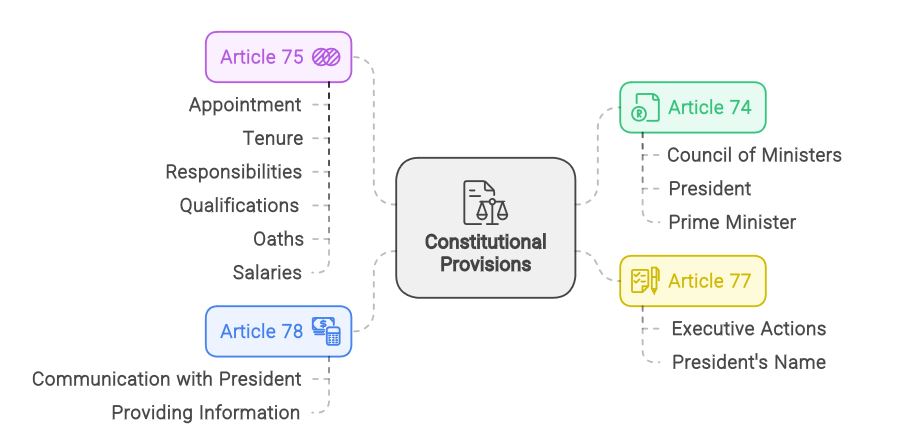
    Articles 74 to 78 in Part V of the Indian Constitution broadly deal with the Central Council of Ministers.

    Union Executive: The Union Executive encompasses the President, Vice-President, Prime Minister, Union Council of Ministers, and Attorney General of India, collectively responsible for the country’s administration.

    Role of the Prime Minister

    • The Prime Minister is the head of the Central Council of Ministers, exercising executive authority and decision-making powers on key policy issues and unallocated portfolios.
    • Responsibilities: Prime Minister Modi oversees critical ministries such as Personnel, Public Grievances, Pensions, Department of Atomic Energy, and Department of Space, while also leading government bodies like the Cabinet Secretariat and NITI Aayog.

    Functions and Duties of CoM

    1. Policy Formulation and Implementation:

    • Formulating Policies: The Council of Ministers, particularly the Cabinet, is tasked with formulating policies crucial for the nation’s development and welfare.
    • Policy Coordination: It ensures coordination among various government departments and agencies for effective policy implementation.

    2. Executive Functions:

    • Real Executive Authority: The Council of Ministers acts as the real executive authority, exercising executive powers on behalf of the President.
    • Administration: It oversees the day-to-day administration of the country, ensuring the smooth functioning of government affairs.
    • Emergency Powers: During emergencies, the Council of Ministers advises the President on the exercise of emergency powers and crisis management.

    3. Legislative Functions:

    • Bills and Legislation: Ministers actively participate in the legislative process by introducing bills, piloting them through Parliament, and ensuring their passage.
    • Policy Advocacy: They advocate for government policies and bills in Parliament, engaging in debates and discussions to garner support.
    • Budgetary Process: The Council of Ministers prepares and presents the annual budget, guiding fiscal policies and financial allocations.

    4. Financial Management:

    • Budget Preparation: It plays a significant role in preparing the national budget, and outlining revenue and expenditure plans for the fiscal year.
    • Financial Administration: The Council oversees financial administration, ensuring compliance with budgetary provisions and efficient resource utilization.
    • Taxation and Fiscal Policy: Ministers propose taxation measures and formulate fiscal policies to promote economic growth and stability.

    Who are the Cabinet Ministers?

    • The Cabinet Ministers are senior members of the Central Council of Ministers who head key government departments or ministries.
    • Typically, Cabinet Ministers are appointed by the Prime Minister and are part of the Cabinet, which is the core decision-making body in the government.
    • Each Cabinet Minister typically manages a specific portfolio aligned with the government’s priorities and responsibilities.
      • Examples: Minister of Finance, Minister of Home Affairs, Minister of Defence, Minister of External Affairs, Minister of Health, Minister of Education, and others.
    • The term ‘Cabinet’ was inserted in Art. 352 of the Constitution by the 44th Amendment Act 1978.
    • It did not find a place in the original text of the Constitution.

    Difference between Ministers of State (Independent Charge) and Ministers of State:

    Ministers of State (Independent Charge) Ministers of State
    Authority Have independent portfolios Assist Cabinet Ministers
    Reporting Structure Directly report to PM/President Report to and assist Cabinet Ministers
    Accountability Fully responsible for their departments Assist Cabinet Ministers in tasks
    Protocol Status Equivalent to Cabinet Ministers in status Lower protocol status
    Attendance in Cabinet Meetings May attend if their portfolios are discussed Not regular attendees


    PYQ:

    [2013] Consider the following statements:

    1. The Council of Ministers in the Centre shall be collectively responsible to the Parliament.
    2. The Union Ministers shall hold the office at the pleasure of the President of India.
    3. The Prime Minister shall communicate to the President about the proposals for legislation.

    Which of the statements given above is/are correct?

    (a) 1 only

    (b) 2 and 3 only

    (c) 1 and 3 only

    (d) 1, 2 and 3

    [2007] Assertion (A): The Council of Ministers in the Union of India is collectively responsible both to the Lok Sabha and Rajya Sabha.

    Reason (R): The Members of both the Lok Sabha and the Rajya Sabha are eligible to be the Ministers of the Union Government.

    Choose the correct Code:

    (a) Both A are R are true and R is the correct explanation of A

    (b) Both A and R are true but R is not a correct explanation of A

    (c) A is true but R is false

    (d) A is false but R is true

  • Promoting Science and Technology – Missions,Policies & Schemes

    2025 to be International Year of Quantum Science and Technology

    Note4Students

    From UPSC perspective, the following things are important:

    Prelims level: Quantum Theory and related Researches, National Quantum Mission (NQM)

    Why in the News?

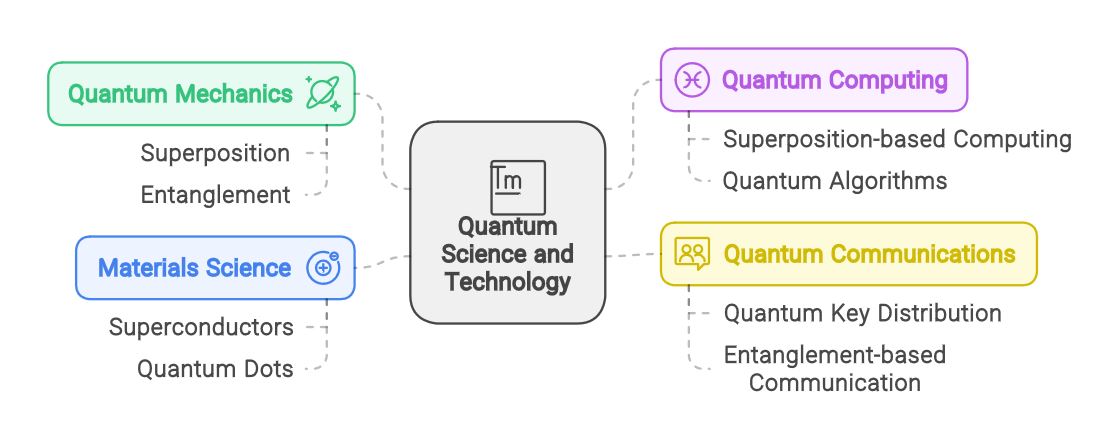
    • The United Nations has designated 2025 as the ‘International Year of Quantum Science and Technology’ to increase public awareness about the significance of quantum science and its applications.
      • This initiative, led by Mexico and supported by nearly 60 countries, aims to promote activities at all levels to highlight the importance of quantum science and technology worldwide.

    International Year of Quantum S&T

    • Growing Relevance: Quantum science and technologies, especially quantum computing, have gained prominence in public discourse due to their potential transformative impact on various fields.
    • Anniversary of Heisenberg’s Work: The proclamation coincides with the upcoming centenary of Werner Heisenberg’s groundbreaking paper on quantum mechanics, published in 1925.
    • Support from International Bodies: The proclamation has received endorsements from various international organisations, including the International Union of Pure and Applied Physics and the International Union of Pure and Applied Chemistry.

    What does one mean by Quantum?

    • “Quantum” refers to the smallest discrete unit of any physical quantity involved in an interaction according to quantum theory.
    • In classical physics, many properties, such as energy and momentum, are thought to be continuous and infinitely divisible.
    • However, in quantum mechanics, certain properties, like energy levels and the behaviour of particles, are quantised, meaning they can only exist in specific discrete amounts or levels.

    What is Quantum Theory?

    • Quantum theory is a fundamental theory in physics that provides a description of the physical properties of nature at the scale of atoms and subatomic particles.
    • Quantum mechanics differs from classical physics in that energy, momentum, and angular momentum.

    Development in Quantum Theory So Far

    • Planck’s assumption: In 1900, Planck made the assumption that energy was made of individual units or quanta.
    • Albert Einstein’s theory: In 1905, Albert Einstein theorized that not just the energy, but the radiation itself was quantized in the same manner.
    • Louis de Broglie theory: In 1924, Louis de Broglie proposed that there is no fundamental difference in the makeup and behaviour of energy and matter; on the atomic and subatomic level either may behave as if made of either particles or waves. This theory became known as the principle of wave-particle duality: elementary particles of both energy and matter behave, depending on the conditions, like either particles or waves (wave-particle duality).
    • Heisenberg proposed: In 1927, Werner Heisenberg proposed that precise, simultaneous measurement of two complementary values – such as the position and momentum of a subatomic particle – is impossible. Contrary to the principles of classical physics, their simultaneous measurement is inescapably flawed; the more precisely one value is measured, the more flawed will be the measurement of the other value. This theory became known as the uncertainty principle, which prompted Albert Einstein’s famous comment, “God does not play dice.”

    What is Entanglement?

    • Entanglement was another of several weird properties exhibited by these tiny particles.
    • Two particles, having ‘interacted’ with each other at some stage, were found to have got ‘entangled’ in a way that the behaviour of one produced an instantaneous reaction in the other even if the two were no longer connected in any way and were separated by very large distances.
    • The entanglement property opened up new technological possibilities first time that it was possible to ‘teleport’ the quantum states of a particle to another location without the particle moving anywhere and without a medium.

    What is Superposition?

    • It’s a phenomenon where, a particle exists simultaneously at multiple locations, known as superposition.
    • The chance of finding the particle at any given place was dictated by probabilistic calculations, and once it was found, or observed, at one location, it ceased to exist at all other places.

    What is Quantum Computing?

    • Quantum computing is a new and super powerful way of doing computer stuff.
    • Instead of using regular computer bits that are either 0 or 1, quantum computers use special bits called qubits that can be both 0 and 1 at the same time, thanks to a thing called “quantum superposition.”
    • This allows them to do lots of calculations all at once, making them really fast at solving certain types of problems.

    Back2Basics: National Quantum Mission (NQM)

    Details
    Mission Duration 2023-2031
    Implementing Authority Department of Science and Technology (DST) under the Ministry of Science & Technology
    India’s Position Seventh country to have a dedicated quantum mission after the US, Austria, Finland, France, Canada, and China
    Focus Areas
    • Intermediate-scale quantum computers with 50-100 physical qubits in 5 years and 50-1000 physical qubits in 8 years
    • Quantum computation, Quantum communication, Quantum Sensing & Metrology, Quantum Materials & Devices
    Development
    • High-sensitivity magnetometers for precision timing, communications, and navigation
    • Satellite-based secure quantum communications within India and with other countries
    • Design and synthesis of quantum materials like superconductors, novel semiconductor structures, and topological materials
    Thematic Hubs Establishment Four Thematic Hubs (T-Hubs) would be set up in top academic and National R&D institutes on the domains of Quantum Technology:

    1. Quantum computation
    2. Quantum communication
    3. Quantum Sensing & Metrology
    4. Quantum Materials & Devices

    PYQ:

    [2022] Which one of the following is the context in which the term “Qubit” is mentioned?

    (a) Cloud Services

    (b) Quantum Computing

    (c) Visible Light Communication Technologies

    (d) Wireless Communication Technologies

  • International Space Agencies – Missions and Discoveries

    How SpaceX’s Starship can revolutionise space travel and exploration?

    Note4Students

    From UPSC perspective, the following things are important:

    Prelims level: Starship space vehicle and its features

    Why in the News?

    • SpaceX’s Starship rocket completed its first fully successful test flight. This test flight brings SpaceX closer to its goal of creating a fully reusable rocket system, a development that could revolutionize space exploration and travel.

    What is Starship?

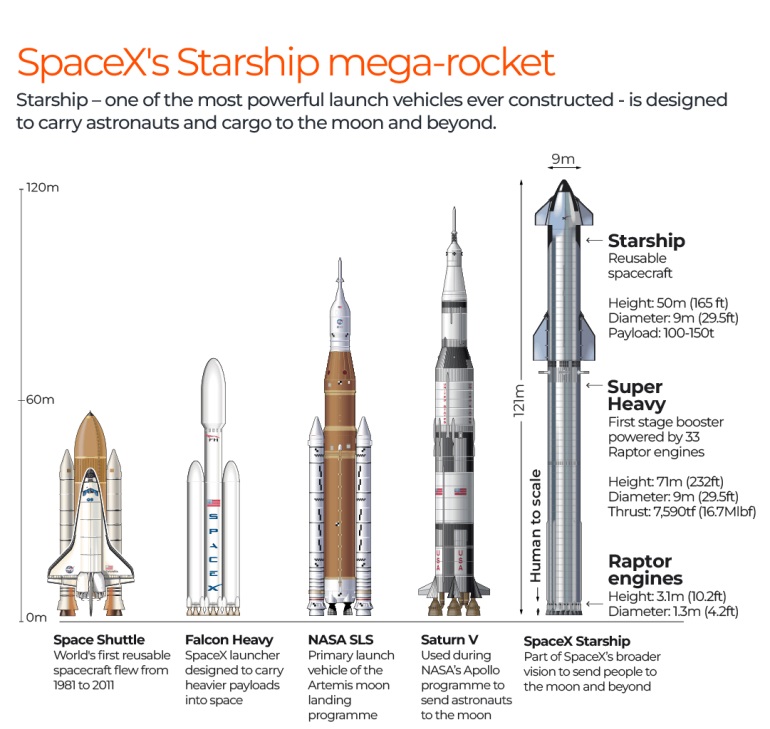
    • Starship is a two-stage heavy lift-off vehicle designed for crew and cargo transport to Earth orbit, the Moon, Mars, and beyond.
    • It stands nearly 120 meters tall, surpassing the Saturn V rocket.
    • The Super Heavy booster is powered by 33 Raptor engines, generating significant thrust, surpassing existing rocket systems like NASA’s Space Launch System (SLS).
    • Raptor engine fuel uses a mix of liquid oxygen and liquid methane, enabling efficient propulsion for the rocket.

    Cost Reduction and Efficiency with Starship

    • Starship can carry up to 150 tonnes of payload to low-Earth orbit.
    • It can be refuelled in space, thereby promising a significant reduction in the cost of space travel.
    • In-orbit refuelling allows Starship to operate like an aeroplane, reducing downtime between missions and maximizing efficiency.
    • Starship’s fully reusable design minimizes the need for costly hardware replacement, unlike traditional rocket systems.

    Scientific Benefits of Starship

    • Enhanced Payload Capability: Starship’s capacity for heavy payloads enables the launch of larger space telescopes and equipment for lunar and Martian missions.
    • Exploration Potential: Scientists can deploy larger and more sophisticated instruments, such as drilling rigs, to explore the Moon and Mars in unprecedented detail.
    • Sample Return Missions: Starship’s capability to return to Earth facilitates the retrieval of valuable samples from other planets, aiding in scientific research and understanding.

    PYQ:

    [2018] With reference to India’s satellite launch vehicles, consider the following statements:

    1. PSLVs launch satellites useful for Earth resources monitoring whereas GSLVs are designed mainly to launch communication satellites.
    2. Satellites launched by PSLV appear to remain permanently fixed in the same position in the sky, as viewed from a particular location on Earth.
    3. GSLV Mk III is a four-stage launch vehicle with the first and third stages using solid rocket motors, and the second and fourth stages using liquid rocket engines.

    Which of the statements given above is/are correct?

    (a) 1 only
    (b) 2 and 3
    (c) 1 and 2
    (d) 3 only