💥UPSC 2026, 2027, 2028 UAP Mentorship (March Batch) + Access XFactor Notes & Microthemes PDF

Type: Prelims Only

  • Innovations in Sciences, IT, Computers, Robotics and Nanotechnology

    Portable Optical Atomic Clock for accurate timekeeping at Sea

    Note4Students

    From UPSC perspective, the following things are important:

    Prelims level: Optical Atomic Clock and Classical Atomic Clock; Difference between them.

    Why in the News?

    • Atomic clocks power GPS systems, guiding us in navigation, emergencies, and military operations.
      • Scientists are developing optical atomic clocks to enhance timekeeping accuracy for Navies.

    What are Atomic Clocks?

    • Atomic clocks are accurate timekeeping devices that use the vibrations of atoms as a precise measure of time.
    • They rely on the natural oscillations of atoms, usually Caesium or Rubidium atoms, which are extremely stable and predictable.
    • This stability allows atomic clocks to keep time with extraordinary accuracy, often losing or gaining less than a second over millions of years.
      • However they are big, need a lot of power, and are expensive, so they’re mostly used in big research places.

    Working Principle:

    • Use of Stable Atoms: Atomic clocks use stable atoms like Cs-133 to keep time really accurate.
    • Atom Energy Levels: Atoms have energy levels like steps on a ladder, and they move between these levels when they’re excited.
    • Creating Resonance: Cesium atomic clocks make caesium atoms vibrate by using microwave radiation at a certain frequency.
    • Defining Time: One second is how long it takes for caesium atoms to vibrate a certain number of times, which sets the standard for time.
    • Accuracy Control: Atomic clocks keep themselves accurate by constantly adjusting to make sure they’re vibrating at the right rate.

    Portable Optical Atomic Clocks for Maritime Use

    • New portable optical atomic clocks for ships are more accurate and durable, making them suitable for use at sea.
    • These clocks are the best at sea, which is a big deal for keeping time on ships.

    How Optical Atomic Clocks Are Different?

    • Use of Laser: Optical atomic clocks are even more accurate because they use lasers instead of microwaves.
    • Operating Frequency: They work at higher frequencies, which means they can measure smaller time intervals more precisely.
    • Narrow Linewidths: Optical atomic clocks are really stable because they have a narrow range of frequencies, which helps them stay accurate.

    Testing and Applications of Portable Optical Atomic Clocks

    • Initial Testing: Scientists tested the new clocks and found they were really stable and accurate, which is a big deal for keeping time.
    • Comparative Performance: These new clocks worked better than old ones, showing they could change how we keep time.
    • Sea Trials: Tests at sea showed the clocks worked well even on a moving ship, proving they could be used for navigation and other important tasks.

    Do you know?

    • Three rubidium atomic clocks and six hydrogen maser clocks onboard the Indian Regional Navigation Satellite System (IRNSS) had failed.
    • The failed satellite, IRNSS-1A, is still being used for messaging activities, and the data from other operational satellites will be used to maintain the system’s functionality.


    PYQ:

    [2018] Why is Indian Regional Navigational Satellite System (IRNSS) needed? How does it help in navigation?

    [2018] With reference to the Indian Regional Navigation Satellite System (IRNSS), consider the following statements:

    1. IRNSS has three satellites in geostationary and four satellites in geosynchronous orbits.
    2. IRNSS covers entire India and about 5500 sq. km beyond its borders.
    3. India will have its own satellite navigation system with full global coverage by the middle of 2019.

    Which of the statements given above is/are correct?

    (a) 1 only
    (b) 1 and 2 only
    (c) 2 and 3 only
    (d) None

  • Parliament – Sessions, Procedures, Motions, Committees etc

    What are the powers of the Speaker, why is the post crucial?

    Note4Students

    From UPSC perspective, the following things are important:

    Prelims level: Constitutional mandate of the Speaker

    Mains level: Powers of the Speaker

    Why in the News?

    The pivotal role of the Speaker in parliamentary democracy is underscored as both the TDP and JD(U), crucial allies within the NDA, compete for the position, highlighting its significance.

    Constitutional Mandate:

    • Speaker and Deputy Speaker are elected as per Article 93 of the Constitution, with the Speaker chosen by a simple majority.
    • The speaker’s term ends with the House dissolution and no-confidence motion can be moved against the Speaker.
    • No specific qualifications for the Speaker, who is distinct from other members.

    Powers of the Speaker

    • Conducting the House: The Speaker decides House conduct and government business, ensuring adherence to rules, crucial for opposition participation. There are Rules and Procedure for the functioning of the House, but the Speaker has vast powers in ensuring these Rules are followed, and in choosing procedures.
    • Questions & Records: The Speaker holds authority over determining the validity of queries raised by members and overseeing the publication of House proceedings. The Speaker possesses the power to remove, wholly or partially, statements deemed unparliamentary.
    • Voice Votes, Division: The speaker can push bills through by voice vote or division, crucial for the legislative process.
      • As per the Rules of Procedure and Conduct of Business in Lok Sabha, if the Speaker thinks that is “unnecessarily claimed”, simply ask the members who are for ‘Aye’ and those for ‘No’ respectively to rise in their places and decide.
    • No-Confidence Motion: A pivotal moment where the Speaker’s neutrality significantly affects the Opposition is during the presentation of a motion of no-confidence against the government.
      • In 2018, when notices for a no-confidence motion were submitted by the YSRCP and TDP, Speaker Sumitra Mahajan postponed the House multiple times before acknowledging the motion and conducting the vote.
    • Casting Vote: As per Article 100 of the Constitution, pertaining to voting in the Houses, the Chairperson of the Rajya Sabha or the Speaker of the Lok Sabha, or any individual acting in such a capacity, “shall refrain from voting initially but must cast a deciding vote in the event of a tie.”
    • His Removal:
      • Motion: A member of the Lok Sabha gives a written notice for the removal of the Speaker, citing specific grounds such as misconduct or inability to perform duties.
      • Support: The motion needs support from at least 50 members to be admitted for discussion in the House.
      • Resolution: Once admitted, the House discusses the motion. If the majority of members present and voting support the motion, a resolution for the Speaker’s removal is passed.
    Note: During the process of removal of the Lok Sabha Speaker in India, the Speaker typically remains present and presides over the proceedings until the resolution for their removal is passed. The Speaker maintains their role in overseeing the House’s functioning unless and until the majority of members vote in favor of the motion to remove them. Once the resolution is passed and approved by the President, the Speaker ceases to hold office and their duties are formally relinquished.

    Disqualification of Members

    • Power of the Speaker: The Speaker of the House holds the authority to disqualify legislators who defect from their party, as per the provisions of the Tenth Schedule.
    • Introduction of the Anti-Defection Law: The Tenth Schedule, also known as the anti-defection law, was incorporated into the Constitution in 1985 through the Fifty-Second (Amendment) Act.
    • Judicial Review: The Supreme Court, in the landmark case of Kihoto Hollohan versus Zachillhu in 1992, upheld the power vested in the Speaker to decide on defection cases. It ruled that only the final order of the Speaker is subject to judicial review.
    • Impact on Government Stability: Defections can change the numerical strength of political parties in the House, potentially destabilizing governments if members defect in significant numbers. Timely action by the Speaker in disqualifying defective members is crucial to maintaining the integrity of the Tenth Schedule and ensuring that governments retain their majority.
    • Supreme Court Directives: The Supreme Court has issued directives emphasizing the need for Speakers to expedite disqualification proceedings. For instance, in 2020, it ruled that Speakers must decide on disqualification pleas within three months, except in exceptional circumstances.
    • Impact on Government Formation: Delays in deciding disqualification petitions can have significant political ramifications, as seen in cases where governments have collapsed due to prolonged delays in addressing defection issues.
    • Case Example: In 2023, the Supreme Court directed the Maharashtra Assembly Speaker to expedite disqualification proceedings against members of factions within the Shiv Sena party. Prolonged delays in these proceedings contributed to the collapse of the government led by Uddhav Thackeray.

    Conclusion: The Speaker holds significant powers in conducting the House, ensuring adherence to rules, deciding on crucial matters like no-confidence motions, and maintaining political stability through the judicious application of these powers.

    Mains PYQ: 

    Q ‘Once a Speaker, Always a Speaker’! Do you think this practice should be adopted to impart objectivity to the office of the Speaker of Lok Sabha? What could be its implications for the robust functioning of parliamentary business in India? (UPSC IAS/2020)


  • ISRO Missions and Discoveries

    What are Coronal Mass Ejections (CMEs)?

    Note4Students

    From UPSC perspective, the following things are important:

    Prelims level: Coronal Mass Ejection, Aditya L1 and its various payloads

    Why in the News?

    • India’s solar mission Aditya-L1 recently captured images of the Sun and it’s Coronal Mass Ejections (CMEs) during a solar storm in May.
      • The Active region AR13664 on the Sun erupted several X-class and M-class flares, which were associated with Coronal Mass Ejections (CMEs).

    Coronal Mass Ejections (CMEs)

    • CMEs were discovered in 1971 and established their importance in solar-terrestrial relations later in the 1980s.
    • It consists of massive clouds of solar plasma and magnetic field lines.
    • It typically accompanies solar flares and filament eruptions.
    • The frequency of CMEs varies with the 11-year solar cycle, with about one a week observed during solar minimum and an average of two to three CMEs per day observed near solar maximum
    • They travel at thousands of km per hour.
    • They can lead to geomagnetic storms, aurorae, and in extreme cases, damage to electrical power grids.
    • Not all CMEs interact with Earth, but those that do can cause disruptions to satellite communications and power grids.
    • Halo CMEs are Earth-directed CMEs visible as rings in white-light coronagraph observations.

    About Aditya-L1:

    • Aditya-L1 mission is India’s first space mission to observe the Sun.
    • It is ISRO’s 2nd space-based astronomy mission after AstroSat, which was launched in 2015.
    • It was launched on September 2nd 2023 to observe the Sun and the solar corona.
    • The L1 point is a location in space where the gravitational forces of two massive objects, such as the Earth and the Sun, balance each other out, allowing a spacecraft to “hover” in a stable orbit.

    Launch Details: 

    • Polar Satellite Launch Vehicle (PSLV) with 7 payloads (instruments) on board.

    The 7 payloads include: 

      1. Visible Emission Line Coronagraph (VELC): Images of the solar corona in visible light to study its structure and dynamics.
      2. Solar Ultraviolet Imaging Telescope (SUIT): Images the solar chromosphere and transition region in ultraviolet light to understand heating and dynamics.
      3. Solar Low Energy X-ray Spectrometer (SoLEXS): Measures solar X-ray spectrum to study solar flares and coronal mass ejections.
      4. High Energy L1 Orbiting X-ray Spectrometer (HEL1OS): Measures high-energy solar X-rays to understand particle acceleration.
      5. Plasma Analyser Package for Aditya (PAPA): Measures solar wind plasma properties to study its interaction with Earth’s magnetosphere.
      6. Aditya Solar Wind Particle Experiment (ASPEX): Measures energetic particle properties in the solar wind to study their effects on Earth’s atmosphere.
    • Solar Irradiance Monitor (SIM): Measures solar irradiance variations and their impact on Earth’s climate.

    Objectives:

    • Aditya L1 will study the coronal heating, solar wind acceleration, coronal magnetometry, origin and monitoring of near-UV solar radiation and continuously observe the photosphere, chromosphere and corona, solar energetic particles and the magnetic field of the Sun.

    Location:

    • Aditya is placed in L1 Halo orbit which is about 1.5 million km from the Earth. The orbit allows the mission to look at the Sun continuously.
    • L1 refers to Lagrangian/Lagrange Point 1, one of 5 points in the orbital plane of the Earth-Sun system.
    • Lagrange Points are positions in space where the gravitational forces of a two-body system like the Sun and Earth produce enhanced regions of attraction and repulsion.

    PYQ:

    [2017] The terms ‘Event Horizon’, ‘Singularity’, ‘String Theory’ and ‘Standard Model’ are sometimes seen in the news in the context of-

    (a) Observation and understanding of the Universe

    (b) Study of the solar and lunar eclipses

    (c) Placing satellites in the orbit of the Earth

    (d) Origin and evolution of living organisms on the Earth


    https://www.thehindu.com/sci-tech/science/isro-releases-images-of-sun-captured-by-aditya-l1-during-may-solar-storm/article68273124.ece

  • BRICS Summits

    BRICS Foreign Ministers’ Meeting

    Note4Students

    From UPSC perspective, the following things are important:

    Prelims level: BRICS-11, New members of BRICS

    Why in the News?

    • India joined a meeting of foreign ministers from the BRICS group, which was held in Russia. This meeting was the first one after BRICS expanded in 2023 to include Egypt, Ethiopia, Iran, Saudi Arabia, and the UAE became as full-time members.

    What is BRICS?

    Details
    Members BRICS (Brazil, Russia, India, China, South Africa)
    Origin Coined by economist Jim O’Neill in 2001 as BRIC, formalized as BRICS in 2010
    Formation First meeting of BRIC Foreign Ministers in 2006
    South Africa’s Inclusion Invited to join BRIC in December 2010
    Global share of BRICS
    • Population: 41%
    • GDP: 24%
    • Global trade: 16%
    Chairmanship Rotated annually among members, following sequence B-R-I-C-S
    India’s Hosting Hosted the 2021 BRICS Summit
    Key Initiatives
    • New Development Bank (NDB) established in 2014: Approved 70 infrastructure and sustainable development projects
    • Contingent Reserve Arrangement signed in 2014: Aims to forestall short-term balance of payments pressures and strengthen financial stability
    • Customs agreements signed for trade facilitation
    • BRICS Remote Sensing Satellite Constellation initiated in 2021: Involves six existing satellites developed by members

    Objective of BRICS

    • The primary objectives of BRICS (Brazil, Russia, India, China, and South Africa) are to promote economic cooperation, development, and influence in world affairs.
    • Key goals include fostering economic growth and cooperation among member nations, creating institutions for development financing, and strengthening political coordination and dialogue on international issues.

    BRICS-11 Expansion

    • BRICS celebrated its 15th summit by adding six new members, growing from five to eleven countries. This move aims to boost its global influence.
    • New members include Egypt, Iran, Saudi Arabia, UAE, Ethiopia, and Argentina, expanding BRICS’ reach across different regions.
    • These countries full membership commenced on January 1, 2024.

    Challenges within BRICS

    • No Unified Vision: BRICS lacks a clear and unified vision for addressing global issues, hindering coordinated action.
    • Bilateral Conflicts: Tensions between member countries, such as China-India border disputes and Russia’s conflicts, undermine cohesion and collaboration within BRICS.
    • Economic Disparities: Economic inequality among member nations, with China dominating the group economically, poses challenges to equitable decision-making and cooperation.
    • Trade Imbalances: Trade imbalances among member states hinder intra-BRICS trade and economic integration efforts.
    • Heterogeneity: Cultural, linguistic, and political diversity among member nations limit the development of common strategies and objectives.
    • Limited Institutional Framework: BRICS lacks robust institutional mechanisms for effective coordination and implementation of collective initiatives.

    PYQ:

    [2014] With reference to a grouping of countries known as BRICS, consider the following statements:

    1. The First Summit of BRICS was held in Rio de Janeiro in 2009.
    2. South Africa was the last to join the BRICS grouping.

    Which of the statements given above is/are correct?

    (a) 1 only

    (b) 2 only

    (c) Both 1 and 2

    (d) Neither 1 nor 2

  • Prime Minister’s Office : Important Updates

    What are Cabinet Committees, and why is the CCS the most important of them all?

    Note4Students

    From UPSC perspective, the following things are important:

    Prelims level: Cabinet Committees; their composition and functioning.

    Why in the News?

    After the swearing-in ceremony of PM Modi, he is set to share the four big portfolios of Home, Defence, Finance, and External Affairs with its alliance partners.

    What are the Cabinet Committees?

    • Cabinet committees in India are groups of ministers formed by the Prime Minister to handle specific tasks or issues more efficiently.
    • The PM sets up these committees with selected members of the Cabinet and assigns specific functions to these committees.
    • The PM may change the number of committees, and modify the functions assigned to them.
    • Usually, only Cabinet ministers are members of these committees. However, non-Cabinet ministers are not unheard of to be members or special invitees to committees.
    • If the PM himself is a member of any such committee, he acts as the head of that committee.

    Evolution of Cabinet Committees in India’s Governance

    • Cabinet committees operate under the Government of India Transaction of Business Rules, 1961.
    • These committees are categorized as Standing (Permanent) or Ad-Hoc (Temporary).
    • They are established based on Article 77(3) of the Constitution, allowing the President to make rules for efficient transaction of government business and allocation among ministers.
    • Membership varies from three to eight, predominantly comprising Cabinet ministers, with the Prime Minister often presiding.
    • The number, terminology, and composition may change over time.

    Note: All Cabinet Committees except the Cabinet Committee on Accommodation and the Cabinet Committee on Parliamentary Affairs are headed by the Prime Minister.

    There are 8 Cabinet committees at present — 

    1. Appointments Committee of the Cabinet (composed of the PM (ex-officio Chairman) and the Minister of Home Affairs),
    2. Cabinet Committee on Economic Affairs (headed by the PM himself),
    3. Cabinet Committee on Political Affairs (headed by the PM),
    4. Cabinet Committee on Investment and Growth,
    5. Cabinet Committee on Parliamentary Affairs,
    6. Cabinet Committee on Employment & Skill Development,
    7. Cabinet Committee on Accommodation, and
    8. Cabinet Committee on Security.
    • The Committees on Investment and Employment were innovations introduced in 2019  by the Modi government.

    About Cabinet Committee on Security

    • Head of the Committee: The Prime Minister assumes the role of the committee’s head.
    • Membership: Cabinet ministers of Finance, Defense, Home Affairs, and External Affairs serve as members.
    • Key Responsibilities: The committee addresses issues related to law and order, internal security, and foreign affairs policy with security implications, including matters concerning atomic energy.
    • Economic and Political Considerations: It also examines economic and political issues relevant to national security.
    • Financial Oversight: The CCS reviews cases involving capital defence expenditure exceeding Rs 1,000 crore.
    • Departmental Considerations: Additionally, it evaluates matters concerning the Department of Defence Production, Department of Defence Research and Development, Services Capital Acquisition plans, and procurement of security-related equipment.

    Why is CCS so important?

    • The CCS, led by the Prime Minister, includes key ministers overseeing finance, defence, home affairs, and external affairs, playing a pivotal role in national security discussions and appointments.
    • It makes major decisions regarding significant appointments, national security issues, and defence expenditure, indicating its crucial role in India’s security framework.
    • Apart from defence matters, the CCS addresses law and order, internal security, foreign policy on security issues, and matters related to atomic energy, showcasing its broad spectrum of responsibilities.

    Alliance Partners in the Cabinet Committee on Security (CCS)

    • 1996 Government Transition: A notable instance was during the 1996 H.D. Deve Gowda government, following Atal Bihari Vajpayee’s resignation as Prime Minister. Deve Gowda, then CM  of Karnataka, took office as Prime Minister on June 1. Mulayam Singh Yadav from the Samajwadi Party served as Defence Minister, P. Chidambaram, founder of the Tamil Manila Congress earlier that year, became Finance Minister, and Indrajit Gupta of CPI assumed the role of Home Minister.
    • 2001 Appointment: During Vajpayee’s tenure leading the NDA government in 2001, George Fernandes, founder of the Samata Party, was appointed Defence Minister, holding the position for three years. Notably, during his tenure as Defence Minister in Vajpayee’s second and third ministries (1998–2004), Fernandes oversaw critical events such as the Kargil War and nuclear tests at Pokhran.
    • Party Distribution: However, during the UPA government, the Congress retained all CCS positions, whereas in the Modi government, the BJP held all four positions.

    PYQ:

    [2014] The size of the cabinet should be as big as governmental work justifies and as big as the Prime Minister can manage as a team. How far the efficacy of a government then is inversely related to the size of the cabinet? Discuss.

    [2017] Out of the following statements, choose the one that brings out the principle underlying the Cabinet form of Government:

    (a) An arrangement for minimizing the criticism against the Government whose responsibilities are complex and hard to carry out to the satisfaction of all.

    (b) A mechanism for speeding up the activities of the Government whose responsibilities are increasing day by day.

    (c) A mechanism of parliamentary democracy for ensuring collective responsibility of the Government to the people.

    (d) A device for strengthening the hands of the head of the Government whose hold over the people is in a state of decline.

  • Modern Indian History-Events and Personalities

    124th Death Anniversary of Birsa Munda

    Note4Students

    From UPSC perspective, the following things are important:

    Prelims level: Birsa Munda, Sardari Agitation, Birsait Faith, Ulgulan, Khuntkattidar System.

    Why in the News?

    Jharkhand CM marked the 124th death anniversary of revolutionary tribal leader “Birsa Munda” by paying his tributes.

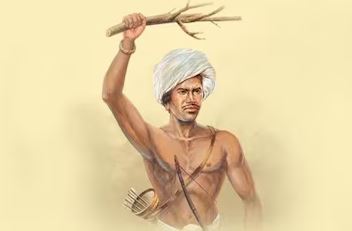
    Who was Birsa Munda (1875-1900)?

    • Birsa Munda was born on November 15, 1875, during a period of significant change for his community, the Mundas, residing in the Chotanagpur region of present-day Jharkhand.
    • Birsa Munda spent his early years travelling with his parents and received primary education under Jaipal Nag.
    • Inspired by the peaceful Sardari agitation against British rule, Birsa became a prominent leader advocating for tribal rights.

    Causes of the Rebellion

    • Impact of Colonial Policies: Colonial policies, including the Permanent Settlement Act (1793), disrupted traditional land ownership systems, leading to displacement and exploitation of indigenous communities.
    • Erosion of Khuntkattidar System: The Mundas’ traditional land rights system, known as khuntkatti, was eroded by jagirdars and thikadars, leading to land alienation.
    • Land Alienation and Exploitation: Non-tribal migration into tribal regions accelerated under British rule, resulting in exploitation through high-interest money lending and forced labour.
    • Missionary Activity: The spread of education through missionary activities led to increased awareness among tribals, deepening social cleavages but also inspiring movements for tribal reconstruction.

    Major Activities:

    1. New faith ‘Birsait’ against religious conversion

    • Having gained awareness of the British colonial ruler and the efforts of the missionaries to convert tribals to Christianity, Birsa started the faith of ‘Birsait’.
    • Soon members of the Munda and Oraon community started joining the Birsait sect and it turned into a challenge to British conversion activities.
    • The Mundas called him Dharati Aaba, the father of earth.

    2. The Birsa Movement: Ulgulan

    • The Munda Rebellion was a tribal rebellion led by Birsa Munda in the region south of Ranchi in 1899-1900.
    • It mainly concentrated in the Munda belt of Khunti, Tamar, Sarwada, and Bandgaon.
    • The revolt sought to establish Munda Raj and independence, known as Ulgulan or ‘Great Tumult’ by Munda tribals.
    • The rebellion ended with the suppression by British forces and the death of Birsa Munda.

    Significant Outcomes

    • Impact: Birsa Munda’s mobilization of tribal communities left a lasting legacy, prompting government reforms such as the repeal of the Begar system and the enactment of the Tenancy Act (1903).
    • His Death: The movement was violently suppressed and Birsa Munda died in jail on 9 June 1900.

    What is Permanent Settlement System?

    • The Permanent Settlement system introduced by Lord Cornwallis in 1793 was a land revenue system implemented in British India, particularly in Bengal, Bihar, and Odisha.
    • Under this system, the land revenue to be paid by the peasants (ryots) was fixed permanently without revision for an extended period (typically 10 years or more).
    • This fixed amount was based on the estimated productive capacity of the land.
    • It established the Zamindari system, where Zamindars (landlords) were recognized as the owners of land.
    • They were responsible for collecting revenue from the peasants and paying it to the British government.
    • In return, they were entitled to keep a portion of the collected revenue as their income, often ranging from 10% to 15%.

    PYQ:

    [2020] With reference to the history of India, “Ulgulan” or the Great Tumult is the description of which of the following events?

    (a) The Revolt of 1857

    (b) The Mappila Rebellion of 1921

    (c) The Indigo Revolt of 1859-60

    (d) Birsa Munda’s Revolt of 1899-1900

  • Innovation Ecosystem in India

    Hydrogen Line: A Unique Signal

    Note4Students

    From UPSC perspective, the following things are important:

    Prelims level: Hydrogen Line and its significance in interstellar studies

    Why in the News?

    The hydrogen line stands as a pivotal tool in contemporary astronomy, serving various purposes from studying distant stars to questing for extraterrestrial intelligence, should it exist.

    What is a Hydrogen Line?

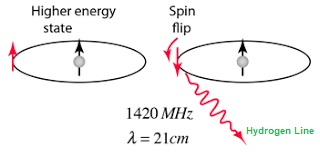
    • The hydrogen line is a special type of light that hydrogen atoms emit.
    • It happens when an electron, a tiny particle that orbits the nucleus of the hydrogen atom, jumps from a higher energy level to a lower one.
    • This jump releases energy in the form of light, specifically with a wavelength of about 21 centimetres. This wavelength is what scientists call the hydrogen line.

    Why is it Important?

    • Hydrogen is everywhere in the universe. It’s the simplest and most abundant element, making up about 75% of the universe’s elemental mass.
      • So, studying the hydrogen line allows us to understand a lot about the composition and distribution of matter in the universe.
    • By observing the hydrogen line’s emission from different regions of space, astronomers can create maps showing where hydrogen gas is located.
    • Secrets about the early Universe: The hydrogen line also holds secrets about the early universe. Shortly after the Big Bang, the universe was filled with hydrogen gas.
      • By studying the hydrogen line from distant parts of the universe, astronomers can learn about its conditions and evolution billions of years ago.

    How Do We Interpret Hydrogen Line?

    • Radio telescope data enables mapping of hydrogen distribution, revealing locations of hydrogen clouds crucial for understanding galaxy and galaxy cluster formation and evolution.
    • Observing hydrogen line emission from different galaxy parts enables studying internal structures and dynamics, like rotation curves, offering insights into mass distribution within galaxies.
    • Observing hydrogen lines from distant galaxies unveils early universe conditions, aiding in understanding cosmic evolution’s initial stages.

    What’s Next?

    • New Discoveries: Scientists are continually developing new technologies and techniques to improve the sensitivity and resolution of radio telescopes.
      • This enables them to detect fainter signals and uncover new insights into the universe’s hydrogen content.
    • Exploring Dark Matter: The hydrogen line observations could also contribute to understanding dark matter, an invisible substance that makes up about 27% of the universe’s total mass-energy content.
      • By studying the hydrogen distribution in relation to the gravitational effects observed in galaxies, scientists hope to shed light on the nature of dark matter.

    PYQ:

    [2012] A team of scientists at Brookhaven National Laboratory including those from India created the heaviest anti-matter (anti-helium nucleus). What is/are the implication/implications of the creation of anti-matter?

    1. It will make mineral prospecting and oil exploration easier and cheaper.
    2. It will help prove the possibility of the existence of stars and galaxies made of anti-matter.
    3. It will help us understand the evolution of the universe.

    Select the correct answer using the codes given below:

    (a) 1 only

    (b) 2 and 3 only

    (c) 3 only

    (d) 1, 2 and 3

  • Oil and Gas Sector – HELP, Open Acreage Policy, etc.

    [pib] Green Ammonia Production under SIGHT Program

    Note4Students

    From UPSC perspective, the following things are important:

    Prelims level: Green Ammonia, SIGHT Program, National Green Hydrogen Mission.

    Why in the News?

    • Solar Energy Corporation of India (SECI) has initiated the bidding process for a total capacity of 5.39 lakh Metric Tonnes (MT) per annum of Green Ammonia production.
      • The initiative falls under Mode 2A of the Strategic Interventions for Green Hydrogen Transition (SIGHT) Programme, part of the National Green Hydrogen Mission led by the Ministry of New & Renewable Energy (MNRE).

    What is Green Ammonia?

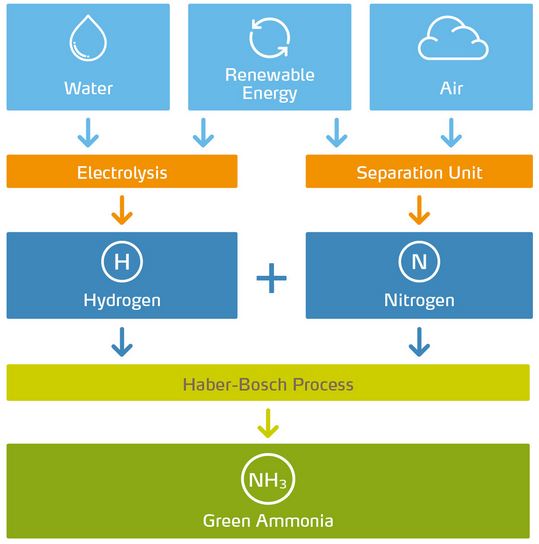
    • Green ammonia, also known as renewable ammonia, is a form of ammonia produced using renewable energy sources, which is proposed as a sustainable, emission-free alternative with a multitude of applications in industry and other sectors.
    • It is produced by combining nitrogen with hydrogen, which is generated through water electrolysis using renewable energy, and then reacting the hydrogen and nitrogen at high temperatures and pressures to form ammonia.

    About the National Green Hydrogen Mission

    • The National Green Hydrogen Mission was launched in January 2023.
      • Objective: To make India a ‘global hub’ for using, producing and exporting green hydrogen.
    • Earlier, the National Hydrogen Mission was launched on August 15, 2021, with a view to cutting down carbon emissions and increasing the use of renewable sources of energy.
    • The Ministry of New and Renewable Energy (MNRE) formulates the scheme guidelines for the implementation of these missions.

    Key features of the NGHM

    • Power capacity: The mission seeks to promote the development of a green hydrogen production capacity of at least 5 MMT per annum with an associated renewable energy capacity addition of about 125 GW in the country by 2030.
    • Job creation: It envisages an investment of over ₹8 lakh crore and creation of over 6 lakh jobs by 2030.
    • Reducing energy import bill: It will also result in a cumulative reduction in fossil fuel imports of over ₹1 lakh crore and abatement of nearly 50 MMT of annual greenhouse gas emissions by 2030.
    • Export promotion: The mission will facilitate demand creation, production, utilisation and export of green hydrogen.
    • Incentivization: Under the Strategic Interventions for Green Hydrogen Transition Programme (SIGHT), distinct financial incentive mechanisms are provided.
    • Green Hydrogen Hubs: Regions capable of supporting large-scale production and/or utilisation of hydrogen will be identified and developed as Green Hydrogen Hubs.

    What is the SIGHT Program?

    • In the initial stage, two distinct financial incentive mechanisms proposed with an outlay of ₹ 17,490 crore up to 2029-30:
    1. Incentive for manufacturing of electrolysers
    2. Incentive for production of green hydrogen.
    • Depending upon the markets and technology development, specific incentive schemes and programmes will continue to evolve as the Mission progresses.

    PYQ:

    [2019] Consider the following statements:

    1. Agricultural soils release nitrogen oxides into the environment.
    2. Cattle release ammonia into the environment.
    3. Poultry industry releases reactive nitrogen compounds into environment.

    Which of the statements given above is/are correct?

    (a) 1 and 3 only

    (b) 2 and 3 only

    (c) 2 only

    (d) 1, 2 and 3

  • Modern Indian History-Events and Personalities

    131 years of Gandhiji’s Natal Satyagraha

    Note4Students

    From UPSC perspective, the following things are important:

    Prelims level: Natal Satyagraha, Beginning of non-violent protest

    Why in the News?

    • On June 7, 1893, Mahatma Gandhi faced racial discrimination when he was forced off a first-class train compartment at “Pietermaritzburg railway station” in South Africa.
      • This event ignited the spirit of civil disobedience in him through his first non-violent protest in the “Natal Satyagraha”.

    History of ‘Satyagraha’

    • The terms originated in a competition in the news-sheet Indian Opinion in South Africa in 1906.
    • Mr. Maganlal Gandhi, grandson of an uncle of Mahatma Gandhi, came up with the word “Sadagraha” and won the prize.
    • Subsequently, to make it clearer, Gandhi changed it to Satyagraha.

    About the Pietermaritzburg Incident 

    • Gandhi’s forced removal from a first-class train compartment in 1893 served as a catalyst for his commitment to resisting racial discrimination.
    • This event inspired him to pursue nonviolent resistance, planting the seeds for his philosophy of Satyagraha.

    Its’ Aftermath

    • Formation of Natal Indian Congress and Advocacy
      • Establishment: Gandhi organized the Indian community and founded the Natal Indian Congress (NIC) in 1894 at Durban to advocate for their rights.
      • Campaigns: He initiated various campaigns, including petitions and boycotts, challenging discriminatory laws and policies in South Africa.
    • Natal Satyagraha
      • The passage of the Asiatic Registration Act in 1906 sparked the Natal Satyagraha, protesting against this discriminatory law.
      • Gandhi emerged as the leader of the movement, advocating for nonviolent resistance and civil disobedience.
      • Satyagraha emphasized confronting oppression with moral courage and integrity, without resorting to violence.

    Gandhiji’s South Africa Settlements:

    • Phoenix Settlement in Natal: Founded in 1904, the Phoenix Settlement was established by Gandhi as a communal living space and centre for social and political activism. It served as a hub for his Satyagraha campaigns against racial discrimination and injustice in South Africa.
    • Tolstoy Farm outside Johannesburg: Gandhi established Tolstoy Farm in 1910 as a self-sustaining community inspired by the teachings of Russian writer Leo Tolstoy. It served as a refuge for Indian immigrants and a base for organizing resistance against discriminatory laws.

    Characteristics and Impact of Natal Satyagraha

    • Mass Participation: The movement garnered widespread support from the Indian community, involving thousands in nonviolent protests.
      • He mobilized support for the welfare of Indians and established the Transvaal British Indian Association in Johannesburg in 1903.
    • Arrests and Imprisonment: Gandhi and many others faced arrests and imprisonment for their acts of civil disobedience. He faced imprisonment multiple times for his nonviolent protests, including the Volkrust Satyagraha in 1913.
    • Attracted International attention: The Satyagraha attracted international attention and led to negotiations, culminating in the Indian Relief Act in 1914.

    PYQ:

    [2019] With reference to the British colonial rule in India, consider the following statements

    1. Mahatma Gandhi was instrumental in the abolition of the system of ‘indentured labour’.
    2. In Lord Chelmsford’s ‘War Conference’, Mahatma Gandhi did not support the resolution on recruiting Indians for World War.
    3. Consequent upon the breaking of Salt Law by Indian people, the Indian National Congress was declared illegal by the colonial rulers.

    Which of the statements given above are correct?

    (a) 1 and 2 only

    (b) 1 and 3 only

    (c) 2 and 3 only

    (d) 1, 2 and 3

  • Tribes in News

    Andaman’s Onge Tribe

    Note4Students

    From UPSC perspective, the following things are important:

    Prelims level: Aboriginals in Andaman and Nicobar Islands, PVTGs

    Why in the news?

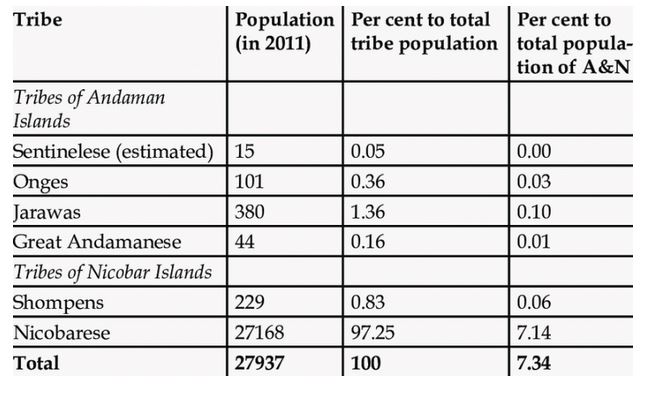
    The king and queen of the “Onge tribe” welcomed a baby boy in the Andaman Islands, marking a significant moment for the tribe. With the arrival of the newborn, the tribe’s total population now stands at 136, as confirmed by an official source.

    About Onge Tribe 

    • The Onge are PVTGs (Particularly Vulnerable Tribal Groups) native to the Andaman Islands.
    • They have traditionally been hunter-gatherers and fishers, while also practising cultivation.
    • Their population significantly decreased after colonization, from 672 in 1901 to around 100.
    • They practice a form of animism, with ancestor worship being significant.
    • They traditionally make decisions through group consensus.
    • Today, the surviving members are confined to two reserve camps on Little Andaman: Dugong Creek in the northeast, and South Bay.
    • Genetically, the Onge are distantly related to East Asian populations and show affinities with Southeast Asian Negrito ethnic groups.

    Other Indigenous People of Andaman and Nicobar

    1. Great Andamanese Tribe

    • One of the largest tribes, the Great Andamanese tribe is currently settled on the Strait Island under the Andaman & Nicobar Administration. Despite their historic bravery, diseases and other challenges have reduced their population to 43 individuals as of the 2001 census.
    • Government initiatives: The administration provides housing, coconut plantations, and rationing to support their livelihoods and well-being.

    2. Jarwas Tribe

    • Jarwas inhabit the Western coast of the Middle and South Andaman Islands. They are known to be hostile but have shown receptivity to friendly contact expeditions since 1974. Their present numbers are estimated at between 250–400 individuals.
    • Jarwas are nomadic hunters and gatherers, using traditional methods like bows and arrows for hunting and fishing.

    3. Sentinelese Tribe

    • Sentinelese reside on the small North Sentinel Island, maintaining a wary stance towards outsiders.
    • Despite initial scepticism, contact expeditions have made progress since 1991, albeit with caution.

    Note: Shompen Tribe are native to the Nicobar Islands.

    Who are the Particularly Vulnerable Tribal Groups (PVTGs)?

    • These groups are among the most vulnerable sections of our society as they are few in number, and have not attained any significant level of social and economic development.
    • They generally inhabit remote localities having poor infrastructure and administrative support.
    • 75 such groups have been identified and categorized as Particularly Vulnerable Tribal Groups (PVTGs).

    Origin of the concept

    • The Dhebar Commission (1960-1961) stated that within Scheduled Tribes there existed an inequality in the rate of development.
    • During the fourth Five Year Plan (1969-74) a sub-category was created within Scheduled Tribes to identify groups that were considered to be at a lower level of development.
    • This sub-category was named “Primitive tribal group”.
    • In 2006 the government of India proposed to rename PVTGs.

    Features of PVTGs

    • The features of such a group include a:
    1. Pre-agricultural system of existence
    2. The practice of hunting and gathering
    3. Zero or negative population growth
    4. Extremely low level of literacy in comparison with other tribal groups
    • Groups that satisfied any one of the criteria were considered PTG.


    PYQ:

    [2019] Consider the following statements about Particularly Vulnerable Tribal Groups (PVTGs) in India:

    1. PVTGs reside in 18 States and one Union Territory.
    2. A stagnant or declining population is one of the criteria for determining PVTG status.
    3. There are 95 PVTGs officially notified in the country so far.
    4. Irular and Konda Reddi tribes are included in the list of PVTGs.

    Which of the statements given above are correct?

    (a) 1, 2 and 3

    (b) 2, 3 and 4

    (c) 1, 2 and 4

    (d) 1, 3 and 4