💥UPSC 2026, 2027, 2028 UAP Mentorship (March Batch) + Access XFactor Notes & Microthemes PDF

Type: Prelims Only

  • Health Sector – UHC, National Health Policy, Family Planning, Health Insurance, etc.

    IFPMA Report on Antimicrobial Resistance

    Note4Students

    From UPSC perspective, the following things are important:

    Prelims level: AMR, Initiatives mentioned;

    Why in the news?

    The International Federation of Pharmaceutical Manufacturers and Associations (IFPMA) released a report titled “From Resistance to Resilience: Reinforcing the Response to Antimicrobial Resistance,” emphasizing the urgent need for enhanced Antibiotic development.

    Report Highlights: Current State of Antibiotic Development:

    • Weak Pipeline: The current pipeline for developing new antibiotics is described as weak, fragile, and insufficient against growing antimicrobial resistance.
    • AMR Threat: Recognized by the World Health Organization (WHO) as one of the greatest global health threats, AMR is linked to around 1.2 million direct deaths and 5 million associated deaths annually.

    What is Antimicrobial Resistance (AMR)?

    • Antimicrobials are substances designed to eliminate or suppress the growth of microorganisms.
    • This category encompasses antibiotics, fungicides, antiviral drugs, and agents targeting parasites.
    • AMR occurs when microbes such as bacteria, viruses, parasites, and fungi become resistant to antimicrobial treatments to which they were previously susceptible.
    • Microorganisms that develop resistance to antimicrobials are sometimes referred to as “superbugs”.

    Global Status of AMR

    A recent report from the Global Research on Anti-microbial Resistance (GRAM) project found that:

    • In 2019, an estimated 4.95 million people suffered from at least one drug-resistant infection and AMR directly caused 1.27 million deaths.
    • AMR is one of India’s major public health problems, directly contributing to about 30% of deaths due to neonatal sepsis across India.
    • These are due to multidrug-resistant (MDR) hospital-acquired infections in many cases.
    • 30% of the COVID-19 deaths in India could be attributed to our failure to treat the secondary bacterial infections caused by MDR pathogens with the appropriate antibiotics.

    What are the factors that cause AMR? 

    • Over-prescription of Antibiotics: Frequently prescribing antibiotics for conditions that do not require them, such as viral infections, accelerates the emergence of resistance.
    • Incomplete Treatment Courses: Patients not completing their antibiotic courses as prescribed can leave surviving bacteria that adapt to become resistant.
    • Self-Medication: Individuals using antibiotics without a prescription, especially in regions where they are available over the counter, increases misuse and drives resistance.
    • Lack of New Antibiotics: The slow pace of new antibiotic development fails to keep up with the rate of bacterial evolution, reducing effective treatment options.
    • Hospital Settings: Hospitals are critical hotspots for the spread of resistant infections due to the high use of antibiotics and the concentration of vulnerable patients with open wounds, invasive devices, and weakened immune systems.
    • Global Travel: International travel allows for the rapid spread of resistant mutant strains between communities and across borders.

    India’s efforts to combat AMR:

    Description
    National Action Plan on Antimicrobial Resistance (NAP-AMR)
    • Launched in 2017, this 5-year plan involves multiple ministries to tackle AMR across human, animal, and environmental sectors.
    • Focuses on enhancing awareness, surveillance, infection prevention, optimizing antimicrobial use, promoting research, and fostering international collaborations.
    New Delhi Declaration on AMR
    • Adopted in 2023 at the G20 Summit.
    • It emphasizes strengthening surveillance, regulating antibiotic sales, and boosting research for new treatments and diagnostics in the South-East Asia Region.
    National Anti-Microbial Resistance Research and Surveillance Network
    • Established under the Indian Council of Medical Research to monitor AMR trends through a network of laboratories across India.
    National Programme on Containment of Antimicrobial Resistance
    • Initiated by the Ministry of Health and Family Welfare to enhance AMR surveillance, infection control, and antimicrobial stewardship in healthcare facilities.
    Red Line Campaign
    • Started in 2016, it raises awareness about the irrational use of antibiotics.
    • Medicines marked with a red line on their packaging are prescription-only, aiming to reduce misuse and over-the-counter sales.
    National One Health Program for Prevention and Control of Zoonoses
    • Launched in 2019, this program uses a multi-sectoral approach to strengthen responses to zoonotic diseases, including those caused by antibiotic-resistant pathogens.
  • International Space Agencies – Missions and Discoveries

    Understanding Water Loss on Venus

    Note4Students

    From UPSC perspective, the following things are important:

    Prelims level: Solar System; Venus and its physiography; Non-Thermal Dissociative Recombination;

    Mains level: NA

    Why in the News?

    Over four billion years ago, Venus had enough water to potentially cover its surface with an ocean approximately 3 km deep, but today, it would remain with only 3 cm.

    • A research by US scientists explain the Non-Thermal Dissociative Recombination (DR) responsible for faster loss of water from Venus.

    About Venus

    • Venus is the second planet from the Sun. It is a terrestrial planet and is the closest in mass and size to its orbital neighbour Earth.
    • Venus is notable for having the densest atmosphere of the terrestrial planets, composed mostly of carbon dioxide with a thick, global sulphuric acid cloud cover.
    • At the surface it has a mean temperature of 464 °C (737 K) and a pressure of 92 times that of Earth’s at sea level.
    • These extreme conditions compress carbon dioxide into a supercritical state close to Venus’s surface.
    • Internally, Venus has a core, mantle, and crust. Venus lacks an internal dynamo, and its weak induced magnetosphere is caused by atmospheric interactions with the solar wind.
    • Venus is one of two planets in the Solar System (the other being Mercury), that have no moons.
    • The rotation of Venus has been slowed and turned against its orbital direction (retrograde) by the currents and drag of its atmosphere.
    • It takes 224.7 Earth days for Venus to complete an orbit around the Sun, and a Venusian solar year is just under two Venusian days long.

    Water Loss on Venus:

    • Venus lost its water primarily due to two factors:
        • Evaporation due to Greenhouse Effect: Its dense atmosphere rich in carbon dioxide, creating a strong greenhouse effect and surface temperatures around 450 degrees Celsius, which prevents water from existing in liquid form.
        • Proximity to the Sun: This leads to the disintegration of water molecules into hydrogen and oxygen in the ionosphere under solar heat and ultraviolet radiation.
    • Mechanism of Water Loss:
    1. Thermal Process: Initially, hydrodynamic escape was significant, where solar heating caused the outer atmosphere to expand, allowing hydrogen to escape into space. This process cooled and slowed about 2.5 billion years ago.
    2. Non-Thermal Process: Focus of recent study; involves hydrogen escaping into space, reducing water formation as oxygen atoms lack hydrogen to bond with.

    Key Research Findings: Non-thermal Dissociative Recombination (DR)

    The discrepancy in water loss rates was addressed by identifying a previously overlooked chemical reaction involving the formyl cation (HCO+).

    • HCO+ dissociative recombination (DR) reaction occurs when HCO+ gains an electron and splits into CO and a hydrogen atom, which then escapes into space.
    • This reaction is responsible for losing out water without evaporation.
    • This reaction was modelled to significantly increase the rate of hydrogen escape, potentially doubling the rate at which Venus lost water.
    • The model suggests that water levels on Venus would have been stable from nearly 2 billion years ago due to the ongoing non-thermal HCO+ DR reaction, yet some water remains today.

    Future Research on Venus

    • Existence of HCO+ Ions: Direct evidence of HCO+ ions in Venus’s atmosphere is still missing. Past missions did not focus on this molecule, and its involvement in water loss was not previously considered crucial.
    • Future Missions: The findings underscore the importance of future Venus missions to investigate the presence of HCO+ in the upper atmosphere, similar to the MAVEN mission to Mars.

    PYQ:

    [2011] What is the difference between asteroids and comets?

    1. Asteroids are small rocky planetoids, while comets are made of ice, dust and rocky material.
    2. Asteroids are found mostly between the orbits of Jupiter and Mars, while comets are found mostly between Venus and Mercury.
    3. Comets show a perceptible glowing tail, while asteroids do not.

    Which of the statements given above is/ are correct?

    (a) 1 and 2 only

    (b) 1 and 3 only

    (c) 3 only

    (d) 1, 2 and 3

  • International Space Agencies – Missions and Discoveries

    Speculoos-3b: A New Earth-Sized Exoplanet Discovered

    Note4Students

    From UPSC perspective, the following things are important:

    Prelims level: Red Dwarf Star, Speculoos-3b

    Mains level: NA

    Why in the News?

    • Astronomers have identified a new Earth-sized exoplanet, named Speculoos-3b, orbiting an ultracool red dwarf star.

    Back2Basics: Red Dwarf Star

    • A red dwarf is the most common type of star in the Milky Way galaxy.
    • However, due to their low luminosity, individual red dwarfs cannot be easily observed.
    • Proxima Centauri, the star nearest to the Sun, is a red dwarf, as are fifty of the sixty nearest stars.
    • According to some estimates, red dwarfs make up three-quarters of the fusing stars in the Milky Way.

    About Speculoos-3b

    • Speculoos-3b is an Earth-sized exoplanet recently discovered orbiting an ultracool dwarf star.
    • It was discovered by a team of astronomers led by Michael Gillon from the University of Liege in Belgium.
    • It is located approximately 55 light-years away from Earth.
    • Due to its short orbital period, Speculoos-3b receives almost ten times more energy per second than Earth does from the Sun.

    SPECULOOS Project 

    • Project Overview: The discovery was made under the SPECULOOS project, aimed at exploring exoplanets around ultra-cool dwarf stars.
    • The SPECULOOS Southern Observatory is a project carried out by the University of Liège (Belgium) and the Cavendish Laboratory in Cambridge (United Kingdom)

    Astrophysical Significance of the Discovery

    • Prevalence of Ultracool Dwarfs: Ultracool dwarf stars, like the host of Speculoos-3b, constitute about 70% of all stars in our galaxy and are known for their longevity, surviving up to 100 billion years.
    • Importance for Life’s Potential: The extended lifespan of these stars provides a stable environment that could potentially support the development of life on orbiting planets.

    PYQ:

    [2015] The term ‘Goldilocks Zone’ is often seen in the news in the context of:

    (a) the limits of habitable zone above the surface of the Earth

    (b) regions inside the Earth where shale gas is available

    (c) search for the Earth-like planets in outer space

    (d) search for meteorites containing precious metals

  • New Species of Plants and Animals Discovered

    Phtheirospermum Lushaiorum: Hemiparasite Plant Species named after Lushai Tribe  

    Note4Students

    From UPSC perspective, the following things are important:

    Prelims level: Phtheirospermum Lushaiorum:

    Mains level: NA

    Why in the News?

    • A rare hemi-parasitic terrestrial plant has been found in Phawngpui National Park of Mizoram.
      • It has been named ‘Phtheirospermum Lushaiorum’ after the Lushai tribe of Mizoram, honoring their commitment to biodiversity conservation.

    About  Lushai Tribe

      • Lushai is another tribe under the Kuki-chin group (racially from Mongolia) of tribes.
        • They are commonly known as Mizos.
        • In Tripura there are 5,384 persons (as per 2011 Census).
      • Occupation: They mostly reside in the Jampui Hills area of Tripura and have Jhum Cultivation and hunting of wild animals as their main occupation.
    • Culture and belief:
      • converted to Christianity and still follow Christianity as their religion.
      • Their Cheraw Dance (Bamboo Dance) is quiet famous.

    About Phtheirospermum Lushaiorum

    • This plant lacks a fully developed root system and taps into the sap of host plants through specialized structures known as haustoria.
    • Despite its parasitic nature, it contains chlorophyll and can produce its food, showing some independence from its host.
    • It flowers from July to September, with fruit production occurring from August to October.
    • The plant grows near a popular trekking route in Phawngpui National Park, facing threats from both anthropogenic activities and natural factors.

    Back2Basics: Phawngpui National Park

      • Also known as Blue Mountain National Park, it is one of the two national parks in Mizoram (the other being Murlen NP).
    • Geographical location:
        • Close to the border with Burma (Myanmar).
        • The park overlooks the Chhimtuipui River, which flows toward Burma.
        • The geography of Phawngpui is characterized by its cloud-covered mountain area, which gives it a distinctive blue appearance from a distance.
    • Flora and Fauna:
        • Bird species:Blyth’s tragopan, falcons, sunbirds, dark-rumped swifts, and the Mizoram state bird, Mrs. Hume’s pheasant.
        • Mammals: Mountain goat, slow loris, tiger, leopard, leopard cat, serow, goral, Asiatic black bear, stump-tailed macaque, and capped langur. 
    • Flora: Grassy meadows, orchids, rhododendrons, and bamboo groves.


    PYQ:

    [2016] Recently, our scientists have discovered a new and distinct species of banana plant which attains a height of about 11 meters and has orange-coloured fruit pulp. In which part of India has it been discovered?

    (a) Andaman Islands

    (b) Anaimalai Forests

    (c) Maikala Hills

    (d) Tropical rain forests of Northeast

  • The Crisis In The Middle East

    India-Middle East-Europe Economic Corridor (IMEC) Project

    Note4Students

    From UPSC perspective, the following things are important:

    Prelims level: IMEC Project, Various ports mentioned

    Mains level: NA

    Why in the News?

    An Indian inter-ministerial delegation visited the UAE to discuss the operational aspects of the India-Middle East-Europe Economic Corridor (IMEC), marking a significant step forward since the signing of the agreement.

    About IMEC Project

    • IMEC is part of the broader Partnership for Global Infrastructure and Investment (PGII), which focuses on infrastructure development in economically developing regions.
    • The MoU for IMEC was formally endorsed on September 10, 2023, during the 2023 G20 New Delhi summit.
    • Signatories to this agreement: India, United States, United Arab Emirates, Saudi Arabia, France, Germany, Italy, and the European Union.
    • Aim: To integrate Asia, Europe, and the Middle East, enhancing economic cooperation across these regions.
    • Objectives:
      • Improve transportation efficiency, lower costs, and promote economic cohesion among participating nations.
      • Generate employment opportunities and reduce Greenhouse Gas (GHG) emissions.
      • Facilitate trade and connectivity, thereby reshaping regional integration among Asia, Europe, and the Middle East.

    Corridor Configuration:

    IMEC comprises two primary corridors:

    1. East Corridor: Linking India to the Arabian Gulf.
    2. Northern Corridor: Connecting the Gulf region to Europe.

    Key ports integral to the project’s success include:

    • India: Mundra, Kandla, and Jawaharlal Nehru Port Trust (Mumbai).
    • Middle East: Fujairah (UAE), Jebel Ali (Dubai, UAE), Abu Dhabi (UAE), Dammam (Saudi Arabia), and Ras Al Khair (Saudi Arabia).
    • Israel: Haifa port.
    • Europe: Piraeus (Greece), Messina (Italy), and Marseille (France).

    Additionally, it encompasses various infrastructure components such as railway networks, ship-to-rail connections, road transport routes, electricity cables, hydrogen pipelines, and high-speed data cables.

    Significance:

    • IMEC, upon completion, will establish a dependable and cost-efficient cross-border ship-to-rail transit network, complementing existing maritime and road transport networks.
    • The IMEC Project holds significant promise in redefining regional trade dynamics and fostering sustainable economic growth and cooperation among the involved countries.

    PYQ:

    [2018] The China-Pakistan Economic Corridor (CPEC) is viewed as a cardinal subset of China’s larger ‘One Belt One Road’ initiative. Give a brief description of CPEC and enumerate the reasons why India has distanced itself from the same. (150 Words, 10 Marks)

    [2016] ‘Belt and Road Initiative’ is sometimes mentioned in the news in the context of the affairs of:

    (a) African Union

    (b) Brazil

    (c) European Union

    (d) China


    Back2Basics: Partnership for Global Infrastructure Investment (PGII)

    • The PGII was first announced in June 2021 during the G7 (or Group of Seven) summit in the UK.
    • The G7 countries include the United Kingdom, the United States, Canada, France, Germany, Italy, Japan, and the European Union (EU).
    • US President Joe Biden had called it the Build Back Better World (B3W) framework. However, it did not register much progress.
    • In 2022, during the G7 summit in Germany, the PGII was officially launched as a joint initiative to help fund infrastructure projects in developing countries through public and private investments.
      • Objective: To mobilise nearly $600 billion from the G7 by 2027 to invest in critical infrastructure.
      • It is essentially in response to the infrastructure projects being undertaken and funded by China under the Belt and Road Initiative (BRI) at a global level.


    Present Maritime Routes between India and Europe

    Trade Route Route Issues Advantages
    Suez Canal Route Indian Ocean -> Arabian Sea -> Red Sea -> Suez Canal -> Mediterranean Sea -> Europe
    • High traffic causing congestion.
    • Potential for piracy, especially near the Horn of Africa.
    • Most efficient and shortest maritime route.
    • Well-established with advanced port facilities.
    Cape of Good Hope Route Indian Ocean -> Arabian Sea -> Indian Ocean (southern tip of Africa) -> Atlantic Ocean -> Europe
    • Longer transit time compared to the Suez Canal.
    • Higher fuel costs and longer journey duration.
    • Avoids congestion and security risks of the Suez Canal.
    • Suitable for large vessels unable to transit the Suez Canal.


  • Wildlife Conservation Efforts

    National Endangered Species Day, 2024

    Note4Students

    From UPSC perspective, the following things are important:

    Prelims level: National Endangered Species Day, Species mentioned in the news

    Mains level: NA

    Why in the News?

    • National Endangered Species Day is an annual event that strives to raise awareness about the significance of safeguarding endangered species and their habitats.
    • This year, National Endangered Species Day was celebrated on May 17.

    What is National Endangered Species Day?

    • National Endangered Species Day is observed every year on the 3rd Friday of May.
    • This day was co-founded in 2006 by the Endangered Species Coalition and David Robinson.
    • Robinson defines Endangered Species Day as a “worldwide day of action to rescue species and celebrate conservation triumphs”.
    • Theme for 2024: “Celebrate Saving Species”.
    • According to the IUCN Red List Analysis 2020, over 500 land animal species will likely go extinct in the next two decades if current trends continue.

    Flagship species in India that are Endangered and often seen in the News:

    Species

    Conservation Status

    Key Information

    Asian Elephant


    • IUCN: Endangered
    • CITES Appendix I;
    • Schedule I (WPA, 1972)
    • Symbol of Heritage: Plays a key role in forest and grassland ecosystems.
    • Threats: Habitat loss, human-wildlife conflict, and poaching for tusks.
    • Conservation Needs: Sustained efforts are crucial to ensure their survival and maintain biodiversity.
    Ganges River Dolphin

    • IUCN: Endangered
    • CITES: Appendix I;
    • Schedule I (WPA, 1972)
    • Critical Habitat: Found in the Ganges-Brahmaputra-Meghna and Karnaphuli-Sangu river systems.
    • Challenges: Water extraction, pollution, and river traffic.
    • Population Decline: Less than 2,000 individuals remain in India.
    Bengal Tiger

    • IUCN: Endangered
    • CITES Appendix I;
    • Schedule I (WPA, 1972)
    • Iconic Predator: Represents a significant part of India’s wildlife.
    • Current Status: Numbers are increasing, but threats like poaching and habitat loss persist.
    • Habitat: Found across varied ecosystems, from forests to mangroves.
    Red Panda

    • IUCN: Endangered
    • CITES: Appendix I
    • Schedule I (WPA, 1972)
    • Status: Significant decline due to habitat loss and poaching.
    • Habitat Zones: Found in the eastern Himalayas and parts of Northeast India.
    • Conservation Importance: Serves as an indicator species for the health of the Himalayan forests.
    Asiatic Lion

    • IUCN: Endangered
    • CITES: Appendix I
    • Schedule I (WPA, 1972)
    • Last Refuge: Exclusively found in Gir National Park, Gujarat.
    • Population Challenges: Threats include poaching and accidental deaths from open wells and fences.
    • Conservation Strategies: Involves habitat restoration and stricter anti-poaching laws.
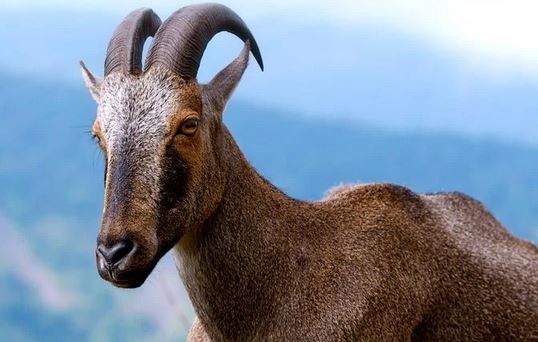
    Nilgiri Tahr

    • IUCN: Endangered
    • Schedule I (WPA, 1972)
    • Mountain Inhabitant: Lives in the mountainous regions of Kerala and Tamil Nadu.
    • Population Pressure: Climate change and human interference are major threats.
    • Survival Strategies: Requires focused conservation to stabilise its declining population.
    Lion-tailed Macaque


    • IUCN: Endangered
    • CITES Appendix I;
    • Schedule I (WPA, 1972)
    • Distinct Appearance: Notable for its silver mane, found in the Western Ghats.
    • Critical Decline: Population affected by habitat fragmentation and human interaction.
    • Behavioural Changes: Adjustments in their natural behaviours due to human activities are concerning.
    Great Indian Bustard (GIB)

    • IUCN: Critically Endangered
    • CITES Appendix I;
    • Schedule I (WPA, 1972)
    • IBs are the largest among India’s four bustard species and are considered flagship birds of grasslands.
    • Habitat reduced to just 10 per cent.
    • Overhead power transmission, poor vision, windmills, noise pollution, landscape changes, and alterations in cultivation patterns pose significant threats to GIBs.
    Golden Langur

    • IUCN: Endangered
    • CITES Appendix I;
    • Schedule I (WPA, 1972)
    • Approximately 7,396 Golden Langur (Trachypithecus geei) in India as per a census conducted by Assam Forest Department.
    Hangul (Kashmir Stag)

    • IUCN: Critically Endangered
    • CITES: Appendix I;
    • Kashmir’s Hangul, a shy and endangered species of deer, has exhibited a robust breeding season, suggesting a hopeful future for its population in the Dachigam National Park.
    • The Hanguls population could surpass 300 this spring, marking the first time in over 30 years.


    PYQ:

    [20I2] Which one of the following groups of animals belongs to the category of endangered species?

    (a) Great Indian Bustard, Musk Deer, Red Panda and Asiatic Wild Ass

    (b) Kashmir Stag, Cheetal, Blue Bull and Great Indian Bustard

    (c) Snow Leopard, Swamp Deer, Rhesus Monkey and Saras (Crane)

    (d) Lion-tailed Macaque, Blue Bull, Hanuman Langur and Cheetal

  • Historical and Archaeological Findings in News

    Was the Stone Age actually the Age of Wood?

    Note4Students

    From UPSC perspective, the following things are important:

    Prelims level: Wood Age; Schoningen Wooden Artefacts; Prehistory vs. History; Christian Jorgensen Thomsen’s classification

    Why in the News?

    New research suggests the Stone Age be termed the “Wood Age” due to advanced wooden tools found in Schoningen, Germany.

    About Schoningen Wooden Artefacts

    • A study of around 300,000-400,000-year-old wooden artefacts excavated from a coal mine in Schoningen, Germany, between 1994 and 2008.
    • It reveals that these were not merely “sharpened sticks” but “technologically advanced tools” requiring skill, precision, and time to build.
    • The tools demonstrated a broad spectrum of wood-working techniques including splitting, scraping or abrasion.

    Back2Basics: Periodising Human Prehistory

    • Prehistory vs. History: Human ‘history’ began with the advent of writing, while everything before that is ‘prehistory,’ studied using archaeological evidence and ethnographic research.
    • 19th Century Periodization: Danish archaeologist Christian Jorgensen Thomsen introduced the Stone Age, Bronze Age, and Iron Age classification based on technological advancements. This classification has been refined to reflect diverse cultural experiences.

    The Stone Age Timeline

    • Beginning: The Stone Age began when hominids first used stone tools, around 3.4 million years ago in Ethiopia, and lasted until about 6,000-4,000 BP (Before Present).
    • Divisions: The Stone Age is divided into:
    1. Palaeolithic (Old Stone Age): Characterized by rudimentary stone tools and a hunter-gatherer lifestyle, ending around 11,650 BP.
    2. Mesolithic (Middle Stone Age): A transitional phase.
    3. Neolithic (New Stone Age): Beginning roughly 12,000 BP in West Asia, marked by settled agriculture and domestication of animals.

    Use of Wood: Preservation Bias and Archaeological Evidence

    • Stone Tools: Stone tools provide significant insight into the lives and capabilities of early humans. Charles Darwin noted that even the rudest stone tools required a high degree of mental sophistication and physical dexterity.
    • Other Materials: Evidence shows the use of bones, antlers, clay, and some metalworking alongside stone tools. However, evidence of woodworking is limited due to wood’s perishable nature.
    • Lesser Evidence of Wood: Wood has been recovered from less than 10 of thousands of Lower Palaeolithic sites (up to around 200,000 BP). The earliest wooden dwellings date to only 700,000 BP, much later than the earliest stone tools.

    PYQ:

    [2021] With reference to the period of the Gupta dynasty in ancient India, the towns Ghantasala, Kadura and Chaul were well-known as

    (a) ports handling foreign trade

    (b) capitals of powerful kingdoms

    (c) places of exquisite stone art and architecture

    (d) important Buddhist pilgrimage centres

  • NPA Crisis

    RBI flags supervisory concerns over ARCs functioning

    Note4Students

    From UPSC perspective, the following things are important:

    Prelims level: Asset Reconstruction Companies, SARFAESI Act, 2002;

    Mains level: NA

    Why in the News?

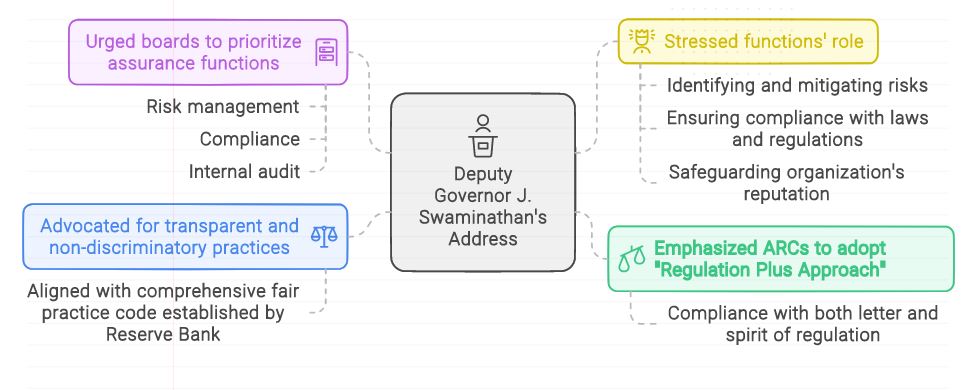
    • After the allegations of ‘unethical practices’ by ARCs, including aiding defaulting promoters, the RBI intervened, with the Deputy Governor urging integrity and ethical conduct in their operations.

    The new guidelines laid out by the RBI:

    • Enhanced Capital Requirements:
      • Minimum Capital Requirement Increase: ARCs are now mandated to maintain a minimum capital requirement of Rs 300 crore, a significant increase from the previous Rs 100 crore stipulation established on October 11, 2022.
      • Transition Period for Compliance: Existing ARCs are granted a transition period to reach the revised Net Owned Fund (NOF) threshold of Rs 300 crore by March 31, 2026.
      • Interim Requirement: However, by March 31, 2024, ARCs must possess a minimum capital of Rs 200 crore to comply with the new directives.
    • Supervisory Actions for Non-Compliance:
      • ARCs failing to meet the prescribed capital thresholds will face supervisory action, potentially including restrictions on undertaking additional business until compliance is achieved.
    • Expanded Role for Well-Capitalized ARCs:
      • Empowerment of Well-Capitalized ARCs: ARCs with a minimum NOF of Rs 1000 crore are empowered to act as resolution applicants in distressed asset scenarios.
      • Investment Opportunities: These ARCs are permitted to deploy funds in government securities, scheduled commercial bank deposits, and institutions like SIDBI and NABARD, subject to RBI specifications. Additionally, they can invest in short-term instruments such as money market mutual funds, certificates of deposit, and corporate bonds commercial papers.
      • Investment Cap: Investments in short-term instruments are capped at 10% of the NOF to mitigate risk exposure.

    About Asset Reconstruction Company (ARC):

    Description
    About ARC is a special financial institution that acquires debtors from banks at a mutually agreed value and attempts to recover the debts or associated securities.
    Regulation
    • ARCs are registered under the RBI.
    • Regulated under the SARFAESI Act, 2002 (Securitisation and Reconstruction of Financial Assets and Enforcement of Securities Interest Act).

    (Note: For reading more details on SARFAESI Act you can visit on our article named “RBI asks for SARFAESI Act Compliance” of Sept 2023)

    Objective ARCs take over a portion of the bank’s non-performing assets (NPAs) and engage in asset reconstruction or securitization, aiming to recover the debts.
    Functions
    • Asset Reconstruction: Acquisition of bank loans or other credit facilities for realization.
    • Securitization: Acquisition of financial assets by issuing security receipts.
    Foreign Investment 100% FDI allowed in ARCs under the automatic route.
    Limitiations
    • ARCs are prohibited from undertaking lending activities.
    • They can only engage in securitization and reconstruction activities.
    Working
    • Bank with NPA agrees to sell it to ARC at a mutually agreed value.
    • ARC transfers assets to trusts under SARFAESI Act.
    • Upfront payment made to bank, rest through Security Receipts.
    • Recovery proceeds shared between ARC and bank.
    Security Receipts Issued to Qualified Institutional Buyers (QIBs) for raising funds to acquire financial assets.
    Significance
    • Banks can clean up their balance sheets and focus on core banking activities.
    • Provides a mechanism for resolution of NPAs and debt recovery

    PYQ:

    [2018] With reference to the governance of public sector banking in India, consider the following statements:

    1. Capital infusion into public sector banks by the Government of India has steadily increased in the last decade.
    2. To put the public sector banks in order, the merger of associate banks with the parent State Bank of India has been affected.

    Which of the statements given above is/are correct?

    (a) 1 only

    (b) 2 only

    (c) Both 1 and 2

    (d) Neither 1 nor 2

  • Forest Conservation Efforts – NFP, Western Ghats, etc.

    New Study Unveils the Origins and Challenges of Baobab Trees

    Note4Students

    From UPSC perspective, the following things are important:

    Prelims level: Baobab Trees and its conservation status

    Mains level: NA

    Why in the News?

    A recent study uncovers the origins and evolution of Baobabs, uniquely shaped trees in Madagascar, with species also native to Africa and Australia.

    Do you know?

    • Mandu, in the Dhar district of Madhya Pradesh, is perhaps the only place in India where baobab trees are found in abundance, with an estimated 1,000 trees in the periphery of the town.
    • Madhya Pradesh state government has plans to apply for a GI (Geographical Indication) tag for the Khorasani Imli or the fruit of the baobab.
    • A Baobab tree near the Golconda Fort in Andhra Pradesh is believed to be more than 400 years old.
    • Aside from Mandu, baobab trees have been recorded in Prayagraj (formerly Allahabad) in Uttar Pradesh, Wai in Maharashtra, and some places in Gujarat and Andhra Pradesh.

    About Baobab Trees

    • Baobabs are deciduous trees (that lose their leaves in autumn) belonging to the genus Adansonia. It comprises 8 distinct species:
      • Adansonia digitata in continental Africa.
      • Adansonia gregorii in Northwestern Australia.
      • 6 other species endemic to Madagascar.
    • Baobabs are known for:
      • Great heights, with some extending up to 50 metres.
      • Exceptionally long lifespans, going up to 2,000 years.
    • They have trunks with large circumferences; thin, spindly branches.
    • Nicknamed “upside down” trees because their tops resemble uprooted plants turned upside down.

    Conservation Status:

    • Threatened’ with extinction according to the IUCN Red List of Threatened Species.
    • Least Concern’ category but still faces threats such as residential and commercial development and livestock farming and ranching.

    Importance of Conservation:

    • The study emphasized the conservation of the baobab as a keystone species:
      • Keystone species provide essential resources, such as food or shelter, for a guild of animals.
      • In return, these animals provide essential services, such as pollination or diaspore dispersal.

    Why Baobab tree is called the “Mother of Forests”?

    • They can store large amounts of fresh water in their extraordinary trunks.
    • It also allows the baobab tree to produce nutritious fruits even during the driest years.
    • This makes them true life savers during times when water is scarce.
    • In local cultures, they are revered for multiple uses:
      • Edible fruits and seeds.
      • Seed oil used for cooking.
      • Bark fibre used for clothing.


    PYQ:

    [2021] “Leaf litter decomposes faster than in any other biome and as a result the soil surface is often almost bare. Apart from trees, the vegetation is largely composed of plant forms that reach up into the canopy vicariously, by climbing the trees or growing as epiphytes, rooted on the upper branches of trees.” This is the most likely description of​-

    (a) Coniferous forest

    (b) Dry deciduous forest

    (c) Mangrove forest

    (d) Tropical rain forest

  • Historical and Archaeological Findings in News

    The Battle of Udagai: Cholas vs. Cheras

    Note4Students

    From UPSC perspective, the following things are important:

    Prelims level: Battle of Udagai, Reign of Raja Raja I (Rajaraja Chola) and his achievements

    Why in the news?

    • The southern part of India historically ruled by the Chera, Chola, and Pandya kings, was known for its great literature, art, culture, and temple architecture.
    • It also witnessed fierce battles among these kingdoms led by Raja Raja I.

    Who was Raja Raja I?

    • His reign marked a golden era for the Chola Empire through extensive military conquests, administrative reforms, and cultural patronage.
    • Ponniyin Selvan (The Son of Ponni) is a Tamil language historical fiction novel with the story of the early days of Prince Raja Raja I (also called Arulmozhivarman).

    Here are detailed facts and key events from the reign of Raja Raja I:

    Background and Ascension to the Throne:

    • Full Name: Arulmozhivarman, popularly known as Raja Raja Chola I.
    • Reign:
      • He reigned from 985 AD to 1014 AD, taking the throne following the death of his father Sundara Chola.
      • He was succeeded by Rajendra I.

    Military Conquests:

    Raja Raja I embarked on several military campaigns that significantly expanded the Chola Empire.

    • He conquered parts of what is now Tamil Nadu, northern parts of Sri Lanka, and the Maldives, consolidating the Chola influence across the region.
    • His most notable military achievement was the conquest of the ancient Chera capital of Mahodayapuram and the invasion of Sri Lanka, where he captured the northern half of the island.
    • Nagapattinam Port was his major naval base.
    • His success allowed his son Rajendra Chola to lead the Chola invasion of Srivijaya (Sumatra) and Kadaram (Malaysia).

    Administrative Reforms:

    • He streamlined the administrative structure of the empire with precise revenue collection and management systems.
    • He implemented a well-organized provincial administration with efficient governance, dividing his empire into various provinces under the control of local governors.

    Cultural Contributions and Temple Building:

    Raja Raja I was a great patron of the arts and architecture. Under his reign, Chola architecture and Tamil literature flourished.

    • Construction of the Brihadeeswara Temple in Thanjavur (Dravidian style).
    • Completed in 1010 AD
    • He also supported the revival of Hinduism and promoted Shaivism, actively endowing temples and supporting the livelihood of the temple priests. He called himself Shivapada Shekhara’.
    • He also allowed for the flourishing of other religious practices for example Vaishnavism and Buddhism.

    Trade and Diplomacy:

    • His reign saw an increase in trade and diplomatic contacts with far-off kingdoms, including those in Southeast Asia.
    • The Chola navy played a crucial role in protecting and enhancing trade routes in the Bay of Bengal and the Arabian Sea.
    • To promote trade, Rajaraja sent the first Chola mission to China.

    About the Battle of Udagai/Udayagiri

    • It occurred in 1003 CE between the Cholas and the Cheras at Udagai, now known as Udayagiri in Kalkulam taluk of Kanniyakumari district, during the reign of Raja Raja I, the greatest of Chola kings.
    • It was the bloodiest war in medieval Indian history, where the Cholas plundered Udagai and returned to their headquarters in Thanjavur with tonnes of gold and the best elephants.
    • The battle began with the conquest of Kanthalur Salai in the Chera Kingdom.
    • The Chola army was led by Raja Raja’s son Rajendra.

    Evidence from Epigraphy

    • The Discovery of a Chola period epigraphy near Chengam suggests that Salai was an army training centre run by the Cheras.
    • The training centre was a challenge to the Cholas.
    • The battle marked the end of the relationship between the Cholas and the Cheras, which had been established through marriages.

    Aftermath of the War

    • The battles terminated the relationship between the Cholas and Cheras during the reign of Rajendra Chola.
    • In 1004 CE, Raja Raja celebrated his birthday grandly in the Chera kingdom, renaming the village Muttam as Mummudi Chola Nalloor.
    • He granted the temple at Thirunanthikarai for a seven-day celebration of his birthday.
    • Subsequently, he returned to Thanjavur with gold, elephants, and cattle.
    • Kamban Manian, a Chola general, brought a Shiva idol made of emerald to Thirupazhanam near Thanjavur, though it is no longer found there.

    PYQ:

    [2020] Consider the following events in the history of India:

    1. Rise of Pratiharas under King Bhoja.
    2. Establishment of Pallava power under Mahendravarman-I.
    3. Establishment of Chola power by Parantaka-I.
    4. Pala dynasty founded by Gopala.

    What is the correct chronological order of the above events, starting from the earliest time?

    (a) 2 – 1 – 4 – 3

    (b) 3 – 1 – 4 – 2

    (c) 2 – 4 – 1 – 3

    (d) 3 – 4 – 1 – 2