From UPSC perspective, the following things are important:
Prelims level: ART therapy
Mains level: Not Much
People living with HIV are facing an acute shortage of life-saving drugs, say protesters who have been camping outside the National AIDS Control Organisation (NACO) office.
What is NACO?
The NACO established in 1992 is a division of India’s Ministry of Health and Family Welfare.
It provides leadership to HIV/AIDS control programme in India through 35 HIV/AIDS Prevention and Control Societies.
It is the nodal organisation for formulation of policy and implementation of programs for prevention and control of HIV/AIDS in India.
Functions of NACO
Along with drug control authorities and NACO provides joint surveillance of Blood Bank licensing, Blood Donation activities and Transfusion Transmitted infection testing and reporting.
NACO also undertakes HIV estimations biennially (every 2 years) in collaboration with the Indian Council of Medical Research (ICMR) – National Institute of Medical Statistics (NIMS).
The first round of HIV estimation in India was done in 1998, while the last round was done in 2017.
Why in news?
Activists allege rationing of medicines, arbitrary change in the drug regimen and even complete deprivation of life-saving paediatric drugs.
They fear that treatment will be interrupted, leading to drug resistance and deaths from AIDS.
NACO stand
The protesters noted that the NACO, in its public communication, had claimed that 95% of the recipients had not faced any shortage.
Going by the figure, 5% of 14.5 lakh, or 72,500 people, are being affected by the current shortage and stock-out.
The impact is severe and far-reaching.
What drugs are protestors talking about?
Protestors are for a stock-out of ART (antiretroviral) drugs such as Dolutegravir 50 mg, Lopinavir/Ritonavir (adult and child doses), and Abacavir in several states.
What is ART?
The medicines that treat HIV are called antiretroviral drugs.
There are more than two dozen of them, and they fall into seven main types.
Each drug fights the virus in your body in a slightly different way.
Research shows that a combination, or “cocktail,” of drugs is the best way to control HIV and lower the chances that the virus will become resistant to treatment.
Back2Basics: HIV/AIDS
HIV (human immunodeficiency virus) is a virus that attacks cells that help the body fight infection, making a person more vulnerable to other infections and diseases.
First identified in 1981, HIV is the cause of one of humanity’s deadliest and most persistent epidemics.
It is spread by contact with certain bodily fluids of a person with HIV, most commonly during unprotected sex, or through sharing injection drug equipment.
If left untreated, HIV can lead to the disease AIDS (acquired immunodeficiency syndrome).
The human body can’t get rid of HIV and no effective HIV cure exists.
Treating HIV
However, by taking HIV medicine (called antiretroviral therapy or ART), people with HIV can live long and healthy lives and prevent transmitting HIV to their sexual partners.
In addition, there are effective methods to prevent getting HIV through sex or drug use, including pre-exposure prophylaxis (PrEP) and post-exposure prophylaxis (PEP).
From UPSC perspective, the following things are important:
Prelims level: Commission of Global Notables
Mains level: NA
Mexican President has proposed the setting up of a commission called ‘Commission of Global Notables’ comprising Prime Minister Narendra Modi.
Commission of Global Notables
Apart from Mr. Modi, the proposed “commission of global notables” includes Pope Francis and the UN Secretary-General Antonio Guterres.
This is yet a proposal in writing presented to the UN
It is understood that the list will find mention during the annual session of the UN General Assembly that will convene in September.
PM Modi and other leaders of the Member States are expected to participate in the session when the global body will discuss the crises in Ukraine, Gaza Strip and the regional tension over Taiwan.
Significance for India
This shows significance of India under the present regime under PM Modi. We have to admit that India’s soft power is ever increasing.
PM Modi has also received high honours from the United Arab Emirates, Russia, Saudi Arabia, Bhutan and several other countries since since the beginning of his first stint in May 2014.
That apart, he has also received awards from international non-government organisations.
From UPSC perspective, the following things are important:
Prelims level: Famous slogans in news
Mains level: Not Much
Inspiring and controversial, this article explains the history of slogans that have endured in India’s politics.
(1) ‘Jai Hind’ by Netaji Subhash Chandra Bose
Netaji Subhas Chandra Bose popularised ‘Jai Hind’ as a salutation for soldiers of his Indian National Army (INA), which fought alongside Netaji’s ally Japan in the Second World War.
But according to some accounts, Netaji did not actually coin the slogan.
A book says the term was coined by Zain-ul Abideen Hasan, the son of a collector from Hyderabad, who had gone to Germany to study.
There, he met Bose and eventually left his studies to join the INA.
Khan was tasked by Bose to look for a military greeting or salutation for the INA’s soldiers, a slogan which was not caste or community-specific, given the all-India basis of the INA.
The idea for ‘Jai Hind’ came to Hasan when he was at the Konigsbruck camp in Germany.
(2) ‘Tum mujhe khoon do, main tumhe aazadi doonga’ by Netaji Subhash Chandra Bose
This slogan had origins in a speech Netaji made in Myanmar, then called Burma, on July 4, 1944.
Underlining his core philosophy of violence being necessary to achieve independence, he said, “Friends! My comrades in the War of Liberation! Today I demand of you one thing, above all.
He ended the speech saying “Tum mujhe khoon do, main tumhe aazadi doonga” (Give me blood and I promise you freedom).
(3) ‘Vande Mataram’ by Bankim Chandra Chatterji
The term refers to a sense of respect expressed to the motherland.
In 1870, Bengali novelist Bankim Chandra Chattopadhyay wrote a song which would go on to assume a national stature, but would also be seen as communally divisive by some.
Written in Bengali, the song titled ‘Vande Mataram’ was not introduced into the public sphere until the publishing of the novel Anandamath in 1882, of which the song is a part.
Vande Mataram soon became the forefront of sentiments expressed during the freedom movement.
The novel, set in the early 1770s came against the backdrop of the Fakir-Sannyasi Rebellion against the British in Bengal.
(4) ‘Inquilab Zindabad’ by Maulana Hasrat Mohani
‘Inquilab Zindabad’ (Long live the revolution) was first used by Maulana Hasrat Mohani in 1921.
Hasrat was his pen name (takhallus) as a revolutionary Urdu poet, which also became his identity as a political leader.
Hasrat Mohani was a labour leader, scholar, poet and also one of the founders of the Communist Party of India in 1925.
Along with Swami Kumaranand — also involved in the Indian Communist movement — Mohani first raised the demand for complete independence or ‘Poorna Swaraj’, at the Ahmedabad session of the Congress in 1921.
His stress on Inquilab was inspired by his urge to fight against social and economic inequality, along with colonialism.
Before Mohani coined this slogan, the Bolshevik Revolution in Russia made the idea of revolution symbolic of the struggle for oppressed nationalities globally.
It was from the mid-1920s that this slogan became a war cry of Bhagat Singh and his Naujawan Bharat Sabha, as well as his Hindustan Socialist Republican Association (HSRA).
(5) ‘Sarfaroshi ki Tamanna’ by Bismil Azimabadi
This is the first line of a poem written by Bismil Azimabadi (and NOT Ramprasad Bismil), a freedom fighter and poet from Bihar, after the Jallianwalah Bagh Massacre of 1921 in Amritsar, Punjab.
The lines were popularised by Ram Prasad Bismil, another revolutionary.
He was a part of the Kakori train robbery, a successful and ambitious operation in which a train filled with British goods and money was robbed for Indian fighters to purchase arms.
(6) ‘Do or Die’ by Gandhi Ji
In 1942, the Second World War commencing and the failure of Stafford Cripps Missions – which only promised India a ‘dominion status’ where it would still have to bear allegiance to the King of England .
This made Gandhi Ji realise that the movement for freedom needed to be intensified.
On August 8, 1942, the All-India Congress Committee met in Gowalia Tank Maidan (August Kranti Maidan) in Bombay.
Gandhi addressed thousands after the meeting to spell out the way forward.
(7) ‘Quit India’ by Yusuf Meherally
While Gandhi gave the clarion call of ‘Quit India’, the slogan was coined by Yusuf Meherally, a socialist and trade unionist who also served as Mayor of Mumbai.
A few years ago, in 1928, Meherally had also coined the slogan “Simon Go Back” to protest the Simon Commission – that although was meant to work on Indian constitutional reform, but lacked any Indians.
Meherally was a Congress Socialist Party member who was actively involved in anti-government protests.
From UPSC perspective, the following things are important:
Prelims level: NA
Mains level: India-Australia relations
The Union Cabinet has approved the signing of an Audio Visual Co-production Treaty between India and Australia, which is aimed at facilitating joint production of films between the two countries.
India – Australia Relations
Both the countries share the ethos and values of pluralism, liberal democracy, steadfast commitment to rule of law, Commonwealth traditions, international peace, development and security.
The establishment of diplomatic relations between them dates back to the Pre-independence era. It started with the opening of the Consulate General of India as a Trade Office in Sydney in 1941.
Since then the ties have blossomed and currently, they enjoy a multi-faceted cooperation spanning areas of political interactions, economic collaboration, scientific research, strategic convergence, friendly people-to-people ties especially diaspora links and sporting ties of hockey and cricket.
Areas of cooperation
1.Political Dimension
Both the countries are members of G-20, ASEAN Regional Forum (ARF), IORA (Indian Ocean Rim Association), Asia Pacific Partnership on Climate and Clean Development, East Asia Summit and the Commonwealth. Australia has been extremely supportive of India’s quest for membership of the APEC (Asia Pacific Economic Cooperation).
Australia whole-heartedly welcomed India s joining of the MTCR (Missile Technology Control Regime).
2. Economic Dimension
In recent years, the India-Australia economic engagement has magnified significantly. Australia has been very appreciative of economic reforms undertaken by India and its improving ease of doing business rankings because of the reforms was undertaken by the current government. India has welcomed Australia to participate in its Make in India, Smart Cities, AMRUT (Atal Mission for Rejuvenation and Urban Transformation), Clean Ganga Project etc. initiatives.
India and Australia are partners in the trilateral Supply Chain Resilience Initiative (SCRI) arrangement along with Japan which seeks to enhance the resilience of supply chains in the Indo-Pacific Region.
Recently, India signed a historic trade agreement with Australia, the India-Australia Economic Cooperation and Trade Agreement (Ind- Aus ECTA).
It is the first Free Trade Agreement (FTA) that India has signed with a major developed country in over a decade. Credit: Business Standard
The current government has invited Australia s private sector participation in Indian economy. It says red tape in India has been replaced by red carpet and has welcomed private investors.
3.Trade and Economic
The establishment of India-Australia Joint Ministerial Commission (JMC) in 1989 encouraged dialogue at a government and business level on multiple issues of trade and investment.
India-Australia CEO Forum is a significant mechanism through which business leaders from both nations engage in mutually fruitful dialogue to enhance bilateral trade and investment relationship. The Forum consists of heads of Indian and Australian business from multiple sectors like energy and resources, agri-business, financial sector, telecommunications, IT, education and pharmaceuticals. The last meeting of the Forum was held in New Delhi on 29th August 2017.
The city of Canberra, Australia hosted the seventh India-Australia Economic Policy Dialogue during 16-18 July 2017.
India’s main exports to Australia are Refined Petroleum, medicaments, while our major imports are Coal, copper ores & concentrates, Gold, and education related services.
India s major imports from Australia are coal, non-monetary gold, copper, wool, fertilizers, wheat, vegetables and education-related services.
India and Australia have been each other’s important trading partners.
Australia is the 17th largest trading partner of India and India is Australia’s 9th largest trading partner.
India-Australia bilateral trade for both merchandise and services is valued at USD 27.5 billion in 2021.
India’s merchandise exports to Australia grew 135% between 2019 and 2021. India’s exports consist primarily of a broad-based basket largely of finished products and were USD 6.9 billion in 2021.
India’s merchandise imports from Australia were USD 15.1 billion in 2021, consisting largely of raw materials, minerals and intermediate goods.
4.Civil Nuclear Cooperation Agreement
A Civil Nuclear Cooperation Agreement between the two countries was signed in September 2014 during the visit of the Australian Prime Minister to India. The agreement came into force from 13 November 2015.
The Australian Parliament passed the “Civil Nuclear Transfer to India Bill 2016” on 01 December, 2016 which ensures that Uranium mining companies in Australia may fulfil contracts to supply Australian uranium to India for civil use with confidence that exports would not be hindered by domestic legal action challenging the consistency of the safeguards applied by the IAEA in India and Australia’s international non-proliferation obligations.
It also ensures that any future bilateral trade in other nuclear-related material or items for civil use will also be protected.
5.Defence Cooperation
The Mutual Logistics Support Agreement has been signed during the summit that should enhance defence cooperation and ease the conduct of large-scale joint military exercises.
There is a technical Agreement on White Shipping Information Exchange.
Recently Australia and India conducted AUSINDEX,their largest bilateral naval exercise, and there are further developments on the anvil, including Australia’s permanent inclusion in the Malabar exercise with Japan.
In 2018, Indian Air Force participated for the first time in the Exercise Pitch Blackin Australia. The third edition of AUSTRAHIND(Special Forces of Army Exercise) was held in September 2018.
A broader maritime cooperation agreement with a focus on Maritime Domain Awareness (MDA) is also in the works and Australia has agreed to post a Liaison Officer at the Indian Navy’s Information Fusion Centre – Indian Ocean Region (IFC-IOR) at Gurugram.
6.Education
Under the New-Colombo Plan of Australian government, 900 Australian undergraduates have studied and completed internships in India during the period 2015-16
7.Diaspora
The Indian community in Australia has the population of nearly half a million (2.1 % of the population), and another over 1,50,000 persons of Indian descent immigrated from other countries (Fiji, Malaysia, Kenya and South Africa).
India is one of the top sources of skilled immigrants to Australia.
8.Energy Cooperation
A Joint Working Group on Energy and Minerals was established in 1999 to expand bilateral relationship in the energy and resources sector. The 8th JWG meeting held in New Delhi in June 2013.
As energy is one of the central pillars of economic cooperation, both sides agreed during the visit of our Prime Minister to Australia in November 2014 to cooperate on transfer of clean coal technology and welcomed Australia’s desire to upgrade the Indian School of Mines, Dhanbad.
9. International cooperation
India and 62 other countries have backed a draft resolution led by Australia and the EU to ‘identify the zoonotic source’ of Covid-19 and its ‘route of introduction’ to humans.
Australia supports India’s candidature in an expanded UN Security Council.
Both India and Australia are members of the Commonwealth, IORA, ASEAN Regional Forum, Asia Pacific Partnership on Climate and Clean Development, and have participated in the East Asia Summits.
Australia is an important player in APEC and supports India’s membership of the organisation. In 2008, Australia became an Observer in SAARC.
Both countries have also been cooperating as members of the Five Interested Parties (FIP) in the WTO context.
An India Economic Strategy to 2035
In 2018, Australia’s Prime Minister has announced implementation of “An India Economic Strategy to 2035”, a vision document that will shape India-Australia bilateral ties.
It is based on three-pillar strategy- Economic ties, Geostrategic Engagement and Rethinking Culture-thrust on soft power diplomacy.
The focus of this report is on building a sustainable long-term India economic strategy.
The report identifies 10 sectors and 10 states in an evolving Indian market where Australia has competitive advantages, and where it should focus its efforts. These are divided into a flagship sector (education), three lead sectors (agribusiness, resources, and tourism) and six promising sectors (energy, health, financial services, infrastructure, sport, science and innovation).
Significance of the Relations
Australia is one of the few countries that has managed to combat COVID-19 so far through “controlled adaptation” by which the coronavirus has been suppressed to very low levels. Two of the leaders of this great Australia-wide effort are Indian-born scientists.
From farming practices through food processing, supply and distribution to consumers, the Australian agribusiness sector has the research and development (R&D) capacity, experience and technical knowledge to help India’s food industry improve supply chain productivity and sustainability and meet the challenges of shifting consumption patterns.
Australia is the 13th largest economy in the world, following closely behind Russia which stands at $1.6 trillion.
Australia is rich in natural resources that India’s growing economy needs.
It also has huge reservoirs of strength in higher education, scientific and technological research.
The dominance of Indo-Pacific countries in India’s trade profile: Fostering deeper integration between India and Australia will provide the necessary impetus to the immense growth potential of the trade blocs in this region.
The two countries also have increasingly common military platforms as India’s defence purchases from the U.S. continue to grow.
Australia has deep economic, political and security connections with the ASEAN and a strategic partnership with one of the leading non-aligned nations, Indonesia. Both nations can leverage their equation with ASEAN to contain China.
The Indo-Pacific region has the potential to facilitate connectivity and trade between India and Australia.
Being geographically more proximate than the US or Japan, India and Australia can emerge as leading forces for the Quad.
Associated Issues
Trade deficit: India’s trade deficit with Australia has been increasing since 2001-02 due to India-Australia Free Trade Agreement. It is also a contentious issue in the ongoing RCEP negotiations which India left.
India’s desire for visa reforms in Australia, which would permit more Indian workers to seek employment in Australia, remains unmet. India wants greater free movement and relaxed visa norms for its IT professionals, on which Australia is reluctant. Australia and India are yet to nurture a common bilateral ground to figure out the basis of their cooperation.
The formation of the Japan–America–India (JAI) partnership at the G20 summit in Buenos Aires in 2018 is cause for Australian concern. India’s unwillingness to invite Australia to participate in the Malabar naval exercise, despite Australian lobbying, has sparked speculation over the fate of the Quadrilateral Consultative Dialogue (the ‘Quad) involving India, Australia, Japan and the United States.
Building consensus on non-nuclear proliferation and disarmament has been a major hurdle given India’s status as a nuclear power. Trade and maritime security on the other hand seem the most viable points of collaboration. Although a defence agreement was signed in 2014, the defence relationship has yet to develop fully.
Although security has received a lot of significance in the relationship, in practice Australia-India defence cooperation remains relatively undeveloped. There are a considerable number of defence and security dialogues between the two countries, but none has been translated into more substantive cooperation.
Increasing Racist attacks on Indians in Australia has been a major issue. The relationship was further strained over the attacks on Indian students studying in Melbourne, and the resulting media coverage caused serious damage to Australia’s standing in India.
Need of the Hour
Upgradation of 2+2 talks. In addition, it may be prudent too for New Delhi and Canberra to elevate the ‘two plus two’ format for talks from the Secretary level to the level of Foreign and Defence Ministers.
Utilising current innovations in digital trade; such digitisation of economic activities has changed the landscape of trade, enhancing associations between economies and, in particular, South-South flows.
Removal of trade barriers would lead to an increase in the exports of these commodities, although the increasing number of disputes at the WTO with regard to the Australian sector can act as a serious impediment.
India and Australia have a strong track record of collaborating in research and innovation. The $84 million Australia-India Strategic Research Fund (AISRF) is Australia’s largest. The Australian Government’s $1.1 billion National Innovation and Science Agenda presents new opportunities to engage with India. The agenda resonates well with India’s ‘Start-up India’ and ‘Make in India’ campaign.
It is evident in policy areas such as maritime security, climate change, energy security, law enforcement, governance and the politics of security institutions.
Engaging Indonesia, Japan, France and Britain for securing Indo-Pacific
An ‘engage and balance’ China strategy is the best alternative to the dead end of containment. The role of the US is of particular importance as it has recently been a driver of efforts towards bringing similarly aligned states in counterbalancing China.
Conclusion
Their ties are extremely important for the Indo-Pacific region which is in flux. They stand out for their solemn commitment towards democratic values, international peace, rule of law, development and multiculturalism.a
From UPSC perspective, the following things are important:
Prelims level: Guardianship in India
Mains level: Not Much
A mother and father should have equal rights as guardians of their children and the Hindu Minority and Guardianship Act (HMGA), 1956 should be amended as it discriminates against women, a parliamentary panel has recommended in its report.
Why in news now?
The said Act does NOT provide for joint guardianship.
NOR does it recognise the mother as the guardian of the minor legitimate child unless the father is deceased or is found unfit.
The Act gives preference to father over mother.
Thus it goes against the right to equality and right against discrimination envisaged under Articles 14 and 15 of the Constitution.
What is Guardianship?
A guardian is a person appointed to look after another person or his property in India, as per the personal laws of the religion into which the minor was born.
He or she takes on the responsibility of caring for and protecting the person for whom he or she has been appointed guardian.
On behalf of the ward’s person and property, the guardian makes all legal decisions.
Guardianship under the Hindu law
The Hindu Minority and Guardianship Act, 1956, regulates guardianship of minor children in Hindu law (covers Hindus, Sikhs, Jains and Buddhists in India).
A minor is described as anyone under the age of eighteen, according to Section 4(a) of the Act.
A guardian, according to Section 4(b) of the Act, is an individual who is responsible for the child’s care, property, or both.
The various forms of guardianship in India include:
Natural guardian: Only three people are considered natural guardians, according to Section 6 of the 1956 Act: the mother, father, and husband.
Testamentary guardian: A testamentary guardian is a guardian appointed in a will by the natural guardian. A father has the testamentary right to appoint a guardian for his legitimate children or property or both. If the mother is alive after the father’s death, she will be the guardian of the children, and the fathers will be restored only if the mother dies without appointing a guardian.
Guardian appointed by the court: The court can appoint a guardian to a child under the Guardians and Wards Act, 1890 who would be called a certified guardian. The powers of the certified guardian are also stated in the Act. The Act confers power to district courts.
De facto guardian: A de facto guardian is someone who has consistently shown an interest in caring for, handling, or managing the infant, his or her property, or both. A de facto guardian is not a legal guardian, and therefore, has no legal authority over the child or the child’s property, but he has assumed responsibility for the child and the property.
Guardians by affinity: The guardianship of a minor widow by a relative within the degree of sapinda (generation of ancestors) is known as affinity guardianship.
Guardianship under Muslim law
The law of guardianship in Muslims came from certain verses in the religious texts.
Natural guardian: The only father is considered the natural guardian of a child under Muslim law, and the mother is not considered a natural or other guardian even after the father’s death.
Testamentary guardian: The term wali, guardian, amin, or kaim-mukam refers to a testamentary guardian.
Guardian appointed by the court: When natural and testamentary guardians fail, the court has the right to appoint a guardian for the child. The Guardians and Wards Act of 1890 governs the appointment of a guardian for a child from any group.
Prelims Only | Polity | Mains Paper 2: Indian Constitution – historical underpinnings, evolution, features, amendments, significant provisions and basic structure
Note4Students
From UPSC perspective, the following things are important:
Prelims level: PESA Act
Mains level: Not Much
A Political Party has declared a six-point “guarantee” for tribals in Gujarat’s Chhota Udepur district, including the “strict implementation” of The Panchayats (Extension to the Scheduled Areas) Act (PESA Act).
What is PESA Act?
The PESA Act was enacted in 1996 to provide for the extension of the provisions of Part IX of the Constitution relating to the Panchayats to the Scheduled Areas.
Other than Panchayats, Part IX, comprising Articles 243-243ZT of the Constitution, contains provisions relating to Municipalities and Cooperative Societies.
Under the PESA Act, Scheduled Areas are those referred to in Article 244(1), which says that the provisions of the Fifth Schedule shall apply to the Scheduled Areas and Scheduled Tribes in states other than Assam, Meghalaya, Tripura, and Mizoram.
The Fifth Schedule provides for a range of special provisions for these areas.
How is the PESA Act, 1996 supposed to work?
The PESA Act was enacted to ensure self-governance through Gram Sabhas (village assemblies) for people living in the Scheduled Areas.
It recognises the right of tribal communities to govern themselves through their own systems of self-government, and also acknowledges their traditional rights over natural resources.
In pursuance of this objective, the Act empowers Gram Sabhas to play a key role in approving development plans and controlling all social sectors.
Special powers accorded by PESA Act includes the:
Processes and personnel who implement policies
Exercising control over minor (non-timber) forest resources
Minor water bodies and minor minerals
Managing local markets
Preventing land alienation and
Regulating intoxicants among other things
States and PESA Act
State governments are expected to amend their respective Panchayati Raj Acts without making any law that would be inconsistent with the mandate of PESA.
Ten states — Andhra Pradesh, Chhattisgarh, Gujarat, Himachal Pradesh, Jharkhand, Madhya Pradesh, Maharashtra, Odisha, Rajasthan, and Telangana — have notified Fifth Schedule areas that cover partially or fully several districts in each of these states.
After the PESA Act was enacted, the central Ministry of Panchayati Raj circulated model PESA Rules.
So far, six states have notified these Rules, including Gujarat.
What is the issue in Gujarat?
Gujarat notified the State PESA Rules in January 2017, and made them applicable in 4,503 gram sabhas under 2,584 village panchayats in 50 tribal talukas in eight districts of the state.
The provisions of the law deem the Gram Sabhas as “most competent”.
However, the Act has not been enforced in letter and spirit.
The Act lays down that the state must conduct elections in such a way that the tribal representation is to be dominant in the Gram Sabha Committees.
Yet again, there has been no attempt to proportionally increase the representation.
Try this PYQ:
Q.The Government enacted the Panchayat Extension to Scheduled Areas (PESA) Act in 1996. Which one of the following is not identified as its objective?
From UPSC perspective, the following things are important:
Prelims level: SSLV, PSLV, GSLV
Mains level: Not Much
The Indian Space Research Organisation (ISRO) has said that the satellite onboard its’ maiden Small Satellite Launch Vehicle “are no longer usable” after the SSLV-D1 placed them in an elliptical orbit instead of a circular one.
What is SSLV?
The SSLV is a small-lift launch vehicle being developed by the ISRO with payload capacity to deliver:
It would help launching small satellites, with the capability to support multiple orbital drop-offs.
In future a dedicated launch pad in Sriharikota called Small Satellite Launch Complex (SSLC) will be set up.
A new spaceport, under development, near Kulasekharapatnam in Tamil Nadu will handle SSLV launches when complete.
After entering the operational phase, the vehicle’s production and launch operations will be done by a consortium of Indian firms along with NewSpace India Limited (NSIL).
Vehicle details
(A) Dimensions
Height: 34 meters
Diameter: 2 meters
Mass: 120 tonnes
(B) Propulsion
It will be a four stage launching vehicle.
The first three stages will use Hydroxyl-terminated polybutadiene (HTPB) based solid propellant, with a fourth terminal stage being a Velocity-Trimming Module (VTM).
SSLV vs. PSLV: A comparison
The SSLV was developed with the aim of launching small satellites commercially at drastically reduced price and higher launch rate as compared to Polar SLV (PSLV).
The projected high launch rate relies on largely autonomous launch operation and on overall simple logistics.
To compare, a PSLV launch involves 600 officials while SSLV launch operations would be managed by a small team of about six people.
The launch readiness period of the SSLV is expected to be less than a week instead of months.
The SSLV can carry satellites weighing up to 500 kg to a low earth orbit while the tried and tested PSLV can launch satellites weighing in the range of 1000 kg.
The entire job will be done in a very short time and the cost will be only around Rs 30 crore for SSLV.
Significance of SSLV
SSLV is perfectly suited for launching multiple microsatellites at a time and supports multiple orbital drop-offs.
The development and manufacture of the SSLV are expected to create greater synergy between the space sector and private Indian industries – a key aim of the space ministry.
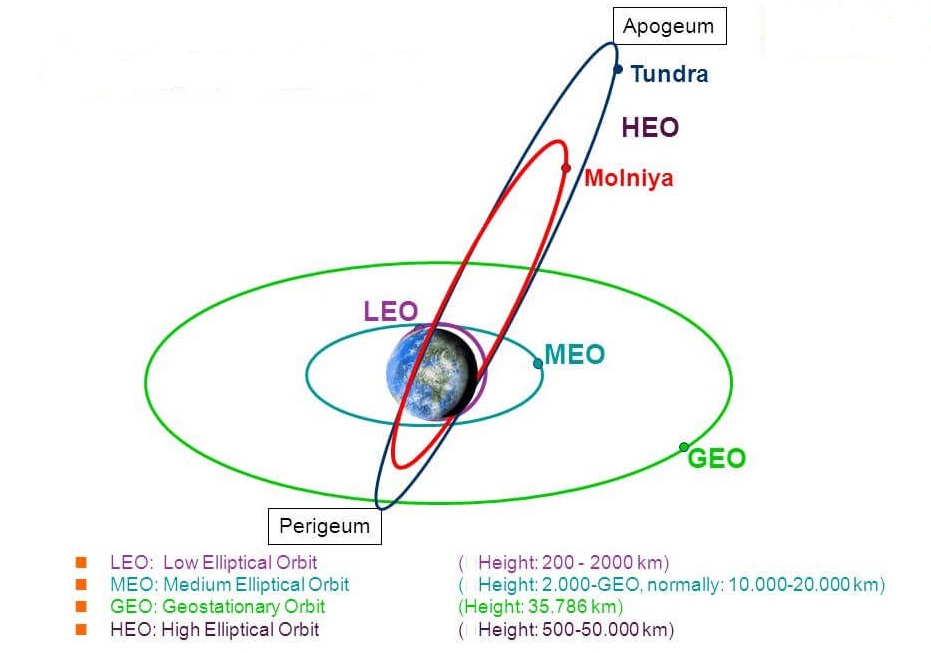
Back2Basics: Various Orbits of Satellites
[1] Geostationary orbit (GEO)
Satellites in geostationary orbit (GEO) circle Earth above the equator from west to east following Earth’s rotation – taking 23 hours 56 minutes and 4 seconds – by travelling at exactly the same rate as Earth.
This makes satellites in GEO appear to be ‘stationary’ over a fixed position.
In order to perfectly match Earth’s rotation, the speed of GEO satellites should be about 3 km per second at an altitude of 35 786 km.
This is much farther from Earth’s surface compared to many satellites.
GEO is used by satellites that need to stay constantly above one particular place over Earth, such as telecommunication satellites.
Satellites in GEO cover a large range of Earth so as few as three equally-spaced satellites can provide near-global coverage.
[2] Low Earth orbit (LEO)
A low Earth orbit (LEO) is, as the name suggests, an orbit that is relatively close to Earth’s surface.
It is normally at an altitude of less than 1000 km but could be as low as 160 km above Earth – which is low compared to other orbits, but still very far above Earth’s surface.
Unlike satellites in GEO that must always orbit along Earth’s equator, LEO satellites do not always have to follow a particular path around Earth in the same way – their plane can be tilted.
This means there are more available routes for satellites in LEO, which is one of the reasons why LEO is a very commonly used orbit.
It is most commonly used for satellite imaging, as being near the surface allows it to take images of higher resolution.
Satellites in this orbit travel at a speed of around 7.8 km per second; at this speed, a satellite takes approximately 90 minutes to circle Earth.
[3] Medium Earth orbit (MEO)
Medium Earth orbit comprises a wide range of orbits anywhere between LEO and GEO.
It is similar to LEO in that it also does not need to take specific paths around Earth, and it is used by a variety of satellites with many different applications.
It is very commonly used by navigation satellites, like the European Galileo system of Europe.
It uses a constellation of multiple satellites to provide coverage across large parts of the world all at once.
[4] Polar Orbit
Satellites in polar orbits usually travel past Earth from north to south rather than from west to east, passing roughly over Earth’s poles.
Satellites in a polar orbit do not have to pass the North and South Pole precisely; even a deviation within 20 to 30 degrees is still classed as a polar orbit.
Polar orbits are a type of low Earth orbit, as they are at low altitudes between 200 to 1000 km.
[5] Sun-synchronous orbit (SSO)
SSO is a particular kind of polar orbit. Satellites in SSO, travelling over the polar regions, are synchronous with the Sun.
This means they are synchronised to always be in the same ‘fixed’ position relative to the Sun.
This means that the satellite always visits the same spot at the same local time.
Often, satellites in SSO are synchronised so that they are in constant dawn or dusk – this is because by constantly riding a sunset or sunrise, they will never have the Sun at an angle where the Earth shadows them.
A satellite in a Sun-synchronous orbit would usually be at an altitude of between 600 to 800 km. At 800 km, it will be travelling at a speed of approximately 7.5 km per second.
[6] Transfer orbits and geostationary transfer orbit (GTO)
Transfer orbits are a special kind of orbit used to get from one orbit to another.
Often, the satellites are instead placed on a transfer orbit: an orbit where, by using relatively little energy from built-in motors, the satellite or spacecraft can move from one orbit to another.
This allows a satellite to reach, for example, a high-altitude orbit like GEO without actually needing the launch vehicle.
Reaching GEO in this way is an example of one of the most common transfer orbits, called the geostationary transfer orbit (GTO).
From UPSC perspective, the following things are important:
Prelims level: Collegium system, NJAC
Mains level: Collegium system, NJAC
Why in news?
The Ramana Collegium has been particularly successful.
Meeting frequently and working quickly, they took the perennial problem of judicial vacancies by its horns and turned it around.
Success of Ramana Collegium
The collegium was able to recommend numerous judicial appointments and scripted history by getting nine Supreme Court judges appointed in one go.
Of the nine, Justice B.V. Nagarathna, is in line to be the first woman CJI in 2027.
What exactly is the Collegium System?
The collegium system was born out of years of friction between the judiciary and the executive.
The hostility was further accentuated by instances of court-packing (the practice of changing the composition of judges in a court), mass transfer of HC judges and two supersessions to the office of the CJI in the 1970s.
The Three Judges cases saw the evolution of the collegium system.
Evolution: The Judges Cases
First Judges Case (1981) ruled that the “consultation” with the CJI in the matter of appointments must be full and effective.
However, it rejected the idea that the CJI’s opinion, albeit carrying great weight, should have primacy.
Second Judges Case (1993) introduced the Collegium system, holding that “consultation” really meant “concurrence”.
It added that it was not the CJI’s individual opinion, but an institutional opinion formed in consultation with the two senior-most judges in the Supreme Court.
Third Judges Case (1998): On a Presidential Reference for its opinion, the Supreme Court, in the Third Judges Case (1998) expanded the Collegium to a five-member body, comprising the CJI and four of his senior-most colleagues.
How does the collegium system work?
The collegium of the CJI and four senior-most judges of the Supreme Court make recommendations for appointments to the apex court and High Courts.
The collegium can veto the government if the names are sent back by the latter for reconsideration.
The basic tenet behind the collegium system is that the judiciary should have primacy over the government in matters of appointments and transfers in order to remain independent.
The procedure followed by the Collegium
Appointment of CJI
The President of India appoints the CJI and the other SC judges.
As far as the CJI is concerned, the outgoing CJI recommends his successor.
In practice, it has been strictly by seniority ever since the supersession controversy of the 1970s.
The Union Law Minister forwards the recommendation to the PM who, in turn, advises the President.
Other SC Judges
For other judges of the top court, the proposal is initiated by the CJI.
The CJI consults the rest of the Collegium members, as well as the senior-most judge of the court hailing from the High Court to which the recommended person belongs.
The consultees must record their opinions in writing and it should form part of the file.
The Collegium sends the recommendation to the Law Minister, who forwards it to the Prime Minister to advise the President.
For High Courts
The CJs of High Courts are appointed as per the policy of having Chief Justices from outside the respective States. The Collegium takes the call on the elevation.
High Court judges are recommended by a Collegium comprising the CJI and two senior-most judges.
The proposal, however, is initiated by the Chief Justice of the High Court concerned in consultation with two senior-most colleagues.
The recommendation is sent to the Chief Minister, who advises the Governor to send the proposal to the Union Law Minister.
Does the Collegium recommend transfers too?
Yes, the Collegium also recommends the transfer of Chief Justices and other judges.
Article 222 of the Constitution provides for the transfer of a judge from one High Court to another.
When a CJ is transferred, a replacement must also be simultaneously found for the High Court concerned. There can be an acting CJ in a High Court for not more than a month.
In matters of transfers, the opinion of the CJI “is determinative”, and the consent of the judge concerned is not required.
However, the CJI should take into account the views of the CJ of the High Court concerned and the views of one or more SC judges who are in a position to do so.
All transfers must be made in the public interest, that is, “for the betterment of the administration of justice”.
Loopholes in the Collegium system
Lack of Transparency: Opaqueness and a lack of transparency, and the scope for nepotism are cited often.
Judges appointing Judge: The attempt made to replace it with a ‘National Judicial Appointments Commission’ was struck down by the court in 2015 on the ground that it posed a threat to the independence of the judiciary.
Criteria: Some do not believe in full disclosure of reasons for transfers, as it may make lawyers in the destination court chary of the transferred judge. It has even been accused of nepotism.
Way ahead
In respect of appointments, there has been an acknowledgment that the “zone of consideration” must be expanded to avoid criticism that many appointees hail from families of retired judges.
The status of a proposed new memorandum of procedure, to infuse greater accountability, is also unclear.
Even the majority opinions admitted the need for transparency, now Collegiums’ resolutions are now posted online, but reasons are not given.
From UPSC perspective, the following things are important:
Prelims level: Herbaria
Mains level: Not Much
With details of about one lakh plant specimens, the Indian Virtual Herbarium, the biggest virtual database of flora in the country, is generating a lot of interest and turning out to be an eye-catching endeavour.
Indian Virtual Herbarium
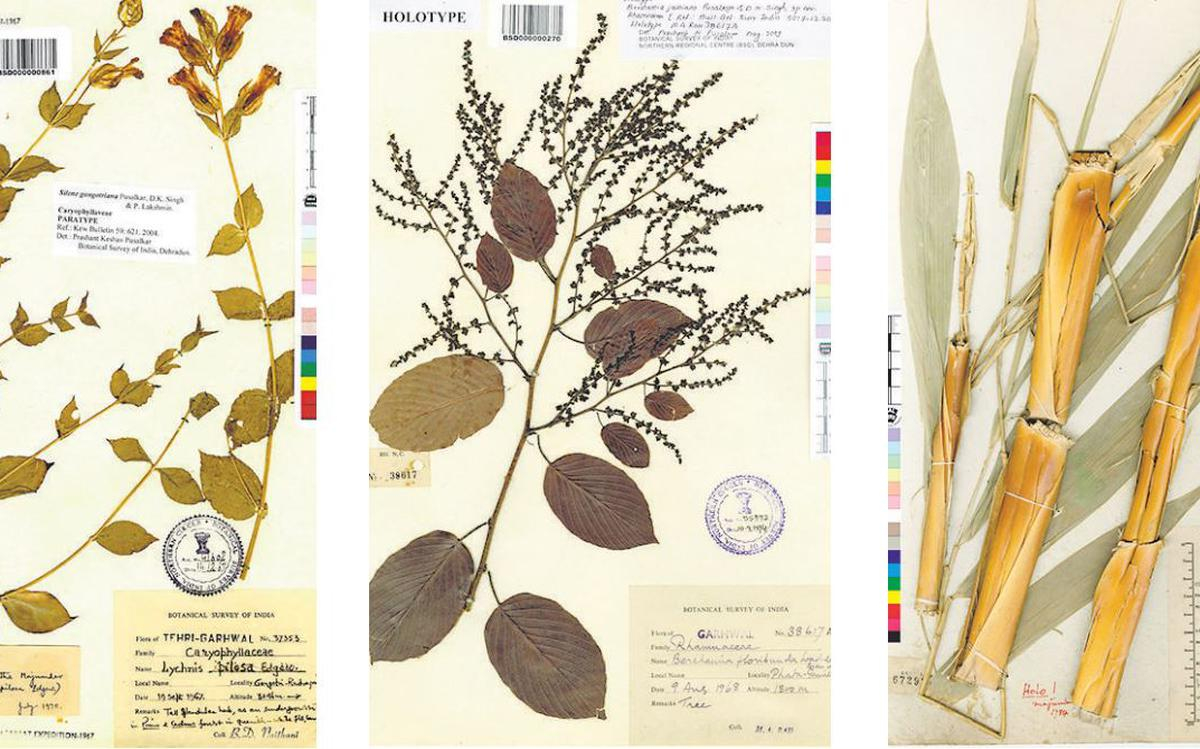
A herbarium specimen is consists of dried plant parts with labelled information on Scientific name and collection data.
It has immense use in plant identification, systematics studies and ecological studies.
The Botanical Survey of India has more than 30,00,000 herbarium specimens persevered in different herbaria located in different parts of the country.
Developed by scientists of the Botanical Survey of India (BSI), the herbarium was inaugurated by Union Minister of Environment Forest and Climate Change in Kolkata last month.
Why in news?
Since launch, the portal ivh.bsi.gov.in has had nearly two lakh hits from 55 countries.
The portal includes about one lakh images of herbarium specimens.
Each record in the digital herbarium includes an image of the preserved plant specimen, scientific name, collection locality, and collection date, collector name, and barcode number.
The digital herbarium includes features to extract the data State-wise, and users can search plants of their own States, which will help them identify regional plants and in building regional checklists.
Significance of the herbaria
Scientists say that there are approximately three million plant specimens in the country which are with different herbaria located at zonal centres of the BSI.
About 52% of our type specimens are from foreign nations and collected from 82 countries of the world during the British-era.
The herbarium is also deeply linked with the botanical history of the country.
The portal provides most valuable historical collections of botanists like William Roxburgh, Nathaniel Wallich and Joseph Dalton Hooker, considered the founding fathers of botany in India.
The digital herbarium has some of the oldest botanical specimens dating as early as 1696.
Prelims Only | Polity | Mains Paper 2: Indian Constitution – historical underpinnings, evolution, features, amendments, significant provisions and basic structure
Note4Students
From UPSC perspective, the following things are important:
Prelims level: NRC, NPR
Mains level: Read the attached story
Bowing to demands from tribal groups, the Manipur Assembly has resolved to implement the National Register of Citizens (NRC) and establish a State Population Commission (SPC).
To date, Assam is the only northeastern State to have implemented the NRC.
What is National Register of Citizens (NRC)?
The National Register of Citizens (NRC) is a register of all Indian citizens whose creation is mandated by the 2003 amendment of the Citizenship Act, 1955.
The register was first prepared after the 1951 Census of India.
Its purpose is to document all the legal citizens of India so that the illegal immigrants can be identified and deported.
It has been implemented for the state of Assam starting in 2013–2014.
The GoI announced plans to implement it for the rest of the country in 2021, but it has not yet been implemented.
NRC and Assam
Assam, being a border state with unique problems of illegal immigration, had a register of citizens created for it in 1951 based on the 1951 census data.
However, it was not maintained afterwards.
For decades, the presence of migrants, often called “bahiragat” or outsiders, has been a loaded issue here.
The Illegal Migrants (Determination by Tribunal) Act, 1983 was then passed by the Parliament, creating a separate tribunal process for identifying illegal migrants in Assam.
The Supreme Court struck it down as unconstitutional in 2005, after which the Centre agreed to update the Assam NRC.
Who is a Foreigner in Assam?
The National Register of Citizens now takes its definition of illegal immigrants from the Assam Accord – anyone who cannot prove that they or their ancestors entered the country before the midnight of March 24, 1971, would be declared a foreigner and face deportation.
Those who entered on or after March 25, 1971, the eve of the Bangladesh War, would be declared foreigners and deported.
This means you could be born in India in 1971 to parents who crossed the border in that year, and still be termed an illegal immigrant at the age of 48.
CAA and NRC protests
These were a series of protests in India against the Citizenship (Amendment) Act, 2019 which was enacted into law on December 12, 2019, and against the nationwide implementation of the NRC.
Protesters in all regions are concerned that the upcoming compilation of the National Register of Citizens might be used to deprive a community of its Indian citizenship.
Back2Basics: National Population Register (NPR)
The NPR is a database containing a list of all usual residents of the country.
Its objective is to have a comprehensive identity database of people residing in the country.
It is generated through house-to-house enumeration during the “house-listing” phase of the census, which is held once in 10 years.
A usual resident for the purposes of NPR is a person who has resided in a place for six months or more, and intends to reside there for another six months or more.
Once the basic details of the head of the family are taken by the enumerator, an acknowledgement slip will be issued. This slip may be required for enrolment in NPR, whenever that process begins.
And, once the details are recorded in every local (village or ward), sub-district (tehsil or taluk), district and State level, there will be a population register at each of these levels.
Together, they constitute the National Population Register.