💥UPSC 2027,2028 Mentorship (April Batch) + Access XFactor Notes & Microthemes PDF

Type: Prelims Only

  • River Interlinking

    Danube-Oder-Elbe Canal

    Note4Students

    From UPSC perspective, the following things are important:

    Prelims level: Rivers mentioned in the newscard

    Mains level: Not Much


    Environmental organisations from across central and Eastern Europe have criticised a major project intending to link three rivers and provide seamless navigation between three of Europe’s peripheral seas, according to a statement.

    Danube-Oder-Elbe Canal

    • For centuries Europe’s rulers have dreamed of construction of a huge Y-shaped canal connecting the Elbe, Oder and Danube rivers, most of which would be on Czech territory.
    • The Canal intends to connect the Danube, Oder and Elbe rivers and thus provide another navigable link from the Black Sea to the North and Baltic Seas.
    • The Main-Danube Canal already provided a navigable connection between the Black Sea and the North Sea.
    • Several hundred kilometres of artificial waterways would have to be built for the canal, according to the statement.
    • Critics have called on the European Commission to ensure that the project be excluded from EU funding, and not be included as part of the Trans-European Transport Network.
  • Modern Indian History-Events and Personalities

    Persons in news: Sheikh Mujibur Rahman

    Note4Students

    From UPSC perspective, the following things are important:

    Prelims level: Sheikh Mujib and his legacy

    Mains level: NA

    March 17 is the birth anniversary of Bangabandhu Sheikh Mujibur Rahman (1920-1975), the founding leader of Bangladesh and the country’s first Prime Minister.

    Sheikh Mujibur Rahman

    Sheikh Mujibur Rahman in 1950.jpg

    • Before joining politics, Rahman studied law and political science in Kolkata and Dhaka and agitated for Indian independence.
    • He is referred to as Sheikh Mujib or simply Mujib, the title ‘Bangabandhu’ meaning ‘friend of Bengal’.
    • In 1949, he joined the Awami League, a political party which advocated greater autonomy for East Pakistan.
    • A popular leader in East Pakistan, Rahman played an important role in the six-point movement and the Anti-Ayub movement.

    Role in Bangladesh liberation

    • In 1970, his party secured an absolute majority in the Pakistani general elections; the country’s first, winning more seats than all parties in West Pakistan, including Zulfikar Ali Bhutto’s Pakistan People’s Party.
    • The election results were not honoured; leading to a bloody civil war, and Sheikh Mujib declared Bangladesh’s independence from Pakistan on March 26, 1971.
    • The declaration coincided with a ruthless show of strength by the Pakistani military, in which tanks rolled out on the streets of Dhaka and several students and intellectuals were killed.
    • India under then PM Indira Gandhi provided full support to Rahman and Bangladesh’s independence movement, resulting in the creation of a sovereign government at Dhaka in January 1971.

    His legacy

    • Rahman, who had been arrested and taken to West Pakistan, returned to Bangladesh after being freed in January 1972.
    • For the next three years, Rahman held the new country’s prime ministerial post, and became a celebrated icon in India as well, admired for his moving speeches and charismatic personality.
    • On 15 August 1975, Rahman was killed in a military coup along with his wife and three sons, including 10-year-old Sheikh Russel.
    • His daughters, the current Prime Minister Sheikh Hasina and her younger sister Sheikh Rehana, survived as they were abroad at the time.
  • Tax Reforms

    Excise Duty on Petrol and Diesel

    Note4Students

    From UPSC perspective, the following things are important:

    Prelims level: Excise duty

    Mains level: Changes in taxation after GST regime

    The Central levies on petrol and diesel were hiked amid sliding global crude oil prices. But the price of petrol and diesel registered a decline after oil companies further cut auto fuel prices in light of the substantial fall in global crude oil prices.

    What is Excise Duty?

    • Excise duty is a form of tax imposed on goods for their production, licensing and sale.
    • It is the opposite of Customs duty in sense that it applies to goods manufactured domestically in the country, while Customs is levied on those coming from outside of the country.
    • At the central level, excise duty earlier used to be levied as Central Excise Duty, Additional Excise Duty, etc.
    • Excise duty was levied on manufactured goods and levied at the time of removal of goods, while GST is levied on the supply of goods and services.

    Purview of excise duty

    • The GST introduction in July 2017 subsumed many types of excise duty.
    • Today, excise duty applies only on petroleum and liquor.
    • Alcohol does not come under the purview of GST as exclusion mandated by constitutional provision.
    • States levy taxes on alcohol according to the same practice as was prevalent before the rollout of GST.
    • After GST was introduced, excise duty was replaced by central GST because excise was levied by the central government. The revenue generated from CGST goes to the central government.

    Types of excise duty in India

    Before GST kicked in, there were three kinds of excise duties in India.

    Basic Excise Duty

    • Basic excise duty is also known as the Central Value Added Tax (CENVAT). This category of excise duty was levied on goods that were classified under the first schedule of the Central Excise Tariff Act, 1985.
    • This duty was levied under Section 3 (1) (a) of the Central Excise Act, 1944. This duty applied on all goods except salt.

    Additional Excise Duty

    • Additional excise duty was levied on goods of high importance, under the Additional Excise under Additional Duties of Excise (Goods of Special Importance) Act, 1957.
    • This duty was levied on some special category of goods.

    Special Excise Duty

    • This type of excise duty was levied on special goods classified under the Second Schedule to the Central Excise Tariff Act, 1985.
    • Presently the central excise duty comprises of a Basic Excise Duty, Special Additional Excise Duty and Additional Excise Duty (Road and Infrastructure Cess) on auto fuels.
  • Innovations in Biotechnology and Medical Sciences

    Role of Glucose in Regulating Liver Functions

    Note4Students

    From UPSC perspective, the following things are important:

    Prelims level: SIRT1

    Mains level: NA

    A study by researchers from the Tata Institute of Fundamental Research, Mumbai (TIFR) has revealed that glucose in the body controls the function of SIRT1 enzymes directly.

    What is SIRT1?

    • SIRT1 is an enzyme that deacetylates (removal of acetyl) proteins which contribute to cellular regulation.
    • A shortage or absence of the control by glucose may lead to a diabetic-like state, while excess feeding and sustained low levels of SIRT1 can lead to obesity and enhanced ageing.
    • This information is expected to tackle lifestyle disorders and ageing-related diseases.

    How do they function?

    • In normal healthy individuals, SIRT1 protein levels are known to increase during fasting and decrease during the feed, which is essential to maintain a balance between glucose and fat metabolism.
    • The glucose controls the functions of a protein SIRT1 which in turn maintains everyday feed-fast cycles and is also associated with longevity.
    • The feed-fast cycle is a basic pattern and the metabolism-related to this is largely taken care of by the liver.
    • Thus, the study shows that both over-activation and under-activation of SIRT1 can lead to diseases.
    • Glucose puts a check on the activity of SIRT1 in the fed state. In the absence of this check, SIRT1 activity increases and results in hyperglycemia in a fasted state, mimicking diabetic state.
    • The constant feeding or high-calorie intake that leads to a sustained reduction in the levels of SIRT1 by glucose which is associated with ageing and obesity.
  • New Species of Plants and Animals Discovered

    Oculudentavis khaungraae

    Scientists have found the skull of a 99-million-year-old flying dinosaur that is tinier than the tiniest bird known to humans.

    • The bird-like dinosaur was found stuck in a gob of tree resin that eventually hardened into amber, preserving it for millions of years to come.
    • The fossil was dug up in 2016 from a mine in Myanmar. It was so slight; it likely weighed just 2 grams.
    • The dinosaur skull holds around 100 sharp teeth, which hints at its ferocious nature despite its small size.
    • It even had teeth in the back of its jaw, under its eye.


  • Genetically Modified (GM) crops – cotton, mustards, etc.

    Sahyadri Megha

    Note4Students

    From UPSC perspective, the following things are important:

    Prelims level: Sahyadri Megha

    Mains level: Not Much

    The University of Agricultural and Horticultural Sciences (UAHS), Shivamogga (K’taka) has developed ‘Sahyadri Megha’, a new red variety of paddy that is resistant to blast (a fungal disease) and rich in nutrients.

    Sahyadri Megha

    • It is a red variety of paddy that is resistant to blast disease and rich in nutrients.
    • It was developed under the hybridization breeding method by cross-breeding the best among the ‘Jyothi’ variety with that of ‘Akkalu’, a disease-resistant and protein-rich paddy variety.
    • The new variety will be notified under the Indian Seed Act 1966 shortly after which it will become part of the seed chain.

    Key features

    • The protein content in it is 12.48%, higher than the other red rice varieties grown.
    • The yield per hectare from ‘Sahyadri Megha’ is around 65 quintals, substantially higher than other red paddy varieties.
    • It is a medium-term paddy that can be grown when there is a delay in the onset of monsoon. It can be harvested after 120 days of sowing.
  • Changes in SDGs

    Note4Students

    From UPSC perspective, the following things are important:

    Prelims level: SDGs, SDG India Index

    Mains level: Ensuring sustainable development worldwide

    Thirty-six major changes to the global indicator framework for the Sustainable Development Goals (SDGs) were approved and adopted by the UN Statistical Commission (UNSC).

    Sustainable Development Goals

    • The UN General Assembly in its 70thSession considered and adopted the Sustainable Development Goals (SDGs) for the next 15 years.
    • The 17 SDGs came into force with effect from 1stJanuary, 2016.
    • Though not legally binding, the SDGs have become de facto international obligations and have potential to reorient domestic spending priorities of the countries during the next fifteen years.
    • Countries are expected to take ownership and establish a national framework for achieving these Goals.
    • Implementation and success will rely on countries’ own sustainable development policies, plans and programmes.

    About the changes

    • These changes are based on the ‘2020 comprehensive review’ conducted by the UN Inter-Agency and Expert Group on SDG Indicators (IAEG-SDGs).
    • The revised global framework will have 231 indicators, approximately the same number as in the original framework, the statement said.
    • The global indicator framework was adopted by the UN General Assembly on July 6, 2017.

    Eight additional indicators were added across six SDG goals — 2, 3, 4, 10, 13 and 16.

    These include:

    • Indicator 13.2.2 on the total greenhouse gas emissions per year for the SDG target 13.2 to integrate climate change measures into national policies, strategies and planning.
    • Prevalence of anaemia in women aged 15-49 years, by pregnancy status (percentage) under the target 2.2 to end forms of malnutrition by 2030.
    • A new indicator on reducing the percentage of bloodstream infections due to selected antimicrobial-resistant organisms has been added under the Global health goal (SDG 3).
    • Indicator 10.7.3 on the number of migrants killed while attempting to cross maritime, land and air borders.
    • Indicator 10.7.4 on the proportion of the population who are refugees, by country of origin.

    Six indicators across six SDG goals — 1, 4, 8, 11, 13 and 17 — have been deleted.

     These include:

    • Indicator 1.a.1 on the proportion of domestically-generated resources allocated by the government directly to poverty reduction programmes.
    • Indicator 4.2.1 on the proportion of children under five years of age who are developmentally on track in health, learning and psychosocial well-being, by sex.
    • The portion of the indicator that measures progress for children between 0 and 23 months of age, which is currently in tier III was proposed for deletion by the IAEG.
    • Under the SDG goal on combating climate change, the indicator 13.3.2, quantifying the number of countries that have communicated the strengthening of capacity-building for implementing adaptation, mitigation and technology transfer, and development actions has been deleted.
  • Capital Markets: Challenges and Developments

    AT-1 bonds

    Note4Students

    From UPSC perspective, the following things are important:

    Prelims level: AT-1 Bonds

    Mains level: Read the attached story

    India’s fourth-largest private lender YES bank was placed under a moratorium by RBI and its perpetual debt additional tier-1 (AT1 bonds) would become worthless if RBI does ask mutual funds to write down their value.

    What are AT1 bonds?

    • AT-1, short for Additional Tier-1 bonds, are a type of unsecured, perpetual bonds that banks issue to shore up their core capital base to meet the Basel-III norms.
    • AT-1 bonds are complex hybrid instruments, ideally meant for institutions and smart investors who can decipher their terms and assess if their higher rates compensate for their higher risks.
    • They carry a face value of ₹10 lakh per bond.
    • There are two routes through which retail folk have acquired these bonds — initial private placement offers of AT-1 bonds by banks seeking to raise money; or secondary market buys of already-traded AT-1 bonds based on recommendations from brokers.

    Why are they important?

    AT-1 bonds have several unusual features lurking in their fine print, which make them very different from plain bonds.

    • One, these bonds are perpetual and carry no maturity date. Instead, they carry call options that allow banks to redeem them after five or 10 years. But banks are not obliged to use this call option and can opt to pay only interest on these bonds for eternity.
    • Two, banks issuing AT-1 bonds can skip interest payouts for a particular year or even reduce the bonds’ face value without getting into hot water with their investors, provided their capital ratios fall below certain threshold levels. These thresholds are specified in their offer terms.
    • Three, if the RBI feels that a bank is tottering on the brink and needs a rescue, it can simply ask the bank to cancel its outstanding AT-1 bonds without consulting its investors. This is what has happened to YES Bank’s AT-1 bond-holders who are said to have invested ₹10,800 crore.
  • Modern Indian History-Events and Personalities

    Pyramid of Djoser

    Note4Students

    From UPSC perspective, the following things are important:

    Prelims level: Pyramid of Djoser

    Mains level: NA


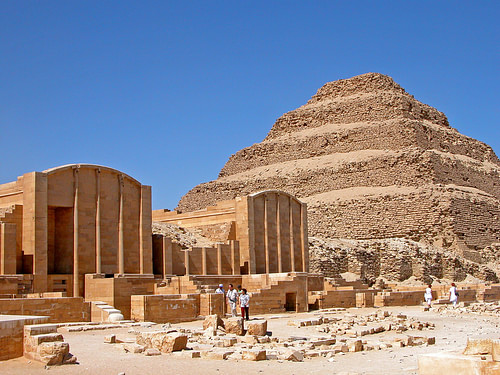
    Last week, Egypt reopened the Pyramid of Djoser, the first pyramid ever built, after a 14-year restoration. The structure is believed to be designed by Imhotep, described by some as the first architect of the world.

    The Pyramid of Djoser

    • The 4,700-year-old pyramid is 60 metres tall, and consists of six stacked steps over a burial shaft tomb 28 metres deep and seven metres wide.
    • It is located at the Saqqara archaeological site, 24 km southwest of Cairo, outside the royal capital of Memphis. A complex of halls and courts is located around the pyramid.
    • It is the world’s oldest monumental stone building.
    • Today a UNESCO world heritage site, the pyramid was constructed during the era of Pharaoh Djoser, the second king of Ancient Egypt’s Third Dynasty (2650 BC– 2575 BC).
    • The Pharaoh’s 19-year reign saw significant technical innovations in stone architecture.
    • The pyramid’s architect, Imhotep, was also a physician and astrologer, and served as Djoser’s minister.
  • Wildlife Conservation Efforts

    Species in news: Red Panda

    Note4Students

    From UPSC perspective, the following things are important:

    Prelims level: SAWEN, TRAFFIC, Red Panda

    Mains level: Not Much


    According to a report by the TRAFFIC report, there has been a considerable reduction in the poaching of Red Panda (ailurus fulgens). The report also recommended trans-boundary law enforcement co-operation through the use of multi-government platforms like SAWEN (South Asia Wildlife Enforcement Network).

    Red Panda

    IUCN Red List Status: Endangered

    • The red panda (Ailurus fulgens) is a mammal native to the eastern Himalayas and southwestern China.
    • Its wild population is estimated at fewer than 10,000 mature individuals and continues to decline due to habitat loss and fragmentation, poaching, and inbreeding depression.
    • Despite its name, it is not closely related to the giant panda
    • The animal has been hunted for meat and fur, besides illegal capture for the pet trade.
    • An estimated 14,500 animals are left in the wild across Nepal, Bhutan, India, China and Myanmar.
    • About 5,000-6,000 red pandas are estimated to be present in four Indian states – Arunachal Pradesh, Meghalaya, Sikkim and West Bengal.
    • The diminishing habitat is a major threat to the species which is a very selective feeder and survives on selected species of bamboos.

    About South Asia Wildlife Enforcement Network (SAWEN)

    • SAWEN is a Regional network is comprised of eight countries in South Asia: Afghanistan, Bangladesh, Bhutan, India, Maldives, Nepal, Pakistan and Sri Lanka.
    • It aims at working as a strong regional intergovernmental body for combating wildlife crime by attempting common goals and approaches for combating illegal trade in the region.
    • The South Asia region is very vulnerable to illegal traffic and wildlife crimes due to the presence of precious biodiversity and large markets as well as traffic routes for wildlife products in the south East Asian region.
    • The collaboration in harmonizing as well as enforcing the wildlife protection in the region is considered very important for effective conservation of such precious biodiversity.
    • India adopted the Statute of the SAWEN and became its formal member in 2016.

    Back2Basics

    TRAFFIC

    • The TRAFFIC, the Wildlife Trade Monitoring Network, is a leading non-governmental organisation working on wildlife trade in the context of both biodiversity conservation and sustainable development.
    • It is a joint program of World Wildlife Fund (WWF) and the IUCN.
    • It aims to ensure that trade in wild plants and animals is not a threat to the conservation of nature.
    • The TRAFFIC is governed by the TRAFFIC Committee, a steering group composed of members of TRAFFIC’s partner organizations, WWF and IUCN.
    • TRAFFIC also works in close co-operation with the Secretariat of the Convention on International Trade in Endangered Species of Wild Fauna and Flora (CITES).