💥UPSC 2026, 2027, 2028 UAP Mentorship (March Batch) + Access XFactor Notes & Microthemes PDF

Type: Prelims Only

  • Judicial Appointments Conundrum Post-NJAC Verdict

    Justice Surya Kant Sworn in as the 53rd Chief Justice of India (CJI)

    Why in the News?

    Justice Surya Kant took oath as the 53rd Chief Justice of India (CJI) on November 24, 2025, administered by President Droupadi Murmu at Rashtrapati Bhavan.

    About Justice Surya Kant

    • Born: 10 February 1962, Hisar, Haryana.
    • Youngest Advocate General of Haryana (appointed 2000).
    • Judge, Punjab & Haryana High Court (2004).
    • Chief Justice, Himachal Pradesh High Court (2018).
    • Appointed to Supreme Court: 24 May 2019 (along with Justice B.R. Gavai).

    Tenure

    • Will serve until 2 February 2027 — a little over one year.

    Major Priorities as the 53rd CJI

    • Reduce pendency of 90,000+ cases in the Supreme Court to a “manageable number.”
    • Address growing trend:
      • Litigants bypassing High Courts and approaching SC directly.
      • Repeated “miscellaneous applications” causing prolonged litigation

    Major Cases Involving Justice Surya Kant

    • Abrogation of Article 370 (J&K’s special status removed).
    • Electoral Bonds Case – Bench struck down the scheme as unconstitutional.
    • Pegasus spyware case.
    • Suspension of sedition law deliberations.
    • Granted conditional interim bail to Ashish Mishra (Lakhimpur Kheri incident).

    Procedure for Selection of the Chief Justice of India (CJI)

    Constitutional Basis

    • Article 124(2) of the Constitution deals with the appointment of Supreme Court judges (including the CJI). The CJI is appointed by the President of India.

    Seniority Convention

    • By long-standing constitutional convention, the most senior judge of the Supreme Court is appointed as the next CJI.
    • Seniority = date of appointment to the Supreme Court Bench.

    Role of the Collegium

    When the CJI’s post is falling vacant:

    • The outgoing CJI recommends the name of the senior-most SC judge to the Government of India.
    • This recommendation is part of the Collegium system, but only the CJI’s advice is required, not the full Collegium.

    Role of the Law Ministry

    • The Ministry of Law & Justice processes the recommendation.
    • Sends it to the Prime Minister, who advises the President.

    Appointment by the President

    • The President formally appoints the recommended judge as the Chief Justice of India.
    • Appointment is notified in the Gazette.

    Oath of Office

    • The President administers the oath of office to the new CJI at Rashtrapati Bhavan.
    • Oath is under Article 124(6).

    Tenure

    • The CJI holds office until the age of 65.

    Q. With reference to Indian Judiciary, consider the following statements:

    1. Any retired judge of the Supreme Court of India can be called back to sit and act as a Supreme Court judge by the Chief Justice of India with the prior permission of the President of India.

    2. A High Court in India has the power to review its own judgement as the Supreme Court does.

    Which of the statements given above is/are correct? 

    [A] 1 only 

    [B] 2 only 

    [C] Both 1 and 2 

    [D] Neither 1 nor 2

  • Defence Sector – DPP, Missions, Schemes, Security Forces, etc.

    INS Sahyadri–HMAS Ballarat in AUSINDEX 2025

     Why in the News?

    INS Sahyadri of the Indian Navy and HMAS Ballarat of the Royal Australian Navy participated in the AUSINDEX 2025 bilateral maritime exercise in the Northern Pacific, strengthening India–Australia defence cooperation and enhancing interoperability.

    What is AUSINDEX?  

    • Bilateral naval exercise between India and Australia
    • First held in 2015
    • Aims at maritime cooperation, interoperability, and security
    • Conducted alternately in India and Australia / designated oceanic regions

    AUSINDEX 2025 

    • Location: Northern Pacific
    • Participants:
    • INS Sahyadri – Shivalik-class guided-missile stealth frigate
    • HMAS Ballarat – Anzac-class frigate
    • Focus areas:
        • Anti-submarine warfare (ASW)
        • Gunnery drills
        • Advanced flying operations
        • Joint maritime manoeuvres
    • Objective: Boost interoperability and reaffirm commitment to a free, open, inclusive Indo-Pacific
    With reference to India’s defence, consider the following pairs: (2025)

    I. Dornier-228 : Maritime patrol aircraft 

    II. IL-76 : Supersonic combat aircraft III. C-17 Globemaster 

    III : Military transport aircraft 

    How many of the pairs given above are correctly matched? 

    (a) Only one 

    (b) Only two 

    (c) All the three 

    (d) None

  • Internal Security Trends and Incidents

    DRI Seizes 32 kg Methamphetamine in North East

    Why in the News?

    The Directorate of Revenue Intelligence (DRI) has seized 32 kg methamphetamine tablets worth ₹32 crore in two separate operations in Assam and Tripura, exposing the continued use of the Indo–Myanmar route for drug trafficking. Three persons have been arrested under the NDPS Act, 1985.

    About Methamphetamine  

    • A synthetic psychostimulant
    • Known as Ya Ba / Speed pills in Southeast Asia
    • Highly addictive
    • Controlled under Schedule of NDPS Act, 1985

    What is Hydroponic Weed?

    • Marijuana grown in nutrient-rich water systems, not soil
    • Higher potency due to controlled conditions
    • New smuggling trend: carried by air passengers into NE India

    NDPS Act, 1985  

    • Regulates narcotic drugs and psychotropic substances
    • Provides for seizure, arrests, forfeiture
    • Commercial quantity offences: 10–20 years imprisonment
    • Empowered agencies: DRI, NCB, Customs, State Police, BSF, Assam Rifles
    Q: India’s proximity to two of the world’s biggest illicit opium-growing states has enhanced her internal security concerns. Explain the linkages between drug trafficking and other illicit activities such as gunrunning, money laundering and human trafficking. What countermeasures should be taken to prevent the same? (UPSC 2018) 
  • Dams and Hydroprojects

    HMDA to use bioremediation to clean up Hussainsagar lake

    Why in the News?

    The Hyderabad Metropolitan Development Authority (HMDA) has announced a new advanced bioremediation initiative using enzyme solutions and biochar-based Bokashi balls to clean and restore Hussainsagar Lake, which has long suffered from algal blooms, foul odour, sewage inflow, and industrial pollution.

    About Hussainsagar Lake

    • A 16th-century artificial lake in Hyderabad.
    • Faces severe pollution due to:
      • Sewage inflow
      • Nutrient overload (nitrates, phosphates)
      • Industrial waste
    • Problems: algal blooms, foul odour, low Dissolved Oxygen (DO), high Biochemical Oxygen Demand (BOD).

    What Is Bioremediation?

    • Definition: Use of microorganisms, enzymes, or biological materials to break down pollutants and restore ecosystems.
    • Types relevant here:
      • In-situ bioremediation – treating the lake onsite without removing water.
      • Bio-augmentation – adding microbial cultures to enhance degradation.
      • Aerobic/oxygenation systems – boost DO to improve water quality.

    New Intervention Planned by HMDA

    • Enzyme Solutions

        • Enhance microbial breakdown of organic pollutants.
        • Help reduce nutrient load responsible for algal blooms.
    • Bokashi Balls (with Biochar)

      • Bokashi = fermented organic matter rich in beneficial microbes.
      • Biochar:
        • Carbon-rich material produced from biomass.
        • Increases microbial activity, absorbs toxins, improves water clarity.
      • Purpose:
        • Reduce algae, odour, pathogenic bacteria.
        • Increase water transparency and DO levels.
    In the context of solving pollution problems what is/are the advantage/disadvantages of bioremediation technique? (2017)

    1. It is a technique for cleaning up pollution by enhancing the same biodegradation process that occurs in nature. 

    2. Any contaminant with heavy metals such as cadmium and lead can be readily and completely treated by bioremediation using microorganisms. 

    3. Genetic engineering can be used to create microorganisms specifically designed for bioremediation. 

    Select the correct answer using the code given below: 

    (a) 1 only (b) 2 and 3 only (c) 1 and 3 only (d) 1, 2 and 3

  • International Space Agencies – Missions and Discoveries

    Moss Spores Survive Months in Space

    Why in the news?

    A recent study published in iScience revealed that moss spores (Physcomitrium patens) survived nine months outside the International Space Station (ISS), enduring vacuum, cosmic radiation, microgravity, and temperature extremes. Over 80% of the spores survived and successfully germinated on return to Earth. Scientists estimate moss could survive up to 15 years in space.

    Key Findings of the Study

    • 20,000 moss spores were placed outside the ISS in March 2022.
    • Exposed to: Vacuum, Cosmic radiation, Microgravity and Extreme temperatures
    • After 283 days, the spores were retrieved.
    • Results: 80% survived
      • Among survivors, 89% germinated successfully
      • Chlorophyll levels normal except a 20% drop in chlorophyll a, but not harmful
    • Survival attributed to multiple spore wall layers offering passive protection.

    About the Species

    • Species: Physcomitrium patens
    • Model organism for plant evolutionary studies
    • Mosses are one of the earliest land plants
    • Already known for surviving:
      • Antarctica
      • Volcanic fields
      • Deserts

    Why Moss Survived – Scientific Insight

    • Multiple thick-walled layers → physical shielding
    • Ability to remain in dormant state
    • Natural mechanisms to handle:
      • Radiation
      • Desiccation
      • Freezing and thawing cycles

    Why Is This Significant?

    • Implications for Space Exploration: 
        • Ability to survive harsh space environments → potential role in: Oxygen generation, Humidity control, Soil formation on Moon/Mars.
        • Supports concepts of bioregenerative life-support systems
        • It could be used in terraforming experiments on other celestial bodies
    • Astrobiology

        • Supports the idea that primitive plant life could survive interplanetary transport.
        • Relevant to panspermia hypothesis (life spreading across planets via spores).
    • Long-term Human Habitats

      • Moss can grow with minimal resources
      • Can contribute to:
        • Closed-loop ecosystems
        • Sustainable habitats
        • Psychological well-being in isolated environments (greenery)
    Consider the following statements: (2023)

    1. Some microorganisms can grow in environments with temperature above the boiling point of water. 

    2. Some microorganisms can grow in environments with temperature below the freezing point of water. 

    3. Some microorganisms can grow in highly acidic environment with a pH below 3. 

    How many of the above statements are correct? 

    (a) Only one (b) Only two (c) All three (d) None

  • Freedom of Speech – Defamation, Sedition, etc.

    Guru Tegh Bahadur Ji: Martyrdom Day

    Why in the news?

    On the eve of the 350th Martyrdom Day of Guru Tegh Bahadur Ji, the President of India, Smt. Droupadi Murmu paid tribute to the ninth Sikh Guru, highlighting his supreme sacrifice for the protection of righteousness, humanity and freedom of faith.

    Who was Guru Tegh Bahadur?  

    • Ninth Guru of Sikhism (1621–1675).
    • Youngest son of Guru Hargobind Sahib, the sixth Guru.
    • Known as “Hind di Chadar” (Shield of India) for defending religious freedom.
    • Key teachings recorded in the Guru Granth Sahib, including hymns on detachment, courage, and equality.

    Why is His Martyrdom Significant?

    • Guru Tegh Bahadur opposed forced conversions under Mughal Emperor Aurangzeb.
    • He defended the rights of Kashmiri Pandits, who sought his protection.
    • Arrested and executed in Chandni Chowk, Delhi, on 24 November 1675.
    • His martyrdom represents:
      • Protection of freedom of conscience
      • Defence of pluralism and interfaith harmony
      • Upholding justice and truth

    President of India’s 2025 Message: Key Highlights

    • Tribute to his valour, sacrifice, and principles.
    • Emphasised his role in preserving: Righteousness, Humanity, Truth.
    • Called upon citizens to imbibe his values to strengthen harmony and unity in India.

    Guru Tegh Bahadur’s Contributions  

    • Spiritual Teachings: Advocated nirbhau (fearlessness) and nirvair (compassion). Stressed spiritual liberation through humility and service.
    • Establishment of Sikh Centres: Founded the city of Anandpur Sahib (1665). Travelled widely across the Indian subcontinent, spreading Sikh philosophy.
    • Guru Granth Sahib Contribution: Composed 116 hymns, including shaloks on detachment and moral courage.
    (2009) With reference to the cultural history of medieval India, consider the following statements: 

    1. Siddhas (Sittars) of Tamil region were monotheistic and condemned idolatry. 

    2. Lingayats of Kannada region questioned the theory of rebirth and rejected the caste hierarchy. 

    Which of the statements given above is/are correct? 

    (a) 1 only (b) 2 only (c) Both 1 and 2 (d) Neither 1 nor 2

  • Hunger and Nutrition Issues – GHI, GNI, etc.

    Ultra-Processed Food Epidemic in India

    Why in the news?

    A recent Lancet three-paper series highlights the rapid rise in ultra-processed food (UPF) consumption globally, including India, and its strong link to rising obesity, diabetes, cardiovascular diseases, and premature mortality. The case of an 18-year-old Indian youth with obesity and early-onset metabolic disorders illustrates the growing public health crisis.

    What are Ultra-Processed Foods?

    According to the NOVA classification, ultra-processed foods are:

    • Industrial formulations with multiple chemical and cosmetic ingredients
    • Made using high-fructose corn syrup, hydrogenated oils, flavour enhancers, emulsifiers, preservatives, colours
    • Designed for long shelf life, hyper-palatable taste and convenience
      Examples: Soft drinks, chips, packaged noodles, biscuits, sugary beverages, chocolates, breakfast cereals, frozen pizzas, ready-to-heat meals, chicken nuggets, processed meats.

    Difference from Processed Foods:
    Processed = minimal changes (washing, canning, cooking).
    Ultra-processed = heavy industrial formulations, low nutrients, high calories.

    Note: NOVA is a food classification system developed by the University of São Paulo (Brazil) that categorises foods based on the extent and purpose of industrial processing, not nutrients.

    India’s UPF Consumption – Why It’s a Concern?

    • Huge surge in consumption: Retail sales of UPFs in India jumped from USD 0.9 billion (2006) → USD 38 billion (2019) (approx. 40-fold increase).
    • Rising NCD (Non-Communicable Diseases) burden: As per ICMR–INDIAB (2023): Obesity: 28.6%, Diabetes: 11.4%, Prediabetes: 15.3%, Abdominal obesity: 39.5% and Childhood obesity rising: 2.1% → 3.4% (NFHS).
    A company marketing food products advertises that its items do not contain trans-fats. What does this campaign signify to the customers? (2011)

    1. The food products are not made out of hydrogenated oils. 

    2. The food products are not made out of animal fats/oils. 

    3. The oils used are not likely to damage the cardiovascular health of the consumers. 

    Select the correct answer using the code given below: 

    (a) 1 only (b) 2 and 3 only (c) 1 and 3 only (d) 1, 2 and 3

  • Air Pollution

    Thermal Power Plants Near Delhi Operating Without FGD

    Why in the news?

    Delhi’s air quality deteriorated sharply in November 2025. A major contributing factor identified is the continued operation of several thermal power plant units within a 300-km radius of Delhi without Flue Gas Desulphurisation (FGD) systems.

    What is FGD?

    Flue Gas Desulphurisation (FGD) is a pollution-control technology used in thermal power plants and industrial units to remove sulphur dioxide (SO₂) from exhaust flue gases before they are released into the atmosphere.

    Status of FGD Installation 

    Thermal Power Plants within 300 km of Delhi

    • Total plants: 11
    • Total units: 35
    • Units with FGD (as of Apr 2025): 13
    • Units without FGD: 22
    • Units currently operating without FGD (Nov 2025): 15
    • Units shut/reserve shutdown: 6

    States & Operators

    • Haryana (HPGCL): Panipat TPS, Yamuna Nagar TPS.
    • Punjab (PSPCL): Guru Hargobind TPS and Ropar TPS.
    • Private: Talwandi Sabo (Vedanta).

    Why SO₂ Emissions Matter?  

    • SO₂ converts into secondary PM2.5, the most harmful pollutant for human health.
    • Causes: Respiratory diseases, Acid rain and Visibility reduction (smog)
    • Travels long distances, affecting entire regions beyond plant boundaries.
    According to the Environmental Protection Agency (EPA), which one of the following is the largest source of sulphur dioxide emissions? (2024)

    (a) Locomotives using fossil fuels 

    (b) Ships using fossil fuels 

    (c) Extraction of metals from ores 

    (d) Power plants using fossil fuels

  • Climate Change Impact on India and World – International Reports, Key Observations, etc.

    Low-Pressure Area in Bay of Bengal (November 2025) 

    Why in the news?

    According to the India Meteorological Department (IMD), a low-pressure area formed over the Bay of Bengal on November 22, 2025. It is expected to intensify into a depression by November 24 and move west-northwestwards.

    What Has the IMD Reported?  

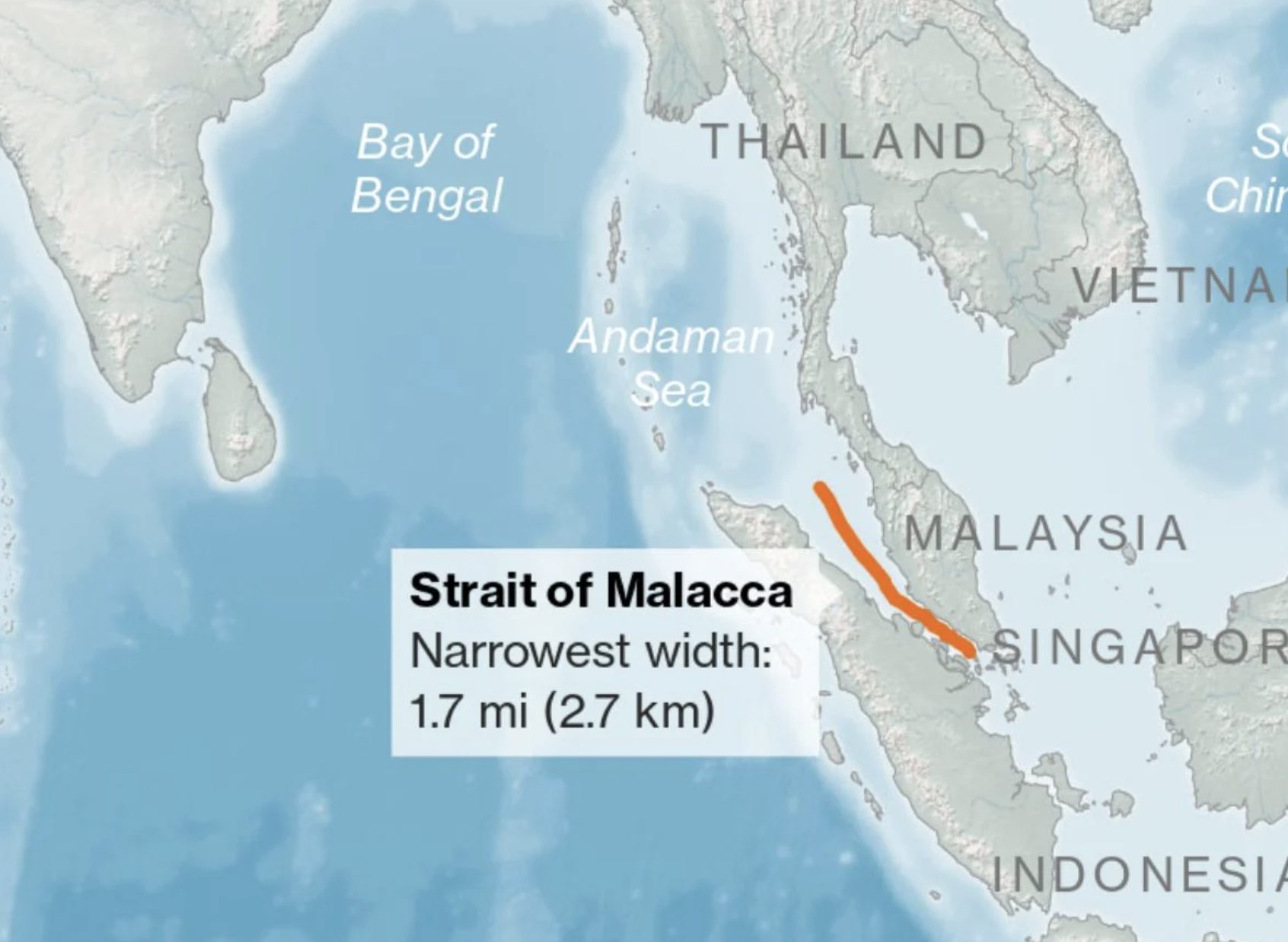
    a) Formation: Low-pressure area formed near the Malacca Strait over the South Andaman Sea. It arose due to a cyclonic circulation.

    b) Likely Path: Expected to move west-northwestwards. Likely to intensify into a depression over southeast Bay of Bengal & adjoining south Andaman Sea by November 24.

    c) Further IntensificationCould intensify further over the southwest Bay of Bengal within 48 hours after formation. IMD is uncertain whether it will develop into a cyclonic storm.

    d) State Impact (Odisha & Coastal Areas): System is far from Odisha coastdry weather Farmers in coastal and southern regions have started harvesting mature paddy in anticipation of possible heavy rains. The State Agriculture Department has not yet issued advisories.

    (2015) In the South Atlantic and South-Eastern Pacific regions in tropical latitudes, cyclone does not originate. What is the reason? 

    (a) Sea surface temperatures are low 

    (b) Inter-Tropical Convergence Zone seldom occurs 

    (c) Coriolis force is too weak 

    (d) Absence of land in those regions

  • Governor vs. State

    Presidential Reference on Governors & State Bills (2025)

     Why in the news?
    Chief Justice of India B.R. Gavai, on November 23, 2025, clarified the Supreme Court’s advisory opinion in the 2025 Presidential Reference regarding timelines for Governors and the President in granting assent to State Bills.

    What is a Presidential Reference?

    • Made under Article 143 of the Constitution.
    • The President can seek the advisory opinion of the Supreme Court on questions of law or matters of public importance.
    • Not binding, but carries high persuasive value.
    • Cannot overrule an existing judgment, but can clarify the law.

    CJI Gavai emphasised that the advisory opinion is not a judicial review judgment.

    Background: 

    Tamil Nadu Governor Case (April 8 Judgment) The April 8, 2025 Supreme Court judgment held:
    • Governors/President must act on pending Bills within 3 months,
    • Or else the Bill would be “deemed to have received assent”.

    This introduced a judicially created timeline not explicitly present in the Constitution. This triggered the Presidential Reference seeking clarity.

    Supreme Court’s Advisory Opinion (November 20, 2025)

    A five-judge Bench led by CJI Gavai issued the following clarifications:

    a) No Mandatory Timeline: The Constitution does not prescribe specific timelines for Governors or the President. Judiciary cannot read timelines into the Constitution.

    b) “Reasonable Period” Standard: Governors and President must act within a “reasonable period”. However, the Court did not define what constitutes “reasonable”.

    c) No Endless Delay: Governors cannot sit indefinitely on Bills. Courts may exercise limited judicial review in extreme delay cases.

    d) Context Matters: Routine Bills → 1 month may be reasonable. Bills related to internal/external emergency → may require more time.

    Key Constitutional Provisions Involved

    Article 200 – Governor’s options on State Bills
    1. Give assent
    2. Withhold assent
    3. Return the Bill (if not a Money Bill)
    4. Reserve the Bill for President’s consideration
    Article 201 – President’s powers over reserved Bills
    • Grant or withhold assent
    • No fixed timeline prescribed
    Article 143 – Presidential Reference
    • Supreme Court gives advisory opinion

    Why is this Important for UPSC Prelims?

    This case clarifies the separation of powers, federalism, and the role of constitutional authorities.

    Prelims often tests:

    • Powers of Governor
    • Assent procedures for Bills
    • Nature of advisory jurisdiction
    • Limits of judicial interpretation

    Other Key Statements by CJI Gavai (Factual Highlights)

    a) Advisory Opinion vs Judgment: Advisory opinion cannot overturn a judgment.

    b) Judiciary–Executive Relations: CJI rejected the idea that “friction” is necessary between judiciary and government.

    c) Judicial Independence: A judge’s independence is not measured by ruling against the government.

    d) High Court Judge Transfers: Transfers made for administrative reasons and sometimes due to complaints after verification.

    e) Personal Note: CJI forgave a lawyer who threw an object at him: “It’s how I was brought up.”

    Which of the following are the discretionary powers given to the Governor of a State? (PYQ 2014)

    1. Sending a report to the President of India for imposing the President’s rule 

    2. Appointing the Ministers 

    3. Reserving certain bills passed by the State Legislature for consideration of the President of India 

    4. Making the rules to conduct the business of the State Government 

    Select the correct answer using the code given below: 

    (a) 1 and 2 only 

    (b) 1 and 3 only 

    (c) 2, 3 and 4 only 

    (d) 1, 2, 3 and 4