💥UPSC 2026, 2027, 2028 UAP Mentorship (March Batch) + Access XFactor Notes & Microthemes PDF

Type: Prelims Only

  • Defence Sector – DPP, Missions, Schemes, Security Forces, etc.

    IAF’s Tejas jet crashes during demo flight at Dubai Air Show, pilot killed

    Why In The News?

    An Indian Air Force Tejas fighter jet crashed during the Dubai Air Show, killing Wing Commander Namansh Syal, after spiralling out of control and igniting on impact at Al Maktoum International Airport.

    1)Tejas Mk1A: 

    • About: The Tejas Mk1A is an upgraded variant of India’s Light Combat Aircraft (LCA) Tejas, developed by Hindustan Aeronautics Limited (HAL).
    • Purpose: This version is aimed to enhance operational and combat capabilities, survivability and maintainability over the baseline Mk1.
    • Capabilities:
      • Active Electronically Scanned Array (AESA) radar integration.
      • Electronic Warfare Suite (EWS) – radar‑warning and self‑protection jamming.
      • Upgraded Flight Control Computer (DFCC Mk1A) for better maneuverability and stability.
      • Missile compatibility- Beyond Visual Range (BVR) missiles, Air-to-Air and Air-to-Ground missiles and Advanced Short Range Air-to-Air Missiles (ASRAAM).
      • Planned integration of Combined Interrogator and Transponder (CIT)Software Defined Radio (SDR) and Operating Data Link (ODL) with existing onboard avionics.

    2) LCA Tejas:

    • About: The LCA Tejas programme, initiated by the Government of India in 1984, aimed to replace the ageing MiG-21 fighter jets. The programme is managed by the Aeronautical Development Agency (ADA).
    • Features:
      • Lightest, smallest, and tailless multi-role supersonic fighter in its class.
      • Capable of carrying a variety of air-to-air, air-to-surface, and precision-guided weapons.
      • Maximum payload capacity of 4000 kg.
      • Maximum speed: Mach 1.8.
      • Range: 3,000 km.
    • Variants of Tejas:
      • Tejas Trainer: 2-seater operational conversion trainer for training air force pilots.
      • LCA Navy: Twin- and single-seat carrier-capable for the Indian Navy.
      • LCA Tejas Navy MK2: This is phase 2 of the LCA Navy variant.
      • LCA Tejas Mk-1A: This is an improvement over the LCA Tejas Mk1 with a higher thrust engine.

    3)Fifth Generation Fighter Jets:

    • About:
      • Combat Role: Designed for highly contested combat zones with advanced air and ground threats.
      • Stealth & Speed: Feature stealth technology and supercruise capability.
      • Key Advantages:
        • Multi-spectral low-observable design
        • Enhanced self-protection
        • Radar jamming capabilities
        • Fully integrated avionics systems
      • Global Operators:
        • Russia: Sukhoi Su-57
        • China: Chengdu J-20
        • United States: F-35 series
    • Need for India:
      • Squadron Strength: IAF has ~30 squadrons, below the sanctioned 42.
      • Ageing Fleet:
        • MiG-21
        • MiG-29
        • Jaguar
        • Mirage 2000
        • All to be phased out by mid-next decade.
      • Airpower Gap:
        • China: 3,304 aircraft
        • India: 2,296 aircraft
        • Pakistan: 1,434 aircraft
      • Strategic Need: Strengthen air defences against China and Pakistan and increase defence self-reliance.
      • Indigenous Development:
        • Developing AMCA
        • Five prototypes planned
        • Joint effort by ADA, HAL, and private industry
      • Strategic Positioning: 5G fighters would place India alongside the US, Russia, and China.
    [UPSC 2024] Question: Consider the following aircraft:

    1. Rafael

    2. MiG-29

    3. Tejas MK-1

    How many of the above are considered fifth generation fighter aircraft?

    Options: (a) Only one (b) Only two (c) All three (d) None*


  • Festivals, Dances, Theatre, Literature, Art in News

    Protesters clash with police for a second day as Sangai Festival kicks off in Manipur

    Why In The News?

    The Sangai Festival in Manipur opened amid protests by IDPs and NGOs, lowering attendance. Critics say the government should prioritise resolving the Kuki-Zo–Meitei ethnic conflict and resettling displaced people before holding tourism events after the May 2023 violence.

    1) About Sangai Festival:

    • Celebration Period: Manipur Sangai Festival is held every year from 21-30 November.
    • Objective: The festival aims to showcase Manipur as a world-class tourism destination.
    • Name Origin: It is named after the State animal – the Sangai, the brow-antlered deer found only in Manipur.
    • Beginning: The festival started in 2010.
    • Theme: The theme for this year is “Festival of Oneness.”
    • Focus Areas: It highlights Manipur’s tourism potential in Arts & Culture, Handloom, Handicrafts, Indigenous Sports, Cuisine, and Music.

    2) About Sangai Deer:

    General Information:

    • Scientific Name: Rucervus eldii
    • Common Names: Sangai, Brow-antlered Deer, Dancing Deer
    • Population: About 260 (Forest Department census, 2016).
    • Habitat: Exclusively in Keibul Lamjao National Park, located on phumdi in Loktak Lake, Bishnupur district.

    Characteristics:

    • Medium-sized deer with distinctive long brow antlers forming the main beam.
    • Antlers appear to grow from the eyebrow, giving the name brow-antlered deer.
    • Possesses a dark reddish-brown winter coat that becomes paler in summer.
    • Walks with mincing hops on floating phumdi, hence called the Dancing Deer.

    Status:

    • State Animal of Manipur.
    • Listed in Schedule-I of the Wildlife (Protection) Act, 1972.
    • Classified as Endangered on the IUCN Red List.

    Conservation Issues:

    • Threatened by degenerating phumdi habitat due to continuous inundation from the artificial reservoir.
    • Invasion of non-native plants like Paragrass.
    • Risks from diseases, inbreeding depression, and poaching.

    3) Manipur Crisis:

    About the Violence:

    • Violence occurred between Kuki tribe and Meitei community across multiple regions of Manipur.
    • The Imphal Valley (10% of land) is dominated by Meiteis (64% of population) and elects 40 of 60 MLAs.
    • The hills (90% of land) are inhabited by 35%+ recognised tribes, electing 20 MLAs.
    • Unrest began in February 2023 after an eviction drive seen as targeting a tribal group.

    Meitei Demand for ST Status:

    • Supported by the Scheduled Tribes Demand Committee of Manipur (STDCM) since 2012.
    • Claim that Meiteis were recognised as a tribe before the 1949 merger with India.
    • Demand ST status to preserve land, culture, language, and ancestral identity.
    • Argue they face marginalisation and cite population decline from 59% (1951) to 44% (2011).

    Why Tribal Groups Oppose ST Status for Meiteis:

    • Tribals argue Meiteis already hold demographic, political, and economic advantages.
    • Fear ST status will allow Meiteis to acquire land in the hills, reducing tribal land rights.
    • Meitei dominance includes:
      • Manipuri language in the Eighth Schedule
      • Sections already under SC/OBC categories
    • Tribes believe Meitei claims of cultural vulnerability are self-defeating.
    [UPSC 2017] Consider the following pairs : Traditions Communities

    1. Chaliha Sahib Festival — Sindhis

    2. Nanda Raj Jaat Yatra — Gonds

    3. Wari-Warkari — Santhals Which of the pairs given above is/are correctly matched?

    Options: (a) 1 only* (b) 2 and 3 only (c)1 and 3 only (d) None of the above


  • Innovations in Biotechnology and Medical Sciences

    Pharmacogenomics: reading genes to tailor prescriptions for individuals

    Why In The News?

    Pharmacogenomics is transforming healthcare by showing how genetic differences affect individual drug responses. This breakthrough emerging technology is replacing traditional “start low, go slow” trial-and-error prescribing with personalised, precision-based treatment that improves effectiveness and reduces harmful reactions.

    1) What is Pharmacogenomics?

    • Definition & Purpose: Studies how genetic variations affect drug response, determining whether a drug will be effective, ineffective, or harmful.
    • Role of Enzymes: Differences in drug-metabolising enzymes, especially the CYP450 family, impact the metabolism of ~75% of common drugs.
    • Metaboliser Phenotypes:
      • Poor Metaboliser: Low enzyme activity → toxic drug buildup at standard doses.
      • Ultrarapid Metaboliser: High enzyme activity → reduced therapeutic benefit.
    • Widespread Variants: About 90% of people carry at least one actionable pharmacogenetic variant.
    • Clinical Impact: Genetic factors significantly contribute to adverse drug reactions (ADRs), a major cause of hospitalisation and death in developed nations.

    2) Understanding the Problem in Traditional Prescribing:

    • Traditional Approach – “Start Low, Go Slow”: Reflects the challenge that the same drug and dose can heal one patient but harm another.
    • Population-Based Prescribing: For decades, medications were prescribed based on population averages, leading to trial-and-error treatment.
    • Shift Toward Precision: Pharmacogenomics is transforming this approach by showing how genes influence drug response, moving from guesswork to precision.

    3) Real-World Applications:

    • Warfarin Dosing:
      • Variants in CYP2C9 and VKORC1 explain ~50% of dose variation.
      • Genetic-guided dosing reduces bleeding risk and allows faster achievement of therapeutic levels.
    • Clopidogrel Activation:
      • Requires CYP2C19 for activation.
      • CYP2C19*2 variants (25–30%) → poor activation → higher risk of stent thrombosis.
      • CPIC 2022 guidelines recommend alternatives for poor metabolisers.
    • Psychiatry:
      • Many antidepressants/antipsychotics rely on CYP2D6 and CYP2C19.
      • Testing reduces side effects, improves symptom control, and lowers costs.
    • Oncology: Rapid progress in using genetic markers to personalise cancer treatment.

    4) Economic Considerations:

    • Cost Reduction: Genetic test prices have dropped from thousands to $200-500 for large panels.
    • Cost–Effectiveness:
      • Testing prevents adverse events and improves outcomes, proving cost-effective, especially in chronic diseases.
    • Evaluation Framework: Value depends on factors such as severity of side-effects, frequency of variants, availability of alternative drugs, and variability in clinical settings.
    • Preventive Value: Avoiding even one serious ADR can offset the cost of testing many patients.

    5) Implementation Challenges:

    • Provider Knowledge Gaps: Most clinicians lack training in pharmacogenomics, making interpretation difficult.
    • Infrastructure Limitations: Electronic health records often lack tools to integrate genetic data into prescribing workflows.
    • Reimbursement Issues: Insurance coverage remains inconsistent, creating hesitation.
    • Regulatory Complexity:
      • Over 100 FDA drug labels include pharmacogenomic information.
      • Some provide actionable guidance; others are only informative.
    • Cultural & Institutional Barriers: Requires changes in clinical culture, administrative support, and trained champions to lead adoption.

    6) The Path Forward:

    • Pre-emptive Testing: Future lies in obtaining genetic profiles before medications are needed, enabling lifelong personalised prescribing.
    • Fundamental Shift: Moves healthcare from population-based to individualised, from reactive to proactive, and from trial-and-error to precision medication.
    • Genomic Insight: Our genes guide our prescriptions-pharmacogenomics teaches us how to read this biological roadmap.
    [UPSC 2023] ‘Aerial metagenomics’ best refers to which one of the following situations?

    Options: (a) Collecting DNA samples from air in a habitat at one go*

    (b) Understanding the genetic makeup of avian species of a habitat

    (c) Using air-borne devices to collect blood samples from moving animals

    (d) Sending drones to inaccessible areas to collect plant and animal samples from land surfaces and water bodies

  • Air Pollution

    Crop-residue burning turning India into global methane hotspot, UN report warns

    Why In The News?

    India has been identified as a major methane-emission hotspot from crop-residue burning, according to a UN report released on November 17, 2025 at COP30 in Belem, Brazil. Stubble burning, already a key air-pollution source, is now flagged as a major climate threat, and reducing it would benefit both public health and the climate.

    1) Key Findings of the Report:

    • Global Ranking: India is the world’s third-largest methane emitter after China and the United States, releasing 31 million tonnes annually.
    • G20 Contribution: The G20 countries, including India, account for 65% of global methane emissions, while total global emissions are 360 million tonnes per year.
    • Future Outlook: The report notes that although methane levels are rising, emissions could decline by 2030 with strong mitigation efforts.
    • Climate & Food Benefits: Reducing methane is one of the fastest and most effective climate actions, also lowering crop losses and improving food security, as highlighted by UNEP Executive Director Inger Andersen.

    2) India’s Methane Profile:

    • Major Sources: India’s key methane sources include livestock (enteric fermentation, manure) and rice cultivation, with crop-residue burning becoming a major emerging hotspot.
    • Waste-Management Impact: Waste-burning methane emissions increased from 4.5 million tonnes (1995) to 7.4 million tonnes (2020) – a 64% rise, compared to a 43% global increase.
    • Sector-wise Emissions (2020): India generated 20 million tonnes of methane from agriculture and 4.5 million tonnes from the energy sector in 2020.

    3) About Methane:

    • Basic Definition: Methane is the simplest hydrocarbon, made of one carbon and four hydrogen atoms (CH₄).
    • Key Properties: It is odourless, colourless, tasteless, lighter than air, and burns with a blue flame during complete combustion, producing CO₂ and H₂O.
    • Role as Natural Gas: Methane is the primary component of natural gas, widely used as a fuel.
    • Greenhouse Gas Importance: Methane is the second most important greenhouse gas after carbon dioxide (CO₂).
    • Global Warming Potential: It has a 20-year GWP of 84, meaning it traps 84 times more heat than CO₂ over the same period.
    • Atmospheric Lifetime: Although highly potent, methane is short-lived in the atmosphere compared to CO₂.
    • Contribution to Warming: It is responsible for about 30% of global temperature rise since the pre-industrial era.
    • Ozone Formation: Methane also helps form ground-level ozone, a harmful pollutant.

    4) Global Methane Pledge(GMP):

    • About the Pledge: Launched at COP26 (2021) by the United States and the European Union to catalyse action on methane reduction.
    • Membership: Nearly 130 countries have joined; collectively responsible for 45% of global human-caused methane emissions.
    • Targets: Countries commit to reduce methane emissions by at least 30% below 2020 levels by 2030.
    • Climate Impact: A 30% reduction could avoid 0.2°C warming by 2050, supporting the 1.5°C target.
    • India’s Status: India is not a participant, despite being among the top five global methane emitters, mainly from agriculture.

    5) Global Methane Initiative (GMI):

    • Nature of Initiative: An international public-private partnership promoting methane recovery and use as a clean energy source.
    • Technical Support: Provides technical assistance to implement methane-to-energy projects worldwide.
    • Country Participation: Helps partner nations deploy methane utilisation projects; India is a partner country.

    6) Methane Alert and Response System (MARS):

    • Purpose: A data-to-action system delivering reliable and actionable methane-emission data for mitigation.
    • Launch: Announced at COP27 (2022); pilot phase began in January 2023.
    • Technology: Uses satellite-based detection to identify major methane sources globally.
    • Action Mechanism: Provides notifications to countries and companies, enabling rapid response and emission reduction.
    • Partnerships: Operates with the Climate and Clean Air Coalition (CCAC) and the International Energy Agency (IEA).
    • Core Components: Detection, notification, response, and progress tracking for emission control.

    7) International Methane Emissions Observatory (IMEO):

    • Establishment: Launched at the G20 Leaders’ Summit (2021).
    • Initial Focus: Concentrated on methane emissions from the fossil fuel sector.
    • Data Integration: Combines information from scientific studies, satellites (via MARS), OGMP 2.0 reporting, and national inventories.
    • OGMP 2.0 Role: UNEP’s flagship programme to enhance accuracy and transparency of methane reporting in the oil and gas industry.


    [UPSC 2019] Consider the following:

    1. Carbon monoxide

    2. Methane

    3. Ozone

    4. Sulphur dioxide

    Which of the above are released into atmosphere due to the burning of crop/biomass residue?

    Options: (a) 1 and 2 only (b) 2, 3 and 4 only (c) 1 and 4 only (d) 1, 2, 3 and 4*


  • Antibiotics Resistance

    NCDC flags study on rising antibiotic resistance in India

    Why In The News?

    The NCDC has rejected a Lancet study claiming that over 50% of Indian patients undergoing a specific gastrointestinal procedure are colonised with multidrug-resistant organisms (MDROs), calling the findings inaccurate.

    1) What is Antibiotic Resistance:

    • Definition: Antimicrobial Resistance (AMR) occurs when microorganisms (bacteria, viruses, fungi, parasites) become resistant to antimicrobial drugs such as antibiotics, antifungals, antivirals, antimalarials, and anthelmintics.
    • Impact on Treatment: Standard treatments become ineffective, leading to persistent infections that can spread to others.
    • Natural Phenomenon: Resistance develops naturally as bacteria evolve, reducing the effectiveness of drugs.
    • Superbugs: Microorganisms that develop AMR are often called “superbugs.”
    • Global Threat: The WHO identifies AMR as one of the top ten global health threats.

    2) Causes of Antibiotic Resistance:

    • High Disease Burden: A high prevalence of communicable diseases (tuberculosis, diarrhoea, respiratory infections) increases antimicrobial use.
    • Weak Public Health System: An overburdened health system limits diagnostic capacity, leading to improper treatment.
    • Poor Infection Control: Hygiene lapses in hospitals and clinics promote the spread of resistant bacteria.
    • Misuse of Antibiotics: Overprescription, self-medication, incomplete antibiotic courses, and unnecessary use of broad-spectrum antibiotics accelerate resistance.
    • Easy Access: Unregulated over-the-counter antibiotic availability increases inappropriate use.
    • Lack of Awareness: Low public awareness about AMR contributes to misuse of antibiotics.
    • Inadequate Surveillance: Limited monitoring systems hinder tracking and understanding of AMR spread.

    3) Implications of AMR:

    • Healthcare Impact: AMR makes previously effective antibiotics ineffective, causing prolonged illnesses, severe symptoms, and higher mortality from common infections such as pneumonia, UTIs, and skin infections.
    • Increased Healthcare Costs: Resistant infections require costlier drugs, longer hospital stays, and sometimes invasive procedures, raising expenses for patients, health systems, and governments.
    • Challenges in Medical Procedures: AMR increases risks in surgeries, chemotherapy, and organ transplants because infections may not respond to standard antibiotics.
    • Limitations in Treatment Options: Growing resistance reduces the availability of effective antibiotics, potentially creating a post-antibiotic era where common infections become untreatable and potentially fatal.

    4) About National Centre for Disease Control (NCDC):

    • Organizational Affiliation: NCDC functions under the Indian Directorate General of Health Services, Ministry of Health and Family Welfare.
    • Purpose: Established as a national centre of excellence for the control of communicable diseases.
    • Leadership: The Director, an officer of the Public Health sub-cadre of Central Health Service, serves as the administrative and technical head of the institute.
    • Headquarters: Located in New Delhi.
    • Branches: NCDC has 8 regional branches at Alwar (Rajasthan), Bengaluru (Karnataka), Kozhikode (Kerala), Coonoor (Tamil Nadu), Jagdalpur (Chhattisgarh), Patna (Bihar), Rajahmundry (Andhra Pradesh), and Varanasi (Uttar Pradesh).
    [UPSC 2019] Which of the following are the reasons for the occurrence of multi-drug resistance in microbial pathogens in India?

    1. Genetic predisposition of some people

    2. Taking incorrect doses of antibiotics to cure diseases

    3. Using antibiotics in livestock farming

    4. Multiple chronic diseases in some people

    Select the correct answer using the code given below. Options: (a) 1 and 2 (b) 2 and 3 only* (c) 1, 3 and 4 (d) 2, 3 and 4


  • Air Pollution

    SC allows CAQM to take ‘proactive’ measures to curb Delhi air pollution

    Why In The News?

    The Supreme Court allowed CAQM full freedom to take proactive anti-pollution measures in Delhi-NCR, including applying GRAP-IV options like work-from-home and 50% office attendance during the ongoing GRAP-III stage.

    About the Judgement:

    • Supreme Court’s Direction: SC empowered CAQM to take proactive pollution-control measures in Delhi-NCR.
    • Bench Observation: CJI Gavai urged stakeholder consultation.
    • Key Proposals: Early use of GRAP-IV measures, vehicle exemptions, staggered timings, and congestion control.
    • Additional Proposals: CAQM proposed advancing GRAP measures, enforcing congestion control, notifying vehicle aggregator policies, reviewing school sports during pollution months, and adopting long-term steps like EV policy review and higher charges on luxury diesel SUVs

    2) What is CAQM (Commission for Air Quality Management)?

    • About: A statutory body managing air quality in Delhi-NCR and adjoining areas, created under the CAQM Act, 2021, replacing the earlier EPCA (1998) and initially introduced via a 2020 ordinance.
    • Structure: Chairperson is a senior government official (Secretary/Chief Secretary); includes 5 ex-officio members from Delhi, Punjab, Haryana, Rajasthan, Uttar Pradesh; 3 full-time technical members; 3 NGO members; supported technically by CPCB, ISRO, and NITI Aayog.
    • Functions: Responsible for monitoring, coordinating, and implementing air quality policies, researching pollution sources, proposing mitigation strategies, and raising public awareness.
    • Powers: Holds jurisdiction over Delhi, Punjab, Haryana, Uttar Pradesh, Rajasthan; can issue binding directions, restrict polluting activities, enforce environmental rules, act against non-compliance, and initiate complaints under the CAQM Act, 2021.

    3) What is GRAP (Graded Response Action Plan)?

    • About: A pre-emptive and emergency framework to control Delhi-NCR air pollution; created under Supreme Court directions in C. Mehta vs Union of India (2016); notified in 2017 and implemented by CAQM, MoEFCC, and State authorities; operates through four graded stages linked to AQI levels.
    • Stages of GRAP:
      Stage I – Poor (AQI 201–300): Road dust control and enforcement of PUC norms.
      Stage II – Very Poor (AQI 301–400): Limits on diesel generators and actions in pollution hotspots.
      Stage III – Severe (AQI 401–450): Vehicle restrictions, construction curbs, and remote schooling
      Stage IV – Severe+ (AQI > 450): Ban on heavy vehicles, school closures, and shutdown of non-essential industries.
    • Purpose: To ensure a graded, coordinated, time-bound response that prevents air quality from escalating to hazardous levels.

    4)Air Quality Monitoring Measures:

    1) AQI (Air Quality Index)

    • Launched in 2014 with the concept “One Number – One Color – One Description” for easy public understanding.
    • Developed by the Central Pollution Control Board (CPCB).
    • Based on 8 pollutants: PM10, PM2.5, NO2, SO2, CO, O3, NH3, Pb.
    • Contains six air quality categories ranging from Good to Severe.

    2) SAFAR (System of Air Quality and Weather Forecasting and Research)

    • Provides location-specific, real-time air quality information for major Indian metropolitan cities.
    • Introduced by the Ministry of Earth Sciences, developed by IITM Pune.
    • Measures pollutants: PM2.5, PM10, O3, CO, NOx, SO2, Benzene, Toluene, Xylene, Mercury.
    • Uses Continuous Ambient Air Quality Monitoring Systems (CAAQMS); an example includes the one commissioned by the Indian Army in Kolkata.

    3) NAAQS (National Ambient Air Quality Standards)

    • Set by CPCB in 2009 under the Air (Prevention & Control of Pollution) Act, 1981.
    • Covers 12 pollutants, including SO2, NO2, PM10, PM2.5, O3, Pb, CO, NH3, Benzene, Benzopyrene, As, Ni.
    • Specifies annual and 24-hour standards for industrial, residential, rural, and ecologically sensitive areas.

    4) NAMP (National Air Quality Monitoring Programme)

    • Executed by CPCB to monitor ambient air quality across India.
    • Network includes 800+ stations in 344 cities/towns, covering 28 states and 6 UTs.
    • Objectives: track air quality trends, assess compliance with NAAQS, identify non-attainment cities.
    • Monitors SO2, NO2, PM10, and PM2.5 along with meteorological factors like wind speed, humidity, and temperature.

    5) WHO Ambient Air Quality Database

    • A global database compiling annual mean concentrations of PM2.5, PM10, and NO2.
    • First released in 2011; updated periodically—2023 is the sixth update.
    • Linked to WHO’s 2021 Global Air Quality Guidelines (AQGs), which tightened acceptable pollution limits.
    [UPSC 2022] In the context of WHO Air Quality Guidelines, consider the following statements:

    1. The 24-hour mean of PM 2.5 should not exceed 15 μg/m³ and annual mean of PM 2.5 should not exceed 5 μg/m³.

    2. In a year, the highest levels of ozone pollution occur during the periods of inclement weather.

    3. PM 10 can penetrate the lung barrier and enter the bloodstream.

    4. Excessive ozone in the air can trigger asthma.

    Which of the statements given above are correct?

    Options: (a) 1, 3 and 4 (b) 1 and 4 only* (c) 2, 3 and 4 (d) 1 and 2 only

  • Electoral Reforms In India

    Independence of Election Commission Of India(ECI)

    Why in the news?

    Amidst SIR exercise, the Opposition raised questions on the independence of ECI.

    About Election Commission of India(ECI)

    The Election Commission of India (ECI), established under Article 324, is responsible for ensuring free, fair, and impartial elections. Its independence is essential for democratic legitimacy.

    Constitutional Safeguards Ensuring Independence

    1.Security of Tenure – CEC-The Chief Election Commissioner (CEC) can be removed only through a process similar to that of a Supreme Court judge- by a special majority of Parliament on grounds of proved misbehaviour or incapacity.

    2.Protection for Election Commissioners (ECs)-ECs can be removed only on the recommendation of the CEC, preventing arbitrary dismissal by the executive.

    3. Financial Independence-ECI’s expenses are charged on the Consolidated Fund of India, insulating it from executive control through budget cuts.

    4. Plenary Powers under Article 324-ECI can act when existing laws are inadequate, allowing it functional autonomy during elections

    Independence After the 2023 Act

    Chief Election Commissioner and Other Election Commissioners (Appointment, Conditions of Service and Term of Office) Act, 2023. This Act overrides the 2023 Supreme Court directive that required a three-member committee :PM + Leader of Opposition + CJI.

    Key Provisions and Their Impact

    1.New Appointment Committee-Appointments to CEC and ECs now made by a three-member panel:

    • Prime Minister (Chairperson)
    • Leader of Opposition in Lok Sabha
    • Union Cabinet Minister nominated by the PM

    Impact: Replaces the CJI with a Cabinet minister, increasing executive dominance over appointments, raising concerns about ECI independence.

    2. Service Conditions-CEC and ECs will have the same salary and perks as Cabinet Secretary.

    Impact: This equates their status with high-ranking executive officers, which critics argue may reduce institutional insulation from the government.

    3.Term of Office-Fixed tenure of 6 years or until age 65, whichever earlier.

    Impact: Fixed tenure supports stability, but early retirement age could shorten term length.

    4. Removal & Suspension-No change: CEC retains constitutional protection; ECs removable only on CEC’s recommendation.

    Challenges to Independence (Post-2023 Act)

    • Executive-Dominated Appointments: A selection panel with a government majority may undermine the Commission’s neutrality.
    • Exclusion of CJI: Removing the Chief Justice from the panel weakens institutional checks and balances.
    • Status Dilution: Equating the CEC/ECs with a bureaucratic rank risks undermining their constitutional stature.
    • Post-Retirement Incentives: Possibility of government-appointed positions may affect independent decision-making.
    • Administrative Dependence: Continued reliance on government machinery for staffing and logistics limits functional autonomy.

    The Election Commission of India, protected by the Constitution, ensures free elections; the 2023 Act clarifies appointments, and strengthening autonomy and capacity can further reinforce its credibility and democratic role.

    [UPSC 2012] Consider the following statements:

    1. Union Territories are not represented in the Rajya Sabha.
    2. It is within the purview of the Chief Election Commissioner to adjudicate election disputes.
    3. According to the Constitution of India, the Parliament consists of the Lok Sabha and the Rajya Sabha only.

    Options: (a) 1 only (b) 2 and 3 (c) 1 and 3 (d) None*


  • Global Geological And Climatic Events

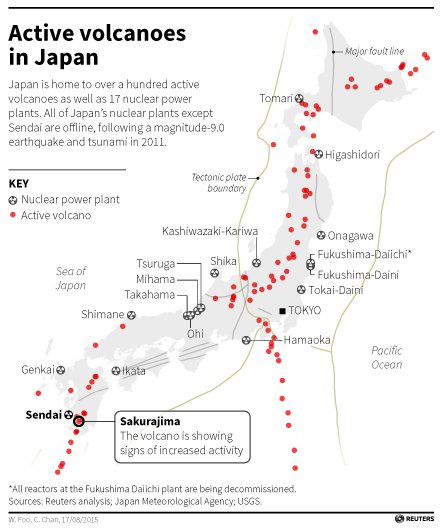
    Sakurajima Volcano erupts in Japan’s Kyushu

    Why in the News?

    Japan’s Sakurajima volcano has erupted several times sending ash plumes up to 4.4 km into the atmosphere.

    Sakurajima Volcano erupts in Japan's Kyushu

    About Sakurajima Volcano:

    • Location: Kagoshima Prefecture, Kyushu, sitting on the southern rim of the Aira caldera inside Kagoshima Bay.
    • Geological Origin: Linked to formation of the Aira caldera (22,000–29,000 years ago); Sakurajima developed as a post-caldera cone about 13,000 years ago.
    • Volcano Type: A classic stratovolcano built from alternating lava and ash layers; active vents include Minamidake crater and the Showa flank crater.
    • Physical Features: Height 1,117 m, circumference ≈50 km; originally an island until 1914 lava flows connected it to the Osumi Peninsula.
    • Eruption Style: Dominantly Strombolian eruptions (ash, bombs, lapilli) but historically capable of large Plinian eruptions.
    • Historical Activity: Continuous eruptive record since 963 AD; major episodes in 1471–76, 1779–82, and the 1914 catastrophic eruption.
    • Risk Status: Considered one of Japan’s most dangerous volcanoes due to high activity, caldera-linked magma supply and extreme proximity to inhabited zones.

    What makes it unique?

    • Near-Continuous Activity: Erupts hundreds of times annually, ranking among the world’s most persistently active volcanoes.
    • Caldera System: Built on the Aira caldera, giving it a deep, complex, highly active magma plumbing network.
    • Landform Transformation: The 1914 eruption converted Sakurajima from an island into a peninsula, an unusual event in recorded volcanology.
    [UPSC 2005] Where is the volcanic mountain, Mount St- Helens located?

    Options: (a) Chile (b) Japan (c) Philippines (d) United States of America*


  • 75th anniversary of National Sample Survey (NSS)

    Why in the News?

    The Ministry of Statistics and Programme Implementation (MoSPI) is conducting the 75th-anniversary culmination ceremony of the National Sample Survey (NSS) along with World Statistics Day on 18 November 2025.

    About National Sample Survey (NSS):

    • Origins: Started in 1950 to fill gaps in national income data; expanded into India’s largest multi-topic socio-economic survey system.
    • Institutional Home: Conducted by NSSO (set up 1970), now merged into the National Statistical Office (NSO) under MoSPI.
    • Organisational Structure: Four key divisions – SDRD (Kolkata) for survey design, FOD (Delhi/Faridabad) for fieldwork, DPD (Kolkata) for data processing, and SCD (New Delhi) for coordination.

    Survey Design and Coverage:

    • Rounds Structure: Includes large thick rounds every five years (≈1.2 lakh households) and thin rounds on specialised themes.
    • Geographic Coverage: Expanded from 1,833 villages in 1950–51 to over 14,000 rural villages and urban blocks in recent rounds.
    • Scope: Generates national and state-level estimates on consumption, employment, migration, health, education, disability, housing, agriculture, elderly conditions, and more than 50 socio-economic themes over 75 years.
    • Representativeness: Provides robust national and regional estimates but does NOT offer district-level granularity.

    Major Surveys Under NSS / NSO:

    1. Periodic Labour Force Survey (PLFS): Launched 2017; India’s key source on employment, unemployment, labour force participation, and quarterly urban labour indicators.
    2. Annual Survey of Industries (ASI): Tracks organised manufacturing — output, inputs, employment, productivity, structural change.
    3. Price Surveys: Produce CPI-Rural, CPI-Urban, CPI-AL/RL, and contribute to WPI, forming the backbone of inflation monitoring.
    4. Urban Frame Survey (2022–27): Updates the sampling frame for all urban socio-economic surveys.
    5. Agriculture and Crop Surveys: Estimate crop yields and support state agricultural statistics systems.

    Significance of the NSS:

    • Policy Backbone: Critical for designing and evaluating programmes such as MGNREGA, PDS reforms, Ayushman Bharat, labour policies, rural development, and welfare targeting.
    • Macroeconomic Relevance: Supports GDP estimation, poverty assessment, consumption tracking, and inflation analysis.
    • Long-Term Value: Provides the most reliable, comparable household-level datasets in India, enabling analysis of structural change over decades.
    [UPSC 2018] As per the NSSO 70th Round “Situation Assessment Survey of Agriculture Households”, consider the following statements:

    1. Rajasthan has the highest percentage share of agriculture households among its rural households.

    2. Out of the total households in the country, a little over 60 percent being to OBCs.

    3. In Kerala, a little over 60 percent of agriculture households reported to have received maximum income from sources other than agriculture activities.

    Which of the statements given above is/are correct?

    Options: (a) 2 and 3 only (b) 2 only (c) 1 and 3 only* (d) 1, 2 and 3


  • Finance Commission – Issues related to devolution of resources

    Sixteenth Finance Commission submits its report for 2026-31 to the President 

    Why in the News?

    The Sixteenth Finance Commission (16th FC), chaired by Arvind Panagariya, has formally submitted its report to the President of India on 17 November 2025.

    Recommendations will be made public once tabled in Parliament under Article 281.

    Back2Basics: Finance Commission

    • Constitutional Body: Established under Article 280 of the Constitution to define financial relations between the Union and the States.
    • Appointment: Constituted every 5 years or earlier by the President.
    • Composition: A Chairperson and 4 members, all appointed by the President.
    • Qualifications (under Finance Commission Act, 1951):
      • Chairperson must have experience in public affairs.
      • Members must be persons with expertise as:
        1. a High Court judge,
        2. an expert in government finance and accounts,
        3. a specialist in financial administration,
        4. an economist.
    • Functions: Recommends
      • Distribution of net proceeds of central taxes between Centre & States (vertical devolution);
      • Allocation of States’ share across individual States (horizontal distribution);
      • Principles governing grants-in-aid under Article 275;
      • Measures to augment State resources to support Panchayats and Municipalities;
      • Any additional financial matter referred by the President.
    • Submission & Tabling: Submits report to President; President lays it before both Houses of Parliament along with an explanatory memorandum.
    • Purpose: Ensures cooperative fiscal federalism, balanced revenue distribution, financial stability, and predictable Union–State relations.

    About Sixteenth Finance Commission:

    • Constitution & Basis: Constituted by the President of India under Article 280(1) in November 2024 to examine Union and State finances and recommend tax-sharing for the period 1 April 2026 to 31 March 2031.
    • Chairperson & Members: Chaired by Dr. Arvind Panagariya with members Annie George Mathew, Dr. Manoj Panda, T. Rabi Sankar, Dr. Soumyakanti Ghosh, and Secretary Ritvik Pandey.
    • Report Submission: Submitted its report to the President on 17 November 2025; copies also presented to the Prime Minister and the Union Finance Minister.
    • Term of Work: Mandated to submit the report by 31 October 2025, covering a five-year award period starting FY 2026-27.
    • Mandate (Terms of Reference): Recommend
      • Vertical devolution – share of States in the Centre’s divisible pool;
      • Horizontal distribution – breakup of the States’ share across individual States;
      • Principles for grants-in-aid to States under Article 275;
      • Measures to augment State resources to support Panchayats and Municipalities;
      • Review of financing arrangements for Disaster Management, including National and State Disaster Response Funds;
      • Any other matter referred by the President.
    • Method of Work: Analysed finances of Union & States; held extensive consultations with
      • Central government, all State governments,
      • Local governments (urban & rural),
      • Chairpersons of previous Finance Commissions,
      • Multilateral institutions, academic & research bodies,
      • Advisory Council and domain experts.
    • Structure of Report: Final output organised in two volumes – Volume I (recommendations) and Volume II (annexures and analytical backup).
    [UPSC 2023] Consider the following:

    1. Demographic performance 2. Forest and ecology 3. Governance reforms 4. Stable government 5. Tax and fiscal efforts

    For the horizontal tax devolution, the Fifteenth Finance Commission used how many of the above as criteria other than population area and income distance?

    Options: (a) Only two (b) Only three* (c) Only four (d) All five