💥UPSC 2026, 2027, 2028 UAP Mentorship (March Batch) + Access XFactor Notes & Microthemes PDF

Type: Species

  • Wildlife Conservation Efforts

    Species in news: Horseshoe Crab

    Note4Students

    From UPSC perspective, the following things are important:

    Prelims level: Horseshoe Crab

    Mains level: NA

    Horseshoe crabs face an uncertain future in Odisha, their largest habitat in India, even as the world gets ready to celebrate the first-ever ‘International Horseshoe Crab Day’ on June 20, 2020.

    Try this question from CSP 2012:

    Q. Which one of the following groups of animals belongs to the category of endangered species?

    (a) Great Indian Bustard, Musk Deer, Red Panda and Asiatic Wild Ass

    (b) Kashmir Stag, Cheetal, Blue Bull and Great Indian Bustard

    (c) Snow Leopard, Swamp Deer, Rhesus Monkey and Saras (Crane)

    (d) Lion-tailed Macaque, Blue Bull, Hanuman Langur and Cheetal

    Horseshoe Crabs

    IUCN status: (Data insufficient for the Indian variant)

    • Horseshoe crabs are marine and brackish water arthropods. They are not true crabs, which are crustaceans.
    • The crabs are represented by four extant species in the world. Out of the four, two species are distributed along the northeast coast of India.
    • Only T gigas species of the horseshoe crab is found along Balasore coast of Odisha.
    • The crab was included on September 9, 2009, in the Schedule IV of the Wild (Life) Protection Act, 1972, under which, the catching and killing of a horseshoe crab is an offence.

    Their significance

    • The horseshoe crab is one of the oldest marine living fossils whose origin date back to 445 million years before the dinosaurs existed.
    • One of their ecological functions is to lay millions of eggs on beaches to feed shorebirds, fish and other wildlife.

    Threats

    • Poachers kill them for their meat that is popularly believed to have aphrodisiac qualities.
    • The blood of horseshoe crabs, which is blue in colour, is used for detection of bacterial endotoxins in medical applications.
  • Animal Husbandry, Dairy & Fisheries Sector – Pashudhan Sanjivani, E- Pashudhan Haat, etc

    Species in news: Hilsa Fish

    Note4Students

    From UPSC perspective, the following things are important:

    Prelims level: Hilsa Fish`

    Mains level: NA

    Fishermen in West Bengal are in for a pleasant surprise amid the COVID-19 gloom as they have exuded hope of a bumper yield of Hilsa, known as “maacher rani” (queen of fish).

    Try this question from CSP 2019:

    Q. Consider the following pairs:

    Wildlife Naturally found in
    1. Blue-finned Mahseer Cauvery River
    2. Irrawaddy Dolphin Chambal River
    3. Rusty-spotted Cat Eastern Ghats

    Which of the pairs given above are correctly matched?

    a) 1 and 2 only

    b) 2 and 3 only

    c) 1 and 3 only

    d) 1, 2 and 3

    Hilsa Fish

    IUCN status: Least Concerned

    • The Hilsa is a species of fish related to the herring, in the family Clupeidae.
    • It is a very popular and sought-after food fish in the Indian Subcontinent.
    • It is the national fish of Bangladesh and state symbol in the Indian states of West Bengal and Tripura.
    • The fish contributes about 12% of the total fish production and about 1.15% of GDP in Bangladesh.

    What’s so special about Hilsa?

    • Hilsa has a history of migrating to Allahabad in the Ganga river system from Bangladesh.
    • Though it’s a saltwater fish, it migrates to sweet waters of the Ganges from the Bay of Bengal.
    • It travels upstream of the river during the mating seasons and returns to its natural abode after spawning.
  • Wildlife Conservation Efforts

    Species in news: Asiatic Lion

    Note4Students

    From UPSC perspective, the following things are important:

    Prelims level: Poonam Awalokan

    Mains level: Man-Animal conflict

    Asiatic lions have now significantly risen in number at an estimated population of 674 in the Gir forest region of Gujarat. Unlike in previous years, this count was estimated not from a Census, but from a population “observation” exercise called Poonam Avlokan.

    Try this question from CSP 2017:

    Q. The term ‘M-STrIPES’ is sometimes seen in the news in the context of

    (a) Captive breeding of Wild Fauna

    (b) Maintenance of Tiger Reserves

    (c) Indigenous Satellite Navigation System

    (d) Security of National Highways

    Asiatic Lion

    • Indian Lion (Panthera Leo Persica) is listed as Endangered and exists as a single population in Gujarat.
    • It is one of five big cat species found in India and Gir National Park and Wildlife Sanctuary is the only habitat for Asiatic lions.
    • Historically, it inhabited much of Western Asia and the Middle East up to northern India.
    • On the IUCN Red List, it is listed under its former scientific name Panthera leo persica as Endangered because of its small population size and area of occupancy.
    • More than two dozen lions died last year in an outbreak of canine distemper virus (CDV) and Babesiosis.

    What is Poonam Avlokan?

    It includes two methods:

    • Block counting method — in which census enumerators remain stationed at water points in a given block and estimate abundance of lions in that block, based on the direct sighting of lions who need to drink water at least once in 24 hours during the summer.
    • Other teams keep moving in their respective territories and make their estimates based on inputs provided by lion trackers and on chance sightings.

    Back2Basics: Lion Census in India

    • The first Lion Census was conducted by the Nawab of Junagadh in 1936; since 1965, the Forest Department has been regularly conducting the Lion Census every five years.
    • The 6th, 8th and 11th Censuses were each delayed by a year, for various reasons.
    • This year it was postponed after the lockdown was announced.
  • Tribes in News

    Tribes in news: Changpa Tribe

    Note4Students

    From UPSC perspective, the following things are important:

    Prelims level: Pashmina Goats

    Mains level: NA

    The Chinese Army’s intrusion in Chumur and Demchok has left Ladakh’s nomadic herding Changpa community cut off from large parts of summer pastures.

    Pashmina shawl is a landmark product of the Kashmir Valley. But make a note here. It carries only a BIS certification and not a Geographical Indicator.

    Also try this PYQ from CSP 2014:

    Q. With reference to ‘Changpa’ community of India, consider the following statement:

    1. They live mainly in the State of Uttarakhand.
    2. They rear the Pashmina goats that yield fine wool.
    3. They are kept in the category of Scheduled Tribes.
    Which of the statements given above is/are correct?

    a) 1 only
    b) 2 and 3 only
    c) 3 only
    d) 1, 2 and 3

    Changpa Tribes

    • The Changpa of Ladakh is high altitude pastoralists, raising mainly yaks and goats.
    • Among the Ladakh Changpa, those who are still nomadic are known as Phalpa, and they take their herds from in the Hanley Valley to the village of Lato.
    • Hanley is home to six isolated settlements, where the sedentary Changpa, the Fangpa reside.
    • Despite their different lifestyles, both these groups intermarry.
    • The Changpa speak Changskhat, a dialect of Tibetan, and practice Tibetan Buddhism.

    What is the issue?

    • The Chinese Army has taken over 16 kanals (two acres) of cultivable land in Chumur and advanced around 15 km inside Demchok, taking over traditional grazing pastures and cultivable lowlands.
    • In a cascading effect, this has resulted in a sharp rise in deaths of young Pashmina goats this year in the Korzok-Chumur belt of Changthang plateau in Ladakh.
    • This incursion has destabilized the annual seasonal migration of livestocks, including yaks and Pashmina goats.

    Back2Basics: Pashmina

    • The Changthangi or Ladakh Pashmina is a breed of Cashmere goat native to the high plateau of Ladakh.
    • The much-valued wool from the Ladakh herds is essential for the prized Pashmina shawls woven in Kashmir and famous for their intricate handwork.
    • They survive on the grass in Ladakh, where temperatures plunge to as low as −20 °C.
    • These goats provide the wool for Kashmir’s famous pashmina shawls. Shawls made from Pashmina wool are considered very fine and are exported worldwide.
    • Bureau of Indian Standards (BIS) has recently published an Indian Standard for identification, marking and labelling of Pashmina products to certify its purity.
  • Innovations in Biotechnology and Medical Sciences

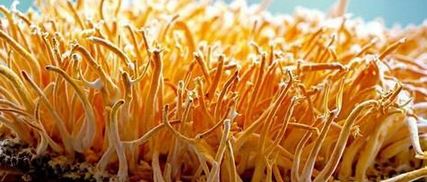
    Species in news: Super mushroom “Cordyceps militaris”

    Note4Students

    From UPSC perspective, the following things are important:

    Prelims level: Cordyceps militaris

    Mains level: NA

    A university in Assam has developed a fungal powder to help people boost their immunity to disease.

    Try this question from CSP 2019:

    Q.) Recently, there was a growing awareness in our country about the importance of Himalayan nettle (Girardinia diversifolia) because it is found to be a sustainable source of

    (a) anti-malarial drug

    (b) bio-diesel

    (c) pulp for paper industry

    (d) textile fibre

    A similar question related to Cordyceps militaris can be asked. UPSC may ask whether it is a Fungi, Algae, a Moss or a Lichen.

    Cordyceps militaris

    • The powder is from a parasitic but rare “super mushroom” called Cordyceps militaris.
    • The militaris underwent powdering through lyophilisation or freeze-drying at –80°C.
    • The earth has more than 400 species of Cordyceps, a fungus parasitic on insects as well as other fungi.
    • Often referred to as a super mushroom, Cordyceps known for its anti-ageing, anti-viral, energy and immunity-boosting effect.
    • Natural Cordyceps is hard to get and if dried, costs at least ₹8 lakh per kg.
  • New Species of Plants and Animals Discovered

    Specie in news: Charru mussel (Mytella strigata)

    Note4Students

    From UPSC perspective, the following things are important:

    Prelims level: Charru mussel

    Mains level: NA

    An invasive mussel native to the South and Central American coasts is spreading quickly in the backwaters of Kerala.

    Try this PYQ from CSP 2018:

    Q. Why is a plant called Prosopis juliflora often mentioned in news?

    (a) Its extract is widely used in cosmetics.

    (b) It tends to reduce the biodiversity in the area in which it grows

    (c) Its extract is used in the pesticides.

    (d) None of the above

    Charru mussel

    • The rapid spread of the Charru mussel (Mytella strigata) may have been triggered by Cyclone Ockhi which struck the region in 2017.
    • With a population as high as 11,384 per sq metre here, it has replaced the Asian green mussel (Perna Viridis) and the edible oyster Magallana bilineata (known locally as muringa).
    • Externally, the Charru mussel resembles the green and brown mussels (kallummekka in Malayalam) but is much smaller in size. Its colour varies from black to brown, purple or dark green.
    • Surveys show the presence of the Charru mussel in the Kadinamkulam, Paravur, Edava-Nadayara, Ashtamudi, Kayamkulam, Vembanad, Chettuva and Ponnani estuaries/backwaters.
    • Ashtamudi Lake, a Ramsar site in Kollam district, remains the worst-hit.

    Threats posed

    • Though this smaller mussel is edible, the overall economic loss and impact on biodiversity are much bigger, it is pointed out.
    • It is throwing out other mussel and clam species and threatening the livelihoods of fishermen engaged in shrimp fisheries.
  • Wildlife Conservation Efforts

    Species in news: Dugong

    Note4Students

    From UPSC perspective, the following things are important:

    Prelims level: Dugong

    Mains level: NA

    The dugong, commonly known as the sea cow, is fighting for its survival in Indian waters experts have said on the eve of ‘World Dugong Day’ on May 28, 2020.

    Try this question from CSP 2015:

    Q) With reference to ‘dugong’, a mammal found in India, which of the following statements is/are correct?

    1) It is a herbivorous marine animal.

    2) It is found along the entire coast of India

    3) It is given legal protection under Schedule 1 of the Wildlife (Protection) Act, 1972.

    Select the correct answer using the code given below.
    (a) 1 and 2
    (b) 2 only
    (c) 1 and 3
    (d) 3 only

    Dugong

    • Dugongs are mammals, which means they give birth to live young and then produce milk and nurse them.
    • It is the flagship animal of Gulf of Mannar Marine National Park.
    • Once the female is pregnant, she will carry the unborn baby, called a foetus for 12-14 months before giving birth.
    • Female dugongs give birth underwater to a single calf at three to seven-year intervals.
    • Dugongs graze on seagrass, especially young shoots and roots in shallow coastal waters. They can consume up to 40 kilograms of seagrass in a day.
    • Dugongs are an IUCN Endangered marine species like sea turtles, seahorses, sea cucumbers and others.
    • They are protected in India under Schedule I of the Wild (Life) Protection Act, 1972.

    Threats to dugongs

    • Human activities such as the destruction and modification of habitat, pollution, rampant illegal fishing activities, vessel strikes, unsustainable hunting or poaching and unplanned tourism are the main threats to dugongs.
    • The loss of seagrass beds due to ocean floor trawling was the most important factor behind dwindling dugong populations in many parts of the world.

    Why needs urgent attention?

    • There were just 250 dugongs in the Gulf of Mannar in Tamil Nadu, the Andaman and Nicobar Islands and the Gulf of Kutch in Gujarat according to the 2013 survey report of the Zoological Survey of India (ZSI).
    • Hundreds of dugongs inhabited waters off the Odisha, West Bengal and Andhra Pradesh coasts two centuries back. But they are extinct in these areas now, he added.
    • Seagrass in Odisha’s Chilika Lake is a proper habitat for dugongs. However, there is not an extant population in Chilika.

    Other facts:

    • The 13th CoP of the Convention on the Conservation of Migratory Species of Wild Animals (CMS), an environmental treaty under the aegis of the UNEP, was hosted by India this year at Gandhinagar in Gujarat.
    • India is a signatory to the CMS since 1983.
    • India has signed non-legally binding Memorandums of Understanding with CMS on the conservation and management of Siberian Cranes (1998), Marine Turtles (2007), Dugongs (2008) and Raptors (2016).
    • Proper conservation is the only way to save dugongs from extinction. Conservation in other places like Australia has seen their population crossing 85,000.
  • Zoonotic Diseases: Medical Sciences Involved & Preventive Measures

    [pib] Kangra Tea and its medicinal properties against the coronavirus

    Note4Students

    From UPSC perspective, the following things are important:

    Prelims level: Kangra Tea

    Mains level: Not Much

    The chemicals in Kangra tea are found to be effective in boosting immunity as they can block coronavirus activity better than anti-HIV drugs.

    It would be no surprise to expect a question based on worldwide tea production:

    Q. Among the following, which one is the largest exporter of rice in the world in the last five years? (CSP 2019)

    (a) China

    (b) India

    (c) Myanmar

    (d) Vietnam

    Kangra Tea

    • Kangra tea is a tea from the Kangra district in Himachal Pradesh, India.
    • Both black tea and green tea have been produced in the Kangra Valley since the mid-19th century.
    • After a feasibility survey in 1848 showed the area of being suitable for tea plantation, a Chinese variety of Camellia sinensis was planted across the region.
    • Kangra tea is known for its unique colour and flavour.
    • The unique characteristics of the tea are attributed to the geographical properties of the region.
    • Kangra tea was given the Geographical Indication status in 2005. Tea was first grown in the Kangra region in the mid-19th century.

    Benefits of Kangra Tea

    • Using computer-based models, the scientists screened 65 bioactive chemicals or polyphenols that could bind to a specific viral protein more efficiently than commercially available anti-HIV drugs approved for treating COVID-19 patients.
    • These chemicals might block the activity of the viral protein that helps the virus to thrive inside human cells.

    Back2Basics: Lopinavir/ Ritonavir

    • Lopinavir/ritonavir (LPV/r), sold under the brand name Kaletra among others, is a fixed-dose combination medication for the treatment and prevention of HIV/AIDS.
    • It combines lopinavir with a low dose of ritonavir.
    • It is generally recommended for use with other antiretrovirals.
  • New Species of Plants and Animals Discovered

    Western Ghats yield 3 new plant species

    Note4Students

    From UPSC perspective, the following things are important:

    Prelims level: Various species mentioned

    Mains level: Western Ghats and its biodiversity richness

    A team of scientists of the Botanical Survey of India (BSI) have reported the discovery of three new plant species from the evergreen forest patches of the southern end of the Western Ghats in Kerala and Tamil Nadu.

    One may get carried away from the heavy botanical names. But UPSC is known for asking ruthless questions.

    Q. Recently, our scientists have discovered new and distinct spices of banana plant which attains a height of about 11 meters and has orange – colored form of pulp. In which part of India has been discovered? (CSP 2016)

    a) Andaman Islands

    b) Anaimalai Forests

    c) Maikala Hills

    d) Tropical rainforest of North-East

    Which are the new species?

    The three new species found are:

    1) Eugenia sphaerocarpa of the Myrtaceae or Rose apple family

    • A good population of Eugenia sphaerocarpa is growing in the Kakkayam area of the Malabar wildlife sanctuary in Kerala above 800 m.
    • The specific epithet ‘sphaerocarpa’ denotes to the large, showy lemon-yellow spherical fruit.
    • The fruits of Eugenia species are known for their palatability and many of them are harvested from the wild with some under cultivation.

    2) Goniothalamus sericeus of the Annonaceae family of custard apple

    • A small number of Goniothalamus sericeus plants has been found in the Kanyakumari wildlife sanctuary in Tamil Nadu.
    • Mature flowers with characteristic greenish-yellow to beige petals are fragrant while the fruits are very showy and an attractive golden yellow in colour.
    • The specific epithet ‘sericeus’ refers to the presence of dense silky hair on the petals.

    3) Memecylon nervosum of the Melastomataceae (Kayamboo or Kaasavu in local parlance) family

    • A small population of Memecylon nervosum was also found at the same sanctuary at an altitude between 700-900 m with more that than 10 sub-populations located along the banks of a perennial rivulet.
    • The species have showy purplish-blue flowers and mauve to purplish-red fruits.
    • The specific epithet ‘nervosum’ alludes to the presence of prominently raised lateral and intramarginal veins on the lower surface of the lamina.
  • New Species of Plants and Animals Discovered

    Species in news: Pinanga Andamanensis

    Note4Students

    From UPSC perspective, the following things are important:

    Prelims level: Pinanga Andamanensis

    Mains level: NA

    A rare palm endemic to the South Andaman Island is finding a second home at Thiruvananthapuram-based Jawaharlal Nehru Tropical Botanic Garden and Research Institute (JNTBGRI).

    Last year one  species from our newscard : Species in news: Hump-backed Mahseer made it into the CSP 2019.  The ‘Abutilon ranadei’ flower in the newscard creates such a vibe yet again.

    A stand-alone species being mentioned in the news for the first time often find their way into the prelims. Make a special note here.

    Pinanga Andamanensis

    • Pinanga andamanensis is an IUCN critically endangered species and one of the least known among the endemic palms of the Andaman Islands.
    • The name is derived from ‘Penang’, the modern-day Malaysian state.
    • Its entire population of some 600 specimens naturally occurs only in a tiny, evergreen forest pocket in South Andaman’s Mount Harriet National Park.
    • It was originally described by the Italian botanist Odoardo Beccari in 1934.
    • His description was based on an old herbarium specimen collected by E.H. Man, a late-19th century assistant superintendent in the Andaman administration.
    • After that first identification, it was thought to be extinct till 1992.