💥UPSC 2027,2028 Mentorship (April Batch) + Access XFactor Notes & Microthemes PDF

Archives: News

  • Innovations in Sciences, IT, Computers, Robotics and Nanotechnology

    RRI technique yields Certified Randomness with one Qubit

    Why in the News?

    The Raman Research Institute (RRI), Bengaluru team has mastered the Leggett–Garg Inequality (LGI)–based quantum randomness certification technique.

    What is Quantum Randomness?

    • Overview: Quantum randomness means true unpredictability, results that even nature or science cannot predetermine. They arise from the laws of quantum physics, not from computer programs or hidden causes.
    • Ordinary Computers: In normal computers, random numbers come from formulas called pseudorandom generators. They look random but can be predicted if someone knows the starting point (the “seed”).
    • Quantum Systems: In quantum physics, when you measure something tiny, like the spin of an electron or the path of a light particle (photon), the result is decided only at the moment of measurement. No one, not even nature, “knows” the answer before that.
    • Why it Matters: True randomness is important for data security, safe online transactions, scientific research, and encryption, where predictability can lead to hacking or errors.

    What has RRI achieved?

    • Discovery: Scientists at the Raman Research Institute (RRI), Bengaluru, led by Prof. Urbasi Sinha, have found a way to create and verify true quantum randomness using a regular cloud-based IBM quantum computer.
    • Why it’s Important: Earlier, proving quantum randomness needed expensive lab equipment. Now it can be done remotely and cheaply, accessible to anyone with internet and quantum cloud access.
    • How it Works: The RRI team used just one qubit (the quantum version of a computer bit) to show that the randomness came from quantum effects, not from hardware noise or computer errors.
    • Key Finding: This demonstrates that even imperfect quantum computers can still generate trustworthy and verifiable random numbers, a capability that classical computers cannot achieve.

    What is the Leggett–Garg Inequality (LGI)–Based Test?

    • Basic Idea: The Leggett–Garg Inequality (LGI) is a scientific test that checks whether something behaves like everyday objects (predictable) or like quantum systems (unpredictable).
    • How it was Used: The RRI scientists measured one qubit at three different times to see if its behavior followed normal physics or quantum rules.
    • Two Conditions Checked:
      • LGI Violation – confirmed the qubit was behaving in a truly quantum way.
      • No Signalling in Time – ensured that each measurement was independent and not influenced by the previous one.
    • Result: Meeting both tests proved that the numbers generated were certified as truly random, coming purely from quantum physics, not from any background noise or interference.

    Real-life Applications:

    • Cybersecurity: Such randomness can make unbreakable encryption keys, protecting sensitive data from hackers.
    • Cloud Computing: People using quantum computers online can now access trusted random numbers for research or secure systems anywhere in the world.
    • Testing Quantum Machines: Helps scientists check the quality of quantum computers, since randomness shows how genuinely quantum the machine is.
    • Better Science: Used in simulations, artificial intelligence, and data analysis where unpredictability makes results more reliable.
    • Big Scientific Message: Confirms that the quantum world is truly uncertain, proving one of the most fascinating truths of modern science, that randomness is built into nature itself.
    [UPSC 2025] Consider the following statements:

    I. It is expected that Majorana 1 chip will enable quantum computing.

    II. Majorana 1 chip has been introduced by Amazon Web Services (AWS).

    III. Deep learning is machine learning.

    How many of the statements given above are correct?

    (a) I and II only (b) II and III only (c) I and III only * (d) I, II and III


  • Promoting Science and Technology – Missions,Policies & Schemes

    Maitri II Research Station in Antarctica

    Why in the News?

    The Finance Ministry has approved the establishment of Maitri II, India’s newest Antarctic research station, to be built in eastern Antarctica by January 2029.

    About Maitri II Research Station:

    • Objective: Advance research in climatology, glaciology, seismology, biology, and atmospheric sciences while maintaining eco-compliance.
    • Overview: India’s upcoming 4th Antarctic base, to be completed by January 2029 near Schirmacher Oasis, eastern Antarctica, replacing the aging Maitri (1989) which will operate as a summer camp.
    • Implementing Agency: Executed by National Centre for Polar and Ocean Research (NCPOR), Goa under the Ministry of Earth Sciences (MoES); estimated cost ₹2,000 crore.
    • Design & Technology: Features AI-enabled systems, automated sensors, solar and wind power, and upgraded modular accommodation with strict environmental standards.
    • Construction Phases: Prefabrication in India → shipment via Cape Town → transport to Indian Barrier (120 km from Maitri) → on-site assembly during Antarctic summer.

    Back2Basics: India’s Polar Programmes

    • Antarctica Programme: Began in 1981; coordinated by NCPOR.
      • Dakshin Gangotri (1983) – first base, now decommissioned.
      • Maitri (1989) – inland station near Lake Priyadarshini.
      • Bharati (2012) – modern coastal station 3,000 km east.
      • Maitri II (2029) – to be India’s largest and greenest base.
      • Research covers ice-core climate records, marine ecosystems, space weather, and climate modelling.
    • Arctic Programme (2007): Also led by NCPOR; permanent station Himadri at Ny-Ålesund (Svalbard, Norway) studies Arctic warming, polar-monsoon linkages, biodiversity; India holds Observer Status in the Arctic Council (since 2013).

    Key Laws & Treaties governing Polar Expeditions:

    • India Antarctica Act 2022: Implements the Antarctica Treaty (1959); creates Central Committee on Antarctica Governance; bans mining, nuclear activity, non-native species; introduces permit system and Antarctica Fund; severe penalties (up to 20 years).
    • Antarctica Treaty (1959): 54 members (India joined 1983); ensures peaceful scientific use, bans territorial claims and military activity, upholds environmental cooperation.
    • Madrid Protocol (1991): Declares Antarctica a “natural reserve for peace and science”; forbids mineral extraction; mandates Environmental Impact Assessments (EIA).
    • Convention on the Conservation of Antarctic Marine Living Resources (CCAMLR, 1982): Conserves Antarctic marine biodiversity, regulates fishing and resource use to maintain ecosystem balance.
    [UPSC 2015] The term ‘IndARC’, sometimes seen in the news, is the name of Options: (a) an indigenously developed radar system inducted into Indian Defence

    (b) India’s satellite to provide services to the countries of Indian Ocean Rim

    (c) a scientific establishment set up by India in Antartic region

    (d) India’s underwater observatory to scientifically study the Arctic region *


  • Volga River

    Why in the News?

    This newscard is an excerpt from the original article published in the Indian Express.

    Volga River

    About the Volga River:

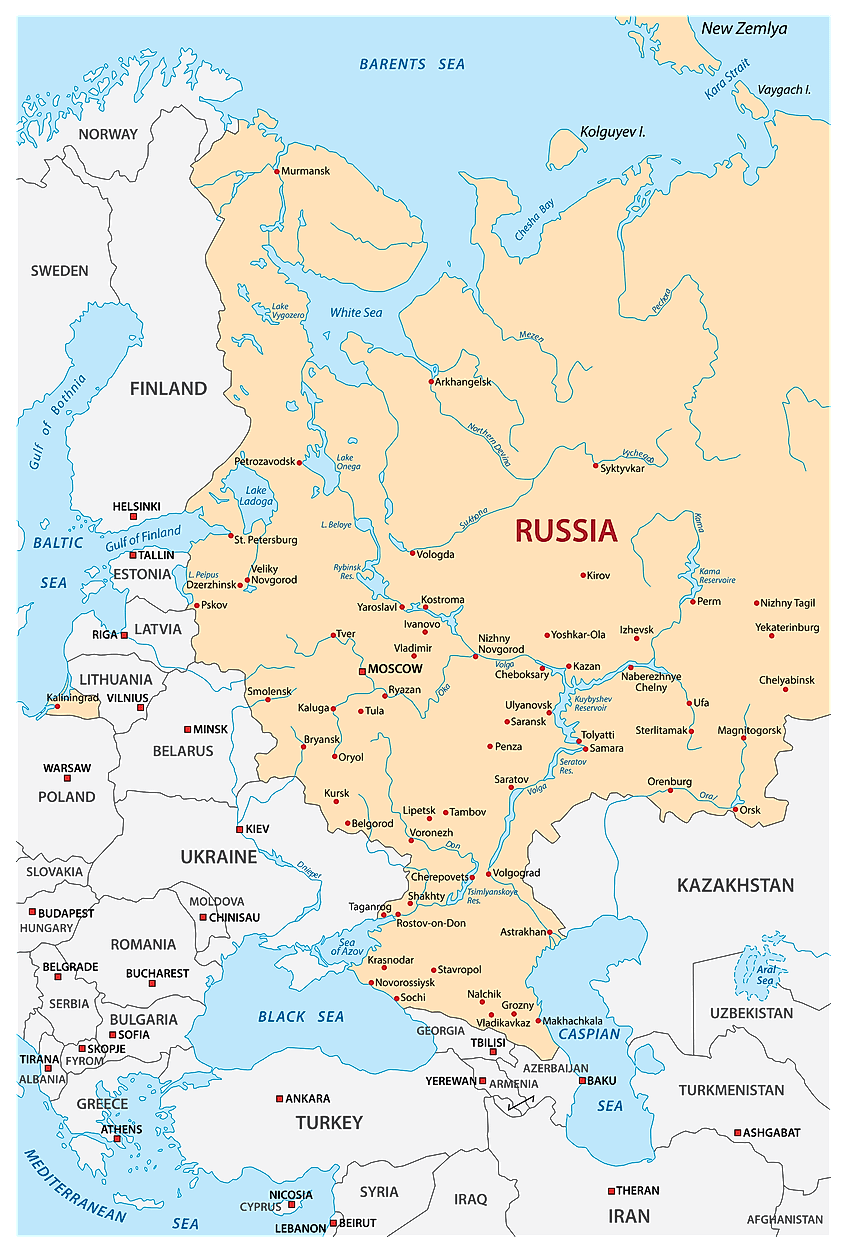
    • Overview: The longest river in Europe (about 3,500 km), originating in the Valdai Hills northwest of Moscow and flowing southeast to the Caspian Sea at Astrakhan.
    • Drainage Basin: Covers around 1.35 million sq. km, among Europe’s largest river systems, with major tributaries, Kama, Oka, Vetluga, and Sura.
    • Historical Role: Served as a critical front during the Battle of Stalingrad (World War II) and remains central to Russian historical and strategic narratives.
    • Cultural Significance: Revered as “Mother Volga”, symbolising Russian unity, resilience, and identity, deeply embedded in folklore and national consciousness.
    • Economic Importance: It contributes one-fourth of Russia’s agricultural output, supports industrial fishing, and sustains key industries, oil refining, shipbuilding, hydroelectric power.
    • Navigation & Connectivity: Linked to the Baltic, Black, and Caspian Seas through an extensive network of canals and reservoirs, forming the backbone of Russia’s inland transport system.
    • Urban & Industrial Corridor: Major cities like Kazan, Samara, Nizhny Novgorod, and Volgograd lie along its course, forming Russia’s industrial-agricultural heartland.
    • Ecological Richness: Supports about 260 bird species and 70 fish species, making it a key biodiversity hotspot within Eurasia.
    [UPSC 2020] Consider the following pairs: River Flows into

    1. Mekong: Andaman Sea

    2. Thames: Irish Sea

    3. Volga: Caspian Sea

    4. Zambezi: Indian Ocean

    Which of the pairs given above is/are correctly matched?

    Options: (a) 1 and 2 only (b) 3 only (c) 3 and 4 only * (d) 1, 2 and 4 only


  • Digital India Initiatives

    [pib] Bharat Taxi Initiative

    Why in the News?

    India is launching Bharat Taxi, a cooperative-based national ride-hailing platform under Digital India, with NeGD partnering Sahakar Taxi Cooperative for technical and advisory support.

    About the Bharat Taxi Initiative:

    • Objective: To create a citizen-centric alternative to global ride-hailing corporations, ensuring fair wages, cooperative governance, and local ownership.
    • Nature: A cooperative-owned, technology-driven national ride-hailing platform designed to provide affordable, secure, and transparent mobility solutions.
    • Timeline: Expected by December 2025, targeting both urban and rural transport needs.
    • Promoters: Supported by leading cooperative and financial institutions NCDC, IFFCO, AMUL, KRIBHCO, NAFED, NABARD, NDDB, and NCEL.

    Key Features:

    • Cooperative Ownership Model: Operated and governed by driver cooperatives, ensuring profit-sharing, fair pricing, and collective decision-making.
    • Digital Integration: Linked with national platforms such as DigiLocker, UMANG, and API Setu, allowing seamless identity verification, license validation, and service delivery.
    • Inclusive Design: Provides multilingual UI, accessibility for differently-abled users, and equal participation for women drivers.
    • Transparent Fare System: Uses open-source algorithms for real-time fare calculation to prevent overcharging or surge pricing manipulation.
    • Integration with Digital Public Infrastructure: Aligned with Aadhaar, UPI, and DigiLocker, facilitating digital payments and paperless onboarding.
  • Tribes in News

    Tribes in news: Siddi 

    Why in the News?

    President Droupadi Murmu met members of Gujarat’s Siddi Particularly Vulnerable Tribal Groups (PVTGs) community and praised their 72% literacy rate as a sign of social progress.

    President Droupadi Murmu met members of Gujarat’s Siddi Particularly Vulnerable Tribal Groups (PVTGs) community and praised their 72% literacy rate as a sign of social progress.

    About the Siddi Community:

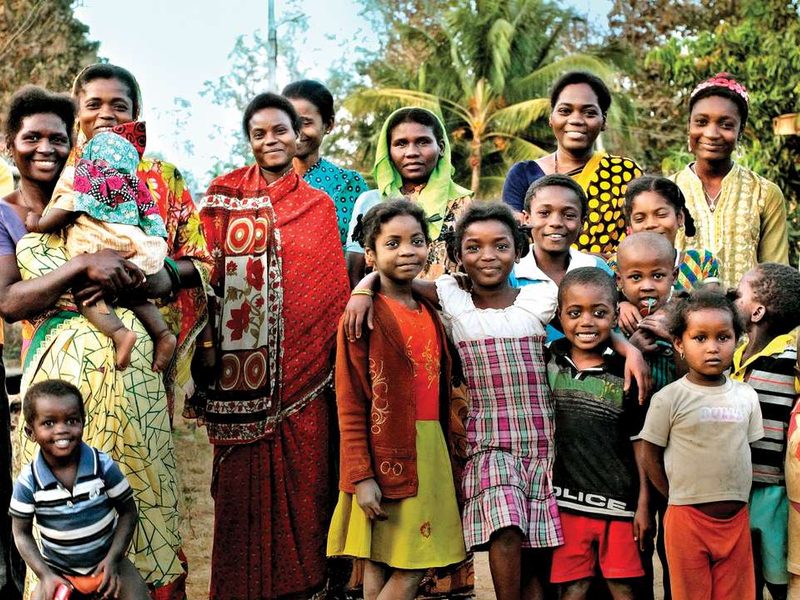
    • Overview: An Afro-Indian tribal group descended from Bantu-speaking peoples of Southeast Africa, brought to India via the Indian Ocean slave trade (7th–19th centuries).
    • Arrival in India: First arrived at Bharuch port (628 CE) with Arab traders; major influxes during Muhammad bin Qasim’s conquest (712 CE) and later under Portuguese and British.
    • Migration & Settlement: Brought as soldiers, sailors, slaves, and servants; some escaped bondage to form independent forest settlements.
    • Genealogy: Studies show 60–75 % African admixture mixed with Indian and Portuguese ancestry accumulated over two centuries.
    • Geographic Distribution: Concentrated in Karnataka (Uttara Kannada, Belgaum, Dharwad) and Gujarat (Junagadh, Gir-Somnath, Saurashtra); smaller groups in Maharashtra, Goa, Telangana, Andhra Pradesh; total population 40 k–2.5 lakh.
    • Historical Role: Served in Deccan Sultanate and Nizam armies; most famous figure, Malik Ambar (1600–1626), Ethiopian-origin prime minister of Ahmadnagar (now Ahilyanagar).

    Cultural and Demographic Features:

    • Social Status: Recognised as Scheduled Tribe (ST) in five regions and as a Particularly Vulnerable Tribal Group (PVTG).
    • Language & Culture: Speak regional languages, Gujarati, Konkani, Marathi, Kannada, but retain African musical and spiritual traditions, notably the Goma/Dhamaal dance rooted in Ngoma drumming and ancestral worship.
    • Religion: Predominantly Muslim (≈ 99 % in Gujarat) with Hindu and Christian minorities; practices blend Sufi, African, and Indian folk elements.
    • Livelihoods & Economy: Depend on agriculture, forest labour, crafts, and daily wage work; socio-economic deprivation and limited access to education, health, housing persist.
    • Cultural Continuity: Maintain African-Indian fusion in music, attire, and cuisine; Marfa music in Hyderabad and Dhamaal dance near Sasan Gir remain iconic.
    • Sports & Identity: Active in boxing and football, using sport for youth empowerment and social mobility.
  • Citizenship and Related Issues

    [11th October 2025] The Hindu Op-ed: The real need is a holistic demographic mission

    PYQ Relevance:

    [UPSC 2024] What is the concept of a ‘demographic winter’? Is the world moving towards such a situation? Elaborate.

    Linkage: Demographic shifts in border regions can exacerbate tensions, linking the topic to communalism and regionalism.  Illegal migration links directly to organized crime, such as human trafficking, drug trafficking (India’s proximity to illicit opium-growing states is a major concern mentioned in 2018 PYQ), and the potential penetration by external state and non-state actors.

    Introduction:

    On August 15, 2025, the Prime Minister had announced the launch of India’s Demographic Mission, a comprehensive national initiative aimed at monitoring, managing, and interpreting India’s demographic transitions.

    Initially projected as a mechanism to monitor undocumented immigration from Bangladesh and its demographic implications in India’s border regions, the mission’s vision extends to a broader national strategy for demographic management.

    The initiative comes at a time when India, now the world’s most populous nation, stands at a demographic crossroads, balancing its youth potential with emerging challenges of migration, ageing, inequality, and social security.

    What is the Demographic Mission?

    1. Launch: Unveiled by PM on 15 August 2025, it is a national initiative to monitor, manage, and interpret India’s demographic transitions in a holistic and strategic manner.
    2. Focus: Initially targeted at undocumented immigration from Bangladesh, addressing demographic and border-security implications through biometric systems, AI-based surveillance, and smart fencing.
    3. Expanded Mandate: Evolved into a comprehensive population governance framework, integrating security, social, and developmental objectives across ministries.
    4. Institutional Measures: Includes formulation of a National Refugee Law, implementation of the National Register of Indian Citizens (NRC), and demographic data integration across sectors.
    5. Policy Shift: Moves from population control to capability development, treating demographic potential as a source of economic strength and human capital formation.

    Socio-Political Dimensions of Demography:

    1. Reframing the Debate: Shifts the focus from population control to issues of equity, inclusion, and sustainability.
    2. Migration and Identity Politics: Highlights that migration and fertility transitions shape social hierarchies and electoral narratives, influencing policy priorities and identity construction.
    3. Institutional Sensitivity: Calls for embedding demographic awareness in governance, particularly in urbanisation, labour mobility, and welfare systems.
    4. Demographic Diversity as Strength: Treats India’s multi-ethnic and multi-lingual population as an asset for national integration rather than division.
    5. National Integration Framework: Positions demography as a foundation for inclusive federal policy and cohesive nation-building.

    Various Issues:

    1. Illegal Immigration: Ongoing influx from Bangladesh strains border security and regional demographics, complicating citizenship and resource distribution.
    2. Migration & Identity Exclusion: Internal migrants lack voting rights and welfare access due to “usual residence” definitions, leading to political marginalisation.
    3. Ageing and Longevity: Rising life expectancy necessitates rethinking retirement age, social security, and elder-care policies.
    4. Regional Inequality: Unequal spread of education, health, and skilling infrastructure widens developmental divides among states.
    5. Policy Insensitivity: Centralised, per capita-based planning ignores population composition, gender ratio, and dependency structures.
    6. Governance Centralisation: Demographic planning remains highly centralised, with limited state participation in design and monitoring.

    Various Solutions for Demographic Balance:

    1. Migration Reform: Provide legal recognition of migrant rights, ensure voting portability and welfare mobility, and promote balanced internal migration.
    2. Education and Skill Equity: Build uniform educational and vocational infrastructure and establish regional skill hubs to reduce capability gaps.
    3. Active Ageing Policies: Redefine retirement norms, expand financial security, and create avenues for productive ageing.
    4. Technological Integration: Deploy AI, GIS, and big-data platforms for real-time demographic mapping, analysis, and predictive planning.
    5. Decentralised Demographic Planning: Create federal demographic councils linked with NITI Aayog for region-specific strategies.
    6. Demographic Sensitisation: Mainstream population literacy and demographic research in policymaking, academia, and public discourse.

    Global Context and Strategic Positioning:

    1. Youth Advantage: With a median age of 29 years, India stands out amid ageing societies like Japan, Europe, and China.
    2. Human Capital Vision: The mission aligns with India’s aspiration to become the “Skill Capital of the World,” enhancing global labour competitiveness.
    3. Geopolitical Relevance: Integrates population policy into national security and global strategy, positioning demography as a tool of soft power and developmental diplomacy.
    4. Long-Term Significance: By combining population management, human development, and digital governance, the mission redefines India’s demographic policy for the 21st century — linking security, sustainability, and sovereignty.

    Way Forward:

    1. Institutionalise Demographic Policy: Establish a National Demographic Council for cross-ministerial coordination.
    2. Focus on Human Capital: Prioritise investments in education, health, and skill ecosystems over mere population management.
    3. Protect Migrant Rights: Legislate a Migrant Workers’ Charter to ensure political and social inclusion.
    4. Reform Social Security: Develop portable pension and healthcare systems adaptable to mobility and longevity trends.
    5. Adopt Data Ethics: Balance demographic surveillance with privacy protection and civil liberties.
    6. Mainstream Demographic Literacy: Integrate population studies into governance, academia, and public administration.
  • Foreign Policy Watch: India-Afghanistan

    With new Great Game, India must engage with the Taliban and Kabul

    Introduction

    Afghanistan’s Foreign Minister Amir Khan Muttaqi arrived in New Delhi on an official visit, his first since the Taliban’s return to power in August 2021.

    The visit represents a major recalibration in India’s Afghanistan policy, as New Delhi cautiously engages the Taliban regime without formal recognition. India’s approach blends strategic pragmatism and regional security concerns, focusing on maintaining influence in Afghanistan’s evolving geopolitical environment while avoiding premature diplomatic endorsement.

    India-Taliban Ties: A Quick Recap

    1. India never formally recognized the Taliban regime prior to or after 2021.
    2. Initial contacts date back to the late 1990s (e.g., during the IC-814 hijacking), but India’s engagement remained limited due to Pakistan’s dominance over the Taliban.
    3. Post-2021, India has maintained pragmatic engagement of humanitarian aid, infrastructure projects, and limited diplomatic outreach without providing de jure recognition.

    India’s Post-2021 Approach- Diplomatic Balancing and Western Response:

    1. India adopted a “cautious engagement” policy: restoring a technical mission in Kabul, resuming aid delivery, and holding diplomatic contacts.
    2. In 2025, India announced plans to reopen its embassy in Kabul, initially with a Chargé d’affaires, avoiding formal recognition.
    3. India’s silence on human rights and women’s issues during diplomatic talks reflects strategic restraint, balancing ideological concerns with geopolitical necessity.
    4. The Western response is ambivalent. India’s engagement is scrutinized to ensure it does not inadvertently legitimize the Taliban or dilute India’s democratic credentials.

    Taliban and Its Geopolitical Realignments (2024–2025):

    1. China: First major power to exchange ambassadors with the Taliban (2024); deepening economic, mining, and infrastructure ties.
    2. Russia: Moving to delist Taliban as a terrorist group; promoting counterterror cooperation.
    3. Iran: Accepts Taliban rule pragmatically, balancing internal crises with regional influence.
    4. Pakistan: Relations strained — Taliban criticism of Pakistani interference; cross-border tensions with TTP.
    5. United States: Under Trump 2.0, US policy is transactionally disengaged; leaves India more space to engage diplomatically.

    India’s Strategic Objectives in Engaging the Taliban:

    1. Maintain influence in Afghanistan to protect long-term investments (infrastructure, education, healthcare).
    2. Prevent Afghan territory from being used for anti-India terrorism.
    3. Counter Pakistan–China influence by remaining a relevant actor in Afghan affairs.
    4. Enable connectivity and trade, via Chabahar port and regional transit routes.
    5. Promote soft power through development cooperation, scholarships, and cultural engagement.

    Challenges and Diplomatic Constraints:

    1. Non-recognition dilemma: Engagement without recognition may be seen as de facto endorsement by critics.
    2. Human rights dissonance: Taliban’s restrictions on women’s rights conflict with India’s democratic values.
    3. Visa and mobility barriers: Lack of operational consular services hampers people-to-people ties and educational exchanges.
    4. Aid delivery limitations: Security, monitoring, and distribution bottlenecks constrain effective humanitarian impact.
    5. Geopolitical competition: Pakistan and China retain deeper leverage in Afghan affairs; India must navigate their influence.

    Way Forward:

    1. Engagement without endorsement: Maintain diplomatic contact while tying cooperation to counterterror assurances.
    2. Humanitarian focus: Channel aid for women and children through UN/trusted NGOs to avoid legitimizing Taliban governance.
    3. Regional coalition building: Leverage multilateral forums (SAARC, SCO, QUAD) to strengthen India’s Afghan policy.
    4. Expand economic roles: Prioritize mining, power, and infrastructure projects to anchor Indian presence.
    5. Broaden diplomatic contacts: Engage Afghan civil society, minorities, and regional stakeholders for balanced outreach.

    PYQ Relevance:

    [UPSC 2013] The proposed withdrawal of International Security Assistance Force (ISAF) from Afghanistan in 2014 is fraught with major security implications for the countries of the region. Examine in light of the fact that India is faced with a plethora of challenges and needs to safeguard its own strategic interests.

    Linkage: The instability in Kabul, coupled with the influence of external state and non-state actors, directly impacts India’s internal security landscape, especially concerning terrorism, border security challenges, and the potential linkage between organized crime and drug trafficking. Therefore, questions may assess India’s strategic autonomy, humanitarian diplomacy, connectivity projects (like Chabahar), and counter-terrorism strategies, requiring candidates to demonstrate applied knowledge linking foreign policy decisions with internal stability.


  • India’s long history of resistance to economic domination

    Why in the News?

    Trade negotiations between India and the United States remain stalled after President Trump’s administration doubled tariffs on Indian goods to 50% and imposed an additional 25% duty on Russian oil imports by India.

    Introduction

    External Affairs Minister S. Jaishankar emphasised that while understanding with the US, “the world’s largest market” is essential, India’s economic sovereignty and red lines must be respected.

    This impasse reflects the global shift from free trade to protectionism, echoing earlier eras when India resisted externally imposed economic dominance, first under colonial exploitation, and later through planned economic reconstruction after independence.

    Colonial Economic Exploitation and India’s Resistance:

    1. Transformation of Economy: The British colonial system dismantled India’s self-sufficient agrarian and artisanal base, converting the country into a supplier of raw materials and a market for British-manufactured goods.
    2. Drain Theory and Fiscal Exploitation: Dadabhai Naoroji, in Poverty and Un-British Rule in India (1901), argued that India’s wealth was drained to Britain, financing its prosperity: “The British Indian Empire is formed and maintained entirely by Indian money and mainly by Indian blood.”
    3. Phases of Colonial Capitalism:
      • Mercantile Capitalism (EIC Era): Extraction through monopoly trade and taxation.
      • Industrial Capitalism (19th Century): India reduced to an exporter of raw cotton and importer of textiles.
      • Finance Capitalism (Early 20th Century): British private capital dominated infrastructure, plantations, and banking, reinforcing dependency.
    4. Economic Consequences: The structure produced de-industrialisation, agrarian stagnation, excessive taxation, and recurring famines, resulting in widespread impoverishment.

    Intellectual Critiques of the Colonial Economy:

    1. R. C. Dutt – Industrial Destruction: In The Economic History of India (1901–02), he demonstrated how colonial policies deliberately destroyed indigenous industries to protect British manufacturers.
    2. M. G. Ranade – Economic Dependency: Criticised colonial economic dependence and advocated industrial regeneration through Indian entrepreneurship.
    3. R. Palme Dutt – Stages of Imperialism: In India To-day (1940), identified three stages of capitalist domination , mercantile, industrial, and finance , highlighting the evolution of imperial control.
    4. G. V. Joshi , an Economist, aptly described railway expenditure as an “Indian subsidy to British industry.”

    Economic Reconstruction After Independence:

    1. Inherited Structural Weakness: At independence in 1947, India faced an agrarian, impoverished, and unequal economy drained of capital and industrial base.
    2. Ideological Synthesis: Rejecting Cold War binaries, India adopted a non-aligned mixed economy, blending socialist planning with capitalist pragmatism to ensure self-reliance and equity.
    3. Intellectual Precursors to Planning:
      • Visvesvaraya Plan (1934) – advocated industrialisation and state coordination.
      • National Planning Committee (1938) – set the foundation for state-directed development.
      • Bombay Plan (1944) – proposed large-scale industrialisation with public–private cooperation.
      • Gandhian and People’s Plans (1944–45) – emphasised decentralisation and rural self-sufficiency.
    4. First and Second Five-Year Plans:
      • First Plan (1951–56): Focused on agriculture, irrigation, and rural reconstruction.
      • Second Plan (1956–61): Based on P. C. Mahalanobis model, prioritising heavy industries, capital goods, and import substitution.

    Planned Economy and Centralisation of Authority:

    1. Institutional Creation: The Planning Commission (1950), chaired by the Prime Minister, institutionalised centralised planning and target allocation.
    2. Fiscal Centralisation: The Finance Commission (Article 280), though constitutionally mandated for fiscal transfers, became secondary to plan-based resource allocation.
    3. Limited Federal Consultation: The National Development Council (1952) was created to involve states but lacked independent financial powers.
    4. Command Economy Features: India’s planning structure mirrored Soviet-style central control, aiming for rapid industrialisation, public sector expansion, and poverty eradication, yet it consolidated central dominance in economic governance.

    Transition to Federal Economic Governance:

    1. Liberalisation Era (1991): The balance-of-payments crisis triggered wide-ranging reforms , ending the Licence–Permit–Quota Raj, deregulating industries, reducing tariffs, and inviting foreign investment.
    2. Market Orientation: The 1991 reforms replaced the state-led model with market-driven growth and integration into the global economy.
    3. Institutional Transformation:
      • Abolition of the Planning Commission (2014) reflected a shift from central command to federal cooperation.
      • Creation of NITI Aayog (2015) introduced cooperative and competitive federalism, emphasising state innovation and evidence-based policymaking.
    4. Fiscal Federal Tensions: The Goods and Services Tax (GST) exemplifies fiscal unity but has also constrained state autonomy, fuelling debates on vertical imbalance and fiscal equity.

    India–US Trade Divergences in the Contemporary Context:

    1. Tariff Dispute Dynamics: The Trump tariff regime, justified on grounds of national security and domestic job protection, contradicted WTO’s comparative advantage principle, undermining global free-trade norms.
    2. India’s Strategic Response: Rooted in historical awareness, India’s trade policy seeks to balance self-reliance with pragmatic global engagement, defending domestic interests while avoiding isolationism.
    3. Philosophical Continuity: Jaishankar’s remark, “If trade becomes tariffs, where is competitiveness?”, encapsulates India’s enduring critique of externally imposed asymmetry, echoing nationalist economic thought since the colonial period.

    Legacy of India’s Economic Resistance:

    1. Continuum of Policy Evolution: From colonial subjugation through planned reconstruction to liberal federalism, India’s economic trajectory reflects a consistent assertion of sovereignty and self-determination.
    2. Recurrent Themes: The pursuit of self-reliance, equitable growth, and resistance to external control runs through every policy phase from Naoroji’s drain theory to NITI Aayog’s cooperative model.
    3. Contemporary Relevance: The present India–US trade friction is not merely a tactical disagreement but a symbolic reaffirmation of India’s historical resolve to resist economic subordination and preserve strategic autonomy.

    Way Forward:

    1. Strategic Engagement: Pursue trade negotiations with the US grounded in reciprocity, not submission.
    2. Institutional Resilience: Strengthen WTO-aligned frameworks for dispute resolution to safeguard multilateralism.
    3. Domestic Competitiveness: Expand manufacturing and exports through PLI schemes and innovation-driven incentives.
    4. Federal Balance: Reinforce fiscal autonomy of states to sustain broad-based economic growth.
    5. Economic Diplomacy: Integrate trade with technology partnerships, digital cooperation, and sustainable supply chains to mitigate external shocks.

    PYQ Relevance:

    [UPSC 2014] Examine critically the various facets of economic policies of the British in India from mid-eighteenth century till independence.

    Linkage: This topic is critical because India’s historical experience of economic domination, marked by policies such as the Drain of Wealth and de-industrialisation during the colonial era, profoundly shapes its present-day foreign policy and economic decision-making.


  • Air Pollution

    Greenhouse Gas Emission Intensity (GEI) Target Rules, 2025

    Why in the News?

    The Centre has notified the first legally binding Greenhouse Gas Emission Intensity (GEI) Target Rules, 2025 for four high-emission sectors:  aluminium, cement, chlor-alkali, and pulp & paper.

    This marks a critical step in operationalising the Carbon Credit Trading Scheme (CCTS), 2023.

    Back2Basics: Greenhouse Gas Emission Intensity (GEI)

    • Overview: GEI is the amount of GHGs emitted per unit of product output or economic activity;  for example, the emissions released in producing one tonne of cement, aluminium, or steel.
    • Unit of Measurement: Expressed in tonnes of carbon dioxide equivalent (tCOe) per unit of product.
    • Composition:
      • Primary gases: Carbon dioxide (CO₂), Methane (CH₄), Nitrous oxide (N₂O).
      • Synthetic gases: Hydrofluorocarbons (HFCs), Perfluorocarbons (PFCs), Sulphur hexafluoride (SF₆).
    • Purpose: GEI helps measure the efficiency of industrial production in terms of emissions.
    • Policy Significance: Reducing GEI aligns industrial operations with national and global climate commitments, particularly under the Paris Agreement (2015), where India has pledged to cut its emissions intensity of GDP by 45% by 2030 (from 2005 levels).

    About Greenhouse Gas Emission Intensity (GEI) Target Rules, 2025:

    • Notification: Issued by the MoEFCC on October 8, 2025, these are India’s first legally binding emission intensity targets for industries.
    • Objective: To limit greenhouse gas emissions per unit of product output in high-emission sectors, thereby promoting low-carbon industrial growth and aligning with India’s Paris Agreement commitment to reduce emission intensity of GDP by 45% by 2030 (from 2005 levels).
    • Coverage: Applies to 282 industrial units across four sectors– cement (186 units), aluminium (13), chlor-alkali (30), and pulp & paper (53).
    • Compliance Period: 2025–26 and 2026–27; emission limits expressed in tCOe (tonnes of CO equivalent) per unit of product.
    • Mechanism:
      • Units achieving targets earn carbon credits (certified by the Bureau of Energy Efficiency).
      • Non-compliant units must buy credits or face environmental compensation under CPCB oversight.
    • Purpose: To operationalise India’s domestic carbon market, encourage technology upgrades, and institutionalise market-based climate compliance.
    • Outcome: Marks transition from voluntary energy-efficiency drives (PAT Scheme) to a legally enforceable carbon-intensity regime, integrating emission monitoring, trading, and compliance.

    What is the Carbon Credit Trading Scheme (CCTS), 2023?

    • Launched by: Ministry of Power in 2023 to establish a domestic carbon trading market under India’s Energy Conservation Act framework.
    • Objective: To create a structured mechanism for generating, certifying, and trading carbon credits earned through verified emission reductions.
    • Administered by: Bureau of Energy Efficiency (BEE), which issues Carbon Credit Certificates (CCC) to compliant industries.
    • Framework:
      • Industries meeting or exceeding GEI targets receive tradable credits.
      • Entities failing to meet targets must purchase credits to offset excess emissions.
      • Credits are traded on the Indian Carbon Market (ICM) platform.
    • Purpose: To make emission reduction economically incentivised, transforming carbon from a cost burden into a market asset.
    • Global Parallel: Similar to the EU Emissions Trading System (2005) and China’s National Carbon Market (2021).
    • Significance: Integrates energy efficiency, emission control, and fiscal instruments to drive India’s net-zero transition through a market-based, transparent, and measurable approach.
    [UPSC 2025] Consider the following statements:

    I. Carbon dioxide (CO₂) emissions in India are less than 0.5 t CO₂/capita.

    II. In terms of CO₂ emissions from fuel combustion, India ranks second in Asia-Pacific region.

    III. Electricity and heat producers are the largest sources of CO₂ emissions in India.

    Which of the statements given above is/are correct?

    Options:

    (a) I and III only (b) II only (c) II and III only * (d) I, II and III


  • Artificial Intelligence (AI) Breakthrough

    AgriEnIcs Programme

    Why in the News?

    The Ministry of Electronics and Information Technology announced the transfer of technology for agricultural and environmental solutions developed under the Agricultural and Environmental Electronics (AgriEnIcs) Programme.

    What is AgriEnIcs Programme?

    • Overview: A national initiative of the Ministry of Electronics & Information Technology (MeitY) integrating electronics, IT, and digital technologies into agriculture and environmental management.
    • Objective: To promote research, development, deployment, and commercialization of advanced tools for precision agriculture and sustainable resource monitoring.
    • Nature of Programme: Serves as a national R&D and technology translation platform connecting academia, industry, and government for innovation-driven solutions.
    • Implementing Agency: Led by the Centre for Development of Advanced Computing (C-DAC), Kolkata as nodal agency, with participation from IITs, ICAR institutes, and private entities.
    • Development: All technologies designed and tested in India for affordability and rural scalability.
    • Strategic Vision: Strengthens India’s push toward AI- and IoT-enabled agri-systems, aligning with Atmanirbhar Bharat and Digital India.

    Key Features:

    • Integrated Tech Approach: Combines AI, IoT, machine vision, and sensor networks for intelligent agricultural and environmental systems.
    • Collaborative Framework: Operates through partnerships among MeitY, C-DAC, academic, and industrial institutions to speed up technology transfer.
    • Multi-Domain Focus: Addresses dairy health monitoring, crop quality estimation, odour detection, and waste-management automation.
    • AI & ML Applications: Enables predictive diagnostics, real-time data analytics, and automated decision support in farm operations.
    • Sensor-Based Systems: Deploys wearable sensors, vision devices, and automated analyzers for livestock, grain, and environment monitoring.
    • Scalable Architecture: Interoperable with AgriStack, Ayush Grid, and other government data platforms for nationwide expansion.

Join the Community

Join us across Social Media platforms.